 Introduction: Why would Montessori Leadership be publishing two articles by middle and high school students? These articles grew out of discussions I had with the students of two schools in Indonesia: Jakarta Montessori School and Bogor Montessori School. I was in Indonesia for a Conference hosted by the Indonesian Montessori Society and met the students from these two schools. Being impressed by the confidence of these young people, and by their excitement in sharing the experiences of their trips it occurred to me that this might be of interest to the heads of Montessori schools in other countries. I was about to ask their teachers to write articles on their programs when it dawned on me that the students’ voices would be interesting and enlightening, not only to school leaders, but also to the students of other Montessori adolescent programs, looking for ideas and inspiration.
These two short articles, written in English by adolescents for whom it is a second language, give the students’ perspective on the trips which they planned and arranged themselves, as well as explaining how they funded the trips. We have not edited the articles to allow the young writers’ voices to shine through. —Sharon Caldwell
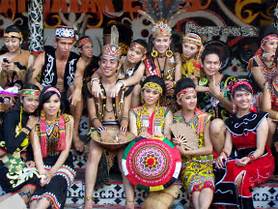
We went to Kalimantan because we were interested in learning about the lifestyle of the Dayak people. We planned our trip a month in advance. We estimated the cost of the whole trip, but we were devestated, because we didn’t think we could pay for everything. So we started to sell some casava and corn, all that we had grown in our garden, until we came relatively close to the price. We still didn’t have enough money to cover the expenses of the trip, so we had to borrow some money from the yayasan.* When we had enough money, we just had to wait for the day to arrive. When the day came, we were very excited, because it was the first time any of us had been to Kalimantan.
When we arrived in Kalimantan, we instantly felt the humid weather hit us. We jumped into the cars and made our way to the boat. On the boat journey, it was so green we could almost feel it, and we could see all the different kinds of wildlife and vibrant colours. We also felt isolated from everybody, because there was nobody else in our sight. A few days later, we stopped at a village and went for a walk. On our walk, we met some villagers, and we played and took pictures with them.
When we first arrived at the longhouse, we did something similar to a ceremony. We all sat down, and they performed some rituals to welcome us. The night we stayed at the longhouse, some of the villagers performed a dance for us, and we performed a song for them in exchange. They also taught us how to do one of their traditional dances. After the longhouse, we stayed at a resort for one night, before we ended our journey in Kalimantan, and headed back to Jakarta.
On this trip, we met a lot of people and learned about the Dayak lifestyle. We were also very surprised that a lot of people live in the longhouse without modern things like air conditioning or an indoor toilet. We learned that although we are all Indonesians, we live very different lives.
The Children Of Garuda Class, Jakarta Montessori School, Indonesia
Karel Lumban Gaol, Rachel Smith, Brandon McKinney, Clarissa Surjadi, Nazla Bowler, Maura Lumban Gaol, Zsazsa Erdapuspita.
*Yayasan Goodwill International is a registered Indonesian charity. Its mission is to provide financial assistance, training, care, resources & advice to young Indonesians. (hwww.yayasan.info)
Montessori Leadership / December 2013 / p 25