 Overview
Africa is a continent of tremendous diversity of environments and peoples. However, in planning an African celebration, it is particularly appropriate to celebrate an African harvest festival. Farmers in Africa have to face long and terrible droughts in some areas, so a harvest festival is most meaningful to them. Of course, not all regions in Africa celebrate in the same way, so if you have a family with an African heritage, you may well want to ask them for some guidance. This will enable you to focus on the specific region from which they originate.
Remember to orient yourself by looking at a map and make sure it is current, as at times countries in Africa change names, and their flags and political structures might have changed, too. If you don’t have current maps in your classroom, make sure that you check a website like the CIA World Fact book website https://www.cia.gov/library/publications/the-world-factbook, as it generally has the most up-to-date information regarding country information. Just looking at the map will be a good point of departure for the students.
 Preparation of the Children
“We have studied the map of Africa. We know that Africa is a continent and that there are many different countries on that continent.
We also know that in some areas it is very hot and that there is sometimes not enough water for the plants, animals, and people. It is hard for the people to grow things when there is not enough water.
When the farmers have had a good year, then it means that there was enough rain for their crops to grow, and they get a good harvest.
This makes them very happy, and they often have a celebration. We will learn how they celebrate, and we will create our own harvest festival right here at school.
We will also listen to African music; it sounds very special and different from what most of us are used to hearing. Let’s listen to the instruments. Maybe we will recognize some of them.”
Organizing Your Festival
The first step in planning your African harvest festival is to decide on what region or country you want to focus. If you have students whose families come from Africa, you should choose one of their homelands as your focus. Otherwise, choose whichever country you like best. Don’t forget that different crops grow in different regions of Africa, and the food used in the festival should include foods the local people would traditionally harvest. Here are just some examples. Search the Internet for a wealth of information.
The Yam Festival of Ghana
This festival lasts three days and in the native vernacular is called Homowo. In this area of Africa, crops include yams, rice, beans, and okra. However, when the yams are harvested, there is a big celebration, which also includes some other traditional activities. Before the festival begins, fresh yams are dug by the women and children, and they carry them back home on their heads, where the chief will bless them before they are prepared as food.
At the beginning of the festival, a cleansing ceremony is held to honor all those who have died; farmers give thanks to the gods for a good harvest; and twins and triplets are honored, as they are thought to be special gifts from God.
Yams can be prepared in a variety of ways. One example is when the yams are washed and pounded into mush. The yam paste is then put on the fire and cooked slowly until it is thick and sticky, this is called fufu. People pinch it off with their fingers and dip it into a stew made from beans and okra. Another dish that is served is mashed yams and hard-boiled eggs. People also eat a dish called Kpekpele, which is made from corn meal and palm oil. Meat (chicken, goat, sheep or fish) is also cooked over an open fire outside.
All this takes much preparation, and the children must help. In the afternoon, the drums start beating to remind people of the festival. During this time, the people wear an outfit similar to a toga made from something called a kente cloth. Before the sun sets, everyone must be in a certain spot outside the village. The men line up holding their spears and shields, and their families make a circle around them. Everybody watches the sun set. After it disappears, a priest called a shaman raises his arm, and everyone starts shouting very loudly. As the shouting becomes louder and louder, the men start dancing. The children beat the drums very loudly, and then the women start dancing.
This goes on for a long time until everyone is tired and hungry, and then everyone goes home for the feast. After the meal, everyone goes back to the same place, and they set up torches and light a big bonfire. They dance and dance to the beat of the drums. Firecrackers are set off to scare away the evil spirits. It is during this time that the children learn their tribal dances by imitating the older people. Boys learn from the men; girls from the women. Games are played separately as well. Over the course of the next few days, there will be time to visit friends, to exchange gifts, to get together and dance again. This is a joyous holiday. People have worked hard in the fields but their labor has been rewarded with a good harvest. They are grateful for it, and they do not take it for granted.
Yams vs. Sweet Potatoes: A yam is often confused with a sweet potato, but a yam originates from Africa, while the sweet potato originates from Asia. A yam is a long root vegetable that looks a lot like a tube. Yams can be stored in a cool place for up to two months and can also be dried and ground into a powder to use instead of wheat flour. Just like in the USA, yams are used as part of a traditional thanksgiving meal, and they hold the same significance to the people of Ghana and Nigeria. Try out the recipe below.
Mashed Yams
Ingredients:
- 2 -3 medium fresh yams
- 3 tablespoons butter or margarine
- 1 tablespoon granulated sugar
- (you can substitute brown sugar)
- 1 teaspoon cinnamon
Directions:
- Peel and cut yams into cubes.
- Boil until tender (about 30 mins).
- drain.
- Add butter, sugar, cinnamon.
- Mix until smooth (use a hand mixer or mashing utensil).
Kwanzaa
Another harvest festival that has its routes in America, but is celebrated by about 18 million people worldwide is known as Kwanzaa. Dr. Maulana Karenga founded the festival of Kwanzaa in 1966. This festival runs from December 26 to January 1st and is celebrated by people of African decent in celebration of family, community, and the cultural bonds that they share.
Dr. Karenga states, “As always, the season and celebration of Kwanzaa rightfully calls to mind its origins in the ancient African first-fruit harvest celebrations and the model of the harvest which stresses the cooperative creation, gathering and sharing of food, specifically food as a life-sustaining good; gratitude for the bountifulness and beauty of the world; and the commitment to protect and preserve the Earth as both a source of life and a site of the sacred.” The name Kwanzaa comes from the Kiswahili language and means first fruits of the harvest.
- The Seven Principles known as Nguzo Saba, are central to this festival. The number seven is very important to the festival as well. The festival lasts for seven days, there are seven symbols used in the Kwanzaa ceremony, and these symbols tie into the Seven Principles. The following are the names of the Seven Principles with the Swahili translation in parenthesis: Unity (Umoja), Self-Determination (Kujichagulia), Collective Work (Ujima), Cooperative Economics (Ujamaa), Purpose (Nia), Creativity (Kuumba), and Faith (Imani). Each of these principles has a very definite purpose, and according to Dr. Kernga, “Their central and summary message is: walk gently, act justly, and relate rightly in and for the world.”
During this festival time, children are given gifts which will always include a book and a heritage symbol. These represent the wisdom of learning from the times of ancient Egypt and a reaffirmation of the commitment to African history and tradition.
If you want to include this festival in your classroom remember to include traditional African items, such as typical African cloth patterns, representations of African art, and harvest symbols. Also, the traditional colors of Kwanzaa are: red (representing the struggles of African people), green (representing the future of the people), and black (representing the color of the people).
It is also very important within the Kwanzaa festival tradition that the holiday is not mixed with the symbols or traditions and practice of any other culture.
For more information about this festival holiday, we suggest you look at the official Kwanzaa site which we have listed in our website recommendations.
Preparing the Environment:
Create an African Marketplace or Village: To create an African marketplace or village experience, use a variety of elements such as the following:
- African fabrics with bright batiked patterns
- Travel posters of Africa
- African tribal masks
- Dolls representing African dancers in traditional costumes
- Baskets filled with dried corn (known as maize in Africa) and beans
- All sorts of melons
- Dried gourds
- Clay bowls
- African carvings of people and animals
- Photographs of African animals and people showing both the countryside and cities
- Models of African animals or children’s stuffed animals representing African wildlife
- Recordings of African music and songs
- Videos of African wildlife
- An African thumb piano
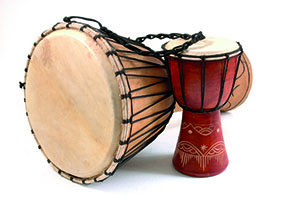
- An African drum
- A model of an African grass hut
- Some child-sized dashiki’s and women’s robes, complete with pretty headcloths
Projects and Activities
 An African Safari
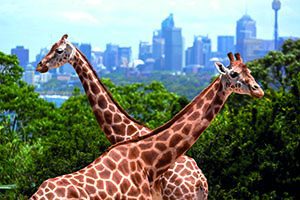
For other regions of Africa, you might want to develop a festival around a wildlife theme. Plan an African safari with a focus on the animals and the nature preserves set aside for them. Kenya lends itself especially well to this sort of study. All African counties, which have joined the conservation effort, need and deserve our support and understanding. (Rhinos and elephants are in particular trouble right now.)
If our children are to enjoy the nature of Africa, they must learn all they can about it so that they can participate in the conservation effort when they grow up. Study a map of Kenya, and see how much land has been pledged to animals. There is a saying in Kenya which goes like this, “The animals go first – then the people.” They say this because when the herds of various animals move from one reserve to another, all people stay out of the way.
For your children, the challenge of traveling to the safari can be most exciting. Make your travel plans as if you were going on a genuine safari. Involve a travel agency; get posters, maps, timetables, and prices. Make sure you work it out as if you were truly traveling to Africa.
Then go through what everyone will need for a safari: what would need to be worn; what needs to be packed; what else needs to be taken? What would you do if you see a herd of zebras? Where do you have to go to see them? If you have a big property for your school or a park nearby, go on safari in these locations. Children can dress up to be the different animals. They can design headpieces using brown paper bags. Some children can be the tourists with cameras. You can assign roles and act it out. Everyone will have great fun.
A great extension to this experience is to take a field trip to the African wildlife wing of your local zoo, or even better, an outdoor animal safari park, if one is located in your area.
Make a Model African Kraal
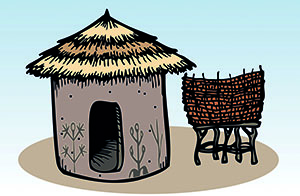
In many areas of Africa, people have historically made their homes of adobe bricks, mud, or woven reeds. A thatched roof is common. Family units typically huddle together within low walls, creating a kraal, or enclosed farmstead.
You can make your own model of an African kraal. Use a thick styrofoam soup bowl for your walls, cutting out an opening for the door. Build a cone out of heavy construction paper for the roof. Cover the outside of the cone with thin grass or broom straw. Have the roof extend out over the edge of the walls. Build a smaller house the same way for grain storage. Mount on plywood, and make the walls out of clay.
An African Wedding Festival
These are very joyous occasions and make for a wonderful way of getting good insight into another African tradition. You will have a lot of material for a whole show on this. It is also enough of a curriculum for a summer program.
Children can make their own costumes out of brown paper shopping bags: open the bag, cut, shape, staple, and let the children decorate the bag. You can encourage the children to make jewelry out of cardboard strips cut into different widths. You can let the children decorate the jewelry with crayons and magic markers, or use beads to glue on or string. You can find beads that come in all shapes and sizes, and the children can create bands for their heads and ankles as well.
An African celebration will always have drumming; you can make drums out of juice or coffee cans and make different sizes of these. Cover the cans with decorated construction paper. Glue string on them so that the children can wear the drums around their necks. Make shakers: use small frozen juice cans and fill with sand, buttons, pebbles, anything for a variety of sound. It is fun to make the instrument sound dark and mysterious.
It is also fun and topical to cornrow the girls’ hair. (This does not work if the children have short or very straight hair.) Place beads into the cornrows. Hold them with plastic bands. The children will love it.
Dress the teachers as the bride, groom; parents and the children will make up the wedding party.
The Wedding Skit
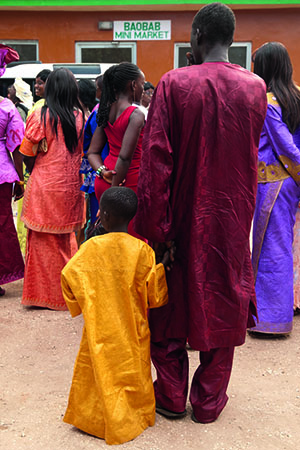
The mother-in-law receives the bride. Everyone brings presents, such as baskets, blankets, pots and pans. Pile these in front of the bride and groom. Then the procession leads the couple to the wedding feast to the accompaniment of loud drumming. This is when the fun, food, and games start.
Be sure to organize your games: jumping, running, rope-pulling and so on. Eat African food, play the drums, dance, and have fun!
Music
Within Africa, music is used as a form of communication and plays a central role within most communities. Music plays an important role in occasions from marriages to political events. In some societies, music is also used to communicate to the spirits in both thanksgiving and as protection. An African harvest festival is no exception, and this celebration is not complete without the addition of music.
You will find many different African instruments throughout the continent, but the drum is the most significant and mood-creating instrument. “The beat of the African drum is the ‘heartbeat of the community,’ and its rhythm is what holds the dancers together.”
To use music as part of your festival experience, you could invite an African dance group to perform for you. Different tribes have different dances and even different harvest dances. The Yoruba spirit dancers, for instance, wear long robes and masks. They represent the spirit of the dead. This tribe offers their yam harvest to the spirit dancers for good luck and good harvest next year. The many different rituals represent the African peoples’ deep appreciation of the harvest. There is joy and happiness beautifully expressed in their tribal dances for this festival. The beat of the drum is an invitation to join and dance with them.
African Lullabye
Thula thul, thula baba, thula sana,
Thul’u babuzo ficka, eku seni. (repeat)
Kukh’in khan-yezi, zi-hol’ u baba,
Zim-khan yi-sela indlel’e ziyak-haya,
Sobe sik hona xa bonke be-shoyo,
Be-thi bu-yela u-bu-ye le khaya,
Thula thula thula baba,
Thula thula thula sana,
Thula thula thula baba,
Thula thula thula san.”
[ From: http://www.metrolyrics.com/thula-baba-lyrics-soweto-gospel-choir.html ]
Stuffed African Animals
Cut the shape of an animal out of felt. Repeat for the other side. Stuff them with cotton, and sew along the edges to create a pillow. Paint on the eyes and whiskers with permanent markers. Let the children take them home.
Tie-Dyed T-Shirts
Tie-dyed fabrics are a familiar Nigerian folk craft. No African festival would be complete without everyone tie-dying lots of white t-shirts and squares of cotton fabric.
Spread out the t-shirt or cloth on a table. Gather up a section of cloth into a small bunch, and tie it off with a strong rubber band. Repeat this process at various points around the fabric. It makes no difference if your ties are even or randomly placed – both types of designs look fine when you are finished.
Dip the cloth into a large washtub of water and fabric dye. For deeper colors, leave the cloth in the dye longer. Remove and allow to dry. You will all be delighted when you unwrap your bunches and discover the pretty designs created by the dye.
If you want to create fabrics with more colors, repeat this process after the cloth has dried, tying the fabric up into new bunches, and dipping it into the new colors in turn.
 Natural Habitat:
Depending on the space available, choose a container in which to create a natural African habitat. The backdrop can be created by older children with crayons and paint. Little ones can ‘plant’ trees and bushes, make landscape with self-hardening clay or plastercine in the color you need. To make your lakes and rivers, use a small drop of blue food coloring. You can also introduce the food chain as nature’s way of keeping the ecological balance, using examples of animals from Africa. Explain to the children about what would happen if there were an overpopulation of one kind of species and how sad it is if one were to become extinct. Talk about the differences between a traditional safari and a photographic safari. Have discussions about animal preservations and how we can help the wildlife by not buying what is smuggled out of Africa. Talk about importation laws and why our suitcases are checked often by sniffer dogs when we enter the country on a return from overseas.
Gourds
Make a Carved Calabash
Nigeria is famous for its beautiful carved calabash gourds. Local craftspeople turn them into cups, bowls, jugs, spoons, and musical instruments. These gourds grow on vines throughout central Africa. When they are picked, the craftspeople cut a whole in the side and remove the soft pulp, leaving a nice hollow shell. Once the rind is dried, carvers decide what to make out of each calabash according to the shape that it grew in naturally on the vine. Small ones become cups; long, narrow ones may be turned into pitchers, and so on. Intricate designs are carved into the dried calabash rinds. To make them stand out, craftspeople will blacken the entire rind. Just one of unlimited possible projects. Find your gourd of choice and adapt the techniques described in the calabash project. with shoe polish or soot. When carved, the light-colored inner rind stands out nicely against the darkened calabash skin.
To make your calabash, use balloons of many different shapes, some round and some cylindrical. Prepare a mixture of papier-mâché and strips of newspapers. Cover the balloons with several layers of papier-mâché and allow them to dry overnight. The next morning, pop the balloons inside your shells with a straight pin, and lightly sand the papier-mâché. Now, get your shoe-shining kit and lightly rub brown shoe polish over the entire surface of your calabashes. Finally, scratch a design into each ‘gourd’ with a nail, small screwdriver, or paring knife. You could also saw some of the calabashes in half with a thin saw to make bowls. Once you have completed the calabashes you can protect them with a thin coating of shellac.
Resources
Cooking with Children: There are many fun and easy recipes that can be found on the Internet. If you Google a country’s name for recipes, many are available as YouTube demonstrations as well.
Books;
- Musgrove, Margaret. Ashanti to Zulu African Traditions
- Beckwith, Carol / Fisher, A. African Ceremonies
Music:
Songs from the Baobab: African Lullabies & Nursery Rhymes is a storybook-music CD compiled by Chantal Grosléziat, arranged by Paul Mindy and Illustrated by Elodie Nouhen
Websites;
- http://www.africaguide.com/culture/events
- http://www.victoriafalls-guide.net/african-traditions
- http://www.officialkwanzaawebsite.org/index
- http://www.pongalfestival.org/kwanzaa-africa-america
- http://www.pongalfestival.org/yam-festival-africa
- https://www.cia.gov/library/publications/the-world-factbook
- http://www.allnigerianrecipes.com
Tomorrow’s Child / November 2012 / p. 30