Tomorrow’s Child | Welcome | April – May 2026


Let's talk about the elephant in the classroom: your best lead guide just gave notice, and you're scrambling to find a replacement in a market where qualified Montessori teachers are rarer than a quiet Friday afternoon.
Sound familiar?
Here's the thing, we're facing a teacher retention crisis across education, but Montessori schools actually have a secret advantage. Research shows that teacher attrition in authentic Montessori settings is less prevalent than in traditional schools. Guides who work in truly supportive environments tend to stay for years, even decades. The question isn't whether retention is possible. It's whether we're creating the conditions that make staying irresistible.
Before we dive into solutions, let's acknowledge what's at stake. When a beloved guide leaves mid-year, or even between school years, it disrupts far more than your staffing spreadsheet.
Montessori's three-year cycle depends on continuity. Children form deep attachments to their guides. They learn the rhythms of the classroom, internalize the routines, and build on previous lessons in ways that require institutional memory. A revolving door of teachers undermines the very foundation of what makes Montessori work.

And let's be honest: recruiting and onboarding a new guide is expensive. Not just in dollars (though the costs add up quickly), but in time, energy, and the invisible toll it takes on your remaining staff who have to pick up the slack.
So yes, retention is a priority. But here's where most schools get it wrong.
I can already hear some of you saying, "Tim, we'd love to retain our staff, but we can't compete with the public school salaries down the street."
Fair point. Compensation matters. With more Montessori job openings than qualified candidates, teachers hold real negotiating power right now. Schools that pretend salary doesn't matter are lying to themselves.
But here's what I've learned after decades in Montessori school leadership: throwing money at the problem without addressing the culture won't work. I've seen schools offer competitive salaries and still lose great teachers to burnout, frustration, or feeling undervalued.
Retention is about felt support. It's about whether your guides wake up on Monday morning and think, "I love where I work," or "I don't know how much longer I can do this."
That feeling? You can't buy it. You have to build it.
So what does a retention-focused culture actually look like? Let me share what we've seen work across the schools we support through our Montessori consulting practice.
This sounds basic, but most schools get it wrong. Your guides need real breaks, not just contractual days off that they're too guilty or overwhelmed to take because there's no substitute coverage.

Here's the truth: newer generations of teachers (and honestly, all of us) prioritize work-life balance more than ever before. Schools that adapt their time-off policies to meet these changing expectations see dramatically better retention.
Develop a reliable substitute pool. Train parents, education students, recent retirees, even school alumni. When your guides know they can actually step away to recover, attend a family event, or deal with a personal crisis without leaving their classroom in chaos? That's gold.
Think about your last new hire. Did they spend the first month figuring out where the art supplies are kept and guessing at your school's unwritten rules? Or did they have a structured, thoughtful onboarding process that set them up for success?
New staff need clear access to resources, structured introductions to your school culture, and time to integrate with the team. This isn't just about preventing early turnover, it's about building the foundation for long-term professional growth.
At The Montessori Foundation, we work with school leaders to design onboarding systems that go beyond the basics. Because when teachers feel competent and supported from day one, they're far more likely to stay for year ten.
How many times have you passed a stressed-looking guide in the hallway and asked, "How's it going?" only to get a tight-lipped "Fine"?
Real check-ins require more than casual wellness inquiries. They require active listening, pattern recognition, empathy, and genuine offers of support. Your guides need to know that when they bring a concern to you, they won't be met with judgment or empty platitudes.

This is where Montessori school leadership becomes an art form. Building a culture of trust, where your staff feels safe being honest about struggles, is the foundation for everything else. Without it, you're just rearranging deck chairs.
Here's something we hear constantly when we consult with schools: "Our best teachers leave because they want to grow professionally, and we don't have anywhere for them to go."
This breaks my heart because it's entirely preventable.
Professional development shouldn't be a once-a-year workshop that everyone half-attends while checking their phones. It should be an ongoing, integrated part of your school culture. Provide mentorship opportunities. Send guides to conferences (our IMC conferences are specifically designed for this). Create leadership roles that don't require leaving the classroom.
At The Montessori Foundation, we offer professional development workshops and leadership institutes that help your staff deepen their Montessori practice while building skills they can use throughout their careers. And here's the beautiful part: when you invest in your teachers' growth, they don't just stay, they become better at their jobs.
Okay, we can't talk about retention without addressing the money piece head-on.
Yes, you need to pay your staff competitively. That means transparent salary structures with annual increases that account for inflation and cost-of-living changes. It means robust healthcare, retirement plans, and benefits packages that actually matter to people.
I know some of you are thinking, "But we're a non-profit! We can't just raise tuition every year!"
Actually? Sometimes you can. Many families understand that quality teachers require investment. A modest, well-communicated tuition increase to fund staff raises is often more palatable than you think, especially when positioned as preserving the stability and quality of their child's education.

And for schools that genuinely can't increase compensation significantly, focus even harder on the culture piece. Because while you can't always match the public school salary, you can absolutely create a work environment that feels more supportive, respectful, and aligned with your teachers' values.
Look, I get it. You're already wearing seventeen hats as a school administrator. You're handling enrollment, finances, parent concerns, facilities issues, and somehow you're supposed to also become an expert in staff retention and culture-building?
That's where we come in.
The Montessori Foundation offers targeted Montessori consulting specifically designed for school leaders facing these exact challenges. We can help you assess your current culture, identify retention risks before they become resignations, and build systems that support your staff long-term.
Our leadership institutes bring together heads of school from around the world to share strategies, troubleshoot common challenges, and learn from each other's experiences. Because sometimes the best solution comes from another school leader who's been exactly where you are.
Teacher retention isn't just about preventing turnover. It's about creating schools where passionate, skilled Montessori guides want to build careers, not just survive until something better comes along.
It's about recognizing that your staff are your school's most valuable asset. Not your beautiful materials, not your historic building, not even your carefully crafted mission statement. Your people.
And when you build a culture that truly supports them, with meaningful professional development, genuine check-ins, real time off, and yes, fair compensation: you'll find that retention takes care of itself.
The guides who stay aren't just staying for a paycheck. They're staying because they feel valued, supported, and connected to something larger than themselves. They're staying because your school has become their professional home.
That's the retention revolution we're talking about. Not a quick fix, not a Band-Aid solution, but a fundamental shift in how we think about supporting the adults who make Montessori magic happen every single day.
Ready to start building that culture at your school? Explore our consulting services and let's talk about what's possible.

If you've ever been asked to explain the Montessori curriculum to a prospective parent, a board member, or even a licensing official, you know it's not as simple as handing over a textbook and saying, "Here's what we teach."
The Montessori curriculum is dynamic, interconnected, and deeply responsive to each child's developmental needs. It's not a list of lessons to check off: it's a carefully designed framework that supports children from infancy through adolescence in becoming independent, curious, and capable learners.
So whether you're launching a new school, refining your program, or simply looking to deepen your understanding of how it all fits together, this guide will walk you through the essentials of Montessori curriculum: what it includes, how it progresses, and why the materials matter so much.
At its core, the Montessori curriculum is organized around five to ten key learning areas that develop progressively through hands-on, multi-sensory materials. Children advance at their own pace, guided by their individual development and interests rather than a rigid timeline.
But here's what makes it different from traditional education: the curriculum isn't just about academic content. It's about cultivating the whole child: cognitively, socially, emotionally, and physically. Dr. Montessori understood that children learn best when they can touch, manipulate, and explore concepts in concrete ways before moving to abstraction.
Each learning area contains materials organized by increasing complexity. A child doesn't move to multiplication until they've mastered quantity recognition and addition. They don't write sentences until they've worked with the Moveable Alphabet and understand phonetic sounds. This is the beauty of scope and sequence in action.
When we talk about scope and sequence, we're referring to the bird's-eye view of curriculum progression across all subject areas. The scope tells us what will be covered: the breadth of skills, concepts, and learning objectives. The sequence tells us when and in what order these elements are introduced.
In a Montessori setting, this isn't about rigid timelines. A scope and sequence document shows the progression of skills within each learning area, but it acknowledges that children have varied interests and learning timelines. One child might spend months perfecting their work with the Pink Tower before moving to the Brown Stair. Another might breeze through and be ready for extensions within weeks.
This flexibility is essential, but it doesn't mean we're making it up as we go. A well-documented Montessori scope and sequence ensures that nothing gets missed and that each child receives comprehensive exposure to all areas of learning: even if they reach them in different orders or at different times.
Let's break down the key areas that form the foundation of Montessori education across the levels.
At this level, the curriculum focuses on developing independence, language, movement, and trust. Activities are simple but profound:
The environment is carefully prepared with materials that invite exploration and support emerging skills. Everything is child-sized, accessible, and purposeful.
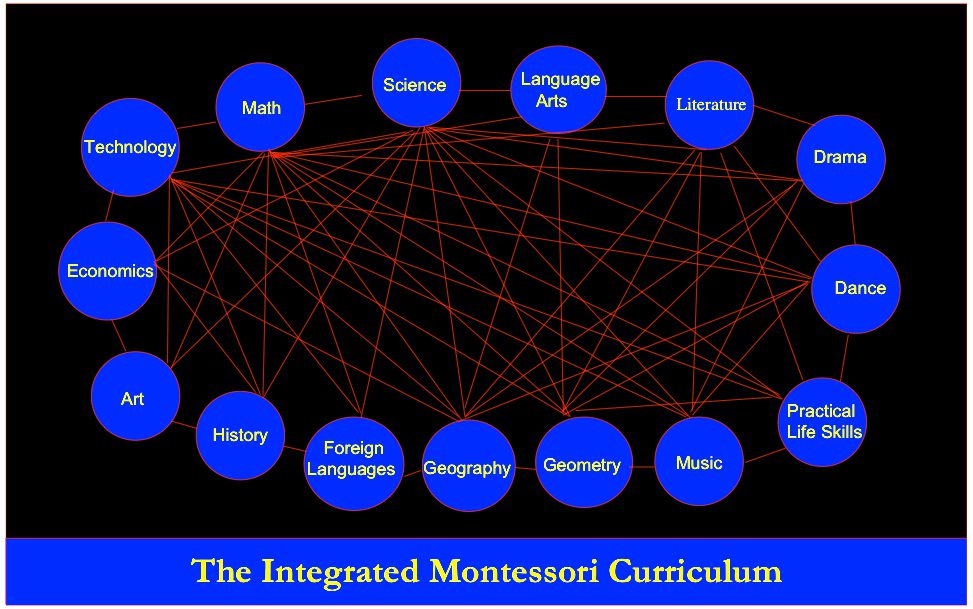
This is where the classic Montessori curriculum really takes shape. The five core areas are:
Practical Life – This area develops concentration, coordination, independence, and a sense of social responsibility. Activities include pouring, spooning, sweeping, polishing, buttoning, and food preparation. These exercises may look simple, but they're building the neural pathways for everything that comes next.
Sensorial – Children refine their perception through work with materials that isolate qualities like size, color, shape, texture, weight, sound, and temperature. The Pink Tower, Brown Stair, Color Tablets, and Sound Cylinders help children categorize and organize sensory information: a cognitive skill that extends far beyond the classroom.
Mathematics – Montessori math is breathtakingly concrete. Children work with golden beads to understand quantity and place value, then progress through the decimal system, operations, fractions, and eventually abstraction. The materials make abstract concepts tangible.
Language – Beginning with oral language and phonetic awareness, children move to Sandpaper Letters, the Moveable Alphabet, and eventually reading and writing. Grammar is introduced through hands-on materials like the Grammar Symbols, making parts of speech a tactile experience.
Culture – This broad area includes geography (puzzle maps, land and water forms), botany (leaf classification, plant care), zoology (animal classification), science experiments, history timelines, music, and art. It helps children understand their place in the world.
Elementary expands and deepens the curriculum with a focus on imagination, reasoning, and social collaboration. The core areas include:
Elementary students work collaboratively on projects, conduct experiments, and engage in "going out" experiences to extend their learning beyond the classroom walls.
Here's a question I often hear: "Can't we just teach these concepts with worksheets or digital tools?"
The short answer? Not really. Not if we want children to truly understand.
Montessori materials are not just teaching aids: they're the curriculum itself. Each material is scientifically designed to isolate a single concept, provide hands-on exploration, and include a built-in control of error so children can self-correct without adult intervention.
Take the Binomial Cube, for example. At first glance, it's a beautiful wooden puzzle. But it's also a concrete representation of the algebraic formula (a+b)³. A Primary child explores it as a sensorial challenge. An Elementary child revisits it as an introduction to algebra. The same material, different levels of abstraction.
This is why having a comprehensive Montessori materials list and knowing the proper presentation sequence is critical. Without the materials, you don't have Montessori: you have Montessori-inspired activities, which is not the same thing.
So, how do you actually implement all of this in your classroom or school?
1. Observation is everything. Montessori educators must be skilled observers. You need to know where each child is in the scope and sequence, what they're ready for next, and when to step back and let them work independently.
2. Prepare the environment meticulously. Materials should be complete, organized, and accessible. The classroom should invite exploration and support independence.
3. Document and assess progress. Use observation notes, checklists, and portfolios to track each child's journey through the curriculum. This documentation is invaluable for parent conferences, accreditation, and your own planning.
4. Collaborate with colleagues. Especially in schools with multiple age levels, it's essential that educators understand the continuum of learning. What happens in the Toddler room sets the stage for Primary. What happens in Primary lays the foundation for Elementary.
5. Seek ongoing professional development. The Montessori curriculum is rich and complex. Even experienced educators benefit from workshops, coaching, and continued study.
At The Montessori Foundation, we understand that implementing and maintaining a strong Montessori curriculum requires support at every stage: whether you're just starting out or you're an established institution looking to strengthen your program.
We offer consulting and coaching services tailored to your school's unique needs. From curriculum development and teacher training to leadership coaching and strategic planning, we're here to help you build and sustain an authentic Montessori program.
Our professional development workshops cover everything from practical life presentations to advanced mathematics, ensuring your educators have the skills and confidence to guide children through the full scope and sequence. We also host leadership institutes for administrators and heads of school who want to deepen their understanding of Montessori philosophy and school management.
Whether you need a comprehensive curriculum review, help creating a scope and sequence document, or guidance on materials selection and classroom setup, we're here to support your school's success.
The Montessori curriculum isn't a mystery: it's a carefully constructed pathway that honors each child's development while ensuring comprehensive learning across all domains. Understanding the scope and sequence, respecting the role of materials, and committing to ongoing observation and professional growth are the keys to implementing it effectively.
If you're ready to take your program to the next level, explore our consulting services and professional development opportunities or reach out to discuss how we can support your school's unique journey.
The beauty of Montessori education is that it works: when it's done with fidelity to Dr. Montessori's vision and with the support educators need to succeed.

Early in my career as a school leader, I got the phone call that every head of school dreads. A wheel had come off one of our school buses. The bus had gone on its side. Every child on board had been transported to the hospital.
I remember the next hours as a blur of controlled chaos. Parents were distraught. Many were furious: and rightfully so. Teachers were shaken. Staff were looking to me for answers I didn’t yet have. And I was doing something I had never done before: leading a community through genuine fear, in real time, without a script.
Every child was going to be fine. But I didn’t know that yet. And neither did anyone else.
That day taught me more about montessori school leadership than almost any other experience I can name. It taught me that in a crisis, your community doesn’t just need someone to manage logistics: they need someone to hold steady while the ground is shaking. They need to borrow your calm.
I’ve been thinking about this recently as I read and hear from school leaders navigating what feels like an almost unrelenting season of uncertainty: political turbulence, family anxiety, community polarization, and an information environment that seems designed to keep everyone on edge. Whether the crisis is sudden and acute, like that bus accident, or slow-burning and ambient, like the anxious climate in which many of our schools are operating today, the leadership challenge is fundamentally the same.
How do you lead with steadiness when the situation is anything but steady?
Under ordinary circumstances, school leadership is demanding enough. You are running a small organization with a complex mission, managing personnel, balancing a budget, and serving families who have entrusted you with the most important people in their lives.
But in a crisis, something shifts. You stop being just an operational leader and you become a symbolic one. Every word you say: and every word you don’t say: is being weighed. People are watching how you carry yourself. They are reading your body language, your tone of voice, your apparent level of confidence. They are asking themselves: Does this person have it together? Can I trust them to protect us?
This can feel impossibly heavy. And it is heavy. But it is also one of the most profound things you will ever do as a leader.
Montessori philosophy, at its best, is about creating environments where people feel safe enough to grow, take risks, and do their best work. That is just as true for adults in a crisis as it is for children in a classroom. Your job is to be the prepared adult in the room: the one whose calm radiates outward and gives others permission to breathe.

One of the most important things I have learned about crisis leadership is that it is not about "solving" a problem. It is about managing ongoing tension between competing values: what leadership scholars sometimes call polarities.
Problems have solutions. Polarities don’t. They require your ongoing judgment, your ability to hold complexity, and your willingness to keep adjusting as circumstances change. Three of the most important polarities I’ve encountered, both in my own experience and in watching other leaders navigate crisis, are these:
In a crisis, your teachers become emotional first responders before they can even step into their classrooms. They are absorbing fear: from children, from parents, and often from the wider culture: while managing their own anxiety about what is happening. If you ignore this reality and simply expect business as usual, you will burn people out quickly and erode the trust you need to lead effectively.
At the same time, your school cannot simply stop functioning. Children need structure and continuity. If operations stall, if instruction becomes inconsistent, if routines collapse: students suffer, and so does the community’s sense of safety.
The way through this tension is to protect the essentials and let go of everything else. Pause non-essential initiatives. Shorten meetings. Give teachers clear, simple guidance on what learning should look like right now: what to keep, what can wait. These actions signal that you understand the load people are carrying, and that you value their genuine well-being far more than any performance of productivity.
When I got that phone call about the bus, my first instinct was to get to the hospital. But I quickly realized I also needed to get ahead of the story: because if I didn’t communicate, the vacuum would fill with rumor, speculation, and fear.
Transparency builds trust. Families and staff deserve accurate information, shared promptly and with respect for their intelligence. Being as clear as possible about what you know, and honest about what you don’t know yet, goes a long way toward preventing the kind of misinformation that can fracture a community.
But not all information needs to reach everyone, and certainly not in the same way. Differentiate your communication thoughtfully. Give your teachers more context: and give it to them first, before it goes to families. Offer families clear, plain-language updates.
With young children especially, answer their questions simply and honestly without volunteering more detail than they need. Children’s nervous systems are not equipped to carry adult fears, and it is not your job to ask them to. We often discuss this in our montessori consulting sessions: the adult's role is to filter the world for the child, not to flood them with it.
Here is a hard-won insight from leaders who have navigated prolonged crisis: routine is not peripheral to recovery. It is central to it. For children especially, the predictable rhythms of the school day: morning meetings, work cycles, familiar transitions: function as a psychological anchor when the wider world feels unstable.
The Montessori environment, with its emphasis on order, rhythm, and the child’s deep need for predictability, is actually extraordinarily well-suited to this moment.

While a crisis demands immediate action, the success of your leadership often depends on the work you did months or years before the "wheels came off." I am reminded of Roger Martin, the former Dean of the Rotman School of Management, who led his institution through the 2008 financial crisis.
Martin’s success wasn't just due to his brilliance during the crash; it was because he had previously invested heavily in one-on-one relationships and a culture of transparency. When he had to ask his faculty to accept a salary freeze to save the school’s future, they agreed unanimously. Why? Because the trust was already in the bank.
In our work at The Montessori Foundation, we see this constantly. Schools that prioritize authentic community and honest communication during the "quiet" times are the ones that remain resilient when the storm hits. If you are looking to strengthen these foundations, you can explore our resources in the Montessori Catalogue.
None of this is possible if you are running on empty. And that is a real risk, because school leaders in crisis mode often do the worst thing imaginable: they stop taking care of themselves precisely when they most need to.
You cannot pour from an empty vessel. That is not a cliché: it is a physiological fact. Your nervous system is the instrument through which your steadiness reaches your community. If your nervous system is dysregulated, that radiates outward too.
So: protect your sleep. Protect the habits that help you regulate: whether that is exercise, time in nature, prayer, music, or simply the company of people who love you. Don’t try to carry your whole community’s fear alone. Lean on your leadership team, your partner, a mentor, or seek out specialized montessori consulting for an outside perspective. There is no weakness in that.
And practice the small disciplines of steadiness in your visible presence as a leader:
These habits, practiced consistently, will have a ripple effect far beyond what you might imagine.

Every child on that bus went home to their parents that day. No one was seriously hurt. And in the weeks that followed, I heard something again and again from families: not about the decisions I had made, not about the logistics I had managed, but about how I had made them feel: that someone was present, that their children mattered more than the institution’s reputation, and that we were going to get through it together.
Maya Angelou was right that people will not remember what you said or what you did, but they will remember how you made them feel. That is as true in a school community as anywhere in the world.
In Montessori education, we talk a great deal about the prepared environment: the deliberate, thoughtful creation of conditions that allow children to flourish. Crisis leadership asks you to apply that same intentionality to the human environment of your school. To be, yourself, the steadiest thing in an unsteady moment.
You will not be perfect at it. None of us are. But if you lead with honesty, with care, and with the deep conviction that your community’s trust is worth protecting: that is enough. More than enough. It is the kind of leadership that people remember for the rest of their lives.
If you've ever been asked to explain the Montessori curriculum to a prospective parent, a board member, or even a licensing official, you know it's not as simple as handing over a textbook and saying, "Here's what we teach."
The Montessori curriculum is dynamic, interconnected, and deeply responsive to each child's developmental needs. It's not a list of lessons to check off: it's a carefully designed framework that supports children from infancy through adolescence in becoming independent, curious, and capable learners.
So whether you're launching a new school, refining your program, or simply looking to deepen your understanding of how it all fits together, this guide will walk you through the essentials of Montessori curriculum: what it includes, how it progresses, and why the materials matter so much.
At its core, the Montessori curriculum is organized around five to ten key learning areas that develop progressively through hands-on, multi-sensory materials. Children advance at their own pace, guided by their individual development and interests rather than a rigid timeline.
But here's what makes it different from traditional education: the curriculum isn't just about academic content. It's about cultivating the whole child: cognitively, socially, emotionally, and physically. Dr. Montessori understood that children learn best when they can touch, manipulate, and explore concepts in concrete ways before moving to abstraction.
Each learning area contains materials organized by increasing complexity. A child doesn't move to multiplication until they've mastered quantity recognition and addition. They don't write sentences until they've worked with the Moveable Alphabet and understand phonetic sounds. This is the beauty of scope and sequence in action.
When we talk about scope and sequence, we're referring to the bird's-eye view of curriculum progression across all subject areas. The scope tells us what will be covered: the breadth of skills, concepts, and learning objectives. The sequence tells us when and in what order these elements are introduced.
In a Montessori setting, this isn't about rigid timelines. A scope and sequence document shows the progression of skills within each learning area, but it acknowledges that children have varied interests and learning timelines. One child might spend months perfecting their work with the Pink Tower before moving to the Brown Stair. Another might breeze through and be ready for extensions within weeks.
This flexibility is essential, but it doesn't mean we're making it up as we go. A well-documented Montessori scope and sequence ensures that nothing gets missed and that each child receives comprehensive exposure to all areas of learning: even if they reach them in different orders or at different times.
Let's break down the key areas that form the foundation of Montessori education across the levels.
At this level, the curriculum focuses on developing independence, language, movement, and trust. Activities are simple but profound:
The environment is carefully prepared with materials that invite exploration and support emerging skills. Everything is child-sized, accessible, and purposeful.
This is where the classic Montessori curriculum really takes shape. The five core areas are:
Practical Life – This area develops concentration, coordination, independence, and a sense of social responsibility. Activities include pouring, spooning, sweeping, polishing, buttoning, and food preparation. These exercises may look simple, but they're building the neural pathways for everything that comes next.
Sensorial – Children refine their perception through work with materials that isolate qualities like size, color, shape, texture, weight, sound, and temperature. The Pink Tower, Brown Stair, Color Tablets, and Sound Cylinders help children categorize and organize sensory information: a cognitive skill that extends far beyond the classroom.
Mathematics – Montessori math is breathtakingly concrete. Children work with golden beads to understand quantity and place value, then progress through the decimal system, operations, fractions, and eventually abstraction. The materials make abstract concepts tangible.
Language – Beginning with oral language and phonetic awareness, children move to Sandpaper Letters, the Moveable Alphabet, and eventually reading and writing. Grammar is introduced through hands-on materials like the Grammar Symbols, making parts of speech a tactile experience.
Culture – This broad area includes geography (puzzle maps, land and water forms), botany (leaf classification, plant care), zoology (animal classification), science experiments, history timelines, music, and art. It helps children understand their place in the world.
Elementary expands and deepens the curriculum with a focus on imagination, reasoning, and social collaboration. The core areas include:
Elementary students work collaboratively on projects, conduct experiments, and engage in "going out" experiences to extend their learning beyond the classroom walls.
Here's a question I often hear: "Can't we just teach these concepts with worksheets or digital tools?"
The short answer? Not really. Not if we want children to truly understand.
Montessori materials are not just teaching aids: they're the curriculum itself. Each material is scientifically designed to isolate a single concept, provide hands-on exploration, and include a built-in control of error so children can self-correct without adult intervention.
Take the Binomial Cube, for example. At first glance, it's a beautiful wooden puzzle. But it's also a concrete representation of the algebraic formula (a+b)³. A Primary child explores it as a sensorial challenge. An Elementary child revisits it as an introduction to algebra. The same material, different levels of abstraction.
This is why having a comprehensive Montessori materials list and knowing the proper presentation sequence is critical. Without the materials, you don't have Montessori: you have Montessori-inspired activities, which is not the same thing.
So, how do you actually implement all of this in your classroom or school?
1. Observation is everything. Montessori educators must be skilled observers. You need to know where each child is in the scope and sequence, what they're ready for next, and when to step back and let them work independently.
2. Prepare the environment meticulously. Materials should be complete, organized, and accessible. The classroom should invite exploration and support independence.
3. Document and assess progress. Use observation notes, checklists, and portfolios to track each child's journey through the curriculum. This documentation is invaluable for parent conferences, accreditation, and your own planning.
4. Collaborate with colleagues. Especially in schools with multiple age levels, it's essential that educators understand the continuum of learning. What happens in the Toddler room sets the stage for Primary. What happens in Primary lays the foundation for Elementary.
5. Seek ongoing professional development. The Montessori curriculum is rich and complex. Even experienced educators benefit from workshops, coaching, and continued study.
At The Montessori Foundation, we understand that implementing and maintaining a strong Montessori curriculum requires support at every stage: whether you're just starting out or you're an established institution looking to strengthen your program.
We offer consulting and coaching services tailored to your school's unique needs. From curriculum development and teacher training to leadership coaching and strategic planning, we're here to help you build and sustain an authentic Montessori program.
Our professional development workshops cover everything from practical life presentations to advanced mathematics, ensuring your educators have the skills and confidence to guide children through the full scope and sequence. We also host leadership institutes for administrators and heads of school who want to deepen their understanding of Montessori philosophy and school management.
Whether you need a comprehensive curriculum review, help creating a scope and sequence document, or guidance on materials selection and classroom setup, we're here to support your school's success.
The Montessori curriculum isn't a mystery: it's a carefully constructed pathway that honors each child's development while ensuring comprehensive learning across all domains. Understanding the scope and sequence, respecting the role of materials, and committing to ongoing observation and professional growth are the keys to implementing it effectively.
If you're ready to take your program to the next level, explore our consulting services and professional development opportunities or reach out to discuss how we can support your school's unique journey.
The beauty of Montessori education is that it works: when it's done with fidelity to Dr. Montessori's vision and with the support educators need to succeed.
If you've ever been asked to explain the Montessori curriculum to a prospective parent, a board member, or even a licensing official, you know it's not as simple as handing over a textbook and saying, "Here's what we teach."
The Montessori curriculum is dynamic, interconnected, and deeply responsive to each child's developmental needs. It's not a list of lessons to check off: it's a carefully designed framework that supports children from infancy through adolescence in becoming independent, curious, and capable learners.
So whether you're launching a new school, refining your program, or simply looking to deepen your understanding of how it all fits together, this guide will walk you through the essentials of Montessori curriculum: what it includes, how it progresses, and why the materials matter so much.
At its core, the Montessori curriculum is organized around five to ten key learning areas that develop progressively through hands-on, multi-sensory materials. Children advance at their own pace, guided by their individual development and interests rather than a rigid timeline.
But here's what makes it different from traditional education: the curriculum isn't just about academic content. It's about cultivating the whole child: cognitively, socially, emotionally, and physically. Dr. Montessori understood that children learn best when they can touch, manipulate, and explore concepts in concrete ways before moving to abstraction.
Each learning area contains materials organized by increasing complexity. A child doesn't move to multiplication until they've mastered quantity recognition and addition. They don't write sentences until they've worked with the Moveable Alphabet and understand phonetic sounds. This is the beauty of scope and sequence in action.
When we talk about scope and sequence, we're referring to the bird's-eye view of curriculum progression across all subject areas. The scope tells us what will be covered: the breadth of skills, concepts, and learning objectives. The sequence tells us when and in what order these elements are introduced.
In a Montessori setting, this isn't about rigid timelines. A scope and sequence document shows the progression of skills within each learning area, but it acknowledges that children have varied interests and learning timelines. One child might spend months perfecting their work with the Pink Tower before moving to the Brown Stair. Another might breeze through and be ready for extensions within weeks.
This flexibility is essential, but it doesn't mean we're making it up as we go. A well-documented Montessori scope and sequence ensures that nothing gets missed and that each child receives comprehensive exposure to all areas of learning: even if they reach them in different orders or at different times.
Let's break down the key areas that form the foundation of Montessori education across the levels.
At this level, the curriculum focuses on developing independence, language, movement, and trust. Activities are simple but profound:
The environment is carefully prepared with materials that invite exploration and support emerging skills. Everything is child-sized, accessible, and purposeful.
This is where the classic Montessori curriculum really takes shape. The five core areas are:
Practical Life – This area develops concentration, coordination, independence, and a sense of social responsibility. Activities include pouring, spooning, sweeping, polishing, buttoning, and food preparation. These exercises may look simple, but they're building the neural pathways for everything that comes next.
Sensorial – Children refine their perception through work with materials that isolate qualities like size, color, shape, texture, weight, sound, and temperature. The Pink Tower, Brown Stair, Color Tablets, and Sound Cylinders help children categorize and organize sensory information: a cognitive skill that extends far beyond the classroom.
Mathematics – Montessori math is breathtakingly concrete. Children work with golden beads to understand quantity and place value, then progress through the decimal system, operations, fractions, and eventually abstraction. The materials make abstract concepts tangible.
Language – Beginning with oral language and phonetic awareness, children move to Sandpaper Letters, the Moveable Alphabet, and eventually reading and writing. Grammar is introduced through hands-on materials like the Grammar Symbols, making parts of speech a tactile experience.
Culture – This broad area includes geography (puzzle maps, land and water forms), botany (leaf classification, plant care), zoology (animal classification), science experiments, history timelines, music, and art. It helps children understand their place in the world.
Elementary expands and deepens the curriculum with a focus on imagination, reasoning, and social collaboration. The core areas include:
Elementary students work collaboratively on projects, conduct experiments, and engage in "going out" experiences to extend their learning beyond the classroom walls.
Here's a question I often hear: "Can't we just teach these concepts with worksheets or digital tools?"
The short answer? Not really. Not if we want children to truly understand.
Montessori materials are not just teaching aids: they're the curriculum itself. Each material is scientifically designed to isolate a single concept, provide hands-on exploration, and include a built-in control of error so children can self-correct without adult intervention.
Take the Binomial Cube, for example. At first glance, it's a beautiful wooden puzzle. But it's also a concrete representation of the algebraic formula (a+b)³. A Primary child explores it as a sensorial challenge. An Elementary child revisits it as an introduction to algebra. The same material, different levels of abstraction.
This is why having a comprehensive Montessori materials list and knowing the proper presentation sequence is critical. Without the materials, you don't have Montessori: you have Montessori-inspired activities, which is not the same thing.
So, how do you actually implement all of this in your classroom or school?
1. Observation is everything. Montessori educators must be skilled observers. You need to know where each child is in the scope and sequence, what they're ready for next, and when to step back and let them work independently.
2. Prepare the environment meticulously. Materials should be complete, organized, and accessible. The classroom should invite exploration and support independence.
3. Document and assess progress. Use observation notes, checklists, and portfolios to track each child's journey through the curriculum. This documentation is invaluable for parent conferences, accreditation, and your own planning.
4. Collaborate with colleagues. Especially in schools with multiple age levels, it's essential that educators understand the continuum of learning. What happens in the Toddler room sets the stage for Primary. What happens in Primary lays the foundation for Elementary.
5. Seek ongoing professional development. The Montessori curriculum is rich and complex. Even experienced educators benefit from workshops, coaching, and continued study.
At The Montessori Foundation, we understand that implementing and maintaining a strong Montessori curriculum requires support at every stage: whether you're just starting out or you're an established institution looking to strengthen your program.
We offer consulting and coaching services tailored to your school's unique needs. From curriculum development and teacher training to leadership coaching and strategic planning, we're here to help you build and sustain an authentic Montessori program.
Our professional development workshops cover everything from practical life presentations to advanced mathematics, ensuring your educators have the skills and confidence to guide children through the full scope and sequence. We also host leadership institutes for administrators and heads of school who want to deepen their understanding of Montessori philosophy and school management.
Whether you need a comprehensive curriculum review, help creating a scope and sequence document, or guidance on materials selection and classroom setup, we're here to support your school's success.
The Montessori curriculum isn't a mystery: it's a carefully constructed pathway that honors each child's development while ensuring comprehensive learning across all domains. Understanding the scope and sequence, respecting the role of materials, and committing to ongoing observation and professional growth are the keys to implementing it effectively.
If you're ready to take your program to the next level, explore our consulting services and professional development opportunities or reach out to discuss how we can support your school's unique journey.
The beauty of Montessori education is that it works: when it's done with fidelity to Dr. Montessori's vision and with the support educators need to succeed.


Few things puzzle Montessori parents more than repetition. You watch your child pour water for the tenth time, polish the same object day after day, or choose the same work every morning for weeks on end. A quiet worry creeps in: Are they bored? Shouldn’t they be moving on? Are they learning enough?
This mix of wonder and anxiety is entirely natural. From an adult perspective, repetition often signals monotony or lack of challenge. In Montessori, it signals something very different. Repetition is not stagnation. It is evidence that deep, important developmental work is underway.
To understand why, we need to look beneath the surface (past the visible activity) and into how young children actually learn.
What Adults See vs. What Children Are Doing
When adults repeat a task, we usually do so to become faster or more efficient. Once efficiency is achieved, we move on. Children, however, repeat for a different reason entirely. They repeat to construct understanding.
A three- or four-year-old pouring water is not simply practicing pouring. They are refining coordination, calibrating muscle
control, judging distance, managing impulse, and aligning intention with action. Each repetition integrates body and mind a little more tightly.
What looks the same to us is never the same to the child.
Repetition Is How the Brain Wires Itself
Early Childhood is a period of intense brain development. Neural connections are formed and strengthened through repeated experience. When children repeat an activity they have freely chosen, they are literally building and stabilizing neural pathways.
“Repetition is not stagnation. It
is evidence that deep, important developmental work is underway.”
This is why Montessori places such emphasis on uninterrupted work cycles. When children are allowed to repeat without interruption, distraction, or pressure to move on, concentration deepens. And when concentration deepens, learning becomes embodied rather than superficial.
Dr. Maria Montessori described this process as the child “normalizing”—not becoming compliant or quiet, but becoming centered, focused, and deeply engaged. Repetition is the doorway to this state.
Mastery Is Not About Speed or Novelty
In conventional thinking, mastery is often equated with speed: finishing quickly, checking the box, moving ahead. Montessori defines mastery differently. Mastery means the child has integrated a skill so fully that it becomes part of who they are.
This kind of mastery cannot be rushed. It requires time, repetition, and the freedom to practice until the inner need is satisfied. Children instinctively know when they are done. Adults often intervene too soon.
When a child repeats an activity day after day, it is because something inside them is still unfolding. When the work is complete, they move on—often suddenly and without prompting.
Repetition Builds Confidence and Inner Security
There is an emotional dimension to repetition that is easy to overlook. Repetition gives children a sense of control and predictability in a world that often feels large and overwhelming.
Each successful repetition reinforces a powerful internal message: I can do this. That confidence does not come from praise or external rewards. It comes from lived experience.
This is why Montessori classrooms are calm and purposeful. Children who are allowed to repeat freely are not anxious or restless. They are grounded. They know where they belong in the environment, and they trust their own abilities.
When Adults Interrupt the Process
Well-meaning adults sometimes interrupt repetition unintentionally. We suggest something “more challenging,” worry about wasted time, or redirect toward variety. While enrichment has its place, premature interruption can undermine the very process that leads to genuine growth.
3–6 Years | The Elementary Years
Children who are allowed to repeat freely are learning how to stay with a task, how to tolerate difficulty, and how to complete something thoroughly.
When children are pulled away from repetition too soon, they may comply, but the inner work remains unfinished. Over time, this can lead to shallow engagement, reduced concentration, and a constant search for external stimulation.
Maria Montessori’s quiet wisdom is to trust the child’s inner timetable.
Repetition and the Development of Will
One of Montessori’s most profound insights was that repetition strengthens the will. Each time a child chooses the same work again, they are exercising intention, persistence, and self-discipline.
This is not forced repetition. It is self-chosen. And that distinction matters.
Children who are allowed to repeat freely are learning how to stay with a task, how to tolerate difficulty, and how to complete something thoroughly. These capacities form the foundation for later academic learning, emotional regulation, and resilience.
How Parents Can Support This at Home
For parents, the takeaway is both simple and challenging: Allow space for repetition without rushing it or apologizing for it.
At home, this might mean:
When you notice yourself thinking, They already know this, pause and reframe the question: What might they still be
building?
Reassurance for Anxious Moments
It is understandable to worry whether your child is “doing enough.” Montessori reassures us that depth matters more than speed, and integration matters more than exposure.
Repetition is a sign of health. It tells us that the child feels safe, interested, and internally motivated. These are precisely the conditions under which meaningful learning occurs.
And when questions or concerns arise, your child’s Montessori guide is an invaluable partner. They observe patterns across days and weeks, understand developmental trajectories, and can help you see when repetition is serving growth—and when the child is ready for something new.
What looks like “again and again” from the outside is, for the child, a quiet journey toward mastery. Montessori invites us to trust that journey—and to marvel at how much is happening beneath the surface.



When parents think about emotional development, they often picture conversations with older children (naming feelings, talking through conflicts, learning coping strategies). It’s easy to assume that emotional regulation begins once children have words.
Montessori invites us to see something very different.
Long before children can speak, they’re already living rich emotional lives. Infants experience joy, frustration, fear, curiosity, and calm with remarkable intensity. The question isn’t whether emotions exist in the first years of life; the question is how children learn to live with them. Montessori environments are intentionally designed to support emotional regulation well before language develops—quietly, respectfully, and with profound long-term impact.
This early emotional groundwork shapes not only how children behave but how they experience themselves and the world for years to come.
Emotional Regulation Begins with Co-Regulation
In the first three years, children aren’t capable of regulating emotions independently. Neurologically, the systems responsible for self-regulation are still under construction. What infants and toddlers need is co-regulation (the steady presence of a calm, responsive adult who helps them return to balance).
Montessori environments take this reality seriously. Rather than expecting infants to “self-soothe” prematurely or suppress emotional expression, Montessori guides respond to
distress with presence, consistency, and respect. Crying isn’t treated as misbehavior; it’s communication.
A baby who is picked up when upset, spoken to gently, and cared for predictably isn’t being spoiled. That baby is learning a fundamental emotional lesson: When I’m overwhelmed, the world helps me.
Over time, that external support becomes internalized. Emotional regulation is built from the outside in.
The Prepared Environment as Emotional Support
One of Montessori’s most powerful—and often misunderstood—contributions to emotional development is the “prepared environment.” While it’s typically discussed in terms of independence and concentration, its emotional impact is equally significant.
Montessori infant and toddler environments are designed to reduce unnecessary stressors: calm, uncluttered spaces; predictable routines; soft lighting and neutral colors; limited noise and overstimulation; and consistent caregivers.
For an infant, chaos isn’t stimulating; it’s dysregulating. When the environment is orderly and predictable, the child’s nervous system can relax. Emotional regulation is supported through atmosphere not instruction.
This is why Montessori classrooms often feel quieter and more grounded than conventional childcare settings. The calm is intentional, and it’s deeply protective of the child’s emotional well-being.
Respectful Caregiving and Emotional Safety
Daily caregiving routines (feeding, diapering, dressing, transitions) are the emotional backbone of the Montessori Infant and Toddler classroom experience. These moments aren’t rushed tasks to be completed efficiently. They’re opportunities for connection.
Montessori guides slow down, speak to children before touching them, describe what’s happening, and invite participation when possible. Even infants, who can’t yet respond verbally, are treated as partners in their own care. This respect communicates something essential: You matter. Your body belongs to you. You are safe with me.
Emotional regulation grows most reliably in relationships where children feel seen rather than managed.
Emotional regulation grows most reliably in relationships where children feel seen rather than managed.
Observation: Listening without Words
One of the most distinctive Montessori practices is observation. Guides are trained to watch carefully before intervening, learning to read cues that infants and toddlers express through movement, facial expression, and behavior.
A toddler who throws materials may be overwhelmed, not defiant. An infant who arches away may be overstimulated, not resistant. Montessori environments are structured to allow adults the time and space to notice these signals.
By responding appropriately (sometimes by stepping in, sometimes by stepping back), the adult helps the child return to equilibrium. Over time, children learn that their internal states are understandable and manageable.
This is the beginning of emotional intelligence.
Freedom within Limits: Emotional Containment
Montessori is often described as offering “freedom within limits.” In the first three years, this balance plays a crucial emotional role.
Children are given freedom to move, explore, and express themselves, but always within clear, consistent boundaries. Limits are calm and predictable, not reactive or punitive.
When a limit is set, it’s enforced gently and firmly. This consistency provides emotional containment. Children don’t need endless choice or unrestricted freedom; they need to know where the edges are. Clear limits help young children feel secure, reduce anxiety and emotional volatility.
Paradoxically, it’s this structure that allows genuine emotional freedom to develop.
Big Feelings, Calm Adults
Montessori doesn’t aim to eliminate tantrums, tears, or frustration. These are natural parts of early development; instead, Montessori environments normalize big feelings while modeling calm responses.
When adults remain regulated in the presence of dysregulation, children learn an invaluable lesson: emotions are survivable. They rise, they peak, and they pass.
There’s no shaming, no escalation, no need to “fix” the feeling. The adult’s calm becomes the child’s borrowed calm— until, gradually, it becomes their own.
This process unfolds slowly, but its effects are lasting.
Why Early Emotional Work Matters So Much
Maria Montessori believed that peace begins in early childhood, not as an abstract ideal, but as a lived emotional experience. Modern research increasingly supports her insight.
Children who experience emotional attunement early in life are more likely to develop secure relationships, manage stress effectively, show empathy and self-awareness, and navigate social challenges with resilience.
These capacities don’t appear suddenly in the elementary years. They’re built quietly, day by day, in infancy and toddlerhood.
For parents, Montessori’s approach to emotional development can be both reassuring and challenging. It asks adults to slow down, to observe, and to respond thoughtfully rather than reactively. It asks us to trust development rather than rush it.
Supporting emotional regulation in the first three years doesn’t require elaborate strategies. It requires presence, predictability, respect, and patience.
Long before children can name their feelings, they’re learning how it feels to have them. Montessori ensures that what they learn is safety, dignity, and trust—foundations that support emotional strength for a lifetime.
Kristi Antczak has been affiliated with the NewGate Montessori School community for more than 15 years as both a parent and educator. She began her career in early childhood education before completing her Montessori training. Kristi holds a Bachelor of Science in Early Childhood Education and is AMS-certified in Infant–Toddler Education.
Kristi is an experienced adult educator and has served as a presenter for numerous professional webinars in collaboration with the Montessori Family Alliance. She joined the Montessori Foundation in 2020, where her work focuses on supporting Montessori schools and educators nationally and internationally.
She is also a Montessori parent of two adult children and brings both professional and lived experience to her work in Montessori education.
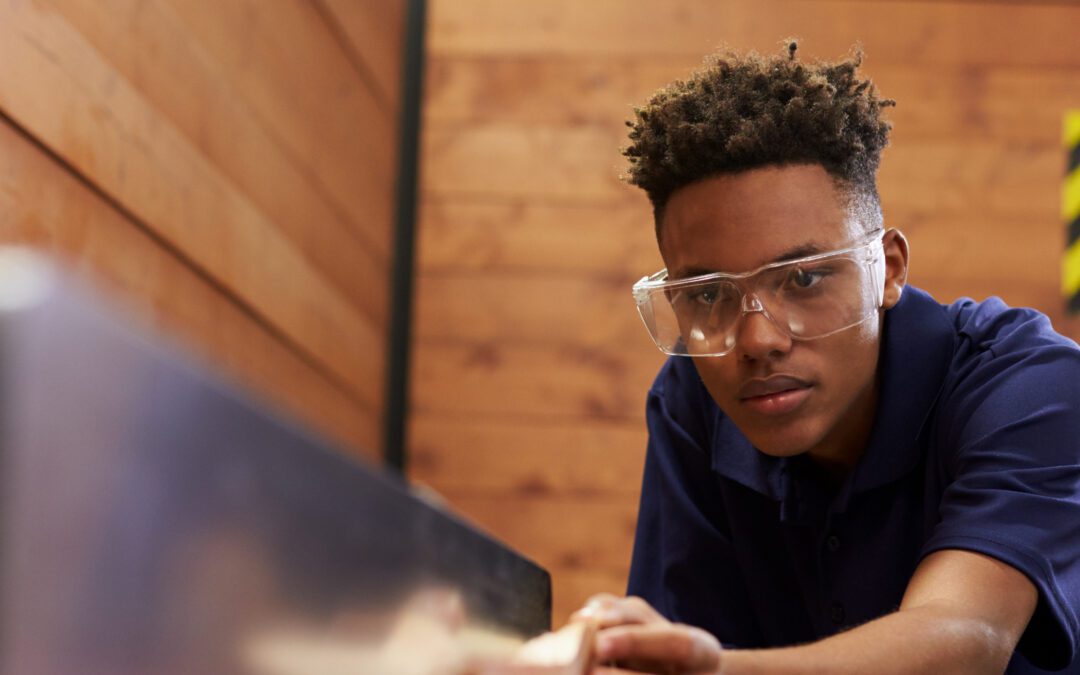

For all typically developing children, the transition from childhood to adolescence and eventually to adulthood, with all its expectations and responsibilities, requires a lot of learning. Now, perhaps more than at any other time in human history, the level of expectation, both in productivity and speed of transition into adulthood, is higher. In recognizing the potential of all children, we often assume that teenagers and young adults should behave, respond, and act in a certain way because they are physically able to and have likely demonstrated the cognitive ability to do so.
Many young adults look and seem like full-grown adults, and we can’t help but have preconceived notions that they
should behave like adults. What neuroscience has discovered is that the brain does not develop at the same rate as the rest of the body and that it does not develop uniformly. For example, the limbic system (responsible for emotions) develops before the prefrontal cortex (responsible for logic and decision-making).
In working with teens, the world often places unfair and unrealistic expectations on them because people can’t help but see them as adults. So, when it comes to driving cars or making risky decisions, etc., adolescents are often expected to think, behave, respond, and make decisions that they don’t yet have the experience to make responsibly.
In Secondary Montessori education, we both recognize this and develop curricula to address adolescents’ developmental needs, then provide opportunities for them to fulfill them. This raises the question, what does that even mean? What do they need?
Society and the Department of Education (or international equivalent) support the notion that all students need a certain level of general knowledge about history, science, and culture. There is also agreement that literacy is necessary, as it is the gateway for the acquisition of other skills. The long-held belief in the universal necessity of traditional, isolated academic subjects, such as algebra II and chemistry, is being challenged by rapid technological advances, such as AI, advanced word processing, and calculators in everyone’s palms, with some considering these subjects to be increasingly obsolete.
What is the Work of Adolescents?
Dr. Montessori viewed adolescence as a period of profound inner change, not only physical but also psychological. Adolescents are grappling with urgent questions, such as:
Who am I becoming? What matters to me?
Where do I belong in the adult world?
How can I contribute meaningfully to society?
What brings value to my world?
While textbooks offer context and insight into the world around and before them, these critical questions cannot be answered through typical education alone. Adolescents need real opportunities to test themselves, encounter limits, take responsibility, and experience the consequences of their actions.
It is worth mentioning that limits and consequences are frequently accompanied by failure. Despite failure’s status in many spheres as an unacceptable curse word, any adult can tell a casual observer that it is an inevitable part of life. How do Montessori guides enable teens to constructively address failure, especially if they have been sheltered from it since infancy?
How do Montessori guides enable teens to constructively address failure, especially if they have been sheltered from it since infancy?
Adolescents will inevitably fail, but they must do so in an environment that doesn’t result in a deep-rooted fear of failure. Without intervention, such a fear could evolve into a more debilitating dread of taking on new challenges and prevent these future adults from developing the growth mindset that is essential to their valorization. At the adolescent level, with careful planning (informed by rigorous observation), opportunities are created for teens to take risks and experience failure in a fairly low-stakes environment. This failure, while certainly feeling impactful for the adolescents themselves, is usually limited to those related to academic, physical, and relationship challenges.
Montessori believed that work provides the mirror adolescents need to discover not only skills but also character. She called this process valorization: the development of a sense of self-worth through meaningful contribution. Notably, whether or not something counts as ‘meaningful contribution’ is not determined by its ability to result in good grades or to inspire praise, but by how much it matters. Ideally, this work not only matters to the student but also to a larger group. Students are put in a position in which others depend on them, and they, therefore, have the opportunity to experience the benefits of success and the consequences of unreliability.
What Real-World Work Looks Like
Montessori Adolescent programs don’t simply send students out to “get jobs.” The work of the Secondary environment is carefully chosen, supervised, and connected to academic learning.
Students run real businesses, such as cafés, farm stands, service ventures, tutoring services, and childcare. They experience situations in which they have the opportunity
to handle actual money or exchange currency, engage with customers and clients, and even learn about business-specific components, such as inventory, profit, and loss.
Many Adolescent Montessori programs offer (and sometimes require) the opportunity to participate in an internship program. The students may spend regular time in internships at places such as veterinary clinics, law offices, elementary schools, nonprofit organizations, co-ops, and design studios, contributing meaningfully to the business with professional guidance. Many programs include landbased work, such as farming, gardening, or environmental restoration, where students’ effort produces visible, tangible results.
The common thread of these experiences is responsibility. Outcomes matter. Other people depend on them. Their effort contributes directly to results. Students are allowed to answer the questions posed above: Who am I becoming? What matters to me? Where do I belong in the adult world? How can I contribute meaningfully? What brings value to my world? Students are encouraged to participate in different activities and, while they may not discover their lifelong passion or calling, these experiences serve to add insight into the direction (or directions) they want to pursue as they continue their journey into adulthood.
Why This Isn’t Vocational Training
Parents sometimes worry that this approach sounds like vocational education. It isn’t.
The goal of these real-world work experiences is not to prepare adolescents for specific careers. Rather, it is to help them develop capacities and transferable skills that will benefit them in any future path: perseverance, realistic self-knowledge, clear communication, collaboration, problem-solving, and resilience.
Through real work, adolescents discover what genuinely interests them and what doesn’t. They learn how organizations actually function. They experience manageable failure and learn to recover, reflect, adjust, and try again. They learn how to work with others in contexts that more closely mirror those that they will encounter in their professional, adult lives.
Most Montessori adolescents go on to attend academically rigorous high schools and colleges. This type of work doesn’t replace academics; instead, it provides context, motivation, and purpose to learning that classroom instruction alone often lacks.
How Academics Fit In
In contrast with traditional education programs, Montessori Adolescent programs aim to integrate academics with work rather than teaching them separately.
Running a business creates genuine mathematical needs: calculating costs, managing cash flow, analyzing profit, and forecasting demand. Writing becomes purposeful when students draft proposals, communicate with customers, and reflect on internships. In this environment, economics, history, and science become lived experiences rather than abstract concepts.
As a result, instead of asking Why do I need to learn this? adolescent students see how knowledge functions in the real world, and their motivation shifts from external pressure to internal relevance.
What This Develops That Classrooms Often Don’t
Sustained real-world work builds capacities that traditional classrooms struggle to cultivate:
Perhaps, most importantly, adolescents develop resilience. They encounter challenges in manageable doses and learn, through experience (including failure), that they can recover, adapt, keep going, improve, and ultimately succeed.
What About College?
This is often parents’ central concern: Will this prepare my child for competitive high schools and colleges? The integration of work and academics doesn’t weaken preparation; it strengthens it. While many schools still value the high GPA, more and more schools are looking for students that took on greater challenges, even if doing so had a higher likelihood of failure and imperfection. Many guidance counselors and admissions committees are now looking for students who can finish college, rather than simply get in. These real-world experiences provide the skills needed for success in a world no longer structured by parents or teachers.
In this regard, Montessori adolescents usually stand out. They speak with maturity and clarity about their experiences. They demonstrate genuine interest in hobbies rather than engaging in activities solely for their résumé-building value. They show strong work habits, self-direction, and realistic self-knowledge, qualities colleges increasingly value.
What Parents Can Expect to Observe
If you’re wondering whether your adolescent is truly benefiting in their Montessori Secondary program, you should look for the following: increased engagement with their work; growing competence and independence; thoughtful self-assessment; and genuine pride in meaningful contributions. These indicators suggest that students’ work is doing what Montessori intended: supporting development of identity, confidence, and purpose alongside academic growth.
When observing and interacting with your teens, this rich development may appear as contentment, happiness, or pride. However, like all other humans, your adolescent may not display these emotions one-hundred percent of the time. Nevertheless, consistent interaction and engagement with your teen will reveal that these emotions are present and, frequently, that they are partly tied to the work they are doing in their Montessori program.
Trusting the Adolescent Process
Montessori’s approach asks parents to trust something that looks very different from conventional schooling. It rests on a simple belief: Adolescents grow not just by absorbing information, but by testing themselves against reality.
Young people who emerge from Secondary Montessori experiences tend to know who they are, what they can do, and how to contribute meaningfully to their community. They’re prepared not only for the next stage of schooling but also to be engaged and capable young adults living a purposeful life. In a world that is rapidly changing, is increasingly accessible to vast amounts of information and technology, and requires skills we cannot yet imagine, this kind of preparation may be the most important education of all.
Dr. Robin Howe began his Montessori career at the age of two at the Barrie School in Silver Spring, MD, which he attended through the eighth grade. Graduating from Dickinson College with two majors (Spanish and Religion), he went on to earn a Master’s Degree in Bioethics from the University of South Florida.
After successfully pursuing a career in restaurant management, Robin decided to return to his Montessori roots. He earned his Primary certification from Palm Harbor Montessori School (AMS) and then attended St. Catherine’s University to earn his Lower and Upper Elementary Certification (AMS). He also attended NAMTA’s Orientation to Adolescent Studies (AMI). Robin holds a Doctorate in Educational Leadership from Argosy University and works with The Montessori Foundation Senior Montessori School Consultant.
Adele Bovis has spent a decade in education in the United States, Peru, and England. She holds a Bachelor’s in Philosophy and Spanish from Washington College and a Master’s in Cross-Cultural Communication and Education from Newcastle University. Adele became interested in Montessori philosophy while completing her graduate studies and, after teaching during the COVID-19 pandemic, committed to the methodology because of its emphasis on student autonomy and preparation for a changing world. She has repeatedly witnessed the partnership-oriented Montessori model’s merit in creating capable, global-minded students and believes wholeheartedly in its peacemaking value. Adele is completing her Secondary credential through the Center for Guided Montessori Studies and is currently working to grow the adolescent program at Desert Garden Montessori in Phoenix, Arizona.


Few topics generate more anxiety for parents of toddlers than toileting. Is my child ready? Am I pushing too soon? Should we wait? Modern disposable diapers have made postponing the process easier than ever before. Montessori offers a different perspective—one grounded in developmental readiness and deep respect for the child.
This approach isn’t about rushing children or enforcing timelines. It’s about recognizing when a child’s neurological development supports toilet learning and understanding why continuing diapers past that point may unintentionally delay independence and body awareness.
Readiness Is Neurological, Not Chronological
Montessori toilet learning begins with observation, not age. When the brain and nervous system reach sufficient maturity, children naturally begin to notice bodily signals, anticipate elimination, and coordinate the physical steps of toileting.
Why Montessori Encourages Toilet Learning When Children Are Neurologically Ready
Signs of neurological readiness include:
Awareness of being wet or soiled, often expressed
through discomfort or communication;
Predictable elimination patterns (waking dry from
naps, regular timing);
Ability to follow two- or three-step sequences (“Let’s
go to the bathroom, pull down pants, sit”);
Increasing motor control and coordination; and
Interest in bathroom routines or desire to participate
in self-care
When these capacities emerge (typically between 18 and 30 months of age), the child’s nervous system is signaling readiness. Continuing exclusive use of diapers at this stage can create confusion. Although the body signals capability, the environment says it’s unnecessary.
Learning to use the toilet isn’t about pleasing adults. It’s about the child discovering: My body belongs to me, and I can care for it.
Montessori asks us to align support with development rather than convenience.
How Diapers Affect Body Awareness
Modern disposable diapers excel at keeping children comfortable regardless of elimination. While this serves infants well, it can inadvertently delay awareness once neurological readiness emerges.
Body awareness develops through simple but important feedback loops: I feel pressure. I release. I notice wetness. I connect these sensations. When diapers absorb everything instantly, this learning loop becomes weaker. Children receive less sensory information about what their body is doing, which can delay their ability to recognize and respond to these internal cues.
This doesn’t mean diapers harm infants or young toddlers. They serve an important purpose early on; however, once a child can recognize and respond to bodily signals, continued reliance on diapers may decrease the very awareness needed for independent toileting.
Toilet Learning as Self-Care, Not Compliance
Montessori frames toileting not as a behavioral milestone but as natural self-care, parallel to feeding oneself or washing hands. Dr. Montessori observed that children possess a deep drive toward independence. When adults support this drive, children experience competence and dignity. When it’s inadvertently blocked, children may resist or disengage.
Learning to use the toilet isn’t about pleasing adults. It’s about the child discovering: My body belongs to me, and I can care for it.
Montessori toilet learning is designed to support the child’s growing independence, always with thoughtful adult su pervision. Children are given the tools they need to succeed—rather than having tasks done for them—so they can take ownership of the process. This includes wearing loose, easily manageable clothing and having consistent access to a child-sized toilet throughout the learning period. When the environment is prepared and the adult observes and supports without interfering, the child is empowered to develop confidence, coordination, and self-awareness at their own pace.
Why Delayed Support Sometimes Creates Resistance
Many parents assume waiting longer makes toileting easier. Sometimes the opposite occurs. Children who are neurologically ready but kept in diapers may assert control through refusal, anxiety around toileting, or resistance to transitions.
This isn’t defiance. It’s often the child communicating: I’m capable, but I’m not being allowed to try.
Montessori environments introduce toileting gently at the developmental window when curiosity and capability align, before frustration builds. When offered respectfully at the right moment, toilet learning rarely becomes a power struggle.
The Environment Enables Independence
Success relies on intentional preparation. When children are expected to use adult-sized bathrooms designed for adult bodies, they face unnecessary challenges that hinder independence and confidence.
A supportive environment includes:
0–3 Years | The Early Years
When the environment supports capability, toileting becomes something the child does rather than something done to them.
Montessori toileting never involves coercion, shame, or punishment. Accidents are treated as information, not failure. Adults model calm confidence, such as offering reminders without anxiety, assistance without intrusion, and encouragement without rewards or charts.
The message remains consistent: Your body is learning. I trust you.
Throughout this process, it’s important to avoid praise/ shame language (such as Good job!, or Uh-oh!). Instead, use observation-based language. Here are a few examples:
This preserves emotional well-being while supporting physical development.
Nighttime and Temporary Setbacks
Daytime readiness differs from nighttime dryness, which depends on physiological maturation (often coming months or years later) and is largely involuntary. Montessori doesn’t equate nighttime accidents with lack of readiness.
Temporary regressions during illness, travel, or major transitions are normal. The response is to return to support, not to abandon progress.
The Deeper Lesson: Dignity and Self-Trust
At its heart, Montessori’s approach to toileting is about dignity. Children who learn to listen to their bodies, respond appropriately, and care for themselves develop quiet confidence that extends far beyond the bathroom.
They internalize:
For Parents Navigating this Stage
If you’re wondering whether to begin, observe your child. Are they showing signs of awareness? Can they communicate needs? Do they show interest in the bathroom?
You’re not rushing your child by offering support when they’re neurologically ready; you’re honoring development. Your child’s Montessori guide can be an invaluable partner in this process, observing readiness patterns throughout the school day and helping align home and school
approaches.
Moving beyond diapers isn’t about growing up too fast. It’s about allowing children to grow when they’re ready— with confidence, dignity, and trust in their unfolding capabilities.
BOOK RECOMMENDATIONS
How Do You Poo?
Written by Allison Jandu Illustrated by Cha Consul
Potty! Written by Carol Zeavin and Rhona Silverbush
Illustrated by Jon Davis
Everyone Poops Written and Illustrated by Taro Gomi
Potty/Bacinica
(A Spanish-English Toilet Training Story)
Written and Illustrated by Leslie Patricelli
On January 6, 1907, Dr. Maria Montessori opened the first Casa dei Bambini—the Children’s House—in a poor tenement district of Rome. The children who entered that classroom were widely viewed as difficult, neglected, and incapable of learning. What Montessori observed there changed not only her career but the course of education itself.
When these children were given order, beauty, meaningful work, and freedom within clear limits, something remarkable happened. They became calmer, more focused, more independent, and more socially connected. Not because anyone trained them to behave differently, but because the obstacles blocking their natural development were removed.
That first classroom matters today not as a historical milestone, but because its purpose remains unchanged: creating the conditions that allow children to become fully themselves.
What Montessori Meant by
“Normalization”
Few Montessori terms are as important—or as misunderstood—as normalization.
Normalization does not mean conformity or compliance. It does not mean suppressing personality or producing unusually obedient children. Montessori used the term to describe something closer to psychological health: a child who can concentrate deeply, act independently, regulate their own behavior, and engage constructively with others.
Montessori observed that many behaviors adults assume are simply “how children are”—restlessness, short attention spans, defiance, withdrawal, or constant dependence—often emerge when children’s developmental needs are not being met. These behaviors are adaptations, not character traits.
When children experience constant interruption, a lack of meaningful work, chaotic or overly controlled environments, or excessive help paired with minimal responsibility, they adjust in ways that may appear to be temperament but are in fact signals of unmet needs.
When conditions are right, a different picture emerges. The normalized child shows sustained concentration, growing confidence, internal self-discipline, a love of order and purposeful activity, and genuine concern for others. Montessori observed this pattern repeatedly, across cultures and circumstances.
Why This Matters More than Ever
Montessori made these discoveries over a century ago, yet they feel strikingly relevant today. Many of the pressures that disrupt healthy development have intensified.
Modern childhood often includes constant stimulation, frequent interruptions, adult-paced schedules, limited opportunities for deep focus, and heavy screen exposure. Children are often given many choices but little meaningful responsibility, and adults—out of love—may step in too quickly, unintentionally undermining developing independence.
Even in caring homes, children can be pulled away from their natural developmental rhythm. When they cannot concentrate deeply, act independently, or contribute meaningfully, their behavior often reflects that imbalance. What we see as difficult behavior is often a message, not a flaw.
The Environment Is Key
Montessori’s approach began with observation, not theory. If children’s struggles were rooted in their environment, then changing the environment could support their return to balance.
The prepared environment supports normalization through a few essential elements.
Order and predictability help children orient themselves without constant adult direction. Meaningful work—real activities with purpose—focuses attention in a way entertainment never can. Freedom within clear, consistent limits allows self-regulation to develop. Beauty and simplicity calm rather than overstimulate. Respectful adults support independence rather than fostering dependence.
When children are given uninterrupted time to engage in purposeful work, concentration appears. With concentration comes calmer behavior, patience, self-control, and kindness. Montessori’s great insight was that discipline and social harmony need not be imposed; they emerge naturally when children are properly supported.
What This Means for Parents
January 6 reminds us that Montessori was never primarily about academic acceleration or achievement. From the beginning, it was about helping children reconnect with their natural developmental path.
That matters deeply today, as many families grapple with attention challenges, anxiety, impulsivity, and
social disconnection. Montessori’s promise re mains simple and profound: when we protect
what children genuinely need—order, meaningful work, freedom with limits, respect, and uninterrupted time—children tend to find their way back to themselves.
Normalization is not about perfection. Children will still have hard days, strong emotions, and moments of struggle. But this lens helps parents respond with clarity and compassion, understanding behavior as information rather than identity.
Living This Legacy at Home
Honoring Montessori’s legacy does not require dramatic changes. Often, it means small, intentional shifts.
Protect time for your child to work without rushing. Reduce interruptions when they are deeply engaged. Allow greater independence before intervening to help. Invite children into real household work, not as chores
0-6 Years | Early Childhood
to endure but as meaningful contributions. When behavior becomes difficult, look first at sleep, transitions, stimulation, and opportunities for responsibility before assuming a character problem.
These simple choices align home life more closely with children’s developmental needs.
Your Child’s Guide As Partner
If you are unsure what your child needs at present, your Montessori guide is an invaluable resource. Guides observe children over time within a carefully prepared
community and can interpret behavior through a developmental lens, distinguishing between typical challenges and signs of unmet needs.
Their goal is the same as Montessori’s in that first Children’s House: to help each child remain connected to their natural capacities for concentration, confidence, and joyful engagement.
This is Montessori’s enduring gift—not a method alone, but a vision of childhood rooted in trust, respect, and the belief that children flourish when we create the conditions they truly need.


Your 13-year-old looks at you and says, “That rule doesn’t make sense.” They point out an inconsistency in something you just said. Or they challenge a school policy as unfair.
If you’re raising a Montessori adolescent, this probably feels familiar, annoying, and exhausting. The child who once accepted rules without much pushback now interrogates decisions, questions authority, and presses for explanations. It may even feel personal. And it’s natural to wonder: Is this healthy? Or have we raised someone who can’t accept authority at all?
Montessori’s answer is clear: This questioning isn’t a problem. It’s a sign of healthy development.
What’s Changing in Adolescence
Dr. Montessori described adolescence as a second major transformation, comparable to Early Childhood. Adolescents are reorganizing themselves cognitively, emotionally, and socially. One of the most significant shifts can be recognized when children are no longer satisfied with what is. They urgently need to understand why things are the way they are—and whether they should be.
Authority based solely on position (“because I’m the parent”), habit (“that’s how we’ve always done it”), or convenience (“because I said so”) no longer feels legitimate. These children are not trying to be difficult. They’re building their own internal framework for judgment, deciding what is fair, reasonable, and deserving of respect.
This is not rebellion for its own sake. It’s the emergence of moral and intellectual independence.
Important Developmental Work
When adolescents challenge rules or decisions, they’re doing important developmental work:
A child who never questions authority hasn’t developed independence. They’ve learned compliance. Montessori’s goal has never been obedience; it’s discernment.
How Montessori Supports This Development
Montessori Adolescent programs deliberately place students in situations that require them to analyze systems: economic, social, political, environmental, and ethical.
Adolescents may run small businesses, study social movements, participate in community governance, or grapple with real-world environmental challenges. These experiences help them understand why rules exist, how systems function, and when change is justified.
This doesn’t mean “anything goes.” Clear boundaries, accountability, and expectations remain essential. What changes is how authority is exercised. Instead of “follow this rule because I’m the adult,” the message becomes: “Here’s why this expectation exists. What do you think would happen without it?”
The goal isn’t blind obedience; instead it’s internalized standards.
Questioning vs. Disrespect
Parents often struggle to distinguish between healthy questioning and disrespect.
Healthy questioning sounds like curiosity, thoughtful disagreement, or frustration paired with engagement.
Disrespect shows up as contempt, personal attacks, refusal to listen, or deliberate rule-breaking after discussion.
The distinction matters. Questioning should be met with explanation and dialogue. Disrespect should be addressed calmly and clearly, with boundaries and consequences.
Many families find it helpful to say explicitly: “I want you to question things that don’t make sense. That’s important. But questioning must be done respectfully.”
This is not rebellion for its own sake. It’s the emergence of moral and intellectual independence.
Why This Feels Especially Intense with
Montessori Adolescents
Montessori adolescents often question more persistently and articulately than their peers because they’ve been practicing these skills for years. They’re accustomed to being taken seriously, to reasoning rather than complying, and to expressing their thinking clearly.
That means parents often get the unpolished version of these emerging capacities. It can be impressive—and maddening—simultaneously.
How to Respond
When your adolescent challenges a rule, try to:
Not every challenge requires a full debate. Sometimes it’s enough to say, “I hear your disagreement. We can talk more later. For now, this is the expectation.”
Preparing for a Complex World
Adolescents allowed to question thoughtfully—while held to standards of respect—tend to emerge with strong internal values, the ability to disagree without destroying relationships, and respect for authority that’s earned rather than imposed. These capacities are essential for adult life. They don’t appear suddenly at 18. They develop through practice in adolescence—messy, inconvenient practice.
Supporting this stage asks parents to shift from control to mentorship, from issuing directives to explaining reasoning. It doesn’t mean abandoning boundaries. It means recognizing that the tools that worked at age seven no longer serve at thirteen.
And on the days when it feels like too much, it’s okay to pause, set limits, and say, “That’s a good question. Let’s come back to it.”
Your adolescent’s questioning isn’t a failure of Montessori education. It’s evidence that it’s working. You’re raising someone who will think critically, challenge unjust systems, and act from internal conviction rather than fear of punishment.
That is demanding work—for them and for you. But it’s work worth doing.
Tim Seldin is President of the Montessori Foundation. His more than 40 years of experience in Montessori education includes 22 years as Headmaster of the Barrie School in Silver Spring, Maryland, his alma mater, from toddler through high school graduation. Tim was Co-Founder and Director of the Institute for Advanced Montessori Studies and the Center for Guided Montessori Studies. He earned a B.A. in History and Philosophy from Georgetown University, an M.Ed. in Educational Administration and Supervision from The American University, and his Montessori certification from the American Montessori Society.
Tim is the author of several books on Montessori Education, including The Montessori Way, How to Raise an Amazing Child, The World in the Palm of Her Hand, and Montessori for Every Family,
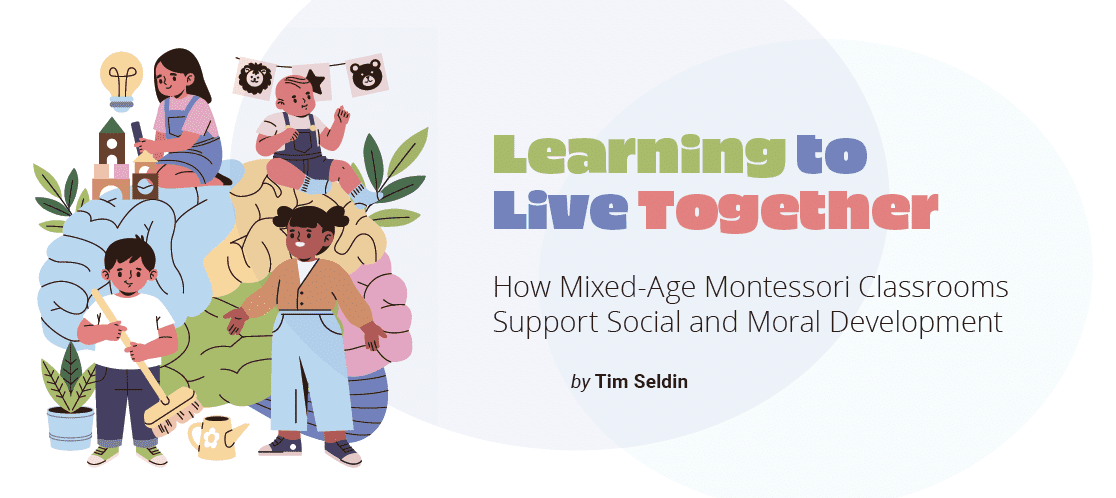
One of the first questions many parents ask about Montessori is whether mixed-age classrooms are used. Children ages three to six learn together, sharing the same space, materials, and daily rhythms. Parents naturally wonder: Will younger children be overwhelmed? Will older children be held back? How does this actually work socially?
These are reasonable questions, especially for those of us
who grew up in traditional, same-age classrooms. Montessori, however, is grounded in a different understanding of how children develop—not only academically but also socially and morally. The mixed-age classroom is not simply an instructional choice. It is a carefully designed social environment intended to help children learn to live with others.
A Classroom that Reflects Real Life
Outside of school, children are rarely grouped strictly by age. Families include siblings of different ages. Neighborhoods and communities are naturally mixed. Montessori classrooms intentionally mirror this reality.
Within a three-year age span, children experience themselves in different roles. One year, they are new and learning; later, they become confident helpers and leaders. No child is always the youngest or always the most capable.
This balance reduces unhealthy comparison and allows confidence and humility to grow side by side.
Leadership Grows Naturally
In a mixed-age Montessori classroom, leadership is not assigned by adults. It emerges from competence. Older children help younger ones because they can—and because they remember what it felt like to struggle.
You might see a five-year-old patiently showing a younger child how to roll a rug, or a four-year-old helping a threeyear-old complete a puzzle. These moments are not staged. They occur because children feel ownership of their environment and a sense of responsibility for one another.
This kind of leadership builds empathy. Younger children learn that asking for help is safe. Older children learn that knowledge carries responsibility. Both age groups come to see learning as something shared rather than competitive.
Conflict as a Learning Opportunity
When children of different ages share a space for several years, conflict is inevitable—and valuable. Montessori does not try to eliminate conflict.
Instead, guides help children work through it respectfully.
Montessori classrooms do not rely on reward charts, public praise, or artificial incentives to encourage good behavior. Instead, values are embedded in daily life.
A younger child may want a material that someone else is using. They learn to wait, ask, or choose something else. The older child learns to finish their work thoughtfully and return materials so others may use them. Over time, children learn that their choices affect the community.
These everyday moments are how moral reasoning develops. Children are not lectured about fairness or kindness. They experience what cooperation feels like—and what happens when it breaks down.
How Character Is Built
Montessori classrooms do not rely on reward charts, public praise, or artificial incentives to encourage good behavior. Instead, values are embedded in daily life.
Children wait because the community matters.
They care for materials because other children depend
on them.
They speak respectfully because relationships endure.
They help because they belong together.
Over time, external guidance becomes internal understanding. Children begin to act considerately, not to please adults but because it feels right.
What Parents Often See—and Miss
From the outside, Montessori classrooms usually appear calm and simple. Children work independently or in small groups without constant adult direction. What may not be immediately visible is the complex social learning taking place beneath the surface.
When an older child patiently teaches a younger one, they are learning responsibility and self-control. When younger children watch attentively, they are developing trust in their own future growth.
Parents sometimes worry that younger children will struggle or older children will be bored. More often, younger children feel inspired, and older children feel purposeful. Each child matters—not only for what they receive but also for what they contribute.
Partnering with Your Child’s Montessori Guide
If you are curious about how your own child is navigating the mixed-age environment, your Montessori guide is your best resource. Guides observe social development over extended periods and can provide insights that may not be apparent at home.
They see the shy child beginning to speak up, the impatient child learning to wait, the confident child learning gentleness.
In a mixed-age Montessori classroom, children are learning far more than academics. They are learning how to live with others—and how to act with integrity when no one is watching. That, ultimately, is education at its deepest level.


DEAR CATHIE—
I WISH I COULD MOTIVATE MY CHILD TO DO WHAT I WANT HIM TO DO. THESE THINGS ARE USUALLY THE BASICS OF LIFE, LIKE DRESSING, EATING, TAKING A BATH, AND USING THE BATHROOM BEFORE WE LEAVE THE HOUSE, COMING WHEN HE IS CALLED, AND GETTING INTO THE CAR MORE QUICKLY. I FIND MYSELF GETTING UPSET AND RAISING MY VOICE. I REALLY DON’T WANT TO BE A MOM WHO YELLS AT HER CHILD TO GET HIM TO DO WHAT HE SHOULD DO! I WONDER IF IT WOULD HELP IF I BRIBED HIM. I HAVE HEARD OF STICKER SYSTEMS WHERE THE CHILD “EARNED’ A STICKER OR A STAR FOR DOING WHAT HE WAS SUPPOSED TO DO. THEN, AFTER 5 OR SO STICKERS, HE GETS A TRIP TO THE ICE CREAM STORE, A SPECIAL PRIZE, OR SOMETHING LIKE THAT. I KNOW THERE ARE TWO DIFFERENT POINTS OF VIEW ON THIS. WHAT ARE YOUR THOUGHTS?
—A FRAZZLED MOM
Dear Mom,
I think all parents feel the way you do at some point during the day. It is very challenging to get through the days with the children cooperating smoothly most of the time. And while we would so like them to respond more quickly and do what they are told, the truth is that these skills take time to develop for many children. Children need to learn the value of cooperation and their role within the family.
We ultimately want children to be motivated to do the right thing because it is the right thing, not because they will get a “pay-off” for doing it. Getting a “payoff” makes a child think that the reason to get dressed, eat, and come when they are called is to earn a reward rather than to learn to be a self-sufficient human being and a contributing member of their family. Then they do not feel obligated to comply if there is no external reward. And once you begin this kind of system, it is often difficult to stop.
The major negative side of using stars and stickers to control your child’s behavior is twofold. First, your child is being controlled by external forces…. You! It puts you in the role of judge and jury, ruling on your child’s actions and passing judgment on his behavior. The other issue is that it does not actively help your child develop internal motivation. I think it is far better to help him learn to do what is right because it feels good to do what is
I think this is a dangerous path to begin to pursue.
It is better for the optimal independence and personal development of a typically developing child to help him learn to handle the expectations of life and do what is expected, because it is just a natural part of life. While using stars and stickers may seem like a “quick fix,” it is actually more negative than positive in the long run. There are many interesting studies on the longitudinal value of external rewards on children’s performance.
For further reading on this subject, I recommend: Punished by Rewards: The Trouble with Gold Stars, Incentive Plans, A’s, Praise, and Other Bribes by Alfie Kohn and Unconditional Parenting: Moving from Rewards and Punishments to Love and Reason by Alfie Kohn.
As an alternative, I suggest using logical consequences and rewards to help children comply. “As soon as everyone is ready, we can use any extra time to read a story.” “Let’s hurry and get in the car so we have time to drive by the cows on our way to school.” This not only gives the child motivation but also the promise of a positive shared experience within the family.
Cathie Perolman has been involved in Montessori education for over 40 years. Cathie has worked in the classroom as a 3-6 assistant, a classroom teacher, a level leader, a teacher trainer, and a college professor. She currently spends he time mentoring teachers, conducting workshops for teachers and administrators, and writing for her blog and for magazines. She also serves as a consultant for schools and as a school validator for the Montessori Schools of Maryland. Cathie is the creator of The Color Coded Sound Games and The Rainbow Reading System as well as other reading and cosmic printable materials to enhance classrooms.
Find them at cathieperolman.com.


by The Montessori Foundation
0–3 years 3–6 years 6–12 years

The Wonderful Things You Will Be
by Emily Winfield Martin
A beautifully illustrated, poetic celebration of childhood that nurtures a child’s sense of possibility and identity. Gentle language, inclusive imagery, and a message of unconditional love make this perfect for reading aloud with infants and toddlers.

Baby Loves Science Board Books (Series)
by Ruth Spiro
This science board-book series (Baby Loves Gravity!) introduces real scientific concepts in simple, lively language. Suitable for developing curiosity and early conceptual thinking.
3 to 6 years old

The Gruffalo
by Julia Donaldson
This rhyming tale supports the development of emerging literacy, narrative understanding, and memory. Its rhythm and predictability build language while its clever structure invites prediction and imagination (both foundational
The Most Magnificent Thing
by Ashley Spires
A brilliant story about creativity, frustration, persistence, and problem-solving. This book helps children see the process of making (including mistakes and revision) is itself meaningful. It aligns well with Montessori values of purposeful activity and self-directed effort.
6 to 12 years old
At this age, children are ready for richer narratives, deeper meaning, and global contexts. These books support curiosity, empathy, and intellectual engagement.

Where the Mountain Meets the Moon
by Grace Lin
A beautifully woven fantasy that draws on Chinese folklore, this novel encourages cross-cultural imagination, resilience, and wonder. Its structure invites children to notice narrative cause-and-effect, moral choices, and interconnected stories.

The Wild Robot
by Peter Brown
A compelling blend of nature, technology, and identity. Children explore what it means to belong, adapt, and communicate across species and systems. This story stimulates empathy, ethics, and systems thinking — key features of Montessori’s integrated curriculum.
12+ years
For teens, we aim for books that support moral reasoning, global awareness, identity exploration, and the complexity of the real world.

The Giver of Stars
by Jojo Moyes
A historical, character-driven novel about librarians on horseback in 1930s Kentucky. Themes include service, community, freedom of information, and personal courage. Great for building empathy and socio-cultural awareness.

All the Light We Cannot See
by Anthony Doerr
A richly layered novel about a blind French girl and a German boy whose paths cross in WWII. This book lends itself to deep discussions on history, moral complexity, perspective-taking, and the interconnectedness of human experience.
 Montessori Family Alliance School Group Membership (Print & Digital 2026 1/2 year pricing)
Original price was: $30.00.$15.00Current price is: $15.00.
Montessori Family Alliance School Group Membership (Print & Digital 2026 1/2 year pricing)
Original price was: $30.00.$15.00Current price is: $15.00.
 The Montessori Way, Revised and Expanded: An Education for Life; A Comprehensive Guide for Parents and Teachers
$25.00
The Montessori Way, Revised and Expanded: An Education for Life; A Comprehensive Guide for Parents and Teachers
$25.00
 The Montessori Child: A Parent's Guide to Raising Capable Children with Creative Minds and Compassionate Hearts (The Parents' Guide to Montessori)
$20.00
The Montessori Child: A Parent's Guide to Raising Capable Children with Creative Minds and Compassionate Hearts (The Parents' Guide to Montessori)
$20.00
 The Montessori Toddler: A Parent's Guide to Raising a Curious and Responsible Human Being (The Parents' Guide to Montessori)
$20.00
The Montessori Toddler: A Parent's Guide to Raising a Curious and Responsible Human Being (The Parents' Guide to Montessori)
$20.00
 Montessori in Action: Building Resilient Montessori Schools 1st Edition
$29.95
Montessori in Action: Building Resilient Montessori Schools 1st Edition
$29.95