 Dear Cathie,
My four year-old son loves to cut, color and paste. He can spend hours and hours happily doing just these activities. I wonder if he gets enough opportunity for creative expression at his Montessori school. I know children are encouraged to repeat the exercises they have had lessons on, but do they ever get to create anything? How does the art area work? -— A CREATIVE DAD
Dear Dad,
It sounds like your son takes after you and enjoys creative pursuits as well. There are many opportunities for creativity in the Montessori classroom. Many of these opportunities involve the use of the Sensorial materials. Once a child can use these materials for the basic purpose of grading them for size, children combine them and do all types of creative projects with them. Often, children enjoy replicating these creations with colored paper, paint, or even a sewing activity.
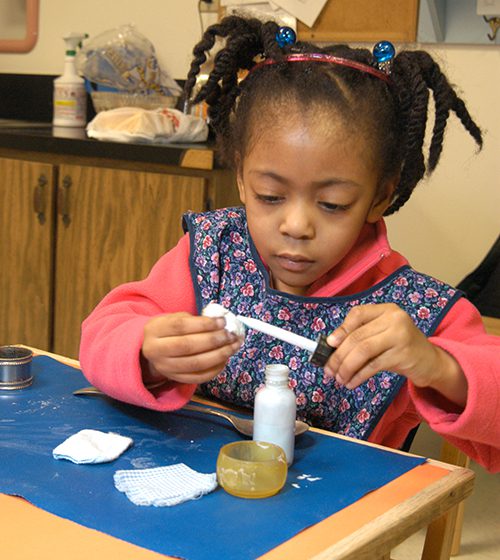
The art area has materials that allow children to develop basic studio art skills such as cutting, gluing, painting, and stamping. These activities are “one-skill activities” that simply practice skills as children work towards mastery. Many children in the 3-6 classrooms are very happy and focused on doing just this. Classrooms also have works that use these skills in a creative way. For example: free painting at the easel; basic shapes to glue to make anything they would like; and collage work.
Other classrooms have specific projects, following the seasons or the unit of study available on the art shelf. Often these have an open-ended component to them. Children are in constant dialogue with their Montessori guide, and sometimes projects are created specifically for a single child at his request. Guides seek to help children (especially highly creative children) plan and facilitate projects that enhance their learning, allow them to try new things and incorporate new skills. I am sure your son will continue to create at home, but rest assured that there are opportunities for him to expand and grow his creativity within the Montessori classroom as well.
Tomorrow’s Child / January 2016 / p 34