
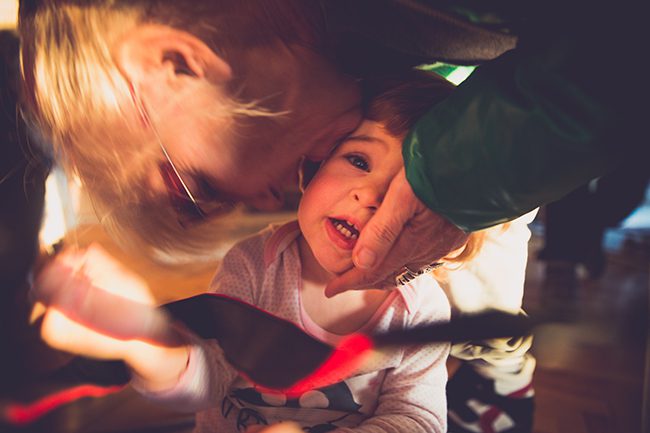
 I moved to southwest Florida 18 years ago to escape the cold, harsh winters of upstate New York. However, my children did not follow and, subsequently, three of my four granddaughters were born, yup, in the dead of the northeast winter season. Thank goodness I keep winter coats and boots amongst my flamingo-patterned Capris!
In late January I ventured up to New Jersey to spend time with three-year-old Aubrey and five-month-old Harper, my fourth granddaughter. Our visit was going so well, with Aubrey delighting in showing me the “art center” in the playroom that we had given her as a holiday gift this year.
We invested in a high-quality wooden easel, rolls and pads of painting paper, nice brushes and paints, and a good smock, because giving children the best quality supplies and then guiding them as to how to care for them is worth the upfront expense. Since your grandchild is attending a Montessori program or being home-schooled the Montessori way, don’t be surprised if they, too, are very particular about the care of their “tools.”
After she donned her smock and set up her paints and paper (while meticulously keeping her yellow brush in the yellow paint, red in the red, and so forth and explained in great detail what all of her brush strokes represented), she painted with an intense look of total absorption and concentration. I sat in (almost) total silence, because I’ve learned how to be an observer in the room from all my Montessori years.
Not interfering and not judging the process or the decisions she was making let her have total creative control over her painting. When she was finished, she invited me to come and see; and everything she had told me I recognized and saw. When she was finished, she aided in carefully cleaning the brushes, putting away the smock, and closing the lids on the paints so that they were ready for the next time she wanted to use them.
While it’s easier, faster, and cleaner to do this for children, try to hold yourself back from doing so. The child will normally take the lead and know that this is how to care for their environment at home. In other words, we are always striving to send a consistent message at home that reinforces what children are learning at school.
During the course of the visit New Jersey got hammered with snow from a blizzard, and their house was blanketed with 33 inches of snow. It delayed my departure by four extra days, as the snowplow company and airports just couldn’t keep up with the demands of snow removal. It gave me a wonderful opportunity to observe her working with her MagnatilesTM (a terrific gift for a special occasion), while helping children with all kinds of skills and problem solving, as well as letting their imaginations soar.
We listened and danced to lots of Frank Leto music, and I taught her the Cocoanut Soap song that she just loves and, of course, we had lots of tea parties for her dolls and infant sister.
Getting down on the floor with your grandchildren and interacting on their level is rewarding and makes them feel as if you are truly invested in what they are doing. Yes, sometimes I feel kind of sore from getting down on the floor to play, but the payoff is so worth it because she’s now had this extended one-on-one visit with me that just helps build on the next visit we have. And, it was a lot of fun.
Watching her interact with her sister is truly delightful. It might be things will change once Harper becomes mobile and crashes through her building creations but for the moment she loves to read to her and kiss her head or hand or cover her with a blanket when she’s fallen asleep while watching us play.
Many first-born children react negatively when a new sibling comes home to live. Their world is a bit upended with having to share space, time, love, alone time with special adults or even friends. Children of 2 or 3 years of age are not often articulate enough to verbalize the frustration or annoyance they are experiencing. As the grandparent, we have the opportunity to create special times that aid the older child in seeing the advantages of being older. I tried to do this whenever Harper was napping but most of the time Aubrey happily included her in whatever we were doing.
Harper is to be my last grandchild; so I’ve been informed! Every second with her is that more precious because it’s one of my most favorite stages of development. It is a fantastic and interesting age to observe. Every day we did a few sessions of tummy time. This not only helps an infant in developing strong neck muscles but, helps them begin the process of discovery which eventually leads to rolling over.
She’s now comfortable being on her back looking up at the items on her play mat and sling-back chair. Her jerky hand movements to establish contact on the hanging objects became more and more purposeful as the week went on. Eventually, she was able to continuously swat and connect. The joy and feeling of achievement that registered on her face was very apparent.
When I said silly words repeatedly, she made her first full-on belly laughs. I was filming for an upcoming Tomorrow’s Child digital issue and happened to catch it. There’s nothing as uplifting as the sound of a baby belly laughing, I assure you! Honestly, I don’t know who was laughing harder once she got going.
Putting her down for the night became a special time as well, and I’m grateful to my daughter and son-in-law handing over that part of the evening to me. We’d sit in her room, in the gliding rocking chair snuggled up in her little PJ’s while she had her final bottle of the night. I played soft music in the background, just listening to the little sounds she made as she drank and began to relax.
Each of my granddaughters have had very different self-soothing routines. My oldest, Blakely, was a hair twirler and at six, she still does that. Aubrey sucked her palm while it covered her eyes. Raegan didn’t seem to need to self-sooth and is, at three, insanely independent, and Harper, she does this “um, um, um” sound, almost like a purring. It will be interesting to observe if she continues that sound, trades it for another or, like her cousin, doesn’t seem to need it any longer once she’s older.
And, so the night for her would end when her chubby little fingers reached out to my hand, grabbing hold and began a finger dance we perfected. It quickly became part of our routine. The trust and the love that went back and forth between us was palpable. Then, those same chubby fingers reached up, grabbed hold of a hunk of my hair and gently pulled on it, similarly to the way she did to herself. The final part of this routine? A vise-grip hold on the tender flesh under my chin, and then she was asleep. I have some fingerprints to show for it, but I would not have traded a single second of the contact for the world.
I say to all the grandparents of Montessori children out there, get down on the floor, interact, share family history, create new memories together, listen to them when they talk, help them see the world for the wonderful place it can be if we open our eyes, hearts and minds to all different experiences and people. Montessori is a tremendous gift to our children of the world; help foster that in your home, and enjoy the ride because it’s over way too fast!
Tomorrow’s Child / April 2016 / p 28