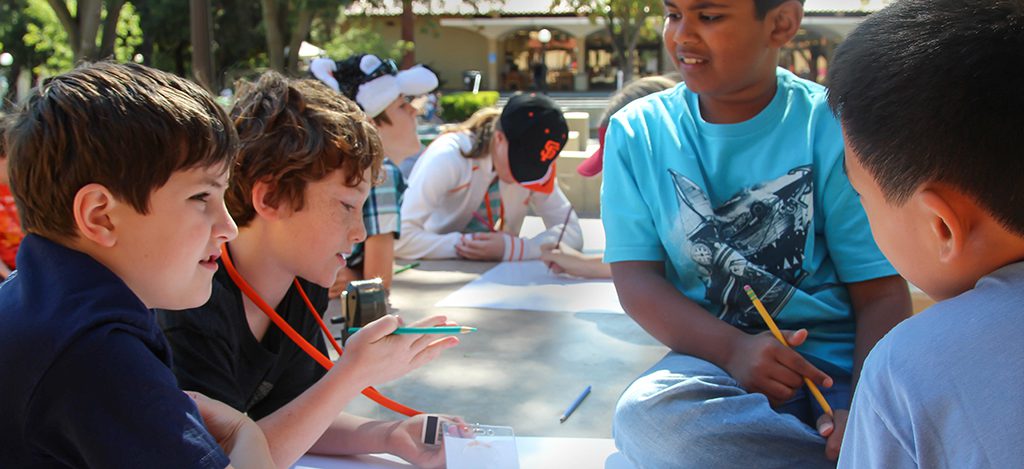
Today we reconstituted our small groups for science. One student was late getting his name into the bowl and he did not get randomly assigned to a group, so I deviated a little from our standard procedure and asked him which group he thought would be the best for him. Not which group he most wanted to be in, but which group he could be most effective—and learn the most—in. But, as a means of following up on all of our discussion at Heifer about what makes a community, before I gave him the chance to answer, I asked the entire class to identify what qualities they thought they brought to their groups, and then, separately, I asked them what qualities they would like their teammates to have—qualities students would like to see in other people in their working groups.
I got a number of interesting answers to the question about what they thought their qualities were. I know how hard it is to self-assess sometimes, so I required that they only put positive qualities and allowed them to ask their peers for an external perspective.
My favorite response was from one girl who asked her friend sitting next to her what her positive qualities were, and the friend responded, “bossiness.” She thought about that for a second, then nodded and said, “That sounds about right.” When I asked them both why they thought “bossiness” was a positive quality, they explained that the one girl was good at taking charge when necessary and telling everyone what to do. I couldn’t argue with that description, because I’d observed it in their previous group work. The key part though was the “when necessary,” because while she does take charge, she’s very good at managing her group—giving everyone the opportunity for input while still being decisive. Instead of bossiness, I’d probably have used the term “leadership.”
After they had the time to compile the list of qualities they wanted to see in teammates, we compiled a list on the whiteboard. Perhaps it’s just that they know what I want to hear, but it was quite nice to see that the top two characteristics were focus and hard work.
“Smart” and “fun” were the next most popular on the list, but after some discussion I/we decided to drop the “smart” since their criterion for smart was just having a basic level of intellectual competence, and that was somewhat less important than the other major qualities listed.
Of the remaining three major qualities that they’d like to see in teammates—focused, hardworking, and fun—I asked them each to pick the one they were going to focus on developing over the next month of group work. I asked a couple of the students who chose “fun” to reconsider since it was already one of their current areas of strength.
I then let them pick a second quality to work on from the full list and had them write their two chosen qualities down in a prominent place, because we would be checking them regularly over the course of the next month to see what specific things they were doing to work on them and how their efforts are going.
Then I let the student choose his group.
The discussion took the entire class period, and we did not get much “science” done, but if it can get students to be a bit more focused on their work, it will have been well worth the time.
Montessori Leadership / December 2013 / p 17