Montessori in the Home: The Early Years
 Your children are busy exploring and learning from an incredible collection of materials and activities in their Montessori classrooms. Parents often ask how much of the special learning materials they should purchase for their child to use at home. We answer: None! Children need other activities to complement what they are doing at school.
Montessori is a way of life. It is a philosophy about how human beings might live their lives and treat one another. It is an attitude of respect and encouragement for each human being, no matter how young or how old. Rather than power and authority, it is a sense of partnership.
Newborn infants come into our lives lacking the ability to be self-sufficient and independent. We not only provide nurturing and protection, we help them learn how to do things for themselves. Independence is the single greatest drive of the young child. The desire to feel competent, capable, and to know that we are seen as being worthy of respect is one of the most powerful human emotions. Because of their intense desire to become competent, toddlers often become extremely frustrated, resulting in the tantrums that are common in the toddler years.
Children who are treated with respect and who are gently encouraged to try new skills more readily learn to do things for themselves. Parents who, instead, take delight in doing things that their children are capable of doing for themselves, delay their children’s independence and hold back the development of their self-esteem. Dr. Montessori taught that a child who feels respected and competent will develop a far greater level of emotional well being than a child who is simply loved and doted upon. She wrote, “The adult should be an aide to life. We must help the child learn how to do it for himself.”
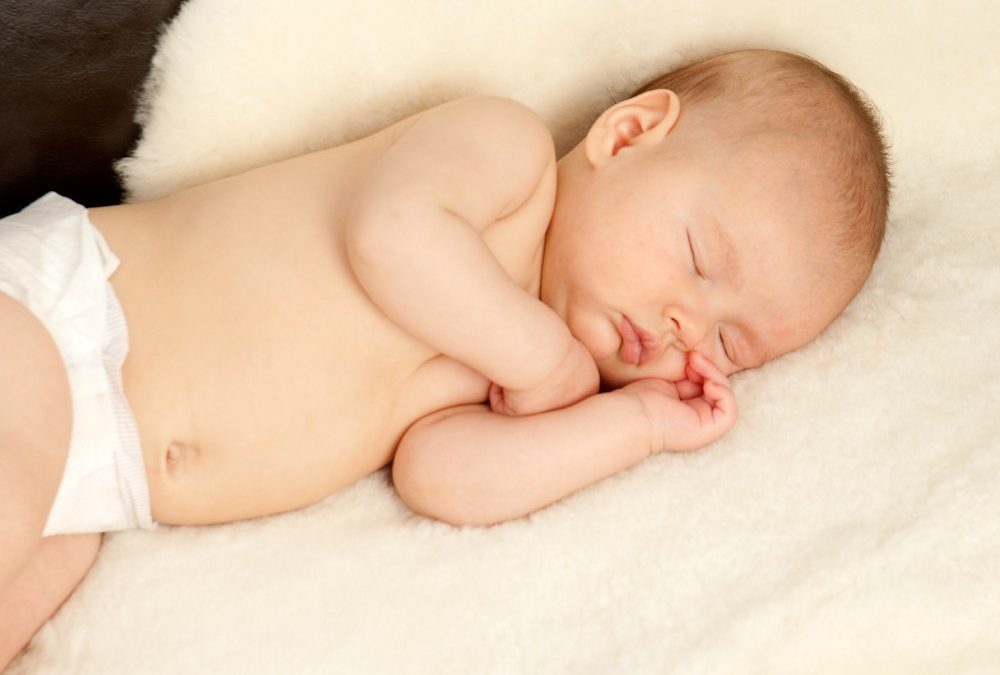
A lamb’s wool mat on the floor, low shelves filled with interesting objects, and a nearby mirror provide many opportunities for babies to explore the world around them.