“Practical Life activities keep children at the leading edge of their skill development, building their intelligence, deepening their concentration, and giving them a new appreciation of their expanding capabilities.” —Lillard and Jessen (2008)
 It was during my recent consultation visit to a Montessori school in India that I found myself required to convince others, more than I had ever needed to do before, of the importance of Practical Life skills in a child’s life. India is a large country with the second largest population in the world and has a very strong belief that the earlier a child can be started on reading, writing and numeracy skills the sooner and better prepared the child will be to enter the rat race of school and college admissions and later secure a job in life.
Practical Life, in my opinion, has never received the importance it so truly deserves. It is the foundation of the Montessori classroom. In the first Casa dei Bambini in San Lorenzo, Maria Montessori had noticed the children’s interest in the tasks of everyday living and carefully formulated activities which would enable the children to learn how to dress themselves, sweep the floor, prepare and serve food, and do other daily tasks. In doing so, the children became more independent, more aware of their environment and more dexterous. She also taught them how to behave courteously, thus endowing them with social as well as practical skills.
In India, and I am sure in many other countries, the need for the child to do these activities is not considered important because they have domestic help/servants who sweep and clean their homes, cook for them, do their laundry, etc. The families argue with the schools that they do not send their children to school to learn these skills but to learn to read and write. I knew at the outset convincing them of the importance of this area of the Montessori curriculum was not going to be an easy one, but I was determined to do so for the sake of the child. If I had my way, I would strip the classroom of other areas and keep just the Practical Life activities for the first month or so. Maria Montessori’s first biographer, E.M. Standing writes:
“Yet, in point of fact, no other occupations which could be undertaken by the children at this stage (3-5) could be more important for their whole development—physical, mental, and moral—than these ‘exercises of practical life,’ as they are called.” (1957, p.213)
I began at the very beginning by explaining how Maria Montessori had observed that very young children are frequently frustrated in their attempts to do things for themselves and that what they need is to have specific exercises, as closely linked to real life as possible, that allow them to master the tasks that they see going on around them in everyday life. The Exercises of Practical Life do just that—they bridge the gap between the home and the school. The child is fascinated by these activities that he has seen his parents perform daily since birth, and tries to copy and learn from them. It is the child’s way of adapting to the world and constructing his own sense of reality.
Maria Montessori also saw that, unlike the adults in their lives, children are not interested in the activity itself, but in the process of learning. This is the difference between the adult and the child—the child is focused on the process and the adult on the product. As a result, the child happily repeats the exercises again and again until he feels satisfied. Practical Life activities are therefore an important part of the Montessori environment.
The young child is attracted to activities that he sees going on around him and that gives him independence and control of his own life. I could see where the Indian families were coming from, for the Practical Life exercises can seem routine and mundane—after all, we all dress ourselves each day. What these families needed to understand was how fundamental the skills learned in Practical Life are to the whole Montessori philosophy, and to her concept of holistic education.
According to Angeline Lillard, “Some of the main purposes of including such exercises in the classroom are (1) to educate children’s movements to be geared to a purpose; (2) to develop children’s ability to concentrate on a task; (3) to help children learn to carry out a series of steps in sequences; and (4) to help children learn to care for the environment. As such, these exercises are foundational to many aspects of Montessori education.” (2005, p. 48).
Through the Practical Life activities, the child is not only preparing himself for later intellectual work but also developing his emotional and social skills, expanding his knowledge of his environment, increasing his physical skills, and engendering a sense of community. Nothing else prepares a child better for life than these activities. “The first thing to realize about these exercises of practical life is that their aim is not a practical one. Emphasis should be laid not on the word practical but on the word life.”(Standing. 1957, p. 213) Through the Exercises of Practical Life, the child learns the skills that enable him to become an independent human being. That is why once he has been shown a skill, he needs the freedom and the opportunity to practice and perfect it. Through this greater independence grows greater self-confidence, which is reflected in every area of the classroom.
When a child becomes totally absorbed in an activity and repeats it over and over again, he begins to develop his powers of concentration. That is why a well-trained Montessori teacher spends so much time observing the children in her classroom, assessing their needs and interests, so she can prepare the environment to entice the child to work with the materials. The more he repeats the activity, the more his concentration develops. At Montessori Casa International, the teachers do everything they can to prepare the Practical Life shelves so the children are drawn to the activities. We know that concentration can only begin in Practical Life and we do everything we can to get the children in this area and keep them there!
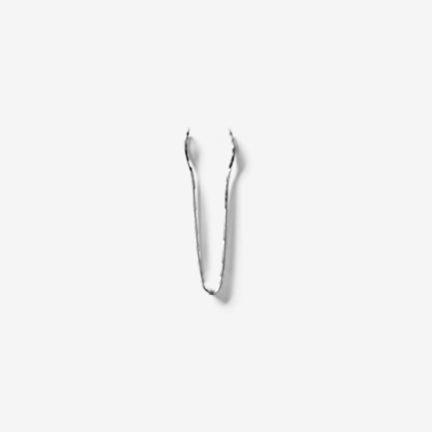
The Exercises of Practical Life look so simple that they are almost deceptive. They encourage the child to develop through activity many of his large and small motor movements. A child who sorts and threads different sizes of beads washes a chair or table, prepares a snack, or waters the plants in the classroom will have greater control over his movements. Polishing activities and the dressing frames develop eye-hand coordination. Besides and most importantly, all of these activities prepare the child’s hand indirectly for the time when he will hold a pencil to write. For instance, the transferring activities with the tongs and spoons develop the pincer grip. As a result, we find that when the time comes, we really do not have to show a Montessori child how to hold a pencil correctly.
As the child develops his Practical Life skills, he becomes more independent and confident. Now that he can put on his own smock and button all the buttons himself, for example, his self-confidence grows and his self-esteem becomes stronger and more positive. Pretty soon he will be helping the younger/newer children in the classroom with their smocks, and this will not only boost his own self-esteem, but it will reinforce his own understanding. He will feel a valuable member of the community and this, in turn, will lead to a greater sense of consideration for others and a feeling of belonging. Through the exercises of grace and courtesy, the child develops social graces. He learns, for example, to use “walking feet”; “inside voices”; how to interrupt others and in doing so learns the acceptable behavior of his own and other cultures.
Practical Life is the soul of the Montessori classroom. Every activity contributes to the child’s intelligence. “Practical Life activities educate the child to carry out organized sequences of activity, employing the body in the service of the mind.” (Lillard, 2005, p. 49) They develop the child’s sense of order—he learns where to find specific activities, conduct the activity in the proper sequence and then return the material from where he got it. The cycle of activity encourages logical thinking and develops the child’s inner sense of order.
At Montessori Casa International, we change the theme in Practical Life every two to three weeks in an attempt to draw children to this area. New colors of pitchers, new objects to sort or transfer, a tarnished silver object in the middle of the table calling to be polished, all bring the children in and, we hope, will develop in them a sense of order, concentration, coordination, and independence which will be the foundation for all the skills they will eventually learn in the other areas of the classroom.
I left India slightly optimistic and very hopeful. The realization that Practical Life is a building block for Math and Literacy and helps the child in his progress towards normalization had started to come to those who had considered it to be a waste of time. A few of the activities of Practical Life, including grace and courtesy, have now been included in the curriculum of the school I have been working with. This is a beginning but there is still so much work to be done.
References:
Lillard, P. & Jessen, L., (2008). Montessori from the start: The child at home, from birth to age three. Schocken.
Lillard, A. S. (2005). Montessori: The science behind the genius. New York: Oxford University Press.
Standing, E.M. (1957). Maria Montessori: Her life and work. New York: Penguin.
Punum Bhatia, Ph.D. was inspired by Dr. Maria Montessori’s philosophy, Punum Bhatia, PhD has dedicated her life to Montessori education as a parent, teacher, and teacher educator for nearly thirty years. She completed her Bachelor’s degree in English Literature; earned Masters’ degrees in English Literature and Education from the University of Calcutta; and completed a certificate diploma in Montessori Pedagogy. She earned her Doctor of Philosophy from the University of Colorado Denver in 2012 for her work on the Self-Efficacy of Montessori teachers. In her efforts to understand children and the environments necessary for them to grow and flourish, Punum focuses on Maria Montessori’s original philosophy and techniques. After teaching the Montessori method to cohorts all around the world, she is now the proud owner of her very own bilingual preschool. (www.mcidenver.edu/ www.punumbhatia.com)
Tomorrow’s Child/ September 2018/ pg 17