A NOTE FROM THE EDITOR
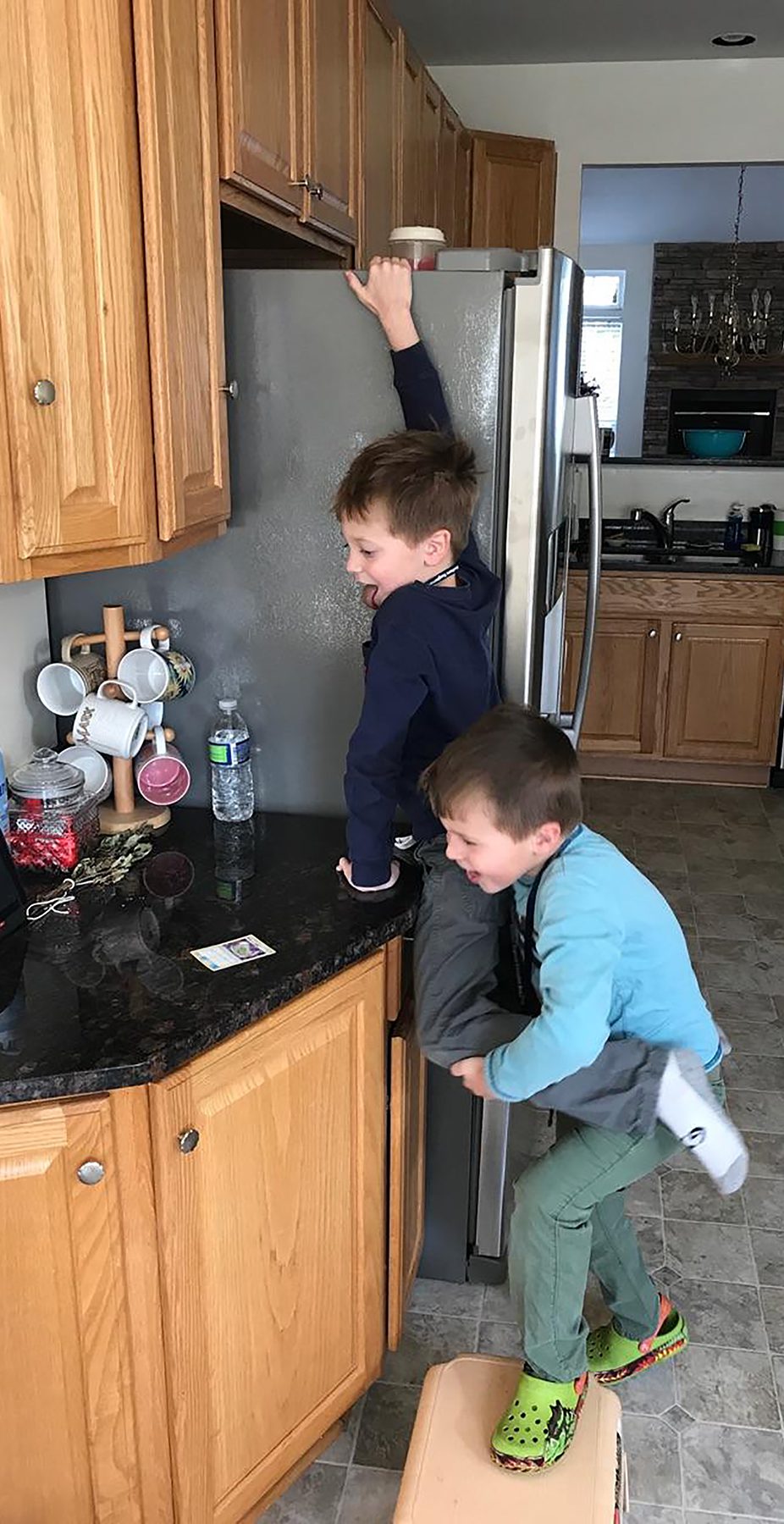
As the grandmother of two boys (15 months apart in age), I have seen that the outcomes of minor squabbles can escalate at an alarming rate and turn into a physical battle, usually over a toy or a Pokemon™ card. Sometimes the most practical response by the adult in the room is to simply remove the object in dispute (say, putting it up high … perhaps on top of the refrigerator), giving the opponents time to compose themselves, call a truce, and redirect themselves to a new, more worthy battle.
Or, maybe they should just put aside their life-or-death squabble and work together to recover the contested object. The battle then morphs into a quest: two brothers working together, united in triumph. High fives from the boys! Boys 1: Grandmother 0. Sometimes it’s better (and safer) when observing a squabble between boys (or German Shepherds) to just let them work it out themselves.
 So many parents say to me, “I just get so tired of being the referee in our home. My children seem to be in constant arguments. If they’re not yelling at each other, they’re wrestling on the living room floor. I don’t know what to do and they’re driving me crazy!” I hear similar stories from parents of only children when a cousin comes over for the day or they’re involved in after-school playdates. If you’re in this boat or one very similar to it, don’t despair! You are not alone. There are ways to minimize this behavior and refocus it when it does come up. Learning to live together peacefully is part of our parenting ‘curriculum.’
So, how do we define squabbles? Squabbles are disagreements about normal, everyday stuff that happens when people live together. In families, we share space, activities, and things. Conflicts come up every day about toys, what show to watch on TV, who gets the shower first, who gets to sit in what chair, etc.
One thing that you can do is to carefully observe your children’s behaviors to determine if these squabbles occur consistently or if they seem to be random. Be a fly on the wall, unattached and uninvolved. What do you see and hear?
Do these unfriendly interactions happen at the same time of day, i.e., when everyone is getting ready to leave in the mornings, right when you get home at the end of the day and you’re trying to get dinner ready, or are they always about what to watch? Do you notice that they frequently happen in a store or when you’re visiting a relative? Are you realizing that they seem to rise up to the same situation or particular toy? If you’re noticing a pattern, then it may be easier to come up with ways to circumvent those particular situations. If squabbles are random, you’ll need a more general approach to disarming the battle and enter into conflict resolution.
Because squabbles are a natural part of learning about relationships it’s helpful to incorporate activities that will promote cooperative, respectful interactions in your family life and meet the emotional needs of family members.
All children and adults need to feel loved and lovable, to feel valued by their family members, to feel some control over their lives, and to feel a sense of place in the family no matter what. When we meet these emotional needs in our homes, then children are less likely to be constantly squabbling. Here are a few ways to meet those needs.
- Ask your child’s opinion when appropriate
- Ask for help with household activities
- Create a job chart, TV schedule, bath schedule, etc., together
- Spend time at least once a week, giving appreciations, or acknowledgments
- Spend one-on-one time with family members
- Allow family members to share the leadership role at family meetings
- Appoint someone to be in charge of car safety/seat belts
- Include children in planning family events
- Brainstorm ideas (especially to find solutions to everyday situations)
- Allow each family member to share what’s coming up with them during the week
- Model respect and collaboration in your adult relationships
- Turn off technology and do something together
- Spend time together when you get home before dinner prep
- Bring a healthy snack for the children to eat at pick up time before going on to the next activity
As you incorporate some of these ideas into your family life you will become aware that there is a lot less squabbling. However, never say never.
When there is a disagreement and it becomes disruptive, dangerous, or destructive (either emotionally or physically) remember:
- Stay calm, take a deep breath before doing or saying anything to the children.
- It takes two to Tango; both children are responsible for the squabble continuing.
- We, as parents, are neither judge nor jury. We really never truly know who started ‘it.’
- Help them to get calm.
- Ask them to take a break.
- Do something unexpected.
- Facilitate a peaceful conflict resolution.
Conflict resolution is a skill to be developed at home and at school. There are many variations on ways to promote conflict resolution. It really depends on what works best for your family. Some families choose to bring situations up at family meetings for discussion by the whole family. Other families are comfortable with designating an area in their home for two people to sit and discuss the problem using a peace rose or talking stick. Still, others like to hold hands while facing each other and take turns talking to find solutions.
Children will need different amounts of adult mentoring and facilitation depending on their ability to express their needs and their experience in working out problems. Also, if conflict resolution is a new activity in your family life, your children may need more guidance no matter what age they are. In Montessori classrooms, conflict resolution (making peace) starts at the toddler level and continues throughout their years in the school. This will probably not be an entirely new experience for them if they are in a Montessori school.
Conflict resolution can happen right away if both children are not overwrought with emotion. Sometimes children need a ‘cooling-off’ period before attempting to problem solve. It is not only OK to take time to cool off but also necessary. Emotions interfere with our ability to think logically. When the time is right the adult’s job is to provide moral support, to facilitate the process between the children, and to be non-judgmental. The ultimate goal is for your children to be able to go through the process and work things out themselves or for an older sibling to become a mentor to younger siblings.
Conflicts will happen. They are a normal part of learning and growing. Children have to learn how to ‘make peace’ in ways that not only work for them but also for their fellow family members. You can make a difference in your home life as well as your child’s life outside of the home when you teach them how to handle life’s disagreements.
Tomorrow’s Child / January 2018 / p 22