
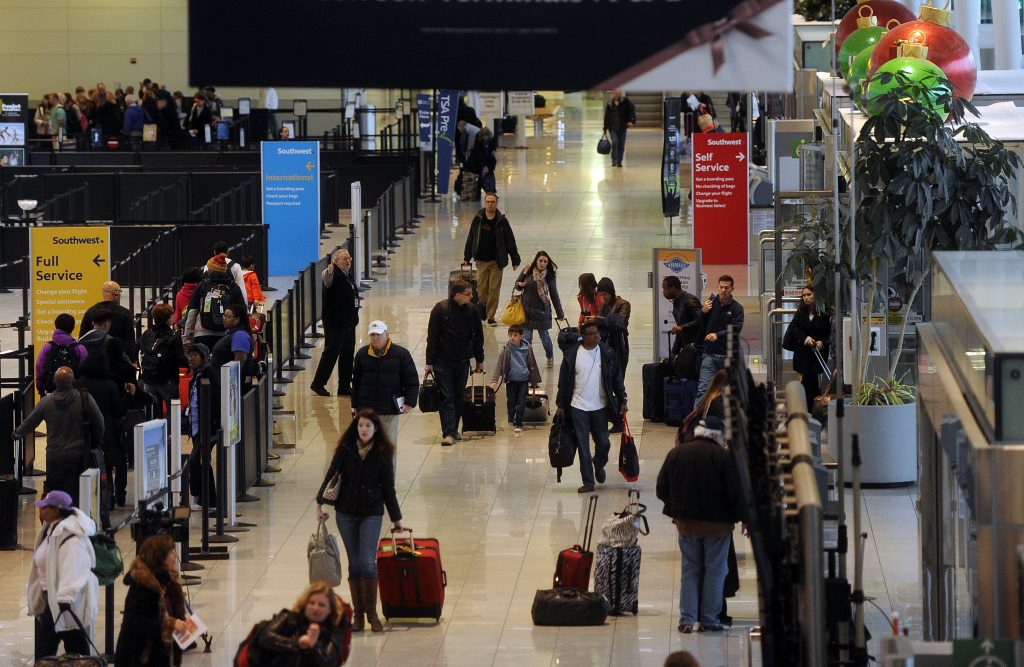
I’m an experienced international traveler. I’ve traveled around the US and overseas for work many times. I am an organized person and pride myself on my time-management skills. I organize international travel for people coming to the US as well as going overseas. I’ve accompanied children on international excursions. These are just the facts, yet, I never stop learning from these adventures because somehow, something usually happens along the way that I hadn’t anticipated. So, I thought I might share some of these experiences with our members to help make traveling a tiny bit easier, should you encounter any of the following situations yourself, because let’s face it, the glamorous days of travel are long past. Most of us are road warriors, and traveling is a necessary part of how we do our jobs.
Passports and Visas
These are government-issued documents, and each country and region has a different requirement you will need to investigate before planning a trip overseas. Passports need to be renewed, and names must match exactly how they appear on your tickets (plane or train).
As of recently, many countries will not allow you to travel if your passport is within 6 months of needing to be renewed.
Allow yourself plenty of time to get renewals or name changes done. When you post out your documents, you are usually required to send the version of the passport you have in hand. Spend the extra money to send this using a traceable method, because we all know the expression, the check is in the mail, right? You want to know you can track those documents.
Visas are often needed to be able to travel from one country to another. Hong Kong, for instance, is a free port and generally very easy to get in and out of with no special visa unless you are coming from a country such as Nigeria. Several of the IMC members from Nigeria, who had planned on coming to our conference in Hong Kong, ran into great difficulties because Hong Kong doesn’t even have a custom’s office here, and Nigeria does not have an embassy presence either. So, before you book your tickets or pay for a conference, you need to learn about visas and passport details way in advance.
In another instance, a foreign-exchange student here in the US was on a class trip to another country. When they reached the airport, it was determined that a
special visa was needed for this student to leave the US and travel abroad. If you are taking children on class trips abroad, it is usually the parent’s responsibility to provide the school and organizer with any kind of special visas, so let them know well in advance that they need to get that paperwork into the school so that someone is not only not disappointed but, potentially, turned away.
Finally, I always recommend that you take a color photocopy of your passport on your trip with a duplicate copy of your passport picture and have it stored safely away from your passport. In the event that your passport becomes lost or stolen, you will be able to get a replacement with a lot less difficulty having these back-up items with you in hand.
Plane Travel
Unless you are able to afford an upgraded seat, international plane flights are generally not terribly comfortable. Being crammed into that tiny space for long periods of time is not only uncomfortable but can be detrimental to your health. Here are some of the best tips I can offer up to aid you.
Invest in compression socks. They are readily available and have come down in cost over the years. They help with circulation and just feel as if your calves are getting a mild massage.
Buy a bottle of water with electrolytes before boarding the plane. This will help with leg cramps and keep you nice and hydrated, which is essential in lessening jet lag.
Avoid the salted peanuts. Bring your own snacks that are low in salt so you aren’t retaining water.
Stretch your legs. If you are able to stand and walk in a plane, try to get up and stretch your legs through out the flight. If you are like me and can’t walk during flights, you can do all kinds of leg extensions flexing your calves and feet to help get your circulation going throughout the trip.
Invest in a good set of earphones. Airline versions have terrible sound and most overseas planes have hours worth of free entertainment to pass the time. Even if you never turn on the system, a good pair of noise-reducing headphones may aid you in getting some sleep without the background noise.
Bring some hand sanitizer or wipes along with you. I read that the magazines in the plane are the biggest germ-carrying items because people often put their fingers in their mouths before turning a page and this leaves germs all over the magazines. You may want to give it a wipe down before you start reading.
Currency Exchange
If you are left on your own to get from an international airport to your lodgings, remember not all country’s transportation systems use credit cards; local currency will be important. Don’t change a huge amount, but have what you think you will need on hand before leaving.
Those kiosks in the airport are not the best place to exchange funds. Neither are your local banks and, in fact, it may take a local bank 24-48 hours to get your currency. Before leaving on our trip to Hong Kong, my bank told me about a place that gave a better exchange rate than any bank. The company is called CXI, and in Florida, for instance, it’s called Florida Currency Exchange. They had a coupon for 50 percent off their fees, which were very reasonable to begin with and if you keep your receipt and have money to convert back upon return they waive that fee altogether. And, indeed, the exchange rate was significantly better than the bank or airport kiosks.
Most credit card companies are waiving international transaction fees, so check with yours to make certain they do as well and, if not, you may want to consider changing companies in favor of one that does.
Using a credit card for all your purchases while away makes a lot of sense. Besides the fact that the exchange rate is based on the day’s listing that it posts, you have a trail of purchases in the event your luggage doesn’t make it home, and all your gifts and supplies for school are in that bag. Having just experienced that issue on the way home from Hong Kong, it made it that much easier to have everything on the credit card detail to provide the airlines with proof of purchases.
Lost or Stolen Luggage
It happens. As I said, my luggage was stolen on the way back from Hong Kong (during my inside-the-US portion of the trip, no less). The bag was a generic black suitcase and yet it had my nametag on it. But, from now on, I’ll not sneer at all colorful suitcases or funny luggage tags that help people identify their property. I’d also recommend that your name and address information are taped to the inside cover of a suitcase as well just incase the tag on the outside comes off. And, above all else, keep your checked luggage-claim tickets. Long gone are the days when there was someone checking those tickets before you could leave the airport!
It is most important that you notify the police right on the spot about an incident, so that they may look at airport surveillance tapes and, perhaps, spot your luggage. Again, having something very distinguishing about your luggage may help them identify it.
Many police departments are now having you file online claims. Do it right away so there is an official report with the police as well as the airline’s luggage department. Did you book your business trip through your company-issued credit card? They are in line after the airlines for placing a claim and often will work in conjunction with the airlines so that your indemnification doesn’t exceed the value of the loss. In our case, our corporate credit-card policy will only give us a credit on our statement for the excess value of the claim and not
reimbursement in the form of cash
or check.
Trip Insurance
If you are going to purchase trip insurance, remember that premiums are, in part, determined by your age. It also can be written to only cover losses due to illness or death and may exclude loss of personal property altogether. Be certain that when you shop for trip insurance you are buying what you think you will need. In my situation, the trip insurance did cover loss of personal property, so I had a third provider from which to collect.
Another colleague missed her flight, and the trip insurance did not cover the cost of the flight regardless of reason. Again, it’s that fine print you want to read.
Special Dietary Needs
Thankfully, more and more consumers have made their dietary needs known, and some of the airlines are taking notice. I called our international carrier’s customer service line when I booked our flights. Both Tim Seldin and I avoid wheat and gluten, and since we’d be served three meals on each leg of the journey, I was able to make sure our meals were at least gluten-free. As a matter of fact, our meals were served first, and, even if our trays were in the up position, our meals were left for when we woke up. It’s worth investigating.
While overseas it may be worth it to you to find out how to ask for gluten-free or other dietary needs in the language common to the area and carry around a card with this phrase on it so when you go to a restaurant you will be able to communicate that need. Gluten-free is not as available in many countries and just starting to make a presence.
How to Communicate While You Are Abroad
Not all of us have global mobile phones. Most of us these days do carry smart phones. There are apps available that will let you call and text for no additional charges or no need to swap out a phone with a rental. We used a free download program called Viber™ while in Asia. It worked better than other programs, as long as we had our phones on wifi. If you use it without wifi, you will get charged the roaming fees, which are huge.
On this last trip, some of our group went to Mainland China to do some training. While the trainers’ spouses had copies of itineraries, they were back in the US. Although I was the organizer of part of the trip, I did not have a copy of the itinerary. I felt that I should have had this information (just in case) and will never leave that one to chance again. Since the Mainland comes under a different set of controls than Hong Kong, getting in touch with them was virtually impossible, and I did not like that feeling one bit.
Finally, do not be embarrassed to wear a fanny pack. OK, it doesn’t have to be the size of a piece of carry-on luggage but having a secure place for passport, some cash, emergency items on your person, that you can tuck under a shirt or sweater so that it’s not easy pickings could help prevent some very unnecessary stress in your travels. Be ever aware of your surroundings, be present, and safe travels.
Margot Garfield-Anderson has worked for the Montessori Foundation in a number of capacities for over 15 years. She is the organizer and co-ordinator of the Montessori Foundation’s Annual International Conference.
Montessori Leadership/ June 2015 / pg 18