The Courage To Be a Montessori Parent

The Courage To Be a Montessori Parent

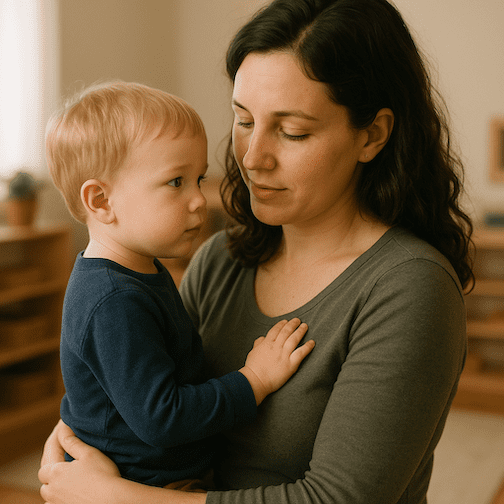
mom and child


By Joyce St. Giermaine

  • Montessori is great for little children but that’s it!
  • Montessori is warm and fuzzy. Children enjoy it, but the real world isn’t warm and fuzzy. They have to grow up sometime.
  • I’m worried that Montessori shelters my child from life.
  • Your children are still in Montessori. You should be thinking about their future. You do want them to go to college, don’t you?

As a Montessori parent, you’ve probably heard many statements like those above, and you can probably add a few of your own. These remarks often are expressed by parents to other parents. Sometimes they come from well-meaning relatives, co-workers, neighbors, and just about anybody who knows you have a child in a Montessori school. When it comes to Montessori, it seems that everyone has an opinion.

When my children first started Montessori many years ago, I heard the statement “It takes courage to be a Montessori parent.” I used to believe that it took courage because Montessori was an experimental program to which I was offering the use of my children as guinea pigs. As I became better informed, I quickly discovered this was not the case. Montessori has actually been around for over one hundred years and has been proven successful in many different educational environments throughout the world.

So what does it mean “It takes courage?” Maybe it’s because Montessori tends to encourage children to think for themselves and articulate their own opinions. This is all wonderful, but as a parent, there are moments when it would be a whole lot easier to deal with a six-year-old who blindly and obediently accepts your explanation for why you don’t want to create a recycling center right in the middle of your kitchen or a four-year-old who announces that she knows where hamburger really comes from and she’s never going to eat it or any other animal ever again, period!

That must be it, I thought. It takes courage to live with these self-actualized, intelligent little creatures that have been encouraged by Montessori to think logically and express their opinions. I stuck with this understanding of the “courage” statement for a number of years. As a parent of two children who grew up in a Montessori school for ten years, I’ve got a million examples of a Montessori mother’s courage in action, but that’s the subject of another article.

As my children got older, I came to understand the courage statement in a whole different light. About the time that my children hit kindergarten, I found myself constantly defending my choice to keep my children in Montessori through the elementary years. The opinions of relatives were the most difficult and the hardest to discount because they came from people who were legitimately concerned about their grandchildren, or nieces and nephews. A case in point. My husband went to a New England boarding school, followed by Yale, followed by medical school at Columbia. He later topped it off by obtaining a law degree. Observing his grandson working with little beads while lying flat on his belly during a visit to the school, it was clear from the bemused expression on my father-in-law’s face that Grampa Dan not only had doubts about Montessori, he also had doubts about us as parents.

The pressure can be enormous. There were many times when we were very tempted to walk away from Montessori and put our children into the capable hands of a more traditional school. After all, we turned out all right. Or did we?

Speaking only from my own personal experience, I question how we as a society have come to define “success.” Is a child who grows up to become a doctor or a lawyer any more successful than a carpenter or a musician or a teacher or a homemaker? Do well-intended parents unconsciously push their children into status careers that send out all the right messages that we as a society have come to accept as the true measure of success.

Does it matter to us that our child grows up to be happy with her choice in careers, that she has a sense of fulfillment every day that she goes to work, that she approaches each day of her adult life with the same enthusiasm and eagerness to grow that she experienced as a child in the Montessori classroom, that she is able to accept the challenges that life has to offer and has the ability to adapt to new ideas and technology, that she understands that whatever gifts of intelligence and ability she possesses they are truly gifts and that others have other abilities and gifts that are different from her own? If we as parents can answer yes to these questions, then I believe our children are well placed in a Montessori environment for as long as we are able to keep them there.

In designing the cover, we tried to find a provocative, and indeed a shocking way, to visually portray the question: Does Montessori prepare children for the real world? The cover has a great deal of personal significance to me for three reasons. First, the boy in the picture is my son. I can assure you he does not look like that in real life (see insert). Second, it is the first and possibly only time I have ever succeeded in getting him into a tie and jacket long enough to have a picture taken (my mother will be so happy). Third, and most importantly, as a young adult, I chose a career in law for all the wrong reasons.

I believed that becoming a lawyer would give me prestige and wealth. What it gave me that I hadn’t counted on was an ulcer and the nagging feeling that I should be doing something else with my life. Please don’t get me wrong. I don’t dislike lawyers (or tasseled loafers) — even trial lawyers are ok with me as long as I don’t have to join them in the courtroom. There is nothing wrong with the law, medicine, teaching, carpentry, or anything else as long as it is what is right for the individual.

If the answer to the question of whether or not Montessori prepares children for the real world is to be judged by whether or not great percentages of Montessori students will go on to a professional career, then the answer is maybe. If the answer to the question is to be judged by whether or not Montessori prepares children for life, the answer is an unequivocal yes.

As a parent, I have very high expectations for my children from Montessori. I expect them to be well prepared academically so that they will be able to follow their dreams wherever that may take them, but I hope that they will be able to continue making the responsible choices I see them make every day in their classrooms, I hope that they will be able to retain the love of learning and creativity that hasn’t been driven out of them by a system that is so intent upon conformity that it places individuality at grave risk.

I care about academics, but I know that my children will get them from any good school, Montessori or otherwise. For me, the true value of Montessori goes beyond academics. When I look at my own children, I see behavior patterns that are different from my own at their age. I feel very comfortable that Montessori prepares children for the real world. In an interview, David Kahn once remarked, “Montessori is the real world. It’s the dichotomy that’s false.” When you think about it, there’s a lot of sense behind that statement.

I often wish I could have had a Montessori experience as a child. Things might have turned out differently. For one thing, I could have saved all that money on law school, but then I really do believe that all learning experiences have value. Maybe a bit of Montessori did rub off on me after all. At the age of 35, I quit the practice of law and I’m now doing something I find much more fulfilling, something I probably should have done in the beginning if I had not tried so hard to jam my round-pegged personality into a square professional hole.

When I announced that I wasn’t going to practice law anymore, the initial overwhelming response was, “What do you mean you’re not going to practice law anymore. How do you think you’re going to survive in the real world without a profession?” Sound familiar?

More than anything, I hope that we as parents will have the courage to recognize and continue to support the human values and life lessons that our children are learning in their Montessori classrooms every day. As for my children growing up to pursue some kind of yuppie career, that’s ok as long as it’s right for them. Our world could probably use a lot more Montessori lawyers, politicians, and doctors who understand that there’s more to life than being book smart. Above all, though, I think that as parents and educators we must never accept the premise that our objective must be to teach children to survive life. Better we should help them learn to celebrate it!
If You Can Only Do One Thing Montessori, Do This

If You Can Only Do One Thing Montessori, Do This

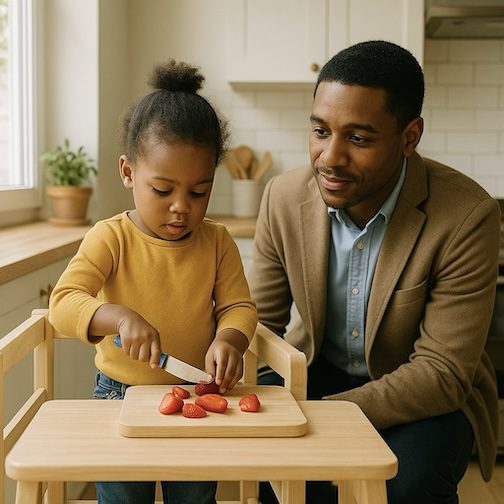
Father and daughter

Many parents ask, “I can’t do it all—what should I never skip?” It’s a question that comes from a very real place. Life with young children is full, messy, and unpredictable. Between work, meals, laundry, and the emotional rollercoaster of toddlerhood, even the most well-intentioned parents can feel overwhelmed. Montessori may sound ideal in theory—but how do you begin when you’re just trying to get everyone dressed and out the door?

If you can only do one thing Montessori, let it be this: protect your child’s independence. More than any shelf, material, or routine, it is the child’s growing sense of self-agency that defines the heart of Montessori.

That means stepping back, even when it’s hard. It means letting your child struggle a bit—not in frustration, but in effort. It’s holding back the instinct to swoop in and fix, and instead allowing them to discover that they can do hard things. When a child senses that you trust them to do for themselves, something powerful takes root. They begin to believe in their own ability.

Consider the simple act of getting dressed. A two-year-old trying to put on socks may fumble, get them inside out, or put them on the wrong feet. It would be so much faster to just do it for them. But those few extra minutes of patience are an investment. Over time, the child not only learns the mechanics of dressing—they build confidence. They begin to see themselves as capable.

Or imagine the morning rush before school. You’re trying to get breakfast on the table and lunches packed. Your child wants to help pour their own cereal. You’re tempted to say no—it might spill, it will take longer. But this is where independence is born. Instead of brushing it off, you bring out a small pitcher with milk and a child-sized bowl. You stand close, just in case, but you let them pour. If it spills, you clean it up together. And then you see it—that proud little smile that says, “I did it.”

These aren’t just conveniences or chores. These are moments of trust, of growth, and of identity. The child isn’t helping—they’re participating. They are learning that they matter, that they are part of the family, and that they have the power to contribute.

Montessori reminds us that true independence is not just about doing things on your own—it’s about developing the executive function skills that make that possible. When children are allowed to choose their clothes, prepare a snack, or water the plants, they’re practicing planning, focus, self-control, and problem-solving. These skills form the foundation not only for academic success but for life.

Independence also transforms the parent-child relationship. Instead of being locked in constant correction, you become a guide and a partner. You begin to notice more. You step back, observe, and let your child lead. And in doing so, you create space for connection that isn’t based on control, but on mutual respect.

This approach doesn’t require special tools or a perfect home environment. It starts with noticing your child’s desire to do things for themselves—and saying yes more often. Yes, you may carry your plate to the sink. Yes, you may put your shoes on, even if they’re on the wrong feet. Yes, you may help stir the pancake batter, even if it’s a bit messy.

Every time you say yes, you’re saying something deeper: I see you. I trust you. You are capable.

This isn’t about letting children run wild or do whatever they want. Montessori is built on the idea of freedom within limits. We prepare the environment, set clear expectations, and then step back. We create spaces that invite independe nce and make it safe to explore. We hold boundaries with kindness, and we support children without rescuing them.

So if your days feel rushed, if you’re not sure where to start with Montessori, start here. Create a little time and space for your child to try things on their own. Resist the urge to jump in. Celebrate effort over perfection. And above all, let your child know—again and again—that you believe in their capabilities.

Because when a child knows they are trusted, they begin to trust themselves. And that, more than anything else, is what Montessori is all about.

7 Types of Rest: The Key to Becoming the Prepared Adult

7 Types of Rest: The Key to Becoming the Prepared Adult

Have you ever had a full night’s sleep and woke up still feeling exhausted? Do you lie in bed at night unable to shut off your mind? Do you find yourself feeling overwhelmed by sounds and lights? If so, you might be experiencing a rest deficit! So often we confuse rest with sleep, leaving us feeling incomplete even when we are “fully rested.” Discover the 7 different types of rest necessary for each of us to reach our fullest potential and learn how they can be used to help each of us become the Prepared Adult Dr. Montessori so often described.

7 Types of Rest: The Key to Becoming the Prepared Adult

How to honor Juneteenth while not celebrating a 2.5 year silence on freedom

In the desire to honor this new holiday, there is still missing historical information about Juneteenth that leave misunderstandings about Juneteenth as a commemoration of the journey to end slavery vs a celebration of the missing years of the knowledge of freedom. Which was it? What is the accurate information that we must immerse ourselves with, and how do we teach about this holiday with historic integrity?

7 Types of Rest: The Key to Becoming the Prepared Adult

Leading a Successful Montessori School that Supports Neurodiverse Learners and their Families

As a school leader, do you struggle to support your staff as they do their best to support the increasing number of neurodiverse learners in their classrooms at every level? You and your staff are committed to the idea of inclusive education, but what does inclusion really look like in action? And how can you be sure that ALL of your learners and your staff are thriving in an inclusive classroom?
Join Montessorian, special educator, and former school leader, Christine Lowry, as she shares the components of a whole school system and structures for success to get you started on the journey. As always, we look forward to a lively discussion as we explore your needs, your questions, and your ideas.

7 Types of Rest: The Key to Becoming the Prepared Adult

The Wonder Effect: Elevating Montessori Leadership for Lasting Community Growth

In today’s rapidly evolving educational landscape, Montessori school leaders are called to move beyond routine management and inspire true transformation within their communities. This webinar explores how the intentional cultivation of awe and wonder can spark adult growth, foster emotional intelligence, and create a thriving, interconnected school culture. Drawing on the latest research in the science of learning, cosmic education, and the power of reflective practice, participants will discover practical strategies for integrating awe into leadership. Montessori school leaders have the power to shape a positive, connected school culture by bringing moments of awe and wonder into everyday routines. This webinar will show you how to use simple, practical strategies to spark curiosity, strengthen your team, and create a more joyful, resilient school community. You’ll learn easy ways to model wonder in your leadership, encourage staff collaboration, and make your school a place where both adults and children love to learn and grow.

Three Key Takeaways:
-Discover how to infuse a sense of wonder and curiosity into your regular staff interactions, setting a positive and inspiring tone for your team.
-Learn ways to build stronger connections among your staff by celebrating successes and sharing uplifting moments within your school community.
-Find out how to lead with curiosity and openness, empowering your team to approach challenges creatively and collaboratively.

7 Types of Rest: The Key to Becoming the Prepared Adult

“Shaping Journeys: Rites of Passage in Schools”

This webinar will explore meaningful traditions that shape students’ journeys. Come to learn and share about rituals that set your school apart. We’ll discuss how children, staff, parents, and trustees can collaborate to create impactful milestones that honor growth and foster community. Don’t miss this opportunity to enrich your school culture!

7 Types of Rest: The Key to Becoming the Prepared Adult

Supporting Neurodiversity in Montessori Classrooms

Join Christine Lowry in an hour of conversation as we continue to explore neurodiversity and the questions we have about our work with children.
How do we understand “today’s child”? How can the classroom environment and school best meet our students’ needs? What knowledge, strategies, and process can prepare us as we serve and support neurodiversity in our classroom and school? As always, we look forward to a lively discussion!

7 Types of Rest: The Key to Becoming the Prepared Adult

Part 2: Have you wondered how to give Black History Month justice in your school? OR have you thrown something together about the same few African Americans?

Cindy will present the “how” of this heritage month to get you through the month, and to be ready for next year – or the rest of the year. Bring your phone, your computer, and be ready to unveil the mystery of Black History. Meet with others who have the courage to keep teaching with historical integrity.

7 Types of Rest: The Key to Becoming the Prepared Adult

Have you wondered how to give Black History Month justice in your school? OR have you thrown something together about the same few African Americans?

Cindy will present the “how” of this heritage month to get you through the month, and to be ready for next year – or the rest of the year. Bring your phone, your computer, and be ready to unveil the mystery of Black History. Meet with others who have the courage to keep teaching with historical integrity.

7 Types of Rest: The Key to Becoming the Prepared Adult

What Teachers Want from Their School Administration

This past summer we asked our teacher education learners this question and you may be surprised to hear their answers. Now more than ever, as we struggle to find and keep qualified teachers, it is important for administrators to understand the needs and expectations of their teachers. In this session we will explore those needs and discuss strategies for creating positive work environments where every teacher feels valued, supported, and empowered in their work with our children and families.

7 Types of Rest: The Key to Becoming the Prepared Adult

Neurodiverse Learners? We Can Do This!

Through knowledge gained from the experts of her day, and her own observations and experimentation, Dr. Montessori came to understand that all children have strengths, interests, and yes, challenges. She recognized that all could benefit from learning together in a community of “social cohesion.” Today we would call this inclusive education.
With 30+ years of research, we understand the value and benefits of inclusive classrooms for ALL learners. We can offer many opportunities in our Montessori classrooms to support and guide all students as we explore the alignment of Dr. Montessori’s observations with our current understanding of neurodiversity and inclusive classrooms.
Can our 2025 aspiration as a Montessori community be to cultivate that attitude of the scientist, the open mindset that seeks to discover the needs of our students and not just their differences? Join us in conversation as we follow in the footsteps of Dr. Maria Montessori!
In our time, we call this inclusive education. Thirty-plus years of research have shown the benefits of inclusion for all students. We can follow in Dr. Montessori’s footsteps as a lifelong learner to expand her teachings
As a Montessorian and special educator, Christine shares her expertise on neurodiversity and inclusive classrooms with schools, educators, and online courses. 1 Montessori. The London Lectures. 2012

7 Types of Rest: The Key to Becoming the Prepared Adult

Welcome to the new year! All stressed out…already?

Halfway through the school year, leaders are invited to reflect on the successes and challenges of their journey so far. In this interactive workshop, we’ll share insights, celebrate wins, and explore strategies to tackle ongoing challenges, leaving you inspired and equipped to approach the remainder of the year with clarity and confidence. We have half of the year ahead of us…we can do this!

7 Types of Rest: The Key to Becoming the Prepared Adult

Welcome to the new year! All stressed out…already?

By special request, this week, we’ll explore the topic of stress, its impact, and our response to it. Last week, we discussed intentions, goals, and New Year’s resolutions. Research shows that setting goals can ADD to our stress! Is there “good” stress? What does neuroscience tell us? How about ancient wisdom and Montessori theory? Join us for some insights and tools, and bring some of your own to share.

7 Types of Rest: The Key to Becoming the Prepared Adult

The Importance Of Bring Art Literacy Into Your School

Understanding the importance of integrating a visual art curriculum into the classroom is crucial in today’s educational landscape, especially with the emphasis on STEAM programming. The “A” in STEAM signifies arts, showcasing the increasing recognition of arts within this educational movement across all grade levels. This approach, combining science, technology, engineering, arts, and mathematics through project-based learning, not only prepares children for future jobs but also nurtures their creative problem-solving skills.

7 Types of Rest: The Key to Becoming the Prepared Adult

What will your answer be in January 2026?

Happy 2025! Do you enter the new year enthusiastically with goals, intentions, and resolutions? Or do you eliminate the risk of failure by dismissing the idea? Or maybe you are somewhere in between. How will you feel one year from now as you look back and reflect on 2025? Join us today for a lively discussion about identifying and sustaining change where needed, acceptance where required, and celebration where merited.

7 Types of Rest: The Key to Becoming the Prepared Adult

Gratitude in Leadership: Honoring Those Who Shape Us

Join us as we explore the profound impact of acknowledging and appreciating the individuals—children and adults alike—who have inspired, challenged, and helped us grow into better leaders and educators. Discover how gratitude strengthens relationships, fosters self-awareness, and enhances leadership within the Montessori community.