by Alicia Diaz-David | Emotional Intelligence (EQ), Empowerment, Executive Functioning, Infant-Toddler (0 to 3), MFA, Montessori Parenting, Practical Life, Primary (3-6), TC May 2022, Toddler (18 months-3 years), Tomorrow's Child
The Dump Truck Story
What happens when we normalize ‘disaster’ thinking and accept the mess
by Alicia Diaz-David
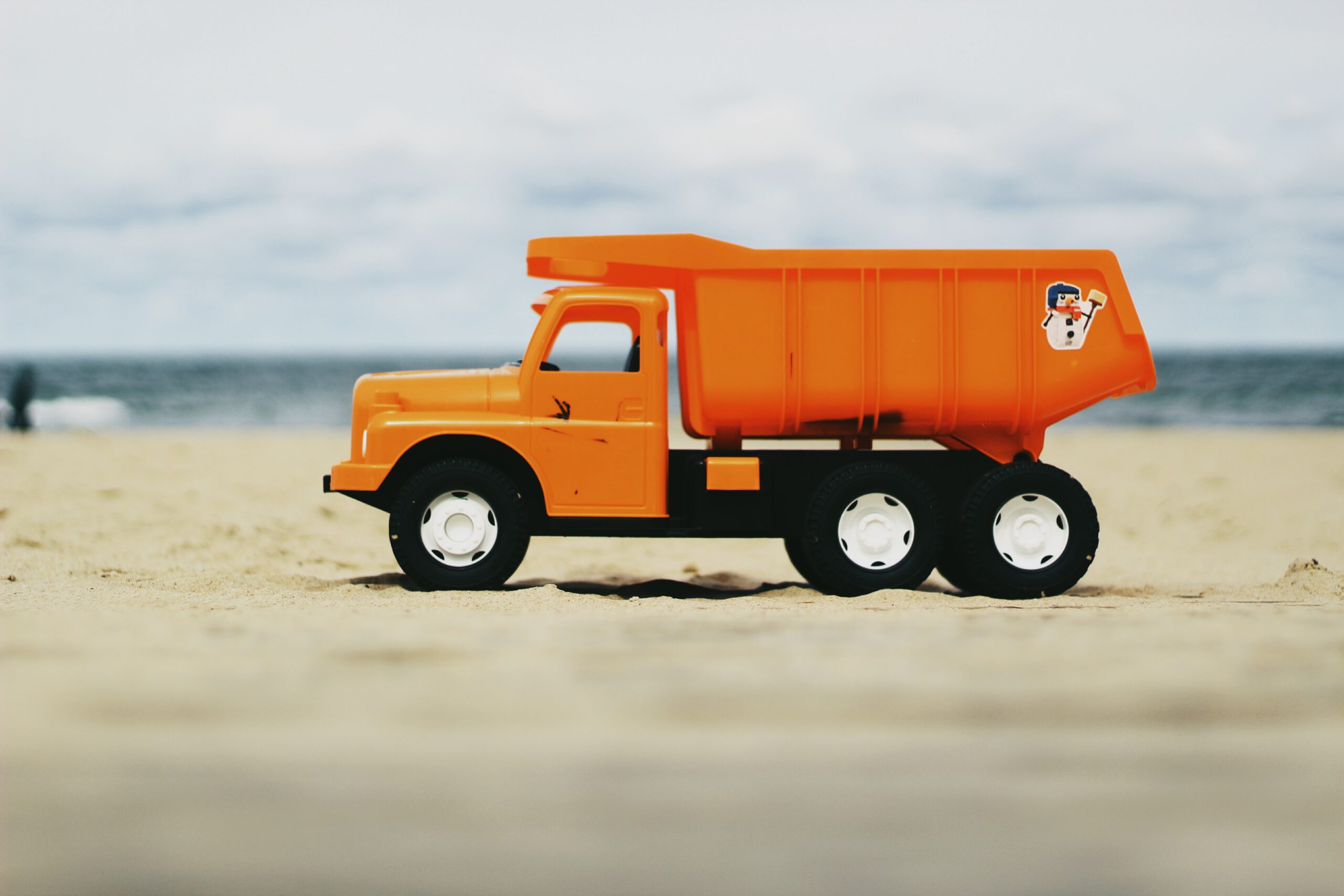
When my son was two years old, he scribbled on his dump truck with a brown marker and announced that he would wash it right there in the middle of our living room floor. My first reaction was to gasp when I noticed the brown scribbles. My second reaction was to see where his plan of action would take him.
So, I watched as he used the foaming soap dispenser to lather his hands and then rub the foam on the dump truck that was still on the living room floor. And I watched as he headed to the bathroom to fill his large bath-time cup with water to rinse off the foamy soap.
And that’s when I jumped in. Not stopping him but offering him another line of thinking by asking what would happen if he poured the water on the truck right there where it was. Thankfully, he responded that it would spill. I suggested we bring the dump truck outside to our front steps, where a giant water spill would not matter as much.
And the rest happened as you might imagine. My son happily poured water over the soapy brown marker and watched as it splashed on the cement pavers, instead of the living room floor. He went back inside the house to get a towel, which he smoothed over the water droplets on his beloved dump truck. And he smiled proudly at all that he had done.
If you are familiar with the principles of Montessori and the practice of following the child, this story may seem reasonable enough. It may seem as nothing more than a toddler exploring and experimenting with his dump truck and a mom observing and conscientiously guiding the learning moment that would unfold. However, when I submitted this story for a recent publication, it was changed. The edited version included the words, “This is going to be a disaster,” and I admit it stopped me in my tracks when I read it.
Not only was I impacted by the fact that a piece of original writing would be so altered, but also by the idea that our current thinking about children exploring and experimenting is so readily equated to things turning into a disaster.
The truth is, there is a great deal of learning in the so-called disaster. The mindful parent recognizes the learning potential when a child is following her own reasoning. The prepared adult is ever-present, jumping in to help only with the hard parts. That is the true meaning of Montessori parenting, as I’ve read in countless books, learned in Montessori training, and experienced personally with my own children at home.
So, I write today to challenge this thinking and normalize what we would otherwise consider a ‘disaster.’ When we let our children explore their ideas, when we observe this process, we realize that we are truly being given the gift of watching a genius at play.
Our job as adults is not to limit or edit this experience but to let it unfold and only redirect it when necessary. What I learned from my two-year-old son that day—what I witnessed—was a young toddler exhibiting complex executive-function skills, a little boy filled with resolute determination, a confident multi-cultural child ready and willing to solve problems in the world.
I hope that in the future, we don’t edit stories like this. These are moments to cherish for what they are … the awakening of life itself. •
Alicia Diaz-David is a parent and educator with over 15 years’ experience in education. She has followed the Montessori approach at home since her children were born and is a certified Montessori guide for ages 3-6. She is also the founder of TeachLearnMontessori.org, which is dedicated to helping parents better understand the Montessori philosophy and simplify the approach. You can learn more about supporting children’s growth and development using Montessori via the real-life stories she shares on Instagram @MontessoriwithAlicia or on her blog at TeachLearnMontessori.org.
by Alicia Diaz-David | Health / Nutrition, Mindfulness, Montessori Parenting, TC May 2021
from Tomorrow’s Child Magazine – May, 2021 | by The Montessori Foundation
A conversation with Naralys Sinanis
Imagine a walk in the woods, fresh air brushing against your skin, your hair blowing in the wind, and the crunching sound of the beaten path beneath your feet, creating the syncopated tune you are walking to.
This is what being one with nature feels and sounds like. It is also the type of self-care we are hearing more about these days: spending time outdoors. Thankfully, this is also easily achievable with children. A hike in the woods counts as both quality exercise and self-care time.
But what about other opportunities for self-care intended specifically for children?
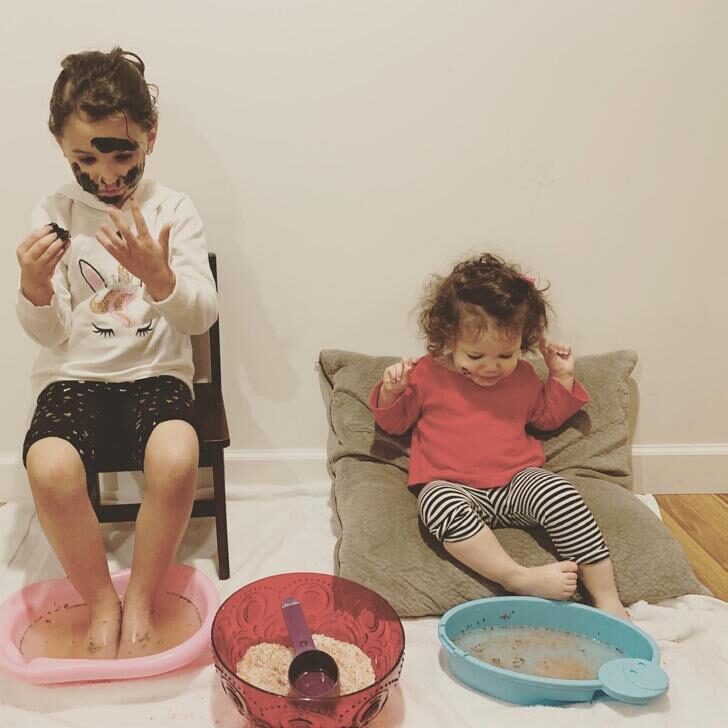
Naralys Sinanis, founder of Ready To Unwind, has not only been setting time aside for nature hikes with her children, she is also committed to providing time for her girls to enjoy some indoor pampering time as well. By using household ingredients, Naralys and her children have made salt scrubs for indulgent hand massages and enjoyed relaxing foot soaks, using aromatherapeutic oils. This mom of two vibrant girls (ages 1 and 5) invites her daughters to join by sharing with them what they will be making and, more importantly, telling them why:
I start by saying, “We’re making bath soaks using salt and oils. These will help us relax when we are in the bath. Sometimes you can buy these in the store, but we can make it ourselves at home too.”
She explains the procedure by printing out the recipe and reading it together with her young girls. They gather all the materials and ingredients in a safe and open space, where all three have plenty of room to move around, and potential spills won’t damage any furniture or rugs. She is also very clear about safety:
I tell the girls that we are doing a fun science activity, but that we need to be safe. Then I ask them: “What do you think we should do to be safe?” and listen to their responses. They are usually pretty good answers! Then I explain: “Today we can touch and smell things, but we shouldn’t put anything in our eyes or drink the oils even if they smell yummy.
We then have a sensory experience with the ingredients. I invite the girls to smell the oils carefully, without getting too close when they inhale, and ask them how the oil makes them feel. I let them choose which oil they want to incorporate into what we are making. My daughter Analia, for example, loves the smell of the orange essential oil and says it makes her feel happy.
The girls also experiment with touching the salt with their hands, and even grinding the salt if they choose to. They stir and mix everything together. Sometimes, they want to touch the oils as well, so I explain that essential oils are potent and some are not ideal to use topically unless diluted with a carrier oil like almond or coconut. It’s part of understanding the safety aspect of the ingredients we are working with.
In this way, Naralys and her children enjoy hands-on interaction with materials and in-gredients of different textures and smells, and practice skills like scooping, pouring and mixing. Parents can use this preparation time to embed math and science concepts such as measuring and making observations as well.
This engaging and authentic learning experience ends with a relaxing reward: the children indulging in their creation and learning how to engage in self-care.
Recipe for Bath/Foot Soak:
- 3 cups of Epsom salt
- 1 cup of sea salt (can use pink Himalayan or finely ground sea salt.) If the salt has not already been ground, this can be an opportunity for the kids to grind it with mortar and pestle or a blender.
- 6 drops of essential oil (any scent that suits your mood).
- Lavender/ lemon or eucalyptus is good for relaxation/stress relief, while orange, peppermint, or tea tree can be more energizing.
- Additionally, you can also make your own blend with one or more oils (lavender-vanilla, lemon-orange, etc.)
- 6 drops of sweet almond oil. This is an important ‘carrier’ oil; coconut oil may be used as well.
Materials:
- Large mixing bowl
- Large wooden spoon
- Measuring cup
Towels/paper towels to clean up any spills or messes
- Storage container for the mixture (e.g..mason jars)
Instructions:
Combine the sea salt and Epsom salt in a bowl and stir with spoon to mix together. Once the salts are mixed, add the essential oil, the almond oil, and stir again until well combined. If there are any clumps, you can break them up or have the kids break them up. Let the mixture rest for about an hour (you can cover it with a towel). When you are ready to use for a bath or a foot soak you can add 1/2 cup to 1 cup into warm water and allow it to dissolve. It may be stored in an airtight container for about 1-2 months.
Other options:
You can switch out almond oil for any other carrier oil. You can add tea from a tea bag (cut the tea bag and empty the contents into the mixing bowl before adding oils), or include dried lavender or other dried flowers/herbs.
Disclaimer:
Please consult with a doctor or physician prior to trying any at-home recipes with young children. Certain ingredients may trigger potential allergies and/or reactions. When implementing this or other similar recipes, be sure to follow all safety precautions..
For more ideas, follow Ready to Unwind on Instagram.
by Alicia Diaz-David | Language & Reading, MFA
As parents, we become familiar with the quintessential milestones in a child’s life—those special moments when a normally developing child takes his or her first step, eats solid food for the first time, or says his or her first word. We anticipate these moments, celebrate them, and wait for other milestones to unfold. We share photos of children smiling with their first lost tooth and videos of a first time on a bike without training wheels. We are joyous and proud.
Of course, we should be. These milestones are the recognizable signs of our children growing up and gaining independence. Watching our children develop the skills they will need to be productive and capable citizens of the world are points of pride in our parenting journeys. When it comes to language development, we proudly celebrate a child’s first word, applaud their first phrase and smile at their first complete sentence. However, what happens with our appreciation for the child’s development of language after that?
Exposure is a feasible first step that will help open our children’s minds, ears, and hearts to the differences in the sounds and rhythms of other languages and to develop appreciation for them.
As a society, we often encourage literacy as the next step. We teach the child the alphabet, to write their name, and to become familiar with the sounds of the words they use often. We laboriously welcome them to learn the words of the language that surrounds them, so that they are not just participants but communicators and correspondents within their respective societies. This is an incredibly important undertaking for the child and parents alike. It begs the question—what if, at this ripe age of supreme learning, we considered the possibility of exposing children to an additional language, one that they might develop and even perfect alongside their own first language? Would that be asking too much?
Dr. Maria Montessori brilliantly refers to the moment when the child first fluently expresses spoken and written language as an “explosion.” This explosion is an external manifestation of the knowledge the child has been acquiring during their rapid development. The child is brimming with an energetic impulse to express all that he or she has learned up to that point, is curious about, and wants to know. The means for doing this (the explosion) is through language—the words, phrases, and sentences we have celebrated since day one. Language is the instrument for expressing knowledge, and it is at the child’s unyielding disposal.
Since infancy, children have been experiencing a sensitive period for language. This means that they exhibit a naturally occurring interest in words, vocabulary, and the structure of language overall. During this peak time of language awareness, children’s faculties are primed for language acquisition. Therefore, it is an optimal time to introduce a second or even third language to the child. In order to harness this critical period of language development, exposure to multiple languages in Montessori and the home can (and should) begin as young as infancy and be extended through the ages of three to six.
This can be accomplished in the home by frequently (and proudly) speaking a native language around infants, babies, and toddlers with the understanding that they are absorbing the language around them. Young children can benefit from engaging in multicultural playgroups, where they might share the names of things in different languages. A multilingual caretaker can provide additional opportunities for children to interact with different languages.
In a Montessori school, exposure to multiple languages can be arranged by hiring a language teacher who might provide lessons for the children several times a week. Montessori schools can also take advantage of the multiple languages that may already be spoken by staff at the school. Teachers and staff who speak an additional language can share the names of things in different languages and teach children short common phrases while they naturally engage in classroom life. Parent volunteers can also be invited to share their languages with the class, particularly through songs.
Exposure is a feasible first step that will help open our children’s minds, ears, and hearts to the differences in the sounds and rhythms of other languages and to develop appreciation for them. Just as the doors of opportunity open during the child’s sensitive period for language, they close spontaneously, and then the task of learning a new language becomes a more taxing undertaking for both the adult and child. Why not take advantage of this naturally occurring phenomenon? In the same way that parents proudly cheer when a child takes his first step, let us also celebrate when a child makes a cross-linguistic connection, recognizes a cognate, or makes a genuine attempt to say hello or engage in conversation in a new language. Let us pluralize the notion of language so that we expand children’s capacity to engage fully and truly in the multilingual world that surrounds them.
Tomorrow’s Child / October 2019 / Pg. 20