Bilingualism & False Diagnosis
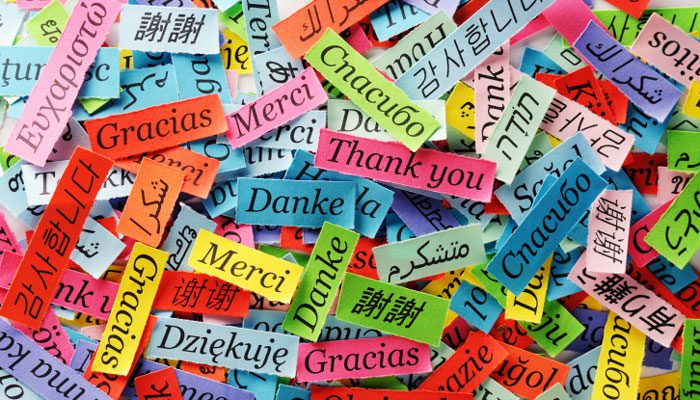
In many countries bilingualism is a steadily growing phenomenon that shapes and affects the learning process of children at homes and schools. The most popular second languages in Egypt are English, French, and German. Many parents prefer their children to be schooled in a foreign language rather than their native mother tongue.
Being fully bilingual is an important target in such environments because it is considered of value academically. Although becoming bilingual seems easy, living in a multilingual home or environment affects the learning process. It may result in insufficient language skills and can hinder academic achievement. Landon (2001) suggested that bilingualism should be accommodated and recognized by the school in relation to culture and language, to ensure literacy development in both languages in order to be inclusive of bilingual learners. (Landon, 2001, cited in Reid, 2009),
The early identification of reading difficulties for facilitating the developmental process of reading skills acquisition ensures the effectiveness of intervention and applies equally to bilingual and monolingual children. Later identification of reading difficulties in children may result in academic delays that influence the social and emotional status of children. Diagnosing a monolingual child with dyslexia is rather a complex matter. More so in the case of bilingual children. (Hutchinson et al, 2004)
Predicting a learning difficulty and diagnosing it as dyslexia can be inconsistent if the school or the learning environment is not fit to accommodate bilingual learners and cannot meet assessment requirements. Administering assessment on a bilingual learner might be insufficient to detect signs of dyslexia, because matters of language and culture need to be taken into consideration. (Landon, 2001, cited in Reid, 2009)
Collecting, gathering, and analyzing a bilingual learner’s background information are vital procedures that have to be done before administering any testing battery. This will help with the selection process of the assessment tools required for identifying a specific learning difficulty. The assessor should be familiar with both languages of the bilingual learner to obtain easy communication and to be able to translate parts of the assessment whenever the learner seems to be struggling due to a language barrier. (Cline and Shamsi, 2000)
To sum up, being able to detect and diagnose a learning difficulty in a bilingual learner’s second language can be a challenging procedure. Two common errors must be avoided: The first is to misdiagnose a certain learning difficulty that can be the outcome of a changing environment, or social and emotional status, such as dyslexia, which is called the false positive labeling. (Frost, 2000) The second, is missing the manifestations of developmental dyslexia when present, resulting in the failure to suggest the proper intervention, which is called false negative labeling. (Frost, 2000)
References:
Bus, A. and Van Ljzendoorn, M.H. (1999) ‘Phonological awareness and early reading: a meta-analysis of experimental training studies’, Journal of Educational Psychology, 91 (3) pp403-414.
Cain, K. (2010). Reading Development and Difficulties.UK: The British Psychological Society and Blackwell Publishing Ltd.
Dockrell, J.E. (2001) “Assessing language skills in preschool children’, Child Psychiatry and Psychiatry Review, 6 (2) pp74-85.
Gathercole, S.E., et.al. (2006) ‘Working memory in children with reading disabilities’ in Journal of Experimental Child Psychology, 93(3), pp265-281
Hutchinson, J, M., Whiteley, H, E. Smith, C. Connors, L. The Early Identification of Dyslexia: Children with English as an Additional Language.Department of Psychology, University of Central Lancashire, Preston, PR1 2HE, UK
Reid, G. (2009). Dyslexia A Practitioner’s Handbook Fourth Edition. England: John Wiley & Sons Ltd.
Reid, G. & Wearmouth, J. (2002). Dyslexia and Literacy Theory and Practice. England: John Wiley & Sons Ltd.
Rose,J.(2009) Identifying and Teaching Children and young people with dyslexia and Literacy difficulties
Snowling, M.J. & Hulme, C. (2005).The Science of Reading A Handbook.UK: Blackwell Publishing Ltd.
Montessori Leadership / December 2012 / p 14