by Thetu Kishoiyian | MFA, Montessori Graduates, Montessori Parenting, TC April 2023, Tomorrow's Child
It was the Spring of 2007, and my husband, Bernard, and I were among the multitude of parents looking for a preschool for our eager learner, who was not quite three years yet.
I suspect that this was the year that the children in our city outnumbered the preschools. Lucky for me, I overheard a parent at the park recounting an amazing experience at a Montessori school in Sarasota, FL. I was determined to find this particular school and to explore what Montessori was.
On a beautiful morning in mid-May, our daughter Victoria, Bernard, and I had our first visit to the NewGate School. We met with its wonderful Director, Lorna McGrath. I believe at that time, they had two spots open in the Primary (age 3-6) classroom. We were chaperoned around the campus by one of the parents called an ambassador, who had raised all four of her children through the Montessori curriculum. The campus was small, but we felt it was the perfect size for our daughter.
Victoria and I spent the rest of the summer stopping by the school once a week to get a little preview in anticipation of our starting the new school year that fall.
August came around finally! Victoria’s assigned classroom teacher, affectionately known as Ms. Mini, came over to our home to visit and to get to know her before school commenced. I thought that was a nice process to break the ice, so to speak.
Then the first day arrived for Victoria to go to school! The students’ assigned start dates were staggered to allow for a better, less stressful, more peaceful transition. Victoria couldn’t wait; she was (and still is) a keen learner.
After a few weeks had gone by, we knew that we had made the right choice. Victoria was having a great experience. She would come home bathed in sand from head to toe and with an orange rind in her fingernails from cutting oranges for snack time. It was awesome. We knew that she was fully immersed in exploring and learning.
Over the time that we spent at the NewGate School during our daughter’s Elementary years, we saw her growth as an independent young lady; her ability to collaborate on projects as a team player; her insatiable curiosity to investigate and understand concepts; and her love of volunteering and contributing to her community.
While she left before middle school to attend a special program offered by the public schools, we were grateful for the Montessori formative learning that will continue to yield success throughout our daughter’s life.
by Thetu Kishoiyian | MFA, Montessori students
Growing up I had the wonderful fortune of living in three different countries; I suppose having this exposure early in my childhood life sparked a healthy interest in diverse cultures, traditions, food, and language.
Fast forward to today! We live in a sunny paradise called Sarasota, a city located in the Southwest coast of Florida that is surrounded by the Gulf of Mexico and its beautiful beaches, art, and increasingly diverse cultures.
The Rationale
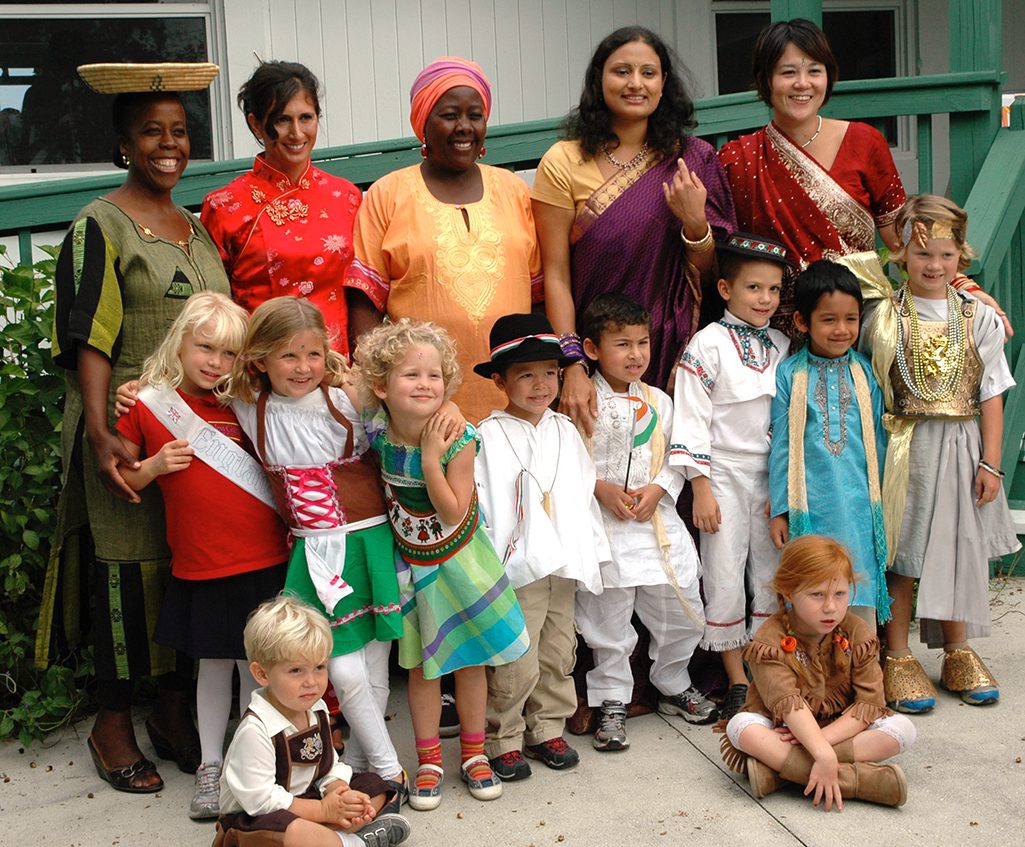
Nestled in this internationally attractive city of Sarasota, is the NewGate School, a Montessori Academy, where my daughter attends 4th grade. I had been involved in the previous years with organizing our private school International Children’s Day, an event were the students came to school adorned in their traditional clothing and ‘traveled’ through cultural exhibits presented by families within the school community, as well as from outside organizations. So when our Head of School suggested that we create an International Children’s Day Festival as a gift to the greater Sarasota community, I thought right on…let’s do it!
Our First International Children’sDay (ICD) Festival
This was a fun-filled day of international food, art, crafts, music, dance, games, and a parade. The festival brought world geography to life through hands-on activities that give children a taste of some of the traditions of many of the countries and the rich heritage from which we came to live in America.
Some of the fun activities for parents and children enjoyed included: learning how to make a tortilla; creating origami; weaving fine threads; reading in Hebrew; making pottery; learning to dance the Flamenco; performing Brazilian
Jiu-Jitsu martial arts; and much more. Families ate authentic international foods, watched cultural performances, and shopped for unique gifts at the global village marketplace.
The Process
Ooh the process! I would like to tell you that this was quick and easy, but I would be telling a tall tale. A tip for the wise, checklists are profoundly helpful: date them and be sure to indicate who, where, what and the respective contacts so that you can maximize your time and easily retrace the information. There are three parts to this process:
Preparation: This is all the foundational work, including; research and meetings to figure out what date would work best; defining the scope of the festival; deciding on a venue and mapping out the site; building a website and or a Facebook page; developing a budget; and identifying
potential sponsors.
Planning: This includes: advertising; soliciting vendors (food & retail/craft); exhibitors and volunteers; preparing contracts; following up with sponsors; developing a program; engaging and scheduling dance and musical artists/performers; placing rental orders; booking carnival games and activities.
Day of the Festival: The day is finally here. Plan to get to the site early and stay through the very end of the day. You will want to be accessible by a mobile device. Some of the tasks you should plan for are: signing in your vendors and exhibitors; making any necessary location changes; assisting with festival set ups (not vendors); checking on any utility issues; handling restaurant/vendor issues; and helping/supporting the volunteers. Expect a great festival and be prepared to enjoy it, after all the hard work you put into it.
How many attendees should we plan for?
This is an excellent question. Consider your target audience. Will the festival be a private one for your immediate school community? Or would the festival be open to the public? Are you going to sell tickets (this option of course will give you the most accurate indicator)? Or will the festival be free with a suggested donation? One can certainly estimate the lower limit based on the average percentage of event attendance by your school community times three (i.e., if you have an average attendance of 50 percent and a population of 100 students, then you would estimate 50 x 3 (student & 2 parents/family) = 150 (on the low end) plus an additional guesstimate per your surrounding population to give you the upper range.
The time line
For the inaugural year, you may want to give yourself at least six months of preparation time. You want to give your potential sponsors the advantage of having their names publicized for the longest possible period. Keep in mind that, unless you have a developed relationship with a potential sponsor, it may take a month or two to get an affirmative response. Also when you are working with volunteers, tasks that require a substantial amount of time to complete (such as building the website) may take a little longer.
Montessori Leadership/ 2014/ pg 27