
Montessori leadership | Welcome | February 2022
Greetings to you and the new year!
As we launch 2022, we have a gift and an opportunity! What are your hopes and dreams for yourself, your family, your school community…and all of humanity? Progress begins with big dreams followed by small and intentional steps in the direction of our dreams.
One of the remarkable things about the school year cycle is that we have this unique opportunity to have two “new years.” First, the beginning of each school year provides us the chance to begin anew. Second, the new calendar year follows at the halfway mark of our school year with another opportunity to reset and renew our intentions.
Our IMC mission of “Unifying a worldwide network of Montessorians dedicated to nurturing the human spirit of those seeking a peaceful world through the education of children using the Montessori method” continues to be our dream. Consistently reviewing this mission and understanding how we can move in that direction with purpose, passion, and vision is our work.
Moving in that direction, our intentions for 2022 include:
1. Strengthening our governance, finance, and internal systems to ensure sustainable growth.
2. Developing an array of meaningful and responsive services aligned with our core values to attract, retain and serve our membership.
3. Leading educational innovation with a unifying voice and creating strategic alliances to impact education, families, and Montessori worldwide positively.
4. Embracing inclusivity, seeking to understand and embody the principles and practices of social justice, restorative practice, and conflict resolution, encouraging Montessori’s vision of peace throughout the world.
Throughout 2022 we will share our progress with you and invite your participation. Our IMC board, staff, and community members will continue to work together to create a better future for the children of the world. With so many opportunities to participate, consider writing an article, submitting school, faculty, and student photos and stories, serve on a task force, support our social justice work, or volunteer at our annual conference. Please reach out to me if you have any questions or want to participate in this essential work.
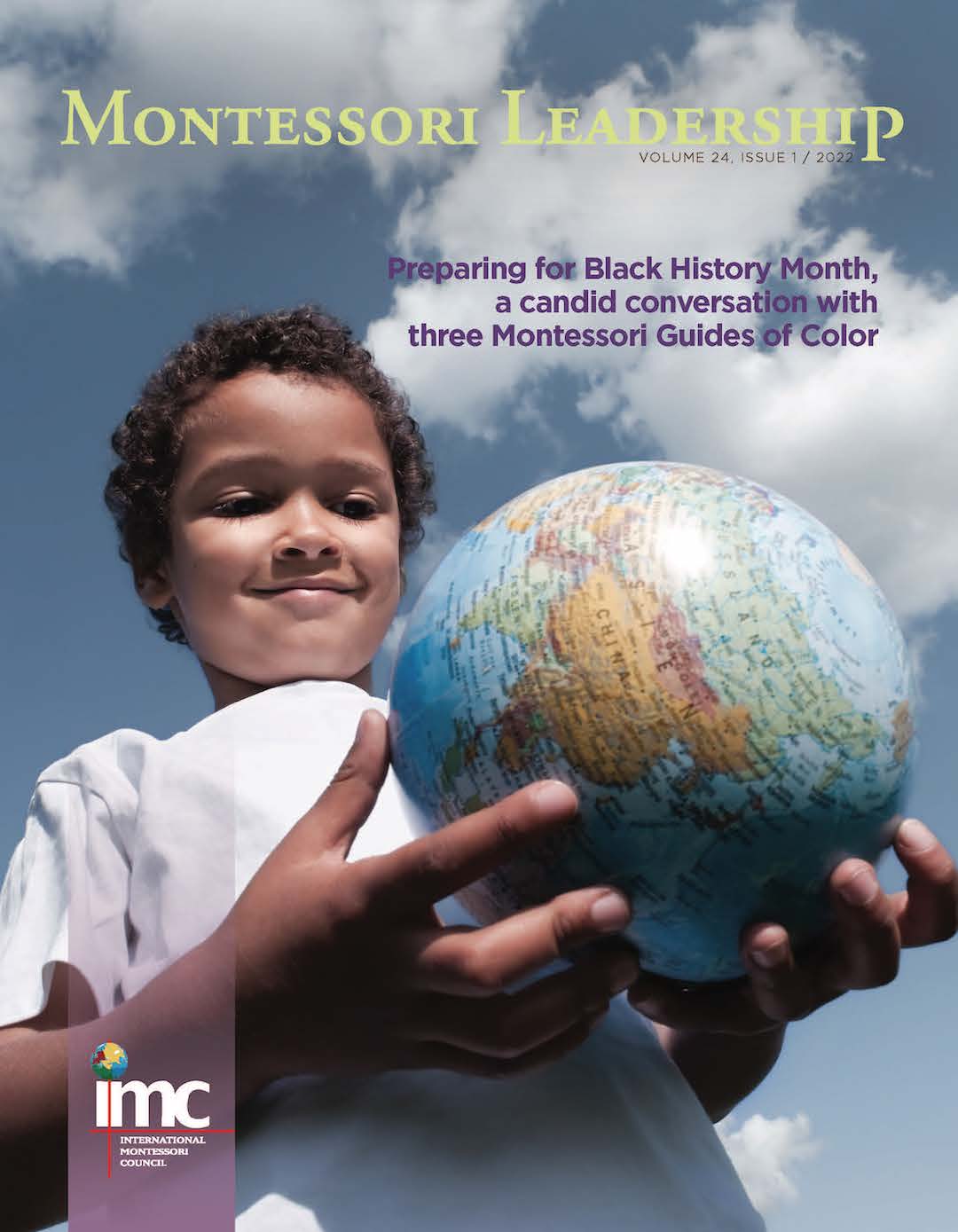
This issue of Montessori Leadership provides rich content for you, our IMC Montessori school leaders, and educators. Consider Tim Seldin’s article, “World-class Montessori Schools: A Commitment to Excellence,” as he shares ten principles to embrace while envisioning your school’s future path. Take time to question the status quo as you read Dr. Cindy Acker’s “Preparing for Black History Month: A candid conversation with three Montessori Guides of Color”. Get to know the people of color in your school community… staff, students, and families. Be curious and learn about their history, culture, and experience at your school. Although the month of February is designated as Black History Month, we have a responsibility to recognize that Black history is American history and as such be fully integrated into our curriculum throughout the year. Additionally, we have the opportunity for deep reflection with two important essays, “Liberty and the Common Good” by Andrew Kutt and Nirvair Khalsa’s “A Montessorian and a Braver Angel”.
So, pour a cup of tea, read an article or two, go for a walk, dwell in nature, create silence, and appreciate your family and friends. Reassessing where we’ve been and where we are going can provide clarity, peace, and optimism for the future.
As Dr. Montessori reminded us, “Within the child lies the fate of the future.”
We at IMC wish you a happy and healthy 2022!

With purpose, passion, and vision,

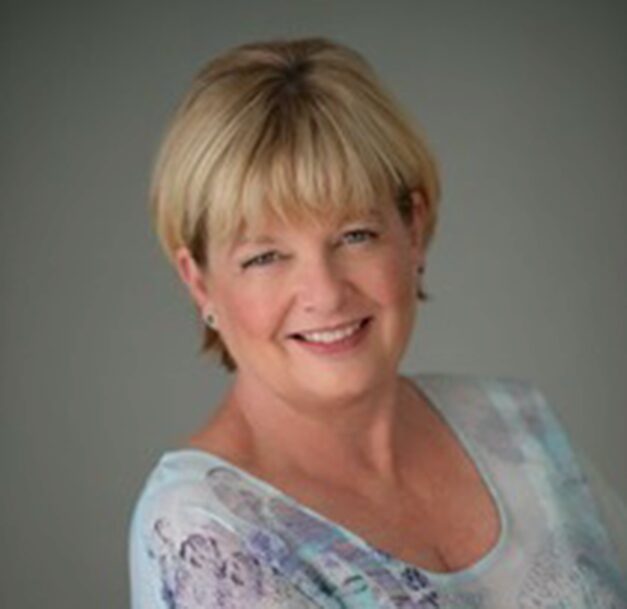
Kathy Leitch, Executive Director International Montessori Council

This past November and after a fully digital conference in 2020, we were delighted to finally host our 25th Montessori Foundation | IMC Montessori Conference on a hybrid model. Over 600 people gathered on-site or streaming to celebrate and renew their Montessori philosophy. We want to acknowledge all our Speakers and Moderator volunteers who worked hand in hand to bring our digital audience to the site, our sponsors that supported our effort; as well as, our online and on-site exhibitors that brought a sense of normalcy to the event. Lastly, we want to celebrate all our attendees that made this an inspiring and enthusiastic event. The feat of creating a hybrid event was deeply rewarded by the happy faces, the connections created, the old friends reunited, and above everything, the quality and inspiration of over 40 different workshops that catered to all Montessori age groups and leaders. If you could not make it to the event, remember we have recordings of the Conference. They can be purchased, watched at your own pace, and offer 15 hours of Professional Development. Learn more at stage.montessori.org. We want to thank the Hyatt Regency Sarasota, our home for so many years. Mark your calendars for our 2022 event at The Vinoy Hotel, in St Petersburg, Florida, from November 3rd to 6th. We look forward to greeting you then!
ST PETERSBURG, FLORIDA
Over the past decades, a constantly growing number of schools have approached the Montessori Foundation ready, willing, and anxious to begin the journey from being simply good Montessori schools to becoming great ones. We have called this process Building a world-class Montessori school.
This can be a daunting task. It normally requires several years of focused hard work, complex and difficult decisions, planning, and a considerable investment of resources. Once begun, the school cannot back off from its commitment to excellence. The school must be prepared to meet raised expectations among parents and staff and follow through on its commitments to the school community. This is not something to be undertaken lightly. It requires an absolute commitment to excellence. We recommend that you have this vision in mind as you begin your process of starting a school and hold it as your goal moving forward.
We have found several principles to be critical in building a Montessori School that is truly world-class.
World-class Montessori schools make an uncompromising commitment to becoming excellent in all areas of their programs, facilities, resources, and operations. They clearly define their identity, mission, and core values. They seek out and turn to examples of true excellence in Montessori practice around the world.
They consciously define what excellence will look like in every aspect of their programs, facilities, and operations. They have plans for how they will create and maintain this excellence in each area of school operation.
They have determined what it will cost to create and sustain excellence in all areas and have developed a plan for funding it.
World-class Montessori schools ensure a strong sense of institutional memory and integrity within the school.
A school lives in the minds and vision of a group of people. No school can be great without a clear sense of its core values and the institution’s culture: this is who we are and how we do things here. World-class Montessori schools are not generic Montessori schools – they have a unique identity.
The character of any school will evolve, but it should evolve slowly and in a logical progression of maturation. Unfortunately, it is all too easy for Montessori schools to make compromises that threaten the integrity of their program because of tight budgets, lack of parent understanding and support, or because Montessori trained teachers are hard to find. Sometimes schools lose their clear identity because they grow too fast, adapting an initial vision to accommodate market pressures or to capture a growing market in a new area.
What we say our school does, and the principles we believe must be translated into day-to-day reality. A great school stands for something distinct. It cannot possibly please everyone. The school that some deeply respect and admire will not appeal to others.
World-class schools carefully define and write the school’s mission, core values, and educational beliefs. All policies and strategic decisions are based on these core values.
Many people assume that Montessori means the same thing to everyone. This is, however, not true. There is a wide variety in the way Montessori is applied. Unless a school can clearly define its unique character and understanding, parents, staff, and the wider community may become confused about the disparity between their assumptions and what the school is actually offering.
The ideas that define the nature of a school are the very soul of the school as an institution. It is essential to have a clear understanding and agreement about your mission, vision, and core values. Only by going through this process to develop clarity and consistency from class to class and level to level can you discover and define the school’s true nature as you want it to be.
World-class Montessori schools ensure that the school is consistent in philosophy and practice from class to class, from one level to the next, and from year to year.
Many Montessori schools are made up of individual teachers who do their own thing in their classrooms, without much awareness or concern about coordination with the other classes within the school. As a result, it is not unusual to find Montessori schools made up of several classrooms that bear little resemblance to one another. Parents and teachers often hold very different perspectives of the school’s mission, philosophy, and priorities.
For a school to grow and enjoy respect, parents should be confident that their children’s experience in the school will be highly consistent from year to year, from one class to another, and from one level to the next.
World-class schools have an inspiring and consensus-building Montessori Leader. Montessori schools that wish to remain faithful to their legacy need to be led by a first-rate Montessori educator. Being true to the underlying principles that distinguish them as Montessori programs, world-class schools will be based on a different set of assumptions and beliefs about the nature of learning, the definition of what constitutes a first-rate education, and the relationships among students, educators, families, and school to that on which excellent conventional schools will be based.

Research has consistently shown that the Head of School is the most influential person in any school. In great schools, the Head of School is, above all, a visionary who articulates and represents the school’s core values and educational philosophy. They are not simply an administrator or business manager. Such skills are essential, but administrators and managers are not necessarily leaders and can be hired more readily than a great educational leader. A first-rate Montessori Head of School can build a school from the ground up.
It is rare to find someone who is both a sophisticated independent school leader and trained and committed to Montessori education. While many non -Montessori trained educators can glibly espouse a Montessori -like philosophy and values, few understand or pay much more than lip service to it in practice. A Head of School who is not Montessori in both training and philosophical orientation will generally be ineffective as the school’s educational leader, may quickly get into conflict with the faculty, or in some cases will lead the school away from Montessori toward a traditional educational program.
Can you imagine asking a Catholic priest to run a Baptist church-affiliated school or a rabbi to head a school run by Quakers? Even with all the goodwill in the world, they are unlikely to share the school community’s culture, traditions, and values; and would not be likely to be seen by faculty and parents as appropriate leaders for this school.
At their core, authentic Montessori schools are based on an educational philosophy and system of beliefs as distinct as those of any school that promotes a specific religion or a culture quite different from the one held by most people in the local community.
All too many fine Montessori schools have suffered through a series of weak or disruptive leaders after the founder retires. In almost every case, these Heads of School were neither Montessori trained nor Montessori oriented in their educational philosophy or leadership style. We can all name non-Montessori-trained people who are highly effective Montessori leaders. However, each is ‘Montessori’ in everything but a teaching credential; each is genuinely committed to the Montessori vision.
We strongly believe that Montessori schools need sound Montessori leadership to thrive. Not doing so endangers the integrity and future of the school.
World-class Montessori schools have a clear understanding of accountability and how it is embodied in a line of authority in the school.
Once a Head of School has been hired, she should oversee the entire school. All faculty and staff members should report to the Head of School. The Head of School should have clear day-to-day authority over the school’s programs and practice.
If there is a school Board, it is critical to clearly define the authority of the Head of School in contrast with that of the Board. All too often, confusion results when the roles of the Board and the Head of School are not clearly defined. It is not uncommon to see Board members performing administrative functions or making decisions more appropriately by the Head of School. This can lead to mistrust and conflict among the Head of School, the Board, and the faculty. This has the very real potential to destabilize the school.
Heads of School must be given the authority to manage the school within very broad guidelines established by the Board. For your school to continue along the lines of a caring, supportive, empowering community, it will always be essential to have a Head of School with the right balance of perspective, values, philosophy, skills, and experience. Finding the right person when you need one for your school is no mean feat.
World-class Montessori schools prioritize designing admissions processes that find families for whom the school is a perfect match. This contrasts with policies aimed at simply filling openings.
The process of admissions must be a Montessori school’s single biggest priority. The goal should not only be to fill each opening and thus meet our budget, but to gather children who will blossom within a Montessori setting, with families for whom the school is almost a perfect match with their values and long-term goals for their children.
Relatively few parents leave Montessori because of cost per se or are particularly unhappy with what the school has done. More often than not, they leave because they do not understand the benefit of a Montessori experience as opposed to the convenience and relatively lower cost of public schools. Whether they decide to move their children to a more traditional private school or the local public schools, parents leave Montessori because they have not been convinced that our schools offer their children opportunities for intellectual and social growth that are equal to and better in some unique way than the other schools in the community.
Too many families place their children in Montessori with little or no knowledge of what it is and what it offers, and certainly with no real thought given to any relationship beyond the next year or so. These families are simply looking for the best opportunities for their children, with no special commitment to Montessori education or as a specific school.


Montessori schools, however, need to find people who are willing to work with us as partners. We need families who share core values and goals for their children’s education that are compatible with the school’s. Ensuring that they stay with the school, it is important to challenge them to think long-term, weighing out carefully whether Montessori is the right fit for both their children and their family’s values before they enroll.
Parents expect to have many points of tangible and meaningful evidence confirming the wisdom of their decision and the effectiveness of the education that their children are receiving. World-class Montessori schools keep parents very well informed about their children’s education and academic progress.
Most parents do not simply look for academic evidence alone. We should not underestimate how vital social opportunities and extracurricular programs are to most children and parents. World-class Montessori schools find multiple ways to communicate with parents on an ongoing basis.
Attrition refers to a reduction in enrolment from children leaving for reasons other than graduation. World-class Montessori schools work to reduce attrition from year to year. This means that the school actively works to retain students once enrolled. To be truly effective, the Montessori program requires that children stay for a full three-year cycle at the very least. Elementary programs depend on their success on children moving through from the 3 -6 program. Adolescent programs are designed to meet the needs of children who have had Montessori elementary experience—losing children before the end of a cycle and admitting children without previous Montessori experience at successive cycles impacts a school in several ways.
Firstly, children who leave early may not fully integrate their learning and may reflect poorly in-regard-to learning outcomes. This could create a negative opinion about the school. Secondly, the class may be left without its leaders when children leave early. Montessori classes need a full age span of at least three years to function properly. While some attrition is inevitable because of parents leaving the area, ideally, schools should aim for attrition of no more than 10%.
To be excellent, a school must be financially sound. To become financially sound, a school must have a budget, a good bookkeeping system, and a financial plan that focuses on funding growth.
What a year it has been! After the tumultuous pandemic times of 2020, we entered 2021 filled with hope and eager anticipation of regaining a sense of “normal.” While the delta and omicron variants caused us to recalibrate plans once again, we are pleased to see our MACTE accredited programs doing well and continuing their dedicated work of preparing competent, caring, and qualified Montessori teachers and school leaders.
In March, we celebrated the renewal of our recognition from the United States Department of Education (USDE); this milestone came as a result of a lengthy, rigorous, and somewhat nerve-wracking process. This is all to say, we understand how you feel about writing a Self-Study! We go through this process to hold MACTE to a high standard and because we know how beneficial USDE recognition is for our programs and their graduates. In May, we announced that MACTE was accepting applications for the accreditation of the new Administrator Credential. The Center for Guided Montessori Studies (CGMS), an IMC-affiliated Teacher Education Program, holds the distinction of being the first program to submit its Self-Study for review.
The growth of Montessori worldwide did not slow down in 2021, and MACTE welcomed two new Montessori organizations as affiliates, Christian Montessori Fellowship and Montessori Australia. MACTE hosted our first virtual Asia Symposium to explain how MACTE functions as an organization, discuss the value of accreditation and answer questions from attendees. The MACTE board met five times to vote on accreditation decisions (you can view all the programs reviewed at www.macte.org/recent-accreditationdecisions/).
MACTE staff has continued to conduct much of our work virtually, maintaining home offices and conducting meetings and accreditation visits online. We are eternally grateful for our verifiers who volunteer their time to participate in accreditation visits, and in 2021, we completed 41 on-sites verification visits. If you would like to contribute your time and expertise to the Montessori community as a team member for on-site verification visits, please follow MACTE’s Facebook page and website to see when the next training webinar will occur.
2021 wrapped up with our annual board meeting and an afternoon discussion with Montessori leaders the day before our 8th MACTE Symposium. For the first time, the MACTE Symposium was live-streamed. The theme was “Channeling Difficult Times into Positive Energy,” and our keynote speakers, Peter Mishler, Dr. Craig Bailey, and Kim Phillips-Knope, all brought that positive energy to their presentations. Lively discussions at the table talk sessions followed the keynotes. IMC’s Kathy Leitch and Kitty Bravo led a table talk discussion on Assessing Adult Learners in a Virtual World: Exploring virtual strategies for assessing projects, material making, albums, and practicums. There were five other tables with topics that ranged from university program networking to preparing teachers to be trauma informed. The MACTE Symposium closed with the awards ceremony. Five in our community received the Wisdom of the Elders Award: Patricia Anne Darby, Marta Donahoe, Chandra Fernando, Barb Jens, and Eva Parrucci. We honored two Montessorians with the Dennis Schapiro Award for Innovation in Montessori Education: Kitty Bravo for 2020 and Maha Turner for 2021. We felt so blessed to have Dennis Schapiro’s widow, Jeanne Andre, and their two sons, Tokumbo and Jeremiah, present this prestigious award to both recipients. You can check out all the topics, presenter information, and awards ceremony slideshow at www.mactesymposium.org
Looking forward to 2022, we are honored to announce the induction of two new MACTE board members, Sungti Hsu, a founding member of the Association for Advancing Quality in Educator Preparation (AAQEP), and Kathy Leitch, Executive Director of IMC. These two new board members will bring a depth of knowledge and expertise to the MACTE accreditation process.
MACTE will increase our focus and efforts in widely sharing the importance of accreditation for our programs, their graduates, and state work efforts. MACTE will continue supporting our programs while collaborating with organizations that are part of the accreditation world, such as AAQEP, the National Association of the Education of Young Children (NAEYC), and the National Workforce Registry Alliance (NWRA). We will also continue to be engaged in and supportive of those working towards having credentials from a MACTE accredited program recognized for state teacher licensure.
At the pandemic’s start, we witnessed an outpouring of support from the Montessori community to one another. Programs worked tirelessly to continue instruction, held virtual town meetings to offer ideas and help, extended work hours well past the norm to help accommodate adult learners, and much, much more. While we do not wish to return to those dark, scary times from the start of the pandemic, we do hope everyone can continue the acts of kindness and the spirit of grace and courtesy we gave and received so freely. MACTE wishes you all health and happiness in the new year, and we look forward to supporting and being a part of the great things to come from the Montessori community in 2022.
The MACTE Staff Rebecca Pelton, Carolyn Pinkerton, Aimee Fagan, Erin Moore, Elisabeth Chidester, Stacy Seapy, and Jay Seals
Rebecca Pelton is the President of the Montessori Accreditation Council for Teacher Education (MACTE). MACTE serves as the national accreditor for Montessori teacher preparation programs and is recognized by the U.S. Department of Education. Rebecca has been active in the area of teacher program accreditation for the past 14 years. Prior to her work with MACTE, she served as the Vice President for Membership for the Teacher Education Accreditation Council (TEAC). She has presented at many national conferences and participated in over sixty onsite visits preparing for teacher program accreditation. Rebecca earned her B.A. in Music Education from Alma College and went on to teach in public and private schools for 20 years. She earned her M.Ed. from Bowling Green State University in Education with an endorsement in Gifted Education and continued to teach, as well as develop a number of programs in gifted education and gifted enrichment. She earned her doctorate in Educational Leadership from the University of Delaware. Her tenure at MACTE is based on commitment to supporting Montessori teacher preparation and thereby improving the educational experience of Montessori students.
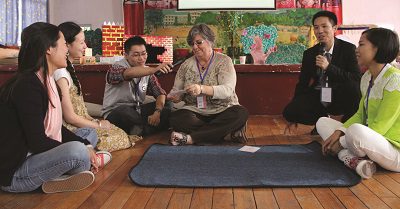
On December 3rd, Kitty Bravo and Maha Turner accepted the Dennis Schapiro Award for Innovation in Montessori Teacher Education. The Montessori Accreditation Council for Teacher Education (MACTE) grants this award annually to a Montessori teacher educator who has been truly inspiring and innovative and brought about significant change. The International Montessori Council (IMC) is thrilled to congratulate Kitty and Maha on this award for their lifetime contributions to the advancement of Montessori teacher education!
Kitty Bravo is the Director of Education with the Center for Guided Montessori Studies (CGMS). She accepted the 2020 award for her work envisioning, creating, and leading this groundbreaking online, low residency Montessori teacher education program, graduating over a thousand educators over its fifteen-year history. CGMS is a MACTE accredited and IMC-affiliated teacher education program.
“It is a great honor to accept the MACTE 2020 Dennis Shapiro award for Innovation in Teacher Education and to have this recognition for my work with CGMS and online learning.
An innovator is usually someone with a good idea and I can’t take the credit for the idea of the Center for Guided Montessori Studies (CGMS). That credit goes to my partners, Marc Seldin, Tim Seldin, and Jon Wolff. It especially goes to Marc, who, as early as 1996, began telling his dad, Tim Seldin, that Montessori needed an online teacher education program. But in 1996, the Montessori community wasn’t ready.
Almost ten years later Tim, Marc, and Jon began to sketch out the plan for the first CGMS online course. Shortly after, the IMC board approved the CGMS pilot program as their first teacher education program affiliate.
But something was missing. When you have three good men working on a project, what do you need? A woman willing to work hard and get it done.
In 2006 I began working with my partners to develop the program. I also began working with MACTE. Being the first teacher Education Program (TEP) to seek accreditation for a program designed around online learning, there was a lot to figure out. Through many phone calls and emails, I worked with the MACTE staff and Gretchen Warner, the MACTE Executive Director at that time to figure out how to demonstrate we met the standards when
our format often did not quite fit into the usual charts. And some things just had not been determined, such as the number of hours required for the face-to-face residential session. I asked on numerous occasions but could not get an answer. Finally, it got down to the wire as we were getting ready to launch, and I called Gretchen. She told me to write a proposal to the MACTE board, and that is how we ended up with the 120-hour residential requirement that we still have today.
We launched the first cohort in the spring of 2008 and, in 2009, became the first blended learning TEP to receive MACTE accreditation. While we were the first to receive accreditation, we were not the first to begin dabbling in online learning. I want to give a shout-out to two people who really were pioneers, Elizabeth Parks from Chaminade and Barb Jens from Omaha. They both had done a lot of work with online learning in their programs and had shared their ideas at a MACTE meeting. Their work was an inspiration and greatly influenced what I did with CGMS.
It may surprise you that I did not come to the CGMS project completely sold on the benefits of online learning. I had no background in distance education and only mediocre computer skills. However, seeing many prestigious universities adding online degrees, I felt like it was an idea whose time had come. Though I will say, not many Montessorians in 2008 agreed it was time, or ever would be time for online Montessori of any kind. In fact, someone once told one of my partners that we and online learning would ruin Montessori.
It is never easy to boldly go where no one has gone before…
Even more than believing the time was right for online learning and that it was important for it to be done well, I was hopeful that this new format could provide an opportunity to enhance teacher training. I specifically hoped it would provide more opportunities for reflection and deep discussion that could support the transformation of the Montessori guide.
Remember, this was 15 years ago, before the advent of Facebook teacher’s groups where you can post a question and, in a flash, have 20 responses from Montessori educators with ideas and support. Our first online cohort was excited to have this new online platform for communication. We were eager each day to get up and check the discussion forums, often checking multiple times a day to see what had been added, what ideas our friends had to share.
Within just a few weeks, I felt our learning community was growing as strong as any teacher ed group I had worked with in a physical space. I also knew it was working to support the spiritual transformation of the teacher, when at just three weeks, one of my adult learners typed into a forum, “This is already changing what I do with children.”
It was also changing what I did with my adult learners. This new format required me to constantly examine teacher ed practices, I had to consider every assignment and all the usual expectations to understand their purpose and determine how they could be adapted to the virtual world.
Now let’s fast forward to 2020 when so many of you zoomed into the world of online education. I know it was challenging, but hopefully, your online work has helped you experience and imagine new ways to reach your adult learners and bring Montessori to the masses. Because, my friends, if we are truly going to have an impact in this world, that’s what we need to do. The world needs more Montessori graduates, and to make that happen, we need more Montessori teachers. Our world needs dreamers, problem solvers, peace makers, and innovators. No educational model does that better than us.
”The world needs more Montessori graduates, and to make that happen, we need more Montessori teachers. Our world needs dreamers, problem solvers, peace makers, and innovators. No educational model does that better than us.”
Innovation is at the heart of Montessori. Our educational approach exists because of the innovative ideas of Dr. Maria Montessori. She was bold and tireless in looking for solutions to the problems of society, especially those of women and children. She continued to develop and expand her educational approach throughout her life, always seeking to make it better, to adapt it to meet the needs of individual children and various cultures.
I believe her mandate to us is to continue to do the same; to constantly examine our practice, expand and adapt to meet the needs of our time and the unique needs of the people of this time. We can only meet those needs if we continue to stretch and grow. I believe this growth does not mean abandoning the core principles of Montessori. We can hold on to the most important principles that are the life and soul of Montessori while also being open to new ideas and adapting to make the best use of the technologies of our time.

One day back in early 2008, just before launching our first cohort, I got a phone call from Denny Schapiro. As always, Denny asked very direct and thought-provoking questions about how we would make this online program work. I remember he asked specifically if we would allow someone to do a practicum in their home without the materials. The answer was and still is no. The practicum experience in a well-prepared Montessori environment is essential for teachers to move from abstract ideas of Montessori to concrete practice and possibly is even more critical when the training is predominantly online.
Over the years, I often think of that conversation with Denny, especially when an unusual practicum situation arises or when an adult learner needs accommodation. We all have these kinds of situations, whether we are a hybrid program or an entirely onsite traditional program. We all face situations where we must find creative ways to make adaptations while still assuring our learners have the experiences needed to become competent Montessori guides.
I so appreciate Denny’s queries. He helped keeping us real. And these kinds of questions are essential as we continue to walk the razor’s edge, remaining committed to fidelity while being open to innovation. Both are essential to move Montessori forward and sustain it for future generations.
I am proud of the part CGMS has played in moving us toward that future. We have tried to set the bar high for Montessori distance education. I trust that many of you will help carry the work even further. As more of you wade into the waters of online learning and as technology continues to advance, I am confident we will find new innovative ways to support the development of our teachers.
I am proud to share this award with my partners Marc, Tim, and Jon. I also share it with Ann Winkler, Kathy Leitch, Lori Karmazin, and Cathie Perolman, who have been with CGMS from the beginning and continue to help us fine-tune and advance our programs. I also have to mention Ellyn and Heather and their admin team, who keep everything organized and running smoothly. And I share this honor with all of the CGMS instructors, the most amazing people that make up the CGMS faculty and staff. This award belongs to all of you, but it will be staying at my house.
I am grateful for the life of service Montessori has provided and for the wonderful community of learners and educators I share it with. Thank you to all for being on this journey with me. Thank you for your important work.
And a very special thank you to Denny’s family and MACTE for the honor of this award.”
Maha Turner, a Montessori early childhood guide with twenty-five years experience at Somersfield Academy in Bermuda and an Instructional Guide with CGMS, is being recognized for founding an international, innovative opportunity for teacher education. Maha’s organization, Maha’s Mission Montessori, establishes schools for Syrian refugees in Jordan, Turkey, and Egypt. Her students were her inspiration. As they passionately discussed the Syrian refugee crisis with Mrs. Turner, they encouraged her to “… help them by starting a Montessori classroom and making sure you put in a Peace Table just like ours!”
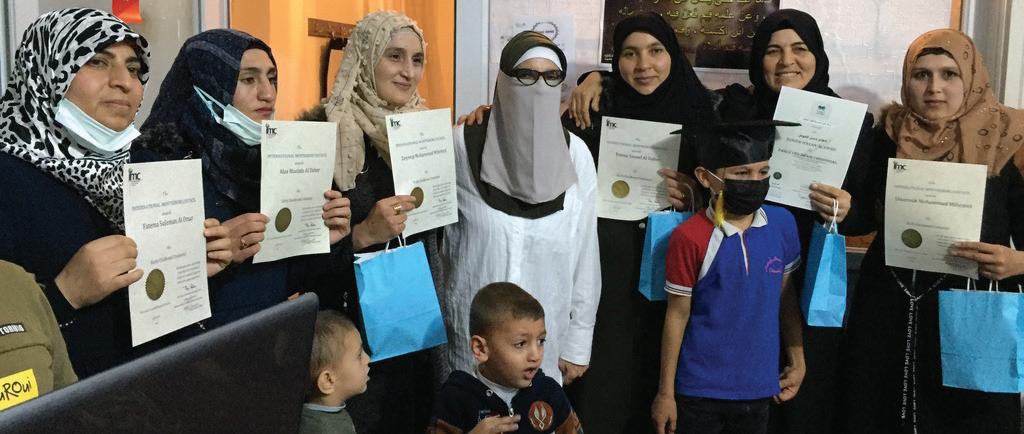
Almost immediately, the refugee children, all of whom have endured war-related trauma, exhibit significant changes. They find peace, develop concentration, and discover the joy of learning. Over forty-one women who have received their IMC Early Childhood Montessori Teacher and Assistant Credentials are empowered in their community and on the road to independence! Over seven hundred children have benefited from a Montessori education through Maha’s work in the past five years.


“I was introduced to Montessori education philosophy in 1991. The concepts I both learned and taught and the results I witnessed in the last thirty years prove beyond all doubt that the founder, Maria Montessori was a genius who understood child learning and development and the importance of collaborative and independent creativity combined with Peace Education. Along the way, I achieved Montessori certification through several training centers, among them New England Teacher Education Center. I earned a Master’s degree in early childhood education and completed doctoral courses in early childhood education. Learning is a life-long journey.
One of the primary purposes of Montessori education is to create a better world for humanity. In 2016, I made a conscious decision to use the knowledge and experience I acquired to assist those in the world who had lost all of the things many of us take for granted. We all hear news stories about refugees or forcibly displaced people in distant places around the world, but we rarely know their real stories and the horrors they have experienced. The compassionate among us tend to donate to the known charity organizations hoping that we can contribute to their plight in a meaningful way.
I began my new journey by traveling to Jordan and then South Turkey bordering Syria to assist the Syrian refugee women and children sheltering in mass tent camps, escaping their country’s devastation and persecution. This was a shock for me to see firsthand how desperate humans become when they have lost their entire existence and only have a few clothes and cooking utensils as comfort. Their immediate concern is shelter and survival; educating their children is a distant luxury in these conditions.
As I got to know the refugee families, I learned of the injustice and corruption that is a massive part of life for many people on earth. Sadly, power is the common corrupter in human society, and it is typically the poor that pay the price through persecution due to lack of resources, eventually becoming politically expendable. Education is the only tool that can eventually bring justice and equity to those that do not have a voice, perhaps not in the current generation but in the future.
With the welcomed assistance of the Center of Guided Montessori Studies; I have managed to train multiple cohorts of refugee women (mostly widowed) in both Turkey and Jordan by using their education material. These documents needed to be translated from English to Arabic. Fortunately, I was introduced to a skilled English to Arabic translator living in Germany who completed the huge task of translating all the resources to Arabic. The adult students subsequently completed their course and have taught and provided for their own families. They are now helping me to train more refugee adult students. I have opened Montessori schools in Jordan and Turkey with the help of donor friends that I am forever grateful to. Those schools were used for the adult students to complete their practicum phase. The school in Jordan is running itself with the help of UNICEF.

Presently, I have two schools in Turkey, one in Istanbul dedicated to the Uighur orphan refugees. They have suffered severe oppression at the hands of the Chinese and have emigrated to Turkey primarily from the North-Western region of Xinjiang. The horrors of their treatment have been well documented and personally verified. In addition to Montessori education, we also provide meals for the children at this facility. This school has two Montessori classrooms, which need to upgrade, their worn materials.
The second school is based in Nizip, South Turkey, near the refugee campsites that closed a couple of years ago. Earlier this year, we entered into a long-term agreement with the local authorities to secure a permanent 4-story building. The facility required significant upfront renovation to convert to a functional school assisted with generous private donations. One classroom is fully equipped and operating as a Montessori classroom for children between 3 and 6 years old. We are in the process of equipping two more Montessori classrooms in the building to make three classrooms. One room will be dedicated to infants and toddlers, 0-3 years old. Additional floors are used as after-school facilities and summer camps, where Arabic, English, and Turkish are taught. This project serves over 500 children between the ages of 0-17, and the demand continues to increase. The region of Nizip lacks Arabicspeaking schools, so there is a desperate need to expand this education project. The local government recognizes the value and importance of this project and has waived lease fees to acknowledge the structural renovation completed. However, the ongoing expenses of this institute will continue to be contingent on the support of valued donors to maintain the operation of the building and employment of the dedicated teachers.
Additionally, transportation to and from the school in Nizip is needed to ensure the younger children have access to early Montessori education. Turkey is a very cold country, and it rains a lot during the winter, making attendance very difficult for young children. We are trying to obtain funding for bus transportation.
Refugee or displaced children with learning disabilities do not always receive sufficient support from social providers. In our Montessori classrooms, a few children are in dire need of weekly speech and physiotherapy, which is currently unfunded.
While we are extremely grateful for significant individual contributions to get these projects initiated, we kindly ask for any denomination of donation to meet our projects’ ongoing needs in Istanbul and southern Turkey.

Currently, I am training a teacher cohort in Yemen’s war-torn, impoverished country. So far, we are meeting virtually and hoping to start a Montessori classroom for their practicum phase.
I share a charity site with two American friends at the URL below. Any support you or anyone in your network can provide towards the continued proliferation of the Montessori philosophy amongst those who are in the greatest need of peace and education is truly appreciated.”

Montessori For Every Family: A practical parenting guide to living, loving, and learning by Tim Seldin and Lorna McGrath is the picture-perfect guide to championing families in the creation of hallowed spaces where love, joy, connection, and respect are nurtured by amalgamating Montessori principles into a family’s daily life. This book honors and respects all families and is meant to offer suggestions and support. It is extremely practical, giving parents a plethora of organized tools and named strategies that they can apply immediately to create and strengthen positive family life. The authors offer specific suggestions for different stages and ages of a child’s development throughout the book. The writing is conversational and includes many real-life stories from families; their willingness to be candid and vulnerable allows for beautiful relatable storytelling. The charming illustrations look like ordinary moments on first inspection but hold magic in the possibilities of growth. There is also no need to be familiar with Montessori to benefit from this book because it provides you an introduction to Montessori and focuses on key Montessori principles.
As a Montessori leader, what immediately came to mind while reading this book was the support that it can give to guides and administrators while working in partnership with families.
Educators are committed to the development of the whole child and focus on growing strong, confident, compassionate, and capable human beings. And the whole child includes their family. I highly recommend this book be given to every Montessori guide and every parent to use as a resource. It will aid in establishing a partnership based on mutual respect, love, shared language, strategies, and consistency. The short chapters have clearly defined topics for easy access and do not even need to be read in order. It is beneficial when the whole school community is working from the same resource. It provides consistency for the child, the guides, and the parents as children change classroom environments and guides.
I would use this book in a parent book club, as well as give a series of workshops for parents based on the concepts of the book.
It is quite possible this might become your most highlighted and ear-tagged book because every page is packed with significant and ready-to-use gems of advice.

Tim and Lorna share their wisdom, knowledge, understanding, and experience in an exquisite book that can enrich and celebrate family life in so many ways. Make this a go-to book in your parenting journey or as a Montessori educator supporting families. Montessori For Every Family: A practical parenting guide to living, loving, and learning is an intention, a guide, and a reminder of the sacredness of having a peaceful family, as well as a reminder of the many blessings families already, have as well as those on their way.

Cassi Mackey, M.Ed. is passionate about helping communities create spaces where people are encouraged to make changes to improve relationships. Cassi has witnessed the transformational power of communities that engage in Courageous Conversation and Collaborative Coaching as imputable practices. It is a promise of more meaningful relationships, greater depth of experience, and a broader, more compassionate view of oneself and the world. She truly believes open, honest, and kind communication is essential for our children and the future of humanity. Cassi is currently a principal, as well as a lead teacher in a 9-12 classroom at Montessori Education Centre-Charter School in Mesa, Arizona and has successfully guided her school, as well as others, through this transformation. Cassi recently completed her AMI Administrator Certification. She consults with and provides advice to Montessori communities that are intent on generating positive and lasting change.
BY DR. CINDY ACKER
“We must never forget,” said Yvette Clarke, “that Black history is American history. The achievements of African Americans have contributed to our nation’s greatness.”
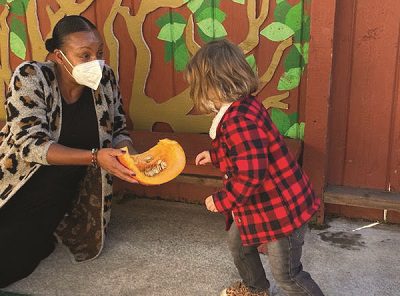
In a period in which we have begun a spiritual practice of opening our eyes to the contributions of those who have historically been invalidated. In this particular issue, we want to recognize a few of the many of those who have made contributions specifically in Montessori education. As we recognize Black History Month, we pause to acknowledge a few teachers of color who are bringing a contribution of their own to their classrooms. The more teachers of color we have in Montessori classrooms, the more we enhance our schools, and provide our children and our staff with positive models of educators and leadership.
Research shows that Black students experience school as more hostile and demoralizing than other students do, that they are disciplined more frequently and more harshly for typical childhood offenses…, that they are often labeled as deviant or viewed as deficient more quickly than other children, that teachers have lower academic expectations of Black students (which, in turn, lowers those students’ expectations of themselves), and that Black parents feel less respected and less engaged by their children’s teachers and school administrators. Perhaps these are some of the underlying reasons that Black students tend to underperform in most schools across the country.
The truth is that schools are more than academic institutions. They are places where children go to gain a sense of who they are, how they relate to others, and where they fit into the world. The best schools are places that answer these questions positively – ‘you are a valuable human being, you are a person who will grow up to contribute great things to your community, and you belong here, with us, exploring the world and learning how to use your gifts.’ Unfortunately, Black children looking for answers to these universal questions of childhood will often hit a brick wall once they walk into the classroom. If the curriculum does not reflect their cultural experiences, the teachers don’t appear to value them, and they spend most of their time being shamed into compliance rather than guided towards their highest potential, well… what can we really expect? How are they supposed to master basic academic skills if their spirits have been crushed?
Here’s the good news. In my years of school shopping…I have found that there are some educational approaches that consistently provide a safer, more enriching and more affirmative environment for Black children. The Montessori method, developed by Italian physician Maria Montessori and introduced to the U.S. in the early 20th century, is one such approach.
However, to support children of color, research indicates that teachers of color help close achievement gaps for students of color. The report, Diversifying the Teaching Profession: How to Recruit and Retain Teachers of Color, sadly finds that while the population of teachers of color overall is growing, Black and Native American teachers are a declining share of the teacher workforce and the gap between the percentage of Latinx teachers and students is larger than for any other racial or ethnic group.
In the fall 2019 issue of Montessori Public, Dr. Ayize Sabater (AMI-USA, Executive Director) chronicled the gathering of Montessorians who reminded us of the efforts of Black Montessori educators to bring Montessori education to children of color, from Black Montessori preschools founded in the 1920s to the Central Harlem Association of Montessori Parents (CHAMP) and the CHAMP Teacher Education Program (TEP).
The research, the history and lived experiences of others, indicates the emergent need that during the month of February AND every day of every month, children, teachers, and parents, live their own history of people of color. In our Montessori classrooms, we need to hear the voices of our children and teachers. In the information below, we asked teachers of color why they became Montessori teachers, what they see as our greatest challenges and their advice to people of color who are considering becoming Montessori teachers.
RAINA FORD
Lower Elementary
Tiffani Battle I sought Montessori training after working in a school for two years. I was public school trained and had worked in a 1st-grade class for a time before discovering Montessori. I answered an ad out of a local paper and was blown away about the degree of concentration and the level of learning taking place in the Primary class. I have been hooked ever since.

Raina Ford Honestly, I feel that I make a contribution to any child that I have the pleasure of working with. What I can say is that I feel, as a Black teacher, I have the ability to connect to those children of color who otherwise may not have had that connection because we do still have discrimination and it is very much in schools. As a black teacher to children of European origins, I feel that I show them that people of color are in positions of leadership.
Tiffani Battle I definitely feel I make a difference for children of European descent. I had a child who licked me in my first year of teaching. I asked why and he explained that I looked and smelled like chocolate. At that time, I wore cocoa butter lotion. The child was about six and a half years old, so I was pretty surprised. But I realized then that I was his first encounter. From that moment forward, I used my platform as a teaching experience. In every class I have had, I introduce children to my culture.
Raina Ford I think the greatest obstacle to having more Montessorians of color in the classroom is exposure. As a woman of color, I did not know Montessori was a teaching option until I was in my 20’s. We cannot have more Montessorians of color come through the door if we do not share the beauty of Montessori with more of the world. We have to sort of hit people in the face with it because Montessori changed my life. I’m confident that if more educators of color knew about Montessori’s philosophy, we would see more of them taking on the training. Another issue is the cost of the training. We must do more to help support and sponsor educators of color to find and take the training.

Nargees Jumahan One of the obstacles I have had in my training was the lack of people of color as trainees – the lack of people of color in training programs. In the two years of my Montessori training, I encountered only three people of color who were trainers. I felt in my earlier years, my professors (who were of color) had a bigger impact on me as an educator.
Tiffani Battle The greatest obstacle is the actual knowledge of Montessori. It is usually only known in exclusive neighborhoods. If we could do a massive campaign to reach people on the margins, I think it would bring interest from diverse communities. I also believe that in the Montessori community, there is definite discrimination present on all levels. If we can tackle that head-on, it could help people of color to feel more welcome.
Nargees Jumahan My most treasured general experience is sparking curiosity in my students. However, an individual treasured experience involved a student in my class, who recently immigrated to the US and spoke very little English. I shared with her my story of immigration and my struggle with English and the challenge of slowly overcoming it. It completely changed her attitude towards the language. She began to express herself verbally and in writing. In the school, she opened up and connected with other students.
Tiffani Battle My most treasured experience has been to attend a Montessori Conference in Denver a few years back. It was the first time I went to a community event with the Montessorians of Color. It was the best experience to be in a space with others who are just like me. There is something to be said about what happens when one of few becomes one of many.
Raina Ford My advice to an adult of color considering Montessori as their calling, would be to go for it! We need you in our classrooms because we are underrepresented. Do it – and put your whole heart into it because once you enter into the world of Montessori, it really does change you. Taking the Montessori training helped me become more peaceful, and it widened my perspective. It can only add to your life and your qualifications. So if you have the opportunity to take Montessori training, reach out and grab that opportunity.
Nargees Jumahan I think my advice to adults of color seeking Montessori as their career would be to find other Montessorians of colors and build a support system to help them thrive.
Tiffani Battle I would advise this: Come. Join our Montessori world. We are making the world a better place, one student at a time.
If we truly believe that people of color have and are making a contribution to our worldwide tapestry, then we will fully commit to supporting the voice, access, structure, and equitable needs of children, families, and teachers of color. It is then that we can truly make the invitation, as Montessorian Tiffani Battle so aptly put it: “Come. Join our Montessori world. We are making the world a better place one student at a time.”

Dr. Cindy Acker holds degrees in human development, culture and spirituality and a doctorate in educational leadership from UC Berkeley. She is former VP of the National Child Care Association and has served as a public policy adviser for Montessori schools and school associations. She is a five-time award winner in areas of social justice, and has created platforms for school social justice and protocols for school re-entry post covid-19. She was trained by Ursula Thrush and is head of The Child Unique Montessori School and Montessori Elementary School in Alameda.
I am delighted to be sharing our work in Accreditation. Firstly, let me share the exciting News that IMC has 17 fully Accredited schools.
We have 12 Schools in the Self Study process from all over the United States, including Poland, Qatar, and the Cayman Islands. These schools are small, medium, and large public, charter, private, or affiliated with a religious organization.
Last year, we conducted an On-site Visit for Accreditation in the Virtual World. Starting in January, we will be back into our wonderful schools, celebrating and validating all of the great work happening. This Winter/Spring, we will be busy with visits to all of these schools who are first-time accreditation OR re-accreditation with IMC: Ghent School, VA; New Gate School, FL; Montessori Community School Salt Lake City, UT; Leap Montessori, NM; Innovation Montessori School, FL.
We updated the Accreditation Handbook and all forms that relate to the process. We have attracted over —-new volunteers to our Volunteer Corps to assist with accreditation visits.
Additionally, we are working on teams for joint Accreditation Organizations, ie. AMS, Cognia. Working with Regional, State, National, and International Organizations strengthens our relationships to support fully implemented Montessori Schools.
It is my privilege to spend time creating a personal relationship with schools, leaders, and teachers. If you would like to become a part of the Accreditation Volunteer Teams, kindly reach out. We have opportunities to read self-studies and become a part of On Site Verifying Teams.
At IMC, we are grateful for our community of IMC volunteers.
I am looking forward to building strong and lasting relationships within our community. Sheila Linville sheilalinville@montessori.org

Sheila Linville Director of Accreditation & Affiliation, International Montessori Council (IMC)
Sheila is passionate about Montessori Education and has three decades of experience as a Head of School, Classroom Guide on the Primary and Lower Elementary levels, and Leadership/Teacher Coach and Consultant. She currently serves as Director of School Accreditation and Affiliation with the International Montessori Council (IMC). She receives great satisfaction from helping schools organize a Guidance Program for their students and families. She is the Executive Director of The Andrews Educational Institute, a foundation for supporting Montessori and Progressive schools. Sheila has two sons, both who are Montessori graduates, and works alongside her dedicated and loving husband Scott.

In December, we watched the footsteps of an attempt at restoration of justice and the rewriting of history, as the Louisiana state board of pardons unanimously voted to pardon Homer Adolph Plessy (posthumously) for his conviction of sitting in the “whites-only” section of a railroad car. Governor John Bel Edwards has agreed to sign the pardon, which may have occurred by the reading of this article.
Although a pardon is not an expungement, this work represents a step toward calling out the need for justice.
“True peace… suggests the triumph of justice and love among men; it reveals the existence of a better world where harmony reigns” (Montessori, Peace and Education).
Learning about new and uncovered history is true preparation for the teacher, as we take on this task of THI (Teaching with Historical Integrity). The position of Homer Plessy as a man of courage is not to be missed in telling his story. He was not a convict but was a man of courage who, although he could have moved through life as a White looking man, chose to stand up for the rights and freedoms of others. This is the lesson for children to learn – that regardless of the derogatory situations that have occurred in history, there have also been people who have stood up for what is right. Plessy and the Citizens’ Committee of New Orleans prepared themselves for this courageous stand. Everything that the Committee had organized occurred as planned, except for the decision of the Supreme Court in 1896. The loss of the Supreme Court case of Plessy vs. Ferguson resulted in many unjust “separate, but equal” laws that exacerbated segregation and discrimination. The pardon of Plessy, some 125 years later, tells us that justice is not always exacted as it should be, but as Montessori stated, “the triumph of justice… reveals the existence of a better world where harmony reigns.”
Montessorians appreciated the International Day of Peace in September. We now appreciate historical moments: the work in October to expunge the record of Claudette Colvin (predecessor of Rosa Parks), the Board of Pardons’ decision about Plessy, and the awaited Governor’s signature in January. We encourage you to consider these bookends and interior historical parts leading to the Season for Nonviolence, which begins on January 30th and ends on April 4th. The Gandhi Institute writes:
“The Season, launched at the United Nations in 1998, marks the annual 64 calendar days between the memorial anniversary of the assassination of Mohandas K. Gandhi on January 30 and that of the Rev. Dr. Martin Luther King, Jr. on April 4. The Season teaches that every person can move the world forward in the direction of peace through daily nonviolent choices and actions.” Some cities include a day of community service and a word of the day to be discussed in schools, City meetings, and organizational forums. If you would like a list of Season of Nonviolence words, please contact Cindy Acker at office@thechildunique.org.
The SFNV site includes a Nonviolence Pledge, suggested readings, and many resources, including suggested daily practices for each of the 64 days during this Season of Nonviolence, such as: “Today: I will share a sincere smile with everyone I meet, knowing that my smile contributes to peace.” For more information, please see: Season for Nonviolence https://gandhiinstitute.org/season-for-nonviolence/
Additionally, we invite your students to answer one of these questions for the Season of Nonviolence:
1) What dream do you think Martin Luther King had for the world? (early childhood)
2) How do you practice peace like Gandhi? (lower elementary)
3) How are the peace beliefs of Montessori, King, Jr, and Gandhi similar? (upper elementary)
Feel free to send them to: imc@montessori.org


It was mid-2020, the whole world was in shock after watching the gruelling videos of George Floyd as well as the social outcry that followed his death. As we watched the events unfold, we decided, as Montessori leaders, we had to do something. Our duty was to provide a safe space, to have the tough conversations, and provide resources that guides needed to support their community. We reached out to our IMC Board Member, Cindy Acker to find guidance in these unbelievably difficult times. After over 1.5 years of efforts we are happy to announce the creation of the Dr. Cindy Acker Social Justice Fund that will hopefully support schools across the country in creating a more inclusive, empathetic world.

We began with a Town Hall for a few weeks to open up conversations with Montessorians on social justice and racism. However, we didn’t know what we didn’t know. And we discovered that there was a lot that we needed to learn. It was hard work, and it still is. We discovered that social justice work is deep living work, and it is ongoing. One week of Town Hall became four weeks, and we recently celebrated 1.5 years of Montessori Town Halls on various aspects of this subject. We learned where the term “race” originated, how education was a tool for oppression and discrimination, how racism manifests itself in schools. AND we learned that we can replace shame with strength, and how now more than ever, we need to refresh our classrooms with a new insight on history. We learned that we must roll out Montessori teachers who are giving children the service of knowing about other cultures. And we learned that that work is NOT singing some songs and engaging in some celebrations.
• Our series of Town Halls – now involves preparation of curriculum
• We partnered with AMS in a BLM rally
• We created a tool for the IMC board to examine the association for proper social justice practice
• We partnered with Dr. Ayize Sabater (AMI-USA) and WPFW and presented a piece on Critical Race Theory
• IMC created a Social Justice Task Force
• IMC hosted the showing of a play about the landmark court case of desegregation of schools, entitled, Words That Made the Difference, written and directed by Dr. Cindy Acker
• Kathy Leitch engaged a teacher education task force and reached out to MACTE to discover what changes can be made in teacher education as well as IMC Teacher Education Guidelines and Requirements
• Tim Seldin is planning a rewrite of his Celebrations of Life book • We created the beginnings of sub-committees for the social justice task force
• We began responding to schools needing support via workshops or feedback
• We created a book list of books addressing race, gender, sexual orientation, ability
• Partner with AMS: Teacher workbook on social justice in Montessori classroom (Rise Up!)
• Center for Guided Montessori Studies (IMC) committed resources and support for teacher education for Syrian refugees in Jordan, Turkey, and Egypt
• Center for Guided Montessori Studies (IMC) awarded scholarships to several aspiring Montessori educators of color
• Tim Seldin supported the efforts and provided the resources to Association of Montessori Afrika to help make their conference dream a reality
• Creating updated materials and activities
• Bookstores that fund books for schools
• Professional development for classroom guides

The invasion of our Capitol on January 6th was a watershed moment in the history of the United States. It will sit among the darkest moments in our nation’s history and will continue to haunt us as we try to understand what led to this disturbing event. We hope it will also spur us onward to become a better version of ourselves.
During that day, I happened to be with a group of my elementary students from Oneness-Family Montessori School. We were in the woods alongside a creek, and the students were cheerfully building a shelter out of fallen limbs and branches. They were blithely unaware of the shocking events happening just a few miles to the south. I, too, was in their cocoon of contentment, though increasingly distracted by the news and images coming through my phone.
January 6th brought a new and unique horror, because it was not some small band of anti-government resisters camped out at a remote wilderness compound. It was a desecration of the citadel of our ideals that struck at the heart of the United States. A sacred threshold was breached. The temple of our democracy was ransacked. The events we citizens watched were gut wrenching; the images we saw an affront to our love of our country. We recoiled because we could feel something terrible attacking the soul of America. It was clear that on this day the “better angels of our nature” had been overrun by the darkest forces in American society.
As Americans, we have faced many trials and tribulations in our 245 years, as we’ve soldiered on, however slowly and irresolutely at times, toward a more perfect union. The tapestry that is America has been stretched to the brink at times, as during the Civil War and the two World Wars. It has been torn and burned, when we’ve fought over our national identity during Reconstruction and the Civil Rights Movement. Our country has stayed intact due to the resilience of the threads that hold this tapestry together; these include the belief in the rule of law, the veneration of reason as superior to blind passion, and the commitment to the peaceful transfer of power.
We cherish these threads of our national fabric in a sacred—a trust not just in the vision and ideals of our founders, but in each other as citizens. That trust is based upon a shared and commonly accepted understanding of our constitutional republic, that no matter how vehemently we may disagree on policy and legislation, we respect the votes of our elected officials, and we honor the will of the people. Inherent in this understanding that we embrace as citizens is the knowledge that, while we each have individual rights and freedoms, we also share a commitment to, and must play an active role in, maintaining the well-being of our country as a whole.
This sacred trust is the essential knot that keeps the American form of government functioning smoothly. Yet throughout our history this sacred trust has been strained by the tension between two core principles of our national identity—that of individual liberty on the one hand and general welfare on the other.
The notion of individual liberty is perhaps most notably enshrined in the second paragraph of the Declaration of Independence:
We hold these truths to be self-evident, that all men are created equal, that they are endowed by their Creator with certain unalienable Rights, that among these are Life, Liberty and the pursuit of Happiness. That to secure these rights, Governments are instituted among Men, deriving their just powers from the consent of the governed…
This was the radical idea, the bold proposition that made America unique in the history of modern human civilization. The United States was the first to break away from the tyrannical empires of Europe; the regimes that ruled for centuries through blood lineage, military might, and the suppression of individual freedoms. Inspired by thinkers of the Enlightenment such as Hobbes, Locke, Rousseau, Montesquieu, and Voltaire, America’s founders fashioned a new vision that placed the rights of the individual citizen at the center of the body politic. There would be three branches of government, but the engine that drove it all was the freedom of the individual to speak their truth and to cast their vote.Meanwhile the concept of the general welfare, or of the common good, is embedded as a core principle in the preamble of the Constitution: We the People of the United States, in Order to form a more perfect Union, establish Justice, insure domestic Tranquility, provide for the common defense, promote the general Welfare, and secure the Blessings of Liberty to ourselves and our Posterity, do ordain and establish this Constitution for the United States of America.
One of the things that has defined the “American experiment” is the idea that government should not just be the voice of the people and the upholder of laws, but that it should strive to ensure the well-being of its citizenry. This trait of the American idea has origins as far back as Aristotle, who used the idea of “common interest” as the basis for the distinction between good and bad governance. Saint Thomas Aquinas held the “common good” to be the goal of law and government. Thinkers such as David Hume, who used terms such as the “public” or “common interest,” paved the way for James Madison and Thomas Jefferson’s own thinking in those early days when our foundational ideals were drafted.
Fast forward to January 6, 2021: The tension between our right to individual liberty and the commitment to the common good boiled over in a paroxysm of violence from which we are still reeling. The rights we have to protest come with a solemn responsibility to do so peacefully. That is the compact we make to each other as citizens, for we know when that compact is broken, the very fabric of who we are is torn, and we can no longer ensure the well-being of our country.
Our freedom of speech is not unlimited. It is proscribed by the commitment to exercise our free speech in accordance with existing laws protecting the welfare of other citizens, as well as private and public property. To put it another way, if in the act of protesting, one attempts to destroy the buildings that exist to preserve one’s right to protest, then that protest is a grotesque miscarriage of the right to free speech itself. We have the right to speak out stridently against our government, but we don’t have the right to take up arms against it. Inherent in who we are as Americans is the faith that we can resolve our differences by honest debate and by casting our votes at the ballot box.
As Americans, we now face a somber time of reckoning as we ask ourselves how we got here. We reflect upon these new painful rips to that great tapestry that is our national soul, which has withstood furious and fierce onslaughts in times past. We face harsh challenges ahead.

The political divisions in our society are as great as they’ve been in our worst moments. The loss of faith in our electoral system, fueled by the epidemic of misinformation and fanned by the duplicitous words of demagogues, is a severe illness that will need an inoculation of truth via congressional action and educational initiatives. The rise of hatred spread by white supremacist groups will need to be confronted not just by the force of the law, but by the power of a country-wide counter force energized by empathy and unity. And the stories we embrace about who we are as a nation need to be examined in a new light as we seek to better understand the mistakes we’ve made along the way, so we don’t risk perpetuating or repeating them.
It will be a long road, but our forebears knew that it would be when they embarked on this American journey nearly two and a half centuries ago. From the writings of our founders, and through the actions of so many bold, heroic leaders since, we have learned (and re-learned) a few hard-fought, important truths: 1) Though we elect leaders to represent us, the power they hold is delegated by us, the citizens; 2) Though we rely on national, state, and local governments to uphold the laws, it is we as a collective citizenry that sustain the rule of law by acting lawfully; 3) Although the general welfare is the stated responsibility of our governing bodies, it is we who uphold the common good through our acts of service to the welfare of our fellow citizens; and 4) While the Constitution specifically charges the federal government with maintaining a free public education system, it is we who must value learning for our children and for ourselves.
On January 6, my elementary students were focused on working together to build their shelter. There was quiet unity as they worked in harmony under the trees and the singing birds. They were energized by their common purpose. They made enthusiastic suggestions about the design of their shelter, yet deferred when better ideas were expressed by others. In the end, they displayed a palpable sense of fulfillment in the collective work they had done together. The lessons they unwittingly taught me were simple: building things collaboratively is fulfilling and fun. Keeping a balance between your own wants and the needs of others is both wise and effective in reaching your goals. Solving differences peacefully is easier when you embrace a common purpose.
As I watched my students that day they filled me with hope, even as I knew that a tragedy was unfolding just down the street.
My students reminded me that we have within us an indomitable spirit, which has demonstrated time and again that we can overcome the obstacles facing us and transform challenges into opportunities, as we march ever onward toward a more perfect union.


Andrew Kutt is the Secretary of the board of the International Montessori Council. He is the founder of Oneness-Family School, which is located in Chevy Chase MD. In addition to being the founder of Oneness-Family School, Andrew has served the global Montessori community by training teachers, advising school leaders, and supporting schools to reach their goals. He has developed curriculum programs in areas such as personal reflection, happiness, gratitude, conflict resolution, and positive discipline. Andrew is also an accomplished author, poet, and songwriter. Oneness-Family School serves children 2 years old through 18 years old, and students come from over 60 countries, making it a truly international school. Oneness-Family School has been voted Best Montessori School in the Washington DC area for the past 5 years in a row.

Like many Americans, I was stunned by the vitriol that accompanied the 2016 pre and post-election season. In our deeply polarized country, the expected mudslinging between candidates seemed to extend to everyone. Now Americans were hurling insults, labels, accusations, assumptions, and blame at each other. My own family was politically divided, and some family members were no longer talking to each other. Those that were still talking wanted to ban any mention of politics. News reporting had taken a strident tone, everyone on television seemed to be shouting, and I stopped watching. I realized I had as little understanding of the “other side” as they had about “our side,” and I found within myself a longing to talk with the “others” to try to understand them better. I didn’t want to hear from the pundits. I wanted to talk to people. Instead of avoiding difficult conversations, I wanted to learn how to have them.
One day in early 2017, I heard a voice on a television talk show that my husband was watching in the next room. The man’s name was David Blankenhorn, and he was talking about reconciliation, conversation, unity, and depolarizing America. I joined my husband and listened. Blankenhorn said he and a group of “reds” and “blues” were building an organization inspired by the words of Abraham Lincoln in 1861:
……………………………………………………
……………………………………………………
I joined the organization, now known as Braver Angels, trained as a workshop moderator, and organized workshops in Arizona to bring people together across the political divide. The pandemic required Braver Angels to move all workshops online, and new programs were added. Online Braver Angels national debates have attracted more than 400 people per session. The 2021 pre-inauguration Hold America Together conversation online drew an audience of over 4,500.
As a Montessori educator for over four decades, I have aspired to nurture a peaceful, collaborative, respectful community of learners at our school who care for and are curious about themselves, each other, and the world we share. From resolving conflicts with the peace rose in primary, to engaging in animated community meetings in the middle school, and problem-solving together during staff meetings, we have been learning to talk through our differences, see each other through a lens of compassion, seek understanding, and find solutions. Maria Montessori saw the peaceful Children’s House as a hopeful alternative to the destruction she witnessed in the world of adults in her time. The political challenges of our own time give us an opportunity to apply the community skills we have honed in our Montessori schools and contribute to conversations that bridge the political divide.

For me, Braver Angels has provided an opportunity to engage with people across the political spectrum, to learn how to listen without assumptions, and to see with new eyes people that I previously would have dismissed as hopelessly misguided. I have learned to see beyond stereotypes and have experienced moments of surprise and wonder at the nuances and complexity of each individual’s unique perspective. I may not like the politicians my neighbor supports, but I can still love my neighbor. Braver Angels strives for diversity in its membership — political, racial, generational, geographical, and gender — and has braved national conversations on current topics such as police reform, mask-wearing, reparations, the role of facts in politics, and the cancel culture. These conversations welcome free expression of deeply-held opinions, beliefs, and values within an atmosphere of mutual respect and goodwill. During the pre-and-post-election cycle, and continuing throughout the transition to a new administration, the With Malice Toward None and Hold America Together campaigns have encouraged communities such as civic groups, congregations, and schools to agree that regardless of political outcomes, we will maintain respect for one another and will not let politics divide us or interfere with our work together.
Like our national and local communities, our Montessori school communities include staff and families with a diversity of experiences, beliefs, and perspectives. Braver Angels offers suggestions that I have found helpful in protecting our Montessori community, promoting goodwill, and supporting one another as we each respond in our own way to national and global events:
• Listen. If the topic of conversation turns to politics, slow down, and listen. If they are distressed, acknowledge feelings and give support. If you disagree, seek to listen and learn instead of declare and debate. Listen to understand instead of to change their mind.
• See the person in front of you. This is a person like yourself, not an ideology. Remember to treat others as you would like to be treated.
• Respectfully disengage if you need to. If the time is not right or the conversation doesn’t seem productive, excuse yourself.
• Seek to understand. If you want to have this conversation, keep it respectful. Even if you disagree with the person, be curious. Instead of arguing, be responsive, “I hear you”, “tell me more about that” , “what has been your life experience that has influenced your thinking on that?” Listen for underlying values.
• Accept that differences of opinions and beliefs are ok. Understanding different perspectives and life experiences gives us a broader understanding of our world.
• Be respectful of everyone in the room. Don’t assume that everyone in the conversation agrees with you. We all tend to be less respectful about the other side when we are talking with people from our own side. Avoid stereotypes, labels, and assumptions about the “other”.
• Focus on what we have in common and our shared hopes and dreams. We will continue to work together for our children, our future.

Nirvair Khalsa is the founder (1976) and director of Khalsa Montessori School in Tucson, Arizona and a state co-coordinator for Braver Angels Arizona. She has four adult children and four grandchildren who have all attended or currently attend Montessori schools.
The Build Back Better Act is a historic legislative proposal that if passed will change the landscape of early care and education in America by funding near universal access to child care and preschool, and raise early childhood educator and childcare provider income to levels more comparable to the important work that they do. We are optimistically anticipating the possibility of this legislation as it is comprehensive and will increase access to high-quality early childhood experiences enabling all children to have the advantage of a positive start to life.
We have been working to first understand the bill language and intent and its implication for both private and public Montessori schools, while meeting with Senators and Senate Committees to include language that would allow Montessori schools to participate in the funding opportunities without compromising on our comprehensive and researched pedagogy.
There are two enormous funding streams for early childhood which will be available to private schools/ child-care centers and public schools. Both will give our community the opportunity to serve many more children from lower income families and have funding for 3’s and 4’s where there currently is none to have a full 3 year age grouping for primary.
There will be a lot of significant advocacy work to be done at both the federal level and within each state to ensure that provisions in BBB do not impede full Montessori implementation. We need everyone informed and ready to jump into action when opportunities are identified.
Connect with your state advocacy leads so everyone in your state can work as a team and coordinate strategy and outreach. Let them know you’re willing to volunteer to help with the state level advocacy work for Build Back Better.

Montessori teacher education is more important than ever as many of our schools face teacher shortages which seems to have only been exasperated by COVID. The IMC-affiliated teacher education program, The Center for Guided Montessori Studies (CGMS), is working hard to tackle the problem, currently preparing over 500 active learners in MACTE accredited programs for teachers of all levels. With over 15 years of experience with blended learning Montessori teacher education, many schools turned to CGMS for support during the pandemic and continue to look to CGMS to provide convenient, high-quality courses to meet their teacher education needs.
In spring 2021, MACTE expanded its scope to include accreditation of School Administrator programs. CGMS was excited to be the first to apply right away and submitted the accreditation self-study for their School Leadership/Administrators credential program in November. Designed in partnership with the Montessori Foundation according to IMC guidelines, the course focuses on nine essential elements of school leadership presented from a Montessori perspective. The response from the first school leaders enrolled has been very positive. They especially appreciate the supportive community of learners, including school leaders from private and public schools and some individuals from international schools.
IMC is pleased to welcome a new affiliate applicant, Montessori Teacher’s College (MTC) in Sacramento, California, which is currently completing the join process for MACTE accreditation and IMC affiliation. The directors of Montessori Teacher’s College, Norman Lorenz and Sara Nelson are seasoned Montessori educators with a passion for supporting the development of teachers. In fact, Norman was one of the people who helped organize MACTE back in the 1990s. MTC began with a small cohort of local students in their first Early Childhood course, but with their blended learning format, hope to reach more students and eventually add an Elementary program.
The first IMC Early Childhood Assistant Teacher Credential was awarded in 2021 to adult learners who completed the Vietnam Montessori Advisory and Training Center program in Hanoi. VMAT has offered two sessions of the assistant teacher course with 32 graduates. CGMS will begin its first Early Childhood Assistant Teacher cohort in January 2022. With a focus on understanding the role of the assistant teacher, both the CGMS and VMAT programs provide learners a strong foundation in Montessori philosophy and classroom leadership and a robust overview of the Montessori Early Childhood curriculum. The IMC competencies for the Assistant Teacher credential serve as a guide to assure these new programs prepare individuals for a successful career as a Montessori paraprofessional and hopefully serve as a stepping stone for some who may later choose to take lead teacher training. IMC recognizes the importance of well-prepared adults in every role in our schools and looks forward to future affiliates offering these important assistant teacher credentials.
 Montessori Family Alliance School Group Membership (Print & Digital 2026 1/2 year pricing)
Original price was: $30.00.$15.00Current price is: $15.00.
Montessori Family Alliance School Group Membership (Print & Digital 2026 1/2 year pricing)
Original price was: $30.00.$15.00Current price is: $15.00.
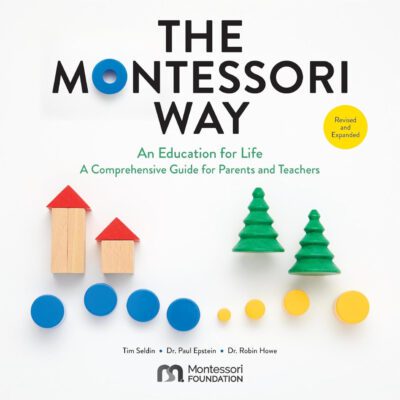 The Montessori Way, Revised and Expanded: An Education for Life; A Comprehensive Guide for Parents and Teachers
$25.00
The Montessori Way, Revised and Expanded: An Education for Life; A Comprehensive Guide for Parents and Teachers
$25.00
 The Montessori Child: A Parent's Guide to Raising Capable Children with Creative Minds and Compassionate Hearts (The Parents' Guide to Montessori)
$20.00
The Montessori Child: A Parent's Guide to Raising Capable Children with Creative Minds and Compassionate Hearts (The Parents' Guide to Montessori)
$20.00
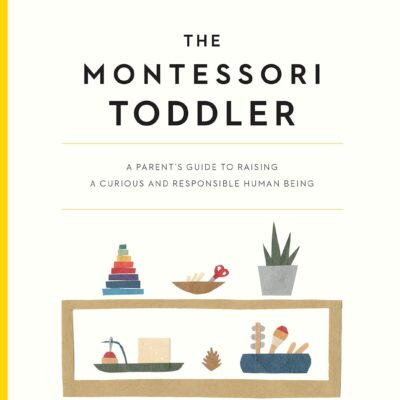 The Montessori Toddler: A Parent's Guide to Raising a Curious and Responsible Human Being (The Parents' Guide to Montessori)
$20.00
The Montessori Toddler: A Parent's Guide to Raising a Curious and Responsible Human Being (The Parents' Guide to Montessori)
$20.00
 Montessori in Action: Building Resilient Montessori Schools 1st Edition
$29.95
Montessori in Action: Building Resilient Montessori Schools 1st Edition
$29.95