 Dear Cathie,
We are starting to look at schools for our child who will be three years old this summer. While we are drawn to the Montessori Schools we have visited and the activities we see there, we are finding the price quite off setting. Can you make any justification for the price of a preschool education? Also we see such variation among the Montessori schools in our area. Isn’t Montessori a brand name or a franchise? -–A Frugal Parent
Dear Frugal,
We applaud you for spending the time and energy to make a conscientious decision about your child’s education! And you are so right that visiting schools, talking with the staff, and observing functioning classrooms is the best way to get a feel for what a school is all about.
I will answer your second question first. No, Montessori is not a franchise. Each school is independently owned and operated. There is no real unifying body accrediting Montessori schools. So, while all Montessori schools ascribe to follow the writings and teachings of Dr. Maria Montessori (the creator of the ‘Method’ in the early 1900s), each school’s freedom to interpret the writings and teachings independently account for the differences you see among Montessori Schools. Some are more nature based and others more academic in their focus. Some only go through kindergarten and others all the way through high achool. Some encompass the infant/toddler age groups and others begin at age three.
All parents want to get the best value for their tuition dollars. But already you can see a cost benefit relation to a Montessori education. Why is a Montessori school costly? It is partly based on the extensive training that teachers undergo.
Training for Montessori teachers is roughly equivalent to a master’s degree in education. Although there are wide variances in length and style of training programs, teachers generally study for a year at the infant/toddler and 3-6 year old level and two years at the 6-12 year-old level to become trained in the philosophy and method of Montessori education. Some of these courses are full time; others meet once a month, and still others only for an intensive summer session. Most include a yearlong internship phase, where the teacher trainee is mentored by an experienced teacher in the same classroom. All programs include both practical and written exams to ensure mastery.
This is significantly different from the training of traditional preschool or daycare teachers. Their training is simply a 90-hour course in the safety and the basics of child development. In many non-Montessori programs teacher candidates are not even required to have completed college to attain certification.
The Montessori Method is based on scientific observation and specific teaching. Each skill is broken down into small components, which are taught in a child-friendly, hands-on manner. Children actually touch, move, and manipulate the materials growing the pathways of their brain as they do so. Although the classroom may look free and unstructured, each activity is created for a specific learning purpose. Montessori educators are trained in all of these areas.
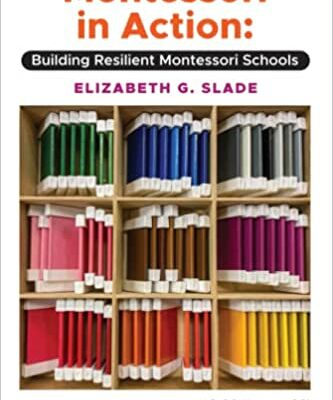
The Montessori materials are also quite costly. The cost of furnishing a new Montessori classroom can be about $30,000. Each material is carefully made to a specific set of criteria. The activities for which these materials are used require master workmanship as the materials are teaching tools and are used daily by children. They periodically need to be replaced when they are no longer visually appealing or accurate according to size. All the Montessori equipment and furnishings are aesthetically beautiful and are an important aspect of the children’s environment, adding to the overall beauty and ambiance of the classroom. I think that this feature is obvious when visiting Montessori classrooms and often is enticing and drawing to both parents and children.
As you review the schools you have visited, I encourage you to consider the things that make Montessori education unique; level of teacher education, quality of the teaching materials and learning opportunities and the freedom of choice afforded to the children to follow their own learning path!