Our School is Moving: How Can I Say Goodbye?

Our School is Moving: How Can I Say Goodbye?

It was 25 years ago that I first walked into the old Northview public school building on the east side of Bolingbrook. A church had purchased the building and our Christian Montessori School moved in to rent much-needed space for our growing school.

The building needed a facelift and repairs. My classroom was very dingy, dirty, and looked worn out, needing a lot of work as did the rest of the wing we occupied. But, it felt like a mansion compared to the small church parsonage a few blocks away that had housed our small school for several years.

Having just completed the comprehensive Montessori 3-6 training, and at last certified, I was excited for the future of our school and for the launching of my career as a Montessori directress. I was raring to go, like a horse at the gate. It was surreal. God was doing a new thing in and through me, and this was my time.

A spark of creativity had been ignited in me during my Montessori training by an instructor named Dan. (not his real name) He owned several Montessori schools in the Chicago area, one especially for special needs adults. He was a special man with a special heart. Dan taught the language curriculum that summer, but what he did for me was unexpectedly tap into a creative stream, causing an awakening that would grow and inspire me for the rest of my career; to take the Montessori philosophy and method and create anything I could imagine.

As I looked at the old, empty classroom that day, I envisioned future Montessori activities that would fill my shelves and delight the children who walked into my classroom. But in reality, I was standing in the doorway of an empty, neglected room, with little money and no shelves. What was I going to do? I had just been trained by Montessori’s best and inspired by Dan, and I was ready, excited for my creative juices to begin to flow. It would take hard work, and an understanding husband to support me emotionally and financially for my creative aspirations to become a reality.

In the years to come, I would create hundreds of Montessori materials, gathered and created from summers of garage sale inspirations: an old wooden tie rack used for counting, assorted cutup necklaces of pearls and beautiful beads for pouring, and a can of old fishing lures and more, much more. Dan would be so proud of me.

Year after year, the students came. The joy and wonder on their faces as they manipulated my handmade treasures, soaking up the best of who I am, coupled with the Montessori Method, was more than gratifying. Knowing that I would be a part of their Montessori foundation for learning, forever, was in itself an overwhelming thought. To have that kind of impact on a little life was indeed humbling.

Today, after 25 years, I again walked into my classroom, this time to say goodbye. Our school was moving to a new space, into a welcoming church just down the street. As I stood and looked at my now empty floors and walls, I could feel tears fill my heart as sadness tried to overtake me. The room which housed my life’s work was now a place of emptiness, with no clue that I had ever been there.

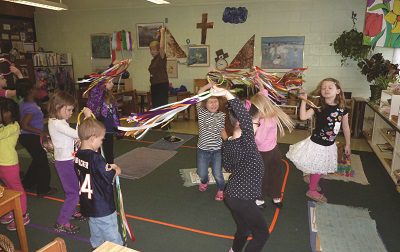
But, if the walls could talk, they would tell of the joy, the laughter, and time well spent in the development of the next generation of leaders in our cities, in our nation, and yes, in our world. They would tell of the little lives nourished each day, happily absorbing the Montessori materials, establishing a foundation for further learning that would impact their futures. The walls would speak of the students who were touched with the love of a teacher who, above all else, wanted to saturate them with her love of God and country, teaching them to love and respect themselves. The walls seemed silent that day to the casual observer, but I could hear them. I could hear them loud and clear. T

he classroom that was once filled with activity and singing, bunny rabbits and cockatiels, and a beautiful 6-foot fiddle tree towering over the reading area, is now empty. How can I say goodbye? I began to walk slowly around the perimeter of the classroom, stopping to look under the sink, remembering that my husband had replaced all the plumbing 25 years ago, out of his great love for me.

As I continued moving around the borders of my room, passing the row of windows that welcomed the sun rays and seasons into our days, my walk began to change. My walk of melancholy memories began changing to a walk of celebration, victory, triumph, and of thankfulness.

I began experiencing a spiritual lift, thanking the Lord for every little child He brought to my room, for development; for giving me the platform to speak into their destinies and help them unfold naturally birthing and utilizing their God-given potential through the Montessori Method.

My walk around the classroom began to be charged and energized with each step, knowing that I had fulfilled my own destiny in this room as I had touched heart after heart with love and respect, and value. And they had, in turn, left their precious imprints on me. Joy filled my heart for the gift of my students over the years, hundreds and hundreds of them, sent out to change the world. That day, I walked around and around the borders of my classroom, sensing a reverence for the great work that had gone forth in this space; lives touched, lives changed, and lives built on a sure footing. I had been given a sacred trust. Empty room or not, this work could not be devalued. Realizing the great place of impact I had been given in the lives of God’s children, I sensed a job well done.

As I stood in the doorway of my empty room, the elementary teacher came and unscrewed the nameplate and room number off my door and presented them to me. When she placed them into my hands, all my pent-up tears flowed loudly up and down the hallway as I collapsed into her arms. The release felt good. Now, I could say goodbye.

Marilyn Kell Long Webster is a retired School Director of Midwest Christian Montessori Academy in Bolingbrook, Illinois. This article is from her journal entry written in reflection on her career. Marilyn received her AMS Associate Preprimary Credential from Midwest Montessori Teacher Training Center, Evanston, Illinois, 1992. She has been married for 45 years and has three grown children. Currently, Marilyn is in the process of publishing a book on prayer.

The Power of Choice

The Power of Choice

The most powerful thing in the universe, after God, is our ability to think and choose. When you think, you build a thought, and these thoughts become physical substances in your brain. You think all day long, and you think even when you are asleep. Daytime thinking is a building process. Nighttime thinking is a sorting process. Humans think approximately 30,000 thoughts per day.

Choice creates a signal in your mind when you are thinking. As you think, you contemplate a decision of some kind. As you think, you choose, and as you choose, you cause genetic expression to happen in your brain. This means you form proteins, and proteins form your thoughts.

As children are given the freedom to choose and begin to focus their undisturbed attention for longer periods of time, this affects the chemicals, proteins and wiring of their brains as it changes and functions.

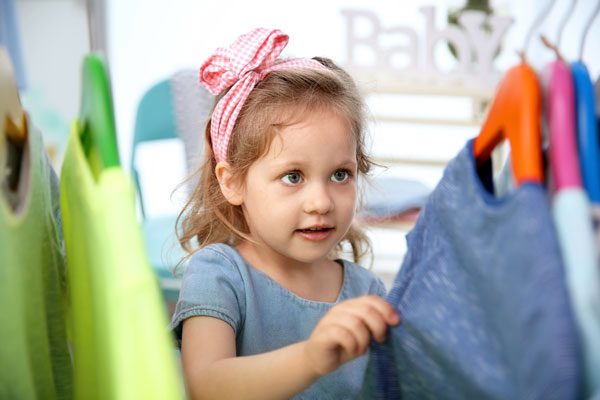
the power of choice with childrenYour child is a thinking being. Begin to give your young child choices between two acceptable things. As you direct them at home, whether it is a choice between toys, about what to wear to school, or eat for breakfast, begin to stimulate their thought process for making good choices, presenting logic and reason along the way. “Since it is cold outside, which sweater would you like to wear to school? Would you like a sandwich or soup for lunch today?” Choice empowers the child to step into their decision-making process.

When children walk into a Montessori classroom, they are met with choices: what work to take from the shelf; whether to sit at a table or on a rug; what to do next? As materials are presented each day to children, they begin processing information and ordering their minds. This preparation will help them as they begin to independently make good choices.

As they work in the classroom, making choices from a place of order and free will, it will encourage their thinking, which produces their state of mind. Good choices enhance brain function. Negative thoughts and choices will disturb their normal brain function.

Choices are real. All thinking, which leads to choosing, is real and can be seen on various types of brain imaging. As a child moves throughout the Montessori classroom, thinking and making choices within the environment, there is a deliberate, but quiet, building of an inner foundation for learning. This foundation must be built from the concrete, which will later sustain the more abstract, setting the stage for more complex and creative thinking to take place. When the children are presented steps to good choices within the classroom, they begin building life experiences that will improve their intellect and increase their capacity for further learning.

As children are given the freedom to choose and begin to focus their undisturbed attention for longer periods of time, this affects the chemicals, proteins
and wiring of their brains as it changes and functions.

Thinking and choosing causes children to redesign the landscape of their brains. Certain areas in their brain light up when they think and choose. Their thoughts produce words and behaviors, which, in turn, stimulates more thinking and more choices that build more thoughts.

Thinking and choice go hand in hand. Maria Montessori understood this important aspect, infusing her extraordinary Method, not only with components of respect, order, control, concentration and independence, but of choice, preparing the child for a fulfilling life of learning.

References
Leaf, Caroline PhD (2007). Who switched off my brain? The Switch On Your Brain Organization: Johannesburg, South Africa.
Note: Dr. Leaf has many other books and videos that are available online for those who wish to know more.

Tomorrow’s Child / October 2019 / Pg. 30

An Unlikely Gift:  How An Empty Bottle Filled My Heart

An Unlikely Gift: How An Empty Bottle Filled My Heart

It was the last day of school. I had taken my place by the front door where I have been every morning for the last 10 years, greeting the students as they arrive for class. This day, the excitement was in the air.

Children were tumbling out of their cars with flowers, gift bags, and fruit trays. Their faces were bubbling over with joy.  At the door that day, many of my students had stopped to present me with a flower or a gift or a poem written from their hearts, and cards, from grateful parents, for an awesome year.

It was almost time for me to leave the door and walk down the hall to my students, excited to start their day. I was getting a bit restless, looking at my watch, thinking about all the activities planned for the morning. That is when Jonny and his mom drove up.

Jonny, a darling little four-year-old boy, had come to our school in the middle of the year. I had taught his older sister, Judy, several years earlier. She was a quiet and gentle little girl. Jonny was totally different from her. In a Montessori classroom, as in a family, every child is uniquely different, uniquely gifted, with untapped potential, waiting to unfold in natural stages. So it was with Jonny.

From the first day, he came in looking for playmates, always wanting to be part of the action. Jonny had a hard time sitting still and an even harder time listening. He loved the interaction, and many days, he turned the work into a vehicle for socialization.

As Jonny was learning to navigate the classroom, he bumped right into “respect,” a concept that would begin to develop and strengthen his ability to show value and emotional control. Respect for the environment, for the materials, for his friends, teachers and for himself, which is a foundational hallmark of the Montessori classroom, along with “grace and courtesy,” would be presented and modeled daily. 

Jonny saw by example how to conduct himself and harness his emotional swings by himself.  Along with the other students, he would be encouraged to always lace respectful words around his actions which, in the long run, would help diffuse moments of emotional conflict or misunderstandings.

Respect and fairness go hand in hand. Most of the time, children are very forgiving, but they know if you are authentic. They know by your consistency and fairness. They know by your love.

As you model respect to a child through your speech, mannerisms, and tone, they get a sense of well-being and a love for themselves which nourishes and smooths out emotional needs.      

In return, as Jonny began to make choices to move throughout the classroom with “grace and courtesy,” he would gain a sense, maybe for the first time, of how it feels to be respected and treated with fairness by his peers. This new found respect empowered Jonny to grow in self-worth and self-respect, while at the same time, developing a more tender, understanding heart towards others. Mutual respect had emotionally bonded Jonny to his friends and to his teacher.

Jonny got out of the car, but he didn’t walk towards me. He just stood there, motionless until the mom finally got out of the car to see what was wrong. After much coaxing, Jonny began to slowly take steps towards me with his head down. So slowly, in fact, that mom had to walk with him. He was extremely upset. I could see it. Mom could see it.

She kept whispering to Jonny as they walked, but his unhappiness persisted. As Jonny reluctantly inched towards the door, he kept fidgeting, trying to carry his backpack and a small plastic water bottle that was almost empty. Getting a bit impatient, his mother called to me from the sidewalk, “Jonny is upset because he does not have a gift for you today.”

With that, I immediately left the door and walked towards him. “Oh Jonny, that’s okay,” I heard myself say. “We are going to have a party today and the Kindergartners are going to bring healthy treats!” There was no response.

Jonny did not look up. In fact, he walked right past me, through the door and towards the hall. His mom and I just looked at each other. We didn’t know what to say. All of a sudden, Jonny turned and came barreling back out the door. With his strawberry blonde hair glistening in the sun, I saw immediately that his countenance had changed.

Jonny stopped short, right in front of me, and with a happy grin and twinkling eyes, handed me his small, clear, almost empty water bottle. It was all he had to give that day, and he gave it to me, with all of his heart. With that, Jonny hurried to class and I just stood there, speechless.

When I finally walked to class, I had to choke back tears.

There were piles of lovely gifts waiting for me as I stepped into the classroom that day, but I found myself clutching that almost empty water bottle to my chest, as I told Jonny how much I loved it. Jonny beamed. Later that morning, Jonny’s mom brought a flower to school for him to present to me, which was so thoughtful, but our hearts had already connected, and that almost empty water bottle had become my treasure.

Marilyn Long Webster is a retired School Director of Midwest Christian Montessori Academy in Bolingbrook, Illinois. This article is from a journal entry written during her career as a guide.

Tomorrow’s Child / April 2019 / Pg 24