
Here is a brief refresher on classroom management.
1. Remember to use Humor and Drama.
2. No “sh”ushing the children!!! Sing a quiet song, ring the bell to “practice” quiet, hold ten fingers up, and ask for silence until each finger is down- so you can “remember” what quiet sounds like. Have a child walk around with a sign that says “silence”, ask a child to be the “listener”, etc., but please do not shush them.
3. Asking chair – Create a procedure for the children to follow when they want to talk with the teacher, (rather than making yourself constantly and readily available). This will help the children to develop independence and problem-solving skills and stop precocious children from dominating all of your time. (This is harder for the adult to remember to follow than the child, but is SO worth the effort for everyone involved.)
4. SLOW DOWN. (Very important.)
5. Logical order – It is the teacher’s job to arrange the classroom and manage transitions to avoid chaos and provide order. Think about your procedures. Remove obstacles. Minimize disruptions.

6. Grace and Courtesy Lessons
- Teach the children to LOOK AT YOU “in a snap ” when you whisper or call their name. I ask if they will show me how fast they can look when they hear their name, then I say, “Man, that’s good looking.’”
- In a circle, I talk to a child’s toes, “Davis, what did you have for dinner last night?” (giggles). I repeat, talking to the child’s knees, then elbows. I ask the children, “Do we hear with our feet? elbows? back?” Encourage the children to go “TO their friends, WAIT ‘til their eyes look at you, THEN talk to them softly in their little ear” so others won’t be disturbed or interrupted.
- Show children to put things down “without making a sound” – Challenge children to be aware of their movements.
- Show a lesson in walking slowly. Stop and look, stop and look—“to make sure you do not bump into anyone or step on anyone’s work.”
- Placement of rugs – Make sure that rugs do not block access to the shelves. Make sure that there are “roads” around the rugs (teachers may move rugs even with work in progress – to make space for other children to walk safely), and ask children to work on the same side of the rug (rather than across from each other).
- Manners- “May I pass please?”, asking for a turn, passing an item, observing, sharing (and “okay, maybe next time”), carrying materials properly, etc.…
- Peace table or procedure for conflict resolution.
7. Philosophy
- The TEST of a true Montessori classroom is its ability to function without a teacher present. This is the goal we must always be working toward.
- Three Stages of Discipline
1. Entertain and entice the children – The Teacher has permission to do whatever is necessary to make the children feel loved and happy while teaching the ground rules. Foster a sense of belonging. Be patient with the child’s lack of abilities.
2. The class is well-behaved, but the children are “good” because they want to please the teacher (an outside influence). Children also still imitate and can be easily influenced by others. Discipline is fragile.
3. Children have internalized the habits of goodness and work from the heart.
- Do not allow the children to MUCK around (talking, playing while halfheartedly doing lessons). If the child is only working out of an obligation to follow the rules, then NOTHING is
being accomplished. Children must be absorbed and interested in a task freely chosen. Help the child to develop the habit of finding their “true” work. - Power of example- Follow your own rules. Walk slowly. Talk softly.
- INTERRUPTING – This is the fine art of Montessori education. Learn it well because it makes all the difference. Never interrupt a child that is absorbed.
8. What to do when a child misbehaves
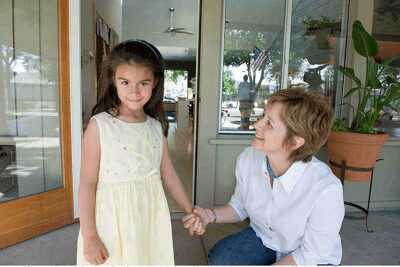
- INTERRUPT THEM EVERY TIME!!! (The teacher or assistant must consistently do one of the following each and every time a child misbehaves: go to the child, whisper their name from across the room, use a hand signal to correct behavior or motion for them to come to you.)
- If possible, give the child a chance to do things correctly.
- Refer to the lesson – not the child. (Can you remember the lesson of walking slowly? Can you show me? Very nice. What happens to others when we walk fast and forget to watch where we are going in our classroom? [Someone can get hurt or something can get broken.] I know that you have so much goodness in your heart that you do not want to hurt anyone or break anything. Can you please show me walking in our classroom? What happens if you forget again? Yes, I will remind you again.)
- What you can say in a sentence, say in a word (or a hand signal).
- Spend time with the child who is having difficulties, observing other children and expressing glee in their abilities. Help the child to understand EXACTLY what behaviors you expect and share your confidence that they will be able to master these skills also. Hug the child. Rejoice with them in the possibilities.
- Ask a child to stay with you or join your lesson. If a child is disrupting the class, but you are giving a lesson, motion to the child to come and watch your lesson. Do not scold or say anything. If necessary, say, “If you need a teacher to remind you when I am giving a lesson, then you will need to come and stay close to me.” If they protest, say to the child who is receiving the lesson, “I am sorry that your lesson is being interrupted. Have you been waiting for this lesson? Would you like to ask ______ to please stop interrupting your lesson? Continue with the lesson. The precise movements of the lessons will calm them. When the lesson is over, ask the child if they still need to be near you, or if they are ready to remind themselves. (I often have 2-4 children who are “watchers” at a lesson.) Or, you may determine that the child needs to stay with you for a while longer to attend more lessons, help you with a task, or just get the idea that freedom is worth the responsibility.
- If children are having trouble working together without disturbing others, they can be asked to separate for a while. Many children will make a concerted effort to control their behavior in order to continue making their own choices.
- Extreme cases and can be taken outside or to a different classroom. Sometimes, just a change of scenery can be a great help in a power struggle. If ALL other guidelines have truly been followed, these cases will be rare.