
Leading With Emotional Intelligence

Leading With Emotional Intelligence

On Cue Everyone, “Consider EQ before IQ”

by Dane Peters

from Montessori Leadership November 2021
 
 
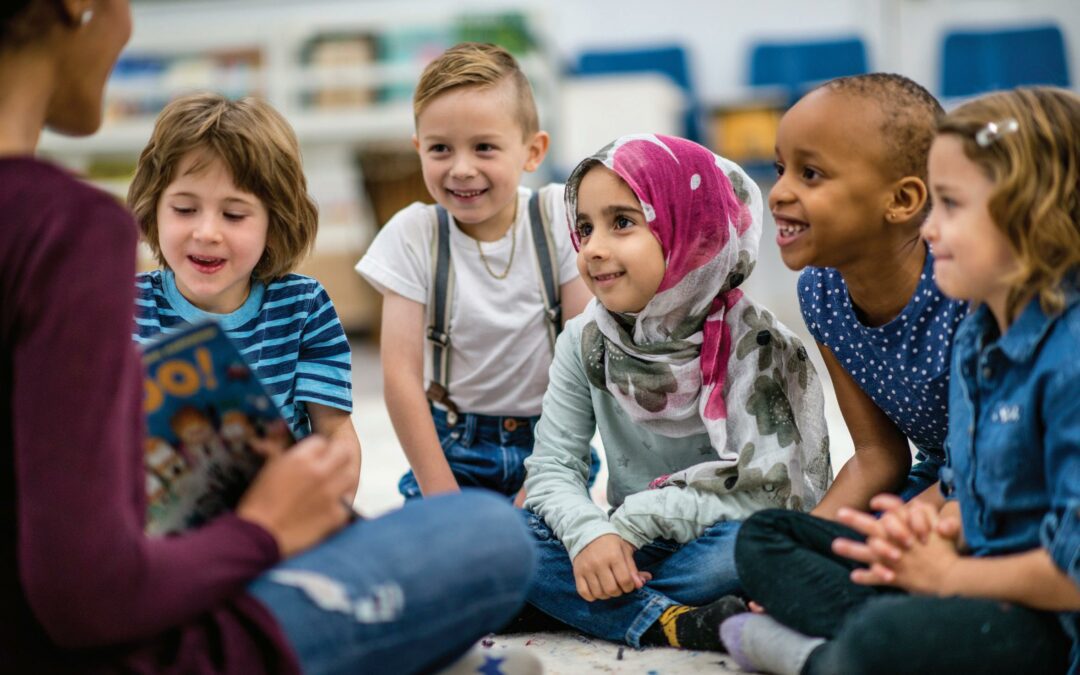
4 staff members smiling
 

“I knew I was a relatively smart guy, with an average or a little bit above average IQ, but I knew I had something going for me in my ability to connect with people, read situations, listen well, empathize, manage my impulses, and have pretty good follow-through. And I think I did well academically because I could do all those things.” 1

1 This quote is from Dr. Mitchel Adler, a keynote speaker, whom I met in Chicago at a conference; I also had the opportunity to interview him for an article, “Emotional Intelligence and Montessori Principles, Values, and Perspectives: An Interview with Mitchel Adler, PsyD.”

I love the quote above because it is an intelligence snapshot that speaks directly to the difference between EQ (Emotional Quotient) and IQ (Intelligence Quotient). Peters, Dane L., “Emotional Intelligence and Montessori Principles, Values, and Perspectives: An Interview with Mitchel Adler, PsyD,” Montessori Life, Winter 2015-16 2 Lillard, Angeline Stoll, Montessori: The Science Behind the Genius, Oxford University Press, 2005, p. 199

As we explore emotional intelligence in our Montessori world, it is important to reflect on the role ‘modeling’ plays, especially as it pertains to leadership, whether it applies to children in the three-year cycle, or a head of school modeling for faculty, staff, parents, and trustees. “Children also can learn about social behavior in Montessori classrooms by observing how others behave in natural, non-scripted situations. Whereas in traditional classrooms, children learn how to sit still and listen to the teacher, in Montessori, they can learn how to interact with each other. The oldest children in the classroom can serve as examples to the younger ones.” 2

I also want to highlight the importance of grace and courtesy in relationships and leadership. Back in 2016, I wrote “Lead With Grace & Courtesy,” published in Montessori Leadership. 3

I have found that grace, courtesy, and role modeling are critical to EQ coming before IQ.sIn my talks as a consultant to schools, I often refer to the history of intelligence quotients—both EQ and IQ.

In a recent International Montessori Council Webcast, “Leading with Emotional Intelligence,” I talked about the history of intelligence. Let me do a brief summary, so that we can better understand the evolution of the two. Do keep in mind that Emotional Intelligence (EI) is interchangeable with Emotional Quotient (EQ).

1949 – One of the earliest methods of measuring intelligence was through the use of the WISC (Wechsler Intelligence Scale for Children) that was developed by David Wechsler. The test is an individually administered intelligence test for children between the ages of 6 and 16. It was the test to assess how ‘smart’ a child was beyond school assessments and gave an IQ score in the range of 69 and below (Extremely Low) to 130 and above (Very Superior). H1980s – Howard Gardner introduced the idea that people have multiple intelligences beyond the WISC IQ standards as noted below. In 1983 he presented the groundwork for thinking beyond IQ with his popular book Frames of Mind.

  • logical-mathematical
  • inguistic-verbal
  • spatial-visual
  • body-kinesthetic
  • existential
  • musical
  • interpersonal
  • intrapersonal, and
  • naturalistic intelligence

As a side note, while I was head of a Brooklyn Heights Montessori School, he joined the faculty for lunch, shared his wisdom with us, and was so well received.

1990 – Peter Salovey and John D. Mayer coined the term “personal intelligence”; it eventually became “emotional intelligence,” describing it as “a form of social intelligence that involves the ability to monitor one’s own and others’ feelings and emotions, to discriminate among them, and to use this information to guide one’s thinking and action.” Mayer’s book, Personal Intelligence – The Power of Personality and How It Shapes Our Lives became the springboard for the one who brought EI to the forefront of the study of intelligences.

1995 – Daniel Goleman was the loud speaker for EI / EQ when he authored the internationally best-selling book Emotional Intelligence, which spent more than one-and-a-half years on The New York Times best seller list. On the cover of the book’s 10th anniversary edition, it states: “Why it can matter more than IQ.”

2007 – Stanford professor, Carol Dweck, clarified measured intelligence in her revolutionary book Mindset: The New Psychology of Success. She helped us understand that individual intelligence can have a “fixed” or “growth” mindset. She helped us understand that intelligence does not have to remain stationary — or fixed — throughout life; in fact, intelligence can grow throughout life.

When I saw her at a conference, I was taken by her thoughtful and clear understanding of intelligences. She asked the question, “Are we raising our children for now or the future?” Watch her excellent YouTube video, Developing a Growth Mindset with Carol Dweck for an uplifting, enlightening view into her important work.

Considering Emotional Intelligence 2.0  4

Let us now look at EQ through this popular diagram from Goleman’s book that represents the four core emotional intelligence skills:

SELF AWARENESS

SELF MANAGEMENT

SOCIAL AWARENESS

RELATIONSHIP MANAGEMENT

To dive deeper into these skills, make it a point to read the book. My recommendation comes from an EQ perspective. I know how busy educators are these days with school, family, and personal life; the book is short, to the point, and an easy read that is most helpful in understanding EQ and the advantages that it has over IQ. Do give it a try, if you haven’t already. In the meantime, here are a few EQ considerations to think about: oConsider John Bariso’s 13 signs of high emotional intelligence 5

3 Peters, Dane L., “Lead With Grace & Courtesy,” Montessori Leadership, International Montessori Council, Volume 18, Issue 3, 2016

4 Bradberry, Travis & Greaves, Travis, Emotional Intelligence 2.0, TalentSmart, 2009

5 Bariso, Justin, “13 signs you are highly emotionally intelligent,” FLIPBOARD – Business Insider, March 1, 2018

Considering EMPATHY

Empathy and compassion are important parts of emotional intelligence. Donna Orem, NAIS (President of the National Association of Independent Schools) stated in her NAIS article “The Power of Empathy in Leadership and Governance” Recently, I read The Empathy Factor, and one line from the book encapsulated the key learning for me: ‘The main reason organizations that try to manage change fail is their tendency to treat human systems as though they were mechanical processes. We are all human. When we work from a place of understanding, we thrive, and our work prospers. 6

According to psychologist Mary Ainsworth, quoted in Angeline Lillard’s book Montessori: The Science Behind the Genius, “A second feature necessary to accurate interpretation, according to Ainsworth, is empathy. Adults who lack empathy, she said, would have detached, intellectual relations with babies instead of warm, sensitive ones.” 7

Considering HUMOR

In an excellent NYTimes article “Laughter May Be Effective Medicine for These Trying Times,” Dr. Miller said, ‘Having a good sense of humor is an excellent way to relieve stress and anxiety and bring back a sense of normalcy during these turbulent times.’ 8

Author Daniel Pink highly recommends the recently released book Humor, Seriously: Why Humor is a Secret Weapon in Business and Life 9

When you open the cover and read the inside flap, it states,“Top executives are in on the secret: 98 percent prefer employees with a sense of humor, and 84 percent believe that these employees do better work.” Also, the book is particularly thorough on talking about humor and its relationship to EI. Here is one example: “Having a sense of humor—both the ability to generate humor and to appreciate it—has repeatedly been found to correlate with measures of intelligence.” In the end, ask yourself, “How do I feel about the importance of humor in my school?” As a quick, recent example of considering humor in the hiring process, a staff appointment to NYSAIS (New York State Association of Independent Schools) was announced in a February 8, 2021 letter written by Mark Lauria, Executive Director, about the new hire, “Of course, a strong interest in building ‘community’ and a good sense of humor were also important!”

6 Orem, Donna, “The Power of Empathy in Leadership and Governance,” March 21, 2016

7 Lillard, Angeline Stoll, Montessori The Science Behind the Genius, Oxford University Press, 2005, p. 262

8 Richard Schiffman, “Laughter May Be Effective Medicine for These Trying Times,” New York Times, October 2, 2020

9 Jennifer Aaker & Naomi Bagdonas, Humor, Seriously: Why Humor is a Secret Weapon in Business and Life, Random House, 2021

Considering TRUST

Rolling into trust . . . Humor, Seriously states “Laughter triggers the release of oxytocin, often referred to as the “trust hormone” because of the way it prompts our brain to create emotional bonds.” 9 Emotional Intelligence 2.0 is clear about trust: “Trust is something that takes time to build, can be lost in seconds, and may be our most important and most difficult objective in managing our relationships.” The book then goes on to detail how trust is built?

1. Open communication

2. Willingness to share

3. Consistency in words, actions, and behavior over time

4. Reliability in following through on the agreements of the relationship

Considerations on why EQ comes before IQ

1) “When I compared star performers with average ones in senior leadership positions, nearly 90 percent of the difference in their profiles was attributable to emotional intelligence factors rather than cognitive abilities.” 10

2) Probably the most important aspect of having and using emotional intelligence is that in a school community, we are modeling these characteristics for the children and our colleagues on a daily basis. I believe it is the best way to teach: be a good role model.

In closing, the big reason why I believe we should take the cue “Consider EQ before IQ” is that the opening quote of this article could have come from me . . . except the part when Mitchel says, “And I think I did well academically because I could do all those things.” I was not a good student, but I loved to connect with people. I can remember being called into the Dean of Students’ office in the beginning of the spring semester of my freshman year of college. She said, “Dane, we have got to do something, your GPA (Grade Point Average) is at 1.48 out of 4.00. If you don’t bring it up, we will not be able to allow you to return next semester.” The fact that I was class president and playing two sports did not matter. I gulped and said that I would get on it right away, and I did—at least enough so that I was able to return and graduate three years later. Finally, a pertinent confession that, for me, validates EQ before IQ; it is clearly spelled out in an article I wrote in 2009, “930: A Secret Whose Time Has Come”. 11

9 Jennifer Aaker & Naomi Bagdonas, Humor, Seriously: Why Humor is a Secret Weapon in Business and Life, Random House, 2021

10 Harvard Business Review Guide to Emotional Intelligence, Harvard Business Review Press, 2017

11 Peters, Dane L., “930: A Secret Whose Time Has Come,” AMS Newsletter, Sept. 2009

Dane L. Peters Right after college, Dane Peters served as a Captain in the U. S. Marine Corps, and 40 years later, he retired as head of Brooklyn Heights Montessori School (BHMS), a toddler through eighth-grade school in Brooklyn, New York. Prior to heading BHMS for eleven years, he served as head of Mooreland Hill School in Connecticut for eleven years. He recently completed his service as the administrator for the New York State Association of Independent School’s (NYSAIS) Experienced Leaders Advising Schools program. He is currently teaching and serves on the Advisory Committee for the American Montessori Society’s (AMS) Emerging Leaders Fellowship program. Dane has written over 100 articles that have appeared in 30 different publications. His first book, Independent by Design, was published in 2014. His second book, Design for Independence, Inspiration, and Innovation: The New York State Association of Independent Schools at 70, was published in 2017. You can read many of his articles on his blog (www.danesedblog.blogspot.com).
So What Is Special Education?

So What Is Special Education?

special-education

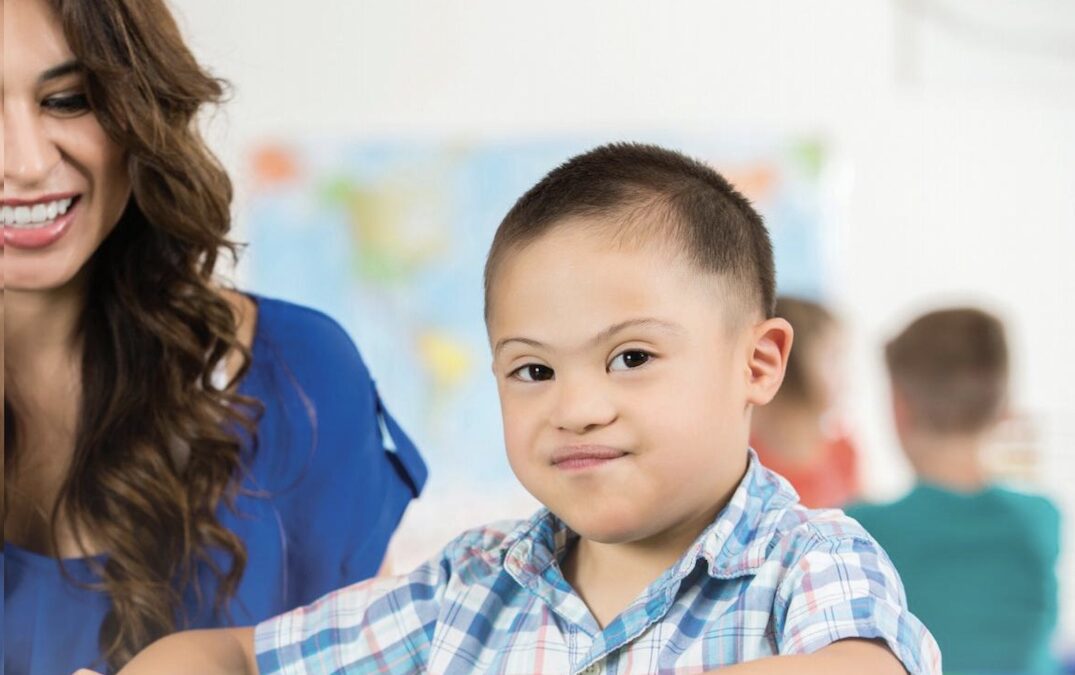
Special education is inclusive education. It is education that says all children should have full access to the classroom, all children should be able to fully participate in all activities, and all children should receive the support they need to feel successful and thrive. Special inclusive education accepts, respects, and honors each child’s unique gifts, strengths, and, yes, challenges.

Special education begins with an attitude – a value and a belief that each child belongs in our classroom. It cultivates the open mind-set that we can prepare ourselves to serve and support every child in our classroom. It is making the commitment to learn, expand our skills, and really ‘see’ each of our students.

Regularly, I hear Montessori teachers say, “I can’t work with children with special needs. I wasn’t trained to do that.” And yes, that is true; most Montessori teacher education programs are not explicitly preparing educators to work with the full range of children we have in our classrooms. The number of children who have been put into label categories is larger than in the past; the number of children who seem to experience the world differently than we expect is larger than in the past. It’s also true, though, that our society is different than it was in the past, and we are all absorbing those changes. We are all different than we were in the past. So, might it be time to let go of clinging to the way it used to be and move on to what can be?

Many of Dr. Montessori’s observations of children are now verified by current research. She deeply understood what all children need to learn to become their own best selves. Are we practicing what she taught (e.g., children learn what interests them and motivates them; and children learn at their own pace and in their own way)? She knew the importance of guiding the whole child: the physical, cognitive, social-emotional, and the cultural self. Ask yourself: Am I teaching to my agenda, to my expectations, to my set of should, would, could, and ought, or am I willing to reflect and transform myself to guide each and every child? That is special education!

Easier said than done, right? Some students challenge us in ways that make us uncomfortable, who leave us feeling incompetent, who just confuse us, and “keep the classroom from being normalized.” And this is where that open mindset that is willing to learn comes in. We can gain knowledge of the characteristics associated with categories of diversity to better understand an individual child’s learning and behavior needs.

We can learn some strategies as a starting point to support an individual child’s learning and behavior differences. We can learn and practice how to observe with curiosity and inquiry to uncover what a child’s behavior might be trying to communicate. We can expand the way we use a material or give a presentation to better reach that child who is struggling.

We can begin with knowledge, understanding, and strategies not only to fill our toolbox but to have confidence that we know just what tool to choose to teach that individual child and guide her to success. We can all learn a framework for managing an inclusive classroom rooted in our Montessori foundations to work with all children in our schools. And this is, in part, what Montessori and special needs is all about.

Here is a place for you to learn, to practice, to learn from mistakes (yes, you’ll make some along the way) and to become a member of the Montessori community who says yes to diversity, to educating all kinds of learners in our classrooms and schools. And one day, maybe we won’t talk about special education, because all education will be special, just as each child is special and ready to grow with a true sense of belonging. I look forward to having you join me on this journey.

Christine Lowry With an M.Ed. and M.A. in special education, and a Montessori credential, Christine Lowry has taught students, toddlers to adolescents, with diverse behavior and learning needs in a variety of settings. She has founded, directed, and taught in two Inclusive Montessori schools. Christine shares her knowledge and experience with the Montessori community with workshops, customized professional development, online courses, presentations, and consultation and coaching that supports school leaders, educators, and families as they serve children with special behavior and learning needs. She has developed the Montessori-based Multi-tiered System of Support ® and provides guidance for implementation in classrooms and Montessori schools. Follow her at Montessori and Special Needs and Montessori-Now on Facebook and Montessori-Now.com She can be reached at christine@montessori-now.com

by Christine Lowry, MEd

Question:

We are seeing more and more children in our classrooms at every level with learning and behavior challenges. Our teachers really want to help these kids, but we just don’t know where to begin or how to support them.

Answer:

First, you are not alone. Many Montessori schools, private and public, are sharing the same concerns. The number of students with a range of disabilities and the need for additional and new kinds of support is growing- and not just in the Montessori community. Inclusion classrooms, where children with identified disabilities and challenges in learning and behavior are welcomed with acceptance and belonging in the same classroom with children’s whose learning and behavior are more in the “expected” range is the dominant model in the broader world of education and has been growing over the past 10-15 years. By default, many Montessori schools are becoming ‘inclusive schools’ without having the knowledge in how to manage it all. One of the most important starting points, then, for our Montessori community is to acknowledge the need for more knowledge, and strategies, techniques, and tools for working with “today’s children” and the wide range of challenges we are observing. Understanding the ways that children learn differently, the ways children’s sensory systems can result in challenging behaviors, and the impacts of the “collective trauma” from the last 18 months on children’s social-emotional development and mental health well-being is key to providing the kind of classroom that can offer the relationships and support children need for positive learning and behavior. Ideally, school leadership and staff can be open to this learning. Professional development, on-line course offerings, and ongoing consultation/coaching with a “guide” who has experience with Montessori education and current research and evidenced-based practices for inclusive education can be of crucial support in working with these challenges. One first step, though, and especially as we begin a new school year, is reflection on our “prepared environments.” As Montessorians, we are thoughtful about the way we arrange the furniture and the activities on our shelves but are we as thoughtful about the temporal environment and the classroom “tone”? This can be even more important in providing the structure that provides the much-needed sense of emotional safety that our children need now. A daily schedule that doesn’t change, the well-thought-out routines, transitions, and expectations for behavior, specific attention to social-emotional development are the consistency and predictability that is needed right now, and not just for children but for adults as well. As a school, or ideally by level, meet as a team to create a daily schedule that includes at least an hour of outside time. Discuss all the daily routines and transitions for success in your classroom- from toileting practice in toddlers, to hand washing, sitting a circle, putting away clothing and “work,” all the routines of lunch time, going outside, ending the day, and on and on from early childhood through adolescent classrooms. Decide on just what your expectations for behavior and interaction in the classroom community are beyond Grace and Courtesy. Then comes the trickier part – how are each of these to be explicitly taught, practiced, and used as “embedded” opportunities for guiding your students in developmentally appropriate ways for your group. Learning the specific supports that can be used to support the children who need them can be part of your “new” learning. This “new normal” demands a lot from us. But, hey, we are up to the task! As Montessorians, we know how to observe, we know a thing or two about reflection, we know that mistakes are opportunities to learn, and we know that learning is a life-long “task.”


This story is from:

Spotlight on One of Our IMC Accredited Schools: Garden Oaks Montessori

Spotlight on One of Our IMC Accredited Schools: Garden Oaks Montessori

 Garden Oaks is a public school in a neighborhood of Houston, TX, called the Heights.

The school was under-enrolled at 405 students with five Montessori and 19 traditional classrooms when Dr. Lindsey Pollock arrived in 2008. The district tasked her to convert the entire school to Montessori.

Today, under the guidance and direction of Dr. Pollock and her team, the school has completed construction of a three-story building that houses nine early childhood, eleven upper elementary, and four secondary Montessori classrooms, enrolled close to nine hundred students, and created areas on campus for environmental studies, such as gardens, water collection stations, a meteorology center, and two roosters.

They also have a technology center, a gymnasium, science lab, art room, library, cafeteria, nurses station, reception areas, and administrative offices. They recently received recognition from Educational Results Partnership (ERP) as a leader in student achievement. Garden Oaks is featured on their website – https://dataportal.edresults.org/Metrics/HonorRoll.

The IMC is proud of the accomplishments of Garden Oaks Montessori Magnet School and welcomes them as the first public IMC accredited school. Congratulations to Dr. Pollock and the Garden Oaks school community.

Amanda Sebba has been selected as the new principal of Garden Oaks Montessori. She has served as the assistant principal for the past four years at Braeburn Elementary School.


Sarasota University & CGMS Announce Historic Partnership

Sarasota University & CGMS Announce Historic Partnership

Sarasota University, the world’s only Montessori-focused institution of higher education, and the Center for Guided Montessori Studies, one of the world’s leading accredited teacher education programs, today announced a historic partnership to reshape the direction of Montessori higher education.

sarasota university logoSarasota University (SU) founder Dr. Ronald Ogrodnik said that the Center for Guided Montessori Studies (CGMS) will now lead the institution. CGMS partners, Tim Seldin, Kitty Bravo, and Marc Seldin have been named to the SU board, and CGMS will serve as the management company in charge of all SU operations. Dr. Ogrodnik will continue to serve on the board and as the university President. Dr. Daniel Robin Howe will serve as Director of Education.

“Working together, CGMS and SU will be able to further our institution’s mission of offering strengths-based education,” said Dr. Ogrodnik. He continued, “CGMS is the perfect partner for SU. Founded in 2006, CGMS is one of the world’s largest and most respected Montessori teacher education programs and entirely shares SU’s values.”

Sarasota University is the only accredited institution of higher education solely devoted to Montessori. Although some other colleges and universities offer Montessori-oriented degrees, SU is the sole institution devoted entirely to implementing Dr. Montessori’s vision for higher education.

Asked about his vision for the future, CGMS Director of Operations Marc Seldin said “We hope to offer closer integration between CGMS programs and those of Sarasota, eventually including dual enrollment. But first, we intend to work with the University to improve all of their systems and processes.” He clarified that the CGMS management team will complement, not replace, SU existing staff.

Center for Guided Montessori StudiesKitty Bravo, the Director of Education at CGMS, expressed confidence about the opportunities this new direction affords both institutions. “CGMS and Sarasota University share a passionate commitment to the highest standards of Montessori education. We have long admired Sarasota University, and together we feel that we can realize our long-held dream to run a university designed and led by Montessorians which serves the global community of Montessori educators and schools.”

Although CGMS is affiliated with the International Montessori Council, this will not be an exclusive relationship. Sarasota University will continue to welcome adult learners who are enrolled in, or who have completed an accredited Montessori certification program from other organizations. “Our goal is to serve the entire Montessori community,” says Kitty Bravo.

Tim Seldin is President of CGMS and the Montessori Foundation. Asked about next steps, Mr. Seldin offered a guide to CGMS’ initial priorities.


“One of the essential elements of our plans for the future is the establishment of a new position at the university: a Student Success Coordinator, who will work with individual students to guide them along their educational journey. Among the tasks ahead will be the development of strong systems for community engagement and enrollment, input from faculty and staff, a new learning platform for courses, strong financial planning, institutional advancement, and the development of a fresh strategic plan.”

Sarasota University is an accredited institution offering master’s degrees in Montessori education and leadership. Find out more online at www.sarasotauniversity.edu


Where Have All The Teachers Gone?

Where Have All The Teachers Gone?

Jobs, need school teachers

In Elka Torpey’s (2018) article “ Projections for teachers: How many are leaving the occupation?” According to the US Bureau of Labor Statistics, between the years of 2016 and 2026, more than 270,000 teachers will be leaving the profession each year. Whether it is retirement, career changes, burn-out, there are a lot of open teaching positions. That was before the onset of the COVID-19 factor, which has impacted each of our lives in so many different ways.


As described in the Madeline Fox (2021) article, “Teacher retirements were up in 2020 and more are expected in 2021,” the Covid pandemic has caused many teachers to evaluate their retirement plans and, in many cases, make the decision to retire early. According to the Fox (2021) article, there are various factors that are causing teachers to make this decision, including but not limited to: health fears; burnout; feelings of not being able to manage; etc.


Whether teachers are retiring because they are reaching the age of retirement or making the decision to retire early for any reason, we are in the midst of teacher shortage and are losing mentoring teachers who have been relied upon to usher in the new waves of teachers. All of this is leading to the reality that there are going to be a lot of new teachers in our classrooms. While training Montessori teachers may have a slight advantage in that many Montessori teacher education programs require a year of supervised practicum, the reality is that teaching is hard work and mentorship and support is incredibly important, especially in the early years of a teacher’s teaching career.


The first question then becomes: Where are we finding the teachers? In a publicly acknowledged underpaid career field that is increasingly becoming more about parent management rather than inspiring students, we need to find teachers and nurture and guide them to become the types of teachers needed to replace the expanding sinkhole of seasoned educators.


Now, assuming young adults entering university make the decision to enter the education field, whether it is to work in a kindergarten or a high school (private or public), Montessori, traditional, and any of the other flavors of education out there, what are our expectations of these teachers?


This is the first generation of young adults that have grown up with their entire lives memorialized on social media. Essentially, these young professionals entering the workplace have a history, good or bad, and it is there for us to see, criticize, judge, and ultimately use to make decisions regarding character.


So, to reference a 2021 article published in the Washington Post, “The Right to be Forgotten: Should teens’ social media pages disappear as they age?” Davis (2021) shares stories of the impact of older social media posts on careers, and we are all aware of stories that have impacted college scholarships, public perceptions, etc. Davis, (2021) writes, “Some question whether what children post online (and what others post about children) should follow them into adulthood, potentially affecting their academic and vocational careers.”


Most schools follow a similar hiring practice that includes local and national background checks. These checks generally report infractions, ranging from simple misdemeanors to more serious felonies. What is not included on these federal or law enforcement background checks, is whether Suzy (as a young adult) posted a picture smoking a joint back in college or whether Jack (also as a young adult) allegedly made a sexually provocative response to a classmate and used inappropriate language.


Whether these youthful indiscretions may not be relevant to the present, be assured that inquisitive parents and students will find that post from ten years ago. While there may not have been any laws broken, is that comment or photo more damning because someone was photographed smoking marijuana (which is now legal in 18 states and Washington, DC) at a friend’s house?


My response is, “YES!”


Going back to the Davis (2021) article, “Should Teens’ Social Media Pages Disappear as they Age?”


As there is an increasing need for teachers, a hole that will have to be filled with these young men and women entering the workforce, as we read through their CVs and discuss their interest in the positions, should we also look into their Facebook and Instagram pages? Google is public, so it is certainly not illegal to do a basic search. Even if we don’t look into it, a parent or our students certainly will.


What happens when we find something we don’t like? Furthermore, an expectation of teachers, and even more so, Montessori teachers, is that we need to be able to stand behind what we teach children. More explicitly, how can we talk about modeling behaviors and responsible use of social media when we have a teacher with a less than stellar digital record?


Summarizing the points suggested above: there is an increasing shortage of teachers that need to be filled by young men and women, many of whom have less than perfect social media records that are publicly available for judgment.


While the reality is that many of the applicants will not have any skeletons in their closet waiting to be discovered, the question still remains as to how we value and or judge someone based on decisions or judgments made before the frontal lobes of the brain were able to comprehend future consequences. Davis (2021) asks this question differently: “When should a person’s ‘permanent digital record’ start recording, if ever? To what extent should social media be a space for trial-and/or-error exploration around identity and social behavior?”


If we are to judge others based on the higher than average expectations of Montessori teachers, are we not only limiting the potential eligible candidate needed to fill the Montessori teacher shortage, but are we also denying the fundamental principles we teach of learning from mistakes. If we are to measure young adults based on decisions made years earlier, are we encouraging children to not self-express? Are we warning against risk? This is non-synonymous with being careless with our words and actions but acknowledging the biological and neurological transformation that takes place in the third and fourth planes of development.


Citing Dr. Maria Montessori, Camillo Grazzini describes the third plane of development (ages 12-18), stating, “This is the time, says Montessori, ‘when the social man is created but has not reached full development; this is the time ‘the sensitive period when they should develop the most noble characteristics that would prepare a man to be social, that is to say, a sense of justice and personal dignity.”


Describing adolescence, Dr. Montessori wrote, “The period of life in which maturity is attained is a delicate and difficult time, because of the rapid development and change which the organism must go through.” Again, describing adolescence, Montessori wrote: “From the physiological point of view this is also a critical age. There are doubts and hesitations, violent emotions, discouragement, and an unexpected decrease in intellectual capacity.”


Collectively, we (the grown-ups in the room) are facing questions about how to evaluate a young person’s character when they are making decisions for which they may not be able to adequately comprehend the consequences. This is not to suggest that students or adults should be immune to bad decisions, lack of judgment, or impulsive and emotional responses.


This is simply a plea, from an imperfect Montessori educator, in a time of scarcity and heightened emotional tension, to focus on the person, the development of responsible men and women, and focus on awareness and education rather than judgment.


Dr. Daniel Robinson (Robin) Howe began his Montessori career at the age of two at the Barrie School in Silver Spring, MD, which he attended through the eighth grade. Graduating from Dickinson College with two majors (Spanish and Religion), he went on to earn a Master’s Degree in Bioethics from University of South Florida. After successfully pursuing a career in the restaurant industry, Robin decided to return to certification from Palm Harbor Montessori School (AMS) then attended St. Catherine’s University to earn his Lower and Upper Elementary Certification (AMS). He also attended NAMTA’s Orientation to Adolescent Studies (AMI). Robin holds a Doctorate in Educational Leadership from Argosy University and worked with The Montessori Foundation’s management team at NewGate (the Foundation’s lab school), serving as Associate Head of School and as a Senior Montessori Foundation School Consultant. In his spare time, Robin lives with two Elf cats and has set a personal goal to run marathons in all fifty states.

Storytelling and Executive Functioning

Storytelling and Executive Functioning

All classroom teachers have had experiences with children who have difficulty in school; often, it’s unclear why. We might try a number of things and still find frustration. Often, the students clearly want to do well and evince great potential, but their difficulties or challenges aren’t attributable to any sort of obvious learning disability or special need.


In these elusive cases, it is important to consider that there may be impediments to executive functioning, the set of key skills that we use every day in our daily lives, our learning, our work, and in any sort of performance.


We also regularly work with young people who seem to “get it.” They are attentive, seem to follow our lessons, and appear to understand essential concepts embedded in our lessons. In these cases, it is important to consider that these students may have greater capability in the key areas of executive functioning.


Executive functioning is key to our ability to navigate the world.


Simply stated, executive functioning is a set of essential mental skills that we employ at all ages, from early childhood through adulthood. Three of these functions, possibly the most important, are: working memory; cognitive flexibility; and inhibition control.


Working memory refers to our everyday memory, our use of it, and our ability to access it. Cognitive flexibility is adaptable, manageable, and responsive thinking. Inhibition control refers to the willpower that one manifests over one’s own actions, such as restraint, self-control, and discretion.


I cannot overstate how important these three skills are. They underlie most successful behaviors in school and, indeed, our entire professional adult life. Executive functions make possible a large number of intellectual and psychological achievements, including: advanced thinking, or mentally playing with ideas; careful planning, or taking time before acting or performing; flexibility, or meeting unexpected or unanticipated challenges; perseverance, or resisting temptation and developing stick-to-itiveness and maintaining focus.


The good news is that these skills or abilities can be nurtured, developed, and refined, so that even if one or more of them is at a less-than-ideal level, they can be improved and maintained. In short, they can be taught in our classrooms in a way that promotes their growth and utility. How? We can do this by using, quite possibly, the most ancient teaching technique: storytelling.


Storytelling has a unique relationship to each of these skills: it directly addresses and encourages working memory, cognitive flexibility, and inhibition control. Let’s look at each one and see how storytelling can benefit and support its growth.


Whenever we need to remember something important, such as our list for the supermarket, where we parked our car, a friend’s phone number, or a set of instructions for any task, we rely on working memory. Working memory is simply the ability to hold information in one’s mind over a brief period of time and being able to apply that information to various scenarios.


Most neuroscientists agree that there is some limitation to the capacity for working memory, although that limitation (and whether it can be adjusted) is up for debate.


Of course, memories do get lost or diluted over time, but there are some ways to slow or even stop that process.


One way to improve working memory is what researchers call maintenance rehearsal, or simply repeating information mentally without regard to its significance or meaning. An example might be going over and over in one’s mind the exact items on a grocery list in the hope that nothing will be forgotten. This method may be used productively, though with limited utility, in school settings: memorizing arithmetic fact tables; conjugating verbs; or drilling spelling lists and foreign language vocabulary.


A second approach is what researchers call elaborative rehearsal: recognizing some significance or meaning about certain information, then associating it with other information. Mnemonic devices fall into this category, as do any associations or relationships that can be established among and between various ideas, facts, or procedures. An interesting note is that researchers believe that elaborative rehearsal can help move information from working memory into long-term memory. This makes any experience that creates associations especially valuable for learners. Storytelling offers particular and substantial opportunities for elaborative rehearsal. First of all, stories often relate immediate impressions or bits of information to larger pictures which can, in turn, be applied to actual life situations. For example, who can forget the image of the grumbling fox stomping off, muttering “Sour Grapes!” in Aesop’s fable The Fox and the Grapes? Who can avoid applying the story’s implicit insights to everyday situations?


Stories create an image repertoire that is accessible through working memory and can be applied to situations both familiar and unanticipated. After hearing the story of the Four Strange Brothers from The Deep Well of Time, children have come to me years later still characterizing the four arithmetic operations as brothers and using the images in that story as mental hooks which have been translated into long-term memory.


One of the most important characteristics of classroom storytelling is repetition, which aids listeners in not only following the story but developing and utilizing the working memory to learn the story themselves. The repetition sets up what amounts to a series of mental guideposts that children can (and do!) follow in re-telling the story.


There are two forms of repetition that are common in storytelling: pattern repetition and word or phrase repetition.

Pattern repetition is the reiteration of specific behaviors, situations, or ways of communicating or acting. Regularly repeated patterns frequent the plots of many stories and folktales the world over. Well known examples are The Little Red Hen or Stone Soup. Another example is in the descriptions of each character in The Four Strange Brothers. The repeated patterns in these stories and others like them provide a well-defined structural framework for working memory.


One of the most common pattern repetitions in traditional storytelling is the “rule of three.” This refers to a pattern in which there are three characters or three situations—the first two somehow fail, but the third is successful, however unlikely it may seem. The Three Little Pigs, Goldilocks, and the Three Bears, and The Fool of The World (a Russian folktale) all employ the rule of three. Another example is my story Measuring the Farm, in The Deep Well of Time.


Becoming familiar with the rule of three encourages the listener to make predictions based on the unfolding three-part storyline. This involves working memory on several levels. Memory usage is encouraged by the three-part structure, and it is also rewarded when that structure is revealed to be a unifying plot element, as had been anticipated. This involves the listener in making predictions, creating a hypothesis of what will unfold. “Minds exist to predict what will happen next. They mine the present for clues they refine with help from the past…to anticipate the immediate future.” (Boyd, page 134).


The second form of repetition used in stories is direct word or phrase repetition. This refers to a specific pattern of words literally and exactly repeated. In the opening moments of a story, these words or phrases become immediately recognizable to the listeners. The children may even chant along, “Run, run as fast as you can! You can’t catch me, I’m the gingerbread man!”


In The Deep Well of Time, an example of specific word patterning occurs in The Four Strange Brothers. Recalling these specific passages can sometimes be enhanced by being written in a rhythmic or poetic format.


The gift of the memorable is one of the key benefits of storytelling that I introduced in The Deep Well of Time. The gift of the memorable refers to the presentation of stories or lessons, or even components of them—like striking images, characters, or incidents—in such a way as to facilitate children’s recall, even many years later. This concept exemplifies an important way that more constricted short-term working memory moves into more stable, long-term memory. By using stories, teachers can consciously and intentionally create memorable moments in their classrooms. These moments may well be recorded in a child’s memory for years to come.


Orally told stories are rich with images, characters, and plot devices, as well as patterns. These all have the capacity to stand out and find a special place in children’s memories. These memories are of a specific kind called episodic memories. Episodic memory records particular events that a child experiences. It can be linked to a specific place or time that essentially ‘grounds’ the incident or image.


These episodic memories are not always related to actual events in the child’s life: they are just as often based on events, places, people, or times that are experienced vicariously—through stories. This is how we may remember the evil queen in Snow White reciting “Mirror, mirror on the wall…,” the Mad Hatter’s tea party from Alice’s Adventures in Wonderland, or Cinderella’s glass slipper. These story-based images are recorded in episodic memory.1


For children to follow a story and then later discuss and comment on its content and meaning is oral comprehension, an important precursor to any form of reading or literary comprehension. Oral comprehension clearly requires working memory. Listening to stories, discussing them, and using them as bases for comprehension exercises also develops episodic working memory.


In the same way, when children use those orally told stories as launching pads to make up their own stories, orally and in writing, working memory is required. There may be no other activity in the classroom which has so many applications to working memory as stories and all that goes with them: storytelling; story absorption; acting out stories; retelling stories; and writing story-based compositions.


Cognitive Flexibility


The second major pillar of executive functioning is cognitive flexibility: the ability to switch between thinking about two different concepts or to think about multiple concepts simultaneously. It includes: mentally rearranging; reevaluating, and integrating a variety of ideas and images, many of them new or unusual, as well as sometimes challenging preconceived notions. The term also applies to our ability to consider or adopt alternative approaches, solutions, or courses of action.

One of the essential characteristics of cognitive flexibility is the ability to think in images, archetypes, representations, and metaphors – “out of the box” thinking. This flexibility allows us to hold in our minds an external “reality” like everyday life, while we simultaneously immerse ourselves in metaphorical worlds of fiction, fantasy, or make-believe


In the stories in The Deep Well of Time, geometric shapes get together to plan clubs based on their characteristics; numbers conspire to form groups; and triangles try to fit into rooms that just seem too small. In other stories, nouns and verbs have active discussions, cats tell tales, elves make materials, and strange images from dreams become reality. Metaphorical thinking, which is innately flexible, is at the heart of storytelling. The very essence of meta-phorical thinking is the manipulation of images and ideas, changing established rules of existence, and putting ideas, images, people, thoughts, animals, or supernatural beings into situations, which are unusual, impossible, or unheard of in the ‘real’ world. This is clearly thinking about multiple concepts simultaneously.


Story listeners and story participants develop the ability to appreciate these situations and use this sort of thinking in a variety of situations. Doing so keeps us fresh, or at least keeps our thinking fresh. This is essential, not only in young people but in adults as well. Magnusson and Brim (2014) draw attention to the fact that “Cognitive flexibility declines with age and often results in an inability to adapt to new situations and environments.”


I believe that this effect of age can be diminished, at least somewhat, by active story participation. Storytelling, story listening, participation, and story creation all demand and utilize cognitive flexibility. Just as all physical exercise maintains and increases fitness, ongoing exercise of metaphorical thinking and applied imagination can maintain and strengthen cognitive flexibility and “cognitive fitness.”


More, listeners to stories react emotionally as well as cognitively to the story. This dual response demands key components of cognitive flexibility: imagination, visualization, interpretation, personification, and identification. It means putting one’s imaginative self into the story and leaving one’s real, earthbound, strictly logical self behind. It may mean accepting what seems to be impossible and then examining the consequences.


Thinking only in straightforward patterns and within highly structured and rigid organization is simply not possible while being immersed in stories. Stories take us to a higher place. In support of this idea, I wrote in The Deep Well of Time (p.22) that,


As soon as words like “once upon a time” are uttered … children enter into what poet Samuel Taylor Coleridge called the “willing suspension of disbelief” (Coleridge, 1817, p. 174). This stimulates the motivation of a story listener to accept and enter into the world of a fictional or fantastical tale as if it were literally true, even while he or she fundamentally understands that it is not. Children in the elementary years relish this distinction, just as we adults do when we enjoy novels, theatre, and film.


Inhibition Control


The third of the three critical components of executive functioning is inhibitory (or inhibition) control, sometimes also called response inhibition. Inhibition control is the ability to put off gratification, to not require immediacy in response, or to avoid acting impulsively. It means not getting what one wants immediately but being able to wait patiently. Inhibition control suggests planning, forethought, and anticipation of responses or repercussions.


Inhibitory control involves being able to control one’s attention, behavior, thoughts, and/or emotions to override a strong internal predisposition or external lure; instead, to do what’s more appropriate or needed. Without inhibitory control, we would be at the mercy of impulses, old habits of thought or action (conditioned responses), and/ or stimuli in the environment that pull us this way or that. (Diamond, 2013, ¶ 1).


Inhibitory control is essential in social situations and is at the core of many traditional manners lessons, not to mention the “Grace and Courtesy” element of the Montessori classroom. It is an essential component of self-regulation in any setting; it prevents us from making fools of ourselves!


Problems with inhibition are seen at three levels (Brenitz, 2020): motor, attentional, and behavioral.


Attentional control issues appear as distractibility or difficulty paying attention. For example, during a lesson or while at work, a child is easily distracted by a sound outside, another child in the classroom, or even some innocuous object.


Poor control in motor behavior often manifests in overactive or uncontrolled movement. For example, certain children may not be able to control their movements during a presentation or lesson. In that case, a child may fidget, get up and wander around, or even roll about on the floor.


Behavioral control issues present as impulsive behavior that cannot be inhibited. It might include shouting, hitting, or bumping into another child.


One of the first things that story listeners need to master is control of their bodies, voices, and minds. They quickly learn not to shout out comments or questions in the midst of a story or to jump up and make physical gestures. Story appreciation means controlling one’s impulses for questions and responses until the story has been concluded. Discussion of the story not only requires cognitive flexibility but also develops inhibition control; one must avoid immediate and thoughtless responses to others that can damage or destroy the discussion process.


When I tell stories as a visitor, teaching artist, or artist-in-residence, I always explain to my young audience that I have two rules, and two rules only. First, they are to stay quiet. No questions, no hands up, no whispering. However, I do assure them that if they have questions, I will certainly address those questions immediately after the story.


The second rule is: Keep your hands and your bodies to yourselves. This means no touching, poking, or high-fiving.


Essentially, I am asking them to develop and exhibit inhibitory control. This kind of inhibition makes it possible for them to stay quiet and focused when a story is being told, even though they may want to say or do something.


Amazingly, these rules work. In classes that I have led, for toddlers through teens, the listeners almost invariably practice inhibition control. The only groups with whom I sometimes have problems are adult learners, but they, too, eventually practice control.


The reason my rules work is that stories are intrinsically rewarding. They are, by their very nature, so positive and engaging that students and other listeners want very much to hear what comes next and how it all turns out. They don’t want to be shut out of the remainder of the story because of an untoward word, action, or behavior. As a result, they learn, quite successfully, higher degrees of self-control. This also translates into a sort of shared group expectation of controlled behavior.


When these three elements (working memory, cognitive flexibility, and inhibition control) are established, and in place, they are not limited to the storytelling and story listening context. In fact, once these skills are learned and mastered through stories and storytelling, they can be transferred to many other areas and contexts within the classroom and the school. They simply become habits of mind, regular, reinforcing tendencies that produce consistent, beneficial results.


This constitutes a strong argument for emphasizing storytelling in every area of the curriculum and throughout the school. It can be foundational in the development and support of executive functioning.


There are, of course, many other excellent reasons, discussed here and in many other articles, for stories to be told in schools of every sort and at every age level. However, every one of those other benefits is enhanced by working memory, cognitive flexibility, and inhibition control. One of the wonders of storytelling is that it successfully develops and enhances these skills, intrinsically and joyfully rewarding the listener, the entire student population, and the storyteller as well.


1 Thank you to Ashley Darcy, Montessori teacher educator, for suggestions and valuable ideas on repetition and working memory. (Personal communication, November 21, 2020).


References

Boyd, B. (2009). On the origin of stories: Evolution, cognition, and fiction. Cambridge, MA: Harvard University Press


Brenitz, S. (2020). Inhibition: Cognitive ability making up part of our executive functions. Retrieved from: https://www.cognifit.com/ science/cognitive-skills/inhibition


Carroll, L. (1869). Alice’s adventures in wonderland. Boston: Lee and Shepard.


Coleridge, S. T. (1817, reprinted 1834). Biographia literaria. New York: Leavitt, Lord & Co.


Diamond, A. (2013). Executive functions. Annual Review of Psychology Vol. 64: 135-168 (Volume publication date January 2013). First published online as a Review in Advance on September 27, 2012. Retrieved from: https://doi.org/10.1146 annurev-psych-113011-143750


Dorer, M. (2016). The deep well of time:The transformative power of storytelling in the classroom. Santa Rosa, CA: Parent Child Press.


Magnusson, K.R. & Brim, B.L. (2014). “The aging brain.” In Reference module in biomedical sciences. Retrieved from: https:// www.sciencedirect.com/topics/ neuroscience/cognitive-flexibility

Why are Children so Different Today

Why are Children so Different Today

by Jane Nelsen, EdD and Chip DeLorenzo, MEd


When working with Montessori teachers, we always start by asking them to list their current stressors. Inevitably, they share that children exhibit a high degree of disrespect, entitlement, and lack of self-regulation. Children don’t listen to adults. Teachers overwhelmingly agree that these behaviors are more frequent and blatant now than when they grew up or when they first started working with children. Teachers who’ve been in their profession for a while observe that schoolwide misbehavior seems more intense than in previous generations. They often ask: What happened to the good old days, when children respected adults? Where are all these behavioral issues coming from? Is it environmental? Is it parenting? Too much screen time?


The Culture Shift


Was there really such a thing as the good old days? We know that, since there have been children, there has been misbehavior; however, there have been some significant changes in society in the last fifty years that have impacted children. We believe that these changes provide an explanation for some of the differences that we are seeing in children’s behavior today; it can help us prepare the social-emotional environment in our classrooms to help compensate for outside factors beyond our control (e.g., video games, diet, materialism, entitlement, and child-centered homes where children decide what and where to eat, what to watch on TV, etc.). Fifty years ago, the world was rife with models of authoritarian leadership and submission. You could find examples at home, where dad’s word was final; in workplaces where the boss was the boss; and in schools where the teacher was considered a highly respected authority figure. In those good old days, there was cultural support for top-down (or vertical) leadership. Parents didn’t ‘advocate’ for their children. If a child was reprimanded at school or in his neighborhood, his parents were likely to take the adult’s word for what happened without much interest in what the child had to say. Neighbors could discipline each other’s children with the full blessing of the parents.


Through the rose-colored glasses of educators who grew up in an authoritarian culture, it may seem like authoritarian methods ‘worked,’ because children are remembered as being more compliant and obedient. On a tough day, compliant and obedient children might seem like water in the desert to a discouraged teacher. But what are the long-term results of demanding that children be compliant and obedient? Too often children become ‘approval junkies’ or ‘rebels without a cause, except when they need to prove, “You can’t make me!”


Montessori wrote, “No social problem is as universal as the oppression of the child.”1 And while it may have seemed easier to require children to comply in an authoritarian culture, the result was the oppression of the child’s spirit. Oppression was the very thing that human rights advocates have been fighting against for decades. It is oppression that Montessori felt was the root cause of war.


At the turn of the last century, educational and psychological pioneers, such as Maria Montessori and Alfred Adler, were writing and lecturing about a radical idea: equality even for children (including equal rights to dignity and respect). While this idea would not meet much resistance today, it was considered counterculture at the time.


Permissiveness


During the 1960s and 1970s, human rights movements gained momentum. The idea that all people were worthy of dignity and respect gained wider acceptance in western cultures; however, this was a messy and arduous process, especially for parents and educators.


The rules were being rewritten; yet, parents and teachers did not yet have cultural support and access to respectful discipline tools to replace the old authoritarian methods. As a result, like most countercultural movements, the pendulum swung the other way, and permissive parenting and teaching became more common. We are still reeling from this pendulum swing today.


Soon, alternative or experimental parenting models gained traction. Especially in the home, yelling was replaced with discussion, bargaining, and negotiating. Spankings were replaced with time-outs. Punishments were replaced with rewards. Children were given more freedom and more choices—but without limits or responsibility. The authoritarian top-down model of parenting and teaching was replaced with permissiveness.


The problem with permissiveness, though, is that it is still top-down. It’s just that the roles are reversed. In the permissive model, the child is on top and the adult is on the bottom. As Maria Montessori wrote, “To let the child do as he likes when he has not yet developed any powers of control is to betray the idea of freedom.”2


Indulgence


Children today are exposed to a myriad of stimuli that vie for their attention. Children have more things, more entertainment, more recreational experiences, more toys, more media, more ‘educational’ experiences that deliver information without true interaction, more activities, more everything. Children are the center of the universe. They often decide what kind of meals are prepared at home and where the family should go when eating out. On the other hand, they are often not taught many real-world skills. In our frenzy for progress, we have inadvertently stolen opportunities for true human connection, discovery, and exploration.


Fewer Opportunities for Real Responsibility


We do not need children the way that we did up to the early part of the twentieth century. Children, generally, are no longer needed to make the farm or the household run on a day-to-day basis or to bring income into the home.


(Chip) grew up in a farming community in upstate New York. It was not uncommon for some of my classmates to have been up since before daylight doing chores to help keep the family farm going. Most twelve-year-olds who lived on working farms had tractor licenses. They didn’t spend their weekends playing soccer, taking dance lessons, or having play-dates. Those of us who didn’t live on a farm had paper routes, mowed lawns, worked in small shops, and had responsibilities at home. It was real work. It was real responsibility.


Real responsibility gave young people the opportunity to develop some incredible life skills. They knew that they were needed and that they were capable. They had the opportunity to develop practical life skills and qualities, such as resilience, perseverance, self-discipline, responsibility, and a strong work ethic. Children were needed but not usually respected or treated as equal in value to adults.


( Jane) grew up in a city; however, children were still expected to do chores, including scrubbing toilets. Having homework was not an acceptable excuse. And my parents didn’t help with homework; that was considered my responsibility. There wasn’t any pressure to get good grades to get into a good college. Most girls got married right out of high school and were expected to be stay-at-home wives and mothers. Fortunately, a wise mentor advised me to take one college class a semester so I would have a degree by the time my children were grown. Eleven years and five children later, I received my BA.


As the movement to value children gained momentum, we provided them fewer opportunities to truly feel needed. Today, most children don’t make their own lunches for school, and many don’t have chores. In the name of love, they are given too much and required to do too little. They develop an attitude of entitlement. In an effort to give children ‘the best,’ adults have robbed them of the opportunity to develop strong characters and to experience the sense of belonging (unconditional love) and significance (capability and responsibility) that comes with making a meaningful contribution.


Many people are drawn to the concept of ‘positive discipline,’ because they are against punishment and authoritarian methods of discipline. However, some ‘positive discipline’ followers mistakenly perceive that the best way to avoid authoritarian methods is to simply provide love. This can lead to permissiveness, because these parents are kind (to provide love) but are not firm (which helps children experience significance through learning skills for responsibility and capability).


You can give children love, but they need to develop responsibility. When parents don’t understand the importance of helping children develop responsibility, children often fall into the trap of pampering, which often leads to development of an ‘entitlement’ mentality. When parents understand the difference between belonging and significance (along with the importance of balancing both), they can help children develop the characteristics and life skills they need for successful living.


The Montessori curriculum is designed for children to develop a sense of significance through responsibility and capability. As you will soon see, a sense of belonging is created through the basic ‘positive discipline’ concept of ‘connection before correction’ and the involvement in daily class meetings to give and receive compliments and to focus on solutions.


Fewer Siblings


Another dynamic to mention is that of family size and birth order. In addition to today’s busy lives, where children are given more and less is required of them, families are also having fewer children than at any other time in our recent history. Most families today have one or two children. Today it is not uncommon for a classroom to be populated with many only children. Recently, my (Chip’s) school had a classroom of twenty-two children, of which seventeen were only children and the rest younger siblings (no middle children). While the research on birth order is controversial, many teachers report noticeable anecdotal effects. With smaller families comes more adult help and intervention. There are fewer opportunities for children to develop responsibility and more opportunities for parents to do for children what they can do for themselves.


In today’s world, providing opportunities for children to contribute in meaningful ways and develop true responsibility takes intentionality. It’s hard work.


If you have ever had a small class size, you know how hard it can be to promote independence among the children and how intentional you need to be to do so. When I (Chip) was a young teacher, just learning the ropes, I thought I would prefer a smaller class size. It seemed more manageable in many ways (giving lessons, staying organized, managing behavior, etc.). However, it turned out to be a lot more work. While I was able to give the children more individualized attention, the more I gave them, the more they seemed to need, both socially and academically.


After a few years of experience, I was given a much larger class of thirty students. With more students, the children had to become more independent. Out of necessity I had to learn to trust the children, and as a result I found out how responsible, independent, and capable they could be. More importantly, they discovered their own capabilities. It was amazing to see them rise to the occasion, just as Montessori had said they would.


Other Factors


In addition to increased permissive parenting, fewer opportunities for true responsibility, and fewer siblings, we have other external factors that affect children’s behavior. Screen time now dominates the hours spent at home; children are over-scheduled; some children rarely see their parents because of busy work schedules; there are a variety of lifestyle choices and family structures; there are violent video games and cyberbullying.


The good news is, that while the modern factors that affect children are real and significant, misbehavior is not new. In The Secret of Childhood, a teacher writes to Montessori about her experience with “pampered children”:


An American teacher, Miss G., wrote to me as follows from Washington: “The children snatched the objects from each other’s hands. If I tried to show something to one of them, the others would drop what they had in their hands and gather noisily about me. When I finished explaining an object, they would all fight for it. The children showed no real interest in the various materials. They passed from one object to another without lingering over any of them. One child was so incapable of staying in one place that he could not remain seated long enough to run his hands over any of the objects given to him. In many instances movement of the children was aimless: they simply ran about the room heedless of the damage done. They ran into the table, upset chairs, and trampled upon the material provided for them. Sometimes they would begin to work in one spot, then run off, take another object, and abandon it for no reason whatsoever.” 3


Sound familiar? This is a wonderful reminder that we are not alone and that the good old days were not always easy. Today’s problems are not new problems, even if some behaviors are exacerbated by different factors. Maria Montessori, Alfred Adler, and Rudolf Dreikurs were brilliant thinkers. Their philosophies have survived and grown while many others have come and gone. And we have to admit that we are delighted that neuroscience now validates the effectiveness of these methods that have contributed so much to the world of happier parents, teachers, and children.


Excerpted from Positive Discipline in the Montessori Classroom: Preparing an Environment that Fosters Respect, Kindness & Responsibility. Originally


Jane Nelsen, EdD, is a California Licensed Marriage & Family Therapist and author or co-author of nearly 20 positive discipline books, including Positive Discipline Parenting Tools with her daughter, Mary, and her son, Brad; and numerous experiential training manuals for parents, teachers, couples, and businesses. She earned her doctorate in education from the University of San Francisco, but her formal training has been secondary to her hands-on training as the mother of seven, grandmother of twenty-two, and great-grandmother of eighteen. She now shares this wealth of knowledge and experience as a popular keynote speaker and workshop leader throughout the world. Learn more about Jane’s work at: www.positivediscipline.com


Chip DeLorenzo, MEd, is a school consultant and positive discipline trainer; he specializes in training staff and administration at schools worldwide in positive discipline methods and practices. Chip served as Head of School of the Damariscotta Montessori School, in Nobleboro, Maine, for twenty years. A veteran teacher and school administrator, he began his teaching career in 1995 after serving in the United States Air Force and working as a financial advisor. Chip is the father of four amazing Montessori children. Lean more about Chip’s work at: www.chipdelorenzo.com


3 Montessori, M. The Secret of Childhood (Delhi: Aakar Books, 2013), 143–144.

Why are Children so Different Today

Book Review: Positive Discipline in the Montessori Classroom

I have been a Montessorian and educator for over forty years — as an assistant, a Primary and Lower Elementary head teacher, a school founder, a head of school, and a Montessori teacher educator. As I read Positive Discipline in the Montessori Classroom, I found myself revisiting all those roles, not to mention my personal roles as parent and grandparent. On every page of this book, I experienced flashes of insight — as well as flashbacks. I saw myself, as well as the teachers, assistants, and parents in my school, and the interns I’ve taught, in so many of the mistaken and misguided responses to children’s behavior over the years (as well as in some of the successful responses). If only we all had this book at the beginning of our Montessori journeys! I have no doubt that many of those mistakes would still have occurred, but the wisdom in this book would have helped me and others recognize and redirect ourselves, and, more importantly, helped us exit the shadows of self-doubt and uncertainty much more quickly.


I’ve used Jane Nelsen’s Positive Discipline books for years, both in my school and in my teacher education classes, but what Jane and Chip DeLorenzo have done with this book — bringing Positive Discipline and Montessori together — is groundbreaking. The authors draw fascinating historical connections between the work and philosophy of Alfred Adler and Rudolf Dreikurs (the forebears of Positive Discipline) and Maria Montessori. Now that Positive Discipline has been interpreted for and integrated into a Montessori context, it will be so much easier for educators to apply it.


Over the years, our classroom leadership and school training manuals have grown thicker and thicker as we have collected ever-growing research and resources on the social-emotional needs of children. This book easily replaces all these resources when it comes to the psychological, social, emotional, and spiritual aspects of preparing the environment. The authors have woven all this together in a way that exemplifies — and amplifies — Montessori’s thinking. This book will become a staple in teacher education, and will supplement, or even replace, a major part of schools’ training manuals.


Positive Discipline in the Montessori Classroom supports the very complex inner work of the transformation of the teacher. Moving from a position of controlling children to a position of observing, guiding and supporting children is challenging, even when one knows and believes it is the right thing to do. This book asks the questions and provides the evidence that will help us recognize our own barriers to change. Even more critically, it offers tools and practical advice for moving in a new direction. Every teacher faces moments when they have reacted badly or simply have no idea how to proceed in an effective, respectful way. In this book, they will find support, answers, and clear guidance. If I were still in the classroom, this book would probably be next to the bed for those sleepless nights when I was puzzling out what to do next with a child or a situation.


It begins with developing the skills of self-awareness, social awareness, and cultural awareness that allow one to resolve conflict with others. Positive Discipline in the Montessori Classroom beautifully addresses these skills, and as a result will become foundational for peace education segments of our teacher training, supplemented with the antibias and cultural awareness elements that we are confronting with fresh eyes at the moment.


This book asks the questions and provides the evidence that will help us recognize our own barriers to change.


I am grateful to Jane and Chip for writing this book, and for sharing their own personal stories. They also share many real-life experiences with children to which I think we can all relate. The authors detail appropriate and effective responses to situations by age level, so whether readers work with toddlers or adolescents (or anywhere in between), they will find rich, relevant material here. Questions for discussion at the end of each chapter spark thought, and can easily be converted into scenarios and reflections to make instructional use more active and engaging.


Reading Positive Discipline in the Montessori Classroom was a real pleasure. While I believe it’s essential to read the book cover to cover, to fully integrate the concepts into one’s practice, I envision readers will dog-ear many sections and return to them when new and challenging situations arise. Jane and Chip have given us a clear, contemporary, and practical roadmap for all Montessorians to follow, with dignity and respect for every child.


Mary Schneider is the director of the Montessori Education Institute of the Pacific NW in the Seattle area. She has been involved in Montessori teacher preparation since 1984 and served on the AMS teacher education committee from 2002 to 2017. She is also a former classroom teacher at the Early Childhood and Lower Elementary Levels, and the retired founder and Head of School of Woodinville Montessori School.

Maria Montessori’s 151st Birthday

Maria Montessori’s 151st Birthday

In Celebration of Maria Montessori!


We celebrated the anniversary of Montessori’s 151st Birthday in 2021 and we look forward to celebrating 115 years since the founding of the very first Casa dei Bambini on January 6, 2022.


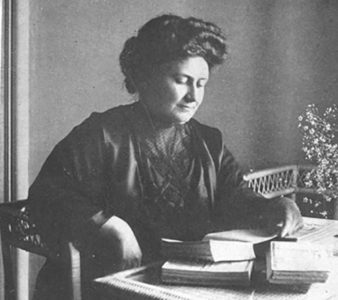
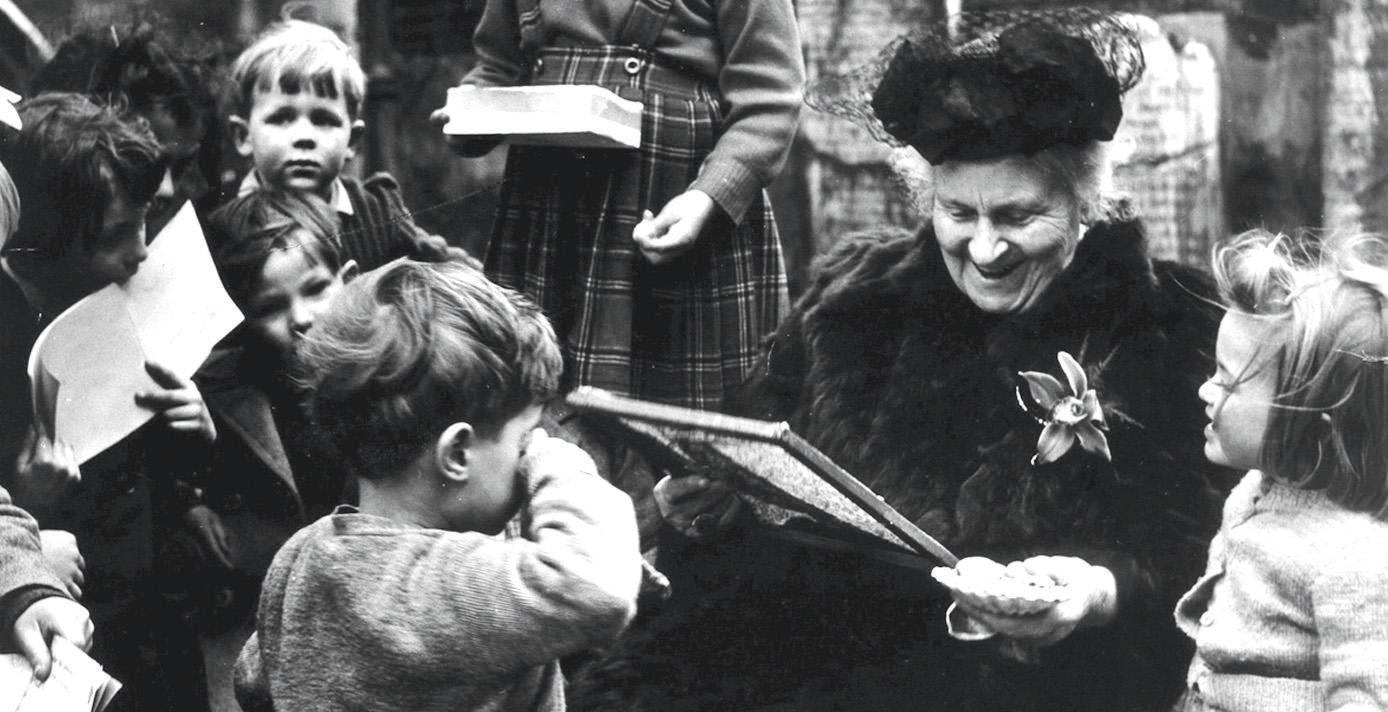
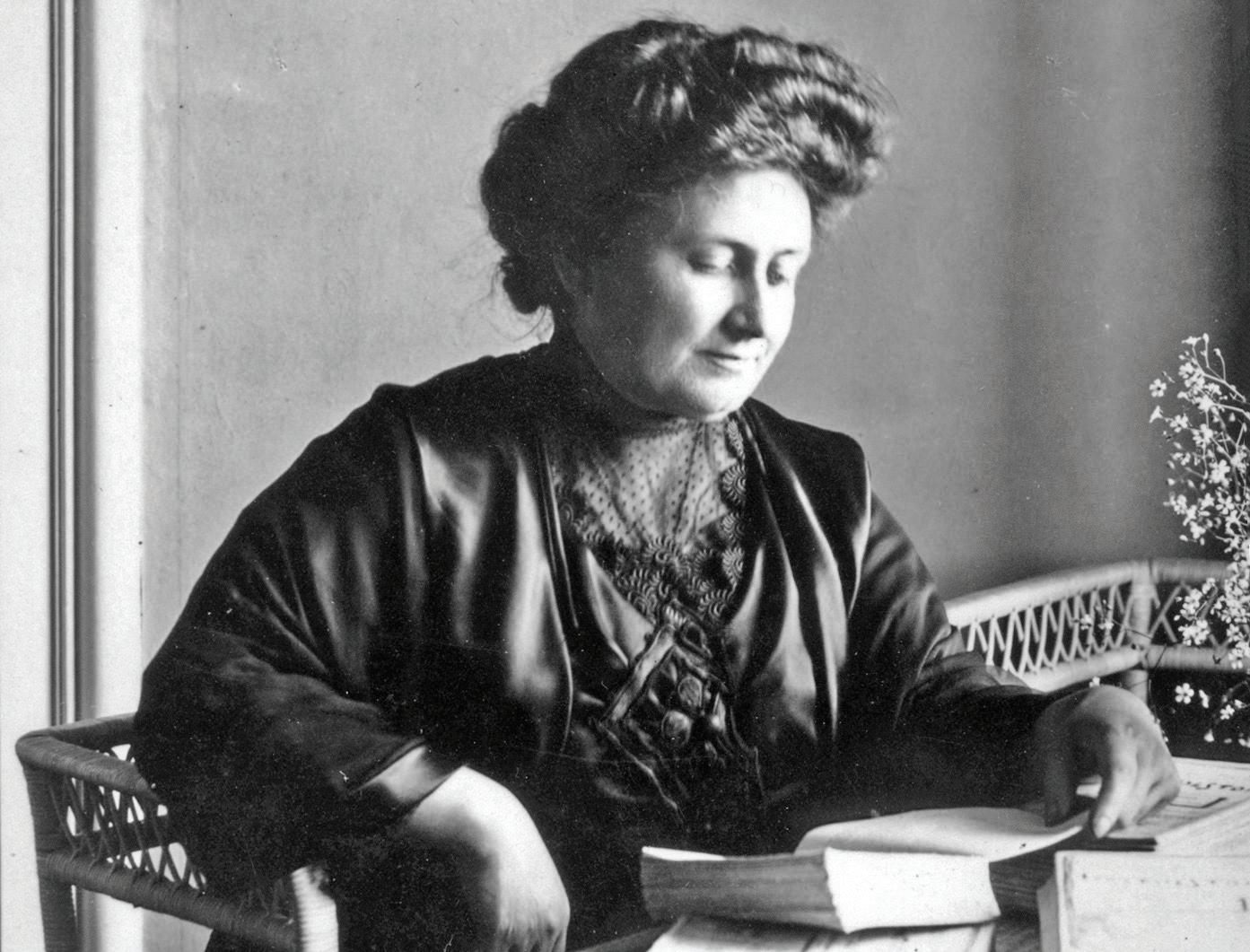
As August 31, 2021, marked the 151st anniversary of Dr. Maria Montessori’s birth, I wanted to remember her with gratitude for all she has given us. She certainly was a remarkable woman, always pushing forward to ensure peace, justice and equality for all.


We know Dr. Montessori mostly for her discoveries of how children learn best and we continue to be grateful to her for opening the very first Casa de Bambini in the San Lorenzo Quarter, outside of Rome, on January 6, 1907. (This school continues to exist today, 115 years later).


Within a very short period of time, Dr. Montessori not only transformed the lives of the children but of their parents as well. She shared her ideas with those closest to her, and eventually, with the whole world! Personally, her life and works gifted me with my life’s work. For that, I am eternally grateful!


Dr. Montessori was a woman of great principle, tenacity, and strength. She bucked the system early on by attending an all-boys technical school with the hope of becoming an engineer. She excelled in math and physics. Her second foray into a male-dominated field was when she decided that she would prefer to be a doctor and entered medical school. As the only female student, Dr. Montessori was subjected to ridicule, pranks, and the very clear message of “we don’t want you here” by the male students. Her disapproving father disowned her the day she entered medical school. (Thankfully, they reconciled years later, when one of her father’s friends told him that she was giving a lecture and invited him to join him. Luckily, her father accepted that invitation which began their reconciliation.)


Another sadness for Dr. Montessori was having to make the heart-wrenching decision to have her son, Mario, who was born on March 31, 1898, be raised by another family. The norms of the time dictated that had she married his father, she would not, as a married woman, be allowed to work. As she knew that the work she was called to do was unfinished, she chose not to marry. Happily, When Mario was 15; he was reunited with his mother and began working with her. It is written of him “Although Mario had no formal training as a teacher, his love of children and intuitive understanding of his mother’s work and approach, put him in the international world of education for his entire professional life.” He worked closely with her throughout her lifetime and carried on their work after her death on May 6th, 1952. (On a personal note, as a young teacher at Ravenhill Academy in Philadelphia, Pa. I had the pleasure of meeting Mario who was a frequent visitor to our school. He came to see Mother Isabel Eugenie who had been trained by his mother. Happily, Mother Isabel hired me after I finished my Primary Montessori training in Washington D.C., and thus I had the opportunity to meet him. Mario, a family man, was an interesting person and deeply committed to his mother’s work.) When Dr. Montessori’s schools were flourishing, Mussolini wanted her to help his cause, through the children. Montessori said “NO” and paid the price as he closed all of her schools in Italy. When she received the same request from Hitler and said “NO”, he closed all her schools in Europe. During World War II, Maria and Mario were interned in India, where they remained for several years. While there, the idea of Cosmic Education was born which is our Elementary program! She also gave 30 lectures on the first 3 years of life, which became the Primary Program. She wrote her ideas in two books: Education for a New World (about 3-6-year-olds) and To Educate the Human Potential (about 6-12-year-olds). They are good books for you to read and can be purchased at Barnes and Noble or on Amazon. After World War II ended, Dr. Montessori settled in the Netherlands because it had been a neutral country during the war.


Maria Montessori lived what she believed and we are all the better for it. She had strong beliefs about the importance of peace which she outlined in a book called EDUCATION and PEACE. One of her quotes from the book is “Preventing conflicts is the work of politics. Establishing peace is the work of education.” She frequently gave lectures on peace and was nominated 3 times for the Nobel Peace Prize. Although she never received it, she gifted the world with her wisdom and passion for peace. Dr. Montessori was also known for her lectures about women and children focusing on the violation of their rights.


As we celebrate this remarkable woman today, I think of our children–yours and mine–and wonder what they will be called to do with their lives. We know it will be purposeful work, done with integrity because of the gift of Montessori education that you are giving them. They will live out Dr. Maria Montessori’s request of them which is written on her grave in Noordwij, Netherlands: “I beg all the dear powerful children to unite with me for the building of peace in Man and in the World.” (Today I’m sure the word man would have been changed to humankind). May we all unite with her as we try to make sense of this troubled world in which we live.


Thank you for celebrating the legacy of Maria Montessori with me and our wonderful staff who implement it every day.


Gratefully,

Ms. Kathleen


Kathleen Dzura

Head of School at Little Flower Montessori School, FL


Kathleen Miller Dzura has been a Montessorian for 55 years. She completed both the Primary Montessori (1965) and Elementary training (1985) at The Washington Montessori under Elizabeth Stephenson. Upon completion of her Primary training, Kathleen was hired by Mother Isabel (a protege of Maria Montessori) to teach a Primary class of children at Ravenhill Academy in Germantown, Pa. During the next 11 years, Kathleen taught in Primary classrooms, trained Montessori teachers, under Mother Isabel’s guidance and was head of the Montessori Lab school. During those years, she had the good fortune to meet Mario and Ada Montessori who, as friends of Mother Isabel, were frequent visitors at Ravenhill. Kathleen’s Montessori journey encompassed private school settings as well as working in Head Start and teaching Elementary Montessori in the Philadelphia Public School system. She founded and was CEO of The Philadelphia Montessori Charter School (2004-2009). Kathleen is currently working as Head of School at Little Flower Montessori School in Wilton Manors, Fla. In addition to her love for Montessori education, Kathleen is equally passionate about the need for healing life’s wounds, losses, etc. which often prevent us from living life to the fullest. Her own divorce, when her children were 3 months and 7 years of age, began her journey toward healing, forgiveness, and eventually a sense of peace. In addition, she worked with divorced and widowed people for 10 years, helping them to bring closure after their profound losses. She also taught Peace courses at Chestnut Hill College in Philadelphia, Pa.

Letter from the IMC Executive Director

Letter from the IMC Executive Director

Dear IMC Members…

Our IMC community has shown incredible resilience and optimism through almost two years of the COVID-19 pandemic. We have worked together to support and encourage each other, share resources, policies, procedures, and inspiring stories. We belong to an organization that cares about each of us. This is how community works!


Focusing on gratitude, creating space for silence and breath, movement, and social connection are some keys to sustaining our mental health through this crisis. You will want to pay special attention to Dane Peters’ article, where he highlights empathy, humor, and trust as signs of emotional intelligence. Dane helps us look at ourselves as leaders through this lens.

We are fortunate to have Michael Dorer share his unique insights about how storytelling has, among its many benefits, a significant impact on executive functioning skills. Michael is a master storyteller himself and weaves a wonderful essay with practical tips for our Montessori classrooms.


Additionally, you will find an excerpt from Jane Nelson and Chip DeLorenzo’s new book Positive Discipline in the Montessori Classroom


Kathy Leitch, Executive Director International Montessori Council and a review of the book by Mary Schneider. This issue also addresses the current hot topics of our critical teaching shortage and special needs students.


We continue to find ourselves in a COVID conundrum as we look toward 2022. By the time you read this issue, we at IMC will have produced and directed our 25th Annual Montessori Foundation/IMC conference! We were challenged (as most schools are) with navigating a changing landscape of safety and risk mitigation. Knowing that some of us were ready to travel and gather in community to reconnect, learn, and soak up the Sarasota sun, we created a hybrid conference model that we trust met the needs of many of our members. This allowed many to join virtually and participate with our community.


On behalf of our IMC board and staff, we thank you for your continued commitment to sharing Montessori philosophy and pedagogy with the children of the world!

In service to children,