Part 2: Embracing Challenge: A Path to a Joyful School for All

Part 2: Embracing Challenge: A Path to a Joyful School for All

For many of us, facing today’s challenges as school leaders and educators can feel overwhelming. What if we could embrace those challenges with a sense of hope and courage instead?

In this 2 part exploration, we will consider how the source of our challenges might be a disconnect with our core values, how we can reframe and accept those challenges as opportunities, and consider strategies to prepare, plan and motivate ourselves and our staff to explore those challenge with confidence and maybe even some excitement for the future.

Outcomes:
1. Gain confidence in your ability and capabilities as a school leader in these times of challenge.
2. Learn strategies for building a strong, collaborative school team with your staff.
3. Identify your current great challenge and plan how you and your team can take positive actions that will align with your values and mission.

Part 2: Embracing Challenge: A Path to a Joyful School for All

Part 1: Embracing Challenge: A Path to a Joyful School for All

For many of us, facing today’s challenges as school leaders and educators can feel overwhelming. What if we could embrace those challenges with a sense of hope and courage instead?

In this 2 part exploration, we will consider how the source of our challenges might be a disconnect with our core values, how we can reframe and accept those challenges as opportunities, and consider strategies to prepare, plan and motivate ourselves and our staff to explore those challenge with confidence and maybe even some excitement for the future.

Outcomes:
1. Gain confidence in your ability and capabilities as a school leader in these times of challenge.
2. Learn strategies for building a strong, collaborative school team with your staff.
3. Identify your current great challenge and plan how you and your team can take positive actions that will align with your values and mission.

The Language We Use: Inclusion in the Montessori Classroom

The Language We Use: Inclusion in the Montessori Classroom

Join us as we explore the trend called “Quiet Quitting”. By now most of you have heard of this phenomenon. According to a recent Gallup poll, quiet quitters make up at least 50% of the American workforce. Could it already be affecting your school community? How will you know?

Reflecting and Imagining

Reflecting and Imagining

As we come together in this time of extraordinary stress, challenge, and change, and reflect on the profound impacts on our schools, our teachers and staff, and most especially our children and their families, can we begin to reimagine how to develop inclusive, high-fidelity Montessori classrooms and schools? Can we reflect on our support for our teachers? Can we reframe the ways we serve the range of diversity we see in today’s students? This hour will be an opportunity to engage in conversation as we share and gain insights and ideas.

Parenting 101: How Giving A Simple Direction Can Create Clarity

Parenting 101: How Giving A Simple Direction Can Create Clarity

Quite often with a 3-, 4- or 5-year-old, there’s a lot of grey areas when they’re testing boundaries and you’re not sure a break is necessary—maybe he’s touching the baby’s face and he’s looking at you and he’s got this look in his eye like he’s thinking, “Can I do this? How about this? Am I making you nervous? What can I do before you say something?”

Typically, parents give ambiguous information in these moments, like, “Be careful. Your baby brother is very delicate, so I need you to be gentle.”

What is more effective in these moments is to give a clear action direction, “I need you to come and stand next to me for a moment.” Then, if he’s not moving to follow your direction, count: “5…4…3…2…1…”. And if he hasn’t come to you by the end of the count, give him a break. If he does come to you, have him stay there for a moment and then either let him return or give him a direction to play somewhere else. This inserts a very clear map for him (and you) to follow in that moment. You’ve asked him for something specific, and you’ve given him a clear timeline. He’ll begin to take your direction in these moments, because he doesn’t want a break.

It’s important that the parents aren’t threatening to do a break (so it’s not—“I need you to come over to me, or I’m going to give you a break”) because we want him to generate this thought and self-prompt in this moment.

You say, “I need you to come and sit on the couch to play.” He ignores you and you say, “5…4…3…2…1….” Then if he’s

There’s no judgment in your tone with this; it’s easy, it’s fun, it’s playful—like your child. This speaks directly to the difference between punishments and consequences.

still not on the couch, and you say in a relaxed tone, “Oh, now I need you to take a break.” Now he looks up and says, “No, no, no! I’ll sit on the couch.” And you respond, “It’s no big deal. You take the break; then you can go to the couch. Right now, you have a short break.”

You follow this pattern because your goal is to have your child follow your directions when you give them. Once you have a break process in place, you can give all kinds of other prompts, because now he takes your words seriously. As you move forward, you ask him to do what you need, and if he doesn’t, you give him a break, or you count down and then give him a break. But you don’t always have to count down.

You might simply ask your child to do something and then pause quietly for five seconds and then give the break. You don’t have to do it the same way each time because you want to keep him on his toes, so he learns to hold an awareness of your needs. There’s no judgment in your tone with this; it’s easy, it’s fun, it’s playful—like your child. This speaks directly to the difference between punishments and consequences.

You can begin by giving a clear direction and then counting. A few days later, you shift to pausing quietly for 5 seconds, then giving the break. Inevitably, your child will say, “Wait! You didn’t count!” and you can tell him, “Well I’m not always going to count. I don’t want to work so hard. You know what happens after I give you a direction. I wait a few moments, and then you get a break. It’s no big deal; you take the break, and you come right back.” The tone of voice you use and the lack of moralizing is the difference between punishment and consequence. You’re shifting from judgment and anger, which implies his actions are either good or bad, to good-natured coaching with cause and effect.

There is often a misunderstanding that administering cause and effect without judgment is too soft, but it’s not; it’s actually more effective. When your child is very defiant you can give consequence after consequence after consequence and frustrate the heck out of him. But the more you frustrate him, the more your tone should be sweet and empathetic so that your children focuses on the consequence of their choices rather than your judgment of them. •


Joe Newman was born and adopted in1963. In 1970 he was diagnosed ADHD and medicated with Ritalin. Every where he went, the playground, the classroom, even at home, Joe heard one message loud and c ear: you’re broken; your brain doesn’t work; you don’t belong.” No surprises when, at eighteen, he dropped out of college, shaved his hair into a mohawk and took off to surf the coastlines of the Caribbean and Central America. It was out in the world, working scores of jobs and starting his own businesses, where Joe realized he was not actually broken. Away from the tethers of school and home, Joe realized the same qualities called disorders were also qualities of positivity and value. Aggression became passion, distractibility became broad understanding, and stubbornness became tenacity. Realizing there must be millions of children out there, just like him, with ferocious spirits but misunderstood, he threw himself into finding and reaching these children.

His book, Raising Lions, has developed a growing following not simply because it helps parents understand why their children behave the way they do, but because the tools and solutions actually work.

TOMORROW’S CHILD © • NOVEMBER 2019 • WWW.MONTESSORI.ORG

So What Is Special Education?

So What Is Special Education?

special-education

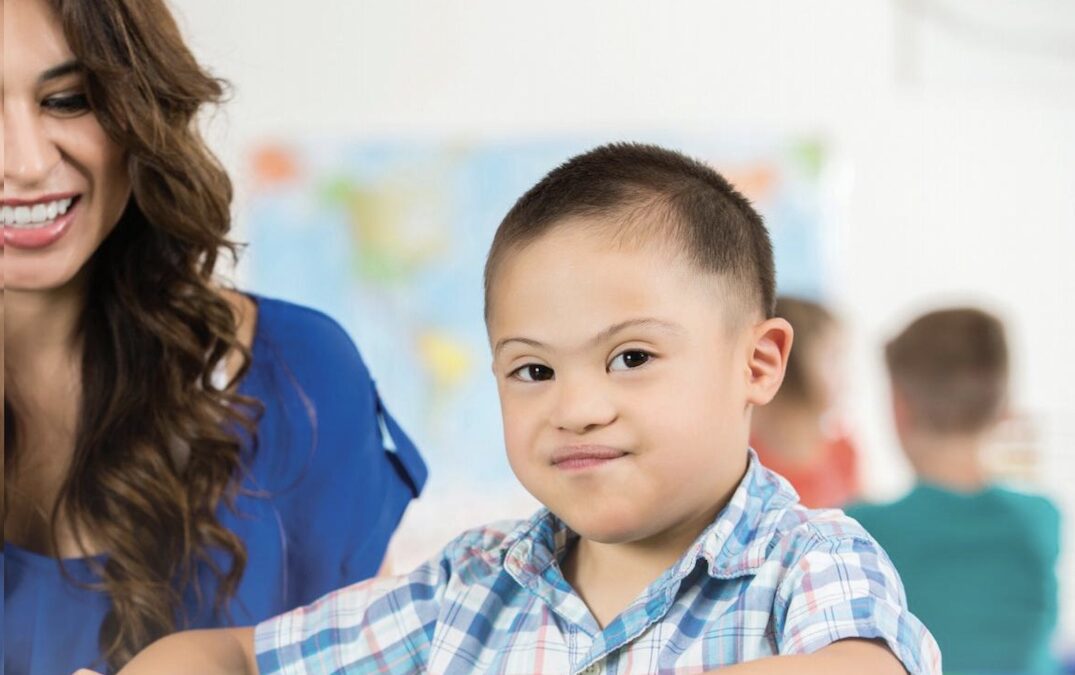
Special education is inclusive education. It is education that says all children should have full access to the classroom, all children should be able to fully participate in all activities, and all children should receive the support they need to feel successful and thrive. Special inclusive education accepts, respects, and honors each child’s unique gifts, strengths, and, yes, challenges.

Special education begins with an attitude – a value and a belief that each child belongs in our classroom. It cultivates the open mind-set that we can prepare ourselves to serve and support every child in our classroom. It is making the commitment to learn, expand our skills, and really ‘see’ each of our students.

Regularly, I hear Montessori teachers say, “I can’t work with children with special needs. I wasn’t trained to do that.” And yes, that is true; most Montessori teacher education programs are not explicitly preparing educators to work with the full range of children we have in our classrooms. The number of children who have been put into label categories is larger than in the past; the number of children who seem to experience the world differently than we expect is larger than in the past. It’s also true, though, that our society is different than it was in the past, and we are all absorbing those changes. We are all different than we were in the past. So, might it be time to let go of clinging to the way it used to be and move on to what can be?

Many of Dr. Montessori’s observations of children are now verified by current research. She deeply understood what all children need to learn to become their own best selves. Are we practicing what she taught (e.g., children learn what interests them and motivates them; and children learn at their own pace and in their own way)? She knew the importance of guiding the whole child: the physical, cognitive, social-emotional, and the cultural self. Ask yourself: Am I teaching to my agenda, to my expectations, to my set of should, would, could, and ought, or am I willing to reflect and transform myself to guide each and every child? That is special education!

Easier said than done, right? Some students challenge us in ways that make us uncomfortable, who leave us feeling incompetent, who just confuse us, and “keep the classroom from being normalized.” And this is where that open mindset that is willing to learn comes in. We can gain knowledge of the characteristics associated with categories of diversity to better understand an individual child’s learning and behavior needs.

We can learn some strategies as a starting point to support an individual child’s learning and behavior differences. We can learn and practice how to observe with curiosity and inquiry to uncover what a child’s behavior might be trying to communicate. We can expand the way we use a material or give a presentation to better reach that child who is struggling.

We can begin with knowledge, understanding, and strategies not only to fill our toolbox but to have confidence that we know just what tool to choose to teach that individual child and guide her to success. We can all learn a framework for managing an inclusive classroom rooted in our Montessori foundations to work with all children in our schools. And this is, in part, what Montessori and special needs is all about.

Here is a place for you to learn, to practice, to learn from mistakes (yes, you’ll make some along the way) and to become a member of the Montessori community who says yes to diversity, to educating all kinds of learners in our classrooms and schools. And one day, maybe we won’t talk about special education, because all education will be special, just as each child is special and ready to grow with a true sense of belonging. I look forward to having you join me on this journey.

Christine Lowry With an M.Ed. and M.A. in special education, and a Montessori credential, Christine Lowry has taught students, toddlers to adolescents, with diverse behavior and learning needs in a variety of settings. She has founded, directed, and taught in two Inclusive Montessori schools. Christine shares her knowledge and experience with the Montessori community with workshops, customized professional development, online courses, presentations, and consultation and coaching that supports school leaders, educators, and families as they serve children with special behavior and learning needs. She has developed the Montessori-based Multi-tiered System of Support ® and provides guidance for implementation in classrooms and Montessori schools. Follow her at Montessori and Special Needs and Montessori-Now on Facebook and Montessori-Now.com She can be reached at christine@montessori-now.com

by Christine Lowry, MEd

Question:

We are seeing more and more children in our classrooms at every level with learning and behavior challenges. Our teachers really want to help these kids, but we just don’t know where to begin or how to support them.

Answer:

First, you are not alone. Many Montessori schools, private and public, are sharing the same concerns. The number of students with a range of disabilities and the need for additional and new kinds of support is growing- and not just in the Montessori community. Inclusion classrooms, where children with identified disabilities and challenges in learning and behavior are welcomed with acceptance and belonging in the same classroom with children’s whose learning and behavior are more in the “expected” range is the dominant model in the broader world of education and has been growing over the past 10-15 years. By default, many Montessori schools are becoming ‘inclusive schools’ without having the knowledge in how to manage it all. One of the most important starting points, then, for our Montessori community is to acknowledge the need for more knowledge, and strategies, techniques, and tools for working with “today’s children” and the wide range of challenges we are observing. Understanding the ways that children learn differently, the ways children’s sensory systems can result in challenging behaviors, and the impacts of the “collective trauma” from the last 18 months on children’s social-emotional development and mental health well-being is key to providing the kind of classroom that can offer the relationships and support children need for positive learning and behavior. Ideally, school leadership and staff can be open to this learning. Professional development, on-line course offerings, and ongoing consultation/coaching with a “guide” who has experience with Montessori education and current research and evidenced-based practices for inclusive education can be of crucial support in working with these challenges. One first step, though, and especially as we begin a new school year, is reflection on our “prepared environments.” As Montessorians, we are thoughtful about the way we arrange the furniture and the activities on our shelves but are we as thoughtful about the temporal environment and the classroom “tone”? This can be even more important in providing the structure that provides the much-needed sense of emotional safety that our children need now. A daily schedule that doesn’t change, the well-thought-out routines, transitions, and expectations for behavior, specific attention to social-emotional development are the consistency and predictability that is needed right now, and not just for children but for adults as well. As a school, or ideally by level, meet as a team to create a daily schedule that includes at least an hour of outside time. Discuss all the daily routines and transitions for success in your classroom- from toileting practice in toddlers, to hand washing, sitting a circle, putting away clothing and “work,” all the routines of lunch time, going outside, ending the day, and on and on from early childhood through adolescent classrooms. Decide on just what your expectations for behavior and interaction in the classroom community are beyond Grace and Courtesy. Then comes the trickier part – how are each of these to be explicitly taught, practiced, and used as “embedded” opportunities for guiding your students in developmentally appropriate ways for your group. Learning the specific supports that can be used to support the children who need them can be part of your “new” learning. This “new normal” demands a lot from us. But, hey, we are up to the task! As Montessorians, we know how to observe, we know a thing or two about reflection, we know that mistakes are opportunities to learn, and we know that learning is a life-long “task.”


This story is from:

Why are Children so Different Today

Why are Children so Different Today

by Jane Nelsen, EdD and Chip DeLorenzo, MEd


When working with Montessori teachers, we always start by asking them to list their current stressors. Inevitably, they share that children exhibit a high degree of disrespect, entitlement, and lack of self-regulation. Children don’t listen to adults. Teachers overwhelmingly agree that these behaviors are more frequent and blatant now than when they grew up or when they first started working with children. Teachers who’ve been in their profession for a while observe that schoolwide misbehavior seems more intense than in previous generations. They often ask: What happened to the good old days, when children respected adults? Where are all these behavioral issues coming from? Is it environmental? Is it parenting? Too much screen time?


The Culture Shift


Was there really such a thing as the good old days? We know that, since there have been children, there has been misbehavior; however, there have been some significant changes in society in the last fifty years that have impacted children. We believe that these changes provide an explanation for some of the differences that we are seeing in children’s behavior today; it can help us prepare the social-emotional environment in our classrooms to help compensate for outside factors beyond our control (e.g., video games, diet, materialism, entitlement, and child-centered homes where children decide what and where to eat, what to watch on TV, etc.). Fifty years ago, the world was rife with models of authoritarian leadership and submission. You could find examples at home, where dad’s word was final; in workplaces where the boss was the boss; and in schools where the teacher was considered a highly respected authority figure. In those good old days, there was cultural support for top-down (or vertical) leadership. Parents didn’t ‘advocate’ for their children. If a child was reprimanded at school or in his neighborhood, his parents were likely to take the adult’s word for what happened without much interest in what the child had to say. Neighbors could discipline each other’s children with the full blessing of the parents.


Through the rose-colored glasses of educators who grew up in an authoritarian culture, it may seem like authoritarian methods ‘worked,’ because children are remembered as being more compliant and obedient. On a tough day, compliant and obedient children might seem like water in the desert to a discouraged teacher. But what are the long-term results of demanding that children be compliant and obedient? Too often children become ‘approval junkies’ or ‘rebels without a cause, except when they need to prove, “You can’t make me!”


Montessori wrote, “No social problem is as universal as the oppression of the child.”1 And while it may have seemed easier to require children to comply in an authoritarian culture, the result was the oppression of the child’s spirit. Oppression was the very thing that human rights advocates have been fighting against for decades. It is oppression that Montessori felt was the root cause of war.


At the turn of the last century, educational and psychological pioneers, such as Maria Montessori and Alfred Adler, were writing and lecturing about a radical idea: equality even for children (including equal rights to dignity and respect). While this idea would not meet much resistance today, it was considered counterculture at the time.


Permissiveness


During the 1960s and 1970s, human rights movements gained momentum. The idea that all people were worthy of dignity and respect gained wider acceptance in western cultures; however, this was a messy and arduous process, especially for parents and educators.


The rules were being rewritten; yet, parents and teachers did not yet have cultural support and access to respectful discipline tools to replace the old authoritarian methods. As a result, like most countercultural movements, the pendulum swung the other way, and permissive parenting and teaching became more common. We are still reeling from this pendulum swing today.


Soon, alternative or experimental parenting models gained traction. Especially in the home, yelling was replaced with discussion, bargaining, and negotiating. Spankings were replaced with time-outs. Punishments were replaced with rewards. Children were given more freedom and more choices—but without limits or responsibility. The authoritarian top-down model of parenting and teaching was replaced with permissiveness.


The problem with permissiveness, though, is that it is still top-down. It’s just that the roles are reversed. In the permissive model, the child is on top and the adult is on the bottom. As Maria Montessori wrote, “To let the child do as he likes when he has not yet developed any powers of control is to betray the idea of freedom.”2


Indulgence


Children today are exposed to a myriad of stimuli that vie for their attention. Children have more things, more entertainment, more recreational experiences, more toys, more media, more ‘educational’ experiences that deliver information without true interaction, more activities, more everything. Children are the center of the universe. They often decide what kind of meals are prepared at home and where the family should go when eating out. On the other hand, they are often not taught many real-world skills. In our frenzy for progress, we have inadvertently stolen opportunities for true human connection, discovery, and exploration.


Fewer Opportunities for Real Responsibility


We do not need children the way that we did up to the early part of the twentieth century. Children, generally, are no longer needed to make the farm or the household run on a day-to-day basis or to bring income into the home.


(Chip) grew up in a farming community in upstate New York. It was not uncommon for some of my classmates to have been up since before daylight doing chores to help keep the family farm going. Most twelve-year-olds who lived on working farms had tractor licenses. They didn’t spend their weekends playing soccer, taking dance lessons, or having play-dates. Those of us who didn’t live on a farm had paper routes, mowed lawns, worked in small shops, and had responsibilities at home. It was real work. It was real responsibility.


Real responsibility gave young people the opportunity to develop some incredible life skills. They knew that they were needed and that they were capable. They had the opportunity to develop practical life skills and qualities, such as resilience, perseverance, self-discipline, responsibility, and a strong work ethic. Children were needed but not usually respected or treated as equal in value to adults.


( Jane) grew up in a city; however, children were still expected to do chores, including scrubbing toilets. Having homework was not an acceptable excuse. And my parents didn’t help with homework; that was considered my responsibility. There wasn’t any pressure to get good grades to get into a good college. Most girls got married right out of high school and were expected to be stay-at-home wives and mothers. Fortunately, a wise mentor advised me to take one college class a semester so I would have a degree by the time my children were grown. Eleven years and five children later, I received my BA.


As the movement to value children gained momentum, we provided them fewer opportunities to truly feel needed. Today, most children don’t make their own lunches for school, and many don’t have chores. In the name of love, they are given too much and required to do too little. They develop an attitude of entitlement. In an effort to give children ‘the best,’ adults have robbed them of the opportunity to develop strong characters and to experience the sense of belonging (unconditional love) and significance (capability and responsibility) that comes with making a meaningful contribution.


Many people are drawn to the concept of ‘positive discipline,’ because they are against punishment and authoritarian methods of discipline. However, some ‘positive discipline’ followers mistakenly perceive that the best way to avoid authoritarian methods is to simply provide love. This can lead to permissiveness, because these parents are kind (to provide love) but are not firm (which helps children experience significance through learning skills for responsibility and capability).


You can give children love, but they need to develop responsibility. When parents don’t understand the importance of helping children develop responsibility, children often fall into the trap of pampering, which often leads to development of an ‘entitlement’ mentality. When parents understand the difference between belonging and significance (along with the importance of balancing both), they can help children develop the characteristics and life skills they need for successful living.


The Montessori curriculum is designed for children to develop a sense of significance through responsibility and capability. As you will soon see, a sense of belonging is created through the basic ‘positive discipline’ concept of ‘connection before correction’ and the involvement in daily class meetings to give and receive compliments and to focus on solutions.


Fewer Siblings


Another dynamic to mention is that of family size and birth order. In addition to today’s busy lives, where children are given more and less is required of them, families are also having fewer children than at any other time in our recent history. Most families today have one or two children. Today it is not uncommon for a classroom to be populated with many only children. Recently, my (Chip’s) school had a classroom of twenty-two children, of which seventeen were only children and the rest younger siblings (no middle children). While the research on birth order is controversial, many teachers report noticeable anecdotal effects. With smaller families comes more adult help and intervention. There are fewer opportunities for children to develop responsibility and more opportunities for parents to do for children what they can do for themselves.


In today’s world, providing opportunities for children to contribute in meaningful ways and develop true responsibility takes intentionality. It’s hard work.


If you have ever had a small class size, you know how hard it can be to promote independence among the children and how intentional you need to be to do so. When I (Chip) was a young teacher, just learning the ropes, I thought I would prefer a smaller class size. It seemed more manageable in many ways (giving lessons, staying organized, managing behavior, etc.). However, it turned out to be a lot more work. While I was able to give the children more individualized attention, the more I gave them, the more they seemed to need, both socially and academically.


After a few years of experience, I was given a much larger class of thirty students. With more students, the children had to become more independent. Out of necessity I had to learn to trust the children, and as a result I found out how responsible, independent, and capable they could be. More importantly, they discovered their own capabilities. It was amazing to see them rise to the occasion, just as Montessori had said they would.


Other Factors


In addition to increased permissive parenting, fewer opportunities for true responsibility, and fewer siblings, we have other external factors that affect children’s behavior. Screen time now dominates the hours spent at home; children are over-scheduled; some children rarely see their parents because of busy work schedules; there are a variety of lifestyle choices and family structures; there are violent video games and cyberbullying.


The good news is, that while the modern factors that affect children are real and significant, misbehavior is not new. In The Secret of Childhood, a teacher writes to Montessori about her experience with “pampered children”:


An American teacher, Miss G., wrote to me as follows from Washington: “The children snatched the objects from each other’s hands. If I tried to show something to one of them, the others would drop what they had in their hands and gather noisily about me. When I finished explaining an object, they would all fight for it. The children showed no real interest in the various materials. They passed from one object to another without lingering over any of them. One child was so incapable of staying in one place that he could not remain seated long enough to run his hands over any of the objects given to him. In many instances movement of the children was aimless: they simply ran about the room heedless of the damage done. They ran into the table, upset chairs, and trampled upon the material provided for them. Sometimes they would begin to work in one spot, then run off, take another object, and abandon it for no reason whatsoever.” 3


Sound familiar? This is a wonderful reminder that we are not alone and that the good old days were not always easy. Today’s problems are not new problems, even if some behaviors are exacerbated by different factors. Maria Montessori, Alfred Adler, and Rudolf Dreikurs were brilliant thinkers. Their philosophies have survived and grown while many others have come and gone. And we have to admit that we are delighted that neuroscience now validates the effectiveness of these methods that have contributed so much to the world of happier parents, teachers, and children.


Excerpted from Positive Discipline in the Montessori Classroom: Preparing an Environment that Fosters Respect, Kindness & Responsibility. Originally


Jane Nelsen, EdD, is a California Licensed Marriage & Family Therapist and author or co-author of nearly 20 positive discipline books, including Positive Discipline Parenting Tools with her daughter, Mary, and her son, Brad; and numerous experiential training manuals for parents, teachers, couples, and businesses. She earned her doctorate in education from the University of San Francisco, but her formal training has been secondary to her hands-on training as the mother of seven, grandmother of twenty-two, and great-grandmother of eighteen. She now shares this wealth of knowledge and experience as a popular keynote speaker and workshop leader throughout the world. Learn more about Jane’s work at: www.positivediscipline.com


Chip DeLorenzo, MEd, is a school consultant and positive discipline trainer; he specializes in training staff and administration at schools worldwide in positive discipline methods and practices. Chip served as Head of School of the Damariscotta Montessori School, in Nobleboro, Maine, for twenty years. A veteran teacher and school administrator, he began his teaching career in 1995 after serving in the United States Air Force and working as a financial advisor. Chip is the father of four amazing Montessori children. Lean more about Chip’s work at: www.chipdelorenzo.com


3 Montessori, M. The Secret of Childhood (Delhi: Aakar Books, 2013), 143–144.

Why are Children so Different Today

Book Review: Positive Discipline in the Montessori Classroom

I have been a Montessorian and educator for over forty years — as an assistant, a Primary and Lower Elementary head teacher, a school founder, a head of school, and a Montessori teacher educator. As I read Positive Discipline in the Montessori Classroom, I found myself revisiting all those roles, not to mention my personal roles as parent and grandparent. On every page of this book, I experienced flashes of insight — as well as flashbacks. I saw myself, as well as the teachers, assistants, and parents in my school, and the interns I’ve taught, in so many of the mistaken and misguided responses to children’s behavior over the years (as well as in some of the successful responses). If only we all had this book at the beginning of our Montessori journeys! I have no doubt that many of those mistakes would still have occurred, but the wisdom in this book would have helped me and others recognize and redirect ourselves, and, more importantly, helped us exit the shadows of self-doubt and uncertainty much more quickly.


I’ve used Jane Nelsen’s Positive Discipline books for years, both in my school and in my teacher education classes, but what Jane and Chip DeLorenzo have done with this book — bringing Positive Discipline and Montessori together — is groundbreaking. The authors draw fascinating historical connections between the work and philosophy of Alfred Adler and Rudolf Dreikurs (the forebears of Positive Discipline) and Maria Montessori. Now that Positive Discipline has been interpreted for and integrated into a Montessori context, it will be so much easier for educators to apply it.


Over the years, our classroom leadership and school training manuals have grown thicker and thicker as we have collected ever-growing research and resources on the social-emotional needs of children. This book easily replaces all these resources when it comes to the psychological, social, emotional, and spiritual aspects of preparing the environment. The authors have woven all this together in a way that exemplifies — and amplifies — Montessori’s thinking. This book will become a staple in teacher education, and will supplement, or even replace, a major part of schools’ training manuals.


Positive Discipline in the Montessori Classroom supports the very complex inner work of the transformation of the teacher. Moving from a position of controlling children to a position of observing, guiding and supporting children is challenging, even when one knows and believes it is the right thing to do. This book asks the questions and provides the evidence that will help us recognize our own barriers to change. Even more critically, it offers tools and practical advice for moving in a new direction. Every teacher faces moments when they have reacted badly or simply have no idea how to proceed in an effective, respectful way. In this book, they will find support, answers, and clear guidance. If I were still in the classroom, this book would probably be next to the bed for those sleepless nights when I was puzzling out what to do next with a child or a situation.


It begins with developing the skills of self-awareness, social awareness, and cultural awareness that allow one to resolve conflict with others. Positive Discipline in the Montessori Classroom beautifully addresses these skills, and as a result will become foundational for peace education segments of our teacher training, supplemented with the antibias and cultural awareness elements that we are confronting with fresh eyes at the moment.


This book asks the questions and provides the evidence that will help us recognize our own barriers to change.


I am grateful to Jane and Chip for writing this book, and for sharing their own personal stories. They also share many real-life experiences with children to which I think we can all relate. The authors detail appropriate and effective responses to situations by age level, so whether readers work with toddlers or adolescents (or anywhere in between), they will find rich, relevant material here. Questions for discussion at the end of each chapter spark thought, and can easily be converted into scenarios and reflections to make instructional use more active and engaging.


Reading Positive Discipline in the Montessori Classroom was a real pleasure. While I believe it’s essential to read the book cover to cover, to fully integrate the concepts into one’s practice, I envision readers will dog-ear many sections and return to them when new and challenging situations arise. Jane and Chip have given us a clear, contemporary, and practical roadmap for all Montessorians to follow, with dignity and respect for every child.


Mary Schneider is the director of the Montessori Education Institute of the Pacific NW in the Seattle area. She has been involved in Montessori teacher preparation since 1984 and served on the AMS teacher education committee from 2002 to 2017. She is also a former classroom teacher at the Early Childhood and Lower Elementary Levels, and the retired founder and Head of School of Woodinville Montessori School.

Staying Neutral: How To Manage Siblings Fighting

Staying Neutral: How To Manage Siblings Fighting

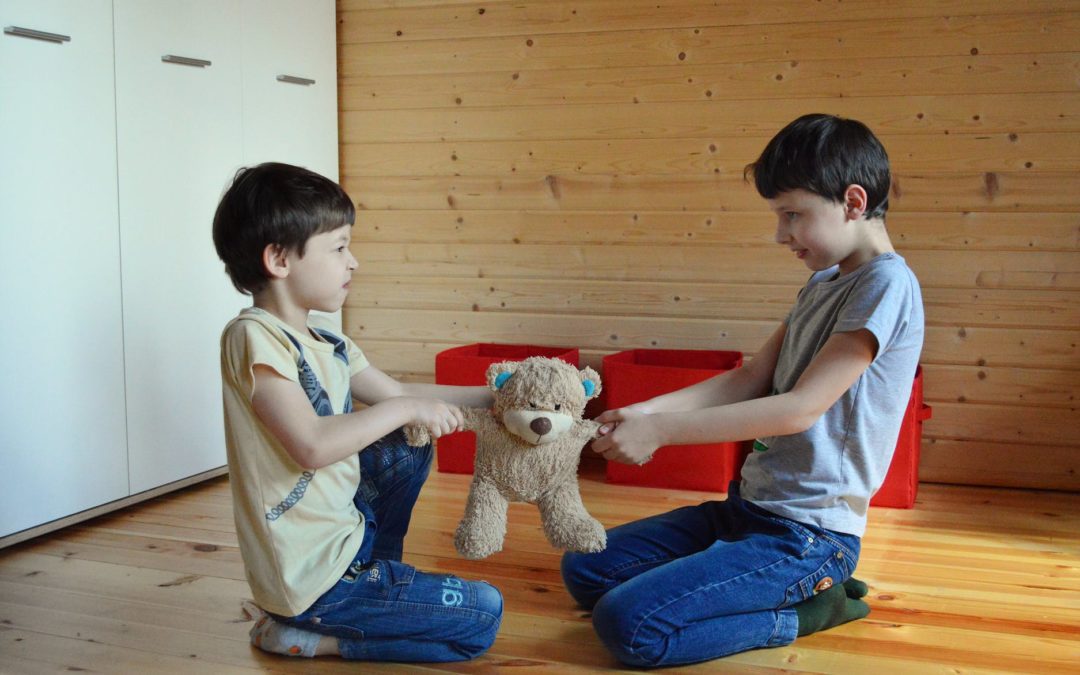
You know the scene. Two children both want the same thing. Or one of them is hurting the other. Or they are complaining and nagging each other.

We can’t help ourselves, we come to the rescue. “Why don’t you go first, and then the other one can have a turn next?” “Why are you always picking on your brother?” “Why can’t you two just leave each other alone.”

When we step in like this, we actually make things worse. The children start to get irritated at us. They think that we take sides (usually in favor of the younger child), and the fighting can often escalate as the children are getting our attention, even if it is negative attention.

So what can we do instead?

We can be the mediator rather than judge and jury. A mediator listens to both sides but stays neutral.

“It looks like you were playing with that, and (to the other child) you’d really like a turn too.”

“You seem really upset. Will you each tell me what’s going on for you?”

Then, do nothing. PAUSE. See if the children can work it out. Perhaps remind them of a rule, “We share by taking turns. It will be available soon.” But stop yourself from solving the problem for them.

And what if there is a young baby? You’d be surprised at the solutions they come up with. I often give the example of Oliver and Emma both wanting to play with the same vehicle. Oliver would have been under two and Emma was just crawling. I stated something like, “Two kids and one vehicle. I wonder how you’ll solve the problem,” and then PAUSED. I proceeded to watch quietly as Oliver took the front wheels off the vehicle to give to Emma and they both played with half each. A far more creative solution than I would have come up with, and they solved the problem themselves.

And if they are hurting each other. We can still step in without blaming either of them. We can separate them – “you go to this side and you come to the other side” — and, once they are calm, they can solve the problem with us as a neutral mediator if needed.

Give it a try for a week and see how you go:

1. Be neutral;

2. Let them be heard; and

3. PAUSE to see if they can solve the problem themselves

You might enjoy visiting Simone’s blog at themontessorinotebook.com. We appreciate her granting permission to use this post. ¢

Simone Davies is the author of The Montessori Toddler and co-author of The Montessori Baby, comprehensive guides to raising toddlers and infants in a Montessori way. The books are based on her 15+ years’ experience working as an AMI Montessori teacher in Sydney and in Amsterdam. She also has a popular blog, instagram, and podcast The Montessori Notebook. She is also mother to two young adults. Simone currently runs parent-child Montessori classes in Amsterdam at her school Jacaranda Tree Montessori and is working on another book with Junnifa Uzodike, The Montessori Child for children from 3-12 years.

Finding Montessori helped her so much when raising her own children, and it’s now her passion to help other parents introduce these ideas in their homes too. She was looking to find a way to be with her kids that wasn’t about bossing, threatening, or bribing them. Or giving them free rein either. And she wanted them to have a positive experience of school, not just to pass tests, but to love learning.

Peacemaking Circles

Peacemaking Circles

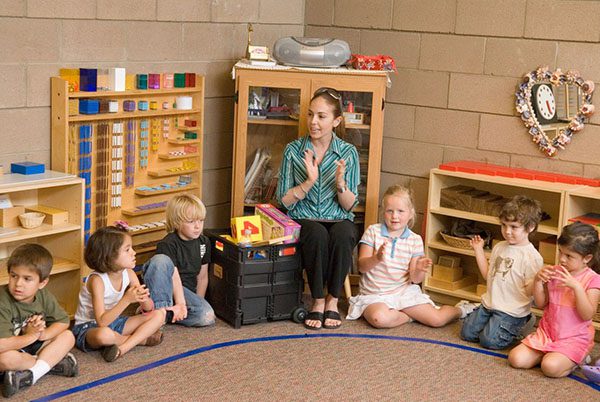
Montessorians are familiar with the daily “Circle” and use this important practice for starting or closing the day, but the Peacemaking Circle or Conferencing approach has become part of restorative practices in schools, workplaces, prisons, and Court systems around the country and throughout the world. Based on ancient practices of aboriginal peoples, this approach creates an intentional space with a particular process designed to:

  • support participants in bringing forward their ‘core self”
  • to help them conduct themselves based on the values that represent who they are when they are at their best
  • make visible our interconnectedness even in the face of very serious differences
  • recognize and access the gifts of every participant
  • elicit individual and collective wisdom
  • engage participants in all aspects of the human experience – mental, physical, emotional and spiritual or meaning-making
  • practice ‘core self,’ value-based behavior when it might feel risky to do so.

The more people practice that behavior in circle, the more those habits are strengthened to carry that behavior into other parts of their lives. Create a space and time for participants to voice their thoughts and feelings, to take ownership for their behaviors, connect them to others, and learn from the collective wisdom of the group.


Peacemaking Circles: Creating Peace in Our Schools One Circle at a Time

Presented by Claire J. Salkowski IMC Peace Conference

ADR Specialist and Educational Consultant Nov 4, 2012


Planning the Specifics of the Circle – The Keeper puts together the circle plan answering the following questions:

• Who will be part of the circle?

• What time?

• Where?

• What will be the talking piece?

• If and what will be in the center?

• What opening ceremony will be used?

• What question will be used to generate values for the circle?

• What question will be used for an introduction or check-in round?

• Is there a need for further relationship building before getting into the issues? If so, how will that be done?

• What question(s) will be used to begin the dialog about the key issues?

• What further questions might be useful if the group is not getting deeply enough into the issues?

• What closing ceremony will be used?

Circle Outline

The detail in this outline is provided to offer concrete examples and stimulate creative thinking. It is not intended to be prescriptive. The circle is not a rigid process. It is always important to be responsive in the moment to the needs of the circle participants which may not follow the outline you planned. Nonetheless, it can be useful to have an outline to guide you as a keeper.

Welcome: Welcome everyone to the circle. Thank them for coming. Express appreciation for the willingness to work together in a shared space.

Opening: Openings mark the time and space of the Circle as a space apart from the pace and tone of everyday life. The opening ceremony is designed to help participants center themselves, be reminded of core values, clear negative energies, encourage optimism and honor the presence of everyone there. Lead the group in whatever opening ceremony you have chosen

Explain center: If you have created a centerpiece, identify any items in the center and why they are there.

Explain Talking Piece: Explain that the talking piece is a critical element of creating a space in which all participants can both speak and listen from a deep place of truth. The person holding the talking piece has the opportunity to speak without interruption while everyone else has the opportunity to listen without the need to respond. The talking piece will be passed around the circle from person to person. Only the person holding the talking piece may speak. It is always okay to pass the talking piece without speaking. The keeper may speak without the talking piece if necessary to facilitate the process. If the talking piece has a particular meaning explain that.

Purpose: Remind participants of the purpose of the circle

Introduction/Check-in Round: Tell participants that you are going to pass the talking piece around so that we can all hear how everyone is doing today. Invite participants to introduce themselves if they are not already acquainted. We suggest the keeper share first. People will most likely model their response after the keeper. Be authentic. Pass the talking piece and ask, “How are you feeling today?” “Is there anything you feel is important for us to know about how you are doing?” Sometimes it is useful to pose a question in this round that invites sharing about oneself so the participants get to know one another better.

Values/Guidelines: Before the circle starts place a paper plate or half sheet of paper and a marker at each seat. Ask participants to think of a value they feel would be important in order to feel safe to speak from the heart and listen from the heart. Ask them to write the value on the paper plate or sheet of paper. Pass the talking piece and ask them to share the value they chose, explain why it is important, and place their value in the center of the circle. Keeper models.

After establishing values, develop guidelines for the circle. The guidelines of the Circle are the agreements that participants make with one another about how to behave in the Circle. They establish clear expectations and common ground to provide a space where people feel safe to speak in their authentic voice, connect to others in a good way and ensure a space that is respectful for all. Pass the talking piece and ask participants to name one agreement important to their participation in Circle. (e.g. “Speak only for yourself.” or “Keep body language respectful.”) Write down the suggested guidelines on a sheet of paper or flip chart. When the talking piece has gone all the way around, read the list. Pass the talking piece and ask participants to indicate whether they accept these guidelines. If there are objections explore the objections and the original purpose of the person who proposed that guideline and work to find wording that is acceptable to everyone.

Extensive conversation about the guidelines can be good practice for working through a difference in opinion or perspective in a respectful way. In an on-going circle group the values and guidelines generated at the first circle are brought back to any subsequent circles.

Storytelling round: In some circles it is crucial to take the time for people to share stories from their own lives to increase understanding of one another or to build empathy. Stories often shatter stereotypes or assumptions people have about one another making it possible for them to hear one another more clearly when they discuss sensitive issues later in the circle. The Keeper generally goes first in a storytelling round.

Exploring the topic of the circle: Pass the talking piece, posing a question about the issue or topic that is the purpose of the circle. Alternatively, direct participants in an activity which helps participants connect with their thoughts and feelings on the topic. Follow with multiple rounds reflecting on the experience of the activity or exercise and reflections about the topic. Thank participants for the wisdom shared in the process. Acknowledge the courage that it takes to speak and listen from the heart.

Check-out Round: Pass the talking piece around and ask participants to share their thoughts about the Circle or one word that sums up how they are feeling right now as the Circle comes to a close.

Thanks: Thank everyone for coming and for their efforts to understand themselves and others in a way that allows everyone to be at peace with themselves.

Closing: Lead the circle in a closing ceremony. Closing activities bring closure to the circle, help participants feel centered and mark the ending so that everyone can transition from the reflective circle space back to the outer world. It maybe a poem, quote, song or music or it could be a ritual such as extinguishing a candle flame or ringing a soft bell.

Materials Needed: Determine from the outline all the materials you need to bring to the circle (e.g. paper plates for values, markers, talking piece, center items, readings or other opening materials, the circle outline, etc.)

Circle Prep Sheet for Longer Circles

Preparation

• Co-Keepers:

• Circle Purpose:

• Where and When:

• Talking Piece, center piece and what other things you need to bring:

• Who do you have to talk to and what prep do you do ahead of time:

Circle

• Opening Ceremony/Activity:

• Check-in question:

• Questions for going into guidelines (what you might be able to ask):

• Story telling/Trust Building Question:

• Guiding Questions on the Topic or Issue:

• Guiding question for consensus building, planning or summary round:

• Check-Out round question – what you might be able to ask:

• What “must” be addressed in the circle:

• What is the follow-up:

• Closing Ceremony/Activity:

Circle Prep Sheet for (Shorter) Classroom Circles

Preparation

• Co-Keepers:

• Topic:

• Talking Piece, center piece and what other things you need to bring:

Conducting the Circle

• Opening Ceremony/Activity:

• Quick Check-in round question:

• Guiding Questions on the Topic or Issue:

• Question to elicit Storytelling/Personal experience related to the Topic:

• Questions for Deepening Round(s):

• Question for consensus building/decision making/planning/summary:

• Check-Out round question:

• Closing Ceremony/Activity:

Follow-up

• Decisions/Insights that need to be shared with others:

• Work that needs to be implemented before the next Circle:

Revised and adapted by C.J. Salkowski from Heart of Hope Resource Guide by Kay Pranis and Carolyn Boyes-Watson


CONDUCTING THE CIRCLE

As keepers or facilitators you are responsible for creating and keeping the “form” of the circle. The basic manner of interacting in the circle generally involves use of a talking piece which is passed from member to member during sharing “rounds.” Only the person holding the talking piece may speak and they may do so as long as they have the talking piece. Typically the talking piece is passed around the circle, in order, although the keepers may choose to use a different form of passing the piece. The circle may also use other activities to move the group. These are described more fully below.

Keepers or facilitators act as guides to move the circle through the phases of circle it needs to experience. Note that these phases are flexible depending on the purpose for which a circle has been called. In a school setting, the circle can be used for many purposes. Circles can be used with the children in the classroom, faculties or parent groups. They can be the vehicle for discussions, resolving conflict, celebration, healing or learning about a particular topic.

It is important that all circles include an opening and closing, and that these two elements are always given time and depth.

Four phases of circles – Although the content or topical focus of circles may vary, all circles generally follow four phases. How you facilitate these phases is flexible. For example, a new group may need to spend more time on guidelines and on storytelling rounds. As keeper, trust your instincts on how to structure the circle, and be flexible enough to let the circle move in the way that it needs.

The four phases of circles are:

Phase One – Introductions

Phase Two – Building Trust

Phase Three – Issues

Phase Four – Solutions

Phase One – Introductions

The introductions phase of circle may include the following elements, all of which are designed to create safety and form and to begin to prepare participants for deeper sharing and understanding. This phase generally should include the following:

Welcoming – Make sure everyone is greeted warmly.

Opening ritual – All circles start with an opening ritual that helps us make the transition from the outer world and into the reflective circle space. Openings are designed to help us feel more centered and open to sharing. Openings may involve burning sage or incense which someone either places in the middle of the circle or passes over participants, using a feather to move the smoke around them – allowing people to cleanse themselves of negative energies and to prepare for sharing deeper emotions. They may include a poem, song or meditative music. Consider asking one of the participants (in advance), to offer the opening. With children and adults, I have found that using the Tibetan bells as an initial opening and a final closing, offers a quick way to a begin and end the circle when time is a perplexing concern. If they are used consistently in an on-going group it becomes a valuable ritual in itself. With children they will often ask to ring the bells in order to open or close the circle. We ring the bells three times with a sustained moment to let the sound move out into the group and find its own ending. It creates a reverence for what we are doing and brings us to that place of quiet and peace.

Introductions and check-in – In the first round, the keepers ask participants to introduce themselves by name (perhaps first name only), how they feel, why they are here in circle, and what they hope for.

Seeking consensus around guidelines – If it is a new group, then participants develop guidelines of how they want to be together while in circle (e.g. respect all opinions, confidentiality, etc.) Then, take a complete round of the circle to ensure that each person indicates support of the guidelines. If it is an ongoing circle, then the keeper might review the basic circle guidelines and if invite the group to add any additional guidelines if necessary. Take a full round to be sure everyone has a chance to comment on the guidelines and to demonstrate their support of the final list. Remember that the guidelines are a “living document” and may be revised in circle at any time.

Acknowledgment of those present – Remember to acknowledge those present in circle, especially if the circle is gathered to discuss a difficult topic or resolve a conflict or find healing and resolution for an incident of harm. It takes courage and commitment to participate in circle. Also be sure to acknowledge the volunteers who have helped make the circle happen.

Clarifying the purpose of circle – The keeper summarizes what has been experienced in phase one of the circle, using this summary to further set the tone of the circle and to clarify the purpose of the circle.

Phase Two – Building Trust

Next, the keepers move the circle into deeper sharing as a way of increasing the level of trust among members. This may take a variety of forms. Depending on the nature of the circle, keepers may guide it toward a single or multiple rounds of sharing, and may or may not choose to use other methods of sharing such as ice breakers, art work, individual reflection or small group activities depending on the amount of time available.

Ice breaking – With groups involving young people it might be useful to begin with individual reflection, or sharing in pairs or small groups. Consider using art supplies to having members (individually or as teams), draw representations related to themselves or the purpose of the circle. Or consider using icebreaking activities that are neutral to the purpose of the circle, but which help members to get to know one another as people.

Storytelling round – If the issue or purpose for the circle involves a difficult issue, it may be useful to have a storytelling round. Invite participants to share a personal life experience related to the issue offers (perhaps in a very indirect way.) Storytelling is a powerful way to move beyond masks and appearances and to develop a better understanding of one another. Story telling is a powerful way to share our wisdom with each other and allows us to take in what we might otherwise reject if we were simply “told” in some other form.

Deepening rounds – The circle may move into deepening rounds of sharing. These rounds get to the heart of why the circle was called or if time allows, a topic is explored in depth for further insight and deeper learning. Depending on why it was called, these rounds may include an expression of needs and interests (in the case of a conflict circle), sharing memories and grief (in the case of a healing circle). If small group activities or dyad sharing feels appropriate they may be used here, but always come back to the circle and to sharing in the full circle.

Phase Three – Issues

In this phase, the focus expands from what’s gone wrong or what’s hurting to what can be done to make things right, to promote healing, or to initiate positive change. In many circles, such as those focused on healing, listening may be what’s most needed – giving people a chance to tell their story and to have it received deeply. In other circles, though, exploring options helps break the sense of being stuck in either a painful experience or a self-destructive way of life.

Phase Four – Solutions

Some circles, such as those involved in healing or understanding, do not require decision making. In these circles, the focus of the keeper may be to work toward creating a sense of unity. Other circles do require decision making or resolution of conflict. In these circles the keeper attempts to build consensus by building on each circle participant’s input, until a decision is reached that all members are at least “able to live with.”

Consensus involves an agreement among all participants to “live with the outcome” – to accept a decision or course of action because it promises the best for everyone given the circumstances. Generating consensus involves patience, creativity, candor about interest and concerns, and a willingness to think outside the box. We are challenged to set aside our personal agendas and fixed notions about outcomes, so that something may emerge that is larger than any one person’s preconceived ideas. Consensus is about dialogue, listening and honesty.

To help the group move toward a consensus decision the keep

1. Help participants to identify areas of disagreement,

2. Encourage participants to explore and understand one another’s perspectives, and

3. Work with participants toward final consensus decisions that are as inclusive as possible, and that are respectful of differing viewpoints.

Reaching decisions by consensus often takes more time than other decision making models, such as voting. The strength of the process is that it assures that all participants will “own” and support the decision. In consensus there are no winners and losers, but rather everyone is in agreement and willing to move forward on whatever plan or decision has been devised. When using this process it is important that the group commit to addressing issues or concerns that may be raised on the way to achieving a consensus decision.

Closing

All circles end with a closing ceremony that helps us make the transition from the reflective circle space back to the outer world. Closings are designed to help us feel centered and to bring a sense of closure to the circle. They may include a poem, song or meditative music. Consider asking one of the participants (in advance), to offer the closing.

AFTER THE CIRCLE (FOLLOW UP)

Follow-up is one of the greatest challenges of the successful use of circles. Follow up may include:

• If strong emotions are shared in circle, affected individuals need to be contacted to see how they are doing and ensure that they are getting the support they need.

• Planning one or more follow up circles, if necessary.

• Discussions with people who were not in the circle, but who have relevant information or position to affect issues discussed in circle.

• If agreements are made in the circle, it is important that someone follow up to see if people are accountable to those agreements.

One of the responsibilities of the circle keepers is to attend to follow up. It is not necessary that the keepers handle all follow up activities, only that they ensure that members commit to specific follow up. It is the keepers’ responsibility to follow up with those individuals to ensure that follow up is in fact occurring.

Adapted by C.J. Salkowski From Circle Keepers Manual (draft) by Kay Pranis

For more information or to schedule a circle session or training contact:

Claire J. Salkowski

CJConsulting@comcast.net

410-593-9601

410-499-4732

Montessori Leadership Forum: Children with Challenges in Montessori Classrooms: Part II

Montessori Leadership Forum: Children with Challenges in Montessori Classrooms: Part II

Join us for a sharing of conversation, wonderings, and your questions with guest panelist, Christine Lowry. Christine is a Montessori credentialed special educator with many years of experience working with children with diverse learning and behavior in Montessori classrooms. We’d love to hear from you as you work with children with challenges in your classrooms at every level.

Computers: Are there New Secrets of Childhood?

Computers: Are there New Secrets of Childhood?

by Dr. Paul and Ann Epstein

Computers in Montessori early childhood classroom deserve careful study. Just as Dr. Maria Montessori scientifically observed children and developed her didactic materials, we must also completely examine a computer’s benefits and barriers to learning.

We believe that computers are tools for thinking and communication. We further believe that computers will augment or enhance the kinds of thinking and communication children now experience with the didactic materials. Young children are using computers to predict, problem solve, explore relationships, and design two or three-dimensional graphs. Children can also develop spatial relationships by selecting directions. For example, should I go two blocks east or two blocks north to reach my destination? Young children use programs to create their own stories. They select settings (perhaps an island) and appropriate equipment (boats and snorkels, instead of rockets and space suits). Other software includes video and music. Animal behaviors and seasonal migrations are the subject of still another developmentally appropriate computer program.

Computers appear to help young children with early signs of attention deficit disorder. These children often demonstrate difficulty maintaining concentration with activities on rugs and tables. They struggle to follow through, even though the materials are carefully designed and the teacher’s demonstrations are clear and precise. In contrast, children who are otherwise off task concentrate for longer periods with educational computer programs. Knowing they will be successful, they excitedly look forward to their computer experiences. Their behavior is not an issue when they learn with computers.

However, these scenarios are not yet fully documented by research. We are reminded of Dr. Maria Montessori’s earliest days with young children. Living in an emerging industrial era she was called upon in 1907 to open a day care center for some sixty children left alone in a suburb of Rome while their parents worked in factories. The “secrets of childhood” Montessori discovered there astonished the world. Montessori held her audiences spellbound as she articulated a vision of childhood that differed from the prevailing belief that children were miniature adults. What new secrets of childhood will computers reveal?

Nearly one hundred years ago, Montessori observed the children of San Lorenzo. She formulated hypotheses and experimented. Determined to develop sets of hands-on learning materials that would engage children in investigation and discovery, she designed one after another. Each was presented to children, and Montessori closely observed their responses. Eventually, she discovered how many items to put on a tray, in a basket or in a box. She noted what children did with the objects, how long they were occupied, and how often they returned for further explorations. She made refinements to the sizes, colors, shapes, and quantities of objects. Some of Montessori’s decisions involved chance – a certain color of paint or type of wood was available at the time. Montessori finally determined the materials were “right” when children displayed a meditative-like concentration as they repeatedly explored the learning material.

In the same spirit, we must ask, what is the optimal size of a computer screen for young children? How should a keyboard and mouse be designed to best fit a young child’s emerging fine-motor and eye-hand coordination? More importantly, can children use more of their natural learning abilities with computers?

Children require multiple experiences that allow them to move and engage all of their senses. Computers will not replace a child’s interest in the didactic materials. We should not think of computers in terms of “either/or”: either a child will prefer the computer or the child will prefer the didactic materials. It is simply premature to foreclose on computers in the classroom because we fear some children might prefer computers screens to carrying and stacking pink cubes or brown prisms. Carrying cubes or prisms is of course a very different learning experience. But using a mouse to drag cubes and prisms is also a learning experience. Children sequence sizes visually. In a computer environment, children organize a larger, perhaps more interesting, variety of objects.

There is no compelling evidence to conclude learning, for example, addition facts with a computer program will replace the addition strip board. The research is lacking: Will young children abandon the didactic materials in favor of computer software? Many young children do not prefer computers. But there are also children who do not care for either the addition strip board or the addition charts. These materials offer one way of learning. We know children’s styles of learning vary. Some are tactile, and learn through the hand; others prefer a visual mode of learning. Computer programs offer alternative ways to learn. A computer, like any of the didactic materials, is a tool with which to think, investigate, explore, communicate, express ideas, and solve problems.

We should, then, welcome computers in the spirit of Montessori. The computer offers a unique opportunity to engage in the legacy of scientific pedagogy. Just as we would with any new piece of material introduced into the classroom, we need to observe and study children’s responses to computers.

A computer introduces both hardware and software issues of management and pedagogy into the classroom. These issues are similar to the concerns raised whenever any new piece of material is placed into the classroom. How will children access the computer? How long will their turns last? Children need presentations on how to turn the computer on and how to shut down. They need lessons on how to use the mouse and keyboard. And, they need lessons on how to access software programs.

We should develop a set of software selection criteria. While selection criteria are readily available on the Internet at, for example, state departments of education and school district web sites, these may not apply to Montessori settings and needs. Curiously, software accepted by other approaches to early childhood education could be rejected by a set of criteria developed for Montessori early childhood programs. Some computer programs offer creative simulations and interesting explorations requiring reasoning, planning, and solving problems. Others are competitive, explosive, and violent; these themes have no place in our schools.

We are not placing computers into classrooms of the 19th century industrial era in which Montessori lived and worked. The 21st century is a world Montessori could not anticipate. There were few digital computers in the 1940s and early 1950s. They occupied large rooms, required large numbers of vacuum tubes and electricity, and could complete only the simplest of calculations. The desktop computer we are using to write this article simultaneously runs word processing, database, spreadsheet, presentation, and multimedia programs. While working with these tools, we can listen to CD recordings or watch a DVD movie. We are also connected to the Internet accessing a vast library of information and communications.

The larger question is, then, can children use computers to think and learn in new ways? Montessori’s didactic materials bring a specific body of knowledge and method of learning to young children. Recent brain research suggests new theories and possibilities for facilitating young children’s learning. It may be that observing and studying how young children learn with computers will reveal new secrets of childhood.

Montessori Leadership Forum: Children with Challenges in Montessori Classrooms: Part II

Montessori Leadership Forum: Children with Challenges in Montessori Classrooms

Join us for a sharing of conversation, wonderings, and your questions with guest panelist, Christine Lowry. Christine is a Montessori credentialed special educator with many years of experience working with children with diverse learning and behavior in Montessori classrooms. We’d love to hear from you as you work with children with challenges in your classrooms at every level.

Helping Children Who Learn Differently: The Shelton Way

Helping Children Who Learn Differently: The Shelton Way

Download Image

Helping Children Who Learn Differently: The Shelton Way By Joyce Pickering, Ph.D.
The Shelton School in Dallas, Texas is school, an evaluation center, and a speech-language clinic. In the early years, the school grew to offer classes through the 6th grade and then expanded to the 8th grade. Dr. Shelton was the Director until 1985. Another Director followed, and when she resigned in 1989, an interim director ran the school for one year. In 1990, Dr. Joyce Pickering became the Executive Director. Dr. Pickering brought the same training as Dr. Shelton, who had been one of her teachers. The school grew from 170 to the present 870 students. In 1991, the Outreach Center was added to the operation of Shelton. The Upper School was added in 2000. Shelton is now the largest school in the world for students with learning differences, offering services for children from early childhood through high school.

Turn Challenging Behaviors into Positive Partnerships with Your Child

Turn Challenging Behaviors into Positive Partnerships with Your Child

Behavior challenges to our parenting can be stressful in the best of times, but now that we are with our children almost all the time, even smaller challenges can sometimes feel overwhelming. Here’s a conversation with Lorna and Christine as they talk about ways you can find solutions with your child as you partner for positive behaviors.

Dealing With Tantrums

Dealing With Tantrums

Tantrums

I’m going to dive right in to discuss a very tricky area for parents and children alike: tantrums.

I hope you find this article useful so you can start applying Montessori principles in your home too.

Dealing with Tantrums

Tantrums are a pretty normal part of life with children from around one to five years old. Maybe they’ll start a little later than one year and will end earlier, but anything in this range is fairly normal. Your child is learning that things don’t always go their way. And, as parents, we are helping them learn how to deal with these emotions and to make amends.

It can be upsetting for a parent. It’s hard to realize that your child is actually asking for your help. They are overwhelmed by the situation and need your support to calm down. It’s not the time to take it personally.

How to Avoid Tantrums

It can be possible to avoid tantrums before your child loses control. Here are some ideas to ward off tantrums when you see the first signs of your child losing control.

1. Be prepared: take a small bag with some simple games and some favorite snacks if you expect your child to wait patiently in a doctor’s office or a cafe.

2. Label their feelings: “Boy, you really wish you could stay longer”; “You really wanted some orange juice right now!”

3. Redirect them: “I can’t let you hit your brother, but you can hit this drum/pillow.”

4. Get down to their level: “You sound frustrated. Can you tell me why?”

5. If they are struggling, ask them if they would like some help: give them just as much help as they need and then step back.

6. Give them a choice: “Would you like to put on your shoes or your scarf first?”

7. Establish routines: “… and after lunch, we’ll go to the toilet, read a book, and tuck in for a rest.”

8. Let them show their anger creatively, “Show me how angry you are. Here is some paper and a pencil. Wow. They are big circles. You are really mad!”

Triggers

Events can often escalate to a full-blown tantrum. Sometimes it’s from your child’s frustration; other times their anger or rage; sometimes because they want to be in control; their communication may still be limited; or because they are tired, hungry, or overstimulated. They can throw themselves on the floor, push us away, try to hit us, a sibling, another child, or even break something.

It can be useful to note things that cause tantrums in your child: over-scheduling can be common; a new baby; moving to a new house; or certain children may trigger them.

Sometimes the tantrum is even caused by us as we deliver the news that it is time to leave the park, or we serve some food they don’t like for dinner, or that we would like them to get dressed to leave the house.

It’s OK for your child to have a tantrum. You can acknowledge their displeasure at what is going on. You can help them to do the thing that they don’t like. However, when we back down and give in to them, you will find they shout even louder next time.

It’s difficult to be the parent and stay strong. But your hard work will pay off in the long term. They will learn that when you say no, you mean no; and when you say yes, you mean it too.

I like the advice from Positive Discipline for Preschoolers (by Nelsen EdD, Jane, Erwin M.A., Cheryl, et al. Jul 9, 2019). “If you say it, mean it; and if you mean it, follow through with kind and firm action.”

Action may be, for example, leaving the park with a sad toddler, acknowledging that they really wish they could stay longer.

Alternatives to Time Out: How to Help Your Child Calm Down

When your child is having a tantrum, some experts advise putting them into time out. I find this difficult as your child is asking for help to calm down, and you are removing your support and punishing them instead.

When we punish our children, they often get angry at us rather than being sorry for what they have done. Or they try to work out a way to get away with it next time without being caught.

Instead, I look for ways that I can support my child to calm down. I’m not saying that their behavior is OK, but when they are in the middle of the tantrum, it is not the time to teach them anything. They cannot hear you. They have lost control. So let’s help them calm down.

Some children will respond to a cuddle during a tantrum. You can rub their back, cuddle them, and sing to them as they go through all the range of emotions from anger, to intense frustration, to sadness, and sometimes regret. I once held my son for 40 minutes as he refused to get dressed. And I watched him go through all these emotions. In the end, he announced he was ready to get dressed. He told me he loved me. He wasn’t angry with me. He was grateful that I had just been there for him. I know sometimes you have to leave, but in this case, we just changed our plans.

Other children will push you away and don’t want to be touched. In this case, I make sure they are safe and cannot hurt themselves or others. I stand nearby and keep offering my help, “I’m here if you need some help to calm down. Or we can have a cuddle when you are ready.” After the tantrum, I like to offer a cuddle. “That was tough. And now you have calmed yourself down. Would you like a hug?”

If they are throwing toys at their sibling or trying to hit me, I would remove them so that everyone is safe. “I can’t let you hit me. My safety is important to me. Would you like to hit these pillows instead?” If your child is trying to hurt the baby, you can place yourself physically between them to keep the baby safe as you help your older child calm down.

For a child over three years old, you can set up a “calm place,” which they can use when they are upset. It may be a tent with some pillows and favorite things. It may be a corner with some trains. You can ask your child if she would like to go to her calm place.

This is different than ‘time out,’ as the older child is in control; she can come out when she feels calm. If she comes back still in a rage, I would gently tell her that she looks like she still needs to calm down and can come back when she is ready.

Making Amends

Maybe you are thinking that if I support my children while they calm down, I’m saying that their behavior is OK, and I’m encouraging them to get angry. When they are upset, indeed, my objective is to help them calm down.

Once they are calm, I then help them to make amends. If they drew on the walls, I would get them to help me clean up. If they broke their brother’s toy, they can help to fix it. I’ve asked the kids to help scrub their sheets when they used marker pens in bed and made a mess.

In this way, they learn to take responsibility when things go wrong. And when it’s over, it’s over. The good thing about young children is that they can move quickly from deep anger and sadness back to their happy selves. We need to move on too and not let this upset the whole day by referring back to it or keeping on about it. Once they have made amends, it’s OK for everyone to move on. •

TANTRUM FAQs

Shouldn’t we just ignore their tantrum?

I don’t like to ignore children when they are having a tantrum. They may not let me touch them, but I keep offering support and letting them know I am available when they need me. If you were super upset and your partner just left the room for you to get over it, you would likely find them unsupportive. We are showing our kids that, good or bad, we will be there for them.

What do I do if we are out in public when they have a tantrum?

There are basically two options:

First: Go home—if you find it difficult to have people watching you, it’s best to just leave. This may mean parking a full shopping cart and following the above ideas once you are home.

Second: Stay and support them—my preferred option is to hang in there and do what you would do even though you are out of the house. If you have more than one child with you, make sure they are safe. And then offer as much help as you can to help your child calm down. People watching will more likely think about what a lovely, patient parent you are, rather than what a horrible noise your child is making.

I find it difficult to stay calm myself. What can I do?

If your child has triggered you, it is indeed difficult to help them calm down.

• If your partner is available, it can be easiest to get them to step in instead.

• You may want to make sure the kids are safe and go to the bathroom to catch your breath.

• Find a mantra that you can repeat, “I breathe in calm, I breathe out anger.”

• Remember not to take it personally. Perhaps visualize putting on a bullet-proof suit that will resist everything (including words) that your child throws at you.

These tips should help you remain calm and give your child the support they need to regain control.

Learn from Simone Davies, an AMI Montessori teacher with15+ years’ experience working with 0-3-year olds, owner of Jacaranda TreeMontessori in Amsterdam since 2008, mother of two teenagers, and author of the book The Montessori Toddler. Visit her blog at themontessorinotebook.com

This article is from the November 2019 issue of Tomorrow’s Child magazine. Reprinted with the author’s permission.