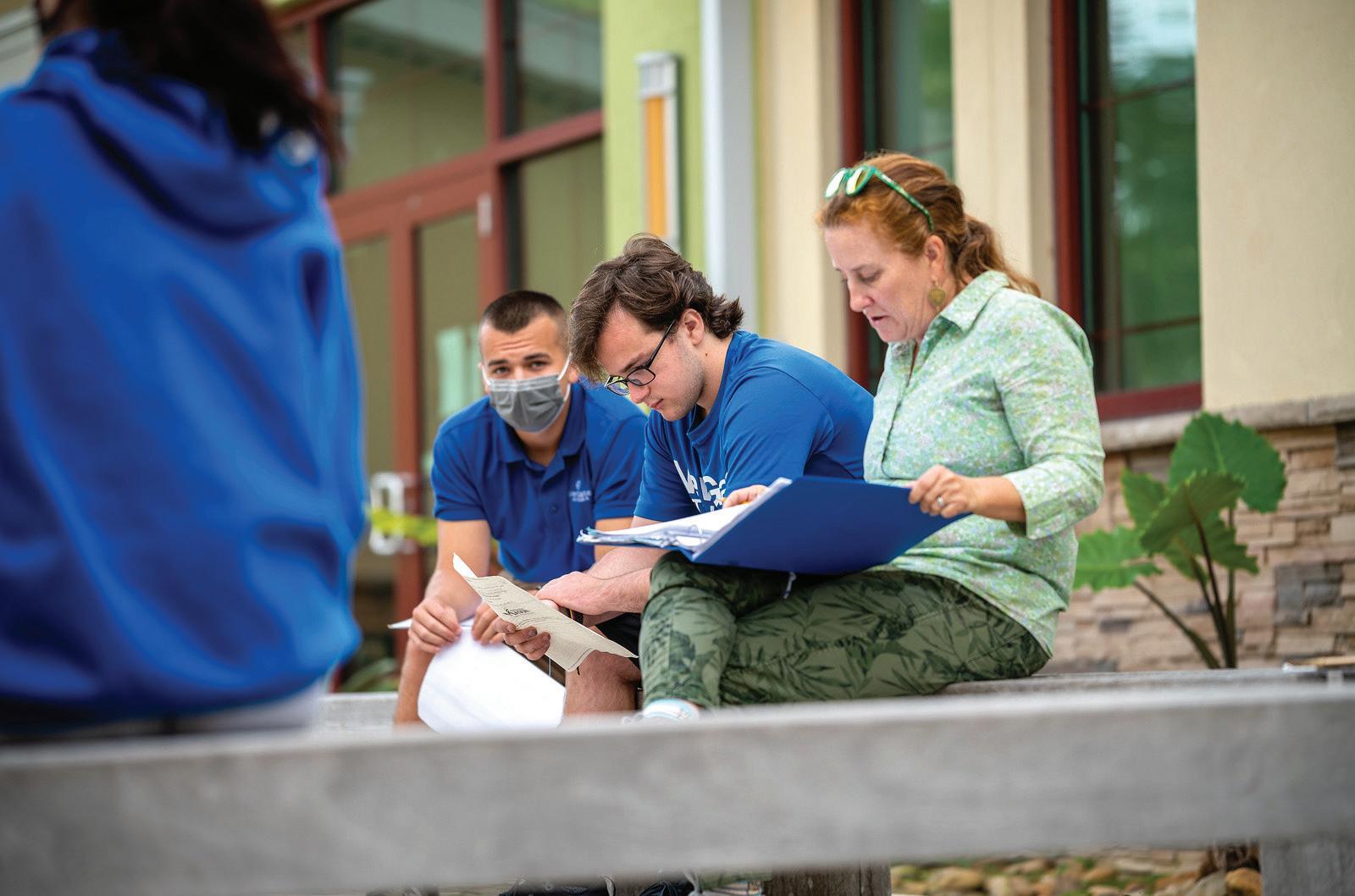
Montessori school meetings with staff, parents, and administrators can engage in collaborative learning and planning experiences. Or they can be dull, dreary, and unnecessarily demanding. Learn ten tools and techniques to keep adults engaged, involved, and invested in your school meetings.
Join us as we explore how SOR informs our instruction using a framework of Structured Literacy. This well- researched framework and its evidenced-based principles of teaching in all components of the reading process at every level aligns perfectly with the Montessori Scope and Sequence of Language while using Montessori materials. Christine has shared the course Dyslexia: A Montessori Solution with now 100’s of Montessori educators at every level. With comments like- “Teaching reading finally makes sense to me.” “Thank you for helping us with a continuum of instruction we can use at every level in our school.”
Dr. Eisler is the founder and president of the Center for Partnership Studies (CPS), dedicated to research and education, Editor-in-Chief of the Interdisciplinary Journal of Partnership Studies, an online peer-reviewed journal at the University of Minnesota that was inspired by her work. Dr. Eisler keynotes conferences nationally and internationally, has addressed the United Nations General Assembly, the U.S. Department of State, and Congressional briefings, and has spoken at corporations and universities worldwide on applications of the partnership model introduced in her work.
There are powerful connections between her work and Montessori education. As Tim Seldin, President of the Montessori Foundation, puts it, “Riane Eisler puts Montessori in a greater context that we all sense but have not always been able to articulate as clearly. Generations from now, future Montessori educators will study both Montessori and Eisler.”
Riane’s work is inspirational, deeply informative, and practical down to the level of the Montessori classroom, our curriculum, and school leadership.
Hillary Drinkell and Christine Lowry invite you to join a conversation on Supporting Ourselves, Our Teachers, and Our Children during these next several weeks before many of us take a break for the holidays. As leaders, we want to care for and support our tired teachers and our excited children and still tend to our own need to stay calm and available during this especially busy time in the school year. We look forward to sharing your ideas and ours as we offer support to one another.
Parents are busier today than ever. They are bombarded by messages about parenting and educational choices. What can we do to provide a unique and authentic message for families in our communities and our schools? Join Kathy Leitch and our panel for some insights and dialogue.
It is concluded that self-reflection is critical to a Montessori leader’s success, one that empowers them to model and influence reflective practices, with direct impacts on teacher reflection and classroom improvement. This conclusion becomes relevant as we observe our Montessori leaders assuming numerous and complicated administrative roles from management to instructional supervision, mentoring, and coaching teachers. (Damore Rieckhoff, 2020, Journal for Montessori Research) The purpose of this webinar is to increase awareness of the need for competencies and dispositions for school administrators, teacher leaders and teacher educators, utilizing frameworks of Reflective Leadership. Participants will apply research and theory to contextual, school-based applications for self-improvement and well as teacher growth.
Join us as we explore the trend called “Quiet Quitting”. By now most of you have heard of this phenomenon. According to a recent Gallup poll, quiet quitters make up at least 50% of the American workforce. Could it already be affecting your school community? How will you know?
Join us this week as we explore the trend called “Quiet Quitting”. By now most of you have heard of this phenomenon. According to a recent Gallup poll, quiet quitters make up at least 50% of the American workforce. Could it already be affecting your school community? How will you know?
As we come together in this time of extraordinary stress, challenge, and change, and reflect on the profound impacts on our schools, our teachers and staff, and most especially our children and their families, can we begin to reimagine how to develop inclusive, high-fidelity Montessori classrooms and schools? Can we reflect on our support for our teachers? Can we reframe the ways we serve the range of diversity we see in today’s students? This hour will be an opportunity to engage in conversation as we share and gain insights and ideas.
One of the few positive side effects of trying to conduct an authentic Montessori program in the midst of a pandemic has been that we had been forced to re-think the nature of the prepared environment, our instructional practices, and our relations and communications with students, fellow staff, and parents. Perhaps it’s an ideal time to take a fresh look at some of our long-standing assumptions about how we deliver Montessori education. In this leadership forum, led by Jonathan Wolff, we will consider some Montessori practices we may want to reaffirm and retain; some that may need some alteration or updating; and some we may wish to delete from our classroom practices.
The basic nature of our society and the family itself have changed radically, and only an equally radical change in education will suffice. — John Dewey, School and Society, 1899
When we try to define what our children really “get” from Montessori, we need to expand our vision to include more than just the basics. Of course, they learn to read, do four digit mathematics, recognize geometric shapes, and identify the parts of a plant and a mollusk.
They also learn how to be contributing members of a community. A Montessori school is more than a classroom. It is society in a microcosm, and the skills and lessons that children learn in this environment extend well beyond the definition of academic success. They are life lessons that were very much needed when Dr. Montessori developed her teaching methodology, and they are life lessons that are still very much needed by our children today.
In her book, The School home, Dr. Judith Rowland Martin writes that she was not very impressed when she first encountered Montessori education. She understood that Montessori schools placed children in multi-age classrooms and used manipulative learning materials, which may have been very unusual during Montessori’s lifetime, but has since been incorporated into most early childhood and many elementary classrooms thanks to the Open Classroom movement of the 1960s.
Dr. Martin’s understanding of the value of the Montessori approach changed when she came across a statement in Dorothy Canfield Fisher’s book, A Montessori Mother, in which Fisher disagrees with the universal interpretation given to Montessori’s “Casa dei Bambini” or “Children’s House.” In A Montessori Mother, first published in 1912, Dorothy Canfield Fisher wrote, “The phrase, ‘Casa dei Bambini,’ is being translated everywhere nowadays by English-speaking people as “The Children’s House,” whereas its real meaning, both linguistic and spiritual is “The Children’s Home (or Children’s Community, ed.).” Fisher insisted upon this rendering, which she felt offered a much more accurate and complete insight into the character of the Montessori classroom.
Dr. Martin recognized that:
“This misreading of the Italian word ‘Casa’ as ‘house’ has effectively cut off two generations of American educators from a new and intriguing vision of what school can and should be. Read ‘casa’ as ‘house,’ and your attention is drawn to the child-sized furniture, the Montessori materials, the exercises in practical life, and the principle of self-education. But if you read ‘casa’ as ‘home’ and you begin to perceive a moral and social dimension that transforms your understanding of Montessori’s idea of a school. Once I realized that she thought of school on the model of a home, the elements of her system took on a different configuration. Where before I had seen small children manipulating concrete learning materials, I now recognized a domestic scene with its own special form of social life and education.”
She realized that what Montessori had established was not simply a classroom in which children would be taught to read and write. The Casa dei Bambini represented a social and emotional environment where children would be respected and empowered as individual human beings. It was an extended family, a community in which children truly belonged and really took care of one another. Montessori described this sense of belonging as “valorization of the personality,” a strong sense of self-respect and personal identity. Within this safe and empowering community, the young child learned to believe in themselves at the deepest possible level. In an atmosphere of independence within the community and personal empowerment, she never lost her sense of curiosity and innate ability to learn and discover. Confident in herself, she opened up to the world around her and found that mistakes were not something to be feared but rather the endless opportunity to learn from experience.
This special relationship that is so common between Montessori children and their teachers and schools is very different and much more dramatic than most children’s experience.
Many Montessori students describe their experience in words quite like these written by Frances Merenda, a 1990 graduate of the Barrie School in Silver Spring, Maryland.
“I started in Montessori at age 2. I am a product of the entire system. I did well in the lower grades and upper school. But still, many people wondered if I had been prepared for college, whether I could ‘make it in a ‘real school.’ The skepticism of so many acquaintances was so disconcerting that I never bothered to step back and see what 15 years of trust, respect, teaching, and learning had done for me. When I went off to college at Northwestern University, I left my support system and community behind and entered a world that was much colder and uncaring. At first, I deeply missed that sense of belonging. I did not realize that Barrie had not only given me a second family but had also taught me how to build new friendships, support systems, and community wherever I go. Now, at Northwestern, I have used my years of experience in community building to cultivate secure relationships with people I have come to know. Barrie did more for me than just prepare me academically for college; it prepared me for anything to which I chose to apply myself. I feel prepared for life, and I wouldn’t want it any other way.”
To understand how this evolved, it is helpful to understand the world in which Montessori lived at the time she developed her educational approach. Montessori was a professor of medicine specializing in psychiatry. At that time, there was no such thing as Freud’s ‘talking cure.’ There were basically two approaches to the treatment of disturbed individuals. The most common and familiar to modern readers was to confine people who acted strangely to insane asylums. The second and almost forgotten approach was the “Moral Education” movement that spread across Europe and North America during the 1700 and 1800s.
These therapeutic communities were villages set off in the country where chronically despondent or non-violently dysfunctional individuals lived in group settings with caring individuals. The fundamental principle of the Moral Education movement was respect and kindness. Instead of treating their patients as prisoners, the staff acted on the belief that within each human being, there is a core of goodness and a “sound mind.” The community lived and worked together as an extended family and developed a sense of belonging reminiscent of what we see in our children’s classrooms today.
These communities were much like an Israeli Kibbutz, selfsufficient farming communities in which everyone was encouraged to become more independent while contributing to the overall operation of the village. Patients lived in small homes with a couple who served as their mentors. Surviving reports suggest that a tremendous bond developed among those who lived and worked together. The movement recorded success rates far more effective than traditional approaches, returning their clients to their home communities as productive, happy citizens after an average stay of eleven months. A sense of close personal community and positive human relationships was proven successful as a means to help bring these disturbed people back to reality.
Montessori was well-aware of this movement through her medical research into innovative strategies for treating the “retarded,” autistic, and emotionally disturbed. She used this same model with tremendous success in her own work with mentally disabled and autistic children in Rome. She later hypothesized that even more dramatic results might be achieved with “normal” children. Her first “Children’s Community” was composed of inner-city children from dysfunctional families. In her book The Montessori Method, Maria Montessori describes the transformation during the first few months of operation, as the children evolved into a “family.” The children had a sense of becoming the owners of their school. They were encouraged to rearrange the furniture, prepare, and serve the daily meals, wash the pots and dishes, help the younger children bathe and change their clothes, sweep, clean, and work in the class garden. Through their day-to-day involvement in their classroom community, Montessori saw these children develop a sense of maturity and interconnectivity that helped them realize a much higher level of their potential as human beings.
While times have changed, the need to feel connected is still as strong as ever. In fact, for today’s children, it is probably even more critical. Whether it is an inner-city child or a child from an affluent suburb, the sense of community has all but disappeared from our children’s lives. Families regularly move from house to house and from town to town. Grandparents usually live in other cities or other states. Both parents work out of necessity, and when they are at home, they are very, very busy.
The “Latch-key” child has become the norm for this generation. Many children have the sense that they do not belong to anything or anybody, which is why gangs, which give a sense of belonging, have always had a certain appeal for some children. According to one study after another, astounding numbers of preteens and teenagers engage in sexual activity in their homes after school before their parents come home from work. What is most disturbing is that for most of these children, sex does not represent love or lust, but a simple need for human contact, to be hugged and touched, a need to not be so incredibly alone in the world.
Along with whatever else Montessori gives our children, it gives them the message that they belong – that their school is like a second family. Studies on children’s moral and emotional development strongly suggest that while there are probably a few children in every thousand who are truly little “gangsters” at heart, a child’s sense of moral reasoning and sense of self are directly related. Children typically grow up to be productive, happy, positive individuals if given the right emotional environment. It seems clear that our attitudes about people, the ability to overcome our tendency to be ego-centric, our willingness to share, to compromise, to resolve conflicts non-violently, and our ability to discover a basic sense of self-worth are not qualities that human beings develop spontaneously, but rather through years of experience with caring people who convince us that we belong and allow us to practice and master these skills of everyday living. As in all things, we “learn by doing.”
One of the greatest strengths of the approach that Montessori developed is the three-year age grouping you will find in every Montessori school. By consciously bringing children together in a group that is large enough that it will allow for two-thirds of the children to return every year, the school environment promotes continuity and the development of a very different level of relationship between children and their peers, as well as between children and their teachers.
For teachers, this relationship presents itself as a commitment that they make to stay with the children in their class for a prolonged period, rather than just jumping from job to job or from classroom to administration.
Montessori teachers do more than present curriculum. The secret of any great teacher is helping the learner get to the point that their minds and hearts are open and they are ready to learn, where the motivation is not focused on getting good grades but involves a basic love of learning. As parents know their children’s learning styles and temperaments, teachers also develop this sense of each child’s uniqueness by developing a relationship over a period of years with the child and her parents.
Montessori schools give our children not only the sense of belonging to a family but also how to live with other human beings. By creating a bond between parents, teachers, and children, Montessori sought to create a community where individuals could learn to be empowered, where children could learn to be a part of families, where they could learn to care for younger children, learn from older people, trust one another, and find ways to be appropriately assertive rather than aggressive. To reduce these principles to the most simplistic form, Montessori proposed that we could make peace by healing the wounds of the human heart and by producing a more secure child. She envisioned her movement as essentially leading to a reconstruction of society. Montessori schools are different, not just because of the materials used in the classrooms. Look beyond the pink towers and golden beads, and you will discover that the Montessori classroom is a place where children really want to be — because it feels a lot like home.
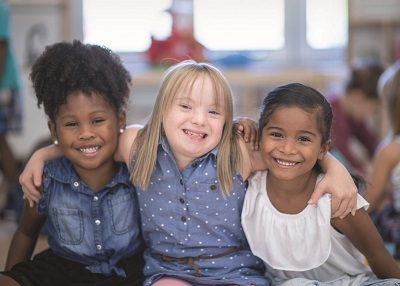
More and more students with a diversity of unique behavior and learning needs are enrolling in Montessori classrooms in independent, public, and charter Montessori schools. And more and more Montessori school leaders and classroom teachers are expressing their concerns:
“I don’t know how to work with these kids.”
“There are just too many challenges in my classroom.”
“My teachers will quit if I put these students in their classrooms.”
“Is Montessori a good fit, the right place for these kids?”
As Montessori educators, we are not alone. According to the National Center for Education Statistics, students 3-21 years of age receiving special education services under the Individuals with Disabilities Education Act (IDEA) rose to 14% between 2012-2019. A full percentage increase across all public education settings.1
This statistic, however, does not report on the largest group of students who challenge us: those not formally identified through the IEP process. This group leads teachers to say, “50% of my class is special needs.” This large group of diverse, unique learners, at every level, raises questions for the educational community, including Montessori.
A brief history:
Requirements for free appropriate public education, or FAPE, and least restrictive environment, or LRE, expanded in IDEA (2004) (Individuals with Disabilities Education Act). This law, combined with increased funding, and Head Start mandates for serving a percentage of students with disabilities, led to an increase in inclusive education programs. In 2009, a joint statement released by The Council for Exceptional Children: Division for Early Childhood (DEC) and the National Association for the Education of Young Children (NAEYC) released a joint statement that identified three components of inclusion: access, participation, and support for all children.
The latest report from the DEC lists five priority issues needing attention in its Priority Issues Agenda 2018.
• High-quality Inclusion
• Overcoming implicit bias
• Appropriate response to behavior
• Create strong family partnerships
• Prepare a highly effective workforce
1 National Center for Education Statistics. https://nces.ed.gov/
What does Inclusion mean?
Inclusion is more than a place… Inclusion means that all young children, regardless of ability, are given an authentic opportunity to fully participate in the experiences any child might have. The evidence clearly shows that all children developing within intentionally inclusive cultures simultaneously acquire a sense of belonging and membership, cultivate positive social relationships and friendships, and reach their full potential more comfortably. (DEC, 2018).
An inclusive classroom can benefit all students at every level. Universal best practices:
• Differentiated instruction that increases student engagement
•Academic supports that help each student access the curriculum
•Behavioral supports that help maintain a positive learning environment for everyone
• Respect for diversity that creates a welcoming environment for all (Inclusive schools, 2015)
• Serve, support, and educate every student, regardless of formal designation of “special needs,” as well as the many students who challenge us for various reasons (economic status, trauma, sensory issues, cultural differences, English learners, etc.).
With the increase in students who challenge us, the trend toward inclusive classrooms, the move toward most students being served most of the time in the general education classroom, and the use of multi-tiered systems of support in these classrooms, a close look at the obstacles in implementation might provide some guidelines for serving these students.
The Obstacles:
A review of the literature points to the two most significant obstacles: attitudes of school leaders and classroom teachers and teachers who are not adequately prepared with the education, knowledge, training, or skills to feel confident in their ability to competently meet the needs of all of their students.
Over the past thirty years, studies have demonstrated the significance of teachers’ attitudes in implementing inclusive classroom practices. Examining variables is consistent regardless of setting, levels taught, years of classroom experience, and acceptance of the model.
Across studies, teacher attitude has been found to determine willingness to work with diverse learners, use instructional practices that benefit all students, and correlate with student achievement.
Firmly held beliefs, attitudes, biases, and preconceived notions about diverse learners are compounded by a lack of expectation for self-reflection. Some of the common misconceptions are: 1) that students with differences in behavior and learning should be taught by special education staff outside of the regular classroom, 2) that the curriculum must be modified, and 3) that supporting students with behavior difficulties takes too much time away from other students. Negative attitudes and beliefs contribute to a lack of confidence or self-efficacy, feelings of not knowing how to provide for a variety of learners, lack of support from school administrators, and more significant stress and “burn-out.”
One study of interest to the Montessori community compared Montessori and Non-Montessori early childhood teachers’ attitudes toward inclusion (Danner, 2015). Both groups indicated a similar value of, and support for, inclusive education. However, non-Montessori credentialed teachers felt they had a greater understanding and knowledge of the variety of diverse learners, with most having completed some special education coursework as part of their teacher preparation program. The Montessori credentialed teachers, however, felt less able to provide an inclusive environment, to be able to modify materials if needed, and contribute to a sense of belonging for each student. With little prior knowledge and limited exposure to teaching in an inclusive classroom during Montessori teacher preparation, the authors hypothesized that Montessori teachers might not recognize the alignment between Montessori education and recommended best practices for inclusive classrooms.
Montessori Could Be a Perfect Model for Inclusive Classrooms:
If we reflect on “our history” as Montessori educators, let’s remember what set Dr. Montessori on the path of scientific pedagogy. Her response to her early work with students considered “deficit” was curiosity and inquiry. She searched for answers, and with knowledge, observation, experimentation, and patience, she developed an education system founded on respect for each individual child.
Further reflection on the foundations of this system of education, meant to respond to the needs of all children, reveals:
• A child-centered system that “follows the child” with the child’s needs before all else.
•An environment prepared to meet students’ needs in all aspects.
• A three-year curriculum using manipulative multi-sensory materials.
• A mixed-age group of students so that each learns at their own pace.
• Differentiated instruction with expectations, goals, and plans for each student.
•A classroom community built on trust, support, social skills, and belonging for all.
This is a system, a philosophy, a curriculum, and a practice that naturally includes all the best of special education and inclusive classroom practices. Those practices that are our 100+ year tradition are now implemented in inclusive classrooms at every level and in every setting in non-Montessori classrooms worldwide. The language might be slightly different, but it is the same in practice.
Montessori IS the Model of Inclusion:
If Montessori is a model for inclusion, what can we learn from the broader education landscape to guide us toward full implementation?
It starts with attitude. Dr. Montessori calls on us to engage in self-reflection regularly. How many of us are willing to take a long, hard look at our attitudes toward students who challenge us? Are we willing to question our beliefs, biases, preconceived notions, and maybe most difficult expectations of our students, how they should act and learn, and what our Montessori classrooms need to be?
Can we come to see differences rather than disabilities and deficits? And see neu- rodiversity as naturally occurring and contributing to the richness of our Montessori classrooms?
The need for increased teacher education and professional development for working in inclusive classrooms is well established. Montessori and non-Montessori educators need greater knowledge, skills, and support to succeed in their classrooms. (Gaines, 2017). When School leaders see the value and benefit of inclusive classrooms and support teachers with ongoing professional development and coaching, they will create a school-wide culture of inclusion. That will include using Universal Design Learning, and a Multi-tiered System of Support to provide universal best practices for all students, focused support for behavior and learning, and a team approach for systematic, individualized interventions as needed.
Many in the broader education world are calling for improved teacher preparation programs that prepare teachers to create a responsive social-emotional environment. This objective provides a sense of belonging for all, differentiated instruction as a matter of course, and understanding and implementing responsive guidance in managing their classrooms. Is it time for Montessori teacher preparation programs to look at their instruction? Perhaps integrating universal teaching practices and techniques for differentiating instruction while learning Montessori materials’ presentations would give new teachers greater confidence in their ability to support diversity. With child development, observation, and positive, respectful classroom management as priorities, would we have an opportunity to re-examine the foundations of the Montessori system and implement them in the inclusive Montessori classroom?
The Future:
As we contemplate our place in education, there is much we can learn from outside of the Montessori community. But there is so much we have to share as inclusive classrooms become the norm. An exchange of knowledge, research, understanding, and experience can support us on the path of honoring and respecting differences and seeing all individuals as unique and valuable members of our community. We can work toward a peaceful world where everyone belongs.
References
Danner, N. & Fowler, S. (2015). Montessori and non-Montessori early childhood teachers’ attitudes toward inclusion and access. Journal of Montessori Research, 27-41.
Division of Early Children. (n.d.). https://www.dec-sped.org/priorityissues.
Gaines, T. & Barnes, M. (2017). Perceptions and attitudes about inclusion: Findings across grade levels and years of teaching experience. Cogent Education, 1-11.
Shanks, P. (2014). Building the Inclusive Montessori School. NAMTA Journal, 5-36.
Stauble, K. (2009). Teacher attitudes toward inclusion and the impact of teacher and school variables. https://doi.org/10.18297/etd/1375: Theses and Dissertations Paper 1375.
Spring is in the air, a season of new beginnings! And so, it is fitting that MACTE has updates to share about the happenings in the Montessori educator preparation program community. Right off, you may already notice an update with our language. While we have traditionally referred to programs as TEPs for “teacher education programs,” we now call them EPPs for “educator preparation programs.” The impetus for transitioning to using EPPs is to encompass programs seeking MACTE accreditation for their administrator courses. It is exciting to have programs preparing educators to lead in our children’s schools!
In addition, we have historically referred to our recognized Montessori organizations as “affiliates” (macte.org/affiliates/). Going forward, we will refer to them as “MACTE Recognized Organizations’’ (MROs). Our hope is that switching to MACTE Recognized Organizations will eliminate potential confusion between accreditation and affiliation. While accreditation and affiliation are similar sounding words and are processes with shared goals, there are differences between the two. Accreditation is a nationally recognized process in higher education to ensure the quality of EPPs. Achieving accreditation allows programs to apply for certain federal funding. In some states, a credential from a MACTE accredited program qualifies the teacher to apply for state licensure. MROs provide guidance on the initial stages of development and ongoing support for the running of a Montessori EPP. This support may include the development of their mission, curriculum, syllabi, and professional development and networking opportunities for their faculty. MROs may choose to expand upon MACTE’s thresholds. MACTE focuses solely on the accreditation of Montessori educator preparation programs, while MROs may also focus on other aspects of Montessori education, including support of Montessori children’s schools, individual teachers, and families. Both MACTE and MROs are committed to continuous improvement of Montessori educator preparation programs and offer them guidance and resources.
The staff and MACTE Board recently reviewed and updated portions of the MACTE bylaws, including information on how the board is selected, composed, and functions as the governing body. This is to ensure the MACTE board represents the diverse Montessori community. In May, MACTE hosted a gathering of the leaders from our MROs. We held this virtual space as an opportunity to share the revisions of the MACTE by-laws, explain the updates in our language, hear from other leaders, and answer questions. We value the times we get to connect with colleagues and learn about the important work being done by our MROs.
Spring brings on the busy season of on-site verification visits. On-site verification visits occur as one of the final steps of the accreditation process. A team of qualified professionals visits the program to gather evidence that verifies the program has in place everything they have shared in their Self-Study. There are tours of facilities, reviews of documentation, and interviews with faculty, graduates, and adult learners. Would you like to join the MACTE team of qualified verifiers? It is a wonderful way to give back to the Montessori community, interact with colleagues, and earn professional development points. You can even join from the comfort of your own home as many of the visits are being conducted as a hybrid of in-person and virtual! Please reach out to Elisabeth Chidester, MACTE’s Accreditation Specialist and On-Site Visit Coordinator, to learn more about the requisites and training involved to serve.
On an ending note, in the spirit of the recent Teacher Appreciation Week, we want to thank all the teachers who are making a difference in the lives of our children. We are so grateful for the work that you do. And should you like to learn more about what MACTE does, find ways to be involved, or have your questions answered, please do not hesitate to contact our team. We welcome the opportunity to connect!
If you need a new building at your school and are on a tight budget, you ought to consider modular construction.
Modular buildings have been around for decades. Once upon a time, modular buildings were almost always boxy and often rather ugly trailers used as “temporary” classrooms by public schools all over the country.
Today, modular construction has come a long way.
Buildings are generally built to much higher standards and designed to last.
While many are still built of wood, several companies use the same concept to construct modular units using steel framing.
Lightweight steel modular buildings are also beginning to reach the market. Many are built to withstand hurricane-force winds.
There are several advantages to using a modular building approach. While this will not work for all schools, it is useful to consider this option.
1. Modular buildings typically cost less to construct compared to traditional stickbuilt construction.
2. Other than the time needed to prepare the site by leveling the ground, running utilities, and building the slab or concrete piers on which they will rest, this approach will generally minimize the time when your school has to be home to a construction crew.
3. Buildings can be planned and built to your specifications and generally delivered to you precisely when you need them.
4. If you are a growing school, modular construction makes it more feasible to build additional buildings as you need them over several years.
5. Architectural and engineering fees may be less expensive than with typical construction.
6. If you wish, modular buildings can be financed or leased separately from any debt on your campus. While you would still have to cover or finance the cost of preparing the site, these savings may make a modular project more feasible.
Modulars are typically constructed in a factory as a preassembled unit that can be lifted onto a flatbed trailer and transported by truck to your campus. The advantage of this approach is the typical savings of making anything using a factory approach. By building inside, little if any time is lost to bad weather. The parts are right on hand, and each building can be customized to suit your precise specifications, with interior and exterior finishes, cabinets, bathrooms, lighting, and walls all in place when the module arrives on your campus.
A single classroom may consist of two modules, which, when mounted on a slab or concrete piers at your site, form a self-contained cottage. Each module is typically about 15 feet wide and varies from 24 to 40 feet long. Each has outer walls along three sides, with one long side open. By fitting two modules together, you can create a modular building 30 feet wide and 40+ feet long. A word of advice: Always order a heavy-duty floor (the floor itself and whatever you use on its surface).
Would you like a larger modular building? Just ask the factory to add more units with the two end walls in place but no interior wall on the long side. These units can be placed between the two end modules to create additional interior spaces, each 15 feet wide by 40+ feet long. There is no limit to how many modules can be placed together. The architect you work with may need to add a column or two to support the middle of the long ends.
Sometimes the result can be a relatively boring rectangular building with a flat roof. Still, modular buildings can be made more interesting by having the factory add on a triangular or mansard roof, larger windows, more windows, and a more interesting exterior finish. With top-grade doors and windows, a lovely roofline, some nice siding (such as cedar-shingle), mature bushes, a well-planned deck, and a modular building can look quite attractive.
Modular buildings do not have to be limited to rectangular boxes. For example, many years ago, our Lab School, the New- Gate School in Sarasota, Florida, built an octagonal central structure to house its library and serve as a meeting area. They fit modular classroom units with their own bathrooms on four of the eight walls. Three of the eight walls are used for glass entryways, which, with a central skylight, give the sizeable hexagonal room a light and airy look. One wall is used for bathrooms and a janitor’s closet. Extensive exterior decking provides a convenient outside workspace for the children in this warm weather climate. While this building is still inherently limited by its modular construction, it is much more attractive than many school buildings.
Some schools use modular construction to create larger buildings with several classrooms, offices, and a hallway. Personally, I prefer the cottage approach, but if space and your budget are limited, this may cut your costs and speed up the project.
While prices vary, modular classroom buildings typically cost significantly less than conventional construction. Your costs will include several factors:
The so-called soft costs:
• Architecture and engineering
• Permit costs
• Site preparation, including stormwater mitigation
• Bringing water, electricity, sewer, internet, and any other utilities to the site of each building
• Preparation of the piers on which the modular units will be fixed
Construction
The building(s) are delivered with a fixed cost for construction, transportation, and installation, with construction done by a local licensed general contractor. The modular company can help you with building design and drawings, including everything you want, from flooring to cabinets pre-installed at the factory. Since the building will be raised above the ground, most manufacturers will install skirting material from the ground to the base of the building around the perimeter of the building.
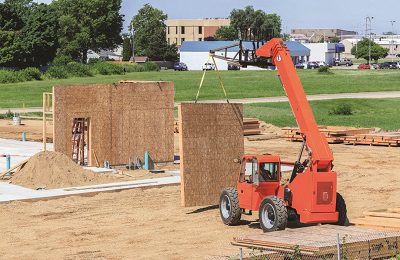
The building modules will arrive on flatbed trucks, and a crane will be used to move each onto its pilings. When fixed permanently in place, the electricians, plumbers, and other contractors will run their connections to each building.
Your final phase of costs will be to construct the decks, stairs, and ramps and install landscaping. I would recommend that you build wide decks and look at creating a porch roof or shade to allow students to work comfortably outside in nice weather.
Why would you want to consider modular construction?
Cost is the most obvious factor. A typical rectangular modular building will probably cost 50-70% of the finished cost of traditional school construction. Costs vary depending on your location, the size of your project, and whether you opt for a steel framed building or wood construction.
Another distinct advantage is construction time. Modular buildings are usually built inside a factory using efficient assembly-line principles, and construction is not dependent on good weather. Depending on how back-ordered a modular supplier is at a given time, it is quite common for a project to be finished and ready for delivery on-site within six to eight weeks from the date of order.
Another plus is the minimal disruption to your campus from start to finish of the new construction.
• Modulars are set on steel-reinforced concrete footings, which are not very difficult to prepare.
• Utility hookups are brought to the site.
• Then, when the modules are completed, they are driven to your campus on their trailer bases and lifted onto the footings by a portable crane. The entire process rarely takes more than a few days.
Once assembled, the connecting walls and roofs are sealed, utilities connected, and the interiors finished.
Usually, most of the interior work was done at the factory, with bathrooms, sinks, interior walls, carpeting, electrical outlets, and are more or less complete on delivery to your site. This can be a tremendous advantage if you are building next to or close to existing classrooms.
Where traditional construction can take months, it is conceivably possible to schedule the final assembly of your modular structure over a weekend or holiday.
Future additions are equally simple and convenient. If your master plan design provides for the eventual expansion to four classrooms, but you only need two at the beginning, you will be able to add the last two modules at any time with minimal disruption.
One final advantage to remember is that while modular buildings are not easy or inexpensive to move, they can be taken apart, moved, and set up in a new location. There is even a market for used modular buildings. So build them, use them until you’re ready for more expensive permanent construction, then sell them to a worthwhile school that is just getting going.
Are there any disadvantages to modular construction?
Modular buildings have often been made of wood framing built on steel trailer beds. While the final result depends on the quality of the modular supplier’s product, this type of modular building is not intended to be permanent construction.
Again, If you have a choice, definitely order everything extra heavy-duty, especially the roofs and sub-floors.
Eventually, you can expect leaks along the roof joints and other signs of wear and tear from active day-to-day use. This can happen with any building. With steelframed modular construction, it should not be a major issue.
On the other hand, let’s define temporary. Many temporary modular buildings have been used for twenty, thirty, forty years or more. No, they are not built to last down through the ages, but if your school is still young and working with a limited budget, modular buildings may give you adequate to excellent service for more than twenty years. Isn’t that long enough to get you started?
If not, you might want to consider one of the high-end modular units. Built entirely of steel, concrete, and brick, these units are definitely not your typical trailers! They are rectangular boxes built under-roof in a factory at prices that are still below the cost of traditional construction. But these modulars are built to last! They have all the advantages of modular buildings in terms of speed of completion and convenience.
Keep in mind that the size of your basic module inherently limits you. Your building will be a maximum of 54 wide along one end, and the ceilings will be the standard height. If you want to add on a gym with 20-foot high ceilings, you’ll need to use traditional steel construction for that part of your project.
Are there any other disadvantages?
Just one. How do you feel about your new buildings arriving in a long line of tractor-trailers? I wonder if there’s such a thing as modular building rustlers? Can you just imagine thieves driving away with your buildings in the night? Actually, the trailers are just used to transport your units from the factory.
A FEW NATIONAL RESOURCES:
Finding a company or two is a simple Google search for quality modular classrooms. If you belong to a purchasing coop in your state, there may be approved vendors who have pre-negotiated prices.
Modular Home Building Council https://www.nahb.org/nahb-community/councils/building-systems-councils/bsc-councils/modular-homebuilding-council
Modular Building Institute http://modular.org/
For further information, contact the Montessori Foundation’s Center for Montessori Facilities Design at 1-941-729-9565 or email info@montessori.org.
Observation is a requisite part of the Montessori philosophy. Maria Montessori trained teachers; she emphasized that they observe to “follow the child,” recognize their needs and respond to them. This article is about cultivating observation as an essential skill in the classroom. We will examine the different facets of obser- vation to feel more comfortable observing as part of your routine.
Observation in My Childhood
My story of observation began when I was a child. You may be wondering how a child can know how to observe. I did not. I was following my inner teacher. Through her observation of children, Dr. Maria Montessori believed that each child has access to their own teacher. This teacher knows all the lessons he needs to learn to fulfill his needs and destiny. This teacher is his inner teacher. I was born and raised in a town on the mountainside where nature was part of my growth. My mom taught me to observe everything around me, the clouds, the trees, and the stream. She encouraged me to watch the bees trying to take the nectar from the flowers. She used to tell me: “If you listen and observe, you will hear the bee buzzing!” I learned how to talk to people, clean the house, and cook from watching her. These early experiences with observation helped me overcome many difficulties and be successful in my career later in life.
An Introduction to Observation
What is observation? Have you observed anything? What did you watch? How did you make comments? What did you feel when you were following? Have these observations changed you? What would you add to your statement next time?
The dictionary defines observation in the following manner: It is the action or process of carefully observing something or someone to gain information. Observations are different from one person to another and can be short-term or long-term.
Dr. Maria Montessori considered observation a continuous part of the adult’s work. Her brilliant discoveries were based on a lifetime of keen observation. That led to an understanding that the child grows the pattern for his development within himself.
It is the child’s inner teacher that must be allowed to direct the child’s development. Dr. Maria Montessori gathered data patiently, reflected on the information gathered to conclude, and took the proper steps.
Observation in my Early Career
Observation has been an essential part of my career in the Montessori field. My early experience with observation started when I was working as a floater in an American school in Kuwait. I moved from one classroom to another, trying to fill the absence of either the assistant or the teacher herself. I worked at this school for four great years. Although all the pre-school teachers implemented the same curriculum, each classroom delivered it uniquely. I had no problem following the routine of each classroom. I carefully watched the teachers doing different circle times. I listened to their conversations with children and each other and how they implemented their schedules throughout the day.
My observations were natural and spontaneous. There were things that I did not like in the classrooms and some things that I liked. I started to understand why some classes were organized, and some were not. With time, I understood why some children were listening and enjoying their time in school and why some were not. Additionally, I realized why I was full of energy and happy to help Mrs. A but overwhelmed with Miss B.
I observed, supported, and kept notes for myself at the start. Slowly, I started sharing ideas I learned from the teachers while moving from one classroom to another. Following what my heart told me to do, I sang with the children during circle time. I played games to enhance their listening skills and helped the children with behavior problems to calm down and focus on their work. I realized later that the teachers started to trust me and treated me like part of the team. Not only that, but they were also asking me about what ideas I had and what new things I could add to their classrooms.
At that stage, I observed not because I was required but because I felt I needed to find the best way to communicate with the teachers and understand how they led their classrooms.
When I did my Montessori diploma training in Kuwait, I learned that observation was an essential tool used by the teacher to follow the child, discover his interests and needs, and adjust the child’s environment accordingly.
I was assigned to observe a Montessori classroom for a week. I described the classrooms and how the children were working in my observation. I also watched how the teachers communicated with each other and the children. Other things, such as the schedule and transitioning, were also interesting.
Every time I observed, I noticed that I was learning something new. I started to pay attention to things the teachers may not see. For example, for the whole week, I noticed that one child was so focused on building the pink tower for the entire hour I had been there. The teacher tried to make him do something else, but the child kept returning to work with the pink tower. I knew then that the child was going through what Montessori called “sensitive periods,” and the teacher overlooked that.
I saw children very talented in the arts ignored by the staff, while others trying to do a map project gave up when they could not find the materials. I observed an inspiring teacher who led her circle time beautifully. I learned a few songs and got ideas on engaging children and making it fun for them. I could see clearly what was working and what needed to be changed! My brain was trying to find solutions while recording. I realized that there was much more to the art of observing than recording the skills or noticing a behavior.
After finishing my Montessori Diploma, I got accepted to work as a Montessori teacher in Canada. I was excited to start my career as a Montessori teacher and share my experience. I was one of the five teachers in the class of forty children, with one lead, three assistants, and myself, who had just joined the team. I was trying to adjust to the new environment. I felt overwhelmed and lost. There were too many rules, different ways of presenting, and diverse personalities. There were lots to learn. I had to get to know the children, the teachers, and the environment. It was so busy that it was hard for the teachers to answer my questions. That was when I realized that I needed to step back and observe.
The class lead agreed to allow me to observe the classroom before I started doing my responsibilities. That helped me understand the rules, transitioning, schedules, and most importantly, get to know the teachers and the children better.
Observing Children
Maria Montessori observed how children learn from each other. She also let the children guide her to what they needed and found interesting. This quote exemplifies the importance she placed on observation: “Even when helping and serving the children, she (the teacher) must not cease to observe them, because the birth of concentration in a child is as delicate a phenomenon as the bursting of a bud into bloom.” Maria Montessori, The Absorbent Mind
When I started observing children, I felt joyful. It was interesting to see how the children worked, moved, and communicated with each other. I tried to understand why John was hitting, and Mary liked to work only with knobbed cylinders! I wondered how the children felt when the teacher interrupted them and what I would have done differently. I suddenly started to think of solutions and new ideas instead of judging. I looked at children with eyes of love and compassion. I became humbler and more peaceful. As I was determined to understand the children’s interests, needs, and abilities, I adjusted the environment accordingly. I was so motivated to try new things with the children I started adding new materials on the shelves and observed again to see what was working and what needed to be changed. Slowly I noticed that the children began to trust, respect, and love me. I was so happy that the children wanted to work with me. Others were asking for help, and some enjoyed my circle time. My heart was a field of joy and happiness when the children greeted me with a big smile and a warm hug in the morning. The children remembered my name and shared stories with their parents about me as the new teacher. The more I observed, the more my relationship with the children grew, as I enjoyed my work and learned about their needs.
I realized that observing children was an art. You can not learn it in one day or a year. It is a lifelong effort. You need to connect with your heart, let go of your pride and anger, and become humbler. That created peace inside me and in our classroom.
Observing Teachers
The lead teacher allowed me to observe the classroom for two weeks in my new position mentioned in the above section. That helped me get to know the teachers, understand their personalities, and connect with them. It also helped me to recognize my natural leadership skills.
I observed how the teachers were moving in the classroom and communicating with each other. I also watched their body language, tone of voice, and interactions with the children. I was curious to know why some teachers were quiet and calm, and others were open and outgoing. I could see how the classroom dynamics and teacher relationships affected the children’s peace, harmony, and environment. The lead teacher was trying to support and guide the team. Besides teaching the children, she was the campus lead. She was kind, friendly, and respectful with the children and her team. She talked to them in a gentle voice and helped them solve their problems without getting angry.
Additionally, she presented the materials in a well-mannered way while doing classroom management. I saw how much she loved the children and how the children loved her. The children trusted her, respected the classroom rules, and worked independently with joy. However, I noticed that sometimes she was tired and overwhelmed. I realized she needed support and help, so I started offering my service and taking on some of her responsibilities. I did classroom management while she was working with the children. I also asked the lead if we could take turns to do the at- tendance and circle time.
I jumped to help a teacher who needed help with children testing her patience while working in Practical Life, and I shared some ideas about communicating with children to gain their trust. I supported the teachers during circle time and encouraged those struggling to do it.
The first six months I spent in the classroom was a turning point in my life. I learned how to build a good relationship with my colleagues and the campus’s lead. I started having small conversations with the teachers to understand their culture and what they liked and did not like. I also shared some of my stories and experiences with my peers to get to know me better.
I started to feel more comfortable sharing my ideas and knowledge with my team members. I did not hesitate to help a child or a teacher. I observed every day and tried to learn, change, and brainstorm with the team for new ideas. I noticed that the teachers came to me when the lead was busy or absent, asking for support or advice. I realized that I was leading the classroom and modeling the proper behavior I wanted to see and encourage in the teachers and the children. The teachers and the leader of the class welcomed me. They met my approach and ideas with cheers, enthusiasm, and support.
My observation as a natural leader, skill, and love for the children led me to accept the position of campus lead after six months of being a directress. The head directress and the team decided after the unfortunate and sudden leaving of the campus lead.
My start as a campus lead was full of excitement, challenges, and accomplishments. I was fortunate with my work team. We were all learning how to work together for the children’s sake. I started to observe more. I wrote my responsibilities every day and reflected on everything I handled, hoping that I could learn something from it or improve it in the future. I visited and observed the other classrooms daily. I offered my help when needed. I listened to the teachers, showed them love, respect, and empathy, and helped them solve problems.
The desire to observe was growing more in me. It became a part of my daily life. It was the key to gaining teachers’ and parents’ trust and having a peaceful and happy campus when I was there.
Through observation, I learned how to accept and understand people the way they were and focus on the positive side. I also learned to find the best way to communicate with everyone. I noticed the power of observation on me. I became more humble, patient, and peaceful.
I discovered that the teachers were learning and growing from observing me and observing each other. We all had to model the proper behavior in front of each other and the children. Our conversations became more meaningful and peaceful; the children were happy and respectful, and there was more harmony and joy in the environment.
Observation and Training Teachers
During my stay in the United States, I had the opportunity to volunteer in a Montessori school. It was a new school with new staff.
My job was to support and train the teachers in transitioning where children are still learning potty training—fourteen children of mixed ages, between two and a half to three and half years old. The children were not fully toilet trained and were in school for the first time. The Montessori teacher had a diploma but no teaching experience. The assistant was a parent of a Montessori child. Her knowledge of the Montessori philosophy was little; this was her first time with the children.
I did not have much information about this class except that the teachers struggled with classroom management. The head directress asked me if I could teach the teachers some techniques on classroom management and how to talk to children.
My observation started as soon as I stepped inside the classroom. The teachers were excited to see me, and so were the children. The lead teacher greeted me from afar using her loud voice. The children were eating breakfast. I immediately walked toward her with a smile and introduced myself in a gentle voice. Then I asked if she could introduce me to the children before they started working because I did not want to interrupt the work cycle. I also asked her to act as if I was not in the classroom and whether she allowed me to work and talk to the children. I encouraged both teachers to observe me while working with the children and write any questions to discuss with me at nap time.
I always found myself acting as if the classroom was my classroom whenever I visited a new environment, and that is how I felt in this classroom. I reminded myself that I must be kind, peaceful, calm, and humble. I did not want to ask questions because I did not want to overwhelm the teachers and disturb the classroom routine.
For the first half-hour, I looked at the classroom organization and how the children moved and worked with the materials. At the same time, I watched the teachers talk to each other and the children. I fixed the shelves, tucked a chair, and had small conversations with the children while observing.
After that, I started working with the children without making any immediate changes and corrections or teaching the teachers by telling them what was not working and why. I observed a lot and modeled the proper behavior I wanted to see in the teachers and children. In addition, I was writing some notes so I could share them with the teachers and the head directress at the end of the day.
For example, I walked to the child’s eye level and reminded him to use the toilet instead of yelling across the room and repeating his name many times to go to the bathroom. I took a child’s hand and showed him to walk into the classroom instead of yelling, “stop running!”. I hugged a new child, tried to comfort him, and then asked if he would work with me or read a book with me and did not ignore him. I had to breathe a lot and think fast. I kept reminding myself that I was there for the children’s sake, and we were all trying to find the best for them. We attempted to turn every struggle into a learning moment with the teachers.
The teachers had many things to do when the children were having lunch. I could feel they were tired, overwhelmed, and hungry. They tried to remind the children to sit, eat and finish quickly so they could clean up and put them to bed. I grabbed my snack, sat beside a child who was still learning table manners, and said: “Can I sit beside you so I can eat my snack?” The child said, “Yes!”. The child welcomed me with a big smile and a few giggles from the other children. I invited the teachers to sit and eat with the children. Then I asked the children if they needed help raising their silent hands, showing them what a quiet hand was. The child beside me watched how I was chewing my food, wiping my mouth, and asking for help from the teachers by raising my hand. I then cleaned up the crumbs and tucked in my chair.
The teachers and I sat together to reflect on our observations. The first thing I heard from the lead was, “Thank you! You helped us a lot, and the children loved you.” I asked, “How do you know the children loved me?” She answered, “They listened to you and wanted to work with you.” I asked, “Why do you think they were listening to me?” She said, “It was the tone of your voice and the way you were talking to them. You were so calm.” I said, “That is a good observation! Using a gentle voice, going to the child’s eye level, and modeling the right behaviors are the keys to gaining the child’s trust. We should respect children and try to understand their needs and the reason behind their behavior.”
The conversation between the teachers and myself was productive. I was asking questions about specific situations that happened in the class. For example, a boy was running in the classroom, who refused to listen to the teachers and gave them a hard time during naptime. I asked the teachers, “Why would you think Joshua stopped running in the classroom?” The lead teacher said she thought it was because I showed him how to walk in the classroom and asked him to help his friends by showing them how to walk instead of running. The assistant teacher said, “You put tape on the floor with the help of Joshua and gave him a presentation on how to walk on a line, and you kept on saying “walking feet.” Then I asked them why they thought Joshua went to his bed without any struggle. The lead teacher replied that I had experience with children, and he listened to me. I said, “He trusted me! He knew that I was trying to help him. I gave him two choices, and he was happy to choose between them. Joshua was happy to prepare his bed. He also helped other children to set their beds and turned the lights off.” The assistant teacher asked how I knew that Joshua would stop running and sleep without any trouble. I said that I did not know for sure. I was observing him and trying to understand the reason behind his running. What was he trying to tell me? How could I help him?
Most importantly, I did not give up and treated Joshua with love and respect. I was willing to try new things to help him. I was learning like the teachers were. We all agreed that we must change a few things in the classroom and try different methods to communicate better with the children and each other to have a peaceful environment. The teachers realized that observation is a crucial aspect of their daily lives to understand children’s needs and respond to them. They also needed the vision and hope that the child was not there yet.
The next day I visited the class. I noticed that the teachers had already made some changes in the environment. They moved the Practical Life area to make it more accessible for the children and added more materials on the shelves. They also gave children more time to practice table manners and care for themselves and allowed more independence to get ready to go outside. I could see that the lead teacher and her assistant were practicing their soft voices and modeling the proper behavior. I also enjoyed seeing the teachers brainstorming ideas and discussing ways to help those children struggling to follow the rules.
This experience with the teachers taught me that if you want to succeed in your work, you must have the ability to observe, record, find solutions, and reflect on them. Observation is something that you can learn and practice. You observe with your heart, and judgment and anger will melt away. When you do that, you become peaceful, happy, and humble.
Lobana Alabbas is a certified Montessori early childhood teacher from the London Montessori Centre and a certified Arabic language teacher and has been passionate about teaching children to love learning for over twenty-two years. She draws her inspiration from Maria Montessori and her teaching methods, who believe that “…it is the child who makes the man, and no man exists who was not made by the child he once was.”. She also believes that each child has a unique and wonderful spirit to help grow into an independent, responsible, and compassionate adult. She is also passionate about writing articles from her own experiences. She has published a few pieces in Tomorrow’s Child and New Horizons in Adult Education and Human Resource Development magazines.
By Christine M. A. Lapierre Ph.D. and Bonnie Caldwell M.Ed.
The servant leadership philosophy is relatively new to some people. Interestingly enough, it encapsulates features of the Montessori philosophy. This is because servant-leaders possess many Montessori characteristics that demonstrate they listen and are interested in those who follow. They listen first and ask questions. Then they set the scene for followers to come up with solutions that are within them to problems they are tackling. These servant leaders want to meet the needs of their staff. They choose to serve because that is what they believe. Robert Greenleaf’s (1991) servant-leadership philosophy refers to servant-leaders who are trustworthy and who people want to follow. For this to happen, servant-leaders must undergo a transformation to see the real staff and the real child to support their true potential.
This article describes how Bonnie, a natural servant-leader Montessori principal, embodies the Seven Pillars of servantleadership elaborated by Sipe and Frick (2015). These Pillars each have three competencies or characteristics. They are: 1) Person of Character: maintains integrity, demonstrates humility, serves a higher purpose; 2) Puts People First: displays a servant’s heart, is mentor-minded, shows care and concern; 3) Skilled Communicator: demonstrates empathy, invites feedback, communicates persuasively; 4) Compassionate Collaborator: expresses appreciation, builds teams and communities, negotiates conflict; 5) Has Foresight: visionary, displays creativity, takes courageous and decisive action; 6) Systems Thinker: comfortable with complexity, demonstrates adaptability, considers the “Greater Good;” 7) Leads with Moral Authority: accepts and delegates responsibility, shares power and control, creates a culture of accountability (p. 5-6). The authors will consider how Bonnie implemented servant-leadership in her school, the Montessori way.
Being a Servant-Leader Montessori Principal
School-based leadership is more than a position or role. Effective leaders recognize their own needs as secondary to those they support. This statement reflects Pillar II, which Puts People First, according to Sipe and Frick (2015), where the servant leader shows care and concern and is mentor-minded. A successful leader embodies the belief that all come to do their best and are non-judgmental. Bonnie has a servant’s heart, Pillar II. An actual leader acknowledges humility in the awareness they are imperfect human beings. This observation dovetails with Pillar I of servant-leadership, Person of Character. The servant-leader is humble and has integrity.
A challenge for many school leaders is the perception of hierarchy, with the principal being at the top of the pyramid. Sipe and Frick (2015) posit the same idea as Deal and Peterson (2009) that “leadership in robust cultures is dispersed among teachers, administrators, parents and students” (p. 15). Leadership is not about being in control but controlling change that leads to improvement (Robinson, 2018). Leading with Moral Authority, Pillar VII states that the servant-leader shares power and control and delegates authority.
In Bonnie’s experience as a school-based Principal in a public Montessori school, she authentically leads as a servant leader. Her belief system is grounded in the child as central to her work. Almost every decision returns to the question: how does this impact students? This demonstrates a higher purpose in Pillar I, Person of Character. Her leadership is reflected in the everyday happenings in the school. How are we interacting with each other? How are we creating safe spaces for all to flourish? Are we learning to work in harmony, and can we problem-solve respectfully and proactively when we aren’t? As educators and leaders, we are responsible to those we serve and the collective future. These questions lead to Pillar III, Skilled Communicator, inviting feedback.
Bonnie often reflects on her leadership: what do I need to know, what are my priorities, what is my impact, what will be my legacy? She works with Systems thinker, Pillar VI, showing comfortability with complexity. With the many facets and demands of a principal, Bonnie knows that the school’s success does not rely solely on her shoulders. She sees herself as a director of a symphony with multiple needs, personalities, and priorities. Developing relationships of trust and building the capacity for others to lead are crucial to her leadership. Building teams and communities are Pillar IV, Compassionate Collaborator.
She can hear the stories of those she leads and provide opportunities for them to grow as leaders because she believes in servant leadership. Many of the ideas mentioned in this paragraph are connected to PIllar VII, Leads with Moral Authority, creating a culture of accepting and delegating responsibility. Leading through questions provides the framework to foster her servant leadership. Rather than entering conversations with preconceived ideas, she encourages a generative dialogue led by a genuine curiosity about what others are communicating. Permitting herself to be 100% present in these interactions has given her a deeper awareness of those she leads and freed her from needing to know answers or find solutions. Curiosity is part of what drives a Montessori curriculum. She knows she is modeling what she hopes to see in classrooms and staff professional learning opportunities by asking questions and listening to responses. Having Foresight, Pillar V, Bonnie is a visionary.
Her school has professional learning communities (PLCs), and the success of these endeavors rests on trust and vulnerability. Student work is central to these moments, and teachers must be open to sharing their vulnerability through the questions they are asking each other. Pillar VII, Leads with Moral authority, is seen when Bonnie shares power and control. When framed in curiosity, these conversations become about learning and improving, and the burden of one person holding all the knowledge is alleviated. As the instructional leader in these contexts, Bonnie’s work supports the culture of learning through an ethos of care and relationship building. The staff cannot improve if they are unwilling to admit they need to improve. The misconception of “I’ve always done it this way” is put to rest as they continue to do what is best for the children. Pillar IV, Compassionate Collaborator, states that the servant-leader negotiates conflict, as mentioned herewith Bonnie, so there is collaboration.
Bonnie continues to build capacity in her leadership team, which consists of an Assistant Principal and Learning Leaders, to understand and value servant-leader- ship qualities. She is building capacity through self-reflection of their work. During her Leadership Team meetings, they review their accountabilities. Pillar V, Foresight, shows how the servant-leader is creative when taking action.
To be held accountable for leading a school community is not a comfortable place, but it does elevate one’s awareness of leadership. Not everyone can be a leader, and those willing to be vulnerable will grow into stronger leaders. Bonnie also observes their Leadership team, who have innate characteristics that foster their growth as servant-leaders. Being a servant-leader does not mean pleasing everyone but finding a balance between what is right, what needs to be done, and the first steps. Implementing servant-leadership is difficult; many personalities, beliefs, priorities, and values exist. Bonnie describes PIllar VII here, Leads with Moral Authority, creating a culture of accountability.
Having a leadership team strengthens Bonnie’s leadership as the work is now a shared experience, with all of them bringing different perspectives and strengths to their community. Being in service of others can be an emotionally exhausting endeavor, but it is who she is at the core of her existence. Servant Leadership does not mean Bonnie is beneath or at the call of anyone but allows her to have a purpose and fulfillment in serving others and in the company of others. Bonnie is a Systems Thinker with Pillar VI, demonstrating adaptability.
Bonnie is aware of her leadership influence through continual reflection and journaling. She uses the term “conscious leadership” to best describe the self-awareness and introspection that shift her leadership from intuitive to intentional. Pillar IV, Compassionate Collaborator, is reflected here as her actions and decisions are based on deep thought for others and through the child’s lens. She expresses appreciation. Her assumptions and perspectives exist in the context of the needs of others, and she must model humbleness and vulnerability to staff. This fosters awareness that we learn and grow when we open our hearts and minds to others. These comments indicate that Bonnie has a servant’s heart and is mentor-minded, Pillar II.
A sense of belonging is essential to her as a Montessori leader. Staff and students should see themselves in the work they are asked to do, within the building, in what they say, do, and believe. Bonnie’s school has a diverse student population as a public school in a large urban area, which is one of the most beautiful things. The multiculturalism and learning profiles within the school create learning opportunities that encourage diversity of thought as staff and students are challenged to look beyond their perspectives and nurture empathy. Montessori lessons are masterful at offering provocations for diverse thought through their thoroughness in looking at time starting with the creation of the universe rather than emphasizing the coming of humans. Pillar III, Skilled Communicator, includes communicating with persuasion, which Bonnie does in her school.
Bonnie’s responsibility is to ensure the learning is visible and that students have opportunities to ask questions and seek ways to find answers. A crucial component of servant leadership is the humility to acknowledge areas for growth and recognize the gifts others have to offer to extend our understanding. When we learn of others’ stories, we can develop perspective, empathy, and consideration for humanity. Pillar III, Skilled Communicator includes having empathy.
The Montessori 3-year cohort cycle fosters deep relationships, confidence, and comfort, and effective leadership optimizes the advantages of sustained relationships. The beginning of each school year in a Montessori school is unlike most other schools. The guide welcomes students who already have a one- or two-year relationship, know expectations and routines, and are ready to take on the next level of responsibility as a leader and mentor in the classroom. They understand their servant leadership to their younger peers and guide the students to learn in ways that move beyond the standard curriculum. Leadership is nurtured in a safe, welcoming environment and not assumed as a position. Pillar II, Puts People First, is when the servant-leader shows care and concern. As a Montessori school principal, the emphasis is on creating a sense of ownership among teachers and students where the school and classroom are a place of belonging for all. The understanding is that it is not the sole responsibility of the principal to create a warm, welcoming environment and when the school community embraces servant leadership, life and learning take on a more significant, more fulfilling meaning. PIllar VI, Systems Thinker here, points to considering the “Greater Good.” Maria Montessori wrote of how everything in our cosmos had a role and the network effect it had in keeping our universe in balance. She spoke of the role of water, the role of the sun, the role of plants, and the interconnectedness within our world. The role of a Montessori principal is to create a community of care and model all that is good in the world. This demonstrates Pillar I, having humility and integrity. Bonnie’s hope is for the time when we develop a holistic awareness of our role as humans. Then we can only do better for and in the world. She holds great hope for our future as their students understand the impact, importance, and value of a life of service.
Deal, T., & Peterson, K. (2009). Shaping school culture: pitfalls, paradoxes, & promises. Jossey-Bass.
Greenleaf, R. K. (1991). The servant as leader. The Robert K. Greenleaf Center.
Robinson, V. (2018). Reduce change to increase improvement. Corwin.
Sipe, J. J. & Frick, D. M. (2015). Seven Pillars of Servant Leadership. Paulist Press.
Christine M. A. Lapierre PhD is passionate about integrating servant leadership principles with the Montessori philosophy in Montessori schools. Enquiring into servant leadership for a number of years, she is a dedicated Montessorian, a skilled educator and a dynamic consultant in these fields. She can be reached at clapierr@ucalgary.ca.
Bonnie Caldwell is a school-based principal in a public Montessori school and an EdD graduate student. Bonnie’s interests include leadership professional learning and collaborative experiences in education. As an experienced educator, published author, and engaging presenter, Bonnie continues to share her perspective of leadership and all things Montessori. Bonnie’s contact information is: bonnie.caldwell@ucalgary.ca
One of the few positive side effects of trying to conduct an authentic Montessori program in the midst of a pandemic has been that we had been forced to re-think the nature of the prepared environment, our instructional practices, and our relations and communications with students, fellow staff, and parents. Perhaps it’s an ideal time to take a fresh look at some of our long-standing assumptions about how we deliver Montessori education. In this leadership forum, led by Jonathan Wolff, we will consider some Montessori practices we may want to reaffirm and retain; some that may need some alteration or updating; and some we may wish to delete from our classroom practices.