by Christine Lowry | Administrative Team, Brain Development, Montessori Administrators, Research, School Leadership, School Resources, Science, The International Montessori Council, Video, Webcasts / IMC
As a school leader, do you struggle to support your staff as they do their best to support the increasing number of neurodiverse learners in their classrooms at every level? You and your staff are committed to the idea of inclusive education, but what does inclusion really look like in action? And how can you be sure that ALL of your learners and your staff are thriving in an inclusive classroom?
Join Montessorian, special educator, and former school leader, Christine Lowry, as she shares the components of a whole school system and structures for success to get you started on the journey. As always, we look forward to a lively discussion as we explore your needs, your questions, and your ideas.
by Christine Lowry | Administrative Team, Brain Development, Montessori Administrators, Research, School Leadership, School Resources, Science, The International Montessori Council, Video, Webcasts / IMC
Join Christine Lowry in an hour of conversation as we continue to explore neurodiversity and the questions we have about our work with children.
How do we understand “today’s child”? How can the classroom environment and school best meet our students’ needs? What knowledge, strategies, and process can prepare us as we serve and support neurodiversity in our classroom and school? As always, we look forward to a lively discussion!
by Christine Lowry | Administrative Team, Brain Development, Montessori Administrators, Research, School Leadership, School Resources, Science, The International Montessori Council, Video, Webcasts / IMC
Through knowledge gained from the experts of her day, and her own observations and experimentation, Dr. Montessori came to understand that all children have strengths, interests, and yes, challenges. She recognized that all could benefit from learning together in a community of “social cohesion.” Today we would call this inclusive education.
With 30+ years of research, we understand the value and benefits of inclusive classrooms for ALL learners. We can offer many opportunities in our Montessori classrooms to support and guide all students as we explore the alignment of Dr. Montessori’s observations with our current understanding of neurodiversity and inclusive classrooms.
Can our 2025 aspiration as a Montessori community be to cultivate that attitude of the scientist, the open mindset that seeks to discover the needs of our students and not just their differences? Join us in conversation as we follow in the footsteps of Dr. Maria Montessori!
In our time, we call this inclusive education. Thirty-plus years of research have shown the benefits of inclusion for all students. We can follow in Dr. Montessori’s footsteps as a lifelong learner to expand her teachings
As a Montessorian and special educator, Christine shares her expertise on neurodiversity and inclusive classrooms with schools, educators, and online courses. 1 Montessori. The London Lectures. 2012
by Dane L. Peters | Administrative Team, Communication, Faculty, Montessori Administrators, Montessori Curriculum, School Leadership, School Resources, Science, The International Montessori Council, Video, Webcasts / IMC
Having listened to so much about AI and how it is impacting our children, their learning, our schools, AND humanity, all inspired me to look at Dr. Montessori’s Five Great Lessons to see how they “might” fit with AI. The Montessori Leadership spring edition published my article — “Cosmic Education and the Seven Great Lessons for 2023?” to help Montessori educators and parents. I am so looking forward to talking with others to hear their take on the article, AI, and what might be in the future for our schools and children regarding AI.
by Margot Garfield-Anderson | Family Resources, MFA, Montessori Family Life, Montessori Parenting, Outdoor Education / Resources, Science, Video, Webinars / MFA
by Jackie Grundberg | Family Resources, MFA, Montessori Family Life, Montessori Parenting, Outdoor Education / Resources, Science, Video, Webinars / MFA
by Christine Lowry | Children with Exceptionalities, Language & Reading, Montessori Administrators, Reading, School Leadership, School Resources, Science, The International Montessori Council, Video, Webcasts / IMC
Join us as we explore how SOR informs our instruction using a framework of Structured Literacy. This well- researched framework and its evidenced-based principles of teaching in all components of the reading process at every level aligns perfectly with the Montessori Scope and Sequence of Language while using Montessori materials. Christine has shared the course Dyslexia: A Montessori Solution with now 100’s of Montessori educators at every level. With comments like- “Teaching reading finally makes sense to me.” “Thank you for helping us with a continuum of instruction we can use at every level in our school.”
by Lorna McGrath | Family Resources, MFA, Montessori Education, Montessori Family Life, Montessori Grandparenting, Montessori Parenting, Nature, Parenting on the Same Page, Peace Education, Science, Video, Webinars / MFA
by Jackie Grundberg | Kindergarten, Lower Elementary (6-9), Primary (3-6), Research, Science, Upper Elementary (9-12), Webinars / MFA, Writing
Have you ever wondered what is the difference between a nature journal, field notes,or a scientific journal? Jackie Grundberg helps sort that out and offers guidance on how they are used in the classroom and at home.
by Lorna McGrath | Family Resources, Montessori Parenting, Montessori students, Nature, Science, Video, Webinars / MFA
What do two young men who are separated by 13 years in age have in common that may have influenced their choice of university studies, careers, and lifestyles? Could it be their Montessori educational experience during childhood and adolescence? How about their family’s values and life choices? Join us to hear what they have to say.
by The Montessori Foundation Staff | Montessori Education, Montessori Teachers, Science
Self-Assessment Question List for Teachers:
from “Science for Everyday; A Montessori Based Science Curriculum”
by Erin Galvin Gutierrez
This is just the beginning of an endless list of questions to ask, but it is a start. Learning something about one’s teaching methods can be a difficult task, but it is just as important as student assessment.
• Do your lessons hold the children’s attention?
• If not, why do you think you lost them?
• What could you do differently next time?
• Are you giving too much information, not enough information, or just the right amount?
• Is the information too technical, not technical enough, or just right?
• Are you giving the children enough hands-on time with the materials?
• Are you asking the right questions?
• Are you prompting them at the right time?
• If not, how can you change that next time?
• Are you too involved in their work?
• Are you not involved enough?
• Do topics flow well, or is there an abrupt end to one topic and an unnatural beginning to the next?
• Are you introducing new topics too quickly, too slowly, or at the children’s speed?
• Do you think that the children are learning what you intend?
• If not, what do you think they are learning?
• Is that okay with you, or do you feel uptight about it?
• Are you observing and documenting enough?
• How do you feel about the science curriculum?
• Are you learning?
• Do you feel overwhelmed or are you having fun?
• What attitude are you portraying to your students?
• Are you excited or reserved?
• If it is not positive, how can you change that?
by The Montessori Foundation Staff | Montessori Education, Montessori Teachers, Nature, Primary (3-6), Science
by E.G.Gutierrez
NAME OF ACTIVITY: Weather Kids
AREA: Science/Weather
MATERIALS: A class notebook, colored pencils.
AIMS: Observation skills, communication, data collection.
PREPARATION: None
PRESENTATION BY THE TEACHER:
Presentation: You can explain weather to the children as the way it outside; is it sunny, cloudy, rainy, hot, cold, warm, cool, windy? How does it look or feel to you? When we look at the weather we are observing the world around us. We are feeling and seeing what is happening. Every morning at circle is a great time to get kids to start looking at the weather. This is also a great way for them to begin the daily habit of observing the world around them. After your prompting every morning about the weather, they will begin to make observations to you! Little weather people! Keep it simple at first. Ask the children to look outside and ask them what kind of day it is outside. Is it sunny? Is it cloudy? Etc. Take a notebook and write the words “Weather Observation Book” on the cover. You may want to decorate it to keep it interesting. Explain to the children that every morning at circle the class can make a daily weather observation, just the weather people on television do. We are going to be “Weather Kids”! You can write, or your can encourage some of the older children to write in it, or you may let some of the children draw the weather for the day. It may work out well to have one or two children be the weather record keepers at circle for that day, as it is a popular task. Keep the book out in the classroom for the other children to write/draw in, (but only weather observations!) and to look at and explore. You may also encourage them to notice the weather at their houses every morning. You can discuss the weather you have seen at the end of each week and month and try to see patterns. Once the children are comfortable, add temperature to your daily observation. See the next lesson.
Language: none at first, then cloud types (stratus, cumulus, etc.), front, fog, and any other weather related terminology that you come across.
VARIATIONS: Do you know any local weather forecasters? They are great to come in and talk to your class! Your local television station would probably also be receptive to hearing from your class if you explained that your class is taking daily weather observation. A year’s worth of hand written observations are valuable!
EXTENSIONS: Have the children make seasonal or periodic weather murals describing the weather they expect that season, or what the weather has been like for the recent past (few weeks or month). This gets them to look at the data they have collected and forces them to make predictions based on what they have experienced! What a great tool! Thermometers; see the next lesson.
SOURCES: Erin Galvin.
by The Montessori Foundation Staff | Montessori Curriculum, Montessori Education, Montessori Teachers, Primary (3-6), Science
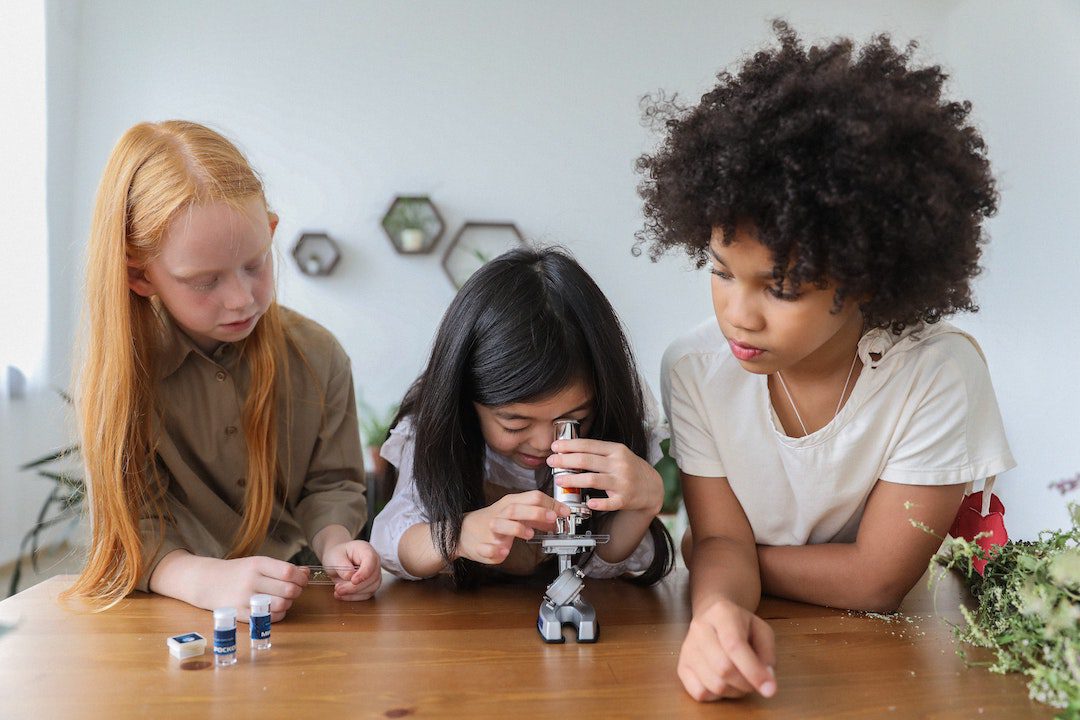
Student Assessment Question List: from “Science for Everyday; A Montessori Based Science Curriculum”
by Erin Galvin Gutierrez
Student assessment in the form of questions tends to be an effective tool. Some questions teachers may consider about students follow:
- Are they grasping the processes involved in the lesson?
- Are they able to carry out the lesson on their own?
- Can/do they help others with this lesson?
- Are they confident or timid?
- Do they have a positive attitude toward the lesson/science?
- Do they have an open mind toward the lesson?
- Are they very curious about the new material?
- Do they explore the new material, or just do as they were shown?
- Do they ask questions?
- Are they afraid to get their hands ‘dirty’, or do they jump right in?
- Do they avoid science?
- How much time do they spend in the science area?
The major process development skills that can be reasonably introduced to the three to six-year-old classroom include observation, measurement, classification, inference, communication, prediction, and recognizing a problem (Manitoba Department of Education and Training, 1991, p. 38-41).
by The Montessori Foundation Staff | MFA, Montessori Education, Montessori Teachers, Nature, Science
By E.G. Gutierrez
Lesson Plan: Nature Walk
NAME OF ACTIVITY: Nature Walk
AREA: Science/Observation/Classification
MATERIALS: A large piece of paper to make a giant graph on (the kind of paper you can get on a roll works best or tape together large pieces of construction paper!). Magic markers to label the rows and columns once you are ready to graph. You want the graph to be big enough to lay on the floor and hold all of the objects you collected on your walk.
AIMS: To get the children to look at the world around them. Observation! To introduce graphing/charting.
PREPARATION: Matching/Sorting
PRESENTATION BY THE TEACHER:
Presentation: Tell the children you are going on a nature walk to look at the environment outside. You probably want the children to buddy up for safety sake. Give them each (or each buddy team) a brown paper bag for collecting specimens. Explain that a specimen is a sample or piece of something that you find interesting or want to know more about. You may want to put a limit on how many samples each child may collect (3-5 is usually a good amount!). When you go out be sure to ask the children about the weather and what they notice, take a minute to discuss the weather: What does the sky look like? Is it sunny? Are there any clouds? Also ask about things you may see or point out things that they might not notice; Does anyone see any animals? Is there water around anywhere? Do you see any other people?
Once you are back in the classroom get out your big paper graph and lay it on the floor in the middle of the children. Use the top row for your column headers. Label with the names of the objects you found. Use the bottom row for tallying your columns. How many of each item do you have? Explain that one way to figure out what you collected is to graph it. Ask one child to empty the contents of his bag onto the floor. Take the first item and either have the children tell you what it is or you may tell them. In the first box on your graph paper write the name of that object (ex: acorn). Now have the child place his object in the box directly under the label. Ask the other children if anyone else has the same object. Have them place their same objects in the other empty boxes in the column. Continue until you have graphed all or at least a representative sampling (at least one item for each child) of what the class collected. You may have them bring home what you cannot graph or use it to make a new matching/sorting activity. Once your graph is full, have the class count what you have collected and write in the numbers in the empty box under each column. You may want to display your graph for a while or use it as work. Let the children remove the objects and re-graph them. Discuss what you have found.
Is it a plant?
Is it living or non-living?
What do we know about this object?
What do we want to know?
Do you have these objects in your yard?
Language: none at first, then environment, specimen, graph, categorize, and the names of the objects you collected.
VARIATIONS: You do not always have to collect things! Sometimes you may just want to go on a nature walk to observe and discuss the weather, the seasons, the things you see! This is a good way to discuss how to be “environment-friendly”. Explain to the children that if we always collected things from nature when we went out walking, then those things would not be there for us and others to enjoy and observe next time. This is a difficult concept to get across to small children, but it is one that should be introduced and reiterated often! It is okay to collect samples sometimes but not all the time!
What did we find?
How many things did we collect?
How many different things did we collect?
What could we do with what we collected?
EXTENSIONS: Go out with a specific thing to collect; different types of leaves, rocks, or grasses. You could press the plant specimens in a leaf/flower press (or between wax paper and some heavy books) and make a booklet out of your collections. A three ring booklet that can be added to is best.
SOURCES: Erin Galvin
by The Montessori Foundation Staff | Montessori Education, Montessori Teachers, Nature, Science
By E.G. Gutierrez
NAME OF ACTIVITY: Thermometers
AREA: Science/Weather
MATERIALS: You will need a durable and easy to read thermometer. You may even get a few; a digital thermometer, a traditional mercury” (not really mercury anymore!) thermometer, and a round mountable dial thermometer, water of different temperatures, ice, frozen cold packs.
AIMS: Observation skills, data collection, use of science tools.
PREPARATION: Weather Kids Lesson
PRESENTATION BY THE TEACHER:
Presentation: Ask the children, “How do you know how hot or cold something is?” Ask if they have ever seen a thermometer. Explain that a thermometer is a tool that scientists use to take the temperature of something. You can explain how the thermometer works, but try not get too technical. You really need to gauge the class reaction to this and adjust your explanation. You may explain that when the red stuff (liquid) inside the thermometer gets hot or is put some place hot it expands or gets bigger and goes up because that is the only place it can go. When the thermometer is put some place cold, the red stuff contracts or gets smaller and goes down because it gets heavier (denser). You can test this in small groups with warm water, hot water, cold, water, and room temperature water. You will probably want to put ice cubes in the cold water for dramatic effect. You need to give the thermometer about 2 minutes to register the temperature. Ask the children what they think will happen each time and why. What about the ice cubes will they make the red stuff move? You may want to graph you results. Keep one thermometer out in the classroom as a work so that children can experiment with it. If you have access to a freezer, cold packs (“blue ice”) are great because they hold their temperature for a while even if they are touched. You will need a few to rotate through, but you may even keep them in a cooler in your room until they need to back in the freezer. If you use cold packs, the children can watch the temperature change as the ice packs warm up to room temperature. You can discuss room temperature and why they think cold looses its cold and warm looses its heat.
Language: none at first, then thermometer, mercury, measure, expands, contracts, room temperature.
VARIATIONS: Place a thermometer outside your classroom window and encourage the children to read the temperature throughout the day. Ask what they think would happen if the thermometer is in the sun or in the shade. Will it change? How? Try moving to different spots to see how it is affected.
EXTENSIONS: Make the temperature a part of your daily Weather Kids observations and record it in your class weather notebook.
SOURCES: some ideas adapted from A Year of Hands-on Science.
by The Montessori Foundation Staff | Infant, Infant-Toddler (0 to 3), Lower Elementary (6-9), Mathematics, Montessori Curriculum, Montessori Education, Montessori Teachers, Practical Life, Primary (3-6), School Leadership, Science, Sensitive Periods, Sensorial, Upper Elementary (9-12)
This is a very useful document developed by the Montessori Foundation and included for IMC member reference. An even more robust version of this scope and sequence has been aligned to the Common Core State Standards and is exclusively available as part of Montessori Compass, an excellent Montessori student record keeping solution (
www.montessoricompass.com)
Download File
[pdf-embedder url="https://stage.montessori.org/wp-content/uploads/2023/07/Montessori-Curriculum-Scope-and-Sequence-Science.pdf"]
by Sharon Caldwell | Imagination, MFA, Montessori Curriculum, Science, Writing
Begun by Sharon Caldwell
NOTE TO THE READER: This page is a work in progress. I will continue to update it as I find more resources and information. Please email me at sharoncaldwell@montessori.org with suggestions and requests. Please also check out the Cosmic Education section in Links. Most of my favorite links are there and may not be duplicated in this article.
We must be careful not to fix the details of the Great Lessons so that they become so precisely accurate that they become mere catalogs of facts. The need to remain stories of inspiration. We as teachers need to be clear that these Lessons must set the children’s hearts and minds on fire. This is our first priority. As the children break off from the Great Lessons to do research, there they will find the facts. – Robyn – Montessori-L discussion Group
Theory of Cosmic Education:
The AMI elementary trainers are unanimous in saying that we should present all the Great Stories within the first 2 – 6 weeks of the school year and that there should be no follow-up work assigned. – John Snyder, Austin Montessori School. (in an email to Montessori-L discussion list).
If the children are not doing spontaneous follow-up work it means they aren’t inspired – the teacher must then work out why her lessons are not exciting the children. It is also OK if some children do not do follow-up work. They are hearing the stories and also hearing discussions that lead from them as the teacher continues to unpack the stories as the year progresses. The stories are not meant to “teach” factual knowledge but rather to evoke a sense of wonder and a deep appreciation of the interconnectedness of everything. They are intended to spark an understanding of the Cosmic Task of Man.
Cuevas, Eduardo J. G. Liberty: Spiritual Freedom and Moral Responsibility. 25th International Montessori Congress Papers.
Duffy, M & D. Cosmic Education in the Elementary Classroom, Parent Child Press, 2002.
Grazzini, Baiba Krumins, “The Role of the Disciplines for Cosmic Education”, Communications 2006/1, 64 – 74.
Hayes, Mary Montessori’s View of Cosmic Education, 25th International Montessori Congress Papers.
Hilson, Patricia. Laying the Foundations for Cosmic Education in the Child 3 – 6 Years.
Montessori, Maria. To Educate the Human Potential. – Especially important is the first essay: “The Six Year Old Confronted with the Cosmic Plan.”
ORIGIN OF THE UNIVERSE
Some Great Books to inspire extensions from First Great Lesson:
Wikipedia History of Earth is a good place to start looking for info.
The Authors, How To Create a Flawless Universe in Just Eight Days, Godfather Publications, No Location, 597b.
– Yes, this is a real book – but written with tongue firmly locked in cheek. 6 – 12s really enjoy it.
STORY OF LIFE
PHOTOSYNTHESIS
www.naturedetectives.org.uk – Why leaves change colour. Good explanation of photosynthesis.
For a more detailed explanation of photosynthesis
CLASSIFICATION OF LIVING THINGS
Parallel to the story of life you begin to explore Classifications/Taxonomy. Depending on the background of your students you can start off with simple “Who am I?” activities to extend exposure to the natural world – either using objects (shells, etc.) or model animals (must be realistic) or picture cards. With children who are reading, you can use “First Stories” which combine short descriptive paragraphs with names and pictures of plants and animals.
Bang, Molly and Chisholm, Penny. Living Sunlight: How Plants Bring the Earth to Life. Blue Sky Press. 2009. [Recommended by Priscilla Spears.]
THE STORY OF HUMANS
www.handprint.com – This is one of my favorite teacher resource sites, although older children enjoy it too. I love it especially because it highlights the hand-brain connection so integral to Dr. Montessori’s thinking.
Human Migration:
THE STORY OF WRITING
A simple version of the story with nice clear graphics that can be hand-drawn on a whiteboard while telling the story: http://www.moteaco.com/albums/greatlessons/story4.html
For more detailed lesson plans see Miss Barbara: www.missbarbara.net/thehistoryofwriting.html
Simple, uncluttered printable timeline: http://www.moteaco.com/albums/writing.html
Human History Timelines:
Christ as the center of human history – see www.montessoriforeveryone.com for a free download timeline. The instructions include some interesting information on dating. NOTE: This is a resource developed by Montessori educators of that faith. The same strategies can be used in many other ways
by Ann Epstein Ph.D | Family Resources, MFA, Montessori Education, Montessori Family Life, Montessori Parenting, Montessori Teachers, Parent Education, Science
This handout was shared by Dr. Ann Epstein at the 2013 IMC conference.
See also her Power Point of the same title.
Download File
Baking Soda and Vinegar
Materials: mixing bowl, large metal or plastic spoon for mixing, 1 cup measuring cup, I Tablespoon measuring spoon, box of baking soda, white vinegar (optional: food coloring)
Process
o Measure 1 cup of baking soda into mixing bowl
o Measure 1 T baking soda
o Mix slowly and carefully, add vinegar by tablespoons until reaction occurs
o Encourage children to discuss how the bubbles are formed (gas is released when baking soda and vinegar are mixed)
Inquiry-based skills: observation, prediction
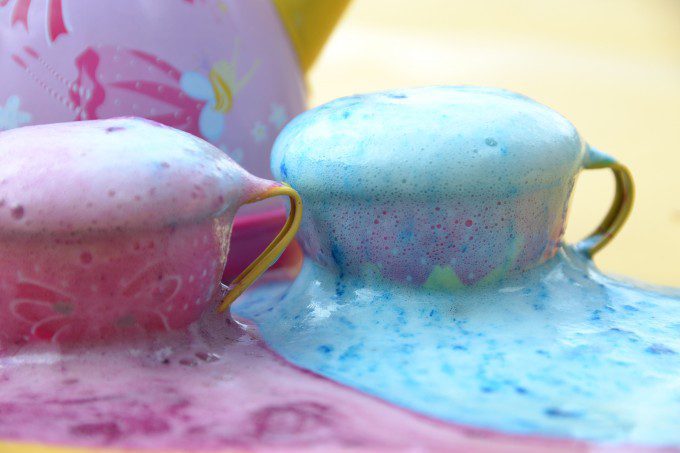
Dawn Dish Detergent and Whole Milk
Materials: small dish for mixing, q-tips, food coloring, small container with approximately half a cup of Dawn dish detergent, small pitcher of whole milk
Process
o Pour about ¼ cup of whole milk into small dish
o Add several drops of food coloring into dish (can be different colors)
o Dip q-tip into Dawn
o Gently lower q-tip to surface of milk and food coloring
o Encourage children to guess why swirls occur (detergent ”attacks” fat /grease in milk)
o Note: Can also use as an art activity to mix colors and create impressionistic swirls similar to Van Gogh’s (Starry Night)
Inquiry-based skills: observation, prediction
Black Pepper and Bar Soap
Materials: flat pan or plate with raised edges (glass pie plate works well), bar of soap (?hard? soap such as Dial works better than softer soap such as Ivory), pepper in shaker or original container, water
Process
o Pour about 2 cups of water into pan or plate
o Sprinkle pepper across entire surface
o Gently touch edge of bar of soap to surface
o Encourage children to guess why pepper quickly disperses (surface tension of water has been broken by soap)
o Repeating encourage children to guess why pepper does not move again (surface tension has already been broken, so won’t ?hold? pepper in place)
Inquiry-based skills: observation, prediction, comparing/contrasting with second attempt
Oobleck: Corn Starch and Water
Materials: large mixing bowl (glass works well so children can easily see through), large box of corn starch, pitcher of water, newspaper to cover table surface (or tray large enough for bowl), wooden mixing spoon
Process
o Pour about 1½ cups of corn starch into the bowl.
o Slowly pour water in, stirring as you pour.
o You may need to tweak these amounts. Your goal is a honey-like consistency.
o Gather a small amount into the palm of your hand. It should form a very soft ball.
o Clench your fist. As you do this, the mixture will turn to liquid and drip through your fingers
o Encourage children to discuss the transitions from liquid to solid and back to liquid. Why does this occur? Surface tension is again at work to hold particles in place. Pressure disturbs the surface tension, turning the solid form into liquid.
Inquiry-based skills: observation, prediction
Check out an amazing video at the end of this Oobleck description. Participants walk and run across, and then ink into a pool of Oobleck! http://sciencecafe.org/content/2008/12/22/how-to-make-oobleck/ (Participants are great fun to watch but we need our Spanish speakers to translate for us!)
Additional Kindergarten-age Science Activities
Simple circuits: large battery, wire, alligator clips, small light bulb with holder.
Sink and float
Magnetic and non-magnetic
Color mixing with shaving cream
Sprouting seeds: lima bean work well because they are large and will sprout in individual sandwich baggies with a ½ sheet of paper towel and a little water
How plants drink: stand celery stalk (with fresh cut at bottom) in colored water (red works well) for 2 ? 3 days, watch water creep up celery veins
Wind experiments
Bubble experiments