by Cindy Acker | Administrative Team, Educational Program Coordination, Montessori Administrators, Montessori Teachers, School Leadership, School Resources, Social Justice, The International Montessori Council, Town Hall, Video, Webcasts / IMC
Let’s discuss how we prepare our staff and curriculum for any changes that may affect our need for a solid social justice curriculum in schools, and support our families and staff. Find out how the Social Justice Town Halls will keep us abreast quarterly, inviting sharing of information from schools worldwide.
by Jonathan Wolff | Administrative Team, Educational Program Coordination, Faculty, Montessori Administrators, Montessori Teachers, School Leadership, School Resources, The International Montessori Council, Video, Webcasts / IMC
Unlocking and Unleashing The Power of Distributed Leadership
by Riane Eisler | Educational Program Coordination, Emotionally Healthy Children, Faculty, Mindfulness, Montessori Administrators, Montessori Teachers, School Leadership, School Resources, The International Montessori Council, Video, Webcasts / IMC
Join our special guest Riane Eisler and Tim Seldin to discuss her new book, Nurturing Our Humanity.
by Hillary Drinkell | Educational Program Coordination, Emotionally Healthy Children, Faculty, Health / Nutrition, Mindfulness, Montessori Administrators, Montessori Teachers, School Leadership, School Resources, The International Montessori Council, Video, Webcasts / IMC
Hillary will discuss techniques for developing focus, harmony and positive life habits by balancing the mind and body.
by Cassi Mackey | Communication, Faculty, Montessori Administrators, School Leadership, School Resources, The International Montessori Council, Video, Webcasts / IMC
Dr. Montessori asks us to be scientists, servants, and saints. That is a big ask! Let’s just add superhero to the mix. How can we “save the day” and “keep everyone happy” at the same time?
by Elizabeth G. Slade | Communication, Faculty, Montessori Administrators, Recruitment & Admissions, School Identity, School Leadership, School Resources, The International Montessori Council, Video, Webcasts / IMC
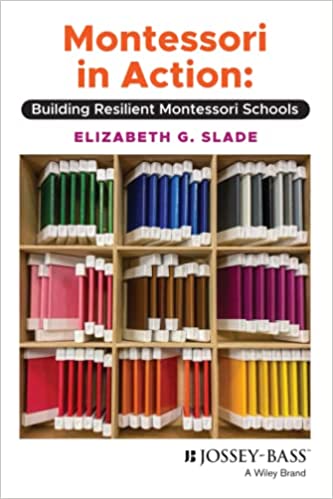
Elizabeth Slade will join us to talk about her book: Montessori in Action: Building Resilient Montessori Schools and how Montessori coaching transforms schools.
by Renee DuChainey Farkes | Communication, Parent Education, Parent-Teacher Communication, Recruitment & Admissions, School Leadership, School Resources, The International Montessori Council, Video, Webcasts / IMC
What Makes People Work Better and Harder and Stay Onboard Longer . . . In a recent article in Harvard Business Review, entitled, “Designing Work That People Love,” author Marcus Buckingham proposes that, “Creating a place where all people can find love in their work means incorporating three principles: People are the point. Employees are the most important stakeholders in your organization. One size fits one. Each of your employees is a unique person with distinct loves, interests, and skills. In trust we grow. For employees to discover and contribute their loves at work, leaders must explicitly make trust the foundation of all practices and policies.” In this period of a critical Montessori teacher shortage, unprecedented turnover, and challenges with retention (especially among Assistants) there are ways to make the everyday work life of your faculty and staff more meaningful, more energizing, and more engaging. Join Jonathan Wolff for a discussion on what makes people love their work, work better and harder, and stay with you longer.
by Renee DuChainey Farkes | Communication, Parent Education, Parent-Teacher Communication, Recruitment & Admissions, School Leadership, School Resources, The International Montessori Council, Video, Webcasts / IMC
What Makes People Work Better and Harder and Stay Onboard Longer . . . In a recent article in Harvard Business Review, entitled, “Designing Work That People Love,” author Marcus Buckingham proposes that, “Creating a place where all people can find love in their work means incorporating three principles: People are the point. Employees are the most important stakeholders in your organization. One size fits one. Each of your employees is a unique person with distinct loves, interests, and skills. In trust we grow. For employees to discover and contribute their loves at work, leaders must explicitly make trust the foundation of all practices and policies.” In this period of a critical Montessori teacher shortage, unprecedented turnover, and challenges with retention (especially among Assistants) there are ways to make the everyday work life of your faculty and staff more meaningful, more energizing, and more engaging. Join Jonathan Wolff for a discussion on what makes people love their work, work better and harder, and stay with you longer.
by Christine Lowry | Administrative Team, Communication, Educational Program Coordination, Montessori Administrators, Montessori Teachers, School Leadership, School Resources, The International Montessori Council, Video, Webcasts / IMC
Progress Reports ~ What do PARENTS want to know? What do WE want parents to know? HOW do we convey our message in ways that parents will understand? Join our panel this week as we discuss strategies and tools for effective parent communication regarding student progress and learning.
by The Montessori Foundation | Administrative Team, Communication, Educational Program Coordination, Montessori Administrators, Montessori Teachers, School Leadership, School Resources, The International Montessori Council, Video, Webcasts / IMC
Progress Reports ~ What do PARENTS want to know? What do WE want parents to know? HOW do we convey our message in ways that parents will understand? Join our panel this week as we discuss strategies and tools for effective parent communication regarding student progress and learning.
by Kathy Leitch | Administrative Team, Communication, Educational Program Coordination, Montessori Administrators, Montessori Teachers, School Leadership, School Resources, Student Conferences, The International Montessori Council, Video, Webcasts / IMC
Progress Reports ~ What do PARENTS want to know? What do WE want parents to know? HOW do we convey our message in ways that parents will understand? Join our panel this week as we discuss strategies and tools for effective parent communication regarding student progress and learning.
by Kathy Leitch | Administrative Team, Communication, Faculty, Montessori Administrators, School Leadership, School Resources, The International Montessori Council, Video, Webcasts / IMC
The standardized tests that many schools still administer once a year or at specific grade levels are meant to measure grade-level proficiency in a broad range of skills and knowledge. These achievement tests are known as summative assessments.
This is very different from the way Montessori schools tend to think about the learning process and assessment.
For us, assessment of student progress is ongoing:
- We tend not to focus on how children compare against each other.
- We focus on students as individuals and follow their progress as individual learners.
- For us, assessment is primarily used to support individual learning rather than to measure the entire class
This approach to assessment is known as formative evaluation. Formative assessment is intended to measure growth on a continuum of learning.
Many Montessori schools also look for a more objective form of assessment to confirm how the students are progressing. This is particularly useful when parents and researchers ask for tangible evidence of children’s growth.
The most Montessori-friendly test that is currently available is NWEA MAP Growth.
by Christine Lowry | Administrative Team, Children with Exceptionalities, Communication, Faculty, Montessori Administrators, Research, School Leadership, School Resources, The International Montessori Council, Video, Webcasts / IMC
In this 2- part conversation, we will discuss the “burn-out” our teachers, and we as leaders, are experiencing as this school year comes to an end. Using a recent post from Edutopia “How Burned Out Are You? A Scale for Teachers, we can frame our conversation toward micro and macro ways to re-set from where we are to where we want to be. On the 8th, let’s add to the conversation with practices of “in- the- moment” techniques for self-calming that we can use to make choices with intention rather than just reaction. We’ll continue our conversation on the 15th with the macro choices we can make to “re-set” as we look toward renewal in our role as Montessorians.
by Christine Lowry | Administrative Team, Children with Exceptionalities, Communication, Faculty, Montessori Administrators, Research, School Leadership, School Resources, The International Montessori Council, Video, Webcasts / IMC
In this 2- part conversation, we will discuss the “burn-out” our teachers, and we as leaders, are experiencing as this school year comes to an end. Using a recent post from Edutopia “How Burned Out Are You? A Scale for Teachers, we can frame our conversation toward micro and macro ways to re-set from where we are to where we want to be. On the 8th, let’s add to the conversation with practices of “in- the- moment” techniques for self-calming that we can use to make choices with intention rather than just reaction. We’ll continue our conversation on the 15th with the macro choices we can make to “re-set” as we look toward renewal in our role as Montessorians.
by Jonathan Wolff | Administrative Team, Communication, Faculty, Montessori Administrators, Research, School Leadership, School Resources, The International Montessori Council, Video, Webcasts / IMC
In too many Montessori programs the Assistant Teacher continues to be viewed and treated like some kind of blue collar worker, assigned the fixed roles of “restorer of the environment” and “behavior management SWAT team.” The Montessori cultural curriculum teaches children that all life forms are to be respected and protected, that every living organism plays a vital role in the great wheel of life. Yet children in most Montessori classrooms continue to witness a distinct hierarchy and power differential between the Lead Guide and the Assistant. In this workshop, we will discuss how Montessori educators can begin to deconstruct this hierarchy, by providing the Assistant Teacher with opportunities for learning, self-development, and expanded instructional contributions, just like the young people they serve.
by Jonathan Wolff | Montessori Administrators, Research, School Leadership, School Resources, The International Montessori Council, Video, Webcasts / IMC
In a recent article in The Wall Street Journal, Heidi Mitchell wrote, “Research shows that people can use silence to their advantage. Using silence strategically and intentionally can be a powerful negotiating and conversational tool. Join us as we explore how Montessori leaders and teachers can employ the power of the “pause” to deepen thinking, enhance relationships, and build consensus. We will explore the use of silence in staff and community meetings as well as in one-on-one discussions.
by Christine Lowry | Administrative Team, Educational Program Coordination, Language, Montessori Administrators, Research, School Leadership, School Resources, The International Montessori Council, Video, Webcasts / IMC
In this 2 session Leadership forum, Christine Lowry, Montessori special educator, will lead us in a conversation on Inclusion for Montessori schools. From a common understanding of the philosophy, framework, and practice of inclusion, we’ll look toward how this model can be successfully implemented in our Montessori schools. We’ll think about the systems to consider, the preparation of our staff, and the communication, collaboration, and coordination of our school community as it comes together to best serve and support todays’ wide range of variability in learning and behavior of all students. We look forward to an interactive sharing of ideas, comments, and questions of this important topic for today’s Montessori schools and the children and families they serve.
by Christine Lowry | Administrative Team, Educational Program Coordination, Language, Montessori Administrators, Research, School Leadership, School Resources, The International Montessori Council, Video, Webcasts / IMC
In this 2 session Leadership forum, Christine Lowry, Montessori special educator, will lead us in a conversation on Inclusion for Montessori schools. From a common understanding of the philosophy, framework, and practice of inclusion, we’ll look toward how this model can be successfully implemented in our Montessori schools. We’ll think about the systems to consider, the preparation of our staff, and the communication, collaboration, and coordination of our school community as it comes together to best serve and support todays’ wide range of variability in learning and behavior of all students. We look forward to an interactive sharing of ideas, comments, and questions of this important topic for today’s Montessori schools and the children and families they serve.