by Kathy Leitch | Montessori Administrators, Montessori Leadership Magazine Online Issue, School Resources, Start of School Year, The International Montessori Council, Webcasts / IMC, Webinars / MFA
As schools around the world are getting ready to open for the upcoming school year, we are wondering…Are you ready? Will you be offering hybrid, in-person, and/or remote learning options? How do you ensure equity? What type of support do you and your faculty need to offer a high-quality Montessori program? These questions and more will be addressed by our panel of Senior Montessori Foundation consultants. We are all learning to navigate change in uncertain times. This will be an interactive session; we encourage questions, comments, and sharing of stories and resources.
by Kathy Leitch | Montessori Administrators, School Leadership, School Resources, The International Montessori Council, Webcasts / IMC
Join us as the Montessori Foundation panel discusses a series of questions that will help to clarify school leaders’ current opportunities and decisions. We will be looking at program alternatives, enrollment management, staff relations and morale, health mitigations, financial implications, and leadership self-care. We are all learning to navigate change in uncertain times. This will be an interactive session; we encourage questions, comments, and sharing of stories and resources.
by Cindy Acker | Montessori Administrators, Montessori Leadership Magazine Online Issue, School Leadership, The International Montessori Council, Webcasts / IMC
Colonizing and Racism…the Beginning of Education
Join our Social Justice Task Force leader, Dr. Cindy Acker in addressing this essential topic through reflection, study, and inquiry.
by Kathy Leitch | Montessori Administrators, School Leadership, School Resources, Webcasts / IMC
Join us as Jonathan Wolff and the Montessori Foundation panel share Six Principles of Adaptive Leadership. We are all learning to navigate change in uncertain times. We encourage questions, comments, and sharing of stories and resources.
by Kathy Leitch | Communication, Montessori Administrators, Peace Education, School Leadership, School Resources, Social Justice, The International Montessori Council, Webcasts / IMC
The Montessori Foundation panel shares insights and strategies for communicating with messages that are honest and reassuring. We have to convey how we will keep children, faculty, and families safe, as well as honor diversity and address inequities. All this while making sure we can stay in business, make payroll, and take care of ourselves. We encourage questions, comments, and sharing of stories and resources.
by International Montessori Council Staff | Montessori Administrators, Montessori Education, Montessori Leadership Magazine Online Issue, Montessori Teachers, School Leadership, The International Montessori Council
The IMC expresses it’s thanks to Claire Salkowski for her many years of service to the school accreditation commission. While she will continue her work on the IMC board, Claire is stepping down from the commission. We wish her well and thank her for all she’s done for the commission.
CLAIRE SALKOWSKI has been involved with the IMC School Accreditation Commission since its inception. She, and other dedicated volunteers like her, created and contributed to the original documents and standards that we on the Commission fondly call the “Big Book.” She then served as Chair, Co-Chair and has now been a commission member for many years.
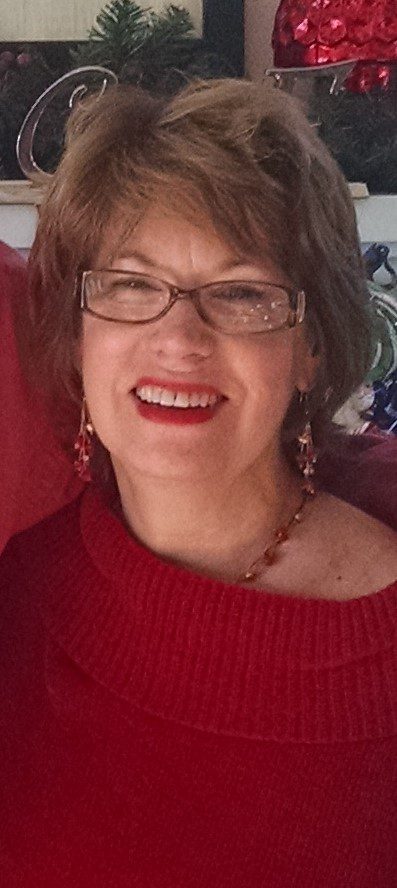 Claire has been a leader in the field of education for over thirty-five years. She was the founder and Head of Free State Montessori School and has taught at every level of development from toddlers through graduate school. She is the previous Director of the Montessori Education Program at Delaware State University and has been a faculty member for numerous Montessori teacher education programs. She has been an adjunct and associate professor at Goucher College, Chestnut Hill College, Delaware State University, and a visiting lecturer at University of Maryland Baltimore Campus. Most recently, she was Curriculum Director for the International Montessori School in Hong Kong and Principal for Gateway International Montessori School in Egypt.
Claire is currently a professional Alternative Dispute Resolution specialist and educational consultant. In her role as professional mediator and Circle facilitator, she was Director of Mediation and Education Programs at the North Baltimore Center of Mosaic Community Services, an affiliate of Sheppard Pratt. She has mediated and served on the board of two US community mediation centers.
She holds a Master of Science in Emotional Disturbances from Johns Hopkins University, was state certified in Special Education and is Montessori certified for ages 3-12. Claire has written and developed curriculum in Montessori education, mediation, and peace education. She has published many articles on a variety of topics including peace education, Montessori practice, parenting, mediation and conflict resolution.
During her years in Montessori, she has trained faculties and students in Montessori philosophy and practice, peer mediation and conflict resolution. She has also presented at numerous Montessori conferences and other professional organizations nationally and internationally. She also serves on the Board of the International Montessori Council, the Oneness-Family School, and Circle of Restorative Initiatives.
Claire says, “I have enjoyed working with schools as they strive to self-reflect and move toward continual improvement. It is always a pleasure to be witness to each school’s journey and to learn from what each community contributes to the wider Montessori world. It is truly a learning experience for all of us.”
by Cindy Acker | Montessori Administrators, Montessori Leadership Magazine Online Issue, School Leadership, Social Justice, The International Montessori Council, Webcasts / IMC, Webinars / MFA
The Montessori Foundation panel shares insights and strategies for leading through trauma with compassion. We will look at ways to “measure organizational compassion” as described by Harvard Business Review. When we support each other through difficult times we create communities that thrive.
by Cindy Acker | Montessori Administrators, Montessori Teachers, The International Montessori Council, Webcasts / IMC, Webinars / MFA
Juneteenth – June 19th “Independence: When did it really happen?”
The International Montessori Council (IMC) and the Montessori Foundation, virtual Montessori Town Hall on the topic of “Our Role in Ending Systematic and Internal Racism.” Please join our Social Justice Task Force leader, Dr. Cindy Acker in addressing this essential topic through reflection, study, and inquiry.
by Cindy Acker | Montessori Administrators, School Leadership, Social Justice, The International Montessori Council
The International Montessori Council (IMC) and the Montessori Foundation are hosting a weekly, virtual Montessori Town Hall on the topic of “Our Role in Ending Systematic and Internal Racism.” The IMC and Montessori Foundation are committed to advancing world peace, equity, inclusion, and diversity.
by Cindy Acker | Montessori Administrators, School Leadership, Social Justice, The International Montessori Council
Montessori Foundation & International Montessori Council for our Town Hall: Standing Together…Our Role in Ending Systemic and Internal Racism
by Kathy Leitch | Montessori Administrators, School Leadership, The International Montessori Council, Webcasts / IMC
Montessori Foundation senior consultants lead us through a simulated group consultation process. We will address specific issues at your school and guide you through a process of collaboration, strategic thinking, and problem-solving.
by Kathy Leitch | Montessori Administrators, School Leadership, The International Montessori Council, Webcasts / IMC
Our Montessori Foundation panel presents considerations for preparing ourselves and our stakeholders for reopening. What can we, as school leaders, do to ease the transition to a new way of “doing” school? Does our faculty feel safe, physically, and emotionally? How will our students adjust to being back? We will address your questions regarding faculty, and student readiness to return to school. Whether your school is already open, getting ready for summer, or wondering when, if ever you’ll be open again, this webcast is for you!
by Cindy Acker | Montessori Administrators, School Leadership, The International Montessori Council, Webcasts / IMC
Dr. Cindy Acker presents a template for assessing the requirements needed to offer on-campus programs. Our Montessori Foundation panel will continue to address your questions and concerns about safety, environmental prep, teacher, faculty, and student readiness to return to school. Whether your school is open, getting ready to reopen, or wondering when, if ever you’ll be open again, this webcast is for you!
by Kathy Leitch | Montessori Administrators, School Leadership, The International Montessori Council, Webcasts / IMC
Join our Montessori Foundation panelists who lead a discussion for school leaders as we assess the maze of requirements needed to offer on-campus programs. We’ll address your questions and concerns about safety, environmental prep, teacher, faculty, and student readiness to return to school. Whether your school is open, getting ready to reopen, or wondering when, if ever you’ll be open again, this webcast is for you!
by The Montessori Foundation | Montessori Administrators, School Leadership, The International Montessori Council, Webcasts / IMC
Coming Next Part 2: Wednesday 5/13/2020 4 pm – 5 pm EST
Facilitated by:
Dr. Valaida L. Wise, Consultant, DEI, Governance, Leadership and ECE Faculty, Johns Hopkins University;
Dr. John Moncure, Headmaster, The Montessori School of Camden
Michael Bornn, Head of School, Virgin Islands Montessori School & Peter Gruber International Academy
Over the past two months, school leaders and board members have had to make critical decisions that have had a significant impact on their students, families, and faculty & staff. We have seen tremendous creativity, thoughtfulness, and courage reflected in the decisions that have been made. And there are certainly more critical decisions to come as we look toward bringing our communities back into our school buildings- sometime in the coming months. Leaders and Boards of Montessori schools will have unique issues to confront as they navigate re-entry and also have unique strengths to build upon. Join us for a structured dialog between school leaders to explore how best to utilize the strengths of our schools to address the challenges we will face as we re-engage in-person whenever that may happen.
by Sheila Linville | Emotionally Healthy Children, Family Resources, MFA, Montessori Administrators, Montessori Family Life, Montessori Parenting, Montessori Teachers, Parent-Teacher Communication, Webinars / MFA
During this session Sheila Linville shares both personal and professional experiences and resources for schools that have lost a loved community member. Many of us are experiencing grief right now due to the pandemic – loss of daily routine, loss of physical contact with friends, family, teachers, loss of certainty and trust, and some, loss of faith. What do we do with all this loss? How do we get through to the other side? When do we get through to the other side? Although Sheila’s focus won’t be specific to this difficult time that we are all facing now, we can certainly draw some parallels and use the resources and ideas that Sheila offers.
by Jonathan Wolff | Montessori Administrators, School Leadership, The International Montessori Council, Webcasts / IMC
In this time of uncertainty, we are all on edge and maybe overwhelmed with the constant change in information and response to the corona vitrus. It is unsettling for all of us, including our children. How do we share developmentally appropriate information, how do we reassure, especially when we are sure ourselves, how do we comfort and support as we listen and respond to our children’s questions and concerns. Join us for this live 90 minute conversation on ideas for preparing and calming ourselves as we share with our children. We’ll talk about the what and how for children of different ages- toddler through adolescents- how we can listen to the “real questions” being asked, how we understand what is being communicated by a child’s behavior. We invite questions, comments, and contributions from all those particpating on the webcast. Together we can give and receive the information and support we are all needing right now as we make sure our children are supported and comforted. Remember, we store videos of all of our webcasts and much more in the International Montessori Council member’s resource center. If you or your school are not members yet, you should look into it. https://stage.montessori.org/the-international-montessori-council-imc/
by The Montessori Foundation Staff | Montessori Administrators, Montessori Parenting, Parent Education, School Leadership, The International Montessori Council, Webcasts / IMC
Dorothy Harman is the author of Intentional Connections. Parent/Teacher partnerships aren’t automatic in the busy lives of working families. Parent involvement requires deliberate action on the part of the teacher to develop a relationship between child, teacher, and home. There is a need to intentionally create and prepare that relationship with the same deliberate attention as preparing the classroom environment. Practical strategies will include tools for effective parent teacher conferences, tools for discussing success and challenges, effective newsletter writing, parent education opportunities, at-home volunteerism, and easy to implement parent/child activities for the home.