Enrollment/Marketing Ideas: how to speak to prospective families and easily gain enrollment

Enrollment/Marketing Ideas: how to speak to prospective families and easily gain enrollment

Join us this week as Hillary Drinkell leads our discussion on enrollment and marketing. Are you reaching the families you want to enroll in your school? Do you have an enrollment management strategy that fills your school and is manageable? Hillary has some great tips to share and we look forward to hearing what’s working for you.

Enrollment/Marketing Ideas: how to speak to prospective families and easily gain enrollment

Growing Your Own… Supporting Teachers in Training

During this time of focus on teacher recruitment and retention, we will discuss when to send teachers for training and considerations for sponsorship. How can we best support successful partnerships with supervising teachers as well as support the self-directed intern with our special guest Kitty Bravo

Helping Your Toddler Adjust to School

Helping Your Toddler Adjust to School

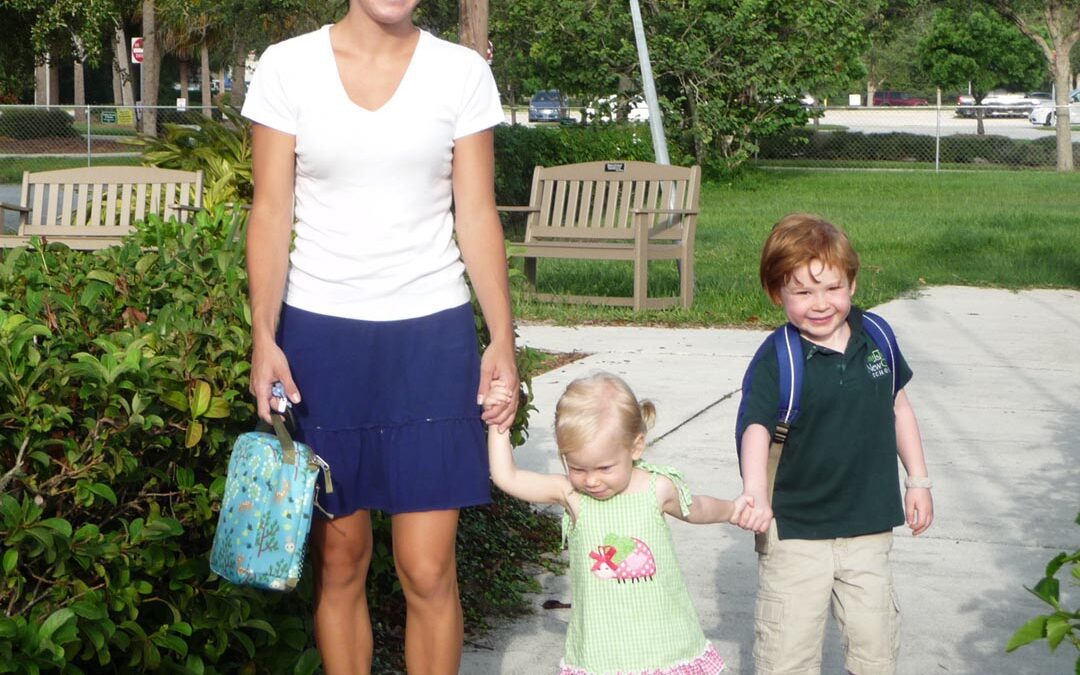
Is this your child’s first school experience – their first time away from home or from a primary caregiver? Or is it the transition from being at home with parents, grandparents, or a special aunt or uncle? Transitions are not easy for any of us and they can be especially difficult when you are somewhere between birth and two years old. Join us and one of our Montessori Toddler guides to learn ways to help ease separation anxiety for both you and your child with special guests Kathy Leitch and Kristi Antczak.

Enrollment/Marketing Ideas: how to speak to prospective families and easily gain enrollment

Planning for the 23-24 School Year based on Reflections from 22-23 School Year

Having listened to so much about AI and how it is impacting our children, their learning, our schools, AND humanity, all inspired me to look at Dr. Montessori’s Five Great Lessons to see how they “might” fit with AI. The Montessori Leadership spring edition published my article — “Cosmic Education and the Seven Great Lessons for 2023?” to help Montessori educators and parents. I am so looking forward to talking with others to hear their take on the article, AI, and what might be in the future for our schools and children regarding AI.

Solving Seemingly Impossible Talent Puzzles without Hiring

Solving Seemingly Impossible Talent Puzzles without Hiring

Solving organizational role vacancies with staff already part of an organization can provide opportunities for those staff to grow and develop and for the organization to benefit from their organizational acumen. Unfortunately, too often our knee jerk reaction as organizational leaders is to start searching for outside hires that can fill these open positions. This Montessori Leadership Forum conversation will be led by Eric Harper and Dana Kaminstein. The conversation will focus on the way in which organizations miss opportunities by not promoting from within, how to develop and prepare people in the organization for potential new roles, and how solving talent puzzles internally can provide a growth opportunity for both the individual and for the organization.

Solving Seemingly Impossible Talent Puzzles without Hiring

Staff Planning for Next Year – Comings, Goings, and Growth.

This is the time of year when school leaders ask themselves the following questions. Who is staying and who is leaving, who needs to move on, and who needs to grow in their teaching practice or professionalism? Our discussion will focus on how we make staffing decisions empathically and objectively.

My Child’s Learning Experiences in Their School and Classroom: Parent Involvement and Support

My Child’s Learning Experiences in Their School and Classroom: Parent Involvement and Support

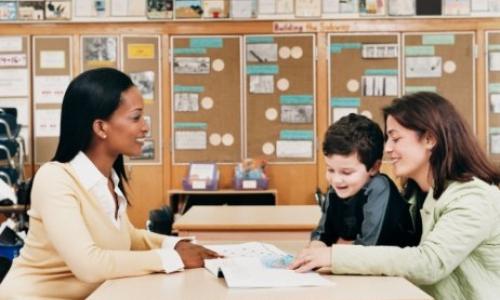
Many parents ask, “What opportunities are there for me at my child’s school and in the classroom that would allow me to be involved and supportive?” Our Montessori experts will give you many ideas and suggestions for parents to think about and to ask their child’s teacher or school administrator about. Join us for this very informative session.

Staring the Year In a Montessori Classroom

Staring the Year In a Montessori Classroom

TIM SELDIN explains how to get the school year off to a good start by focusing on Grace and Courtesy and Practical Life.

For those of our readers in the Northern Hemisphere who are getting ready to start a new school year, I’d like to offer you a little bit of advice. Starting the year in a Montessori classroom really demands an incredible focus on two things – the first is Grace and Courtesy, the second is Practical Life.

Placing a real emphasis on Grace and Courtesy lessons lays the foundation for creating a class that’s going to work well during the year. All the talking that you do with them before or during the year is great, but it is teaching them how to behave on a moment to moment basis, teaching them the right way to handle different situations, that really makes the difference between a class that succeeds and one that doesn’t.

Lessons should be short and consistent. Demonstrate how to do things right and have the children practice. Then as you introduce one new Grace and Courtesy idea after the other, gently but rigorously insist that the children actually follow that in their practice with each other. This is where I find most teachers make mistakes. They’re not consistent. Consistency is letting the children know that when they step across the line, you don’t get angry with them, but with a sense of humor, a sense of love, you essentially stop them and you reteach the lesson.

Now it really takes time before the average child masters a new skill, before something becomes a habit. So don’t get frustrated because you’ve told them two or three times and they’re forgetting all over again.

Speaking quietly indoors is a classic example of this. You don’t want children to discover that they have the power to make you aggravated, as some may use that power against you. Instead what you want them to discover is that there is only one right way to do things in this school. It’s not that really scary things happen if they don’t comply, but rather that there is no pay off for anti-social behavior. For example, you could gently say “Oh it looks to me like you forgot, let me show you the correct way”, or remind
him. “excuse me, I need for you to use your indoor voice.”

Then there’s the issue of personal ownership. Many teachers know about this. If you get the children to participate in designing the rules, if they develop a Constitution for the class, if they have a sense of ownership and pride in the class, then generally speaking they will act as if they are members of the faculty. Now there are a couple of tricks that you can consider using here that sometimes work very well even in public and charter schools.

Try inviting your returning children to be part of unpacking and setting up for the new school year. Have them come in and work side by side with you in the classroom, to unpack, to polish, to set everything on the shelf, to help decide where everything is going to go. Let it feel to them like it is their classroom. In the same way, at the end of the year, they should be part of the packing up of their class to make sure everything is in its correct condition. They need to be inspecting every piece of material in the class every day to ensure that nothing needs repair or is missing a piece.

Then I would recommend that the children who are returning play various roles in orienting the incoming children into the class or into the school. There are all sorts of ways in which this is done. The big-brother big-sister routine where you have students who are going to work with the new child starting during their tours or their days of visiting during the school year. This is re-enforced by keeping in touch with them over the summer by email or by getting together maybe for pizza or picnic. Then just before the start of school, visiting the new children to talk to them about what they need to bring to school and on the first day greeting them as they get out of their parents car and walking them into the new class and introducing them to the other children.

There are all sorts of ways that your children can play a positive, constructive role in setting the tone of the new year and of communicating to the new child that this is a class where we really take care of it, were we take care of one another. There is a sense of group ownership.

“Having considered the environment, we must ask how the teacher shall behave toward the children. What can we do with these disorderly little people, with these confused and uncertain little minds that we hope to attract and cause to fasten upon work? Sometimes I use a word easily misunderstood: the teacher must be seductive, she must entice the children… The teacher, in this first period, before concentration has shown itself, must be like the flame which heartens all by its warmth, enlivens and invites. There is no need to fear that she will interrupt some important psychic process, since these have not yet begun…
…She can tell stories, have some games and singing, use nursery rhymes and poetry. The teacher that has a gift for charming the children can have them do various exercises, which, even if they have no great value educa-onally, are useful in calming them. Everyone knows that a lively teacher attracts more than a dull one, and we can all be lively if we try. Anyone for example, can say, let’s move the furniture today! And work with the children, encouraging and praising them all in a bright and pleasing manner… Every ac-on of the teacher’s can become a call and an invitation to the children.”‐ Maria Montessori, The Absorbent Mind

Montessori Leadership Online • August 2008

Hope Begins with Happiness

Part 2| Vaccines, Masks, & Social Distancing…Where do we go from here?

Just when we are feeling a bit more comfortable about getting out, hugging, and gathering together, we are faced with a new challenge. We have spent the last year learning about public health, reading medical data, and exercising adaptive leadership. Now the new Delta variant has proved more contagious and potentially more severe than previous variants. What do we need to consider as we plan for the new school year? We’ll look at the most recent data and CDC as well as local recommendations. This will be an interactive discussion with the Montessori Foundation Panel and our participants.

Hope Begins with Happiness

Vaccines, Masks, & Social Distancing…Where do we go from here?

Just when we are feeling a bit more comfortable about getting out, hugging, and gathering together, we are faced with a new challenge. We have spent the last year learning about public health, reading medical data, and exercising adaptive leadership. Now the new Delta variant has proved more contagious and potentially more severe than previous variants. What do we need to consider as we plan for the new school year? We’ll look at the most recent data and CDC as well as local recommendations. This will be an interactive discussion with the Montessori Foundation Panel and our participants.

Hope Begins with Happiness

Getting Back on Track…Establishing your Annual Agenda

Join Kathy Leitch and our Montessori Foundation Panel in this interactive session focused on how we get ourselves, our staff, and our schools back on track. How will we create the “new reality” as we move into a post-pandemic phase? We are still responsible for COVID safety measures and protocols as we continue to serve students who are not yet vaccinated… and there is an opportunity to look forward to our school year plans and goals with hope!