Webinar: The First Weeks of School
Lorna McGraht and Kathryn Kvols explored the issues of supporting children through the first weeks of school.

Lorna McGraht and Kathryn Kvols explored the issues of supporting children through the first weeks of school.
Kath Kvols and Lorna McGrath offer still more advice on helping your child(ren) get into the swing of school, whether this will be their first year in Montessori or their 16th!

 Shared with us By Chip DeLorenzo, M.Ed.
Dear Mom or Dad,
As you know I’ll be starting school again real soon, and I can’t wait. I overheard you the other day saying to your friend that you can’t wait for school to start too. I’m glad you’re as excited as I am! It’s going to be a great school year, I can just tell.
Before we start school, I had a few requests that I wanted to make, so we can have a smooth start to the year. I’m getting older now, and I really need you help with a few things to make sure that I am becoming the person that I am capable of being. I know this is a really mature line of thinking, but I am really becoming more and more capable every day, and I really want to do my best.
Here are my requests:
Take Care of Yourself this Year
Mom, I really want to ask if you’ll take good care of yourself this year. I love you, and I need you to help me navigate a lot of new situations. I can do a lot, but I still need your help. Please make sure you get to bed on time this year! Remember last year when you kept getting up at the same time as me because you stayed up late watching Orange is the New Black? Sometimes you lost your patience with me because we were running late. When you get up before me you’re in such a better mood. When you’re not tired, you’re really patient and show me how to do things. You’re a really good teacher, and I think we can accomplish a lot together.
Take Time to Teach Me How
Mom, our teacher said that one of Maria Montessori’s most famous quotes is, “Help me do it alone!” She was pretending to be a child when she said that. I think she pretty much summed it all up with that one. I know it might look like I want you to do everything for me, but I really don’t. There are some things that I just don’t know how to do. When you show me how to do stuff, I feel like you really care, because it must take a lot of patience and focus to teach me how to do stuff when you have so much to do to keep me alive and well fed. It also helps me feel good about me, because I know you think I can do it, or you wouldn’t be showing me how. If you’re not sure what things I can be taught to do for myself, just ask my teacher, she knows. I do lots of stuff at school that you don’t know that I can do. The teachers teach us how to clean up our own lunch, sweep, mop, vacuum, do laundry, and cook. When I do these things myself I feel so proud of myself. If you can show me how to do some things for myself and our family, I can feel that way at home too. I really want to help, it helps me to feel like I’m important and can make a difference in our family.
Let Me Make Mistakes
I’m going to make a lot of mistakes this year. It’s OK, though, because at school they teach us that making mistakes is just an opportunity to learn. Sometimes kids at school get mad at each other, and they even say some mean things. I said a couple of mean things last year, too. But, our teacher helped us work things out, and I got to learn how to be a better friend. This is the way I learn.
You might want to plan in an extra 10 minutes into our morning routine, because some of the things you taught me before I might have forgotten about. Remember when you showed me how to put my lunch by the door so I wouldn’t forget it, then I forgot to put it by the door, and left it at home. I do that a lot when I’m learning. It’s OK, though, you can trust me. I’m just as concerned about these things as you are, if you let me be. You can let me experience what happens when I make mistakes. Our teachers call this natural consequences. It means that the adult just lets us have our own experiences, like letting us get chilly when we forget to put on our coat. When you let me make mistakes and don’t rescue me, I get to make the lesson my own lesson, and I learn it for me. Remember, that’s why you sent me to a Montessori school!
If you want to do what we do in school, when we make mistakes we can talk about them and make a plan for next time. My teacher makes mistakes sometimes and she always talks about them. It makes me feel better because I know I don’t have to be perfect. You can try it too. Remember when you got mad at that man when you were driving the other day, and said some bathroom words. If you do that again, you can just tell me that you made a mistake, and then we can figure out what to do next time.
Make Routines and Decisions with Me (Not for Me)
Maybe we can create our routine chart together this year? I’m starting to get a little older now, and I’ve got some pretty good ideas. Our teacher always lets us help make the rules and routines in the classroom. It really works. We have some very good ideas, and I like to do things more when I helped make the plan. Sometimes my ideas won’t work out, but that’s not really a problem, because we can always go back and see what went wrong and how to fix it. Last year at school, we kept tripping over each other when we were trying to get outside for recess. The teacher asked us what we thought was causing the problem, and we realized that there were just too many people trying to get outside at the same time. So, we figured out that if we came to circle first, and then went out one at a time, no one would get tripped over. We can do the same thing at home. Remember last year when we kept getting to school late because it took so long to decide what to have for lunch? I wonder if it would work better this year if we made our lunches the night before. I bet we can figure it out.
I can’t wait for school to start. Maybe we can go out together to do some school shopping? We could make a list of what we need and then go on a mission! I feel really important when we do things together, even if they’re chores.
Well, I’ve got to go back outside and enjoy the rest of my vacation. I’m so glad we can’t wait ’til school starts!
Developing Capable Children, Chip DeLorenzo, M.Ed.
44 Deer Meadow Lane,
Jefferson, ME 04348
207-380-3465
chipdelorenzo@gmail.com

 Summer!
Parents appreciate the more relaxed perspective that the summer offers (summer nights, vacations, lax bedtime routines, etc.), and children love the idea of summer camps, swimming, vacations, and less structure in their lives. Going back to school can be a difficult time for children – albeit a time of relief for many parents. Going back to school affects parents and their children. Parents are often overjoyed at the idea that children will be back in a structured environment with a consistent schedule and look forward to a return to ‘normalcy.’ Children (and parents) can’t help but have some nervous butterflies about the new school year. In fact, parents and children often go through a ‘mourning process’ at the same time. So, how are we to cope?
As parents, it’s important that we validate our children’s feelings. Let them express how they feel about going back to school. For most children, it’s a ‘mixed bag.’ They may appreciate playing with friends, seeing their teachers, and recess. But, they may be less excited about doing homework, getting up early, and being prepared and engaged with lesson plans. It’s important that parents validate that these feelings are normal; however, with time, it will become easier.
For parents, this, too, can be a ‘mixed bag.’ After getting home from a long day at work, parents are often starting their ‘second shift,’ of hustling to make dinner, helping their children with homework, preparing themselves for their next work day, getting their children ready for the next school day, and putting them to bed. It’s easy to become overwhelmed by the process. Validate your own feelings – that this is a difficult time and transition is challenging for everyone. The same advice applies to you – this can, and will, get easier. It’s an adjustment period.
Structure can be a good thing (even when it sometimes seems like a scary word). Begin stricter bed time routines earlier on in the summer to help children become accustomed to going back to school. Allow them the freedom to choose a book to read from every night. Perhaps, ask parents of children in the classes to join them for a ‘book club’ so they can read together and discuss books. Ask children to re-enact scenes from the book or create a diorama from the book. Use a fun alarm clock to help children become more oriented to waking up on time and getting up to start the day. Depending on the child’s age, ask them to help with breakfast routines or gathering their belongings.
For parents, this, too, is a time to re-connect with that lovely word, “structure.” Try to create meals for the week ahead of time so that you are not rushed when you get home. Get a white board and designate certain ‘chores’ for each member of the household (making sure that the chore is appropriate for the age and ability of the child) – note that the board includes items that you do (e.g., taking out the trash, recycling, laundry, etc.), so that they know that you are also responsible for duties. (Children are often concrete and do not recognize the many things we do, but visibly showing them that you, too, are responsible for household chores makes them feel that you are involved in the same process).
Write a list of meals for each night, so that you are more likely to stick to it. Perhaps, take turns cooking with your partner, so that you can indulge in self-care, whether going to the gym, going on a walk, taking some time to yourself, and so on. Once children go to bed, find some time to re-unite with yourself and your significant other, if he or she is present in your life. Discuss subjects other than the children, such as happenings in the day, friendships, etc. And, create date nights as frequently as possible to revitalize that relationship.
If expenses are difficult, offer to take turns with another couple with children once every other week to exchange services. It’s amazing how making yourself and your relationships a priority can create positive changes in your life.
Most importantly, be willing to say “no” to things. School becomes less “crunch time,” when children and parents become more focused throughout the year. Children often do not know their limits and need to model their behavior after their parents. As parents (we are human!), we often agree to do things that later on, we regret. Be willing and able to say “no” if it’s something that does not directly involve or benefit your family or if it causes too much strain on yourself and others. You will be happier in the long run if you learn to use this word, proudly and firmly.
Children, too, will learn to set their priorities and will help to decrease their anxiety of taking on too much. Sometimes, we see what is best for others but have difficulty applying it to ourselves. So, ask yourself why you are agreeing or disagreeing to do something. If you have good reason, commit, do it, and have no regrets. This is a learning process. But, apply it to your children, too. They do not need to be involved in every single sport or activity. Ask them to choose one, commit to it, and let it be.
We all have this lovely dance we do; it’s called life. But, it’s one moment at a time. And, stressors will come and go, without our even doing anything to “cause” them.
Stay present, stay focused, and stand still. The stressors will pass and you will learn how you coped with it. Choose to grow and validate the fact that you are a work in progress. There will always be times that we are overwhelmed; however, it is how we choose to deal with it (and model it to our children) that can truly teach us how to grow.
Tomorrow’s Child /Sept 2012Pg18
 Montessori Family Alliance School Group Membership (Print & Digital 2026 1/2 year pricing)
Original price was: $30.00.$15.00Current price is: $15.00.
Montessori Family Alliance School Group Membership (Print & Digital 2026 1/2 year pricing)
Original price was: $30.00.$15.00Current price is: $15.00.
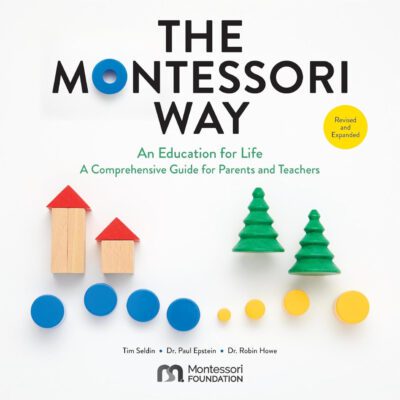 The Montessori Way, Revised and Expanded: An Education for Life; A Comprehensive Guide for Parents and Teachers
$25.00
The Montessori Way, Revised and Expanded: An Education for Life; A Comprehensive Guide for Parents and Teachers
$25.00
 The Montessori Child: A Parent's Guide to Raising Capable Children with Creative Minds and Compassionate Hearts (The Parents' Guide to Montessori)
$20.00
The Montessori Child: A Parent's Guide to Raising Capable Children with Creative Minds and Compassionate Hearts (The Parents' Guide to Montessori)
$20.00
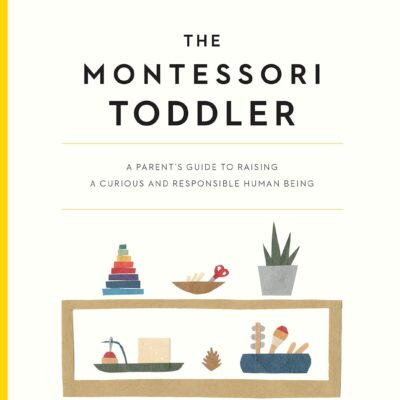 The Montessori Toddler: A Parent's Guide to Raising a Curious and Responsible Human Being (The Parents' Guide to Montessori)
$20.00
The Montessori Toddler: A Parent's Guide to Raising a Curious and Responsible Human Being (The Parents' Guide to Montessori)
$20.00
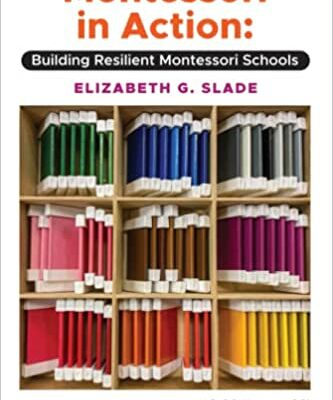 Montessori in Action: Building Resilient Montessori Schools 1st Edition
$29.95
Montessori in Action: Building Resilient Montessori Schools 1st Edition
$29.95