by The Montessori Foundation Staff | Autism, Book Reviews, MFA, The International Montessori Council
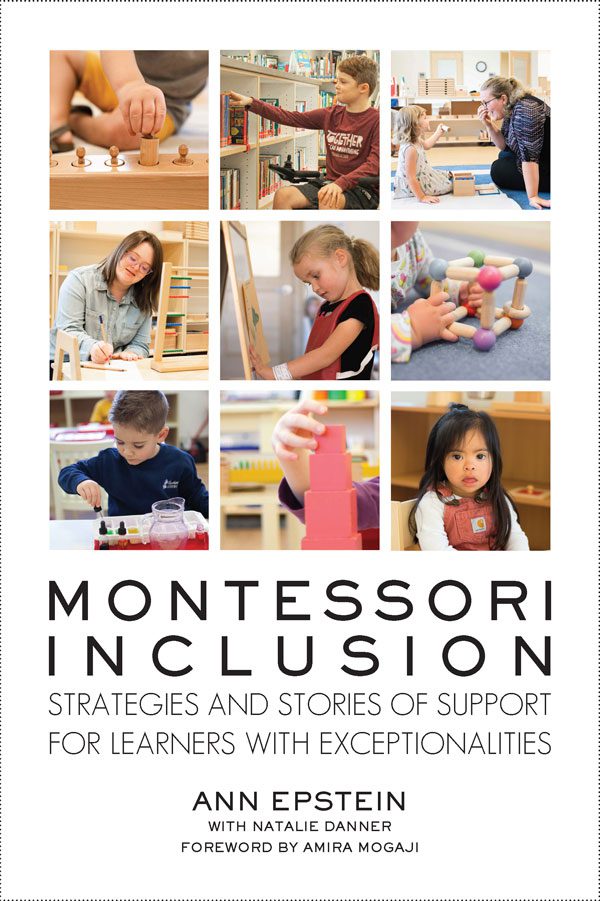 This new collection of stories and strategies is for teachers and administrators, families, and those in teacher education programs.
Montessori guides are trained to “follow the child.” It’s the mantra you learn during your training. But what happens when a child with exceptionalities becomes a part of your classroom? Are you fully prepared to meet the needs they require while carefully balancing the needs of the other children in the room? The answer is “yes,” with the strategies and understanding this book can offer. The case studies and strategies outlined will open up a huge new path for guides, faculty, and families that can be implemented at school and at home. Having this book in your “toolkit” will be a real asset.
We think it’s a wonderful resource to have and thank Dr. Epstein and Dr. Danner for working these past two years to compile and assemble this much-needed information. We think training centers around the world can and should begin to implement some of the strategies outlined in their course work with new adult learners.
The book is set to be released this July. Pre-Order your copy on the Montessori Services website (www.montessoriservices.com).
Published by Parent Child Press
A division of Montessori Services
www.montessoriservices.com
by Maria Chaffin | Adolescence, Autism, Children with Exceptionalities, Early Adolescence (12-15), Kindergarten, Later Adolescence (15-18), Lower Elementary (6-9), MFA, Montessori Middle School, Montessori Secondary / High School, Primary (3-6), Upper Elementary (9-12), Webinars / MFA
Join Maria Eva Chaffin and Brynn Rangel for part 2 of this series on Addressing Challenging Behavior. In this session, they give a summary for each of the three levels – Early Childhood, Elementary, and Adolescence including strategies, preparation, and observation.
by Ann Epstein Ph.D | Autism, Brain Development, Children with Exceptionalities, Communication, Family Resources, Infant, Infant-Toddler (0 to 3), Kindergarten, Lower Elementary (6-9), Montessori Parenting, Parent-Teacher Communication, Primary (3-6), Upper Elementary (9-12), Webinars / MFA
Join Ann Epstein, PhD, as she talks about what can be a difficult, even heart wrenching topic. “My child’s teacher has concerns. Oh no!” How can parents and other family members partner with teachers when there is a concern about your child? Dr. Epstein has personal experience as the parent of a deaf child and professional experience working with parents and teachers about these conversations and how adults can work as a team to effectively support the child.
by Maria Chaffin | Adolescence, Autism, Brain Development, Children with Exceptionalities, Early Adolescence (12-15), Emotional Intelligence (EQ), Empowerment, Infant-Toddler (0 to 3), Kindergarten, Later Adolescence (15-18), Lower Elementary (6-9), Montessori Administrators, Montessori Education, Montessori Middle School, Montessori Secondary / High School, Montessori students, Montessori Teachers, Primary (3-6), School Leadership, The International Montessori Council, Upper Elementary (9-12), Webcasts / IMC
In this week’s webinar Maria Eva Chaffin and Brynn Rangel gave an overview about Autism and how to meet the needs of students with Autism< Spectrum Disorders in our classrooms. In addition, Executive Functioning Skills will be described and discussed in order to help teachers and administrators meet the needs of students with deficits in these skill areas.
by Maria Chaffin | Adolescence, Autism, Children with Exceptionalities, Early Adolescence (12-15), Infant-Toddler (0 to 3), Later Adolescence (15-18), Lower Elementary (6-9), MFA, Montessori Middle School, Montessori Secondary / High School, Primary (3-6), Upper Elementary (9-12), Video, Webinars / MFA
An increasing number of families are looking for options for the inclusion of a special needs child into a typical classroom environment. In this session we’ll discuss the pros and cons associated with a Montessori classroom including class sizes, materials, student independence, multi-age classrooms, school resources and other factors relevant to children who have failed to thrive in other schools environments.
by Lorna McGrath | Autism, Book Reviews, MFA, Mixed Ages, Montessori Parenting, Sensorial, Tomorrow's Child Online Issue
By Sophie Walker
There are so many books that one can choose from to read about children and families affected by autism. I have many in my library. I remember the first one that I read in the 1980s called Dibbs: In Search of Self. Back then, we didn’t even call what Dibbs suffered from by a name. I was a Montessori teacher and didn’t even know anything about the spectrum or ADD or OCD or ODD, but I knew that I had children in my classrooms that didn’t behave in ways that most children did. And I searched for ways to help them to be a part of our classroom and school community.
Then came my own children—both of them beautiful and smart and quirky in their own ways. As they grew and developed, we did our best to figure out the ways to support each of them. Their uniqueness’ caused joy, pride, heartache, and confusion at times.
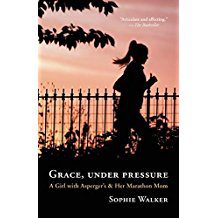
When I began to read this book, Grace, Under Pressure, I realized that Sophie’s marathon was not the London Marathon but the agonizing struggle to find what is right for her child, for herself, and for her family. If you have a child on the spectrum, if you teach a child on the spectrum, if you love a child on the spectrum, you will be moved and inspired by this mom’s determination to find answers and support. This book gave me insight into the frustration of not knowing, into how alone parents feel as they deal with the everyday struggles of life with a child with special needs, and into what it means to take on the system for your child.
I highly recommend this book for parents and teachers of all children. You will not be able to put it down!
Tomorrow’s Child / April 2014 / p 22
by Lorna McGrath | Autism, Book Reviews, Children with Exceptionalities, Communication, Empowerment, MFA, Montessori Family Life, Montessori Parenting, Montessori students, Psychology
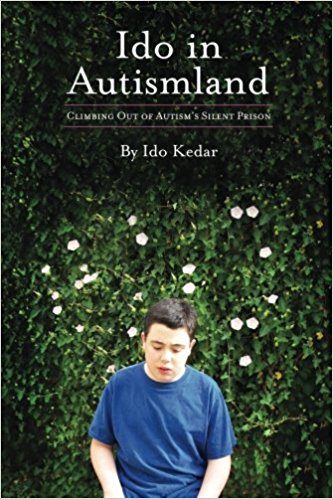
I do in Autismland:
Climbing Out of Autism’s Silent Person
Written by Ido Kedar
Ido’s essays have had a profound effect on me–as an educator, a parent, a friend of parents who have mute children with Autism, deafness, or Down Syndrome, and a daughter of a mute stroke victim. So many times, we make assumptions about people because of their outward presence whether it be behaviors and/or the inabilities to communicate through speech that is different from the ‘norm.’
Ido began writing the essays for his book when he was twelve years old, after years of being imprisoned in his body because he could not speak. The ‘experts’ would not accept that Ido was not only capable of communicating his basic needs, but that he had taught himself to read, had a huge vocabulary, and could express his feelings, ideas, and experiences more clearly and articulately than many children his age.
Fortunately for Ido, his parents never gave up on him and never settled for what the ‘experts’ believed. Ido and his parents had the good fortune to find Soma Mukhopadhyay, who discovered a teaching method that she called Rapid Prompting (RPM). Ido and Soma worked together for six months. During that time, “Ido
progressed from multiple choice to answering questions to expressing his own thoughts.”
This is a fascinating account of how it feels to be trapped inside a body that has so many challenges to overcome. It was not simply that Ido couldn’t speak. He had much more to overcome – stim [self-stimuilating behavior], impulsivity, making his body work with his mind instead of against it.
Ido’s intention for writing this book is to help other mute people with autism to be seen as capable, caring individuals, who have a lot to say and contribute, if only the speaking world can think outside of the box and help others to communicate with us. I recommend that you take some time and read this amazing story of one
amazing, tenacious young man!
Reviewed by Lorna McGrath
by Lorna McGrath | Archived Issues / Tomorrow's Child, Autism, Book Reviews, Children with Exceptionalities, MFA, Reading, Tomorrow's Child
My Daughters are Smart!
Written by Anita B. Adhikary
Illustrated by Blythe Russo
This book is an interesting alphabet book full of empowering words for boys and girls but is focused on girls —young and old, culturally diverse, interacting with each other and with men and boys, able-bodied and differently-abled. It pictures girls in situations from friendship to studying to camping to zip lining. Some of the words include: witty, sincere, tenacious, empathetic, confident, and fit.
Here are words of the author, Anita Adhikary, explaining her rationale for writing this children’s book.
“My purpose for writing this book is to empower women. I have witnessed firsthand the unfair treatment of girls in many Eastern cultures. Sons are often considered prized possessions but not daughters. The irony is, women are basically the pillars of the house, society, and community. Similarly, in the West, I have seen too many options for girls that only emphasize princess-culture: pretty, pink, and glittery objects that don’t encourage a lot of substance.”
While we know that one children’s book will not change a worldwide culture of inequality, it can help chip away at the stereotypes that many girls and women have grown up with. It is a book worth having in your school or home library.
Grace, Under Pressure
A Girl with Asperger’s and Her Marathon Mom
by Sophie Walker
There are so many books that one can choose from to read about children and families affected by autism. I have many in my library. I remember the first one that I read in the 1980s called Dibbs: In Search of Self. Back then, we didn’t even call what Dibbs suffered from by a name. I was a Montessori teacher and didn’t even know anything about the spectrum or ADD or OCD or ODD, but I knew that I had children in my classrooms that didn’t behave in ways that most children did. And I searched for ways to help them to be a part of our classroom and school community.
Then came my own children—both of them beautiful and smart and quirky in their own ways. As they grew and developed, we did our best to figure out the ways to support each of them. Their uniqueness’ caused joy, pride, heartache, and confusion at times.
When I began to read this book, Grace, Under Pressure, I realized that Sophie’s marathon was not the London Marathon but the agonizing struggle to find what is right for her child, for herself, and for her family. If you have a child on the spectrum, if you teach a child on the spectrum, if you love a child on the spectrum, you will be moved and inspired by this mom’s determination to find answers and support. This book gave me insight into the frustration of not knowing, into how alone parents feel as they deal with the everyday struggles of life with a child with special needs, and into what it means to take on the system for your child.
I highly recommend this book for parents and teachers of all children. You will not be able to put it down!
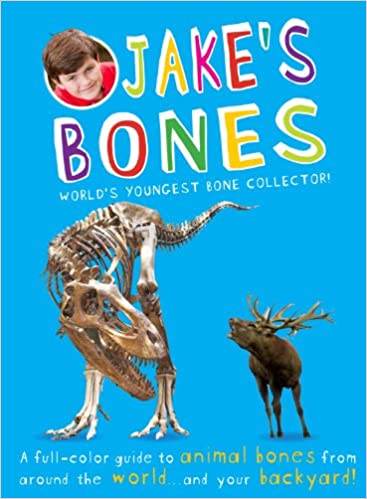
Jake’s Bones
Written by Jake McGowan-Lowe
Jake’s Bones is a fascinating children’s book that takes you around the world and even in your own backyard to
see the most amazing bones on the planet. Jake, an elementary-age author, captures the reader’s mind by telling everything from the biggest bones to the smallest bones and taking you back in time to look at dinosaur bones. Jake’s book is full of fun, and amazing facts about amazing animals. He’ll even help you make your own bone collection!
I highly recommend Jake’s captivating book for the elementary levels. If you don’t want to read about Jake’s python snake skull, you can read about Vulpy, his fox skeleton. Jake’s book is full of fascinating information discovered and written by a kid for kids! Jake’s fully colored guide to animal bones is sure to please any child’s mind.
— Reviewed by Teagan Allen
(12 years old), student in Upper Elementary, NewGate School, Sarasota, FL
Nuts for Coconuts
Written by
Christinia Cheung & Han Tran
Illustrated by Tong Wu
The authors have created a book that extols the virtues of the coconut tree in rhyme. They bring in not only the many uses for all parts of the tree but also the parts of the world where these plants thrive. The book is filled with facts and information about coconuts and the tree itself.
Rhyming can be fun. However, I do find that in a book such as this, it seems very contrived and sometimes difficult to concentrate on the ideas that are being presented. Children will most likely enjoy the rhyming. I do suggest that the reader practice a few times reading the book out loud before reading it to children so that it can be read smoothly without losing the context of the words.
The illustrator uses rich colors and wonderful detail in the pages of this children’s book. The illustrations help children to see the products, the landscapes, and the cultures within which the coconut is grown and used.
Cousins
by Linda Chalmer Zemel
The author describes in a very simple way the family relationship of cousins: who they are in relation to you, your parents, and your grandparents. She beautifully explains the ‘specialness’ of cousins. This will be a great start for future genealogists!
Part of the charm of this children’s book is that the illustrations are classic pieces of art. On the left-hand page of the book is the author’s text, and on the right-hand page is a print of artwork. For example: Girl with Watering Can by Auguste Renoir; The Artist’s Garden at Argenteuil by Claude Monet, or American 19th Century Schooner. I found it a little difficult to make the association between the artwork and the text. However, I can see that discussion could be generated around the text and art regarding the people or places depicted in the illustrations.
Over the years, I’ve noticed that young children have a sensitive period for trying to figure out family
relationships. Their sense of belonging and community is part of their social/emotional development. This book, in an easily understood way, will help children sort out at least one aspect of family relationships.
Tomorrow’s Child/ April 2014
by Christine Lowry | Autism, Children with Exceptionalities, Family Resources, MFA, Montessori Education, Montessori Parenting, Montessori students, Webinars / MFA
In Part 1 of this series, Christine gave an overview of exceptionalities in children and the Montessori approach. In Part 2, she describes characteristics of children who fall within the Autism Spectrum, their needs, information resources, and learning environments.
by Christine Lowry | Autism, MFA, Montessori Education, Montessori Parenting, Montessori students, Webinars / MFA
What are the Special Needs? How do we accommodate for Special Needs? Does Montessori work for all children with Special Needs? Join Christine to get her expertise in Special Needs and Montessori.
Download File