by The Montessori Foundation Staff | Infant, Infant-Toddler (0 to 3), Lower Elementary (6-9), Mathematics, Montessori Curriculum, Montessori Education, Montessori Teachers, Practical Life, Primary (3-6), School Leadership, Science, Sensitive Periods, Sensorial, Upper Elementary (9-12)
This is a very useful document developed by the Montessori Foundation and included for IMC member reference. An even more robust version of this scope and sequence has been aligned to the Common Core State Standards and is exclusively available as part of Montessori Compass, an excellent Montessori student record keeping solution (
www.montessoricompass.com)
Download File
[pdf-embedder url="https://stage.montessori.org/wp-content/uploads/2023/07/Montessori-Curriculum-Scope-and-Sequence-Science.pdf"]
by The Montessori Foundation Staff | Lower Elementary (6-9), Montessori Curriculum, Montessori Education, Montessori Teachers, Primary (3-6), Sensorial, Upper Elementary (9-12)
This is a static image of the Montessori Foundation’s Sensorial curriculum scope and sequence database, available from our publications center.
We have an even more comprehensive version that has been fully aligned to the Common Core State Standards as part of the Montessori Compass student record keeping and parent communication software solution: www.montessoricompass.com
Download File
[pdf-embedder url="https://stage.montessori.org/wp-content/uploads/2021/09/Sample-Sensorial-Curriculum-Scope-Sequence-Age-3-to-12.pdf"]
by Cindy Acker | Montessori Administrators, Sensorial, Social Justice, The International Montessori Council, Town Hall, Video, Webcasts / IMC
Ideas for the Sensorial curriculum.
Our Role in Ending Systemic and Internal Racism…Guided study and Dialogue Led by Dr. Cindy Acker
by Michael Dorer, EdD | Sensorial, TC May 2021
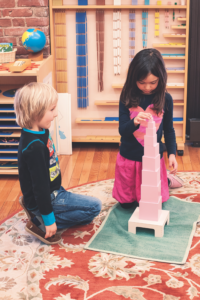 The first Montessori classroom, or ‘children’s house,’ opened in 1907 in a poor section of Rome. At that time, there were very few objects for the use of the children, i.e. what we now call ‘Montessori materials.’
One of the original materials that goes back to that time is one that has now become iconic in all Montessori schools around the world. Called the Pink Tower, this is a set of 10 perfectly milled cubes. They range in size from 10 cm on each edge for the largest cube, all the way down to a simple 1 cm cube. Each one differs by just 1 cm in measurement.
No one really knows for sure why Maria Montessori chose to paint these cubes pink. There are a variety of speculations, but that is all they are.
The Pink Tower belongs in the section of the Montessori classroom called Sensorial. This is an area devoted to the education and development of children’s sense perception. The Pink Tower is a part of the material devoted to the visual sense, sight. Its goal is to help children in discerning size as well as learning vocabulary words associated with size, such as: large, larger, largest, small, smaller, smallest, etc.
This fanciful story imagines the development of the Pink Tower as being semi-magical. I wanted to bring in elements of the famous story of The Elves and the Shoemaker. In this story, I also wanted to utilize poetry, with a component of repetition. If this works, as I hope it will, children will begin to be heard chanting some of the poems that are used in this story. That is my wish at least.
In Montessori schools, the Pink Tower is usually thought of as something appropriate for preschool children, aged 3 to 6. However, there are many uses for it that go well beyond preschool, all the way into upper elementary and perhaps even beyond. One of the references at the end of this book refers to an article I published in Montessori Leadership detailing many of the uses of the Pink Tower. Please see that article for more information and some interesting activities to do with elementary school children (available to members of the International Montessori Council, stage.montessori.org).
Be sure, when telling this story, NOT to mention the Pink Tower in any lead up to the story or in the beginning. Let it unfold as it is in the story, so that the realization that it is the Pink Tower dawns as the story reveals the actual material.
This story was inspired by my grandson Elliott Dorer, aged seven at the time. Elliott has listened to me tell stories for his whole life, so I wasn’t surprised when he came to me one day with a story idea. “How about the Pink Tower?” he said. “It could be a story about the cubes!” That got me started on this story, and I am grateful to Elliott for the germ of an idea.
For this story, let yourself get into a fanciful mood. Try to imagine a small woodworking shop with sawdust on the floor and sunlight streaming in through the windows, illuminating the dust motes dancing in the air. In that room works Taksaka, the elf. This elderly woodworking elf is the main character of my story.
It is my hope that these ten simple chunks of wood, stained or painted pink, can acquire a special cachet in the minds of the children because of some of the images in this story. The Pink Tower really is magical in that it is nothing more than ten simple wooden pieces and, yet, with them, one can do so much. I hope you enjoy this story of the elderly elf Taksaka and his magical piece of wood.
The Magical Wood
It was a beautiful warm, sunny summer’s morning. Fluffy clouds adorned the sky, and the tiny village was filled with the happy sounds of children at play. In that small village stood a modest woodworking shop, the workplace of the elderly elf Taksaka.
Every day Taksaka worked to create the most magnificent and intricate wooden objects. Working with the finest wood and with the skill and patience only known to elves, Taksaka shaped items of astonishing loveliness.
So, it was with great delight that Taksaka welcomed his friend Elvina, who paid him one of her very infrequent visits. After warm greetings and a steaming cup of meadowsweet tea, Elvina revealed the reason for dropping in.
“Dear Taksaka,” she murmured, “I bring you a gift especially suited to your talents and powers.” With these words, she revealed a package wrapped in rich silken cloth. As it was unwrapped, Elvina explained, “This is a block of the finest beechwood, harvested by elven hands from the depths of the Romanian forests. This is no ordinary wood,” she continued, “for it seems to speak with its beauty.”
Presenting the fine specimen of beechwood to Taksaka, Elvina further intoned, “Please create from it the simplest shape possible, for it cries for purity.”
In the days that followed, Taksaka frequently examined the beautiful specimen. This became a daily habit, even a ritual. Then. one night, while in a dream so deep, Taksaka stirred and moved in his sleep. He was astounded to hear in his mind the voice of the powerful piece of wood speak in sweet and dulcet tones:
Six square faces tell how I must be
Six equal faces will let me see
One face looks to the sky so blue
The second sees ground moist with dew
Another face to the west does gaze
To the east a face sees the sun’s bright rays
The southern face enjoys the warming breeze
The northern face admires the wintry freeze
Six square faces tell how I must be
Six equal faces will let me see.
The next morning Taksaka pondered deeply the meaning of his dream. What could it be telling him? For three nights he heard the voice of the wood and then, with deep delight, he discerned the meaning of the dream and the will of the wood.
Taksaka immediately cleared his workbench and sharpened his tools. With the greatest care, he carved an exquisite piece of splendid wood from the magical block. With careful diligence and precision of movement, the old elf shaped the wood into a perfect shape simple and pure, a shape with six square faces.
Taksaka had created a cube, a simple form of great beauty. With great exactness, he finished it to perfect and ideal proportions.
That night while in a dream so deep, Taksaka stirred and moved in his sleep. Once again, he heard the voice of the wood:
All six faces now smile and beam
For I am now what was a dream.
The next morning Taksaka awoke refreshed and happy. He put the beautiful and magical cube into a safe place where he could gaze upon it at any time. In time the sunny days of summer gave way to the winds of autumn. As the leaves fell, the air turned cooler, letting all elves know that winter would soon visit with its snow and ice. One very chilly night while in a dream so deep, Taksaka stirred and moved in his sleep. Once again, he heard the voice of the cube:
With winter’s blast and icy storm
I need a coat to keep me warm
A lovely coat, well colored I think
My choice will be a coat of pink
For three nights Taksaka heard the voice of the cube and then he determined to fulfill its wishes. He hastened to his workshop and searched high and low until he finally found a container of the most beautiful salmon pink paint. “This must be it,” thought Taksaka. “This will produce a perfect coat of pink.”
Carefully Taksaka covered the little cube with an even coat of pink paint. When he was done, he stood back and admired the glistening pink cube. “You now have your coat of pink,” he told the cube. “Stay warm in your lovely coat.”
The winter passed as it always does, and spring’s warm breezes called to one and all to join with their companions to frolic in the spring air. That night while in a dream so deep, Taksaka stirred and moved in his sleep. Once again, he heard the voice of the cube:
Sixty square faces tell how I must be
Sixty equal faces will let me see
Ten faces look to the sky so blue
Ten more see the ground moist with dew
Ten faces to the west do gaze
To the east, ten faces see the sun’s bright rays
Ten southern faces enjoy the warming breeze
Ten northern faces admire the wintry freeze
Sixty square faces tell how I must be
Sixty equal faces will let me see.
The next day Taksaka again pondered the meaning of his dream. What could it be telling him? For three nights he heard the voice of the cube, and then, with deep delight, he finally discerned the meaning of the dream and the will of the cube.
Taksaka immediately cleared his workbench and sharpened his tools. With the greatest care he carved nine exquisite and splendid pieces of wood from the original magical block, using it up completely. Then the old elf shaped the nine wooden pieces into perfect shapes, each one identical to every other one except that every one was just a little bit larger than the previous one. He had formed nine perfect shapes simple and pure, each shape with six square faces.
The nine shapes that Taksaka had created were perfect cubes that could now join his single pink cube to create a lovely set of ten. Every cube increased in size just a bit, just exactly the dimensions of the smallest cube.
Next Taksaka took out his jar of paint and gave each cube an even coat of pink. They would all be warm and cozy in their new coats. When he was done Taksaka stood back and admired the ten glistening cubes. The first pink cube finally had nine friendly companions with whom it could frolic.
That night while in a dream so deep, Taksaka stirred and moved in his sleep. Once again, he heard the voice of the smallest cube:
My sixty faces now smile and beam
For I am now what was a dream.
But stack me up, make me tall
For I’ll be a tower and stand over all.
The next morning Taksaka awoke refreshed and happy. He carefully stacked the ten perfect pink cubes from largest to smallest. It was a tower – a tower of cubes, all pink. So, it was with great delight that Taksaka welcomed his friend Elvina who again paid him one of her very infrequent visits. After warm greetings and a steaming cup of meadowsweet tea, Taksaka showed Elvina what he had crafted from her magical wood.
“A Pink Tower,” cried Elvina, “It’s a Pink Tower!” And so it was that the tower of pink cubes became known to all as The Pink Tower.
The fame of the Pink Tower spread through the small village and all the people visited to see the wonderful cubes in their coats of pink. Children, especially, were entranced and Taksaka, being a kindly elf, would often let them take all ten cubes to mix them up and then rebuild the tower again and again. Soon the tower’s fame spread far beyond the village, and Taksaka became very busy making more Pink Towers for people to take to their homes and schools.
And thus it is so even today. A Pink Tower can now be found in schools on every continent, all around the world. They offer beautiful memories of that first magical pink tower of cubes.
Of course, you will want to build this wonderful tower yourself. You might be happy to hear that it is said that if you very carefully mix up the cubes and build the Pink Tower with the greatest care, later that night in a dream so deep, you may stir and move in your sleep. If you are very lucky you may then hear these words:
Sixty square faces tell how I must be
Sixty equal faces will let me see
Ten faces look to the sky so blue
Ten more see the ground moist with dew
Ten faces to the west do gaze
To the east, ten faces see the sun’s bright rays
Ten southern faces enjoy the warming breeze
Ten northern faces admire the wintry freeze
Sixty square faces tell how I must be
Sixty equal faces will let me see.
by Angeline Lillard | Brain Development, Child's Work, Discipline, Emotional Intelligence (EQ), Emotionally Healthy Children, Empowerment, Free Reads, Infant, Infant-Toddler (0 to 3), Kindergarten, Lower Elementary (6-9), MFA, Mixed Ages, Montessori Curriculum, Montessori Education, Montessori Family Life, Montessori Middle School, Montessori Secondary / High School, Practical Life, Primary (3-6), Psychology, Research, Sensitive Periods, Sensorial, Upper Elementary (9-12), Video
Dr. Angeline Lillard presents Maria Montessori’s key insights about childhood education, the subsequent educational research that has validated her approach, and how these ideas are implemented in a modern Montessori classroom.
From Montessori: The Science Behind the Genius
For more information, visit: http://montessori-science.org
by Julia Volkman | MFA, Reading, Sensorial
In Dr. Montessori’s writings, she speaks of an “explosion” into writing. The children spontaneously discovered that they knew how to write and started writing every word, everywhere. She insisted, however, that she never taught them how to write; she just prepared them to write, indirectly.
In many Montessori classrooms, you’ll find all kinds of handwriting worksheets and programs that have nothing to do with Dr. Montessori’s successful indirect plan. Let me give you a brief overview of this indirect preparation and also a specific description of how we introduce the recording process. May it encourage us to return to the basics of what Dr. Montessori gave us.
The lessons we offer in spoken language teach the child that they have something worth saying.
An Organized Mind
The writing process is orderly. The hand must start at a certain place on the page, letters must be placed in sequence, ideas must be put together so that they make sense, etc. Order, logic, natural consequences, and sequence are infused throughout the prepared Montessori learning environment. Practical Life activities, in particular, help the child develop their logical mind. If they are too rough with a glass, it will break. If they lose track of what they are doing, they may spill the water in their bucket. Order is a great support to the young child. I could go on at length on this topic but, instead, I will simply draw your attention to it.
If you are encountering challenges with a child learning handwriting, look to the order within their mind. If it is lacking, draw the child’s attention to the activities of Practical Life. Help them increase their attention span and concentration by scrubbing tables, washing dishes, ironing clothes, preparing food, sewing, etc. When their Practical Life work becomes organized, you will see the results in all of their efforts across curricular areas.
Spoken Language
All handwriting work begins with spoken language experience.
Before the children write, they must have something that sparks their interest. Even if a child cannot physically speak (e.g., due to a neurological disorder), they will be thinking about words and thinking via words. It is this motor expression of language (spoken externally or thought internally) that precedes all other language work.
The lessons we offer in spoken language teach the child that they have something worth saying. For example, in the exercise ‘Conversations at a Picture,’ we go together with a child to a piece of art on the wall and guide them in talking about what they see. There is no wrong answer because it is art; their interpretation is inherently valid, even if it is rather unexpected.
We also help them appreciate the joy of our language by singing songs and reciting poetry, tongue twisters, sound games, rhymes, etc. Thus, we teach them that language is useful, enjoyable, and meaningful—and that they have something worth saying. Once these foundations are set, the logistics of handwriting can follow.
Letter-Sound Knowledge
Learning the mechanics of creating a letter’s shape as well as its associated sound is the next cornerstone of handwriting. In the Montessori approach, we teach the shape of the letters simultaneously with the sound of the letters via the Sandpaper Letters. First, we trace a letter, then we say its sound, and then we say a few words that feature that sound. This approach not only develops muscle memory for how to ‘write’ a letter, it also creates meaning for the child. They are tracing the letter ‘m’ because that letter is important; it’s in the word, “mom!”
As an extension of (or remediation with) the sandpaper letters, children may be interested in writing letters on their own using a sand tray or chalkboard. The focus of this work is on tracing with the fingers and associating that shape with a sound.
Writing with the Mind
Before we invite young children to start writing with their hands, we invite them to start creating words using the Moveable Alphabet. Why? Because children can build words in their minds before they can write them with their hands. Building a code (writing) is easier than cracking one (reading).
This isn’t just a Montessori theory, it is supported by research. In fact, I conducted a research study for my graduate thesis at Harvard on exactly this topic. I studied 78 preschoolers (ages 3 or 4) in traditional public schools and found children are able to spell words phonetically with the Moveable Alphabet more successfully than they can write those same words (read the full thesis at: tinyurl.com/volkman-thesis.)
Building words with the Moveable Alphabet allows children to work with the letters and sounds they know in order to create the ‘code’ of written language, even if their hands cannot accurately reproduce the letters. This experience building words prepares them for both handwriting and reading.
Writing with the Hand
Once the foundations of spoken language, letter-sound-knowledge, and intellectual writing are lain, we are ready to turn to handwriting. We indirectly prepare the child’s hand for this work in myriad ways. Here are some of the main ones (but there are more):
- Practical Life exercises (to strengthen the hand muscles/coordinate hand & mind)
- Sensorial exercises (e.g., using the pincer grasp to lift the Knobbed Cylinders)
- Geometry Cabinet (tracing the shapes with the fingers)
- Botany Cabinet (tracing the shapes with a stick/pencil surrogate)
- Metal Inset activities
Unfortunately, many of us gloss over these steps. We may use the Geometry and Botany Cabinets like puzzles rather than as tracing activities (this is the cardinal sin of many classrooms). We may introduce the metal insets too early, before the child has hand strength to be successful with the pencil. Or we may try to ‘teach’ handwriting via marker tracing activities. (Note that paper tracing activities are an option ONLY as remedial work; they are not the preferred first approach that works for some children.)
Again, this entire approach to handwriting is based on laying the proper foundations; indirect preparation. We incrementally increase the challenge to the hand/mind so that it is never too easy nor too difficult for the child. The challenge must be one tiny step beyond the child’s ability, no more and no less.
The Recording Process: Chalkboards
The first time we ask the child to write anything is after they have written something with the Moveable Alphabet. We introduce them to the blank chalkboard (a portable one that can be placed on a table next to their alphabet work). Then, we isolate a word from their rug and invite them to write it on the chalkboard. And then, they start writing like crazy. That’s it. Really! All of the preparation that has come before allows this to happen.
Once they have success writing on a blank chalkboard, primarily by copying the work that they’ve created with the alphabet, we can introduce the baseline chalkboard. This helps the child align their words along a bottom line. After experience with that, we introduce the baseline and waistline chalkboard.
The chalkboards allow children to easily erase and correct any errors they see. We do not correct the child, but they will want to correct themselves. If you begin with paper, the child will not be free to readily fix their work. They’ll erase so fervently that they tear the paper or become upset at all they’ve crossed out. The young child loves perfection and precision; the chalkboards allow this human tendency to be expressed elegantly.
The Recording Process: Paper
At some point, you will notice more consistent handwriting success on the chalkboards and, usually around the same time, a significant progression in the complexity of their metal inset work. This is the time to introduce paper.
Begin with blank paper that is folded like a fan to create fold ‘lines.’ These act like the baseline on the chalkboard. Try to create a line width that matches the child’s abilities (with more or fewer folds depending on the size of their handwriting). When the child is ready, move on to paper with pre-printed lines.
From here, you are free to explore all the possibilities of handwriting. One thing that children love to do is transcription. For example, if you have poetry cards around the room, you can invite the children to copy down their favorite poem. Then, embellish their copy with decorations of their own design. Have plenty of writing and bookmaking supplies on hand so that the children are free to transcribe and create as their spirits drive them.
Remedial Work
Not all children follow the above progression. Notably, children who begin in the children’s house when they are already five years of age may not be interested in tracing the Sandpaper Letters, even though they do not yet know the sounds the letters make. Nonetheless, they may be very interested in handwriting. We never want to discourage the child who is eager to progress. So, we adapt.
For example, have them choose a Sandpaper Letter and a blank chalkboard. Demonstrate how to trace the letter with your fingers and then draw the letter with chalk. You can do the same for the Sandpaper Numerals. If you have name cards for the children in the room (e.g., to use at the snack table), you can invite them to copy names onto the chalkboard as they are ready. The point is to encourage the refinement of their handwriting ability without drawing attention to the fact that they are lacking letter-sound or other knowledge. Simultaneously, you are trying to catch them up on the essentials that they missed via the Sandpaper Letters, Sensorial work, and the Metal Insets.
I hope this helps clarify how handwriting unfolds in the Montessori early childhood classroom. It is not at all like a traditional handwriting curriculum. It is based primarily on indirect preparation. We give the child the keys and then they discover that they know how to write…and no one directly teaches them.
Before you consider adding in any other handwriting program, I suggest that you look to the foundations described here. If the appropriate lessons have been given, children typically don’t need any other formal handwriting program (except as remedial work). Try not to add in worksheets or other activities that will distract the child from the essential work that is already in the room. Let them discover, just as they did in Dr. Montessori’s time, that they have taught themselves how to write. ¢
If you are interested in more, there are some resources on our blog, maitrilearning.com/blog that may help.
Tomorrow’s Child / October 2019 / Pg. 7
by Christine Lowry | Children with Exceptionalities, Communication, Empowerment, Language, Mixed Ages, Montessori Education, Montessori students, Peace Education, Planes of Development, Sensorial, The International Montessori Council, Webcasts / IMC
by Punum Bhatia Ph.D | Maria Montessori, Mathematics, Montessori Education, Montessori students, Planes of Development, Primary (3-6), Sensitive Periods, Sensorial, The International Montessori Council
The first essential for the child’s development is concentration. It lays the whole basis for his character and social behavior”
Dr. Maria Montessori (1870-1952) believed that children have an inner directive for their optimum self-construction and that concentration was the key to their natural development. This was perhaps one of her major contributions to the world: that if protected and nurtured, the child’s inner guide will lead to the development of the child’s full potential. She asked those working in her schools for close observations of the children’s behavior and it was Signorina Maccheroni in Rome that first provided specific information concerning the way in which the
children were working:
“The child keeps still for a while, and then chooses some task he finds easy, such as arranging the colors in gradation; he continues working at this for a time, but not for very long; he passes on to some more complicated task, such as that of composing words with the moveable letters, and perseveres with this for a long time (about half an hour). At this stage he ceases working, walks about the room, and appears calm; to a superficial observer, he would seem to show signs of fatigue. But after a few minutes, he undertakes some much more difficult work, and becomes so deeply absorbed in this that he shows us that he has reached the acme of his activity…When this work is finished, his activity comes to an end in all serenity; he contemplates his handiwork for a long time, then approaches the teacher, and begins to confide in her…The appearance of the child is that of a person who is rested, satisfied, and uplifted” (Montessori, 1917/1965, p. 97).
Many years of observation convinced Montessori that the work of the child and the formation of the personality occur during periods of intense concentration, which she called “polarization of attention” (Montessori, 1917/1965, p. 68). She observed that children deeply engaged and fully concentrating on a task at hand were transformed and “showed extraordinary spiritual qualities, recalling the phenomena of higher consciousness” (Montessori, 1917/1965, p. 68). A work cycle of three hours allows the child adequate time to become involved in his/her work, to observe and then become significantly engaged in an activity. “There is a vital urge to the completeness of action, and if the cycle of this urge is broken, it shows in deviations from normality and lack of purpose”
(Montessori, 1948/1967, p. 57).
The work cycle represents one of Montessori’s earliest observations about children’s development that, left uninterrupted, children would process through a regular and predictable pattern of engagement. She was able to document this in graphs, such as the one below, which shows a child advancing towards order.
Each day the children at Montessori Casa International engage in a prolonged, uninterrupted work cycle. Through this period they engage in a variety of activities, from practical life and sensorial to culture and math. Sometimes they work alone, at other times with a group of children and sometimes with the teacher. The pace of the classroom matches the developmental needs of the children when the schedule allows for three-hours of uninterrupted time in the prepared environment.
Anita (name has been changed) is in her first year in the primary classroom. She has recently moved to Colorado with her family and speaks both Russian and English. She enters the classroom, puts her lunch away in the refrigerator, and washes her hands as is customary for the children in the school. She joins a group of children receiving a lesson on the felt board of The Very Hungry Caterpillar. Her body is calm and she listens carefully to the teacher. Ten minutes pass and she starts to scream for no apparent reason. The teacher reminds her that she is in the classroom and should use her ‘inside voice.’
At 8:11 am, she leaves the group and starts to walk around the classroom. She bothers another child who is working on his own. The teacher intervenes and asks for her help in folding napkins. Anita folds napkins for two minutes and wanders away, but the teacher finds her and brings her back to her work. After a couple of minutes, Anita leaves her work again and drifts off, watching a child do a puzzle on The Very Hungry Caterpillar. The teacher follows her and reminds Anita that her work is not complete. Anita returns to the rug and finishes folding all the napkins. She rolls up the rug and puts it away.
It is 8:19 am and Anita watches another child working on a puzzle. She does not talk to the child and neither does she try to join the work. She stands next to the table watching the child put the pieces together. At 8:25 am, when the puzzle is back on the shelf, Anita takes it out and works with it. She is calm, quiet, and focused. In between, she tells a story to herself. She is not disturbing anyone else. At 8:33 am, she puts the puzzle back on the shelf and walks around the classroom.
Anita goes into the practical life area and chooses a pouring work. She is playing with the materials when another child on the table tells her this is not funny. Anita spills the colored rice on the tray and remarks about the other child, “She’s distracting me.” She cleans up the rice, puts the tray back on the shelf and takes out another pouring work. She is inattentive, talking with friends, looking around and playing with the work. It is 8:41 am when she cleans up and tells another child on the table, “Can I do that after you?” She works with another child and this time, she is focused. At one point, she goes up to a teacher and asks for help. Soon after she cleans up.
At 8:50 am she goes to a teacher and asks for her help with the listening station. She looks at the book as she listens to the story but is only there for three minutes. She says to another child, “It’s now your turn” and walks away. She does not go far. She takes out the bells and works quietly on her own for a couple of minutes. Soon after, she loses her focus and talks to friends close by. At 8:58 am she cleans up and walks around the classroom.
At 9 am, she is back in the practical life area working with opening and closing bottles. She talks to herself as she works but is not doing the work as the teachers have shown her. At 9:02 am, she cleans up and goes and sits next to another child who is working. She distracts the child by crawling under the table. The child tells Anita, “This is my work.” Anita asks her if she can watch and she is told “yes” but not to talk. Anita continues to distract the other child, playing with her work, laughing, and jumping up and down in her chair. She slips off her chair and says, “I’m ok” whilst laughing. She moves away from the area, goes to another part of the classroom, where she observes the growing caterpillars.
A teacher approaches her and asks if she would like to work with her. It is now 9:10 am. They return to the practical life area and Anita receives a lesson on opening and closing nuts and bolts. She watches the teacher who is giving the lesson with slow, isolated movements. Another child working on the same table, who dropped something that made a loud noise, does not distract her. When it is her turn to do the work, she begins confidently. However, the nut is stuck and she seeks the help of her teacher. Anita continues to work with the material. She is somewhat distracted but completes the work, cleans it up, and puts it away. She goes to the silence table. Two minutes later she returns to the practical life shelf and chooses a pouring work. Her body is calm now and her movements are slow as she pours water from one container into two. One minute later, she tells the other children on the table, “I am done.” She cleans up.
At 9:24 am, she goes to the felt board and follows the book carefully as she puts the felt pieces on the board. She is sitting and working quietly. At 9:27 am, she cleans up and walks back to the practical life area. She is distracted and not working. She goes from opening and closing bottles to pouring and transferring and then to the lacing cards. It is 9:44 am and she has found something that interests her. Her body movements are slow. She is quiet and very focused. There are children talking at the table around her, but she does not look up from her work. The caterpillar lacing cards have her full attention. She works with this for ten minutes before she cleans up and puts the materials back on the shelf.
Anita goes to the sensorial shelf and takes out the mystery bags but puts them back right away. She is talking with friends and together they go into the outdoor classroom. It is 10 am. She looks through the binoculars for a couple of minutes and then chooses to take care of plants. She goes with the teacher to get water from the rain barrel and then waters the plants. She is very interested in this work, focused and quiet. There are children talking loudly around her, but she is not distracted. Every time she needs more water, she goes with the teacher to the rain barrel and then continues watering the plants. At
10:14 am she puts her work away and chooses an art project. She is somewhat distracted until she goes to the chalkboard and tries to write her name. Another child shows her how to write a few letters, and when she is able to copy them, she says, “Look, I did it!” She moves on to writing numbers on the chalkboard.
It is 10:45 am and Anita chooses to sweep the outdoor classroom before going back inside and having a snack. At 11 am the chime rings bringing the morning work cycle to a close.
In her first year in the primary classroom, Anita is developing independence and the social responsibility that comes with living within a community. She chooses her own work and completes the cycle of activity. Concentration is beginning to develop as the teachers encourage a positive attitude towards learning. In the second year, they will continue to work on these skills, as well as promote self-confidence, initiative, autonomy, intrinsic motivation, and competence. ′
References
Montessori, M. (1917/1965). Spontaneous activity in education: The advanced Montessori method. New York: Schocken.
Acknowledgements-Shari Zeitler, Guide at
Montessori Casa International
for collecting the data for this observation.
ML/ August 2019/ Pg 34
by Ann Epstein Ph.D | Brain Development, Children with Exceptionalities, Empowerment, Mindfulness, Mixed Ages, Montessori Education, Montessori Teachers, Planes of Development, Prepared Environment, Sensorial, The International Montessori Council
Supports for children who have special needs have been legally mandated for several decades in the United States. The Individuals with Disabilities Education Act became law in 1990 and was updated in 2004. Public schools must provide Individualized Education Programs (IEPs) for students with documented needs that meet the law’s specified criteria. IEPs identify needed accommodations, special education services, and supplementary aids as well as their frequency and duration. Montessori guides who teach in public school settings typically collaborate with special educators and service providers (for example, occupational therapists) within their district to provide appropriate services for children who have exceptionalities. Children who attend independent Montessori schools are also entitled to federally supported services through IDEA provisions.
In addition to accommodations (services and supplementary aids specified in children’s IEPs), Montessori guides often need to adjust classroom practices. Depending on each child’s individual needs and strengths, adjustments can affect how guides teach lessons, demonstrate materials, design the classroom environment, assist children during transitions, facilitate conflicts, and address a myriad of other day-to-day interactions. The following chapter provides examples of how Montessori guides support children with exceptionalities in primary (ages three through six) and lower elementary (ages six through nine) classrooms. Supports address Montessori developmental aims of concentration, independence and order, as well as fine-and-gross motor skills, cognition, and social/emotional growth.
Some guides and administrators hold the view that adjusting classic presentations or changing aspects of the work period conflict with their training and are ‘not Montessori.’ However,
changes can make the difference between a child being a successful, joyful learner or being frustrated and even miserable. The following recommendations are either current evidence-based practices or suggested by Montessori guides experienced in working with children who have exceptionalities. Every guide and school head needs to decide if these suggestions fit with her/his view of Dr. Montessori’s philosophy. Hopefully, the strategies will offer possible solutions and perhaps expand the Montessori community’s view of following each individual child.
Observation, the present level of performance, and goal setting
Before examining specific supports for learners with exceptionalities, attention must be given to determining the child’s strengths and needs. Dr. Montessori implored teachers to observe children carefully (Montessori, 1964). While pointing out that “…the teacher shall observe whether the child interests himself in the object, how he is interested in it, for how long, etc., even noticing the expression on his face…” (pp. 108 – 109), Montessori did not provide specific observational formats. Rather, she emphasized the importance of both capturing details of how children work with materials and honoring “principles of liberty” (p. 109). Montessori warned against insisting a child pursue an activity, noting this can cloud whether or not the child is truly ready to engage in exploring and learning specific concepts.
A possible translation of Montessori’s recommendations into today’s special education landscape is that teachers need to document the child’s present level of performance (Individualized Education Program, 2006). Anecdotal records (brief objective snapshot statements of a child’s performance), running records (more in-depth accounts of how a child carries out an activity or an interaction), and checklists (noting whether or not a child carried out a particular activity or behavioral expectation) are all helpful. The aim is to document as much detail as possible regarding the child’s current level of understanding and/or behavior.
If, for example, a guide is concerned that a three-year-old child concentrates for short periods of time, documentation of start and stop times of the child working with various materials will provide a clear starting point. The guide may learn that the child spends more time with practical life activities and less with sensorial materials. The guide could further note whether the child concentrates longer when working with a peer if there are differences in the child’s concentration at the beginning of the work period versus the middle or the end and if the child sustains attention for longer periods of time when playing outdoors. Careful observations and documentation will assist guides in determining, in as much detail as possible, the child’s present level of concentration.
Once the child’s present level of performance (sometimes referred to as the PLOP) is clear, guides may find it helpful to check developmentally appropriate expectations. The American Academy of Pediatrics (n.d.) partners with Healthychildren.org to provide expected milestones in the areas of movement, fine-and-gross motor skills, language, cognition, and social and emotional development. Using the above example, perhaps the guide notes that the child does not consistently follow three-part commands nor recall parts of a story. This could suggest the child is having difficulty understanding verbal explanations and reminders, leading to another round of observations.
In addition to the American Academy of Pediatrics, the Center for Disease Control (CDC) also provides information regarding expected milestones in a resource titled, “Learn the Signs – Act Early.” When Montessori guides wonder if a child is on track in any developmental domain, it is helpful to refer to several recent, professionally vetted milestones. Keeping in mind that teachers’, as well as parents’ expectations, can be either high or low, milestone ranges can be helpful guidelines.
Lower elementary guides may find academic standards helpful. State departments of education provide expectations in language arts and math for each grade level, as does the Common Core (n.d.). While the Montessori curriculum does not align completely1 with traditional reading, writing, and math expectations, guides can use academic standards to better understand a child’s level of performance. Both the National Center for Montessori Education in the Public Sector (http://www.public-montessori.org/resources/common-core-state-standards) and the Association Montessori Internationale provide suggestions for aligning Montessori with elementary standards (https://amiusa.org/ami-montessori-and-the-common-core-state-standards/).
The final—and crucial—step in determining a child’s present level of performance is to fully accept it. Guides truly need to be at peace with a child, for example, working with an activity for an average of three minutes across settings, times of the day, and with or without peers. Supporting this child in increasing his or her concentration occurs much more easily if teachers are not resisting the child’s current length of time. Thinking, “ just can’t concentrate. How can I manage our classroom when only concentrates for 3 minutes?!” adds stress for both the guide and the learner. Alternatively, accepting that the child can consistently focus for three minutes is more likely to result in planning for and then implementing a
successful change.
Once the learner’s PLOP is clearly documented, goal setting should be carried out with families. Before meeting with a family, the guide drafts a manageable, achievable goal. Then the guide listens carefully to whether or not family members agree and adjust the goal to fit the family’s needs and priorities. Working in a respectful partnership is essential to the child’s success. Ongoing, frequent communication between families and guides is especially important if a goal needs to be altered once interventions are implemented.
The guide then shares evidence of the child’s learning with parents. A portfolio of photos, videos, and work samples helps families understand what the child is able to do and where the child is struggling. Again, it is important to consider the range of ages when children reach milestones. For example, it is typical for children to produce clear /r/ sounds in their expressive speech any time between age 3 and (particularly for boys) age 7. At this point, it is important for parents to observe the classroom, not only to perhaps catch a glimpse of the concern but to view the range of skills across age levels.
Goals are discussed and agreed upon with family members. Next, determine specific ways to reach the goal. It is important to reflect upon and begin planning interventions before meeting with families. When sharing possible approaches, invite families to discuss both your suggestions and their own recommendations. Agree on a clear plan, and explore changes that could also support the child at home. Both guides and families find it helpful to document the agreed-upon plans, whether with a quick email or a simple hard copy.
Strengthening concentration
The previous example addressed helping a three-year-old child increase the average length of time working with an activity. It is important to note that difficulty concentrating is not considered a special need according to IDEA criteria. However, it is often a component of a language disorder, an intellectual disability, or even an emotional disorder. And difficulty focusing on a task or activity can ‘simply’ be associated with a child’s temperament. Since concentration is a key component of Montessori learning and difficulty sustaining attention can be associated with an exceptionality, it serves as the premise for an example of how to implement effective supports.
Perhaps the family and guide agreed that concentrating for five minutes (on average) is an achievable goal. The guide observed that the child stayed with an activity longer as the morning work period progressed. However, arrival, settling in, and choosing an initial activity appeared to be particularly difficult. The guide also observed that the child enjoyed the book reading area of the classroom and often looked at books for up to five minutes. The guide suggested (and the family agreed) that an adult (either himself or his assistant) read a story that the child selected for at least two minutes at the beginning of the work period. The adult would then lead the child to either practical life or sensorial (preferred areas), offer the child two choices (for example a knobbed cylinder block or the demonstration tray of the geometric cabinet), and gently remind the child to complete the work before returning it to the shelf.
Several components of a potentially successful outcome are present in this scenario:
1. Beginning the work period with adult support of a preferred activity (story reading)
2. Making a choice between two specific preferred activities (rather than choosing from the whole array of activities in practical life or sensorial)
3. Listening to a gentle reminder of expected behavior (complete either the demo tray or the cylinder block before returning it to the shelf)
Children in lower elementary classrooms who struggle with concentration issues require supports suited to their developmental levels. They are typically able to monitor their own time with a personal watch or a classroom clock. Often, they enjoy beating their time by, seeing if they can concentrate for an additional five minutes. Lower elementary students are also able to use self-talk more effectively. For example, reading or reciting a statement similar to the following can be helpful.
“I am learning to focus longer and longer on my work. Today I am aiming for 15 minutes. I know I can do it!”
Lower elementary students also enjoy visual displays of their progress. Guides can assist them in making their own daily and weekly graphs, showing the number of minutes they focused successfully on their work. Guides can either send families a hard copy or an electronic file of the learner’s graph each evening.
Rochester (MN) Montessori School lower elementary guide, Andy Sawyer, stated his single most effective support for students working to stay focused has been offering an opportunity to run several laps around the school soccer field first thing in the morning. “Over half of the students in my class took advantage of our offer and ran four or five laps if the weather cooperated. This provided social time as well as a way to wake up their brains (synapse activation). It really did help everyone begin their day ready to learn.” (Sawyer, personal communication, July 2016).
The success of particular support depends on how well suited it is for an individual learner. Table 1 notes support that could prove helpful for children in Montessori primary and lower elementary classrooms who are working to strengthen concentration if careful observation reveals them to be appropriate matches for individual needs and strengths.
Encouraging independence
Montessori recognized the child’s inner drive to “do it myself” (Montessori, 1967). She urged guides (and parents) to refrain from “helping” children with any task or activity they could carry out on their own. Montessori also designed each learning material with an inherent control of error, eliminating the need for an adult to check or correct children’s work.
Occasionally, children need support in carrying out procedures independently. Photo booklets, similar in design to Social StoriesTM (Gray, 2004) can be helpful. If, for example, a child has difficulty remembering each of the steps involved with using the restroom, a guide can display sequential photos on the bathroom wall. Sequential photos can also assist children who struggle with putting on and taking off snow clothes, as well as cleaning up after lunch, or putting away work and joining classmates for a community gathering. (Please see Figure 1 for an example of a social story regarding appropriate touch.)
Assisting the development of children’s sense of order and self-discipline
Early childhood educators assist children in learning to regulate their behaviors and develop self-discipline (de la Riva & Riva, 2015). Montessori (1966) addressed a component of self-discipline by recognizing the importance of respecting children’s sense of order. She noted that “Order is one of the needs of life which, when it is satisfied, produces real happiness.” (p. 52) Montessori believed that children have an inner sense of order that is nurtured when their surroundings and routines are predictable, consistent and orderly. If this is so, and children are still not able to regulate their behaviors, guides may need to provide additional supports.
Strategies regarding multi-sensory integration can prove effective in helping children manage their behaviors and, ultimately, develop self-discipline. While not formally recognized by the U.S. Department of Education (2015) as a special need, difficulty integrating sensory input can result in learning and behavioral challenges. Recently termed “sensory processing disorder” (SPD), difficulties include unsteady balance, hypo or hypersensitivity to touch (can vary from day to day), fine-motor weakness, and poor muscle tone or coordination (Sensory Processing Disorder, n.d.). Occupational therapists typically provide services for children with SPD. There is controversy regarding the effectiveness of SPD strategies. However, occupational therapists (Sweet, 2010), special educators, and pediatricians note successful outcomes (Gourley, Wind, Hennigher, & Chinitz, 2013; Noddings, 2017). Montessorians have found success helping children regulate their behaviors (for example, impulsively touching—or shoving or hitting—a peer) by calming themselves through the use of weighted lap pads and therapy balls (with lower elementary students) for short periods of time. The use of sensory integration materials and equipment should be supervised by a knowledgeable professional (for example, a special educator serving as a consultant to the Montessori school).
Practical life and art activities such as pouring rice or water, working with play dough, and handwashing (perhaps with the option of applying a small bit of lotion) can help young children with challenging behaviors to develop self-discipline. The length of the activity is a key point. Children working to regulate their behaviors often need long works (such as polishing or dishwashing) to be shortened. Reducing the number of steps provides them with the opportunity to repeat soothing steps and not lose track of what to do next. For example, table scrubbing can be modified to include only dampening a small brush, running it over a bar of soap, scrubbing, and then drying the table with a hand towel. This allows children to repeat circular scrubbing strokes over and over, often bringing them to a calm state. Providing a variety of interesting items to scrub (large seashells, car tires, large pumpkins) and modifying the number of steps can provide children with successful self-regulation experiences that also honor and strengthen their sense of order.
Both children’s house and lower elementary guides may find it helpful to design a small area of the classroom (or even a single shelf) to house sensory items. Rainsticks, soft hand puppets, snow globes, unlit scented candles, scented hand lotion, earphones for listening to sounds in nature, and kaleidoscopes can provide relaxing sensory input. Children can have the option of selecting one of these items and ‘taking a sensory break,’ for a specified amount of time. Or, several items can be placed in a basket for children to select, take to a rug or table, and then explore as they would any other material.
Teaching young children to use specific verbalizations can also help develop self-regulation. Rochester Montessori School special educator, Diane Betzold, describes her success in working with a highly active three-year-old:
“I had worked with Sam for around a month, modeling slow movements and quiet voice levels. We worked on puzzles and read stories together in my classroom (resource room) several times a week. I also modeled the phrase, “I am calming my body” while we pursued various activities. One day, Sam’s teacher brought him to my room for unscheduled work time. Sam had been running in his classroom and was unable to focus on any activities. Red-faced and a bit out of breath, he declared, “Miss Diane, I am calming my body!” While I modeled taking a slow, deep breath, Sam repeated this phrase and did calm his body. We worked together for just another few minutes until he was ready to return to his classroom. I reminded his teacher to use this strategy with him. She later shared that modeling and encouraging Sam to calm his body was effective. (Betzold, personal communication, July 2016).
Similarly, older children may have success in repeating self-affirmations. Coupled with taking one or two deep breaths, reminders to use phrases such as “I can be calm again” and “I feel myself calming down” can help learners return to a calm state.
Supports for strengthening motor skills, cognition and memory, and social/emotional skills
Children with exceptionalities in specific developmental areas may have services documented on their IEP. Often, though, Montessori guides observe the need for supports within and across developmental domains before IEPs are developed. Fine motor supports can take the form of pencil grips and adaptive scissors. Attaching magnets to three-part cards and providing a magnetic whiteboard (or a simple aluminum cookie sheet) can offer security to a child with weak eye-hand coordination. Time riding on stationary bikes (child-sized), jumping on mini-trampolines, and walking across very low (4 to 6 inches off the floor) balance beams (children remove shoes and socks) can help children strengthen and coordinate large muscles. In addition, these activities often help children develop order, concentration, and independence.
A wide array of strategies is available to Montessori guides working with children who struggle to remember information. Reflection approaches such as SQ4R (Hartlep & Forsyth, 2000) can help children remember specific concepts and definitions. Guides can model the five components—survey, question, read, recite, writer. Self-talk (repeating definitions to oneself) and pneumonic devices can be helpful. Graphic organizers, from standard Venn diagrams to fish skeletons (Figure 2), can assist children in understanding and remembering over-lapping characteristics and relationships, including cause and effect and ‘if/then.’
Dr. Montessori identified effective cognitive strategies that have withstood the test of time while working with children who struggled with early reading, writing, and math concepts (Montessori, 1965). She modeled a multi-sensory approach by showing children how to gently stroke sandpaper letters while repeating their sounds (/a/, /a/, /a/). Guides can offer children similar opportunities with puff paint as well as felt letters and numerals. Tracing letters in farina (milled wheat) sprinkled on a tray or over zip lock bags filled with hair gel offer additional tactile experiences.
Perhaps the most effective cognitive support is careful error analysis followed by modeling and guided practice. Where does the learner become confused? If the primary-aged child cannot follow all the steps of dynamic addition, return to static addition and re-teach the process more slowly. If a silent demonstration is not effective, verbalize the steps. “I have 11 unit beads. I will exchange ten of my beads for a ten bar. Now I have one ten bar and one unit bead.” Ask the child to repeat your actions and your verbalization. Then stay with the child as he/she practices. Provide this assistance for several days. Do not step back until the child demonstrates understanding. Scaffolding instruction (Berk & Winsler, 1995) is important for all learners but is often critical for children who struggle with cognitive processing.
Supporting children who are upset, frustrated, and perhaps even aggressive can be particularly wearing for Montessori guides. Just as math and literacy skills need to be modeled, social skills must be overtly taught for some children. Grace and courtesy lessons typically include inviting a peer to work together, passing in front of another (“excuse me”), and waiting for a busy teacher’s attention (placing one’s hand on a guide’s shoulder). Addressing one’s own strong emotions and learning to resolve conflicts require step-by-step demonstrations followed by opportunities for practice. These practice lessons should take place with a willing peer when children are calm. When an actual upset occurs, guides need to calmly step in and remind children of each step.
For example, if a child (Mattie) appears to kick another child’s (Sara) pink tower, the guide first helps the kicking child identify intentions and feelings. “Are you mad at Sara?” “Would you like to work with Sara?” “Are you upset that Sara did not ask you to build the tower with her?” Then the guide asks Sara to share her feelings. “How did you feel when Mattie kicked over your tower?” Once feelings and intentions are identified, the guide facilitates a resolution. “What do you think we should do now?” Guides are often surprised at how quickly children offer the next step. Occasionally, children need ideas, but the resolution is much more effective if it is generated by participants rather than by guides.
Again, the critical component of providing supports for children who struggle with social and emotional challenges is that guides must teach these skills directly. Just as lessons are given to help children learn rhyming words and subtraction, guides need to demonstrate and then help children practice and learn conflict resolution. That said, the design of the learning environment could assist in fostering a peaceful atmosphere. Inviting work areas with small lamps, gentle miniature waterfalls, soft fabric wall hangings, quiet music, and aromatherapy suffusions add soothing sights, sounds, textures and smells to classrooms.
Dr. Montessori began her pedagogical work with children who did not learn easily. Over a hundred years later, Montessori guides continue her legacy of providing individualized instruction. Whether children have IEPs with specific services or they are in the grey area of “struggling learners,” guides have the opportunity and responsibility to provide assistance. Once the child’s present level of performance is determined, a plethora of support is available to Montessori guides. In collaboration with families and specialists, strategies are carefully selected, implemented, and monitored. If the child does not achieve the targeted goal, another support is implemented. Throughout this process, guides, are, indeed, adhering to Dr. Montessori’s original directive to respect and honor each individual child’s strengths and areas of need (Lillard, 1972; Montessori, 1964). ′
References
American Academy of Pediatrics (n.d.). Retrieved from https://www.healthychildren.org/English/ages-stages/toddler/Pages/Developmental-Milestones-3-to-4-Years-Old.aspx
Berk, L. E., & Winsler, A. (1995). Scaffolding children’s learning: Vygotsky and early childhood education. Washington, D.C.: National Association for the Education of Young Children.
De la Riva, S., & Ryan, T. G. (2015). Effect of self-regulating behavior on young children’s academic success. International Journal of Early Childhood Special Education, 7(1), 69-96.
Common Core Standards Initiative (n.d.) Retrieved from http://www.corestandards.org/read-the-standards/
Gourley, L., Wind, C., Henninger, E. M., & Chinitz, S. (2013). Sensory processing difficulties, behavioral problems, and parental stress in a clinical population of young children. Journal of Child and Family Studies, 22, 912-922.
Gray, C. (2004). Social StoriesTM10.0 The new defining criteria & guidelines. Jennison Autism Journal, 15(4), 2-21.
Hartlep, K. L., & Forsythe, G. A. (2000). The effect of self-reference on learning and retention. The teaching of Psychology, 27(4), 269-271.
Individualized Education Program. (2006). Retrieved from http://idea.ed.gov/explore/view/p/TopicalArea2C.
Individuals with Disabilities Education Act of 2004, Pub. L. No. 108-446. (2004). Retrieved from http://idea.ed.gov/explore/view/p/statute.
Individuals With Disabilities Education Act 20 U.S.C. § 1400 et seq. (2006).
Lillard, P. (1972). Montessori: a modern approach. New York City, NY: Schocken Books.
Montessori, M. (1964). The Montessori method. New York City, NY: Schocken Books, Inc.
Montessori, M. (1965). Dr. Montessori’s own handbook: A short guide to her ideas and materials. New York City, NY: Schocken Books, Inc.
Montessori, M. (1966). The secret of childhood. New York City, NY: Ballantine Books.
Montessori, M. (1967). The discovery of the child. New York City, NY: Ballantine Books.
Noddings, A. (2017). Classroom solutions for sensory-sensitive students. Montessori Life, Summer 2017, 45-49.
Sensory Processing Disorder, n.d. Retrieved from http://www.sensory-processing-disorder.com/sensory-processing-disorder-checklist.html.
Sweet, M. (2010). Helping children with sensory processing disorders: The role of occupational therapy. Odyssey, Spr/Sum 2010, 19-22.
U.S. Department of Education, National Center for Education Statistics. (2015). Digest of Education Statistics, 2013 (NCES 2015-011), Table 204.30. Retrieved from http://nces.ed.gov/fastfacts/display.asp?id=64
ML/ August 2019/ Pg 9
by Christine Lowry | Children with Exceptionalities, Communication, Empowerment, Mindfulness, Mixed Ages, Montessori Education, Montessori students, Planes of Development, Prepared Environment, Psychology, School Leadership, Sensitive Periods, Sensorial, The International Montessori Council, Webcasts / IMC, Young Adolescent, Young Adults
Montessori Based Multi-Tier System Of Support An Overview With Christine Lowry, M Ed
by Kathy Leitch | Child's Work, Infant, Infant-Toddler (0 to 3), Mindfulness, Montessori Education, Montessori Teachers, Planes of Development, Sensitive Periods, Sensorial, The International Montessori Council, Toddler (18 months-3 years), Webcasts / IMC
Webcast Driven to Abstraction The Impact of Imposing Academics on Toddlers
by Christine Lowry | Children with Exceptionalities, Communication, Empowerment, MFA, Mixed Ages, Montessori Education, Montessori students, Montessori Teachers, Planes of Development, School Leadership, Sensitive Periods, Sensorial, The International Montessori Council
From my first observation in a Montessori classroom, I recognized how consistent it was with much about my field of special education. Up to that point, I had worked in a variety of settings from a public-school program to an in-patient psychiatric unit and with children from four to seventeen years of age. It immediately struck me that a Montessori classroom would be the perfect environment for serving a range of diversity of learning and behaviors. My biggest revelation? This could be a system based on prevention rather than a response to an identified ‘disability,’ the predominant model of special education at that time.
I made it my mission to create a school that would include all kinds of children with the specific goal of preventing the heartache I had seen in so many students and their families when a ‘disorder’ was diagnosed and sometimes not until the teenage years. My hypothesis was that prevention vs. response could be a model to minimize difficulties and maximize each child’s strengths.
My year-long project during my Montessori training was “Starting a School.” With the support and advice of my program director and mentor, Ceres York, this goal was realized with the founding of my first school two months after earning my credential.
Turns out I was not unique in my thinking that an Inclusion Model based on Prevention vs. Response could be the very best way to benefit all students. Many in the field of special education were looking at ways to support students with challenges in behavior and learning. From the reauthorization of the Individuals with Disabilities Act (IDEA) in 2004, specifically mandating the right to “inclusive education” to the Every Student Succeeds Act (ESSA) in 2015 mandating Multi-Tiered Systems of Support in every state, universities, research centers, and agencies of the federal and state governments have created a rich base of research guiding our understanding of this concept of inclusion using a Prevention vs. Response model.
As we in the Montessori community embrace diversity, equity, and inclusion, we must explore how we serve and support a growing population of children who perceive, learn, and behave with a wide range of neurodiversity.
These numbers, though just estimates are staggering. Regardless of our setting, be it public or independent, a large school or small, we cannot ignore the rates, or more importantly, the need.
Based on her observations and work with students who, today, might be classified as having ‘special needs,’ Dr. Montessori ‘discovered’ a system of education to benefit all students. Our roots are special education. Today’s child asks us to reframe our thinking—to innovate from our Montessori philosophical and pedagogical foundation to serve the child before us and “see the child not yet there.” (Montessori. The Absorbent Mind).
Creating an Inclusive Classroom?
It is tempting, especially when we feel less than confident on a topic, to identify labels as we seek to gain understanding. I imagine a ‘work’ something like three-part cards with a label for a disability, and its matching definition, but unlike three-part cards such as the parts of the bird, with its generic drawing, there is no such generic child. And there is not even agreement among special educators, psychologists, and other professionals about ‘labels’ and the characteristics of children who learn or behave in unique and
diverse ways.
A diagnostic category can give us a very broad, overall view of characteristics that might be common to a group but doesn’t really give us specific information to support that student who enters our school and our classroom every day. A label doesn’t account for whatever training, experience, and bias a professional might have in making a diagnosis. In a medical model, identifying the disease often leads to a clear treatment. But children are complex beings, and rarely does a child have one isolated ‘disorder’ that leads to a prescription, or ‘cure.’
So where do we begin to understand, to support, and to plan for that child? As Montessorians, we are familiar with the importance of self-reflection. Our first observation must be ourselves. We need to take a deep, maybe uncomfortable, look at our assumptions, our beliefs, our values, and our biases. Challenging students challenge us. Are we willing to do what it takes to best serve a diverse population in our Montessori classrooms?
Making a Commitment to a Prevention vs. Response
As school leaders, we have the crucial role of moving beyond our personal reflection to objectively look at our school system, our structure, our staff, and our culture. Are we willing to do what it takes to implement best practices for today’s’ children while staying true to our foundations as Montessorians? Are we ready to make a commitment to providing an inclusive education that supports the needs of the children before us and their families?
A successful Prevention vs. Response framework takes commitment, creative thinking, and effective system and classroom strategies based on the belief and vision that best practice for inclusion is really the best practice for all. This means moving beyond those ideas that “If I spend my time with this one, I’m ignoring the others,” and moving from a “putting-out-fires” mindset to a “We can do this and build on the strengths we already have at our school.” Like that ability to “see the child who is not yet there,” we must believe that this effort will have its rewards as we serve our students, their families, our teachers, and our school.
To begin…
“Visionary leadership is the most powerful predictor of teacher attitude toward inclusion.” (Villa & Thousand. 2003). As school leaders, we communicate our vision, listen to our staff for their input, their ideas, and their knowledge and experience, and collaborate to clarify just what this vision is going to look like, and what we need to get there. We know that change is going to be complex; it’s going to take patience and a willingness to learn, to develop skills, and to innovate where needed. But with a shared vision, we and our staff can begin to develop a plan.
We start where we are: maybe it’s the need for professional development and consultation; maybe it’s a ‘search’ for information on Inclusive Education or Multi-Tiered Systems of Support and the practices within each tier; maybe it’s building collaborative teams of staff and giving them time to work together to become the ‘problem-solvers,’ with each team, then sharing what they have learned with the others. Maybe a good start is to observe in each classroom to develop a sense of strengths and challenges each teaching team of adults (be it a lead and assistant, co-teaching team, or a team with support staff) has and share your observations and let the teams share theirs. Encourage peer observations. The point is to start small. Maybe its just a look at the physical environment, a practice in Tier One of a MTSS, and how it can be more responsive to all the students (with the numbers of children with over-reactive sensory systems this means paring down and minimizing visual and auditory ‘clutter’). Maybe its providing support for a whole school positive management strategy, a Tier Two practice in MTSS. Whatever it is, as leaders we are the models for learning, listening, and growing together. We are the guides for opening our minds to new possibilities and opportunities. With these new opportunities, we are opening our hearts to our children, our families, and to our lives as Montessorians. ′
ML / Feb 2019 / Pg 22
by Michael Dorer, EdD | Brain Development, Communication, Early Adolescence (12-15), Empowerment, Infant-Toddler (0 to 3), Kindergarten, Language, Language & Reading, Later Adolescence (15-18), Lower Elementary (6-9), Mindfulness, Mixed Ages, Montessori Education, Montessori Family Life, Planes of Development, Primary (3-6), Psychology, Reading, Science, Sensorial, The International Montessori Council, Upper Elementary (9-12), Webcasts / IMC, Young Adolescent, Young Adults
Webcast: Building Brains With Kathy Leitch and Michael Dorer
by Maly Pena | Empowerment, Mindfulness, Mixed Ages, Montessori Charter Schools, Montessori Education, Practical Life, Sensorial, Tomorrow's Child, Tomorrow's Child Online Issue, Young Adolescent, Young Adults
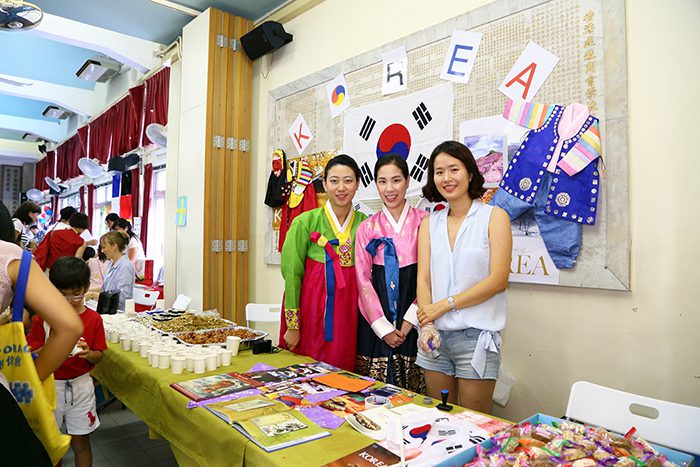
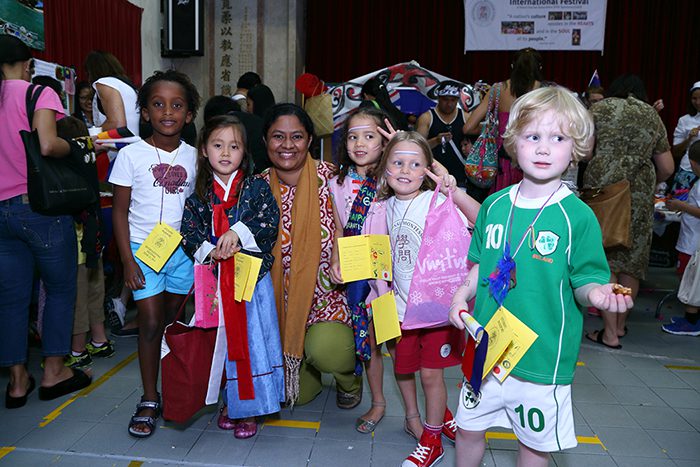
Each June, the IMS Community, supported by our Parent Teacher Association, hosts a joyous cultural gathering of our diverse community: the beloved International Festival. This chance to take a mini tour of the world in the school hall is always embraced by our children and parents alike.
Dressed in their own traditional attire, they get to experience some of the traditions that shape people’s lives both near and far. Our generous band of parent volunteers does a fabulous job to keep the cultural experience sensorially stimulating for our young tourists with an array of delicious cuisine samplings, treasured objects, hands-on crafts, colorful flags, and costumes, and even live performances! We are incredibly proud to be able to share some of the customs ascribed to 25 nations represented at this year’s event; from Peruvian music to Swiss raclette, Japanese fans, Dutch tulips, Maori kapa haka, Korean hanboks, and Indian dancing in silk saris!
To date, IMS’ multicultural community now stems from 46 countries. Our deepest appreciation goes out to our show-stopping volunteers from around the world! In addition, throughout the year, many of our Casa parents also present different holiday traditions that their family celebrates and share their experiences with the children; these cultural presentations help open up the 3-6 child’s awareness that even if we do not share a particular heritage, we often notice that, “We do that in our family too!” Time and again, what we find and aspire to pass on to our students, is that we are all alike. We all need and deserve a warm home. We all eat, sharing stories and laughs over food. We all love our children, hoping and dreaming for them, creating a wonderful world where they can grow into their best selves. We are special individuals; our culture and history can be shared, cherished, and celebrated. We are all humans who deserve respect, kindness, and love. About the International Montessori School (IMS)
Since 2002, IMS has pioneered Montessori Mandarin Chinese – English Dual-Language education in Asia and is now one of the largest Montessori programmes of its kind in the world. At IMS, we recognize and respect the individuality of every child, and aim to nurture their innate curiosity, compassion, and thirst for learning. Providing an environment that celebrates the child’s independence and fosters the motivation to become a lifelong learner who is flexible, responsible, self-regulating, reflective, and persevering is our goal. By equipping them with a solid academic foundation and a strong moral compass, we guide our students to become caring and contributing global citizens of the 21st century.
IMS opened its doors in 2002 with 68 students. With the growing appreciation of the benefits of this unique way of learning, today our Montessori community has grown to almost 900 students from over 40 different countries served in four campuses on Hong Kong Island.
Tomorrow’s Child / Nov 2018 / Pg 23
by Punum Bhatia Ph.D | Early Adolescence (12-15), Later Adolescence (15-18), Lower Elementary (6-9), Mixed Ages, Primary (3-6), Sensorial, Tomorrow's Child, Tomorrow's Child Online Issue, Upper Elementary (9-12), Young Adolescent, Young Adults
Chinese lanterns isolate on white.
Chinese New Year must be around the corner, for our school is decked in red and gold. Chinese New Year is celebrated according to the Lunar Calendar, sometime in January or February each year. It marks the coming of spring and new beginnings and is usually a two-week celebration. As in other cultures, there are many preparations leading up to the event. The week before the holiday, families clean their homes to sweep away all traces of misfortune. Shops and homes are decorated with lanterns, flowers, and bright banners. The color red and fireworks are used to frighten away monsters and evil spirits and to gain the attention of the Gods. On the night before the New Year, families celebrate with a family dinner, board games and midnight fireworks. On New Year’s Day, children are given presents of money in red envelopes and often visit neighbors and friends, with gifts of food and wishes of good fortune.
On the 15th and last day of the New Year celebration, the Chinese people celebrate what is called the Lantern Festival. Everyone goes out at night with colorful lit lanterns. Often children march in a lantern parade. The lanterns are left lit all night to thank the Gods for returning the daylight to them at this time of year. It is a time to celebrate nature, family, and friends and a time to pray for good fortune in the coming year. The day is filled with eating rice balls, family reunions, and solving puzzles often found on the outside of many of the lanterns.
Preparation in our classroom centers around a beautifully adorned display table with red and gold New Year banners, pictures of Chinese people celebrating all over the world, artifacts including the Great Wall, lanterns, dragons, and Chinese dolls. There are New Year signs on our windows and doors that welcome the children and get them excited and
curious at the same time.
In the Practical Life area, there are brightly colored Chinese bowls and spoons for transferring activities, and a variety of new ingredients for pouring including lotus nuts, rice and melon seeds. Chopsticks and a variety of culinary delights, such as star anise and peanuts, replace tongs and beads and erasers. In the flower-arranging area, fresh spring flowers are brought in and arranged for good luck with red adornments. Children learn to make a pot of tea and share it with their friends in a little ritualistic tea ceremony.
In Sensorial, the fabric box has the most gorgeous silks and other fabrics from China for the children to match. In our smelling bottles, we put a variety of spices including star anise, mixed spices, and jasmine tea. The stereognostic bags have Chinese coins, small pandas, moneybags, and little Chinese hats! Among the cultural ideas on our shelves are pairing cards of beautiful silk, weaving, and a box of objects from China, which the children can explore in conjunction with the puzzle map and flag.
The art area is a riot of activities, from appreciating Chinese artists to calligraphy and cutouts of the good-luck sign. There are fans for the children to fold and make and lanterns for them to cut, as well as firecrackers to roll and hang around the classroom.
Our talks during the week about the Chinese New Year describe the rituals performed by the Chinese people at this time of the year. We talk about the significance of the colors red and yellow, which are worn to bring good luck. We read Chinese poems and stories every day. One told about a New Year’s reunion; another of the dancing dragon; but the favorite is An Invitation to the Great Race. This tells the story of how the Chinese solar-lunar calendar came into being. We talk about the animals of the years in which they were born, and they learn more about this in literacy and have an opportunity to color and display the order of the animals in the race.
All of this leads to the very exciting event: the celebration of the festival itself. Family and friends are invited and encouraged to wear red and gold. The children carefully sweep and clean their classroom in true Chinese tradition. The performance starts with the Kindergartners introducing the audience to China and speaking not only of Chinese New Year but also of the Great Wall; the importance of the lion statues; the clothes and the money. It goes without saying that this is all done in Chinese! Chinese New Year songs follow and then, of course, the Lion Dance. It is all energy, color, and life—an experience enjoyed thoroughly by the lion dancers, themselves, and all the audience. Maria Montessori once said that, when bringing in other cultures all items, “would be received with enthusiasm,” and that “a child’s mind can acquire culture at an earlier age when involved with the movement,” as the lion dance shows.
The celebrations continue with The Great Race. The children enact the race called by the Jade Emperor with the animals gathering on the shore and crossing the river. The years of the Chinese calendar follow the order in which the animals arrived on the other side of the river. Their costumes are simple with black leotards and masks and tails. We keep their lines to one or two so they can easily memorize them and recite without stage fright! They do such a good job and hopefully, when they look back at their first acting stints, it will be a pleasant memory.
The Chinese teachers present the children with the lucky red envelope, which have some chocolate coins in them, as is the tradition in China. This is followed with a feast of all things the Chinese people consider auspicious to eat for Chinese New Year. There are dumplings, sticky Chinese New Year cake, watermelon seeds, New Year lucky candy, cookies, oranges, and jasmine tea. I overhear a parent telling a child, who insist the mother try some of the dumplings, “You are so lucky to have these opportunities I never had.”
It is true, the world is a really small place and festivals are a superb way of introducing children to different cultures and providing them with an enriching experience.
“All mankind shares a common history, a common world of cultures, and struggles toward a common future. The child should be given a sense of our heritage, our culture and our potential destiny from the earliest moments of sensitivity.
The needs of mankind are universal. Our means of meeting them create the richness and diversity of the planet. The child should come to relish the texture of that diversity.”
—Maria Montessori
Punum Bhatia, PhD has dedicated her life to Montessori education as a parent, teacher, and teacher educator for nearly thirty years. She completed her Bachelor’s degree in English Literature; earned Masters’ degrees in English Literature and Education from the University of Calcutta; and completed a certificate diploma in Montessori Pedagogy. She earned her Doctor of Philosophy from the University of Colorado Denver in 2012 for her work on the Self-Efficacy of Montessori teachers. In her efforts to understand children and the environments necessary for them to grow and flourish, Punum focuses on Maria Montessori’s original philosophy and techniques. After teaching the Montessori method to cohorts all around the world, she is now the proud owner of her very own bilingual preschool. (www.mcidenver.edu/ www.punumbhatia.com).
Tomorrow’s Child / Nov 2018 / Pg 21
by Anne Courts | Adolescence, Brain Development, Children with Exceptionalities, Communication, Discipline, Empowerment, Infant-Toddler (0 to 3), Language, Lower Elementary (6-9), Mindfulness, Mixed Ages, Montessori Education, Montessori Parenting, Parent Education, Practical Life, Primary (3-6), Psychology, Sensitive Periods, Sensorial, Tomorrow's Child, Tomorrow's Child Online Issue
Thanks to my toy I feel save
Between 15 and 36 months old, in addition to physically increasing in size, toddlers are also learning to develop cognitively, emotionally, and socially. The development of their large muscles allows them to walk, run, and jump, while their small-muscle development helps them gain fine-motor skills, such as eating with utensils or learning to dress themselves. Their language and vocabulary increase rapidly. As toddlers are learning what they are capable of, frustrations in limitations may occur, as well as strong emotions resulting in temper tantrums, especially if they do not have the language needed to express their emotions.
As a toddler learns that he is an individual, separate from his parents and others, he may begin to experiment with boundaries, testing the way things around him work. Because so much is going on in the world of a toddler, both physically and emotionally, it is often difficult to determine whether a child is merely asserting his or her independence, or whether he or she might be facing a more extreme emotional or behavioral disorder. Toddler Montessori classrooms are inclusive environments, designed to allow toddlers of all backgrounds and abilities, including those with emotional behavioral disorders, to function together socially with the goal of functional independence for each individual child.
The Kid’s Mental Health Information Portal website informs, “During a child’s developmental years, they are constantly growing and changing. It is imperative to note that one must keep this in mind when diagnosing and treating emotional and behavioral disorders in children.” (Kid’s Mental Health, 2018). While there are several characteristics that might be linked to a child with Emotional Behavioral Disorder, or EBD, it is important to note that many of these behaviors in toddlers are temporary. It is when the behaviors persist over a longer period of time that we can begin to consider whether a child may actually have a mental health condition.
The causes of EBD are difficult to identify, and there may be several contributing factors, including biological factors, the child’s family and home environment, as well as the child’s daycare or school. When talking about EBD, there are two ways behavior is classified: internalizing and externalizing. A toddler with internalizing EBD is harder to detect, but the child may demonstrate tremendous stress and separation anxiety when separating from a parent or guardian, cry very often and for long periods of time, have difficulties with transitions, be easily distracted, or be unable to focus on an activity. The child may also show excessive clinginess with adults or extreme anxiety when around new people or situations, and might have little or no interest in playing with peers. Social anxiety disorder is a condition in which a person feels so much anxiety about a social situation or the possibility of embarrassment or humiliation that the event becomes fearful and threatening. For a toddler, this social situation could be a school or daycare, or even unfamiliar people visiting the home.
A toddler with externalizing EBD might fail to follow rules or listen to directions, be argumentative with adults and peers, and may exhibit overly aggressive behaviors such as temper tantrums which may include hitting, biting, scratching others, pulling hair, and slamming or throwing objects. The child may have extreme bursts of energy, be hyperactive and impulsive. Oppositional defiance disorder is a condition where a person is very easily annoyed, angry or resentful, quarrelsome, loses his temper, blames others for mistakes, and refuses to abide by rules. A toddler may show these symptoms as he tests limits and boundaries, but a persistent display of these aggressive behaviors, with more than one person, could possibly be linked to EBD.
On a daily functioning basis, a toddler with either internalizing or externalizing EBD may have difficulties in learning to use the toilet or refuse to use the toilet. He may also refuse to eat or sleep, or have trouble sleeping, waking up several times throughout the night. All of these characteristics of EBD cannot be explained by intellectual, sensory, or health factors, and can impact a toddler’s ability to learn and function in his daily activities.
Toddlers with Emotional Behavioral Disorder struggle with behavior challenges, social skills, and academics. Their behaviors often demand the full attention of their parents and teachers, interrupt classroom lessons, and impact their relationships with other children. They often struggle with self-control, are unable to work together with peers, and cannot effectively express their needs. A child with internalizing EBD might avoid peer interactions, while a child with externalizing EBD might act out his frustrations aggressively, using physical violence or by intimidating peers.
Although Emotional Behavioral Disorder can create barriers in the daily lives of children, there are strategies in which parents, families, teachers, and caregivers can use when assisting toddlers and helping them manage their extreme feelings of anxiety, depression, anger, as well as aggressive behavior. Rules and expectations should be simple and clear enough for the toddler to fully understand. Acceptable social skills and language should be consistently taught, demonstrated, and modeled to toddlers. For toddlers who enter into power struggles with adults, the adults can help the toddler feel empowered by providing choices where either choice is acceptable. This offers the child an opportunity to assert himself, and to have a sense of accomplishment. In schools, small-group-instruction might help a child with social anxiety feel less intimidation by others and might also give a child demonstrating aggressive behavior more opportunity for one-on-one individualized interaction from an adult and the adult can closely monitor that child, offering support and feedback. The adult should show compassion and be responsive to the child’s individual needs. The child should always have opportunities to respond. The child with EBD should also be able to take rest periods or breaks from tasks as needed.
Today, because toddlers are now spending more time together in early care and learning settings with other toddlers, it is important to have a focus on both the social and emotional learning of children, in addition to academics. In schools, PBIS, or Positive Behavioral Interventions and Supports, is a system of supports that provides functional assessments and individualized support for children based on evidence of child behaviors. If parents or teachers are unsure of whether their toddler is showing signs and symptoms of EBD, but behaviors have persisted for a considerable length of time, there are websites such as www.understood.org that offer questionnaires to help identify behaviors, as well as suggestions, resources, and other outside supports to help determine the child’s individual needs.
Montessori toddler classrooms are designed to meet the educational and developmental needs of the individual toddler. Because they are seeking independence, toddlers often want to do everything for themselves but have not mastered the skills or been provided with the proper tools to be fully successful. This can be very frustrating for them, and strong emotions often emerge. In the Montessori toddler environment, everything is at the child’s level and accessible, and all materials are toddler-sized. Once given a lesson, the child is free to choose the material he would like to work with. With freedom and self-discipline, the child feels a sense of accomplishment and an increase in self-confidence and self-esteem.
In a Montessori classroom, a toddler with Emotional Behavioral Disorder would be granted freedom of movement around the classroom, freedom to choose his own activity, and space in which to work. The child could choose whether or not to participate in social activities or to work by himself. Because the classroom guide works with the toddlers on an individual basis, the guide would have more opportunities to observe that child on a one-on-one basis, determining that child’s individual needs, as well as new materials to be brought into the classroom to best serve that particular child’s needs. Montessori toddler classrooms include areas of practical life, such as self-care and care of the environment; self-expression through drawing and painting; language in the form of objects and language cards; manipulatives used for fine-motor development; and food preparation. Language materials, manipulatives, and food preparation activities are rotated on a regular basis to keep the children’s interest as well as to introduce new concepts.
A Montessori toddler guide could work with a child with EBD in each area of the classroom to help that child feel heard and understood. The child can learn a language with cards and objects needed to express what he is feeling, use art materials to express himself, focus on taking care of himself and his environment and prepare his own food, which can increase his sense of accomplishment and confidence. These activities build strength in eye-hand coordination and fine-motor skills to help him complete tasks with his hands.
Montessori toddler guides consider what contributes to a toddler’s frustration (such as not being able to have access to materials, or materials being too big to use) and design their classrooms in order to best support him. With fewer daily frustrations, a child with EBD could feel more heard, understood, and supported.
Maria Montessori wrote:
“Let us always remember that inner discipline is something to come, and not something already present. Our task is to show the way to discipline. Discipline is born when the child concentrates his attention on some object that attracts him and which provides him not only with a useful exercise but with a control of error.”
(Montessori, 1949)
Inclusive Montessori toddler environments are intended to offer every child, including children with Emotional Behavioral Disorder, the individualized attention, opportunities for choice, self-expression, and support necessary to guide the child in creating his own self-discipline and to discover his own greatest potential.
Tomorrow’s Child / Nov 2018 / Pg 15
by Christine Lowry | Children with Exceptionalities, Communication, Empowerment, Infant-Toddler (0 to 3), Kindergarten, Later Adolescence (15-18), Lower Elementary (6-9), Mixed Ages, Montessori Administrators, Montessori Education, Montessori Middle School, Montessori Secondary / High School, Montessori Teachers, Planes of Development, Primary (3-6), Sensorial, The International Montessori Council, Upper Elementary (9-12), Young Adolescent, Young Adults
The numbers of students with a variety of behavior and learning challenges are on the rise. In both Montessori and traditional schools and classrooms, school leaders and classroom educators are asking for the knowledge, understanding, and skills they need to support these students.
The current trend in special education is serving children in inclusive classrooms; data indicates that approximately 65 percent of students diagnosed with a special need are being served 85 percent of the time in the regular classroom. Research shows that an inclusive classroom that guides each student on a path of meaningful learning and social-emotional growth benefits all students.
How do we as Montessori educators create a school-wide, inclusive community and still provide a high- fidelity Montessori education to all students? A Montessori-Based Multi-Tiered System of Support (MTSS) is one framework that might be an answer.
As the body of research on child development and learning increases, the field of special education continues to evolve in ways to support students with challenges in behavior and learning in
inclusive classrooms.
A brief history over the past twenty years traces this evolution:
1997 Reauthorization of the Individuals with Disabilities Education Act (IDEA) includes Positive Behavior Interventions and Supports (PBIS).
2001 Pyramid Model: A model to promote positive emotional and social growth and specific interventions for challenging behaviors.
2004 Response to Intervention (RtI) as an alternative model for identifying students with specific learning disabilities. The framework was expanded to include all students.
2010 Prevent-Teach-Reinforce Model for a standardization of the PBIS model.
With the reauthorization of the Elementary and Secondary Education Act, renamed Every Student Succeeds Act (ESSA), PBIS and RtI were dropped and replaced with the Multi-Tiered System of Support framework. ESSA allocates Title I, II, and IV funds to implement this framework at the state, district, and school level.
A most recent analysis of MTSS suggests the importance of linking behavior and learning; the interdependence of classroom management and instruction; a “prevention vs. response” framework focusing on success strategies to minimize challenges; individualized supports based on formative assessment, and monitoring progress to adjust and “fade-out” specific intervention.
A MTSS framework starts with the best universal practices, an intentional teaching of social skills, and specific Individualized Behavior Support plans. MTSS is “label” independent, research-based, and is a prevention vs. response model.
In a Montessori-Based Multi-Tiered System of Support, we can think of these
tiers as:
♣ Tier One Prepare
♣ Tier Two Manage
♣ Tier Three Guide
A Montessori-Based MTSS framework stays true to our best practices based on Montessori philosophy and pedagogy. It is school specific for large, small, public, charter, and independent schools with an implemented framework that is doable, manageable, and beneficial at all levels. It focuses on the whole child.
As Montessori educators, we begin our tasks with reflection. To successfully support all students, we look at our beliefs and assumptions. Some of the assumptions we make in special education are:
♣ All children are unique individuals with strengths and challenges.
♣ All children want to be respected, accepted, and to belong.
♣ Behavior is communication of a need.
♣ Behavior and learning cannot be separated.
♣ There is no single ‘cure’ or model for categories of special needs.
♣ A child is not a label and is not disabled, or disordered.
♣ Behavior can change.
♣ Best practices benefit all children.
♣ Inclusion classrooms benefit all children.
A Montessori-Based-Multi-Tiered System of Support
Tier One: Prepare
As Montessori educators, we know how to prepare an environment for the Plane of Development of the level we teach. We attend to the physical, emotional, social, and learning environment in our classrooms. When we prepare an Inclusive Prepared Environment, we must attend to all those “best-practice” details that maximize success for all students:
♣ A physical environment that is aesthetically pleasing.
♣ An environment with minimal visual/auditory clutter.
♣ A supportive room arrangement with organized, sequenced materials and shelves, and all details needed for independence.
♣ A classroom climate that is positive, responsive, attentive, and has nurturing relationships, which includes an attitude of respect and acceptance, predictable schedules, routines, and structured transitions, and clear, consistent expectations with DAP language and a socially cohesive classroom community.
♣ A learning environment that is engaging for every student, using effective scaffolded instruction, providing opportunities for repetition, self-paced learning, and work, along with freedom of choice.
♣ Teachers use ongoing observation to Inform and Impact lesson planning and individualized instruction.
Tier Two: Manage
We need to attend to a proactive, social-emotional learning environment in our classrooms. We begin by creating a classroom climate that feels safe, secure, and predictable in schedule and routine; we provide clear expectations for behavior and learning, using consistent, developmentally appropriate language to communicate these expectations to our students.
We teach emotional “literacy” and practice for competency so that our students learn to label their feelings, learn to “read” feelings, and learn and use positive ways to handle feelings.
We include Grace and Courtesy lessons for each level (yes, even elementary and secondary), but we go beyond those basics we learned in training to include activities that support our specific group of children in any given year.
In the Montessori classroom, we have many “built-ins” for developing self-regulation, but we can add a quiet space for the child who needs a private place to sit; we can teach our students deep breathing techniques; we can teach any number of self-calming tools; and we can have a positive attitude toward mistakes and encourage program solving.
We can use the foundation of the Peace Curriculum in a responsive and intentional way to teach our students how to talk about conflicts with a peer and, together, come to a resolution. We engage with our students in guided conflict resolution and social problem-solving.
We embed this instruction throughout the day in a very “real-time,” way but we can also include role playing, discussing specifics at a class meeting, and working together to share and solve problems in a supportive and respectful way.
In a Proactive Learning Environment, we are attentive to how we present lessons, use materials and provide engaging activities to differentiate instruction. We can provide learning supports for attention, sensory needs, self-regulation, and learning. We use accommodations and curricular modifications when needed, and we always use positive classroom management systems based on respect, understanding, and acceptance of each student.
Tier Three: Guide
We know we’ll have students who need more support than Tier One and Tier Two provide alone. Students whose challenges are seriously impacting their social development and learning will need Positive Behavior Supports plans (individualized interventions that will teach them positive behaviors to replace their challenging behaviors).
Here we must begin with a Functional Behavior Assessment to discover as much as we can about a student’s struggles. We use Inquiry Observation to gather as much “data” as we can to understand the function of the behavior and what might be the underlying causes that we can address.
We are going to do this with a Collaborative Team that includes the classroom teachers, someone in a leadership role (be it school director, or level director), the family, and other professionals as needed.
As a group, we are going to design the Positive Support Plan that will encourage the replacement behavior and minimize the challenging behavior. The person responsible for each piece of the plan will be identified.
When the plan is implemented in the classroom, Progress Monitoring must begin. Using a variety of methods to observe the progress being made gives us the information to tweak the plan and know when to begin a “fade-out” process as the replacement behavior becomes generalized for the student.
This is only a high-level Overview of a Montessori-Based Multi-Tiered System of Support with the goal of giving you a general idea of how MTSS works and supports a Montessori environment. A crucial partner in the success of the MTSS framework at your school and in your classroom is a consultant familiar with MTSS, special education, and (ideally) Montessori education, who can provide professional development to the staff as it develops a school-wide framework. The consultant must provide embedded positive coaching, mentoring, and support to the faculty with Tier One and Tier Two implementation. The coach will assist the team’s development of individualized positive behavior support plans and the necessary progress monitoring that will result in success for the student, the classroom community, and the teachers.
The ultimate goals of consultation should be much like those we have for our Montessori students: to develop the knowledge, the skills, the confidence, and the competence to independently support an inclusive classroom for all students.
ML / September 2018 / Pg 22
by Matt Johnson | Brain Development, Kindergarten, Language, Language & Reading, Lower Elementary (6-9), Mixed Ages, Montessori Education, Montessori Materials, Planes of Development, Primary (3-6), Sensorial, The International Montessori Council
As an educator and parent, I saw a need for children to have an outlet to explore and develop emotional and social sensitivity. We created ClayMatesTM in a direct response to this need as we now live in an age of overwhelming distractions from media, technology, and entertainment, we see a generation of children who are losing touch with authentic social connection, self-reliance, empathy, compassion, and creative problem solving; all of which can translate into feelings of social separation and anxiety.
ClayMatesTM help quiet these distractions and open new doors to creativity and expression by nurturing positive connections and personal strengths in children. The non-gender-specific figures and colorful, tactile properties of clay engage children to make creative choices as they design their figures and naturally engage in imaginary role-play.
As a toy, ClayMatesTM inspires creation and expression while building the child’s fine and gross motor skills and executive planning skills. As an educational tool, ClayMatesTM are an easy-to-use platform for encouraging complex social and emotional conversations with children at home, in the classroom or in a therapeutic setting. ClayMatesTM are a hands-on, self-directed activity that promotes mindfulness and emotional intelligence. Children place clay on the wooden figures to create physical features to bring characters to life. Educators will find ClayMatesTM help them observe social cognition, emotional intelligence as well as guide without any preconceived outcomes and create an environment that supports age-appropriate social and emotional exploration and growth.
ClayMatesTM Inspire Self-awareness through Social Context and Emotional Response
When ClayMatesTM are introduced to the classroom, therapeutic, and family settings, the results are immediately observable. Using ClayMatesTM, children begin by building a figure of themselves, revealing each child’s perception of her or his own self in the world. Then, the children create figures that represent others in their lives. These two steps are the building blocks for observation, to help children in the process of social and emotional cognition.
As imaginary role-play becomes fluid, we can introduce a host of social context or scenarios for children to explore in their play—from helping around the house to experiences of bullying, to classroom behavior, even how to say “I’m sorry.”
By observing the children’s social and emotional response and problem-solving in their ClayMatesTM play, educators can engage them further in an age-appropriate contextual conversation around the possible solutions or responses to events and issues in their lives.
Here are two examples of ClayMatesTM play that demonstrate the ease and enormous potential they offer:
Example #1. Enacting a Social Scenario with ClayMates: Bullying
In a group of 5 children, each child builds a different figure: the victim, the bully, the bystander, the teacher, and the parent. This creates a social scenario in which each child role-plays and observes how the words and actions of the five ClayMatesTM unfold in the group. As educators, this type of prepared learning environment provides an open-ended dialog that explores the children’s observations and emotions about bullying, the emotional and social responsibility of different roles, some possible solutions, authentic feedback, and the opportunity for social and emotional growth.
Example #2. Developing Emotional Vocabulary with ClayMates
As our emotional vocabulary develops and expands, we, as individuals, learn to engage with our self and others with more understanding, patience, and acceptance of diverse thoughts and feelings. ClayMatesTM is an effective tool for building this vocabulary through role-play with directed emotional context.
We can attach to the bottom of every ClayMate figure one of 12 color-coded discs associated with 12 different emotions. Initially, we introduce the basic emotions such as anger–RED, sadness–BLUE, fear–PURPLE, yellow–HAPPY and integrate them into a social scenario. Each child then role-plays their ClayMate figure’s designated emotion. At first, all participants know who is performing which emotion. Each child acts out and experiences their own assigned emotion and observes the other participants doing the same. As students become more comfortable with this role-play, they are assigned an emotion “secretly” so that only they know what it is, and other participants try to figure it out. This exercise deepens the children’s sense of different emotions: both how to express them and how to relate and respond to others’ emotions.
As a fun, flexible, and expressive toy and tool, ClayMatesTM builds a foundation of social and emotional awareness so that children can develop authentic and meaningful connections, recognize social and emotional cues, and strengthen their capacity to problem solve and meet challenges with resilience. ′
Matt Johnson is married with two adult children and has worked with children for over 35 years as a gymnastics instructor, mentor, and advocate. As an instructor he has help students realize their physical and mental potential. As a mentor, he has supported students in building character, self-esteem and achieving personal goals. As an advocate, he has been outspoken in support of responsible coaching practices, resiliency in athletics and the idea of empowering children to be confident, competent, contributors who are self-sufficient, with skills for coping in life. Matt is a board member of SPARKindness and is the chairperson for their resilient athlete program. SPARK is a community-based organization that provides educational opportunities to families that focuses on understanding diversity, inclusion, resiliency, recognizing the difference and addressing social and emotional issues that affect families and the community. Matt also works with teens and adults as a personal trainer and life coach. Where he support clients in goal setting, recognizing their potential and helping to navigate the obstacles to success.
ML/ September 2018/ pg 27




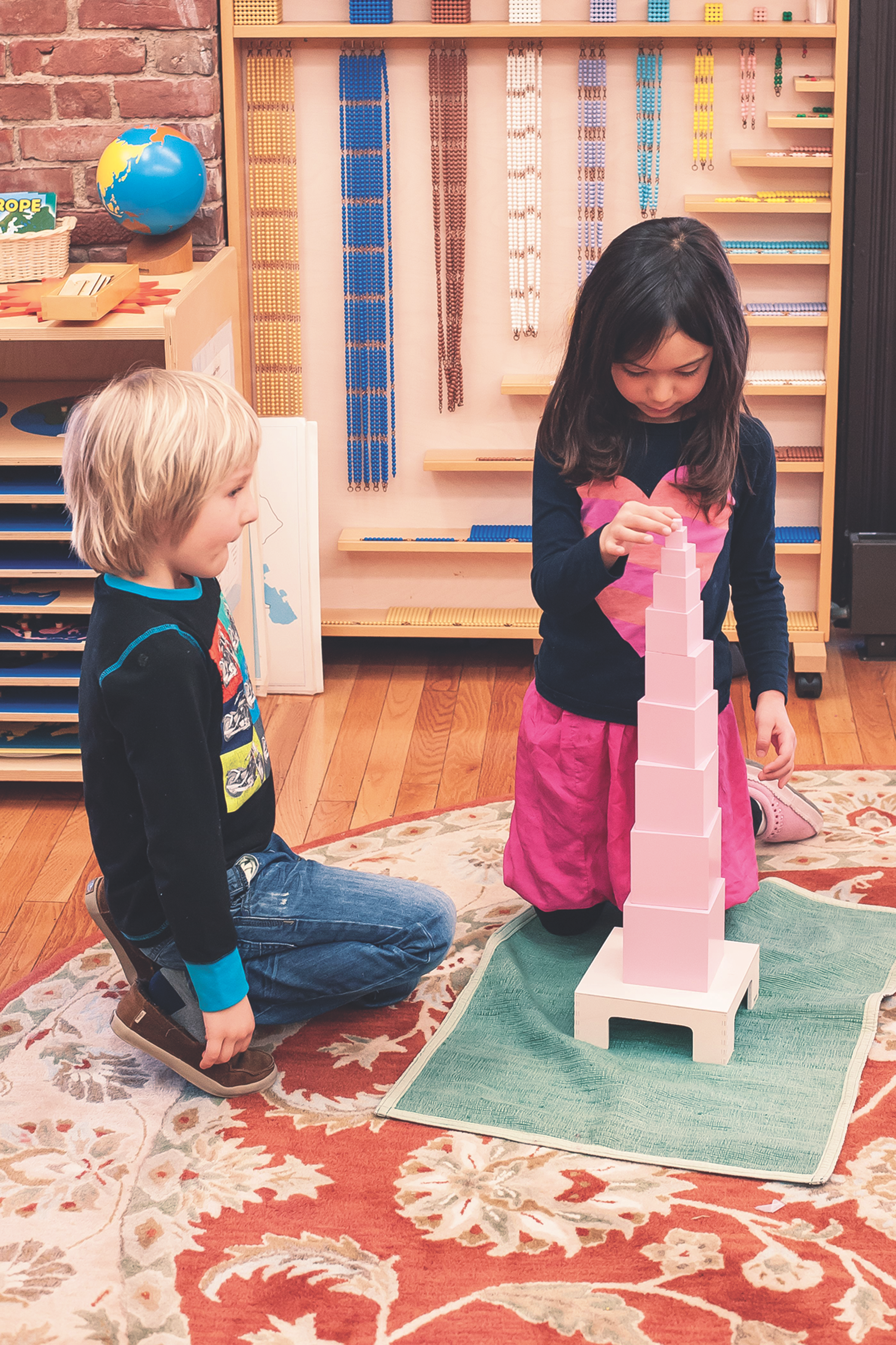


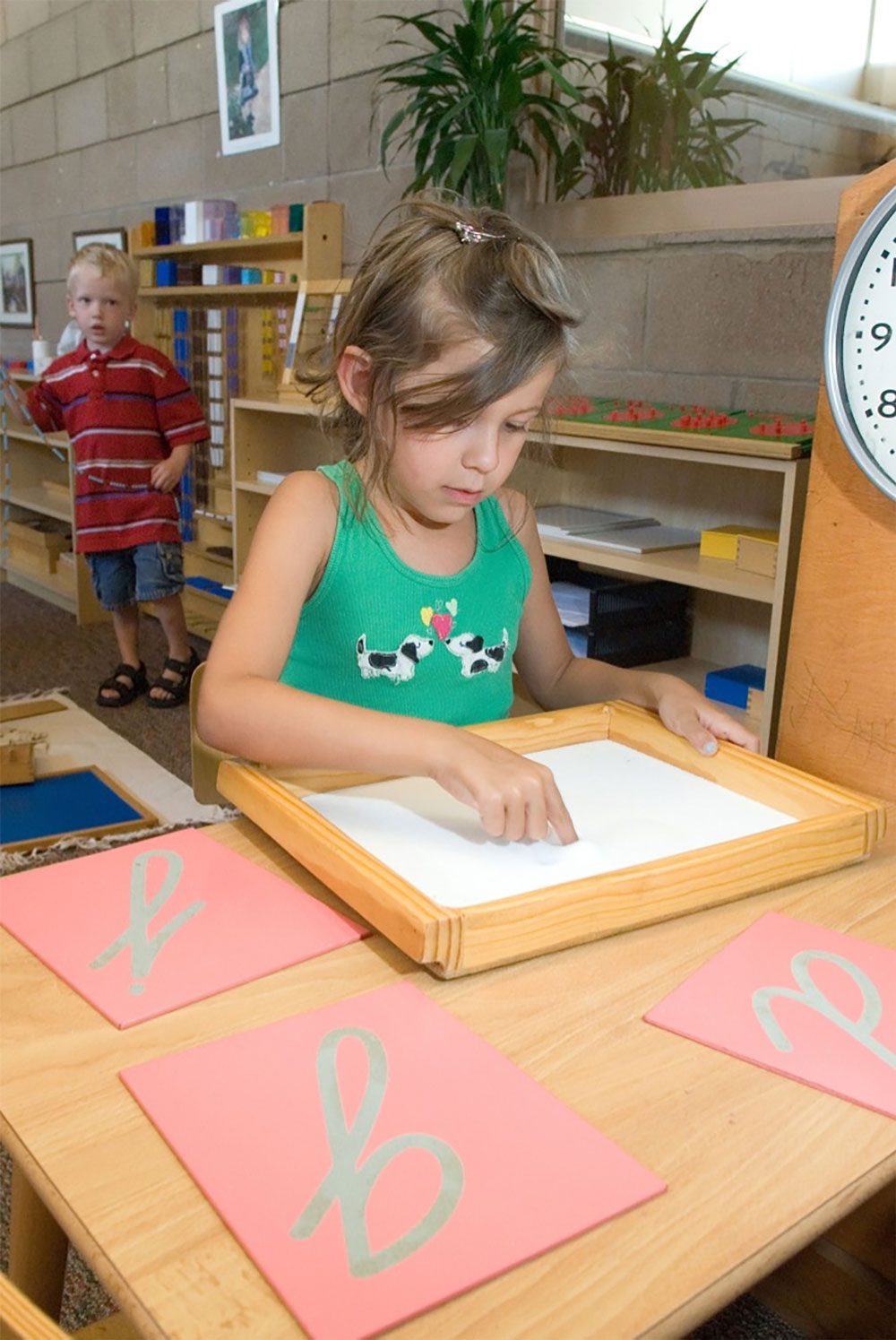
 If you are encountering challenges with a child learning handwriting, look to the order within their mind. If it is lacking, draw the child’s attention to the activities of Practical Life. Help them increase their attention span and concentration by scrubbing tables, washing dishes, ironing clothes, preparing food, sewing, etc. When their Practical Life work becomes organized, you will see the results in all of their efforts across curricular areas.