The Moment a Parent Begins Looking Elsewhere: A lesson for every Montessori school leader

The Moment a Parent Begins Looking Elsewhere: A lesson for every Montessori school leader

curiousity

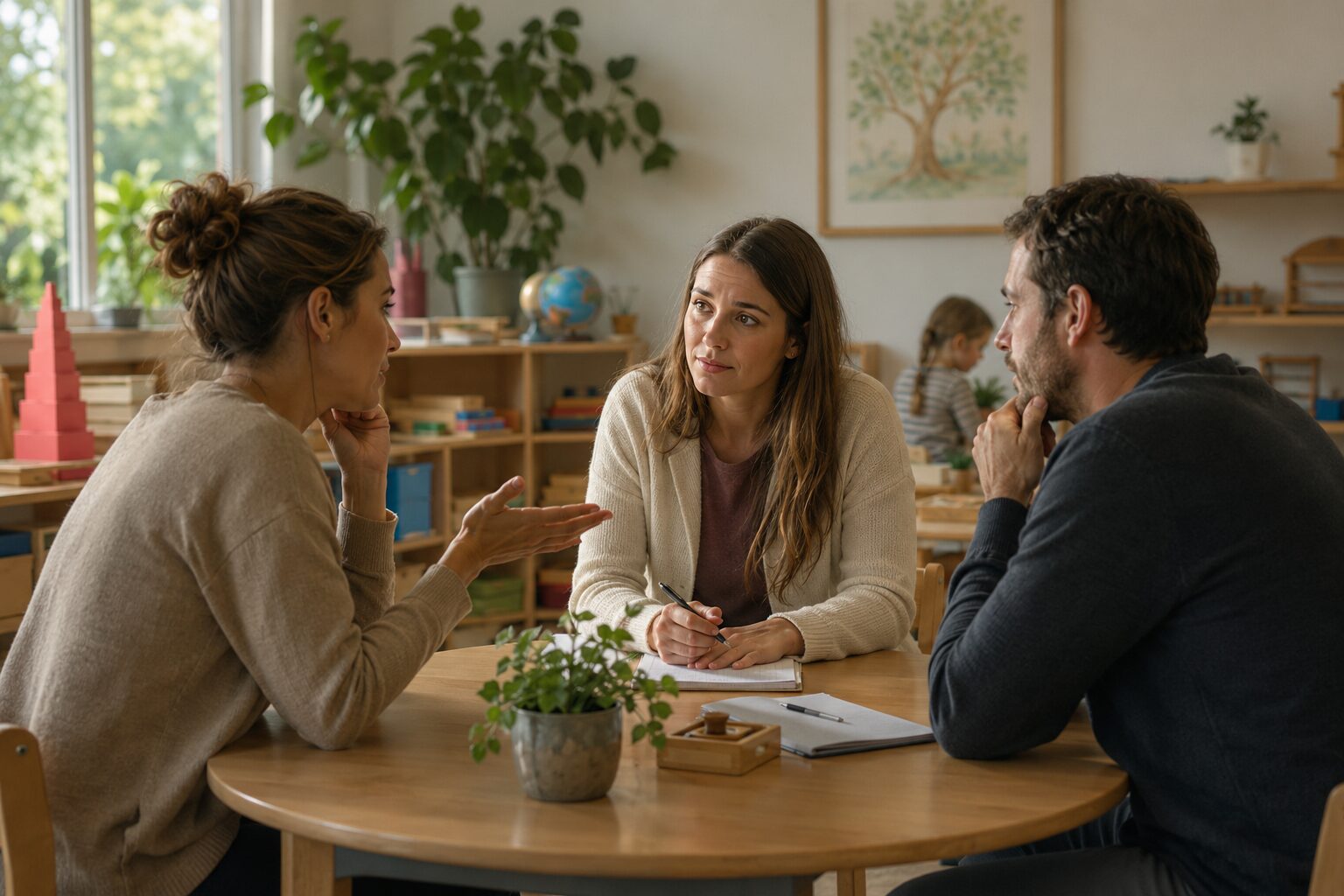
A few weeks ago, I received a phone call from a mother whose identity — and whose school — will remain completely confidential.

She wasn’t angry. She wasn’t demanding a tuition refund. She wasn’t threatening legal action. She simply sounded tired.

Over the next hour, I realized she wasn’t calling to ask about Montessori education. She already believed in it. Her family had chosen Montessori years earlier because they loved everything it stood for: respect for the child, hands-on learning, mixed-age classrooms, independence, and the goal of helping children become capable, confident human beings.

Nor was she really calling because her daughter had a developmental challenge. Like many children, her daughter was progressing differently in one area. The family had sought professional evaluations, embraced appropriate support services, and understood that development is rarely a perfectly straight line.

What she wanted was something much simpler.

She wanted to feel that the school was her partner.

That conversation has stayed with me because it illustrates something many Montessori schools underestimate: parents rarely leave because of a single event. They leave because confidence slowly erodes.

It Almost Never Starts With Academics

As the mother described the past school year, a familiar pattern emerged.

She had asked questions. She had volunteered. She had asked what she could do at home to reinforce classroom learning. She wanted materials, guidance, and a place on the team.

From her perspective, communication became increasingly inconsistent. Months passed before concerns that had apparently been developing all year were finally surfaced during a conference. She wasn’t upset that her daughter needed additional support. She was upset that she hadn’t known sooner.

By the time she called me, the academic questions had become secondary.

The real question had become: “Can I trust this partnership?”

That is a very different question.

It Isn’t Just the Child Who Is Hurting

One insight that profoundly shaped my own thinking came from my dear friend and colleague Ann Epstein. Ann often observed that when parents first realize their child may have a developmental delay, a learning difference, or simply a different developmental pace, they frequently experience something very much like grief.

First comes denial. Then anxiety. Then parents are searching the internet late at night, seeking second opinions, comparing their child to every other child in the classroom, replaying conversations with teachers in their minds. Every assessment, every conference, every report suddenly carries enormous emotional weight.

Sometimes there is guilt. Sometimes there is genuine mourning — not because they love their child any less, but because they must gradually let go of the future they had unconsciously imagined and embrace the wonderful child who is actually before them.

Most parents emerge from that journey as fierce, committed advocates for their children. But they rarely stop worrying.

As educators, it is easy to forget what it feels like to carry that weight every day. When parents ask more questions than other families, they are not necessarily questioning our competence. Often they are simply trying to quiet fears that never completely disappear. Recognizing this doesn’t mean schools must satisfy every request or defer to every concern. It does mean we should approach these conversations with more empathy than we might naturally think to offer.

The Pressures Every School Is Carrying

Before we judge any school too quickly, we should acknowledge another reality.

Montessori schools today are navigating extraordinary challenges. The pandemic accelerated the retirement of many experienced teachers. Enrollment patterns shifted. Staffing shortages remain severe. Many dedicated young educators are entering classrooms with great enthusiasm but far less experience than their predecessors.

Administrators spend enormous energy supporting exhausted teachers, preventing burnout, responding to anxious families, recruiting new staff, and keeping the school financially healthy. These are not trivial demands, and they do not stop compounding.

Quietly, many teachers ask themselves difficult questions: Why did we enroll another child whose needs exceed what we can realistically support? Am I failing this child? How can I possibly give every child what they deserve? Most entered Montessori because they wanted to change children’s lives. Nothing is more painful than feeling they are falling short of that goal despite working as hard as they know how.

When teachers become overwhelmed, communication is often one of the first casualties. Emails go unanswered. Difficult conversations are postponed. Parents receive reassuring generalities rather than honest, ongoing dialogue — not because teachers don’t care, but because they are exhausted, emotionally depleted, and afraid they have no satisfactory answers.

This is worth saying plainly: one of the hardest decisions any Montessori school must make is not simply whether to admit a child, but whether the school has the staffing, training, classroom support, and resources necessary to honor the commitment it is making to that child and family. Every acceptance letter is, in effect, a promise. If we promise more than our teachers can realistically deliver, we place both teachers and families in impossible situations — and then wonder why trust breaks down.

What Parents Expect

One of the greatest misconceptions in school leadership is the belief that parents expect perfection.

Most don’t.

They understand that children develop differently. They understand that teachers are human beings. They understand that mistakes happen.

What they cannot tolerate for long is feeling alone.

When a parent begins to believe that the school is protecting itself rather than partnering with the family, trust begins to erode. Every unanswered email reinforces that belief. Every delayed conversation confirms it. Every surprise at conference time makes it worse. Once confidence starts slipping, parents begin interpreting everything through that lens.

Montessori Was Never Intended to Be Transactional

Maria Montessori envisioned something much richer than a school that delivered instruction. She imagined a community — teachers, parents, and children working together in service of the child’s development.

That partnership requires honesty. Sometimes difficult honesty.

If a child is struggling, parents deserve to know early — not to alarm them, but because we want them standing beside us while we solve the problem together. And schools, in turn, need parents to understand that not every developmental difference requires panic. Children mature at different rates. Learning unfolds unevenly. Progress is rarely linear.

Trust allows both truths to exist simultaneously.

The Question Every School Should Ask

A school’s greatest asset is not its beautiful classrooms, its long waiting list, or even its faculty. Its greatest asset is trust.

When parents trust a school, they forgive mistakes, extend patience during difficult years, and become its most effective ambassadors. When trust disappears, even genuinely excellent schools struggle to hold families.

That leads me to a question I believe every leadership team should ask regularly:

“If one of our parents were quietly losing confidence in us today, would we know it?”

Would someone notice? Would someone reach out? Would someone invite a conversation before that family began touring other schools?

Or would we first learn about the problem when the withdrawal form arrived?

Three Groups, One Goal

As I reflected on that phone call, I kept returning to the same thought. This isn’t really a story about one family or one school. It is a story about three groups of good people, each carrying burdens the others cannot fully see.

Parents are frightened. Teachers are overwhelmed. School leaders are making impossible decisions every day while trying to hold everything together.

The goal is not to eliminate those realities — that isn’t possible. The goal is to build enough trust that everyone remains on the same side of the table. When that happens, parents become more understanding, teachers become more confident, and school leaders can lead rather than simply react. Most importantly, children receive what they need most: adults who are genuinely united in their commitment to helping them flourish.

A Final Thought

The mother who called me wasn’t looking for someone to tell her the school was terrible. She wasn’t looking for someone to validate her frustration. She was looking for reassurance that someone understood what she was trying to accomplish — and that advocating for her daughter did not make her a difficult parent.

Every Montessori school will disappoint a family at some point. Every teacher will have conversations that don’t go well. Every administrator will make decisions that some parents question. That is inevitable.

What matters is whether, during those difficult moments, parents still believe the school is standing beside them rather than across from them.

Montessori education has always emphasized educating the whole child. Perhaps we should remind ourselves more often that we also educate whole families. Parents need guidance. Teachers need encouragement. School leaders need the courage to acknowledge difficult realities before they become crises.

Because the moment a parent stops feeling like a partner is often the moment they begin looking elsewhere.

And rebuilding trust is always harder than preserving it in the first place.

Classroom Management that Fosters Self-Directed Learning

Classroom Management that Fosters Self-Directed Learning

by Tim Seldin

In every Montessori classroom, the atmosphere is as important as the materials on the shelves. Children learn best in an environment where concentration, respect, and independence are carefully protected. To create such a space, we must remember that classroom management is less about control and more about tone, modeling, and partnership. Montessori guides are called not to “manage” children in the conventional sense, but to prepare a climate where self-discipline, self-direction, and love of learning can flourish.

The Role of the Tone Keeper

Every classroom needs at least one adult who consciously serves as the tone keeper. This role is more than simply maintaining order—it is about preserving a climate of calm, respect, and purposeful work.

Children absorb the emotional atmosphere of a room as readily as they absorb language. If the adults are hurried, distracted, or tense, the children mirror that energy. Conversely, when we embody grace, courtesy, and attentiveness, children feel secure and respond by settling into their own work.

A calm adult presence communicates: this is a place where we work with care and respect. In practical terms, the tone keeper:

  • moves slowly and with purpose,

  • speaks softly and with intention,

  • notices when the classroom energy begins to rise and gently redirects it,

  • serves as an anchor when children feel uncertain.

When the adult consistently radiates steadiness, the children internalize it. In time, the classroom itself begins to regulate and sustain its own peaceful rhythm.

Teaching Grace and Courtesy

Grace and courtesy lessons are not optional; they are foundational. Just as we give lessons in math or language, we must intentionally model how to greet, wait, interrupt politely, offer help, and care for the environment.

These lessons are short, practical demonstrations, often lasting only a minute or two. For example:

  • showing a child how to walk around a rug without disturbing another’s work,

  • practicing how to say “Excuse me” and place a hand gently on someone’s shoulder instead of interrupting,

  • modeling how to push in a chair quietly or roll a work mat neatly.

When given consistently, these lessons create a culture of civility and respect. Children learn not only how to behave, but why: they come to see that their actions contribute to the well-being of the whole community. Grace and courtesy lessons equip them with the social tools to navigate challenges peacefully, reinforcing the culture of respect that supports concentration.

Redirecting with Respect

Even in the most peaceful classroom, children will sometimes be noisy, distracted, or disruptive. Our task is not to scold but to guide. Montessori spoke of “helping the child help himself.” That begins with redirection delivered in a way that preserves dignity.

Instead of “Stop that!” we might say, “Let me show you another way.” Instead of correcting harshly, we might quietly kneel beside a child and ask, “Would you like me to help you begin again?”

Respectful redirection does three things at once:

  1. It preserves the child’s self-esteem.

  2. It protects the concentration of others.

  3. It strengthens trust between adult and child.

When redirection becomes a habit of kindness, children learn that mistakes are not failures but opportunities to try again. Over time, they internalize this compassionate discipline and apply it to themselves.

Observation Before Action

Montessori insisted that guides become scientists in the classroom, always observing before intervening. Every behavior carries a message. A child may abandon work because it is too difficult, too easy, or because emotional needs are unmet.

Before stepping in, pause and ask:

  • What is this behavior telling me?

  • Is the environment supporting this child?

  • What need might be unmet—social, emotional, or developmental?

For example, a child who wanders may be seeking more challenging work. A child who interrupts repeatedly may be craving connection. A child who grows frustrated may need a fresh presentation or reassurance.

By seeking the root cause rather than reacting to the surface behavior, we respond thoughtfully and effectively. Observation helps us see the child more clearly and support their growth with compassion.

Supporting Work and Concentration

One of our greatest responsibilities is to protect the child’s concentration. Interruptions—whether from adults or peers—fracture the flow of deep engagement. Montessori called this “false fatigue”: the restless energy that arises when concentration is broken too soon.

We can support concentration by:

  • protecting the three-hour work cycle,

  • minimizing unnecessary interruptions,

  • encouraging children to complete the full cycle of activity (choose, work, return),

  • offering lessons again when clarity or confidence is lacking,

  • preparing transitions with predictable cues so children know what to expect.

When concentration is respected, children not only learn academic skills but also build the inner discipline, resilience, and satisfaction that come from sustained effort.

Partnering with Parents

Our success as guides depends on building strong alliances with parents. Children thrive when home and school share consistent values and expectations.

When parents understand Montessori principles, they become partners rather than spectators. We can:

  • invite them into parent education evenings,

  • share stories and observations that show how independence and respect unfold at school,

  • encourage them to adopt simple practices at home—like giving children time to complete tasks independently, or inviting them to contribute to family life.

When challenges arise, partnership is essential. A child who is struggling benefits most when parents and teachers work together with shared trust. By approaching parents not as critics but as allies, we create a united circle of support around the child.

Key Reminders for Montessori Teachers

  • A calm, purposeful adult presence sets the tone of the entire classroom.

  • Grace and courtesy lessons equip children with essential tools for community life.

  • Respectful redirection keeps children on track without undermining their dignity.

  • Careful observation allows us to understand and respond to underlying needs.

  • Partnerships with parents create consistency and support for every child.

When we attend to these essentials, our classrooms become communities of peace and focus. The children experience not just academic progress, but also the inner growth that prepares them for a lifetime of independence, responsibility, and joy in learning.

Checklist for Teachers

Adult Presence

  1. Ensure one adult is always serving as the tone keeper of the classroom.

  2. Model calm, respectful, and purposeful behavior at all times.

  3. Demonstrate follow-through and responsibility in daily routines.

Grace and Courtesy

  1. Intentionally teach lessons in grace and courtesy: greetings, waiting, interrupting politely, offering help.

  2. Reinforce respectful interactions consistently through modeling and practice.

  3. Use grace and courtesy as the foundation for building community harmony.

Observation and Redirection

  1. Observe carefully before intervening—ask what need underlies the behavior.

  2. Respond thoughtfully to misbehavior rather than reacting hastily.

  3. Redirect with dignity using gentle, clear, and respectful language.

  4. Identify patterns in behavior and adjust the environment or guidance accordingly.

Supporting Work and Concentration

  1. Protect uninterrupted work cycles and minimize unnecessary interruptions.

  2. Encourage completion of the full work cycle through gentle prompting.

  3. Offer lessons again when clarity or confidence is lacking.

  4. Provide purposeful transitions with predictable cues and advance notice.

Parent Partnerships

  1. Communicate openly with parents about classroom practices and expectations.

  2. Share observations and strategies so home and school can work in harmony.

  3. Invite parents into the Montessori approach, helping them understand the importance of concentration, independence, and respect.

  4. Approach challenges collaboratively, positioning parents as allies on the child’s team.


Gift Ideas for age 1-2

Gift Ideas for age 1-2

Toys play an essential role in the developmental journey of children, particularly during the critical years between ages 1 and 2. These formative years are a period of rapid growth and exploration, where toys become tools for learning and discovery. Specifically designed to stimulate creativity, enhance cognitive abilities, and promote physical dexterity, toys for this age group are crucial in nurturing various developmental aspects. From timeless classics to innovative designs, the diverse selection of toys available for children aged 1 to 2 creates an enriching environment that fosters holistic growth and joyful exploration.

A timeless addition to any nursery, fostering endless creativity and imaginative play for little ones. These blocks in soothing neutral hues offer both entertainment and developmental benefits, encouraging cognitive skills and fine motor development through hours of engaging play.

This engaging toy features colorful balls that roll, drop, and slide, aiding in the development of coordination and motor skills. Recommended for ages 12 months and up, fostering interactive and safe play.

A delightful toy encouraging hand-eye coordination as children hammer balls into the box, delighting in the rolling fun. Plan Toys® pioneers sustainability, crafting toys from reclaimed rubberwood, offering a more eco-conscious approach to playtime. Enjoy interactive play and skill development while supporting a greener future with this innovative and entertaining toy.

This toy fosters hand-eye coordination and gross motor skills. These easy-to-handle animals inspire imaginative adventures and are conveniently stored on a practical wooden plate after play.

This is a delightful toy that encourages motor skills in children aged 18+ months. Crafted from wood and plywood with an exclusive design, it doubles as a charming room decor piece.

The Rocker Climber is a versatile playroom essential designed for children to explore their physical abilities and boundaries. Crafted from solid birch and birch plywood, it offers a non-slip surface, 11 grabbable bars, and 4 handles for easy mobility. This Climber Collection piece supports motor skills, encourages independent play, and promotes cognitive development, catering to various developmental stages and providing diverse play opportunities.

An Education Tower supports toddler independence in daily tasks with sturdy birch wood construction and adjustable features. It ensures safety and stability while promoting learning and motor skills development. This tower enables children to participate in various activities, granting parents more mobility and bonding moments during shared experiences.

Social Justice Parenting book review

Social Justice Parenting book review

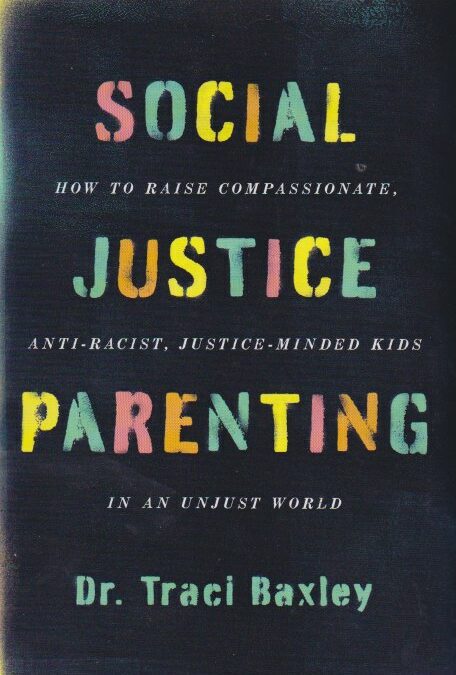
Social Justice Parenting

Written by Dr. Traci Baxley

A friend of mine gave me a copy of this book, and I’m so glad that he did! Dr. Baxley is an interesting, honest, and insightful author. She has taken social justice and parenting (which makes some of us a bit uncomfortable) and delivered a book for parents and other caregivers for children. She has produced a work that not only goes straight to the heart of the American ‘legend’ that is more commonly known as American ‘history.’

Many of the ideas and strategies that Dr. Baxley espouses in her book are very much in alignment with Dr. Montessori’s pedagogical method and philosophy. She cites values such as: respect for self and others; giving children a voice; actively seeking change; problem solving as a family in preparation for problem solving in their community and country; and trusting intuition along with factual information as the main components for social-justice parenting. And she shares real life stories to demonstrate how to put these values into practice.

“Modeling Advocacy” is just one of the chapters in this book. The author states in many of the chapters that parents (adults) in children’s lives must model through their actions the values and principles that they want children to learn and practice in their lives. She states, “Self-education, effective communication, and maintaining a support system are the keys to self-advocacy.”

One of the main characteristics of Dr. Baxley’s writing is that she lets the reader know that parenting takes conscious awareness of ourselves and others, that it can be challenging, that she has made mistakes with her own children along the way, and that we can mend mistakes and move forward. Readers will feel encouraged, develop new parenting skills, and appreciate their own commitment to children and to helping make our world a better place to live for all people.

I highly recommend this book for your adult library and for parent or faculty discussion groups. It can be purchased from amazon. com and other booksellers.

How Your School Can Get its Message Across to the Community

How Your School Can Get its Message Across to the Community

Helping Parents to Hear the Montessori Message


By Matt Hillis and Morgan Childers

The words marketing and public relations are rarely mentioned around the grounds of the typical Montessori school until the need is critical, and often resources and budgets for such endeavors are inadequate. If this sounds like your school, you are not alone. 

Apart from a handful of large schools that employ a marketing staff, most Montessori programs consist only of teachers, assistants, and few administrators. These individuals’ unwavering dedication to children, parents and the classroom is unparalleled, but all too often their focus on education causes proper marketing and public relations programs to be overlooked. 

Unfortunately, when marketing is set aside, it often results in a classroom that falls short of ideal enrollment numbers. Those unfilled classroom spaces, no matter how few, represent the continuing financial vitality of your school. Full enrollment can equate to teacher bonuses, updated materials, new playground equipment, qualifying for community sponsorships, and more. 

Clearly, the question is not if to market your school; but how to market your school and to whom? 

The Ideal Family

One of the challenges in operating a quality Montessori program is enrolling the right type of family. Many schools rely on the old axiom that “every child is a Montessori child.” Unfortunately, not every family is a Montessori family. 

In general, focus your marketing efforts on families who are looking for one or more of the following:

  • child/day care
  • early childhood education
  • public school alternatives
  • a Montessori program

Of these four, the last group is the most desirable. These families understand classroom methodologies, are likely to respect your teachers, refer your school to friends, and support school functions. These families are also likely to stay through each three-year cycle until their child completes your program. 

Even if you are the only Montessori school in the area, it does not follow that your ideal families will automatically flock to your school. They need to know that you are dedicated to the Montessori method and not just relying on the name. 

For this group, it is critical to focus on a strong public relations and outreach program that demonstrates your commitment to the community while emphasizing all things Montessori. Your ideal family is intelligent and informed – they will not choose your school without researching their options. Your efforts will ensure top-of-mind awareness during their decision-making process.

Marketing to and Working with other Targeted Audiences

With a few variances, the other three groups of families listed above will respond to similar fashions of marketing. This may include targeted mail, newspaper advertising, sponsorships, newsletters, television and radio advertising, and many others. 

Before you initiate any of these tactics, be sure to have a clear and concise strategic plan that is consistent with your overall goals. Create a plan defining your target market, marketing methods, timelines, evaluation tools, and budget. 

When Marketing Works, Get Ready to Work

If successful, your marketing efforts will also result in families that know very little about Montessori enrolling in your school. 

The simple truth is that many families are looking for safe and reliable child care, especially in the toddler and pre-school classes. However, these families can be just as dedicated as your most ardent supporters with little more encouragement and the right information. A marketing program can help these families recognize the benefits of Montessori education and marvel at their children’s accomplishments. 

Demographics

Eventually, proper marketing will result in you working with various companies including mailing list resellers, broadcasters, designers, and publishers. Each will discuss your target market and demographics in order to determine the best message, distribution, and placement of your message. The better you understand your typical customer, the better your marketing dollars can be utilized.

Income, Proximity, and Education

If you are operating a tuition-based program, then the most important trait of your target market is, arguably, income level. A good rule of thumb is to target families with income at least 10 to 15 times that of your annual tuition. Barring scholarships or financial aid, a family without the proper disposable income will be unable to afford your school.

Creating a parent survey will help determine the likely maximum distance that people are willing to travel to your school. This distance will vary by community, depending on population density, traffic patterns, and competition, but will provide you with a logical radius in which to focus your efforts. 

Finally, the education level of your target family is an important demographic factor. With few exceptions, the higher the education level of the family, the more likely they will be interested in exploring alternatives such as Montessori. 

Missing the Target, but Hitting the Mark

Naturally, other groups will see your marketing and you will benefit from it. For example, future parents who are regularly exposed to your messages will naturally think of you first when the time comes. Similarly, grandparents, community leaders, educators, and news editors will notice your school and each of these groups can have a powerful connection to your potential customers. 

Tell the Community Why or They May Never Know

No matter how impressive your school is, few people will know you exist if you don’t have an active marketing program. The days of relying on word-of-mouth alone are over. As the private education market becomes more competitive, a strong marketing and public relations program is essential for successful Montessori schools. 

Matt Hillis and Morgan Childers own and operate Go Montessori, a company specializing in developing marketing and public relations programs and materials for Montessori schools across the nation. Email your comments to info@GoMontessori.com.

This article appeared in Montessori Leadership magazine

IMC Members’ Resource Center

IMC Members’ Resource Center

Access to the IMC Online Resource Center

  • Archives of past issues of Montessori Leadership magazine
  • Years of videos recording of our weekly webcasts for Montessori school leaders
  • More than 20 years of articles on almost every aspect of Montessori school leadership
  • Articles on innovative programs, resources, and trends in Montessori education
  • Sample forms and documents
  • Stories about member schools
IMC School Accreditation

IMC School Accreditation

The IMC Montessori School Accreditation program is international in scope, user-friendly, supportive, and designed to help schools grow stronger through the process of self-study and external evaluation. Any full school member that has completed its third year of running a fully-implemented Montessori program is eligible to begin the process of self-study and candidacy.

Free Live Weekly Webcasts 

Free Live Weekly Webcasts 

This is an ongoing program of free webcasts for Montessori school leaders sponsored by The Montessori Foundation. Recordings are archived in the IMC members’ resource center. 

Free Annual Consultation for IMC Schools

Free Annual Consultation for IMC Schools

School members may request an hour of free consultation a year by phone, Zoom, or other video meeting software each year. Should your school wish additional consultation, IMC School Members receive a discount on Montessori Foundation school consultation and professional development services.

IMC School Member Certificate

IMC School Member Certificate

All member schools receive an IMC membership certificate and a copy of the IMC Code of Ethics, suitable for framing. Accredited schools receive a special certificate of their accreditation.

IMC Member Discounts

IMC Member Discounts

IMC members are eligible for discounts on registration to Montessori Foundation/IMC courses, workshops, conferences, and many publications and programs that we offer. School members can apply their discount to any of their faculty or staff who wish to register for sponsored programs.

School Mentorship

School Mentorship

The IMC School Mentorship Program is a network of member schools that offers advice and informal support without charge to fellow IMC schools.

Our Mission And Story

Our Mission And Story

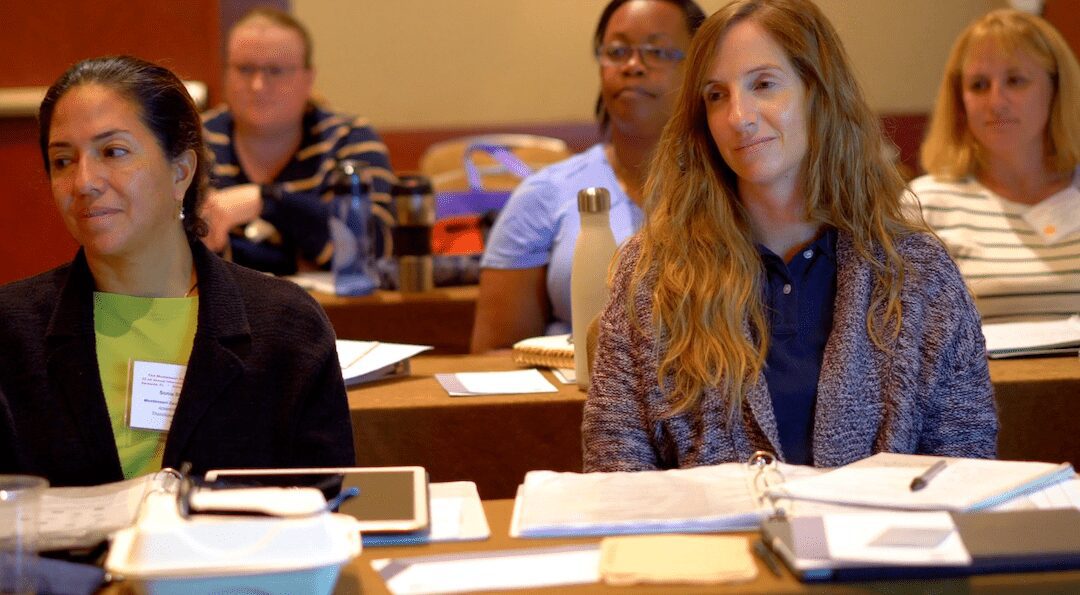
conference attendees

Welcome to The Montessori Foundation. The Montessori Foundation and its membership organization, The International Montessori Council, are non-profit educational organizations, that nurture, inspire, and support the development of strong, successful Montessori schools around the world.

The Montessori Foundation is a 501(c)3 nonprofit organization dedicated to the advancement of Montessori education in the United States and abroad. It was established in 1992 to create an independent source of assistance, encouragement, and support for the international Montessori community.

The Montessori Foundation works with the entire Montessori community, regardless of affiliation, as well as parents, educators, schools, and schools systems that are interested in learning more about the insights, research, and approach pioneered by Dr. Maria Montessori.

School Consultation

Our Montessori School Consultation Service provides a wealth of knowledge and experience. We work with boards, Heads of Schools, and faculties on all issues related to creating, managing, improving, and ‘growing’ a Montessori school. For more information, CLICK HERE.

Montessori Leadership Institute

Our Montessori Leadership Institute offers a broad program of in-depth and practical workshops and courses in Montessori leadership. We offer seminars on a wide range of topics, from school design to fund raising, recruitment, internal communications, and curriculum development. Our courses are offered in person and online. For a current schedule and more information, CLICK HERE

Conference / Events

In addition to ongoing Leadership Workshops, we host an annual international conference every year in Florida and other locations in the USA and abroad. CLICK HERE FOR OUR CONFERENCE SCHEDULE.

Our Membership Organization: The International Montessori Council (IMC)

In 1998, The Montessori Foundation organized an independent membership organization, The International Montessori Council (IMC), to offer a wide range of programs and support to Montessori schools around the world, including school accreditation, teacher education, and mentorship. Montessori Leadership is published by the Montessori Foundation on behalf of the International Montessori Council. It is written for Heads of Schools, educational coordinators, Montessori teachers, parent leaders, and members of school boards. For more information, CLICK HERE

The Montessori Family Alliance

The Montessori Foundation’s first project was to establish a trusted independent resource  to speak directly to parents. We began with Tomorrow’s Child, the only magazine written specifically for parents with children enrolled in Montessori schools. Tomorrow’s Child is also enjoyed by Montessori teachers and administrators around the world. In the 30 years that it has been a part of the Montessori community, our work evolved into the Montessori Family Alliance, a network of Montessori parents, teachers, and heads of schools in North America and abroad. We offer both family and school group memberships. The Family 

 For more information, CLICK HERE TO GO DIRECTLY TO OUR BOOKSTORE.


Lab School

Through our Lab School, The NewGate School of Sarasota, Florida, we work to develop and implement new programs and curricula, test new resources, and integrate Montessori “best practices” with 21st century technology. One of our key projects involves the develop of a replicable program and secondary Montessori curriculum that is capstoned by a Montessori International Baccalaureate Diploma Program For more information, CLICK HERE.

Collaboration with Outside Service Providers


The Foundation works with external providers that serve Montessori school administration, such as:

• MontessoriCompass (online student record keeping, progress reporting, and parent communication)
• National Montessori School Insurance Program
• The Montessori Rosetta Stone Online Program
• Montessori DonorPath support for fundraising and grant writing
• Montessori/Semble (Crowd source low cost loans to help finances campus expansion
• Montessori Planned Giving Program


Montessori Education Research Institute

The Montessori Education Research Institute is a new initiative developed by The Montessori Foundation. Our primary goals are to organize ongoing validated data collection initiatives using formative assessment, teacher recorded progress against a nationally aligned curriculum, assessments of personal development, and ongoing studies and survey collection input of Montessori students in many settings through their schooling and into adulthood.


Montessori Help Line

Our Montessori Help Line (1-941-729-9565) offers counsel when schools need a friendly ear and some advice. The only catch is that you will need to pay for the long-distance call, and it is possible that we may need to schedule your telephone conference for a time when a consultant is free from other duties.


Contact Us:

The Montessori Foundation
19600 E State Road 64 Bradenton
FL 34212-8921
1-941-729-9565 • 1-800-655-5843
941-745-3111 (fax)
Email Us: info@montessori.org


J1 Visa Program – Schools in USA

This may be of interest to Montessori schools in the USA

The J1 Visa program allows US schools to sponsor visiting teachers to teach at their schools for a number of years. Many Montessori schools use, have used, or have considered participating in the J1 program to find a well-qualified Montessori teacher from outside the United States.

We recently learned from Cultural Vistas, a US-based company that facilitates J1 Visas for teachers (www.culturalvistas.org) that the U.S. Department of State has revised its regulations regarding the J-1 visa for teachers, which take effect as of February 29, 2016. The following was provided to us by Cultural Vistas. We have used their services, and can attest to the benefits that many schools find in the cultural exchanges possible through the J1 Visa Program. Contact them for more information.

Here are the key changes to the rules, reported to us by Cultural Vistas:

– Teachers eligible for a three-year initial visa, with the possibility to request an extension for up to two years (previously, this was up three years)(see note below).

– Teachers may apply for a second J-1 visa for teachers AFTER being outside of the United States for two years (previously, there was no two-year requirement)

– Teachers need to have two years full-time teaching experience (previously, it was three years)

– Eligible schools are accredited public and private K-12 schools, including pre-kindergarten “language immersion” programs offered as a regular course of study in accredited primary schools (previously, teachers could not teach at the pre-K level; please understand that these are programs that are a part of an accredited primary school, NOT separate pre-K programs, and MUST be a part of a language immersion program)

– K-12 teachers who left teaching to pursue an advanced degree to enhance their credentials are now eligible to apply (previously, we could only consider current K-12 teachers)

– There is now a requirement for a cross-cultural component to be included in the program (previously, this was not required). This is somewhat broad, and Cultural Vistas is planning activities we hope will help teachers fulfill this requirement. The quality of the cross-cultural activities will be a determining factor in whether DOS grants a request for the extension beyond three years.

Current teachers who are completing their third (and final) year ARE eligible to request an extension for one or two years.

PLEASE NOTE that this extension must be approved by both Cultural Vistas and the State Department. And, to do so, applications for extensions must be received at least four months prior to the last day listed on the teacher’s DS-2019 form.

Please contact Cultural Vistas (teach@culturalvistas.org) if you are interested in learning more about this option.

Peacemaking Circles

Peacemaking Circles

Montessorians are familiar with the daily “Circle” and use this important practice for starting or closing the day, but the Peacemaking Circle or Conferencing approach has become part of restorative practices in schools, workplaces, prisons, and Court systems around the country and throughout the world. Based on ancient practices of aboriginal peoples, this approach creates an intentional space with a particular process designed to:

  • support participants in bringing forward their ‘core self”
  • to help them conduct themselves based on the values that represent who they are when they are at their best
  • make visible our interconnectedness even in the face of very serious differences
  • recognize and access the gifts of every participant
  • elicit individual and collective wisdom
  • engage participants in all aspects of the human experience – mental, physical, emotional and spiritual or meaning-making
  • practice ‘core self,’ value-based behavior when it might feel risky to do so.

The more people practice that behavior in circle, the more those habits are strengthened to carry that behavior into other parts of their lives. Create a space and time for participants to voice their thoughts and feelings, to take ownership for their behaviors, connect them to others, and learn from the collective wisdom of the group.


Peacemaking Circles: Creating Peace in Our Schools One Circle at a Time

Presented by Claire J. Salkowski IMC Peace Conference

ADR Specialist and Educational Consultant Nov 4, 2012


Planning the Specifics of the Circle – The Keeper puts together the circle plan answering the following questions:

• Who will be part of the circle?

• What time?

• Where?

• What will be the talking piece?

• If and what will be in the center?

• What opening ceremony will be used?

• What question will be used to generate values for the circle?

• What question will be used for an introduction or check-in round?

• Is there a need for further relationship building before getting into the issues? If so, how will that be done?

• What question(s) will be used to begin the dialog about the key issues?

• What further questions might be useful if the group is not getting deeply enough into the issues?

• What closing ceremony will be used?

Circle Outline

The detail in this outline is provided to offer concrete examples and stimulate creative thinking. It is not intended to be prescriptive. The circle is not a rigid process. It is always important to be responsive in the moment to the needs of the circle participants which may not follow the outline you planned. Nonetheless, it can be useful to have an outline to guide you as a keeper.

Welcome: Welcome everyone to the circle. Thank them for coming. Express appreciation for the willingness to work together in a shared space.

Opening: Openings mark the time and space of the Circle as a space apart from the pace and tone of everyday life. The opening ceremony is designed to help participants center themselves, be reminded of core values, clear negative energies, encourage optimism and honor the presence of everyone there. Lead the group in whatever opening ceremony you have chosen

Explain center: If you have created a centerpiece, identify any items in the center and why they are there.

Explain Talking Piece: Explain that the talking piece is a critical element of creating a space in which all participants can both speak and listen from a deep place of truth. The person holding the talking piece has the opportunity to speak without interruption while everyone else has the opportunity to listen without the need to respond. The talking piece will be passed around the circle from person to person. Only the person holding the talking piece may speak. It is always okay to pass the talking piece without speaking. The keeper may speak without the talking piece if necessary to facilitate the process. If the talking piece has a particular meaning explain that.

Purpose: Remind participants of the purpose of the circle

Introduction/Check-in Round: Tell participants that you are going to pass the talking piece around so that we can all hear how everyone is doing today. Invite participants to introduce themselves if they are not already acquainted. We suggest the keeper share first. People will most likely model their response after the keeper. Be authentic. Pass the talking piece and ask, “How are you feeling today?” “Is there anything you feel is important for us to know about how you are doing?” Sometimes it is useful to pose a question in this round that invites sharing about oneself so the participants get to know one another better.

Values/Guidelines: Before the circle starts place a paper plate or half sheet of paper and a marker at each seat. Ask participants to think of a value they feel would be important in order to feel safe to speak from the heart and listen from the heart. Ask them to write the value on the paper plate or sheet of paper. Pass the talking piece and ask them to share the value they chose, explain why it is important, and place their value in the center of the circle. Keeper models.

After establishing values, develop guidelines for the circle. The guidelines of the Circle are the agreements that participants make with one another about how to behave in the Circle. They establish clear expectations and common ground to provide a space where people feel safe to speak in their authentic voice, connect to others in a good way and ensure a space that is respectful for all. Pass the talking piece and ask participants to name one agreement important to their participation in Circle. (e.g. “Speak only for yourself.” or “Keep body language respectful.”) Write down the suggested guidelines on a sheet of paper or flip chart. When the talking piece has gone all the way around, read the list. Pass the talking piece and ask participants to indicate whether they accept these guidelines. If there are objections explore the objections and the original purpose of the person who proposed that guideline and work to find wording that is acceptable to everyone.

Extensive conversation about the guidelines can be good practice for working through a difference in opinion or perspective in a respectful way. In an on-going circle group the values and guidelines generated at the first circle are brought back to any subsequent circles.

Storytelling round: In some circles it is crucial to take the time for people to share stories from their own lives to increase understanding of one another or to build empathy. Stories often shatter stereotypes or assumptions people have about one another making it possible for them to hear one another more clearly when they discuss sensitive issues later in the circle. The Keeper generally goes first in a storytelling round.

Exploring the topic of the circle: Pass the talking piece, posing a question about the issue or topic that is the purpose of the circle. Alternatively, direct participants in an activity which helps participants connect with their thoughts and feelings on the topic. Follow with multiple rounds reflecting on the experience of the activity or exercise and reflections about the topic. Thank participants for the wisdom shared in the process. Acknowledge the courage that it takes to speak and listen from the heart.

Check-out Round: Pass the talking piece around and ask participants to share their thoughts about the Circle or one word that sums up how they are feeling right now as the Circle comes to a close.

Thanks: Thank everyone for coming and for their efforts to understand themselves and others in a way that allows everyone to be at peace with themselves.

Closing: Lead the circle in a closing ceremony. Closing activities bring closure to the circle, help participants feel centered and mark the ending so that everyone can transition from the reflective circle space back to the outer world. It maybe a poem, quote, song or music or it could be a ritual such as extinguishing a candle flame or ringing a soft bell.

Materials Needed: Determine from the outline all the materials you need to bring to the circle (e.g. paper plates for values, markers, talking piece, center items, readings or other opening materials, the circle outline, etc.)

Circle Prep Sheet for Longer Circles

Preparation

• Co-Keepers:

• Circle Purpose:

• Where and When:

• Talking Piece, center piece and what other things you need to bring:

• Who do you have to talk to and what prep do you do ahead of time:

Circle

• Opening Ceremony/Activity:

• Check-in question:

• Questions for going into guidelines (what you might be able to ask):

• Story telling/Trust Building Question:

• Guiding Questions on the Topic or Issue:

• Guiding question for consensus building, planning or summary round:

• Check-Out round question – what you might be able to ask:

• What “must” be addressed in the circle:

• What is the follow-up:

• Closing Ceremony/Activity:

Circle Prep Sheet for (Shorter) Classroom Circles

Preparation

• Co-Keepers:

• Topic:

• Talking Piece, center piece and what other things you need to bring:

Conducting the Circle

• Opening Ceremony/Activity:

• Quick Check-in round question:

• Guiding Questions on the Topic or Issue:

• Question to elicit Storytelling/Personal experience related to the Topic:

• Questions for Deepening Round(s):

• Question for consensus building/decision making/planning/summary:

• Check-Out round question:

• Closing Ceremony/Activity:

Follow-up

• Decisions/Insights that need to be shared with others:

• Work that needs to be implemented before the next Circle:

Revised and adapted by C.J. Salkowski from Heart of Hope Resource Guide by Kay Pranis and Carolyn Boyes-Watson


CONDUCTING THE CIRCLE

As keepers or facilitators you are responsible for creating and keeping the “form” of the circle. The basic manner of interacting in the circle generally involves use of a talking piece which is passed from member to member during sharing “rounds.” Only the person holding the talking piece may speak and they may do so as long as they have the talking piece. Typically the talking piece is passed around the circle, in order, although the keepers may choose to use a different form of passing the piece. The circle may also use other activities to move the group. These are described more fully below.

Keepers or facilitators act as guides to move the circle through the phases of circle it needs to experience. Note that these phases are flexible depending on the purpose for which a circle has been called. In a school setting, the circle can be used for many purposes. Circles can be used with the children in the classroom, faculties or parent groups. They can be the vehicle for discussions, resolving conflict, celebration, healing or learning about a particular topic.

It is important that all circles include an opening and closing, and that these two elements are always given time and depth.

Four phases of circles – Although the content or topical focus of circles may vary, all circles generally follow four phases. How you facilitate these phases is flexible. For example, a new group may need to spend more time on guidelines and on storytelling rounds. As keeper, trust your instincts on how to structure the circle, and be flexible enough to let the circle move in the way that it needs.

The four phases of circles are:

Phase One – Introductions

Phase Two – Building Trust

Phase Three – Issues

Phase Four – Solutions

Phase One – Introductions

The introductions phase of circle may include the following elements, all of which are designed to create safety and form and to begin to prepare participants for deeper sharing and understanding. This phase generally should include the following:

Welcoming – Make sure everyone is greeted warmly.

Opening ritual – All circles start with an opening ritual that helps us make the transition from the outer world and into the reflective circle space. Openings are designed to help us feel more centered and open to sharing. Openings may involve burning sage or incense which someone either places in the middle of the circle or passes over participants, using a feather to move the smoke around them – allowing people to cleanse themselves of negative energies and to prepare for sharing deeper emotions. They may include a poem, song or meditative music. Consider asking one of the participants (in advance), to offer the opening. With children and adults, I have found that using the Tibetan bells as an initial opening and a final closing, offers a quick way to a begin and end the circle when time is a perplexing concern. If they are used consistently in an on-going group it becomes a valuable ritual in itself. With children they will often ask to ring the bells in order to open or close the circle. We ring the bells three times with a sustained moment to let the sound move out into the group and find its own ending. It creates a reverence for what we are doing and brings us to that place of quiet and peace.

Introductions and check-in – In the first round, the keepers ask participants to introduce themselves by name (perhaps first name only), how they feel, why they are here in circle, and what they hope for.

Seeking consensus around guidelines – If it is a new group, then participants develop guidelines of how they want to be together while in circle (e.g. respect all opinions, confidentiality, etc.) Then, take a complete round of the circle to ensure that each person indicates support of the guidelines. If it is an ongoing circle, then the keeper might review the basic circle guidelines and if invite the group to add any additional guidelines if necessary. Take a full round to be sure everyone has a chance to comment on the guidelines and to demonstrate their support of the final list. Remember that the guidelines are a “living document” and may be revised in circle at any time.

Acknowledgment of those present – Remember to acknowledge those present in circle, especially if the circle is gathered to discuss a difficult topic or resolve a conflict or find healing and resolution for an incident of harm. It takes courage and commitment to participate in circle. Also be sure to acknowledge the volunteers who have helped make the circle happen.

Clarifying the purpose of circle – The keeper summarizes what has been experienced in phase one of the circle, using this summary to further set the tone of the circle and to clarify the purpose of the circle.

Phase Two – Building Trust

Next, the keepers move the circle into deeper sharing as a way of increasing the level of trust among members. This may take a variety of forms. Depending on the nature of the circle, keepers may guide it toward a single or multiple rounds of sharing, and may or may not choose to use other methods of sharing such as ice breakers, art work, individual reflection or small group activities depending on the amount of time available.

Ice breaking – With groups involving young people it might be useful to begin with individual reflection, or sharing in pairs or small groups. Consider using art supplies to having members (individually or as teams), draw representations related to themselves or the purpose of the circle. Or consider using icebreaking activities that are neutral to the purpose of the circle, but which help members to get to know one another as people.

Storytelling round – If the issue or purpose for the circle involves a difficult issue, it may be useful to have a storytelling round. Invite participants to share a personal life experience related to the issue offers (perhaps in a very indirect way.) Storytelling is a powerful way to move beyond masks and appearances and to develop a better understanding of one another. Story telling is a powerful way to share our wisdom with each other and allows us to take in what we might otherwise reject if we were simply “told” in some other form.

Deepening rounds – The circle may move into deepening rounds of sharing. These rounds get to the heart of why the circle was called or if time allows, a topic is explored in depth for further insight and deeper learning. Depending on why it was called, these rounds may include an expression of needs and interests (in the case of a conflict circle), sharing memories and grief (in the case of a healing circle). If small group activities or dyad sharing feels appropriate they may be used here, but always come back to the circle and to sharing in the full circle.

Phase Three – Issues

In this phase, the focus expands from what’s gone wrong or what’s hurting to what can be done to make things right, to promote healing, or to initiate positive change. In many circles, such as those focused on healing, listening may be what’s most needed – giving people a chance to tell their story and to have it received deeply. In other circles, though, exploring options helps break the sense of being stuck in either a painful experience or a self-destructive way of life.

Phase Four – Solutions

Some circles, such as those involved in healing or understanding, do not require decision making. In these circles, the focus of the keeper may be to work toward creating a sense of unity. Other circles do require decision making or resolution of conflict. In these circles the keeper attempts to build consensus by building on each circle participant’s input, until a decision is reached that all members are at least “able to live with.”

Consensus involves an agreement among all participants to “live with the outcome” – to accept a decision or course of action because it promises the best for everyone given the circumstances. Generating consensus involves patience, creativity, candor about interest and concerns, and a willingness to think outside the box. We are challenged to set aside our personal agendas and fixed notions about outcomes, so that something may emerge that is larger than any one person’s preconceived ideas. Consensus is about dialogue, listening and honesty.

To help the group move toward a consensus decision the keep

1. Help participants to identify areas of disagreement,

2. Encourage participants to explore and understand one another’s perspectives, and

3. Work with participants toward final consensus decisions that are as inclusive as possible, and that are respectful of differing viewpoints.

Reaching decisions by consensus often takes more time than other decision making models, such as voting. The strength of the process is that it assures that all participants will “own” and support the decision. In consensus there are no winners and losers, but rather everyone is in agreement and willing to move forward on whatever plan or decision has been devised. When using this process it is important that the group commit to addressing issues or concerns that may be raised on the way to achieving a consensus decision.

Closing

All circles end with a closing ceremony that helps us make the transition from the reflective circle space back to the outer world. Closings are designed to help us feel centered and to bring a sense of closure to the circle. They may include a poem, song or meditative music. Consider asking one of the participants (in advance), to offer the closing.

AFTER THE CIRCLE (FOLLOW UP)

Follow-up is one of the greatest challenges of the successful use of circles. Follow up may include:

• If strong emotions are shared in circle, affected individuals need to be contacted to see how they are doing and ensure that they are getting the support they need.

• Planning one or more follow up circles, if necessary.

• Discussions with people who were not in the circle, but who have relevant information or position to affect issues discussed in circle.

• If agreements are made in the circle, it is important that someone follow up to see if people are accountable to those agreements.

One of the responsibilities of the circle keepers is to attend to follow up. It is not necessary that the keepers handle all follow up activities, only that they ensure that members commit to specific follow up. It is the keepers’ responsibility to follow up with those individuals to ensure that follow up is in fact occurring.

Adapted by C.J. Salkowski From Circle Keepers Manual (draft) by Kay Pranis

For more information or to schedule a circle session or training contact:

Claire J. Salkowski

CJConsulting@comcast.net

410-593-9601

410-499-4732