
Navigating Current Events with Your Family in a Healthy and Meaningful Way

Interview with the 2022 NewGate School Graduates

Turn ‘I Can’t Wait for School to Start Again!’ to ‘I Don’t Want Summer to End!’
Recognize and Help Manage Your Child’s Anxiety
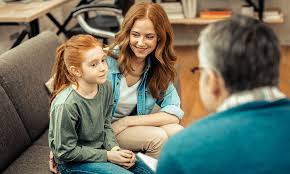
Recently NPR News recognized a national panel of health experts recommending that all children 8 years and older should be screened for anxiety. They also recommend that children 12 years and older continue to be screened for depression. This U.S. Preventative Task Force is in acknowledgment of a widespread concern that children’s mental health problems continue to steadily proliferate, since before the pandemic. The Family Alliance believes that it is a priority to be responsive in educating our community on how to recognize anxiety and when to intervene beyond the “normal” developmental signs. Marilyn Pearlman, LCSW, will join us as we define and distinguish the indications, as well as give practical suggestions for parents, teachers, and administrators as early intervention is always the best medicine.

End of School Year Transitions
The end of the year can bring about many changes, join us for a conversation around supporting your child through these end-of-year transitions.

Part 3: Supporting Our Parenting Partners Differences in Parenting Approaches
Why are Montessorians consistently talking about consistency? Our team members will help participants think through why consistency matters in their children’s lives. They will also help participants think about on what basis do parents have to determine what they need to be consistent about with their children.
Raising a Child to Love Literature
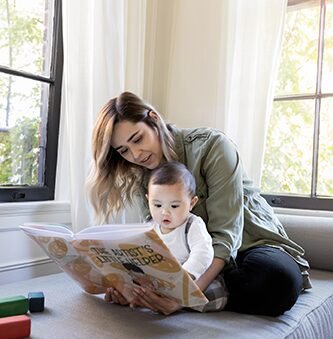
Parents often wonder and worry about how to encourage children to read and how to raise a child to love literature. How can you inspire your preschooler, school-aged child, or teen to love the written word?
It begins with adult modeling, sharing literature at all stages of your child’s life, and consistently providing books and magazines in your home. Show your child your genuine enjoyment of books, magazines, newspapers, and all things written!
Let’s start with the youngest children: toddlers and preschoolers.
Flood your home with books. You can buy them, ask for them as gifts from grandparents or relatives, or make regular trips to your local library.
Read these books often and try to respond with genuine enthusiasm when your toddler asks you to read the same book over and over, a positive step, as this leads to predictability, comfort, and a true mastery of the story sequence.
Start early with magazine subscriptions: The Babybug (6 months to 3 years) magazine is a great place to start and Hello magazine (0 to 2 years) from the makers of Highlights is for infants and toddlers as well.
Be sure that books are available for them to explore as readily as other toys and set out on low shelves. Children will be more inclined to choose books and magazines when they are as available and attractive as other toys and activities.
One of the best traditions is to start purchasing a quality hardback book for your child at every milestone, birthday, and winter holiday. Write an inscription in these books with a date and message so that they are notably special.
These are the books that will be read over and over again and loved thoroughly.
As children move into their preschool years, they are ready for different types of literature. Young children love stories that show others like themselves and that talk about their world. These books help preschoolers to feel secure and comfortable in the world they see.
But literature can also help preschoolers enter worlds slightly bigger and more divergent from their own. The stories should be getting a bit longer (and the subject matter more varied) as your child matures and is ready to explore.

I recommend looking for literature that embraces subjects that your child is interested in now, but also look for books that stretch your child’s imagination to discover new worlds and new experiences. There are many lists of appropriate Adult/child book clubs have sprung up in many towns. They encourage the experience and love of shared reading. preschool books online.
School-aged children enjoy not only singlesitting books but also chapter books and book series.
I suggest you continue to read aloud to your child at bedtime, even as your child becomes a more proficient reader. Reading aloud not only lets your children hear the cadence and speed of proficient reading, it lets them share a book with you and have the opportunity to discuss the happenings in the book as well. This can allow you to explore sensitive subject matter together, as well as a great story.
Adult/child book clubs have sprung up in many towns. They encourage the experience and love of shared reading.
In my view, it is best to continue the tradition of giving your child a carefully chosen hardcover book as a gift. It is so important for your child to build his or her own personal library with books they will read over and over for years.
Regular trips to the library remain important, although your child will naturally become more independent in selecting books during these years. By watching what is selected, you will get to know your child’s interests better, offering you ways to initiate conversation or other book suggestions. This is also a time to think back on the books or book series that were special to you and suggest them as well.
By the teen years, encourage your young adult to enjoy literature in whatever form brings enjoyment: graphic novels, books, magazine articles. Online and audiobooks can engage one in an interesting story. Non-fiction books about cooking, automobile repair, or outdoor sports also resonate with many teens.
As a parent, I believe our job is to encourage the exploration of any subject that can enhance interest in reading.
Teens also enjoy reading about themselves and their real-life challenges, so many will gravitate toward content that explores these issues.
As a teen, they are probably reading content online, and it may be harder to ascertain their area of interest. You might want to introduce them to others who read online, so they can have discussions there.
Goodreads.com lets kids discuss what they are reading with others, which can often be more interesting to do than discussing them with parents. There are even many chatbased story platforms like Hooked or Wattpad’s Tap app, that combine reading and storytelling for teens.
A continued family discussion about this topic is still important.
Modeling reading for your teens and talking about what you are reading is also very important. This can stimulate conversation with your teen that can lead to hearing them express their own views on topics.
Teens will read books as part of their classes in school and, if you have not read them, you might want to read the books to give you another basis for discussion.
Here are a few more suggestions:
• Continue to reach into your own memory and recommend books that were your favorites.
• Many young adult books (YA) span age groups and can be read and enjoyed by both parents and teens.
• Don’t be afraid to leave books and magazines around your home in enticing places for your teen to pick up!
• Books that are written as a series can be a good way to encourage a teen to keep on reading.
• After your teen has seen a movie, find the book that it was based upon and bring it home. Discuss whether the movie or the book was better.
As with all things “teen,” make every effort to keep the lines of communication open. Your local library may offer classes or programs for teens that can get them inside the library to explore an interest and, at the same, time renew their awareness of what is offered in the library.
Be aware that school requires a significant amount of required reading, which can limit the time that they can spend on recreational reading during the school year. Teens may read more for pleasure during school vacation breaks or in the summer when they may have more free time.
Reading can be encouraged as an enjoyable individual and family experience when it is modeled by parents, shared within families, and openly enjoyed. •
REFERENCE:
The Babybug magazine: shop.cricketmedia. com/babybug-magazine-special-offer.html
Hello magazine: shop.highlights.com/hello-magazine.html
Cathie Perolman is a reading specialist, elementary educator, author, consultant, and creator of educational materials for primary and elementary students. Check out her new downloadable materials on her website: cathieperolman.com.
For more than three decades, she has dedicated her energies to improving reading for all youngsters. She is the author of Practical Special Needs for the Montessori Method: A Handbook for 3-6 Teachers and Homeschoolers published by the Montessori Foundation (available through montessori. org.) She is a regular contributor to Tomorrow’s Child and Montessori Leadership magazines.
Cathie Perolman holds a BS in Early Childhood Education and a MEd in Elementary Education with a concentration in reading. She is credentialed as a Montessori teacher. She is married and has two adult children and two adorable granddaughters. Cathie lives in Ellicott City, Maryland with her husband.
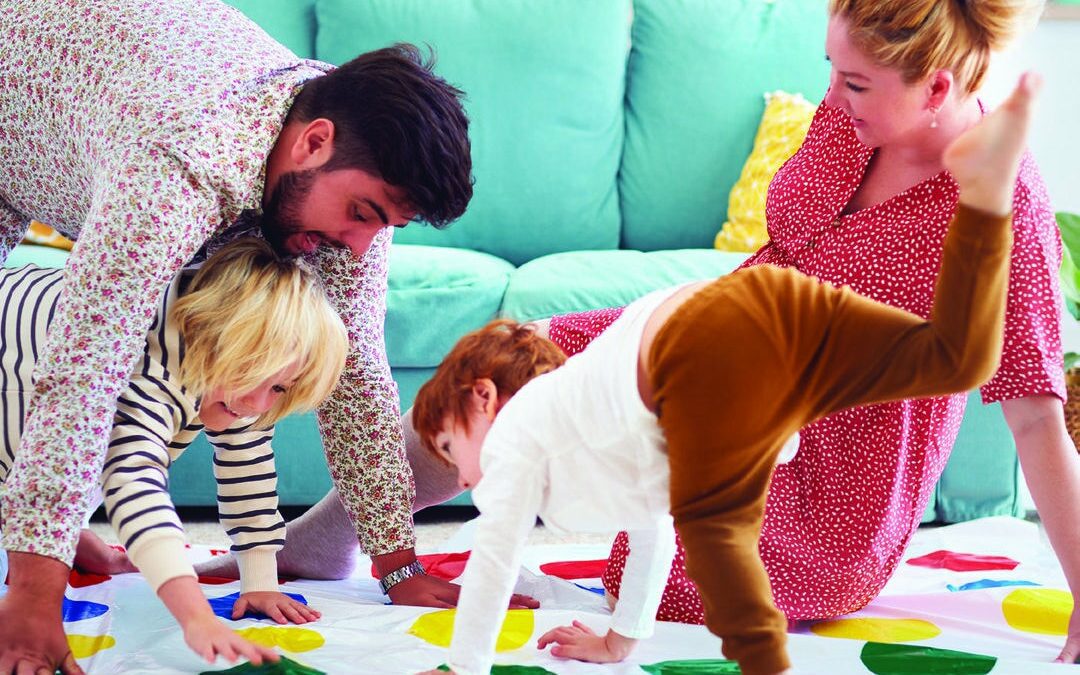
Family Fun is More Than Fluff

Family Fun is More Than Fluff
by Dorothy Marie Harman
In my home, it occurred on Wednesday nights.
In my car, it meant the ride home from school was filled with chatter, enthusiasm, and hope that the traffic wasn’t backed up.
At my table, it meant Anthony was too excited to sit down and Alicia, despite her best efforts, could not stop giggling while fueling Anthony’s excitement.
In my heart, I knew it was more important than the game pieces, cards, and spinners that were more likely to fall to the floor than remain on the table.
For my family, it was “Family Game Night!”
Recently, a Montessori Family Life webinar hosted a conversation about the importance of family fun. Having fun together, as a family, is important for connection, resilience, and memories. Playfulness is important to our mental health and wellness and provides us with tools for future experiences, particularly during times of stress. Life can be challenging at times. Our brains respond to experiences that are stressful, like pandemics and social unrest. However, something that may seem so small, like family fun and joy experienced through one another’s intentional company, also changes the brain in positive ways and aids in counteracting that which is unpleasant or frightening. The human brain is a social organ that does best with joyful, social experiences as a means of development. We are ‘wired’ to be in one another’s company. These experiences truly help to “change our minds.”
Experiences help create resilience, and we need resilience, since not all of life’s experiences are joyful. Moments of joy help us to move forward in acts of recovery. The skill of overcoming difficulty is necessary for children and a skill they will call upon their entire lives. We should not dismiss opportunities for children to practice this needed skill, such as not winning a game. As Montessorians, we caution against “rescuing” children from challenges that they can resolve through their own means. Resilience is promoted by experiencing happiness together in the grandiose and the small moments during life.
Be intentional about connecting with your children in a fun way! Like a garden, relationships require cultivation and children need our quality time. Sometimes we think we are creating quality time when helping with homework, taking children to school, and participating in the ordinary activities of our daily lives. Yet, when we take time for playfulness, it brings a unique and powerful element into your experiences and household. Embrace the pleasure of simply joining our children in moments of play, humor, and moments of silent beauty. Perhaps take a moment to find joy and appreciation in experiencing a sunset or the moonlit night together. It may take practice to find the beauty of little moments, but they are forever imprinted in the memory of your children.
Ideas for family fun…just play! Spend outdoor time together, dance, sing, read together, build puzzles, relax, enjoy movie nights, cook, or bake, play cards, tell family stories, and garden. Try to find a regular time in your week to celebrate family fun. However, don’t forget to be open to moments of play, and seize those organic moments that arise like jumping in leaves or taking a silly break! How about a little goofiness during ordinary activities? Play music and encourage a dance party during house cleaning! Have you ever tried silly walks or pantomime for a giggle? These are elements of family stories that bring moments of laughter, impressions of memory, and unity to your family. •
You will find Family Fun is More than Fluff in the Families section of the website. You may even catch yourself giggling as their personal stories trigger some of your life’s funnier moments!
Please join the Montessori Family Life webinar series each Tuesday at 1:00 EST.
Dorothy Harman is an AMS Early Childhood credentialed Montessori guide. She holds a BA in Early Childhood Education and an M. Ed in Curriculum and Instruction with an Emphasis in Creative Arts. Dorothy Harman serves as a Montessori consultant and Adjunct Lecturer at the University of Nebraska-Kearney. She serves as a Field Consultant for the Center for GuidedMontessori Studies and was a 2018 recipient of an AMS Peace Seed Grant. She is the author of Intentional Connections: A Practical Guide to Parent Engagement in Early Childhood and Lower Elementary Classrooms, published through Parent Child Press.
Part 2: Supporting Our Parenting Partners Differences in Parenting Approaches

Part 1: Supporting Our Parenting Partners, Stages of Parenting

Stewards of the Earth Preparing for Earth Day with Our Families

United Nations Convention on the Rights of the Child

Most of us are aware that the United Nations adopted a declaration on the universal rights of the child, but many of us have not read it. Here is the introduction and the link to the full text. We encourage you to revisit it from time to time and reflect on the vital message and vision within.
Convention on the Rights of the Child
ADOPTED
20 November 1989
BY
General Assembly of the United Nations
resolution 44/25
Entry into force: 2 September 1990, in accordance with article 49
Preamble
The States Parties to the present Convention,
Considering that, in accordance with the principles proclaimed in the Charter of the United Nations, recognition of the inherent dignity and of the equal and inalienable rights of all members of the human family is the foundation of freedom, justice and peace in the world,
Bearing in mind that the peoples of the United Nations have, in the Charter, reaffirmed their faith in fundamental human rights and in the dignity and worth of the human person, and have determined to promote social progress and better standards of life in larger freedom,
Recognizing that the United Nations has, in the Universal Declaration of Human Rights and in the International Covenants on Human Rights, proclaimed and agreed that everyone is entitled to all the rights and freedoms set forth therein, without distinction of any kind, such as race, colour, sex, language, religion, political or other opinion, national or social origin, property, birth or other status,
Recalling that, in the Universal Declaration of Human Rights, the United Nations has proclaimed that childhood is entitled to special care and assistance,
Convinced that the family, as the fundamental group of society and the natural environment for the growth and well-being of all its members and particularly children, should be afforded the necessary protection and assistance so that it can fully assume its responsibilities within the community,
Recognizing that the child, for the full and harmonious development of his or her personality, should grow up in a family environment, in an atmosphere of happiness, love and understanding,
Considering that the child should be fully prepared to live an individual life in society, and brought up in the spirit of the ideals proclaimed in the Charter of the United Nations, and in particular in the spirit of peace, dignity, tolerance, freedom, equality and solidarity,
Click the link below to read the full text:
https://www.ohchr.org/en/instruments-mechanisms/instruments/convention-rights-child

A Montessori Adult Is… with Cassi Mackey
The art of following the child is at the heart of the Montessori pedagogy. Adults help guide the child through their life, leaving the child free to develop their own will, independence and ability to make their own choices and decisions. Imagine if children are being guided the same way both at home and at school. Come explore the role of the Montessori adult and how it provides the child with a sense of identity, security, confidence, and love.

Having Mindful Conversations: Talk-Based Strategies to Enhance Children’s Relationships and Language Skills
Join Rebecca Rolland, author of The Art of Talking with Children, for this session, designed for parents, caregivers, and educators, will explore the opportunities of daily conversations with children to support their language, social-emotional skills, and relational communication skills. Using an approach based on Montessorian principles, this session will debunk popular myths about communication with children and will offer a research-based toolkit for conversations that encourage deeper thinking, curiosity, and openness toward others’ ideas.

Making Lunch
One of the most challenging parts of having children in school is making lunches. With some guidance, children can make their own lunch. It then becomes a win/win situation. You do not need to make lunch daily, your child gets to practice practical life skills, and your children are more likely to eat their lunches. As with all new skills, it may take more time initially, yet the work and time will benefit both of you for years to come.
How can a young child prepare their lunch each day? Preparation of the environment, the necessary tools, and a lesson will all be necessary.
Preparing the Environment:
• Make appropriate food for lunches available at child height. This may mean reserving space on a low cabinet and low shelf in the refrigerator for lunch materials. At our house, we used colored baskets in the cabinet and refrigerator to quickly designate which items were for lunches.
• If needed, divide the food into servings before lunches are made. Your child can help you do this after school or over the weekend. If five baby carrots are an appropriate serving for your child, make a few bags with five carrots in each.
• Make sure your child can open and close any containers used and manage their lunch box.
• Consider when lunch should be prepared. If your child has trouble getting out of the house in the morning, make lunch the night before and store it in the refrigerator if needed. If your child is usually ready early, the morning is a great time for this job.
The Necessary Tools:
• Have utensils your child can use to make lunch, such as: a knife for spreading and cutting; a cutting board; containers that your children can open and close; and lunch boxes that allow them to pack easily.
• A list of ideas in written or picture form may be helpful for your child.
• Decide what you expect for lunch. What constitutes a main meal? What is a snack? Do you have a guideline of how many fruits or vegetables need to be included?
A Lesson or a few lessons):
• Discuss the plan with your child.
• Show where the tools and materials for making lunch are.
• Talk about what should be included in lunch and why, i.e., you need energy for growth and your day; these foods are not allowed at school for allergy or other health reasons; these items do not transport well. Share the reason for the guidelines.
• Work with your child the first few times and discuss what you are doing and checking: e.g., “I don’t see any fruit in here. Would you like to add a fruit or another vegetable?”
• Show your child how to clean out their lunch box at home before just adding to it.
Follow Up:
• Peek inside the lunches that are going to school. Do they meet nutritional needs as you expect?
• Discuss options and ideas with your child before grocery shopping.
• If you have leftovers from dinner, ask if your child would like some for lunch and plan together how to make that work.
• Let your child’s teacher know that your family is making this change. Your child may be pleased and possibly even distracted by the lunch they made at first, so letting the teacher know means they can help with these changes.
Enjoy the small break this gives you and the independence it gives your child.

Cheryl Allen is the Associate Coordinator of the Montessori Family Alliance and is also a parenting educator and a Montessori consultant with the Montessori Foundation. Cheryl attended Montessori school as a child. After sometime as a traditional Secondary teacher, she worked in Montessori classrooms, 3-6, 6-9,and 9-12, earning certifications from both AMS (3-6 and 6-9) and IMC (6-12). She is a teacher educator, workshop presenter, and member of IMC accreditation teams. Cheryl’s two children attended Montessori from age two through high school graduation.

How can I get involved with my child’s school?

There are some things that even money can’t buy, and one of the most valuable contributions that families make to a school is the gift of their time and expertise. Parents, grandparents, and friends of the school are often found helping in the office, assisting in the classrooms, serving as field-trip drivers, offering a special class, planning the next special event, coaching, or serving on parents’ associations or school committees.
Parents play a crucial role in Montessori. Our schools are communities of parents and educators (many of whom will also have children enrolled at the school). Our ideas and input often help to shape the school. Montessori schools are normally very responsive to suggestions and concerns.
Most Montessori schools encourage families to participate in the broader life of the school through social and educational activities. Although many parents spend considerable amounts of time as volunteers, except for parent cooperative schools, there is normally no expectation for a set-time commitment.
Parents and grandparents, who give of their time and talent, share with their children special memories of experiences and friendships that endure well beyond their graduation.
A few ways in which you might be able to help your school:
• Volunteer a few hours a week to help in the office
• Lend your time and support to our fundraising efforts
• Help out in the library
• Volunteer to be an Ambassador Family to parents new to the school
• Serve on one of the school’s committees
• Help put together the school newsletter
• Help the teachers organize field trips or special lessons
• Join in at open houses to meet prospective families
• Help organize special events
• Volunteer your time to help the school prepare major mailings
• Teach a special course
• Help students work in the garden
• Share your talents and special interests, such as a musical instrument that you play, a second language that you speak, a craft that you enjoy, or a field that you’ve studied
• Volunteer your time to coach a team or after-school club
• Serve as a class parent
• Help to organize a reunion for former students and their families
Like all schools, Montessori schools blossom when parents are generous with the gift of time, talent, and expertise.

An Online Montessori School for Teens
In the fall of 2020, the leadership of the Center for Guided Montessori Studies asked the question, “What would an authentic Montessori middle school look like if it were online?” This question was especially pertinent at the time, because we were all adjusting to “forced” online learning resulting from the COVID pandemic. The question that we asked ourselves was, “Can we build an adolescent Montessori program and community online?”
That winter, we decided to plan for a soft launch of what became the Bridgemont International School. We began with just one class of seventh- and eighth-grade students, all living within the time zones of the continental United States, led by certified and experienced Montessori Adolescent Guides.
Our plan is to add one grade a year, extending through high school over the next four years. We also plan to open additional cohorts in North America and other parts of the world as interest grows. As we have from the start, our goal is not to grow quickly, but rather with slow, careful steps to ensure that we establish programs that are excellent and sustainable.
The first question that we reexamined was, “What makes a Montessori adolescent (middle and high school) program authentically Montessori?” Even though we have been involved with Montessori programs at this level for years, there is (at this point) no one model for adolescent programs. Dr. Montessori died before she was able to define the “model” of what a secondary program looks like. Rather, there are a series of lectures and discussions that other Montessori educators have interpreted, leading to vastly different models of Secondary education.
Many are familiar with the farm-school model of Montessori Adolescent Education (Erdkinder), while others may be familiar with the curricular outlines of other Montessori Secondary training programs. While there are many different models, there are key components of Montessori for the student in the third plane.
Curriculum: Students need to learn! They should be culturally literate and develop the academic skills they will need if they decide to pursue post-secondary education. Even within this component, there are different definitions of what that means. I would suggest that students need to know basic information. What makes Montessori distinct at this level is the balance between helping students through the challenges of adolescence, while covering an excellent course of study. For us, a particular focus is helping teens to discover that what they learn in school is real, relevant, and interesting. We want to encourage their interests, help them to see the big picture, and think critically about what they study and how it relates to their own lives.
The core of our academic program is the Montessori educational syllabus, which consists of ‘integrated academic components’ in three overarching areas: self-expression; emotional development; and preparation for adult life.
Within these areas, Bridgemont offers rigorous coursework in a variety of academic subjects, experiential learning, and in-the-field experiences; a range of seminars and collaborative learning projects; training in organization and personal responsibility.
Even though our curriculum is highly integrated, courses have titles that are familiar to colleges and other schools including math, language arts, sciences, humanities, Spanish, health, arts, and electives.
Here is an example of a simple 7th- and 8thgrade science experiment that we did recently.
Is “earth-friendly” laundry detergent actually safe for the environment?
For this experiment, we planted radish seeds in potting soil. In Dish #1, we watered the seeds with a mixture of water and regular detergent. In Dish #2, we watered the seeds with a mixture of water and earth-friendly detergent. In Dish #3, we simply used regular tap water.
After 10 days, only one dish had germinated seeds. Can you guess which one???
The dish that used regular tap water was able to grow radish seeds. The other two dishes? Nothing.
In Dish #1, the regular detergent solution left a heavy film over the soil and seeds.
In Dish #2, the earth-friendly detergent solution did not leave as heavy a film; however, no seeds germinated.
Conclusion: “Earth-friendly” may not be all it is advertised to be; however, it certainly is “friendlier” in appearance.
Valorization: This is such a wonderful term that Dr. Montessori gave us. It is the key challenge of adolescence: the formation of a clear sense of identity, a moral compass, and feeling validated and valued for their contribution as an individual. As children transition from childhood through the teenage years, and then into the adult world, they need to feel a sense of responsibility and worth that leads them to confidence and independence. This can be accomplished in many ways; however, it is probably the single most important component of Montessori at this level.
Community: Community is, directly and indirectly, related to curriculum and valorization. Part of the work of adolescents is to discover their own strengths, style, and role in the community. This is done through deliberate and unexpected avenues. A most basic statement is that adolescents desire to be part of a community.
So, back to the question at hand; how does one create this from an online platform?
How can we deliver a rich curriculum that is more than mere memorization, create opportunities for students to feel valued and value in their work, and create a sense of community, when most of them have never actually met in person?
The students at Bridgemont spend approximately four hours a day in real-time engagement in a variety of activities, including (but not limited to) direct instruction, Socratic dialogue, independent and small-group work with peers, presentations, guest lecturers, working out, doing art, and the occasional Harry-Potter-themed “butter beer” parties.
So, can Montessori at this level be done from an online platform? YES!
A prepared environment at the Secondary level is much more about experiences rather than the materials and physical environments of the Early Childhood and Elementary levels. Can the Montessori guides create opportunities for authentic interaction, sharing, and developing a real sense of caring about one another? Can this be done while also helping students become culturally literate and explore their open passions? Again, YES!
Online learning gives students the space to comfortably participate and voice their opinions, which can ultimately help build confidence and positively reinforce their self-esteem.
At the half-year point, the discussion among the students and Montessori guides turned to gratitude. To our delight, what the students were most grateful for was the sense of community, greater than they had felt in their brick-and-mortar schools. What was our greatest concern, had become our greatest strength.
Community, in the case of the Bridgemont students, guides, and administrators, means kind, empathetic, interested young adults that are not just saying that they care, but honestly care about each other and are interested in the world in which they exist. While doing so, they are also being held to a high level of academic expectations that support each student’s progress and independence.
SOME ADDITIONAL INFORMATION:
Is Bridgemont accredited?
As Bridgemont International School is licensed in the state of Florida, it adheres to the graduation requirements of the State of Florida. (We teach the same courses; however, they are taught very differently.) The school plans to pursue accreditation by the International Montessori Council (IMC) and Cognia.
How does Bridgmeont address service learning, Erdkinder, etc.?
At Bridgemont, we recognize the importance of the “Montessori experience.” We intend to include each of these experiences; however, they will be different in that the students will have more responsibility in designing their experiences with the support of our Montessori guides. Rather than being provided with experiences, students will be actively involved in the design of the experiences that satisfy their requirements in their own communities.
Is it all online?
A goal for the near future is to have two live in-person experiences a year. The school year would start with a whole-school orientation, which would change from year to year and is meant to be a team-building and orientation program. The second experience is meant to be student-designed and will look different from year to year. This will be budgeted, designed, planned, and based on student feedback and student work. (COVID-19 has made this difficult, but it is a goal for the 2022-2023 school year, if possible).
How are time zones addressed?
Our courses and schedules are deliberately designed to meet the needs of students in the continental United States. With WIN (What I Need) hours scheduled on both sides of the “Core” curriculum, students from all parts of the United States can work together at times that are convenient and in line with best practices in adolescent psychology.
As the school grows, there will be timezone-specific cohorts. These will be times that are more specific to time zones and regions; however, there will be shared times with all available time zones to include students from other countries, continents, etc.
In summary, Bridgemont International School is an authentic Montessori School, where students from all over the United States and around the world have the opportunity to become what they are meant to be and have the fortitude, confidence, and support to go after it. •
If you are interested in learning more, please visit our website at www.bridgemontschool.com.

Robin Howe, Ed.D. is a Montessori kid, a Montessori certified teacher (at all levels except infants), and a Senior Consultant for the Montessori Foundation.
Featured
-
 Montessori Family Alliance School Group Membership (Print & Digital 2026 1/2 year pricing)
Original price was: $30.00.$15.00Current price is: $15.00.
Montessori Family Alliance School Group Membership (Print & Digital 2026 1/2 year pricing)
Original price was: $30.00.$15.00Current price is: $15.00.
-
The Montessori Way, Revised and Expanded: An Education for Life; A Comprehensive Guide for Parents and Teachers
$25.00
-
The Montessori Child: A Parent's Guide to Raising Capable Children with Creative Minds and Compassionate Hearts (The Parents' Guide to Montessori)
$20.00
-
The Montessori Toddler: A Parent's Guide to Raising a Curious and Responsible Human Being (The Parents' Guide to Montessori)
$20.00
-
Montessori in Action: Building Resilient Montessori Schools 1st Edition
$29.95