I have always done everything for my children. I just thought that is what good parents did! I thought it showed my love. But now that they are growing up, and I am learning more about the Montessori Method from their school and my reading, I understand that I need to expect more from them and let them help around the house. This is both a practical and a mindset change! Can you help me get started?
—AN EXCITED MOM
Dear Mom,
Congratulations on making the decision to afford your children more responsibility, and opportunities to contribute to the family. This is a key concept in happy and healthy families, and you cannot start too young. The key is to begin small, teach each skill to your children, and then have consistent expectations that the job has become their responsibility and is no longer yours. Let it happen naturally, as the child has the skills to take on a task!
Let’s choose one activity to use as an example: bath time. Your goal is for your child to learn to take a bath independently: from getting pajamas to leaving the bathroom as he found it. This is a process that will take years to learn, and we certainly are not advocating that you leave your child alone in a tub of water until he is mature enough to be safe.
Taking a bath requires a child to do a series of steps that will complete the goal. The child needs to: get pajamas and bring them into the bathroom; turn on the bath water at the correct temperature; undress; get in the bath; turn off the water, when the bath reaches the correct height/ temperature: wash the body; rinse off the soap; wash hair, if needed; rinse hair; get out of the bath; dry off; put on pajamas; let the water out of the tub; dry any spills; hang the towel; and put the dirty clothes in the hamper.
How can we begin to teach a child all those steps? Begin today to turn over one step at a time to the child. Do not do anything for your child that she can do herself.
Be sure your child can find her pajamas in the same place each night. (I always put them under the child’s pillow, and my children wore the same pair of pajamas until they were dirty. This saved on laundry and made life simpler for our family.) Say to your child, “Now that you are getting older, you are ready to start learning how to take your own bath. Please get your pajamas and bring them into the bathroom and then come and get me.” That is now a task for the child every night! You will need to be sure it is done, but you will never do it for her again.
You can turn on the water until she is old enough to do it herself. You can place a mark on the chrome that shows how far to turn the handle on the faucet. (A permanent marker works well.) This is especially important, if the turning the water on also controls the water temperature! Be there while the child does it for as long as it takes for you to be certain that she can manage it herself. This is one of the more difficult steps in the process, and you will need to be involved in it longer.
Teach your child how to wash. How does the soap get onto the washcloth? You may need to do that part, but they can do the actual washing. First you will be there while she is washing, watching to be sure she is doing it correctly. In time, you will come back and check and “help” to do the difficult parts.
The key is to begin small, teach each skill to your children, and then have consistent expectations that the job has become their responsibility and is no longer yours.
Washing hair is one part I helped with for many years. I checked to be sure the hair had all the soap removed. Eventually, she will wash her entire body herself! Even a very young child can rinse off alone. You may need to talk her through the process, check and be sure she rinsed all the spots and gotten all the soap off (especially in the folds of the skin), but you do not need to do it for her.
Once the child is rinsed, she can open the drain to let the water out of the tub. She can get out of the tub and begin to dry off. (Be sure to teach her to “hold on” as she exits the tub — as wet is often slippery.) You can come and help as needed. (I always said I needed a hug when they were in the towel, and I checked that my child was dry before putting on her pajamas). Dressing is a skill that children begin to learn as early as 18 months. By four, this is totally the child’s responsibility.
Drying the bathroom may require you to point out areas of water. Some people prefer to do this before the child is in pajamas, as she may get wet doing it! Children can hang up the towel if the hook is at an appropriate height for them. Hooks are now easy to buy and can be moved as the child grows!
A child as young as 18 months can learn to put her dirty clothes in the hamper, and that is an easy job to turn over to the child immediately.
When you are beginning to teach a series of skills, discuss the sequence of steps in the process with your child. What comes next? Can you do that part yourself? Always talk to your child about how she will be able to do this part in a few months/years This sets the tone that you know/expect that your child will ultimately be a self-sufficient person.
You can apply the same principles to any task. Let your child carry the laundry downstairs; put the toilet paper in the closet, and later onto the toilet paper holder, or put the vegetables in the veggie drawer when you come home with groceries. A child of three can even put three carrots in each small plastic container for lunch. Then, when packing lunch for himself, he simply removes a container.
Have fun letting your children take on more and more responsibility and let us know how it is going! ¢
Cathie Perolman is a reading specialist, elementary educator, author, consultant, and creator of educational materials for primary and elementary students. Check out her new downloadable materials on her website cathieperolman.com.
For more than three decades, she has dedicated her energies to improving reading for all youngsters. She is the author of Practical Special Needs for the Montessori Method: A Handbook for 3-6 Teachers and Homeschoolers published by the Montessori Foundation (available through montessori.org.) She is a regular contributor to Tomorrow’s Child and Montessori Leadership magazines.
With the coronavirus crisis causing unprecedented job losses, many families are experiencing uncertainty around money. Even families with relatively solid financial footing are feeling a need to rethink family finances.
Our impulse as parents is to protect our children from financial difficulties. But our current situation creates an immense opportunity for family discussion—especially at a time when families need everyone pulling in the same direction.
Whatever your financial circumstances, you can step into age-appropriate conversations. Children can learn that everyone faces economic adversity at some point in life. But we can teach skills that build resilience. Let me suggest four steps to guide your conversations.
1. Start with the headlines.
Before you begin talking about money concerns as a family, clarify the facts you want to share: Focus on the news your child needs to know and how that news impacts your family. Keep it simple and straightforward. For example:
• Mom lost her job, and we need to talk about what that means for our family. • Dad’s job is secure, but we still think it’s time for us to be cautious. • Mom’s business has fewer customers, so that means less income for our family.
Those focused statements kick off further disclosure and conversation. While you can share additional details, your goal is to avoid a monologue. Move to dialogue!
Creating space for children to express their thoughts and feelings is crucial.
2. Invite feedback.
Creating space for children to express their thoughts and feelings is crucial. If you jump to solutionfinding too soon, you risk shutting down their responses. Draw out your child with open-ended questions:
• What questions do you have about what I just said? (Not:
“Do you have questions?” but
“What are your questions?”) • What do you think this means for us as a family? • How do you feel right now?
If your child doesn’t voice a response, that’s okay. Circle back to the question later in the discussion or within a day or two.
3. Brainstorm solutions together.
Adjusting family finances impacts everyone. Inviting everyone to find solutions improves buyin from all. Older children can help you consider key numbers in your family budget. Younger children think more readily about their own “money in, money out.” Consider these questions:
• How can we work together to increase our income? • What do we spend on that’s easy to cut back? • Which things feel most important to keep?
Now is the time to discuss any emergency funds you can access—money put away for a time like this. It’s a teachable moment for older children to understand that living on their own means building a reserve of at least three- to six-months income.
4. Speak and act with confidence.
Your family conversations can normalize the experience of adversity and teach your child to pivot quickly.
One of the best ways to display confidence is to find opportunities to share and volunteer—giving time, even if you can’t give money. Discuss how some people need help with everyday food insecurity, as well as what you can do for the elderly and others who are isolating alone.
As a family, you can’t always control what happens. But you can talk about it. Remind your child that you’re working together—and that you will get through this.
Nathan Dungan is the founder and president of Share Save Spend® . He speaks and consults with organizations and families on the topic of financial wellbeing. Nathan uses a Wellbeing Framework to help individuals and families build capabilities that are most relevant for them and the goals of their family.
He is the author of three books and numerous resources for organizations and families. Nathan’s newest resource, Money Sanity U®, is a subscriptionbased virtual learning library for organizations that addresses a variety of money topics in a simple and interactive format— all designed to help improve financial wellbeing. You can learn more at sharesavespend.com.
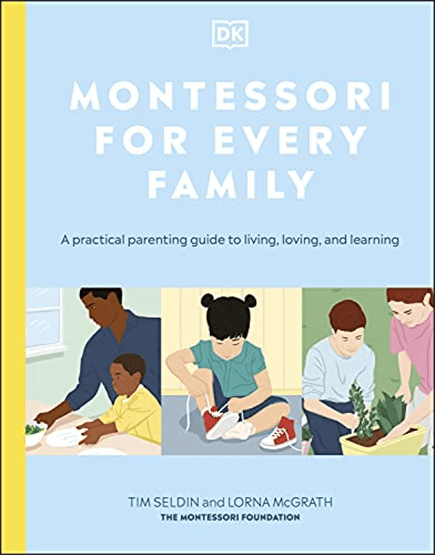
Tim Seldin and Lorna McGrath, both senior consultants with the Montessori Foundation, have released a new book, Montessori for Every Family: A practical parenting guide to living, loving, and learning. This book is truly for every family, those that are in a Montessori school, those who Montessori homeschool, those who wish to be in a Montessori school, and those who have not even heard of Montessori. The three chapters, “What Is Montessori?”, “Montessori Family Life”, and “Family Life Through a Montessori Lens” take the reader through an introduction to Montessori, practice with Montessori, and application of Montessori philosophy to their own family.
Parents can read it straight through, or simply choose a topic and read about that. The book is easy to read either way, with most topics covered in a single two-page spread with beautiful illustrations and clear explanations. Included with most topics, the “Ages and Stages” sections help families adjust their approach for young children (18 months to 6 years); elementary-aged children (6 years to 12 years); and adolescents (12 years to 18 years). Also included are real-life stories, sharing how different families have managed these topics.
Tim Seldin and Lorna McGrath have worked with families as Montessori guides, school administrators, and parent educators for years, as well as raising their own families and enjoying grandchildren. Their depth of understanding and experience with a variety of families is shown in this book. As a parent, you can find some suggestions you are already practicing with your family and some that you feel you could strengthen to make your family life more enjoyable. Each topic is presented as a practical way to engage as a family and invites you to try it out. This book is intended to help families connect and celebrate themselves and their daily life. It will help every family that reads it and applies even one topic to their own family.
Lorna described the reason, in part, behind the creation of this book as a step toward world peace. She said, “World peace begins at home…If families are all on the same page, we will create world peace. I totally believe that, and it’s why I do what I do, and have done throughout my career.” I highly recommend this practical, beautiful, and easy to read book for families, schools, and guides to strengthen their connections and language with all their children.
Montessori for Every Family: A Practical Parenting Guide to Living, Loving, and Learning can be purchased for Kindle, Audio, and paperback on Amazon.
This is a truly gorgeous book for children! Cynthia’s words flow as you turn the pages, and she describes how the natural world is constantly transforming. The photographs superbly illustrate the transformations in nature. The message is about paying attention and being in awe of all that is around us in the world and realizing how dynamic nature is. And watch for this – “What goes around, comes around.”
I have been a children’s music teacher for nearly half a century! I started teaching in Michigan and continued in the U.S. Virgin Islands, California, Hawaii, and New Mexico. In the beginning, I was expected to create my own curriculum. Because I was a musician, everyone assumed I knew how to implement a music program. The truth was, I had no idea!
Fortunately, in 1974, I received a scholarship to become an accredited Early Childhood teacher through the American Montessori Society. The Montessori philosophy and rationale inspired me to find an age-appropriate approach to passing on the language of music to young children. After careful observation, trial and error, and field research (classroom experience), I began to understand what young children need most from a music lesson.
Catalyst for Learning
Music can serve as a catalyst for learning. Early Childhood musical experiences are far more important than we imagine. Music is not just entertainment or recreation for young children. It can serve as a catalyst for learning. It aids in the development of cognitive skills (the core skills the brain uses to think, learn, read, remember, reason, and concentrate).
Research affirms the many benefits of music that extend beyond the craftsmanship and art of music itself. Music helps develop self-esteem, body awareness, balance, compassion and respect, sharing skills, gross-motor control, fine-motor control, problem solving, work ethics, and the ability to think creatively. These are the very skills that parents expect their children to learn at school.
It has often been said that music is the universal language. If so, then children should be introduced to music at the same time they are developing language, ages one to five. Similar to learning a language, music needs to be in the child’s environment on a daily basis, gradually increasing vocabulary. In a preschool setting, this means creating a daily routine of interactive songs and musical activities aimed at developing basic music skills. Through engaging in the songs and presentations, children acquire a musical repertoire of melodies, rhythms, lyrics, and musical concepts.
These Early Childhood musical experiences help them learn to focus, maintain attention, process information, and become better learners. Music needs to be the child’s environment on a daily basis, gradually increasing vocabulary.
AMulti-Sensory Approach
The Montessori Method recognizes that each child has a unique way of taking in information; some children are very auditory, others visual, and some need a hands-on experience. Montessori is a multi-sensory approach, so the activities stimulate more than just one sense, thus fully engaging the child. I follow a similar approach when singing with young children.
The goal of a song is to invite the child’s participation through listening, singing, and utilizing hand motions or finger plays. The combination of these events holds the child’s interest from the beginning of the song to the end. The completion of a project is very important for young children; to successfully reach the end of the song leaves them feeling accomplished and builds their self-esteem. They often applaud at the end of the song! That applause is not for me. It means that they are proud of the fact that they completed the song.
Children learn through repetition. Doing something just once is never enough. It is important that they repeat the songs and exercises several times before moving on to new material. In my songs, I utilize a form of repetition called the “echo” or call and response. This is where I sing a short musical phrase, and the children repeat it after me. Using an echo, they do not have to learn the song. They feel successful the first time they hear it, because they are simply repeating lyrics and melodies. The lyrics have accompanying movements or instructions, so the children repeat the phrase while performing the movements. The act of being my echo and merging the motions with the lyrics invites the children’s participation and keeps them fully engaged. Utilizing the echo improves their listening skills and their ability to follow oral instructions.
A good example is my song, “Ladybug.” We use our hand to represent the ladybug and start out with one hand behind our back. As I sing “ladybug, ladybug,” the children move their hand from behind their back while repeating my phrase. I then sing “landed on my head” (they repeat the melody and motion), “crawled onto my nose” (echo) “and over to my ear” (echo). “Ladybug, ladybug” (echo), “crawled on my neck” (echo) “and then she flew away” (echo). This is a very popular song with children worldwide.
What are the Solfeggio frequencies?
Solfeggio frequencies make up the ancient 6-tone scale thought to have been used in sacred music, including the beautiful and well-known Gregorian Chants. The chants and their special tones were believed to impart spiritual blessings when sung in harmony. Each Solfeggio tone is comprised of a frequency required to balance your energy and keep your body, mind, and spirit in perfect harmony.
I sometimes use verbal instructions for the children to echo. For example, I might say “girls stand up” (echo), “just the girls stand up” (echo), “girls touch your nose” (echo), “bend down and touch your toes” (echo), “girls turn around” (echo), “now turn the other way” (echo), “jump three times” (echo), “now quietly sit down” (echo), “thank you girls” (echo). They simply repeat my verbal commands while acting them out.
By starting with the girls, I have created an expectation; the boys know that they will also have the next turn. This idea of creating and fulfilling an expectation is a tool I use to create enthusiasm for the lessons. As I am leading the presentation, I am constantly evaluating and assessing how well the child is doing. This allows me the opportunity to adjust the level of difficulty accordingly. I want it to be challenging, yet within the grasp of the child.
Music activities stimulate more than just one sense, thus fully engaging the child.
Once the children are comfortable with the concept of echoes, it plays a major role in future lessons: the introduction and performance of rhythm band instruments (tambourines, rhythm sticks, triangle, maracas, hand drums, and cymbals), solfeggio with the hand bells (Do, Re Mi, Fa, So, La, Ti, Do), and even the introduction of rhythmic notation (a quarter note = ta, two eighth notes = titi, and a half note = to-o) all utilize the echo.
Create a Consistent Format
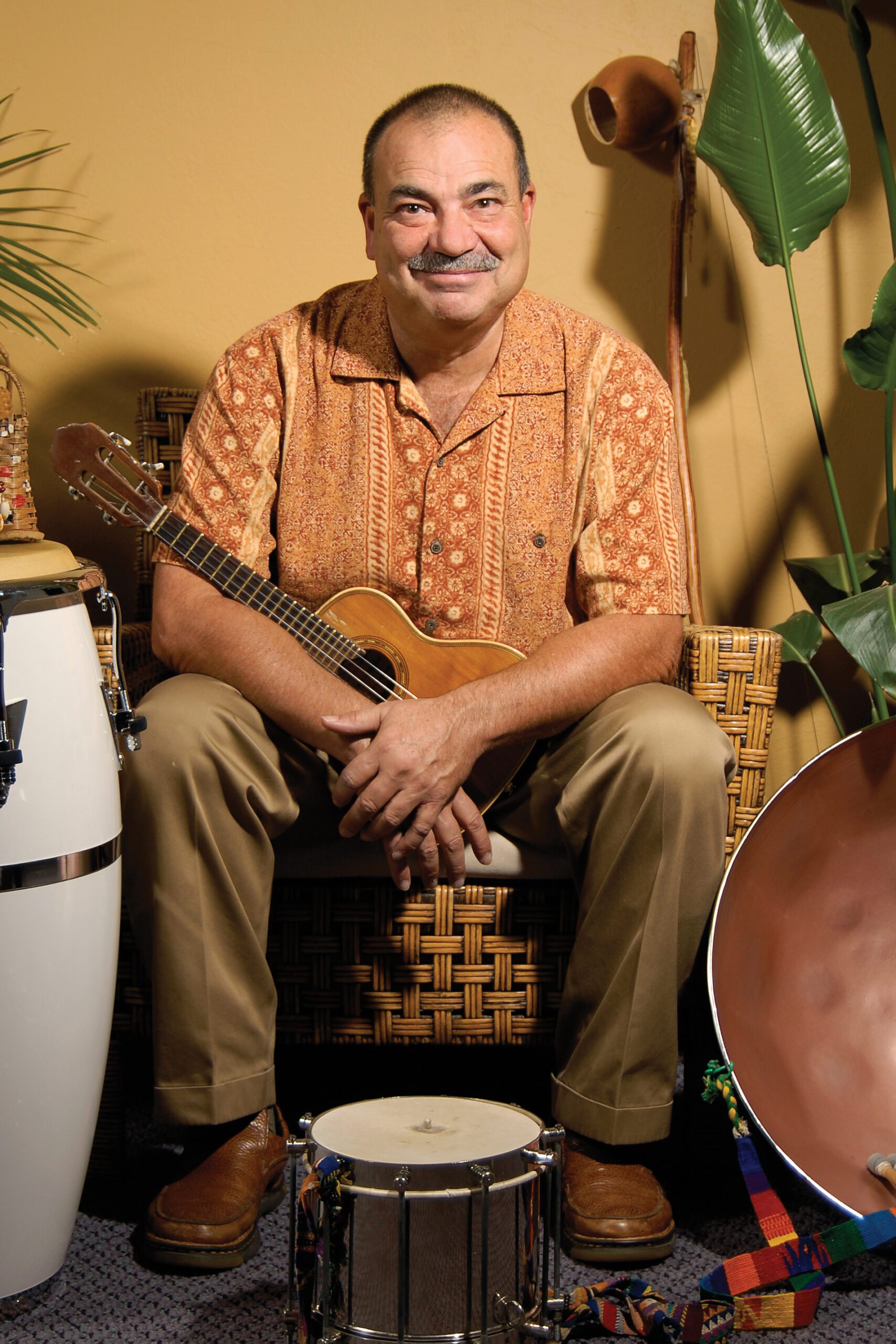
A daily music class with kindergarten-aged children usually lasts 30 minutes. I begin with verbal echoes and then proceed to echoes utilizing patschen (clapping, tapping knees, tapping the floor, snapping fingers, etc.). I then take out my ukulele and accompany myself by singing a few interactive songs. Halfway through the lesson, we stand and dance or participate in a gross-motor activity.
Besides my ukulele, I always bring a bag of rhythm band instruments. The bag creates a lot of excitement and is a good diversion from the other activities. All I must do is say, “I have something in my bag I want to show you,” and I immediately have every child’s attention. When I reach in the bag, I take my time and make noise moving the instruments around as if looking for a certain one. This again creates excitement and an expectation. When I take the instrument out of the bag, there is always an “ooh” from the children!
I introduce the instrument by telling them its name and allowing them the opportunity to hear and play it before placing it back in the bag. I always conclude my classes with a calm echo and goodbye song.
The songs and lesson content may vary, but the method and format of every class is the same, creating continuity and familiarity within the classes. These musical experiences become highly anticipated and appreciated by the children. I thoroughly enjoy my time in the classroom! I smile and laugh often. I genuinely have fun, which translates into the children having fun.
Building a Musical Foundation
My goal has always been to pass the language of music on to children. These early childhood musical interactions help them become better learners. They also provide a sound musical foundation. If these children choose to play an instrument in elementary or middle school, they most definitely will have an advantage and are more likely to succeed.
Parents, if you want your children to have a strong foundation in music, you must be a good role model. Sing and dance around the house; let your children observe you enjoying and interacting with music. Invite your children to join you and share the music that you like with them. Sing children’s songs and participate with them by acting out the motions. Take them to concerts or musical events. Allow them opportunities to explore playing musical instruments like drums or percussion.
The most important thing is to bring music into focus! It is all around us, so draw the child’s attention to it, and they will fully appreciate and enjoy the wonders of music throughout their lives! ¢
Frank Leto is an Early Childhood educator, a musician, a composer, and a Montessori teacher who has been working in Montessori schools throughout the country for 40 years. He is also a professional musician, Orff music teacher, and steel band director. He brilliantly combines his skills as both teacher and musician to create a sound that children love! Frank’s music for children is exceptionally popular with teachers and parents throughout the United States. His music is designed to encourage children’s participation through singing, dancing, fingerplays, games, and exercises.
Frank has ten interactive, multicultural CD’s, two of which have won educational awards. Some of his music is also available in Spanish and Mandarin. He also has a curriculum book, Method to Music, which outlines his unique approach to music education.
He travels nationally and internationally, presenting keynote speeches and workshops at educational conferences. Contact Frank Leto at: musicalventures@gmail.com or visit his website at: frankleto.com.
Blackwater – Sometimes a Lie is Harder Than the Truth
Written by Eve Bunting
Eve Bunting is not new to writing children’s picture books, storybooks, and children’s novels. Blackwater will engage readers from ages 11-14 years old with a story of tragedy, mystery, and moral dilemmas.
It reminds readers of the importance of always being mindful of the choices they make and the actions that they take. Sometimes, even just a simple act of jealousy or revenge can lead to tragedy and can ruin a person’s life or worse. In this story an entire town was affected by the sudden death of two teens and the unspoken truth about the incident.
Brodie, the main character of the novel, struggled with guilt, grief, and truth telling because of his part in the accidental deaths of two of his peers. Fortunately, a good friend encouraged Brodie to confess his actions. When he did, his parents stood by his side as he suffered the consequences of his actions.
This is a book that parents, and teachers will want to read along with their teens to openly discuss the choices that were made and the events that occurred. Guiding children through the teen years and allowing space for them to express opinions and wrestle with tough decisions is an important part of our role in parenting and teaching. Expressing our own values in a non-defensive or non-judgmental way, while creating that space, is the key to helping our teens process real life situations.
Kindness
Written by Jonathan Wolff
Kindness is one in a series of resource and activity books for parents and teachers of children ages three to nine years old. This series was inspired by (and developed as) an extension of “The Virtues Project.” The author, Jon Wolff, wellknown in the Montessori community around the world, wondered how parents and teachers could explore virtues or universal qualities of character in fun, interactive, and imaginative ways with children.
The series that he put together is called The Self-Awakened Child and includes the following titles: Kindness, Assertiveness, Caring, Creativity, Courage, Forgiveness, Loyalty, Peace, Respect, Responsibility, Self-Discipline, Tolerance, Trust, and Unity. Each of these short books has a variety of exercises and role plays to help children build character, develop problem-solving skills, and nurture strong, healthy relationships. The exercises are meant to be adjusted according to the setting, as well as the age and understanding of the children who are participating.
Today, more than ever, children need support in recognizing that what they say and do can make a positive difference in their lives and the lives of others. As they internalize the characteristics from this series, they realize that they can make our world a more peaceful, sustainable, and united planet. The Self-Awakened Child series is a powerful guide for adults to provide activities that support children in becoming “the change.” I recommend this series for use in schools and homes.
The Self-Awakened Child is available in the Montessori Foundation store at stage.montessori.org.
Little Humans
Written by Brandon Stanton
Brandon Stanton is a photographer in New York City. In this book, he used only photos of children from toddlers through the elementary years. He adds some prose to tell the readers all that “little humans” can do and be. The photography was not done in a studio but out on the streets of New York. Readers will see children who are dressed up in their fancy clothes, sports gear, and everyday clothes, doing all kinds of things like dancing, playing a musical instrument, riding a bike, getting ready for hockey, and more. Young children will enjoy both the text and the photos.
Night Becomes Day: Changes in Nature
Written by Cynthia Argentine
This is a truly gorgeous book for children! Cynthia’s words flow as you turn the pages, and she describes how the natural world is constantly transforming. The photographs superbly illustrate the transformations in nature. The message is about paying attention and to be in awe of all that is around us in the world and to realize how dynamic nature is. And watch for this – “What goes around, comes around.”
Cynthia includes three pages at the end of book for parents and teachers to share with children about different areas of science.
Beautifully written, beautifully illustrated, and a beautiful message for readers! Night Becomes Day would be a terrific addition to children’s (ages 3-8 years old) book collections at home, at school, or both.
Cynthia Argentine has been a guest on our Montessori Family Life Webinar Series. Join the Montessori Foundation Family Network at stage.montessori.org to watch the broadcast, Science— An Open Door to Creativity: How
Science Connects Kids to Nature, Arts, Literature, and More with Cynthia Argentine. Visit her website www.cynthiaargentine.com to purchase this and other books she has written.
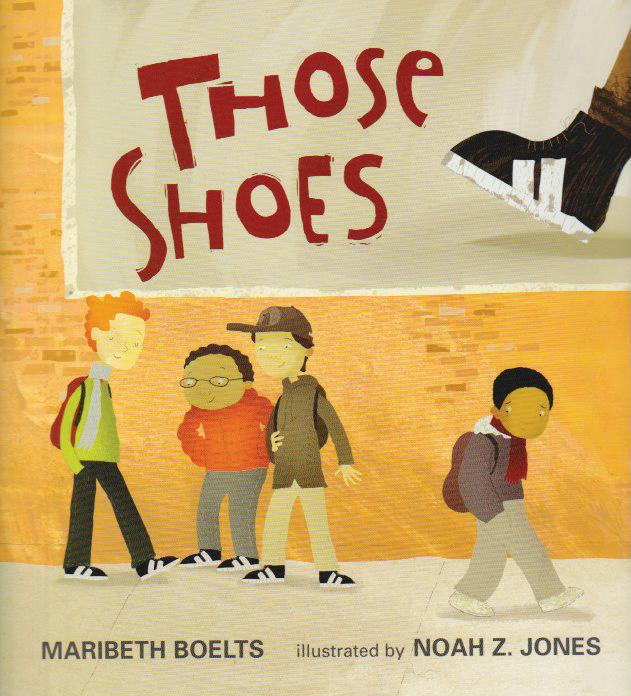
Those Shoes
Written by Maribeth Boelts
Illustrated by Noah Z. Jones
As children grow into the elementary years and beyond, they are often influenced by the media and their peers. They want to fit in with the other kids in their schools and neighborhoods.
This story is set in a city but could be any setting whether urban, rural, or suburban. The main character, Jeremy, sees that many of his peers are all getting a particular type of shoe and are feeling very cool about it. One day his shoes fall apart at school, and the counselor gives him a pair of shoes, but Jeremy is embarrassed. When the other boys see the shoes, they laugh at him.
His grandmother says that what he really needs is a new pair of snow boots, but Jeremy really wants to have a pair of “those shoes.”
After much searching from one thrift store to another, Jeremy finds a pair of “those shoes.” He pays for them himself, even though he knows they are too small for him. Find out what Jeremy finally decides to do with “those shoes” at the end.
The illustrations are vibrant with color and movement. The style reminds me of the style of Ezra Jack Keats. Elementary children will enjoy this book, and it may serve as a conversation starter about Jeremy and the choices that he makes.
Your Baby Is Speaking to You
Written by Dr. Kevin Nugent
Photography by Abelardo Morell
Whether this is your first newborn or your fourth, this book has a lot to offer. It will stimulate your awareness of how much and how often babies are speaking to us, if we would only listen. More than anything else, Dr. Nugent is calling us to slow down and pay attention to all the ways that newborns and infants communicate with us without using a word.
These little, tiny humans, new to the world, are ready, willing, and able to express themselves, if we not only take the time to be present but also begin to understand their language. They are awesome!
The photographs beautifully connect Dr. Nugent’s written words with the innocence, the emotions, and the sheer wonder of these small beings! Buy this book for yourself or give it to someone you know. You’ll be glad you did.
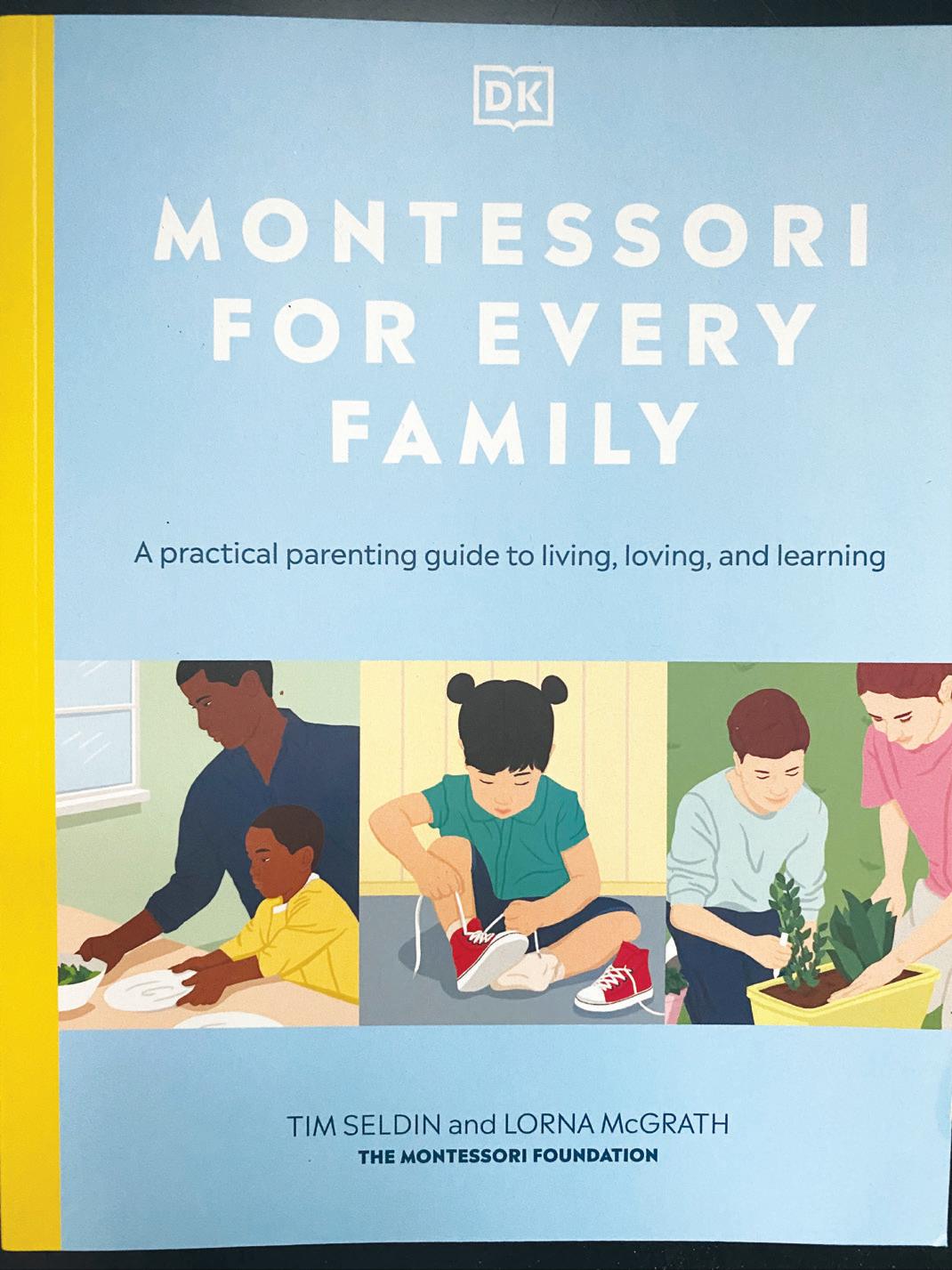
Montessori for Every Family: A practical parenting guide to living, loving, and learning
Written by Lorna McGrath and Tim Seldin
Tim Seldin and Lorna McGrath, both with the Montessori Foundation, have released a new book, Montessori for Every Family: A practical parenting guide to living, loving, and learning. This book is truly for every family, those that are in a Montessori school, those who Montessori homeschool, those who wish to be in a Montessori school, and those who have not even heard of Montessori. The three chapters, “What Is Montessori?”, “Montessori Family Life”, and “Family Life Through a Montessori Lens” take the reader through an introduction to Montessori, practice with Montessori, and application of Montessori philosophy to their own family.
Parents can read it straight through, or simply choose a topic and read about that. The book is easy to read either way, with most topics covered in a single two-page spread with beautiful illustrations and clear explanations. Included with most topics, the “Ages and Stages” sections help families adjust their approach for young children (18 months to 6 years); elementary-aged children (6 years to 12 years); and adolescents (12 years to 18 years). Also included are real life stories, sharing how different families have managed these topics.
Tim Seldin and Lorna McGrath have worked with families as Montessori guides, school administrators, and parent educators for years, as well as raising their own families and enjoying grandchildren. Their depth of understanding and experience with a variety of families is shown in this book. As a parent, you can find some suggestions you are already practicing with your family and some that you feel you could strengthen to make your family life more enjoyable. Each topic is presented as a practical way to engage as a family and invites you to try it out. This book is intended to help families connect and celebrate themselves and their daily life. It will help every family that reads it and applies even one topic to their own family.
Lorna described the reason, in part, behind the creation of this book as a step toward world peace. She said, “World peace begins at home…If families are all on the same page, we will create world peace. I totally believe that, and it’s why I do what I do, and have done throughout my career.” I highly recommend this practical, beautiful, and easy to read book for families, schools, and guides to strengthen their connections and language with all their children.
Montessori for Every Family: A Practical Parenting Guide to Living, Loving and Learning can be purchased for Kindle, Audio, and paperback on Amazon.
This is a truly gorgeous book for children! Cynthia’s words flow as you turn the pages, and she describes how the natural world is constantly transforming. The photographs superbly illustrate the transformations in nature. The message is about paying attention and to be in awe of all that is around us in the world and to realize how dynamic nature is. And watch for this – “What goes around, comes around.”
Scan code for more information.
Calling all teachers, parents, & children!
We would love to publish reviews of your favorite books.
Scott, Sue
Jackson, Stevi
Backett-Milburn, Kathryn
A number of key antinomies have emerged in relation to children and childhood in late modernity: in particular, contradictions between recognising children’s autonomy and the increasing emphasis on child protection; the paradoxical perception of children as both at risk and as a potential threat to other children and to social order. These contradictions may be expressed as tensions between two conceptualisations of children: as active, knowing, autonomous individuals, on the one hand, and as passive, innocent dependents, on the other. Our focus here is on risk and risk anxiety in general and more specifically on the sexualisation of risk in relation to children and the consequences of this for children’s daily lives. In a climate of increased public and professional anxiety about the sexual abuse of children, notions of sexual risk increasingly inform political debate, public policy and child education campaigns around safety and danger. However, the salience of anxieties about sexuality can only be fully understood by locating them within broader ‘landscapes of risk’ (Davison 1991).
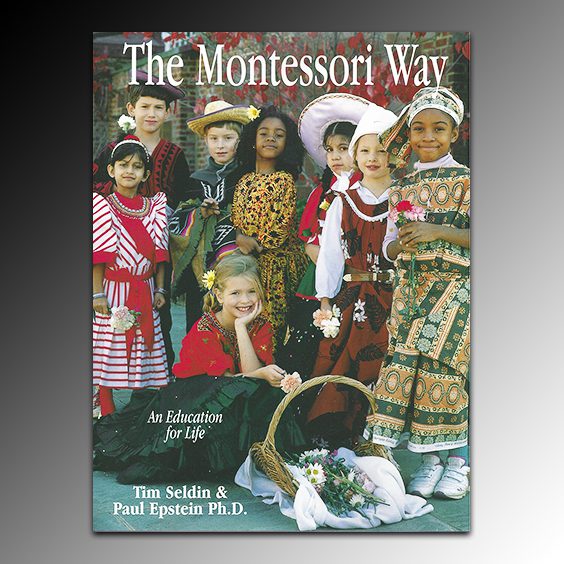
This PDF file is an excerpt from our book, the Montessori Way, by Paul Epstein and Tim Seldin, Copyright 2003
There is an ironic prejudice about education found in almost every country: the older the students are that one teaches, the higher the pay and respect for the teacher. We take it for granted that a professor in a graduate school is a more prestigious position than that of a high school teacher, which is, in turn, considered a more sophisticated position than teaching elementary and, of course, both are far more respectable than that of a nursery-school teacher. And no one in his or her right mind would want to teach infants and toddlers, right? Yet research clearly shows that the most important period in a human being’s educational and emotional development are not the years of high school and college but rather the first six years of life. Human beings are a magical combination of at least three factors: our genetic inheritance, our biological development, and our experiences.
What are we (as Montessori educators and parents) to do with this new reality?
What will Montessori be in an ever-changing future?
We now live in an ever-changing future, and our Montessori goals are necessary preparations for children who need to learn how to adapt. We’ve been citizens in this kind of future for some time, and I suggest this one is different from other changing futures, such as the agricultural revolution or the industrial revolution. This one is different because its magnitude is all at once. It is continuous, and it is global. We are all affected; the sheer speed of this ever-change can be instantaneous. ‘Viral’ was once a feared proclamation of a deadly outbreak of disease. Today ‘going viral’ is a popularity contest based on a number of ‘thumbs ups’ and ‘likes.’
Montessori Students /Digital Natives
When I began teaching in the mid-seventies, children lined up waiting for their turn with the Geometric Cabinet. It was so popular that I used to think about getting a second one for my classroom. I never did, because that would have violated the one-material rule: Have one set of the material to cause sharing and respect. There were other very popular materials, too, that children waited for their turn, more or less patiently.
For some time now, I’ve noticed a different interest from children who are growing up as Digital Natives. There are children who are no longer drawn to many of our treasured didactic materials. Very few young children today are drawn to the Touch Tablets and more. This is a serious turn of events. The materials provide a concrete representation of an idea, and the idea is understood through tactile and other sensory exploration. According to Montessori theory, repeated use of the materials leads children to understand the embedded idea and grow cognitively. The use of the materials also leads children to develop concentration, persistence, and self-discipline. And it’s not just the children. We are also seeing a different interest from parents who grew up as Digital Natives. They were born in the digital world, and they know no other. Digital Natives are digital learners. Digital learners come with an expectation for “what is learning” that is different from our own. They use digital technologies incessantly. And this is transforming human relationships in fundamental ways.
Digital learners live much of their lives through their devices and without distinguishing between the online and the offline. Instead of thinking of their digital identity and their real identity as separate, they are just one identity with representations in two, or three, or more different spaces, real and virtual. We used to teach children not to hit anyone. Today a ‘hit’ and a ‘like’ are synonymous. Now it is good to ‘hit.’ Digital Natives learn software and shareware ‘instantly.’ They are endlessly and relentlessly creative. They construct and express themselves in new social environments. They take (online) courses to learn how to better position themselves in the digital marketplace.
Design usurps memorization as the fundamental learning activity. As stated by Google CEO, Eric Schmidt, in The New Digital Age, digital learners “perceive information as malleable; it is something they can control and reshape in new and interesting ways. That might mean editing a profile … or encyclopedia entries on Wikipedia, making a movie or online video, or downloading a hot music track … Whether or not they realize it, they have come to have a degree of control over their cultural environment that is unprecedented.”
There is also growing fear among digital learners. There is incredible access to uncensored information: access to hate information, cyber bullying, addiction to violent games, online predators, and more. Unsupervised and unsafe Internet usage can lead to identity theft and even abduction. We are tasked to educate children in safety. We are tasked to give children the tools and skills to keep themselves out of harm’s way.
I have long been a proponent of including technology in our prepared environments. I admit now that I am very worried—not just for the children—but for the future of our Montessori pedagogy. I used to say our Montessori materials engage a child with all of her senses, and this is optimal for full-brain development and learning. Now, the children and their parents, who come to our schools, bring different expectations, understandings, and aspirations.
Here is what we are seeing from the digital learners at our school:
Many of our three-year-olds prefer working with others instead of choosing their own work or participating in parallel play. Why? Are they isolated from humans because at home and elsewhere they are using iPads or other digital devices? Is it because they are watching movies or TV on smart phones when immobilized in car seats or when they are at older siblings’ sports or other events?
Many children want an initial presentation at the shelf. That is, they are not willing to carry all of the materials to a table or rug on the floor. They even comment that, on their tablets, they can see some of what the activity will be about before deciding to do it.
A five-year-old declared he knew all about the 100 Board because he has that app on his tablet. When using the real 100 Board in the classroom, however, he could go no further than 30 because, he said, “The iPad always resets at the third row.” He had at home, in other words, the unpaid app version of the 100 Board.
Another five-year-old knew the Addition Strip Board because, he said, “I do that on my iPad.” The classroom guide observed that when he used the real classroom version, he computed sums by counting on his fingers. When she asked him if he did the same thing with his iPad, he said, “No. I just punch the square, and if it’s wrong, it goes away.
Until recently, I was comfortable with technology as a supplement to our catalogue of materials; a supplement and not a replacement. But now, in our ever-changing future, certain technological advancements are occurring, and we will soon face a real ‘game changer.’ In the language of technological innovation, I fear that we are about to become disrupted.
The Evolution of Education
Our pedagogy is based on Dr. Maria Montessori’s discoveries of the child, beginning in the late 1890s and continuing through 1952. Montessori discovered that when children are placed in an environment designed for how they naturally learn, children will experience a transformation from impulsive behaviors. They will concentrate. And when children concentrate, they next develop self-reliance and become self-disciplined. For this to occur, the design of the environment, the design of the materials, and our own preparation must enable a child’s choice and spontaneous activity.
The whole of our pedagogy is rooted in touch, in the work of the hands. With the coordination of the hands comes independence and the child’s triumphant cry of, “I can do it!” With the coordination of the hands comes the development of intelligence. In her book, The Montessori Method, Montessori wrote:
I teach the child how to touch, that is, the manner in which he should touch surfaces. For this it is necessary to take the finger of the child and to draw it very, very lightly over the surface… Often, after the introduction of such exercises, it is a common thing to have a child come to you, and, closing his eyes, touch with great delicacy the palm of your hand or the cloth of your dress, especially any silken or velvet trimmings.
To touch is to learn. This occurs throughout the world and throughout time. The Sandpaper Letters, for example, are used by children to develop a cognitive understanding of the phonetic sounds of the alphabet. The child traces the letter and voices its sound. The child develops further literacy by associating objects with each letter and sound. The textures, colors, sizes, and weights of the objects are designed to attract and hold the child’s attention. This is true for all of the materials we place in our prepared environments. The materials call children to explore, investigate, concentrate, and make discoveries. The objects seem to express, “Do you want to know? Come find out.”
During the 20th century, our Montessori heritage stood in marked contrast to what we still call ‘traditional education.’ I can speak only for myself; perhaps you enjoyed your schooling. What I remember most was the agony of boredom, the fear of a teacher’s ridicule, the embarrassment of being wrong when called on, and the shame of being laughed at by others. Traditional education is rooted in a factory model of education. Teachers act like top-down managers and dispense information and assignments to children in predefined units and grades. We were told which book to take out, and for how long, and who would answer the first question, then the second, and then time was up. And, ready or not, interested or not, we moved on at the direction of the teacher/manager.
Throughout the education-as-manufacturing process, a ‘one size fits all’ controls the procedure. Instead of individualized instruction, children are interchangeable products. As children progress from grade to grade, they become more assembled. The teacher/manager measures success and failure in terms of grades and promotions. The teacher/manager is measured in turn by student test scores. A finished product occurs at graduation. The parallels between the school house and the factory are clear: teachers are managers; school assignments prepare children for work place tasks; grades will become salaries.
Memorization is the primary basis for learning. We memorized teacher-dispensed content, facts, dates, and formulas. We memorized the information and gave it back. We were scored for an accuracy of recall, and then we forgot about it. Many of us did fairly well; however, some of us fell within a tolerance of the education/manufacturing process known as one or more ‘standard deviations.’
In a traditional 21st century classroom, students are praised for their ability to find correct answers to predetermined questions. Intellectual risk taking, creative thinking, and asking questions is often discouraged. The ability to get a good score on a test is valued more than the ability to get fully engaged in the learning process and pursue ideas that excite a student. (www.wordpress.bhmschools.org/integration)
We memorized because it was assumed that what we needed to know was all that which our parents and our grandparents needed to know. Our future, when we grew up, would, resemble their own. We were raised in an ever-similar future.
Throughout the education-as-manufacturing process, a ‘one size fits all’ controls the procedure. Instead of individualized instruction, children are interchangeable products.
This kind of pedagogy stands in sharp contrast with our Montessori pedagogy. Our legacy is that of the prepared environment and developmentally appropriate, multi-sensory, hands-on learning activities. Montessori teachers are guides, who help children engage in investigation and discovery. Our goals include fully developing each child’s potential and forming habits of lifelong learning. Learning to think is not the same as learning to memorize. Developing habits of persistence, taking on challenges, engaging with problems, and creatively designing solutions are not the same as learning to memorize.
We now live in an ever-changing future, and our Montessori goals are necessary preparations for children who need to learn how to adapt. We’ve been citizens in this kind of future for some time, and I suggest this one is different from other changing futures, such as the agricultural revolution or the industrial revolution. This one is different because its magnitude is all at once. It is continuous, and it is global. We are all affected; the sheer speed of this ever-change can be instantaneous. ‘Viral’ was once a feared proclamation of a deadly outbreak of disease. Today ‘going viral’ is a popularity contest based on the number of ‘thumbs ups’ and ‘likes.’
Most telling, we are also the producers of this global change. Not feudal lords, dukes, and kings. Not mad men. Not industrial giants and manufacturing companies. Our everchanging future is driven by technological innovation and planned economic disruption. It is driven by a global participation in the consumption of digital devices and by the incessant 24/7/365 use of those devices. We each access more digital power than all other generations combined. Our access to knowledge and information multiplies daily. More and more of us text, and instant message, and take pictures, and make videos, and use FaceTime. We like, tweet, post, blog, open source, and do a whole host of verbs that didn’t exist just a few years ago. We’re all participants in producing constant change.
That we do all of this social media may yet prove to democratize our entire planet. And, if we are truly clever, we may yet even save ourselves from, at least, one other ‘everchanging future.’ This one is the ever-massive environmental destabilization, including the destruction of drinkable water. Say what you will about real reality and virtual reality. The ever-changing future is really real.
So, what is Montessori in this ever-changing future? Will children touch tablets? Will parents, who grew up as Digital Natives, identify with and understand our didactic materials? Will they want these for their children?
Certainly we have contended with technology in our prepared environment for some while now. I still recall personal computers in my middle school classrooms in the early 1980s. A ‘new generation’ of software appeared in the 1990s, offering Montessori-like computer based learning. More recently, there are Montessori apps, lots of them. I have felt for many years that our heritage was secure. And parents were in agreement. I would ask, “Do you prefer your child push—with their mouse or finger—an image of a pink cube, or carry real cubes?” I would ask, “Do you prefer less sensory stimulation from computer screens and tablets, compared with all senses engaged?”
These questions are about to become irrelevant because this digital world with these kinds of apps is about to go away. The kinds of digital learning about to become possible will require us to ask, what will Montessori be in an ever-changing future?
Teaching Thinking
Digital learners throughout the world are expressing changed expectations for how, what, where, and when to learn. It is no longer about does the app mimic a Montessori didactic material? In the 21st-century digital classroom, the profile of learning has changed. Digital learners do not memorize. They expect to learn how to think, create, analyze, evaluate, and more. This is not the factory model of schooling, and we are no longer the only non-factory game in town. Digital learners in non-Montessori schools routinely connect and collaborate with one another in real and virtual time and space. They explore, investigate, collaborate, solve problems, and communicate. They expect to become lifelong learners. Digital learners expect teachers to provide differentiated, personalized instruction. They expect hands-on learning experiences. They expect to explore real-world issues using models and simulations.
These words should sound familiar. We’ve used these words and their synonyms to describe and promote our legacy since 1907. Now, throughout the world, educators are determined: The factory model of traditional education will give way to teaching thinking. In digital classrooms, teachers are no longer a main source of information; text books are no longer a main source of information. Learning is no longer at the discretion of the teacher as factory manager. Given the omnipresent Internet, learning is whenever, wherever, and forever. Twenty-first century students collect and create information anywhere and anytime. They Bing, Google, Ask, Yahoo, Amazon, text message, blog, podcast, flip board, YouTube, mp3, mp4, RSA, Wiki, Facebook, FaceTime, crowdsource, and tweet. Twenty-first century students collect and create information when they publish and evaluate work using Ning, OneNote, Wiki, Picasa, Shutterfly, Photoshop. They collaborate with SkyDrive, Dropbox, Facebook, Skype, and Twitter.
The 21st century teacher is an information architect who guides students to validate information, problem solve, and communicate information Twenty-first century goals for students include developing a questioning disposition, embracing change, and thinking like entrepreneurs. Technology is not used to entertain. Using technology, a 21st century teacher can offer flexible learning paths— individualized instruction with open-ended, higher-order questions. Using technology, a 21st century teacher can evaluate authentic applications of learned knowledge and skills. (http://bionicteaching.com) The digital classroom is likely to be flipped—you take your lessons at home, and then work with your teacher/guide at school.
Twenty-first century homework engages students in collaborating, creating, publishing, and more. At any given moment, a learning experience might include:
What are the effects of erosion on an average beach? How can we counteract this? Use any resource you wish.
You have $1,000 to donate towards hunger relief. To which organization in which country would you give? How could you assess the impact of your donation?
Make a model of one trillion.
Read the terms and conditions of YouTube and summarize the key ideas.
In an ever-changing future, children use technology to think and to make changes and design their future as engaged participants. They collaborate as authors, originators, inventors, creators. They are learning to plan, design, implement, and communicate. How will our didactic learning materials stand up to technology that enables simulations, modeling, systems thinking, and still more? We are oriented towards children developing coordination which, in turn, will enable them to concentrate, develop self-reliance, and become independent. Can we be so sure that these occur exclusively with only our didactic materials? Will parents, who are also Digital Natives, still choose Montessori? I cannot definitively answer this question. But these data are suggestive:
Sources: Laura Devaney (10/28/13)-eSchool News
A year ago, we decided not to permit Minecraft during our afterschool programs. Several parents protested—not their children!—and they came back loaded with evidence of the educational whole-child benefits of Minecraft. Their sources included faculty at MIT and elsewhere. Minecraft is a thinking tool.
Children can plan entire cities, study environmental issues, and learn a programming language. Research on the benefits of Minecraft documents that children develop spatial reasoning, construction skills, and habits of learning how to learn.
Do Digital Devices Belong in the Montessori Prepared Environment?
Montessori educators have debated for several decades whether or not digital devices belong in the prepared environment. Some are adamant and proclaim no. Some ask what Dr. Montessori would do. Some are concerned that excessive use of digital devices erodes the child’s brain. And there is still more that is about to occur.
“Five years from now,” states an announcement from IBM, we will be able to understand touch and smell through our digital devices. IBM. (Touch: 5 future technology innovations from IBM) This to me is the real game changer. Touch and smell through our devices. Our brains will not differentiate real from virtual; our brains will not care. Already people wear sensing digital devices to frame a scene with their fingers and then take a picture. Other devices project images we see onto any surface. We continue, in other words, to learn through touch, but digitally. This is not the distant future; we should expect a new generation of digital classroom experiences rather soon.
There is no reason for us to think either/or—either our didactic materials or technological devices. Many of us do, instead, think both/and, both materials and devices. Each is a tool for learning, for communicating, for solving problems, and more. The Pink Cubes are a tool that offers a possibility not presented in other tools. A digital device offers a possibility for thinking not found in other tools.
There is, presumably, more to life than being logged into a digital device. I sincerely believe that in the ever-changing future there will be device-free learning moments. I sincerely believe that these moments are necessary complements and will perhaps even prove to make possible a whole-child education, with or without our Montessori devices. For example, since this past summer, outdoor construction has occupied most of our first through sixth graders during recess time. Their constructions have had various names and purposes. They began as office buildings. Then they became forts, but early in the fall, it was generally agreed that forts were not in keeping with our Montessori peace education purposes. So, their constructions were renamed as houses and shops. Well, renamed sort of. Last fall, a student paper came out from our E2 program with the headline, “Fort Crown: Split Up in the Big Fort.” The article went on to state, “Bill and Tom split up with the hotel. The hotel members are fine, happy, and they rebuilt very well. Bill and Tom also built their pawn shop there.”
These are essential opportunities in which children engage and participate. They collaborate as authors, originators, inventors, creators. They think, plan, design, implement, and communicate. I do agree with Richard Louv’s Last Child in the Woods:
Nature—the sublime, the harsh, and the beautiful—offers something that the street or gated community or computer game cannot. Nature presents the young with something so much greater than they are; it offers an environment where they can easily contemplate infinity and eternity. A child can, on a rare clear night, see the stars and perceive the infinite from a rooftop… Immersion in the natural environment cuts to the chase, exposes the young directly and immediately to the very elements from which humans evolved: earth, water, air, and other living kin, large and small. Without that experience … “we forget our place; we forget that larger fabric on which our lives depend.”
The Role of Montessori Educators and Parents in the Ever-Changing Future
What role will Montessori educators and parents play in an ever-changing future? I propose the establishment of a Montessori task force charged with establishing a 21st Century Montessori Pedagogy. I suggest we begin to:
Develop 21st-century vision and purposes for schools;
Evaluate developmental/brain studies;
Define learning in the context of the ever-changing future;
Identify principles for real and digitally prepared environments and learning materials and experiences;
Research uses of digital and Montessori learning tools;
Analyze the current catalog of Montessori materials;
Propose Montessori digital learning tools; and
Implement a Montessori digital teacher education.
Not either/or. How will we incorporate our Montessori heritage and legacy with emerging digital-based learning possibilities? How should we prepare environments when the distinction between real and virtual is collapsed? Which historic didactic materials should we maintain when digital devices will enable us to experience a full sensory array? What new materials do we need now? How will we design our Montessori ever-changing future?
Realizing that your child is not learning or growing as anticipated is one of life’s most daunting challenges. In this article, we explore ways of dealing with that challenge.
Coming to the realization that one’s child is not learning or growing as anticipated is truly one of life’s most daunting challenges. Each family’s experience of having a child with an exceptionality is completely unique. And yet, there are a few common threads that can make the journey a bit easier for teachers and for families to navigate.
STAGES AND PERSONAL NARRATIVES
Being the parent of a child with a special need is a deeply personal experience. Disability experts suggest that families go through the classic stages of grief. However, families may find this approach stereotypical and even insulting. To suggest that a family is ‘in denial’ or in any of the other stages of grief can feel dismissive and insensitive. On the other hand, being aware of a range of possible feelings can be helpful for both families and teachers.
Shock, denial, guilt, isolation, panic, anger, bargaining, acceptance and hope comprise the usual set of stages (Boushey, 2001). I am the mother of a very grownup daughter who is deaf. Alicia is 35, married, and part of her job involves lobbying on Capitol Hill for employment opportunities for people with disabilities. I can certainly remember each of these stages. I also remember feeling confused when several of these feelings (especially panic and anger) would reoccur. “I was already angry and scared last year. How could I be mad and fearful again this year?” Then I remembered a counselor explaining that this is not a checklist of sequential steps. It is a cyclical and often reoccurring process. And it plays out differently for every mother, father, grandmother, and grandfather, as well as each additional member of the child’s family.
An alternative view suggests that every family has their own narrative or story or journey (Lavani & Douglas, 2013). Early childhood specialists who employ this family-centered approach focus on each family’s concerns, their priorities, and their particular set of resources. As families and teachers work together, these three components drive conversations, planning sessions, and evaluations. Specific concerns, priorities, and resources (‘CPR’) of the family are honored and valued, along with professional recommendations. While keeping the stages of grief in mind can be helpful, placing the family’s unique set of ‘CPRs’ front and center is often more productive. These two approaches (stages and personal narratives) can be seen when families and teachers first begin talking about a child’s special need. They are not mutually exclusive; in fact, they can work well together.
HEARING “THE NEWS”
More often than not, families have a sense that something is not going right before their child’s teacher shares a concern. Families hear this statement (“Let’s find a time to meet. I’d like to talk with you about a concern I have regarding T’s reading… or behavior… or… ”) in a myriad of ways. It is not unusual for families to feel devastated or at least upset. It’s vitally important for teachers to understand this reaction. Some families sit quietly, appearing polite and ‘on board’ but not actually hearing anything stated after the word ‘concern.’ Others respond quickly that the teacher is mistaken and provide specific examples of why their child is just fine.
Most are somewhere between these two reactions. They try to understand the teacher’s concern and even try to engage in planning how to address the concern. But as they ask questions and share their own insights, their hearts are usually racing and their thoughts are tumbling into a confused jumble. Here, it is important for teachers to gently guide families toward identifying their concerns. What worries the family? Are they concerned that more information is needed? That they can’t afford an evaluation? That their child might have difficulty making and keeping friends? Or that he or she might start to feel ‘different’? Or … ? Every family is different; every conversation will take its own course.
Teachers need to provide time and support for families at this point. Hearing and understanding ‘the news’ can take weeks, months or even years. During this time, teachers can provide clear examples of both the child’s areas of difficulty and the child’s areas of strength. Sharing balanced, accurate information will help families begin to set a course of action.
COMMON GROUND
As teachers and families begin the process of working together, remembering their shared goal of supporting the child is crucial. This is the first of two golden keys to partnering with families. Questions about this first key include: What is in the child’s best
interest? What can we do to support the child’s learning? Is this the best we can do for the child? These questions can provide common ground during difficult conversations between teachers and families. They can also steady teachers and families during upsetting interactions with the child.
Returning to the initial conversation, it is important to remember that each family’s reaction to the teacher’s concern is a demonstration of their care for their child. Whether the family objects, agrees, or appears to not respond, all families want the best possible outcome for their child. During this very difficult conversation, families appreciate hearing that their child’s teacher also truly cares and is searching for ways to assist the child grow and learn.
“PLOP”
The second golden key for families, as well as for teachers, is to know and honor the child’s present level of performance (affectionately known as the PLOP.). This is tricky. Teachers and families both want the child to be moving forward (that vitally important common ground). But progress can be slow. At times, there may not be any progress at all; or worse, the child may regress. Knowing what the child is able to do (rather than focusing on what he or she cannot do) is key. Can the child stay focused for 5 minutes? Rather than lamenting that the child cannot focus for 6 minutes, begin planning ways to support reaching this goal. Can the child recognize three letter sounds? Hold this as the child’s present level of performance (rather than as a problem), and with the family, implement lessons to assist the child in recognizing four sounds.
PARTNERING FOR THE CHILD
This seems like a lot of alphabet soup and jargon (CPR, PLOP, stages, narratives, journeys, common ground). Dr. Montessori provided a simple, clear focus. She urged us to recognize each individual child’s potential. She also pointed out that teachers transform themselves by observing the child carefully. Finally, she considered families as the cornerstone of each child’s journey toward adulthood. This is true for all children. Our work as teachers
and parents, then, is to be partners on behalf of children, particularly children who learn and grown differently.
RESOURCES:
Boushey, A. (2001). The Grief Cycle – One Parent’s Trip Around. Focus on Autism and Other Developmental Disabilities, 16(1), 27-30.
Lalvani, P. & Douglas, L. P. (2013). Historical perspectives on studying families of children with disabilities: A case for critical research. Disability Studies Quarterly, 33(3), 9–9.
Montessori is an educational philosophy and approach that can be found in all sorts of settings, from the most humble to large, well equipped campuses. In general, Montessori schools consciously strive to create and maintain a diverse student body, welcoming families of every ethnic background and religion, and using scholarships and financial aid to keep their school accessible to deserving families. Montessori is also found in the public sector as magnet public-school programs, Headstart centers, and as charter schools.
Is Montessori opposed to competition?
No. Dr. Montessori simply observed that competition is an ineffective tool to motivate children to learn and work hard in school. Traditionally schools challenge students to compete with each other for grades, class rankings, and special awards. For example, tests are graded on a curve developed from the performance of the students in that class. Students are constantly measured against their classmates, rather than considered for their individual progress.
In Montessori schools, students learn to collaborate with each other rather than mindlessly compete. Students discover their own innate abilities and develop a strong sense of independence, self-confidence, and self-discipline. In an atmosphere in which children learn at their own pace and compete only against themselves, they learn not to be afraid of making mistakes. They quickly find that few things in life come easily, and they can try again without fear of embarrassment.
Dr. Montessori argued that for an education to profoundly touch children’s hearts and minds, they must learn because they are curious and interested, not simply to earn the highest grade in the class. Montessori children compete with each other every day, both in class and on the playground. Dr. Montessori, herself an extraordinary student and a very high achiever, was never opposed to competition in principle. Her objection was to using competition to create an artificial motivation to get students to achieve. Montessori schools allow competition to evolve naturally among children, without adult interference unless the children begin to show poor sportsmanship. The key is the children’s voluntary decision to compete, rather than having it imposed on them by the school.
Is it true that Montessori children never play?
All children play. They explore new things playfully. They watch something of interest with a fresh, open mind. They enjoy the company of treasured adults and other children. They make up stories. They dream. They imagine. This impression stems from parents who don’t know what to make of the incredible concentration, order, and self-discipline that we commonly see among Montessori children. Montessori students also tend to take the things they do in school seriously. It is common for them to respond that “this is my work,” when adults ask what they are playing with. They work hard and expect their parents to treat them and their work with respect. But it is joyful, playful, and anything but drudgery.
Is Montessori opposed to fantasy and creativity?
You will not generally find play kitchens, dress-up corners, or dolls in a Montessori class for children under age six, because children are using real tools
and doing real things, instead of pretending. However, fantasy and creativity are important aspects of a Montessori child’s experience.
Montessori classrooms incorporate art, music, dance, and creative drama throughout the curriculum. Imagination plays a central role as children explore how the natural world works, visualize other cultures and ancient civilizations, and search for creative solutions to real-life problems.
In Montessori schools, the arts are normally integrated into the rest of the curriculum. They are modes of exploring and expanding lessons that have been introduced in science, history, geography, language arts, and mathematics.
Art and music history and appreciation are woven throughout the history and geography curricula. Traditional folk arts are used to extend the curriculum as well. Students participate in music, dance, and creative movement with teachers and specialists. Students’ dramatic productions make other times and cultures come alive.
What if a child doesn’t feel like working?
While Montessori students are allowed considerable latitude to pursue topics that interest them, this freedom is not absolute. Within every society, there are cultural norms; expectations for what a student should know and be able to do by a certain age. Experienced Montessori teachers are conscious of these standards and provide as much structure and support as is necessary to ensure that students live up to them. If for some reason, it appears that a child simply needs time and support until he or she is developmentally ready to catch up, Montessori teachers provide it nonjudgmentally.
Is Montessori opposed to homework, tests, and grades?
Many parents have heard that Montessori schools do not believe in homework, grades, and tests. This is really a misunderstanding of Montessori’s insights.
Homework
Most Montessori schools do not assign homework at all below the elementary level. When it is assigned to older children, it rarely involves page after page of busywork; instead, it involves meaningful, interesting assignments that expand on the topics that the children are pursuing in class. Many assignments invite parents and children to work together.
Homework should never become a battleground between adult and child. One of our goals as parents and teachers should be to help the children learn how to get organized, budget time, and follow through until the work is completed. Ideally, home challenges will give parents and children a pleasant opportunity to work together on projects that give both parent and child a sense of accomplishment. They are intended to enrich and extend the curriculum.
Homework doesn’t need to be boring! Montessori challenges children to think, explore, and pursue tangible projects that give them a sense of satisfaction. Homework is intended to afford students the opportunity to practice and reinforce skills introduced in the classroom.
Moreover, there is a certain degree of self-discipline that can be developed within the growing child through the process of completing assignments independently.
Many elementary Montessori classes send home packets of At-Home Challenges for each age group in the class. The children have an entire week to complete them. When the week is over, teachers will normally sit down with the children to review what worked, what they enjoyed, and what they found difficult or unappealing.
Depending on the child’s level, assignments usually involve some reading, research, writing, and something tangible to accomplish.
They may be organized into three groups:
1) Things to be experienced, such as reading a book, visiting the museum, or going to see a play;
2) Things to learn, stated in terms of skills and knowledge, such as See if you can learn how to solve these problems well enough that you can teach the skill to a younger student; and
3) Things to be submitted, such as a play, essay, story, experiment, or model.
When possible, teachers will build in opportunities for children to choose among several alternative assignments. Sometimes, teachers will prepare individually negotiated weekly assignments with each student.
Tests
Montessori children usually don’t think of our assessment techniques as tests so much as challenges. Early childhood Montessori teachers observe their children at work or ask them to teach a lesson to another child to confirm their knowledge and skill.
Most elementary Montessori teachers will give their students informal, individual oral exams or have the children demonstrate what they have learned by either teaching a lesson to another child or by giving a formal presentation. The children also take and prepare their own written tests to administer to their friends. Students are working toward mastery, rather than being graded using a standard letter grade scheme.
Standardized Tests
Very few Montessori schools test children younger than the first or second grade; however, most regularly give elementary students quizzes on the concepts and skills that they have been studying. Many schools ask their older students to take annual standardized tests.
While Montessori students tend to score very well, Montessori educators frequently argue that standardized testing is inaccurate, misleading, and stressful for children. The ultimate problem with standardized tests in our country is that they have often been misused, misunderstood, and misinterpreted in other schools. Tests can be fairly useful when seen as a simple feedback loop, giving both parents and school a general sense of how students are progressing.
Although standardized tests may not offer a terribly accurate measure of a child’s basic skills and knowledge, in our culture, test-taking skills are just another practical life lesson that children need to master.
Reporting Student Progress
Because Montessori believes in individually paced academic progress, and encourages children to explore their interests rather than simply complete work assigned by their teachers, we don’t assign grades or rank students within each class according to their achievement.
At the elementary level, students will often prepare a monthly self-evaluation of the previous month’s school work. When completed, they will meet with the teachers, who will review it and add their comments and observations.
In many Montessori schools, children compile a collection of their work that is pulled together in a portfolio of the year’s work.
Most schools schedule family conferences two or three times a year to review their children’s portfolios and self-evaluation and go through the teachers’ assessment of their children’s progress.
Typically, once or twice a year, Montessori teachers will prepare a written narrative evaluation of the students’ work, social development, and mastery of fundamental skills.
What about children with special needs?
Every child has areas of special gifts, a unique learning style, and some areas that can be considered challenges. Each child is unique. Montessori is designed to allow for differences. It allows students to learn at their own pace, and is quite flexible in adapting for different learning styles. In many cases, children with mild physical handicaps or learning disabilities may do very well in a Montessori classroom setting. On the other hand, some children do much better in smaller, more structured classrooms. Each situation has to be carefully evaluated individually to ensure that the program can successfully meet a given child’s needs and learning style.
Is Montessori right for my child?
Most Montessori educators would agree that Montessori is a good fit for most children — but it may not be the right match for their parents.
Everything depends on what your family believes to be true about your children and important in their education.
Do you believe that children should be treated with dignity and respect and be encouraged to be independent, self-confident, and self-disciplined?
Do you believe that the best way to discipline is by being consistent, modeling the correct behavior, and by consciously teaching children how to do things correctly?
Do you believe that education should be enchanting, intriguing, and delightful, rather than traditionally structured and highly competitive?
If so, Montessori may be right for you.
But aren’t there some children who just won’t do well in Montessori?
The answer is both yes and no. Montessori schools are often successful with children, who would challenge any school, including the highly distractible
and impulsive ones, for whom parents typically have the most concern. The reason why should be obvious: Montessori is designed to be flexible, adapting
the program to meet the needs of each given child. It also allows children to move about, socialize independently (rather than work as part of a group), and progress at their own pace. This doesn’t mean, though, that every class and every Montessori teacher can meet the needs of every child.
This is especially true if a child is violent, destructive, or excessively disturbing of the peace and order of the classroom. Each decision has to be made on a case-by case basis
Why is there so much variation among Montessori schools?
Many people assume that all Montessori schools are essentially the same. In reality, Montessori schools can differ dramatically, in size, facilities, programs, and emotional climate. They share a common philosophy and basic approach, but there may be tremendous variation among schools that use the name Montessori. There are more than four thousand Montessori schools in North America, but every one is unique. Even within the same school, each class may look and feel quite different from the others, reflecting the interests and personalities of the teachers; however, certain characteristics will be found in all classes that are honestly following the Montessori approach.
Dr. Montessori was a brilliant student of child development, and the approach that has evolved out of her research has stood the test for more than ninety years in Montessori schools around the world. The Montessori approach has three great qualities: the model is replicable, it can be adapted successfully into all sorts of new situations, and it is sustainable.(Montessori programs don’t tend to self-destruct after a few years, as do many other educational reforms.) However, the only ‘pure’ Montessori educator was Dr. Maria Montessori herself. The rest of us interpret and filter her ideas through our personalities and experience.
Free parenting tips online. Check out this website and sign up for free daily parenting tips and other fun stuff for families: www.parenting.com
I’m sitting at home right now, drinking my second coffee of the day. My two boys have finally given in and are taking naps (at the same time!), and all is right with the world. It is a snow day, and this morning, when I saw the cancellation notice with the name of my kids’ school go by at the bottom of the TV screen, I silently sighed. I love my children, but the thought of a whole day snowed in … two against one …all that ‘boy energy’ … another sigh.
This is snow day number two. My husband stayed home with them yesterday, and I received several texts from him reassuring me that they were alive (though he was only barely). Then, hours later, I received another text telling me that he was going to get Hudson’s head examined after a mishap with a ‘monorail’ that they had constructed in the house. Sometimes it’s just better not to ask. My husband has a degree in engineering, so a monorail running through the house is entirely possible. Anyway, an hour later, my 15-month old’s forehead was super-glued back together and as good as new. Nothing surprises me with these boys, NOTHING.
I don’t know how their Montessori teachers do it and remain positive and upbeat every day. I drop my children off in the morning, wish them a good day, transition through my own busy work day, and am worn out by the time I return to pick them up. They, on the other hand, are not worn out. I return to school and find my children happy, playing outside, and not ready to go home! In fact, I often get a tantrum about their intense desire to stay at school and play with their friends. And, I get it! I’m not nearly as cool as their peer group.
But, I wonder how these teachers do it. I once asked my older son’s teacher if she is exhausted at the end of the day, and she said, “No, they are great.” Either she is a great liar or that woman drinks more coffee than I do! But, I’ve been given the opportunity to observe her, and she is genuinely loving, caring, kind, compassionate, and warm. She speaks to the kids firmly but as though they are people, not kids. When one of them behaves badly, she explains what was wrong with their behavior and shares that they need to apologize. She has a heart of gold and wears it up and down her sleeves. And, the kids love her.
One day, I came to pick up my kids, and she shared with me that my lovely child hit another child (as if I ever thought he was an angel). I asked her how she handled the situation so that I can model my behavior based on hers. She shared the following: “I sat down, eye-level, and said, ‘That is not nice. These hands are made for hugs and helping other people, not hitting other people. These hands can do amazing things without hurting others.’” She had him sit in a chair until he had calmed down, walked him to the little boy, and the two hugged while my son said he was sorry.
Seriously?!?!?! How does she do it? At home, my older son will hit my younger one (or vice versa), and he laughs and snickers at me when I attempt to discipline him. But, that’s just it! His teacher attends to him and sees it as an act of communication rather than a reprimand. I have come to realize that we are constantly learning from our teachers, even when they are no longer OUR teachers. These teachers are setting the example of how to interact, inter-personally and intra-personally … with the children and with the parents.
The main lesson that I continue to learn about parenthood is that it is not easy. It is particularly not easy if you put on your parent goggles and reject the idea of asking for and receiving help. No matter how much you think you know, there will always be ideas and solutions that are new to you and may just be exactly what you and your family need to make life a little bit less stressful.
I may be exhausted and sleep deprived, but I am still able to appreciate life’s little lessons that creep up on me, daily. My kids are no angels. But, they are kids. And, I am reminded about the care that their teachers (who actually spend more time with them than we do) give my children when I observe their private moments: laughing, continuously hugging, consoling, and loving them. This is co-parenting at its best.
Trevor Eissler is a Montessori dad, and author of a highly regarded book for parents: Montessori Madness,
The Montessori Method is an inclusive educational method that was formed by Dr. Maria Montessori in which it delves into the perception of children’s preferred learning modalities as they develop. The classroom environment consists of attractive manipulatives, educational toys that involves children in academic learning. “The Montessori classroom is a “prepared environment” planned in advance to support independent, student initiated work.” In the classroom, children are free to select manipulative’s of their preference and through curiosity and innate interest engage in learning activities of their own individual choice. In the traditional Montessori environment, children manipulate objects and discover the joy of learning while a teacher guides them and “… by making discoveries with the materials, cultivating concentration, motivation, self-discipline, and a love of learning.”
The traditional classroom setting consists of a teacher assigned to a group of students. Rather than guiding children through learning, the teacher’s role is to instruct students. The job of the teacher is to provide each student with a firm foundation and enrich their minds by teaching the grade level standards. In this setting, the teacher delivers curriculum from textbooks, with an outline of the lesson to be taught that day. The students are seated in chairs or tables, either working by themselves or in collaborative groups, contingent on the set up of the classroom. In this setting, there exists a variety of learners however the teacher teaches from a whole group perspective. The outcome of student learning relies heavily on assessments, or tests. Rather than constructively learning through manipulating their environment, the students in this setting are taught in a very structured environment.
A 12 minute introduction to Montessori education from the Montessori Foundation. The video was prepared by Artrix Video in Sarasota, Florida. Copyright is held by the Montessori Foundation. The video is available on DVD from the Montessori Foundation’s publication center: www.montessori-foundation-books.org
In this session Lorna McGrath shares ways to help children retain their natural instincts of kindness and empathy in a world that seems to have forgotten what that means.
We think we’ve found one of the most clear and, at the same time, forgiving guides for parents to cultivate cooperation, order, consistency, and harmony in their homes. Join us to learn more about how this book offers suggestions and ideas for family activities and traditions, for setting up homes that are comfortable and made for success for all family members, and for building solid relationships the Montessori way.
Television … is an anti-experience and an anti-knowledge machine because it separates individuals from themselves and from the environment and makes them believe they are living while they are only observing passively what other people decide to make them see.
– Dr. Silvana Montanaro (From Michael Olaf Website)
The primary danger of the television screen lies not so much in the behavior it produces as the behavior it prevents … Turning on the television set can turn off the process that transforms children into adults.
– Urie Brofenbrenner, Professor of Human Development, Cornell University
As I lay in savasana at yoga this morning, my teacher shared a quote that landed and resonated deeply for me as I reflected on parenting and guiding a high schooler to think about life after high school:
Awakening and enlightenment are accidents; but practice makes one accident-prone. Author unknown
As a parent, I’ve spent countless hours literally awakening (and, hopefully, enlightening) my children. In fact, I think that’s especially true now, as my first-born, Celia, progresses into her second year of high school, begins to grow independent, and starts to consider her future. Juggling my own work as an educational consultant and entrepreneur, along with managing all that comes with raising two kids in a COVID landscape, I often close my eyes, cross my fingers and hope that I am helping them attain their highest potential with what I am able to provide.
I first witnessed the aha moments I associate with awakenings and enlightenment when Celia was a student at a Montessori School on Cape Cod. She began at the Sandwich Montessori School at two years and nine months. She had always been that kid who insisted she could “do it myself!” and understanding that she had that spirit of exploration and that yearning to discover sensorily, I read everything I could about Montessori.
In Montessori, I believe Celia developed a solid foundation in math, language, and problem-solving, both academically and socially. But there was something more practical that drew me to the Montessori educational model; it was the life skills and sensory aspect to the program that I loved. Upon reflection, I believe these skills set Celia up for the awakenings and enlightenments she experienced in her early childhood. She practiced the work—whether it was learning to zip a garment, unbuckle a belt, sweep and mop, or pour and scrub. Through these Practical Life exercises, Celia learned to strengthen motor skills, navigate practical tasks in the world, and care for herself. She also learned about Grace and Courtesy in her interactions with her peers and adult guides. As a mom, I remember feeling a wave of emotion overcome me as I saw her developing in confidence and growing into independence, even as a three-year-old.
Flash forward a decade…
Celia was thirteen and in eighth grade when she approached me about educational alternatives for high school. I remember the morning well when she dropped ‘the bomb’ on me (her college counselor mom). She had decided she wasn’t really interested in attending our very highly ranked local public high school, and she was seriously considering our local vocational tech school to possibly major in cosmetology… unless I had other ideas or options I thought she should consider.
The vocational tech world was completely foreign to me, and the ignorant, college counselor snob in me just wasn’t ready to accept that pathway as a possibility for my very bright, capable, and talented first-born child. I threw myself into researching other options; digging into the different vo-tech programs and doing my due diligence by talking to parents, students, and alums. Celia ultimately applied to two vo-techs, understanding that our very strong public high school would serve as her backup option. We were thrilled and relieved when she received admissions to her first choice school: The Norfolk County Agricultural High School, with the intent to study animal science.
My daughter challenged my very traditional educational consultant viewpoint and approach, and she became my greatest educational experimental case. So far, the experience has exceeded my expectations in so many ways: Celia is life-ready, equipped with so many of the kinds of life skills that I marveled about when she was barely three and in Montessori. As a student in an agricultural vo-tech school, she’s learning about animals and plants, stewardship of the environment, woodworking, welding, and is even getting a little primer to mechanical engineering. I’m beyond proud; she’s acquired skills that I may never possess and, as her mom, I’m super grateful. Most importantly, she’s confident, happy, and not afraid of hard work.
The vocational route has opened my eyes and challenged my own preconceived notions of what a post-secondary path should look like. It’s also spurred many discussions about my daughter and her future plans. If my own experience as a mom and as an educational consultant/college coach can help inform some of your discussions with your children, as you embark on their post-high school plans, I’ll be pleased. But in order to write this piece, I’ve also had conversations with numerous parents who’ve been my predecessors on the journey to raising successful, introspective, and, ‘awakened’ adults.
“Remain open-minded. Don’t allow for any of your preconceived notions of what a postsecondary path should look like…”
So how do we, as parents, committed to the highest good of our children, engage our children in the practice of impactful communication about our futures? Talk to your kids. Remain open-minded. Remember, it’s theirs to own. Honor your child’s unique identity, experiences, and characteristics as you help them plan and navigate their own pathways.
Here are some additional tidbits of wisdom I’ve compiled that might help inform your practice of communication with your teen:
• Be transparent about issues around money and funding post-secondary education.
• Ask your children what brings them happiness and joy.
• Be open-minded and aware that our children (unlike our generation and previous generations) will have opportunities to pursue multiple career paths in their lifetime as working humans.
• Don’t be afraid of asking the big, seemingly daunting question: What do you want to do with your life? Don’t be alarmed when you face the big question mark in your child’s eyes. Instead, engage them in digging into the question by asking them what they imagine doing to make a living, what their goals are, and what their ideal work environment might look like. Do they imagine sitting at a desk? Working with their hands? With people? Behind the scenes?
• Ask them if they feel ready for college? If they’re not sure, give them the permission and guidance to look at other opportunities and jump in together. It might be a magical family experiment.
• Listen to them, poke and prod a bit at their responses to your questions, encourage them to both daydream and to be practical.
• Remind them that it takes time, inquiry, and a whole lot of practice to come to the awakenings/enlightenments and epiphanies that bring them the clarity they seek; and that they’re not alone.
Life’s road is not always a direct pathway to success. And taking the road less traveled may be exactly what your child needs permission to do. Remember that it’s often messy, muddy, and requires patience, space, and introspection.
As we started to come out of savasana this morning, my teacher shared a last tidbit that resonated with me on so many different levels. After class, I asked him for the full quote from the Tao Te Ching, or “The Way” by Lao Tzu:
Do you have the patience to wait until the mud settles and the water is clear?
For me, as a parent, the answer is a resounding yes. But the part of the extended quote that I didn’t hear in yoga class, but found even more relevant and resonated deeply with me as a parent, who is constantly trying to influence my children’s decisions and solve their problems for them was this line:
“Can you remain unmoving until the right action arises by itself?”
As a fellow parent, I challenge us to honor these deep pieces of wisdom and hope that we can help cultivate the practice of helping our kids become more “accident-prone” towards awakenings and enlightenment. As parents, all we can hope for, after all, is to guide our children towards becoming awakened towards their true paths and to honor their journeys as we walk alongside them: supporting, advising, challenging, and loving them along the way.
Christine Chapman is an educational consultant, and co-founder of Personalized Educational Solutions, Inc (www.pesglobal.org) and Education Station (www. educationstationhopkinton.com) She is grateful to do meaningful work that supports and empowers students from all over the world in finding their best educational matches in private schools and universities. She is a team builder, community contributor, and educational entrepreneur with almost 30 years of experience as a business owner involved in helping students develop and implement successful educational plans. She is a serial volunteer, lover of the arts, and committed to social and emotional wellness and youth empowerment. Christine is a musician, an aspiring yogi, lover of animals, and committed single mother of two amazing children.
As a committed, passionate college coach, Christine just started a new nonprofit called The College Axis Project (www. thecollegeaxisproject.org). She is grateful to be pursuing her vision and passion to make educational enrichment and college counseling available to everyone, regardless of race, socio-economic status, or gender/sexuality.