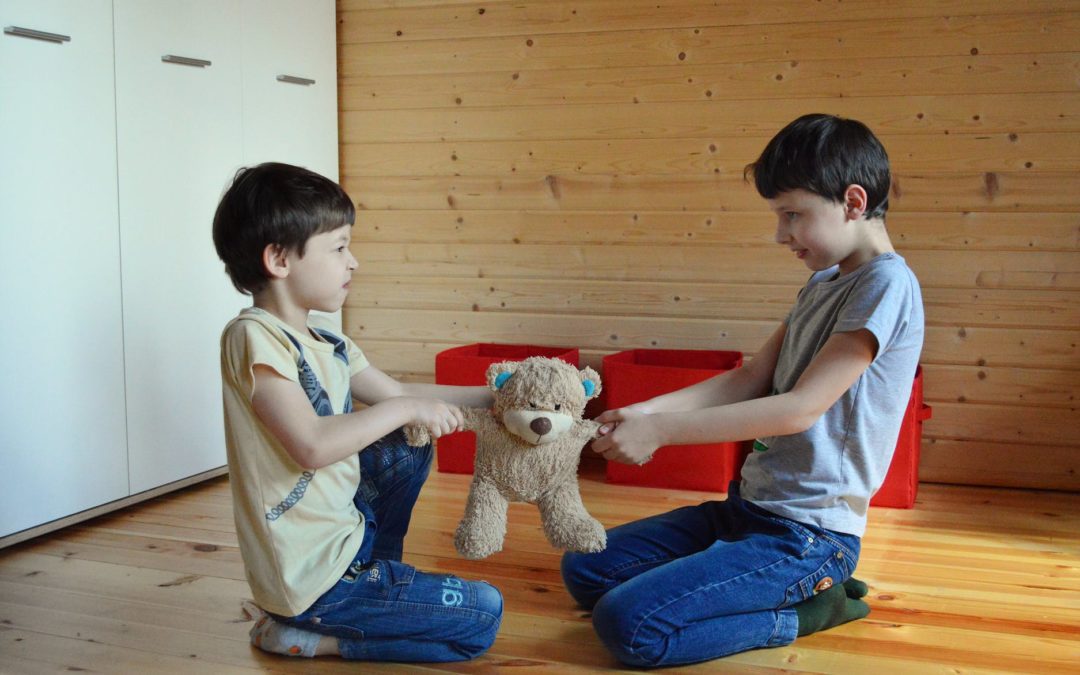
Quite often with a 3-, 4- or 5-year-old, there’s a lot of grey areas when they’re testing boundaries and you’re not sure a break is necessary—maybe he’s touching the baby’s face and he’s looking at you and he’s got this look in his eye like he’s thinking, “Can I do this? How about this? Am I making you nervous? What can I do before you say something?”
Typically, parents give ambiguous information in these moments, like, “Be careful. Your baby brother is very delicate, so I need you to be gentle.”
What is more effective in these moments is to give a clear action direction, “I need you to come and stand next to me for a moment.” Then, if he’s not moving to follow your direction, count: “5…4…3…2…1…”. And if he hasn’t come to you by the end of the count, give him a break. If he does come to you, have him stay there for a moment and then either let him return or give him a direction to play somewhere else. This inserts a very clear map for him (and you) to follow in that moment. You’ve asked him for something specific, and you’ve given him a clear timeline. He’ll begin to take your direction in these moments, because he doesn’t want a break.
It’s important that the parents aren’t threatening to do a break (so it’s not—“I need you to come over to me, or I’m going to give you a break”) because we want him to generate this thought and self-prompt in this moment.
You say, “I need you to come and sit on the couch to play.” He ignores you and you say, “5…4…3…2…1….” Then if he’s
There’s no judgment in your tone with this; it’s easy, it’s fun, it’s playful—like your child. This speaks directly to the difference between punishments and consequences.
still not on the couch, and you say in a relaxed tone, “Oh, now I need you to take a break.” Now he looks up and says, “No, no, no! I’ll sit on the couch.” And you respond, “It’s no big deal. You take the break; then you can go to the couch. Right now, you have a short break.”
You follow this pattern because your goal is to have your child follow your directions when you give them. Once you have a break process in place, you can give all kinds of other prompts, because now he takes your words seriously. As you move forward, you ask him to do what you need, and if he doesn’t, you give him a break, or you count down and then give him a break. But you don’t always have to count down.
You might simply ask your child to do something and then pause quietly for five seconds and then give the break. You don’t have to do it the same way each time because you want to keep him on his toes, so he learns to hold an awareness of your needs. There’s no judgment in your tone with this; it’s easy, it’s fun, it’s playful—like your child. This speaks directly to the difference between punishments and consequences.
You can begin by giving a clear direction and then counting. A few days later, you shift to pausing quietly for 5 seconds, then giving the break. Inevitably, your child will say, “Wait! You didn’t count!” and you can tell him, “Well I’m not always going to count. I don’t want to work so hard. You know what happens after I give you a direction. I wait a few moments, and then you get a break. It’s no big deal; you take the break, and you come right back.” The tone of voice you use and the lack of moralizing is the difference between punishment and consequence. You’re shifting from judgment and anger, which implies his actions are either good or bad, to good-natured coaching with cause and effect.
There is often a misunderstanding that administering cause and effect without judgment is too soft, but it’s not; it’s actually more effective. When your child is very defiant you can give consequence after consequence after consequence and frustrate the heck out of him. But the more you frustrate him, the more your tone should be sweet and empathetic so that your children focuses on the consequence of their choices rather than your judgment of them. •
Joe Newman was born and adopted in1963. In 1970 he was diagnosed ADHD and medicated with Ritalin. Every where he went, the playground, the classroom, even at home, Joe heard one message loud and c ear: you’re broken; your brain doesn’t work; you don’t belong.” No surprises when, at eighteen, he dropped out of college, shaved his hair into a mohawk and took off to surf the coastlines of the Caribbean and Central America. It was out in the world, working scores of jobs and starting his own businesses, where Joe realized he was not actually broken. Away from the tethers of school and home, Joe realized the same qualities called disorders were also qualities of positivity and value. Aggression became passion, distractibility became broad understanding, and stubbornness became tenacity. Realizing there must be millions of children out there, just like him, with ferocious spirits but misunderstood, he threw himself into finding and reaching these children.
His book, Raising Lions, has developed a growing following not simply because it helps parents understand why their children behave the way they do, but because the tools and solutions actually work.
by Libby Ryan and Nicole Harris Updated September 16, 2019 from Parents.com
New guidelines encourage us to introduce peanuts to all kids much earlier. Plus, the FDA recently supported development of a drug aimed at lessening the severity of allergic reactions from peanuts. Here’s what you need to know.
Editor’s Note: Parents.com is an invaluable resource for parents, grandparents, and caregivers. They cover topics for children of all ages. I always look forward to reading their online advice, and I highly recommend adding parenting. com to your daily read. The articles are informative, sometimes inspirational, and, in this case, possibly life saving.
This article brings a new, exciting possibility for allergy sufferers but should not be taken lightly or without the help of qualified medical personnel.
Everything you think you know about peanut allergies might be about to change. In March 2019, the American Academy of Pediatrics (AAP) released new guidelines for introducing kids to peanuts in the hope of decreasing the prevalence of this widespread allergy.
The study says babies should be given peanuts early, in order to prevent allergic reactions. In fact, multiple reports in the past decades have shown the benefit of introducing peanuts to highrisk babies when they are between 4 to 6 months old (with proper medical supervision). Infants with less of a risk can start these foods at 6 months or older, following the pattern of the family’s normal diet.
Previously, kids in danger of developing an allergy were supposed to avoid any contact with peanuts for the first three years of their lives, according to Hugh Sampson, M.D., director of the Elliot and Roslyn Jaffe Food Allergy Institute at Mount Sinai and a Parents advisor.
The study says babies should be given peanuts early, in order to prevent allergic reactions.
Then, in 2008, the AAP said that babies should not be refrained from eating allergens like peanuts, milk, and eggs. Being introduced to these allergens wouldn’t prevent them from developing eczema, skin conditions, and food allergies, according to the report.
But the March 2019 guidelines state that high-risk children should have peanuts in their diet much sooner. In turn, the babies will (they hope) have less of a risk of developing allergies in the future.
So how can a parent know if their baby might be at high risk of developing a peanut allergy? Two main signs your little one could be ready for a peanut intervention are egg allergies or severe eczema, according to the National Institute of Allergy and
Infectious Diseases (NIAID). Talk to your pediatrician if your child has either or both conditions; your doctor can do an allergy test to find out the best timing for introducing peanuts.
Whole peanuts are a choking hazard for infants and small children, says Drew Bird, M.D., director of the Food Allergy Center at Children’s Health in Dallas. For your baby’s first bites, you can stir a small amount of peanut powder into a puree or spread a thin layer of peanut butter on toast.
The sticky consistency of thick peanut butter can also be hard for little mouths to handle, so Dr. Bird recommends two teaspoons of smooth peanut butter mixed with two teaspoons of warm water for babies just starting solids.
It’s also important to keep serving your child peanuts once they’ve been introduced. “Foods that are in the diet more frequently are less likely to cause problems down the road,” Dr. Bird explains. He also stresses that children who have already been diagnosed with a peanut allergy should continue to use the same caution around peanut products as always.
If your child does have an allergic reaction, symptoms may include swelling lips, coughing, vomiting, or rashes that look like mosquito bites around the mouth or other parts of the body, and they would begin almost immediately after eating. If your child has a reaction, call your doctor immediately. •
Each year, during the start of school, teachers and administrators try to explain to new parents the essence of the term Montessori. In this article, we’ll try to explain what Montessori is and is not, dispelling, we hope, a few misperceptions about Montessori education in the process.
Its simplest form, Montessori is the philosophy of child and human development as presented by Dr. Maria Montessori, an Italian physician who lived from 1870 to 1952. In the early 1900s, Dr. Montessori built her work with mentally challenged children on the research and studies of Jean Itard (1774-1838), best known for his work with the “Wild Boy of Aveyron” and Edward Seguin (1821- 1882), who expanded Itard’s work with deaf children. In 1907, Dr. Montessori began using her teaching materials with normal children in a Rome tenement and discovered what she called “the Secret of Childhood.” The secret? Children love to be involved in self-directed purposeful activities. When given a prepared environment of meaningful projects, along with the time to do those tasks at their own pace, children will choose to engage in activities that will create learning in personal and powerful ways. Over the past one hundred years, Montessori classrooms all over the world have proven that, when correctly implemented, Dr Montessori’s philosophy works for children of all socio-economic circumstances and all levels of ability. In a properly prepared Montessori classroom, research shows that children learn faster and more easily than in traditional schools. However, the implementation of Montessori philosophy is a school’s biggest challenge.
There are many factors to consider when putting theory into practice, for example: the individual children in the classroom, their ages and emotional well-being; parent support and understanding of Montessori philosophy; and the training and experience of teachers, assistants, and administrators. These are only a few of the elements that create a Montessori school. Because of this, Montessori schools come in all shapes and sizes, including the small in-home class for a few children to schools with hundreds of students, from newborns through high school.
While schools come in many shapes and sizes, all successful Montessori classrooms require three key elements: 1. well-trained adults; 2. specially prepared environments; and 3. children’s free choice of activity within a three-hour work cycle. Finding the right school for your family—whether it’s Montessori, public, parochial, alternative, traditional or home school— requires a bit of investigative work and an understanding of the needs and concerns you have for your family. Being clear about what Montessori education is and what it is not can help you make an informed decision.
Let me use my twenty-five years of Montessori experience to help dispel a few misconceptions about Montessori schools, some of which I’ve held myself.
MYTH #1: Montessori Is Just for Rich Kids
Many Montessori schools in the United States are private schools, begun in the early to mid- 1960s, a time when most public education didn’t offer kindergarten, and only 5 percent of children went to preschool, compared with the 67 percent reported in the 2000 census. When many Montessori schools were established, private preschools might have been an option only for those in urban well-to-do areas, thus giving the impression that only wealthy families could afford Montessori schools. The first schools that Montessori established were in the slums of Rome, for children left at home while parents were out working, and certainly not for rich kids . Today, in the United States, there are over 300 public Montessori schools and 100 charter schools that offer taxpayerfinanced schooling, along with thousands of private, not-for-profit Montessori programs that use charitable donations to offer low-cost tuition. Montessori education, through these low-cost options, is available to families interested in quality education. Many private, highdollar schools offer scholarships, and some states offer childcare credits and assistance to low-income families.
MYTH #2: Montessori Is Just for Gifted Kids
Montessori is for all children. Since Montessori preschools begin working with threeyear-olds in a prepared learning environment, Montessori students learn to read, write, and understand the world around them in ways that they can easily express. To the casual observer, Montessori students may appear advanced for their age, leading to the assumption that the schools cater to gifted children. In reality, a Montessori school offers children of differing abilities ways to express their unique personalities, through activities using hands on materials, language, numbers, art, music, movement and more. Montessori schooling helps each child develop individuality in a way that accentuates his or her innate intelligence. Montessori schools can help make most kids ‘gifted’ kids.
MYTH #3: Montessori Is for Learning Disabled Children
It is true that Dr. Montessori began her work with children who were institutionalized, due to physical or mental impairments. When using her methods and materials with normal children, Montessori discovered that children learned more quickly using her teaching methods. There are some Montessori schools and programs that cater specifically to children who have learning challenges. In many Montessori schools, however, children with special needs are included, when those requirements can be met with existing school resources.
MYTH #4: Montessori Is Affiliated with the Catholic Church
Like many preschools, some Montessori programs may be sponsored by a church or synagogue, but most Montessori schools are established as independent entities. Conversely, a school might be housed in a church building and not have any religious affiliation. Since Montessori refers to a philosophy, not an organization, schools are free to have relationships with other organizations, including churches.
Some of the first Montessori programs were sponsored by Catholic or other religious organizations. Dr. Montessori was Catholic and worked on developing religious, educational, hands-on learning experiences for young children. The Montessori movement, however, has no religious affiliations. Montessori schools all over the world reflect the specific values and beliefs of the staff members and families that form each school community. Around the world, there are Montessori schools that are part of Christian, Muslim, Jewish, and other religious communities.
MYTH #5: In Montessori Classrooms, Children Run Around and Do Whatever They Want
When looking at a Montessori classroom you may see 25 or more children involved in individual or small-group activities. It is possible that each child will be doing something different. At first glance, a classroom may look like a hive of bumblebees.
If you take the time to follow the activities of two children, over the course of a three-hour work period, you should observe a series of self-directed activities. The children aren’t running wild. They are each involved in selfselected work, designed to build concentration and support independent learning.
Choosing what you do is not the same as doing whatever you want. A well-known anecdote about Montessori students doing what they like, comes from E.M. Standing’s book, Maria Montessori—Her Life and Work: “A rather captious and skeptical visitor to a Montessori class once buttonholed one of the children—a little girl of seven—and asked: ‘Is it true that in this school you are allowed to do anything you like?’ ‘I don’t know about that,’ replied the little maiden cautiously, ‘but I do know that we like what we do’.”
MYTH #6: Montessorians Are a Selective Clique
One definition of a clique is: an exclusive circle of people with a common purpose. Many Montessori teachers could be accused of this because of their intense desire to be of service in the life of a child, coupled with the teacher’s knowledge of child development. While many schools have tight-knit communities, they are not exclusive.
You should look for a school where you and your family feel welcomed. For many years, Montessori training programs were only available in a few larger cities. Often certified required prospective teachers relocate for a year of study. Now Montessori teacher’s training is mainstream and more accessible, with colleges and universities offering graduate programs in Montessori education, in conjunction with Montessori training centers. Loyola College in Maryland, New York University, and Xavier University are only a few of the many institutions of higher learning that include Montessori teacher’s training.
Dr. Montessori’s books, full of Italian scientific and psychological terminology, translated into the British English of the early 1990s, can be difficult for the modern reader to follow. To parents, the use of Montessori-specific terms and quotes may at times take on esoteric tones of an elusive inner circle. The enthusiasm and dedication evident in the work of many Montessorians might be misinterpreted as excluding to uninitiated newcomers.
My experience with Montessori teachers and administrators has been that they are eager to share their knowledge with others. •
Look for Part 2 of Montessori Myths in the next edition of Tomorrow’s Child.
Maren Stark Schmidt founded a Montessori school and has AMI elementary teaching credentials. She currently writes the award-winning syndicated newspaper column, Kids Talk, and is author of Understanding Montessori: A Guide for Parent sand Building Cathedrals Not Walls.
I have always pursued alternative education, whether that be through Montessori, Waldorf, or homeschool. Therefore, it was a shock to me to think that I would be involved in a program so widely recognized across all types of schools. I remember my first day touring NewGate School as a high school freshman. I met with Tim Seldin, who showed me around campus and encouraged me to give the IB Diploma Program a shot once my junior year came, to which I replied, “But I can’t do math!” (to which he replied, “Just do an IB Certificate!”).
I did not expect how much I was going to push myself over the course of these two years. I wasn’t aware of how much I was truly capable of. I remember the first day of our science (Biology HL) class, our teacher told us there was going to be a ‘learning curve’ and that we should prepare ourselves to not always get A’s on our test like we may be accustomed to. Although my classmates and I took in this information, it didn’t quite set in until we all studied for one of our first big tests We thought it was our best work yet, but then we realized that we all just scored in the ‘2-3 range’ … out of 7!
Suddenly, our teachers were no longer there to give us all the tools to get a good grade in the class, to make sure our homework was done on time, or to make sure we were present for the lessons. By IB’s design, the weight was now put on us, as the students, and it was time to get to work.
WHAT IS IB?
In a nutshell, IB is a two-year diploma or certificate program that is internationally recognized across universities to award college credit. That means that from junior to senior year, you will be in the same classes preparing for (depending on your course) between two to three final exams that will be scored from 1 to 7 in each subject. These courses will be three higher level (HL) courses and three standard level (SL) courses. The difference simply being that a HL course may have some extra requirements that SL students don’t have to complete.
Along with the end-of-year exams, there is the Internal Assessment that you must complete in each IB course. In Biology, that might look like a science experiment that you write a paper about. In Literature and Performance, you adapt a short story or poem into a play. The teachers grade it and then send it off to IB to be assessed by them.
I did not enter the program feeling that I was someone who was even remotely able to tackle all of these requirements. However, by putting in the work, learning how to manage my time, and not get in the way of myself, I’m able to positively reflect on it now.
In addition to your coursework, you must complete the Extended Essay (EE), which is a 4000-word research paper that is situated in one of your six IB courses. Then, there is the additional class you must take called “Theory of Knowledge” or “TOK.” This is essentially a philosophy class, and the only two requirements for it are that you complete:
• One TOK essay using one of IB’s supplied prompts
• A TOK presentation in which you develop your own research question and explore it using a real-world example
All of these go towards your final IB score, which can be up to 45 points. I promise this will all begin to make more sense once you are in the course.
Finally, at the heart of IB’s program, there is CAS (Creativity, Action, and Service). This is something you complete outside of school and, most of the time, you are already doing it. Do you play a sport or an instrument? If so, the action and creativity boxes are already checked off.
The only requirement for CAS is that you create a portfolio containing reflections about these activities throughout your two years (mine is in the form of a blog) and that you complete one CAS project, which can involve one or all of the CAS components, and is at least six weeks long. While this does not go towards your score, you will not receive your diploma if you do not complete it.
Overall, IB takes a global approach by looking at big ideas across disciplines. You will notice yourself finding connections between something you learned in science class with something you are talking about in Spanish. No matter what you’re studying, students dig deep into subjects and try to find answers.
WHAT IF YOU DON’T WANT TO COMMIT TOALL THAT EXTRA COURSEWORK?
For whatever reason, if a student does not want to do the full IB Diploma, they can take up to three IB courses; they only need to complete what is required in that course. That means no CAS, no EE, and no TOK. This represents the difference between the higher level and the standard level requirements in the courses. This is beneficial for a student who might have a tighter schedule and doesn’t have time for the full diploma or has a subject area they do not want to take at such an intensive level.
MY EXPERIENCE
IB is usually perceived as a big, scary, and difficult program that only those suited for ivy leagues can survive. However, through my experience, I have learned that it is not the skills that you enter the program with that matter; rather, it is the skills you will acquire throughout the program that will carry you to the exams.
I did not think, at the beginning of my junior year, that I would be leading a discussion in my social and cultural anthropology class about hegemony in marginalized groups in East Harlem. I also did not think I would ever receive a 90 percent on a math test, but it happened! For me, IB has been a journey full of self-discovery and lots and lots of struggling. However, my own academic struggles have taught me so much about who I am and what I am capable of.
I did not enter the program feeling that I was someone who was even remotely able to tackle all of these requirements. However, by putting in the work, learning how to manage my time, and not get in the way of myself, I’m able to positively reflect on it now. I can’t speak for every school, but at New- Gate the support system from the teachers and students is something I attribute to why I entered IB in the first place. Therefore, I encourage anyone considering the program to try it. Your name is not even registered as an IB student until late in your senior year, meaning you have time to see if the program works for you and adapt accordingly.
Looking back, all the stress tears I cried, the coffee I consumed, and nights I stayed up were all formative in enabling me to believe in myself. Even though I am not at the finish line, it is now in my line of sight, and I am sprinting towards it faster than I ever have before, with my teachers and family cheering me on until I arrive. •
Madison Dodd is a high school senior in the IB Diploma Program attending NewGate School. She lives in Sarasota, Florida with her parents and younger brother.
by Amy Kremer-Treibly, NewGate Secondary Guide, Master of Experiential Education
”Only practical work and experience lead the young to maturity.”
– MARIA MONTESSORI, THE ABSORBENT MIND
In NewGate’s Montessori learning environment there are several key experiences that contribute to the whole development of all students enrolled in the program. According to Maria Montessori, “Experience is a key for the intensification of instruction given inside the school…it is self-evident that the possession of (and contact with) real things brings, above all, a real quantity of knowledge.” Key experiences for students in the NewGate Secondary Program include the following:
Secondary Orientation Program
Each school year begins with the Orientation Trip, where the search for individual identity intertwines with the onset of leadership, teamwork, and the positive social development of the secondary community. Students bond with their peers and their teachers in an environment outside the classroom. We work on low- and high-ropes course initiatives to build teamwork and communication skills. We also work as a team to develop the ground rules that will function as our common-good contract for the year. Finally, the structure, schedule, and topics of the year’s course of studies are presented. This is both an on- and off-campus experience.
Service Learning Course
Students participate weekly in a service-learning course, a chance for adolescents to validate their own self-worth and share their talents and skills with the wider community. This course encourages students to make a decision to participate positively in society. Every week, students are involved in various service activities, ranging from community in-reach with primary and elementary students in their classrooms to maintenance and beautification of the campus and physical environment. Students also venture out into the Sarasota (FL) community every week to work with a service organization of their choice. Through their service-learning activities, students develop positive citizenship characteristics that will enable them to contribute to an improved sense of community in the world around them. The service-learning course is just one component of the secondary program that engages the students in authentic, hands-on learning environments.
”Success in life depends in every case on self confidence and the knowledge of one’s own capacity and many sided powers of adaptation. The consciousness of knowing how to make oneself useful, how to help mankind in many ways, fills the soul with noble confidence.”
—MARIA MONTESSORI
The Gardening and Culinary Project
Gardening and working in the kitchen is a fundamental component of the adolescent’s meaningful work in New Gate School’s secondary program. Students prepare plots, plant, observe, and maintain the gardens throughout the year. All secondary students also work in the kitchen, learning basic kitchen skills and preparing food, using ingredients from the gardens (as much as possible) to share with the community. Students prepare and serve a meal to the school community on a quarterly basis. Students also participate in discussions and field trips to explore their connection to the land and food.
Internships
Every year students plan and experience a one-week internship. The faculty works with students to find a meaningful internship that presents them with an opportunity to conduct themselves in a professional workplace and a chance to work with positive role models and community experts. Students enjoy the opportunity to engage in a learning experience that enhances classroom learning and extends beyond the traditional four walls of the classroom. In preparation for the internship experience, they spend time in workshops for resumé writing, business letters, interviewing, thank-you letters, and oral presentations. First cycle students (7th-8th grade) can choose a placement in the local Sarasota community, while second- (9th-10th grade) and third-cycle (11th-12th grade) students can choose national and international placements.
Drama Immersion Week
Students in the entire secondary program stop their regular class schedule for a week each year and immerse themselves in the work of the theater. Students work with a faculty director to stage performances for the school and local community. Students form several work crews involved in the final production: acting, scenery, costumes and/or publicity. Since all students participate in some way, this program serves as a great creative collaboration for the adolescents. The team building and confidence that develops throughout the week is valuable and enjoyable for everyone.
Research Trip
Each year, students augment their course of studies with a weeklong research trip. These trips are journeys that depend upon student leadership and community building. The purpose of the class trips is multifold. The positive social development of the adolescent is enhanced, and the ‘hands-on’ learning experience that is acquired while in the field engages students in several of the broader disciplines: natural history; creative arts; history; and physical education. Trip preparation occurs throughout the school year and is often linked with curriculum work, with a week of intensive prep closer to the trip dates. Each student is encouraged to earn at least half the cost for the end-of-year trips, through school, student, and parent-organized fundraisers and through their own savings. This experience is central to the participatory creation of community. •
Follow along in future issues ofTomorrow’s Child to hear firsthandstudent accounts of theprocess and value of eachof these experientialcomponents in a MontessoriSecondary program.
Amy Kremer-Treibly has taught throughout the NewGate secondary program since 2002, primarily with English reading, writing and theater projects and has been teaching for 23 years. She is also an International Baccalaureate Diploma Program Instructor, Librarian and CAS Advisor. She has spent many years developing the secondary program’s experiential learning and looks for every opportunity to get students off campus and into the community for learning opportunities. She also leads the annual drama immersion weeks with students at each secondary level to build memorable theatrical productions in the space of a week. One of her great joys is helping every student find gateway books that lead to a life long love of reading, and she builds every opportunity possible to share books with students from toddler through high school levels.
Amy earned her Bachelor’s Degree in Anthropology at Loyola University. She began her teaching career in a refugee resettlement program teaching ESL to adult students from around the world, followed by teaching Spanish at the elementary level. While teaching at a Great Books Foundation high school in Arizona, she earned her Master’s Degree in Experiential Education at Prescott College with a focus on building schools and learning experiences to promote engagement, ecoliteracy, and stewardship.
A little girl sits at the table with the Snap Dressing Frame. She has picked it up several times before today and quickly returned it to its stand after a short attempt. Today she picks it up and places it on the table. She tries the first snap; it doesn’t connect. She looks at the snap from the left side, then the right side. She tries again; it doesn’t connect. She looks at her teacher for help. The teacher demonstrates how to connect the snap then returns it to its unconnected state. The child moves onto the snap above and, as she pushes down, she hears it connect. She pauses, smiles. Then goes back to try the first one; it still doesn’t connect. She squeals in frustration. She takes a moment to look again and again; then she keeps trying. This continues for twenty minutes until she looks at the dressing frame and the three connected snaps. She sighs and smiles then exclaims, “I did it!” Her teacher says, “You did it!” The little girl continues to look at the completed work before quickly taking it apart again to repeat the lesson.
There is so much for us to learn from this toddler’s determination to work on mastering this lesson. She is showing us how we can develop a skill that will place us ahead of others in the working world: grit. Grit is what keeps us working with our children, even when it is hard, even when we think we aren’t getting the results we want, or the progress is slower than we hoped. No matter what, we keep thinking of new ideas to try and keep believing we will see results. We are displaying grit. How can you help your students, or your own children, develop grit?
1. EXPRESS FRUSTRATION
Let the child experience frustration. This is hard to do when we can see the solution to their problem is so easy for us to fix. As they try to fit puzzle pieces into a board, we can see they just need to turn it a little further, and we can feel so helpful if we just showed them how it fit by reaching over to place the piece. If we continue to solve the child’s frustrations, we are robbing them of the opportunity to feel greater success in working through the issue. We are also telling them that anytime they are frustrated, they should rely on an adult to solve the issue. We need our future leaders to learn how to problem solve and persist to solution by accepting frustration, then working through it.
2. THE RIGHT AMOUNT OF HELP
During the Dressing Frame story, the teacher did show that the snap can be connected and, thus, modeled the action for the child. The teacher also returned the snap to its original state so the child would continue to work from where she left off. Deciding exactly what help children need is critical to allowing them to persist with the challenge, but not discourage them by completing it on their behalf. It also helps children to learn when to ask for help.
If we continue to solve the child’s frustrations, we are robbing them of the opportunity to feel greater success in working through the issue.
3. ENCOURAGE REPETITION
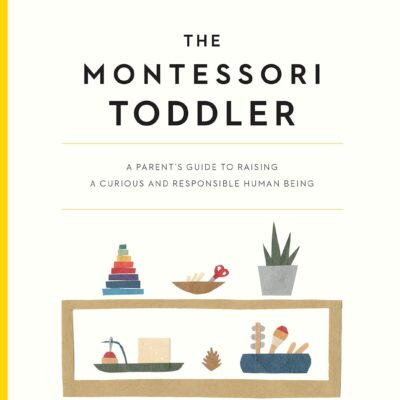
Even if children don’t succeed with lessons, tomorrow might just be the day they will figure it out. Maria Montessori believed repetition was the key to mastering a skill. If an infant went to walk for the first time but fell after one step, and we said: “Looks like that’s not the activity for you,” they would likely feel discouraged from attempting it again. Our response is more likely to be supportive, helping them up and encouraging them to try again and again until they are walking with stability. This is how we should help our children attempt many lessons in different areas of the classroom or skills at home. There are times when a child masters a difficult skill and then finds joy from repeating the lesson over again, as it gets easier and easier each time. As new skills are developing, mistakes will be made. When mistakes are made, we must be matter of fact about them. As the book, The Montessori Toddler, says, “Mistakes are simply opportunities to learn… if they break or spill things, we can have things at the ready for them to help tidy it up…. We can model being friendly about mistakes by not taking ourselves too seriously when we make mistakes” (Davis, 2018, p.93).
4. CELEBRATE VICTORY
The child had picked up the Snap Dressing Frame several times on various days before and realized, through self-awareness, that this was not a task that would give her immediate success. There were other skills that needed to be built first. This shows great knowledge in knowing her own abilities and where she is ready to seek the next challenge. By allowing children to guide their own learning journeys through choice and freedom, they develop more than the academic skills. They build skills in planning, organization, order, and determination (or grit). The growth of these skills allows children to feel internal celebration when they complete activities on which they have been working. This grows confidence as children learn how to fail and keep persisting until they succeed. As the book, The Confidence Code, says, “failing fast allows for constant adjustment, testing, and then quick movement toward what will actually work” (Kay & Shipman, 2014, p. 140).
ADULT INTERVENTIONS THAT DISCOURAGE THE DEVELOPMENT OF GRIT: • Jumping in to help before you have assessed exactly how much help the child truly needs. Give only this amount of help. The joy within the child comes from persisting through a difficult task to reaching completion.
• Saying “good job” or “I like it when you_____”. These statements make the success about you and not about the internal development of the child.
• Moving the child away from a task because you think it looks too difficult prevents developing grit. Let them try; model it. Help them to determine what is too difficult. Don’t become frustrated or upset about mistakes made.
REFERENCES:
Davies, S. (2018) The Montessori Toddler. Amsterdam: Jacaranda Tree Publishing Kay, K. & Shipman, C. (2014). The Confidence Code. New York: HarperCollins
Rachel Buechler earned her BA in Education in 2009 before relocating to Charlotte, NC from England, UK. She joined Charlotte Montessori School in 2010and was the Lead Toddler Teacher for three years. During that time she earned her Infant/Toddler Montessori Certification. Ms. Buechler enjoys the individualization of the Montessori classroom foreach child and watching them follow their own unique interests as they learn and grow in the classroom.
Life always has up’s and down’s. Helping our children feel joyful, confident, brave, capable, and loved goes a long way in creating a healthy outlook no matter what life brings. Being intentional and having fun connecting with each other helps to train our brains to be resilient. Join our team as we explore ways to laugh and find joy in being together in our families.
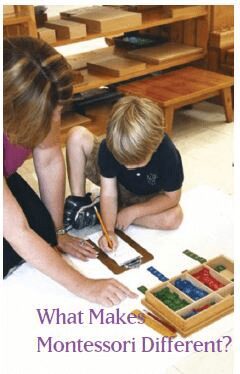
Montessori schools are not completely different from other schools. Over the last century, Dr. Maria Montessori’s ideas have had a profound and growing influence on education around the world. However, while individual elements of her program are finding their way into more traditional classrooms every year, there is a cumulative impact that we see when schools fully implement the entire Montessori model, which creates something quite distinct.
Montessori schools begin with a deep respect for children as unique individuals. They work from a deep concern for their social and emotional development.
Montessori schools are warm and supportive communities of students, teachers, and parents. Children don’t get lost in the crowd!
Montessori consciously teaches children to be kind and peaceful.
Montessori classrooms are bright and exciting environments for learning.
Montessori classes bring children together in multi-age groups, rather than classes comprised of just one grade level. Normally, they span three age levels. Children stay with their teachers for three years. This allows teachers to develop close, long-term relationships with their pupils, allows them to know each child’s learning style very well, and encourages a strong sense of community among the children. Every year, more non-Montessori schools adopt this effective strategy.
Montessori classrooms are not run by the teachers alone. Students are taught to manage their own community and develop leadership skills and independence.
Montessori assumes that children are born intelligent; they simply learn in different ways and progress at their own pace. The Montessori approach to education is consciously designed to recognize and address different learning styles, helping students learn to study most effectively. Students progress as they master new skills, moving ahead as quickly as they are ready.
Montessori students rarely rely on texts and workbooks. Why? Because many of the skills and concepts that children learn are abstract, and texts simply don’t bring them to life. Also, in the case of reading, many reading series fail to collect first-rate and compelling stories and essays; instead, Montessori relies upon hands-on concrete learning materials and the library, where children are introduced to the best in literature and reference materials.
Learning is not focused on rote drill and memorization. The goal is to develop students who really understand their schoolwork.
“Bring the child to the consciousness of his own dignity, and he will feel free. We see no limit to what should be offered to the child, for his will be an immense field of chosen activity.” –Maria Montessori**
Montessori students learn through hands-on experience, investigation, and research. They become actively engaged in their studies, rather than passively waiting to be taught.
Montessori challenges and sets high expectations for all students, not only those considered ‘gifted.’
Students develop self-discipline and an internal sense of purpose and motivation. After graduation from Montessori, these values serve them well in high school, college, and in their lives as adults.
Montessori schools normally reflect a highly diverse student body, and their curriculum promotes mutual respect and a global perspective.
Students develop a love for the natural world. Natural science and outdoor education is an important elements of our children’s experience.
The Montessori curriculum is carefully structured and integrated to demonstrate the connections among the different subject areas. Every class teaches critical thinking, composition, and research. History lessons link architecture, the arts, science, and technology.
Students learn to care about others through community service.
Montessori teachers facilitate learning, coach students along, and students come to know them as friends and mentors.
Students learn not to be afraid of making mistakes; they come to see their mistakes as natural steps in the learning process.
Montessori students learn to collaborate and work together in learning and on major projects. They strive for their personal best, rather than compete against one another for the highest grade in their class.
A Cup of Calm…Whether you and your family have just finished celebrating or are about to be immersed in a celebration we thought that you would all appreciate some time to take a deep breath. Cassi Mackey will lead this session of relaxation ideas and experiences for you and your family.
When working with Montessori teachers, we always start by asking them to list their current stressors. Inevitably, they share that children exhibit a high degree of disrespect, entitlement, and lack of self-regulation. Children don’t listen to adults. Teachers overwhelmingly agree that these behaviors are more frequent and blatant now than when they grew up or when they first started working with children. Teachers who’ve been in their profession for a while observe that schoolwide misbehavior seems more intense than in previous generations. They often ask: What happened to the good old days, when children respected adults? Where are all these behavioral issues coming from? Is it environmental? Is it parenting? Too much screen time?
The Culture Shift
Was there really such a thing as the good old days? We know that, since there have been children, there has been misbehavior; however, there have been some significant changes in society in the last fifty years that have impacted children. We believe that these changes provide an explanation for some of the differences that we are seeing in children’s behavior today; it can help us prepare the social-emotional environment in our classrooms to help compensate for outside factors beyond our control (e.g., video games, diet, materialism, entitlement, and child-centered homes where children decide what and where to eat, what to watch on TV, etc.). Fifty years ago, the world was rife with models of authoritarian leadership and submission. You could find examples at home, where dad’s word was final; in workplaces where the boss was the boss; and in schools where the teacher was considered a highly respected authority figure. In those good old days, there was cultural support for top-down (or vertical) leadership. Parents didn’t ‘advocate’ for their children. If a child was reprimanded at school or in his neighborhood, his parents were likely to take the adult’s word for what happened without much interest in what the child had to say. Neighbors could discipline each other’s children with the full blessing of the parents.
Through the rose-colored glasses of educators who grew up in an authoritarian culture, it may seem like authoritarian methods ‘worked,’ because children are remembered as being more compliant and obedient. On a tough day, compliant and obedient children might seem like water in the desert to a discouraged teacher. But what are the long-term results of demanding that children be compliant and obedient? Too often children become ‘approval junkies’ or ‘rebels without a cause, except when they need to prove, “You can’t make me!”
Montessori wrote, “No social problem is as universal as the oppression of the child.”1 And while it may have seemed easier to require children to comply in an authoritarian culture, the result was the oppression of the child’s spirit. Oppression was the very thing that human rights advocates have been fighting against for decades. It is oppression that Montessori felt was the root cause of war.
At the turn of the last century, educational and psychological pioneers, such as Maria Montessori and Alfred Adler, were writing and lecturing about a radical idea: equality even for children (including equal rights to dignity and respect). While this idea would not meet much resistance today, it was considered counterculture at the time.
Permissiveness
During the 1960s and 1970s, human rights movements gained momentum. The idea that all people were worthy of dignity and respect gained wider acceptance in western cultures; however, this was a messy and arduous process, especially for parents and educators.
The rules were being rewritten; yet, parents and teachers did not yet have cultural support and access to respectful discipline tools to replace the old authoritarian methods. As a result, like most countercultural movements, the pendulum swung the other way, and permissive parenting and teaching became more common. We are still reeling from this pendulum swing today.
Soon, alternative or experimental parenting models gained traction. Especially in the home, yelling was replaced with discussion, bargaining, and negotiating. Spankings were replaced with time-outs. Punishments were replaced with rewards. Children were given more freedom and more choices—but without limits or responsibility. The authoritarian top-down model of parenting and teaching was replaced with permissiveness.
The problem with permissiveness, though, is that it is still top-down. It’s just that the roles are reversed. In the permissive model, the child is on top and the adult is on the bottom. As Maria Montessori wrote, “To let the child do as he likes when he has not yet developed any powers of control is to betray the idea of freedom.”2
Indulgence
Children today are exposed to a myriad of stimuli that vie for their attention. Children have more things, more entertainment, more recreational experiences, more toys, more media, more ‘educational’ experiences that deliver information without true interaction, more activities, more everything. Children are the center of the universe. They often decide what kind of meals are prepared at home and where the family should go when eating out. On the other hand, they are often not taught many real-world skills. In our frenzy for progress, we have inadvertently stolen opportunities for true human connection, discovery, and exploration.
Fewer Opportunities for Real Responsibility
We do not need children the way that we did up to the early part of the twentieth century. Children, generally, are no longer needed to make the farm or the household run on a day-to-day basis or to bring income into the home.
(Chip) grew up in a farming community in upstate New York. It was not uncommon for some of my classmates to have been up since before daylight doing chores to help keep the family farm going. Most twelve-year-olds who lived on working farms had tractor licenses. They didn’t spend their weekends playing soccer, taking dance lessons, or having play-dates. Those of us who didn’t live on a farm had paper routes, mowed lawns, worked in small shops, and had responsibilities at home. It was real work. It was real responsibility.
Real responsibility gave young people the opportunity to develop some incredible life skills. They knew that they were needed and that they were capable. They had the opportunity to develop practical life skills and qualities, such as resilience, perseverance, self-discipline, responsibility, and a strong work ethic. Children were needed but not usually respected or treated as equal in value to adults.
( Jane) grew up in a city; however, children were still expected to do chores, including scrubbing toilets. Having homework was not an acceptable excuse. And my parents didn’t help with homework; that was considered my responsibility. There wasn’t any pressure to get good grades to get into a good college. Most girls got married right out of high school and were expected to be stay-at-home wives and mothers. Fortunately, a wise mentor advised me to take one college class a semester so I would have a degree by the time my children were grown. Eleven years and five children later, I received my BA.
As the movement to value children gained momentum, we provided them fewer opportunities to truly feel needed. Today, most children don’t make their own lunches for school, and many don’t have chores. In the name of love, they are given too much and required to do too little. They develop an attitude of entitlement. In an effort to give children ‘the best,’ adults have robbed them of the opportunity to develop strong characters and to experience the sense of belonging (unconditional love) and significance (capability and responsibility) that comes with making a meaningful contribution.
Many people are drawn to the concept of ‘positive discipline,’ because they are against punishment and authoritarian methods of discipline. However, some ‘positive discipline’ followers mistakenly perceive that the best way to avoid authoritarian methods is to simply provide love. This can lead to permissiveness, because these parents are kind (to provide love) but are not firm (which helps children experience significance through learning skills for responsibility and capability).
You can give children love, but they need to develop responsibility. When parents don’t understand the importance of helping children develop responsibility, children often fall into the trap of pampering, which often leads to development of an ‘entitlement’ mentality. When parents understand the difference between belonging and significance (along with the importance of balancing both), they can help children develop the characteristics and life skills they need for successful living.
The Montessori curriculum is designed for children to develop a sense of significance through responsibility and capability. As you will soon see, a sense of belonging is created through the basic ‘positive discipline’ concept of ‘connection before correction’ and the involvement in daily class meetings to give and receive compliments and to focus on solutions.
Fewer Siblings
Another dynamic to mention is that of family size and birth order. In addition to today’s busy lives, where children are given more and less is required of them, families are also having fewer children than at any other time in our recent history. Most families today have one or two children. Today it is not uncommon for a classroom to be populated with many only children. Recently, my (Chip’s) school had a classroom of twenty-two children, of which seventeen were only children and the rest younger siblings (no middle children). While the research on birth order is controversial, many teachers report noticeable anecdotal effects. With smaller families comes more adult help and intervention. There are fewer opportunities for children to develop responsibility and more opportunities for parents to do for children what they can do for themselves.
In today’s world, providing opportunities for children to contribute in meaningful ways and develop true responsibility takes intentionality. It’s hard work.
If you have ever had a small class size, you know how hard it can be to promote independence among the children and how intentional you need to be to do so. When I (Chip) was a young teacher, just learning the ropes, I thought I would prefer a smaller class size. It seemed more manageable in many ways (giving lessons, staying organized, managing behavior, etc.). However, it turned out to be a lot more work. While I was able to give the children more individualized attention, the more I gave them, the more they seemed to need, both socially and academically.
After a few years of experience, I was given a much larger class of thirty students. With more students, the children had to become more independent. Out of necessity I had to learn to trust the children, and as a result I found out how responsible, independent, and capable they could be. More importantly, they discovered their own capabilities. It was amazing to see them rise to the occasion, just as Montessori had said they would.
Other Factors
In addition to increased permissive parenting, fewer opportunities for true responsibility, and fewer siblings, we have other external factors that affect children’s behavior. Screen time now dominates the hours spent at home; children are over-scheduled; some children rarely see their parents because of busy work schedules; there are a variety of lifestyle choices and family structures; there are violent video games and cyberbullying.
The good news is, that while the modern factors that affect children are real and significant, misbehavior is not new. In The Secret of Childhood, a teacher writes to Montessori about her experience with “pampered children”:
An American teacher, Miss G., wrote to me as follows from Washington: “The children snatched the objects from each other’s hands. If I tried to show something to one of them, the others would drop what they had in their hands and gather noisily about me. When I finished explaining an object, they would all fight for it. The children showed no real interest in the various materials. They passed from one object to another without lingering over any of them. One child was so incapable of staying in one place that he could not remain seated long enough to run his hands over any of the objects given to him. In many instances movement of the children was aimless: they simply ran about the room heedless of the damage done. They ran into the table, upset chairs, and trampled upon the material provided for them. Sometimes they would begin to work in one spot, then run off, take another object, and abandon it for no reason whatsoever.” 3
Sound familiar? This is a wonderful reminder that we are not alone and that the good old days were not always easy. Today’s problems are not new problems, even if some behaviors are exacerbated by different factors. Maria Montessori, Alfred Adler, and Rudolf Dreikurs were brilliant thinkers. Their philosophies have survived and grown while many others have come and gone. And we have to admit that we are delighted that neuroscience now validates the effectiveness of these methods that have contributed so much to the world of happier parents, teachers, and children.
Excerpted from Positive Discipline in the Montessori Classroom: Preparing an Environment that Fosters Respect, Kindness & Responsibility. Originally
Jane Nelsen, EdD, is a California Licensed Marriage & Family Therapist and author or co-author of nearly 20 positive discipline books, including Positive Discipline Parenting Tools with her daughter, Mary, and her son, Brad; and numerous experiential training manuals for parents, teachers, couples, and businesses. She earned her doctorate in education from the University of San Francisco, but her formal training has been secondary to her hands-on training as the mother of seven, grandmother of twenty-two, and great-grandmother of eighteen. She now shares this wealth of knowledge and experience as a popular keynote speaker and workshop leader throughout the world. Learn more about Jane’s work at: www.positivediscipline.com
Chip DeLorenzo, MEd, is a school consultant and positive discipline trainer; he specializes in training staff and administration at schools worldwide in positive discipline methods and practices. Chip served as Head of School of the Damariscotta Montessori School, in Nobleboro, Maine, for twenty years. A veteran teacher and school administrator, he began his teaching career in 1995 after serving in the United States Air Force and working as a financial advisor. Chip is the father of four amazing Montessori children. Lean more about Chip’s work at: www.chipdelorenzo.com
3 Montessori, M. The Secret of Childhood (Delhi: Aakar Books, 2013), 143–144.
The Montessori Approach to Living Well in Anxious Times
The Covid 19 pandemic has brought about so many feelings in all of us: fear, uncertainty, sadness, loneliness, isolation, confusion, a sense of accomplishment, a sense of failure, a lack of connection, a loss of normalcy. I have seen a wide variety of reactions. Some have lived in constant fear, while others have gone about their lives, trying to maintain some sense of the ordinary. There are also people like me, who, as an extremely careful (some might say ‘germaphobe’) pre-Covid, already washed their hands multiple times a day, avoided people with colds, and pushed doors open with a foot. We felt comfortable and less anxious than in non-Covid times, because all of a sudden, others were finally doing what we had wanted them to do all along. We were fortunate to have in-person learning last school year with no Covid cases in our student body—quite a feat! The reason it is vital for students to be in school is not only because children need routine and structure, but because children crave and thrive in an environment that is prepared just for them— materials that appeal to their developmental needs; furniture that fits their bodies; teachers who are fully present and watching for every detail that tells them what your child needs to work on or if they’re ready to move on. This year, despite our hopes at the start of summer, we are in masks again. But we are still in person, taking the necessary precautions to keep our children, teachers, and staff safe.
Fortunately, the Montessori Method deliberately prepares children to experience and move beyond uncertainty and failure.
Montessori materials provide a built-in control of error. That means that if a cylinder doesn’t fit in a particular hole, there is another one that will. So, children encounter small ‘failures’ or ‘mistakes’ throughout their day at school. If they don’t exchange the golden beads correctly (10 units = 1 ten), the answer won’t be correct.
In facing these constant challenges, children come to view them not as obstacles, but as part of learning. Mistakes are a natural part of the learning process.
Our Secondary level students learn that each time they take a trip together. During these week(s)-long trips with their teachers, young adolescents make all the decisions, such as the route they will take, the amount of food they will need, and the gear they pack. These are all decisions that they must make and live with during these intense and transformational trips. Teens come out of the Secondary level with a confidence unmatched by children at traditional schools, because they come to know that they are capable of managing a high level of responsibility, for themselves and each other.
One of the overwhelming fears in the pandemic is the feeling of uncertainty. Covid has taken away our ability to control and know the outcome of every situation.
This is a valuable life skill we need more than ever today: being comfortable with uncertainty. As much as we have learned about pandemics, no one is certain of the outcome. How are we helping to prepare our children to be okay not knowing?
Montessori students are very self-aware. They have experienced the independence to choose which shirt to wear to school; the ability to pack and make their lunch each day; and decide the work they will do each morning.
Montessori teachers encourage curiosity, wondering out loud to the elementary child, “I don’t know why black holes exist…hmmm…I bet you could find out.” bringing their own individual gifts to the community. This is one of the ways we show each child respect, by listening to, encouraging, and supporting their own questions, thoughts, and ideas.
If you are familiar with the Montessori Method, you have heard about the “Absorbent Mind” of each young child. Parents experience it firsthand when we hear our child repeat something we have said, sometimes even embarrassing us out in public.
Dr. Montessori’s observation of children convinced her that what exists in the environment of each child becomes part of them. In Education for a New World, Dr. Montessori wrote, “These impressions not only penetrate the mind of the child, they form it; they become incarnated, for the child makes his own ‘mental flesh’ in using the things that are in his environment. We have called this type of mind the “absorbent mind…”
In the first plane of development (birth — age six), this absorbent mind takes in the language, sounds, smells, sights, tastes, and feelings that surround children at home and everywhere they go. That’s why we prepare our classroom environments so precisely. Home is their primary environment, but once they begin school, their classroom is their next one: a microcosm of society. As students move to the Elementary and Secondary levels, their world expands. Our job is to prepare children for the time when they will enter society in all its fullness. Our goal is to help them become leaders of that society, to know their place in it, and how they can contribute to the good of all — caring for the world in which they live.
In the classroom, children are provided with predictable routines and environments, freedoms and responsibilities, respect for individuality, and the joy of being part of a community who works together, caring for each other.
Children who are born into a situation of neglect hold onto that for their entire lives; science shows that healthy development is disrupted. We know about the plasticity of the brain, so some progress can be made, but often, these children have difficulty with executive functioning, emotional regulation, indiscriminate friendliness, and high anxiety.
In contrast, the warmth and affection provided to your children positively alters neural circuitry in the brain, which influences their health throughout their lives. This can protect them against the harmful effects of childhood stress.
One clear way for our children to feel our affection is by reading to them each night before bed. The nurturing that comes from the physical warmth and closeness of cuddling in bed, along with the sharing of a favorite book, will provide such strong memories for them later in life, so much so that a feeling of security will be part of their inner being.
One of our school’s founders, Paula Polk Lillard, writes in her article, Through Darkness to the Light, that, “It is the intangibles of life— love, courage, optimism, a sense of freedom— that sees us through life’s challenges and gives us a glimpse of a deeper level of reality than we can ever fully comprehend or articulate … The result was that we were not afraid to grow up. The world to us appeared as an exciting place, full of possibilities.” That’s what we want for our children.
Dan Baker, a psychologist and author, says, “We don’t describe the world we see. We see the world we describe.” We need to be careful how we describe the world to our children; rather than developing a sense of doom and helplessness, provide them with optimism about the future in which they will take part.
Focus on the positive things in our lives. Any stress that we are experiencing in our daily lives will be observed, absorbed, and acted out by our children. In our Montessori training, there is an entire lecture on preparing ourselves as teachers of these children. In The Discovery of the Child, Dr. Montessori writes, “[the teacher] must acquire a moral alertness… that is revealed in her tranquility, patience, charity, and humility. Not words, but virtues, are her main qualifications.” So we are always working on both personal and professional goals at our school (Forest Bluff School) so that we can be our very best for our children. The pandemic has brought out emotions that we may not have felt before. One obvious one is, of course, anxiety—a cognitive state in which we have feelings of tension, nervousness, restlessness, having a sense of impending danger, panic, or doom. Children will see this manifested on our faces, in our tone of voice, and in our reactions to other’s comments or thoughts.
We need to keep ourselves in check. As our children become older, we can talk to them a little more about our worries and our concerns. In the second plane of development (6—12), they have a reasoning mind and are more able to understand the issues facing society.
For their drama performance last year, the children in our 9-12 class actually wrote three vignettes on different pandemics: the Black Death, Yellow Fever; and the flu of 1918. They did this to help process their feelings about the Covid pandemic. But even our Elementary children, who understand the need to wear masks and socially distance, we’re still anxious about the measures we needed to take in the classrooms. And our oldest
The pandemic has brought out emotions that we may not have felt before. One obvious one is, of course, anxiety…
students in the Secondary level discussed and debated the merits of quarantining before their trips (dogsledding in Minnesota and canoeing in northern Wisconsin). Children in early adolescence can understand and handle more complex and divisive issues, such as mandating vaccination, but they are not yet fully their own person.
So, children of all ages are affected by how we, the adults in their lives, act and react to the stressors in our own lives. That’s why it is critical that we focus on good things, rather than on things that worry and concern us.
One of the most effective ways of doing this is to practice gratitude. When we are thinking about what we are grateful for in our lives, it makes it harder to be sucked into the anxiety vortex. We know from a study of mental health that one of the things that people suffering from depression and anxiety do is to ruminate on the same worry over and over. Depression and anxiety most often operate in tandem, and once a developing child starts to go down that path, it’s a long and difficult journey back to good mental health.
It is important that we do everything we can to stay positive in our own mental attitude. Try to remind yourself of the beauty all around us—our children, most of all, but also the simplicity and peace that comes from being outside in nature. disorder, outlining the problems that come from us not spending enough time outdoors. He writes that direct exposure to nature is essential to healthy physical and emotional development, both for children and adults. We know the effects of ADHD, obesity, and depression stem partly from us sitting indoors, spending time on our screens, for example.
Nature is healing. Not only does it bring us a sense of peace and calm, but it reminds us of the great big world in which we live and our part in it. The beauty of nature reminds us that there is a spirituality that we and our children are longing for.
Take a positive approach to everything you do with your children. There are lots of good ideas in the book Let’s Go Outside! by Jennifer Ward, and here are some concrete ideas I’ve gathered for you to take home and try:
Have a scavenger hunt in the woods behind your house.
Find different types of leaves, then take them home and make a collage out of them, or for the older children, have them look them up, label them, and categorize them according to their shape.
Get ideas from the British sculptor Andy Goldsworthy, who works with nature objects, creating incredibly beautiful and unique works of art outdoors. Then, make art with nature objects: mosaics, collages, paintings in the outdoors, find the letters of the alphabet from things in nature, do leaf rubbings, make sun prints.
Find more ideas at montessori.org.
I spoke with a parent in the Secondary Level, who told me that her child, who is almost fourteen, asked for her to be around more. We are all motivated by relationships. I was listening to a Hidden Brain podcast the other day, and the topic was happiness. Those who engage in social interactions are the happiest. To be most fulfilled, we need to be engaged with each other. That’s why the pandemic has been so damaging, why therapists are booked for months in advance, why animal shelters are empty.
Gratitude is the antidote to taking things for granted. Oftentimes, we forget too easily the gifts that we have been given. We forget that life is impermanent. If it doesn’t come naturally to you, you must remind yourself how grateful you are for all you have. Once we received the stay-at-home order last year, we very swiftly went into our own lockdowns. It wasn’t until then that we realized how much we missed seeing others face-to-face, feeling their touch, giving hugs to our friends or our grandparents. It wasn’t until we lost those pleasures, that we realized what we had pre-pandemic.
We faced much of that again this summer, but let us not forget how meaningful and vital those small things are once we come out of this challenging time. Let’s share with our children the gifts of affection and love that they need and desire.
When we just focus on what we’re doing— the activities of our daily lives—we find more happiness. Don’t rush your children through their day, but give them time to get fully engaged in an activity. Once they are, step away and do your own thing. They will get used to this, and this ability of children to be comfortable with themselves helps foster intrinsic motivation.
We want the children to focus on the journey, not the arrival. That’s the reason we don’t send home every piece of work your child does at school. It’s about the process of working with the materials they have chosen: utilizing their pincer grip to develop fine-motor control, which leads to better handwriting; advancing their ability to concentrate, following the steps and progress from one inset to multiples, concentrating as they are developing while creating their metal inset.
Just because you are sad about wearing a mask again this year, guess what? Your children are very adaptable and don’t mind it as much as you think. I have observed in our classrooms daily since school began, and what I have seen is wondrous. They aren’t talking about or complaining about wearing a mask. We project our fears and anxieties onto our children without even realizing we’re doing it. When we live like that, we are simply trying to get to the next moment, the next day, the next week. Remind yourself that your children are at school to work with these beautiful materials and to soak up everything in their classrooms and outdoor environments.
In addition, try not to talk about your own worries in front of your children. “Listen more; talk less” is a good mantra. Only if they ask, explain to your 3-year-old why we wear a mask at school, calmly saying, “We’re helping others by wearing a mask, so that we all try to keep each other healthy.” With courage, you and your children feel empowered to take on each new day, each new challenge. They are not overwhelmed by the statistics and data, and we need not be either. Let them know that humans are amazingly adaptable, and that with their gifts of intellect and will, spirit and curiosity, we have (as a species) accomplished incredible things.
Reassure your older children that this is not the first time the world has experienced a pandemic. If we model courage and optimism ourselves, our children will pick that up and understand that they, too, have the abilities and gifts to overcome any challenge that comes their way. In doing this, not only will you aid in their healthy emotional development, but you will be happier yourself. Maria Montessori said, “Joy, feeling one’s own value, being appreciated and loved by others, feeling useful and capable of production, are all factors of enormous value for the human soul.”
Create and maintain a sense of order in your home. Dr. Montessori wrote, “Order is one of the needs of life which, when it is satisfied, produces a real happiness.” Stick to your routines, waking up at the same time each day, having them make their own lunch, reading before bedtime. The comfort they derive from the stability in their day will help them feel secure and safe. They will know what to expect, which is extremely beneficial for younger children, and they will know that you are there and that you love them. This will provide them with a sense of joy, as well.
At the dinner table, share stories of your family’s history. Bruce Feiler, author of The Secrets of Happy Families, recommends we write a family narrative—what values are important in your family? Have you talked about it? Do you have a family mission statement? Do your children know it? Feiler also cites Marshall Duke and Robyn Fivush’s research, which found that the more children know about their family’s history, the stronger their feelings of self-worth and their sense of control over their lives.
They created a “Do-You-Know?” scale: Do you know where your grandparents grew up? Do you know where your parents met? Do you know where your mom and dad went to high school? So, tell them your stories, so they come to understand their own place in your family!
Another way to provide peace in your homes is to do some form of mindfulness meditation, a practice of self-awareness in body and mind. We always recommend that you not over-schedule your children’s afternoons and weekends. We all need this time, and after a full day in a Montessori classroom, children have lots to process and work through—all the activities they did, all the social interactions they had. They need time every day to relax their bodies and minds.
Meditation can help with this. It can be as simple as deep breathing. Breathe in on a count of four (1-2-3-4), hold (for a couple of seconds), and breathe out on a count of six (1-2-3-4-5-6). Do that three times with your children throughout the day, or when you’re feeling stressed. They’ll think it’s fun because it’s a new and different way of breathing. This helps relax their bodies and settle their minds, providing emotional balance and resilience in dealing with difficult situations. Dianne Maroney, founder of the Imagine Project, writes that, “Mindfulness creates resilience because it promotes an understanding of one’s emotions, the ability to control emotions, and a deeper sense of knowing what we are fully capable of.”
There are many resources on meditating with children. Do a body scan with your child, having them focus on one part of their body at a time, considering how each part feels in that moment. Pause occasionally in their day and have them identify one thing they can see, one thing they can hear, one thing they can smell, and one thing they can feel. It brings them into the present moment and creates a sense of self-awareness.
When issues of political or social unrest come up in your family, listen, acknowledge their feelings, and then talk about those in history who have stood for leadership and courage. When you express gratitude for others’ accomplishments and kindness, your children are then better able to approach, with respect and understanding, the differences they encounter in others and in the world. Talk about ways to peacefully accept and respect those with different views and opinion. These interactions happen daily in the classroom and outside of it, and the children are shown ways and given language to express their feelings with kindness. These types of interactions help them to develop the necessary skills of listening, cooperation, compromise, and mutual respect.
Gratitude can also be fostered by serving others in need. This begins in the classroom, where each child cares for the environment: watering the plants; washing the dishes; dusting the shelves. They learn that their contribution to the class is important, as it also is at home. As children get older, this will translate to their realization that this care extends to those outside their own community. Here are a few ideas of ways your children can serve the larger society in which they live, while having to stay within the safety of their own homes during the pandemic:
As a family, packing “blessing bags,” with supplies those experiencing homelessness need when living on the streets, is a wonderful way to give to others who are less fortunate. Our family made some last year, filling a gallon-size bag with things like granola bars, hand warmers, bottles of water, needed hygiene items, and a list of shelters and local organizations that could help them. We kept the bags in our car, and when we traveled into the city and stopped at a traffic light, guess how thrilled the person was to get one of these? One man said, “Oh, I love these!”
Anytime we can get outside ourselves— our own concerns and agendas—we gain a different perspective. We forget about our problems and are able to see that often, they pale in comparison to others’. Children need to see these things as they get older, and at the Elementary and Secondary levels, they are well able to use their sense of compassion to help others outside their immediate environments. Often, non-profit organizations don’t accept volunteers under the age of sixteen, so be creative! Make bookmarks for the elderly and drop them off at a retirement community. Shop for your local food pantry with your children, dropping the needed items off at the store or church collection points. Make homemade valentines to share with elderly neighbors.
Finally, one of the virtues I dearly espouse is hope. Without it, we would be living in a place of darkness. When we have something to look forward to, things always seem rosier. Research shows that anticipation of something can be more enjoyable than the thing itself. During the pandemic, we have had to cancel plans and vacations and time with family and friends, so it’s been difficult to place our hope in anything specific. I think of hope as the belief that things will improve. This is not a superficial cheerfulness, but the faith I have that this pandemic will end. We can’t know when or how things may be different on the other side, but we have the strength to endure the losses and hardships until that time; and then when it comes, we can hold onto the gratitude long after our circumstances change. If we make that paradigm shift in our thinking, our children will sense it and come out of this time of darkness knowing there will always be light to see us through.
Bibliography:
Baker, D. What Happy People Know. USA: Rodale, 2003.
Feiler, B. The Secrets of Happy Families. New York: HarperCollins Publishers, 2013.
Lillard, P. “Through Darkness to the Light,” Forest Bluff School Blog Article Number 65 (April 12, 2020): 5.
Louv, R. Last Child in the Woods. New York: Workman Publishing, 2008.
Maroney, D. “Using Mindfulness during Stressful Times.” Accessed September 8, 2021. https://theimagineproject.org/ using-mindfulness-during-stressful-times/. Montessori, M. Education for a New World. Amsterdam: Montessori-Pierson Publishing Company, 2018.
Montessori, M. The Discovery of the Child. Translated by M. Joseph Costelloe. New York: Ballantine Books, 1967.
Montessori, M. The Absorbent Mind. Translated by M. Joseph Costelloe. New York: Bantam Doubleday Dell, 1984.
Montessori, M. The Secret of Childhood. Translated by M. Joseph Costelloe. New York: Ballantine Books, 1966.
Vadantam, S. Hidden Brain Podcast. “Where Happiness Hides.” September 6, 2021.
Ward, J. Let’s Go Outside! Boston: Trumpeter Books, 2009.
Laura Earls began her Montessori career at Forest Bluff School nearly thirty years ago. She has recently returned to Lake Bluff, Illinois to take on the role of Head of School there, bringing with her a genuine love for the school and a deep understanding of its child-centered mission. Laura first came to Forest Bluff in 1994 as a Lower Elementary teacher, after earning her AMI Elementary Montessori Certification at the Montessori Institute of Milwaukee with Margaret Stephenson and Allyn Travis. During that first year, Paula Polk Lillard profiled Laura’s classroom in the book, Montessori Today, and in 1998, Laura was invited to speak at the AMI-USA National Conference on respect as the basis of grace and courtesy in the Elementary classroom.
After moving to Wisconsin to raise her three children, Laura received her AMI Primary Montessori Certification at the Midwest Montessori Institute with Hildegard Solzbacher. She then directed a Primary class at a Montessori school in Lake Country, Wisconsin, where she also served as Director of Admissions. Laura received her BA in art history from the University of Dallas and did graduate work in art history at the University of Notre Dame. She has lived and studied in both Paris and Rome and is an accomplished pianist.
Editor’s Note: We know that the authors of this article really meant it to help teachers remember how important setting up children’s environments is to maximize the potential of each child at each stage during the early childhood years. However, because of how broadly they talk about the classroom environment, the principles can also be applied to the home environment. If you are a parent, there may be two “take-aways’’ for you. One might be that you have a better understanding of the many facets to be considered by Montessori teachers as they prepare their classrooms for your child. The second might be ideas for setting up a rich and supportive environment for your child at home. I found it helpful to change the word “materials” in this article to toys or activities as I read through it.
Early Childhood, the period between birth and age six, is the most critical period in postnatal human development and learning. During this time, basic movements are mastered, speech is developed, senses are consolidated, and bodies acclimate to sensory input. With this tremendous development taking place, the environment where children spend their days must reflect the constantly changing needs of childhood.
During their first months, children are in a state of unconscious absorption in which they learn from their environment spontaneously and effortlessly. This period of intense mental activity gradually leads to a state of conscious absorption, allowing for more purposefully chosen activities. At the same time, there is a tremendous quest toward both independence and a need for order. The optimal early childhood environment will have opportunities for children to gain the self-help skills they need in order to build confidence and realize self-liberation; providing order in the physical arrangement of the furnishings, the materials, and the activities offered.
The role of the caregiver, or educator, is to prepare the environment to meet the needs of the unique group of children in their care. There are several factors that need to be considered in order to provide a space that will enrich their experience in a developmentally appropriate manner:
MEETING THE NEED FOR MOVEMENT
As we learned from Dr. Maria Montessori (1870 – 1952), movement is intrinsically satisfying. It also affects psychic and spiritual energies; eventually, it helps children acquire abstract thinking by first enabling them to experience abstract concepts through concrete forms. Young children need to move! Knowing the ages, developmental levels, and needs of the children in your care will enable you to arrange the environment to provide the appropriate amount of physical activity.
Infants and Toddlers: If you are serving infants, who need to creep or crawl, provide open, obstacle-free spaces with warm flooring surfaces of varying textures that they can safely navigate and explore. Toddlers need space for independent exploration, as well as secure objects for grasping and pulling themselves into sitting and standing positions. Later. they will need apparatus for stretching and developing their arm and leg muscles, such as climbing triangles, dome climbers, and short sets of stairs. At this age children begin to learn when and where it is appropriate to run and climb and when it is safer to walk or keep feet on the ground. With guidance, toddlers will start to make the appropriate choices.
Preschoolers (ages 3—6): Preschoolers need spaces to: move back and forth between shelves, tables, and large open floor areas for unencumbered work; individual spaces, such as cozy reading corners, where they can settle, concentrate, and focus; and spaces to congregate in small and large groups. Long narrow openings tend to encourage running, which can be a safety hazard. Try to break up these long expanses with furniture or plants. A combination of child-sized tables and chairs (preferably adjustable to each child’s height); shelves and cubbies that they can comfortably reach; and open floor space will accommodate multiple types of activities.
MEETING SENSORY NEEDS IN THE ENVIRONMENT
Visual Component: Because young children are constantly adjusting to the barrage of sensory impressions they receive, what children see plays an important role in environment preparation. We live in a world focused on extensive visual stimulation. Although there is a trend to provide eye-popping bright colors or bold primary colors in early childhood environments, a palette of neutral colors and/ or colors from nature can be more conducive to learning and to promoting a sense of calm. A subtler background allows the materials to stand out and attract the child’s interest. In addition, urged on by décor manufacturers, early childhood educators (and parents) often plaster their environments with posters and other materials. However, uncluttered walls can be comforting, soothing, and far less distracting. Be selective and discriminating in choosing what is displayed and hang thoughtfully chosen artwork at the child’s eye level.
Considering your lighting is also important. Lots of natural light is optimal in any setting. If artificial lighting is also necessary, using incandescent bulbs will lend a warmer glow to your environment than the cool blue of fluorescents. You might also want to explore energy-efficient LEDs. In any case, remember safety considerations with young children, ensuring stability, taking care with cords, hot bulbs, and shades.
Auditory Component: Have you considered the sounds the children can hear in your learning environment? Just as your classroom can be visually cluttered, noises such as side conversations, small-group lessons, musical instruments, the rustle of leaves, or even the whisper of wind can make the classroom feel cluttered auditorily. Determine which of these noises are appealing and conducive to learning and which are distracting. Try to adjust the ones you’d like to control or mitigate by using sound-absorbing materials such as rugs and carpeting. Add soft pillows and child-sized upholstered chairs to the reading nook. Hang fabric curtains at the windows or draped across ceilings. If your budget allows, you may also want to consider unobtrusive acoustic panels for walls and ceilings.
Tactile Component: Are the surfaces of your furniture smooth and free of dangerous or pointy edges? Do you provide a variety of materials that appeal to the sense of touch, such as soft woolens, smooth silks, warm wooden objects, and cool metals, which encourage the child to explore and discover the unique characteristics of each? For babies and toddlers still crawling and creeping, have you considered the different sensations they feel on their hands and knees as they make their way around on varying surfaces?
Olfactory Component: What smells greet the children? Whenever possible, avoid the use of harsh-smelling chemical cleaners. Allow fresh air to permeate the environment. Objects with appealing scents, such as a cinnamon bark box or a clove box, can be enjoyed by the children. Fragrant herb plants that are safely edible, such as sage, rosemary, and lavender, also make lovely additions. Allow children to use a mortar and pestle to crush them to release their enticing scents into the air.
Choosing Materials: Besides the physical attributes of your home, there are various considerations to take into account regarding learning and play materials:
Quality: Are the materials constructed to last through use by many children?
Are they safe and free of sharp edges and small parts not suitable for children under three? Are they attractive and inviting?
Relevance: Do the materials embody and respect the personal identifiers that make up the diversity of your family and the wider community in which you live, such as race, ethnicity, and languages? Do they take into consideration the children’s interests, and inspire new ones?
Developmental levels: Do the materials and activities provide appropriate learning experiences for all the ages and ability levels in the class?
Language development: Does the variety of materials offered expose the children to the vast array of living and non-living things offered by our world and the rich vocabulary associated with them to expand their burgeoning language development? Are there opportunities for them to express themselves?
In Conclusion: Considering these various factors when creating living and learning environments for young children will help you provide spaces that benefit them by enriching their experience in a developmentally appropriate manner that contributes to their physical, cognitive, and social-emotional growth and learning.
REFERENCES:
Bagnoli, D. (2021) “Montessori by Design: School Spaces That Stay True to the Montessori Method.” Montessori Life. 33 (1). 26 – 35.Montessori, M. (1964). The Montessori Method. New York, NY: Schocken Books.
Photos in this article courtesy of Alicia Diaz-David.
Marie M. Conti, M.Ed. is head of The Wetherill School in Gladwyne, PA, and a former member of the American Montessori Society board of directors. She has more than 40 years of experience as a Montessori classroom teacher and administrator. Contact her at marie@wetherillschool.org.
Marcy K. Krever is a freelance writer and the former Senior Director of Communication & Community at the American Montessori Society. Contact her at marcykremer@gmail.com.
Montessori is an education centered around peace. How do we help students spend a lifetime, not only accepting and sharing peace, but also feeling secure in the idea that, what is ‘different’ from them and their understanding is interesting and exciting rather than weird or wrong? Communities that are different from their own community can be found next door, a few streets over, or countries or continents away. Finding comfort with even a few of the noticeable differences can help us take notice of these differences as an exciting opportunity. It is said that travel is the best education, and as we have the ability to bring the world to our children through what is offered in the classroom and our homes.
Dr. Cindy Acker stated, in a September 1, 2021 Montessori Foundation Town Hall: “A diverse population isn’t where we want to go, it’s a starting point maybe, but where we want to get to is an inclusive environment, where everybody feels that they have a place, and their place is no less than or no more than someone else’s place. Tim Seldin (President of the Montessori Foundation) often talks about a circle of equals, and we want children to have that lens about each other and the communities that they will encounter when they leave us. That’s the legacy that we will leave for them.” How do we, especially if our community is not as diverse as we would like, help offer this lens of a circle of equals?
Within both the Montessori classroom and the home, the sensorial area and cultural studies provide many opportunities to introduce these communities’ children to what they may encounter when they leave Montessori. Sensorial, the development of the senses, focuses on comparisons of size, color, texture, weight, taste, smell, and sound. If you enter a new environment, or even think about a new environment, these concepts are how you would explain and experience it. With some research and thought, sensorial items from around the globe can be shared in class or in the home, with no special Montessori materials needed.
Sharing food is a window into a different culture. Before traveling some place that she felt would bombard her senses with different experiences, my mother would search for a restaurant serving food from the area she was planning to visit. For her, this let her have a bit of what she would be experiencing in her travels; she was developing her senses to prepare herself for a new community. Searching out different types of restaurants can help your child try different foods, utensils, and decor. Cooking with recipes from different communities gives a chance to experience even more deeply. Take the time to smell the spices used and compare them with spices you use with greater regularity. How is the dish traditionally served? What fruits and vegetables are local to the community that are included in the recipe? What utensils are used to eat the dish when it is served in the community?
Comparing textiles from a particular region can support sensorial understanding of an area different from the one you are currently living in. Fabric matching with different types of materials, colors, or patterns of fabric can familiarize the eye to particular styles. Stories of how the fabric is made, or was made, can also provide connection and understanding of communities in a variety of areas. Different fabrics are used in a variety of ways; some may be used as head coverings; there are fabrics that are typically used for clothing (even different fabrics for bottoms and tops); and there are fabrics used around the house as table or furniture coverings. Exploring fabric from a variety of continents or countries can lead to further discussion and understanding of the natural resources of the area, temperatures in the area, stories told in textiles, and clothing styles.
Color comparison is an important part of sensorial work at school and at home. Making the effort to add colored pencils, crayons, and paint that allows students to draw humans with a variety of skin colors offers a way to represent all students in the class, family members, and their current and future communities. Gathering art materials that make creating different skin tones easy for children is one of the simplest ways to encourage the creation of a variety of communities by your young artist. Packages of world skin-toned colored pencils, crayons, and paint are available by several companies.
Music and musical instruments invite discrimination of sound and allows inquiry into the different materials and shapes used for the instrument’s native to a region. Creating a playlist of regional folk or contemporary music lets you hear the language(s) spoken in that area, as well as hearing a variety of instruments. Children could try to learn songs, play along on an instrument, listen for a particular instrument, or simply enjoy music that they have not heard before. Exploring simple instruments, such as styles of drums and handheld instruments, allows children to try to recreate the music they hear and examine the materials and shapes of the instruments.
The large Puzzle Maps seen in most Montessori classrooms, along with the Land and Water Forms are part of the sensorial area; geography is learned by shape, size, comparison, and connection before it is learned by name. Connecting the names of countries to continents and location on the globe helps provide a ‘hook’ for specific information learned later. Knowing that a country is very far north, or very close to the equator, helps organize why certain food items are specialties there, or why specific styles of clothing are worn. Exploring types of trees or flowers through pictures (or even sanded pieces of wood) can offer insight into different parts of the world. Looking at the shapes of leaves on native trees can provide insight to similarities and differences in biomes. Exploring geography and science sensorially helps us understand the differences in natural elements in various regions of the world; it can help us appreciate the positives of these differences, without judgment or comparison.
Using the lens of the Fundamental Needs of Humans to learn about societies allows students, and adults, to see that all civilizations need to meet the same needs and use their available resources to do so. One can easily envision that a community in a rainforest and a community in the desert would meet the same common needs of clothing and transportation in different ways. In the previously mentioned Montessori Foundation Town Hall, Dr. Cindy Acker said, “…the lens we want to hold is one of unifying, one of destigmatizing, one of inclusivity, not just diversity.” Bringing different communities of the world to our sensorial and cultural studies, at school and at home, gives us a tool to find and use the lens of global understanding.
We have the ability to bring the world to our children through what is offered in the classroom and our homes.
This article is an outcome of a Montessori Foundation Town Hall gathering and is built, with great thanks, on the work done by Dr. Cindy Acker and Sarah Levalley for that Town Hall. Their preparation and clear explanation, as always, allow the rest of us to build upon that knowledge, use it in our lives and classrooms, and to share the ideas and knowledge with others.
Cheryl Allen is the Associate Coordinator of the Montessori Foundation Family Network and is also a parenting educator and a Montessori consultant with the Montessori Foundation. Cheryl attended Montessori school as a child. After some time as a traditional Secondary teacher, she worked in Montessori classrooms, 3-6, 6-9, and 9-12, earning certifications from both AMS (3-6 and 6-9) and IMC (6-12). She is a teacher educator, workshop presenter, and member of IMC accreditation teams. Cheryl’s two children attended Montessori from age two through high school graduation.
You know the scene. Two children both want the same thing. Or one of them is hurting the other. Or they are complaining and nagging each other.
We can’t help ourselves, we come to the rescue. “Why don’t you go first, and then the other one can have a turn next?” “Why are you always picking on your brother?” “Why can’t you two just leave each other alone.”
When we step in like this, we actually make things worse. The children start to get irritated at us. They think that we take sides (usually in favor of the younger child), and the fighting can often escalate as the children are getting our attention, even if it is negative attention.
So what can we do instead?
We can be the mediator rather than judge and jury. A mediator listens to both sides but stays neutral.
“It looks like you were playing with that, and (to the other child) you’d really like a turn too.”
“You seem really upset. Will you each tell me what’s going on for you?”
Then, do nothing. PAUSE. See if the children can work it out. Perhaps remind them of a rule, “We share by taking turns. It will be available soon.” But stop yourself from solving the problem for them.
And what if there is a young baby? You’d be surprised at the solutions they come up with. I often give the example of Oliver and Emma both wanting to play with the same vehicle. Oliver would have been under two and Emma was just crawling. I stated something like, “Two kids and one vehicle. I wonder how you’ll solve the problem,” and then PAUSED. I proceeded to watch quietly as Oliver took the front wheels off the vehicle to give to Emma and they both played with half each. A far more creative solution than I would have come up with, and they solved the problem themselves.
And if they are hurting each other. We can still step in without blaming either of them. We can separate them – “you go to this side and you come to the other side” — and, once they are calm, they can solve the problem with us as a neutral mediator if needed.
Give it a try for a week and see how you go:
1. Be neutral;
2. Let them be heard; and
3. PAUSE to see if they can solve the problem themselves
You might enjoy visiting Simone’s blog at themontessorinotebook.com. We appreciate her granting permission to use this post. ¢
Simone Davies is the author of The Montessori Toddler and co-author of The Montessori Baby, comprehensive guides to raising toddlers and infants in a Montessori way. The books are based on her 15+ years’ experience working as an AMI Montessori teacher in Sydney and in Amsterdam. She also has a popular blog, instagram, and podcast The Montessori Notebook. She is also mother to two young adults. Simone currently runs parent-child Montessori classes in Amsterdam at her school Jacaranda Tree Montessori and is working on another book with Junnifa Uzodike, The Montessori Child for children from 3-12 years.
Finding Montessori helped her so much when raising her own children, and it’s now her passion to help other parents introduce these ideas in their homes too. She was looking to find a way to be with her kids that wasn’t about bossing, threatening, or bribing them. Or giving them free rein either. And she wanted them to have a positive experience of school, not just to pass tests, but to love learning.
For more than a hundred years, children in Montessori schools have been practicing the Silence Game as part of their regular routine. Maria Montessori discovered that children experience great pleasure from the self-control that produces real silence. This is a silence that comes from within the child rather from the demands or rewards for silence that we often make of children.
“At first when I had not yet understood the soul of the child, I thought of showing sweets and little toys to the children, promising to give them one…I imagined that gifts were needed to obtain such efforts from children. Very soon I was forced to admit that this was useless.” Maria Montessori
Over the years, as an adult educator, I have coached teachers in using the Silence Game as a regular classroom practice, not as a tool to control their behavior. When children are given the opportunity to make silence, they become aware of their bodies and emotions. In our schools we practice the Silence Game as a group, especially at first. The idea is to create complete stillness in the classroom from which true silence emerges.
This practice often starts during group time with just 15 to 20 seconds of stillness. Children may close their eyes as a help to minimize distractions. The teacher may ask them to just listen for sounds in the room like the pump from the fish tank, the AC turning on or off, or the teacher’s soft voice whispering their name to go quietly back to work. As the children increasingly develop their skills in self-quieting, the length of time for this activity increases. This gift of self-awareness and self-calming is priceless.
The holiday season reminds me that it is easy to get off track and forget what’s important and fun! As we approach the holiday season with all the events and activities, the gift giving and receiving, the traditional foods that are out of our typical diets, and the media bombarding us, we may be filled with a mixture of joyous anticipation and dread of the hectic pace that holidays often bring. Our children’s impression of how to act and what to feel during the holiday season is most often influenced by us: their parents and our families.
The Silence Game can be implemented at home as well as at school. It can offer family members a challenging and fun activity that encourages and supports the development of self-control, calming the spirit, and helping to focus on the joy of the holidays. This practice is not a demand for obedience or control but a challenge to perfect ourselves. When we practice it together the Silence Game can have a profound effect on all the family members.
“One day I had the idea of using silence to test the children’s keenness of hearing, so I thought of calling them by name, in a low whisper… This exercise in patient waiting demanded a patience that I thought impossible”. — Maria Montessori
Here are some ideas for starting the Silence Game at home:
• The idea of ‘making silence’ can be introduced at your weekly family meeting. It can be a wonderful way to start your meeting each week by getting everyone calm and centered. Have your family gather on the floor, sitting in a circle. During the first few weeks it would be best for the adults to lead so that the children can become familiar with the process. After that, leadership can be rotated among family members as it is their turn to facilitate the weekly meeting. The leader can whisper people’s names as a signal that silent time is over, and the meeting will start.
• Other times of the day for ‘making silence’ could be right before or after a meal or just before going to bed. It’s a great way to start or end the day.
• One way to bring family members to the ‘making-silence’ activity might be to create a sign that says, Silence and walk quietly around the room to, show the sign, which is their signal to gather, and go on to the next person.
• Another way to call them to gather for silence could be to have a small music box to carry from one person to another instead of the sign.
You will need to explain before implementing the practice how the ‘making-silence’ activity works and what signals will be used. Don’t be discouraged if children three and younger have some difficulty with this kind of activity. If your child will sit quietly in your lap or beside you for a few seconds, that’s a good start.
What else can parents do to cultivate ‘calm and peace’ during the din of the holiday season for our children? Here are some ideas:
• Recognize your own feelings. Are you anxious, joyful, overwhelmed, excited, etc.? How we feel (and how we handle those feelings) can have a great deal to do with how the rest of the family is feeling and behaving.
• Remember to take care of yourselves. Do something for yourself, such as reading a book, listening to soothing music, taking a hot bath, or doing some type of exercise. Take time to do something daily that refreshes, renews, and re-energizes you.
• Leave time in the days and weeks during the season for unscheduled family time to relax and take it easy. It could be reading or telling stories, doing a puzzle together, or having a quiet family meal together. The key words here are together and relax.
You can give your family the gift of silence during this holiday season and throughout the year. Enjoy! ¢
Lorna McGrath has 40+ years of experience in the field of education, teaching children from 18 months through 6 years old and from 12 through 18 years old in both public schools and independent Montessori schools. She received her M.Ed. with a concentration in Family Counseling from the University of Georgia and her Montessori certification from the American Montessori Society. She also served as Associate Head of NewGate School.
Lorna is a Senior Consultant and Director of Family Resources at the Montessori Foundation as well as a Montessori teacher educator, conference presenter, and school consultant. She has used her many years of experience, working with families in the educational setting, to develop programs for parents as well as teachers and children.
Most recently, she and Tim Seldin have published a book, Montessori for Every Family — a practical parenting guide for living, loving, and learning.
We all appreciate the teachers in our lives, but how do we share that gratitude when we may not know much about them beyond the classroom? Here are ten ideas:
1. Say thank you, and be specific about it: in person or by taking the time to write a note from you or helping your child write one.
2. Tell the administrators what you see and appreciate. The positive information does not get shared as often as concerns, so share your positive observations.
3. Offer to buy or do something specific for the classroom. “I hear you are looking for more plants for the garden, could my child and I get some for you?”
4. Provide a gift card related to what you notice in the classroom. Are fabulous art projects coming home? Get a gift card to the local art supply store.
5. Bring coffee and muffins or lunch to the teachers.
6. Give movie tickets, so your teacher has a chance to relax.
7. Give a gift card to a local bookstore (most teachers love to read).
8. Discover a restaurant they like. A gift certificate for a dinner out is always appreciated.
10. Present a gift card for a local grocery store. It can reduce a little stress during high-spending times.
Gifts should be a joy to give and receive, yet sometimes they can cause us stress. In Montessori, we consider how any item will help the child build themselves into the adult they are meant to be. To invite Montessori into your home and family, consider toys that encourage the child to think creatively and independently; toys that will last longer than the box; and realize that fewer toys that meet these criteria may be more engaging than an over-abundance of toys. We are sharing some ideas for all budgets, mostly from smaller sites, which work for a variety of ages and interests to get you started.
Here are some examples of some Montessori-inspired gifts. The Montessori Foundation is in no way affiliated with any of these companies or products. We just like them. If you are interested in a product, the QR-code or the tiny-URLs will help you find it. You will probably find other companies that offer the same product at more or less cost. You may also find some products that are sold out, you know, because of Covid and shipping delays. Sigh!
In fact, I tell them all of the time to get out of my house and go away. Like the unforgettable and motivational lyrics from the song Roam, by the B52’s, I beg my children to “roam where you want to, roam around the world.” A simple song if anything, but the lyrics are truly profound, if not by design and invention, then definitely by divine intervention. This happy little song demands of its listener:
Roam if you want to Roam around the world
Roam if you want to Without wings, without wheels
Roam if you want to Roam around the world
Roam if you want to Without anything but the love we feel
So, it’s ok to roam physically and mentally without the need of anything else but simply “the love we feel.” It makes sense that we humans go to the places that we want to, and the impetus is usually the love we feel within our hearts about that person, place, or a thing that we want to see or know better. However, we can’t fall in love with what we don’t know exists, and we can’t feel what we cannot touch. That’s where the roaming part comes in. Children do not learn best just by simply listening; they need to experience things.
My fellow parents, it can only be an advantage to the human brain, and the human being, to have many different experiences in one’s life. Of course, we don’t have to do anything at all; you are fine just the way you are, as am I. However, I do believe that almost everyone will agree that being a student of the universe cannot possibly be a bad thing. There must be something of value in knowing something (anything) about different languages, religions, customs, cultures, cuisines, music, nations, histories, literature, governments, and people. All the aforementioned can be summarized under the umbrella of culture, which can be defined as all the manifestations of human achievement regarded collectively.
My children have huge dreams and aspirations for their own future, but they regard so much of their world through the lens of their immediate orbit, which may be quite large to them, but is rather small within the scheme of things. I used to take them everywhere I could when they were younger. We have traveled abroad and experienced many different cultures everywhere. At home, I expose them to my British roots, and their mother does the same with tales of her youth and South American customs. When it comes to making a citizen of the world, too much is never enough. So, I actively encourage my kids to continue to not only thirst for culture, but to drink it, and drink from it often.
Younger children need parents for them to move beyond their immediate surroundings. The acquisition of culture is best when directly experienced by the child. They need us to be able to get them there “without wings and without wheels.” The vast menu of cultural differences scattered throughout the planet are all right here for our consumption. We can find ethnic communities, local festivals, diverse food, virtual tours via the internet, and just good old-fashioned “read to me mommy and daddy,” which can obviously be an excellent time to bond and get closer.
Imagine the many questions, the awe and wonder, the breathtaking revelations that will come from the myriad cultural encounters to which our children will be drawn. You do it! Why must their first immersive cultural encounters come from future college experiences, their future date night, or a future friend from another global setting? I strongly suggest that you let the process begin with you! Provide a forward-thinking cultural narrative now for your children, while they are young, and allow them to be able to make global decisions later. Knowing something about the world other than our own can help our children to navigate better the changing times that are upon us.
KNOWING SOMETHING ABOUT THE WORLD OTHER THAN OUR OWN CAN HELP OUR CHILDREN TO NAVIGATE BETTER THE CHANGING TIMES THAT ARE UPON US.
And if you are thinking about providing a rich cultural experience for your children, trying to pick out the “Apex Culture’’ for this process will certainly be an exercise in futility, as every culture has what we may deem as moral highs and lows. No’sir-ee Bob! It looks like the most effective way is just to dive in the best way you can and pick a little bit of some of everything.
One of the outstanding lines echoed in the song is the sentiment that we should roam “without anything but the love we feel.” ‘What does this mean? Are you being asked to roam in the places you have already been? Should we only discover the places we already know and love? I would tend to think not, since they follow that admonishing lyric with another enthusiastic cheer that we should “roam around the world!” I think (and hope) that we should all try to venture somewhere else and become something different with each new experience.
Quick story: I identify with the Christian faith and have done so all my life. At one point, I drove the same route to work for about 13 years 50 miles each way. Every day, I hit a stretch of narrow highway on I-675, with walls of tall evergreen trees lining either side of this familiar road. There was nothing remarkable about the scenery, but the beautiful Georgia sky meeting the tops of the trees.
One day, I noticed some intricate marble latticework beginning to emerge from the tops of the trees. This was a massive construction in development. Day by day, this chiseled chalk white structure would grow higher and higher from behind the tops of the tall Georgia pine.
After some time, I discovered that it was a Hindu Temple, a community temple, a restaurant, and a cultural museum. I was so intrigued by the design of the building and the intricacy of the marble work that I HAD to go and check out this place. After some time, I took my wife and children to this new Hindu temple, spent the day there, and was not disappointed. The physical design and interior alone were truly amazing sights to behold. The smell of incense and saffron filled the temple air and, while unusual to me, I would be dishonest if I said that these scents were not pleasant to my senses. While there, we watched the worshipers pray, we read about their beliefs, we sat and ate some of the most amazing foods I have ever tasted: our taste buds were not ready for this deliciousness. We sat and consumed the very same food that they ate, while we listened to the music of their faith; I was no less a Christian for it. We met strangers with different accents and languages, but we all laughed together in the same language. It was, in all honesty, truly an amazing day of love and learning, one that my two 20-years -plus children and my 15-yearold have not forgotten. This was just one of many times I have nudged my children into the fray and over the cliff of cultural diversity.
This song is not a convenient metaphor for me. I really do believe that there is something very real within the commanding lyrics of this song. I would like to imagine that these three wacky bandmates at the beginning of their career had the early opportunity to travel more and experienced success through the lens of their expanded world; it somehow changed them.
Exposure to culture helps us to grow into more complete human beings. It is literally the fiber that binds humanity. It doesn’t matter if you travel to it, or bring it to you, culture is the space between strength and weakness. Mark Twain once said, “Travel is fatal to prejudice, bigotry, and narrow-mindedness, and many of our people need it sorely on these accounts, “Roam” is the embodiment of Mark Twain’s words. Our children cannot get up and simply roam where they want to. They rely on us to help expand their universe and guide the journey. Since our kids don’t know what they don’t know, I suggest we get going.
Michael Crump and his six siblings grew up together in the UK. He received a BA in Sociology/Education from Ashford University. Michael attended Manhattan College for two years and lived in NYC for 16 years. After working in corporate management for 25 years Michael decided to join his wife, Arlette, as a teacher at her school, the Montessori Village Academy in GA. He completed his Montessori Elementary Teacher Certification in an IMC training program. Michael and Arlette have three children – Isaiah and Morgan in college and Mattison, a working actor in high school.

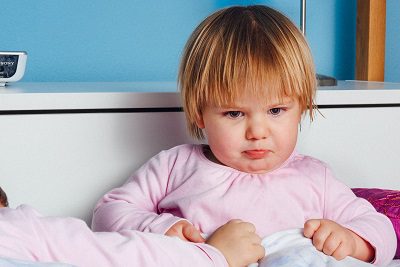

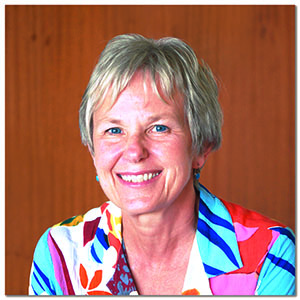


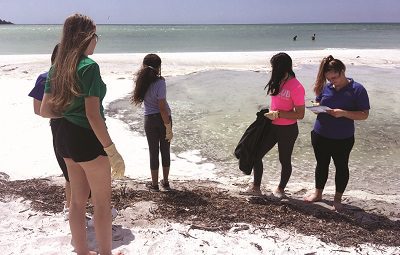


 A little girl sits at the table with the Snap Dressing Frame. She has picked it up several times before today and quickly returned it to its stand after a short attempt. Today she picks it up and places it on the table. She tries the first snap; it doesn’t connect. She looks at the snap from the left side, then the right side. She tries again; it doesn’t connect. She looks at her teacher for help. The teacher demonstrates how to connect the snap then returns it to its unconnected state. The child moves onto the snap above and, as she pushes down, she hears it connect. She pauses, smiles. Then goes back to try the first one; it still doesn’t connect. She squeals in frustration. She takes a moment to look again and again; then she keeps trying. This continues for twenty minutes until she looks at the dressing frame and the three connected snaps. She sighs and smiles then exclaims, “I did it!” Her teacher says, “You did it!” The little girl continues to look at the completed work before quickly taking it apart again to repeat the lesson.