by Lorna McGrath | Kindergarten, Language & Reading, Lower Elementary (6-9), MFA, Peace Education
 Howard B. Wigglebottom Learns We Can All Get Along
By Howard Binkow and
Reverend Ann
Illustrated by David A. Cutting and Mike Ferrin
Book Design by Jane Darroch Riley
This story begins with a youngster who is sad about not being invited to a friend’s birthday party, and he begins talking with his very wise grandma about how he feels and what might be going on.
I found Howard to be very aware of the behaviors that were causing his friends to be unwilling to spend time with him. Howard describes these behaviors to his grandmother, and she helps him to see how if the tables were turned, he might be quite unhappy with others in the same way others are with him. Grandmother helps Howard to understand some simple, yet important, lessons for getting along with others:
- We all get to be right;
- We all get a turn; and
- We all get a say.
There are two pages of follow-up lessons and reflections at the back of the book and a website for more things to do at wedolisten.org.
Reviewed by Lorna McGrath
by Laura Bakosh, PhD | Family Resources, Health / Nutrition, MFA, Mindfulness, Montessori Family Life, Montessori Parenting, Montessori Teachers, Peace Education
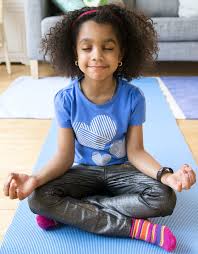
Does it surprise you to know that sitting with eyes closed, focusing on inner experiences does more to promote well-being and inner peace than nearly any other activity? It surprises most parents and non-parents alike, yet study after study shows these outcomes.
Many of us have embraced the culture of doing. We keep our children busy with academics, athletics, and various after-school and community activities, all valuable pursuits in their development. Yet, in our technology-driven culture, downtime has shifted to become “gadget gaze.” Our children seem to be relaxing in front of their gadgets; however, neuroscientists demonstrate that the constant buzzing and beeping of games and instant messages causes a chronic stress response in the brain and body. Beyond the damaging effects on cognitive development, this busyness leaves no time for ‘non-doing.’
It’s important to note that non-doing is different than doing nothing. Non-doing is purposeful, albeit counter-intuitive. It is sometimes called ‘mindfulness,’ and it involves the cultivation of moment-to-moment awareness.
Often, our focus is on the past (what has happened) or on the future (what will happen). While it is useful to learn from the past and plan for the future, paying close attention to this moment now is the most direct and full experience of life.
Bringing awareness to all that is happening, as it is happening, allows us to become intimately familiar with our inner world. By simply paying attention, without judgment to our thoughts, senses, feelings, and emotions, we begin to come into direct contact with our deepest values, essence, and purpose. The practice does not rush at us or hijack us like ‘gaming’ does. It nudges us from our core. It amplifies the whisper of our soul. This is not an external pursuit of doing; it is an internal pursuit of being.
Montessori children are exposed to many awareness practices as part of their normal school day. The works, activities, and interactions with each other are all designed to require purposeful attention to a task, to the surroundings, and to the community. Maria Montessori innately knew what scientists are now discovering.
There is a growing body of evidence that mindful awareness skills foster healthy development in children and can be strengthened with practice. Awareness practices have been shown to reduce the negative effects of stress, anxiety, and depression while enhancing cognitive performance, self-control, resilience and a sense of well-being. They also have been shown to increase academic performance and reduce behavior problems in the classroom (Bakosh, et al., 2014 in review).
As a result of these findings, both public and private schools around the country and around the world are beginning to offer mindfulness programs to their students. These programs provide formal practices, like sitting with eyes closed, to help students develop and strengthen the skills of awareness and inner peace.
These practices, often for only 5-10 minutes per day, prepare students to bring a sense of awareness and peace to more moments throughout the day. The cultivation of awareness also offers a space between stimulus and response. Children learn to become more responsive and less reactive, leading to better decision-making and less conflict. Parents and educators often tell us they wish they had learned these skills as children!
Non-doing can inspire a generation of children to bring forth this sense of well-being and inner peace into the world. Imagine the impact!
Tomorrow’s Child / September 2014 / p 21
by Brynn Rangel | Children with Exceptionalities, Infant-Toddler (0 to 3), Kindergarten, Later Adolescence (15-18), Lower Elementary (6-9), Montessori Charter Schools, Montessori Education, Montessori Middle School, Montessori Secondary / High School, Montessori students, Montessori Teachers, Peace Education, Primary (3-6), Psychology, The International Montessori Council, Video, Webcasts / IMC
How to Address Challenging Behaviors: Applying Positive Behavior Support Strategies to the Montessori Classroom
What happens when a child struggles to normalize? What do we do when challenging behaviors disrupt the learning environment?
Positive behavior support strategies can be used to restore peace in the classroom.
In this webinar, Board Certified Behavior Analyst, Brynn Rangel will guide a discussion about assisting students struggling to adapt to the Montessori environment by using positive behavior support strategies. The discussion will explain the process of identifying functions of behavior, utilizing data collection systems, linking social and emotional learning goals to the Dimensions of Observable Growth, and implementing positive feedback systems within the classroom.
The webinar aims to reconcile contradicting principles of Montessori pedagogy and data-driven behavioral analysis while shedding some light on the sympatric nature of the two practices. Participants are invited to share their thoughts on applying these strategies to their own environments and have an open dialogue about the science behind the practice.
by Maha Turner | Empowerment, MFA, Montessori students, Montessori Teachers, Parent Education, Peace Education, The International Montessori Council
This is a story of hope emerging from the chaos in Syria. Syria has the worst refugee crisis of our generation.
According to the United Nations’ figures, there are 13.5 million Syrians requiring humanitarian assistance. Within Syria, there are 6 million displaced, and over 4.8 million are refugees outside Syria.
A number of countries welcomed those refugees, such as Turkey, which has 2.7 million, and Jordan, which has 655,404.
I was born in Cairo, Egypt on August 2nd, 1964. I completed my elementary, preparatory, and secondary education at Ramses College for Girls, formally known as American College for Girls. For as long as I can remember, I have always had a great passion for history, so it was no surprise that I ultimately attended Helwan University in Cairo to study Egyptology. After graduation, I became a certified tour guide for English-speaking tourists. I conducted educational tours of historical sites throughout Egypt.
I traveled a lot when I was in my twenties. One of the unusual places that I visited was the island of Bermuda in 1988, where I met the man who would become my husband the following year. We now have two boys and a girl: Omar, 23; Adam, 21; and Hasna, 16 years old.
When I moved to Bermuda, I had the opportunity to change my career. I obtained a number of Montessori Diplomas.
I have been a Montessori teacher for almost 23 years at Somersfield Academy, Bermuda. I have a Master’s Degree in Early Childhood Education/Montessori from Xavier University, Cincinnati, Ohio. I have completed the Trainer of Trainers Course at Montessori Teacher College in Toronto, Canada. It was a privilege joining The Center for Guided Montessori Studies and becoming one of their Instructional Guides. I was pursuing my Ph.D. in Early Childhood Development; however, I decided to put things on hold and dedicate more time to help make a difference. Additionally, I left my position in Bermuda and moved to London to be with my children, who are pursuing their education there, as well as to be closer to my Syrian Cohort in both Jordan
and Turkey.
The inspiration to help Syrian refugees came from my students at Somerfield Academy, who were between the ages of four and six years old. The conflict in Syria has been in the news for more than six years, and many of the older children were aware of it and started to question why it was happening and who was helping the people displaced by the war. I tried to explain things to them in a simple yet clear way and read the book The Journey by Francesca Sanna.
I explained how Syrian people left their country and became refugees. Unfortunately, not all countries were willing to offer them sanctuary. To demonstrate the countries that were assisting, we took out the Montessori puzzle maps and made two piles. In the first pile, we identified all the countries on the different continents that accepted the Syrian refugees, and in the second pile, we identified countries that decided not to accept them. The children immediately observed that not all countries were willing to assist them and made the comment, “Mrs. Turner, why don’t you help them by starting a Montessori classroom and making sure you put a Peace Table in it just like ours?”
I, too, had spent years watching news reports documenting the plight of the Syrian refugees who had fled their country, and this had now compelled me to ask myself what can I do to help and be a real-life example not only to my students, whom I taught to be peacemakers, but to the whole world. Dr. Montessori was a firm believer in Peace Education and the importance of helping and accepting all our fellow humans.
Once I had made my decision, the children were very excited about assisting and trying to raise money to help those less-fortunate children who had lost everything.
To help raise funds, the children set up a shoe-polishing station for 50 cents per pair of shoes. Just this small effort managed to raise almost $200 in a few days, which was phenomenal. The students’ parents made generous donations towards our endeavor of helping the Syrian refugees. I chose to start up a Montessori school within an Arabic-speaking country because I am an Arabic-speaking person. The school I worked for generously donated a lot of the Montessori materials for my future Montessori classroom in Amman, Jordan.
So, I left Bermuda at the beginning of July 2016, heading to Amman. My trip was full of many unusual events, and it felt like I was guided by a divine plan. Fortunately, I was offered free accommodations in Amman, as the owner of a hotel there was the mother of my son’s friend in London. It is amazing how interconnected the world is, but you don’t realize it until you try something new and different.
I arrived in Amman with an immense excitement; however, my initial plan to work with an international aid agency fell through. I was disappointed at first because I found myself in Amman with cash and a suitcase full of Montessori materials but unable to help anyone. I sat in my hotel room wondering what to do next. This uncertain situation lasted for a few days, and then I remembered that I never mentioned to my bank in Bermuda that I would be using my credit card in Amman, so I sent an email to my banker, who happened to be a friend. I shared with him my dilemma, and he suggested to contact his dad who lives in Amman and see if he could help me. I called his dad, who introduced me to the Organization of Islamic Center, and within 24 hours, I met a few Syrian refugee women, some of whom were widows.
They live in a group of apartment buildings on the top of one of the mountains in Amman. In the basement of one of the buildings, there was a traditional nursery school for Syrian children. The nursery was filled with plastic toys that served no educational purpose. The children, all between the ages of three and six, were literally out of control. The teachers were really trying, but they did not have the tools or the knowledge to deal with those children. Some of the little ones had seen horrible things before leaving Syria. Older children can talk about their trauma, but not so much with younger children. However, I knew that the Montessori materials could help transform lives and be used as therapeutic tools for those traumatized children.
Both the teachers and I spent a day transforming the classroom, throwing out things that were not needed. Of course, I found a good spot for our Peace Table. The teachers also introduced me to other women who wanted to be trained as Montessori educators, and finally, things began to fall into place!
I began with lectures about the Montessori philosophy and showed the teachers how to use the Montessori materials and encourage the children to become independent learners. We introduced the children to the basic grace-and-courtesy lessons, and within two or three days, we all witnessed the transformation in the children’s behavior. Suddenly, the screams, the conflicts, the running in class began to moderate, and we observed calm, engaged and content children, who were able to concentrate for a long period of time. We had many funny comments from visitors, who came in and asked, “What did you do to them?” The Montessori philosophy and the materials gave peace and harmony to everyone, especially the younger children, who had been traumatized by the horror of the Syrian war. Within a very short period of time, the transformation to a peaceful, cohesive existence had begun.
I placed beautiful and attractive objects on the Peace Table in their classroom, and I guided them through the process of resolving conflicts using their words. They also learned about talking softly, walking carefully in the classroom, and using a respectful touch with each other. The children took everything they learned in the classroom to their home environment. They were upset when they heard members of their family shouting or having arguments, and they offered to take them to their classroom to sit at the peace table and resolve the issue peacefully.
We got reports that the children were waking up very early in the mornings and begging their parents to take them to school. This was reassuring to all the new teachers, who now realized the power and potential of the Montessori philosophy. In the morning, I worked with the teacher trainees alongside the children, and the afternoons were spent with the trainees on both theory and practice.
After I left Amman, I continued to train those students over the Internet using all the resources of the Center for Guided Montessori Studies. I am especially grateful to the founders of this training centre: Kitty Bavo, Mark and Tim Seldin, and Jonathan Wolff, who provided me access to their online resources in order to help the Syrian students. However, the next challenge to overcome was translating all of the resources from English to Arabic, as all of the teacher trainees are Arabic speaking and cannot read or write English. I began the search for a translator, who would work for a reasonable price, and I eventually located an expert in Germany.
Shortly after returning from Jordan, I received an email from Tim Seldin, the president of the Montessori Foundation, and Kitty Bravo, the director of the Center for Guided Montessori Studies. They informed me that the Ishraqat organization in Turkey was seeking Montessori training for some of the Syrian refugee women there. I jumped at the chance to empower more women to start rebuilding their lives.
I was fully aware that it would not be an easy task but was confident that what I was doing would give those women hope and purpose. Their lives have been devastated by forces outside their control, and I felt the responsibility to give them a reason to keep going and be positive about the future. My students are highly qualified women and once had full lives with jobs and families. The war has taken that from them; they have been forced to flee to other countries, often with just what they could carry. Many of my students are widows, who have lost their husbands in the fighting and their stories are heartbreaking.
In October 2016, I visited my new group in Istanbul and started the Montessori philosophy lectures. I combined my group in Amman with this group and continued with our online chats and lectures.
I took another trip to Istanbul in December 2016 to continue with the lectures, and the search started for a place to be used as a Montessori classroom for the adult students to do their internship. During that trip, I was asked to help more women. This time, those women were living in even more desperate circumstances in a refugee camp called Karkamish in southern Turkey, just across the border from Aleppo in Syria. The total number of my students is 41, between the ages of 24-50 years old. Since I started the training back in August 2016, a few of my adult students were sent with their families to live in other countries around the world, such as the United States, Germany, and other countries in the Middle East. I continue to work with them online and provide them with all the needed support to become successful Montessori teachers.
After many months of searching, the Ishraqat organization (with the help of the Turkish government) found us a space in one of the public schools, so we can start our Montessori classroom for the adult students in Istanbul to do their internship; however, we are awaiting permission to start a school inside Karkimesh camp, which is in southern Turkey on the border of Alleppo, Syria.
My dream is that we can ignite a Montessori movement across refugee communities. I believe the Montessori Method helps both the adults and the children to start the process of coming to terms with their lives as they now are. These women want to support themselves and their families. They want their children to be able to gain the benefits of an elite education. Pre-school is now widely recognized as the foundation of academic success, yet children in this region do not usually start school until age seven.
A group of my parents at Somersfield Academy joined forces with me and are working on establishing a charity that will help raise money towards the costs of travel, Montessori equipment, and the translation of all the resources to Arabic. We named our charity, “Mission Montessori.” We are very blessed with generous gifts from people and organizations that were inspired by my work.
It is very easy to get depressed when we see stories about Syria on the news, including the shocking use of chemical weapons by the Syrian government on its own people. It outrages us that governments sit idly by and do nothing because politicians decide that there is no strategic benefit to getting involved. At the end of the day, governments don’t always do what is right, but it is the people who can determine an outcome to a situation. I simply want to share my story so that people can know that, even in the most desperate circumstances, the human spirit will prevail. Even for Syrians there is hope.
My dream is to start a Montessori Education Center so that the teachers I am training now, will go on to start their own schools and train more women to become Montessori teachers who, in turn, will help more young refugee children to flourish within the Montessori program. Mission Montessori, our charity, will ask that these start up schools take 30 percent of their student children from refugee families that are unable to pay. In this way, we will create the Montessori movement in the most needed areas in the world and give graduates the chance to pass on the gift of learning that was given to them. There are many parts of the planet that need Peace Education taught at the most critical age of human development, and at this time in human history, this part of the world is in desperate need for peace and stability through education.
Want to help? Contact Maha Turner at: mahat1964@gmail.com
Tomorrow’s Child / September 2017/ p 23
by Julie Cash | Montessori Administrators, Montessori Charter Schools, Peace Education, School Leadership, The International Montessori Council
I had an experience in my classroom that is a potent reminder of what is possible to bring out in children when they are taught to show considerate behavior, and given the guidance, safety, and structure needed to voice their feelings and engage in respectful, honest, and constructive dialogue. This particular discussion was focused on taking responsibility for hurtful behavior and making amends.
I teach a multiage class of 26 students, in a Title 1, public Montessori school. My first, second, and third graders spend three years in my classroom, and most have also been in our Children’s House program, which is comprised of classes of four- and five-year- olds. Since entering our school, the children have been in an educational environment, where respect, peaceful problem solving, and attunement to the individual child are deeply valued and practiced by our entire faculty. It is a huge advantage to teach in an atmosphere of a shared philosophy, where there is a school-wide culture of respectful communication and attention to the social and emotional development of the child.
It was Friday afternoon, the end of a stressful week, in which I’d found myself wondering how much longer I can continue teaching in the current climate of inappropriate testing, overload of curricular mandates, and large class sizes, where the system seems to be losing sight of what is most important in our work with children. I was leading a lesson with my multi-aged class of first, second, and third graders. Seated before me on the carpet was a first-grade boy, who started to make noises while I was speaking. I directed him to sit at a table and think about what he needed to be able to do in order to rejoin the group.
Making disturbing sounds has been a recurring problem with this child. I felt irritated, and I had the urge to reprimand him; instead, when I invited him back to the group, a question on our school’s reflection form sprang to mind. It asks, “What will you do to make amends?” Instead of chastising him, I found myself telling the class that there is something appropriate to do when we’ve done something that is disrespectful. I said that taking responsibility for what we’ve done (and offering an apology) is a way to make things better, and we call this “making amends.” I added that it takes a lot of maturity and strength to be willing to admit a mistake and say we are sorry.
I modeled the language for him, and he was willing to repeat these words: “I’m sorry for making noises when you were talking.” “Thank you for apologizing,” I answered. “Please try not to do it again.” Then I asked the class if anyone else had something they would like to apologize for. A second-grade girl raised her hand, and, with no prompting, said, “I have an apology for Julie. I’m sorry that I was talking when you were talking.” “I appreciate your apology. Thank you,”
I replied.
After that, there was a flurry of hands. It was surprising how many children wanted a chance to apologize to someone—and in such a public way! For about the next 30 minutes, one child after another raised his or her hand to offer an apology, or, as I suggested they might also want to do, ask someone for an apology. “I’m sorry I called you stupid.” “I’m sorry I didn’t let you play.” “I’d like to apologize for hitting you.” “I need an apology for when you told me you weren’t my friend.” And so it went, with many children expressing feelings of being hurt or regret for causing harm.
When one boy, who struggles with impulsivity, was asked by one child after another for an apology for his behavior towards them, I saw him shrinking, and I knew I needed to let him see that his classmates also cared for him. I told him that sometimes he did things that bothered other people, but he also knows how to be a good friend. Taking a chance, I asked his classmates to raise their hands if they could think of a way he had been a good friend to them.
I was wonderfully surprised and touched when a number of kids put their hands up. One by one, each child had the opportunity to tell him a way they have seen him be a good friend. “You asked me if I was okay when I fell down.” “You always help pick up the beads when they spill.” “You ask me to play at recess.” “You included me in the kickball game.” “This is who you are—a good friend!” I reinforced to a now-smiling boy.
The number of children who raised their hands, wanting a chance to make an apology, with no coaxing whatsoever, was astounding, and the sense of safety and love in the room was palpable. It seemed that the kids needed to have a way to express the things they had done, that they knew were not okay, and which they obviously regretted, and their apologies were said with great seriousness and sincerity.
When a child was asked to apologize for something he or she did not think happened, or perhaps was not ready to admit to, I modeled the words, “If I did that, I’m sorry.” I also taught them to say, in response to an apology, “I accept your apology,” or “Thank you for apologizing,” as well as, “Please don’t do that again,” rather than saying the usual, “That’s okay,” and so these phrases were added to their repertoire of skillful responses.
The meeting had gone on for so long that I needed to call an end to it, although hands were still being raised, requesting more turns. I said that perhaps this is something we’d like to do each Friday, to “clear the air” and make a fresh start each Monday!
Most children in my class qualify for free breakfast and lunch, and half the class is composed of second-language learners. Showing vulnerability is not something my students typically learn at home or in their neighborhood. I was deeply touched and felt a tremendous sense of pride in how far we have come together and how my effort to create a community of caring and respect in our classroom has borne fruit and had manifested during this particular class gathering.
Children always let us know, by their engrossed attention and active participation, when they are involved in an activity that is deeply meaningful. During this lengthy discussion, they paid rapt attention to everything being said, with no calling out and no inappropriate remarks or laughter. I felt awed by, and proud of, the capacity for self-reflection, generosity, and caring that my young students were displaying. By their seriousness, stillness, and focus, I knew that I wasn’t the only one aware that something precious was transpiring.
Once again, I am reminded of the possibilities that exist in each of our classrooms, in particular, the possibility that six-, seven-, and eight-year-olds can learn the skills of respectful, honest, and caring dialogue and the peaceful resolution of their differences.
Montessori Leadership / January 2014 / p 9
by Claire Salkowski | Montessori Administrators, Montessori Teachers, Peace Education, School Leadership, The International Montessori Council
Career Confessions & Fond Hopes of a Montessori Educator and ADR Specialist
I confess. I’ve been living a double life for a long time. Since early in my career, begun almost forty years ago, I’ve had one foot in the Montessori world and the other in the ADR (Alternative Dispute Resolution) world, yet I’ve still managed to dance quite well in both worlds. In fact, both fields have informed the work I do and intersect in the place where I hold my most deeply held and cherished beliefs and hopes for making the world a more peaceful place. As I reflect upon the work I do, I realize that I was drawn to each field because they called to my fervent desire for work that allowed me to realize my passion for advancing the goal of creating peace in the world through work with children and families in a variety of ways.
I first began as a secondary school teacher, but after five years of working in the traditional classroom I became frustrated with a system that I felt did not allow me to meet the real needs of my students or maximize my goals as a teacher. That’s when I remembered Montessori. In the early 1900s, as Italy’s first female physician, Dr. Maria Montessori approached education from a completely different perspective.
She discovered what she considered universal truths about the nature of children and how they developed and learned. Her concepts about internal motivation, the value of auto- education, and experiential hands-on learning have since been validated by today’s scientific brain research, which is exactly what she said would happen. She developed the best way to prepare an environment that allowed children to take responsibility for their own learning, a radical concept then as now. She taught that the role of the adult was to facilitate and guide rather than dictate or impose and that the purpose of education was to teach children how to realize their full potential and live their best life in the world. She passionately believed that the way to change the world and create peace was through the education of children, and that was a sentiment that drew me to her work.
I first heard about Montessori from my best friend in college and decided that if I ever had children I’d like them to go to a Montessori school.
In the midst of my public school career, the day came when my oldest daughter was enrolled in a Montessori school, and when I observed the classroom and the peaceful, holistic way the children operated in that beautiful space, I knew instantly that I had stumbled upon something important. In 1979, I left my job with the public schools, took my first Montessori training, and started my own school, while continuing with additional Montessori training at the elementary level. While I taught and ran the school in those early years, I became enthralled with the idea of creating a peace curriculum that could be implemented as carefully as the academic skills we presented to the children so precisely. I believed fervently that the affective side of education was equally as important as the academic side if we wanted children to become whole and healthy human beings.
As a Quaker, I was also drawn to the early work of CCRC (Children’s Creative Response to Conflict) and began to implement those activities in my classroom and school. Their beliefs about the need for nurturing peace spoke to my profound need for cultivating not only the skills of peacemaking but awakening the deeper spiritual dimension as well. Quakers (The Society of Friends) have always been considered one of the “peace churches,” and they have long supported the teaching of peacemaking and problem solving to young children. Much of the work began in the early 70s with CCRC grew out of the work of the Quaker Project on Community Conflict (QPCC) under the auspices of the New York Yearly Meeting of the Society of Friends and the Nonviolence and Children Program of the Friends Peace Committee in Philadelphia.
These early pioneers in the field of peace education recognized the need to create a foundation for children to develop the ability to solve problems in peaceful ways by focusing on communication skills, identifying and understanding feelings and finding unique ways to resolve problems and prevent unnecessary conflicts. (Prutzman et al, 1988) That, too, matched my deepest need to align belief and values with work and practice. So began the dual life. I have since been privileged to work with some of these pioneers as we have attempted to advance this work in schools across the county through the CRETE (Conflict Education in Teacher Education) project, which seeks to train teachers in the vast array of skills and techniques that have been amassed in the important field of peace education and conflict resolution since those early days.
It was in the mid-80s that I discovered the field of conflict resolution and peer mediation and began to teach my students the basic skills in social emotional learning, perspective taking, communication, problem-solving, and then finally conflict resolution. Eventually, I began training my students and others in the growing field of peer mediation. My work in the ADR world greatly expanded in the mid-90s when I was first trained as a mediator to work in the program I recently directed and in community mediation. With this work, I made the leap from working solely with children to working with adults and the wider community. And so, my dual roles expanded, as I continued to teach and operate the school but continued training students and faculties in peer mediation and began doing cases in the community center and for the Court program regarding custody and visitation issues.
My training as a mediator also helped immensely in my work as the school’s administrator dealing with faculty and parent issues. Later I added divorce mediation and elder mediation to my repertoire of skills as a mediator and then discovered additional approaches in restorative practices such as Community Conferencing and Peacemaking Circles. Conflict Coaching as a way to assist individuals through the labyrinth of conflict has been another wonderful addition to the range of options we can now offer to anyone seeking understanding and a better way to manage ongoing conflict.
As Director of Mediation and Educational Programs, I was able to truly blend the work of each field and to integrate the various approaches afford by the ADR world. The Peaceable Education Program we offered to schools seeking a nonviolent approach grew directly out of my work in the classroom, as it blended with my ADR work. Although I recently stepped down as Head of School, I am still involved in the school I founded and the wider Montessori world. I have introduced my colleagues here to many of the wonderful techniques and approaches from the ADR field. I’ve also tried to merge both fields by teaching at the university level and in Montessori training centers in a number of places as well.
I’ve found that Circles are a wonderful tool for conducting faculty meetings and parent groups, especially if there are thorny issues to discuss or conflicts that need to be resolved. Peacemaking Circles have also been useful in helping families deal with bullying issues or long-standing conflicts between students that have not been resolved by other approaches or measures. And more than once, I have officially and “unofficially” mediated between staff members or parents who needed the assistance of a trained neutral third party.
Within these many diverse approaches and varied fields, the central goal is to assist individuals in actualizing their own goals and in discovering their special purposes in life so that they may also contribute their gifts to the whole while, recognizing and honoring the gifts of others—and, thus, create a better world. The roles of mediator, teacher, or facilitator differ, but they emanate from a common philosophy.
Montessori saw the teacher not as the all-knowing, benevolent authority who gave knowledge to the child, but rather as the guide and facilitator of the child’s own process of discovery and learning. It was a position of deep respect, walking as it was beside the child, and sometimes behind, but rarely, if ever, in front. We adopt an optimistic philosophy about the nature of the child and believe deeply in the inherent goodness and ultimate potential of the individual. Recognizing that the child’s becoming or development of self-belongs not to the teacher, parent, or anyone else, but unequivocally to the child, the Montessori teacher views her role from a place of great humility.
In honoring and assisting the child, however, knowing when to step in and when to get out of the way requires great skill in observation, a wealth of knowledge about the development and developmental needs of the child, and much practice. Judgment is called for in assessing the needs of the child at any given moment and being able to respond with the appropriate match of activity, experience, or interaction. All of this grows out of a deep, abiding respect and belief in the awakening powers of the individual life we are attempting to serve. No easy task to be sure. We must know and examine our own biases, prejudices, and individual orientations. We must constantly search and examine the places where we have imposed our own will to the detriment of the child. There are times, she told us, when it is appropriate to “use our authority” but always with the goal of encouraging the child to master the lesson and discover the inner truth for herself.
In my ADR work, as a mediator, conflict coach, and Circle facilitator, I take an approach that is very similar to the Montessori approach to teaching children, beginning with foundational respect for each individual party. I try to help remove the obstacles so that the parties are released from patterns of negativity and can reach new levels of positive functioning and inner growth. Although mediation or any other ADR approach is clearly not therapy, it often has a therapeutic effect. The parties experience new insights and inner growth takes place.
This transforming, spiritual response to conflict comes from viewing conflict as an opportunity to learn, to grow, and to be changed. Conflict is often a powerful challenge to our clouded perceptions and serves as a wake-up call to change. Often it can motivate us to move in different, more positive directions in our relationships and inspire us to create more functional patterns of behavior. The spiritual nature of conflict manifests itself when we are transformed and begin to act in harmony and cooperation with others, when we are awakened to our own potential for growth, and when we recognize the potential, dignity and rightful respect of others.
By recognizing the very special nature of my relationship to the parties and acting as a catalyst for change, we enable the participants to move from fear and despair to hope and optimism; from anger, jealousy, and greed to acceptance, empathy, and generosity. In successful mediations, Circles, or coaching sessions, the parties are able to develop new perspectives on the meaning of life and come to understand their interconnected role in it. Creativity is unleashed, and the parties come to understand their true needs and are willing to respond to the needs of the other. New ways of thinking and feeling are opened up, and communication is enhanced. The relationship is improved, and the parties strive toward cooperation and collaboration in resolving the issues between them. They are empowered to make their own decisions and creative solutions inevitably arise from such insight (Sidy, 1996).
As a mediator, Circle facilitator, conflict coach, or teacher, I have witnessed the vast transforming and growth-enhancing power of each approach. In both the classroom and the ADR room, individuals have been deeply touched by the significant change that has come into their lives from being respected, empowered and recognized for the unique individuals that they are and the gifts that they bring to the world. They have discovered, for themselves, the power that resides within and have moved in ever-widening circles of understanding, while achieving deep personal growth. When parties truly connect with one another, their spirits are lifted and they become enriched.
Last year I conducted a Conflict Circle in one of the schools that was having difficulty with two fourth-grade girls, who had been in conflict with each other since the second grade. Each girl felt the other had repeatedly bullied them, and the parents shared the same perspective. The administrators, teachers, and the counselor had all had many discussions and tried various interventions with both the children and their parents, to no avail. It had gotten to the point that it was infecting the entire fourth grade, and everyone agreed that some workable solutions had to be found.
We all met at the school for the first of several sessions. The principal, vice principal, counselor, and the girls’ teachers as well as their parents were all in attendance. The grandmother of each girl was also in attendance. At one point, one of the grandmother’s vehemently expressed a lot of negative emotion about the situation and, in frustration, threw the talking piece at the principal. For several seconds, there was only stunned silence, as the group weighed the magnitude of the act. It was a critical moment, and much to the enormous credit of the principal, he remained calm and did not respond with anger or as the “authority” in the group but sat quietly while the father of the other child carefully picked the talking piece from the floor and eloquently moved the group back to a place where feelings were heard and perspectives understood.
As the facilitator, or Circle Keeper, I allowed the group to own the situation rather than immediately intervening to try and “make things right.” It was a real lesson in the power of the process to illuminate and heal with the collective wisdom of the group. We met two more times and, as the group worked together, there was no doubt that they had all been deeply touched and had grown from the Circle experience. By the end of the year, the fourth grade was transformed. Both girls had come to appreciate each other and learned to treat one other with true respect. They had each changed and grown so much that they were named as honorary “peacemakers of the year” by their school in our annual award ceremony.
Very recently I worked with a school faculty that had become deeply divided by contention over the departure of a Director who had been there for the last ten years. The faculty had split along sides in support of the Director and those who were glad to see her leave. All who participated in the healing circle that was conducted expressed a pervading sense of loss and real grief, as well as the emotional exhaustion of dealing with the trauma and drama of the year.
The structure of the Circle and the power of the process allowed all voices and all perspectives to be heard and acknowledged. Each person was deeply touched and impacted by the stories they were able to tell. By the end of the session, the focus had shifted, and everyone was unified in their support for each other and their fervent desire to move forward in the best interest of the school. Without the willingness of everyone to devote the time to engage in such a process and to openly and honestly participate, while drawing upon the collective wisdom of the group, this faculty may have remained divided, and the devision would have further eroded morale and contaminated the proud and positive history of this highly regarded school.
I am deeply convinced that part of our Montessori education should include extensive work in peace education and the art and techniques of conflict resolution. Conflict is, indeed, a fact of life and learning to manage it in the classroom and the school is vital to creating and maintaining a healthy and loving school community. Students can and should be systematically taught to create peace and resolve conflicts, but without the conducive climate and school culture, and real modeling coupled with specific instruction by the adults around them, they will not gain the skills needed to manage these important life skills.
Skilled, trained, and practiced adults are critically needed in our school communities. Many Montessori teachers are familiar with the use of Circles in their classrooms; so additional training or experiences with peacemaking circles would greatly expand their repertoire of skills. Administrators would be enriched and become more effective with such knowledge and experience as well.
In my role as mediator or ADR specialist, much like my role as Montessorian, I must always prepare the environment, and observe carefully in order to assess the needs of the parties. I endeavor to recognize and honor each person for where they are in their own development and personal growth. My task is to make the match between the needs of the parties and the experience of the ADR process. I facilitate and assist the parties through the ADR process, but never impose or try to do “it” for them. The ADR process belongs to the parties, just as the learning process belongs to the student, the problem-solving process belongs to the parent or faculty group, or the healing process belongs to the client in therapy.
Parents cannot make their children grow any more than teachers can make their students learn or mediators can force a resolution of conflict. The issues in mediation, Circles, or coaching belong to the parties and cannot be owned by the ADR specialist, any more than the teacher can learn for the child, or the therapist can be healed for her client. At a much deeper level, mediators, facilitators, teachers, parents, and any who assume such a posture in their role to aid the individual have the potential to create a space for personal transformation and intense individual and spiritual growth. The quality of the relationship assumes a dimension far beyond what we generally assume. There is a depth of relationship and sacredness in our connection. We invest deeply in our inner most humanity. Thus, is the work of the peacemaker and thus I continue to embark upon this marvelous journey down an entwined path that takes me in and out of both worlds on a daily basis.
References
- Prutzman, P. et al. (1988) The Friendly Classroom for a Small Planet. Santa Cruz, CA. New Society Publishers.
- Salkowski, C.J. (2000) Developing the Spiritual Dimension of Mediation
- Salkowski, Claire J. (1999, Fall) “Montessori and Mediation: Midwife to a Process.” Montessori Leadership. 1(2), 34- 43.
- Salkowski, Claire J. (2000, Winter) “Mediation: Midwife to a Process. Practical Dispute Resolution.” Montessori Leadership 2(1), 24-28.
- Salkowski, Claire J. (2001, Spring) “Developing the Spiritual Dimension of Mediation. Practical Dispute Resolution.” Montessori Leadership 2(2), 1-8.
- Sidy, R.( 1996 ) “Spiritual Dimensions of Conflict. “The Fourth R 74 ( Aug/Sept.). pp.18-20.
- Montessori Leadership/ Summer 2013/ pg 22
by Angela Bryner | MFA, Montessori Parenting, Montessori Teachers, Peace Education
You meticulously and consciously prepare the environment of your school. But is the spiritual culture of your school neglected? Let’s learn how to prepare a spiritual culture that nurtures both children and adults at your school.
I arrived unannounced three years ago on the doorstep of Village Montessori, a small school nestled in the foothills of the Blue Ridge Mountains in rural Virginia. The founders, Michael and Toby Gress, immediately invited me inside for tea at their kitchen table. I had recently moved to the area and was slowly adjusting to a new environment and had come to the school in hopes that connecting with other Montessorians would help me put down roots. I had no idea what would grow out of that first walk across their threshold.
During my Montessori training, our instructors talked about how Dr. Montessori stressed the spiritual preparation of the teacher. As I worked at different schools, I watched a variety of owners and trainers try to figure out how to make that concept manifest. Some gave up or ignored the concept completely, as there were no concrete directions towards something so personal and intangible. Eventually, I would notice a certain dissatisfaction, fatigue, competitiveness, or restlessness start to creep into the staff. Our talented teachers, for whom Montessori was a calling and not just a job, would eventually move on, craving something ‘more,’ even though they had difficulty defining ‘more.’
My discovery was that Michael and Toby have given a tremendous amount of thought to this topic and address it daily in their relationships at the school. This place is like nowhere else I have ever been. It’s more than a school; it’s a community that addresses the growth of the staff and parents right along with that of the children. The best way to describe it is that it feels like a home whose parents nurture every child on the block, no matter how they arrived there.
How do they do it? There is no cookie-cutter path, as every situation is unique. But there is a way to start and mile markers to follow. If you are interested in building a good spiritual culture that benefits all of the members of your community, both children and adult, then here is how to get started.
Creating an Intentional Spiritual Culture.
Just as you meticulously and consciously prepare the physical environment of your classroom, you must also prepare the culture of your school. The adults in the community must model their school’s most deeply held values, and in order to do that, you start by defining what those values are. This should not be left to chance. We emphasize the spiritual culture of our school right from the moment new parents walk in the door when they arrive to take their tour of the classroom. The culture we have built here is one of the things that attract new families to us. As the director, you must become an Architect of Culture at your school. Many Montessori communities allow their culture to be dictated by whatever personalities happen to arrive on staff or in the parent body, which is basically the same thing as setting sail with no map.
Imagine that all of the adults and children at your school are in the same tribe. Do you have a Director? Do they have a Healer? Do you have mentors to help guide others as they forge their paths? A culture must have a set of deeply held values, such as compassion, honesty, and empathy, at its core. We have the lessons of Grace and Courtesy that we use to help guide the children in the classroom, but do you have similar standards to measure the adults in the school? What are they? Whose job is it to approach the teachers or parents when they wander away from those values and gently guide them back?
Once you have established the values that are the foundations of your culture’s spiritual building, it is time to pose the following questions to yourself and the other adults in your community.
WHO AM I? People will be tempted to answer, “I’m a teacher,” or “I’m a computer programmer”, but that’s not who you are; that’s what you do. Many adults can’t answer this question at all. Here’s a general example to help you find the words: I am a unique, valuable, humble, and compassionate human being with a few deeply held values that inform my thinking and my actions with myself and others. I am teachable and try to be a model for others.
WHAT IS MY WORK HERE? This relates to our gifts and calling. According to Dr. Montessori’s writings, we need to be deeply spiritual in order to do our work as Montessorians. We must operate from a place of spirit so that we can assist each child in discovering who they are and what they are to be about in the world. Our school believes that we must trust the voice of our spirit–not the voice of our temporary mood that so often sways our current thinking when deciding what to do. We honor decisions guided by spirit in each other and support them. The Head of School must know what the spiritual culture of the school looks like at all times, how it behaves, and how to gently but firmly make corrections. To do less would be to ignore the
specific spiritual directives set before us by Montessori.
Our goal as a Montessori adult is to actualize the talents we have been given so that we may step up and be able to take responsibility for some part of the whole. When the adults in your community know what they are doing here, you will find that they quickly acquire a domain — an area of the community for which they take responsibility. Teachers have the domain of their classroom, but you will find parents and teachers taking on the domains of parent education, scholarship funding, communication, community building, and more when they are able to comfortably address this question.
One of my first experiences at Village Montessori was at a teacher in-service week, where we took time to answer this question. It bonded us together to realize that we all had the intention to build a safe spiritual community for everyone at our school. Our captains might have to call for course corrections along the way, but we are in agreement about the course.
WHAT PREVENTS ME FROM LISTENING TO MY SPIRIT? Even Michael and Toby, who have been doing Montessori since the year I was born, are open and honest about who they turn to for help and who mentors them. They make us all feel more comfortable saying, “I need help”.
Many of the adults will need mentors as they move forward. Everyone needs someone to follow before they can lead. If you see adults needing help, this requires attention. Every spiritual tradition on earth has a guru-disciple relationship in it. Why? Because it helps us with continuity in our spiritual maturation. Without a mentor, we tend to get lost in the weeds over time.
Montessori said children are not blank slates. They come with spirits. This is reflected in the way we celebrate a child’s birthday in class. As the child walks the circle, we state aloud for all gathered that this child was born into this world as a unique individual and that there never has been, and never will be, another like him again. The other children on the circle are encouraged to practice giving voice to anything they would like to celebrate about that individual—a practice we support throughout our spiritual culture here at the school.
Our adults come with spirits as well. What prevents our adults from stepping into their unique place in the world that was specifically created for them? If we want to build a healthy, normalized school culture, we must build a spiritual culture. We must have adult guides for the children who listen to their spirit and trust it. When the adults in the school can clearly hear (and follow) their spirits, they become content, satisfied, and calmly energized. They grow towards spiritual maturity – which, in Montessori terms, we might call ‘normalization.’ These adults are the best guides for our children as they set out on their own life’s journey. There’s no question that they deserve this gift.
Tomorrow’s Child / April 2015 / p 13
by Chelsea Vicek | Family Resources, Health / Nutrition, MFA, Montessori Administrators, Montessori Education, Montessori Family Life, Montessori Parenting, Peace Education, Primary (3-6)
We have been able to implement a number of strategies already into our school, including yoga, sensory-integration techniques, emotional expression through art, and creative relaxation through breathing and visualization.
Maria Montessori advocated the critical importance of early childhood development. We recognize this in the structure of her philosophy in classrooms and in life outside school walls. Fueled by this main tenet, Robin Johnson, Director of River Song School in Bend, Oregon, has made it her mission to support the youngest members of her community. River Song School has recently piloted a whole-child wellness initiative called Happy Families. This program is targeting the primary age group (3-6 years old) of children in the community of Bend and stressing the importance of early screening on the facets of behavioral, social, and physical health. During its first three years, River Song School was part of Project LAUNCH through Deschutes County to promote wellness in early childhood.
Through Project LAUNCH, a specialist was engaged in observation of our classrooms and subsequent consultation with teachers. The observations provided information and training for classroom teachers on handling individual differences or challenges that arose. This project turned into a catalyst for Happy Families’ inception and bringing River Song School into the community to raise awareness for early-childhood healthcare. It is no coincidence that the first developmental plane is also the most crucial period in which to recognize and treat mental or physical health challenges.
The staff at River Song School has found that there is a local deficit in programming, screening, and intervention resources available to preschoolers in an educational setting. Although there is a basic screening system available, the follow-through and support during the process of referral is limited. As well, the community resources for pediatric behavioral health are in such great demand that there are waiting lists and limits to availability. Any intervention or services that do exist tend to be reserved for children at infant and toddler age and at the elementary school age of five to six years old.
Many of our students attend River Song School, beginning at age three until kindergarten or first grade and then move to public school. Because this may be their first experience in an academic setting, it is often where behavior or social problems are initially displayed. By providing Happy Families at our school, we are proactively targeting this age group before they make the transition elsewhere. If we can do behavioral health screenings early on, our hope is that unnecessary diagnosis may be avoided and the potential to help in areas of challenge can be done sooner. It seems that once children come out of the primary stage, they can more easily become overlooked for individual differences and needs.
The basic structure of Happy Families will involve continuing partnerships with other nonprofits in the community that work with this age group and families. We will be establishing a network of professionals in the mental and physical health fields that are able to provide screening and referral at a low cost. Beyond screening, the referrals we make will direct families to the proper personnel to help with issues they may have. The staff at River Song School is highly skilled and trained, but adding Happy Families training will further establish a safety net around the students.
River Song is fortunate to have parents that are specialists in the field of mental health and are dedicated to cultivating the concept even more. We have been able to implement a number of strategies already into our school, including yoga, sensory-integration techniques, emotional expression through art, and creative relaxation through breathing and visualization.
River Song School has been approached many times by families seeking academics for their preschool student who may require additional support. Because Montessori education is conducive to children with individual needs, we believe that supporting the whole person with Happy Families will create the most success in and out of school. Happy Families was born out of the belief that children should thrive mentally and physically in school while enjoying their education.
Based on this foundation, the pieces of our initiative have been built. We have two parents of River Song School graduates who are also mental health specialists and have contributed to the implementation of Happy Families. With the help of these parent volunteers, River Song has created “soft landing pads” in each of our three classrooms, where students can bring their bodies to rest and prepare themselves to work. In those areas are small reminders of peace, such as calming pictures, hand-held fidgets, and stress-reduction items. We have seen such a positive response from the children, as they often go on their own to sit for a short time and be restful.
Another related component to Happy Families is River Song’s involvement in The Dalai Lama Foundation’s Peace Curriculum, which teaches compassion, peace, and living a meditative life. Through The Dalai Lama Foundation, we were fortunate to receive a visit from The Monks of Gaden Shartse Dokhang Monastery in June 2014 on their tour promoting the spread of peace. The children were able to share their peace song and be witness to the Monks chanting and praying for world peace.
River Song School is proud to share our wellness initiative, Happy Families. We feel that there is no better opportunity to encourage this type of early childhood program than in the Montessori tradition. Combining the safe structure of education while targeting basic needs will result in healthier children. As we nurture younger populations into healthy living and whole wellness by natural progression, our communities become stronger and healthier as well. Our hope with the Happy Families Initiative is to be a model for other schools to bring this whole child healthcare strategy into their own environment.
Tomorrow’s Child / November 2014 / p 32
by Marc Seldin | Maria Montessori, MFA, Montessori Education, Montessori Family Life, Peace Education, The International Montessori Council
The four-year-old girls were good friends, but now they’re angry. One said something to the other, tempers flared, and a friendship is in jeopardy. Fortunately, the children are in a Montessori classroom. Montessori schools use many techniques for harmony, but in this classroom they have a peace rose. One little girl retrieves the flower from its shelf, expresses her hurt, and passes the rose to her friend. Together they explore their feelings, and conflict is transmuted into understanding. The children have learned a process to maintain harmony.
In a time of re-surging intolerance, we may turn to our classrooms for reassurance. They are gardens of peace, the fields where we sow the seeds of a better world. We may seek solace in the work we do, knowing that the beauty we nurture will in time blossom into magnificent flowers of justice, kindness, and equality.
Recently, I have found myself thinking again and again about victory. We know that peace is more than just an absence of war. But what is a Montessori victory? Do we conquer our enemies? No. We will not repair this world by subduing those who disagree with us.
Do we shout down the bigot? How much better for the world if the bigots abandon their bigotry? How much better if the criminal no longer commits crimes, if the sinner no longer sins? The Second World War was conceived when the victors of the first war mistreated the vanquished; a third world war was averted when the conquered became allies. Force without justice is domination, not victory.
A Montessori call to arms is a call to the classroom. This is where we cultivate real victory.
True and lasting peace will arise from our schools, where we prepare the next generation of peaceful leaders. The work we do is ever more vital, and I urge you not to despair at the territory we still have to cover.
Let’s recall how far we have traveled from 1907, when Dr. Montessori opened the Casa dei Bambini in Rome. Nominated three times during her life for the Nobel Peace Prize, Dr. Montessori worked tirelessly to improve the rights and conditions of women and children. Justice informed her methodology, and peace infuses the very DNA of our classrooms. The strides made for liberty in the past century—the advances made for children, for women, for minorities, for gays and lesbians—do not doubt that, even today, we see the ripples of her work throughout all the social progress we’ve made.
That the task is not yet complete should not surprise us.
Wherever we look globally, we see the anger and the outrage of those who have felt excluded from the political process. Income inequality is at an all-time high. Far-right parties are rising across the world, fueled by bigotry, economic uncertainty and a populism born of the sense of neglect by elite powers. The political turmoil is only one of the symptoms of our broken world. We do not forget the millions of refugees fleeing war and the victims of the terrible wars themselves.
Do not be disheartened, for as long as we teach peace, there will be a light in this world.
Yes, our work begins in the classroom, but shall we stop there? What else can our school communities do?
It will not be enough for us just to stall some current agenda. When we work to defeat ISIS in the Middle East, Boko Haram in Africa, or unseat some political adversary at home, we earn but a moment’s respite. Unaddressed, hatred and violence will always return in a new form. A lasting peace requires us to heal the deeper wounds of this earth.
Dr. Montessori taught us that when children act out, it is because they have unmet needs. Is this not true of adults as well? Perhaps at no time since the Second World War has the planet been so united in angst about the future. Montessori has a healing message for a broken world, and this is the time for us to recommit to telling the story, both inside and outside of our classrooms.
We can begin by speaking our healing message. Shout it from the mountaintop, whisper it in the halls of your school. Organize, promote justice, discuss difficult topics. Model peace in and out of your classrooms. Educate the children and adults in your community.
Participate. Engage.
It begins and ends with our conviction that Montessori has a message of peace, which will help mend this world’s wounds.
In the sidebar is my attempt to formulate a Montessori statement on peace. We urge every school to create such a statement and share it. Feel free to use or modify mine as you see fit.
Tomorrow’s child/pg34/Jan2017
by Margaret Combs Sitinee Sheffert | MFA, Montessori Education, Montessori Family Life, Peace Education, Psychology
childhood, leisure, friendship and people concept – happy little boy giving maple leaves to girl in autumn park
This is the story about a little girl named Rachel. For Rachel’s 9th birthday, she wanted to do something different. Instead of receiving gifts, she wanted to raise $300 for Charity Water, a non-profit organization bringing clean and safe drinking water to people in developing countries. One month later, Rachel passed away in a tragic accident. The pastor at her church continued her fund-raising campaign for Charity Water, and, as word spread about her generosity and compassion for helping others, donations came pouring in.
At the end of Rachel’s Charity Water campaign, she raised $1.2 million. Because of her wish, 143 water projects were built, providing 37,700 people with clean water. Her story inspired almost 32,000 people from all over the world to donate to her cause.
This story shows the powerful impact one child’s action can make on the world. It is also a great example of how a young child can look beyond him or herself. How can we facilitate and inspire more of this kind of action with children?
THE PURPOSE OF OUR TEDX TALK
We believe that all people are born inherently good. We have experienced the capacity within children for kindness, compassion, and empathy. As adults who engage with children (as parents, teachers, relatives or friends), we have the obligation to nurture this goodness and to teach children that they have power to make a positive impact in the world.
Even better, we can help children make the transition naturally, from a tendency to think of themselves first to empathetic and active contributors in society. How? By providing repeated and intentional giving experiences, where children begin to own their transition.
In the words of Maria Montessori:
“The child is constructing the person he will become.”
THE STORY OF TRANSFORMATION
With this in mind, we wanted to explore the idea of involving children in creating a charitable project to show them
firsthand their personal ability to help others.
Charitable projects can come in all different forms, from raising money to service projects. And service projects can vary, from volunteering in a homeless shelter to collecting cans at school for a food drive. We chose to focus on projects where children use their own hands to create items to donate. At this age, children understand the value of their own time and effort much more than the concept of monetary value.
In the beginning, we were not sure how kids would embrace this project. Our exploration involved young children, ages 5 and 6, who generally have a more egocentric mindset. At a certain age, however, children begin to have the capacity for generosity. According to a study in the academic journal Infancy, children started showing signs of generosity at the age of two. With this in mind, we were cautiously optimistic that our project would help nurture that generosity and help show the children that they were capable of making a difference in the world.
We wanted to begin our work with the children by sharing real stories related to social issues to allow children to develop empathy and a stronger connection to the project. Through these stories, the children would begin to understand the positive impact their actions could have on others.
PREEMIE HATS
The first project we took on with the children was to knit hats for babies born prematurely and, therefore, at risk. The donation of handmade hats was a means of sharing hope and love to the preemies and their families. Here, and with subsequent projects, we considered the age of the children we were working with to guide how we approached sensitive topics.
As the children worked, we saw an amazing change within them. The children began supporting and encouraging each other’s work. As they got closer to the finished product, the discussion among the children was inspiring: I can’t wait for a preemie to wear this hat!; Can we make another one when
we finish?
Their excitement grew as they finished the project and then came the realization that their own hands, their time, their effort just made something special that would help somebody else.
But we didn’t just stop at one project.
The children began to feel a sense of ownership, empowerment, and selflessness. As we brought more projects to the children on a regular basis, their engagement grew. Conversations became more meaningful, and the children stopped asking if they would get to keep the project for themselves. They now realized that each one of them had the capacity and power to make a difference.
SERVICE LEARNING
Our approach to service learning is to engage the children’s time, energy, and skills to craft items to give to others. We have seen firsthand how parents and schools are embracing the concepts of service-based learning through crafting. Giving Artfully Kids (givingartfullykids.com) started with a few students and has grown to include hundreds of children participating in the making of thousands of items to be given to others.
In support of this, a meta-analysis of 62 studies involving 11,837 students indicated that, compared to controls, students participating in service learning programs demonstrated significant gains in five outcome areas: attitudes toward self; attitudes toward school and learning; civic engagement; social skills; and academic performance. Though this study referred to older children, we have found the same evidence proven in our work with children of all ages.
As parents, we can testify to the fact that these can be some of the most difficult things to impart in our kids: self-view; worldview; and attitude towards learning.
REFLECTION/FEEDBACK
We started this talk with a heroic story about one child’s impact on a larger cause; however, we want to stress that helping just one other person can make a difference and cause a ripple effect. Just a month ago, a video went viral of a little girl, at a restaurant, walking outside with her dinner plate to give to a homeless man. The difference she made for that man on that day not only impacted him but also touched hundreds of thousands of people.
With homelessness in mind, another project we chose was to have children make blessing bags for the homeless. Homelessness is an issue many children see first hand in their communities; it evokes many questions. We talked about needs versus wants to give some context on the issue.
Children filled bags with basic necessities, such as soaps, shampoos, and granola bars. We then asked the children and their parents to disperse the bags when they saw the homeless in their communities.
Tackling such a complicated issue with children is challenging; however, we knew this project hit the mark when we received the following response.
“Thank you so much for the intentionality of teaching our children about caring for others. [My girls] were thrilled to hand out their blessing bags while we were downtown today. We even kept our distance and watched as the woman poured over her bag excitedly.”
We love this story because it not only showed the children’s excitement in helping someone, but it also allowed the children to directly experience the appreciation of the recipient.
A CALL TO ACTION
We have witnessed first hand the transformation that is created within a child from thinking mostly of him or herself to consciously thinking of others. We have an incredible opportunity to shift our culture and to invest in the potential generosity of our children.
Will you join us today on this journey? It can be as simple as making blessing bags for the homeless, cards for children in a local hospital, or gifts for residents of your local senior center. The possibilities are endless.
And as each child makes an individual change, a collective change occurs within society. We know we can create a kinder, more compassionate and empathetic society, one child at a time.
Tomorrow’s Child/pg11/Jan2017
by Tim Seldin | Emotional Intelligence (EQ), Montessori Teachers, Parent Education, Peace Education, The International Montessori Council, Webcasts / IMC
Tim Seldin, Jon Wolff, and Kathy Leitch present Part 1 of Building Healthy and Harmonious Schools
We discuss strategies that we find help Montessori schools to build school communities that are healthy, harmonious and stable. It stems from the idea of clarity about your school’s unique identity and builds on our traditions of peace education. We will explore our traditions, which go back to the 1930s, of programs and practices that bring our dream of the Montessori ideal into reality.
We explore means of giving children a much more meaningful peace education curriculum and a much greater sense of personal power
• encouraging a true sense of community among the adults within our schools
• improving lines of communication
• creating a much more partnership-oriented and harmonious approach to problem-solving and decision-making through the use of the Montessori Way and developing a school culture that encourages deep engagement with the school and celebrates our differences
by Tim Seldin | Emotional Intelligence (EQ), MFA, Montessori Education, Montessori Family Life, Montessori Parenting, Montessori students, Peace Education, Psychology, School Resources
It’s recess at Lake Mary Montessori Academy and amid the swirl of laughter and activity, two five-year-olds engage in a tug of war over the same swing. Director Sheila Linville witnesses the event. Her first impulse was to intervene when suddenly she heard one child say to the other, “Let’s sit down and mediate this.” There were no tears, no name-calling, and no fighting. “These little girls used their words to figure out a solution and they moved on,” explains Linville.
On the surface, this encounter may seem like playground politics, but it’s actually a sign of emotional intelligence, perhaps the best predictor of a child’s future success in life. Emotional intelligence, or “E.Q.,” is redefining what it means to be smart and successful. The importance of emotional intelligence will pave the way for a lifetime of happiness and success. Children can have a high I.Q. score, but they may be unable to socialize in a group comfortably, play with others, understand the needs of others, or communicate in a way that shares their feelings.
In practical terms, E.Q. is the ability to read between the lines, to size up situations, to be intuitive. Author Daniel Goleman in his book Emotional Intelligence defined it as “…the self-control to rein in emotional impulses, the ability to read another’s innermost feelings and to handle relationships smoothly.” Goleman concludes that in every field, emotional intelligence matters twice as much as cognitive abilities like I.Q. or technical expertise. Emotionally intelligent people are good arbitrators, successful dealmakers, leaders, team players and employ better decision-making strategies using both their emotions and logic. They also have healthier relationships because of their ability to read emotions and respond appropriately.
In a society obsessed with grades, standardized tests, and assessment charts, emotional intelligence cannot and should not be measured by conventional methods. E.Q. is evident in a child who has self-confidence, high self-esteem, displays kindness and empathy towards others, and is “other centered.” “This is a child willing to help a friend in need, and a child who is respectful towards others’ needs,” explains Linville, whose Montessori school embraces academics with life lessons.
The challenge for parents and educators is to shift their focus from report cards to the importance of emotional intelligence in their child’s development. “They should be asking the teacher about this area as a primary part of their development, rather than focusing on reading, writing and mathematics,” explains Linville. “Educators need to create assessment tools that reflect this.”
Although you may think smart kids make straight A’s, research shows that emotionally intelligent children are better learners. So is it I.Q. or E.Q. that counts? The answer is both. “I.Q. contributes only about 20% to factors that determine life success, which leaves 80% to other forces,” says School Psychologist Alicia Braccia, who hosts parenting workshops on emotional intelligence. With so much at stake in our children’s future, the role of E.Q. has implications for the way we parent and educate.
Taken together E.Q. and I.Q. produce a well-rounded child who is prepared for life professionally and personally. “Children who are emotionally competent are at an advantage in every area of life, whether family and peer relationships, school, sport or community and organizational pursuits,” says Braccia. The benefits are hard to ignore. Research shows that emotionally intelligent children enjoy better physical health, are better liked by their peers, have fewer behavior problems, greater attention spans, and score higher on achievement tests.
Is your child emotionally literate?
So how can you tell if your child is emotionally literate? Child Therapist Annette Mont says these children tend to be flexible, and responsible without sacrificing their own needs and integrity. A child’s emotional state at school influences his selective attention, recall, event interpretation, decision-making, motivation, problem solving, and prediction abilities. So, it becomes clear how children in control of their emotions fare better while those who lack emotional intelligence are at a disadvantage in both academic and social situations.
Children who cannot interpret or express emotions feel frustrated. They don’t always understand what is going on around them and are frequently viewed as being strange. Without social competence, children can easily misinterpret a look or statement and respond inappropriately.They may lack empathy and be relatively unaware of how their behavior affects others,explains Braccia.”
Educating the Heart and Mind
Parents and educators can look to the Montessori approach as the role model for nurturing the emotional mind as well as the intellectual mind. The importance of E.Q. is not new to Montessori educators. Maria Montessori first recognized the need to educate the whole child nearly a century ago. “The emotional development of the child is the first tenant of the Montessori philosophy, the framework for all the types of experiences that the child needs. As the child grows and develops, it should still be the focus in the upper elementary and middle school classrooms. Character education and universal values such as honesty, kindness, integrity and empathy set the environment that respects this development,” says Linville. Her Montessori school incorporates lessons on self-awareness, managing emotions, and learning how to empathize and deal with relationships within traditional subject areas. “Our Montessori educators help students make connections between academic knowledge and life experiences. We encourage our students to use their multiple intelligences,” says Linville.
For educators, the challenge becomes how to design a curriculum that takes the whole child, the emotional, social, intellectual, creative, musical and artistic parts into consideration. Linville and Braccia have the following suggestions:
- Rethink traditional approaches to discipline that punish instead of teach proper ways to behave.
- Invite a school counselor, school social worker or school psychologist to lead students in emotional literacy activities and incorporate those skills into the classroom.
- Create and decorate an emotional mailbox for the classroom, and encourage students to submit questions and problem descriptions for discussion.
Identify the dominant learning styles of individual students.
- Have students participate in team projects where they use a variety of interpersonal skills such as building trust, listening, respecting others’ points of view, articulating ideas, planning, making choices, dividing the labor, encouraging others, taking responsibility, solving problems, and managing and resolving conflicts.
- Teach and counsel children to control anger.
How can parents foster E.Q.?
As parents, we want our children to be successful and smart but the best way to start is not with flash cards but with feelings. A child’s emotional intelligence begins at home and evolves throughout his school years. The focus should be on a child’s lifelong education and the achievement of a balance between academic performance and emotional maturity.
Linville has this advice for parents: listen to the needs of the child, read about emotional intelligence and attend parenting classes to learn more about your child’s development. “Only then can you stand up and say this is not what my child needs. You become very discerning about the types of experiences you want for your child and have the knowledge to defend your decisions when other parents challenge your commitment to your child’s E.Q.,” says Linville.
At home, parents can help their children develop healthy emotional habits by teaching self-control, self-awareness and empathy–three key emotional lessons.
Self-awareness is at the core of emotional intelligence. It’s the ability to label feelings and identify what causes them. “Children who are self- aware don’t hide things from themselves. They can talk about fear, frustration, excitement, and envy.
They can understand and speculate about the feelings of others,” explains Braccia. Conversely, children who lack self-awareness can easily feel overwhelmed and isolated because they don’t realize that others experience the same feelings. Experts suggest that role-playing is a good way to get your child to open up about his or her feelings.
With self-awareness comes self-control, the ability to manage one’s feelings. Parents model self-control, which requires that they too have a reasonable degree of emotional literacy. “When it comes to anger, ‘letting it all out’ is not helpful. What does work is to teach children to keep a lid on their feelings while they buy some time,” suggests Braccia. People typically need a cooling-off period of 20 minutes to recover from intense physiological arousal. Braccia suggests parents teach their children the following coping mechanisms:
- Change the thoughts that trigger anger by looking at the situation from the other person’s point of view.
- Cool off through active exercise or distracting activities.
- Write down angry thoughts and reexamine them. Identify and express the feelings that cause anger like frustration, fear, or humiliation.
- Pay attention to how it feels to be angry and learn to identify these sensations as cues to stop and consider what is happening and what to do about it.
- The third component of emotional intelligence is empathy, the ability to feel the emotional pain of others. Parents can teach their child empathy by talking about feelings and asking questions that get the child thinking how others feel. They can set up scenarios that focus on the consequences of their child’s behavior. A favorite TV show or book can become a good conversational tool to approach the subject.
By leaving these emotional lessons to chance, we fail to help children reach their potential. Emotional intelligence tells us that success in life isn’t just about being book smart or a good test taker. Unlike I.Q., which is thought to be genetically endowed, or destiny, emotional intelligence evolves opening up a world of new possibilities. In a culture of overachievers, E.Q. gives us the edge even if we don’t make the grade.
To learn more about emotional intelligence here a few suggested books to read:
- Emotional Intelligence by Daniel Goleman
- Learning and the Brain by Eric Jenson
- Social Skills Presentation by Rick Lavoy
- Activities for Teaching Emotional Intelligence by Innerchoice Publishing