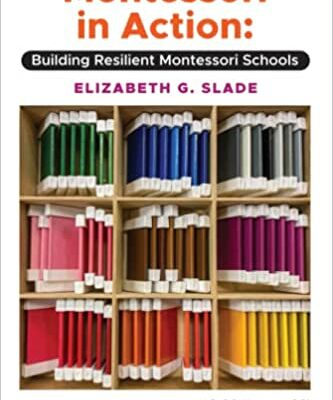
We hear a lot of talk about the Montessori Materials, but what exactly are those materials? How do we determine if something ‘qualifies’ as being ‘Montessori’ or not?
There is a list of characteristics that must be considered when creating a Montessori Material. Dr. Montessori developed this list because she knew that science is always advancing. The materials she developed in the early 1900s would necessarily need to evolve as our understanding of the world and human development grew.
At the top of her list were the age and abilities of the student (from birth to dementia care). She knew that all materials must be sized to match the size of the humans they are designed to teach and be matched to the capacities of those humans. So, the materials will necessarily differ when used to teach young children as compared with adolescents or adults. Beyond that core, the material should have most (if not all) of the following attributes:
Self-teaching (auto didactic): In Montessori, we say that it is the materials that teach. The teacher (more commonly known as a ‘guide’) is there to inspire the child to use the material and show them how to use it. But it is not the teacher who teaches. It is the student’s repeated, uninterrupted experience, using the materials towards their intelligent purpose, that leads to learning.
Control of Error: The material should allow the students to discover and correct their own errors without the need for teacher intervention. When an authority figure comes in and offers a correction, there is a chance that this will trigger a stress response in the learner.
Think about when your boss or parent tells you that you are doing something wrong. How well can you hear that? But, if your friend tells you, it’s usually not a big deal and is seen as helpful, right? So, in Montessori, we try to let the students discover and fix their own errors. Designing activities that allow students to recognize their errors without help is key. For example, the Three-Part Cards (developed by Maria Montessori) are a reading activity where students:
lay out an image of an object,
read a word label and match it to that image, and
use a control card (which includes the image and its name on one card) to check their own work. The control card acts as the control of error. So, if a student places the label ‘peach’ under a picture of a watermelon, the control card will show them that they are wrong. No one else needs to be involved. We learn so much more from seeing our own errors than from being corrected by others.
Intelligent/Purposeful Uses: If you agree with the concept that the materials teach the student, then the student must have ways of using the material, repeatedly, that encourages them to master what the material presents. Typically, the adult teacher/guide will show the student specific ways of using the material, but, sometimes, the student learns by watching other students or by receiving a lesson from another student. The key here is that there are specific ways of using the material towards an intelligent end.
For example, the Number Rods are lined up, aligned on the left, to help children learn about quantity and its connection with length (e.g., the one rod is incrementally smaller than the two rod and the three rod, etc.). If a child picks up a rod and uses it like a light saber, that is not an intelligent end! It’s not helping the child to understand what it is that the material teaches. So, when we see a child do this, we might approach them and say, “I love Star Wars too! But the number rods are so special. We must use them for counting work. Let’s carefully put this back, and I’ll show you again how we use them.”
Movement: Humans need to move. Period. At all ages, but particularly in Early Childhood, movement must be incorporated into the activities. This is why you don’t see children sitting lined up at desks in Montessori classrooms. Movement is not just a biological need; it is a way to help maintain the student’s interest in the materials and extend their attention span. When a student uses a material that requires complex movement, the child must be aware of and focused on their movement to achieve the desired end. Dr. Montessori called this type of movement “synthetic movement.” Think about it like a choreographed dance. There are certain steps we must remember when we do the complex activity of flower arranging. It’s like a ceremony where there is a place for everything and a logical sequence to follow to elegantly complete the activity. Memorizing and practicing this movement pattern strengthens the brain in innumerable ways.
Isolation of a Stimulus: Each material and lesson slowly adds in one more level of complexity. Why? Because we are always trying to isolate the concept being taught. So, for example, the first time we teach children how to use the Moveable Alphabet, we don’t actually write any words. Instead, we just show them how to carry the box and take letters out of and put letters back into the box. Why? Because for a four-year-old, that is a complex series of movements, right? And if we skip this step, you will see alphabets being dropped all the time. Then, the children become averse to using the alphabets; they associate them with disaster. See how that happens? If we isolate one concept at a time, we prepare the student to succeed with whatever it is they are doing. So, one thing at a time is always the motto. It’s better that the student thinks they are too smart for the work than that the work is too smart for the student.
Refinement of the Senses: In the big picture, this means going from greater contrasts to finer gradations of difference. This concept is particularly relevant for Early Childhood, the time when the brain and body are synchronizing sensory perception. As an example, think about the fine-art cards. We introduce cards that show art from around the world first, and then we home in on art from the child’s continent and go deeper into many examples of art from within one continent. See what I mean?
Vocabulary: We always want to teach the student the names of everything we offer them. This is particularly important in Early Childhood when the child is in a sensitive period for learning language(s). In Early Childhood, we give the children a physical experience with an object before we name it. For example, when we introduce the Geometric Solids (a three-dimensional cone, cube, rectangular prism, etc.), we guide them to touch and feel the objects first, before we name them. And, when we introduce a Practical Life activity (something we do every day), we show the movements of the activity without any language at all, so that the child can focus on the movement. Then, once they have experience with the items involved, we give Three Period Lessons on everything.
Materialized Abstraction: This may be the coolest concept Dr. Montessori discovered. It refers specifically to Math and Sensorial materials because those represent abstract concepts in a concrete way. When we think about color, for example, we can’t find anything that is red without being a red something. So, Dr. Montessori designed color tablets that are identical in every way except for their color. That makes the abstract idea of red a real thing.
Aesthetically appealing: Because we are inspiring students to use the materials rather than requiring them to do so, we need the materials to be enticing. They need to be beautiful, clean, and in good order. No one wants to pick up dusty cards! That’s why things like cloth pouches to protect and beautifully display materials are so important in Montessori environments.
Indirect preparation: While many Montessori materials directly prepare a child for something (like the Phonetic 3-Part Cards prepare them to read books independently), some materials are creating a foundation that is somewhat indirect. So, by showing a child how to scrub a table, we are indirectly preparing their hand to use a pencil. How? Because we show them to scrub in circles (like cursive handwriting) from left to right and top to bottom (the direction of English). It also strengthens their muscles and refines their motor coordination so they can control their hand in space. And yes, we are this thoughtful about everything we do in the classroom! That’s what we call a ‘prepared learning environment.’
Repetition: We’ve all heard the phrase, “practice makes perfect.” But, in neuroscience, we say, “practice makes permanent.” Anything we do repeatedly the brain gets more efficient at doing. So, the materials should allow and even invite the child to repeatedly use them.
Diagnostic Value: A key aspect of the Montessori approach (which is actually just the scientific method applied to education) is the importance of observation in understanding the humans we are working with. We must observe their behaviors to learn what we can about their developmental needs. The materials can help us do this. So, for example, if we suspect that a child may have a hearing challenge, we notice if they are able to place items down without making a sound, if they notice that something is noisy, if they can hear the difference in the sound cylinders, etc. Because the materials isolate stimuli, they also isolate a possible learning roadblock or challenge. By observing how the student is able (or not able) to interact with a material, we open a window into that student’s development.
Memory Training: In everything we do, we are subtly training the students’ attention and memory. We invite them to repeat what they have learned when they use a material again and again. This demonstrates their memory of what they have been shown. Even something as seemingly basic as asking a student to locate a material within the room is challenging their memory.
The materials you already find in an authentic Montessori school have been designed with these characteristics in mind. Each material might not contain every characteristic, but they will embody many, if not most, of them. The key here is that the materials meet the innate needs of human development, no matter the student’s age.
Julia Volkman is the Founder/President of Maitri Learning and a Teaching Fellow in the Neuroscience of Learning course at Harvard University (Extension School). Among other things, she has also been a consultant and thought partner with the National Center for Montessori in the Public Sector (NCMPS), an Advisory Panel Member for and contributor to the Annenberg Foundation’s Neuroscience & the Classroom course, and a Dekyong at Buddhist family camp. Ms. Volkman earned her AMI 3 to 6+ diploma from the Montreal Montessori Training Centre, a bilingual program. She earned her master’s degree from Harvard Extension School, where she won the Dean’s Prize for her research on preschool literacy/the Montessori Movable Alphabet. Most importantly, she is the mother of a young adult (by birth) and a high school sophomore (by adoption) who have taught her most of what she knows. She enjoys hiking with her new puppy, kayaking, researching, and conversing with her family at the dinner table. You can read more about Maitri Learning at maitrilearning.com.
Join us as we talk with Julia Volkman, long-time Montessori teacher, faculty member of the Brain Health Initiative, and guest lecturer for Harvard University’s Neuroscience of Learning/Mind, Brain, Health, and Education course. She will discuss how screen time affects brain development and learning. Julia will share ideas on why and how families can clearly set boundaries for screen time in their homes. MONTESSORI FAMILY LIFE WEBINARS
So, you’re considering a Montessori school. Maybe you’ve read about the growing evidence that supports the long-term benefits of Montessori education. Maybe someone you know enrolled their child in a program and is always pestering you to put your child there. Maybe it’s just an accident (as happened with me) that when you feel your child is ready for school, the closest one to you happens to be a Montessori school. Whatever the reason, when you show up, you want to know that this particular school is a good school.
THE PHYSICAL SPACE Now we can’t all live in the Taj Mahal, so the school may not be housed in the most modern building (we all have to start somewhere), but what you should see is that the space has something lovely about it. You’ll have a feeling that someone cared about the entryway, the hallways, the offices, the rooms, and, oh yes, the bathrooms. The walls will not be cluttered or overwhelming. Overall, it will feel calm, inviting, and maybe even elegant.
It may also make you feel like a bit of a giant because the whole school should be adapted to fit the smaller physical bodies of the students it serves. You should see benches, chairs, and/or tables that are quite small. Sinks will likely be lowered or the ground raised with solid stools. At all points, there will be a sense of order, care, and intelligence in the physical design.
OBSERVING Once you’ve walked through the door, the staff at a good Montessori school will make you feel welcome. They will greet you and, even though they will be exceptionally busy, they will make you feel like your visit matters. At some point, they will invite you to see the classrooms in action. They’ll call this “observing” and in Montessori, scientific observation by the adult is essential.
You see, Montessori teachers are actually all scientists. We are trained to carefully and objectively notice what is going on with each child. We observe how the children use their hands and feet, how they articulate words, how they interact socially with others, how persistent they are in getting what they want, etc. All of these observations are then used by the teacher to customize each child’s curriculum. Every child is allowed to go at their own pace, repeating as often as they need to in order to figure something out.
On your first visit, you will receive some basic instructions on how to observe. You’ll be asked to enter the classroom very quietly so as not to interrupt the class. You’ll be shown to a chair where you can sit and maybe given a notepad, so you can write down your reflections. You are asked to be polite with the children but not to engage with them excessively. Instead, you are to put yourself busily to the task of seeing what’s happening.
Sometimes the school will even give you a sheet with written observation instructions. I think every school should put a big caution statement on the top of the observation instruction sheet. “WARNING: Sitting quietly and observing Montessori children without chatting or interfering is sometimes associated with excessive discomfort. Particularly gregarious people may experience mild dizziness, vertigo, or a twitching jaw.”
That’s meant to be a joke, but I’m actually serious. Our culture does not teach us to sit back and let children be children. Our culture teaches us that good parents/adults jump in and engage with children and direct them towards doing ‘important things.’ And at this moment, the Montessori school is asking you to go against our culture, sit down, and be quiet. Isn’t that the opposite of what good education is all about?
Actually, when it comes to education, what we really want is for the students to be active and for the adults to be in a support role. It’s like each child is the superhero, and the teacher is the sidekick. We’re the wingman. The Children
In the midst of all this patience rooted in scientific observation, you’ll see a mixed-age group of children doing all kinds of things. In a normalized classroom, the children will be quite busy. Some of them will be working by themselves at a table or on a rug. Some will be walking about gathering things or tidying things. Some will be chatting with another child or doing some activity together. Some will be tending to their physiologic needs. And, of course, some will be on the edge of mischief. The important things to look for in the children is that they seem to be interested in what they are doing and that the work seems to have some logical purpose. They won’t be playing with dolls or toys but will be using real-life materials (like real glasses, pitchers, and bowls) to do intelligent things. You will also usually see a sense of order in what they are doing.
You will also see a mixed-age group, generally with a three-year span. So for a primary or preschool/kindergarten class, this would mean around ages three to six. Now the really important thing to notice is that the younger children will look to the older children for guidance and the older children will be happy to offer it. Let me repeat that last part… the older children will be happy to offer help. I’m not kidding. That is the coolest part of the three-year mixed-age group. The older kids get to be leaders. They really flex their “I’m the one who knows how to do this and who can teach others” muscles. It’s gorgeous to watch.
Of course, the younger children also benefit tremendously because all humans learn more easily from peers than from authority figures. So, when the new children start coming to school, they will have a whole community of people who can help them learn the ropes, most of whom are about their same size.
The Teacher The children will most likely be utterly accustomed to having observers visit. A few children may come over to greet you and welcome you to their room. Most will ignore you. Yes, that’s right, you will be less interesting to them than the schoolwork they are doing. There you have it; the next humbling truth of Montessori. The grown-up is the least revered thing in the room.
When you finally find the adult in the room, you should notice someone who:
§ Precisely and objectively watches the children
§ Dynamically engages the children with the hands-on materials
§ Models the most gracious, welcoming, and kind behavior you have ever seen
§ Demonstrates an insane amount of patience in waiting for the children to speak and get to where they need to go
Concentration Okay, so all of these things are going on all around us as we take our seat in our observation chair. And, despite the observation instructions, usually the first thing we want to do is start talking with some child or children so we can see what they are doing. We want to strike up a nice little dialogue with one of these perfect Montessori students we’ve heard so much about. I mean, this is our chance to get the inside scoop from the ones who really know what’s going on, right? If we can just talk to the right child, we’ll find out what we really need to know.
Now, resist the urge, step back for a moment, and consider this. In the 21st century, one of the primary goals of education is to develop the capacity to pay attention to what is important and ignore what is not. Every day, we are immersed in an ocean of information overload. Somehow, we adults have to figure out what doesn’t matter, what does, and then maintain our attention on what does, so we can see a task through to completion. So school isn’t just about teaching factual knowledge anymore (although that’s fun and has its place). It’s much more about creating executive function or higher thinking capacities.
So if we succumb to our little bout of curiosity and interrupt a child so we can find out the real dirt on the school, we are actually interfering with the development of that child’s attention span. This is the cardinal sin of Montessori. The big teaching in Montessori is to prepare the environment so children can get what they need, teach the children how to engage with the environment, and then let them have at it! At this point, the adult is careful to fade and observe. If the child needs help, we offer it. If not, we disappear because we know that it is their effort that makes the difference, not ours.
Sit down, relax into your observation chair, and just enjoy what you see. Are the children happy? When there is a conflict or challenge, is it handled compassionately by the teacher and/or the children? Is there a light buzz of meaningful dialogue? Does everyone seem to know what they are doing?
You’ll know if it’s a good school or not because it will make you think…what if the world were like this?”
Really, everything I’ve said above is a distraction. You’ll know if it’s a good school or not, because it will make you think…what if the world were like this? What if everyone knew that they had something valuable to do and that they could do it on their own or with others, at their own pace, and get help if they needed it? What if everyone could apply themselves to work that matched their interests and strengths? What if everyone helped to care for the physical environment and helped those in need? These are the questions you will find yourself pondering while you relax into the observation chair of a good Montessori school.
This article was originally published in the July 2016 issue of Tomorrow’s Child.
Julia Volkman is the president/founder of Maitri Learning, a teaching fellow in the Neuroscience of Learning course at Harvard University (Extension School), a Montessori mentor (AMI primary/early childhood), and a mother of two. Julia learned her first second language during high school, where she participated in a student exchange program to France. After two weeks, she had her first dream in French, and everything became easy after that. She completed her Montessori studies in Montreal (a bilingual program where she was always asked to team up with the French speakers), studied German in college, and taught herself survival Russian to prepare for her two-month adoption journey through Kazakhstan. She has taught English to students from China, Cameroon, and Russia.
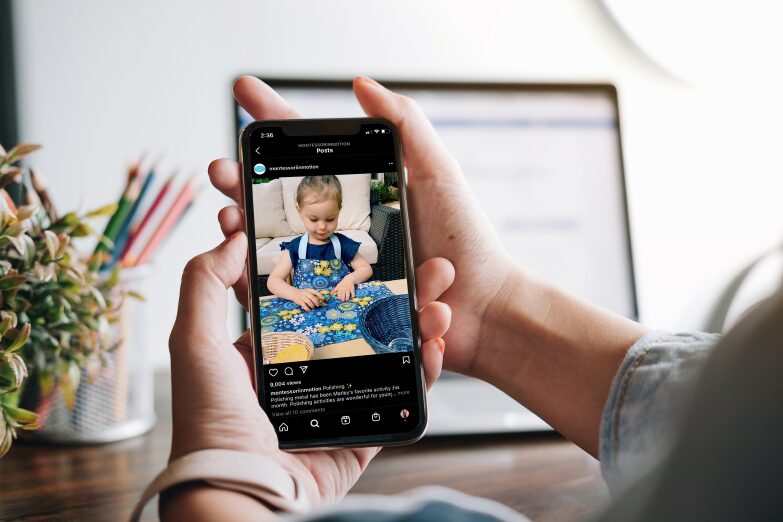
This article describes the benefits of polishing by deconstructing the actions of a child at work documented by an instagram video. You can view the post by clicking
Parents often ask Montessori teachers why their children are learning so much about cleaning at school. Their children are learning how to wash dishes, sweep the floor, dust, and even polish silver. Can’t the school afford to hire their own cleaning staff?
The answer has nothing to do with keeping the classroom clean. In fact, teachers often have to go back after school and “re-clean” what the children have cleaned. The reason we teach them these “practical life” activities is all about aiding the child’s development.
A mom I know on Instagram (big shout out to @montessoriinmotion) posted a video of her daughter that illustrates some of the benefits of practical life activities. It’s just over one-minute long and is so rich in things to notice that I asked her permission to write about it here. Watch the video on your own first and then read on (and yes, she is sporting the matching Maitri Learning blue flower apron and mat).
Focused Attention
In the first few seconds, you can see that she couldn’t care less about the neighbor’s barking dog; she is very focused on her activity. She begins by setting up what she’ll need: the object to be polished (the turtle); the glass bowl (which will hold the polish); and the polish. While she is doing part of this, her eyes are fixed on the contents of the blue basket. She does not look at where she is placing the glass bowl. Why does this matter? It means that she has already learned how to place an object down with her hand (maintaining proprioceptive control) while her visual attention is focused elsewhere. So, when you think that where a child’s eyes are looking tells you what they are paying attention to, stop and think again!
Handedness
Did you notice that she uses her left hand to pick up and lay out each of these items? But when she gets to the polish, she starts opening it using her right hand. She reconsiders, possibly remembering that she doesn’t need to open it yet (self-correction), and places it down. Next, she switches to her right hand to take out the remaining items she’ll need.
When you see children choosing hands to work with at this age, you may see them switch from left to right, or you may see them strongly dominant already for the right or left hand. You don’t have to worry about it. When you present a lesson to them, just use your dominant hand, but if they struggle with that hand, simply say, “Maybe it will work better with your other hand. You can try it.”
Pausing
Once she has the polish on the mat, she pauses to organize her thinking. This pause is often a tricky spot for adults. We want to step in and make sure they know what to do next. But it is in the pause that so much great development happens (memory consolidation, toggling the default mode network, etc.). So, one of our biggest jobs is to restrain ourselves and give the child time to figure it out.
Sensory Learning
Now she uses her right hand to take out the sponge, cotton swab, and buffing cloth. As she takes out each one, she touches it an extra time as if to receive physical confirmation of what the object is. In neuroscience speak, we call this haptic engagement. She pushes down on the sponge and feels its spring. She uses the pincer grip to precisely place the cotton swab. She uses her whole hand to pat the buffing cloth. Each of these movements is different based on the properties of the object she touches. They also mirror the movements she will use later when putting each object to use.
As an aside, when I see her haptic engagement and her ability to follow logical steps/procedures, I am thinking she might be quite interested in the Sandpaper Letters. To prepare her for that work, this may be the right time to start playing some sound games. After a few weeks of sound games, you’ll be able to introduce the Sandpaper Letters.
Executive Function Development
Okay, back to the polishing work. After patting the buffing cloth, her eyes scan the basket until she finds the thing she needs next: the polish. I love how she nods to herself to validate that yes, now it is time to open the polish! So when we saw her hesitating with the polish when she first took it out, we actually saw her exhibiting inhibitory control: she stopped herself from opening it before it was time to open it. Inhibitory control is a key foundation for higher executive functions. You can google “marshmallow test” if you want to see many examples of young children flexing their inhibitory control abilities.
Now she uses her left hand to hold the polish bottle and her right hand to remove the top and squeeze the dropper (again using the pincer grip.) But when she is placing polish into the dish, you can just see that her eyes are scanning back and forth between the dropper and the dish. This means that her eyes are already moving ahead to the next step of confirming that she has the right amount of polish. Again, this is evidence of her developing executive function ability to plan ahead.
Concentration Overcomes Distraction
Right at about 50 seconds in, her brother comes over and starts talking with her mom about how they might possibly make the paint he wants to use to paint a baseball diamond on the front lawn. First of all, that is an utterly gorgeous thought process by her brother! He is absolutely ingenious in thinking about the chemical properties of paint. Second, his conversation does not phase his sister the tiniest bit. Her concentration remains 100 percent on her polishing activity; even when her eyes glance away. So when you hear someone say that two-year-olds are easily distracted, question if that is really true.
Refined Motor Skills
Right after she applies the polish to the turtle’s back, the turtle spins. This suggests that she used a little bit too much force. The natural consequence is that the turtle spins around. She then moves in for a very close look, and we don’t see the turtle spin again, suggesting that she is using a lighter touch. We just saw a natural consequence lead to the refinement of fine-motor skills!
The need for natural consequences is one of the reasons Montessori environments use items that might break if they are misused, like real glasses and dishes (not plastic or melamine). We expect things to break if they are handled roughly. We always model very careful use, but the child might not pick up on this right away. So, when an object breaks because it is mishandled, the children realize that they need to actually pay attention to what their hands are doing when they hold fragile items. I wish we could do a research study on this point but, in my experience, most children only break one or two things before they adapt and refine. Children who are always given plastic miss this opportunity when the mind is ripe for it.
Attention to Detail
Okay, let’s get back to polishing. When she finishes applying the polish, she holds onto the cotton swab in her right hand and picks up the sponge with her left. She dabs some polish off of the turtle with the sponge but then she uses the sponge to clean off the cotton swab. Only after the swab is wiped off does she place it on the mat. She sets the sponge down then but picks it up again when she notices there is still a bit more polish to wipe off. Once the sponge finally goes to the mat, she uses her left finger to rub the turtle’s back. It’s not clear if she is rubbing off an extra bit of polish or verifying that the polish is off. In either case, she is using her finger to attend to this tiny detail. My husband is always saying he wished his undergraduate chemistry students paid better attention to details in the lab. Maybe they needed to polish more when they were little.
Scaffold/Control of Error
Again, we have a pause where she scans the mat to determine her next step. The order of the materials on the mat acts as a scaffold; the order helps her to figure out what is coming next. She looks until she finds what she needs. In Montessori, we call this a built-in control of error. It means the adult doesn’t need to step in at all while the child is concentrating, the materials themselves will guide the child. This is essential because it allows her to keep working without interruption. That is what is strengthening the neural networks in her attention system. So again, we grown-ups need to step back and allow the child the opportunity to process, think, and choose.
Strengthening the Hand
Now comes the buffing. She starts to rub up a shine with her right hand only. But, this is no one-handed moment! She quickly brings in her left hand to stabilize the turtle so she can apply more force in her buffing. This variable application of strength not only refines her motor skills (as noted above), but also increases her muscular strength and control. And, of course, it creates a really nice shine!
Self-Esteem
The very last thing the video shows us is her enormous smile when she has reached the moment of completion. She is satisfied and happy with what she has accomplished. This, I believe, is where self esteem and self confidence truly come from. Hearing someone else tell us we did a good job is never as deeply satisfying as witnessing our own good work come to fruition.
So, there you have it, eleven ways in which a Montessori practical life activity contributes to the optimal development of the young child. The next time you wonder if you should engage your child in helping out around the house, think back on this. When we do work together with a child, prepare them to work independently, and then give them the freedom to work on their own. This helps them immeasurably.
Learning the visual appearance of each letter in English and the sounds that each letter makes is an essential beginning step towards literacy.
In the Montessori approach, we do a huge array of spoken language activities with the children to prepare them for writing and reading. But we have one primary tool for teaching children the shapes of each letter and their individual sounds: the Sandpaper Letters.
The Presentation
Before you start, you always want to wake up the child’s fingertips. You’re also going to want to preserve the life of your letters. So, for both of these reasons, always begin Sandpaper Letter work by washing and thoroughly drying your hands. Then, draw the child’s awareness to the sensitivity at the ends of their fingers by using a sensitizing brush (available through Amazon). In my training, we used a small dish of water. We would dip our fingertips in and gingerly dry them with a tiny towel. Although it was really sweet, it was also a petri dish for infection.
Whatever you do, never use worksheets for tracing or copying letters unless you are an interventionist doing remedial work with an older child. Tracing the letters on the table, the air, sand tray, etc. requires the child to rely on muscle memory to create the letter and that is the key. Worksheets rely on drawing/visual matching; it is a completely different skill and uses different brain areas.
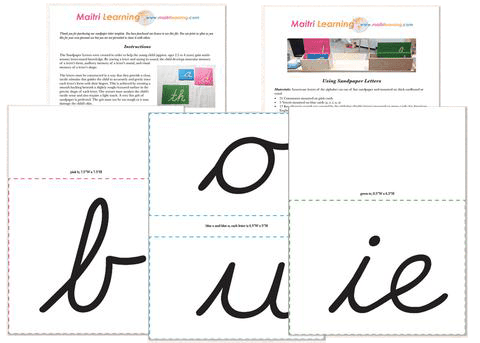
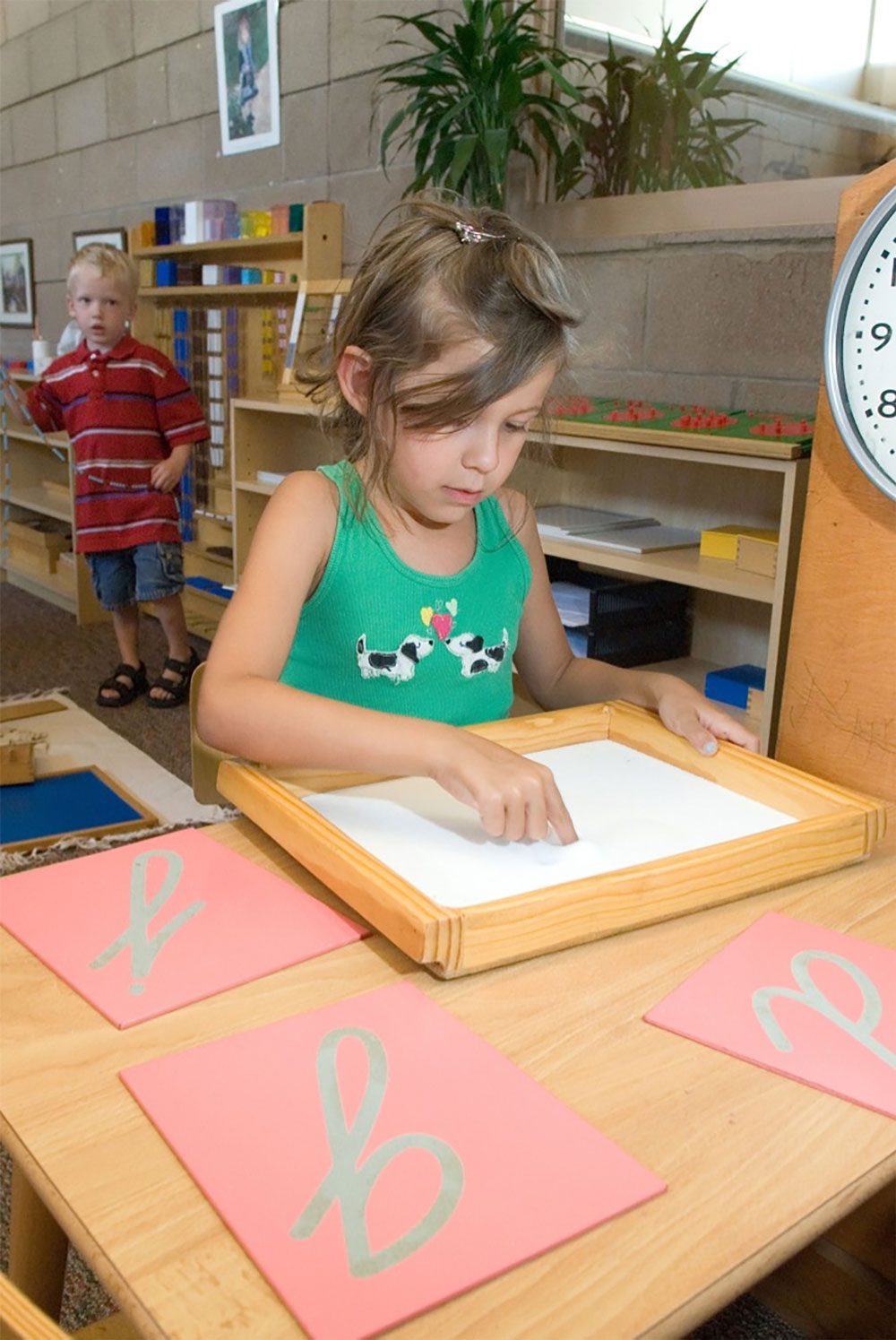
The general approach to the Sandpaper Letters is to choose three or four letters (depending on the interests and abilities of the child), show them how to trace a letter, say its sound, and then say a few words that feature that sound. The first time we choose letters, stick with pink and blue. We often encourage the children to choose the first letter of their name or their friend’s name, and we stick with the single pink (consonants) and blue (vowel) letters.
For example, we would trace the M a few times (modeling how much we adore tracing it), say the sound ‘mmmmm’ after each trace, and then pause and say ‘mmmmm,’ ‘mmmmommmm,’ [pause long enough for the child to possibly step in] ‘mmmmoney,’ [pause again] ‘mmmmaybe,’ …” After each word, we pause and encourage the child to add more words that they like which feature the sound. The sound can be at the beginning, middle, or end of the word.
The Three-Period Lesson
Period 1: Tracing, as described above, is actually the first period of the famous Montessori Three-Period Lesson. After you’ve presented and traced each letter, touch each letter, and say its sound.
Period 2: Say a letter’s sound, and ask the child to find that letter. For example, you might say, “Show me the buh.” Keep it lively by varying the action in the second-period (e.g., point to the …, trace the …, move the …, pick up the…). The second period is where most learning takes place.
When the child accurately finds the sound you request most of the time, add distance to increase the challenge. Leave the letters on the table and move to a different place in the room. Ask the child to bring you a letter sound. Match your challenge to the child’s ability; better too easy than too hard. If they make an error, do not correct them. Instead, move back to the first period. For example, if they bring you the buh and you asked for the mmmm just say, “You brought me the buh.” Then, walk together back to the table and repeat the first period.
Period 3: When you are 100 percent sure that they know the sound, move on to the third period. Point to a letter and say, “What sound does this make?” This is the final test of their knowledge. It may take a day or weeks before they succeed at the third period. Don’t go here too soon.
An entire Sandpaper Lesson should only take a few minutes. Do not belabor it. Continue for as long as the child is interested and leave them wanting more!
Phonograms
After this first lesson (the presentation), we can stretch right out to include one pink consonant, one blue vowel, and one green phonogram in every lesson! That’s right, very young children can learn phonograms! (Phonograms represent sounds of a single or multiple letter group, i.e. e or augh.) In fact, it’s really important to include the phonograms at this early stage. For the young child, learning that two letters makes a certain sound is no different from learning that one letter makes a certain sound.
We adults like to hold phonograms off until later, but that is an error. The young child is incredibly interested in learning about letters and their sounds. We do them a disservice by restricting them to single letters. Why? Because in English you can’t make all of our words with just the single letters of our alphabet! You need s and h to make shoe. You need t and h to make thunder. If we don’t teach them the letters that go with those sounds, the child will realize that s/he doesn’t know part of our language. This omission lays the ground for the child feeling inferior or thinking that they aren’t good with language.
By teaching phonograms at this early stage, we prepare the child to start writing any word they like with the Moveable Alphabet. For more information on phonograms, see our blog post: Phonograms Made Easy. For more information on the Movable Alphabet, scan through our pedagogy blog for the different articles we’ve written about it. (As an aside, my graduate research at Harvard focused on the Movable Alphabet and its use as an indicator of developing literacy. If you’d like to go deep, read my thesis. I find this subject area fascinating.)
So, we use the three-period lesson as we trace a letter’s shape, say its sound, think of words that feature the sound, and challenge our students to find the letters that make each sound. Our goal is for them to recognize the sounds that each letter makes. So, if we asked them, “Can you find the lllll, they could go and find the letter l Once they can do that, we can introduce the Movable Alphabet (https://www.maitrilearning.com/collections/movable-alphabets) so that they can build words.
Additional Activities
Not every child just seamlessly moves from the 3-period lesson to being able to recognize all the sounds. They may resist having lessons with us. They may comply but fly quickly through the lesson to be “done with it.” If you’ve added distance to the 3-period lesson and they’re still not motivated, don’t worry. There are many other activities we can do with the Sandpaper Letters to arouse the child’s interest. You can read full details in our Sandpaper Letter Lesson plan. But for now, here’s a list to whet your whistle:
Knock-knock game
Trace the table/air
Sorting
Connections
Blindfolded trace
Link to the environment
You can start with the above activities once a child can recognize (at the second period) about half of the letter sounds. Inspire them to play one of these sandpaper letter games most days.
Remedial Lessons
With some children, even all of the above activities are not enough. Even with practice, they may mix up letters that they seemed to know the previous day. They may not be interested in tracing. It could be that they started when they were a little past their sensitive period (a time when they are physiologically driven to trace letter shapes). It could be that they have dyslexia. Or, it could just be that their interests lie elsewhere. In any event, we must help them persist so that they can learn the letter shapes and sounds. You will have to practice with them every day (just like brushing their teeth). There are many options for conducting these remedial lessons as shown below. Keep each day’s practice light, short, and fun. Repeat at least one letter every day. Choose no more than three letters at a time.
Whatever you do, never use worksheets for tracing or copying letters unless you are an interventionist doing remedial work with an older child. Tracing the letters on the table, the air, sand tray, etc. requires the child to rely on muscle memory to create the letter and that is the key. Worksheets rely on drawing/visual matching; it is a completely different skill and uses different brain areas.
In Dr. Montessori’s writings, she speaks of an “explosion” into writing. The children spontaneously discovered that they knew how to write and started writing every word, everywhere. She insisted, however, that she never taught them how to write; she just prepared them to write, indirectly.
In many Montessori classrooms, you’ll find all kinds of handwriting worksheets and programs that have nothing to do with Dr. Montessori’s successful indirect plan. Let me give you a brief overview of this indirect preparation and also a specific description of how we introduce the recording process. May it encourage us to return to the basics of what Dr. Montessori gave us.
The lessons we offer in spoken language teach the child that they have something worth saying.
An Organized Mind
The writing process is orderly. The hand must start at a certain place on the page, letters must be placed in sequence, ideas must be put together so that they make sense, etc. Order, logic, natural consequences, and sequence are infused throughout the prepared Montessori learning environment. Practical Life activities, in particular, help the child develop their logical mind. If they are too rough with a glass, it will break. If they lose track of what they are doing, they may spill the water in their bucket. Order is a great support to the young child. I could go on at length on this topic but, instead, I will simply draw your attention to it.
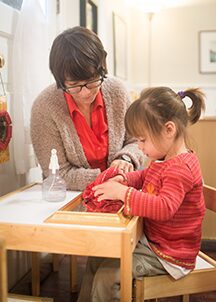
If you are encountering challenges with a child learning handwriting, look to the order within their mind. If it is lacking, draw the child’s attention to the activities of Practical Life. Help them increase their attention span and concentration by scrubbing tables, washing dishes, ironing clothes, preparing food, sewing, etc. When their Practical Life work becomes organized, you will see the results in all of their efforts across curricular areas.
Spoken Language
All handwriting work begins with spoken language experience.
Before the children write, they must have something that sparks their interest. Even if a child cannot physically speak (e.g., due to a neurological disorder), they will be thinking about words and thinking via words. It is this motor expression of language (spoken externally or thought internally) that precedes all other language work.
The lessons we offer in spoken language teach the child that they have something worth saying. For example, in the exercise ‘Conversations at a Picture,’ we go together with a child to a piece of art on the wall and guide them in talking about what they see. There is no wrong answer because it is art; their interpretation is inherently valid, even if it is rather unexpected.
We also help them appreciate the joy of our language by singing songs and reciting poetry, tongue twisters, sound games, rhymes, etc. Thus, we teach them that language is useful, enjoyable, and meaningful—and that they have something worth saying. Once these foundations are set, the logistics of handwriting can follow.
Letter-Sound Knowledge
Learning the mechanics of creating a letter’s shape as well as its associated sound is the next cornerstone of handwriting. In the Montessori approach, we teach the shape of the letters simultaneously with the sound of the letters via the Sandpaper Letters. First, we trace a letter, then we say its sound, and then we say a few words that feature that sound. This approach not only develops muscle memory for how to ‘write’ a letter, it also creates meaning for the child. They are tracing the letter ‘m’ because that letter is important; it’s in the word, “mom!”
As an extension of (or remediation with) the sandpaper letters, children may be interested in writing letters on their own using a sand tray or chalkboard. The focus of this work is on tracing with the fingers and associating that shape with a sound.
Writing with the Mind
Before we invite young children to start writing with their hands, we invite them to start creating words using the Moveable Alphabet. Why? Because children can build words in their minds before they can write them with their hands. Building a code (writing) is easier than cracking one (reading).
This isn’t just a Montessori theory, it is supported by research. In fact, I conducted a research study for my graduate thesis at Harvard on exactly this topic. I studied 78 preschoolers (ages 3 or 4) in traditional public schools and found children are able to spell words phonetically with the Moveable Alphabet more successfully than they can write those same words (read the full thesis at: tinyurl.com/volkman-thesis.)
Building words with the Moveable Alphabet allows children to work with the letters and sounds they know in order to create the ‘code’ of written language, even if their hands cannot accurately reproduce the letters. This experience building words prepares them for both handwriting and reading.
Writing with the Hand
Once the foundations of spoken language, letter-sound-knowledge, and intellectual writing are lain, we are ready to turn to handwriting. We indirectly prepare the child’s hand for this work in myriad ways. Here are some of the main ones (but there are more):
Practical Life exercises (to strengthen the hand muscles/coordinate hand & mind)
Sensorial exercises (e.g., using the pincer grasp to lift the Knobbed Cylinders)
Geometry Cabinet (tracing the shapes with the fingers)
Botany Cabinet (tracing the shapes with a stick/pencil surrogate)
Metal Inset activities
Unfortunately, many of us gloss over these steps. We may use the Geometry and Botany Cabinets like puzzles rather than as tracing activities (this is the cardinal sin of many classrooms). We may introduce the metal insets too early, before the child has hand strength to be successful with the pencil. Or we may try to ‘teach’ handwriting via marker tracing activities. (Note that paper tracing activities are an option ONLY as remedial work; they are not the preferred first approach that works for some children.)
Again, this entire approach to handwriting is based on laying the proper foundations; indirect preparation. We incrementally increase the challenge to the hand/mind so that it is never too easy nor too difficult for the child. The challenge must be one tiny step beyond the child’s ability, no more and no less.
The Recording Process: Chalkboards
The first time we ask the child to write anything is after they have written something with the Moveable Alphabet. We introduce them to the blank chalkboard (a portable one that can be placed on a table next to their alphabet work). Then, we isolate a word from their rug and invite them to write it on the chalkboard. And then, they start writing like crazy. That’s it. Really! All of the preparation that has come before allows this to happen.
Once they have success writing on a blank chalkboard, primarily by copying the work that they’ve created with the alphabet, we can introduce the baseline chalkboard. This helps the child align their words along a bottom line. After experience with that, we introduce the baseline and waistline chalkboard.
The chalkboards allow children to easily erase and correct any errors they see. We do not correct the child, but they will want to correct themselves. If you begin with paper, the child will not be free to readily fix their work. They’ll erase so fervently that they tear the paper or become upset at all they’ve crossed out. The young child loves perfection and precision; the chalkboards allow this human tendency to be expressed elegantly.
The Recording Process: Paper
At some point, you will notice more consistent handwriting success on the chalkboards and, usually around the same time, a significant progression in the complexity of their metal inset work. This is the time to introduce paper.
Begin with blank paper that is folded like a fan to create fold ‘lines.’ These act like the baseline on the chalkboard. Try to create a line width that matches the child’s abilities (with more or fewer folds depending on the size of their handwriting). When the child is ready, move on to paper with pre-printed lines.
From here, you are free to explore all the possibilities of handwriting. One thing that children love to do is transcription. For example, if you have poetry cards around the room, you can invite the children to copy down their favorite poem. Then, embellish their copy with decorations of their own design. Have plenty of writing and bookmaking supplies on hand so that the children are free to transcribe and create as their spirits drive them.
Remedial Work
Not all children follow the above progression. Notably, children who begin in the children’s house when they are already five years of age may not be interested in tracing the Sandpaper Letters, even though they do not yet know the sounds the letters make. Nonetheless, they may be very interested in handwriting. We never want to discourage the child who is eager to progress. So, we adapt.
For example, have them choose a Sandpaper Letter and a blank chalkboard. Demonstrate how to trace the letter with your fingers and then draw the letter with chalk. You can do the same for the Sandpaper Numerals. If you have name cards for the children in the room (e.g., to use at the snack table), you can invite them to copy names onto the chalkboard as they are ready. The point is to encourage the refinement of their handwriting ability without drawing attention to the fact that they are lacking letter-sound or other knowledge. Simultaneously, you are trying to catch them up on the essentials that they missed via the Sandpaper Letters, Sensorial work, and the Metal Insets.
I hope this helps clarify how handwriting unfolds in the Montessori early childhood classroom. It is not at all like a traditional handwriting curriculum. It is based primarily on indirect preparation. We give the child the keys and then they discover that they know how to write…and no one directly teaches them.
Before you consider adding in any other handwriting program, I suggest that you look to the foundations described here. If the appropriate lessons have been given, children typically don’t need any other formal handwriting program (except as remedial work). Try not to add in worksheets or other activities that will distract the child from the essential work that is already in the room. Let them discover, just as they did in Dr. Montessori’s time, that they have taught themselves how to write. ¢
If you are interested in more, there are some resources on our blog, maitrilearning.com/blog that may help.
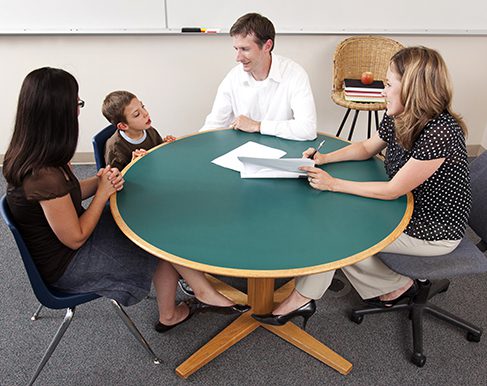
I remember the first parent-teacher conference I had. My daughter was not quite 3 years old and I had no idea what to expect. Her teacher, Maggie Radzik (an-amazing Montessorian who deeply inspired me), sat down with me and said, “She’s doing fine. I have no concerns. Do you have any questions?”
That was unexpected. She let me lead the dialogue and I had TONS of questions (like what are those ‘metal insects’ my daughter wants to get her hands on so badly and how come she puts on her shoes all by herself here but not at home). That was the beginning of our teacher-parent friendship. It was also my introduction to this Montessori way of non-judgmentally and optimistically accepting each child for who they are.
Later, when I was a trained Montessorian myself and had to hold my own parent-teacher conferences, I always kept Maggie’s example in mind. I don’t think I did as well as her at first. I was nervous. I spoke too much. Sometimes I got caught up in deviations rather than focusing on normalization. But in every meeting, it turned out that the parents were actually the teachers and I was the student.
Over the years, I have seen many forms, templates, and articles to try and help teachers “run” their parent conferences. Some of these were helpful but others, not so much. I think it ultimately boils down to three main things:
Let the family know that you see the value in their child.
Use photos/work samples to provide evidence for what you say (you have to mean it).
Get the families talking… and listen well.
All families love their children. Even the ones where someone is in jail and someone is using and someone is abusing. Even the ones who are working so much that they see their children less than we do. All families love their children. They may not be skillful in demonstrating that affection, but it is always there and it is our job to nurture that deep love. Why? Because if the child knows that s/he is loved, everything is possible.
Teachers are in a position of tremendous power, whether we realize it or not. A great weight hangs on our ‘assessment’ of each child. It begins to paint a picture of how that child is perceived by society. Are they one of the smart ones? Are they a trouble maker? Do they have a learning/behavioral problem? Do they have great potential?
The truth is that all children have tremendous potential. Even if they are from the roughest, nastiest family you have ever seen, they could become the kindest, most exceptional adult you have ever met. Their development is not at all set in stone. Let me explain what I mean.
While I was working on the Advisory Panel for the Neuroscience & the Classroom course, I got to know Dr. Mary Helen Immordino-Yang. Mary Helen worked with a boy who had to have the left half of his brain removed and with another boy who had to have the two halves of the brain disconnected in order to survive. Most of us would think, well, that’s that for those boys. But the support systems for those boys decided otherwise. They never gave up on them and the boys are now adults who can read, speak, play ball, and express themselves through art.
Here’s another example. One day I asked my professor a question about the visual field and dyslexia. He referred me to another Harvard professor who was researching in this area, Dr. Matt Schneps. When I went to meet Matt, I had to go to his office at the Harvard-Smithsonian Center for Astrophysics.
I had no idea what I was doing there. I mean, what the heck does dyslexia have to do with astrophysics? As it turns out, there are a lot of astrophysicists who have dyslexia. There are also many Nobel laureates in the sciences who have dyslexia. So while society and schools may think, “Oh no, dyslexia is bad,” the evidence indicates that the dyslexic brain has some rather extraordinary talents.
What I am trying to say is that a child’s potential is not bound by genetics or environment, it is created by them. Their potential reveals itself as they respond to life. And children will choose their responses based on the possibilities they have seen. This is the message we must share with families. They must know that the child’s future is not yet determined. Their brain is developing in front of our eyes. We can encourage that development along a skillful and beneficial path or we can neglect it or discourage it.
So the first step to a successful parent-teacher conference is to get to know each child. Meticulously and deeply observe them. Find their beauty. Find their talents. Notice and draw out their strengths. Actually, the step before this is to invite the families to the conference! And remind them more times than you think anyone would ever need of the date and time.
Be like my annoying dentist who texts me, emails me, and calls me six times to remind me of the appointment I have already safely tucked away in my Google calendar! You have to get them to show up or else the rest is pointless. Offer them dinner and dancing if you have to, but get them in!
Step two is to collect evidence of the great things you can witness in this child. Use photographs, stories, and work samples to illustrate the points you are trying to make. This is especially important for families who may have difficulty seeing their child’s strengths. This is your chance to change negative perceptions… and quietly imagine the lifelong impact that may have.
Now, this is easy to say, but what about the firecrackers in your classroom? Don’t you need to fess up to their folks about how they are pushing and pulling and biting and who knows what? Of course, but there are ways to communicate this information that assumes a growth-mindset.
Here’s what I mean. For two years I had a boy in my class who I disliked tremendously. Really. I’m not kidding. Me, who loves children more than chocolate. I did not like this child! I couldn’t believe I felt that way. In my defense, he was cruel to the other children. He would laugh this demonic laugh as he would pretend to stab another child in the back with scissors. He seemed to be intentionally mean much of the time.
I spoke with my trainer (Sybil Devereux) about him and she said that I had to love that child more than all the rest. I had to keep him close to me (so I could keep him out of trouble) and I had to find the tiniest good things in him and draw them out. This was the most difficult task I ever had as a teacher. But, a few months after I began this work of forcing myself to like him, one of the other students in the class commented, “I think Julia likes him the best.”
So, it seems that ‘fake it till you make it’ can work sometimes.
When I met with this boy’s mom, I focused on the positive changes I saw. I was honest about the tricky things that had happened but I was also able to give her true evidence of positive change… but only because I had forced myself to find it. As I did so, she broke down in tears. She had felt completely lost and helpless in the face of his upsetting behavior. She said she was afraid he was going to grow up to be a psychopath. She didn’t know what to do. But now she had someone to talk to about it. Now she had someone to help.
So, step three is to hush up and listen. Show the family their child’s strengths and free them to talk about what they see. Give them a chance to ask questions… to confide in you. Let them know that you are part of their support system because their child matters deeply to you. And I know that their child matters deeply to you because you are a teacher. Teachers care deeply about their students… even the firecrackers.
When my husband and I were courting, I asked him what he wanted from me. What did he want in a woman? He said, “I want you to be Julia, as big as you can be.” I think that is the message we need to give each family. “I want you to be you, as big as you can be.”
Julia Volkman is Founder and President of Maitri Learning. She has been teaching children and mentoring teachers in private and public schools since 1997. She is a consultant for the National Center for Montessori in the Public Sector, a recurrent Teaching Assistant for Harvard University’s Neuroscience of Learning/Mind, Brain, Health, and Education course (Extension School), a Montessori Mentor consulting with public and private schools across the nation, a member of the Advisory Panel for the Montessori Training Center of the Northeast’s Boston AMI Training initiative, a former columnist for the Public School Montessorian, and a former intern supervisor for the Northeast Montessori Institute (AMS).
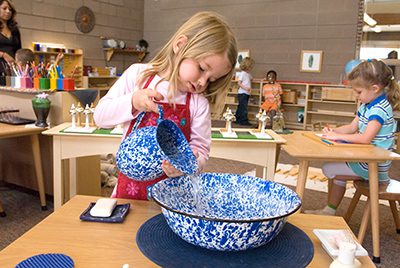
I was observing in a primary classroom the other day when I saw an utterly enthralled four-year-old boy doing the hand-washing work. His hands were in the beautiful blue and white basin, and he was smiling as he turned the water over and under each hand.
Soon, he let out a sigh, which apparently meant he was ready for the next step. He lifted his hands out of the basin, dried them on the towel, grasped the sides of the basin, and went to empty it. But into what? The perfectly coordinated pail was sitting ready for him on the shelf beneath the basin, but it went completely unnoticed. Instead, the boy put the basin back on the table and placed the matching blue and white pitcher on the ground in front of the table. He then proceeded to meticulously pour the basin water into the wide-mouth of the pitcher! No easy task, let me assure you, yet very little water was spilled.
The basin was returned to the table, and he was off like a rocket to empty the pitcher full of water into the sink. He brought the empty pitcher back to the table, set it down, looked at everything for a moment, and then picked the pitcher back up and went to fill it. He repeated this five times over the course of the next 20 minutes. This was apparently very tiring work because, after the fifth trip, he pulled up a chair to the table so he could wash his hands from a reclining position. Oh how I wish I had been filming!
The chair, however, caused some difficulty, because during this sixth recitation, there was a noteworthy water spill. His teacher went to his side and assisted in setting all to right again, including using the pail in the cleanup.
When I spoke with his teacher later that day, she told me that he had just received that lesson before I came into the room to observe. She had given the presentation and then moved off to another lesson.
So how can this wonderful little hand-washing interlude inform our practice? There is no doubt that this child benefited cognitively from this activity. He concentrated for long periods of time, ingeniously solved a problem, built muscle strength and coordination, and exhibited joy at his exertion. But, what might have happened if he had had someone close by during his first recitation of the lesson? What if a hand had silently pointed out the pail at the moment he was seeking a water receptacle? Would this have interrupted his concentration or scaffolded his independent completion of the activity?
As Montessori guides, we are careful never to correct a child; instead, we observe and then re-present a lesson to draw attention to finer points. However, during the child’s first turn (immediately after the guide’s presentation), it can be quite helpful for the guide to stay nearby, so she can not only witness the child’s capacity but also offer hints, just in case the child is truly stuck. Our biggest challenge here is timing… we must wait long enough so the child has a chance to figure it out without us but not so long that the child gives up or loses interest.
Let’s put it in grown-up terms. Imagine that you are using a new app for the first time. Your friend is next to you and knows that swiping left will show you the screen you need. So, she holds her hand next to the screen and mimics the swipe left move. “Oh,” you say and repeat the move to reveal just what you were looking for. What if your friend hadn’t been there? Maybe you would have figured it out, or maybe you would have given up and decided that that app was worthless.
There is this fragile period right after we give a lesson when we are taught to fade and observe while the child has a turn. Learning to fade and observe is at the core of guiding children. Physically we can move back a few inches. This way the child both feels our presence like the warmth from a flame and simultaneously dips his toe into the cool ocean of independence. We are like phantoms, both there and not there at the same time.
But should we step in if the child is floundering? If they are missing something, does it just mean we are offering this lesson too soon and we should back up? If we should step in, then how should we step in? How long should we pause before pointing or hinting?
There is no one answer to how much to step in or step back as we fade and observe. But at all times our behavior is unobtrusive—quite tiny in the big scheme of things. If the child can’t find the object we are specifying in “I Spy,” we can place our hand right next to it. If they are having trouble finding the thicker knobbed cylinder, we can rest our hand ‘inadvertently’ over the thinner ones so they are no longer an option. If the child can’t figure out what to do with his basin full of water, we can place our hand on the pail without saying a word.
We are guarding the child’s concentration like a lioness guards her cubs. Sometimes any action on our part will shatter the child’s focus; other times, a little help from a friend can make all the difference. The answer varies from child to child, moment to moment. But if we observe with acuity and without judgment, we can discern the difference.
I spoke with our hand washer’s teacher again a few days later. Can you guess what happened? The next day he came in and went straight to the hand washing and this time he used the pail. He did the same thing the day after that. On both days, he repeated several times and was able to be completely independent. As it turns out, washing his hands was a minor sideshow next to the main event of filling the pitcher, filling the basin, emptying the basin, and emptying the pail. But he was concentrating deeply on those parts, beaming as he carried the heavy things across the room. He experienced flow, the joy of concentrated effort, and attention. From there, all things are possible.

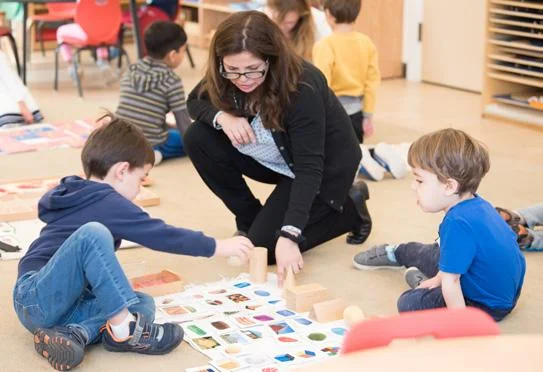



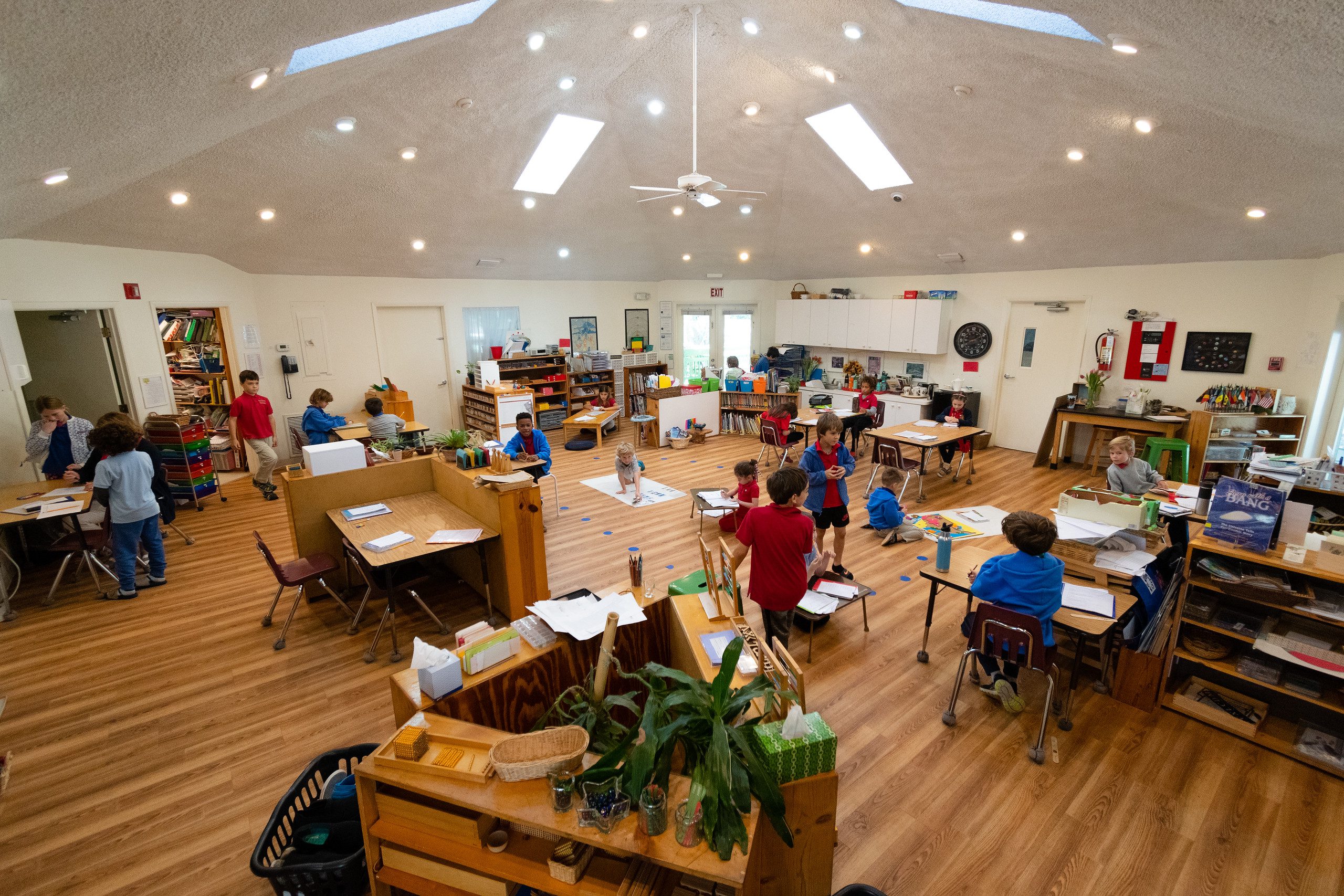
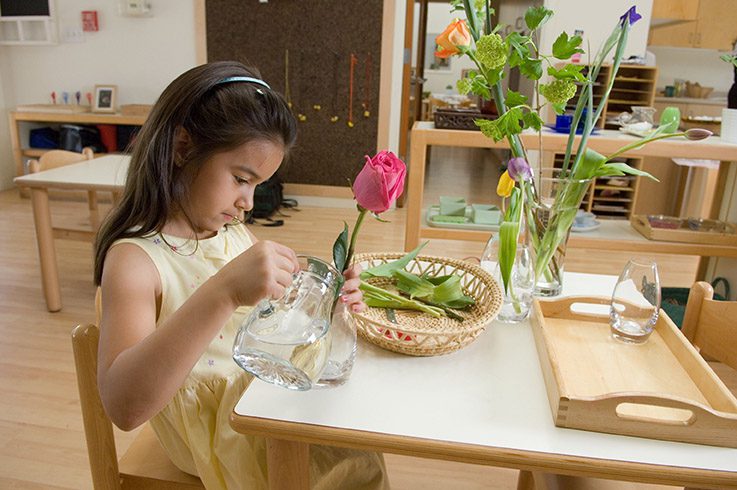

 If you are encountering challenges with a child learning handwriting, look to the order within their mind. If it is lacking, draw the child’s attention to the activities of Practical Life. Help them increase their attention span and concentration by scrubbing tables, washing dishes, ironing clothes, preparing food, sewing, etc. When their Practical Life work becomes organized, you will see the results in all of their efforts across curricular areas.