by Erica Blanco | Communication, Covid, Emotionally Healthy Children, Family Resources, MFA, Mindfulness, Montessori Family Life, Montessori Parenting, TC January 2021
Editor’s Note: Broadly speaking, a dialectic is a tension between two contradictory viewpoints, where a greater truth emerges from their interplay.1
As I write this, I’m sitting upstairs in my son’s room. I hear my one son in his room listening to a webinar, while my other son is watching television downstairs. My husband’s voice and the echoes of his Zoom meeting with colleagues can be heard outside the closed doors of our home office.
 This is apparently the new ‘norm.’ What was initially supposed to be ‘temporary’ has now been our life for almost a year. My kids, who once thought it was ‘fun,’ staying home and having Mommy and Daddy supplement their schoolwork, now find the at-home experience dull, unexciting, even frustrating. I assure you that my degree is not in teaching elementary school-aged children, though I have far more respect for teachers than I ever had before (and it was already high to start with). To acknowledge that I have only two and teachers have upwards of 20 students per class is truly amazing, awe-inspiring, and exhausting (at least from my own perspective). What I have learned from these past several months is that families are truly resilient if we rely on each other, provide each other some room and flexibility, and allow both inter-personal and intra-personal growth to occur.
As a psychologist, I am reminded that I became a psychologist to help people. And, surely, when I went to school, I had not considered that part of helping others would occur in the midst of a pandemic. This whole experience has been new to all of us and has created widespread panic, anxiety, angst, even ‘numbness.’
Some patients have told me they have a tendency to laugh at everything at this point, writing it off as, “It’s 2020. What do you expect?” We all cope differently though these experiences and yet, with flexibility and kindness, we can help one another. I remind my students (who are in graduate school to become psychotherapists) that, while they are providing therapy to their patients, their patients will remember them as helping to shape their resilience in the process. While we may be ‘small’ in scope, we are nonetheless powerful in our impact.
I am reminded of a personal experience at an emergency veterinary hospital. My poor kitten, Rascal, was extremely ill with, what I later learned, was diabetes. The doctors told me that he would not likely make it through the night but asked that I stay for a few minutes as they attempted to revive him. As I sat in the waiting room sobbing, a stranger saw me. She gently asked if she could sit with me and expressed that she, too, had been through something similar. She put her arm around me, a comfort, and told me that my feelings of sadness and loss were perfectly appropriate. With loss, there was (and is) also love. While a pandemic is certainly not akin to my personal experience, what stays with me is the caring gestures of a stranger; I never even learned her name. What I recall, in that dark moment, was the care and connection that helped me get through such a lonesome and painful moment. In retrospect, I can see that caring and connection were both occurring at the same time as loss and pain.
I was asked to write this article to explain how to understand that working with situations of opposing feelings/thoughts can lead to a better, third option. Right now, we are all suffering with anxiety, loss, and grief. At the same time, we all share a common reality (i.e., “We’re all in this together,” which can provide some comfort when we use it). Without a concrete end in sight, the greatest gift we can give each other is hope and comfort.
Several years ago, I attended a week-long course in Dialectical Behavioral Therapy (DBT), by Dr. Marsha Linehan.2 I have since attended numerous other trainings in the same modality of therapy. One thing I love about DBT is that it truly can be applied to such a variety of individuals and has shown efficacy in a wide variety of populations. I also find that, as a clinician, I often turn to many of the principles that are taught by Dr. Linehan, not solely with self-care, but also with helping teach my own children some of the interpersonal skills, emotion dysregulation,3 tactics, coping mechanisms, and learning how to tolerate distress. Most importantly (at least in this very moment), I also find that the emphasis on mindfulness is even more important than ever.
What does this mean for us? It means that by practicing some of these skills, we can begin to experience better self-awareness and grounding. We can cultivate relaxation, growth, and ease. We can learn to be better communicators and, quite possibly, better versions of ourselves. One of the hallmark tenets of DBT is the recognition that, in life, there are dialectical ‘tensions,’ in which multiple opinions can be simultaneously true. As we know, at any given moment, we are doing the best that we can, but we also know that we can strive to do better: dialects that we experience all the time and those that are especially important at this time.
Here are some of the basic components of DBT:
Mindfulness: Mindfulness is being present, fully present, in the moment. Not wishing for things to rush forward and not fixating on the past—after all, there is nothing that we can do to change it. But, we can learn from it, right? So, what are some ideas for mindfulness—ones that we can do in the safety of our own homes?
- Cook.
- Play board games.
- Write a book (and have your kids ‘animate’ it)
- Make s’mores outside.
- Take a bubble bath.
- Read together.
- Rollerblade (we have brought this back from the 90s, and I can certainly say that my skills are not nearly as good as they used to be—but, let’s not judge).
- Color.
- Paint.
- Eat dinner—and really sit and talk (no electronics).
Learn how to better communicate your wants, desires, and goals. We are particularly good at saying yes to everything and anything. But, what about if we don’t want to actually do everything?
We have learned to be a distracted society (always doing a million different things). Stop being on autopilot and check back into your lives. Your kids will thank you! And, you will, too. It is common to become distracted. Try not to judge yourself; simply check back into the activity you’re doing. It is OK. Even those of us who have been practicing for years can become easily distracted!
Interpersonal Skills: Learn how to better communicate your wants, desires, and goals. We are particularly good at saying yes to everything and anything. But, what about if we don’t want to actually do everything? We’re just saying yes to be the people-pleasers that we have learned to be? When we’re sitting at your computer at 9 pm and the kids are asking for the millionth time, “Mom! Come tuck me in!” It’s easy to really begin hating what you’re doing because you’re tired. Exhausted. Overwhelmed. Every part of you wants to cuddle in bed and listen to lullabies, putting your kiddos to bed.
So, resentment builds. But, who is the real source of our anger? The boss? Sure. How do you justify anger if you are your own boss? But, really, we need to learn to say no to the things that don’t enrich our lives and say yes more to the things that we really want to do. Trust me, you will want to make time and be more motivated to do those things that really mean yes to you. We need to learn how to self advocate. We need to learn the art of negotiation. We need to teach our kids that it is okay to be selfish at times, as long as we are selfless at other times.
Emotion Dysregulation: I love this term: dys—not; regulation—maintaining stability. Think of a toddler. You’re in a grocery store and your toddler asks for the M&M’s in the check-out line. Oh no. You politely and quietly say no. Then you try to reason with them (bad idea). Then you get louder (stand your ground—another bad idea). Then they’re shouting and you are shouting and turning beet red. You are not happy and your toddler is not happy. And, your first instinct is to bolt.
Second scenario. As a psychologist, teacher, or parent, perhaps you’ve been asked to speak with a young person who seems to have serious behavioral issues. Your task is to try to help ‘problem solve.’ You provide him with a possible scenario that “someone takes your jello at lunch.” How do you feel and what do you do? Truth be told, the “appropriate” answer is to “speak to the adult monitoring the cafeteria.” The answers I have been given include:
“punch them in the face, steal it back, kill them.” Clearly, these are not appropriate responses, but it tells us a lot about how this particular person has ‘learned’ to function. A different person given a similar scenario, might internalize and binge eat ice cream (another problem, albeit a form of ineffective coping). Some have learned (appropriately so) to share how that makes them feel. But, what about when the tension escalates? What tools can we use to respond to this feedback?
- Learn to understand our emotions. Fear=concerns that something will be taken from us; anxiety=us not having control over what we know or desire to be ‘true.’ Anger=feeling unheard, feeling belittled, being treated in a manner that we don’t feel is right. Let’s learn to identify what we are feeling and and what happened that led us to these feelings. Once we uncover the real ‘feeling,’ not the surface, we can start to treat it appropriately.
- Learn how to accumulate positive experiences by building in little things that we know we enjoy or expect to enjoy. For example, after working for three hours, I’m going to give myself a little reward (e.g., coffee, walk around the block, play with the dog).
- Build mastery. Learn a new talent and master it. A dear friend of mine in her 60s just decided that she is going to learn to play the guitar. She has learned one song thus far in the last six months. I think that’s awesome; we can all learn and get lost in it. You do you!
- Anticipate a coping strategy. if you know you will be in a stressful situation, what will (and can) make it better and more manageable? Bring a book, listen to a podcast, plan something fun after.
- Finally, Distress Tolerance: This is a hard one and should not be considered “tolerance /acceptance.” We are all going to experience distress, and we can all learn how to cope to the best of our abilities. Tolerance does not mean that we have to like it, either; however, given that there is much of life that is out of our control, we must do with it what we can. This reminds me of the film Life is Beautiful. This movie reminds us that, even if the midst of horrible situations, much can be changed by how we perceive it and what we make of it. (This, by no means, suggests that what is happening is not deplorable.) So, what are out options?
- Improve the moment: If the electricity goes out (and it is temporary), let’s have a flashlight read-along. If things are stressful, let’s pause and figure out what (in this moment) can make things a little, even if is just a tiny a morsel better? If I have to wait longer at a doctor’s appointment than anticipated, can I read a book that I’ve been wanting to read for a while? If I get, oh, let’s see—locked into my house with my kids for ten months—can I be grateful to have this time with my safe, rambunctious kids? And, then, play games? Rollerblade? Read? Give them time to be kids while I get my time adulting? Learn how to cook something? Learn knitting with them or making a million friendship bracelets?
- Radical acceptance: I am not only going to accept what is happening, but I am going to put my all into it. So, if I’m going to stay in my house for this amount of time, I am going to redesign my living room. I am going to give back to others if possible. I am going to accomplish all of these things that I have wanted to do for some time. I am going to allow my feelings to upset me for only a short period of time and then I’m going to bounce back. Further. And, higher.
- Change of atmosphere: If I’m really feeling deflated and as though I am going to crumble, I might change my atmosphere drastically. I will go running and increase my adrenaline and give myself a runner’s high. I will go shower in ice cold water (hey, it will take your mind off things). I will hold a piece of ice in my hand (which we have done in psychiatric hospitals) and I promise, you will feel different things. Sometimes we have to, quite literally, change our physiological response to stop ourselves in our spiral. Hit the ‘reset’ button, if you will.
- Self-soothing: I will relax in a bath. I will make cookies and smell the aroma. I will wrap myself in a cozy fleece blanket. I will go outside to fresh air. I will listen to quiet, beautiful music.
- Practice gratitude: It’s human nature to compare ourselves to others. But, is it really helpful? The reality is that the more that we try to grow into who we want to be and give it time, patience, and respect, we will become that person. Our past helps to shape us. Often, the very things we perceived as being ‘bad’ were huge growth opportunities that eventually helped us to feel better. Ask yourself: In five years, will I be proud of what I did or how I acted? The reality is, we could all use a little more appreciation, kindness, and flexibility (even applied to ourselves).
I have used some of these DBT skills on a variety of individuals, myself included. I have seen the beauty of DBT and how people benefit so greatly from it. There is a philosophy that you cannot and should not ‘make’ people, who are willful (i.e,. stubborn, unwilling, non-motivated) do things that they do not want to do. However, with time and exposure, seeing others feeling content—even happy, people often learn that they, too, want to be happy. So, as Dr. Linehan would say, “Let me know when you’re ready, and let’s go together.”
Remember, you are not alone… For more on DBT, consider reading Dr. Linehan’s books (see below). They just might change your perspective.
1 Reidbord M.D., S. (September, 13, 2019) “Dialectics in Psychotherapy,” psychologytoday.com
2 Marsha M. Linehan (born May 5, 1943) is an American psychologist and author. She is the creator of dialectical behavior therapy (DBT), a type of psychotherapy that combines behavioral science with Buddhist concepts, such as acceptance and mindfulness. en.wikipedia.org/wiki/Marsha_M._Linehan.
3 Emotional dysregulation is the clinical term used to describe an emotional state that is difficult to control, including unhealthy patterns of emotional coping, a predilection toward outbursts of emotions, and an inability to or a struggle with expressing emotions effectively (if at all). (August 28, 2020) www.betterhelp.com.
by Kelly Krueger Thomas | Early Adolescence (12-15), MFA, Montessori Education, Montessori Family Life, Montessori Parenting
In this interview, with Kelly Krueger Thomas, Host and Founder of Ingeniousbaby.com, Tim Seldin, NewGate Head of School, President of the Montessori Foundation and Chair of the International Montessori Council (IMC), shares what we can all learn from the Montessori approach and its nurturing of creativity and inventiveness.
Montessori school alumni include Google’s founders Larry Page and Sergei Brin, Amazon’s Jeff Bezos, Wikipedia founder Jimmy Wales, not to mention Julia Child and rapper Sean “P.Diddy” Combs, making it appear that the Montessori educational approach might be one of the surest routes to joining the creative elite.
You can view the video interview of this transcript at: https://ingeniousbaby.com/interview/what-is-montessori/
Kelly: Hi Tim. I am so happy to have you here. I am a big fan of Montessori. Both of my kids go to an AMI Montessori School here in California and I’m also a big fan of your book, which I use with my children, it has some great activities. I’m hoping you can tell us what exactly Montessori is.
Tim: Montessori means many things to many people. It’s best known as a system of education, but it’s really a movement and philosophy of life. Its mission is to change society to create a more peaceful world that’s oriented to partnership. But in terms of education, it is a strategy that says let’s look at what we know about children from a scientific perspective. Let’s attempt to consciously do what can be shown to work best.
What we know about children is that they are all different. They learn in different ways. They have different personalities. They grow in different ways. The idea of teaching one thing to an entire class is really rather illogical.
Montessori is first designed for differences. It’s designed to support each child as an individual. It’s designed to be incredibly respectful and child honoring and is designed to follow the child as they develop from birth, ideally, all the way through high school and beyond.
Kelly: You hear about all kinds of famous people who have Montessori backgrounds, like the Google founders and famous musicians. I think there are a lot of schools that call themselves Montessori; there’s AMS Montessori, there’s AMI Montessori. What are the differences? Are they all considered true Montessori?
Tim: Montessori is a movement and it’s not copyrighted. There is no central authority. It’s not a franchise. It’s something that can be studied and defined by research. We know what authentic or fully implemented Montessori is. But individual schools can’t help but be themselves. Their programs, their approach to life is created by the nature of the founders, the nature of the teachers they hire, the culture of the parent body, and the culture they live within. It can have somewhat different faces.
To think that it is simply AMS or AMI is a serious mistake because, while there are two large organizations, the American Montessori Society (AMS) and Association Montessori Internationale (AMI), the reality is those are only two of hundreds of Montessori societies. In this country, there’s give or take around 13 Montessori societies. I happen to be the chairman of the third largest: The International Montessori Council.
I started in AMS. I’ve worked with hundreds and hundreds of AMI schools. What I can say to you is that you have to look at the individual school and ask, “Does this school fit my understanding of what Montessori should be? Is it a good match for me? Is it a good match for my child?” I can’t really get too caught up in brand loyalty, because one Montessori school will be somewhat different from another. Truthfully, we all have more in common than we have differences. The differences are usually pretty minor.
Kelly: What are some of the differences?
Tim: I think the major differences you’ll to find in one school versus another are not based on the brand, but rather on how faithfully this particular teacher, this particular school, is implementing Montessori.
This is what a parent should be looking at when they’re thinking about a Montessori school for their children. They should be asking, “Do I find the following things? The first thing being, is every class led by a fully qualified Montessori educator?”
Now this is usually a graduate-level course of study that will typically take between one and three years. There are different brands, but as long as they’re all MACTE accredited, which would include AMI, AMS, IMC (the group with which I’m connected), or any of the others. As I mentioned, there are 13
organizations in the United States.
As long as they’re accredited by the US Department of Education’s recognized accrediting body, the Montessori Accreditation Council for Teacher Education (MACTE), that’s the first definition of a fully trained Montessori teacher.
By the way, more children in a Montessori class is better, because the larger the class, the more children will tend to learn from each other. The best teacher of a child is another, somewhat older, child. It’s the community of children covering a three-year age span that makes it work. Usually, Montessori classes will have between 20 and 30 children to two adults from the children’s house (ages 3 to 6) level and up.
But in these classes, children learn to be basically self-regulating. They make choices and they go through the day with a very quiet hum. It should almost feel like uncanny silence, but it shouldn’t be the silence of the teacher running around going, “Shhh, shhh, shhh.” It should be coming from within the children.
Kelly: Montessori teaches kids to learn how to think and develop their self-internal, intrinsic motivation.
Tim: I like to think of Montessori as being based on four pillars. Those pillars are first, a voluntary passion for excellence, the desire to do things, not just to win, not just to be the best in the class, but simply because we really care about our work. It’s not just something we do to get a paycheck. We do it because it defines who we are. The passion for excellence that Tom Peters wrote about years ago in his bestselling book, In Search Of Excellence, is very much connected to the entrepreneurial spirit of Montessori, whether in a young child or in a Montessori adult.
The second pillar is the idea of internalizing a set of universal values, not just hearing them in chapel, not just having them parroted back, but literally learning to live in such a way that you follow the rules because it’s the right thing to do, not what’s in it for you if you obey and what could happen to you negatively if you disobey. That just invites a child to ask, “Am I willing to pay the price or do I think I’m going to get caught?”
There are universal values: nonviolence, integrity, empathy, compassion, peacefulness that we teach in all good Montessori schools.
The third pillar I would suggest is the idea that we want our children to be global citizens and to have a real sense of global understanding. Every Montessori school is an international school.
We think they need to know their family story, your country-of-origin story, the nature or a story of the community in which they’re living at this time and place. They need to be rooted in the understanding that they don’t live alone. They’re connected to all of humanity and all of life. They have to think globally, not just about the moment, about this quarter’s bottom line, but about the good of the long haul, about the generations unborn.
The fourth is the idea of service, service to others and self-service, taking care of yourself. You might think of everything in this as balance, but it tends to produce entrepreneurs, not the typical drudge or the child who burns out by the third year of high school or the third year of college. Usually, these are kids that just keep going and never want to retire because they’re having too much fun doing what they’re doing.
Kelly: Does Montessori work for all families and all types of kids?
Tim: Well, it’s not that it wouldn’t work. I think a better way of understanding it, Kelly, is it simply may not work because, ultimately, the parents are the captain of their child’s fate. They are going to decide what they feels is best for the child.
As type-A personalities, what many parents want is something that’s going to make their child do more, faster, as if it were a race. I think that’s a very misguided approach. It leads to a great deal of the anxiety, depression, and mental illness that we’re seeing in the world around us.
Montessori is not a religion; we don’t believe that we can, or should, try to convert people. We try to find families who are going to love us for what we are. Part of our message is that we create conditions in which children will develop at their own best pace in their own best way. What we’re really going to focus on is character, kindness, compassion, and an openness to learning, a sense of wonder.
Kelly: You’re saying that it’s best to start when the child is three. What about people who keep their children home until later? Are they missing any key things that happened in the earlier years?
Tim: The earlier children enter Montessori and the longer they stay, the deeper the impact of Montessori is likely to be.
We encourage parents to enroll their children as young as possible; as close to birth as we possibly can. This is not because we’re going to teach them to read and write and do four-digit arithmetic earlier. That might happen, but when it does, it is a by-product of Montessori. We all want our children to become the very best people they can become. In Montessori, it’s easy to create those kinds of communities with children who are toddlers or age three, and sometimes age four.
If you just want to think of it from a curriculum perspective and that’s, in my opinion, a very small part of it, there is so much to learn in a three-four-and five-year-old class. Children entering Montessori a year or two late, will normally be well behind most of the other children. However, that doesn’t mean that the older child can’t enter a Montessori school at five or above, catch-up, and benefit greatly.
We start where children are and keep building from there. In Montessori, we call it ‘learning how to learn.’ There are things that you can learn at age three that change you for the rest of your life. The same thing is true of a child who starts even younger at age two.
It isn’t about core knowledge. It’s not about reading and writing and arithmetic. It’s what is now being called ‘executive-function’ skills. It’s eye-hand-coordination. It’s vocabulary. More than anything else, it’s a sense of self.
Children are learning all the time. The question is whether the messages they’re receiving, the things they’re learning are destructive to their long-term ability to learn; whether it’s sowing seeds of self-doubt, worry about whether you’re smart enough, fast enough, wealthy enough, whatever. Most humans are filled with self-doubt about whether or not it’s okay to make mistakes, but humans make mistakes all the time. It doesn’t mean that we should encourage kids to spell things wrong or get mathematics problems incorrect, but we have to teach children not to be afraid—to try to teach them that they can do it.
Kelly: I’m wondering if you could talk a little bit about the misconceptions people have of Montessori.
Tim: One of the most basic is that Montessori is a brand name like Chick-fil-A, and they expect every Montessori school to be the same. At the Montessori Foundation, we get calls and emails every day asking, “How do I know whether I have found a real Montessori school?” People will ask, “Should I go AMS, AMI, or IMC?” and you’ve already heard my answer there. To me, that’s silly to think only in terms of these brands because if you take five schools, they will not be the same. They’re different.
Instead, let’s ask, “What is Montessori supposed to be? Do you find it in the school you’re considering for your child? Frankly, is it good enough? Because no school is perfect. As a parent, you really have to be an unusual person to choose Montessori for your children. I mean, we can talk all we want about the Google guys and the founder of Amazon and all the other famous Nobel laureates and so forth that went to Montessori.
When you’re sitting there looking at your child and another parent says, “Well, Kelly, your child’s reading, but my child’s not, so something’s wrong with my child. She’s clearly not right for Montessori. She needs more structure. She needs to be pushed. I need to send her elsewhere.” Lots of people think like that and there’s nothing we can do to change them. Parents ought to be asking themselves this question, “Is Montessori right for me?”
The other thing with this, by the way, is competition. A lot of people think Montessori as opposed to competition. We’re not. We simply say competition is rather silly. When you’re trying to motivate children to learn, they’re going to compete with each other naturally.
They don’t need outside adult interference. Instead, let it happen naturally. Let them learn about the real consequences of the real world step by step. At three, four, and five this is silly. It’s not the way it works or shouldn’t work. Any school that’s playing high stakes testing with three-, four- and five-year-olds really ought to be thinking about what it is doing.
Kelly: What is the most important thing in the first plane of development, like zero to three? What should a child be exposed to or doing? I think this book had some amazing stuff for the early years, I referenced myself, but if you could just talk about a couple of things that are really important.
Tim: Well, in the first three years, a child is going from infancy through the toddler years. Many of us call the toddler years the ‘terrible twos.’ I would suggest to you that they don’t need to be terrible at all. They can be the ‘terrific twos.’ What children are doing at that age is they’re beginning to become independent, beginning to get control of their bodies. They’re beginning to get control of their emotions. They’re beginning to learn how to operate in society.
A lot of it has to do with the neurological development of the brain, learning how to make their body work. Much of what we do from birth to three is teaching language. We’re helping kids to communicate their thoughts.
We’re teaching them to be part of a group. We’re teaching them how to make their hands work, which you might call fine-motor movement. We’re teaching them how to move about the environment and not bump into and drop things. We’re also teaching them a work cycle, how to select something from the shelf. They work with it typically on a table or on a rug; many of us use small rugs to define a work area.
We’re going to teach them how to do things for themselves because the goals, of course, are to be able to operate throughout the classroom on your own, to prepare your sleeping mat, to get food when you’re hungry. You’ll often see things that you could buy at Pier One or stores like that, little cheese plates that will break. They’re not made of plastic. You find little forks and knives that are their size, little glasses that fit in the hand of a toddler, and they will prepare their own food when they’re ready.
We use very lightweight tables. All our classroom furniture is within the ability of the age range of the class to move around the room. The whole idea is to assist the development of the dignity of the child.
Kelly: I know that you want everything to be real life. What’s the harm of, say, someone who wants to go to Disneyland or let their children see Frozen, the movie? Tell us about the philosophy on those princesses and things like that.
Tim: Well, there are several issues. One of the most basic ones is that young children don’t need any help with fantasy. They have it down pat. Children come into the world just filled with a natural tendency to make-believe. They don’t need to visit Walt Disney for that. It will happen all over the world, naturally.
What they need help with is learning about reality. It’s not that fantasy is bad, or that we would tell a parent, “Don’t ever do that.” What we say is to help them learn how to manage things that are real. Many toys and movies are meant to distract and entertain, but they’re not connected to reality.
What we’re trying to do is to teach people empathy and understanding of reality instead of having everything be ‘cartoonish.’ That’s number one.
That has to do with independence and to know the difference between a cartoon that shows people flying and what really happens if you jump out of a tree.
The second is that many things children experience are created by big business and designed to turn children into consumers. We could get a really interesting conversation going about the true stories of princesses hundreds of years ago and how the middle class, the working class, and the peasants felt about princesses and princes.
Today we’ve turned that into fantasy land to sell toys, cereals, and everything else. Is it horrible? No! I mean, my children enjoyed Disneyland. I just think that we need to remember the kids don’t need a lot of help with the fantasy part. They’ve got that.
Kelly: Where can people go for more information about Montessori in general, if they wanted to read and learn more about the philosophy?
Tim: Well, anyone could Google Montessori and they’ll come up with probably 300,000 websites.
by Cathie Perolman | Early Adolescence (12-15), Family Resources, Free Reads, MFA, Montessori Family Life, Montessori Parenting, Montessori students, Parenting on the Same Page
No one will ever know your child like you do, and you see aspects of your child that no teacher ever will, but the reverse is also true. Your child’s teacher sees aspects of your child that you may never get to see. Your child’s teacher sees him as he is learning to be part of a group. She gets to see how he handles himself when interacting with others, negotiating social challenges, responding to class directions, and navigating school life and shared physical space. All of these things require different skills than being part of a family, and sometimes educators and caregivers find areas of developmental concern.
It is so exciting and such fun to watch your child change and grow! But, as new parents, what is typical may be hard to know. There are so many aspects of development to think about, physical (gross motor), language, social, fine motor, and academics. Each has a timeline for typical development, with variations for individual children. Most will develop naturally. In addition, their progress is monitored by their pediatrician as well as their educators; but sometimes, a teacher needs to share a concern with a parent that is difficult to hear.
It is during these times that parents might consider where a teacher’s expertise is different from their own and from where the concern is coming. Teachers can see where an aspect of your child’s development is ‘right on target’ or maybe even slightly ahead of the curve and where your child may be lagging behind his peers slightly, moderately, or, significantly. It is this expertise that guides a teacher to decide when to wait and see, when to make changes in the classroom, when to modify expectations, or when to ask for assistance outside of the school.
When facets of the classroom seem difficult for a child, a teacher generally seeks to understand why and try to help the child build the necessary skills to grow that area of himself. Until that happens, the teacher may make accommodations for the child.
When facets of the classroom seem difficult for a child, a teacher generally seeks to understand why and try to help the child build the necessary skills to grow that area of himself. Until that happens, the teacher may make accommodations for the child. An example would be a child who has difficulty sitting on the circle without touching others. That child may have a pillow to sit on to help him understand his personal space. A creative teacher is always looking for the best way to help children be successful with the least amount of intervention. We would expect to see growth from these types of interventions and that the child would need them less and less as time passes. If this is not the case, perhaps it is time to seek more information and support from a specialist. Specialists in motor skills (occupational therapists), speech and communication skills (speech language pathologists), and behavior (child psychologists) can offer specific recommendations in many areas of difficulty, as well as offer suggestions and support in growing the challenging area(s) for the child.
A teacher seldom seeks outside intervention or evaluations as a first resort. When outside assistance is recommended, it is always after multiple other strategies have been considered and implemented. When these strategies are not effective, the teacher seeks out referrals from the best support system that she thinks can help the child succeed. Frequently, the search begins with an evaluation. These are often specific to the area of difficulty, although if she feels the child is having multiple challenges, a more overarching neuropsychological evaluation may be recommended. The specialist will look at the child and his skills, comparing them to other children his age as well as his skills in other areas of his development. They will look to see if a child’s skills are developing on par with each other.
With a specialist’s evaluation, a decision is made about whether or not to offer this child (and this family) any support services or further testing. The best course of action may include exercises the family can do at home together or interventions the school can put in place. They might include sessions with a speech therapist, language therapist, occupational therapist, behaviorist, child psychologist, nutritionist, or an academic tutor. I always find it interesting and important to remember that each of these therapists and professionals generally agree that testing intervention and/or therapy at an earlier age is best and most effective, as children’s brains are the most pliable when they are young.
Parents always want to do what is right for their child. Even with the knowledge and genuine belief that your child’s teacher has his best interest at heart and believing that the teacher has the educational credentials and experience to suggest outside evaluation or testing, this information is difficult to hear.
Some parents find it helpful to talk with others who have dealt with similar issues involving their own child. Some parents simply want to follow the teacher’s advice and not share their child’s issues with others except their spouse. Still others simply need a bit of time to process this new information. Parents should not be shy to ask more questions if this subject arises. It is a teacher’s and a school’s sincere desire to help your child succeed in all aspects of life that necessitates a teacher to make such a suggestion. Accepting this information in the spirit in which it is given may help parents through this important phase of childhood education and development.
by Margot Garfield-Anderson | Family Resources, Health / Nutrition, MFA, Montessori Family Life, Montessori Grandparenting, Outdoor Education / Resources, Practical Life, Science
Not all Montessori schools run summer programs, but with some careful planning, you can keep your children fully engaged in learning and maintaining skills without having to micromanage them.
Over the years, we’ve gathered lots of ideas from lots of places. We’ll just list a few of them here with some guiding principles to keep it in the ‘Montessori Way’ of parenting.
Picking Produce
Many local farms have all-you-can-pick opportunities, and some even have hayrides, petting zoos, educational programs, or festivals to enjoy. Check to see what’s available in your area. Children love being outside, connecting with the earth. Families can easily make a day out of this activity. One big consideration for my family is the subject of pesticides. We try to find organic farms. If not, we highly recommend you very thoroughly wash and dry your purchases with a natural product designed to help remove some of the residue.
Casually engage children in a discussion of the seasons. See if the farm offers any small talks for children about the crop being harvested or cooking classes, and have a plan for what you are going to do with your pickings when you get home. Depending on the age of the children, vegetables can be roasted, blanched and frozen, cleaned and eaten raw, or put into soups or stews to be put away for cooler weather.
Fruits. Just thinking about all the summer fruits makes your mouth water. Of course, being able to eat fruit and vegetables fresh off the vine or tree is the best way to enjoy, but cold summer fruit soups can be delicious if some of your pickings become a bit too soft to use. When my twins were infants, I took that fruit, milled, and pureed it and then froze it in small batches. I did this with vegetables as well.
Strawberries, blueberries, raspberries, and blackberries are delicious if you place on a baking sheet, separated out and then frozen; same with grapes. Children love to eat frozen fruit on a hot summer day, and berries are super-fruits!
My daughters, now mothers to my four adorable granddaughters, plant summer gardens each year. The girls tend the garden by watering and weeding. They check the plants all through the growing season and delight in showing me the progress when we Facetime. My youngest, Harper, LOVES basil and eats it as soon as it’s ready. Little cherry tomatoes are a universal favorite for all my girls. Allowing young children to tend to their plants gives them an introduction to the cosmic nature of all living things, a responsibility for a living thing, and opens up discussion topics to keep them engaged.
Sand and Water Play
For those fortunate to live near a beach or lake with shorelines, you already know how much children enjoy this kind of outing.
Building sand castles can turn into short little lessons on geometry or discussions about ancient castles and how long they took to build. Building or playing during the tides can turn into short discussions about the effects of the moon on tides. Hunting for shells introduces some zoology if you know what animals live in the shells. Beach shops usually carry those beautifully illustrated or photographed books that can help you and your children make identifications. Of course, we discourage any collection of shells still containing their inhabitants.
Our grandchildren don’t live near this kind of body of water, so they had sand tables and did lots of table washing and water painting on all the surfaces (my feet usually prime targets) with both brushes and sponges. Children love to squeeze sponges, and this is a great way for them to develop strong grips. For younger children, table washing is one of the first practical life lessons at the primary level. Table washing is great preparation for writing. It also helps develop hand/eye coordination, and an extra benefit is that your outdoor furniture can stay nice and clean if you let them enjoy this activity.
Woodworking
Children love to use tools. Many schools introduce woodworking with young children using real tools made for smaller hands. There are easy kits for those that don’t have the skills to create their own, and there are many projects on websites, such as Pinterest, for more experienced builders. The important thing to remember is that parents let the child actually do the work with you, making sure to follow safety protocols. Try to estimate how long a project might take so that it can be segmented into intervals that will hold their attention and are geared towards their level of handling tools. Talk about the different shapes and angles the pieces have to reinforce geometry. Try letting them count the pieces, read the instructions (if they are old enough), or figure out directions from the pictures for younger children. Talk about the scale of what you are building to reinforce some concepts such as big and small; tall and short; hard and soft; the kind of materials, e.g,, metal or wood, etc,). Besides having a great experience with your children, you are aiding them in keeping up on skills learned during the school year, along with some new ones.
Family Drives
Need to be in the car with your children on a long drive? Don’t want to simply hand them a device to lock them into for countless hours of mind-numbing screen time? It might feel a bit old fashioned, but my dad and I searched for license plates from different states. We had a map of the US and stamps with sample license plates. When we both spied one, I put the stamp on the state. Then we’d count how many were able to spot. We’d be listening to classical music on the radio, and he’d tell me the story of the music. Not only was this precious and special time with my dad, who was on the road much of the week, it reinforced my love of classical music that I value to this day.
Not into license plates? Try having your child be the navigator using a paper map or compass? These are great almost lost skills for anyone to have.
Have them read road signs. One summer I challenged my granddaughter to an hour of reading every day. She was huffing and puffing over this, but when we added up all the time she was in charge of reading any kind of instructions for recipes or art projects, road signs, or directions on a map along with some book reading, she was shocked that an hour or more was achieved without her even realizing.
Rainy Days
Summertime isn’t all sunshine time. What to do on rainy days? My go to is always the public library. I take my girls to different locations so they don’t get bored. Libraries often have all kinds of free or very low-cost activities for children. Story times, craft projects, movies, games, etc. Check in with your library for their schedule. And, of course, let children pick out some books to bring home. Many libraries have bookstores where you can purchase used books for pennies on the dollar. Children love counting out the money and choosing a book for themselves. Lessons in money are important skills to help children learn to budget and understand the bigger picture of using money.
Children’s Museums
All my girls grew up going to museums. I was an art major in college, and sharing my love of art with them was important to me. As a child, my mother took me to museums, galleries, and art events at a very early age, and it was always the highlight of my time with her. Many museums have free or low-cost activities for children. Look online for these kinds of events and use them as your rainy-day experiences.
Supermarket Shopping
My youngest granddaughter used to LOVE going food shopping when I was visiting. I let her pick out the fruit and vegetables and put them on the scales to weigh them and print out the labels. We’d always stop at the fish counter, where the live lobsters were kept. The people behind the counter loved to take out a lobster and give her a short lesson on the life of a lobster. When we got home, we’d cut up a plate of rainbow-colored fruits and vegetables for our snack. When children are engaged in the process of food selection, they are more apt to be willing to try a variety when offered.
Summer Holidays
Between Memorial Day and Labor Day, some of the most important holidays in American history take place. It’s easy to just say it’s another day to party or day to wear red, white, and blue, but sharing the important of history with children is important. Towns and cities usually host events that celebrate with booths that have all kinds of related activities for children. Pinterest can also help you find some fun projects. Baking a cake and using sliced strawberries and blueberries as the stars and stripes on the American flag is a great way to review counting and recounting the story of American freedom. Our story of obtaining freedom is one all children should remember and since the 4th of July falls right in the middle of the summer break, it’s a great one to use for some civics lessons.
These are just a few of the ways parents and grandparents can help them retain skills learned during the year without too many power struggles.
by Jacob Bilba | Family Resources, Kindergarten, Language & Reading, MFA, Montessori Education, Montessori Family Life, Primary (3-6), Reading
Surprisingly, doing these simple things during story time can make a big difference (Ages 4-10).
Your children probably have a few books that they ask you to read to them over and over again. While re-reading books provides opportunities to help your young reader develop important reading comprehension skills, it can also sneakily improve your child’s spelling skills (but you don’t have to tell them that!).
When reading aloud as a family, early childhood educators stress that the first read should always be for pleasure and about your child engaging with visuals, hearing your tone and expression, listening to how words sound together, and making meaning of the story.
“I like to have my students focus on just enjoying the first time the book is read aloud,” says Lesley Burnap, a second-grade teacher in Massachusetts, adding that she may encourage her students to make predictions about the plot, setting, and characters.
You can then use subsequent readings to follow the five savvy tips below for spelling success.
1. Embark on a Letter Search
To help children ages five to eight work on spelling, encourage them to identify letters in the book’s title, or search for words that begin with a specific letter on a page, says Burnap. With younger children, point out words that begin with the same letter as their name.
“Preschoolers love learning about their world and their place in it,” says Burnap. “Looking for the first letter of their name, or of someone else’s name in their family, can be a game to gain familiarity with letters in the text.”
Try this with: The Word Collector. The extraordinary tale from Peter H. Reynolds is perfect for a letter search because many words throughout the book are emphasized by their size or color, making it easy for kids to find familiar letters. What’s more, this perfectly whimsical and inspiring story is about the magic of the words all around us.
2. Show Your Child What a Difference a Letter Can Make
You can also reinforce spelling in children ages five to eight by incorporating rhyme play during read-alouds. Show your child how changing one letter—for instance, the first letter of cat, bat, sat, and hat—has a huge effect on sound and meaning.
This is effective because it engages your child’s senses (both visual and auditory) and shows them the role individual letters play in the formation of words, providing a foundation for strong spelling skills. You can add a tactile element by encouraging your child to trace letters with their finger or by using wipe-clean books!
Try this with: How Do Dinosaurs Love Their Dogs? This lovable rhyming book from the How Do Dinosaurs…? series shows your child how changing a letter can change meaning! It is all about how dinosaurs give their dogs a soft rub in the tub. It’s about how they throw their dogs a ball, and reward them when they come to their call. It’s not only great for teaching spelling skills, but also responsibility.
3. Match Words to Pictures
Connecting printed and spoken words to visuals also helps kids better grasp meaning and context, which will in turn help them become better spellers. “You want children to be able to retell the story using vocabulary from the text, so look for the names of characters or words that you can match with pictures in the book,” says Burnap.
Try this with: Brown Bear, Brown Bear, What Do You See? The ultimate practice in pairing descriptive words with images, this classic rhyming book lets children match words on a page with the image they see. It also challenges them to predict what the image on the next page will be, based on the words they see.
4. Give Context to “Mystery” Words
When you come across a word your child doesn’t understand, Burnap suggests giving a simple explanation before continuing to read. Having a children’s dictionary handy can be a great tool for more established readers ages eight to ten after story time. Once you finish a read-aloud, ask your child if they’d like to look up a particular new word. If so, discuss the word, its definition, and how it is used within the story (and elsewhere).
Try this with: Harry Potter and the Goblet of Fire, Illustrated Edition. This lavishly-illustrated edition of J.K. Rowling’s beloved fourth Harry Potter book will teach your child rich new vocabulary like beadily and exasperation while still capturing and
holding their attention with a visual representation of the world of magic and the Tri-wizard Tournament.
5. Encourage Your Child to Write in Creative Ways
Writing a word is a surefire way for kids to visualize how words are formed and build muscle memory for spelling. Ask them to draw a picture of their favorite character or an event from a story you just read, and to write a caption describing it. This will not only help improve their spelling, but it will also inspire them to think critically about the book’s plot.
Try this with: Dog Man #8: Fetch-22. The newest installment of the hilarious Dog Man series will provide plenty of comic-creating inspiration for your kids. In this book, Petey the Cat is out of cat jail and has reevaluated his life, but Li’l Petey is still struggling to find the good in the world. Can Petey and Dog Man stop fighting long enough to put paws together and work as a team?
A note on correcting mistakes: Try not to be critical when your child makes an error, especially if they’re in preschool. Attempting to spell at this age is a positive sign that they’re developing a sense of letter-sound awareness. Applaud their effort! For older children, help them identify and correct their own mistakes. For example, if your child is having difficulty spelling a word, give them a gentle reminder to sound it out or think of a word they know that sounds the same. If they spell it incorrectly, mention that a little mistake was made and encourage them to find it.
With each subsequent read of a book, use just one of these strategies and see what resonates with your child—and have fun! The most important thing is that your child loves to read, because avid readers are likely to become strong spellers.
https://www.scholastic.com/parents/books-and-reading/raise-a-reader-blog/how-to-improve-spelling-skills-kids.print.html
Scholastic is the world’s largest publisher and distributor of children’s books, connecting educators and families through accessibility, engagement, and expertise. They are a leading provider of literacy curriculum, professional services, classroom magazines, and a producer of educational and popular children’s media. Scholastic is currently in 115,000 schools, reaching 3.8 million educators, 54 million students, and 78 million parents/caregivers.
by Geoffrey Bishop | Adolescence, Emotionally Healthy Children, Empowerment, Family Resources, MFA, Montessori Family Life, Young Adolescent, Young Adults
Growing up in a one-room schoolhouse in the Australian outback, the world of Montessori and modern education seemed a distant idea. But today, after I have had many years of experience and a strong philosophical and practical education ethic. I grew up closer to Montessori than I knew. In thinking about my meager educational beginnings, it was not what I learned in that classroom but what I learned in the wide open world that educated me for life. Spending many hours by myself in the wilderness, working with my father and brothers on the farm, and watching as my mother baked cakes, desserts, and cookies… these are the things that really influenced me. All these have spoken to me in the same way that Montessori speaks to all of us. We, as Montessori educators, believe there are important mantras that are necessary for a child to successfully attain adulthood. They include family, a stable home, good adult mentors, and a strong system of education that foster independence, individual autonomy, and joyful learning opportunities with a system of choice and a strong prepared environment. I would like to mention one additional mantra that I believe to be of equal importance in a child’s life, and that is unstructured and unrestricted outdoor and nature play. Richard Louv, in his book Last Child in the Woods (2008), speaks of the “Nature Deficit Disorder” he sees in many of today’s children. I see this as well, and in my role as the head of a Montessori school set on 400 acres and as the head of an Outdoor Environmental Education program, I aim to correct this deficit.
I would like to tell the story of my own childhood, how it mirrored that of a Montessori education in its most authentic form, and how the elements of the natural world formulated my education and helped me in later life to truly understand Montessori. My education was unconventional, so use your mind to draw comparisons to your work in your Montessori or home environments.
System of Education
The setting is St. Joseph’s Catholic School, a small cluster of stone buildings at the bottom of Gillagala Hill on the outskirts of Merriwa, a rural town of 500 people in North West New South Wales, Australia. It is in this one-room schoolhouse that I received my “formal education.” We pupils sat in rows, ink wells full, and listened to repetitive instructions of which I have no memory. But it was not in this classroom that I truly received my education. Each day, I would wake up on our sheep station with my four brothers and two sisters. We would do our chores and then walk a mile to the bus stop for the rough and ragged journey to school. On this journey, I would start my schooling.
As the notorious “naughty boy,” my designated seat was up front, on an old apple box next to the driver. My engineering education came from being up close and personal with the bus engine and the gearing system. As I was not permitted to talk for the 1½-hour journey, and the scenery got boring, I found other ways to engage my energies. In this bus, there was no lid on the engine housing, so the driver constantly had to refill the radiator so the bus would not overheat. I would watch the engine rattle and groan, and the driver rev and change gears, until I knew every working part of the bus.
On one occasion, to try and understand the tension applied to the brake pedal in order for the bus to stop, I reached my foot across and slammed down on the brake pedal while the bus was in full motion. We stopped, all right, and I learned that it took a lot of my weight to push the brake pedal to the floor; I also learned, through a sore bottom, that placing one’s foot on the brake randomly was not a good idea.
Once at school, the schoolyard was also my science and engineering laboratory, with inconvenient interruptions of classroom work. My days would include building ant traps, constructing forts out of sticks and discarded rope, and climbing trees to prevent detection from those who were chasing me. I would undo the water faucet on the children’s bubbler system, releasing water to run along the dirt so I could construct dams and experiment with flooding and altering water courses. I would plant random seeds in the nuns’ petunia gardens to see if they would grow, and as they did, I would weed out the petunias so my wheat and oat seeds would get more light. I would ring the church bell to see how high off the ground the weight of the bell could lift me and drop the chalk on the floor to see if it consistently broke into three pieces.
All these lessons, though not popular with my teacher or my parents, are lessons I learned and remember. They combined to become my system of education. These small and somewhat innocent experiments in life would lead to much greater experiments in my later years. I bred 2,500 mice in the caretaker’s closet to better understand dominant and recessive genes. I wrote, directed, and performed my own play because my school did not have a drama department. At home, I would watch as the sheep gave birth to lambs and wait in eager anticipation for those first steps and first feeding. I would hunt for bird nests and capture tadpoles to watch them become frogs. From a young age, I needed to reinvent my system of education. It sounds to me a lot like what Montessori did.
Independence: Autonomy of the Individual
On the farm, my mother had some rules that we all understood, and they guided our lives. Rule number one: You have to be on time for meals, and we all sit and eat together. Rule number two: You eat everything on your plate. Rule number three: Children were not to be seen between meals. Rainy days were the only days we could stay inside. Otherwise, I was out on our 3,000-acre property getting my education. From my earliest memory, the outside environment felt natural to me; I spent hours along the creek catching frogs and watching snakes and looking for eels. I spent days combing the mountains looking in caves and discovering new plants and lying in meadows of ferns looking up at the sky, trying to see pictures in the clouds.
My father gave me a horse at the age of 5. I had no bridle or saddle, but I already knew how to ride. It was also my responsibility to feed, water, and brush my horse, as well as ride him as much as possible. At the time, I did not realize how important and lifelong these lessons would be. My independence was being fostered, strengthened. I was learning my limits and my ability to get whatever I needed to succeed. If something was beyond my reach, I would seek out one of my brothers and enlist his aid. Of course this had to be paid for so I would have to come up with the plan of payment before the request was made. I learned to respect the needs and abilities of those around me, by understanding that we live in a world that is give and take. I never once stole something that I needed for a project, because I knew my market, I knew what I had to trade, and I knew the value of people’s time and energy. It was in these mountains and streams, along with time with my family, neighbors, and friends that I developed my individuality. I drew insight and ideas from my father’s work ethic, my mother’s laughter and warmth, my brother’s athleticism, and my sister’s worldliness.
Joy of Learning
Our sheep station was part of the lower valleys of the Liverpool Range. We were considered coastal even though we were at least 100 miles from the sea as the crow flies. It is a beautiful part of the world, with gently rolling hills nestled up against steep, rocky mountains. The mountains are olive gray, sometimes black, and the hills a smoky green on white. Rich green is not a color that describes my country well. Blues, grays, browns and white, with a splash of red, would be more accurate. The lower hills were covered with beautiful stands of white box, kurrajongs, and iron bark. The flats had tall, majestic ghost gums, flowering white apple gum, and grass. In the wind, white tufts of rye and kangaroo grass swayed like a great ocean. Here and there, ghostly white stumps and dead trees would stand out against the blue sky. Galahs and cockatoos screeched from hollow trunks, in search of food for their young. Crystal-clear water flowed out of the mountains into the valleys, becoming the lifeblood of the land. I seemed so small upon this land and yet so much a part of it.
Old Mr. Clark, one of the adults in my life who played an important role in fostering my love of learning, told me stories about our hills and mountains as I sat on his knee in front of a warm fire on a winter’s eve. From my view, he was as old as the mountains themselves. His face was lined and wrinkled and his eyes deep and bright. He was a thin man, but as his arms held me, I could feel the power of years working in the mountains and on the land. His eyes reflected the joy and sorrow of his life and his grieving for his recently departed wife. His hands were big and rough and yet gentle and kind, full of love and a lifetime’s dedication to the land.
Old Mr. Clark’s stories would all start the same way. I would snuggle in close for protection, and he would take a long sip of his scotch. “Back before the war,” he would start, “the big war, this land was wild and untamed….” And the stories would flow out of him like winds from the past. The stories of my land.
Another adult who inspired me was Father Delaine, our parish priest. Every week he would come to our classroom and tell us stories from the Bible. He would tell of people riding camels through the desert and of slaves and kings and pyramids and pharaohs. The religious meaning completely escaped me—I was mesmerized by the people and the places.
When either Old Mr. Clark or Father Delaine told stories, I would feel joy bubbling out of me. Oral history, the history of a people preserved through storytelling, is very powerful. And in my case, these stories, with their strong connection to the world and the outdoors, were a strong influence in my developing a love of learning.
Choice
Growing up in a small rural community, there did not seem to be many choices in life. Most kids would do a number of years at the local school then move on to work on the farm, find a wife at the bachelors’ and spinsters’ ball, and settle into a quiet, simple life. From an early age, I knew this was not the life I wanted. My parents believed strongly in not influencing us children on the direction our lives would take. But I have vivid memories, from age 10 or 11, of deciding that my life’s plan was to embark on a discovery of this planet.
What were the influences that planted the seed in my mind that Merriwa was not my destiny? To answer this, I have to go back to when I was five- or six-years old. One of my sisters had moved to the United States after finishing school and would send us gifts via airmail. One of my gifts was a series of books by Ivy Wallace about a rabbit called Pookie.
It was the first of these books that forged the path to my future.
Pookie was not an ordinary rabbit. He was born with two little flimsy wings which his mother would tie up in tight bows. He wanted to sleep all day, even at meal times. When his mother Rabbit tucked them [brothers and sisters] all into the big leaf bed at night, Pookie was full of bunny hops and bouncing. This kept everyone awake. (Wallace, 1946)
The story goes on to describe how Pookie did not fit in anywhere, least of all at school. This story resonated with me so strongly that a phrase in the middle of the book became the drum that beat in my head for my entire life. Pookie’s teacher, cross with him for falling asleep in class, told him he should leave school and go out and seek his fortune. But Pookie did not know what a fortune was, and for the rest of the book, he goes on adventures to try and find it. His fortune ended up being the thing that made Pookie happy. My mother would read this book over and over again, and when I learned to read I would read it myself. Torn and tattered now, that book still sits in the children’s closet of our farm in Australia.
I was able to seek my own fortune by spending a number of years traveling around the world, looking for a place to set my sack and to find direction for my life. I discovered it first in environmental education and now in Montessori. The choice to find my own fortune allowed me to discover my own education, dreams and interests, and in doing so fulfilled me.
Multi-Age Learners
Multi-age learning environments seem to me to be as natural as falling off a log. In my community, children from many age groups learned and played together. Much of what I learned growing up on the farm was from my older brothers. On long hot summer days we would spend hours in the creek swimming and skipping rocks. I learned how to replace the spark plug on the lawnmower from my brother. I learned how to shoe a horse from my father, and I learned how to dig for yams in the mountains from a neighbor boy.
I also learned to be streetwise and to question when asked to do something. For example: My three older brothers had been spending weeks building a go-cart with an engine removed from our old lawnmower. The frame of the cart was made of wood and iron, strapped together in many ingenious but perhaps less-than-stable ways. The big day arrived when the prototype go-cart would go for its debut run. I, of course, was there to witness its maiden voyage. There was a lot of back and forth between my brothers as to who would be the first to ride in this cart. The back and forth was not because everyone wanted to ride, it was more because no one wanted to be first in case the thing fell apart. Being the youngest of the four, it was decided that I should be the first to ride. I was strapped in with my father’s old army belt, and the engine was fired up. I was given strict instructions that I was only to release the brake when I was told. In releasing the brake, the go-cart would plummet forward. However, I was given no instructions on the steering of the go-cart. With the engine revving at full RPMs, my brothers set me in motion and I flew directly toward the nearest tree. Lesson learned: Beware of some honors that are bestowed on you.
When I went to boarding school, I learned from my prefect how to conduct oneself in a large school environment; he taught me how to make hospital corners on my bed and how to polish my shoes so they shined. And before that, in the one-room schoolhouse, I learned that there were a lot of children just like me, and there were a lot who were very different. I learned whom to ask questions of and who could be relied upon to give the right answers. I learned whom to trust and whom to avoid. As I got older, I learned to mentor those younger than me: who to show how to make ant traps; who was trustworthy and respectful and who was not. I learned that it is advantageous at times to garner the advice of an older peer than trust the advice of someone your own age. I found many things in common with those who were my age, I gathered wisdom from those who were older, and gave advice and solace to those who were younger.
Intimate Relationship Between Adults and Children
In our adult world of getting to and from work, going through our daily routines, making sure that our bills were paid, the birthday cards sent out on time, our car oil changed, and that four seats were booked on the family vacation instead of three by mistake, we often forget the importance of the mentor role we have with our children. What may seem to be an insignificant event in our lives may end up being one of the most important moments in the direction of a child. We do things in our classrooms and in our interactions with children that seem routine and mundane to us, but they have powerful and far-reaching consequences for the little ones who watch us. There have been a couple of very powerful compasses directing my life and, in thinking back, they came from interactions with adults who never really understood the impact that they would have on me.
My prepared environment was my outdoor world. It was perfectly prepared each and every day, it was prepared with me in mind, and it was prepared to challenge me, to inspire me to totally immerse myself in what I was doing.Some of my earliest memories of my mother are of her standing in the garden admiring the beauty and life she had brought into our harsh landscape. My mother was a traditional English gardener, taking direction from traditional landscape designers such as Capability Brown and Edna Walling. I would spend hours with her, weeding and digging in the garden, and to this day, my connection to the earth is one of the strongest forces of my life. When I have my hands in the soil and I smell the flowers—that is when I am content. That was a gift my mother gave me.
The second gift is a little more abstract, yet it had an equally powerful and long-lasting influence on me. One of the chores that I had as a child was to bring the sheep shearers their “smoko” in the morning and afternoon. Smoko was the name for tea and cake in the morning and tea and pikelets (a kind of crumpet) in the afternoon. This job meant loading the tray with my mother in the farmhouse kitchen and walking it up to the shearing shed, a distance of about 200 yards. We all had jobs on the farm, and this was mine. Once the tray had been delivered and set out on a bale of wool, I would ready the wash basin for the shearers to wash up. Walking into the shed with the sound of the shears going full tilt, I would catch the smell of wool and lanolin mixed with the strong smell of fresh tobacco, a smell unlike any other. I could curl up in a pile of wool and fall asleep with the sound in the background. But going to sleep in a shearing shed was not an option as the roustabout and wool hands moved wool from the shearing floor onto the skirting tables then into the sorting bins and into the press. All this was rapid fire; movement was quick, and all hands were busy. When the horn sounded for the shearers to stop for smoko, the engines would run low, the sound of shoes deadened by the lanolin-waxed floor, and a quiet would come over the shed. Even the sheep seemed to know it was smoko; they too stopped their bleating and dozed a little.
As the shearers settled with their tea mugs filled and sweet pikelets eaten, tobacco smoke would filter through the air. Then—I remember it as if it was yesterday—one of the shearers asked me to clean his shears. I was in heaven. With this one gesture, an adult job was given to me. I remember he showed me how it was done and then I practiced. I practiced all afternoon, and ended the day with the shears clean, oiled, and shining. That the shearer had allowed me to do a task that was an adult task gave me the confidence that I could do anything.
Prepared Environment
My prepared environment was my outdoor world. It was perfectly prepared each and every day, it was prepared with me in mind, and it was prepared to challenge me, to inspire me to totally immerse myself in what I was doing. This prepared environment was Nature. It was not adapted with fences to keep me in or to keep others out; it was not prepared with special pathways for me to explore or manicured grass for me to lay on; it was not prepared with swings for me to swing on or slides for me to slide down on, or little pools for me to play in. It was Nature, in its raw form, with its broken stumps I could climb on as king of the world, its dandelion and thistle flowers I could pick for my mother, its creek banks I could catch frogs in, its overgrown hedges I could climb into to make my fort. Nature need not design for children, nor engineer to create playscapes or boundaries; it has everything a child could possibly want, and it will inspire their imaginations to soar.
I have had a fortunate life, and I talk a lot about my childhood and my adulthood. People often ask me, “But I live in the city—there are dangerous people there. What about my child’s safety?” The safety and well-being of his or her child is, of course, every adult’s concern. To this, I answer: We can let our fears and our prejudices control and rule us, or we can trust in our own judgment and, thus, build trust in our children. How is a child to learn independence if we never allow her to do anything for herself? How is a child to learn whom to trust and whom to be aware of if we do not allow him to explore humanity?
A fall for a 1-year-old is a normal part of daily life, while a fall for a 35-year-old could mean serious injuries, and a fall for a 90-year-old can be fatal. Our children need to fall, they need to climb, and they need to get dirty. They need to experiment and to stretch their limits. If we, as adults, force them to wait until they are 18 to fall and get dirty, the consequences will be devastating.
Let us not allow our gated communities and our restrictive subdivision associations limit our children’s ability to experience life for themselves. Allow them the freedom to explore, allow them to discover the world that will one day be theirs. My parents gave me a gift and it was the gift of Nature as a prepared environment, a place to play freely. Let us give every child the same gift.
by Lorna McGrath | Family Resources, Montessori Family Life, Montessori Parenting, Webinars / MFA
Once you have decided on your resolutions, how do you and your family put them into practice? How do you make them stick? This 2nd part of the series will be loaded with practical, fun ideas and examples of how to get going and keep going. Join the Montessori Family Support Team as they offer suggestions for helping your family stay aware of your goals and motivated to keep moving forward with them.
by Tim Seldin | Family Resources, MFA, Montessori Education, Montessori Family Life, Montessori Parenting
by Lori Bourne
I began selling Montessori materials in the spring of 2005. My earliest customers were Montessori teachers, and I assumed that demographic would continue to make up the bulk of my sales. After a year or so of selling, I started to notice a definite trend. More and more of my customers were homeschooling parents who wanted to bring Montessori into their homeschooling experience.
In the traditional Montessori community (which consists of teachers and directors who’ve had the Montessori training), there’s a feeling that in order to practice Montessori correctly – or even derive any benefit from it – you must have some sort of accredited training. This feeling springs from the very beginnings of the Montessori method, when the only way to learn it was to travel to Italy and learn from Maria herself or someone who had been trained directly by her.
Could there be a change on the horizon? These days, more and more parents are choosing to homeschool with Montessori. Approaches vary, from the die-hards who take an online Montessori course and re-create a Montessori classroom in their homes, to people who buy a few Montessori materials and mix them with more traditional homeschooling curriculums.
Homeschooling with Montessori has been around for many years but has begun to grow rapidly in more recent times. While it’s not an exact reproduction of traditional Montessori, there are many benefits to be found in using Montessori at home.
Early Beginnings
It’s possible that the blossoming Montessori homeschooling movement began many years ago, with the publication in 1968 of the now-classic book by Elizabeth Hainstock, Teaching Montessori in the Home: Pre-School Years. While now out of print, you can often find used copies from resellers on Amazon, Barnes and Noble, and eBay. Written in an easy-to-understand style, this book not only made Montessori theory accessible to parents but offered directions for making many handmade versions of Montessori materials.
Montessori teacher, Heidi Spietz, has authored several books for homeschooling parents, including Montessori at Home: A Complete Guide to Teaching Your Preschooler at Home Using the Montessori Method. She also has several books that address homeschooling with Montessori in the elementary years, a topic that generally doesn’t receive as much attention as the preschool years.
Other notable Montessori homeschoolers include Jim and Susan Stephenson of Michael Olaf. Here’s what their son Michael has to say about being homeschooled with Montessori:
My experience was based on the ideas that education should be cooperative instead of competitive; it should feed curiosity and create joy and compassion toward others; intrinsic rewards of mastering subject matter, overcoming obstacles, and finding one’s own answers to questions should be considered important than extrinsic rewards such as praise, grades, or threats of failure.
It should teach practical and social skills, such as helping others, and teach one how to balance work and play and be healthy. These are Montessori goals that lead children toward a productive and happy life.
A Natural Fit in the Home
The integration of Montessori into the home is a natural one. Traditionally, parents who enroll their children in Montessori schools are encouraged to “Montessori-ify” their homes. Many parents take this to heart and put out manipulatives on low shelves, purchase child-sized cleaning supplies, and encourage their children to help with cleaning and cooking.
In this vein, companies like Montessori Services have had quite a bit of success marketing directly to Montessori parents. Their catalog, “For Small Hands – A Resource for Families” aims to equip homes with the same pitchers, rugs, cooking utensils, and books that any Montessori classroom would have.
Because so many of the materials are a perfect fit for the home environment, it’s easy to see how Montessori would appeal to homeschoolers. However, it’s one thing to give your child a glass pitcher and apple corer; quite another to present the pink tower and red rods. For some parents, the Montessori “style” of learning is easier to bring into the home than the actual method.
Borrowing from Montessori
In many cases, homeschoolers who use the Montessori method and materials don’t do so exclusively. They may mix Montessori with a more traditional curriculum of textbooks or classical literature. Other popular educational movements, like Waldorf and Charlotte Mason, find many supporters in the homeschooling community. A few brave souls may take a little bit of each approach and come up with a homeschooling style all their own.
Traditional homeschooling has very much in common with Montessori. Similarities include an emphasis on child-centered learning, independent work, and following the child’s interests. For many people, Montessori philosophy cannot be separated from the materials themselves. Others think that the principles of Montessori can be followed without all of the traditional presentations.
The Role of the Internet
The impact of the Internet on Montessori and homeschooling cannot be overstated. Any homeschooling parent can visit a variety of blogs, websites, and even access online albums to gain information. There are Montessori homeschooling forums where parents can post questions and receive quick, helpful replies from other parents.
Gone are the days when outfitting a Montessori classroom cost upwards of $20,000. Reasonably priced wooden materials are available from a wide array of Montessori materials distributors. As far as printed materials, there are quite a few sites with free or inexpensive materials that can be downloaded and printed by parents and teachers alike.
There are several reputable training centers providing online Montessori training all around the world. While it’s often teachers that take advantage of this sort of distance learning, more and more parents are also participating. Indeed, the North American Montessori Center, a well-respected provider of Montessori education programs, has plans to introduce an online Montessori homeschooling course in the near future.
The Question of Socialization
The multi-age classroom is a hallmark of Montessori, and it can’t always be duplicated in the home. Even in a home with several children (usually of different ages), there are not always the right age combinations or temperaments to make learning and mentoring between the children possible.
Homeschooled children do not have the same interaction that Montessori kids have in a typical classroom. Most Montessorians feel that 25-30 children in one classroom leads to the sort of interaction that really benefits and stimulates the children. Even homes with several children cannot reproduce the social climate of a Montessori classroom.
Instead of aiming to re-create the very special dynamic of a Montessori classroom, homeschooling parents can focus on socialization in other ways. Children can spend time with older adults (grandparents, neighbors), friends, other homeschooling families, and of course with their own families. Mutually satisfying relationships will develop naturally as children encounter a wide variety of people in their homeschooling experiences.
Many times, siblings can work together on projects or an older sibling can teach a younger one. Parents will often find themselves becoming their child’s work partner as they learn together. While these relationships won’t mimic the Montessori classroom exactly, they will still be of great benefit to the child.
How Does Someone Begin Homeschooling with Montessori?
I have frequently been impressed with the level of commitment to Montessori that many homeschoolers exhibit. Rather than simply buying a few materials and improvising uses for them, they sign up for online Montessori training classes, purchase a full library of Montessori books (including the ones by Dr. Montessori herself), and diligently study in order to truly implement the Montessori method in their homes. Many set up a specific room in their home as a Montessori classroom complete with all the materials you would see in any Montessori school.
I have often recommended that parents start slowly, buying and making materials as they have a chance, so they don’t overwhelm themselves or their children with too much Montessori all at once. Frequent mistakes include parents who buy too many materials and then can’t figure out how to use them correctly or parents who don’t give themselves and their kids a chance to adjust to a new way of learning.
A Parents’ Perspective
Maryan Vander Woude, a Montessori homeschooling mom, became interested in Montessori after hearing that boys often learn better with hands-on materials. “I neither had the time or money for official training, so I began reading the Clio Montessori series books to learn what I could,” she says. “I was aware of the price of Montessori tuition and knew that we couldn’t afford it. Instead, I bought Montessori catalogs (Michael Olaf, Montessori Services, etc.) to learn from their pictures how I could set things up in my own home. I’ve also benefitted from many at-home Montessori moms’ blogs to help me get a better idea how to use a Montessori style of learning in my home.”
Jennifer Mackintosh says that once she decided to homeschool with Montessori, “I started reading all I could, and what I began learning from Maria Montessori really spoke to my heart, my desires for my children, and began to open up for me a whole new way of thinking about learning in our home. It spoke to the “wholeness” of our family, which made it a very worthwhile investment of my time and effort. Our home has been unspeakably enriched just by implementing Maria Montessori’s basic philosophy into our daily lives.”
Many parents find that integrating Montessori into homeschooling profoundly changes their parenting style and view of their families. “I love that Montessori education is about discovery,” says Andrea Gray, a homeschooling mom of four. “Homeschooling Montessori-style is like an extension of mothering, preparing the environment so that the child can make discoveries and gradually build new skills. I enjoy my role of facilitator and guide rather than a traditional teacher.”
She continues, “Montessori’s theories about sensitive periods and planes of development really mesh with my understanding of childhood ages and stages that I studied as a child psychology major in college. I am constantly amazed that I am able to observe my own children coming up with their own “Montessori” activities: my toddler pouring water from one cup to another, my 3-year-old using tweezers to put beads in a dish, and my 6-year-old sorting his rubber dinosaurs into carnivores and herbivores.”
The Future of Montessori Homeschooling
Clearly, homeschooling with Montessori is here to stay. Since it does differ from traditional Montessori, the Montessori community might be tempted to denigrate Montessori homeschooling or ignore it altogether. I think that would be a mistake. Rather, the Montessori community can embrace homeschoolers and begin to provide specific resources just for them.
The homeschooling community should have access to the best information possible as they make decisions about including Montessori in their homeschooling experience. Making the Montessori method accessible to homeschoolers means that even more children will be given the opportunity to flourish in a Montessori environment.
Interested in learning more? Check out our Homeschooling with Montessori blog posts.
Lori Bourne is certified in Montessori Elementary Education (for 6-9 year olds). She lives with her family in the Chicagoland area.
Lori has a B.A. in Asian History from Indiana University. She took the Montessori elementary training at the Midwest Montessori Teacher Training Center in Evanston, IL, under the direction of Sister Mary Motz, where she also completed her first year of internship under Sister Mary at the Training Center school.
“When I began my teaching career, I created my own materials for my classroom; other teachers at my school noticed, and asked me for copies of my work. It became a dream of mine to provide materials to the Montessori community – a dream that came true when I started my business in 2005. Since then, I have designed many beautiful materials for use in Montessori schools and homeschools.
I homeschooled my son all the way through high school; he is now a junior in college and thriving. My daughter is a junior in high school and is still learning at home with me. Homeschooling is hard work but so worth it!”
by Lorna McGrath | Covid, Emotionally Healthy Children, MFA, Montessori Family Life, Montessori Parenting, Webinars / MFA
Experts in child psychology are telling us that we may have underestimated our human need for social connection. This is especially true for children from birth through adolescence. Our team will discuss ways to safely provide for social connection during Covid.
by Lorna McGrath | Emotionally Healthy Children, Empowerment, MFA, Montessori Family Life, Montessori Parenting, Webinars / MFA
We are starting a new series for parents as we adjust to life at home and at school during this Covid-19 season. Today’s session will introduce each of the seven webinars in the series. Please join us for a sneak preview with Tammy Willen, Jon Wolff, and Lorna McGrath.
by Jonathan Wolff | Communication, Discipline, Language, MFA, Montessori Family Life, Montessori Parenting, Webinars / MFA
During this session, lead by Jonathan Wolff, we will explore what Maria Montessori and Kahlil Ghibran said about the work of the adult and parent. Concepts like “letting go of our positions,” “openness to the child’s view,” “being responsible for our adult emotions,” “no double standards,” and more will be discussed. Jon and the others will share stories to illustrate what children have taught them over the years.
by Lorna McGrath | Adolescence, Communication, Emotionally Healthy Children, Empowerment, Infant-Toddler (0 to 3), Kindergarten, Language, Lower Elementary (6-9), MFA, Montessori Family Life, Primary (3-6), Reading, Toddler (18 months-3 years), Upper Elementary (9-12), Webinars / MFA
Lorna McGrath and Margot Garfield-Anderson share ideas for cultivating and/or maintaining emotionally healthy families. Together we will weave our way through Covid-19, the summer of 2020, social unrest, and political campaigns, all of which provoke strong emotions. Whether you and your family have gotten a bit off course or whether you are holding on for dear life, Lorna and Margot will bring you back to your charts and keep you sailing toward home port.
by The Montessori Foundation | Emotional Intelligence (EQ), Empowerment, Family Resources, Free Reads, MFA, Montessori Education, Montessori Family Life, Montessori Parenting, Tomorrow's Child Online Issue
The Montessori Foundation, in cooperation with a collaborative set up in mid-March, of this year, is striving to help parents figure out ways to deal with the new reality of Covid 19.
For many, you are working from home for the first time. How do you manage your time and energy when the children are home and they, too, are trying to do school work in a remote way you all never imagined would become the rule of the day? Not to mention that you may be competing with your children for internet access!
Jonathan Wolff, Montessori Foundation Senior Consultant, was the presenter at a parent zoom meeting. His topic was, “Sharing Words of Love, Empathy, and Encouragement with Children in Unsettling Times.” Along with Lorna McGrath (Director of the Montessori Family Alliance) and Christine Lowry (Special Education Specialist and another of the Foundation’s Senior Consultants), they shared an array of coping strategies.
For those who did not participate, we have a recap of the suggestions we hope you will find helpful.
1. Get in Touch with your own feelings. If you’ve ever flown on a plane, the famous line the crew gives to you when demonstrating the proper steps to using those oxygen masks should be popping into your head about now. Place your own mask on first, and then you can help others. It’s not being selfish, it’s being proactive. In a way, we are all grieving. We are grieving for the loss of the lives we aren’t getting to live right now and we are, perhaps, grieving for a loved one struck down by this virus. Some of us have lost jobs and income and we are grieving that loss. These are all real and valid feelings to acknowledge and should not be diminished or thought of as being selfish. Right now, you need to make sure that your physical, emotional, and spiritual needs are being met if even on a small level.
2. Check in with your children regarding their thoughts and feelings before you see any behavioral issues manifesting. By observing any changes in their behavior or attitudes, you can greatly aid in keeping them calm and feeling safe. Depending on the age of the child(ren), you might notice they have reverted to bed wetting or having accidents during the day, acting out, having nightmares, not eating, or generally being clingy. Try to manage this before you are in the ‘reacting’ phase of handling it.
3. Respond with empathy and no judgement before offering a solution. “How are you feeling about …?” “What do you think about the online learning you have to be doing now?” Probe them gently, but respect the boundary if they don’t feel like sharing when you are asking. Let them know you are there for them if and when they are ready.
The last thing you want an already anxious child to experience is a freaked-out mom or dad. That’s a lot for a child to process. Sometimes less is more with very young children.
4. Sharing your fears. You can be honest with your child; however, children have an uncanny ability to pick up on parental fears. The last thing you want an already anxious child to experience is a freaked-out mom or dad. That’s a lot for a child to process. Sometimes less is more with very young children. Regardless of children’s age or emotional maturity, children need to feel loved and reassured that you are going to keep them safe. You might explain that we are all in this together, and it’s OK that we feel this way.
5. What if you just end up losing it yourself in front of them? Jon recommends you “reboot” yourself as soon as you possibly can, assure them they are loved by you, and you are feeling better now. This is nothing they have done and you aren’t angry with them. One parent gave us a wonderful suggestion, and we’ve all decided to adopt it as well. Tell your child(ren) you need a TIME IN. Time out can really sound and be a negative if it’s not practiced in a very careful way; so when you say, “I need a time in to just give myself a few moments,” the children in your home will be more empathetic back to you.
6. Make certain that if you have a partner who shares the responsibility of the child(ren) that you speak with one voice. Discuss privately and before talking to the children, how you will handle certain situations. You need to provide a unified front when they might be trying to pit you against each other.
7. Do not be afraid to seek outside professional help, if you feel that you are all operating in crisis mode. With remote telemedical delivery available in many states, you may be able to get the counseling you and your partner need. It’s been speculated that the divorce rate in China has skyrocketed by spouses who could not get along during the weeks of isolation. Know that there will be pitfalls, highs and lows, patience wearing thinner as the period of stay in or stay-home-orders get longer than we might have been prepared to accept at the beginning of all of this.
8. PLEASE, limit the amount of media you view during the day when they could be listening in. While it’s important you keep yourselves well informed, it can really impact young children. Set periodic updates on your devices from trusted news sources if you can. Then watch after they are in bed for the night.
9. Limit online games that are based on ‘the zombie apocalypse’ or are very isolating. This will serve no good purpose. Involve the children in family time. Use this time to really connect with your children. It will make you all appreciate each other more and that’s a good outcome for all.
by Lorna McGrath | Book Reviews, MFA, Montessori Education, Montessori Family Life, Montessori Parenting, Tomorrow's Child Online Issue
Editorial note: Lorna McGrath is the Montessori Foundation’s Montessori Family Alliance Director. We asked her to compile a list of her favorite books, by age grouping for parents to read with their children, have their children read for themselves, and for parents to enjoy. Some libraries may have a selection available in digital format. Happy reading.
Adults
The Montessori Toddler, Simone Davis
Raising Lions, Joe Newman
The Emotionally Healthy Child, Maureen Healy
Nurturing the Soul of the Family, Renée Peterson Trudeau
Redirecting Children’s Behavior, Kathryn Kvols
Camp Granny: 130 Green Projects, Sharon Lovejoy (doesn’t matter if you’re a Grannie)
Mr. Penumbra’s 24-hour Bookstore, Robin Sloan
Toddlers
Something Very Sad Happened, Bonnie Zucker
Henry Helps series, Beth Bracken
Making Faces, Abrams Appleseed, New York
The Indistructables series
Primary
Always Remember, Cece Meng
Beach Walk, Backpack Explorer series, Storey Publishing
The Thank You Book, Mary Lyn Ray
Before We Eat: from Farm to Table, Pat Brisson
The Name Jar, Yangsook Choi
All in One Day, Mike Huber
Elementary
Make Music! Norma Jean Haynes, Ann Sayre Wiseman, John Langstaff
Hatching the Cosmic Egg, Michael Dorer
The Memory Box, Joanna Rowland
Maybe I Can Love My Neighbors, Jennifer Grant (primary, too)
Gittle’s Journey: an Ellis Island Story, Lesléa Newman
Of Thee I Sing: A Letter to My Daughters, Barack Obama
She Persisted, Chelsea Clinton
Fantastic Forts, Jo Schofield & Fiona Danks (primary, too)
Adolescents
Between Shades of Gray, Ruta Sepetys
The House in Poplar Woods, K.E. Ormsbee
Literally, Lucy Keating
The Sweetness at the Bottom of the Pie, Alan Brady
It’s a Book, Lane Smith
The Song from Somewhere Else, A.F. Harold
The Best Man, Richard Peck (upper elementary, too)
Booked, Alexander Kwane
Habibi, Naomi Shihab Nye
The Crossover, Alexander Kwane
by Christine Lowry | MFA, Montessori Education, Montessori Family Life, Montessori Parenting, Tomorrow's Child, Tomorrow's Child Online Issue
A helpful worksheet to help you help your children feel a sense of purpose at home provided by Christine Lowry, M.Ed.
Daily Responsibilities
For ages 2 and up
- Make your bed
- Put your dirty clothes in the hamper or laundry room
- Put shoes away
- Put your personal items away—toys, books, self-care items, etc.
- Get dressed
- Wash your face and brush your teeth
- Prepare your own snacks and/or lunch
Shared Family Responsibilities
In sequence of difficulty from 2 years old and up
- Feed the pets
- Set the table/clear the table
- Help prepare meals
- Sort, load washer/dryer, and fold laundry
- Load and unload the dishwasher
- Dust and polish furniture
- Water the plants
- Put groceries away
- Empty the trash
- Help with yard work—weed, rake, mow
- Check the mailbox
- Wash windows
- Sweep, vacuum, mop
- Plan a meal and prepare it
- Change the bed sheets
- Wash the car
- Take and bring in garbage cans
- Clean the bathroom
- Clean and organize the garage
- Plan family activities
Click here to download a PDF of this worksheet.
by Margot Garfield-Anderson | Child's Work, Family Resources, Free Reads, MFA, Montessori Education, Montessori Family Life, Montessori Parenting, Tomorrow's Child Online Issue
For parents who want some actual scripting on working with their children at home, we recommend this book. I used it on many occasions with my four granddaughters and they enjoyed the activities immensely. You do not need to be in a classroom to have these kinds of conversations about the world in which they live. The book actually contains the introductory lessons for young learners in the areas of Geography and History but our intent is show you that it is possible to have great conversations with your Montessori child in a Montessori way (incidentally, that is the name of another amazing book!).
The carefully constructed lessons your child’s guide delivers is done in what they call the Three-Part Lesson format.
The carefully constructed lessons your child’s guide delivers is done in what they call the Three-Part Lesson format. I’m going to share from the book so you can see how you can do this as well. And again, we don’t expect you to become a Montessori guide nor have the specific materials in your home; our purpose is to help you understand some ways you can engage your children and just follow the format, so that the message is delivered in a verbal way that children are used to hearing from their guide.
LESSON: COLOR IDENTIFICATION:
For the youngest children, who are just learning to master their ability to identify colors.
To illustrate how you could do this at home, you could use a variety of ways to demonstrate colors if you don’t have a set of color tiles: index cards (or color swatches for paint that you can get from hardware stores) already made up with first the primary colors of red, yellow and blue. When your children have mastered the primary colors, you can move on to secondary colors: green, purple and orange. You can always use real objects you have in the house, such as fruits and veggies of different colors. Keep it simple and keep it to just a few colors.
Have all your materials set up before you ‘invite’ the child to the work. You might say, “Would you like to do some work with colors right now?” Starting your sentence with “would you” makes it clearer that this isn’t some kind of test with consequences.
First Period
Name the color, “This is red.” Show the child the object.
“This is blue.” Show the child the object.
“This is yellow.” Show the child the object.
Remember to sound really enthusiastic.
Second period
This will help the child link the language and her own experience.
Say, “Would you show me the red (object)?”
“Would you show me the yellow?”
“Would you show me the blue?”
The second period actually does involve some deep learning, so you may need to go back to saying it the first way a few times. Try to sound positive as you restate the names of the colors while showing them each respectively.
Third period
Now you get to ask the child, while pointing to one of the objects, “Which one is red?” and so forth. If the child is unable to make the connection you may need to start at the beginning.
This is just a simple example, but might be useful in understanding that each child learns these skills at their own pace. Should you have an older child, you can use this delivery for more building vocabulary. Call objects by their correct names. For instance, if you are working on naming animals, call a cat a cat and not a kitty; a dog is a dog, and not a doggie. If the child is even older and you have, for instance, a German Shepherd, refer to the breed.
In the Montessori class, lessons are initiated in three ways:
- The teacher senses children’s readiness and invites them to join her/him for a lesson.
- Children become interested spontaneously and ask for a lesson.
- The teacher notices when children choose materials for which they have not yet been given a lesson and comes over to present the lesson.
Presenting the Fundamental Lesson: The fundamental lesson is the basic presentation given by Montessori teachers to introduce children to a new material or activity. If it is to have the enticing quality previously described, teachers must prepare themselves carefully.
- Teachers must be sure that they are completely familiar with the material and its correct use in order to prevent confusing children with their own uncertainty.
- The lesson must be simple and concise enough that the children will be certain to understand.
- The fundamental lesson usually includes only a few words of explanation followed by a demonstration of the typical cycle of work with this material.
- To avoid unnecessary distraction, spoken language is limited when presenting the lesson to younger children; nonverbal communication seems to lead to less confusion.
- Be sure that all the pieces are present for the lesson/material you are presenting. Nothing is more disruptive to the child’s interest and concentration than discovering that something is missing.
- Prepare your work area in advance, allowing for enough space.
- Remember the aims of the lesson.
- Make your presentation quietly dramatic, emphasizing the key points referred to in the lessons under the heading Points of Emphasis.
- When your lesson is finished, either put the materials away with the children’s help, or withdraw to let them work on their own, making sure that they return all the materials when they are done.
by Christine Lowry | Child's Work, MFA, Montessori Education, Montessori Family Life, Montessori Parenting, Psychology, Tomorrow's Child Online Issue
Wow, has our world changed!
Now, we’re working from home—still full time, and still expected to get our job done with confidence and competence. And then, oh yes, the children are home and no childcare or school to fill their day. But wait, and I am supposed to teach them and set up a Montessori environment? Should I laugh or cry?
With all of this stress, and the daily onslaught of news, it can just seem too much. We know you want to do the best, we know you want to help your children get those “packets” from school done, we know that you might love to “homeschool” and still take care of family chores, and your job, and maybe have a little bit of down time just for yourself.
So here are a few thoughts for you to reflect on, in that little bit of down time, or that walk you manage to take alone, or as you crawl into bed almost too exhausted to fall asleep…
First, you are the expert when it comes to your children. You know them in a way and in a place like no one else does. You know their strengths and their challenges, how they get crappy when they’re hungry, or overwhelmed, or need attention. And you love them in that special way that only a parent can love. Trust that. Trust that you are the expert, that you always want what is best, even if you are feeling confused or overwhelmed with all that is coming at you. You are the expert!
Second, accept that all parents want the best, expect that we need to give them the best, to make it all right. But we’re going to make mistakes; we’re going to have regrets and thoughts of “I should have done that better.” When you start feeling like you are getting advice from all kinds of places and all kinds of people, remind yourself that you are doing the best you can, that you love that child more than anyone, and you are the one who is there for them.
Now, in this time of COVID-19, it can feel like you are being bombarded with information, the ways you can entertain your child, the ways you should be teaching your child, the activities and materials you should be providing your child. All from well-meaning sources, all the websites and Facebook pages that are offering free online classes, or virtual visits to museums or zoos, and all the ideas and projects and activities you could be doing with your children. Montessori educators, from every level, are sharing great suggestions, sharing what they know, sharing their expertise. Your child’s teacher may be sending you emails filled with things you can do at home or sending home “works.” All well-meaning, all trying to support, all just trying to connect during this time of “social distancing.”
And you want to do the best you can, right? But, truthfully, you can’t do it all. All these well-meaning, supportive people might just not know you, and your children, and your household the way you do. They may not know how difficult it is to balance a full-time job, with a now three- and eight-year-old at home and your parenting partner who has his/her own set of struggles right now.
In a very practical way, think about your day, think about the “have-to’s” vs. the “want to’s.” Think about which of those “have to’s” your children would feel really good about doing, to feel like a meaningful part of the family when they know this is a hard time.
So how do you pick and choose? How do you decide what is best from all these great resources for your child, for your family, for your daily life in the time of COVID-19? In a very practical way, think about your day, think about the “have-to’s” vs. the “want to’s.” Think about which of those “have to’s” your children would feel really good about doing, to feel like a meaningful part of the family when they know this is a hard time. Look at that list, knowing your children better than anyone, decide which of those things you could teach them how to do—not a Montessori lesson, just how you would do it. They are going to get more from that experience of helping than the most perfect of lessons would give them.
Now think about those “want-to’s”, you know, the ones you and your children are interested in doing, or learning about, or playing with. And, yes, you can look on the internet, or Facebook, to get ideas about what resources your older child would engage. Let the older one help the younger one; make it clear they are doing this so you can get some work done. Let them feel responsible in that way. And if your oldest one is three, think about what is it that your child likes to do and wants to do. Is it really going to hurt if a three-year-old wants to play with Legos for an hour, maybe sitting on the floor near where you are working?
If you do look at all of those websites and Facebook pages, how can you decide what to pick and choose? One way to narrow it down (besides what just fits with you and your children) is to look at the credentials of the people giving all this advice—look at their formal education areas, their experience, and then ask yourself, “Does this make sense to me?” Discriminating between the high-quality, evidenced-based best practices, and just someone’s opinion can be tricky with so much information overload. But when you get a sense of what you should ignore and what is really valid, it will cut down on the stress of all that “clutter.” Limit yourself to just those few Facebook pages and those one or two websites that you know are going to give you workable ideas and solutions for your family. If you start feeling a sense of obligation, or expectation, of how you need to provide for your child right now, that might be a good clue to stop looking at that source.
It’s ok for children to play, it’s ok for children to sit around and color, or look at books, or watch a well-done exercise video. It’s ok for them to do these activities by themselves, in the room with you; they are doing their “work,” while you are doing yours.
We do know that children of every age are feeling the stress and tension of this time. Some may be able to even talk about it with you, but all are needing assurance, extra love, and attention to feel safe and secure. The most important person in their life is you, and if you can give them that extra attention for five minutes that gives them the assurance of your love so they can engage in something they like for as long as they can. Isn’t it worth that five minutes? And if you can let go of a lot of the rest of it, those five minutes can feel pretty precious to you, too.
Trust yourself, maybe find those very few true “experts,” who can support you and you know you can trust, and then let the rest of it go. Listen to your heart, love your child, and it will all work out and be ok.
by Cindy Acker | Empowerment, Free Reads, MFA, Montessori Family Life, School Leadership, Social Justice, The International Montessori Council
Even more, after the news of the past few weeks and most recently, I am afraid for my son, a black man. I am afraid for my two black adopted brothers and for young men of color everywhere, as the world becomes browner. When things occur in the world, I am moved to address our parent body, but I have spent days with no words—only feelings of the deepest sadness, anger, fear and resolve to resist this virus of racism that keeps infiltrating our communities. In my morning walk, I kept looking up at the flag in front of City Hall, saying ‘why isn’t the flag at half-mast?’ This is such a devastation for our nation. Why aren’t we mourning the hearts of individuals across the nation as we strive to
try to put our feelings around this atrocity somewhere?
I understand the number of protests that are occurring around the US and the Bay Area, as there is a horrible helplessness that who we feel we are as humans is defied by what we see—even now. Even now, we still have lessons to learn about humanity, racism, and otherness. Even now, we still have to self-check our own biases which spill out into our thoughts and actions. Even now, we must face the reality that deep down, we still have work to do every day.
Even now, we still have to self-check our own biases which spill out into our thoughts and actions. Even now, we must face the reality that deep down, we still have work to do every day.
This weekend, there will be protests everywhere. I implore you to make good decisions regarding these protests, whether you attend, watch on television or speak of them:
- If you feel moved to protest, please do it peacefully.
- Please remove yourself from any protest that begins to change from peaceful to violent in any way.
- Please do not condone violent protests in comments.
There is a very serious reason that I make this request. It is not simply because you should not risk being injured or arrested. There is an underlying stereotype about men of color—Black men specifically, that Black men are violent. Responding to this horrific situation with violence exacerbates the notion that Black people are violent and/or incite others to violence. This very notion is a part of what gives others the twisted belief that they must be violent toward Black men in order to be safe.
Please give the utmost of respect to Black men nationwide by holding up the truth that this stereotype is incorrect, and that Black people can be promoters of peace, keepers of peace, and models of peace.
The flag of my heart is at half-mast, for the family of Mr. Floyd, for the families of so many disenfranchised people, so many people of color, Black and Brown men especially, for so many poor people who need justice. As Dr. King said, “true peace is not merely the absence of tension: it is the presence of justice.” We must stand for what is right, for the lives of our children are at stake.
In Peace,
Dr. Cindy Acker
May 29, 2020

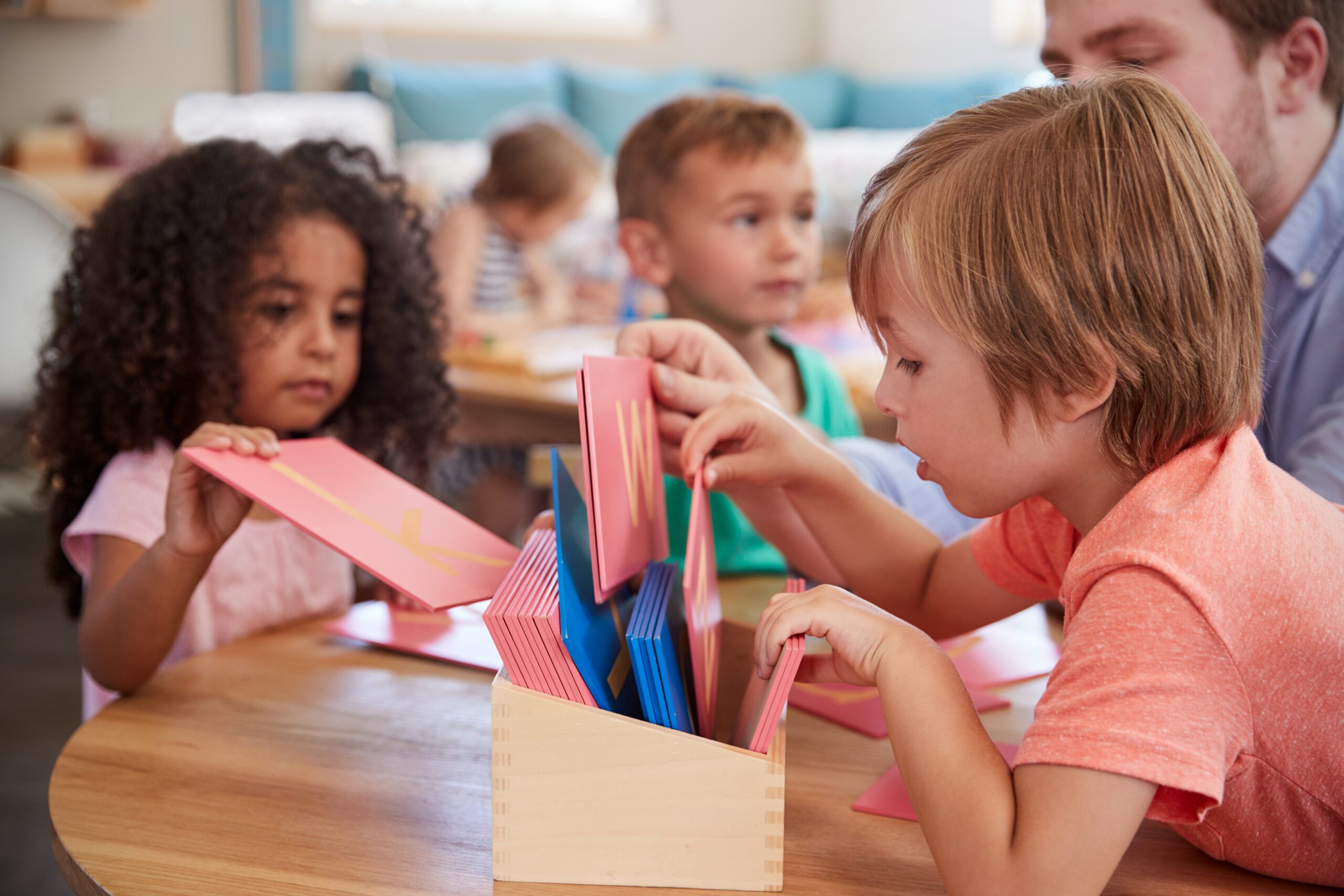
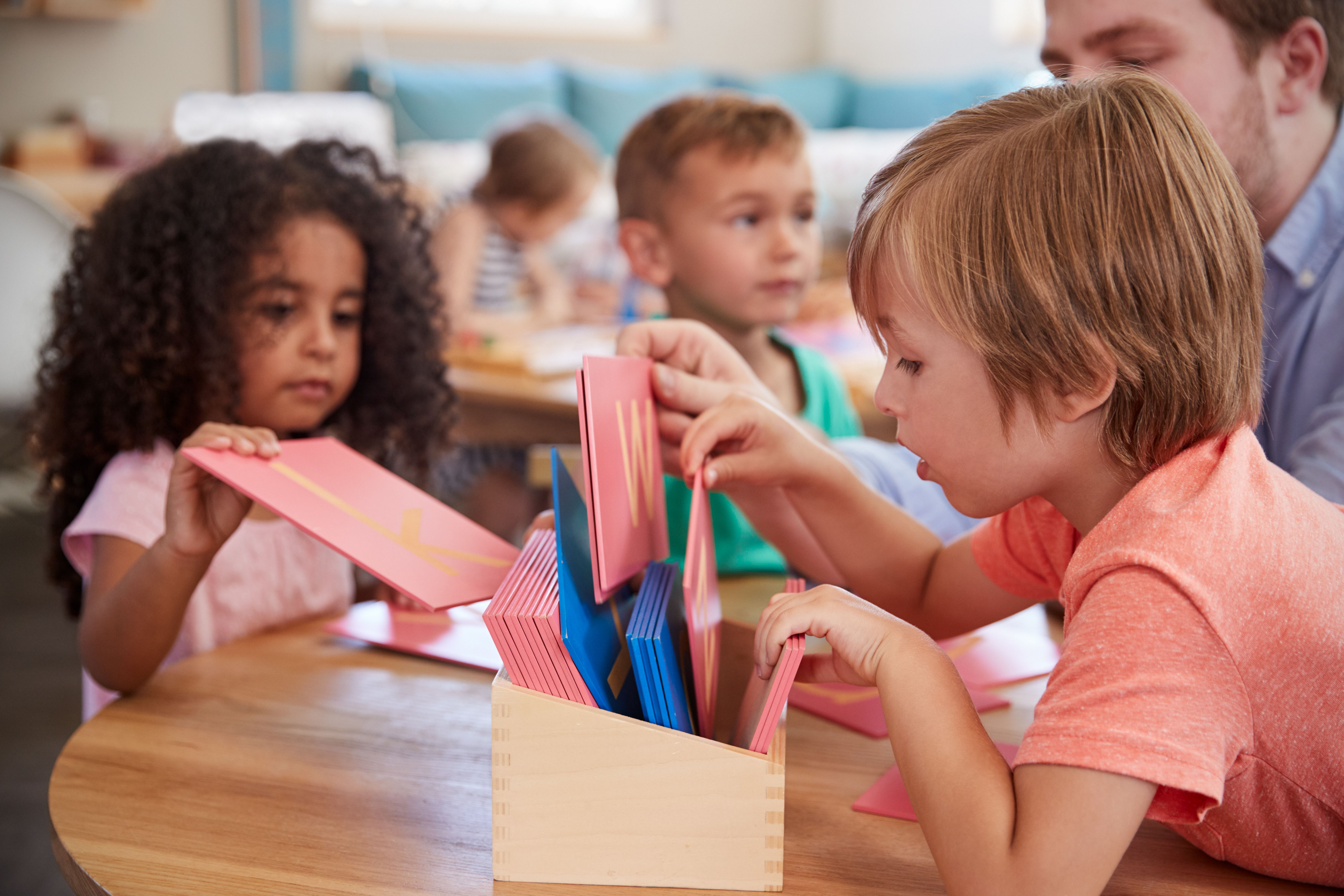








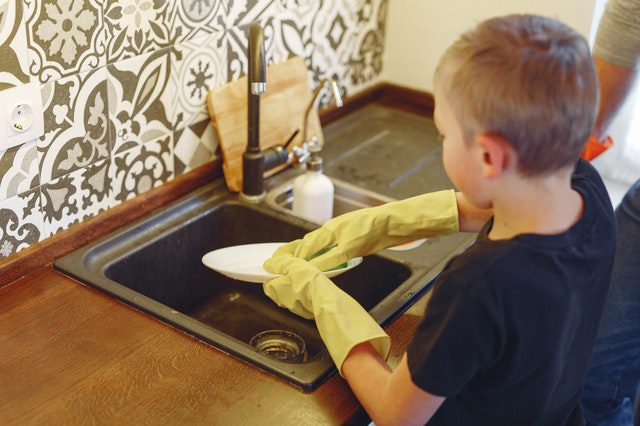
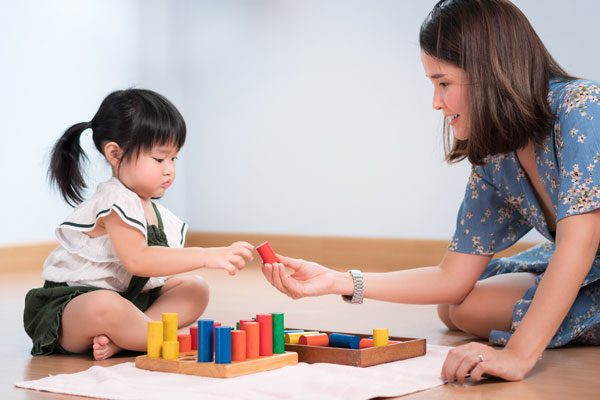
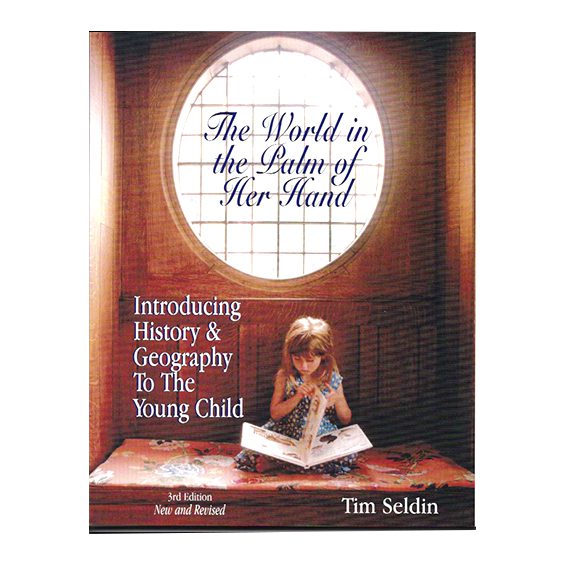
 To illustrate how you could do this at home, you could use a variety of ways to demonstrate colors if you don’t have a set of color tiles: index cards (or color swatches for paint that you can get from hardware stores) already made up with first the primary colors of red, yellow and blue. When your children have mastered the primary colors, you can move on to secondary colors: green, purple and orange. You can always use real objects you have in the house, such as fruits and veggies of different colors. Keep it simple and keep it to just a few colors.