50 Life-Changing Questions to Ask Your Child After School

50 Life-Changing Questions to Ask Your Child After School


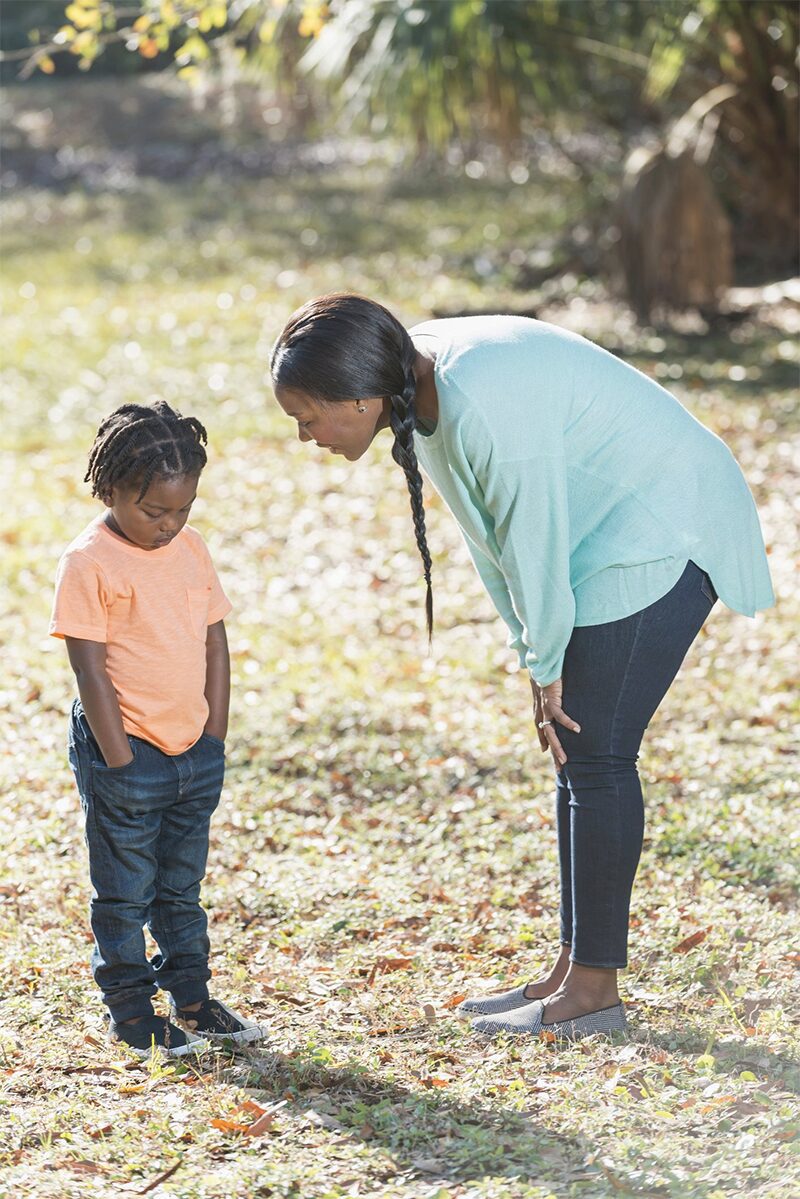
What did you do today?” is the age-old question parents ask their children as they enter the house from school, but as we know, the answer is almost always, “Nothing!”Here are 50 life-changing questions that will give parents across the world a chance to truly understand how their child feels about school.

  1. Did you see someone smile today? Why were they smiling?
  2. Can you tell me an example of someone who cared for somebody else today?
  3. Was there an example of unkindness at school today? What did you do?
  4. Was there anyone looking lonely during recess? How did you feel when you saw that?
  5. What did you talk about during group time?
  6. Did you learn any new words today?
  7. Did anyone do anything silly to make you laugh? Was it the right time to be silly?
  8. Did anyone cry? Why were they crying?
  9. What did you find hard? Did you still try even though it was difficult?
  10. What is the most popular game at recess? How would you change the rules?
  11. What was the best thing that happened today?
  12. How did you help your teacher today? Is it important to care about your teacher?
  13. Did you say “thank you?” to anyone today? What did they do to make you feel thankful?
  14. Who did you sit with at lunch? Why did you decide to sit together?
  15. What made you laugh?
  16. Did you learn something new?
  17. What are you looking forward to tomorrow?
  18. Was there a time when you were afraid? Did you tell anyone?
  19. Did you fail today in any way? How did you feel? What will you do to overcome the challenge?
  20. Did you ever feel unsafe? What happened to make you feel like that? Did you tell anyone?
  21. What is something you heard that surprised you?22.What do you regret doing? Why?
  22. Did your teacher say anything that has stuck in your mind?
  23. Tell me something you know today that you didn’t know yesterday.
  24. Was there a time when you felt tired?
  25. How did someone encourage you? Did you encourage anyone else?
  26. Did you like your lunch? Would you like to start making your own lunch?
  27. Rate your day on a scale from 1-10.
  28. Did anyone get in trouble today? What did they do wrong? How did the teacher react?
  29. Did you try something new?
  30. What questions did you ask at school today?
  31. Did you wake up feeling tired or energized?
  32. Would you like to plan an adventure this weekend?
  33. What are you reading at school? Did you have time to read to a teacher?
  34. What was the hardest rule to follow today?
  35. Which new rule would you like to put in place and why?
  36. Can you tell me a story? I promise I’ll listen to the whole thing.
  37. If school was canceled tomorrow, what would you like to do instead?
  38. Are you ready for tomorrow? Is there anything you need to do?
  39. Is there anyone who makes you feel worried at school? Why?
  40. What made your teacher smile? What made him/her frown?
  41. Did you have time to yourself today?
  42. Was anyone happy to see you arrive at school today?
  43. What made you feel proud?
  44. 44.Did anyone do anything to make you feel loved? Will you do the same to others?
  45. Do you need more time with me tonight?
  46. What would you change about your classroom if you could?
  47. How do you think your teacher felt today?
  48. What moment in your day made you think, “Wow, I did it!”
  49. If you switched places with your teacher tomorrow, what would you teach the class?
  50. Do you know how much I love you? And how proud I am of you?

Ask these questions, actively listen to their answers, and let’s change this world together.

Creating a Budget

Creating a Budget

from Tomorrow’s Child Magazine – May, 2021 | by The Montessori Foundation

A budget is far more than a spending plan. It’s a practical roadmap for applying your values every day, week, month, and year.A budget is how you balance sharing, saving, and spending. Regardless of your financial sophistication, you will benefit from this experience. Here are three straightforward steps to create a budget that works for you:

Before you start looking at the numbers, your first step is coming up with a game plan for when and how you will make money decisions.

  • Set aside time for a weekly 5-minute money check-in to stay on top of your money transactions.
  • Think through your money values and make sure that your money habits align with what matters most to you.

2.Creating a budget starts with getting a handle on where money comes from and where it goes.

  • Gather information about all of your sources of income.•
  • Collect all of your regular bills and track other expenses for 30 days to get the facts on how you spend money.

3.Once you figure out where you ARE with your money, decide where you WANT TO BE.

  • Think about what you do with your money—sharing, saving, and spending.
  • Write down goals for the short, medium, and long term.
  • You might decide on a short-term spending goal of taking a vacation.
  • Or you could set a medium-term savings goal of accumulating a down-payment for a car
  • A long-term sharing goal might be making decisions about including organizations you care about in your will.

Once you have invested the time to create a budget, you will want to keep tracking your income and expenses, at least monthly, to ensure you live within your means.

  • How well are you meeting your goals?•Are the dollars you allocate for each category realistic or do they need to change?
  • The choices are up to you.

You’ll be far happier the more you deal in reality with your money and take control of your situation. A budget is a doable way to make healthy money decisions and put yourself on a path to financial satisfaction and success.

Nathan Dungan is the founder and president of Share Save Spend®. He speaks and consults with organizations and families on the topic of financial wellbeing. Nathan uses a Wellbeing Framework to help individuals and families build capabilities that are most relevant for them and the goals of their family. He is the author of three books and numerous resources for organizations and families. Nathan’s newest resource, Money Sanity U®, is a subscription-based virtual learning library for organizations that addresses a variety of money topics in a simple and interactive format—all designed to help imp

Tips to Handle Your Child’s “No” Gracefully

Tips to Handle Your Child’s “No” Gracefully

What You Need to Know

There are few words less nerve-wracking than hearing your child say “no” to you. Rest assured, your child is very normal. If she asserts herself with a “no,” you can pat yourself on the back. You have not raised a submissive child! The fascination with “no” stems from the fact that toddlers (and tweens) are starting to realize they are individuals who have a will of their own. This is the early beginning of your child learning to stand up for herself and knowing what she wants. She is learning to set her own boundaries and build the foundation for healthy relationships.

Children who become compliant at a young age often suffer later in life from lack of will and passion. As parents, we need to think very carefully about how we choose to respond to their lack of compliance.

How to Handle Their “No”

Check these first. Is he tired, thirsty, hungry, or getting sick? If yes, meet his physical needs first. Connect before you make a request.  Children need to feel connected. If they don’t, they are more likely not to want to cooperate. Play a quick game of peek-a-boo, chase her around the kitchen island, and then make your request.

Ask questions instead of giving directives.  When we give our children orders, it creates resistance. Learn to change your commands into questions, i.e., “Put your toys away” becomes “Where do your toys belong?” This is very simple, but most of my clients report fast immediate results. Don’t argue with him.  This is a battle that can’t be won. It has no good ending, often with one or both of you in tears. Respect their “no.” When you can, say “Thank you for telling me.” Wait a few minutes and try again with your request.

When a relative tries to give your child an unwanted kiss (or hug) say, “Ellie doesn’t feel like kissing today,” instead of coercing to comply. Respect-ing her “no” allows her to feel safe to set her boundaries. Change your irritating thoughts.  Switch your negative thoughts to a positive outcome. Change “She is driving me crazy” to “She is going to be a wonderfully assertive woman someday!” Don’t offer a choice that your child can answer with a “no.” For example, “Do you want to help set the table,” allows her to say “no” versus saying, “Please help set the table.”

Give your child lots of opportunities to feel powerful. The more competent they feel, the less they need to be powerful by resisting you. One way to do this is to ask for their help frequently. Youngsters love to help. Use distraction.  Nothing delights and distracts a youngster like a parent being silly. Break out into a song or dance. Try getting them to do the task again. Let your child know that you hear him. There is usually an emotion behind the “no,” such as frustration, irritation, or anger. When your child feels heard beyond their “no,” it often dissipates. For example, “I see you are still a little sleepy and grumpy. Let’s try getting dressed after we snuggle for a few minutes.”Provide a reason for your request. Reasoning with your child at this stage is possible. As long as you keep it short and to the point, your child will be more likely to be inclined to cooperate. “The slide is wet and dirty. Let’s swing instead.” Versus, “Get off the slide!”

Teach your child how to say “no” respectfully. An important life skill your child needs to learn is how to say “no” in a non-offensive way. A disrespectful or mean response to your requests can be redirected by giving your child the tools. At a friendly time (children can’t learn at a time of conflict), give your child acceptable ways he can tell you “no.” If you don’t, he may find subtle (and sometimes not so subtle) ways, i.e. forgetting, dawdling, or doing the job haphazardly. Avoid using “no” as much as you can. Your child learns from you and wants to be like you. If she is hearing “no” several times a day, she is likely to mimic you. For more information on alternative ways to say no, go to  www.incaf.com  and download the handout:  “19 Creative Ways to Say “No.

Neediness during Covid

Neediness during Covid

Dear Cathie 

We are getting ready to have summer break from school. It has been a long year and I want this time to feel truly different. I know the time has dragged at times for our family, and I worry summer could be that way as well. I want it to be special! Can you offer some ideas? — Exhausted Parents

Dear Parents,

I applaud your efforts to make this summer different and special. Doing new and exciting activities will make this summer fun and special for everyone.

My first suggestion is to somehow mark the start of this time. I know a family that recognizes the start of summer vacation with a special breakfast. Each child in that family gets a basket of goodies- anything from exciting new books, jump ropes, sidewalk chalk, balls, new swim goggles, or even a craft set are fun to include. This effort sets the tone for the summer break and lets your children know what the summer might look like for them and the family. 

My second suggestion is to plan some family trips or outings. If your children are young, outings to the nature center, museums, the beach, zoo, or parks may be perfect. These can be one day outings. Many families have remained very close to home and have not ventured out much during the pandemic. As summer comes, this may be the time to do just that. It is important to involve the children in the planning process, as I believe that is a big part of the excitement of a trip or excursion. Maybe you are ready to take a ‘real’ vacation and go away to see grandparents, relatives, or just get away. This can be the highlight of the summer for many families. Be sure to take pictures so you can relive the experience and conjure the memories. 

Thirdly, I suggest creating a new summer family tradition. If you have been reading my column regularly, you will know I am a firm believer in creating new traditions as a family grows. Summer is a perfect time to insert a new tradition. It can be as simple as lemonade and cookies (maybe a special kind) on the patio on Sunday afternoons or a family trip to the local farmer’s market on Saturday morning, followed by a picnic lunch. Depending on your comfort level, these activities may include close friends or other families, or you can keep them as a special family-only tradition.

Fourth, I recommend that everyone in the family should try something new! From a new food experience, to a new craft, or a new sport or instrument, every child (and adult) should be growing and trying new things regularly. This is the perfect time to encourage that growth. Some things can be done as a family, such as experiencing a new food and having a family cooking time and others may be individual, such as letting a child attend a week of a sports camp for a sport they have not tried before. Another way is to simply view a YouTube video and try out a new skill such as weaving a basket. 

Summer vacation from school can seem like a lot of time, but it can easily be filled with camps and the normal day-to-day activities. It does not take a lot to make it seem special! Parents and children just need a to add a few special weekly activities to make this summer unique.

Happy Planning!

A Montessori inspired Home, Life Based on Montessori Principles 1

A Montessori inspired Home, Life Based on Montessori Principles 1

What are the most important elements of a “Montessori-inspired Home?” Are they the specific didactic materials, expensive furnishings, huge amounts of space, relationships among family members, types of activities that the family does together, or lots of outdoor space? In this session Alicia Diaz-David, parent and Montessori credentialed teacher, will address important elements based on Montessori principles that make a Montessori-inspired home.
Recipe:  Preserving Children

Recipe: Preserving Children

Ingredients:

1 large field | 4-6 children | 3 dogs | Goat or donkey (optional) | Grass |Trees | Flowers | Rocks Pool of water or stream | Hot sun | Deep blue sky

Process:

  • Mix the children with the dogs and goats. 
  • Add next four ingredients. 
  • Pour Out onto the field near the water. 
  • Cover all with blue skin and sunshine. Mix in a little rain for variety if you like.
  • Bake under the sun until children are well satisfied.
  • Set them in away in the bathtub to cool.
  • Serve them dinner. 
  • Read a story. 
  • Tuck them into bed.

Five Crucial Reasons Why Schools Should Teach Entrepreneurship

Five Crucial Reasons Why Schools Should Teach Entrepreneurship

Teachers have a powerful role in helping students face an uncertain future .

What if teachers could give their students hope and empathy skills, even while society faces global health problems and divisive tensions? Teaching entrepreneurial skills can help teachers prepare their students for today’s rapidly changing world.

We can think of at least five reasons why schools should teach entrepreneurship. But first, let’s look at what entrepreneurship education means.

What Is Entrepreneurship Education?

Entrepreneurship education teaches students important life skills, such as:

  • Collaborating and working with a team
  • Speaking in public and preparing an effective presentation (digitally and
    in-person)
  • Collecting, analyzing, and using data
  • Utilizing social media for promotion and/or advocacy
  • Handling real, complex problems that don’t have a definitive answer
  • Using curiosity and creativity to find an innovative approach to difficult problems

Students learn what it takes to develop a product or service, create their own unique business proposals, and give multiple pitch presentations.

Entrepreneurship education does not just benefit those entering the fields of science, technology, and business. Students interested in the arts, social sciences, and similar fields can also develop their imagination and learn how to apply creative thinking skills to real-world problems.

Here are five benefits of schools teaching entrepreneurship:

 Prepare your students for an uncertain future.

The recent COVID-19 pandemic has taught all of us an important lesson: Our lives can dramatically change at any time. Some economic experts predicted many people’s jobs would become automated during the next few decades, even before the global pandemic.

Teachers can’t always predict exactly what students will need to know after they graduate. Still, teaching entrepreneurship skills can help students handle, and sometimes even welcome, the changes happening in technology, business, and society in general.

These skills include problem-solving, teamwork, empathy, as well as learning to accept failure as a part of the growth process.

 Students develop their creativity and collaboration skills.

Entrepreneurship education supports creativity, innovation, and collaboration. These skills are highly valued by the top colleges and most businesses in the world and will be used by your students well beyond their middle school and high school years.

Businesses are often rewarded for creating products and services that seem new and different. The best new ideas are usually a result of two or more people working well together.

 Teach students how to identify and recognize problems.

Students must know how to identify problems before learning how to solve them. Problem-solving exercises are a long-time staple of traditional education. However, the same cannot be said for identifying problems.

Traditionally, problem-solving is taught by presenting students with issues that are already clearly defined by someone else. In the real world, problems can only be solved when they have been properly identified and described.

Entrepreneurship education helps children learn how to identify problems they have never dealt with before. This skill is much needed now and will continue to be needed in the future.

 Help students become resilient.

Let’s be honest. Sometimes grades, socioeconomic status, and intelligence don’t accurately predict a student’s chances of having long-term success.

What’s a better predictor of a student’s future success? Their resilience, also known as “grit.”

Becoming an entrepreneur is an ongoing journey filled with ups and downs, even when the economy is thriving. Teaching entrepreneurship encourages students to figure out their passions and how to be persistent when pursuing their interests. Students also learn how to stick with a business idea, or similar project, especially when times are tough.

Learning how to work through problems and adapt to changes improves a student’s chances of having professional and personal success long after they leave your classroom.

 Encourage students to make the world a better place.

Entrepreneurs constantly look to solve problems and meet the needs with the help of their products and services. Entrepreneurship can start with a desire to make money and live a better life, for many aspiring business leaders of all ages.

But all successful businesses have one thing in common: they make life easier and/or more enjoyable for their customers. Teachers can support and encourage their students to be motivated by a desire to help people with a product or service.

Main Takeaways for Why Schools Should Teach Entrepreneurship

  • Teachers can play an important role in supporting aspiring and current young entrepreneurs.
  • Entrepreneurship education teaches students skills they can use well into their adult years. These skills include working with a team, using the internet and social media for marketing, as well as developing creative ways to create new products and solve complex problems.
  • Teaching entrepreneurship empowers students by preparing for an uncertain future and work to make life better for other people.
  • In other words, entrepreneurship lessons can give students hope for themselves and empathy for other people.
  • Those skills are needed now more than ever before. 
Return to Table of Contents
How to Explain the Covid-19 Vaccine as a Story

How to Explain the Covid-19 Vaccine as a Story

The Immune System

It’s first important to understand how your immune system works. Basically, your immune system attacks anything foreign to your body. If it notices a virus or a bacteria or anything that it doesn’t recognize, it launches an attack to defeat it.

If it’s fighting a virus, for example, it takes time to prepare its army. It has to figure out what part of the virus to attack and prepare its warriors and weapons. That can take a few days. Meanwhile, the virus is replicating and expanding. (This is when you can feel that you might be about to get sick, but you’re not sick yet!)

Once your body defeats any virus, it remembers it. Your immune system has a memory, and if you run into that virus again, your memory cells say, “I remember this virus from before, and I have the weapons and warriors already prepared.” Your body uses its past experience to demolish the virus before it can make you sick. (This is what happens every time you catch a cold.)

Now that we know about immune memory, let’s talk about the vaccine. Scientists looked at the COVID virus and saw a weak spot in its structure. It was a particular protein, the perfect place for your immune army to launch an attack.

A New Protein Arrives

We will call this protein, the ‘weak-spot protein.’

So scientists examined the structure of the ‘weak-spot’ protein in COVID and made an instruction booklet on how to make it that your body can read. 

This instruction booklet is the ‘vaccine,’ and that is what is injected into our bodies.

Let me explain.

The vaccine contains no actual part of the virus. It has only the instructions on how to make the ‘weak-spot’ protein. So, you can’t get infected with COVID from the vaccine. Your body is simply injected with the instructions on how to make this particular protein.

Once injected, Your cells read these instructions and say, “Thanks for the new information; I’ll start making the protein right away.” So your cells can now make a bunch of the ‘weak-spot’ proteins. (Not the virus, just the weakest part.)

The Great Immune Battle

Your immune system immediately notices this new protein you’re producing and quickly gathers your immune troops and says, “Hey guys, we have an invasion on our hands; gather the army.” And it starts attacking the protein.

So you destroy the weak-spot protein. No worries; the vaccine can’t infect you. It’s just a protein, not the virus.

Remember that your body hasn’t seen this protein before, so it takes a little while to gather the military. Then it launches an all-out war against the ‘weak-spot’ protein. You might experience fever, chills, or muscle soreness as vaccine side effects. This is proof that your body is bombarding the ‘weak-spot’ protein.

Immune Memory is the Key

Once defeated, and it doesn’t take long because it’s just a protein and not a virus, your memory cells ‘remember’ the ‘weak-spot’ protein. Your body’s cells will remember exactly how to destroy it.

So, what if … a few months later, you accidentally forget to wash your hands and the COVID virus enters your body. Your body has never seen the virus before, but it has seen that ‘weak-spot’ protein that’s on the outside of the virus. Your immune memory cells say, “You’ve got to be kidding me! THIS cheeky protein again! I’ve already told the protein that it’s not welcome around here! Get out of here!”

Your body’s own ‘natural immune system’ quickly and efficiently launches an all-out war, using the same army and weapons it used before and destroys the virus before it can take hold, replicate, and make you sick.

You’re Vaccinated

Congratulations! Now, you’re almost 100 percent immune to COVID! You’ve got the weapons and army to defeat it as soon as it enters your body at any point in the future!

Return to Table of Contents
Bedtime Routines for Younger Children

Bedtime Routines for Younger Children

This is ann excerpt from Tim Seldin and Lorna McGrath’s upcoming book Montessori for Everyone

The type of sleeping arrangements for infants and toddlers are debatable and based on the family’s beliefs, cultural background, and values. In Montessori-inspired homes, we strive to help our children become independent even for sleeping arrangements. So, while there are no strict rules for sleeping arrangements, we do want to help our children to be able to settle themselves and sleep on their own.

Often, during the first few months of an infant’s life, they sleep in a bassinet in the same room as their parents. The bassinet is a small cozy space for a newborn and convenient for night feedings. It doesn’t take long for an infant to outgrow the bassinet and move onto a floor bed or into a crib in another room. 

Many parents choose a floor bed instead of a crib for their infants. The floor bed is basically a small mattress that may or may not have a frame to lift it a few inches off the floor. A floor bed allows for more independent movement when they begin to crawl and climb. It also eliminates the need for the interim use of a crib between bassinet and a bed that is higher up and has no sides.

If you do choose a crib, when your toddler begins to try to climb out, it’s time to put the sides down so that they can safely get in and out of the crib. The next step in bedding may be a mattress on the floor, a junior bed, or a regular size twin bed. The decision is up to you to decide what’s best for your child.

A gate in the bedroom doorway or closing the door helps them to stay in their room during this transition. You must be sure that the room is set up in such a way that they will be totally safe if they are awake and alone in the room.

Even infants and toddlers can be overstimulated by lots of activity, screen time, or noise in the house before going down for the night. After the evening meal, you will want to choose activities that will soothe and settle rather than excite them. A warm bath, a story, or just snuggle time in a rocking chair all can help them to be ready for sleep. Be cautious about using a motorized swing or rocking with you holding them. They are good for calming, but you want to put your child in their bed before they actually fall asleep so that they become used to being in bed and falling asleep on their own. 

If they should awaken during the night, and it’s not time for feeding or changing a diaper, go to their room quietly, but don’t pick them up. Instead, wait a minute or two and see if they can settle back down by themselves. If you feel that your child needs your help, gently talk to them. Tell them that it is still night and time for sleep. Sit next to the crib for a few minutes while they settle back to sleep.

Winding down from active play to quiet, calm for sleeping can be difficult when children, who have been playing one minute are suddenly told that it is time to go to sleep the next. One solution is to get the children into a habit of getting ready for bed earlier in the evening and then allowing them to look at books, snuggle with a favorite stuffed animal, or read quietly by themselves in bed with the lights on. 

You might want to try tucking them in at the beginning and then come back for bedtime whispers and lights off as they are falling asleep. Whispers are messages of love that you speak softly into your child’s ear after you tuck them in. There is an intimacy about quietly speaking into a child’s ear that sends them to sleep feeling cherished.

If your child wakes from a bad dream or monster, calmly reassure your child that you understand that is scary, you are there, and it is safe in their bedroom. Night lights are helpful for some children or a special snuggly thing.

One family had a designated old, worn stuffed animal that used to belong to mom or dad when they were young as the family’s “Bad Dreams Chaser.” This faithful companion guarded over anyone who is having difficulty falling asleep or who wakes up after a bad dream.

Bedtimes As Children Grow

In today’s plugged-in world, it’s difficult to imagine for many of us not having our smartphone, a TV, or tablet in or near the bed. Digital technology is so pervasive that many parents today cannot really appreciate how important it is to think carefully before allowing any digital technology into their children’s bedrooms.

From a very early age, it is wise not to allow devices in the bedroom, because once they are allowed in, it’s difficult to establish in children’s minds that the bedroom is a place to sleep and dress. As with any kind of digital technology, you will want to carefully monitor what your children are doing and watching. Once digital technology gets behind a closed door, you really can’t monitor what is going on. It’s just as easy for a child to sit in bed under the covers with some sort of portable digital device or tablet and play games until late in the night, or exchange instant messages with friends who are also awake, as it was for many of us when we were young to read books under the covers by flashlight. The difference is that digital devices are far more stimulating and tend to keep our brains, whether child or adult, much more active and make it difficult to fall asleep. 

It’s important for children to develop a good sleep routine. By the way, it’s equally important for us as adults to develop one, too. There has been considerable research into the effect of the blue light given off by the screens of digital devices, whether phone, laptop, or a television set. The light is problematic on a number of levels, but for now, let’s just think about the effect of flashing lights on our brains as we drift off to sleep. It should be self-evident that falling asleep to the background sound of a TV show or movie is not likely to lead to the kind of calm, deep sleep that we all need to restore ourselves with a good night’s rest. Most schools around the world can tell countless stories of students who arrive for class sleep deprived, cranky, or half-asleep. 

It’s important to appreciate that each digital device has its own benefits and challenges. For example, smartphones are small and easily slipped out of sight, and they allow children to watch movies, surf the web, talk to their friends all night long, or play games among many other uses. We forget sometimes that a modern smartphone is essentially a powerful computer. Likewise, any of the gaming consoles may allow players to engage in much more realistic and sophisticated games. While it would be much more difficult for children to hide the fact that they are playing, even if they are listening to the audio through headphones, those console games are often so engaging that they can become highly addictive. We also have to remember that many contemporary game devices allow children to play in real time with other players, who may be their best friends or strangers online somewhere around the world.

So, for those reasons, we strongly recommend you have a firm policy that bedrooms are not a place for any digital devices, including TVs, smartphones, tablets, or computers. If you find yourself uncomfortable being consistent on that policy, at least strive to have a clear lights-out policy that you really check on and enforce. A good example might be that all digital technology has to be turned off and possibly left on the dining room table after a specific time, which obviously can be adjusted as children get older.

Here is some advice from most sleep experts: 

  • Avoid caffeinated drinks after 2pm and before bedtime.
  • Dim the lights in the room.
  • Turn off or turn down the volume on any music that might be playing.
  • Avoid using the bed for anything other than calming activities that help in falling asleep.
  • Advise adolescents to get up, get out of bed, go into another room, and do something that won’t wake them up further, such as take a bath, if they wake in the night.

In a Montessori-inspired home, we want to deliberately organize the environment to facilitate the development of good habits and avoid addictive behaviors that can interfere with children’s optimal health and development. Help your child to make a clear connection in their minds that the bedroom is a place to relax and sleep.  

 
Return to Table of Contents
Spending Cleanse

Spending Cleanse

Reset your spending habits with a spending cleanse to
realign your values and goals with your spending habits.

No one is perfect with money; we’re all creatures of habit.

When we’re stressed out or bored or unhappy, we spend more, which can become a vicious cycle and contribute to our bad feelings.

A spending cleanse is a way to reset our money habits. It means paying attention to where our money goes, to determine if our spending aligns with our values and goals. We all need a periodic spending cleanse because it’s so easy to let good money habits slide. It’s surprising how quickly we get off track.

A spending cleanse is a time to step back and be intentional again. It’s a way to enhance your financial wellbeing and diminish your stress around money. A cleanse, is appropriate any time you want to become more aware of your spending habits.

Here are a few options for how you can do a spending cleanse:

1. Take a week (or two) off spending

Buy nothing with plastic or cash. Purchase your groceries and pay your bills the day before you begin, and then stop. You might want to jot a note when you feel an impulse to spend.

2. Do a credit card cleanse

Put your cards in a drawer and don’t touch them for a month. Live off of cash only.

3. Spend only on needs

Don’t buy any wants—only purchase items that are legitimate needs.

4. Track Your Spending

Track every dollar you spend, using all payment methods. Before you start, create a spreadsheet or find an online tool to help you track your spending.

Remember: If you’re in a relationship or part of a family, get others on board with this experience. You will all benefit from the effort and the support.

Set a timeline for your cleanse.

Once you are done, reflect on your spending. What was the best part? What was the most difficult challenge? What new habits do you want to carry forward?

A spending cleanse heightens awareness about how, when, and why we spend money. It gets us away from mindless outlays and helps us focus on aligning with our goals and values; essential elements to an increased sense of wellbeing. 

Whatever method you choose, make an appointment with yourself to evaluate where you’re doing well, as well as, discover any not-so-great habits.

 
Return to Table of Contents
The Magic of Montessori: Tidy-Up Tips  That Will Change Your Life

The Magic of Montessori: Tidy-Up Tips That Will Change Your Life

Children!…they might be little, but their stuff is everywhere!

In my home, I have used five Montessori magic steps to organize all of my children’s stuff (including outgrown clothes, school work, gifts (birthday, goodie bag etc), kids ‘meal toys,’ and all the other stuff) that is involved in children’s lives. Maybe your child is so young that papers and school work are not even in the picture for you… this is the best time to start! Getting on top of the influx of stuff now is a great way to get started; the stuff only increases over time!

I’m a busy working mom with two children, and I know what you’re feeling; I can totally relate. Like you, my home can accumulate school work, toys, outgrown clothes, and so much more! So I’ve prepared some tips and suggestions that are easy to try and can really make the positive change in your home life that you are looking for.

It’s simple, it’s clean, and it works like a charm.

Now let me break down how it works. Here is the foundation: 

The Five Montessori Steps to Success

1. Limit the number
2. Basket, tray or bin
3. Rotate
4. Access
5. Order

And please note … Dr. Montessori was really on to something: based on her deep understanding of children, she figured out that adults play a key role in setting up the home environment, where children can pursue their interests and cultivate their skills. In the Montessori world, we know that the set-up matters; how the space is set up can make or break the opportunity for independence.

Here’s how it all works!

1. Limit The Number

Young children truly enjoy an activity when it is limited in number. This allows them to really explore the toys and inspires creativity to work with them in different ways. Limiting the number of items in an activity also gives the child a better chance to put the activity away without any frustration or complication. If a game or activity comes with lots of parts, only put out the fewest number of parts needed and store away the rest.

2. Basket, Tray Or Bin

Once you’ve limited the number of items in an activity, it’s time to place it in a self-contained basket, tray, or bin. Putting an activity on a tray or in a basket puts the focus and interest on the activity itself, not the packaging it came in. Easy-to-carry baskets, trays, or bins makes it a breeze for children to clean up and put away!

3. Rotate

Once you limit items in an activity, use storage bins to store the extra pieces and parts. Now that the activities are limited you can rotate the contents regularly. Regular rotation keeps activities interesting to the child and keeps them engaged.

4. Access

Homes with siblings can still have activities available for each child within the same space. Once the activities have been limited and kept in a tray, bin, or basket, keep the older child’s activities in a place where only they can reach, and keep the younger child’s materials lower to the ground for easy access. If your home doesn’t have ways in which to raise the activities of an older child, you can put their toys in a container that the younger child cannot open.

5. Order

Once your child’s items are in smaller quantities and in easier-to-handle containers, it’s important to organize the space and determine where each activity will go: a place for everything and everything in its place. Children have a strong sense of order, and providing designated, consistent places for activities to be stored is directly linked to developing a logical mind. Also, the consistency of putting things in their place will avoid frustration and opposition when clean-up time comes around.

Now! Let’s take a look at some simple tricks for powerful tidy-up tips for your home. With these five steps, timing is essential. I realized there are at least five categories of stuff that constantly need putting away. Have you ever noticed, the stuff just keeps coming … and coming … and coming! I feel like every time my daughter leaves the house, she comes back with something more! Here are some general categories of stuff that comes:

  • School work: paper, art work, etc.
  • Toys: of all shapes and sizes
  • Books: library books and ones you own.
  • Gifts: goodie bags, birthday gifts, holiday gifts.
  • Clothes: outgrown, no longer fit.

This Is Where It All Starts

My overall organizing area is in the garage. This is the place I immediately put things to be sorted out. By having this area in the garage, I catch things before they get into the house.

On the small table, the left basket is for little objects that do not have a place in the home. The basket on the right is a place that collects outgrown clothes or clothes I want to donate. If I come across one piece of outgrown clothing, I immediately take it to the garage instead of keeping it in the closet; each item that leaves brings more joy for us. And the container in the back is where I store paper goods.

When the baskets are full, I take action. The clothes get donated. 

The small object collection: some are discarded, and some get recycled (i.e., for use in The Sound Game—“Can you bring me an object that starts with ruh?—the child selects ring). 

Paper goods: What to do with all the paper—drawings, writing work, worksheets, and much more! My first step is to examine the piece of paper/artwork/writing, and ask myself: Does this spark joy? This is the all-important question I learned from the book The Life-Changing Magic of Tidying Up. So this is where I keep their precious work—the special ones that “spark joy.” I purchased a large folder/portfolio for each child to store the saved work.

Books! The main thing to keep in mind is rotation. Let your local library help you to keep a rotating, fresh collection of books for your kids. We have a designated return-to-library basket where books go when the children are done with them. Each of my daughters has a bag for our library trips that has a spot for their library card. Of the many books that might be available, keep rotating to highlight different books over time.

Another situation, what to do with goodie bags from birthday parties, trinkets, and freebie toys (e.g., from fast-food kids’ meals [note: not an endorsement])? Here’s the solution that has worked well for me: I have a designated tray to place little things on a temporary basis. For example, when my daughter comes home from a birthday party with a goodie bag, she wants to play with it right away. When she is done playing with it that day, she puts it on the tray. She can manage this step and gets it to the tray all by herself. After a few days, I toss the items or find a good way to recycle them (again, The Sound Game), or put them in the object basket in the garage to figure out later. 

Now for the gifts from your child’s party; this year, Chelyn (age 9) invited eleven friends and received eleven gifts. That’s lots of things all at once! But thanks to our insanely powerful managing system, we immediately processed all eleven gifts and enjoyed each one of them in turn. Here’s how it worked: Chelyn chose three gifts that she wanted to play with and put them in the three baskets below. These three baskets are where items of current interest are stored. And where did the remaining eight gifts go? The other toys go to the big storage bin in the garage, where she keeps her things. She rotates three items into these three baskets from the big storage bin; she is old enough to manage this system on her own.

Here’s the best part, I usually revisit the girls spaces and things once or twice a year. I only have to spend 45-60 minutes each time I do this, thanks to the systems in place. I keep all of the things that I think the girls would like to use in the future in plastic bins in the garage. Everything I think they have outgrown, I give away right away. It is a constant weeding-out process, but well worth the effort. You will also start to look at the things you purchase differently. We rarely buy “toys’’ and stick more to supplies and open-ended materials that will last over time. And the good news is, all of these systems for keeping things organized and tidy didn’t come overnight. It’s been years of fine-tuning to figure out what works and what continues to work as my children’s interests and needs change. You can start with just a small tiny step. The most important thing is to start. 

You can do it! you can overcome the constant influx of stuff and maintain a peaceful home environment! Everyone wins when there’s less clutter and more space for the things that truly spark joy.

 
Return to Table of Contents
Parenting with Intention

Parenting with Intention

Do you recall that Bob Marley song? When I visit my daughter (Jenn) and son-in-law (Patrick), it is typical that I hear some version of reggae or Bob Marley playing before I go home (even perhaps in his chiropractic office). It is with intention that they move in life, down to the music they listen to. Pat even renamed his chiropractic office in Seattle to reflect being intentional in life—it is called Conscious Chiropractic. I often tell myself that I want to grow up to be like Jenn and Pat, being so intentional about everything that I do. I have found myself of late, borrowing the words from Bob Marley’s song, when the information on the news or on The Rachel Maddow Show is just more than the heart needs to bear: “One love, one heart … Let’s get together and feel all right.”TC-MAR-2021-EB-Mar19_Page_01

Montessori education is respected in research for its strength in the sciences, including social sciences and mathematics. Montessori is a science-based method of responding to the developmental and educational needs, challenges, and abilities of children. Compatible with brain-based, multi-sensory teaching, Montessori education maintains more focus on critical thinking and mastery of skills, and less focus on test-outcome teaching. And it is a method of education in which the arts and sciences are not diametrically opposed. There is an exactness involved in Montessori education that can be confusing when you watch it, until you understand that there are building blocks that have to do with pure science, and with spatial recognition—what goes where, and how do you go from there, how does this fit. From critical thinking to expressive reasoning, the mind can go in many different directions, when adults don’t direct it, and this gives rise to creativity.  

But the miraculous thing is that Montessori education combines this science-based educational methodology with—of all things, peace education. One would think they have no connection. However, if one can be so creative as to design solutions to complex math and science problems, one can create solutions to environmental challenges, disease, and war. 

This makes Montessori education a unique pedagogy. It is a complex scientifically based methodology, which responds to the entire being of the child—from how the brain responds to stimuli via many different modalities, to the psychological development of the human being, which directly responds to the brain’s ability to take in knowledge. And peace resonates with the brain: it feeds it; it nourishes it. When the brain is positively engaged, there is more access to complex reasoning, more internal space to take a step back and do more—more pathways in the brain to create different solutions, to look behind you, then ahead to see where things are going, to observe, reflect, hypothesize, to see the causal effects of things.  

When you think about it, many acts of violence happen in a moment when the brain perseverates over anger. Think about the result of engaged children who are so interested in what they are learning, who from toddler age on, are challenged to discover the joys of geography, geometry, history, science, and the arts. Think about the result of older children being in the living laboratory of the classroom, where children are encouraged to think about what they are thinking about.

If it is true that the arc of history bends toward justice, we must extrapolate; if the arc of gratitude and love is long, it must bend towards peace.

The other natural extrapolation that occurs within an atmosphere bounded by peace on all sides, is that both love and gratitude become “brain changers.” In Greater Good Magazine, Joshua Brown and Joel Wong share gratitude research and its effect on the brain. They randomly divided participants into three groups. They asked one group to write one letter of gratitude to someone every week for three weeks; the second group was asked to write their deepest negative thoughts and experiences; and the third group had no assignment. Of the groups who wrote, those who wrote gratitude letters reported significantly better mental health for 4 weeks and then 12 weeks after the exercise was over.

What was interesting, was the research that followed. The group that wrote the gratitude letters was compared with the group that did no letter writing to find out if their brains were processing differently. “Most interestingly,” they posited, “when we compared those who wrote the gratitude letters with those who didn’t, the gratitude letter writers showed greater activation in the medial prefrontal cortex when they experienced gratitude in the MRI scanner. This is striking as this effect was found three months after the letter writing began. This indicates that simply expressing gratitude may have lasting effects on the brain.”

If this is true, being centered in love, grounded in peace and bounded in gratitude, we model a life strengthening gift for our children—as parents, at home; as teachers in the classroom; as school leaders in our schools. 

If it is true that the arc of history bends toward justice we must extrapolate; if the arc of gratitude and love is long, it must bend towards peace. In our classrooms, we want our students to be engaged and joyful; to learn and play; to hold solid values and to stand up for what is right. To be intentional and attentional. To be caring and kind. To be, as Bob Marley says: “One love, one heart.” In our world now, we must learn and guide children to be change-makers who help “get us all together, and we’ll be
all right.”

 
Return to Table of Contents
Wishing you had a Parenting Instructor at your School

Wishing you had a Parenting Instructor at your School

Are you wishing that you not only had a parenting instructor at your school but that the instructor actually understood Montessori? Do your parents come to you for parenting advise but can’t get away during the day or in the evenings to join a live group? If so, the Parenting Puzzle – The Basics might be just the ticket. Join us to find out how it works and how you can get started with the course you’ve been hoping for. This will be an interactive session; we encourage questions, comments, and sharing of stories and resources.
Virtual Relationship Building

Virtual Relationship Building

If it were not for virtual meetings, FaceTime, and the occasional video, I would not be able to interact with my children and grandchildren, who live in other states. It has literally been a year since I’ve been with them in person.

At the ages of nine and ten, my grandsons are old enough to understand Covid, online learning, and the need for grandparents to distance. Fortunately, we already have a great, established relationship, and they are mature enough to have real conversations, in person or online. On the other hand, with the boys in control of the phone, tablet, or computer camera, our interactions often take on the cinematic quality of the Blair Witch Project (which was shot by teens using handheld cameras). Sometimes Dramamine™ is required!

I imagine virtual visits must be much more frustrating when interacting with very young children. If you live far away from your little ones, you have probably already mastered the art of virtual visits but, if not, here are some tips I saw online that might help.

Match your in-person interaction with what the grandparent or virtual friend is trying to convey. For example, “Oh, I just wish I could be there to hug you,” is very unsatisfying for both parties. If the online person makes the motion of hugging, mom or dad on the receiving end can literally hug the child. Message sent and received. If grandma blows a kiss, the child can pretend to ‘catch’ the kiss and can even send one back.

Match your in-person interaction with what the grandparent or virtual friend is trying to convey. For example, “Oh, I just wish I could be there to hug you,” is very unsatisfying for both parties. If the online person makes the motion of hugging, mom or dad on the receiving end can literally hug the child. Message sent and received. If grandma blows a kiss, the child can pretend to ‘catch’ the kiss and can even send one back.

Create a mutual, meaningful experience for all parties. Don’t make a virtual visit a ‘command performance’ or an after thought: “Come here and say hi to Grandma.” Being prepared and excited makes a big difference.

Make the visit a participation event. Read a story or book chapter to children. When possible, have your child’s favorite books on both sides of the experience, so that the child and video caller can both follow along, or even take turns reading.

Friendly finger puppets on both ends of the conversation can provide a laugh and fun experience. Yes, it’s fantasy, but it can get children talking. “How was your day, Mr. Rabbit? What did you have for lunch? Did you eat carrots?” “Nooooo, I had pizza!” “Pizza? I didn’t know that rabbits ate pizza!!”

Consult the family historian.When an older child has a question about family history (e.g., “How big was PopPop’s boat during the war?”), that’s a great time to call the family historian. Even if the ‘historian’ doesn’t know the answer, a potential research project has been created (e.g., “Well it was an LST [WW2 ship]). Let’s see what we can find out on the internet …. “

Another current topic of great interest for my own grandsons involves big, important conversations about America’s sad history of race and social injustice. I don’t think it’s on their minds because of news coverage, because they don’t normally watch the news. So, I imagine that their school has found a way to weave this information into the curriculum, which is good, but they still have many questions that require thoughtful answers.

My grandsons wanted more information about the Civil War, their great, great grandfather, and the Underground Railway. We have had many conversations about why Quaker ancestors helped people of color escape from Virginia (now West Virginia) to Ohio and then on to Canada, which then led to our not-so-long-ago Canadian roots, which then led to why relatives from Scotland ended up in Nova Scotia (Canada).

Ancestry.com has become a shared interest that we can enjoy together from afar, and building your own family tree might be fun, especially during lockdown.

In the PBS article cited below, there’s an interactive game that has both sides of an online conversation that can be played together in real time. Check out Pinkamazing Family Game. I bet that there are even more COVID-inspired interactive games. Be on the lookout.

Resources
www.pbs.org/parents/thrive/celebrating-birthdays-and-holidays-during-social-distancing
www.pbskids.org/pinkalicious/games/pinkamazing-family-game

Joyce St. Giermaine

Editor’s Note: On the subject of social justice, I am no expert, but I do know that a good deed performed by distant relatives at a very specific moment in history does not give future generations a free pass on systemic racism, nor does having relatives who were on the ‘wrong’ side of history define who we are today. Tomorrow’s Child welcomes articles for age-appropriate discussions on this topic.

Seeing the World Through Your Child’s Eyes

Seeing the World Through Your Child’s Eyes

One of the keys to creating a calm and peaceful home is to learn how to see the world from your child’s perspective. Maria Montessori challenged us to ‘follow the child’. To do this, first we must have a sense of how your children think, feel, and react.

through the child's eyesFor example, take this child. He is looking up and you can tell that he is looking at someone or something really tall. He is probably looking up at an adult that he loves. Imagine how the world looks to him at two or three feet tall. It looks a lot different than it does to us. Let’s try to put ourselves into our children’s shoes and understand what it’s like to be so small. From this perspective adults seem to be giants. Because of their size and strength, they seem to be all powerful.

We invite you to do a little exercise. When your children are asleep, with your parenting partner, get down on the floor and use your smartphone to take a video of what the house looks like from your child’s height. This is particularly dramatic if your child is very young. You will notice how different the furniture, the stove and the kitchen cabinets look. It probably feels like living in a giant’s house? When children are small, they can feel overwhelmed, powerless, and without a voice.

As parents, you are not only taller and stronger than young children, you are the ones who meet their needs. You say yes or no. You pay attention or ignore them. As adults, we don’t always understand what our children are trying to tell us, and our children find ways to get our attention and communicate their desires by trial and error.

When they are young, children learn to recognize the needs of others as well as their own, to communicate with words, and gain skills that foster independence. In the beginning they don’t have words so they cry, smile, or coo. They don’t even truly recognize that they are separate beings from their primary caregivers.

When they are young, children learn to recognize the needs of others as well as their own, to communicate with words, and gain skills that foster independence. In the beginning they don’t have words so they cry, smile, or coo. They don’t even truly recognize that they are separate beings from their primary caregivers. As they grow, in addition to words, most young children communicate their needs with the adults in their lives through tears, smiles that make our hearts melt, tantrums, pouting, and other ways to make themselves heard. They begin to realize that they have their own unique voice. They are working to develop respectful communication, independence, and the ability to do things for themselves.

As children grow, during the elementary years, they become even better at communicating.  They are increasingly interested in their peers and their relationships. They are all about rules and fairness. They want to make up their own rules and try them out. They are beginning to feel their own independence and autonomy. As parents we start to feel more comfortable and confident in their ability to make decisions and handle certain situations on their own or with a little help from adults.

Adolescence is the middle ground between childhood and the world of adults. Teenagers are neither children nor adults. One minute they are one, next the other. Their bodies are growing and changing rapidly overnight. They want to know what their place is in the world and how they can make a difference. They become interested in sexuality—their own and others. They want to try out different ideas to discover their values and beliefs which may or may not be the same as their parents.

Every child is unique. No matter what age they are, some children seem to easily accept their parent’s guidance while others seem to test everything their parents say or do. Throughout their childhood it is their parents’ job to lift them up, listen and try to understand, help them gain confidence, and find their own identity.

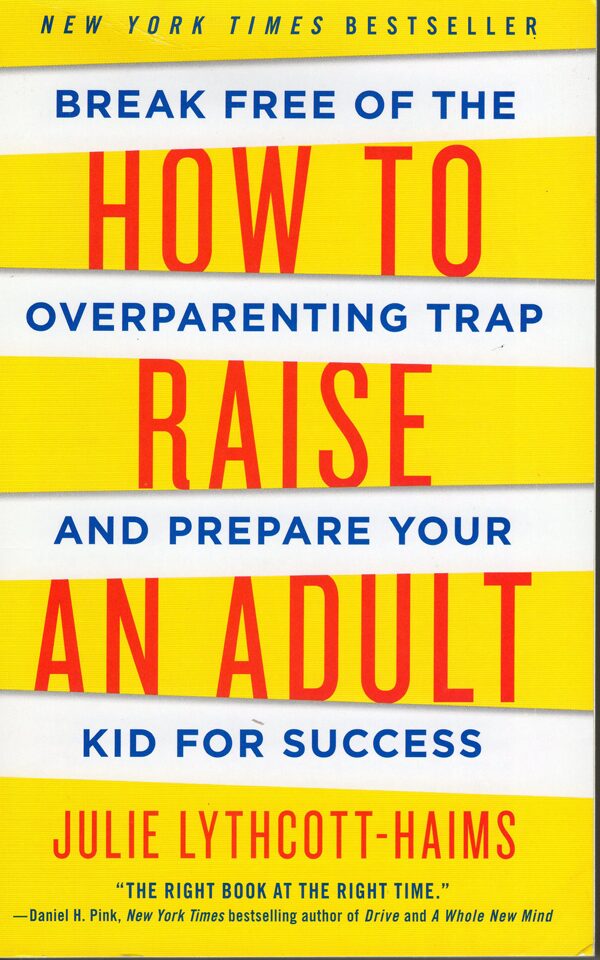
Book Review | How to Raise An Adult: Break Free of the Overparenting Trap and Prepare Your Kid for Success

Book Review | How to Raise An Adult: Break Free of the Overparenting Trap and Prepare Your Kid for Success

by Julie Lythcott-Haims

How to Raise an AdultThis is a book that every parent must read! The author helps us understand, in no uncertain terms, what it means to ‘over-parent’ and the harm it causes to our children, to ourselves, and to our world. The first two chapters focus on what parents are doing now with the very best of intentions and why we must stop hovering. But just wait until you get to Chapter 3: “Another Way.” Look at the subtitles, and you’ll know why I am so grateful for this author’s reinforcement, (whether she knows it or not)
of the validity of Montessori principles. Here are some of them: Give Them Unstructured Time; Teach Life Skills, Teach Them How to Think, Prepare Them for Hard Work, Let Them Chart Their Own Path, Normalize Struggle, and Listen to Them.

When I was teaching a Mommy and Me class, where moms brought their infants with them to learn how to interact with them, we spent 20 minutes of our one hour class just observing the babies. The hardest thing for most of the moms was to just OBSERVE. They weren’t to talk to them or move them or move their toy closer to them. I was astounded by how difficult it was for so many moms to allow their infants to learn to move independently, to struggle to reach a toy, or to interact with other infants. This kind of behavior doesn’t stop when they get older. It just changes. For example, elementary children have cell phones and must check in when they get on the school bus and then when they get to school or when they ride their bikes two blocks down the street to play at a friend’s house. I don’t even want to get started on how parents hover over adolescents!

Read this book. If you are over-parenting, it could help you stop. It you are not, it will validate that your way of parenting is a good choice for you and your family.

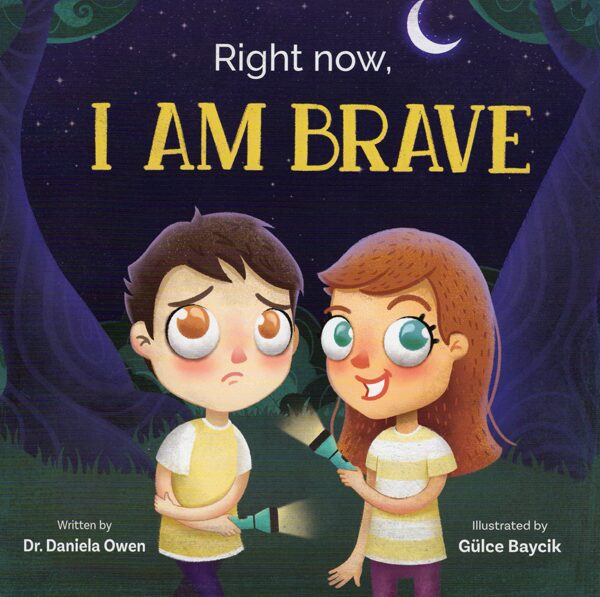
Book Review | Right now, I Am Brave

Book Review | Right now, I Am Brave

by Dr. Daniela Owen
Illustrated by Gülce Baycik

Right Now, I am BraveHere’s another good one from Dr. Owen. The first lesson—when things that we find scary are not actually dangerous, it’s time to be brave. She goes on to define what it means to be brave. She explains how our brains are not always right about what is truly scary. Being brave can be tough for grown ups as well as kids.

So trying new things, doing the right thing, or doing something hard are all sometimes scary. She goes on to give children ideas about how to encourage themselves and push forward when facing scary things.

As always in this series, the illustrations are colorful, inclusive, and full of emotion. It is definitely a good addition to your home library or for your school.

Parenting toward Antiracism | Montessori Family Life Webinar

Parenting toward Antiracism | Montessori Family Life Webinar

Dr. Valaida Wise was recently a guest on the Montessori Family Life Webinar series when she shared some of her ideas about how to raise children to be anti-racist. I will summarize a small part of that webinar here. If you would like to view the entire broadcast or any of our hundreds of weekly broadcasts, you can join the Montessori Family Alliance at montessori.org/mfa.

Or if you are already a member, you can view the webinar by clicking here.

antiracism montessoriSo many parents and teachers believe in this myth of racial innocence. They don’t want to burden their children with this rather adult idea of racism. They believe that children are born kind and innocent to race and that they don’t need this information. So they would rather raise them to be what we call ‘color blind.’ Many researchers would submit that, actually, the worst conversation to have with a child is no conversation at all about race. What is known is that, in reality, young children (as early as three months old) understand bias and difference based on research by Dr. Karen Wynn, Director of the Infant Cognition Center, and Dr. Bloomington, both at Yale University.

“Children become
like the things they love.”
–Dr. Maria Montessori

What researchers are thinking now is that humans may be born with this kind of bias. We have a bias towards something that looks scary or different. Research shows that these biases are not just ‘learned’ behaviors. They are actually inbred, instinctual behaviors that worked for our protection at one point. Left unchecked, without a parent’s guidance, the child cannot help but develop a bias.

Children see bias as early as 3-6 months old. So let’s scan forward. What happens in a family if the parent says, “Well, I don’t want to talk about race because my child is too young?” or “I want them to remain innocent from all of this.” Then the child will be raised in a color-blind mindset and, as research bears out, the child is less likely to point out or understand when discrimination happens.

This could happen very subtly. Let’s say you’re at a playground with your child. You see another child point to a child of color and you hear the pointing child say, “That child looks dirty. Why is that child dirty? Does it come off?” The parent of the pointing child cringes, turns, and walks away, shushing the child. The child’s interpretation is that this is not a good topic; they should not talk about this.

To conclude this summary of just a small segment of Dr. Wise’s broadcast, let’s remember that when we allow our biases (or our embarrassment) in situations stop us from guiding our children toward antiracism (especially the youngest children), they absorb it right away. Children are mirrors. They mirror us. It’s so very important that we check ourselves to see what our children are sensing in our attitudes, in our language, and in our thinking because they are taking it all in.