by Maren Stark Schmidt | Child's Work, Early Adolescence (12-15), Emotional Intelligence (EQ), Later Adolescence (15-18), Lower Elementary (6-9), MFA, Mindfulness, Montessori Education, Montessori Teachers, Upper Elementary (9-12), Young Adults
Tired and agitated, Sara got ready for bed. What had happened to the day? She had woken up fresh that morning, ready to have a productive day.
During breakfast, Sara’s assistant had called to alert Sara that she wouldn’t be in to copy the reports for the next day’s meeting. When Sara went to make copies of her presentation, the toner cartridge was low, the paper jammed and the machine ran out of staples. When Sara reviewed the copies, page 17 had been skipped by the machine. Sara’s lunch appointment cancelled while Sara was waiting in the restaurant. After lunch, she couldn’t get online to do some research. Then Ron, a co-worker, came in and complained about his weekend for half an hour. What went wrong with Sara’s day? Sara was unable to get a work cycle completed.
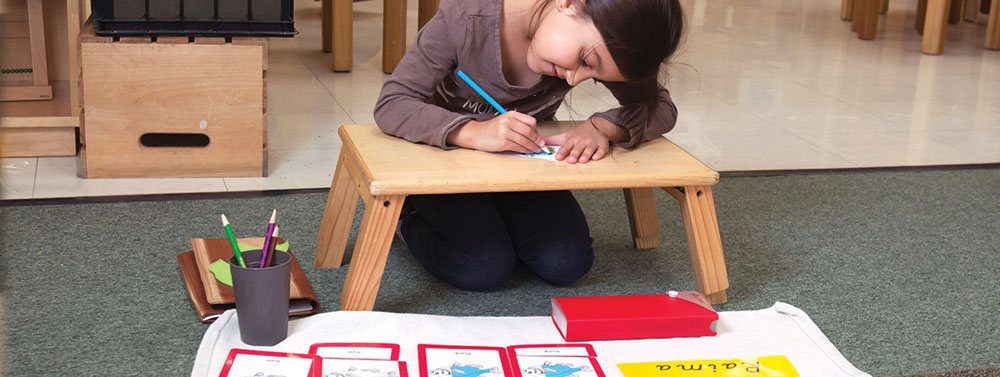
A work cycle consists of selecting an activity, doing it, achieving some internal satisfaction for the work and then selecting the next task.
When we experience this cycle of ”choose-do-return to order-satisfaction, then choose again,” we create a powerful success
cycle with feelings of accomplishment and contentment.
When we are having a productive work cycle, we’ll say we are ”on a roll.” We go from task to task, choosing progressively harder tasks as time allows. On those high-achieving days, we feel unstoppable.
Then there are the days when we get off to fits and starts because we are interrupted, don’t have enough time to complete a task before another commitment or lack the necessary supplies. How that trip to the hardware store can sabotage the best efforts for a productive workday!
Most of us, even small children, have a built-in three-hour work cycle. We might contrast and compare it to our sleep cycle. When we know we have at least three hours of uninterrupted time, we will tackle a multitude of jobs and enjoy doing it. If our time is interrupted, we may not even try to start anything. ”It’s not worth the effort,” or ”I don’t feel like doing anything,” we might say. Sound familiar?
When given a regular three-hour period, children (and adults) learn to tap into a success cycle. After accomplishing a series of short and familiar tasks in a 90-minute time frame, a child will choose a task that is challenging and represents ”true learning.” At this 90-minute mark there is a period of restlessness that lasts about ten minutes, until the choice for the challenging activity is made. The new activity may last for 60 to 90 minutes.
Here’s an example of a recent Saturday morning three-hour work cycle for me. Not very glamorous, but I was on a roll.
Clean kitchen, 15 minutes. Start laundry, 15 minutes. Make phone calls for appointments, 20 minutes. Vacuum, 20 minutes. Feeling of restlessness. What should I do next? Cup of coffee, 10 minutes. Balance bank statements and pay bills, 90 minutes.
Here’s an example of a four-and-a-half-year-old’s work cycle that I recently observed. Work puzzle, 10 minutes. Build with blocks, 15 minutes. Water plants, 20 minutes. Sweep floor, 10 minutes. Number counting cards, 15 minutes. Walk up and down steps, 5 minutes. Talk with dad, 10 minutes. Do 100-piece puzzle, 45 minutes. Practice tying shoes, 45 minutes.
When we have achieved a three-hour work cycle, normally we are eager to begin the next cycle. Productive adults have two to four work cycles a day. Children under the age of five usually have one work cycle a day. Around five, children will start a second work cycle if given the opportunity.
The gift of uninterrupted time gives us, children and adults, the opportunity to engage in our own powerful three-hour work cycles, creating personal success in learning, concentration and independence.
Next Week: Punishing with Rewards
Kids Talk™ is a column dealing with early childhood development issues written by Maren Stark Schmidt. Mrs. Schmidt founded a Montessori school and holds a Masters of Education from Loyola College in Maryland.
by Scott Osborne | Adolescence, Gender, Montessori Administrators, School Leadership, School Resources, The International Montessori Council, Video, Webcasts / IMC, Young Adolescent, Young Adults
Looking at Gender Bias – Part 4 with E. Scott Osborne
by Caitlin Roper | Adolescence, Communication, Family Resources, Montessori Parenting, Parenting on the Same Page, Social Media, Webinars / MFA, Young Adolescent, Young Adults
Join Caitlin Roper, Middle and High School instructor at NewGate School, and our panel for this 2nd session which will focus more on safety and cyberbullying. We will share practical and positive tips for parents as they “push through the waters of uncharted seas.”
by Caitlin Roper | Adolescence, Early Adolescence (12-15), Family Resources, Montessori Parenting, Social Media, Webinars / MFA, Young Adolescent, Young Adults
Join Caitlin Roper, Middle and High School instructor at NewGate School, and our panel for this enlightening session. We will share practical and positive tips for parents as they “push through the waters of uncharted seas.”
by Geoffrey Bishop | Adolescence, Emotionally Healthy Children, Empowerment, Family Resources, MFA, Montessori Family Life, Young Adolescent, Young Adults
Growing up in a one-room schoolhouse in the Australian outback, the world of Montessori and modern education seemed a distant idea. But today, after I have had many years of experience and a strong philosophical and practical education ethic. I grew up closer to Montessori than I knew. In thinking about my meager educational beginnings, it was not what I learned in that classroom but what I learned in the wide open world that educated me for life. Spending many hours by myself in the wilderness, working with my father and brothers on the farm, and watching as my mother baked cakes, desserts, and cookies… these are the things that really influenced me. All these have spoken to me in the same way that Montessori speaks to all of us. We, as Montessori educators, believe there are important mantras that are necessary for a child to successfully attain adulthood. They include family, a stable home, good adult mentors, and a strong system of education that foster independence, individual autonomy, and joyful learning opportunities with a system of choice and a strong prepared environment. I would like to mention one additional mantra that I believe to be of equal importance in a child’s life, and that is unstructured and unrestricted outdoor and nature play. Richard Louv, in his book Last Child in the Woods (2008), speaks of the “Nature Deficit Disorder” he sees in many of today’s children. I see this as well, and in my role as the head of a Montessori school set on 400 acres and as the head of an Outdoor Environmental Education program, I aim to correct this deficit.
I would like to tell the story of my own childhood, how it mirrored that of a Montessori education in its most authentic form, and how the elements of the natural world formulated my education and helped me in later life to truly understand Montessori. My education was unconventional, so use your mind to draw comparisons to your work in your Montessori or home environments.
System of Education
The setting is St. Joseph’s Catholic School, a small cluster of stone buildings at the bottom of Gillagala Hill on the outskirts of Merriwa, a rural town of 500 people in North West New South Wales, Australia. It is in this one-room schoolhouse that I received my “formal education.” We pupils sat in rows, ink wells full, and listened to repetitive instructions of which I have no memory. But it was not in this classroom that I truly received my education. Each day, I would wake up on our sheep station with my four brothers and two sisters. We would do our chores and then walk a mile to the bus stop for the rough and ragged journey to school. On this journey, I would start my schooling.
 As the notorious “naughty boy,” my designated seat was up front, on an old apple box next to the driver. My engineering education came from being up close and personal with the bus engine and the gearing system. As I was not permitted to talk for the 1½-hour journey, and the scenery got boring, I found other ways to engage my energies. In this bus, there was no lid on the engine housing, so the driver constantly had to refill the radiator so the bus would not overheat. I would watch the engine rattle and groan, and the driver rev and change gears, until I knew every working part of the bus.
On one occasion, to try and understand the tension applied to the brake pedal in order for the bus to stop, I reached my foot across and slammed down on the brake pedal while the bus was in full motion. We stopped, all right, and I learned that it took a lot of my weight to push the brake pedal to the floor; I also learned, through a sore bottom, that placing one’s foot on the brake randomly was not a good idea.
Once at school, the schoolyard was also my science and engineering laboratory, with inconvenient interruptions of classroom work. My days would include building ant traps, constructing forts out of sticks and discarded rope, and climbing trees to prevent detection from those who were chasing me. I would undo the water faucet on the children’s bubbler system, releasing water to run along the dirt so I could construct dams and experiment with flooding and altering water courses. I would plant random seeds in the nuns’ petunia gardens to see if they would grow, and as they did, I would weed out the petunias so my wheat and oat seeds would get more light. I would ring the church bell to see how high off the ground the weight of the bell could lift me and drop the chalk on the floor to see if it consistently broke into three pieces.
All these lessons, though not popular with my teacher or my parents, are lessons I learned and remember. They combined to become my system of education. These small and somewhat innocent experiments in life would lead to much greater experiments in my later years. I bred 2,500 mice in the caretaker’s closet to better understand dominant and recessive genes. I wrote, directed, and performed my own play because my school did not have a drama department. At home, I would watch as the sheep gave birth to lambs and wait in eager anticipation for those first steps and first feeding. I would hunt for bird nests and capture tadpoles to watch them become frogs. From a young age, I needed to reinvent my system of education. It sounds to me a lot like what Montessori did.
Independence: Autonomy of the Individual
On the farm, my mother had some rules that we all understood, and they guided our lives. Rule number one: You have to be on time for meals, and we all sit and eat together. Rule number two: You eat everything on your plate. Rule number three: Children were not to be seen between meals. Rainy days were the only days we could stay inside. Otherwise, I was out on our 3,000-acre property getting my education. From my earliest memory, the outside environment felt natural to me; I spent hours along the creek catching frogs and watching snakes and looking for eels. I spent days combing the mountains looking in caves and discovering new plants and lying in meadows of ferns looking up at the sky, trying to see pictures in the clouds.
My father gave me a horse at the age of 5. I had no bridle or saddle, but I already knew how to ride. It was also my responsibility to feed, water, and brush my horse, as well as ride him as much as possible. At the time, I did not realize how important and lifelong these lessons would be. My independence was being fostered, strengthened. I was learning my limits and my ability to get whatever I needed to succeed. If something was beyond my reach, I would seek out one of my brothers and enlist his aid. Of course this had to be paid for so I would have to come up with the plan of payment before the request was made. I learned to respect the needs and abilities of those around me, by understanding that we live in a world that is give and take. I never once stole something that I needed for a project, because I knew my market, I knew what I had to trade, and I knew the value of people’s time and energy. It was in these mountains and streams, along with time with my family, neighbors, and friends that I developed my individuality. I drew insight and ideas from my father’s work ethic, my mother’s laughter and warmth, my brother’s athleticism, and my sister’s worldliness.
Joy of Learning
Our sheep station was part of the lower valleys of the Liverpool Range. We were considered coastal even though we were at least 100 miles from the sea as the crow flies. It is a beautiful part of the world, with gently rolling hills nestled up against steep, rocky mountains. The mountains are olive gray, sometimes black, and the hills a smoky green on white. Rich green is not a color that describes my country well. Blues, grays, browns and white, with a splash of red, would be more accurate. The lower hills were covered with beautiful stands of white box, kurrajongs, and iron bark. The flats had tall, majestic ghost gums, flowering white apple gum, and grass. In the wind, white tufts of rye and kangaroo grass swayed like a great ocean. Here and there, ghostly white stumps and dead trees would stand out against the blue sky. Galahs and cockatoos screeched from hollow trunks, in search of food for their young. Crystal-clear water flowed out of the mountains into the valleys, becoming the lifeblood of the land. I seemed so small upon this land and yet so much a part of it.
Old Mr. Clark, one of the adults in my life who played an important role in fostering my love of learning, told me stories about our hills and mountains as I sat on his knee in front of a warm fire on a winter’s eve. From my view, he was as old as the mountains themselves. His face was lined and wrinkled and his eyes deep and bright. He was a thin man, but as his arms held me, I could feel the power of years working in the mountains and on the land. His eyes reflected the joy and sorrow of his life and his grieving for his recently departed wife. His hands were big and rough and yet gentle and kind, full of love and a lifetime’s dedication to the land.
Old Mr. Clark’s stories would all start the same way. I would snuggle in close for protection, and he would take a long sip of his scotch. “Back before the war,” he would start, “the big war, this land was wild and untamed….” And the stories would flow out of him like winds from the past. The stories of my land.
Another adult who inspired me was Father Delaine, our parish priest. Every week he would come to our classroom and tell us stories from the Bible. He would tell of people riding camels through the desert and of slaves and kings and pyramids and pharaohs. The religious meaning completely escaped me—I was mesmerized by the people and the places.
When either Old Mr. Clark or Father Delaine told stories, I would feel joy bubbling out of me. Oral history, the history of a people preserved through storytelling, is very powerful. And in my case, these stories, with their strong connection to the world and the outdoors, were a strong influence in my developing a love of learning.
Choice
Growing up in a small rural community, there did not seem to be many choices in life. Most kids would do a number of years at the local school then move on to work on the farm, find a wife at the bachelors’ and spinsters’ ball, and settle into a quiet, simple life. From an early age, I knew this was not the life I wanted. My parents believed strongly in not influencing us children on the direction our lives would take. But I have vivid memories, from age 10 or 11, of deciding that my life’s plan was to embark on a discovery of this planet.
What were the influences that planted the seed in my mind that Merriwa was not my destiny? To answer this, I have to go back to when I was five- or six-years old. One of my sisters had moved to the United States after finishing school and would send us gifts via airmail. One of my gifts was a series of books by Ivy Wallace about a rabbit called Pookie.
It was the first of these books that forged the path to my future.
Pookie was not an ordinary rabbit. He was born with two little flimsy wings which his mother would tie up in tight bows. He wanted to sleep all day, even at meal times. When his mother Rabbit tucked them [brothers and sisters] all into the big leaf bed at night, Pookie was full of bunny hops and bouncing. This kept everyone awake. (Wallace, 1946)
The story goes on to describe how Pookie did not fit in anywhere, least of all at school. This story resonated with me so strongly that a phrase in the middle of the book became the drum that beat in my head for my entire life. Pookie’s teacher, cross with him for falling asleep in class, told him he should leave school and go out and seek his fortune. But Pookie did not know what a fortune was, and for the rest of the book, he goes on adventures to try and find it. His fortune ended up being the thing that made Pookie happy. My mother would read this book over and over again, and when I learned to read I would read it myself. Torn and tattered now, that book still sits in the children’s closet of our farm in Australia.
I was able to seek my own fortune by spending a number of years traveling around the world, looking for a place to set my sack and to find direction for my life. I discovered it first in environmental education and now in Montessori. The choice to find my own fortune allowed me to discover my own education, dreams and interests, and in doing so fulfilled me.
Multi-Age Learners
Multi-age learning environments seem to me to be as natural as falling off a log. In my community, children from many age groups learned and played together. Much of what I learned growing up on the farm was from my older brothers. On long hot summer days we would spend hours in the creek swimming and skipping rocks. I learned how to replace the spark plug on the lawnmower from my brother. I learned how to shoe a horse from my father, and I learned how to dig for yams in the mountains from a neighbor boy.
I also learned to be streetwise and to question when asked to do something. For example: My three older brothers had been spending weeks building a go-cart with an engine removed from our old lawnmower. The frame of the cart was made of wood and iron, strapped together in many ingenious but perhaps less-than-stable ways. The big day arrived when the prototype go-cart would go for its debut run. I, of course, was there to witness its maiden voyage. There was a lot of back and forth between my brothers as to who would be the first to ride in this cart. The back and forth was not because everyone wanted to ride, it was more because no one wanted to be first in case the thing fell apart. Being the youngest of the four, it was decided that I should be the first to ride. I was strapped in with my father’s old army belt, and the engine was fired up. I was given strict instructions that I was only to release the brake when I was told. In releasing the brake, the go-cart would plummet forward. However, I was given no instructions on the steering of the go-cart. With the engine revving at full RPMs, my brothers set me in motion and I flew directly toward the nearest tree. Lesson learned: Beware of some honors that are bestowed on you.
When I went to boarding school, I learned from my prefect how to conduct oneself in a large school environment; he taught me how to make hospital corners on my bed and how to polish my shoes so they shined. And before that, in the one-room schoolhouse, I learned that there were a lot of children just like me, and there were a lot who were very different. I learned whom to ask questions of and who could be relied upon to give the right answers. I learned whom to trust and whom to avoid. As I got older, I learned to mentor those younger than me: who to show how to make ant traps; who was trustworthy and respectful and who was not. I learned that it is advantageous at times to garner the advice of an older peer than trust the advice of someone your own age. I found many things in common with those who were my age, I gathered wisdom from those who were older, and gave advice and solace to those who were younger.
Intimate Relationship Between Adults and Children
In our adult world of getting to and from work, going through our daily routines, making sure that our bills were paid, the birthday cards sent out on time, our car oil changed, and that four seats were booked on the family vacation instead of three by mistake, we often forget the importance of the mentor role we have with our children. What may seem to be an insignificant event in our lives may end up being one of the most important moments in the direction of a child. We do things in our classrooms and in our interactions with children that seem routine and mundane to us, but they have powerful and far-reaching consequences for the little ones who watch us. There have been a couple of very powerful compasses directing my life and, in thinking back, they came from interactions with adults who never really understood the impact that they would have on me.
My prepared environment was my outdoor world. It was perfectly prepared each and every day, it was prepared with me in mind, and it was prepared to challenge me, to inspire me to totally immerse myself in what I was doing.Some of my earliest memories of my mother are of her standing in the garden admiring the beauty and life she had brought into our harsh landscape. My mother was a traditional English gardener, taking direction from traditional landscape designers such as Capability Brown and Edna Walling. I would spend hours with her, weeding and digging in the garden, and to this day, my connection to the earth is one of the strongest forces of my life. When I have my hands in the soil and I smell the flowers—that is when I am content. That was a gift my mother gave me.
The second gift is a little more abstract, yet it had an equally powerful and long-lasting influence on me. One of the chores that I had as a child was to bring the sheep shearers their “smoko” in the morning and afternoon. Smoko was the name for tea and cake in the morning and tea and pikelets (a kind of crumpet) in the afternoon. This job meant loading the tray with my mother in the farmhouse kitchen and walking it up to the shearing shed, a distance of about 200 yards. We all had jobs on the farm, and this was mine. Once the tray had been delivered and set out on a bale of wool, I would ready the wash basin for the shearers to wash up. Walking into the shed with the sound of the shears going full tilt, I would catch the smell of wool and lanolin mixed with the strong smell of fresh tobacco, a smell unlike any other. I could curl up in a pile of wool and fall asleep with the sound in the background. But going to sleep in a shearing shed was not an option as the roustabout and wool hands moved wool from the shearing floor onto the skirting tables then into the sorting bins and into the press. All this was rapid fire; movement was quick, and all hands were busy. When the horn sounded for the shearers to stop for smoko, the engines would run low, the sound of shoes deadened by the lanolin-waxed floor, and a quiet would come over the shed. Even the sheep seemed to know it was smoko; they too stopped their bleating and dozed a little.
As the shearers settled with their tea mugs filled and sweet pikelets eaten, tobacco smoke would filter through the air. Then—I remember it as if it was yesterday—one of the shearers asked me to clean his shears. I was in heaven. With this one gesture, an adult job was given to me. I remember he showed me how it was done and then I practiced. I practiced all afternoon, and ended the day with the shears clean, oiled, and shining. That the shearer had allowed me to do a task that was an adult task gave me the confidence that I could do anything.
Prepared Environment
My prepared environment was my outdoor world. It was perfectly prepared each and every day, it was prepared with me in mind, and it was prepared to challenge me, to inspire me to totally immerse myself in what I was doing. This prepared environment was Nature. It was not adapted with fences to keep me in or to keep others out; it was not prepared with special pathways for me to explore or manicured grass for me to lay on; it was not prepared with swings for me to swing on or slides for me to slide down on, or little pools for me to play in. It was Nature, in its raw form, with its broken stumps I could climb on as king of the world, its dandelion and thistle flowers I could pick for my mother, its creek banks I could catch frogs in, its overgrown hedges I could climb into to make my fort. Nature need not design for children, nor engineer to create playscapes or boundaries; it has everything a child could possibly want, and it will inspire their imaginations to soar.
I have had a fortunate life, and I talk a lot about my childhood and my adulthood. People often ask me, “But I live in the city—there are dangerous people there. What about my child’s safety?” The safety and well-being of his or her child is, of course, every adult’s concern. To this, I answer: We can let our fears and our prejudices control and rule us, or we can trust in our own judgment and, thus, build trust in our children. How is a child to learn independence if we never allow her to do anything for herself? How is a child to learn whom to trust and whom to be aware of if we do not allow him to explore humanity?
A fall for a 1-year-old is a normal part of daily life, while a fall for a 35-year-old could mean serious injuries, and a fall for a 90-year-old can be fatal. Our children need to fall, they need to climb, and they need to get dirty. They need to experiment and to stretch their limits. If we, as adults, force them to wait until they are 18 to fall and get dirty, the consequences will be devastating.
Let us not allow our gated communities and our restrictive subdivision associations limit our children’s ability to experience life for themselves. Allow them the freedom to explore, allow them to discover the world that will one day be theirs. My parents gave me a gift and it was the gift of Nature as a prepared environment, a place to play freely. Let us give every child the same gift.
by A. McAfee | Early Adolescence (12-15), Family Resources, MFA, Primary (3-6), Psychology, Upper Elementary (9-12), Young Adolescent, Young Adults
As our infants grow into toddlers and do less nuzzling and more ‘NO-ing,’ how do we maintain a strong connection while setting the necessary limits?
Can we keep the relationship close as our child starts daycare or preschool, and we teach her to problem-solve and navigate her own path?
As our kids move into the school years and out into the world, how do we stay connected so they WANT to follow our expectations?
And as our kids evolve into teenagers (when we get fired as the ‘boss’), how can we make sure we have the necessary trust and intimacy with them so that we get rehired as consultants?
Want to be a great parent? Want to raise a happy, healthy, well-behaved kid? Want to live in a home where discipline becomes unnecessary? The secret is to create a closer connection with your child.
It isn’t enough that we tell our children we love them. We need to put our love into action every day for them to feel it.
“But what does that mean, putting our love into action?”
Mostly, it means making that connection with our child our highest priority. Love in action means paying thoughtful attention to what goes on between us, seeing things from our child’s point of view and always remembering that this child (who sometimes may drive us crazy) is still that precious baby we welcomed into our arms with such hope.
Kids form their view of themselves and the world every day. They need your encouragement to see themselves as good people who are capable of good things. And they need to know you’re on their side.
“Doesn’t that take a lot of energy?”
It takes a lot of effort to fully attend to another human being, but when we are really present with our child, we often find that it energizes us and makes us feel more alive, as being fully present with anyone does.
Being close to another human takes work. But 90 percent of people on their deathbed say that their biggest regret is that they didn’t get closer to the people in their lives. And almost all parents whose children are grown say they wish they had spent more time with their kids.
“Being fully present? How can I do that when I’m just trying to get dinner on the table and keep from tripping over the toys?”
Being present just means paying attention. Like a marriage or a friendship, your relationship with your child needs positive attention to thrive. Attention = Love. Like your garden, your car, or your work, what you attend to flourishes. And, of course, that kind of attentiveness takes time. You can multi-task at it while you’re making dinner, but the secret of a great relationship is some focused time every day attending only to that child.
“This is all too vague for me. What am I supposed to actually DO?”
1. Start right for a firm foundation.
The closeness of the parent-child connection throughout life results from how much parents connect with their babies, right from the beginning. For instance, research has shown that fathers who take a week or more off work when their babies are born have a closer relationship with their child at every stage, including as teens and college students. Is this cause and effect? The bonding theorists say that if a man bonds with his newborn, he will stay closer to her throughout life. But you don’t have to believe that bonding with a newborn is crucial to note that the kind of man who treasures his newborn and nurtures his new family is likely to continue doing so in ways that bring them closer throughout her childhood.
2. Remember that all relationships take work.
Good parent-child connections don’t spring out of nowhere, any more than good marriages do. Biology gives us a head start. If we weren’t biologically programmed to love our infants, the human race would have died out long ago. As kids get older, we need to build on that natural bond, or the challenges of modern life can erode it. Luckily, children automatically love their parents. As long as we don’t blow that, we can keep the connection strong.
3. Prioritize time with your child.
Assume that you’ll need to put in a significant amount of time creating a good relationship with your child. Quality time is a myth, because there’s no switch to turn on closeness. Imagine that you work all the time, and have set aside an evening with your husband, whom you’ve barely seen in the past six months. Does he immediately start baring his soul? Not likely.
In relationships, without quantity, there’s no quality. You can’t expect a good relationship with your daughter if you spend all your time at work and she spends all her time with her friends. So as hard as it is with the pressures of job and daily life, if we want a better relationship with our kids, we have to free up the time to make that happen.
4. Start with trust, the foundation of every good relationship.
Trust begins in infancy, when your baby learns whether she can depend on you to pick her up when she needs you. By the time babies are a year old, researchers can assess whether babies are “securely attached” to their parents, which basically means the baby trusts that his parents can be depended on to meet his emotional and physical needs.
Over time, we earn our children’s trust in other ways: following through on the promise we make to play a game with them later; not breaking a confidence; picking them up on time.
At the same time, we extend our trust to them by expecting the best from them and believing in their fundamental goodness and potential. We trust in the power of human development to help our child grow, learn, and mature. We trust that although our child may act like a child today, he or she is always developing into a more mature person, just as (we hope) we are. We trust that no matter what he or she does, there is always the potential for positive change.
Trust does not mean blindly believing what your teenager tells you. Trust means not giving up on your child, no matter what he or she does. Trust means never walking away from the relationship in frustration, because you trust that she needs you and that you will find a way to work things out.
5. Encourage, encourage, encourage.
Think of your child as a plant that is programmed by nature to grow and blossom. If you see the plant has brown leaves, you consider if it needs more light, more water, more fertilizer. You don’t criticize it and yell at it to straighten up and grow right.
Kids form their view of themselves and the world every day. They need your encouragement to see themselves as good people who are capable of good things. And they need to know you’re on their side. If most of what comes out of your mouth is correction or criticism, they won’t feel good about themselves, and they won’t feel like you’re their ally. You lose your only leverage with them, and they lose something every kid needs: to know they have an adult who thinks the world of them.
6. Remember that respect must be mutual.
Pretty obvious, right? But we forget this with our kids, because we know we’re supposed to be the boss. You can still set limits (and you must), but if you do it respectfully and with empathy, your child will learn both to treat others with respect and to expect to be treated respectfully himself.
Once, when I became impatient with my then three-year-old, he turned to me and said “I don’t like it when you talk to me that way.” A friend who was with us said, “If he’s starting this early, you’re going to have big problems when he’s a teenager!” In fact, rather than challenging my authority, my toddler was simply asking to be treated with the dignity he had come to expect. Now a teenager, he continues to treat himself, me, and others respectfully. And he chooses peers who treat him respectfully. Isn’t that what we all want for our kids?
7. Think of relationships as the slow accretion of daily interactions.
You don’t have to do anything special to build a relationship with your child. The good (and bad) news is that every interaction creates a relationship. Grocery shopping, carpooling, and bath time matter as much as that big talk you have when there’s a problem. He doesn’t want to share his toy, or go to bed, or do his homework? How you handle it is one brick in the foundation of your permanent relationship, as well as his ideas about all relationships.
That’s one reason it’s worth thinking through any recurring interactions that get on your nerves to see how you might handle them differently. Interactions that happen more than once tend to initiate a pattern. Nagging and criticizing are no basis for a relationship with someone you love. And, besides, your life is too short for you to spend it in a state of annoyance.
8. Communication habits start early.
Do you listen when she prattles on interminably about her friends at preschool, even when you have more important things to think about? Then she’s more likely to tell you about her interactions with boys when she’s fourteen.
It’s hard to pay attention when you’re rushing to pick up food for dinner and get home, but if you aren’t really listening, two things happen: you miss an opportunity to learn about and teach your child; and she learns that you don’t really listen, so there’s not much point in talking.
9. Don’t take it personally.
Your teenager slams the door to her bedroom. Your ten-year-old huffs, “Mom, you never understand!” Your four-year-old screams, “I hate you, Daddy!” What’s the most important thing to remember? DON’T TAKE IT PERSONALLY! This isn’t primarily about you; it’s about them: their tangled-up feelings; their difficulty controlling themselves; their immature ability to understand and express their emotions. Taking it personally wounds you, which means you do what we all do when hurt: either close off, lash out, or both. These reactions just worsens a tough situation for all concerned.
Remembering not to take it personally means you:
- Take a deep breath.
- Let the hurt go.
- Remind yourself that your child does, in fact, love you but can’t get in touch with it at the moment.
- Consciously lower your voice.
- Try hard to remember what it
feels like to be a kid who is upset and over-reacting.
- Think through how to respond calmly and constructively.
You can still set limits, but you do it from as calm a place as you can muster. Your child will be deeply grateful, even if she can’t acknowledge it at the moment. I’m not for a minute suggesting that you let your child treat you disrespectfully. I’m suggesting you act out of love, rather than anger, as you set limits. And if you’re too angry to get in touch with your love at the moment, then wait.
10. Resist the impulse to be punitive.
How would you feel about someone who hurt, threatened, or humiliated you, “for your own good”? Kids do need our guidance, but punishing your child always erodes your relationship, which makes your child misbehave more.
11. Don’t let little rifts build up.
If something’s wrong between you, find a way to bring it up and work it through positively. Choosing to withdraw (except temporarily, strategically) when your child seems intent on driving you away is ALWAYS a mistake. Every difficulty is an opportunity to get closer or create distance.
12. Re-connect after every separation.
Parents naturally provide an anchor, or compass, for kids to attach to and stay oriented around. When they’re apart from us they need a substitute, so they orient themselves around teachers, coaches, electronics, or peers. When we rejoin each other physically, we need to also rejoin emotionally.
13. Stay available.
Most kids don’t keep an agenda and bring things up at a scheduled meeting. Nothing makes them clam up faster than pressing them to talk. Kids talk when something is up for them, particularly if you’ve proven yourself to be a good listener, but not overly attached to their opening up to you.
Being on hand when they come home is a sure-fire way to hear the highlights of the day with younger kids, and even, often, with older ones. With older kids, simply being in the same room doing something can create the opportunity for interaction. If you’re cooking dinner and she’s doing homework, for instance, or the two of you are in the car alone, there’s often an opening. Of course, if one of you is hunched over the computer, the interaction is likely to be more limited. Find ways to be in proximity where you’re both potentially available, without it seeming like a demand.
This may seem obvious, but stating your availability is helpful, even with teens.
“I’ll be in the kitchen making dinner if you want me.”
“I have to run to the grocery store, but don’t hesitate to call my cell phone if you need me.”
The most important part of staying available is a state of mind. Your child will sense your emotional availability. Parents who have close relationships with their teens often say that as their child has gotten older, they’ve made it a practice to drop everything else if their teen signals a desire to talk. This can be difficult if you’re also handling a demanding job and other responsibilities, of course. But kids who feel that other things are more important to their parents, often look elsewhere when they’re emotionally needy. And that’s our loss, as much as theirs.
by Larry Schanker PH.D | Adolescence, Early Adolescence (12-15), Emotionally Healthy Children, Empowerment, Infant-Toddler (0 to 3), Kindergarten, Later Adolescence (15-18), Lower Elementary (6-9), MFA, Montessori Graduates, Montessori Secondary / High School, Primary (3-6), Toddler (18 months-3 years), Upper Elementary (9-12), Video, Young Adolescent, Young Adults
It’s not often that we have the opportunity to hear from a dad on the webinar and on top of that – a dad whose daughter completed Montessori through high school. Please join Larry Schanker for insights and encouragement from dad about the value of Montessori through the high school years and beyond.
by Angeline Lillard | Adolescence, Brain Development, Child's Work, Early Adolescence (12-15), Emotionally Healthy Children, Empowerment, Free Reads, Imagination, Kindergarten, Later Adolescence (15-18), Lower Elementary (6-9), Mixed Ages, Montessori Curriculum, Montessori Education, Montessori Middle School, Montessori Parenting, Montessori Secondary / High School, Montessori students, Montessori Teachers, Parent Education, Planes of Development, Prepared Environment, Primary (3-6), Psychology, Research, Upper Elementary (9-12), Video, Young Adolescent, Young Adults
Dr. Angeline Lillard presents Maria Montessori’s key insights about childhood education, the subsequent educational research that has validated her approach, and how these ideas are implemented in a modern Montessori classroom.
From Montessori: The Science Behind the Genius
For more information, visit: http://montessori-science.org
by Maria Montessori | Adolescence, Early Adolescence (12-15), Free Reads, Later Adolescence (15-18), Maria Montessori, Montessori Education, Montessori Middle School, Montessori Secondary / High School, Young Adolescent, Young Adults
Here is a link to the digital archive of Dr. Maria Montessori’s essays, The Erdkinder and the Functions of the University. In this work Maria Montessori considers the needs and issues of needed educational reform for adolescents and university students. She looks at each level and seeks the optimum method for facilitating growth.
Click the cover image to read it online.
by Mark Woodward | Empowerment, Maria Montessori, MFA, Mixed Ages, Montessori Education, Montessori students, The International Montessori Council, Young Adolescent, Young Adults
My name is Mark Woodward, and I am a composer, songwriter, and the Music Director at Montessori Academy in Brentwood, TN. I am a musician by education, and I was a musician by trade until making the leap into the field of education. Ready for a change, I was invited through a mutual friend to apply at Montessori Academy. I landed the job of Music Teacher and dove headfirst into the most challenging and fulfilling period of my life.
I had no background in Montessori, so the head of school at the time, Linda Bern-storf, kept a steady supply of reading material coming my way. I devoured titles like Montessori Madness, The Science Behind the Genius, and Standing’s Her Life and Work. I attempted to explain the Method to my friends, which, I quickly found was impossible. There was just too much to tell. I also found that many of our parents knew only a few of the basics, just enough to make them dangerous when trying to explain Montessori themselves. But no matter the confusion on philosophy, everyone was inspired when hearing her story.
This situation formed a fertile seedbed from which sprang the idea to write a musical. What better way for our parents to learn about Montessori’s story and Method than to see it played out for them by their children onstage? Years of research followed, and finally, I set some writing deadlines. But, because of my own procrastination in meeting those deadlines, I ended up bringing lots of half-baked song ideas into class. I was unknowingly setting myself up for success. I quickly learned what was fun or boring, too complex or too easy, and I had the flexibility to adjust on the go. In three months, we had a 30-minute version ready for our lower elementary students, and in another year, it was extended to 80 minutes for our upper elementary and middle school students.
The response was overwhelming. We began receiving requests for the script, and after more editing, updating, and formatting, we made it available.
More than just another play, we have found that Maria Montessori: The Musical is a powerful tool for Montessori schools to market themselves, educate their parents, and bring enrichment to their students.
The benefits of putting on Maria Montessori: The Musical are numerous.
For starters, students develop a connection with an inspiring historical figure in Maria Montessori. They are also made to feel the plight of the mentally handicapped and love for humanity in general. In addition, they learn to appreciate their own school. Curriculum-wise, Maria Montessori: The Musical touches history, music, drama, dance (optional), set and costume design (optional), and educational philosophy.
And it’s fun!
For adults, the meaningfulness hits at a deeper level. After every performance, we encounter teary-eyed teachers and parents. One parent with no Montessori background cried through the entire show. The story is powerful by itself, but the medium of music gives it an extra poignancy and also helps the brain to digest the drier philosophical elements. Do you have low attendance at your Parent Information Meetings? They are your captive audience at Maria Montessori: The Musical.
Lastly, this show is a powerful marketing tool. Put an article in your local paper, make the show open to the public, and charge admission. Invite nearby Montessori schools to bring their students to a free daytime performance. We had Montessori schools of all stripes attend our production, and it turned out to be a magical community-building event.
All other factors being equal, putting on Maria Montessori: The Musical will increase the buzz around your school, boost your enrollment, and convince parents who are on the fence to stick around longer.
The musical is available in two versions: 35 minutes for lower elementary and 80 minutes for upper elementary and middle school. (Only schools with established drama programs are encouraged to license the full-length version. By contrast, any school with at least 15 1st-3rd graders, or even 15 K-5th graders can put on the short version.)
Schools who license the show will receive everything they need to succeed: Student Scripts, Director’s Guide, Piano/Vocal Score, Reference DVD, Guide Vocal Soundtrack, and Accompaniment Soundtrack.
You may contact us with questions through our website: montessorimusical.com. To listen to our Original Student Cast Recording, search “Maria Montessori: The Musical” on YouTube or Spotify.
I will close with a quote from our opener, the theme of the show, what Maria Montessori lived for and the reason you are reading this right now, “The Children of the World.”
“We are the children of the world
A miracle unfurled to those who see
With hearts wide open
We hold power in our hands
The future race of man
We are the children of the world…”
ML/ August2019/ Pg 23- By Mark Woodward
by Christine Lowry | Book Reviews, Brain Development, Communication, Montessori students, Montessori Teachers, Planes of Development, Reading, The International Montessori Council, Young Adolescent, Young Adults
The book, Culturally Responsive Teaching and The Brain, written by Zaretta Hammond, examines the philosophy and implementation of culturally responsive teaching in the context of current research and knowledge of neuropsychology and its impact on student behavior and response.
The book seeks to connect current brain research and culturally responsive teaching with the question “what is needed to activate that wiring for optimal connectivity for students of color?” Understanding the classroom practices that can serve as triggers for engagement of various regions of the brain can help educators adapt their practices in a culturally relevant way that supports students of color.
The book explores this premise in three parts. Part One: Building Awareness and Knowledge; Part Two: Building Learning Partnerships; and Part Three: Building Intellective Capacity. Each section brings together the information of neuropsychology with a study of cultures with the goal of educating teachers to become culturally sensitive and responsive to their students. With practical, concrete examples of teaching strategies and self-reflections, Ms. Hammond leads the reader through the process of developing the skills and understanding needed to offer a culturally responsive classroom environment to all students.
As culturally responsive teaching is more a philosophy, or mindset, rather than a method, Part One: Building Awareness and Knowledge begins to explore the goal of guiding “dependent learners” to become independent thinkers, who are self-motivated and confident in their abilities. With the premise that educators can change the “habits of mind” of the dependent learner, Hammond explores the importance of relationship, creating a classroom that helps students reach their zone of proximal development with just the right challenges and the tools that teachers can use to implement culturally responsive teaching.
The Ready for Rigor Framework includes the components of Awareness, Learning Partnerships, Information Processing, and Community of Learners and Learning Environment. Educators must first understand the role that culture plays in learning and understand the sociopolitical and economic conditions that are the root of the inequities that contribute to the achievement gap for students in marginalized groups. Educators are encouraged to reflect on their own biases, values, and beliefs by looking at layers of culture from the surface to those cultural archetypes that can lead to an understanding of one’s implicit bias.
Increasing knowledge of the regions of the brain and the role each plays in one’s behavior becomes the backdrop for further understanding of those “triggers” that result in certain student behaviors that further reinforce their dependence as learners. practical advice that teachers can use in the classroom to avoid these triggers leads to Part Two: Building Learner Partnerships.
Building partnerships based on affirmations, mutual respect, and validation enables students to develop trust and a sense of safety to take risks in their learning. Starting with rapport, or connection, and developing an alliance leads to the cognitive insights and higher-order thinking skills of independent learners. Ms. Hammond encourages educators to reflect, observe, and collect data on their behaviors and mindset that contributes to a positive alliance with each student. This alliance means becoming a student’s ally by agreeing on a goal, setting high expectations, acknowledging ability, and providing feedback that gives specific information about successes and next steps. With increased motivation and an academic mindset, the student begins to believe in his ability and understand that it is sociopolitical impacts, rather than personal ability, that are the cause of inequity.
Part Three: Building Intellective Capacity provides many concrete teaching techniques to support students of color. Dr. Hammond discusses four components of learning: Ignite, capturing the student’s attention; Chunk, providing specific amounts of information in segments; Chew, giving opportunities to process that information in active ways; and Review, the projects to apply this new information and connect it to previous learning. The techniques shared are in the context of culturally responsive teaching and the brain science presented in parts one and two.
The final strategy for building intellective capacity is preparing a classroom environment for all students to feel a connection and sense of a community that is socially and intellectually safe.
This includes examining the visual look of the classroom, the routines, and rituals—but beyond that, ways to provide each student with meaningful learning in a community of peers.
Ms. Hammond reminds teachers that “embracing conscious incompetence” is an important aspect of growth and development. Being willing to reflect, change behavior, and try new techniques takes time and effort. The goal of equity for all students is worth the struggle.
This book provides a framework for thinking about and acting in a more culturally responsive manner. Developing the knowledge and understanding of the impact of culture on learning enriches our role as a teacher of children and adults. Valuing equity in education is a goal that, on the surface, is easily shared. The format of this book encourages a deeper look at that goal with knowledge, information, and specific tools and techniques for actual practice as a culturally sensitive and responsive educator.
Cultivating an attitude, a culturally responsive mindset, to view a school should be implemented in practice by leaders and teachers in a way that is specific to their school culture. Forming an alliance with each other, with our students and with their families, begins with respect, rapport, and engagement that is specific to each culture.
As Montessori educators, we need to create classrooms and schools that support all marginalized groups. The concepts and ideas presented in this work can be a starting point as we begin to explore a supportive framework for all diverse learners—cultural, racial, ethnic, and those who learn in a unique way. As we develop classrooms of inclusion for all students, we must become more aware of the impact of the relationship, learning techniques, and the classroom community on every student in our classrooms. ′
REFERENCES
Hammond, Z. (2015). Culturally responsive teaching and the brain.Thousand Oaks, CA: Corwin.
ML/ August 2019/ Pg 20
by Christine Lowry | Children with Exceptionalities, Communication, Empowerment, Mindfulness, Mixed Ages, Montessori Education, Montessori students, Planes of Development, Prepared Environment, Psychology, School Leadership, Sensitive Periods, Sensorial, The International Montessori Council, Webcasts / IMC, Young Adolescent, Young Adults
Montessori Based Multi-Tier System Of Support An Overview With Christine Lowry, M Ed
by NewGate Secondary Students | Book Reviews, Later Adolescence (15-18), MFA, Mindfulness, Reading, Sensitive Periods, Tomorrow's Child, Tomorrow's Child Online Issue, Upper Elementary (9-12), Young Adolescent, Young Adults
A Very Large Expanse of Sea
by Tahereh Mafi
Set in 2002, a year after the tragedy of 9/11, A Very Large Expanse of Sea is a novel with willful political significance. Author Tahereh Mafi tries very hard to bridge a gap between two people who theoretically come from different worlds. She does this through the eyes of Shirin, a Persian girl who hates the world for the discrimination and racism she is forced to live through. Shirin’s life changes as she comes across Ocean, a mysterious boy who gravitates towards her. A Very Large Expanse of Sea is at its best when it compares and contrasts two different cultures, but downright cringe-worthy as a love story.
Shirin, portrayed as a relatable teenage girl, is confused about the world’s unethical and racist qualities. She shows her emotion through hatred of the people around her. Shirin’s hatred feels more like a direct consequence of the environment she’s immersed in, and not a reflection of her actual personality. Through her journey, Shirin learns that not everyone is as despicable, racist, or unethical as she thinks: some people are just as lost as she. This story mainly takes place in high school, the perfect place to showcase discrimination against Muslims.
Now we enter the book’s biggest problem: Ocean. Shirin meets Ocean in one of her classes, and they become friends. Shirin is a complicated human being; Ocean, on the other hand, is inherently one dimensional. Mafi never describes Ocean more to us than, the boy who “smells nice.” Ocean does, however, carry a family burden that I won’t spoil for you, but even with it, I feel this story fails to capture his personal essence. Shirin and Ocean have little chemistry between them. Normal two-way conversations are awkward and repetitive, due to both of these characters’ “yes” and “no” conversational skills. This relationship is, however, intriguing when they communicate like people from vastly different places in the world. For example, Ocean thought he ate Persian food regularly, but Shirin told him otherwise. It’s conversations like these that make their romance something worth paying attention to.
A small but charming part of this novel is breakdancing. Shirin loves to breakdance with her brother, Navid, and his friends. Breakdancing is a small sport, and I’m happy it got the recognition it deserves. Shirin and Ocean are 15 and 16, which makes this book perfect for ages in the teen years. A Very Large Expanse of Sea is a short but charming novel that doesn’t deserve to sell you on its romance, but its unique main character, Shirin, and her growth as a person. How would you fair in Shirin’s position?
Reviewed by Liam Agnew, 10th grade,
NewGate School, Sarasota, FL
Tomorrow’s Child/ April 2019 / Pg 30
by Andrea Pellizari | Empowerment, Maria Montessori, MFA, Mixed Ages, Montessori students, Planes of Development, Practical Life, Tomorrow's Child, Young Adults
“The chief symptom of adolescence is a state of expectation, a tendency towards creative work and a need for the strengthening of self-confidence.” —Maria Montessori
What motivates adolescents to do their best work? Most would agree that programs that support student interests and provide high challenges and skills, thinking combined with acting, freedom combined with discipline, and positive motivation engage and invite the adolescent to do their best work. Maria Montessori envisioned an adolescent program that would support the development of both the adolescent’s psychological and economic independence. It has also been determined that adolescent students who enjoy what they do and link the importance of what they do to a bright future have a commitment to the work. Interestingly, humor and a sense of joy enhance this commitment to work during adolescence. Other powerful characteristics of a Montessori secondary program that contribute positively to the development of the adolescent student are programs that nurture the adolescent community as a whole; in other words, programs that take seriously the deep and important communal life of the teenager.
Culinary Nights, a culminating event that happens twice a year at the Montessori Foundation’s Lab School, NewGate Montessori IB School, is one such program that highlights the best of programs for adolescents. It is a night of celebration where the students who participate in culinary classes get to show off their skills to the school community, family members, and friends. The NewGate secondary program encompasses lessons and experiences to develop life skills, including cooking, social skills, community events, and other practical life experiences. This particular evening event allows students to demonstrate their capabilities in cooking, plating, serving, setting tables, and wine pairing a 5-course culinary experience.
In preparation for this event, NewGate secondary students take food preparation classes with Mr. Greg Desvenain, a parent chef at the school, who specializes in French cuisine and French and Italian wines. The course, which is part of the school’s curriculum, teaches basic culinary skills including how to dice an onion, how to use a food blender, even how to make a scrambled egg. Students learn how to prepare meals after investigating and researching balanced diets and a variety of different types of recipes from soups and main courses to desserts.
Mr. Greg teaches all aspects of food preparation and service. He gives lessons on how to hold plates, which side to serve and remove plates, and how to talk politely to guests. Using the commercial grade kitchen on the NewGate secondary campus, students cook various meals and learn how to plate food with a professional flair, arranging each dish in ways that stimulate the palate and excite the diner. Understanding how to tastefully decorate and garnish using herbs, flowers, and sauces are also part of the curriculum. Mr. Greg also gives students who have a personal interest in the culinary arts opportunities to extend their interests by offering an after-school club experience.
In the weeks prior to Culinary Nights, students practice cooking each dish separately. They also practice plating and serving each dish to each other. A theme is picked and the menu is decided upon knowing that the event is the culminating project for the course. The theme tends to have roots in French cuisine but also uses locally grown products. The menu for this year’s event indulged attendees with polenta cakes, gazpacho, fish, stuffed vegetables, and apple crumb cake á la mode.
On the day of the event, in early afternoon, students assemble in the kitchen and begin to cook. Cooking continues throughout the afternoon until guests arrive. Students also arrange and set tables, print menus, organize themselves to receive guests, and have the wine pairing information ready for each table. Conversations in the form of peer-mentoring for each task elevate the excitement of the evening. This culminating event is weeks in the making and gives NewGate students opportunities to market, manage, collaborate, partner, and strengthen communal relationships.
Maria Montessori tells us that it is during this period of adolescence where interest in the construction and function of society forms in the individual consciousness. The culinary arts program at NewGate School is but one program highlighting the best of adolescent experiences that stay true to Montessori principles and give adolescent students opportunities to develop essential skills for the future. ′
Tomorrow’s Child / April 2019 / Pg 27
by Erinne Magee | Child's Work, Communication, Empowerment, MFA, Mixed Ages, Montessori Parenting, Planes of Development, Tomorrow's Child, Tomorrow's Child Online Issue, Young Adolescent, Young Adults
Children ask questions—lots of questions. But you can turn the tables! Here are 63 fun suggestions to get a conversation started.
Kids ask a lot of questions. Sometimes the questions repeat themselves. Most of the time we’ve answered them over and over. And let’s be honest, we’ve been known to ignore one or two here and there or do an internal eye-roll over the constant barrage of why’s and how’s. To be fair, studies have shown that young children ask over 300 questions each day—and so we can’t really be expected to answer all of them. (Right?)
But here’s the thing, kids should actually be encouraged to ask more questions—not fewer! (I know, you want to stop reading right now, because, why?! How?!) Turns out there’s a very good reason: When you answer your child’s questions, you help keep your child’s mind open, says author and parenting expert Michele Borba, Ed.D., Plus, she adds, “You’re modeling what a good question looks and sounds like.”
It’s important that we let kids know their imagination—and desire to know more—is a wonderful thing, and it turns out we can help achieve this not just by answering our kids’ many questions, but by making a point to ask them just as many questions in return. After all, it’s proven that kids mimic the words, patterns, routines, and behavior of their parents.
So move beyond the basic “How was your day?” and consider this list of 63 questions to help get your kids talking:
01. What do you like daydreaming about?
02. What makes you happy?
03. What have your friends been up to?
04. If you could do anything right now, what would you do?
05. What do you look forward to when you wake up?
06. Do you ever think about renaming the colors of your crayons?
07. What character makes you laugh the most?
08. If you opened a store, what would you sell?
09. What’s your Superhero name and what powers do you have?
10. You’re at the beach. What’s the first thing you do?
11. If you could grow anything in the yard, what would it be?
12. What makes you feel brave?
13. What makes you feel loved?
14. How do you show people you care?
15. What does it feel like when I hug you?
16. If your stuffed animals could talk, what would they say?
17. If you could give $100 to a charity, which would you choose?
18. How would you design a treehouse?
19. What do you enjoy giving people?
20. Did you smile or laugh extra today?
21. If you wrote a book, what would it be about?
22. If you drew everything that came to your head, what would you be drawing right now?
23. If you designed clothes, what would they look like?
24. How do you best like helping others?
25. Pretend you’re a chef, and tell me about your restaurant. What foods do you serve?
26. What do you think you’re going to dream about tonight?
27. What makes you feel thankful?
28. Where would you like to travel? How would you get there?
29. What sounds do you like?
30. If you made a cave in the woods, what would be inside it?
31. If you could ask a wild animal any question, what would you ask?
32. You’re outside for a whole day: what would you do?
33. What makes the best fort?
34. What makes you feel energized?
35. If you were in a play, what would your character be like?
36. How do you think animals communicate?
37. What are some of the best things about nature?
38. You’re a photographer for a day, what would you take pictures of?
39. What’s a memory that makes you happy?
40. What bugs you?
41. Describe a great day. What are you doing that makes it special?
42. What animal would make a great driver?
43. What makes your friends so awesome?
44. What makes you so awesome?
45. Do you have any inventions in your brain?
46. Do you think it’d be fun to learn another language?
47. What are the three things you want to do this summer?
48. If you could make up a new holiday, what would it be?
49. What makes someone smart?
50. If you had friends all over the world, how would you keep in touch?
51. If you had a pet dragon, what would you name it?
52. What would you do together?
53. Do you like it when other people share with you? Why?
54. If you joined the circus, what would your circus act be?
55. If you were a teacher and could teach your students anything at all, what would you teach them?
56. What is the craziest thing you’ve ever eaten?
57. Come up with three silly new traditions for the world. Or for aliens on another planet!
58. Who is your favorite storybook character?
59. What one thing do you do now that you need an adult for but would like to try to do all by yourself?
60. If a friend asks you to keep a secret that you don’t feel comfortable keeping, what would you do?
61. If you had to give everyone in the family new names, what would they be?
62. What would you do if you made the rules at home?
63. Tell me something about you that you think I might not know.
Tomorrow’s Child / April 2019 / Pg 16
by Joyce St. Giermaine | MFA, Peace Education, Planes of Development, The International Montessori Council, Tomorrow's Child, Tomorrow's Child Online Issue, Young Adolescent, Young Adults
If we have no peace, it is because we have forgotten that we belong to each other.”
—Mother Teresa
Out with the old; in with the new—year, that is.
What will be different this year, this week, this day, or this moment?
If you feel like you’ve fallen down the rabbit hole and, like Alice, you are trying to make sense of an alternate reality, you are not alone. Paradigm shifts are taking place so fast, it’s hard to keep our footing.
A Taoist parable teaches: “Good and bad; it’s all the same.”
Since we can’t see the future, it’s only possible to guess how what we are doing now will impact our world in years to come. Perhaps we ‘need’ to experience the ‘bad’ to appreciate the ‘good’ that would not have come to fruition without the impetus of the ‘bad.’ While that totally seems messed up, I have come to the conclusion that it is completely impossible for our human brains to reason or rationalize what I can only describe as the spiritual algorithm of life on planet Earth.
If we can’t see the future and we can’t change the past, all we have is now and an upcoming year of opportunities to be more mindful of what we are doing to our planet, our fellow humans, and, most importantly, the children who look to us for guidance.
When children are young, what they want the most is your attention. When they grow older, what they need the most is your attention. If they cannot receive what only you have to offer, they will seek out other ways to learn life lessons. That would be a loss not only to your children but for all of us who look to the next generation for leadership.
So … when you are with your children, honor the moment that will never come again. Whatever else is happening can wait.
Peace,
Joyce St. Giermaine
Editor, Tomorrow’s Child, and Montessori Leadership
by NewGate Secondary Students | Book Reviews, Early Adolescence (12-15), Empowerment, Later Adolescence (15-18), Lower Elementary (6-9), MFA, Mixed Ages, Practical Life, Reading, Tomorrow's Child, Young Adults
Ashes to Asheville
by Sarah Dooley
Ashes to Asheville will make you relearn the definition of family. This book, written by Sarah Dooley, starts in a small town in West Virginia. Two sisters, Zany and Fella, along with their grandmother’s dog, Haberdashery, take their mother’s ashes and set off on an overnight road trip to their mom’s favorite place: Asheville, North Carolina. Along the way, the sisters face many challenges and meet many interesting characters. They also learn the true definition of family.
Zany and Fella do not have a ‘normal’ family. They grew up with two mothers (Mama Shannon and Mama Lacy), who loved each other and raised their kids like any other parents would, despite their marriage not even being legal. Tragedy struck after the death of Mama Lacy. The family became torn apart after the court ruled that Fella should live with her grandmother, Ms. Madison since Mama Shannon shared no blood with her. From start to finish, Ashes to Asheville defies tradition, and the uniqueness of this book really made me fall in love with it.
The sisters’ secret journey to North Carolina starts off fine but takes a turn for the worse when Mama Lacy’s ashes are stolen from the car. They catch up to the thief, a man named Adam, and then their borrowed car breaks down. The thief apologizes to the sisters after hearing their story. He returns their stolen items and offers them a ride as far south as his destination. Adam and the sisters grow closer once he tells them his story. Zany offers to park Adam’s truck, and then continues driving to Asheville without telling him. This part of the book is a little bit confusing and unrealistic because of all of the events that take place. The author should have made the sisters have a different outcome other than getting their things stolen.
The sisters nearly reach Asheville when they are caught by Mama Shannon and Ms. Madison. As they begin driving home, Fella begs them to go to Asheville. After many tears, the family agrees. The most heartfelt part of this book comes at the end, when Zany, Ms. Madison, Fella, and Mama Shannon finally fulfill Mama Lacy’s last wish. This book will make you cry, though it can be a bit unrealistic at times. Overall, the book preaches a message of acceptance and shows that families can come in almost any form, no matter how strange.
I would recommend this book to anyone who likes an adventure story with great characters and lots of emotion. The uniqueness of this story took me by surprise, and I would definitely read it again. I can recommend Ashes to Asheville to anyone in middle school or high school, as the characters are relatable and well-written, but the story may be harder for younger kids to understand. The plot of this book, while a bit unrealistic at times, stays on track with the overall message. I really liked the use of an untraditional couple and family, along with the simple end goal they wanted to achieve. In general, I would read this book again, and if you haven’t already, you should too.
ν Reviewed by Hadley DiFiore, 10th grade,
NewGate School, Sarasota, FL
Tomorrow’s Child / Jan 2019 / Pg 30
by NewGate Secondary Students | Book Reviews, Imagination, Later Adolescence (15-18), MFA, Reading, Tomorrow's Child, Tomorrow's Child Online Issue, Young Adults
The Hunger Games
by Suzanne Collins
This book might as well be glued to your hands because it is so suspenseful that it is practically impossible to put down. The Hunger Games by Suzanne Collins will take your breath away with all of its action and suspense. The story follows Katniss who nominated herself to fight to the death in an event called the Hunger Games. The story starts out slowly then quickly hurls you into a literal and metaphorical firestorm of action. Once you get to this point, you will find it very hard to put the book down as you see people getting knocked out one by one.
I could not believe that no matter how fast-paced and action-packed the book got, it still conveyed meaningful messages about family, honor, and loyalty. Some of these messages found in the book include if your work as a team could determine your likelihood of survival and dying with honor would beat a life of hatred. The overarching theme of this book seemed to be that family always comes first and can be worth risking your life. The biggest example of this theme takes place in the very beginning of this book where Prim, Katniss’ little sister, got chosen at random to participate in the Hunger Games. Out of devastation Katniss came forward and took her sister’s place with little hesitation.
I really enjoyed reading this book because it always kept me guessing about what would happen next. Just when I thought I knew exactly what would happen, everything seemed to flip upside down and the exact opposite would happen. I also appreciated the book’s use of detailed imagery to paint vivid pictures of the events taking place in the mind of the reader. A perfect example of this is in chapter 22, where the author wrote, “The sound of rain drumming on the roof of our house gently pulls me towards consciousness.” (285) This quote not only creates an image, but it gives you auditory feedback as you read it.
I disliked only a few minor things about the book. If I could change one thing about the book, I would give more details about how a certain character died. I liked the part of the book, however, when Katniss has a run in with Thresh. I enjoyed this part the most because it feels like an explosion of chaos, bloodshed, and action. Because of the violence, I would recommend this book to anyone in middle school and up.
Overall, I really liked The Hunger Games because of its constant action and suspense. I would recommend this book to anyone who enjoys fast-paced adventure novels. I would rate this book 5 stars because, after the first 50 pages, it never has a boring moment.
Reviewed by Jackson Cutler, 9th grade,
NewGate School, Sarasota, FL
Tomorrow’s Child / Jan 2019 / Pg 30