Most of our fears as parents about protecting our children involve situations that rarely occur. Many of us, however, tend to spend a disproportionate amount of time worrying about circumstances that will never happen, or planning for perfectionism, either in ourselves or in our children. Our fears and our guilt hold us hostage in a land of fantasy, “La-La Land.” We need to create reasonable expectations for ourselves, our children, and our families.
By worrying about the wrong things, we do ourselves a disservice and create anxiety and risk aversion within our relationships. We need to think of ways that we can slow down and create routines to discover that less is more.
Expectations of time.
We all have just 24 hours in a day. For some of us, that 24 hours is full of work in and out of the home. Have a realistic view of what you can accomplish in a day and prioritize those activities that will make your family life slower and better. Perhaps that means your house will not be as pristine as you would like. Meals will be simple. Social and sports outings may be limited. Hire help if you can afford to, and delegate tasks to all family members. Take the time to train and teach your children to help with chores. Make sure you offer time for family and one-on-one activities that express love and caring.
Expectations with money.
As we look at reasonable expectations, we need to be realistic about our budget. Our children need to understand the difference between wants and needs. Some organizational experts say most families only use 25 percent of the toys, clothes, and other stuff in their homes. Get rid of the 75 percent that you don’t use. One of the tyrannical holds of La-La Land is thinking that we need all these odds and ends. Our possessions, in turn, take our time, our money and, too often, don’t add to our ability to express love and caring to our family members.
Our children need adults who love and care for them. They need adults who will teach them important life skills and give them moral guidance. Children need time alone to figure out who they are and who they can be.
We used to call this time without adults “play.” Play helps build resilience, social skills, leadership, and adaptability. Uninterrupted time alone, focused on self-selected activities, produces deep learning and problem-solving skills, as well as fosters a sense of well-being. Time spent on a self-paced agenda (versus an adult-created schedule) allows our children to think deeply and creatively construct their own person, as well as self-correct mistakes.
Every child is different and has unique needs. Every family is different, so one size could never fit all. Here is an example of one family’s changes.
Sylvia and Darren took a hard look at how they were choosing to spend their time and money and what those trade-offs meant to their personal well-being and their relationships with their children, Aiden (age 3) and Lily (age 4).
Sylvia and Darren looked at their costs for housing, transportation, childcare, extra lessons, restaurant outings, toys, and clothing and decided they could reduce their spending so that one of them could stay home or both could reduce their work hours, which seemed originally unthinkable to them during our current unstable economic time. Their visioning was long term and placed a priority on how to make life slower and better.
In their kitchen, Darren and Sylvia built activity shelves for Aiden and Lily to hold twenty projects, and put in a child-sized table.
With less money but more time, Sylvia and Darren were able to help their children learn valuable life skills of taking care of themselves, their home, and others. There was time to offer moral guidance, along with the time to let Aiden and Lily make their own mistakes instead of always trying to stay on schedule.
Sylvia and Darren found that their La-La Land of worry, guilt, and fear was replaced with understanding. •
Maren Schmidt, M. Ed. is anaward-winning teacher andauthor. She leverages her talentswriting newsletters, a blog, alongwith books. Since 2005, she has writtenthe Kids Talk Blog, and is the author of twobooks: Understanding Montessori: A Guide forParents and Building Cathedrals Not Walls.Montessori school communities enjoy herKids Talk Newsletters that are full of actionableadvice about children.
Maren is an elementary-trained Montessoriguide with AMI. She is the founder of aMontessori school, and her Montessori rolesinclude parent, teacher, and school administrator.Visit MarenSchmidt.com to sign up forher newsletters or read her Kids Talk Blog.
Each year, during the start of school, teachers and administrators try to explain to new parents the essence of the term Montessori. In this article, we’ll try to explain what Montessori is and is not, dispelling, we hope, a few misperceptions about Montessori education in the process.
Its simplest form, Montessori is the philosophy of child and human development as presented by Dr. Maria Montessori, an Italian physician who lived from 1870 to 1952. In the early 1900s, Dr. Montessori built her work with mentally challenged children on the research and studies of Jean Itard (1774-1838), best known for his work with the “Wild Boy of Aveyron” and Edward Seguin (1821- 1882), who expanded Itard’s work with deaf children. In 1907, Dr. Montessori began using her teaching materials with normal children in a Rome tenement and discovered what she called “the Secret of Childhood.” The secret? Children love to be involved in self-directed purposeful activities. When given a prepared environment of meaningful projects, along with the time to do those tasks at their own pace, children will choose to engage in activities that will create learning in personal and powerful ways. Over the past one hundred years, Montessori classrooms all over the world have proven that, when correctly implemented, Dr Montessori’s philosophy works for children of all socio-economic circumstances and all levels of ability. In a properly prepared Montessori classroom, research shows that children learn faster and more easily than in traditional schools. However, the implementation of Montessori philosophy is a school’s biggest challenge.
There are many factors to consider when putting theory into practice, for example: the individual children in the classroom, their ages and emotional well-being; parent support and understanding of Montessori philosophy; and the training and experience of teachers, assistants, and administrators. These are only a few of the elements that create a Montessori school. Because of this, Montessori schools come in all shapes and sizes, including the small in-home class for a few children to schools with hundreds of students, from newborns through high school.
While schools come in many shapes and sizes, all successful Montessori classrooms require three key elements: 1. well-trained adults; 2. specially prepared environments; and 3. children’s free choice of activity within a three-hour work cycle. Finding the right school for your family—whether it’s Montessori, public, parochial, alternative, traditional or home school— requires a bit of investigative work and an understanding of the needs and concerns you have for your family. Being clear about what Montessori education is and what it is not can help you make an informed decision.
Let me use my twenty-five years of Montessori experience to help dispel a few misconceptions about Montessori schools, some of which I’ve held myself.
MYTH #1: Montessori Is Just for Rich Kids
Many Montessori schools in the United States are private schools, begun in the early to mid- 1960s, a time when most public education didn’t offer kindergarten, and only 5 percent of children went to preschool, compared with the 67 percent reported in the 2000 census. When many Montessori schools were established, private preschools might have been an option only for those in urban well-to-do areas, thus giving the impression that only wealthy families could afford Montessori schools. The first schools that Montessori established were in the slums of Rome, for children left at home while parents were out working, and certainly not for rich kids . Today, in the United States, there are over 300 public Montessori schools and 100 charter schools that offer taxpayerfinanced schooling, along with thousands of private, not-for-profit Montessori programs that use charitable donations to offer low-cost tuition. Montessori education, through these low-cost options, is available to families interested in quality education. Many private, highdollar schools offer scholarships, and some states offer childcare credits and assistance to low-income families.
MYTH #2: Montessori Is Just for Gifted Kids
Montessori is for all children. Since Montessori preschools begin working with threeyear-olds in a prepared learning environment, Montessori students learn to read, write, and understand the world around them in ways that they can easily express. To the casual observer, Montessori students may appear advanced for their age, leading to the assumption that the schools cater to gifted children. In reality, a Montessori school offers children of differing abilities ways to express their unique personalities, through activities using hands on materials, language, numbers, art, music, movement and more. Montessori schooling helps each child develop individuality in a way that accentuates his or her innate intelligence. Montessori schools can help make most kids ‘gifted’ kids.
MYTH #3: Montessori Is for Learning Disabled Children
It is true that Dr. Montessori began her work with children who were institutionalized, due to physical or mental impairments. When using her methods and materials with normal children, Montessori discovered that children learned more quickly using her teaching methods. There are some Montessori schools and programs that cater specifically to children who have learning challenges. In many Montessori schools, however, children with special needs are included, when those requirements can be met with existing school resources.
MYTH #4: Montessori Is Affiliated with the Catholic Church
Like many preschools, some Montessori programs may be sponsored by a church or synagogue, but most Montessori schools are established as independent entities. Conversely, a school might be housed in a church building and not have any religious affiliation. Since Montessori refers to a philosophy, not an organization, schools are free to have relationships with other organizations, including churches.
Some of the first Montessori programs were sponsored by Catholic or other religious organizations. Dr. Montessori was Catholic and worked on developing religious, educational, hands-on learning experiences for young children. The Montessori movement, however, has no religious affiliations. Montessori schools all over the world reflect the specific values and beliefs of the staff members and families that form each school community. Around the world, there are Montessori schools that are part of Christian, Muslim, Jewish, and other religious communities.
MYTH #5: In Montessori Classrooms, Children Run Around and Do Whatever They Want
When looking at a Montessori classroom you may see 25 or more children involved in individual or small-group activities. It is possible that each child will be doing something different. At first glance, a classroom may look like a hive of bumblebees.
If you take the time to follow the activities of two children, over the course of a three-hour work period, you should observe a series of self-directed activities. The children aren’t running wild. They are each involved in selfselected work, designed to build concentration and support independent learning.
Choosing what you do is not the same as doing whatever you want. A well-known anecdote about Montessori students doing what they like, comes from E.M. Standing’s book, Maria Montessori—Her Life and Work: “A rather captious and skeptical visitor to a Montessori class once buttonholed one of the children—a little girl of seven—and asked: ‘Is it true that in this school you are allowed to do anything you like?’ ‘I don’t know about that,’ replied the little maiden cautiously, ‘but I do know that we like what we do’.”
MYTH #6: Montessorians Are a Selective Clique
One definition of a clique is: an exclusive circle of people with a common purpose. Many Montessori teachers could be accused of this because of their intense desire to be of service in the life of a child, coupled with the teacher’s knowledge of child development. While many schools have tight-knit communities, they are not exclusive.
You should look for a school where you and your family feel welcomed. For many years, Montessori training programs were only available in a few larger cities. Often certified required prospective teachers relocate for a year of study. Now Montessori teacher’s training is mainstream and more accessible, with colleges and universities offering graduate programs in Montessori education, in conjunction with Montessori training centers. Loyola College in Maryland, New York University, and Xavier University are only a few of the many institutions of higher learning that include Montessori teacher’s training.
Dr. Montessori’s books, full of Italian scientific and psychological terminology, translated into the British English of the early 1990s, can be difficult for the modern reader to follow. To parents, the use of Montessori-specific terms and quotes may at times take on esoteric tones of an elusive inner circle. The enthusiasm and dedication evident in the work of many Montessorians might be misinterpreted as excluding to uninitiated newcomers.
My experience with Montessori teachers and administrators has been that they are eager to share their knowledge with others. •
Look for Part 2 of Montessori Myths in the next edition of Tomorrow’s Child.
Maren Stark Schmidt founded a Montessori school and has AMI elementary teaching credentials. She currently writes the award-winning syndicated newspaper column, Kids Talk, and is author of Understanding Montessori: A Guide for Parent sand Building Cathedrals Not Walls.
Tired and agitated, Sara got ready for bed. What had happened to the day? She had woken up fresh that morning, ready to have a productive day.
During breakfast, Sara’s assistant had called to alert Sara that she wouldn’t be in to copy the reports for the next day’s meeting. When Sara went to make copies of her presentation, the toner cartridge was low, the paper jammed and the machine ran out of staples. When Sara reviewed the copies, page 17 had been skipped by the machine. Sara’s lunch appointment cancelled while Sara was waiting in the restaurant. After lunch, she couldn’t get online to do some research. Then Ron, a co-worker, came in and complained about his weekend for half an hour. What went wrong with Sara’s day? Sara was unable to get a work cycle completed.
A work cycle consists of selecting an activity, doing it, achieving some internal satisfaction for the work and then selecting the next task.
When we experience this cycle of ”choose-do-return to order-satisfaction, then choose again,” we create a powerful success
cycle with feelings of accomplishment and contentment.
When we are having a productive work cycle, we’ll say we are ”on a roll.” We go from task to task, choosing progressively harder tasks as time allows. On those high-achieving days, we feel unstoppable.
Then there are the days when we get off to fits and starts because we are interrupted, don’t have enough time to complete a task before another commitment or lack the necessary supplies. How that trip to the hardware store can sabotage the best efforts for a productive workday!
Most of us, even small children, have a built-in three-hour work cycle. We might contrast and compare it to our sleep cycle. When we know we have at least three hours of uninterrupted time, we will tackle a multitude of jobs and enjoy doing it. If our time is interrupted, we may not even try to start anything. ”It’s not worth the effort,” or ”I don’t feel like doing anything,” we might say. Sound familiar?
When given a regular three-hour period, children (and adults) learn to tap into a success cycle. After accomplishing a series of short and familiar tasks in a 90-minute time frame, a child will choose a task that is challenging and represents ”true learning.” At this 90-minute mark there is a period of restlessness that lasts about ten minutes, until the choice for the challenging activity is made. The new activity may last for 60 to 90 minutes.
Here’s an example of a recent Saturday morning three-hour work cycle for me. Not very glamorous, but I was on a roll.
Clean kitchen, 15 minutes. Start laundry, 15 minutes. Make phone calls for appointments, 20 minutes. Vacuum, 20 minutes. Feeling of restlessness. What should I do next? Cup of coffee, 10 minutes. Balance bank statements and pay bills, 90 minutes.
Here’s an example of a four-and-a-half-year-old’s work cycle that I recently observed. Work puzzle, 10 minutes. Build with blocks, 15 minutes. Water plants, 20 minutes. Sweep floor, 10 minutes. Number counting cards, 15 minutes. Walk up and down steps, 5 minutes. Talk with dad, 10 minutes. Do 100-piece puzzle, 45 minutes. Practice tying shoes, 45 minutes.
When we have achieved a three-hour work cycle, normally we are eager to begin the next cycle. Productive adults have two to four work cycles a day. Children under the age of five usually have one work cycle a day. Around five, children will start a second work cycle if given the opportunity.
The gift of uninterrupted time gives us, children and adults, the opportunity to engage in our own powerful three-hour work cycles, creating personal success in learning, concentration and independence.
Next Week: Punishing with Rewards
Kids Talk™ is a column dealing with early childhood development issues written by Maren Stark Schmidt. Mrs. Schmidt founded a Montessori school and holds a Masters of Education from Loyola College in Maryland.
Daniel Pink in his bestseller, Drive: The Surprising Truth About What Motivates Us makes the point that motivation is an individual and internal process. Notice the little ‘I” in the book’s title. The little “I” signifies intrinsic motivation.
External rewards and punishments rarely motivate our behavior for the long term. Money, good grades, stickers, and prizes get us to change our behavior for a while. Punitive measures, in the long run, create fear, rebellion, and worse.
External rewards sometimes coincide with our internal motivation and create a perceived cause and effect that is perhaps not valid.
Edward Deci and Richard Ryan, psychologists at the University of Rochester, describe deep human needs in their work with “self-determination theory,” an overarching construct of human motivation and personality that focuses on how an individual’s behavior is self-motivated and self-determined.
Deci and Ryan describe three deep human needs: the need to be able to direct our own lives; the need to grow, learn, and create new ideas, experiences, and objects; and the need to have a sense of purpose to make our lives and the lives of those around us better.
These three psychological needs motivate each of us to initiate a task and seek out essential activities that create our psychological health and physical well-being. Deci and Ryan refer to these as the need for competence, the need for autonomy, and the need for relatedness. Pink uses the terms mastery, autonomy, and purpose. This article will use the terms autonomy, mastery, and purpose. These three words also form an easy-to-remember acronym: AMP.
Fundamental Needs.
The needs for autonomy, mastery, and purpose are considered to be fundamental needs in self-determination theory. In our Montessori teacher training, discussions on fundamental needs and human tendencies comprise part of our philosophy lectures and readings. The underlying idea is that human beings have behaviors that stem from innate needs and tendencies, much like a bird has the instincts to build a nest, a spider will spin a web, and cows will stampede when frightened.
According to Montessori philosophy, human beings have two types of fundamental needs—physical and spiritual. Psychological or social might be substituted here for the term spiritual.
Physical needs include the following: air, food, light, movement, protection from danger, sleep, sexual expression, shelter, touch and water. Spiritual or psychologicalneedsincludethefollowing: acceptance,appreciation,becoming,be- longing,celebration,closeness,community, consideration, contribution, emotionalsafety,empathy,honesty,love,re- assurance, respect, support, trust, understanding, warmth, movement, exercise,creativity,exploration,orientation, inspiration, laughter, fun, contemplation, silence, ability to choose dreams, goals and values, ability to create self worth,abilitytocreatemeaning,ability to create an authentic person, and ability to create personal integrity, beauty, harmony, peace, repetition, precision andexactness.
Human beings have certain tendencies toward behavior. These include tendencies toward activity, becoming, be- longing, exploration, orientation, order, communication, imagination, exactness repetition and perfection. As you can see, human tendencies and fundamental needs have some overlap. Each of these fundamental needs and human tendencies relate to one or more of the needs of autonomy, mastery and purpose.
The idea of human behavior being driven by needs in not a new one in the
Montessori world of learning and teaching. It is one of the basic ideas Montessorians use to view and understand child development and behavior.
This knowledge of human tendencies and fundamental needs form some ofthebuildingblocksofMontessoriprepared environments, special places designed to help children meet their needs and tendencies at whatever their stage ofpersonal development.
Dr. Montessori saw that child development changed in approximately six- year phases or, as she referred to them, planes of development. Each plane of development has unique characteristics with the individual trying to meet the needs and tendencies of that period of development.
The first plane begins at birth though approximately the age of six years; second plane of development is from age six to twelve years; the third plane is from ages 12 to 18 years; and the fourth plane is from 18 to 24 years. Each plane is divided into two three-year sub-stages. Growth is more rapid in the first substage. In the second sub-stage growth is slower and more stable. Each sub-stage for the first three planes of development has a special preparedenvironmentfor a three-year multi-age group ofchildren.
In the first plane of development, from birth through six years, movement, language, the refinement of sensory perceptions, social relations and order are the lens through which a child’s development can be understood.
As the first tooth is lost, the child begins to move into the second plane of development and we can observe the changes in the child’s needs and tendencies toward certain behaviors. The freely chosen activities of the six to twelve-year-old are centered on moral reasoning, use of the imagination, group dynamics, getting out of the narrow circle of family and close friends, and using a developing sense of right and wrong.
The third plane of development is characterizedbyrapidphysicalgrowth, sexual maturation and boundless energy;developingabilitiestoabstract,conjecture,predictandcreate; a needtobe with peers and accepted; a need to be individuallymentoredbyanadultswho are not their parents; a need to understandWhatam I goodat?andWhatam I good for?; strong and often harsh self- criticism; a need for meaningful work thatcontributestoadultcommunities; a need to express new interests, thought, andemotions;theneedtoacquireflexibleandinquiringhabitsofthemind; and the need to develop a personal vision.
The young adult in the fourth plane of development has a need to go out intotheworldandcreatehisorherown experiences. The young adult takes on the challenge of deciding to start college, creating new experiences through relationships and travel, and beginning careerandmarriedlife.Attheendofthe fourth plane of development, the true adult shouldemerge.
With these concepts of fundamental needs, human tendencies, and the four planes of development, Montessori prepared environments—consisting of people, tools, ideas and nature—are perhaps perfect places for children to meet their innate needs for autonomy, mastery and purpose.
Autonomy:theneedtodirectourown lives
The four essential components necessaryforautonomytothrive,according to Deci and Ryan, are having decision- makingauthorityabouttask,time,tech- niqueandteam.Weneedtheabilityand assurance that we can choose what to do,whentodoit,howtodoit,andwith whom to doit.
Authentic Montessori classrooms have these basic components:
Adults professionally trained in Montessori philosophy, methods and materials for the group they are teaching
Children’sfreechoiceofactivitywithin a three-hour protected workcycle.
Activities in our Montessori classrooms have been designed and refined over a hundred years all over the world with all types of children—rich, poor, gifted, challenged—using observation of the child involved in self-selected activities while keeping the ideas of human tendencies, fundamental needs and planes of development in theforefront.
Task.
Children in Montessori classroom environments are given the freedom to choose their tasks. Once a child hasbeen shown how to get lesson materials offtheshelf,andgiven a preliminarylesson on how to use and return the lesson materials to order, the child is freeto choose that task. In a matter of a few weeks upon entering a Montessori classroom a three-year-old has dozens of activities to select.
Time.
Children in a Montessori environment arealsogiventime.Intheoptimumsituations children have a protected three- hour-work cycle in which to do their self-selected tasks. The children are allowed to do a particular task as long as they choose. When they are finished with the task, the children return the lessonmaterialstothedesignatedplace ontheshelf,andselectthenexttask.
This gift of choice of time and task help the children develop confidence in their choices and helps them develop concentration as well as independence—all aspects of autonomy.
Also,remainingin a classroomfor a three-orfour-yearperiodcontributesto thisfactoroftimeinthedevelopmentof autonomy.
Technique.
Another aspect of autonomy is having theabilitytochoosehowyoudo a task. ChildreninMontessorienvironments are allowed to find their own method of working with the materials. Each set of Montessori materials has a preliminary lesson, followed by other lessons as the Montessori guide (teacher) observes the child requiring new challenges while working on his or her self-selected tasks.
The child is allowed to explore the limitations of the materials as long as the material is not abused or used to harm others. For example, the Pink Tower is a set of ten cubes varying in dimension from one to ten centimeters. The preliminary lesson shows the child how to move the Pink Tower to a rug, build a tower with the largest cube on the bottom, then how to return the cubes to their place. As the child explores thelimits of the Pink Tower over a three-year period in the early childhood environment, a variety of designs may be seen as the child chooses self-discovered techniques, not simply imitating a teacher’s example. Every lesson, within the limits of safety, can be freely explored to allow the child this important development oftechnique.
Another aspect of technique is that the children have a variety of materials to explore different ideas. In the exploration of addition the child can choose fromRedRods,GoldenBeadMaterials, the Snake Game, the Stamp Game, AdditionStripBoardandtheSmallBead Frame, to only mention a few of the math materials available to the child to promoteautonomyusingtask,timeand technique.
Team.
The last of our four T’s of autonomy is team, or the ability to choose withwhom you will work. One interestingaspect of a Montessori environment is that children are allowed to politely decline a teacher’s invitation to a lesson. “No, thank you. I’d rather choose to work on something else,” is not an uncommon phrase. As you observe Montessori environments of all ages, you’ll see a fluidity ofsmallworkgroups.Five-year-oldMax may do reading exercises withfour-year-old Emily, then choose to work with six-year-old Jane and Tom to do some four-digit addition problems. Among the children, there is a quiet acknowledgement of acceptance or refusal to join others in self-selectedtasks.
The children honor others’ rights to choose their task, time, technique and team. It is this deep respect of autonomy in our Montessori classrooms that create the happy hum of children busy working, working toward another deep human need, mastery.
Mastery:TheNeedtoGrow,Learn, andCreate
As we learn and repeat new tasks, we need, what Pink refers to as, “Goldilocks’ tasks” – tasks that are not too hot or not too cold, but just right. When there is a mismatch of what we can do and the next level of desired learning, we create a source of frustration. When we are given tasks that are too difficult, we become anxious or give up in resignation. If we are asked to do something too easy, boredom ensues and behavior can range between passivi-ty to creatingchaos.
Aswelearnnewskills,wewanttobe in the “zone of proximal development” (ZDP)touse a termfromthepsychologistLevVygotsky.Wecanthinkoflearning tasks falling into three categories: the level where we know how to do somethingandfindtheworklackschallenge; the level of skill building where wedon’thavethenecessarypreparation tobesuccessful,andthethirdormiddle level, where we have the foundational skills and can move forward when we areshownhowtodo a newsetoftasks. The ZDP is where we find our Goldilocks’ tasks of being “just right.”
When the task given combines skill and interest, an interesting phenomenon occurs. The child yearns to learn. In the words of Dr. Montessori, “The role of education is to interest the child profoundly in an external activity to which he will bring all his potential.”
In our Montessori prepared environments the child is surrounded with and introduced to various tasks that he or she may later choose. If the child meets an obstacle or requires fresh challenge, the watchful Montessori teacher is there to give a lessonthatis“justright”fortheindividual’s child’s zone of proximal development.
The prepared environment of children and adults, lesson materials, underlying principles, and the outdoors, calls the child interests, while providing the appropriate tasks, time, techniques and team that lead the child to mastery.
A Montessori teaching technique that keeps children walking the tightrope be- tween repetition and excitement is called “indirect preparation.” For example, we know that reading and writing will be two essential skills students will want to master. Many of the tasks offered to the young child three-to six–years old prepare the children indirectly and incrementally for the tasks of writing and reading. (Note: In Montessori teaching we regard writing as indirect preparation for reading. But that is for another article for another day.)
A two-and-a-halftothree-year-oldenters the classroom and learns to wash a table using a counterclockwise circular motion, starting with the first stroke at the upper left hand corner of the table. The child scrubs across the table to the right until he or she reaches the right hand edge. The child then begins again on the left under the first row of scrub- bing, and continues thus until the entire top of the table is scrubbed. The three=year-old is happy making soap bubbles in a self-selected activity that nourishes the young child’s natural tendencies to learnpracticallivingskills.Thechildhas no idea that this task is indirectly ready- ing his hands and eyes for the job of writing.
Writing and spelling emerge as self- selected tasks around the age of four- and-a-halfyears.Withtheindirectprepa- rationofwashing a tableandotherpractical life jobs, as well as the indirect preparation of using the Sandpaper Letters,thechilddesiringtowritefinds thatheisintheGoldilockschair.
The practical life tasks of the young child appear non-academic but serve as powerful preparation for the hand and eye to work together to ensure writing and reading success. The young child is offered many practical life skills that create coordination for later cognitive development and academic learning.
Three Laws of Mastery.
Pink refers to the three laws of mastery. Mastery is a mindset. Mastery is a pain. Mastery is an asymptote. Mastery is a mindset. The idea of mastery becomes an attitude or expectation. “Good, better, best. Never let it rest. Until your good is better, and your better,best.”
When we give our students in our Montessori classrooms autonomy to choose their tasks, times, technique and team, the idea of continual improvement is in the air. Children choose their work groups for a variety of reasons, but many times it is because they know their co-workers are better than they are at a particular task, and that working with them will help them get better. In a multi-age classroom there is always someone who can do something better than you can. Plus, there is always someone to help. Mastery is part of the Montessori culture.
Mastery is a pain. Improvement requiresfocusedeffort,andthatcanbe a pain.Butwhensomethingisimportant, wearewillingtoworkforitandtoexert theefforttomeetourobjectives.
Perseveringwithpassionis a keyingredient to obtaining mastery. Mastery is notaboutinnatetalentbuttheabilityto havefocusedpracticeformanyyears— over10,000hoursofconsciouspractice intryingtoimprove.Whenweliveinan environment where searching out and choosing challenging tasks is a habit, passionate perseverance helps us overcome the difficulty of becoming good, better,best.Aswestriveforourpersonal best, we come upon a paradox of mastery.Ashardandlongaswemight try,wewillneverreachperfection.And that isokay.
Mastery is an asymptote. An asymptote is a line that approaches a curved line but never quite touches it, all the way to infinity. Such is the paradox of mastery. We can never reach perfection, but it is that innate drive to be better that makes life fun and helps us have a sense of purpose.
Purpose: the need to have a reason to make life better
Tobe a helptolife”istheMontessori calltoaction.Montessoripreparedenvironments are designed to meet the developmental needs and human tendencies for a particular age group of chil- dren. Montessori teaching techniques promote autonomy and mastery, creating powerful learning for children in a Montessorienvironment.Tappinginto a sense of purpose, though, brings one’s abilitiesto a higherlevel.
Beginning with young children learn- ing to wash their hands, to button their coats, and to zip their pants, these practicallifeskillstapinto a child’sinnatedesires for independence and to be self-directed. Independence as an innate purpose has three-year-olds’ sweeping floors, dusting, or cutting vegetables with a skill and care you might observe in children many yearsolder.
The activities of making and serving snack for themselves and others feed into the children’s sense of purpose. Practicallifeactivitiesthatinvolvecaring for yourself, caring for others, and caring for the indoor and outdoors create a sense of purpose not only for the three- to six-year-old groups, but also with the elementary and adolescent communities.
Whereas young children are content with the purposeful activity within the confines of their classroom community, elementary aged children’s sense of purpose begins to be concerned with the larger world and this age’s developing sense of morality and justice. The young child’s purpose is found in sweeping the classroom floor. Perhaps, the elementary child’s purpose is realized with sweeping the pavilion at the park as community work. For the adolescent purposeful work may be sweeping the floor of an ill neighbor or family member.
Purpose makes us feel important and that the work we do for our family and communityisvital.Thefive-year-oldfor- gets to sweep the floor after lunch, and herfriendswillhavetositincrumbs. Forgettosweepthepavilion,thepark lookstrashy.Forgettogototheneighbors and the young teen finds that his help is vital to the smooth running of someone else’slife.
Purpose is found in our Montessori classrooms by the offering of self-selected challenging activities that passionately engage the intellectual, the physical, the emotional and the social aspects of our children.
Summary.
Support for thedeepfundamental needs of autonomy, mastery, and purpose—the keys to intrinsic motivation, and a lifetime of well being—are found in our Montessori classrooms for all agesof children. Montessori teaching and learning techniques, that include an understanding of fundamental human needs, human tendencies and a continuumof childdevelopment,formthebasisofthe special Montessori prepared environments for each three year sub-stage of childdevelopment.
To be a help to life we need to observe, nourish, protect and strengthen our children by tapping into the powerful intrinsic motivation that exists from birth. It shouldn’t surprise us that our Montessori schools are uniquely posi- tioned to help our children gain autonomy,masteryandpurposefor a livewell lived.
REFERENCES:
Deci, E. L., & Ryan, R. M. IntrinsicMotivation and Self-Determination in Human Behavior. (PlenumPress)NewYork:1985
Deci, E. L, & Ryan, R.M. Handbook of Self- Determination Research (University of Rochester Press) Rochester, NY: 2002
Pink,Daniel H. DRiVE:TheSurprisingTruth AboutWhatMotivatesUs(RiverheadBooks)New York:2009
Montessori, Maria. From Childhood to Adolescence (ABC –Clio Ltd.) Oxford, England: 1948, 1994, page 11
Montessori, Mario. The Human Tendencies and Montessori Education (Association Montessori Internationale, Second Edition) Amsterdam: 1956
Schmidt, Maren. Understanding Montessori: A Guide for Parents (Dogear Publishing) Indianapolis, Indiana: 2009
Vygotsky, L. S. MindinSociety:Developmentof HigherPsychologicalProcesses
(Scribner) New York, 1978
Maren Stark Schmidt, an award- winning teacher and writer, found- ed a Montessori school, and holds a Masters of Education from Loyola College in Maryland. She has over twenty-five years experience working with young children and holds teaching credentials from the Association Montessori Internationale.Shecurrentlywritesasyndicatedparenting column, available at www.KidsTalkNews.comand recently completed a book Understanding Montessori: A Guide For Parents. Contact her at Maren@KidsTalkNews.com.Copyright2009.
This article was originally published in the September, 2010 issue of Tomorrow’s Child with the author’s permission.
Each year, during the start of school, teachers and administrators try to explain to new parents the essence of the term Montessori. In this article, we’ll try to explain what Montessori is and is not, dispelling, we hope, a few misperceptions about Montessori education in the process.
In its simplest form, Montessori is the philosophy of child and human development as presented by Dr. Maria Montessori, an Italian physician who lived from 1870 to 1952.
In the early 1900s, Dr. Montessori built her work with mentally challenged children on the research and studies of Jean Itard (1774-1838), best known for his work with the “Wild Boy of Aveyron” and Edward Seguin (1821-1882), who expanded Itard’s work with deaf children. In 1907, Dr. Montessori began using her teaching materials with normal children in a Rome tenement and discovered what she called “the Secret of Childhood.”
The secret? Children love to be involved in self-directed purposeful activities. When given a prepared environment of meaningful projects, along with the time to do those tasks at his or her own pace, a child will choose to engage in activities that will create learning in personal and powerful ways.
Over the past one hundred years, Montessori classrooms all over the world have proven that, when correctly implemented, Dr. Montessori’s philosophy works for children of all socioeconomic circumstances and all levels of ability. In a properly prepared Montessori classroom, research shows that children learn faster and more easily than in traditional schools.
However, the implementation of Montessori philosophy is a school’s biggest challenge. There are many factors to consider when putting theory into practice: the individual children in the classroom, their ages and emotional well-being; parent support and understanding of Montessori philosophy; and the training and experience of teachers, assistants, and administrators. These are only a few of the elements that create a Montessori school.
Because of this, Montessori schools come in all shapes and sizes, including the small in-home class for a few children to schools with hundreds of students, from newborns through high school.
While schools come in many shapes and sizes, all successful Montessori classrooms require three key elements:
1. Well-trained adults;
2. Specially prepared environments; and
3. Children’s free choice of activity within a three-hour work cycle.
Finding the right school for your family – whether it’s Montessori, public, parochial, alternative, traditional, or home school – requires a bit of investigative work and an understanding of the needs and concerns you have for your family. Being clear about what Montessori education is and what it is not can help you make an informed decision.
In my thirty years in Montessori education – as a parent, school employee, volunteer, trainee, teacher, school founder, and school director – time after time, I’ve come to fresh and deeper understandings of Montessori philosophy and the process of human development and education.
My first encounter with Montessori was less than positive. As a college student, I frequently visited my family after my four younger siblings’ school day had ended. Our family tradition was to have a snack together after school. Friends and neighbors were always welcomed.
The neighbor girls (ages four, five and six) frequently joined the group. They would barge into my parents’ home and head straight for the refrigerator. No knock on the door, no hello. They inhaled huge amounts of food with neither manners nor thanks. Their lack of decorum appalled me.
The neighbor girls’ grandmother chatted with me about how wonderful the girls’ Montessori school was and how much the girls learned there. I attributed the girls’ little savage conduct to their Montessori school. If a school would put up with that kind of behavior, I figured it couldn’t be any good.
A few years passed, and I had children of my own. Our friends and co-workers recommended the local Montessori school to my husband and me. Because of my experiences with the neighbor’s children, I responded negatively to my friends’ suggestions. I began to notice, though, that our friends’ children were well mannered, articulate, and a joy to be around. Hum? So what was up with Montessori?
My mother helped clear up my misperceptions. The neighbor’s girls, even though they lived in an expensive home, were suffering the effects of a newly divorced and stressed mother attending law school. The girls were starved for food, attention, and adult guidance. Their behavior was a reflection, not of their Montessori schooling, but of the turmoil in their home.
This experience showed me that what we may think are the effects, negative or positive, of a Montessori school, may be something quite different.
Let me use my thirty years of Montessori experience to help dispel a few misconceptions about Montessori schools, some of which I’ve held myself.
Myth #1 – Montessori is just for rich kids.
Many Montessori schools in the United States are private schools, begun in the early to mid-1960s, a time when most public education didn’t offer kindergarten and only 5 percent of children went to preschool, compared with the 67 percent reported in the 2000 census.
When many Montessori schools were established, private preschools might have been an option only for those in urban well-to-do areas, thus giving the impression that only wealthy families could afford Montessori schools.The first schools that Montessori established were in the slums of Rome, for children left at home while parents were out working, and certainly not for rich kids.
Today, in the United States, there are over 500 publicly funded Montessori schools, along with thousands of private, not-for-profit Montessori programs that use charitable donations to offer low-cost tuition.
Montessori education, through these low-cost options, is available to families interested in quality education. Many private, high-dollar schools offer scholarships, and some states offer childcare credits and assistance to low-income families.
Myth #2 – Montessori is just for gifted kids.
Montessori is for all children. Since Montessori preschools begin working with three-year-olds in a prepared learning environment, Montessori students learn to read, write, and understand the world around them in ways that they can easily express. To the casual observer, Montessori students may appear advanced for their age, leading to the assumption that the schools cater to gifted children.
In reality, a Montessori school offers children of differing abilities ways to express their unique personalities, through activities using handson materials, language, numbers, art, music, movement, and more. Montessori schooling helps each child develop individuality in a way that accentuates his or her innate intelligence. Montessori schools can help make all kids ‘gifted’ kids.
Myth #3 – Montessori is for learning-disabled children.
It is true that Dr. Montessori began her work with children who were institutionalized, due to physical or mental impairments. When using her methods and materials with normal children, Montessori discovered that children learned more quickly using her teaching methods.
There are some Montessori schools and programs that cater specifically to children who have learning challenges. In many Montessori schools, however, children with special needs are included, when those requirements can be met with existing school resources.
Myth #4 – Montessori is affiliated with the Catholic Church.
Like many preschools, some Montessori programs may be sponsored by a church or synagogue, but most Montessori schools are established as independent entities. Conversely, a school might be housed in a church building and not have any religious affiliation. Since Montessori refers to a philosophy, and not an organization, schools are free to have relationships with other organizations, including churches.
Some of the first Montessori programs were sponsored by Catholic or other religious organizations. Dr. Montessori was Catholic and worked on developing religious, educational, hands-on learning experiences for young children. The Montessori movement, however, has no religious affiliations.
Montessori schools all over the world reflect the specific values and beliefs of the staff members and families that form each school community. Around the world, there are Montessori schools that are part of Christian, Muslim, Jewish, and other religious communities.
Myth # 5 In Montessori classrooms, children run around and do whatever they want.
When looking at a Montessori classroom you may see twenty-five or more children involved in individual or small group activities. It is possible that each child will be doing something different. At first glance, a classroom can look like a hive of bumblebees.
If you take the time to follow the activities of two children over the course of a three-hour work period, you should observe a series of self-directed activities. The children aren’t running wild. They are each involved in selfselected work, designed to build concentration and support independent learning.
Choosing what you do is not the same as doing whatever you want. A wellknown anecdote about Montessori students doing what they like, comes from E.M. Standing’s book, Maria Montessori – Her Life and Work: “A rather captious and skeptical visitor to a Montessori class once buttonholed one of the children – a little girl of seven – and asked: ‘Is it true that in this school you are allowed to do anything you like?’ ‘I don’t know about that,’ replied the little maiden cautiously, ‘but I do know that we like what we do!’”
Myth #6 – Montessorians are a selective clique.
One definition of a clique is: an exclusive circle of people with a common purpose. Many Montessori teachers could be accused of this because of their intense desire to be of service in the life of a child, coupled with the teacher’s knowledge of child development. While many schools have tightknit communities, they are not exclusive. You should look for a school where you and your family feel welcomed.
For many years, Montessori training programs were only available in a few larger cities. Becoming certified required prospective teachers to be determined and dedicated, as relocating for a year of study was often required. Now, Montessori teacher training is mainstream and more accessible, with colleges and universities offering graduate programs in Montessori education in conjunction with Montessori training centers.
Dr. Montessori’s books, full of Italian scientific and psychological terminology, translated into the British English of the early 1990s, can be difficult for the modern reader to follow. To parents, the use of Montessori-specific terms and quotes may at times take on esoteric tones of an elusive inner circle.
The enthusiasm and dedication evident in the work of many Montessorians might be misinterpreted as excluding to uninitiated newcomers. My experience with Montessori teachers and administrators has been that they are eager to share their knowledge with others. Just ask!
Myth #7 – Montessori classrooms are too structured.
Parents sometimes see the Montessori concept of work as play as overly structured. The activities in the classroom are referred to as work, and the children are directed to choose their work. However, the children’s work is very satisfying to them, and they make no distinction between work and play. Children almost always find Montessori activities both interesting and fun.
Each Montessori classroom is lined with low shelves filled with materials. The teacher, or guide, shows the children how to use the materials by giving individual lessons. The child is shown a specific way to use the materials but is allowed to explore them by using them in a variety of ways, with the only limitations being that materials may not be abused or used to harm others.
For example, the Red Rods, which are a set of ten painted wooden rods up to a meter long and about an inch thick, are designed to help the child learn to perceive length in 10 centimeter increments. The Red Rods aren’t to be used as Jedi light sabers. Obviously, sword fights with the Red Rods are a danger to other children, as well as damaging to the rods.
In cases where materials are being abused or used in a way that may hurt others, the child is stopped and gently and kindly redirected to other work. Unfortunately, some parents see this limitation on the use of the material as ‘too structured,’ since it may not allow for fantasy play.
Myth #8- A Montessori classroom is too unstructured for my child.
The Montessori classroom is very structured, but that structure is quite different from a traditional preschool. Montessori observed that children naturally tend to use self-selected, purposeful activities to develop themselves. The Montessori classroom, with its prepared activities and trained adults, is structured to promote this natural process of human development.
Students new to the Montessori classroom, who may or may not have been in a traditionally structured school, learn to select their own work and complete it with order, concentration, and attention to detail. Montessorians refer to children, who work in this independent, self-disciplined way as ‘normalized,’ or using the natural and normal tendencies of human development.
Many traditional preschools work on a schedule where the entire classroom is involved in an activity for 15 minutes, then moves on to the next activity. This structure is based on the belief that young children have a short attention span of less than 20 minutes per activity.
“The children of different ages in the school help one another. There is communication and harmony. Older ones become teachers and heroes to the younger children. The little ones sense that when they are bigger their turn will come.” – Maria Montessori
Myth #9 – Montessori schools don’t allow for play.
Montessorians refer to the child’s activities in the classroom as work. The children also refer to what they do in the classroom as their work. When your three-year-old comes home from school talking about the work he did today, he can sound way too serious for a kid you just picked up at preschool.
What adults often forget is that children have a deep desire to contribute meaningfully, which we deny when we regard everything they do as ‘just’ play. With our adult eyes, we can observe the child’s ‘joyful work’ and expressions of deep satisfaction as the child experiences ‘work as play.’
Consider this. You start a new job. You arrive on the first day, full of enthusiasm, and ready to contribute to the success of your work group. You’re met at the door by your new boss and told, “Go outside and play. We’ll let you know when it’s time for lunch and time to go home.” Ouch!
But that’s exactly what we do to our children when we dismiss their desires to contribute to their own well-being and to the common good of home or school. Montessori schools create environments, where children enjoy working on activities with grace and dignity. Montessori children often describe feelings of satisfaction and exhilaration upon completing tasks that we might have considered as only ‘play.’
Myth #10 – Montessori doesn’t allow for creativity.
Creativity means “to bring something into existence.” First we have an idea. Then we use our imagination, thoughts, and skills to bring these ideas into being. The Montessori classroom nourishes the creative skills of writing, drawing, painting, using scissors, modeling clay, gluing, etc. to enable children to express their thoughts and ideas in genuine and unique ways.
When I was in kindergarten, we were all given a coloring sheet of a caboose. I colored my caboose green. My teacher told me that cabooses were red. As I looked around, all the other children’s cabooses were red. My classmates laughed at my green caboose. I felt the tears in my chest.
Twenty-four years later, I saw another green caboose, attached to the end of a Burlington-Northern train. “Yes!” I wanted to shout back to my kindergarten class. “There are green cabooses.”
What does a green caboose have to do with creativity? I wasn’t trying to be creative with my green caboose. I was trying to express myself, because I had seen a green caboose.
Montessori classrooms allow for safe self-expression through art, music, movement, and manipulation of materials and can be one of the most creative and satisfying environments for a child to learn to experiment and express his or her inner-self.
Myth #11 – Kids can’t be kids in Montessori.
Somehow, our expectations as parents, having witnessed temper tantrums in restaurants and stores, create a view of children as naturally loud, prone to violent behavior, disrespectful of others, clumsy, and worse.
In a well-run Montessori classroom, though, one might be tempted to think that kids aren’t being kids. When you see twenty-five to thirty children acting purposefully, walking calmly, talking in low voices to each other, carrying glass objects, reading and working with numbers in the thousands, you might think the only way this behavior can occur is by children being regimented into it. I remember observing Dana (then fifteen-months-old), moving serenely around her infant Montessori classroom. She sure didn’t act that way at home.
As I observed Dana’s infant-toddler class in action, I saw the power of this child-friendly environment. As the children moved from activity to activity, day by day their skills and confidence grew. Lessons in grace and courtesy helped the children with social skills, as please, thank you, and would you please became some of these toddlers’ first words.
When Dana was three, one of her favorite activities was the green bean cutting lesson. After carefully washing her hands, she would take several green beans out of the refrigerator, wash them, cut them into bite-sized pieces with a small knife, and arrange them on a childsized tray. She carried the tray around the classroom, asking her classmates, “Would you like a green bean?” As they looked up from their work, the other children would reply: Yes, please, or No, thank you.
Dana, now an adult, still remembers that work with deep satisfaction. Children show us (when given a prepared environment, a knowledgeable adult, and a three-hour work cycle) that the natural state of the child is to be a happy, considerate, and contented person. A child is most like a child when he or she is engaged in the work of the Montessori classroom.
Myth #12 – If Montessori is so great, why aren’t former students better known?
Most of us associate our career success with our colleges. Not too many people come out and say, “When I was three years old I went to Hometown Montessori School, and that made all the difference.”
Here are a few well-known people who remember their Montessori school connections and consider their experiences there vital.
Julia Child, the cook and writer, who taught Americans to love, prepare and pronounce French dishes, attended Montessori school.
Peter Drucker, the business guru, who has been said to be one of the most important thinkers of the 20th century, was a Montessori student.
Alice Waters, the chef of Chéz Panisse fame and creator of The Edible Schoolyard project, was a Montessori teacher.
Anne Frank’s famous diary was a natural extension of Anne’s Montessori elementary school experience.
Annie Sullivan, Helen Keller’s teacher, corresponded with Maria Montessori about teaching methods.
Larry Page and Sergei Brin, founders of Google, Jeff Bezos founder of Amazon, and Steve Case of America Online all credit Montessori schooling to their creative success.
Montessori schools are focused on helping children become self-directed individuals, who can, and do, make a difference in their families, in their communities, and in their world – famous or not. And that’s not a myth.
Maren Stark-Schmidt, an award-winning teacher and writer, founded a Montessori school and holds a Masters of Education from Loyola College in Maryland. She has over 30 years experience working with young children and holds teaching credentials from the Association Montessori Internationale.
She currently writes a syndicated parenting column, available at http://www.KidsTalkNews.com and is the author of Understanding Montessori: A Guide For Parents, and Building Cathedrals Not Walls. Contact her at maren_schmidt@me.com and visit http://MarenSchmidt.com. Copyright 2012. Reprinted with permission.
At a teachers’ conference a couple of years ago, we broke into groups to answer the following question: What are the most important ideas you’d like to communicate to parents of the children you teach?
Here are the thoughts from over one hundred teachers and school administrators.
Respect the work of your child. Children are involved in a huge task of trying to build an adult to live in a world that we cannot begin to imagine.
Be a help to life. When we assist children by creating a place where children can grow to be unique individuals, we not only help that particular child but we help all life on our planet.
Any unnecessary help is a hindrance. Use it or lose it. When we offer to do for our children anything they can do for themselves we slow down their progress of building strong independent people.
You don’t have to react to popular culture. Step back and think about what your child really needs. Does the pop world of toys, movies, and teen celebrities support the developmental needs or personality of your child and your family? For example, are cartoons the best way to spend Saturday morning? Is a certain video game important to your family’s long-term goals?
Parents need to be the adult in the relationship. Parenting is not about being your child’s best buddy. It’s about leadership and guiding your child to adulthood.
Don’t be afraid to set boundaries. Sometimes we have to be the bad guy by calling our children back to a safe path. Setting firm expectations for behavior helps our children learn to be responsible and understand the relationship between freedom and responsibility.
Have children take responsibility. Our children are much more capable than we give them credit. Give your children responsibility and the freedom to make mistakes within the boundaries that you’ve set.
Let kids be kids. On the other hand, children aren’t little adults. Their needs are much different. Understand, developmentally, what your child needs, and let your children be kids, not miniature grown-ups.
Understand sleep and nutrition for children. Children need more than eight hours of sleep per night, more in the range of 10 to 14 hours. Children’s diets require complex
carbohydrates versus simple sugars. Invest some time to understand dietary and sleep needs of children and how they differ from adults.
Kids need quiet and transition times. Modern-day children seem to have their days, weeks, months, and years programmed from getting up to bedtime. ‘Do nothing’ time and adequate time to move from one activity to another helps make for a happier, healthier child.
Give your child your quality time. And lots of it! Children require one-on-one adult time to thrive and survive. Today our children have to compete with cell phones, computers, jobs, etc. for parent attention. Block off time each day to focus only on your child’s and your relationship. Amazingly ten minutes of focused time per day can make a huge difference in both your lives.
Teachers have an outside window into the parent/child relationship. As parents, we should think about these points and change our thinking and behavior to help our children become the unique human beings they are working hard to build minute by minute, activity by activity, day by day.
Financial security is one of the long-term goals parents wish for their children. Being financially secure has connotations of knowing how to make money, how to save money, and how to use money to help others. Financially secure suggests that we have a realistic expectation about the amount of work it takes to make a living while being aware of the traps and pitfalls that might become financial hardships.
The Network for Teaching Entrepreneurship (NFTE, pronounced “nifty”) is geared for student ages 11 to 18 years. An international program, NFTE has had a dramatic effect on helping junior high and high school students learn what it means to start and run a small business, and thus allowing these young people to take control of their lives.
Started in 1987 by Steve Marotti, NFTE has helped over 80,000 students learn about becoming financially savvy by starting and working in their own small business.
How does it work? In some programs, each student may apply for a loan of $25 to $100 to establish his or her business after a business plan has been formulated and approved. As the students provide services, create products or resale merchandise, they learn basic accounting. Every month each student is required to create an Income and Expense Statement along with a Balance Sheet. Students are also required to give 10 percent of earnings to a charity, and to pay and budget for taxes.
As students become conversant about the financial aspects of running their business and, thus, their lives, these young entrepreneurs become ready to create or join a school-based business.
A Harvard Graduate School of Education longitudinal study of NFTE students in six Boston high schools shows that NFTE participants are increasing their leadership and self-starter skills. NFTE participants are more likely to increase their career aspirations over the course of the school year in comparison to the study’s control group.
At Youth Opportunities Unlimited (Y.O.U) a NFTE affiliate in Cleveland, Ohio, students create individual small businesses — from the more traditional services such as babysitting and lawn care, to florists, selling camo-gear, to selling cold bottled water at the Zoo.
These personal experiences, with the up and down realities of running a business — What? Nobody bought your water today? Customers didn’t pay? Somebody stole your merchandise? — are joined together in a group effort of a community garden based business.
The E-city entrepreneurs sell fresh vegetables from the garden and bottle salsa and spaghetti sauce made from their homegrown produce.
Through entrepreneurship, students discover that what they are learning at school has real-world relevancy. NFTE students find out that money doesn’t grow on trees, but on tomato and pepper plants, and through the busy-ness of their own minds and efforts. With their NFTE experience, students understand that a method of creating wealth and a wonderful life can grow with entrepreneurial spirit and skills.
Young mom with her daugher at psychologist consultation
What I found over the years is that most people will tell you what you want to hear. To find those families that were the best fit for my school, I took a tip from Elvis Presley. Elvis’ business manager, Colonel Tom Parker, required every venue that asked Elvis to perform to deliver a matchbook from their business to him at an appointed day and time. If the matchbook was delivered correctly, the Colonel booked Elvis with them. If not, well… Elvis never played there. What the Colonel knew is that talk is cheap. Being able to follow through is what you want from someone you are doing business with.
Here is my version of having the matchbook delivered:
Before an enrollment application would be considered, both parents (even if they were divorced) had to come and visit the school and do a tour. Usually, in February/March, we had a Saturday or Sunday open house where we could accommodate many families at once. These open houses would be adults only. I’d give a 30-minute talk about our school and Montessori and then answer questions from the parents. There was also time for them to explore the classroom, and I had a few activities set out for them to do with instruction cards, such as a Binomial Cube; the Moveable Alphabet; the Sandpaper Letters; the South America Puzzle Map; and the Multiplication Board. I’d also do the same in the elementary classroom.
During this talk, I stressed that ours was a nine-year program for three to twelve-year-olds.
After that meeting, their enrollment application would be reviewed. They would be invited to an interview (with the parents and the child). Again, both parents were required to attend. We usually did this on a Saturday and allocated 30 minutes for each family. The classroom teacher took the child into the classroom and did a preliminary evaluation of how the child reacted to the environment. I visited with the parents in the observation room while we watched. This all took about 15 to 20 minutes. We normally could do eight interviews on a Saturday morning.
After their application was accepted, there was another meeting before school started. Again, both parents were
required to attend.
Families entering in the fall were invited (grandparents and siblings, too) to our school picnic in May. After school started, there was a 90-day probationary period with another parent meeting required. During that period, the school could ask the family to leave if the fit wasn’t good, and the family could leave if the school was not the right place for them. After 90 days, the contract was fully enforced. With this process, we usually had families that were a very good fit for our school.
“I’ve never gotten a present from Santa Claus,” said Iliana, my 12-year-old seatmate on an east coast flight. ”My parents thought I should only be given verifiable facts. They told me there is no veracity in Santa Claus.”
”It’s too bad that no one ever told your parents about the Secret of Santa Claus. When you know the Secret, you believe in Santa Claus all your life, even if you can’t verify facts.” I said.
”You believe in Santa Claus? What secret?”
”It’s simple, but….”
”Please, tell me,” Iliana said.
”We’re flying on a plane right now. Who built this plane? Who designed it? Who got it ready to fly? Who trained our pilots? We know that someone had to do it, and with some research we could find those people. We won’t though. We’ll never meet those people. I’ll call them invisible workers, since they work to give us something we couldn’t do alone.”
I took a sip of coffee. ”There are thousands of invisible workers for almost everything we use. I have no idea who planted the beans for this cup of coffee, or who picked them, roasted them and packaged them. I can only thank our flight attendant, the last person in this invisible line of people.”
”I have faith,” I continued, ”that when I wish to fly on an airplane or have a cup of coffee, these unknown people will have done their jobs, and my desires will come true. I don’t have to grow my own coffee beans or build my own airplane because of all these wonderful people.”
”So you’re saying that Santa Claus is an invisible worker?” said Iliana.
”I see Santa Claus being all these people in the world, who strive to serve humankind, to make life more enjoyable, more comfortable, more magical. I will never see these people who do so many things for me, but they are most assuredly real. When I understood this, and I was older than twelve, I wanted to be that helpful kind of person. In the first stage of believing in Santa Claus, when we’re little, we’re on the receiving end. When we live the secret, we are on the giving side, which is fun. Being like Santa, which is doing our jobs with cheerful intention to help others, makes amazing things happen, such as flying at 30,000 feet at 500 miles an hour, while sipping coffee, and talking to you about Santa Claus.”
”I get it. Once you know how Santa works, you become Santa Claus. You do your regular stuff with love in your heart and try to help others, not expecting anything in return. Santa is people helping people. I’m pretty sure nobody told my parents that,” Iliana said. ”I think I’m going to have some fun being an invisible worker.”
I was hoping I could show Iliana that Santa is that invisible force of faith, charity, believing and doing that cannot be easily explained. For the young child, one way we can help them see and experience this force is in Santa’s work. As the young child enters a developmental stage of reasoning, around age six, and begins to wonder about Santa, we need to give them opportunities to work and contribute to something bigger than themselves. We need to show them how to choose to be part of the magical power of giving, service and surprise.
As we walked off the plane, Iliana said, ”I’m so excited about Santa Claus. I’ve already got some great ideas. I think this feeling is what the saying, ‘It is more blessed to give than to receive,’ means. Boy, are my parents and a few other people going to be surprised.”
Iliana spied her grandparents and started singing, ”Here Comes Santa Claus.” They laughed and said, ”What are you so happy about?”
As I walked away, Iliana waved and winked at me, then answered, ”It’s a secret.”
This article originally appeared as a Kids Talk™ newsletter in December of 2004, 2005 and 2007. Reprinted with permission.
Three-year-old Scotty opened a blue marker and scribbled on the wall as his mom, Margie, cut vegetables for dinner. Scotty had watched his dad paint the kitchen over the weekend. Now Scotty was trying to ‘help,’ or so Margie surmised in the split second of disbelief and dismay as she took in the situation. Scotty had never marked on anything but his paper. Margie confidently took control of the situation.
“Scotty! Stop!” she said firmly, yet kindly, as she walked towards Scotty. Scotty turned toward her and made eye contact.
“Put the marker down,” she continued as she knelt down to Scotty’s level.
“We only use markers on paper. Remember? Please, sit down and color on your paper.”
Margie got cleaning supplies and had the marks off the wall in a few minutes, while Scotty resumed his coloring.
When Frank, Scotty’s dad, arrived through the kitchen door, Scotty volunteered, “Daddy, I painted the walls with my marker. But mommy told me ‘only paper’.”
Frank’s eyes widened as he looked at Margie.
“It’s okay,” Margie smiled. “I used the two-second rule.”
As we guide young children to learn acceptable behavior (i.e., markers only on paper, not on the walls – even if you think they are the same color), it’s helpful to know how a child’s memory works.
Humans have three basic kinds of memory:
Active working memory;
Short-term memory; and
Long-term memory.
Active working memory in a young child will hold two seconds worth of information. We have two seconds to get our message across!
To be successful, we must be quick and direct. We also need to communicate in a way that aids short- and long-term memory.
Let’s look at Scotty’s predicament again.
When Margie saw Scotty drawing on the wall, she said his name and then “stop.”
“Scotty. Stop.” Two seconds of information. Margie quit what she was doing and started toward Scotty. When Margie had compliance to her request, she proceeded to the next step.If Scotty hadn’t stopped on his own, Margie could have gently stopped him by holding his wrists.
“Put the marker down.” Another two seconds.
“We only use markers on paper.” Two seconds.
“Remember?” Two seconds as a call for long-term memory retrieval. Using the word ‘remember’ also indicates that the request is important to remember.
“Please, sit down and color on your paper.” These two requests (sit down and color) help lengthen short-term memory and active working memory, while clarifying desired behavior for long-term memory. Also, beginning with the word, please, can help a child anticipate an instruction.
When you need to redirect your child’s behavior quickly, remember the two-second rule.
Give short two-second commands, beginning with your child’s name and stop.
State desired behavior.
Use the key word, “Remember?”
Request appropriate behavior with a please to aid long-term memory and lengthen active working memory.
Go to the next step after you have compliance, which may require calm repetition of the request or a simple physical intervention such as holding wrists.
Your child can’t stop? If your child has difficulty following the command stop, play this simple game.
Say something like, “Let’s hop.” Hop for a few seconds; then say “Stop.” Freeze in place for a few seconds. Do a variety of actions, such as walk, jump, twirl, twist, turn, squirm, sommersault, wink, wiggle, kick, smile, laugh, etc. After each say, “Stop and freeze.” Lengthen the activity by doing a variety of tasks and lengthen the time of each. Laugh and have a good time.
We can play to learn! That’s one of the beautiful things about three to six-year-olds. Remember, research shows we learn better and faster when we’re laughing and happy!
To redirect behavior, use the two-second rule and stay happy.
We get so busy doing that we neglect to stop and consider our being.
A quote from Kurt Vonnegut reminds me of that innate human need to maintain balance between doing and being.
To be is to do – Socrates
To do is to be – Sartre
Do Be Do Be Do – Sinatra”
When we get the balance between do and be, life is improvisational. Doing gives us experience. Being helps us take the time to assimilate all that we have learned through doing. Taking the time to reflect about what we have done and where we are going lets us decide what to do next. It gives us time to make sure we are doing what we want to do and making the progress we want – not just keeping busy. If we’ve taken a wrong turn, pausing to ‘be’ will help us make some important realizations; if we’re headed in the wrong direction, we don’t need to go faster. We need to stop. Our be-ing informs our do-ing.
Quiet time is important for our children to take their experiences (their doing) and assimilate those experiences into their being. We (child and adult) need a place and time to simply ‘be’ – a place where we can stop in solitude and gather our thoughts while having time to examine those thoughts.
Children need opportunities to simply sit, rest, observe, quietly explore, and be. We need to offer a balance between activity and tranquil, undisturbed time.
Children bustle off to gym class, to swim, to dance, to lesson after lesson in order to maximize their learning or prevent them from being bored. Instead of trying to cram learning with activity after activity, it is better to have an environment where children can quietly explore, investigate and inquire with help from a guide. If a child is interested in looking at rocks, an adult can offer a bit of information by perhaps pointing out the different structure of the rocks (igneous, sedimentary or metamorphic) and then retreat, offering the child the quiet opportunity to do further exploration, think, or simply consolidate new and old information.
If we each look at our individual style of learning, we’ll perhaps see that we learn best when we choose our activity, do it to our satisfaction, and then have a period of rest or contemplation to unify our thoughts. When I’m mentally stuck during a project, a quiet walk helps me consolidate new ideas and incubate my impressions into intentions.
Children’s learning and growing also need this time to consolidate new experiences and then to choose what activity to do next to create meaningful learning. By the process of selecting what to do, our children reveal to us who they are. With time to choose, learning becomes personal and powerful. Through their choices, our children are telling us their likes, their dislikes, their interests, their passions, their weaknesses, and their strengths. It all begins with being quiet and having time that is unencumbered with activities that aren’t evaluated, judged, or prioritized by adults.
When we fill our children’s days with busy work that does not tap into our being’s powerful way to learn through quiet reflection and choice, we do our children a disservice. Our children need quiet time to let actions and thoughts sort out and result in robust learning and growth. For optimum development, we each need quiet time, to sit and think, and time to do nothing. Quiet time is important.
Do Be Do Be Do. A reminder to take some time to simply be.
Children who are on-track with their development display ten specific behaviors and characteristics. In Montessori terms, we call this process of natural and normal development, normalization.
As parents and teachers, we are concerned about doing the right things with our children. When our children go through difficult periods, we can spend nights tossing and turning about what might be the matter.
As our tools can be friend or foe, depending on how we use them, it can be helpful if we understand the innate development characteristics of children under the age of seven.
Children are born with special affinities that aid their development. These particular characteristics of the young child help us know that a child is following normal development or is encountering difficulties where adult help is necessary. Children who are on-track with their development display all or most of the following: love of order; love of work; deep spontaneous concentration; attachment to reality; love of silence and working alone; sublimation of the possessive instinct; power to act from real choice not just curiosity or impulsivity; trust and obedience; independence and initiative; as well as spontaneous self-discipline. In Montessori terms, we call this process of natural and normal development, normalization.
Love of Order
The young child possesses a love of order that adults sometimes trample, because, as we become older, this sensitivity is less central to our lives and learning. Learning success for the young child, though, depends on this connection and understanding of order.
Brain research is showing that, during the first six years of life, the neural matter of the brain is growing at a tremendous rate. The brain creates neural pathways with the sensory information it is acquiring. We might liken this process to a footpath being created at a new school by students walking across campus. The most direct paths are created over time, becoming wider, deeper, and, at some point, are paved to make clear connections between buildings. As certain sensory pathways are trod in the brain, future access is being almost guaranteed by the children’s repetition of experiences, driven by a love of order.
Classification of objects and experiences in the child’s environment are also forming. Making connections of similar qualities among objects is an important skill for adult thinking. Here are some examples of the types of classifications the children are making: These are wooden objects; These are all the items we need to bake a cake; These are all the materials we need to build a house. Adults who lack critical-thinking skills also do not have an ability to classify objects effectively.
It is the child’s innate sense for finding and creating order that helps build later logical thinking. As adults, we disrupt a child’s sense of order mainly by being unaware of this order, by changing the child’s environment, which includes people, nature and ideas, as well as objects, and by not giving the child enough time to explore and orient him or herself.
For the child with a strong sense of order, changing a seemingly insignificant object in the child’s environment may create great anxiety. Rearranging the dining room furniture might provoke a crying jag in a two-year-old. When we are aware of the child’s sense of order we can be on the lookout for behavioral changes and try to connect them to changes in the child’s surroundings. Mom or Dad wearing a new outfit or new cologne may be enough to put a three-year-old out of sorts.
Not having enough time to explore prevents our children from tapping into their inborn sense of order that promotes positive brain development. Being taken from event to event or being distracted from exploration through television or computer usage are but a few of the many ways we disrupt our children’s sense of order.
Help your child’s natural development by being aware of the importance of a child’s innate love of order.
Love of Work
The young child’s love of work, or being involved in meaningful activities, is an inborn trait. With proper nourishment, this love survives a lifetime. Even in utero the child is involved in what can only be classified as work—growing and moving in a confined environment.
Movement defines a child’s activity from the first kick in the womb or grasp of a finger to learning to sit up, crawl, walk, talk, and thousands of other activities. The child has an innate need to move, and movement, in turn, aids development and learning in the human being.
Freedom to move, within the limits of safety, is essential to our positive growth. And do children love to move!
Children’s movements may not seem like purposeful work to us. If we could sit back and watch a child in an environment, where we didn’t have to worry about them getting into something they shouldn’t, we might observe the children’s natural impulses. With interesting objects in the environment and motives to be involved in activity, we should see children moving to explore and orient themselves and choosing to be involved in self-selected meaningful activities.
On the first day of school, three-year-old Andreas was constantly on the move. In the course of an hour, Andreas had touched almost a hundred different objects in the classroom. He climbed the bookshelves to reach framed pictures on the top shelves. His need for movement and need for creating order seemed to be at full speed. His activity was exhausting to watch, and his movements pushed the envelope of safety.
On the second day of class, Andreas’ teacher invited him to sit next to her and watch the other children in the classroom, who were working on self-selected activities. Andreas’ sense of order started to come into play as he watched how the other children where interacting with the objects and people in the classroom. When his teacher asked him what looked interesting to him, Andreas mentioned sweeping with a broom. After having a lesson on how to sweep wood shavings into a square outlined on the floor and then use a dust pan, Andreas spent 15 minutes sweeping up large wood shavings, re-scattering the shavings, and sweeping them up again.
Movement directed towards purposeful work created calmness in Andreas. In these moments of calm reflection, Andreas was able to choose another interesting activity, do it to his satisfaction, return the activity to order, and then choose the next activity. In this way Andreas created a cycle of work, lengthening his concentration and aiding his learning.
Andreas’ teacher helped him by connecting his innate love of work to choose an interesting and purposeful activity. His teacher’s understanding and support of the inborn characteristics of young children—love of order and love of work—calmed Andreas’ hyperactivity. Instead of seeing his behavior as impossibly chaotic, Andreas’ teacher understood a young boy trying to connect to his natural love of activity or work.
Deep Concentration
Children naturally come to an intense, self-generated ability to focus attention. It is how we are wired as human beings to learn.
The modern-day world offers many distractions and a variety of attractions that didn’t exist fifty or sixty years ago. Today, the amount of technological change we see in a year may well be more than many people saw in a lifetime a century ago.
Before I started kindergarten, my days were spent at home. The radio created a serene backdrop with quiet music. Television provided a rainy day diversion. My weekly car trip was on Sundays to go to church and drive to visit my grandparents 30 miles away.
The distractions in my life were few and, as I developed focus, I learned to ignore distractions. As I learned to read, I also learned to tune out the noise from my brothers and sisters. To this day it takes a tap on my shoulder to get my attention if I’m reading.
My childhood environment made it easy to develop deep self-generated concentration. I was given quiet, uninterrupted time and the objects in my environment were appropriate. The adults in my environment—my parents and grandparents—created structure by keeping regular meal, snack, and bed times. This protected my time and attention needed to develop concentration.
Our children’s brains are seeking opportunities to create this deep concentration by choosing activities that are interesting to them, that they have time to explore and complete, as well as the opportunity to repeat.
When these opportunities are not available to a child (and to adults also), frustration builds. Reactions to not being involved with interesting activities due to environmental and time constraints fall within the spectrum of anger on one end and apathy on the other.
Newly-enrolled Jocinta shuffled into her preschool classroom. There was no pep in her step. No enthusiasm in her smile. Jocinta showed little interest in any activity. Even songs like the Hokey Pokey didn’t engage her. Jocinta didn’t cause any problems. She was quietly unexcited about life. She complained daily about her stomach hurting.
After a couple of weeks trying to engage Jocinta in what are usually irresistible activities for preschoolers, her teacher visited with Jocinta’s parents. Asking about what a typical week looked like for Jocinta, her teacher discovered Jocinta’s disjointed days. On Mondays, Wednesdays and Fridays after morning preschool, Jocinta went to a babysitter with various caregivers and children. On Tuesdays and Thursdays, Jocinta stayed at her grandparents’ homes. Dinner was in different restaurants every night. Bedtime and dinner times were based on Jocinta’s parents’ work schedule.
Her parents viewed Jocinta’s personality as reserved and shy. What Jocinta’s teacher saw, instead, was a child who never had the time to learn to focus her attention and create natural spontaneous concentration.
Fortunately, Jocinta’s parents were open to the idea of creating a more predictable daily routine for Jocinta. Dinner and bedtimes were scheduled, and grandparents volunteered to create a consistent afternoon situation.
Within six weeks, Jocinta bounced out of her car in the mornings, ready to get busy with the day’s activities. Her eyes sparkled, her checks looked round and rosy, and she laughed easily as she sang, If You’re Happy and You Know It.
A consistent environment with clear expectations and transparent structure helped Jocinta develop deep, spontaneous concentration, a sign of healthy and normal development of the young child.
Attachment to Reality
The almost four-year-old boy visiting my classroom was wonderfully verbal. He had just given me a detailed explanation about his family’s move into their new home.
“What’s your name?” I asked.
“Batman,” he answered.
“And what is your name when you’re not Batman?” I asked.
“Bruce Wayne,” he answered.
His mother chuckled. “Isn’t that cute? James thinks he’s Batman.”
James introduced himself to his classmates as Batman. Every activity became a Batman adventure for James. The wooden knobbed cylinders became grenades against the invisible bad guys on the other side of the room. James as Batman was dangerous and unpredictable.
An attachment to reality is one of several outward signs that healthy learning is occurring in a child. James’ behavior was a sign that his normal development had veered off track. James’ fantasy of being Batman and imagining learning materials into fanciful objects, such as the Batmobile and the Batcave, indicated that James had run into a developmental obstacle.
The nature of obstacles is such that they can be difficult to figure out. Fantasy is often a call for more vocabulary and enriching experiences. To help the child reattach to reality we need to feed the child’s mind with real objects and experiences that make the real more exciting than the imaginary.
Around the age of four-and-a-half, children experience a growth spurt and legs grow longer. There also is a growth in vocabulary and children, when given the opportunities, can learn upwards of 250 new words a week. At this age, as might be expected, a second language is usually of great interest to the child.
When the need for intensive language is not met, children often begin to create fantasy worlds and imaginary friends to help keep the mind engaged, taking a detour from normal development.
I took James’ fantasy object of Batman and connected it to a study of bats. A trip to the library armed me with lots of facts and pictures of bats. James and I studied bats, naming the parts of their bodies, delved into terms such as nocturnal, sound waves, amplitude, altitude, radar, insectivore, and more. This study of bats led us into learning about other flying animals—birds and insects. In a matter of days, visits from Batman began to occur with less frequency and intensity.
The need to feel safe may be a component of superhero fantasies. I invited a police officer to the classroom for a 15-minute visit. Officer Joe told us about his job of keeping children safe. Officer Joe looked around the classroom checking shelves and closets, then made the declaration that our classroom had no bad guys. I watched a look of relief come over James.
In a few weeks, I knew James was back on track when a new student entered the classroom and James extended his hand, saying, “Hello. My name is James. What’s yours?”
Being a four-year-old boy is a very fine thing to be indeed. Better than being Batman. James’ attachment to reality showed that his development was back on course.
Love of Silence & Working Alone
The nature of the young child following natural and normal development is one that loves silence and working alone. Until children enter into a different stage of development, around the time that they lose their first tooth, this love of silence and working alone remains. The desire to be out in the community and working with others are characteristics of the elementary-aged child. These elementary-aged qualities, in many ways, remain for the rest of our lives.
The young child is working on self-mastery of skills and “sharing” or doing an activity with other children may frustrate and hamper the child’s personal development. Young children appreciate quiet and are thrilled to hear the smallest sounds in silence—the drip of a faucet, a bird’s chirp through a closed window, the rustle of paper in a breeze.
Love of silence. The young child is in a period of development of refining the senses, along with language, movement, social relations, and understanding order. The child’s sense of hearing is learning to differentiate among a multitude of sounds, and the child delights in learning to name each sound.
Three-, four-, and five-year-olds enjoy the game, “What’s That Sound?” To play, gather up ten or so items that you can manipulate to create a noise, for example: clicking a pen; moving the teeth of a comb; crumbling a piece of paper; tapping a fork on a table; flicking a fingernail against a glass; opening and closing a clothespin; etc. Invite your children to turn their backs to you. Tell them you’re going to make a noise, and they should guess what it is. Make sure the room is as quiet as possible, with television and radio turned off. Make three or four sounds and have the children guess. Ask them to turn around and repeat the sound activities with the children watching, so they’ll be able to decide for themselves if their guesses were correct. Do another three or four sounds, including any sound that was not guessed previously. After this game, children are usually calm and ready to select another activity to extend the quiet.
Love of working alone. Working alone connotes that there are others nearby, but the child is working on an activity alone, without interruption or interference of others. Working alone allows the child to think and analyze the activity in a way that suits his or her specific learning needs. The child loves being able to work through an activity without being told what to do by others.
My clearest memories of being a two-year-old are of quietly working alone. Try as I might, I cannot conjure up an image of my parents in these memories, though I am certain they were in the next room. One memory contains a quiet room in the afternoon and the sun is coming low and golden through the windows. I pour a drink from a bottle into a glass and then pour the liquid back into the bottle, over and over again. In my memory, I feel a deep sense of satisfaction as I repeat the activity and don’t spill a drop. At some point, the activity feels complete, and I eat some crackers and drink from the glass I’ve poured. This is one of my happiest memories, sitting by myself in the quiet doing something that most adults would have stopped. Goodness, I might have spilled and made a mess!
We need to be alert and protect a child’s love and appreciation of silence and working alone. They are signs of healthy and natural development.
The Transformation of the Possessive Instinct
For the child under the age of seven, another indicator of on-track development is the sublimation of the possessive instinct. This transformation of the possessive instinct occurs when the child is given an environment, where he or she has the right to use the materials as long as he or she wishes, while respecting the rights of others to do the same.
In the next stage of a child’s development, from around six to twelve years, “mine” becomes an important concept as the child brings tools and toys for group activities. But for the younger child, the materials in the environment are seen as community property, much like the way we think of a library. When we check out a book, we can use it knowing that no one is going to ask for it back or take it from us until we are finished.
Our inner being knows when our needs are being met or unmet, as the case may be. When needs are being met in the young child, the possessive instinct modifies and we rarely hear the word “mine” coming from the young child.
The child’s love of working alone, as discussed previously, and being able to naturally develop the other qualities inherent in normal and healthy development, transform this instinct for the child to own individual items in the child’s environment.
Over the years, parents have asked me about the right age to get a pet for a child. My usual answer is that children are ready for a pet after they have kept a plant alive for a year.
In the initial stages of taking care of a plant, a young child is in the first stage of gaining knowledge by simply learning the facts of life about the plant, sometimes through mishandling (which at this point is ignorance) of the plant. The child learns, by taking care of a plant, some of these realities: plants need soil to grow; plants have roots that need to be kept in the soil; plants need water, sunshine and warmth. They need their leaves. They need their stems or trunks to be unbroken. They need to be protected from outside forces—rainstorms, snow, animals, insects, etc.
As the child gains knowledge of the plant, a true understanding of the needs of the plant develops within the child, an understanding that we might also see as love. From this love comes a desire to serve the needs of the plant. The plant then thrives with the care given by the child. From experience comes knowledge, then love and respect, and at last, a desire to be of service.
To the child, the plant goes from being “my plant” to “the plant” during this development of knowledge, love and service. The child doesn’t need to “own the plant” once the “need to know” the plant is being satisfied. In normal development, the child’s interest in an object becomes one of seeking knowledge of the object versus having possession of it.
Knowledge, understanding, love, and service create a sublimation of the possessive instinct in the child. That is the path of normal development for healthy human beings. When you see it in your children, you’ll know that they’ll be ready and able to take care of the dog and many other things, living and non-living.
The Power to Act from Real Choice
My husband likes to stop and indulge in an Italian dessert at our local gelato shop. On any given day, there may be thirty different varieties of gelato on display. New and untried flavors, such as mango/lime, are frequent. My husband usually asks to taste five or six flavors before deciding on two scoops. “How can I make a choice unless I know what I’m choosing?” he says when I wonder out loud why he feels a need to “try” so many flavors.
But it is true. Unless we have knowledge of what we are choosing, how can we choose? Without knowledge, a choice is more like a gamble or a lazy way to move to the next thing. Without knowledge, our decisions may place us in positions that we never imagined, and that we may not want to be. Ordering the mango/lime gelato without a sample might have you wishing you ordered chocolate instead or thinking that you threw your money away.
When we can choose something because we know we like it, we might even call the experience the beginnings of love.
Choice requires a series of experiences for all of us, child or adult. When working with children, we sometimes confuse the act of choosing to satisfy curiosity with the act of choosing, based on knowledge and experience.
Choosing out of curiosity—like tasting samples at the gelateria—helps create knowledge and experience. Once we have knowledge and experience, we have a new-found power, the power to act from real choice. When we know that we like mango/lime, chocolate, strawberry and caramel pecan, we can act from a vantage point that allows true choice. Curiosity is factored out of our decision.
We should offer our children experiences as just that: experiences that can create knowledge that will allow them the power to act from real choice. Otherwise, our children’s behavior may appear to be like running from toy to toy in a huge store, or like taking a bite of every chocolate in the box and never eating one.
Experience doesn’t have to be a long drawn-out affair. It can be like a taste sample at the ice cream store. We need to offer our children a wide variety of simple experiences with clear and accurate information so that they gain knowledge. Using the correct word for items, for example, cardinal instead of red birdie, is one way to help. Offering small tastes of new foods is another. Giving a short demonstration on how to do a task, such as turning a page is another. Smells, textures, shapes, movement, sounds, temperatures are only a few areas of experience, where small bits of information will help children gain precision.
The power to act from real choice begins with curiosity being satisfied with clear and accurate experiences. The knowledge gleaned from that will allow our children to truly choose what they like and like what they choose, in all aspects of their life, from activities to friends, to careers to vacations. As well as in selecting a scoop of gelato.
Listening & Following the Adult
Children naturally want to connect with the adults in their lives. Obedience to these adults is a sign of natural and normal development in a child. Obedience, though, does not refer to an automatic and unthinking response to an order. Obedience, comes from the Latin, oboe di ere, meaning to listen to. When the relationship is built on trust, our children with on-track development should listen to us and choose to follow our respectful requests.
For the child who is “misbehaving,” or not behaving in accordance with adult wishes, we need to recognize that we have a situation where a child has lost a vital link of trust with an adult in his or her world.
An obedient child listens for directions from a trusted adult and then chooses to follow that direction with confidence based on previous positive experience If our child ignores direction, he or she has veered off the path of normal development, and we must figure out what has caused this detour.
Carol, mother to three-year-old Matt, would tell Matt that is was time to leave a friend’s house and then would continue talking for another 10 to 20 minutes. Carol thought nothing of it since she was from a family where it took that long to say good-bye. What Matt learned, though, was that when his mother said it was time to go, it really didn’t mean anything in his immediate world. Carol had created a situation where Matt didn’t believe what she was telling him.
Carol would say it was time for lunch, the cell phone would ring, and lunch would be delayed for ten to twenty minutes—an eternity to a three-year-old, and again, another learning experience that taught Matt to not pay
attention to his mother’s words.
At bedtime, Matt’s father, Jim, would tell Matt to get ready for bed and continue to watch his television show. Day after day, inconsistencies between words and actions taught Matt that listening to his parents and following their lead were not coherent events.
Are we surprised when Matt begins to ignore his parents’ direction and requests? Should we be surprised if Matt throws a temper tantrum when he’s been told it is lunchtime then has to wait for an undetermined amount of time? Should we be shocked if Matt, after being told for the fifth time that it’s time to leave grandma and grandpa’s but no one makes an effort to move to the door, cries when he is picked up and scolded because he didn’t “listen”?
As parents and teachers, if we ask our children to do something, we must realize the power we hold—the power to create a trusting relationship, or one of rebellion. Our children are born to connect positively to our adult words and actions. To create authentic relationships with our children, we must have integrity in our words and actions.
Our words and actions must guide our children to listen and choose to follow us based on the confidence of our leadership. That is true obedience, and not blindly following an order.
Independence
We are raising adults, not children. Our job as parents (and parent-support systems) is to guide our children to complete independence. Little by little, day by day, we help our children develop skills and take on more responsibility until they can run at full speed on their own two feet.
Unfortunately, it is often easier for us to do skill-building jobs ourselves or hire someone to do it, than to teach our children these skills. If we don’t teach skills, how can we expect our children to act with responsibility, or “respond with ability” when opportunity knocks?
When we allow our children to be coddled too long, we help create adults without clear direction and who have a failure to take on the challenges of adulthood. We even have a popular phrase for this phenomenon: failure to launch.
A three-year-old is able to do a multitude of tasks independently when given the tools and environment to do so. Three-year-olds should be able to dress themselves, get themselves a drink, fix a simple snack, wash hands and face, brush teeth, and much more.
In order to dress themselves, children require several considerations. Clothes should be easy to put on and off, for example: t-shirts and pants with no zippers or buttons. Shoes with Velcro fasteners are helpful for self-dressing, though for five-year-olds shoelaces to learn to tie are important. Tags in back of clothing can help avoid backwards dressing. Sets of clothes grouped together help make choosing an outfit easier. Low shelves or hanging rods help a child get clothes without adult help. Of course, a hamper or basket helps establish a habit of putting dirty clothes away and not on the floor.
Children can pour themselves a drink of water if glasses are placed in a low cabinet and a small pitcher of water is available on a tray placed on a low table. A child-sized table in your kitchen with a pitcher of water available, along with a lesson or two on how to pour, will be of great help to your child.
Preparing a snack or sandwich are other activities that children can do in their quest for independence. Small jars of crackers on low shelves can help your child prepare his or her snack and eat it at the child-sized table in your kitchen. Peanut butter in small jars (think pimento jars) and a small canapé knife can help your child make peanut butter crackers or a sandwich. Place a slice of bread in a sandwich bag or plastic sandwich container for easy availability.
A step stool in the bathroom or kitchen can help your child wash hands and face, as well as brush teeth independently. Washcloths work as child-sized hand towels, and a basket full of washcloths by the sink can make hand washing inviting.
Be an adult raising an adult. Help your child attain independence by providing tools and an environment that promotes independence.
Spontaneous Self-Discipline
An indicator of healthy and normal development in children (and adults, too!) is the presence of self-discipline that seems to appear almost out of nowhere. In reality, there are factors that contribute significantly to the development of self-discipline in the child and adult.
As a child’s will is strengthened by the use of free choice; spontaneous self-discipline appears and we see concentration, coordination, order and independence develop within the life of the child.
As mentioned previously, children are born willing to listen and follow adults whom they trust. When we, as the adults in a child’s life, can provide the child with clear direction for independent activity, concentration is strengthened and self-discipline forms.
The word, discipline, has roots in the Latin word, discere, to learn. Self-discipline connotes that we are able to learn and follow a path with self-determination and control.
Sue and Steve worked to create a home environment for their three-year-old daughter, Tasha, where Tasha could make appropriate choices for her activities. Their home contained a variety of independent tasks for Tasha, from working puzzles to making a snack for herself and others. Steve and Sue used their home to create a place where Tasha could tap into the natural tendencies of early childhood—love of order, love of purposeful activity, love of silence, obedience, attachment to reality, practice in choosing, and support of independent activity. All these factors contributed to Tasha’s development of self-discipline.
Tasha showed the signs of healthy and natural development—joyful activity, a sociability to help others, the ability to concentrate on self-chosen tasks for over an hour at a time, as well as the ability to listen and follow directions from the trusted adults in her life.
A morning with Tasha might look something like this:
7:00 am Wake up, go into parents’ room to tell them good morning and get a hug and kiss.
7:15 am Choose clothes and get dressed independently.
7:30 am Pour milk on oatmeal, put jam on toast, and carry to table.
8:00 am Put dishes in dishwasher and brush teeth without reminder from parents.
8:15 am Help Sue sweep porch.
8:30 am Choose puzzle from activity shelf.
9:00 am Put puzzle away. Choose blocks.
9:30 am Put blocks away. Choose beading necklace.
10:00 am Put beading necklace away. Make snack in kitchen with Steve.
10:30 am Go outside and feed dog.
10:45 am Swing.
11:00 am Dig in garden.
12:00 pm Go to bathroom, wash hands, set table for lunch.
12:30 pm Help clear table. Choose book for Sue to read at naptime.
Tasha’s parents have created an environment where Tasha can make successful choices for purposeful activities in an independent manner. Tasha is able to live with quiet dignity, gaining self-discipline and self-confidence with each activity chosen and successfully completed.
Summary
Children who are on-track with their development display all or most of the following: love of order; love of work; deep spontaneous concentration; attachment to reality; love of silence; love of working alone; sublimation of the possessive instinct; power to act from real choice not just curiosity or impulsivity; trust and obedience; independence and initiative; as well as spontaneous self-discipline.
The main sign of normal and natural development, or normalization, is joyful work. Nurturing this process of normalization is our most important work.
If you keep hearing about “freedom within limits” at your child’s school but you’re not quite sure how to apply this principle at home, join us for this webcast. It is loaded with examples of real life situations and strategies for allowing freedom with responsibility.
Parents often say, “Something inside keeps me from committing to any program. What can you tell me to help sort this all out?” Maren is here to help. Join us for this session to compare, contrast and decide your child’s best kindergarten option.
Zach began the 18th hole of miniature golf. Twelve-year-old Zach was ahead, and one under par. A wager of a pizza with my husband was in the balance. Zach stayed focused and won the match by two strokes.
There should have been fireworks. The band should have played a Sousa march. The mayor should have presented Zach with keys to the city. Why?
Because … I finally observed Zach having concentration and independence, two traits needed to be a fully functioning person. I say finally observed, since I have known Zach since he was six years old and in my classroom. Zach needed constant supervision and encouragement to finish simple tasks. It would take him all day to finish six math problems, or write ten sentences. A mule stuck in the mud would have shown more independence and concentration than Zach.
Now I witnessed the independence and concentration that would serve him well for rest of his life. I was elated. Overjoyed.
Children who are having trouble developing independence and focus in their activities usually drive the adults around them to distraction. These children, though, need to be directed to activities that hold their interest and attention. (Sorry, television, computer, and video games don’t count.) From a glimmer of interest and attention, concentration builds. Zach showed interest in singing, doing plays, designing props, drawing, gardening, fossils, and animals, so I tried to incorporate these interests into his academic work. Pure academic work did not hold his interest.
Five-year-old Bradley had begun to read short phonetic words. After spring break, he returned to the classroom unable to sound out the words he had known two weeks previously. Trying to coax him into reading activities was met with a firm ”No, thank you,” as he continued to cut strips of paper from our scissor-cutting lesson. His first day back, Bradley cut strips of paper all day long. At clean up, Bradley asked if he could take some paper home.
“Fine,” I agreed, hoping that his mother didn’t ask me what he had done all day.
The next day, Bradley cut paper strips in the morning and afternoon sessions. Day Three, I visited with his mom. “I’ve never had a student do an activity like this for three days straight. I’m not sure what to think, but as long as he’s showing concentration, I’d like not to intervene.”
Bradley’s mom nodded. “He’s come home and cut for at least two hours. Surely, he’ll want to do something else soon.”
At Day Ten, Bradley had cut through every cutting-exercise paper we had. He had cut straight lines, curved lines, zigzag lines, and spirals. Day Eleven, Bradley entered the classroom and selected a reading exercise. Bradley spent the next six weeks involved in reading and writing exercises with not a pair of scissors in sight.
What I learned from Bradley was this: If you observe children doing purposeful activity independently and with concentration, let them be. Observe, and know that they are headed in the right direction, even though the work might not be what you would choose for them to do.
If we allow our children to listen and follow their inner teacher, whether it is playing miniature golf, or cutting strips of paper, we can be assured that the independence and concentration from one activity will be transferred to subsequent activities of interest.
As I watched Zach calmly and coolly birdie that last hole and when I heard Bradley read hippopotamus, I knew that their concentrated activities in non-academic work had served them well. n
What should we teach our children? Research shows that 80 percent of the facts we learn for tests are forgotten in a month. We remember best that information with which we have an emotional connection. It’s a lot easier to remember your birthday than the year of the Battle of Hastings (1066, in case you’re wondering).
If we don’t emphasize memorizing facts in our teaching, what should we teach?
First, let me say that facts are important. Having a base of knowledge gives us some tools with which to think and do things. Actually, I’ve told students, we don’t have to learn our math facts. We could carry around a chart with the facts or carry a calculator. But if we don’t have our chart or calculator with us at a critical time, what do we do? If not knowing is painful, and knowing helps us, we discover that memorizing key bits of information makes us more efficient in our thinking and doing. Having certain information and skills at our fingertips makes doing more fun.
Teaching and learning are two entirely different activities. Remember, we are rearing adults, not children. Traditionally, what we teach in most schools too often depends on what we want our students to know, instead of what they need to know. That raises the big question: what do our children need to learn to become fully functioning adults? Helping our children possess certain qualities might serve our job best, certain qualities, such as having the ability to make good decisions; loving to learn; dealing with change; questioning; making choices; learning to be good at doing things, and much more. With these qualities, learning becomes like breathing – something we don’t even have to think about.
In this article I’ll address some of these qualities our children should learn and how we might teach them. We’ll start with learning to make good decisions.
Learning to Make Good Decisions
Learning to make good decisions is acquired by making poor decisions and figuring out, on our own, how to turn it around. We learn far more from our mistakes than we do from our successes. When confronted with a problem that we have to figure out over the course of a few minutes, a few hours, a few days, or a few months, we gain not only knowledge but wisdom.
By allowing our children to get clear and accurate information—which may be learning the hard way that the stove is hot—about their interactions with their environment of people, tools, nature, and ideas, we start them on the path of learning to decide independently how they will act.
By allowing our children to get clear and accurate information—which may be learning the hard way that the stove is hot—about their interactions with their environment of people, tools, nature, and ideas, we start them on the path of learning to decide independently how they will act.
With our young children we’ve removed many feedback loops for learning and, thus, to making decisions, good or bad. Preschool administrators comment on the growing number of three-year-olds who aren’t toilet trained. Comfortable diapers remove feedback to the child about their actions or lack of action. Plastic tip-proof covered cups prevent spills along with preventing feedback on the fine-motor control necessary to drink from a glass. A diet of finger foods prevents learning how to use a fork, knife, and spoon – perhaps for a lifetime.
Within the limits of safety, learning to make good choices begins with clear and accurate information about personal interactions within one’s environment.
Learning to make good decisions is based on having good information. Our Montessori classrooms are designed to give children clear, accurate and timely information. Wise decision making is at risk without this important information, as well as confidence to explore new activities.
Learning to Love to Learn
Trying to keep our children frustration-free by controlling the consequences of movement prevents our children from getting necessary and accurate feedback for optimal learning. When we can prepare a child’s indoor and outdoor spaces with a variety of activities that match skill and will, we also create a place where a child is eager to try new pursuits, as well as repeat familiar activities in order to absorb the skill.
For example, we don’t hand a three-year-old a copy of Tom Sawyer and expect him to read it. Yes, we want the child at some point, perhaps by age ten, to have the skills to read at that level. Spoken language is a key to being a successful reader. We keep language in the air by reading aloud everyday. We involve our children in conversation, as well as limit or eliminate television and video game time.
With the goal of literacy, we teach our three-year-old the sounds of the alphabet and later introduce the shapes of the letters with their corresponding sounds, one by one. Next, we show how to spell a word by sounding it out and writing the word with loose letters organized in a box. In isolation from a book, we introduce short words on cards, such as cat. Next we introduce cards with two words at time, big cat, followed over the course of weeks by three-word exercises, such, as big yellow cat, then on to sentences: The big yellow cat ran. These exercises are placed in baskets and left on a shelf in order that the child can choose to repeat when he so desires.
Slowly, the eye and the mind are trained to start at the left-hand side and move to the right in order to decode the symbols. Instead of asking the child to read out loud, we ask him to act out a collection of sentences written on paper strips and placed in a basket, an activity he can do anytime, independently, without adult interaction. When we see that he is acting out the sentences accurately, the child is introduced to longer sentences or two sentences on a page: The big yellow cat ran after the brown-spotted dog.
As the child becomes more familiar with the words, he begins to memorize that certain combinations make certain words and doesn’t need to decode each sound for each word. Reading becomes faster and more fluid.
As each stage of learning to read is met with a favorable outcome, the child experiences a success cycle, where learning creates a desire for more learning.
All these steps describe an indirect preparation for learning to read a book like Tom Sawyer. If we want to help a child love to learn, we prepare him indirectly for the next step of accomplishment in such a way as to assure success. We then allow the child to take the step independently.
By creating a place where a child can choose activities that create the next step in a continuum of learning through indirect preparation, we help a child love to learn. By making the tasks neither too easy nor too hard – by creating a Goldilocks’ spot of “just the right” task – we provide the nourishment for a lifetime of loving to learn.
Begin with the end in mind. Start giving lessons where the child is at the edge of his skill level by giving an adequate challenge, and prepare for the next step as the young child repeats various activities to gain competency. Using indirect preparation is a key teaching skill to help children love to learn. It makes learning, as Goldilocks would say, “Just right!”
As our children love the challenge of new learning, we will also be indirectly preparing them to learn to deal with change.
Learning to Deal with Change
Learning to deal with change has become one of the critical life skills of our times. The amount of new information that we can access through the Internet grows in such a geometrical progression that it staggers the mind. In 2010, Eric Schmidt (no relation), then CEO of Google™, commented that every two days we create as much information as we did from the dawn of civilization up until 2003. “I spend most of my time assuming the world is not ready for the technology revolution that will be happening to them soon,” Schmidt said.
We are awash in a world full of user- generated instant messages, tweets, pictures, videos, and more. Our interactions with our environment, that consists of people, objects, nature, and ideas, seem to be dominated by electronic objects and the ideas that flow through them. People and nature appear to take a back seat to oh-so-many electronic interactions.
We deal best with change when we feel safe and know that we possess a skill set that will help us navigate uncharted waters. Interestingly, the skills that might serve us best in dealing with change are best learned from people and nature: Being aware of change. Facing feelings. Knowing when to accept or reject change. Having an attitude of anticipation. Knowing that you can choose to act, not react. Learning to relax. Setting smart goals. Having a support system.
Without learning how to deal with change and making conscious choices of how to act, feelings of helplessness, as well as feeling trapped and victimized, occur in times of uncontrollable change.
Nature helps us show our children the nature of change. Day and night. The phases of the moon. Weather. Seasons. Seeds. Growing. Dying. Wind. Weather. Caterpillars. Tadpoles. Being aware of the changes that are occurring all around us everyday and seeing the patterns of change helps us learn to put our lives in perspective. A rock filled with stromatolites sits on our bookcase, a reminder to put everything in perspective. Geologists believe the stromatolites to be the oldest living thing captured in the fossil record, living 3.5 billion to 1 billion years ago. Change happens, and this too shall pass.
Learning to be aware of our feelings and having a vocabulary to name those feelings is important with dealing with change. Feelings are our natural signs that our needs are, or are not, being met. Being in touch with our physical, emotional reactions helps us meet our needs and deal with change.
Learning to be aware of our feelings and having a vocabulary to name those feelings is important with dealing with change. Feelings are our natural signs that our needs are, or are not, being met. Being in touch with our physical, emotional reactions helps us meet our needs and deal with change.
Some change is good. Some is bad. Change for change’s sake is not always what we should accept. Knowing the nature and patterns of change, along with our underlying emotions and needs, helps us discern if we should welcome the change or choose something else.
Learning to relax will help us avoid fighting change when perhaps struggling with change is not the wisest option. Being in nature, exercising, and learning to breathe, again, are all things we learn from other people.
Anticipating change can be fun. It can feel like Christmas. A birthday party. A vacation. Our attitude makes a difference. We always have a choice of how we will act or not act in the face of change. Attitude and choice are abilities we learn from the people around us.
Young children, as all of us did, need knowledgeable adults to guide them to learn the essential skills to deal with a lifetime of change and growth. We need to provide our children a safe place to experiment and make mistakes in order to learn to make good decisions. Our children need adult guidance to point out interpersonal skills of communication and intrapersonal skills of how to read emotions and how to make informed choices.
Learning to deal with change is about learning to see the world change around you and having skills that will allow you to go boldly where no one has gone before. That’s life. We should be helping our children prepare for it.
Learning to Question
Information is an avalanche, if every two days we now create as much information as we did from the dawn of civilization up until 2003. To be able to dig ourselves out of this morass of words and images, in order to find our way and to live our lives, learning to ask questions becomes an essential skill.
First we have to ask big questions such as, “What is truly important to know?” These answers will be as varied as there are people on this planet. All of the answers will be right for each and every person asking the questions and hunting for the answers. Maybe not the right answer for me. Maybe not for you. What is vital is asking the questions. And continuing to question. It is possible to build a life based on erroneous information, so we need to keep on questioning.
Daniel Pink in his book, DRiVE: The Surprising Truth about What Motivates Us, suggests that to help us find our purpose in life, we need to ask a big question: What’s my sentence?
Pink makes the point that our lives can be summed up in a sentence: He was a wonderful father who gave his children wings; She helped people regain their health; He helped everyone he met see his or her potential.
Once we know our sentence—for our life at this very moment—then we know what is important to know. Our questions become a search for vital and true information upon which we will build our lives.
Pink explains three qualities that are necessary for us to tap into our potential as individuals. We need to have autonomy. We need to have a sense of purpose. We need to have a level of mastery of essential skills related to our purpose.
Autonomy means we have a choice of the activity in which we engage. The choice is based on internal motivation and not extrinsic rewards or punishments. When we can be curious and self-directed in the way we use our time, we create more powerful results than those obtained through stick-and-carrot methods. In short, autonomy means we have the freedom to question, to find those answers in our own way and in our own time.
The by-product of asking the big questions and knowing our sentence is that we have a sense of purpose that guides our actions and provides a backdrop where we can consider plans and decisions. Understanding our purpose creates a personal value system. As we make our independent choices for activities central to our purpose, we start on a lifetime path of mastery.
To keep us on-track, Pink offers a little question: Was I better today than yesterday?
Learning to question begins with asking the big questions to understand our purpose in life, to understand our sentence. For once we understand our purpose, we focus on developing essential skills and core knowledge that relates to our big questions. Asking everyday if we have improved acts as a directional trim tab for reaching our objectives. Asking helps us maintain altitude and attitude.
To help children learn to question, we have to allow them the freedom and time to ask and answer the big questions in their unique way. We have to allow children to have important choices in their learning and living activities. We have to give them the gift of deep time – time with people, time with tools, time with nature, time with ideas – to explore, make connections and develop mastery of essential skills and knowledge.
Most importantly, and the most difficult – we have to give ourselves as adult models of fearless questioning.
Learning to Make Choices
Our children’s world is changing at a pace that is difficult to comprehend. The jobs that are here today probably won’t exist in ten, much less twenty, years. We need to teach and help our children learn a skill set that will enable them to navigate the fast-moving changes they will inevitably encounter during their lives.
A situation we are seeing with twenty-somethings has been named “a failure to launch.” The shift in our economy’s infrastructure has limited the number of job opportunities for those entering or trying to re-enter the work force. For many, it feels safer to play video games in their parents’ basements than to make a conscious effort to create a different opportunity for their futures.
In my observations, people who have had the opportunity since early childhood to make important choices in their daily routines seem to have the resourcefulness to choose to do something different. Yes, the world is not what they were told it would be, but the young adults who are comfortable with making choices have the ability to respond to new circumstances. Their years of practice with making choices is a habit. Learning to make choices and living with the consequences of those choices also creates a sense of commitment within an individual. Those young adults without years of practice lack the creativity to see things differently and are paralyzed by their inability to see or make a choice to step out of the expected.
How do we help our children to learn to make choices? We can start with the one-year-old by laying out two sets of clothes and asking, “Which outfit would you like to wear now?” For our two- or three-year-old, who has dressed himself with a plaid shirt, striped pants, argyle socks, and a polka-dotted stocking cap, we acknowledge and appreciate his efforts by saying, “I see you got dressed all by yourself.” On shopping trips we can ask, “Which would you prefer this week for dinner: broccoli or green beans?” At bedtime, perhaps we offer simple choices such as, “Would you like to brush your teeth before or after your bath?”
Whenever we can let our children make a choice, we do. We need to bring a deep respect for the child’s work in learning how to learn to live, day-by-day, choice-by-choice. With years of experience, our thirteen-year-old will choose the right friends; our seventeen-year-old will confidently choose a college; our college-graduate will build a career.
We also need to understand that sometimes, for the novice, choice is about satisfying curiosity. We can’t truly choose what we don’t know. How can we choose between cherry or coconut pie unless we know how each one tastes?
To help our children know, we need to offer our children bits of knowledge and experience in order for them to make choices they can live with. Using the correct name for objects is one help. It’s not a thinga-ma-jiggy. It’s a phillips head screwdriver. We offer tastes and smells of new foods. This is a bell pepper. This is a carrot. This is cinnamon. This is ginger. The names and the experience with items that have sensorial qualities of texture, sound, movement, shape, and much more can be introduced to our children three or four items at a time. We can give short demonstrations on how to do tasks, such as how to turn a page, to carry a breakable item, or to wash a glass.
Being able to choose confidently requires that we have the experience and knowledge to not only know how to choose, but to know what we are choosing. We help children learn to make choices by respecting their need to learn to make choices and live with those choices. Being confident in their ability to choose well allows our children to live their lives creatively, to develop self-discipline, and to work cooperatively with others, because they respect others’ right to choose.
Remember, the child is always asking us to “help me help myself.” if we will only stop to listen. Allowing choice is a good place to begin our help.
Learning to Be Good At Doing Things
Recently I read an article by a father of a three-year-old boy discussing his son’s prowess in the kitchen, and what a surprising amount of tasks his son could accomplish: washing vegetables, stemming mushrooms, cracking eggs, and kneading dough. The dad observed, “I’m not pushing him. He’s pushing himself.”
Our “under-seven’s” are in a developmental stage where they are absorbing information and skills from the people, objects, ideas, and tools in their environments. Now that we know about mirror-neurons, it’s perhaps easier to understand that children learn by watching people perform tasks. If we give our children the tools and time to duplicate that task, they learn to do it quite well. A child with an interesting job to do will do it again, and again, and again. Repeti-tion is a learning characteristic of this age child.
Our “over-seven’s” get bored at doing the same task over and over, day after day, but not the younger child. They love the familiarity of family and are learning foundational skills for later learning. The young child’s inner- teacher directs the child to copy tasks he sees others in his environment doing. The will to do is very strong, and the will develops the skill. The will needs to be nourished by giving the child appropriate tools, time, and a safe place in which to repeat and repeat an activity. That’s one way a child learns to be good at doing things.
Another way is by being presented incremental challenges that enlarge a child’s scope of activity. Once a child can crack an egg successfully, perhaps the new step would be to introduce a hand whisk or fork and show how to stir the eggs for scrambled eggs. Or perhaps show the child how to peel a boiled egg and slice it. The key is the adult watching to know when the next challenge needs to be introduced, making sure the challenge is not too hard or not too easy.
In the case of the egg, we can add more tasks until the child can cook scrambled eggs independently, put them on a plate with sliced fruit and a piece of toast. I’ve known many five- and six-year-olds that could prepare this type of simple meal for their entire family. And clean up afterwards! It all began with their interest in kitchen activities at age two or three.
The way we help our children learn to be good at doing things is by showing them and allowing them to do many activities, adding challenges along the way. It may seem simplistic, but our children learn by watching and then doing. Too many children, rich or poor, live their lives in homes and schools that offer little in the way of rich, interesting, and life-affirming activities with the time and tools necessary to perfect a skill.
In our Montessori schools and homes, we offer our young children opportunities to develop practical living skills from learning how to care for themselves, others, the indoors, and outdoors, as well as learning how to interact with others. From washing hands to washing windows, our young children want to learn how to do things well. As the dad said, “I’m not pushing him. He’s pushing himself.” Let’s make sure our children have a place to push themselves.
The Big Question Remains
As adults helping children learn to help themselves, the big question remains: what do our children need to learn to become fully functioning adults? Our focus needs to be on helping our children possess certain qualities such as having the ability to make good decisions; loving to learn; dealing with change; questioning; making choices; learning to be good at doing things; and much more.
Our Montessori communities provide a place where we can continue to ask this question and find the optimum ways to help our children help themselves—for all their lives.
Do you dream of having a child who is self-composed, articulate and respectful of others, young or old? In our children’s pre-verbal days, it seems like those attributes may be impossible, but there are some teaching tools you can use to help your child have the self-discipline to live a peaceful life as a toddler and beyond. Respect.
If we expect to get our children’s respect, we must first give it and then expect respect in return. Respect has a boomerang effect; once we give it, respect returns to us. When we understand and respect the immense effort the young child expends to learn and perform daily living skills, perhaps we can be more patient with our child’s frustrations. We need to set clear and realistic expectations for behavior, remembering to remind our children of those behaviors.
When we sit down for dinner, we don’t get up. We put our napkins on our laps.We need to catch our children doing something right and thank them for their efforts.I see you put your napkin on your lap. Thank you.Problem-solving skills. We need to help our children learn to solve the frustrations that pop up in life. We begin by allowing our children simple choices.Do you want to wear your blue shirt or the green one? When a problem does occur, we can step through a thinking process: Stop. I think we have a problem. I think the problem is….
Do you want to work on the problem?
What can we do to fix the problem?
What choice is the best way? Later, we need to check back and ask if the choice is working. If not, go back to square one for problem solving. Sort of like Chutes and Ladders™ Patience. Self-discipline requires patience and learning to wait. Instant gratification is 180 degrees from self-discipline on the behavior scale. The old adage of learning to count to ten works here. Learning to refocus on something else while you wait is a big help. Using the problem-solving technique from above we might say: We have to wait for ten minutes. What should we do? Count to 300? Read? Sing a song? Walk around the block? What do you think is best? Is this helping you wait?
Acknowledge feelings. We can help our children put words to their emotions. Having to wait in line for the promised ice cream cone? A friend took your toy? Your sister ate your cookie? Help your child put words to the emotions of impatience, anger,frustration, and more. Assist your child in understanding that everyone has feelings and that we can learn to recognize those feelings and put a name to those feelings.
“True” Learning to interpret non-verbal cues will also help our children in their quest for self-discipline.Did you see what her face looked like when you gave her your present? She was happy.Or perhaps,Did you see his face when you took his ball? He was upset Giving our children respect along with helping them learn to problem solve, be patient and acknowledge feelings aids our children on their path toward internal discipline.
Pretend that you just found out that you’ll have to be in a wheelchair for a year, possibly longer. What adjustment would you have to make to your home to accommodate this change? “This week, crawl around your house, through every room, and make a list of changes that you would make. That’s your homework. See you next week.”
Off I went on my hands and knees, antennae up. The things we do as parents! As I crawled, though, I developed some insight into what it might be like to be small and not able to take care of myself.On the floor, it was not pretty. My kitchen was a dark canyon, with workspace out of reach. Food and dishes were in the upper cabinets. The refrigerator was inaccessible. Unless I tilted my head way back, there was nothing attractive to see. All my favorite art posters looked distorted from this vantage point.
The dining room was a forest of chair legs. The living room was easier to maneuver, but the couches and chairs were impossible to climb into without standing up. The coffee table and end tables were at a dangerous, eye-poking height.
In the bedroom, I couldn’t get into bed by myself. I couldn’t open my dresser or the closet doors. In the bathroom, I couldn’t climb onto the toilet, reach the sink, or easily get into the bathtub, much less adjust the shower head. I snagged my pants on the transition piece between the bathroom and hallway.
Negotiating the steps to the garage was treacherous. The trip was rough and dusty, and my hands, along with my clothes, got filthy. The stairs off our wood deck were steep and full of splinters.
Dirty! That was my overall impression of crawling around. With weekly cleaning, I considered my home to be tidy. On my four-legged journey, I discovered grimy lower cabinets, crumbs in the corners, fuzz balls, scribbling under the dining room table (which still surprises me to this day), and splattered windows.
The only objects of interest on this expedition were a bowl and magazines on the coffee table. Pictures and mirrors were hung too high to have any esthetic impact. Doorknobs and light switches were unreachable. The floor was cold, and the thermostat might as well have been on Mt. Everest. Food and drink were invisible. In my home, I discovered a lowland where I wouldn’t want to live. My children were going to spend many years in this land under the table.
Our next parenting session focused on preparing a child-friendly environment. Crawling along, four-months pregnant with our second daughter, opened my eyes about creating a special place for our children. A child-friendly environment would give my children a home where they could live in dignity and tranquility while learning to manage independently on their own, along with having their own space to work and have meaningful experiences. Experiences beyond finding fuzz balls in the corners.
My husband and I moved the dishes in the kitchen to lower cabinets and found a shelf for snacks. We installed a bottled-water dispenser, so our toddler could get her own water easily. We put a small table with chairs in our kitchen and set up a low shelf with puzzles, blocks, and other activities.
In the living room, we removed the sharp-cornered tables and found a Japanese-style square coffee table. We added floor pillows, lowered our artwork, put extenders on our light switches and added interesting, touchable items to the room, such as woodcarvings and baskets of dominoes and wooden blocks.
In the bathroom, we added a plastic step stool that our one-year-old could move to wash her hands and later brush her teeth and reach the toilet.In the girls’ bedroom, we placed a twin mattress on the floor. We bought a light comforter, so Dana could learn to make the bed herself. We removed the closet doors and added lower shelving and rods, so the girls could hang up their own clothes and dress themselves.
Of course, we also child proofed cabinets and electrical outlets and moved the ‘untouchables’ to higher cabinets or closets.These are a few of the efforts we made to prepare a home for our daughters, now in their twenties and in their own homes. To paraphrase a Zen proverb: The journey of a thousand smiles begins with a single crawl.

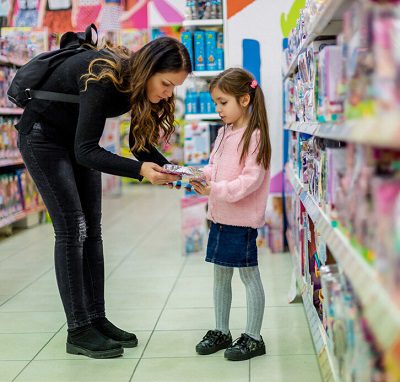


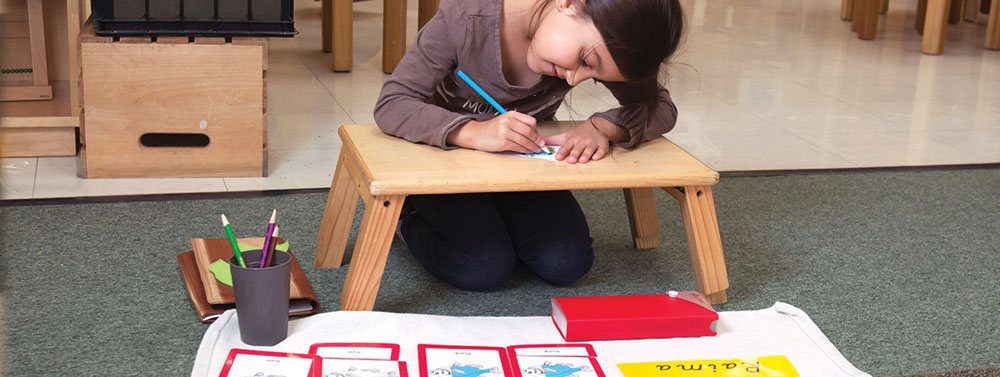
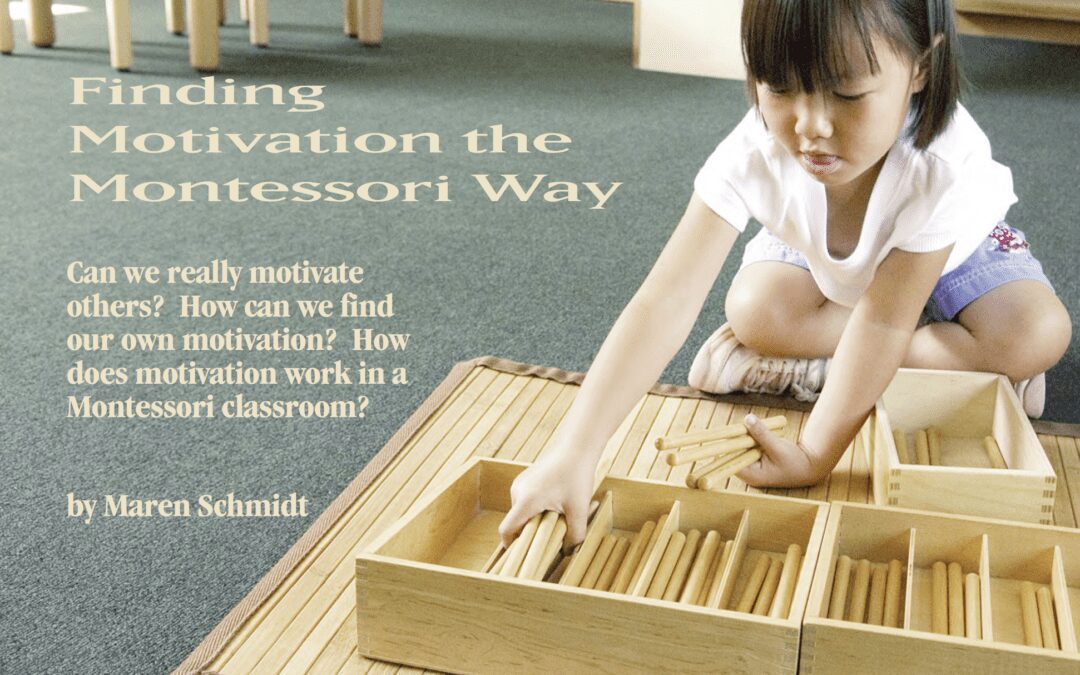
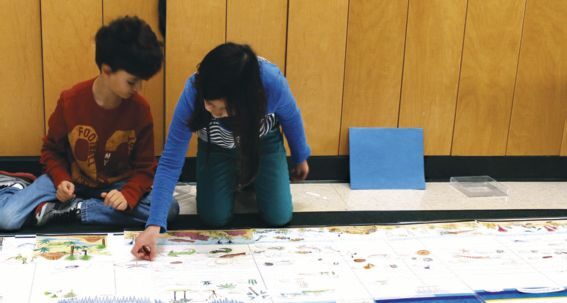


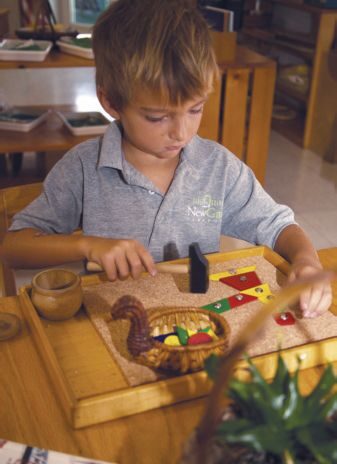
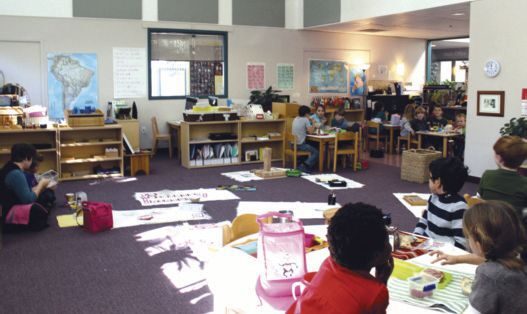
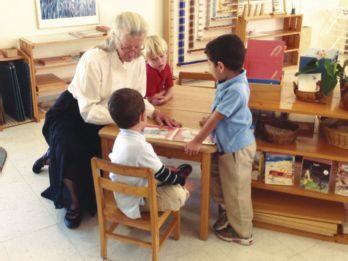
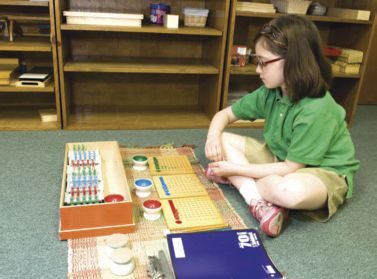
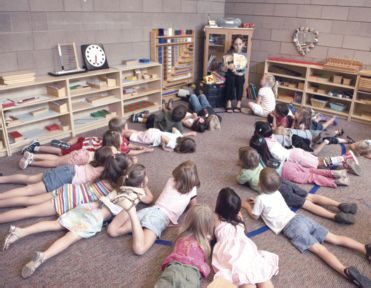
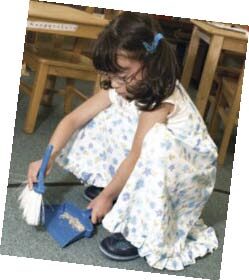
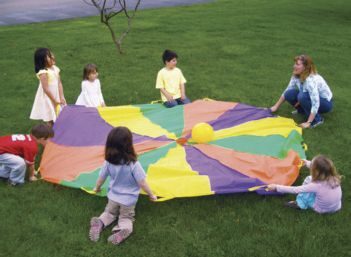
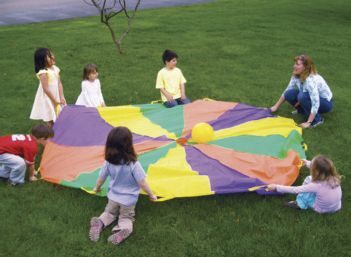


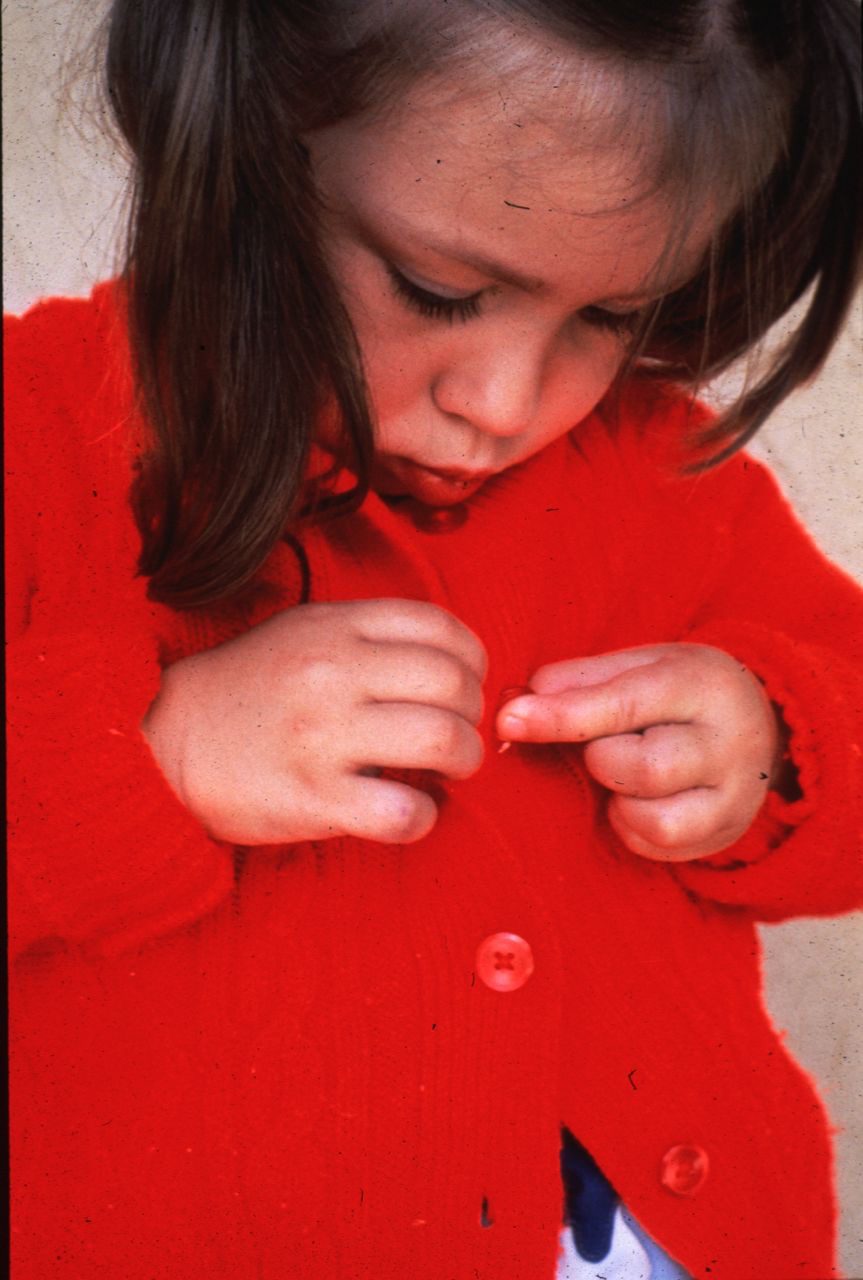



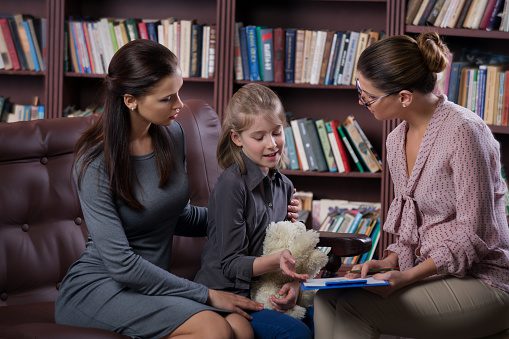

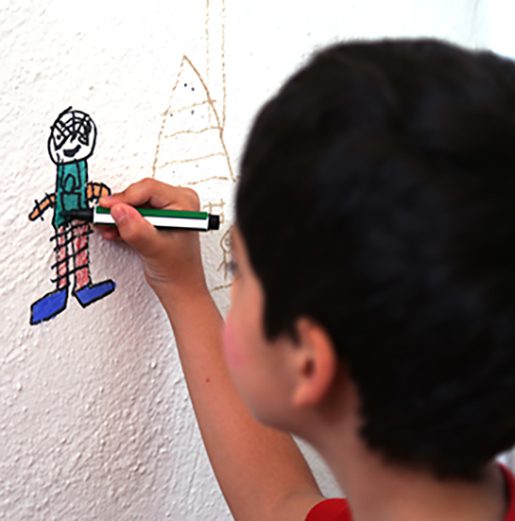
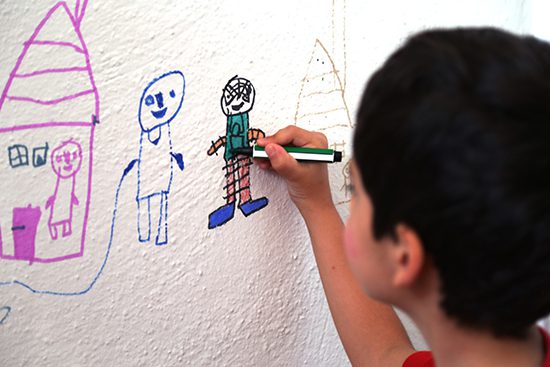





 With the goal of literacy, we teach our three-year-old the sounds of the alphabet and later introduce the shapes of the letters with their corresponding sounds, one by one. Next, we show how to spell a word by sounding it out and writing the word with loose letters organized in a box. In isolation from a book, we introduce short words on cards, such as cat. Next we introduce cards with two words at time, big cat, followed over the course of weeks by three-word exercises, such, as big yellow cat, then on to sentences: The big yellow cat ran. These exercises are placed in baskets and left on a shelf in order that the child can choose to repeat when he so desires.