by Geoffrey Bishop | Adolescence, Emotionally Healthy Children, Empowerment, Family Resources, MFA, Montessori Family Life, Young Adolescent, Young Adults
Growing up in a one-room schoolhouse in the Australian outback, the world of Montessori and modern education seemed a distant idea. But today, after I have had many years of experience and a strong philosophical and practical education ethic. I grew up closer to Montessori than I knew. In thinking about my meager educational beginnings, it was not what I learned in that classroom but what I learned in the wide open world that educated me for life. Spending many hours by myself in the wilderness, working with my father and brothers on the farm, and watching as my mother baked cakes, desserts, and cookies… these are the things that really influenced me. All these have spoken to me in the same way that Montessori speaks to all of us. We, as Montessori educators, believe there are important mantras that are necessary for a child to successfully attain adulthood. They include family, a stable home, good adult mentors, and a strong system of education that foster independence, individual autonomy, and joyful learning opportunities with a system of choice and a strong prepared environment. I would like to mention one additional mantra that I believe to be of equal importance in a child’s life, and that is unstructured and unrestricted outdoor and nature play. Richard Louv, in his book Last Child in the Woods (2008), speaks of the “Nature Deficit Disorder” he sees in many of today’s children. I see this as well, and in my role as the head of a Montessori school set on 400 acres and as the head of an Outdoor Environmental Education program, I aim to correct this deficit.
I would like to tell the story of my own childhood, how it mirrored that of a Montessori education in its most authentic form, and how the elements of the natural world formulated my education and helped me in later life to truly understand Montessori. My education was unconventional, so use your mind to draw comparisons to your work in your Montessori or home environments.
System of Education
The setting is St. Joseph’s Catholic School, a small cluster of stone buildings at the bottom of Gillagala Hill on the outskirts of Merriwa, a rural town of 500 people in North West New South Wales, Australia. It is in this one-room schoolhouse that I received my “formal education.” We pupils sat in rows, ink wells full, and listened to repetitive instructions of which I have no memory. But it was not in this classroom that I truly received my education. Each day, I would wake up on our sheep station with my four brothers and two sisters. We would do our chores and then walk a mile to the bus stop for the rough and ragged journey to school. On this journey, I would start my schooling.
 As the notorious “naughty boy,” my designated seat was up front, on an old apple box next to the driver. My engineering education came from being up close and personal with the bus engine and the gearing system. As I was not permitted to talk for the 1½-hour journey, and the scenery got boring, I found other ways to engage my energies. In this bus, there was no lid on the engine housing, so the driver constantly had to refill the radiator so the bus would not overheat. I would watch the engine rattle and groan, and the driver rev and change gears, until I knew every working part of the bus.
On one occasion, to try and understand the tension applied to the brake pedal in order for the bus to stop, I reached my foot across and slammed down on the brake pedal while the bus was in full motion. We stopped, all right, and I learned that it took a lot of my weight to push the brake pedal to the floor; I also learned, through a sore bottom, that placing one’s foot on the brake randomly was not a good idea.
Once at school, the schoolyard was also my science and engineering laboratory, with inconvenient interruptions of classroom work. My days would include building ant traps, constructing forts out of sticks and discarded rope, and climbing trees to prevent detection from those who were chasing me. I would undo the water faucet on the children’s bubbler system, releasing water to run along the dirt so I could construct dams and experiment with flooding and altering water courses. I would plant random seeds in the nuns’ petunia gardens to see if they would grow, and as they did, I would weed out the petunias so my wheat and oat seeds would get more light. I would ring the church bell to see how high off the ground the weight of the bell could lift me and drop the chalk on the floor to see if it consistently broke into three pieces.
All these lessons, though not popular with my teacher or my parents, are lessons I learned and remember. They combined to become my system of education. These small and somewhat innocent experiments in life would lead to much greater experiments in my later years. I bred 2,500 mice in the caretaker’s closet to better understand dominant and recessive genes. I wrote, directed, and performed my own play because my school did not have a drama department. At home, I would watch as the sheep gave birth to lambs and wait in eager anticipation for those first steps and first feeding. I would hunt for bird nests and capture tadpoles to watch them become frogs. From a young age, I needed to reinvent my system of education. It sounds to me a lot like what Montessori did.
Independence: Autonomy of the Individual
On the farm, my mother had some rules that we all understood, and they guided our lives. Rule number one: You have to be on time for meals, and we all sit and eat together. Rule number two: You eat everything on your plate. Rule number three: Children were not to be seen between meals. Rainy days were the only days we could stay inside. Otherwise, I was out on our 3,000-acre property getting my education. From my earliest memory, the outside environment felt natural to me; I spent hours along the creek catching frogs and watching snakes and looking for eels. I spent days combing the mountains looking in caves and discovering new plants and lying in meadows of ferns looking up at the sky, trying to see pictures in the clouds.
My father gave me a horse at the age of 5. I had no bridle or saddle, but I already knew how to ride. It was also my responsibility to feed, water, and brush my horse, as well as ride him as much as possible. At the time, I did not realize how important and lifelong these lessons would be. My independence was being fostered, strengthened. I was learning my limits and my ability to get whatever I needed to succeed. If something was beyond my reach, I would seek out one of my brothers and enlist his aid. Of course this had to be paid for so I would have to come up with the plan of payment before the request was made. I learned to respect the needs and abilities of those around me, by understanding that we live in a world that is give and take. I never once stole something that I needed for a project, because I knew my market, I knew what I had to trade, and I knew the value of people’s time and energy. It was in these mountains and streams, along with time with my family, neighbors, and friends that I developed my individuality. I drew insight and ideas from my father’s work ethic, my mother’s laughter and warmth, my brother’s athleticism, and my sister’s worldliness.
Joy of Learning
Our sheep station was part of the lower valleys of the Liverpool Range. We were considered coastal even though we were at least 100 miles from the sea as the crow flies. It is a beautiful part of the world, with gently rolling hills nestled up against steep, rocky mountains. The mountains are olive gray, sometimes black, and the hills a smoky green on white. Rich green is not a color that describes my country well. Blues, grays, browns and white, with a splash of red, would be more accurate. The lower hills were covered with beautiful stands of white box, kurrajongs, and iron bark. The flats had tall, majestic ghost gums, flowering white apple gum, and grass. In the wind, white tufts of rye and kangaroo grass swayed like a great ocean. Here and there, ghostly white stumps and dead trees would stand out against the blue sky. Galahs and cockatoos screeched from hollow trunks, in search of food for their young. Crystal-clear water flowed out of the mountains into the valleys, becoming the lifeblood of the land. I seemed so small upon this land and yet so much a part of it.
Old Mr. Clark, one of the adults in my life who played an important role in fostering my love of learning, told me stories about our hills and mountains as I sat on his knee in front of a warm fire on a winter’s eve. From my view, he was as old as the mountains themselves. His face was lined and wrinkled and his eyes deep and bright. He was a thin man, but as his arms held me, I could feel the power of years working in the mountains and on the land. His eyes reflected the joy and sorrow of his life and his grieving for his recently departed wife. His hands were big and rough and yet gentle and kind, full of love and a lifetime’s dedication to the land.
Old Mr. Clark’s stories would all start the same way. I would snuggle in close for protection, and he would take a long sip of his scotch. “Back before the war,” he would start, “the big war, this land was wild and untamed….” And the stories would flow out of him like winds from the past. The stories of my land.
Another adult who inspired me was Father Delaine, our parish priest. Every week he would come to our classroom and tell us stories from the Bible. He would tell of people riding camels through the desert and of slaves and kings and pyramids and pharaohs. The religious meaning completely escaped me—I was mesmerized by the people and the places.
When either Old Mr. Clark or Father Delaine told stories, I would feel joy bubbling out of me. Oral history, the history of a people preserved through storytelling, is very powerful. And in my case, these stories, with their strong connection to the world and the outdoors, were a strong influence in my developing a love of learning.
Choice
Growing up in a small rural community, there did not seem to be many choices in life. Most kids would do a number of years at the local school then move on to work on the farm, find a wife at the bachelors’ and spinsters’ ball, and settle into a quiet, simple life. From an early age, I knew this was not the life I wanted. My parents believed strongly in not influencing us children on the direction our lives would take. But I have vivid memories, from age 10 or 11, of deciding that my life’s plan was to embark on a discovery of this planet.
What were the influences that planted the seed in my mind that Merriwa was not my destiny? To answer this, I have to go back to when I was five- or six-years old. One of my sisters had moved to the United States after finishing school and would send us gifts via airmail. One of my gifts was a series of books by Ivy Wallace about a rabbit called Pookie.
It was the first of these books that forged the path to my future.
Pookie was not an ordinary rabbit. He was born with two little flimsy wings which his mother would tie up in tight bows. He wanted to sleep all day, even at meal times. When his mother Rabbit tucked them [brothers and sisters] all into the big leaf bed at night, Pookie was full of bunny hops and bouncing. This kept everyone awake. (Wallace, 1946)
The story goes on to describe how Pookie did not fit in anywhere, least of all at school. This story resonated with me so strongly that a phrase in the middle of the book became the drum that beat in my head for my entire life. Pookie’s teacher, cross with him for falling asleep in class, told him he should leave school and go out and seek his fortune. But Pookie did not know what a fortune was, and for the rest of the book, he goes on adventures to try and find it. His fortune ended up being the thing that made Pookie happy. My mother would read this book over and over again, and when I learned to read I would read it myself. Torn and tattered now, that book still sits in the children’s closet of our farm in Australia.
I was able to seek my own fortune by spending a number of years traveling around the world, looking for a place to set my sack and to find direction for my life. I discovered it first in environmental education and now in Montessori. The choice to find my own fortune allowed me to discover my own education, dreams and interests, and in doing so fulfilled me.
Multi-Age Learners
Multi-age learning environments seem to me to be as natural as falling off a log. In my community, children from many age groups learned and played together. Much of what I learned growing up on the farm was from my older brothers. On long hot summer days we would spend hours in the creek swimming and skipping rocks. I learned how to replace the spark plug on the lawnmower from my brother. I learned how to shoe a horse from my father, and I learned how to dig for yams in the mountains from a neighbor boy.
I also learned to be streetwise and to question when asked to do something. For example: My three older brothers had been spending weeks building a go-cart with an engine removed from our old lawnmower. The frame of the cart was made of wood and iron, strapped together in many ingenious but perhaps less-than-stable ways. The big day arrived when the prototype go-cart would go for its debut run. I, of course, was there to witness its maiden voyage. There was a lot of back and forth between my brothers as to who would be the first to ride in this cart. The back and forth was not because everyone wanted to ride, it was more because no one wanted to be first in case the thing fell apart. Being the youngest of the four, it was decided that I should be the first to ride. I was strapped in with my father’s old army belt, and the engine was fired up. I was given strict instructions that I was only to release the brake when I was told. In releasing the brake, the go-cart would plummet forward. However, I was given no instructions on the steering of the go-cart. With the engine revving at full RPMs, my brothers set me in motion and I flew directly toward the nearest tree. Lesson learned: Beware of some honors that are bestowed on you.
When I went to boarding school, I learned from my prefect how to conduct oneself in a large school environment; he taught me how to make hospital corners on my bed and how to polish my shoes so they shined. And before that, in the one-room schoolhouse, I learned that there were a lot of children just like me, and there were a lot who were very different. I learned whom to ask questions of and who could be relied upon to give the right answers. I learned whom to trust and whom to avoid. As I got older, I learned to mentor those younger than me: who to show how to make ant traps; who was trustworthy and respectful and who was not. I learned that it is advantageous at times to garner the advice of an older peer than trust the advice of someone your own age. I found many things in common with those who were my age, I gathered wisdom from those who were older, and gave advice and solace to those who were younger.
Intimate Relationship Between Adults and Children
In our adult world of getting to and from work, going through our daily routines, making sure that our bills were paid, the birthday cards sent out on time, our car oil changed, and that four seats were booked on the family vacation instead of three by mistake, we often forget the importance of the mentor role we have with our children. What may seem to be an insignificant event in our lives may end up being one of the most important moments in the direction of a child. We do things in our classrooms and in our interactions with children that seem routine and mundane to us, but they have powerful and far-reaching consequences for the little ones who watch us. There have been a couple of very powerful compasses directing my life and, in thinking back, they came from interactions with adults who never really understood the impact that they would have on me.
My prepared environment was my outdoor world. It was perfectly prepared each and every day, it was prepared with me in mind, and it was prepared to challenge me, to inspire me to totally immerse myself in what I was doing.Some of my earliest memories of my mother are of her standing in the garden admiring the beauty and life she had brought into our harsh landscape. My mother was a traditional English gardener, taking direction from traditional landscape designers such as Capability Brown and Edna Walling. I would spend hours with her, weeding and digging in the garden, and to this day, my connection to the earth is one of the strongest forces of my life. When I have my hands in the soil and I smell the flowers—that is when I am content. That was a gift my mother gave me.
The second gift is a little more abstract, yet it had an equally powerful and long-lasting influence on me. One of the chores that I had as a child was to bring the sheep shearers their “smoko” in the morning and afternoon. Smoko was the name for tea and cake in the morning and tea and pikelets (a kind of crumpet) in the afternoon. This job meant loading the tray with my mother in the farmhouse kitchen and walking it up to the shearing shed, a distance of about 200 yards. We all had jobs on the farm, and this was mine. Once the tray had been delivered and set out on a bale of wool, I would ready the wash basin for the shearers to wash up. Walking into the shed with the sound of the shears going full tilt, I would catch the smell of wool and lanolin mixed with the strong smell of fresh tobacco, a smell unlike any other. I could curl up in a pile of wool and fall asleep with the sound in the background. But going to sleep in a shearing shed was not an option as the roustabout and wool hands moved wool from the shearing floor onto the skirting tables then into the sorting bins and into the press. All this was rapid fire; movement was quick, and all hands were busy. When the horn sounded for the shearers to stop for smoko, the engines would run low, the sound of shoes deadened by the lanolin-waxed floor, and a quiet would come over the shed. Even the sheep seemed to know it was smoko; they too stopped their bleating and dozed a little.
As the shearers settled with their tea mugs filled and sweet pikelets eaten, tobacco smoke would filter through the air. Then—I remember it as if it was yesterday—one of the shearers asked me to clean his shears. I was in heaven. With this one gesture, an adult job was given to me. I remember he showed me how it was done and then I practiced. I practiced all afternoon, and ended the day with the shears clean, oiled, and shining. That the shearer had allowed me to do a task that was an adult task gave me the confidence that I could do anything.
Prepared Environment
My prepared environment was my outdoor world. It was perfectly prepared each and every day, it was prepared with me in mind, and it was prepared to challenge me, to inspire me to totally immerse myself in what I was doing. This prepared environment was Nature. It was not adapted with fences to keep me in or to keep others out; it was not prepared with special pathways for me to explore or manicured grass for me to lay on; it was not prepared with swings for me to swing on or slides for me to slide down on, or little pools for me to play in. It was Nature, in its raw form, with its broken stumps I could climb on as king of the world, its dandelion and thistle flowers I could pick for my mother, its creek banks I could catch frogs in, its overgrown hedges I could climb into to make my fort. Nature need not design for children, nor engineer to create playscapes or boundaries; it has everything a child could possibly want, and it will inspire their imaginations to soar.
I have had a fortunate life, and I talk a lot about my childhood and my adulthood. People often ask me, “But I live in the city—there are dangerous people there. What about my child’s safety?” The safety and well-being of his or her child is, of course, every adult’s concern. To this, I answer: We can let our fears and our prejudices control and rule us, or we can trust in our own judgment and, thus, build trust in our children. How is a child to learn independence if we never allow her to do anything for herself? How is a child to learn whom to trust and whom to be aware of if we do not allow him to explore humanity?
A fall for a 1-year-old is a normal part of daily life, while a fall for a 35-year-old could mean serious injuries, and a fall for a 90-year-old can be fatal. Our children need to fall, they need to climb, and they need to get dirty. They need to experiment and to stretch their limits. If we, as adults, force them to wait until they are 18 to fall and get dirty, the consequences will be devastating.
Let us not allow our gated communities and our restrictive subdivision associations limit our children’s ability to experience life for themselves. Allow them the freedom to explore, allow them to discover the world that will one day be theirs. My parents gave me a gift and it was the gift of Nature as a prepared environment, a place to play freely. Let us give every child the same gift.
by Andrew Kutt | Emotionally Healthy Children, MFA, Psychology, The International Montessori Council, Tomorrow's Child Online Issue
What a difference a month makes. The whole world is reacting to a pandemic of a previously unknown virus. It’s an emergency on a global scale, dominating every news cycle. It’s the subject of conversations over coffee counters at 7-11 in the mornings and at local watering holes in the evenings. Our lives are being disrupted. You can see concern and worry etched on people’s faces.
Is this a new phenomenon? Of course not, because the world has faced many devastating outbreaks of disease in human history, including the Black Death in the 1300s, the flu pandemic of 1918, the Asian Flu of 1956-58 and the HIV/AIDS Pandemic of 2005-2012—to name a few. The pandemics of the past have killed hundreds of millions, shaped history, shifted population demographics, and influenced art, music, literature and theater, leaving an indelible imprint on our collective psyche.
Is this why the Coronavirus seems so suddenly terrifying—because the trauma of such a widespread disease is embedded in the ancient part of our brains and triggers fears of vulnerability, helplessness, and fear? Or had we lulled ourselves into the illusion that such a pandemic is not possible in the era of modern medicine? And why is our reaction to this so much more visceral and vocal than our reaction to, let’s say, the crisis of climate change? Is it because the virus pandemic is less abstract, more personal, more immediate?
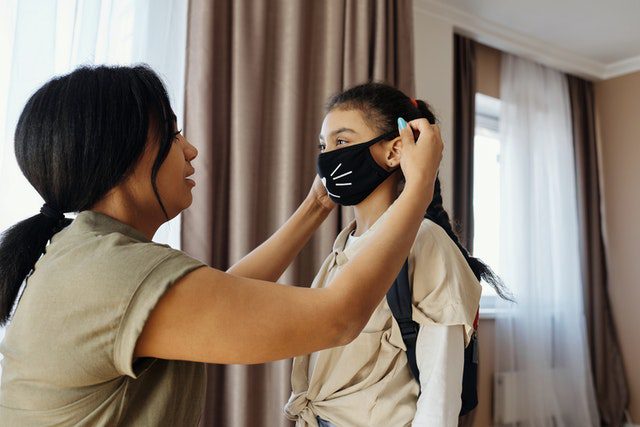
Whatever the answers to these questions, one thing is certain: when it comes to a potentially massive catastrophe like this, national boundaries will not protect us. Nor will wealth or status make us immune. Humans from all social strata and from every corner of the planet are faced with the same humbling thought—that at the moment our best protection from contagion is hand sanitizer, incessant hand washing, medical masks, and the avoidance of physical contact with others or even our own faces.
So here we are all at once in the same boat, and for some of us, we are literally in the same boat—stuck on a cruise ship in quarantine and dealing with an even greater degree of confusion and hysteria. We are coming face to face with our human frailty and at the same time with our fundamental oneness. Regardless of religion, political affiliation or mindset we are now starkly being reminded that we are all—every one of us—homo sapiens, the species to which all modern humans belong (and the only member of the genus homo that is not extinct).
It’s a reality check of epic proportions, at a time when it’s become so convenient to retreat into the comfort of online echo chambers that validate and amplify our viewpoints and make us comfortable designating others, whether consciously or not, as less civilized, less intelligent, or less moral than we are. We’ve become adept at “othering,” as we stridently advocate for the positions we are passionate about.
It’s a reality check of epic proportions, at a time when it’s become so convenient to retreat into the comfort of online echo chambers that validate and amplify our viewpoints and make us comfortable designating others, whether consciously or not, as less civilized, less intelligent, or less moral than we are. We’ve become adept at “othering,” as we stridently advocate for the positions we are passionate about. We’ve succumbed to the false narrative that social media is a forum of ideas, whereas in reality it is all too often a platform for venting our frustrations and anger, or for spewing hatred.
But the Coronavirus is a harsh refresher of Humanity 101—the most basic of courses. It teaches that we share identical DNA and the same genes, cells, and microbes. On the macro level we share a common heritage as humans. Humanity 101 teaches that collectively, we will shape our destiny on planet Earth, for better or for worse. As it is said from long ago, we will live together or we will die together.
Faced so immediately and directly with our own fragility as a species, others become brothers (and sisters), who are dealing with the same set of dangerous and scary circumstances as we are. The barriers we’ve erected, whether physical or mental, between us as members of the human family, melt away as we face an existential crisis like the one we currently face.
Our illusions of separateness disappear in the light of the new realities we are confronting, which may be old realities that we have long forgotten. We will, no doubt, survive this latest onslaught upon our collective wellbeing, but not without great pain and tragedy. The bigger question is: What we will learn from this experience? Will it jumpstart a new era of international cooperation, the development of new commonly agreed upon protocols for safety, more efficient sharing of information across borders, the creation of more robust yet localized health delivery systems and clinics, the innovation of new medicines at prices that everyday people can afford?
Hope springs eternal, and hope is what we cling to now. At dark times like these, let us hope that a vaccine is developed sooner than later. Let us hope that we can resist the “survival-of-the-fittest” mentality that humans have descended to in pandemics past; that we can hold and support each other as we feel stress and fear. And at the same time, let us hope for a new dawn—a renewed awareness of our interconnectedness—which could light our pathway toward a future of greater harmony and better collaboration.