by Kath Kvols | Adolescence, Communication, Early Adolescence (12-15), Later Adolescence (15-18), MFA, Montessori Family Life, Video, Webinars / MFA, Young Adolescent
Sometimes Dad’s feel like a “duck out of water” when it comes to relating to their tween/teen daughter. The little girl’s body that used to rough and tumble now has begun to develop making roughing and tumbling awkward. Also, this stage in a girl’s life is fraught with emotional upheavals which often make Dads shy away. A father’s influence in his daughter’s life shapes her self-esteem, self-image, confidence and opinions of men. The type of men that women date are directly related to the kind of relationship a girl has with her father. It’s imperative that, no matter what, Dads avoid the temptation to pull away or withdraw during this challenging stage of growing up. Explore ways that dads can stay connected during this session with Kathryn Kvols.
by Cheryl Allen | Adolescence, Communication, Early Adolescence (12-15), Empowerment, Later Adolescence (15-18), Lower Elementary (6-9), MFA, Mindfulness, Montessori Family Life, Montessori Parenting, Montessori Teachers, Practical Life, Upper Elementary (9-12), Video, Webinars / MFA
Montessori said, “Only practical work and experience lead a child to maturity.” Cheryl Allen will share ideas that will help children at home and in the classroom to prepare for life during the elementary years and beyond. She will show how Practical Life activities change as children grow from pouring and scooping lessons during Early Childhood to money management, planning a vacation, performing in a play or opera, and more.
by Maria Chaffin | Adolescence, Early Adolescence (12-15), Later Adolescence (15-18), Lower Elementary (6-9), MFA, Montessori Family Life, Planes of Development, Upper Elementary (9-12), Webinars / MFA
Life Skills – Executive Functioning Skills – Part 2 – Children are not born with these skills. They are born with the potential to develop them! From 7 to 12 years old to the adolescent years, what activities can we offer at home? In this session Maria Chaffin continues to offer parents and teachers ideas and insights for supporting children through the elementary and high school years in the development of concentration, follow through, and organization.
by Maria Chaffin | Infant-Toddler (0 to 3), Kindergarten, Lower Elementary (6-9), MFA, Montessori Family Life, Webinars / MFA
Children are not born with fully developed executive functioning skills. They are born with the potential to develop them! From birth to the adolescent years, what activities can we offer at home to support this process? In this two part series parents will gain insights for providing opportunities to develop these skills in their children. Part 1 covers birth through seven years old.
by Robin Howe, EdD | Adolescence, Early Adolescence (12-15), Kindergarten, Later Adolescence (15-18), Lower Elementary (6-9), MFA, Montessori Family Life, Montessori Middle School, Montessori Secondary / High School, Primary (3-6), Upper Elementary (9-12), Webinars / MFA, Young Adolescent
What Montessori parents need to know about assessment, data collection and how we use it to not only support children’s learning but also to validate the Montessori method of education. Dr. Howe explains what this means for children in Montessori schools and the larger education community.
by Kelly Johnson | Infant-Toddler (0 to 3), Kindergarten, MFA, Montessori Family Life, Webinars / MFA
Discover ideas for creating Montessori inspired outdoor home environments and experiences for young children. Specifics about being in nature with children 0-5 are covered; such as oral exploration, encouraging wonder and connection, and nature journaling. Kelly also explores challenges such as fears of adults unfamiliar with nature themselves and how to distinguish focused outdoor learning time from free play time. In this webinar you will have a sneak preview of her new book Wonder and Wander, a comprehensive Montessori inspired guide for helping adults weave nature into the everyday lives of young children at home, at school, and in the community.
by Lorna McGrath | Adolescence, Early Adolescence (12-15), Empowerment, Infant-Toddler (0 to 3), Kindergarten, Later Adolescence (15-18), Lower Elementary (6-9), MFA, Montessori Family Life, Montessori Parenting, Primary (3-6), Upper Elementary (9-12), Webinars / MFA
Families frequently travel together during school breaks. Join Lorna for a fun and informative session about traveling with your children, involving them in the planning, making the journey enjoyable, and being prepared.
by Christine Lowry | Adolescence, Empowerment, Later Adolescence (15-18), Lower Elementary (6-9), MFA, Montessori Family Life, Montessori Parenting, Upper Elementary (9-12), Webinars / MFA, Young Adolescent
Join Christine Lowry for Part 2 of Chores, Allowance,and Paid Work. During this session Christine will share ways that parents can involve their elementary and adolescent children in the life of the family, in managing their money, and earning money from jobs at home as well as out in the larger community.
by Christine Lowry | Empowerment, Infant-Toddler (0 to 3), Kindergarten, MFA, Montessori Family Life, Montessori Parenting, Practical Life, Webinars / MFA
Christine Lowry will share insights and ideas to involve young children in family chores. This session encourages parents to help their young children participate in the care of the home environment in fun and empowering ways. What seems to adults as tedious and a bother, for young children can be huge in boosting their self confidence and their feeling of value to the family as a whole. Part 1 focuses on children from toddlers to six years olds.
by Lorna McGrath | Infant, Infant-Toddler (0 to 3), Kindergarten, Lower Elementary (6-9), MFA, Montessori Family Life, Montessori Parenting, Primary (3-6), Webinars / MFA
What did Maria Montessori say about the child’s true nature? How can parents best nurture their children’s sense of empathy, awe, and connectedness to the natural world? Join Lorna as she presents Christine Lapierre’s slides for this informative session.
by Cheryl Allen | Early Adolescence (12-15), Family Resources, Imagination, Kindergarten, Language & Reading, Lower Elementary (6-9), Mathematics, MFA, Montessori Family Life, Montessori Parenting, Practical Life, Primary (3-6), Reading, Upper Elementary (9-12), Video, Webinars / MFA, Writing
Are you wondering how to keep your child not only busy during the summer months when school is out, but also keep her learning? Are you worried that if your child is not enrolled in a summer program called “Little Genius’s” or the Center for Brighter Children that your child will be behind when he returns to school? Or do you just want some good ideas for fun and creativity? Cheryl Allen will offer answers to these questions to help you have an enjoyable and enriching time with your child during the school break.
by Lorna McGrath | Adolescence, Communication, Early Adolescence (12-15), Empowerment, Later Adolescence (15-18), MFA, Montessori Education, Montessori Family Life, Montessori Graduates, Montessori Secondary / High School, Montessori students, Practical Life, Video, Webinars / MFA
Lorna McGrath has the opportunity to talk with four NewGate School’s seniors before they graduate and go off into a new stage of their lives. Each of them has a unique story to share. It is such a pleasure to listen to their experiences in Montessori and how that has shaped and will continue to shape their lives. You will enjoy these articulate, personable, and fun individuals!
by Matt Johnson | Mixed Ages, Montessori Education, Montessori Family Life, Montessori Parenting, Montessori students, Montessori Teachers, Parent Education, Social Media, The International Montessori Council
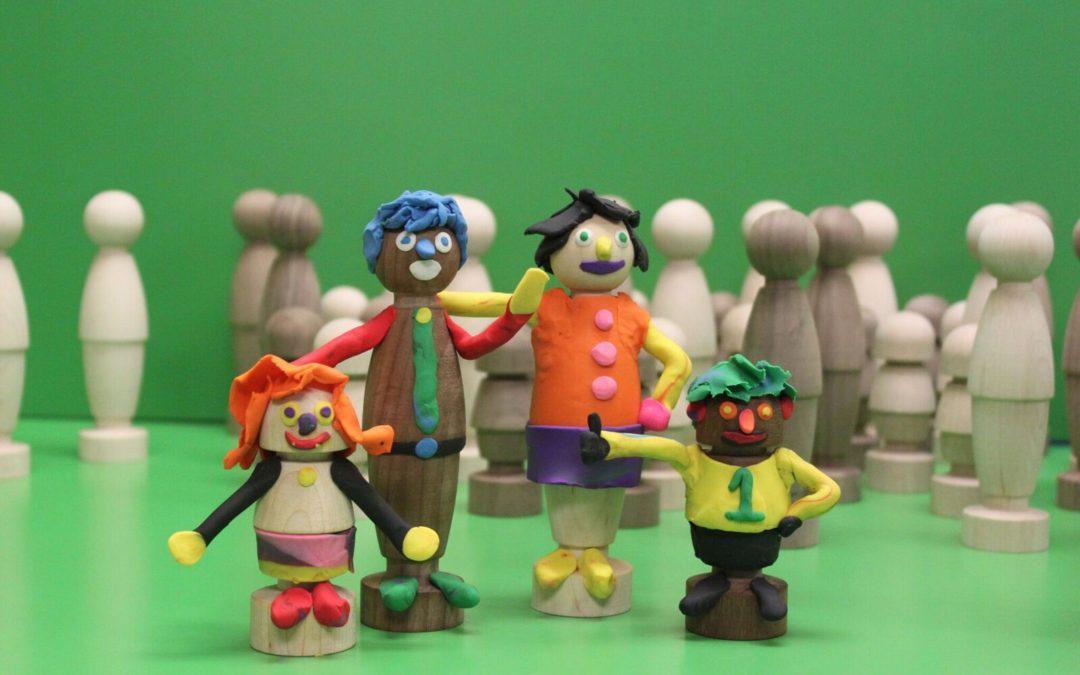
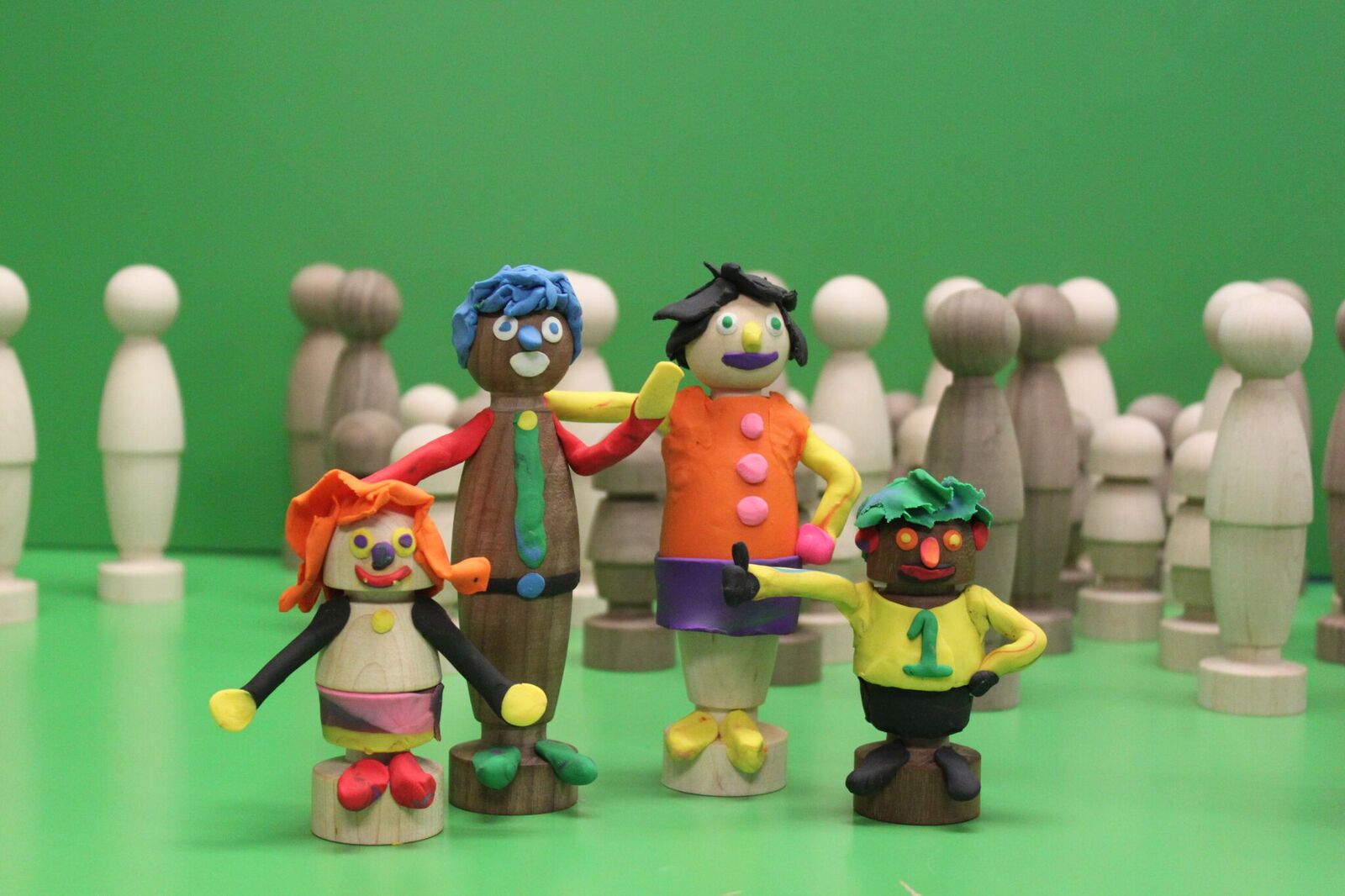
 As an educator and parent, I saw a need for children to have an outlet to explore and develop emotional and social sensitivity. Wae created ClayMatesTM in a direct response to this need as we now live in an age of overwhelming distractions from media, technology, and entertainment, we see a generation of children who are losing touch with authentic social connection, self-reliance, empathy, compassion, and creative problem solving; all of which can translate into feelings of social separation and anxiety.
ClayMatesTM helps quiet these distractions and open new doors to creativity and expression by nurturing positive connections and personal strengths in children. The non-gender-specific figures and colorful, tactile properties of clay engage children to make creative choices as they design their figures and naturally engage in imaginary role-play.
As a toy, ClayMatesTM inspires creation and expression while building the child’s fine and gross motor skills and executive planning skills. As an educational tool, ClayMatesTM is an easy-to-use platform for encouraging complex social and emotional conversations with children at home, in the classroom or in a therapeutic setting. ClayMatesTM is a hands-on, self-directed activity that promotes mindfulness and emotional intelligence. Children place clay on the wooden figures to create physical features to bring characters to life. Educators will find ClayMatesTM help them observe social cognition, emotional intelligence as well as guide without any preconceived outcomes and create an environment that supports age-appropriate social and emotional exploration and growth.
ClayMatesTM Inspire Self-awareness through Social Context and Emotional Response
When ClayMatesTM are introduced to the classroom, therapeutic, and family settings, the results are immediately observable. Using ClayMatesTM, children begin by building a figure of themselves, revealing each child’s perception of her or his own self in the world. Then, the children create figures that represent others in their lives. These two steps are the building blocks for observation, to help children in the process of social and emotional cognition.
As imaginary role-play becomes fluid, we can introduce a host of social context or scenarios for children to explore in their play—from helping around the house to experiences of bullying to classroom behavior, even how to say “I’m sorry.”
By observing the children’s social and emotional response and problem-solving in their ClayMatesTM play, educators can engage them further in an age-appropriate contextual conversation around the possible solutions or responses to events and issues in their lives.
Here are two examples of ClayMatesTM play that demonstrate the ease and enormous potential they offer:
Example #1. Enacting a Social Scenario with ClayMates: Bullying
In a group of 5 children, each child builds a different figure: the victim, the bully, the bystander, the teacher and the parent. This creates a social scenario in which each child role-plays and observes how words and actions of the five ClayMatesTM unfold in the group. As educators, this type of prepared learning environment provides an open-ended dialog that explores the children’s observations and emotions about bullying, the emotional and social responsibility of different roles, some possible solutions, authentic feedback, and the opportunity for social and emotional growth.
Example #2. Developing Emotional Vocabulary with ClayMates
As our emotional vocabulary develops and expands, we, as individuals, learn to engage with our self and others with more understanding, patience, and acceptance of diverse thoughts and feelings. ClayMatesTM is an effective tool for building this vocabulary through role-play with directed emotional context.
We can attach to the bottom of every ClayMate figure one of 12 color-coded discs associated with 12 different emotions. Initially, we introduce the basic emotions such as anger–RED, sadness–BLUE, fear–PURPLE, yellow–HAPPY and integrate them into a social scenario. Each child then role-plays their ClayMate figure’s designated emotion. At first, all participants know who is performing which emotion. Each child acts out and experiences their own assigned emotion and observes the other participants doing the same. As students become more comfortable with this role-play, they are assigned an emotion “secretly” so that only they know what it is, and other participants try to figure it out. This exercise deepens the children’s sense of different emotions: both how to express them and how to relate and respond to others’ emotions.
As a fun, flexible, and expressive toy and tool, ClayMatesTM builds a foundation of social and emotional awareness so that children can develop authentic and meaningful connections, recognize social and emotional cues, and strengthen their capacity to problem solve and meet challenges with resilience. ′
Matt Johnson is married with two adult children and has worked with children for over 35 years as a gymnastics instructor, mentor, and advocate. As an instructor he has help students realize their physical and mental potential. As a mentor, he has supported students in building character, self-esteem and achieving personal goals. As an advocate, he has been outspoken in support of responsible coaching practices, resiliency in athletics and the idea of empowering children to be confident, competent, contributors who are self-sufficient, with skills for coping in life. Matt is a board member of SPARKindness and is the chairperson of their resilient athlete program. SPARK is a community-based organization that provides educational opportunities to families that focuses on understanding diversity, inclusion, resiliency, recognizing the difference and addressing social and emotional issues that affect families and the community. Matt also works with teens and adults as a personal trainer and life coach. Where he support clients in goal setting, recognizing their potential and helping to navigate the obstacles to success.
Montessori Leadership/May 2018/ Pg 24
by Paul Epstein, PhD | Communication, Empowerment, Maria Montessori, Mixed Ages, Montessori Education, Montessori Family Life, Montessori Parenting, Practical Life, The International Montessori Council
The experience of authentic, unconditional love differs from romantic and other types of love. Unconditional love is not based on possessing or acquiring. When we know this love, we experience personal and universal peace. And while this love is observed and discussed repeatedly by the world’s great teachers, we seldom consider how this love also emanates from children. The smallest of babies cause us to smile. They and older children awaken us, and we engage in peaceful action.
Parents know unconditional love. A parent may be overwhelmed by tremendous joy and happiness when holding her or his child for the first time. We remember the sweetness of our newborn child, and we remember the love that overwhelms us. I recall saying a prayer. Not a formal, religious prayer, but a prayer nevertheless. Actually, I do not recall my words, but I do recall how I felt: whole, peaceful, and unimaginably happy. I prayed for my child’s lifelong health, safety, and happiness. I also felt too small to hold the amount of love that was wanting to burst from me. I still feel that kind of too small.
I also recall that I did not speak words like these: “Watch over my child, and make sure she has the best test scores for entrance to the top university.” Those words came later.
Unconditional love involves acceptance, but not always agreement. I accept you 100 percent the way you are, and I accept you 100 percent the way you are not. This kind of love involves self-love too. I accept myself 100 percent the way I am, and 100 percent the way I am not. Unconditional love may be transformative. However, reading the words of great teachers is not enough. Transformation involves a commitment to practicing a way of living. A life with children can bring forth this kind of love. In the presence of children, adults may aspire to spiritual growth.
Dr. Maria Montessori wrote, “[The] child is the true maker of our spirituality. He teaches us the plan of nature for giving form to our conduct and character.” One form of conduct with children is to learn to how to serve and not be their servants. Specifically, we learn to guide children to become independent and self-reliant. Then children become normalized; they fulfill more of their unique potential. When we observe and accept children, we also experience the assistance they give to us as we learn how to guide. They assist us through love.
If we want to produce harmony in the world, it is clear that we ought to think more about this … The child is the only point on which there converges from everyone a feeling of gentleness and love. People’s souls soften and sweeten when one speaks of children; the whole of mankind shares in the deep emotions which they awaken.
The child is a well-spring of love. Whenever we touch the child, we touch love. It is a difficult love to define; we all feel it, but no one can describe its roots or evaluate the immense consequences which flow from it …. In the vicinity of children, mistrust melts away; we become sweet and kindly, because, when we are gathered about them, we feel warmed by that flame of life which is there, where life originates.
“Mistrust melts away; we become sweet and kindly.” To become receptive to the child’s power of love, we must, Montessori wrote, “remove the accretions of years that prevent us from really understanding children and acquiring an intuitive knowledge of their souls.” We must learn enlightenment; we need to learn to truly see.
“Our social mentality,” wrote Montessori, has not grasped the idea that we can receive help from the child, that the child can give us a light and a lesson, a new vision and a solution for inextricable problems. The child, Montessori asserted, can “help adults solve their own individual and social problems.”
Accepting children’s influence as our teachers, Montessori championed, will help us create a peaceful society. Montessori spoke these words to the graduates of her 1937 training course:
You and I have been, as it were, seduced by something attractive and deep in the child …. We began with the methods of education and culture for the child, and we end by acknowledging that he is our teacher … one who can reveal to us, as no other, our own nature and its possibilities. Therefore we are drawn towards the child, as individuals, as members of society, and for the good of the human race as
a whole.
“For the good of the human race as a whole,” Montessori spoke to world leaders about world peace. The Sixth International Montessori Congress took place in Copenhagen in 1937. Representatives from twenty nations were in attendance. Montessori declared in her keynote speech the child’s power to unify adults in peace.
The adult must understand the meaning of the moral defense of humanity, not the armed defense of nations. He must realize that the child will be the creator of the new world peace. In a suitable environment the child reveals unsuspected social characteristics. The qualities he shows will be the salvation of the world, showing us all the road to peace.
The child’s power of love can bring adults to “the road to peace.” This congress took place thirty years after the first Montessori school had opened in 1907. Since then, children enrolled in Montessori schools show ‘unsuspected social characteristics’ including a tremendous ability to concentrate when they engage with Montessori learning activities. Montessori understand concentration as a foundation for children’s spiritual growth.
We tend to describe children’s physical, cognitive, emotional, and social development. Montessori advocated for a fifth development, spirituality. Accordingly, to become a Montessori classroom guide, an adult engages in a transformative preparation. This preparation, wrote Montessori, “is something far more than the learning of ideas. It includes the training of character; it is a preparation of the spirit. This begins, Montessori taught, with humility. “If we touch children, she wrote, “we touch humanity. We must educate adults to realize that we can only better humanity through the child. We must realize that the child is the builder of man.”
There is a special relationship: As adults transform, we notice changes taking place within children. Children progress through a series of spiritual growths that bring them to normalization. Montessori wrote that with normalization, “A unique type of child appears, a ‘new child’; but really it is the child’s true ‘personality’ allowed to construct itself normally ….” For Montessori, normalization was “the most important single result of our whole work.”
Children who are not normalized may tire from academic study, and they cannot concentrate for long periods of time. They may be timid, anxious, possessive, depressed, unable to focus, and dependent upon others. These children have grown up in an educational system in which teachers dispense knowledge according to external standards. These teachers manage the learning process, including schedules, types of activities, and assessments without regard for children’s individual needs and learning differences. And, the teachers manage children’s behavior through external praise and reward. The design of this educational system is to render children compliant and also ignorant about their own potential.
Children enrolled in Montessori schools learn to think, create, communicate, and solve problems. These children demonstrate tremendous self-discipline, resilience, and grit. Normalized children display a deep love of order, work, profound concentration, silence, sharing, obedience, self-discipline, independence, and joy. Normalized children are not interested in external rewards; they learn for the joy derived from understanding. Normalized children are cooperative, creative, innovative, and empathetic.
Montessori classroom guides show children how to become independent. The guides also model for children how to respect themselves, others, and the environment. Children normally develop self-acceptance which is a foundation for accepting others. Montessori children in primary and secondary programs study a wondrous, integrated curriculum called Cosmic Education. They may discover a personal calling called noble work. Children and adolescents do normally empathize, care for, and contribute to others. This is evident from the testimonies heard from Montessori graduates throughout the world. For example:
Students in Montessori schools are taught to ask the question, “How can I make the world a better place?” This is the fundamental difference in the Montessori curriculum; it teaches a higher purpose …. It has taught me to strive to do noble works.”
Another Montessori graduate summarized her education:
In order to gain a global perspective, you need to have a really strong foundation. That foundation, in our case, is local or even internal. So, if you know how to trust, and you know how to respect, and you know how to question – once you have those main principles, once you are unleashed into the world, you are a little more prepared and ready to take on what it has to offer.15
Adults typically awaken when surrounded by the child’s power of love. As we learn to guide children spiritually, so too do we learn about our true selves. Montessori described how a life with children can bring the adult to experience this new kind of love.
When the children show [an adult] their real natures, she understands, perhaps for the first time, what love really is. And this revelation transforms her also. It is a thing that touches the heart, and little by little it changes people. Once these facts have been seen … nothing can cancel the impression their spirits have made and the love they were able to awaken.
Montessori Leadership/ May 2018/Pg 24
by The Montessori Foundation | Communication, Mixed Ages, Montessori Education, Montessori Family Life, Montessori Parenting, Montessori students, Parent Education, The International Montessori Council
Greetings Montessori Colleagues,
One of the many challenges we face as Montessori educators is that of clearly communicating our message to parents in order to offer them an opportunity to understand and appreciate what we offer to children. With that in mind, AMI undertook a research initiative so that we might better understand what parents perceive a Montessori education is and what parents want for the early learning years for their children. This research unfolded under the direction of the Neimand Collaborative with supporting grants from the Trust for Learning and the James Walton Foundation. It has become a goal for Montessori organizations in the United States to deliver a clear message about the value of a Montessori education speaking with one voice. With that goal in mind, AMI invited ALL Montessorians to participate in hearing the findings derived from this research so that more schools and programs can articulate what Montessori is and does. It is this effort supported by Montessori Leaders Collaborative that we now share the results of the research.
The researchers interviewed close to two thousand families from across the United States who represented different races, cultures and economic areas.
The results will not be surprising. Parents wish their children to develop into strong, capable and morally responsible individuals who are lifelong learners and doers through a partnership with teachers in achieving this goal. An interesting outcome of the research is that we often do not articulate the real message of Montessori so that parents can understand that their wish is exactly what we do by providing a richly prepared environment so that children can develop a love of learning in a peaceful community.
A summary of these findings can be found at tinyurl.com/ami-report-summary, and it is our hope that we can continue to inform the work you do each day in schools throughout the country so that the message is received and greater access to Montessori for more children is achieved.
A collaboration of: Association Montessori Internationale, Association Montessori Internationale – US, The Montessori Foundation and International Montessori Council, National Center for Montessori in the Public Sector, American Montessori Society, North American Montessori Teacher Association, Montessori Administrators Association, Montessori Accreditation Council for Teacher Education, Montessori Public Policy Initiative, Montessori for Social Justice.
Montessori Leadership/ May 2018 / Pg 21
by Cindy Acker | Mindfulness, Mixed Ages, Montessori Family Life, Montessori students, Peace Education, The International Montessori Council, Young Adolescent, Young Adults
I wanted you to know that our students sent this email to Montessori elementary schools across the nation on the day that students nationwide did a ‘walk out.’ I asked them to think of something else that they could do rather than a walkout, and this is what they shared.
Dear Montessori Students,
“I will write peace on your wings and you will fly all over the world.” —Sadako Sasaki
We write to you hoping we can all come together and call out for peace. The students at the Child Unique Montessori Elementary School of Alameda have been impacted emotionally and spiritually with the violence happening all around us. In the spirit of Dr. Maria Montessori, who believed in peace, we call for a change.
One ancient Japanese legend states that if one folded one thousand cranes, a wish would come true. The crane is also a symbol of hope and healing.
We plan to fold over one thousand cranes as a symbol of peace. Our wish is for world peace.
We invite you to join in on our mission to create one thousand cranes to help make the world a better place. The cranes will be sent to Major Stoneman Douglas High School in Florida and to Washington DC as a way to stand in solidarity.
“We realize the importance of our voices only when we are silenced.” —Malala Yousafzai
Sincerely, MESA students
Montessori Leadership/ May 2018/ Pg15
by Tracey Hall | Infant, Infant-Toddler (0 to 3), MFA, Montessori Family Life, Montessori Parenting, Video, Webinars / MFA
Have you ever wondered how can I best support my infant or toddler in learning and growing? What activities should I provide? What equipment do they need? How much help should I give them? If you have these questions and more, Tracey Hall will be sharing her experience and ideas about your young child’s daily activities.
by The Montessori Foundation | Archived Issues / Tomorrow's Child, MFA, Montessori Family Life, Tomorrow's Child Online Issue
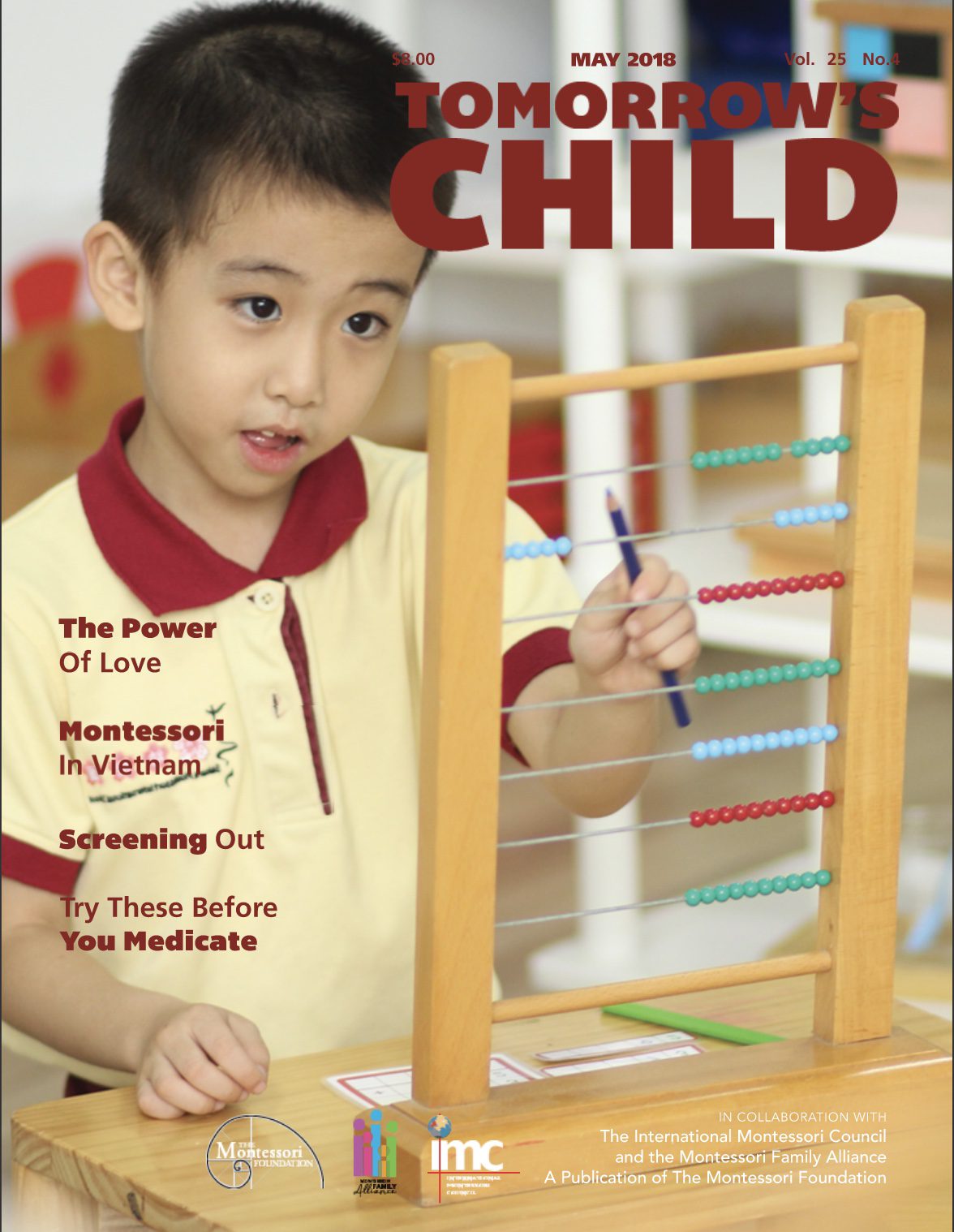
Click this cover image to read the May, 2018 issue