by Claire Salkowski | Early Adolescence (12-15), Infant, Infant-Toddler (0 to 3), Kindergarten, Later Adolescence (15-18), Lower Elementary (6-9), MFA, Montessori Family Life, Montessori Parenting, Upper Elementary (9-12), Video, Webinars / MFA
We’ll look at how Montessori meets the basic needs for security/safety, love/belonging, freedom/choice, fun/enjoyment, power/competence, meaning /purpose. Then how we can reduce behavior problems when we meet these needs among others, both at school and at home.
by Patricia De Leon | Adolescence, Communication, Early Adolescence (12-15), Later Adolescence (15-18), MFA, Montessori Family Life, Montessori Parenting, Young Adolescent
Join as we explore ways for you to connect with your teens. Connection comes before “real” communication. When “real” communication is established we can foster peace, understanding, and collaboration.
by Jonathan Wolff | Adolescence, Communication, Infant-Toddler (0 to 3), Kindergarten, Later Adolescence (15-18), Lower Elementary (6-9), MFA, Montessori Family Life, Montessori Parenting, Primary (3-6), Upper Elementary (9-12), Video, Young Adolescent
As children, most of us were raised and schooled with answers and rules. “These are the facts. And here’s how I expect you to behave.” While such adult pronouncements and prescriptives may win a battle of learning and behavior in the moment, they are rarely victorious in the long war of independence. In this week’s Montessori Foundation Family Alliance webcast, Jonathan Wolff will discuss how parents can retrain themselves to pose questions that encourage children to think for themselves, think of others, and think out-of-the box – toward becoming responsible decision-makers and creative problem-solvers.
by Christine Lowry | Infant, Infant-Toddler (0 to 3), Kindergarten, MFA, Montessori Family Life, Video, Webinars / MFA
Making the decision to send your young child (infant-kindergarten) to school can be difficult. How do you know she is ready? What is the right program and is it going to be a good fit for your family? Join us to find some of the signs that let us know when a child ready to really enjoy and benefit from an early childhood education experience, some of the values and benefits a quality Montessori program has to offer, and what to look for in choosing the right time and place for your child.
by Lorna McGrath | Infant, Infant-Toddler (0 to 3), MFA, Montessori Family Life, Montessori Parenting, Webinars / MFA
Join Lorna McGrath, Program Director of the Montessori Family Alliance, for “Toddlers in the Garden: a Grandparent’s Perspective.” Have you ever wondered what to do when a special child comes to visit? Lorna has! Whether your space is small or large or somewhere in between she will share ideas for creating an outdoor space in your back yard with wonderful things for that little one to do and enjoy.
These webinars are designed for parents and teachers. Guests are invited to join us to share their ideas, insights, expertise, and stories with our audience. Parents and teachers love to interact with guests by asking questions of our guests and adding comments to the presentations.
by Kath Kvols | Family Resources, MFA, Mindfulness, Montessori Family Life, Montessori Parenting, Parent Education, Video, Webinars / MFA
Do you worry when your child goes to a sleepover so you call her several times that evening? Do you stress about whether you’ve made the right choice of schools? Are you fearful about whether your child will be safe if you are not right there with him? Are you anxious that you’re not doing enough for your family – money-wise, time-wise, providing for enrichment opportunities, etc? This session will offer suggestions and ideas for reducing the stress and enjoying life more.
by Kelly Johnson | Infant-Toddler (0 to 3), Kindergarten, Lower Elementary (6-9), MFA, Montessori Family Life, Montessori Parenting, Outdoor Education / Resources, Primary (3-6), Upper Elementary (9-12), Video, Webinars / MFA, Writing
Kelly will share ideas for connecting discoveries, explorations, and interests in and with nature at home to the classroom experience. It’s a two-way street from home to classroom and back. Join us to find out how!
by Tanya L. Ryskind J.D. | Brain Development, Communication, Discipline, Empowerment, Infant-Toddler (0 to 3), Kindergarten, Lower Elementary (6-9), MFA, Montessori Family Life, Montessori Parenting, Primary (3-6), Video, Webinars / MFA
Making choices is part of our everyday existence, what to eat, what to wear, what to do? Making good choices is learned. How do we help our children make good choices? This webinar will explore methods and language used to help our children make good choices consistently.
by Lorna McGrath | Adolescence, Early Adolescence (12-15), MFA, Mixed Ages, Montessori Family Life, Tomorrow's Child, Tomorrow's Child Online Issue
A NOTE FROM THE EDITOR
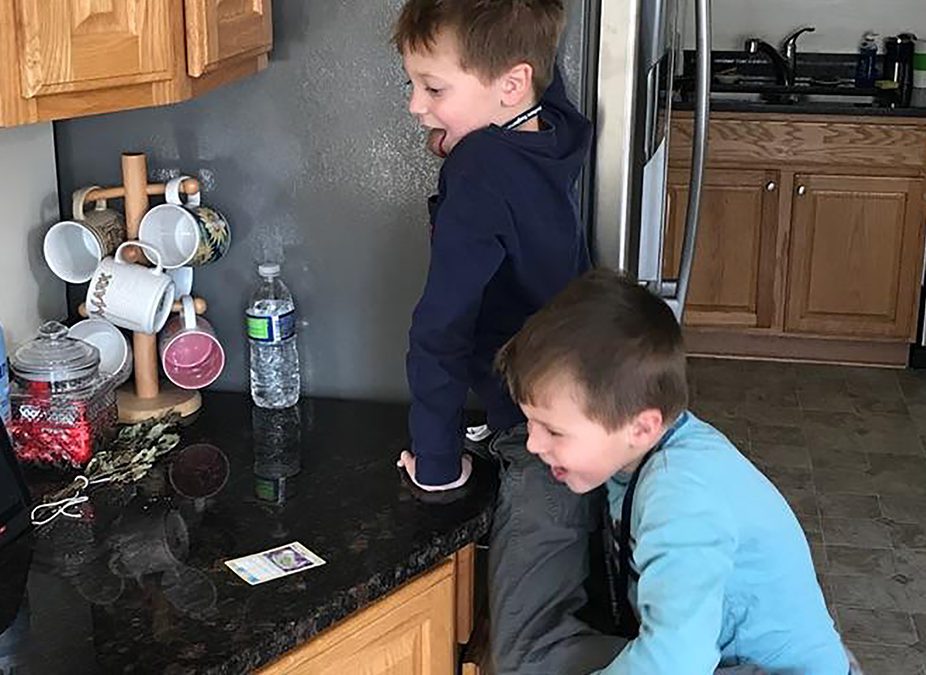
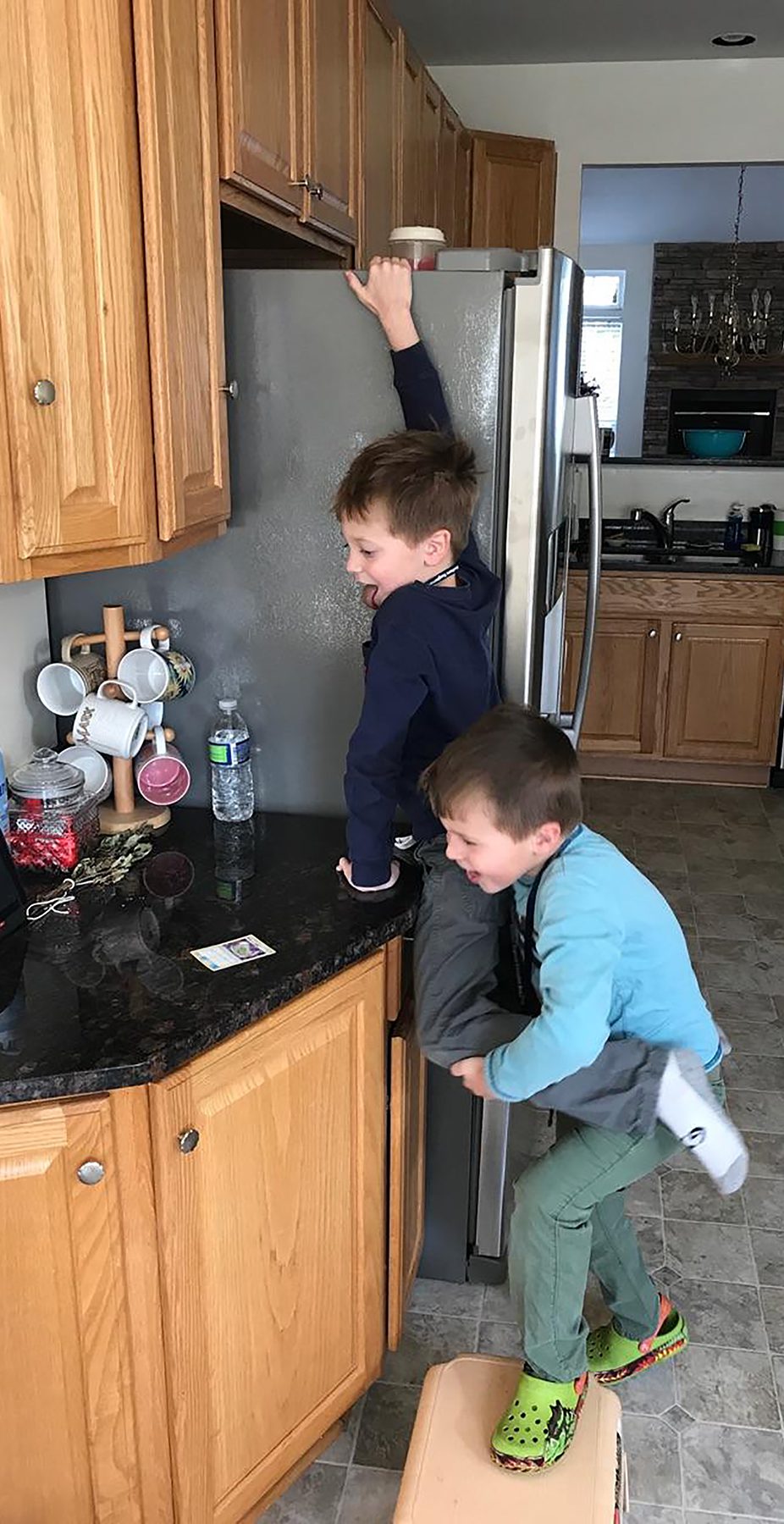
As the grandmother of two boys (15 months apart in age), I have seen that the outcomes of minor squabbles can escalate at an alarming rate and turn into a physical battle, usually over a toy or a Pokemon™ card. Sometimes the most practical response by the adult in the room is to simply remove the object in dispute (say, putting it up high … perhaps on top of the refrigerator), giving the opponents time to compose themselves, call a truce, and redirect themselves to a new, more worthy battle.
Or, maybe they should just put aside their life-or-death squabble and work together to recover the contested object. The battle then morphs into a quest: two brothers working together, united in triumph. High fives from the boys! Boys 1: Grandmother 0. Sometimes it’s better (and safer) when observing a squabble between boys (or German Shepherds) to just let them work it out themselves.
So many parents say to me, “I just get so tired of being the referee in our home. My children seem to be in constant arguments. If they’re not yelling at each other, they’re wrestling on the living room floor. I don’t know what to do and they’re driving me crazy!” I hear similar stories from parents of only children when a cousin comes over for the day or they’re involved in after-school playdates. If you’re in this boat or one very similar to it, don’t despair! You are not alone. There are ways to minimize this behavior and refocus it when it does come up. Learning to live together peacefully is part of our parenting ‘curriculum.’
So, how do we define squabbles? Squabbles are disagreements about normal, everyday stuff that happens when people live together. In families, we share space, activities, and things. Conflicts come up every day about toys, what show to watch on TV, who gets the shower first, who gets to sit in what chair, etc.
One thing that you can do is to carefully observe your children’s behaviors to determine if these squabbles occur consistently or if they seem to be random. Be a fly on the wall, unattached and uninvolved. What do you see and hear?
Do these unfriendly interactions happen at the same time of day, i.e., when everyone is getting ready to leave in the mornings, right when you get home at the end of the day and you’re trying to get dinner ready, or are they always about what to watch? Do you notice that they frequently happen in a store or when you’re visiting a relative? Are you realizing that they seem to rise up to the same situation or particular toy? If you’re noticing a pattern, then it may be easier to come up with ways to circumvent those particular situations. If squabbles are random, you’ll need a more general approach to disarming the battle and enter into conflict resolution.
Because squabbles are a natural part of learning about relationships it’s helpful to incorporate activities that will promote cooperative, respectful interactions in your family life and meet the emotional needs of family members.
All children and adults need to feel loved and lovable, to feel valued by their family members, to feel some control over their lives, and to feel a sense of place in the family no matter what. When we meet these emotional needs in our homes, then children are less likely to be constantly squabbling. Here are a few ways to meet those needs.
- Ask your child’s opinion when appropriate
- Ask for help with household activities
- Create a job chart, TV schedule, bath schedule, etc., together
- Spend time at least once a week, giving appreciations, or acknowledgments
- Spend one-on-one time with family members
- Allow family members to share the leadership role at family meetings
- Appoint someone to be in charge of car safety/seat belts
- Include children in planning family events
- Brainstorm ideas (especially to find solutions to everyday situations)
- Allow each family member to share what’s coming up with them during the week
- Model respect and collaboration in your adult relationships
- Turn off technology and do something together
- Spend time together when you get home before dinner prep
- Bring a healthy snack for the children to eat at pick up time before going on to the next activity
As you incorporate some of these ideas into your family life you will become aware that there is a lot less squabbling. However, never say never.
When there is a disagreement and it becomes disruptive, dangerous, or destructive (either emotionally or physically) remember:
- Stay calm, take a deep breath before doing or saying anything to the children.
- It takes two to Tango; both children are responsible for the squabble continuing.
- We, as parents, are neither judge nor jury. We really never truly know who started ‘it.’
- Help them to get calm.
- Ask them to take a break.
- Do something unexpected.
- Facilitate a peaceful conflict resolution.
Conflict resolution is a skill to be developed at home and at school. There are many variations on ways to promote conflict resolution. It really depends on what works best for your family. Some families choose to bring situations up at family meetings for discussion by the whole family. Other families are comfortable with designating an area in their home for two people to sit and discuss the problem using a peace rose or talking stick. Still, others like to hold hands while facing each other and take turns talking to find solutions.
Children will need different amounts of adult mentoring and facilitation depending on their ability to express their needs and their experience in working out problems. Also, if conflict resolution is a new activity in your family life, your children may need more guidance no matter what age they are. In Montessori classrooms, conflict resolution (making peace) starts at the toddler level and continues throughout their years in the school. This will probably not be an entirely new experience for them if they are in a Montessori school.
Conflict resolution can happen right away if both children are not overwrought with emotion. Sometimes children need a ‘cooling-off’ period before attempting to problem solve. It is not only OK to take time to cool off but also necessary. Emotions interfere with our ability to think logically. When the time is right the adult’s job is to provide moral support, to facilitate the process between the children, and to be non-judgmental. The ultimate goal is for your children to be able to go through the process and work things out themselves or for an older sibling to become a mentor to younger siblings.
Conflicts will happen. They are a normal part of learning and growing. Children have to learn how to ‘make peace’ in ways that not only work for them but also for their fellow family members. You can make a difference in your home life as well as your child’s life outside of the home when you teach them how to handle life’s disagreements.
Tomorrow’s Child / January 2018 / p 22
by Tim Seldin | Brain Development, Early Adolescence (12-15), Infant-Toddler (0 to 3), Kindergarten, Language, Language & Reading, Later Adolescence (15-18), Lower Elementary (6-9), Mathematics, MFA, Montessori Curriculum, Montessori Education, Montessori Family Life, Montessori Middle School, Montessori Secondary / High School, Primary (3-6), Reading, School Leadership, The International Montessori Council, Young Adolescent
by M. J. Rosanova, Ph.D.
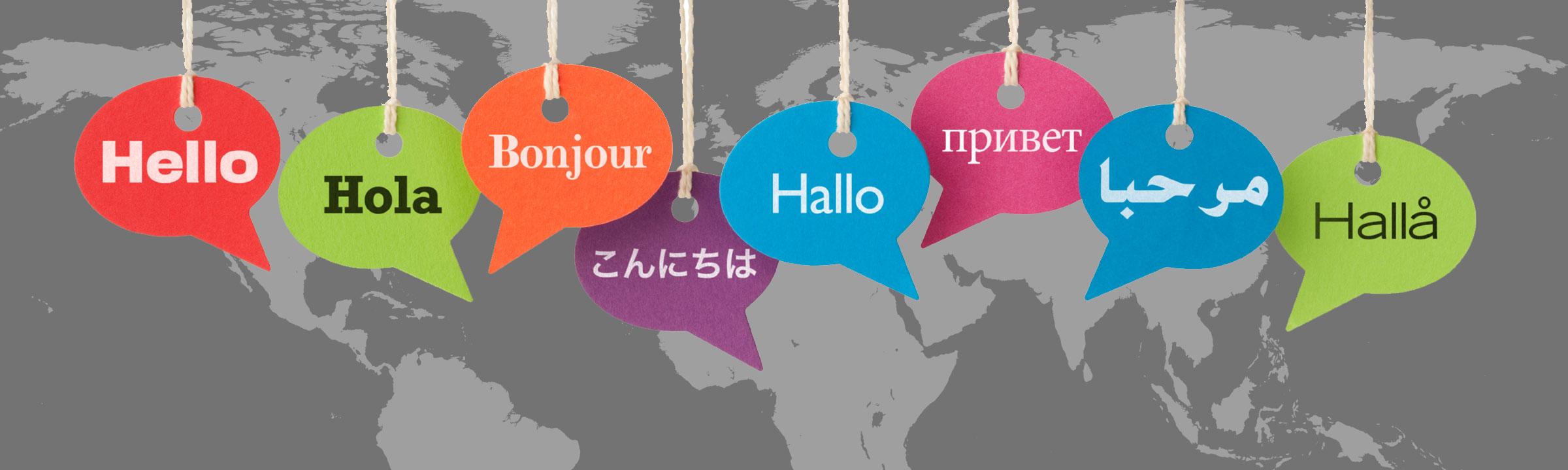
The Montessori Bilingual Institute (MOBI) The children are playing outside. I can hear them outside my window. They’re singing and calling out to each other in Japanese. No, our school isn’t located in Japan. InterCultura Montessori is located in Oak Park, Illinois, a suburb of Chicago. Only about fifteen percent of our children are from international families; in the past, it was even fewer. Most of our children come from English-only monolingual families.
InterCultura is a dual-language or two-way immersion school’. Some of the children who come here know no English (or very little English) when they arrive. But all of the children here become bilingual.
At InterCultura, children not only play in Japanese. They learn in Japanese. For the first three years, from as early as 7:00 or 8:00 in the morning until 2:30 in the afternoon, the children are in total immersion environments, that is, the entire range of the normal Montessori curriculum is delivered to the children by Montessori certified native speakers of Japanese.
In our Spanish immersion program, the teachers are from Latin America. When we first founded InterCultura in 1985, all of the teachers had received their Montessori training in Latin America. Now, many of our teachers are immigrants who have found their way to us as assistant teachers and then have taken Montessori training here.
After 2:30 in the afternoon, our Anne Frank Communities convene. Anne Frank was a Montessori child, beginning at the 3-6 level in Frankfurt, Germany. When the family moved to Holland, Anne continued at the elementary level. Anne, of course, was a bilingual child: German and Dutch. She became bilingual through her experiences at home and in her Montessori school.
At InterCultura, the language of the Anne Frank Communities is English. For most of our children, this is native language development time. For those new to English, this is the time for total immersion in English.
About half of the children from our English-only monolingual families attend the Anne Frank Communities. But all of the children who are new to English are required to attend. Some stay ëtil 6:00 p.m. ñ the normal length of a daycare-length day here in Chicago.
By the way, at no time does anyone force any child to speak either in English or Japanese or Spanish. The children talk and talk and talk in whatever language or combination of languages occurs to them. The average child begins to speak spontaneously in the second language (‘L2’, the ‘target language’) after about eight to ten months of full-time attendance. People who don’t speak any English (but who do speak Spanish or Japanese) can understand them by about that point.
Why Total Immersion?
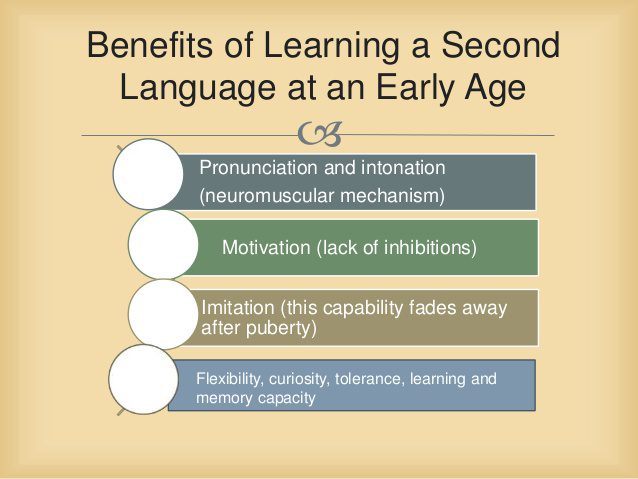
Why total immersion? Well, it all depends on what your goals are. If your goal for your child is ‘useable fluency in the second language, you’d better start early. Current neurological research indicates that the brains of small children have remarkable ‘plasticity’ in comparison with the brains of older children and adults. There is a neurological window of opportunity for language learning early in life which begins to close around eight to ten years of age.
In the past, when knowledge of human development was less available than today, people assumed that a second language was not for preschool but for high school. They presumed that children would master grammar first, and that then fluency would magically appear. Since most children did not have the discipline to study the boring abstractions of grammar until at least fourteen or sixteen years of age, it made no sense to start a foreign language until freshman or junior year of high school.
Even today, there are many very fancy, very expensive high school level programs where after four solid years of daily grammar drill classes almost none of the students can say much more than hello and goodbye and sing a few songs in the second language. Proponents of such programs are quick to point out that their graduates are much more likely to have positive associations with the people and cultures who actually speak the target language. And this is an important and worthy accomplishment, to be sure.
But if useable fluency is your goal, you need to take another route. The research on outcomes overwhelmingly endorses immersion; and the younger the child, the better the outcomes. I’ve taught middle school children (in Montessori), college kids, and adult learners in corporate courses. American children and adults at those ages very seldom become functionally bilingual. One in a hundred may do so; or maybe one in a thousand. But it’s so rare that a statistician would tell you: you may as well say it doesn’t exist. Most of the time you’d be right.
But with small children in total immersion in a developmentally appropriate Montessori environment, barring any grave developmental or emotional problems, it’s startlingly close to one hundred percent. Almost every child becomes functionally bilingual in a total immersion Montessori environment. Or at any rate, since 1985, that’s been our experience at InterCultura Montessori.
Alternatives to Total Immersion
InterCultura is a special Montessori school with a special mission. But not every school needs to undertake a total immersion program. There are various practical reasons why a school might choose not to create an immersion program.
For one thing, it takes a lot of work to identify and recruit qualified Montessorians who are native speakers of the second language. How do you balance the English-speaking faculty with the second language faculty? How do you deal with visas?
If a school decides not to commit to a total immersion program for every child, what other alternatives are open? Should the school offer total immersion not for all of its students, but only for a part of the student body? Some schools may prefer simply to have one or two classrooms within the school devoted to total immersion. And this may be practical in some situations.
But failing that, what else can a school do? There are at least a few other options open to Montessori schools. The language reference person approach, the magic scarf approach, and the language lesson approach can all be found in Montessori settings. Any of them may be appropriate for a given Montessori school if they fit the school’s goals.
The Language Reference Person Model
In some Montessori classrooms, there is one teacher (usually the Montessori-certified lead teacher) who speaks English all the time. And there is a second teacher (usually an assistant teacher with no Montessori training) who is intended to speak Spanish with the children.
If you have several Spanish-speaking immigrant children in your class, and if your goal is to get everyone to speak English, this is a fine model. In some states where ‘transitional bilingual education’ is mandated by the legislature, this approach makes sense. Because of their ability to access Spanish during their time in the classroom, the Spanish-speaking children will continue to grow in Spanish as they begin to acquire English. And because their knowledge of their native language is growing (even though they’re at the disadvantage of having little or none of the usual environmental support that the majority language enjoys), their knowledge of English begins to flourish. To those unaware of the research, it sounds illogical; but actually, more of the home language, used for serious academic purposes at school, means more progress in English.
Unfortunately, very few of the English-speaking children acquire any Spanish in this situation. Most of the children acquire positive attitudes concerning Spanish. Many of them learn how to say hello and good-bye, and sing a few songs. These are worthwhile goals. But it would be difficult to say that the children are learning lots and lots of Spanish.
One of the reasons why the English-speaking children don’t learn much Spanish in this situation is the status of Spanish in the class. Usually, the minority language speaker is the assistant in the class. The children understand clearly that English is the ‘power language’ both in the classroom and in the United States in general. When something important needs to be said, it’s said by the lead teacher in English.
The minority language is often confined to things which are incidental or trivial. Something as important as words of comfort for a hurt child are not likely to be delivered in L2, the second language. If the second language begins to catch on with majority language children at all, it tends to reflect the smaller, more peripheral status that the minority language is given. For many English-speaking children, the minority language just doesn’ t seem very important.
Another, perhaps more critical, reason why English-speaking children don’t learn much Spanish in this situation is simple interpersonal dynamics. If English-speaking preschoolers know that they have a choice of English or Spanish, generally they will choose English, simply because it’s the path of least resistance. They already know English; it doesn’t require them to concentrate or make a special effort.
In addition, they quickly note that, if push comes to shove, they can make even the Spanish-speaking teacher speak English to them. All they have to do is misbehave. The teacher will feel that she has lost control, and will want to scream. Whether she actually does scream or not, the next words out of her mouth are likely to be English. The teacher assumes that with English she is going to regain control.
The children soon learn that they can vary this strategy. In order to avoid time-out or other unpleasant repercussions, they can mask their misbehavior as incomprehension. They can simply ignore the teacher who speaks to them in Spanish, even though a little attention would make the teacher’s message obvious. This strategy will also put the teacher ‘in her place’. She will get desperate, feel out of control, and drop Spanish.
In one Montessori classroom following this model, there are two credentialed co-teachers, one Spanish speaker, one English speaker. Half the children in the class are Spanish speakers; the other half, English. Because of the equality of status between the teachers, and also because of the presence of so many Spanish-speaking children, the situation is more likely to foster interest in Spanish among the English-speaking children. By the end of the first year, two four-year-old English-speaking girls did spontaneously request that Montessori project work be presented to them in Spanish. However, none of the other English-speaking children were so moved.
Perhaps more significantly, none of the Kindergarten-age children were involved. Typically, the Kindergartners in a 3-6 classroom are the leaders whom the younger children follow. This may support goals in which the teachers believe, or it may subvert them. Because the issue of language choice is open in this model, it is open to become the source of much aggravation and disappointment to adults who think that the English-speaking children should be learning some Spanish. Not too many English-speaking American children will learn very much Spanish in this situation.
This is very different from the situation in a total immersion environment where all of the teachers speak the minority language all of the time before the shift into English when the afterschool program begins. In the total immersion environment, there are no power struggles over what language the teacher speaks. If it’s before 2:30, the teachers all speak Spanish all the time.
And the children are fine with that arrangement. The children themselves have developed a relationship with the teacher in which Spanish is an essential element. In a total immersion environment, the children would feel strange to hear the teachers switch into English. The children not only accept but prefer to hear the teachers speaking Spanish.
The ‘Magic Scarf’ Model
Another approach in some Montessori classrooms is the ‘magic scarf’ model. From time to time, the lead teacher dons a special ‘magic scarf’ or some other symbol of the second language and walks about the class greeting the children in the target language. The teacher wears the same symbolic totem during group time when she teaches a phrase or a song in the second language.
Although this method is picturesque and appealing, it is not likely to awaken serious interest or much useable fluency in English-speaking children. Because it is based on a theatrical performance by the teacher rather than a learner-initiated activity, it runs the risk of provoking authority conflicts. Children who feel provoked or merely inconvenienced will not become engaged, and will not learn a great deal of L2.
The ‘magic scarf’ model is an interesting alternative in some situations because it certainly looks like ‘teaching is going on’. Since many parents assume that ‘teaching’ is the same as ‘learning’, many parents may pay extra for Montessori classes where obvious direct teaching is going on. But not too many children will be very interested.
In a total immersion Montessori class children are interested in the second language because they actually use it to accomplish goals which are important to them. Everything from the rules of the classroom to the presentations on the project materials, everything from hello and goodbye to words of comfort when you cry, everything comes to the child in the second language. In that situation, how can a child assume that the second language is not important? How can a child not be interested?
The Language Lesson Approach
For many Montessorians, line time is sacrosanct in a time reserved for songs, greetings, sensory integration work such as line-walking, and perhaps a short presentation featuring one of the traditional project materials. At the 3-6 level, however, line time is not supposed to be ‘group lesson time’ because the children are not ready for passive listening or unassisted abstraction. ‘Group lessons’ in a particular subject area are not officially sanctioned in Montessori before first grade. But many Montessori schools make an exception when it comes to language lessons.
Some of the language lesson approaches are excellent. In Other Words by Alice Renton takes advantage of both line time and Montessori project work. Line time activities are connected to a shelf of project materials which the children can work with even when the second language teacher is not in the classroom. The connection with the project materials and the children’s cycle of spontaneous work is what makes Renton’s materials appropriate for a Montessori classroom. This is essentially different from the ‘magic scarf’ approach which is arbitrary and teacher-centered, and which bears little resemblance to the basic logic of Montessori work with preschoolers.
The style of teaching in Montessori is primarily indirect. The Montessori teacher shows children how to manage project materials, and helps children to focus on the potential of the material. A good Montessori teacher will also help children to reflect on their learning experiences so that the children will begin to understand and make order of what they know.
This is very different from the cycle of declaring information and testing memory which is the centerpiece of ‘direct teaching’ outside Montessori. Devotees of direct teaching emphasize information and product, manipulating learning by rewarding externally with incentives such as candy, happy faces, stickers and frequent (implicitly competitive) grades. Montessorians, on the other hand, tend to prefer internal, intrinsic rewards such as the feeling of competence a child attains when he solves a problem or demonstrates an ability within a context that matters to him.
Most language lessons lean heavily on ‘direct teaching’, and so are somewhat out of step with the Montessori environment. But materials like Renton’s demonstrate that it is possible to come much closer to the spirit of the Montessori environment.
After three years of fifteen or twenty-minute language lessons once or twice a week in a Montessori preschool/Kindergarten setting, it’s reasonable to hope that most children will be able to recognize about three or four dozen words and phrases in the second language. They might be able to spontaneously produce as many as twenty-five percent of them spontaneously.
In addition, they will tend to have positive feelings about the second language and the people who speak it. They will probably recall some of the tunes they’ve learned as well. And they may acquire the ability to produce the sounds of the second language with a high level of accuracy. These are important accomplishments, which merit respect as important goals for Montessori programs.
In a total immersion Montessori environment, on the other hand, children acquire thousands of words within the same period of time. Within less than a calendar year, they begin to make sense to L2 speakers who know no English.
And oddly enough, the higher the quality of Montessori work in the total immersion classroom, the greater the L2 abilities of the children. Unlike the other situations, in the total immersion setting Montessori principles do not need to be bent or compromised. No traditional ‘direct teaching’ is necessary; the second language is embodied in the Montessori work itself.
How Do I Find Out More?
InterCultura has a website, www.intercultura.or, where you’ll find more information and more suggestions. The Montessori Bilingual Institute at InterCultura (MOBI) sponsors a listserv, a kind of group e-mail, for teachers and administrators interested in exploring issues and exchanging ideas.
An entertaining and useful resource for parents and teachers is Growing Up With Two Languages: A Practical Guide by Una Cunningham-Andersson and Staffan Andersson. A wonderful little periodical for families who would like to become bilingual is The Bilingual Family Newsletter, available from Multilingual Matters at www.multilingual-matters.com.
Whether you’re a teacher, administrator or parent, you need to begin by clarifying your goals. There is probably some approach currently in practice in Montessori environments which will help you reach the goals you set, no matter how modest or how ambitious they may be.
Once you have identified your goals, you need to begin making choices concerning program design. The best choices will be the ones that affirm and strengthen Montessori ideals and Montessori practice at your school.
The author, M. J. Rosanova, is executive director of The Montessori Bilingual Institute at InterCultura (MOBI). He holds Montessori teacher certification (AMS), as well as a Ph.D. in social psychology (Yale).
Tomorrw’s Child, Sept, 2000
by Lorna McGrath | Book Reviews, Communication, MFA, Mixed Ages, Montessori Family Life, Tomorrow's Child Online Issue
By Catherine Steiner-Adair, EdD with Teresa H. Barker
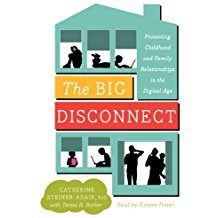
In the fall of 2015, I had the distinct privilege of attending a talk given by Catherine Steiner-Adair, Ed.D. She is a dynamic, humorous, and informative speaker. The 90-minute talk was done in what seemed like only a few minutes. Her topic was that of her book, The Big Disconnect. Her concerns are the same as the concerns of many parents and educators. They are about the effects of technology on our ability to communicate and to form relationships. Dr. Steiner-Adair does not just point out the dark side of technology but actually gives her readers ideas and suggestions to deal with our new technological lives.
For example, in her book, she sites texting as a huge communication problem because it takes away not only our auditory cues (tone of voice) but also our visual cues (facial expressions, hand gestures, posturing). The two or more people involved in the ‘conversation’ can easily misinterpret the message being sent and find themselves in a text war. Also, people are much more likely to say things that they would not dare say face to face. She suggests that parents never engage with their children (or their spouse) in an emotional conversation by text. When it begins to feel touchy, just say something like, “This sounds important and like something that we should talk about in person. Are you on your way home?”
In her book, she discusses the effects of technology on children at different developmental stages. We are beginning to see how parent screen time is damaging the building of relationships and gives the message that “this gadget is more important than you,” however unintentional it is. Children are feeling abandoned. Look around at any restaurant where families gather. What do you see?
When you read this book you will find out Dr. Steiner-Adair’s seven suggestions for sustainable families in the 21st century. It is a must-read for every parent!
- You can listen to a live interview that I recorded with Catherine Steiner-Adair on the Montessori Family Alliance resource center. If you don’t know how to access it, talk to your Head of School. If you receive Tomorrow’s Child magazine you’re already a member!
Tomorrow’s Child/Nov 2016/ Pg 32
by Duna Strachan | Infant, Infant-Toddler (0 to 3), Kindergarten, MFA, Montessori Family Life, Uncategorized, Webinars / MFA
There are so many experiences that grandparents can provide for their grandchildren that don’t involve technology, theme parks, expensive toys, etc. Duna provides easy and fun suggestions for grandparents when the grandchildren are around!
by Kath Kvols | Early Adolescence (12-15), Infant, Lower Elementary (6-9), MFA, Montessori Family Life, Montessori Parenting, Webinars / MFA, Young Adolescent
No one wants their child to fail. However, sometimes experiencing not doing something perfectly the first time, learning from experience, or having the courage to try something new or challenging comes from developing determination and perseverance. Kathryn gives us great advice on how to allow failure to be a motivator rather than a discouragement.
by Kelly Johnson | Family Resources, Lower Elementary (6-9), MFA, Montessori Family Life, Montessori Parenting, Outdoor Education / Resources, Webinars / MFA
Kelly Johnson, a Montessori trained elementary guide, artist, author, and nature enthusiast, shares ideas and experiences for young children and their families to do together!
by Kelly Johnson | MFA, Montessori Family Life, Montessori Parenting, Video, Webinars / MFA
This session is filled with great ideas for families to spend time together in nature to receive the “gift of togetherness” as well as give it to others.
by Parents Magazine Online | Brain Development, Child's Work, Communication, Family Resources, Montessori Family Life, Montessori Parenting, Uncategorized
Picky eating involves a variety of behaviors. Here are some tips for helping your child develop a more tolerant attitude toward food.
DO
Serve age-appropriate portions. Give toddlers portions that are one-fourth to one-third the size of adult portions. A toddler faced with both a plateful of food and a parent who expects him to eat it all, is likely to become fussy and finicky at the table. Increase portion sizes for preschoolers and kindergartners, but don’t expect your 5-year-old to eat the same amount of cooked carrots as you do. By scaling down portion sizes, you give your child the opportunity to ask for seconds, which will help him feel in control.
Offer new and unfamiliar foods, but do so in small portions and don’t insist that your child eat everything. In fact, when a food is served for the first time, let your child know that you only expect him to sample it and that he may spit it out if he doesn’t like it.
Serve your child’s old favorites —or at least a familiar, acceptable food—at each meal. If you want to add a dish that your child has not shown much interest in before, pair it with something she likes. For example, if you are encouraging her to enjoy green beans, serve them with her favorite macaroni.
Serve a small dessert with dinner. It’s likely your child will down her dessert first, but that’s okay. The dessert will stimulate her appetite, making her more willing to move on to more nutritious fare.
DON’T
Worry if each meal is not nutritionally complete. Though your child may eat only starchy foods one day, his natural desire for variety will motivate him to nibble on a piece of fruit or a vegetable later on and to try a small serving of meat the next day. During a week’s time, he’ll consume a variety of foods and get the majority of the nutrients he needs.
Use food as either a reward or a punishment. If you bribe your child to eat her spinach so that she can have a “yummy dessert,” you inadvertently reinforce the idea that sweets are better than nutritious food. If you reward good behavior with a treat, you teach an unhealthy association between food and positive feelings. Likewise, if you threaten to withhold a food treat for any unacceptable behavior, you teach that food can be used as a weapon, an idea that even a young child can internalize and use at future meals.
Prepare separate meals for your picky eater. Most parents simply don’t have time to be short-order cooks. Also, if your child gets into the habit of eating only
specially prepared meals, she may never want to dine on foods the whole family is enjoying.
Make enticing foods your child sees others enjoying completely off limits. Allow her the occasional candy or soft drink that’s served at a birthday party, for instance, to avoid making these foods seem even more enticing. (If you disapprove of the menu at a party, feed your child well beforehand so that she won’t be too hungry.) Likewise, having a sweetened breakfast cereal on occasion will not ruin your child’s health. Consider allowing her to mix a restricted cereal with an approved one, showing her that you value her opinion while helping her to maintain a healthful diet.
From The Parents Answer Book: From Birth Through Age Five, by the editors of Parents magazine. Copyright © 2000 by Roundtable Press and G+J USA Publishing.
Tomorrow’s Child/ November 2017/ Pg 37
by Margot Garfield-Anderson | Family Resources, Montessori Family Life, Tomorrow's Child, Tomorrow's Child Online Issue, Uncategorized
From Wikipedia:
(UK: /ˌpæpi.eɪ ˈmæʃeɪ/, US: /ˌpeɪpər məˈʃeɪ/; French: [papje mɑʃe], literally “chewed paper”) is a composite material consisting of paper pieces or pulp, sometimes reinforced with textiles, bound with an adhesive, such as glue, starch, or wallpaper paste.
Remembering back to when I was a school-aged girl (you know, when dinosaurs roamed the earth), I have fond memories of doing papier-mâché projects both in school and at home. My mom was a professional artist and art teacher in a public school, so art supplies were always in abundance. When I headed north from Florida to Rochester, NY this summer to spend some time with my two granddaughters (Blakely, age 7.5 and Raegan, 4.5), I had a nostalgic moment and decided to introduce them to this medium. I always try to have some fun projects for us to do together. It gives us quality time to create and talk and catch up.
In the weeks leading up to the visit, I asked them if they might be interested in learning how to do papier-mâché and explained briefly what it was and how it was done. They kind of giggled when I said that it meant chewed paper, thinking we’d be putting the paper in our mouths. I try to entice them with small tidbits of information about the projects I hope we do but also listen to detect any lack of interest. I never want them to feel as if they can’t decide this project isn’t for them.
When children are mandated to do something, it could potentially take the fun out of it and doesn’t allow for creativity and imagination to take center stage. I try to model these experiences the same way a Montessori guide would in the classroom and thereby reinforce how options and choices are delivered. It’s most important that, as grandparents of Montessori children, we do this so that the children don’t receive conflicting messages.
So off I went, with a suitcase packed with huge sheets of unprinted recycled newsprint (large white sheets of the thin paper used by printing companies) and my fingers crossed that the children would stick with the project. I waited until they asked when would we begin before I helped them don their aprons, put up long hair, and set up their art table. We covered the table and the floor with those table clothes from the dollar store. Papier-mâché can get quite messy!
We chose to do simple globes. Because papier-mâché has many steps and can take several days, choosing a simple shape is probably a good idea. We started by wadding up the paper and then taped it into a circular shape, holding it together with some masking tape.
In two small pails, I mixed equal parts of flour and water and let them stir until the consistency was nice and smooth. In this way, each child had their own supply of the paste.
The newsprint was torn into strips and a few at a time put into each pail. The girls were taught how to use their fingers to squeegee the excess paste off each sheet as they picked it up. This takes quite a bit of manual dexterity, but each girl quickly mastered this step. Each strip of paper was then wrapped around their globe shapes, overlapping and smoothing out wrinkles and air bubbles with each successive strip until the entire globe had been entirely covered.
Once this step was completed the balls were set on some wax paper and put into the sun to dry. This took a day to accomplish. Since the next day was sunny and warm, we decided to do the painting at their outside table. Using tempera paints, each girl went to work deciding what their globe would be. Again, we left them in the sun to dry and they were able to play with the globes later that evening when they had cured.
They enjoyed this project so much that they were anxious to show the finished pieces to their three cousins from Connecticut, who had just arrived for a visit. Caleb is 10, Sydnie is 8.5, and Brennan is 5. They all looked at me and said, “We want to do papier-mâché, too. Will you show us?”
The next day, I gathered empty plastic milk containers and empty plastic bottles of water. Once again, I explained what papier-mâché was and even went into some of the ways throughout history in which papier-mâché had been used. I kept it short and light. The big table was now covered, as Blakely and Raegan wanted more of a challenge this time, feeling they had done pretty well with the simple orb.
The gallon containers made the perfect body shape of some animals and the water bottle would be transformed into a great vase. Usually, papier-mâché is totally made of paper but we felt like experimenting a bit. Each child molded bunched up the paper and, as the animal began to take shape, they declared what it was. Again, we used masking tape to hold the shapes together.
Because their cousins only had that day to work on the project, we tried something else with the color; we used colored tissue paper. It was a little thin and messy, but it quickly got the job done. When they finished, we put their projects on a baking sheet and put them in a low-temperature oven (225°) for about 2-3 hours. Each child now had a ‘pet.’ When they left, the cousins hugged me tightly and remarked how this was such a cool project and they couldn’t wait to come back next summer and do another one together.
Papier-mâché was a regular art activity growing up, but I know schools don’t often do it anymore. It’s kind of a great way to repurpose those plastic milk containers, water bottles, leftover tissue paper, and newspapers, so why not experiment with your (grand)children and try it?
Tomorrow’s Child/ November 2017/ Pg 28
by GreenHarvard Edu | Archived Issues / Tomorrow's Child, Empowerment, Family Resources, MFA, Montessori Family Life, Nature, Practical Life, Tomorrow's Child
The Sustainable Community Leaders Program provides a unique opportunity for residents living in Harvard University Housing to have a direct and meaningful impact on the University’s greenhouse gas reduction goal and sustainability efforts. You don’t have to go to Harvard to implement these ten simple ways to help our planet (and your budget).
1. Swap CFLs for LEDs
Swaps out all incandescent and CFL bulbs for LEDs in table, desk, and floor lamps. They are 90 percent more efficient, contain no harmful gases, and can last up to 20 years!
2. Change laundry settings
Wait until you have a full load and then do your laundry on cold wash (BRIGHT COLOR SETTING). It not only extends the lifespan and vibrancy of clothing, it also saves 90 percent of the energy that would have been used to heat the water.
3. Clear vents
Have you ever felt that the temperature in your house doesn’t match your thermostat? Take a look around. You may be blocking your air registers! It may help to move some furniture and large items so the air can circulate more freely. This action may improve your heating and air conditioning system efficiency by 25 percent.
4. Unplug devices
Do a routine check to make sure chargers, adapters, and small appliances are all unplugged before you leave your home. Phantom energy is the electricity that electronics pull from the outlet while plugged in, even when the device is off. It can waste as much as 10 percent of your home’s energy.
5. Adjust temperature settings
Adjust your thermostat for when you are away from home versus when you are at home. Keep the fan setting to LOW. This creates a space for optimal comfort, health, and productivity.
6. Turn it off
Turn off EVERYTHING before heading out the door: lights; bathroom vents; computer; coffee maker; TV.
7. Make it easy
Plug in all your electronic equipment into a central power strip and then just hit the switch!
8. Manage power settings
Make sure your computer isn’t wasting any unnecessary energy. Set your power management settings to Energy Saver Mode and get rid of the screen saver. This cuts energy consumption and prolongs the computer’s
battery life!
9. Use your blinds and shades
Use daylight wisely, by keeping drapes open during the day to let in the warm rays or closed to keep out the sun if you are in a hot climate.
10. Take the stairs
Take the stairs instead of the elevator. Good for your health and a good way to save some kilowatts!
Retrieved from:
https://green.harvard.edu/tools-resources/green-tip/top-10-home-energy-saving-tips
Tomorrow’s Child/ November 2017/ Pg 27