by Margot Garfield-Anderson | Family Resources, MFA, Montessori Education, Montessori Family Life, Montessori Materials, Montessori Parenting, Montessori students, Montessori Teachers, Primary (3-6)
Economic Struggles Unite a Soup Kitchen, Market, Social Services, & Montessori to Serve a Community in Need
Community Montessori School
Ft. Myers, Florida
Several years ago I met a young Montessori teacher at one of our international conferences. I often keep in touch with many such people because I love hearing about what they are up to. Such is the case with Cindy Venezia. She is now the Montessori Director at the Community Montessori School in Ft Myers, FL, just 90 minutes south of Sarasota where the Foundation’s headquarters are located. Cindy attended the conference in Sarasota last year and came away inspired by the keynote speaker Cynthia Burns’ (Maui, Hawaii) school’s greening initiative and micro-economies. I was then inspired by what Cindy put into action and asked her if I could come down and see what they had done. All I can say, after visiting with her, is that I was so wowed and thinking so hard about what I had seen that I actually missed my highway exit on the way home!
A little background before I begin.
Community Coop Ministries, INC (CCMI) was founded in 1984. Its primary mission was to provide a soup kitchen and low-cost child care. Approximately five years ago, several agencies merged together: the soup kitchen, preschool (by then in its second year of being a Montessori school), a market, social services, and Meals on Wheels. All now come under the CCMI banner. With some government funding (not in the Montessori school), they mostly rely on private donations, well-researched grants and, a lot of sweat equity from volunteers. The population that CCMI serves falls between 150-200 percent below the poverty level.
Why Montessori?
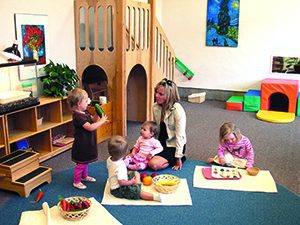
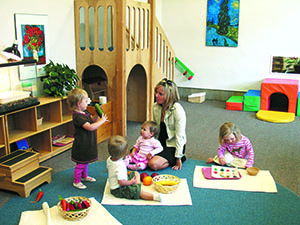
Sarah Owens, a parent of a student where Cindy was a Montessori teacher, asked Cindy if she were interested in joining her, as she became the CEO of CCMI. Sarah is also Montessori trained and was interested in turning the existing preschool/daycare into a Montessori school. Cindy was hooked and joined Sarah in the planning stages. Cindy remembers her first tour of the facility, where five-tiered bookshelves were laden with ‘stuff.’ The tall shelves were soon replaced with low shelving much better suited for children of this age. Whereas, before, there wasn’t a single living plant, now each of the two classes is filled with plants, fish tanks, low shelving, work mats, and baskets along with the familiar Montessori didactic manipulatives. It had become a Montessori environment.
Working with the state agencies that monitor such programs has been a process of education, Cindy tells me. They have checklists of standards, and if they don’t immediately see it for what they think it should look like a little “tick mark” of deficiency is placed on the paper. Once Cindy was able to explain how and why Montessorians do things, those tick marks got erased. She’s become a master at being able to translate so that these agencies’ criteria are being met on Montessori terms.
The Struggles of the Children
The first year, Cindy dedicated her efforts with the first group’s social and emotional development. “They weren’t ready for much in the way of academics, because when you are living so far below the poverty level even the most basic skills involving gross- and fine-motor skills have to improve first. Getting them to trust the teachers and the materials, getting them to connect and make eye contact was enough of a challenge.”
Most programs group 3-6 year old children together. Here, the children weren’t ready to be in a primary room until at least 31/2 . They were just behind. After working with them now for the second year, they’ve been able to back this up to 3 years and two months. They are thrilled with this huge success.
What made the biggest impact on these children?
Art, Water, and Gardening
Cindy credits three different projects for the biggest transformations in the children. Most of these children had never been exposed to working with soil, creative writing, art materials, let alone, knowing how trees produced fruit, needed water to grow, or the names of any of the great masters of art. At first, most of the children were too afraid to touch anything for fear of being reprimanded for making a mess. But, once the programs got under way, the change in the children became apparent. Cindy remembers, months into the program, hearing some children independently reading and commenting out loud, “This is Kandinsky’s art work.”
Local artists taught the art programs. One memorable project involved tracing their bodies onto paper and coloring them to represent different aspects of weather. The school hosted a gallery night for the parents. At first, the parents saw them as just scribbles on paper until the idea was explained to them. It opened their eyes to the possibilities of what their children were capable of doing, thinking, and feeling.
Ten fruit trees and a small vegetable garden were planted by the children with the assistance of two groups: ECHO (Educational Concerns for Hunger Organization) and the Junior League. The Junior League actually asked to fund the vegetable garden as a part of their program to create good nutritional programs in schools.
Remember earlier when I mentioned that Cindy had been inspired by one of our keynote speakers? Well, she went back to school and told Sarah that they needed to create a business out of their trees and vegetables. Cindy describes Sarah as a visionary and this idea took hold for her.
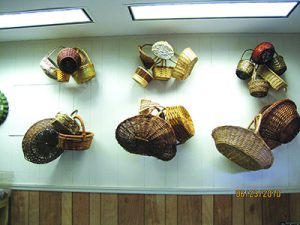
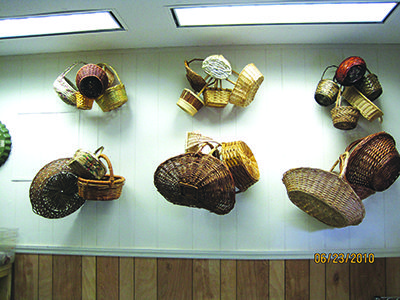
What they decided to do was transform, and then model, their food bank into a market experience Sarah had seen in another state. In this way, people could come to the market, give the volunteers the vouchers from Social Services, and then shop. Volunteers lead clients through the aisles to select the foods that meet their individual family’s needs and tastes. No longer is this seen as just a hand-out to the needy. The point is to restore the dignity of people and help them shop for the foods that they want. The market aisles and walls are adorned with baskets, dried flowers, and displays similar to what we see in stores such as Fresh Market and Whole Foods but on a much smaller scale. Local bakeries donate day-old, unsold cakes and breads, and one store even donated many dispensers with bulk- assorted jelly beans for extra treats to bring home.
As for the fresh produce sold in the market? Why, of course, the students at the Montessori school grow it! They raise, harvest, and nurture it – all while learning about local agriculture, the running of business, and tending to a garden and nature. They are learning to work with others within a community to make an impact. The lessons this project teaches the students will last a lifetime. It’s all so circular, because we want our children to understand community on so many levels, and what CCMI has created and what they are doing with their children and parents speaks to this in every way that you can imagine.
These children might have otherwise fallen through the cracks. Now, they have a solid chance of transitioning into school programs on a more level playing field. The progress in their social and emotional development improves all the time, and this opens them up to succeed in the academic areas as well.
The Parents
Reaching the parents and getting them involved and invested was the final piece to making this all work. Cindy has seen, slowly but steadily, parents becoming involved in all aspects of the school. They now get some parents coming in to read to the children. This is amazing, as most of these parents have precious little free time during the day to spare. So the students have a corner in the room, where they made honorary plaques to present to parents who participate in classroom activities. Cindy sees more and more parents coming to meetings and even volunteering in the other areas that CCMI serves, such as the soup kitchen.
The Community
The children also believe in giving to other partners within their community. They sold some of the produce and some spices they ground up into powders and managed to raise $40 in this enterprise. They presented a check for the $40 to the United Way in a ceremony that was covered by local media.
Montessori schools strive to create community. CCMI strives to create pride in their community. The combination of the two works well. Sarah, Cindy, and their staff are on to something that empowers children and adults. Cindy invites you to contact her should you have any questions about the programs they run or how you can create a similar program in your community. You can contact Cindy at: cindy@ccmileecounty.com.c
Tomorrow’s Child/ Sept 2010/ p31
by Duna Strachan | Infant-Toddler (0 to 3), MFA, Montessori Education, Montessori Family Life, Montessori Parenting, Montessori students, Montessori Teachers
At Soaring Wings Montessori School, in Park City, Utah, the Sun-flower Class is in session. A two-year-old finds a quiet corner to look at a book and gaze out the window. An eighteen-month-old is feeding the pet rabbit. Two three-year-olds are putting on jackets in preparation for going outside to sweep the patio. Another three-year-old is carefully matching photo cards of a variety of fish.
Across town in the Snowy Owls Class, the day is off to a similar start. A child paints a fan for the upcoming Asian celebration. Another arranges a Japanese rock garden, while another practices Japanese calligraphy.
In both classes one notices the quiet industry of these young students. Art, music, and plants create a rich and peaceful background. The placement of furnishings and activities evidence the many hours teachers have spent composing these classrooms with their particular students in mind. But you don’t notice the adults in the room until one of them steps in to assist a student.
Lead teacher, Leah Linebarger says, “Montessori compares the teacher-child relationship to the valet and his master. The teacher’s responsibility is to serve the spirit of the child. The way she does this is through an ongoing process of preparation and observation.
The teacher prepares the environment in accordance with the developmental needs of the child. The child is never forced to interact with his environment. If the materials in the environment are enticing and provide the appropriate level of challenge, they will call to the child’s senses. The teacher, as the valet, only responds when asked and does so with haste, offering feedback in a positive manner only when it is beckoned for.
The child will build his self confidence based on validation. If he can do this from within, any need to be validated by others will subside. The observant teacher will know how to foster this development. A well-prepared environment allows the teacher optimal observation opportunities and the children optimal opportunities to interact with their environment.”
Genevive picks up the paint brush and carefully traces the shapes of the Japanese letters. Grayson organizes each pebble around a miniature bridge as he designs a small Japanese garden. Ted is finishing his snack of rice balls, kelp, and Asian pears. Owen tries on the Chinese lion mask (see page 3) as Griffin plays the little Chinese drum rhythmically to the background music.
The class will lead the Asian Celebration through the halls of the school, knocking on doors and inviting each class to step in behind with instruments and colorful Chinese lion costumes. Two or three toddlers opt out of the parade, leery of the noise and change in routine. But most enjoy the celebration and will recreate it for days afterward in class.
In the midst of a quiet work period, three students march around the room in a circle playing rhythm instruments. Others look up, “Ah, yes,” their expressions seem to say, “there goes the Asian Celebration again.” And they resume their work.
by Chelsea Howe, PsyD | Infant-Toddler (0 to 3), Kindergarten, MFA, Montessori Education, Montessori Family Life, Montessori Parenting, Montessori students, Montessori Teachers, Psychology, Tomorrow's Child
It’s the beginning of the school year in North America, after many months of unstructured or semi-structured summer activity. Undoubtedly, things will be shaken in your child’s world when they return to school this fall – perhaps, your world will be shaken, too!
Many children wait all year long for summer to hit, and who can blame them? They think about the pool, perhaps summer camp activities, seeing friends, taking family vacations, and so much more! But, the truth is, often summer seems to drag on at times and we all wish (even children) for the structured days to return.
For many children, even returning students, going back to school can be very difficult. Their idea of structure has taken on a whole new meaning over the last several months. Even for adults, it’s easy to get into a more lenient swing of things – late-night play-dates at the pool often carry over to sleeping in, ever so slightly the next morning. And, the truth is, sometimes even employers become a little more lax during the summer months. So, it only seems normal that children (and adults) might have reservations about getting back to routine.
There are things, however, that can be done that will make this transition easier, on everyone. (As a side note, this article can also be applied to coming back from Thanksgiving, winter, and spring breaks).
First and foremost, begin implementing a routine, sooner rather than later. Even if it is a more lenient routine than you will ultimately follow during the school year, at least it is a routine. Parents, invite children to take part in reading before bedtime (or some other ritual – singing a lullaby, drawing a picture, etc.). Allow them to form their own little ritual around this activity, whether it’s reading with a flashlight in a tented area over the bed, or a nighttime snack while reading. Parents, form your own routine, too! Let that story time be a time for you to begin relaxing. think of it as Phase I. While your child is reading a book, drink some hot (decaffeinated) tea and visualize the story that is being told.
Make sure to begin waking up earlier and transition into this slowly. No one needs to go from eight hours of sleep to five hours of sleep with no transition. That’s enough to cause anyone to have a meltdown.
Allow the routine to follow into morning rituals, too. This is a time for all of you to enjoy being together. For example, everyone can participate in making and serving breakfast. It not only helps provide a routine, but it is also an act of appreciation and allows for a feeling of connection, even in the morning when we may feel rushed, and many of us are not fully functioning yet.
If your school has this event, make sure to attend the orientation or back-to-school night prior to starting school. Many parents choose to skip this or may have vacations planned during that time period. Try to synchronize your schedule with school as best as possible. This is an important event for young children, even if they seem to protest at the thought of attending. These orientations help children rekindle and make new friendships and take the unknown and make it familiar.
When it comes to getting children off to school, it is so important for parents to support each other and to decide what will happen before it happens. With luck, children will show great enthusiasm on the first day, will jump out of bed, and will go forth without much reinforcement from parents. However, more often than not, there may be some reluctance, particularly in the first few days of school. Parents should determine how they want to handle the situation before it happens.
The first day of school is exciting for all children, but for some children it is more stressful than exciting. Parents know their children better than anyone else and may suspect that their children will have difficulty being dropped off at school and being away from home. Warning signs may include: prior incidents of difficulty when separation occurs; evidence of shyness; stressors (e.g. medical difficulties, parental discord, etc); or prolonged attachment (e.g. never having been left with a baby sitter or relative, no play dates at other children’s houses, etc.). To some extent, being ready to detach can be very difficult, not only for youngsters, but for parents, too.
If you suspect that your child may have difficulty with separating, it may be helpful to talk to the teacher ahead of time to give her the “heads up.” Teachers and parents can work together to help the child adjust. If it is truly difficult, it may be helpful for your child to bring a “transitional object,” something that he holds close to him to remind him that he is safe and make him feel comfortable (e.g. a friendship bracelet). If this is something that you feel might help, make sure you talk to the teacher first, so as not to cause any distractions to the rest of the class.
Parents should talk to their children before the first day to walk them through the steps. Even older children may be confused by the process (Where does the bus stop, where will they be dropped off, and, most important, where will they be picked up?). Children do best when certainty and routines are in place. Children who are overly fearful may require a little extra certainty. Allow them to ask questions and answer them to the best of your ability.
Finally, the day arrives (and many days after) that can cause parents heartache: the actual separation. Many parents will arrive at school with their children and believe that everything is going according to plan – no meltdowns – happy child, happy parent. When they arrive at the classroom, however, things go terribly awry. This is where advance planning is essential.
Understandably, parents want to nurture their children, comfort them, and do whatever possible to help them in the process. However, this often has poor consequences when it is done improperly during the drop-off process. It usually results in just a temporary solution and may actually reinforce in the child the feeling that the classroom is a scary place.
Instead of lifting up the child and allowing her to latch onto your neck and wrap her legs around your waist, comfort her by crouching down to her level, sharing how brave she is to try something new, and leading her in the direction of the teacher (who can guide her to other children who are already happy with an ongoing activity). Share with her that you love her and can’t wait to hear about her day at home when they will make macaroni and cheese together (or whatever is on tonight’s menu; the point is to be concrete, because children think literally at certain ages.
Don’t make promises, such as,
“I promise you will have a great day.” Don’t do or say anything to make them feel any more vulnerable, such as, “You can call me whenever you want throughout the day if it’s too hard.”
Do not sit in your car in the parking lot waiting for a call from the school. Do not hide in bushes to see if you can get a glimpse your child through the classroom window – just to make sure she’s settled in. Montessori teachers are trained and will know if they need to call. Children watch their parents for cues: parent happy, child happy! Tactfully and carefully, do the hand-off.
This may sound callous, even cold, and it may even sting you while reading this. Many parents have the image of their little one crying at the classroom door and feeling frozen in a panic, not knowing what to do next. That is almost never the case, and if it should happen, Montessori teachers know what to do. Being informed, planning, and creating what we call a “corrective experience” can lead to a change of experience in the future. Usually, even the children who have the most trouble saying good-bye will quickly transition to new friends and will want to join in an activities and come home and share fun experiences. Do not, however, be alarmed if there is a day two, day three, and possibly more of these experiences. It will get better.
Even if parents and teachers do everything ‘right,’ there are children that still have more serious separation anxiety issues. This disorder is not so uncommon. It affects about 3 to 4 percent of the child population and often develops after a life ‘stressor’ (e.g., divorce, moving to a new home, illness, death of a grandparent or pet, etc.). In acute situations, a child can experience extreme distress when away from the home or away from a parent: constant worry; inability to do anything on her own; inability to sleep separate from parents or away from home; nightmares; and may include physical symptoms (including headaches, stomach aches, etc.). This disorder can occur at any age and may vary in manifestation depending on the age and gender of one’s child.
If a parent sees these symptoms, it may be helpful to seek consultation from a school psychologist or counselor to try different interventions. It may also be helpful for parents to seek help from a psychologist who specializes in childhood disorders to help work in collaboration with the school, the family, and the child. This disorder can be extremely painful for parents and children, and early intervention can be the most significant factor in changing the course of the problem for the rest of the child’s life.
School experiences are memories that we carry throughout all of life. Many of these memories involve how parents help children cope with their transitions. Don’t underestimate your feelings, as parents, either – separation can be quite difficult on your end (we often underestimate the ‘fears’ of watching our children grow up, too!).
Whether it’s your child’s first experience at school or a new year for a returning student, it’s a time of great excitement and change. Even good change is stressful. Having a plan, listening to your child, and working together with teachers can make it a much smoother transition for everyone. Don’t forget yourself in the process. You’ll be returning to, or establishing, a new routine as well.
Tomorrow’s Child/ sept 2010/p28
by Leigh Ann Carver | Early Adolescence (12-15), Infant-Toddler (0 to 3), Later Adolescence (15-18), MFA, Montessori Education, Montessori Family Life, School Resources
There is no description, no image in any book that is capable of replacing the sight of real trees and all of the life to be found around them in a real forest. How often is the soul of man – especially in childhood – deprived because he is not allowed to come in contact with nature.” – Maria Montessori
Montessori schools have made a conscious effort to take their students outside, from the earliest days when an inner-city courtyard was the best that could be done, to get some fresh air and sunlight. As Montessori education spread to suburban and rural locations, greater use of the outdoors became possible, and students at many contemporary Montessori schools observe wildlife, engage in hands-on life-science lessons, or raise vegetables on campus.
Mountaintop Montessori in Charlottesville, Virginia has offered a number of ways for students to work outdoors over the years and has recently seen programs from various phases in the school’s history come together to create exponentially greater opportunities for students to grow in their knowledge of, and connection to, the natural world.
As is so often the case, Mountaintop’s early environmental education projects flowed from faculty members’ willingness to share their areas of expertise with the students. Estra Roell, who guided lower elementary students for twenty years at the school, came to share a weekend interest in birdwatching with Alma Scheible, who was her classroom assistant at the time. They installed the first bird feeder on our campus just outside their classroom’s windows. Soon, they discovered that watching birds made for a wonderfully concrete way for students to learn about how animals adapt in their environments and why the health of those environments is crucial to the animals’ survival.
Having learned to identify types of beaks and feet, students understand how birds meet their needs for food and shelter and how local populations of shrubs, trees, insects, worms, and birds are all interrelated. Mountaintop embarked on its first environmental education project in partnership with Audubon International in 1999 and achieved certification through their program for schools in 2001. In 2002,Estra published an article in Tomorrow’s Child on the benefits that working with Audubon had brought to our students, stating, “We have achieved many of the goals we established at the beginning of our involvement in the program, but our progress doesn’t stop with certification as a Cooperative Sanctuary. We see our stewardship as a permanent, ongoing project and hope to maintain our relationship with Audubon International well into the future.”
Over time, we’ve seen more and more evidence that the real, meaningful work of maintaining and expanding our sanctuary gives students the kinds of experiences they need to have early in life to build not only appreciation and knowledge of the natural world but also an understanding of their role in it and commitment to being lifelong, active stewards of it. Biennial recertification with Audubon gives adults on campus an opportunity to reflect on this. Our most recent recertification took place in the spring of 2010, and in it we reported on some exciting developments and considered how they related back to the essential theme of educating students to become eco-literate citizens of their local and global communities.
Cornerstones of a Montessori Approach to Eco-literacy: Montessori’s Keen Understanding of Human Development
Dr. Maria Montessori, trained as a physician, used her scientific background to develop an innovative approach to understanding child development. This approach divides the child’s life into four six-year stages, which together span birth to age twenty-four. Within each stage, the first three years are a time of great change and growth for the child, followed by consolidation during the second three years. Through the first three stages, adults support the child’s development by observing, determining what support is needed, and giving appropriate guidance and challenge. The fourth stage constitutes young adulthood. Since Mountaintop serves 200 students, including toddlers, preschool/ kindergarten-aged children, elementary students, and adolescents, we see each of Dr. Montessori’s planes of development every day. Over time, our students develop a kinship with the natural world by building on early sensorial experiences, moving into productive work in the outdoors, and ending with the ability to make decisions and take action with optimism and confidence founded on those early successes.
1st plane | Toddler & Children’s House | Ages 0 to 6 | Preschool & Kindergarten
From birth to age six, children are soaking everything in, constructing an understanding of the world through their senses. So, the 1st plane of development is called the “absorbent mind” phase. During this phase, children develop all the essential skills necessary for survival: to eat, to move, and to communicate. They are driven to refine those skills to meet their needs independently. The Toddler and Children’s House ages are the most critical periods for bonding with the world and developing what entomologist E.O. Wilson calls “biophilia” – an affinity for the living world. During these formative years, our main objective is to cultivate empathy between the child and nature through direct experiences with plants and animals and complementary stories, songs, and seasonal celebrations.
2nd plane | Elementary | ages 6 to 12 | grades 1 to 6
From six to 12 years, children are hard at work making sense of the world around them. In this 2nd plane, we say they have a “reasoning mind.” They are making connections, discovering reasons and starting to become familiar with the essentials of human knowledge. Elementary children are natural explorers, inclined to collect specimens; explore the woods and streams; observe amphibians, insects, and birds; hike trails; plant gardens; compost and recycle; tend animals; and, ultimately, make the connection that human beings need to live in harmony with the earth. Upon experiencing the living and non-living forces of nature, they easily draw the conclusion that all things, natural and man-made, are interdependent.
3rd plane | Middle School | ages 12 to 15 | grades 7 to 9
The complicated years of 12 to 18 are a time of physical growth, intense emotions, and refinement of beliefs and values. During these years, young people seek both independence and community. Adolescents practice the skills they need to participate in society and make themselves ready to contribute to the wider world as individual adults. As Montessori children enter adolescence, their personal relationship with nature becomes a catalyst for social action on behalf of the environment. This devotion to the world around them provides context for studying the challenges facing our world today. These young adults emerge from their Montessori years understanding the unique relationship between human technology and nature’s gifts. The Mountaintop student feels empowered to make positive and purposeful contributions to local and global environmental efforts out of genuine understanding and experience.
Our whole curriculum is organized to serve these planes of development, with children working in mixed-age groups but sharing the same characteristics and needs. Planting an area outside their classroom with carefully chosen shrubs and flowers and seeing them attract the insects and birds found in our area is one long-standing example of eco-literacy lessons attuned to the children’s development at our school. Other examples are found in programs we have developed more recently at Mountaintop.
An Organic Approach to Prepared Environments:
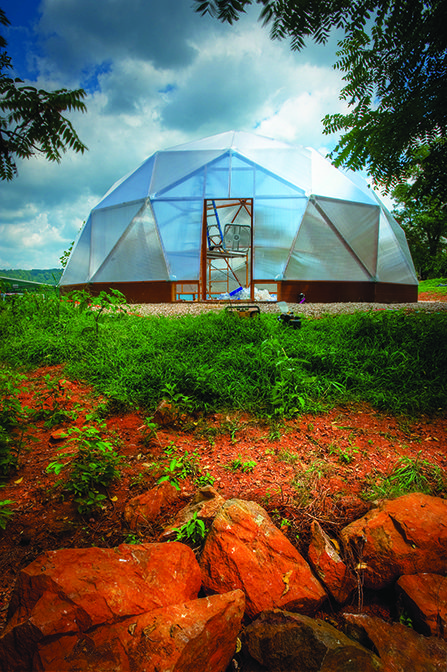
Spaces where children engage in outdoor work are prepared as carefully as the Montessori classrooms. These spaces should be suited to the needs of the children who will use them and should promote the students’ growing independence. Our goal is that outdoor learning spaces be simple, beautiful, and orderly. There are a number of challenges faced in achieving this. Time is needed for plants to mature. Many hands of all sizes are needed to care for living, growing, outdoor learning spaces. Financial hurdles to achieving prepared environments for teaching eco-literacy can be substantial as well, but a new garden or greenhouse for student use is an attractive project for fundraising, and even a modest grant can be leveraged into huge progress for a school that has other essential elements in place. Mountaintop’s recent addition of an 850 square foot geodesic dome greenhouse is an example of how much can be done with minimal school resources.
In 2005, we launched a cooking program as a way to extend the wildly popular food preparation exercises of the children’s house practical life curriculum into the elementary years. Students began taking turns working in the kitchen with an adult and their classmates in each of our elementary classrooms and were thrilled to have a homemade meal one day each week. This program was extended to our middle school classroom in 2008, which set the stage for a big leap forward for the cooking program and its relationship to our efforts to teach eco-literacy. With our growing middle school program in mind, the school had sought, and been awarded, grant funding for the significant infrastructure needed for eco-literacy programs. When it came time to bring the new infrastructure to life, the middle school students, true to form, surprised the adults with some wonderful but unexpected particulars. That year, some students in the class delved into the planning and creation of meals they were proud to share with classmates and invited adult guests, while others clearly thrived on researching and planning for the addition of a greenhouse to our campus.
At the time our middle school class included only seventh and eighth graders, and two students who were in their final year of the program convinced the middle school guide and administration of the wisdom of adding a ninth-grade year to the program so that they could stay on to see the project through to completion! The grant funds were used to purchase a cleverly designed kit from Growing Domes. A parent who is a contractor served as the job foreman, preparing the site and supervising the many parents and students who donated their time to put it together.
When the greenhouse was opened at the start of the 2009-2010 school year, students, parents, and staff were excited to see it begin to fill with living things. The first plants grew vigorously in the growing conditions it provided, but no one was fully prepared for just how profound an impact this new feature would have on our program. The students’ enthusiasm for cooking skyrocketed with the opportunity to plan meals made from the produce growing in the greenhouse. The success of this garden-to-table program quickly propelled action on several related fronts. The local United Way’s annual Day of Caring brought fresh volunteer troops to campus to construct the 2300-gallon water tank that would provide the greenhouse’s thermal mass over the winter. In subsequent months, middle school science lessons gave students an opportunity to learn the chemistry, and botany and zoology they needed to successfully populate the tank with a harmonious balance of plants, fish, and decomposer species in the spring. Plans for a new, extensive garden space adjacent to the greenhouse evolved rapidly, along with a revamping of our summer program to focus on gardening and cooking. In its first year, Mountaintop’s Summer of Ecological Experience and Discovery, known as SEED, has begun to spread eco-literacy to families and schools across our community by sharing our own students’ successes in these areas with many more students, whose schools are not able to provide such experiences for them during the school year.
Achieving a Full Complement of Materials:
High-quality learning materials are essential to students’ experiences outdoors just as they are in the classroom. In a Montessori school serving a broad range of ages, this means having plenty of sturdy garden tools in a variety of sizes, and field guides and other resources for students at different levels. Again, donations from foundations, individuals, and businesses that see eco-literacy as an important topic in education have been critical to our success. Seed companies, local garden centers and market gardeners, and university-level agricultural research stations have donated supplies. Education grants from Virginia’s Department of Environmental Quality have been obtained, and working with the local 4-H chapter on particular projects has helped as well. Small expenditures for student-made bee boxes, rain barrels, and worm composting bins are far outweighed by the value of the practical life and science lessons gained in building them.
Masterful Adult Guidance:
The guidance offered by experienced, trained adults is as important to students’ work in the outdoors as it is in the classroom. Alma Scheible, the longest serving member of our faculty has been involved with a host of eco-literacy efforts in her 24 years at Mountaintop. Over time, her role has grown from sharing her own passion for birdwatching with staff members and students in one classroom of first, second, and third graders to serving as a resource for the entire student and staff population. In recent years, most of Alma’s time has been allocated to guiding groups of students of all ages, who not only maintain our bird sanctuary’s many feeders, nesting boxes, and water features, but grow food, plan, budget, and prepare meals for their entire class. Experience has taught Alma how much the students are able to do for themselves and for each other. Her guidance always leaves room for them to make important discoveries on their own. Professional development for classroom faculty and for those who specialize in teaching eco-literacy has been obtained through a local permaculture organization as well as through organizations such as the Natural Learning Initiative and Vermont Wilderness School.
Schedules Designed for Flow:
This is arguably where a Montessori school’s eco-literacy learning opportunities are most markedly different from the schoolyard gardening and other eco-literacy efforts underway at numerous public schools and traditional independent schools around the country. The schedules in a Montessori learning community include long blocks of uninterrupted work time, during which students are exercising freedom with responsibility: making choices; working with peers; engaging in lessons with guides; and experiencing concentration and flow. Weed-ing the vegetable garden or maintaining shrubs in one of the bird gardens presents numerous opportunities for discovering mysteries that beg to be solved: nibbled (or gobbled) vegetation; animal tracks or scat; a nest with eggs in it; or a colony of insects. When these moments arise, students at Mountaintop are able to head to the ecology resource room to gather information from specimens and field guides. They compare their observations of the mystery item to pictures, descriptions, geographic data, and other relevant information. They narrow down the possibilities. They make more observations of the scene and so on until they discover the answer. If they’ve discovered a garden pest, they can determine what action they need to take to minimize the damage. On other occasions, they can just satisfy their curiosity about an interesting find. Either way, they’ve experienced a valuable process.
This often happens at Mountaintop, because the students’ schedules are designed to be flexible and to encourage them to see things through from beginning to end. The confidence and in- depth knowledge they gain from these experiences are critical to our goal of empowering them to face the environmental challenges of the future. A traditional educational setting is typically focused on very near-term goals, such as the need to cover specific content that is required for students to move on to the next level and uses a more rigid schedule to ensure timely progress toward those goals. We, too, have a curriculum to cover but prefer to take a longer view of when topics are learned to allow for individual student interests and the inevitable magic that happens along the way if you let it.
The Big Picture
With commitment and sustained effort, over time, all of these factors have combined to enable us to provide a steady diet of tangible experiences that foster students’ attachment to the world around them. Through their work in the garden, greenhouse, and kitchen, students at Mountaintop become confident, determined, ecoliterate leaders, rather than fretful recipients of dire but abstract messages about far-off endangered animals and shrinking habitats or the suspect origins and poor quality of food available to so many in our communities.
Adult efforts are focused on creating a natural laboratory on our 10-acre campus and supporting the students’ exploration of a rich variety of green, inviting, safe spaces to encourage curiosity, observation, critical thinking, and intellectual growth. Knowing that, without due care, even well intentioned environmental education can leave children feeling hopeless and distanced from the vibrant ecosystems and flora and fauna right outside their back doors, we are steadfast in offering real experiences in nature that give them a sense of their own power to have a positive effect on the future.m
Resources:
- www.auduboninternational.org
- Contact Audubon International through their website to learn more about their partnership programs. In addition to the program for schools, Audubon offers programs designed to help businesses, golf courses, hotels and resorts, neighborhoods and municipalities conserve resources and support wildlife.
- www.ecoliteracy.org
- The Center for Ecoliteracy’s Resources page lists a number of helpful publications. At Mountaintop, we found that Big Ideas: Linking Food, Culture, Health, and the Environment, helped us to articulate the natural synergy between our students’ practical life lessons in cooking and their lessons in disciplines such as botany, geography, history, and economics.
- www.naturalearning.org
- The Natural Learning Initiative, led by Robin Moore at NC State, offers design services and conducts research and offers workshops on the importance of unstructured time spent in natural spaces to the healthy development of children.
Learn more about the geodesic dome as an efficient structure for housing a beautiful, productive outdoor learning space. The greenhouse at Mountaintop was purchased from this provider: www.growingspaces.com
Tomorrow’s Child/ Sept 2010/p22
by Tim Seldin | Emotional Intelligence (EQ), MFA, Montessori Education, Montessori Family Life, Montessori Parenting, Montessori students, Peace Education, Psychology, School Resources
It’s recess at Lake Mary Montessori Academy and amid the swirl of laughter and activity, two five-year-olds engage in a tug of war over the same swing. Director Sheila Linville witnesses the event. Her first impulse was to intervene when suddenly she heard one child say to the other, “Let’s sit down and mediate this.” There were no tears, no name-calling, and no fighting. “These little girls used their words to figure out a solution and they moved on,” explains Linville.
On the surface, this encounter may seem like playground politics, but it’s actually a sign of emotional intelligence, perhaps the best predictor of a child’s future success in life. Emotional intelligence, or “E.Q.,” is redefining what it means to be smart and successful. The importance of emotional intelligence will pave the way for a lifetime of happiness and success. Children can have a high I.Q. score, but they may be unable to socialize in a group comfortably, play with others, understand the needs of others, or communicate in a way that shares their feelings.
In practical terms, E.Q. is the ability to read between the lines, to size up situations, to be intuitive. Author Daniel Goleman in his book Emotional Intelligence defined it as “…the self-control to rein in emotional impulses, the ability to read another’s innermost feelings and to handle relationships smoothly.” Goleman concludes that in every field, emotional intelligence matters twice as much as cognitive abilities like I.Q. or technical expertise. Emotionally intelligent people are good arbitrators, successful dealmakers, leaders, team players and employ better decision-making strategies using both their emotions and logic. They also have healthier relationships because of their ability to read emotions and respond appropriately.
In a society obsessed with grades, standardized tests, and assessment charts, emotional intelligence cannot and should not be measured by conventional methods. E.Q. is evident in a child who has self-confidence, high self-esteem, displays kindness and empathy towards others, and is “other centered.” “This is a child willing to help a friend in need, and a child who is respectful towards others’ needs,” explains Linville, whose Montessori school embraces academics with life lessons.
The challenge for parents and educators is to shift their focus from report cards to the importance of emotional intelligence in their child’s development. “They should be asking the teacher about this area as a primary part of their development, rather than focusing on reading, writing and mathematics,” explains Linville. “Educators need to create assessment tools that reflect this.”
Although you may think smart kids make straight A’s, research shows that emotionally intelligent children are better learners. So is it I.Q. or E.Q. that counts? The answer is both. “I.Q. contributes only about 20% to factors that determine life success, which leaves 80% to other forces,” says School Psychologist Alicia Braccia, who hosts parenting workshops on emotional intelligence. With so much at stake in our children’s future, the role of E.Q. has implications for the way we parent and educate.
Taken together E.Q. and I.Q. produce a well-rounded child who is prepared for life professionally and personally. “Children who are emotionally competent are at an advantage in every area of life, whether family and peer relationships, school, sport or community and organizational pursuits,” says Braccia. The benefits are hard to ignore. Research shows that emotionally intelligent children enjoy better physical health, are better liked by their peers, have fewer behavior problems, greater attention spans, and score higher on achievement tests.
Is your child emotionally literate?
So how can you tell if your child is emotionally literate? Child Therapist Annette Mont says these children tend to be flexible, and responsible without sacrificing their own needs and integrity. A child’s emotional state at school influences his selective attention, recall, event interpretation, decision-making, motivation, problem solving, and prediction abilities. So, it becomes clear how children in control of their emotions fare better while those who lack emotional intelligence are at a disadvantage in both academic and social situations.
Children who cannot interpret or express emotions feel frustrated. They don’t always understand what is going on around them and are frequently viewed as being strange. Without social competence, children can easily misinterpret a look or statement and respond inappropriately.They may lack empathy and be relatively unaware of how their behavior affects others,explains Braccia.”
Educating the Heart and Mind
Parents and educators can look to the Montessori approach as the role model for nurturing the emotional mind as well as the intellectual mind. The importance of E.Q. is not new to Montessori educators. Maria Montessori first recognized the need to educate the whole child nearly a century ago. “The emotional development of the child is the first tenant of the Montessori philosophy, the framework for all the types of experiences that the child needs. As the child grows and develops, it should still be the focus in the upper elementary and middle school classrooms. Character education and universal values such as honesty, kindness, integrity and empathy set the environment that respects this development,” says Linville. Her Montessori school incorporates lessons on self-awareness, managing emotions, and learning how to empathize and deal with relationships within traditional subject areas. “Our Montessori educators help students make connections between academic knowledge and life experiences. We encourage our students to use their multiple intelligences,” says Linville.
For educators, the challenge becomes how to design a curriculum that takes the whole child, the emotional, social, intellectual, creative, musical and artistic parts into consideration. Linville and Braccia have the following suggestions:
- Rethink traditional approaches to discipline that punish instead of teach proper ways to behave.
- Invite a school counselor, school social worker or school psychologist to lead students in emotional literacy activities and incorporate those skills into the classroom.
- Create and decorate an emotional mailbox for the classroom, and encourage students to submit questions and problem descriptions for discussion.
Identify the dominant learning styles of individual students.
- Have students participate in team projects where they use a variety of interpersonal skills such as building trust, listening, respecting others’ points of view, articulating ideas, planning, making choices, dividing the labor, encouraging others, taking responsibility, solving problems, and managing and resolving conflicts.
- Teach and counsel children to control anger.
How can parents foster E.Q.?
As parents, we want our children to be successful and smart but the best way to start is not with flash cards but with feelings. A child’s emotional intelligence begins at home and evolves throughout his school years. The focus should be on a child’s lifelong education and the achievement of a balance between academic performance and emotional maturity.
Linville has this advice for parents: listen to the needs of the child, read about emotional intelligence and attend parenting classes to learn more about your child’s development. “Only then can you stand up and say this is not what my child needs. You become very discerning about the types of experiences you want for your child and have the knowledge to defend your decisions when other parents challenge your commitment to your child’s E.Q.,” says Linville.
At home, parents can help their children develop healthy emotional habits by teaching self-control, self-awareness and empathy–three key emotional lessons.
Self-awareness is at the core of emotional intelligence. It’s the ability to label feelings and identify what causes them. “Children who are self- aware don’t hide things from themselves. They can talk about fear, frustration, excitement, and envy.
They can understand and speculate about the feelings of others,” explains Braccia. Conversely, children who lack self-awareness can easily feel overwhelmed and isolated because they don’t realize that others experience the same feelings. Experts suggest that role-playing is a good way to get your child to open up about his or her feelings.
With self-awareness comes self-control, the ability to manage one’s feelings. Parents model self-control, which requires that they too have a reasonable degree of emotional literacy. “When it comes to anger, ‘letting it all out’ is not helpful. What does work is to teach children to keep a lid on their feelings while they buy some time,” suggests Braccia. People typically need a cooling-off period of 20 minutes to recover from intense physiological arousal. Braccia suggests parents teach their children the following coping mechanisms:
- Change the thoughts that trigger anger by looking at the situation from the other person’s point of view.
- Cool off through active exercise or distracting activities.
- Write down angry thoughts and reexamine them. Identify and express the feelings that cause anger like frustration, fear, or humiliation.
- Pay attention to how it feels to be angry and learn to identify these sensations as cues to stop and consider what is happening and what to do about it.
- The third component of emotional intelligence is empathy, the ability to feel the emotional pain of others. Parents can teach their child empathy by talking about feelings and asking questions that get the child thinking how others feel. They can set up scenarios that focus on the consequences of their child’s behavior. A favorite TV show or book can become a good conversational tool to approach the subject.
By leaving these emotional lessons to chance, we fail to help children reach their potential. Emotional intelligence tells us that success in life isn’t just about being book smart or a good test taker. Unlike I.Q., which is thought to be genetically endowed, or destiny, emotional intelligence evolves opening up a world of new possibilities. In a culture of overachievers, E.Q. gives us the edge even if we don’t make the grade.
To learn more about emotional intelligence here a few suggested books to read:
- Emotional Intelligence by Daniel Goleman
- Learning and the Brain by Eric Jenson
- Social Skills Presentation by Rick Lavoy
- Activities for Teaching Emotional Intelligence by Innerchoice Publishing
by Alexandra Chiu | Family Resources, MFA, Montessori Education, Montessori Family Life
The wonder of living is within the beauty of silence, the glory of sunlight, the sweetness of fresh air, the quiet strength of earth, and the love that lies at the very root of things.
-Anonymous
Preface: Life goes by in such a blur! Many of us always seem to be rushing from event to event, through our daily schedules—even through vacations! Maria Montessori often talked about allowing children to slow down and at the same time allowing ourselves to see the world through their eyes. Children can stop and find something new to examine after every step of a walk down the road!
In the classroom, the Silence Game is a great way to help children and adults to slow down and listen. This game consists of signaling the beginning of a short time where our bodies and voices are silent and still. As we practice, the length of time we are able to remain silent grows and grows. While this game is often used as part of the Language and Sensorial curriculums as a way to build auditory discrimination skills, it is also an integral part of our Peace Curriculum. We often begin our Peace Circles by “making silence.” We take three long deep breaths, close our eyes and try to be absolutely quiet for a minute or so. We are often amazed at what we can hear when the classroom is completely silent.
I gave my children the silent treatment this morning, and they couldn’t have been happier. We went on a ‘listening walk’ through the neighborhood, planted seeds in the sunshine, studied some dandelions and blades of grass in the yard, and lay back on the lawn looking at clouds. Recently, my family has made a commitment to turning down the volume. It’s just gotten too noisy in our world lately, so we’ve muted many of the noises we can control. I can honestly say that these daily small moments of silence have made a big impact on our lives.
Noise follows us everywhere. The television alarms our senses with fast-movements, bright colors, and visual ‘noise.’ Computers and video games all invade our senses, as well. Even noise we invite into our lives can be overwhelming, if there’s no respite. The cheering at sporting events, chattering of friends, practicing of musical instruments are welcomed sounds, but when the noise is constant, something important and necessary is missing from our lives. This is especially true for children, who easily can get overwhelmed and over-stimulated.
I’d noticed that in my family, it was becoming difficult for us to concentrate on certain tasks. My children were constantly struggling with one another, and with me, to be heard over all the noise. Near non-stop noise interfered with our lives. For example, I was always talking around my toddler, with the good intention of helping to build her vocabulary. In the car, music usually played on the stereo. At home, we had too many electronic toys that made too many sounds.
It took some time to realize how noise had enveloped us. However, during one rare quiet moment in the car, I heard a tiny voice reciting some nursery rhymes as my toddler was looking through a book in the back seat. She was singing “I’m a little teapot short and stout,” as clear as a teapot’s whistle and then proceeded to tell her own little story about a teapot and a giraffe. How often she’d been doing this, I can’t be sure, for the constant music from the CD player had been muffling her voice. Finally, with some peace and quiet, I could hear her. And my worries about how her vocabulary was growing were silenced.
That afternoon, I made a conscious effort to invite silence into our day. We took more of our car trips without music. When our errands were done, we enjoyed a walk to the park without continuous commentary about what we passed. I took the phone off the hook while we prepared and ate our dinner.
The following day, I finally got around to rotating the children’s toys, specifically putting away those with batteries. I took out more of our art supplies and just made them available. I let my children go about their work and play without so much of my interference. What a difference it made. I noticed we slowed down a bit. Daily tasks were done with more care and precision, since our attention wasn’t diverted to a sound from the stereo, the telephone, or a toy. More creativity went into the play and artwork.
There was less struggling to get someone’s attention and definitely more attentiveness when someone spoke.
Many Montessori classrooms (and usually some of the best) have a special place devoted to silence and peace. The peace table is well used by children. The table may have some beautiful natural objects such as seashells or flowers for the children to touch, examine, and contemplate. There might be a ‘Zen garden’ with sand that can be raked with a miniature tool or with smooth stones to create different designs and paths. Perhaps there is a fresh flower to smell, a bowl of beans to sift between fingers, or simply a beautifully decorated paper with the word silence written on it.
There are multiple purposes for this area of a classroom. The peace table offers children a place to just be. It offers a sense of calm, and well, peace. I’ve seen children use this area when they feel smothered by other children wanting their attention or when they are puzzling through something that has been on their minds. It can be a safe haven and a joyful, personal, meditative space.
Children truly do love silence, and in a Montessori classroom, there is an understanding of the need for and an appreciation of the joy of silence. Children become aware of sound, just as they become aware of smell, touch, and size with the various sensorial works. The Silence Game (pictured at left) is often a favorite among children, delighting them as they notice how the silence builds in the classroom person by person. But silence isn’t just a ‘game’ or activity in Montessori environments.
As children in Montessori classrooms choose their work and perform with great self-discipline the various tasks, they look within themselves and find, in a peaceful place, all that they are able to do and be. The emphasis on respect for self, others and the environment that is placed in Montessori classrooms invite children to value everyone and everything they encounter. By offering them time quietly to do things independent of others, they can reflect on this and acquire these values into their own personal portfolio. And because they are given time and space for quiet reflection, they can return to a group as a stronger and more ‘centered’ participant.
Maria Montessori wrote:
…The child loves silence in itself; however, there is something to add: that silence disposes the soul of the immobile being to something special, in other words silence does not leave us as we were before. This something special is certainly not an acquisition of culture because complete inhibition is an external state, but it acts upon an internal state. All thinkers and mystics are said to have sought silence because it predisposes to the interior attitude of meditation. As a beautiful environment with light, colour, perfume can have an influence on poetical inspiration, so silence gives us above all the surprise of possessing within us something which we did not know we had, spirituality, and the little child tends to feel this interior life, because he is by excellence the interior being. No doubt the child who has experienced it is no longer the same child, but a soul expecting something.”
There are some simple and wonderful ways to share silence and teach quiet reflection to children. Why not try raising the senses of your children the next time you’re in the car or taking a walk, scrubbing in the tub, or working out in the garden. There are so many opportunities for inviting silence and reflection into our lives. And just as the Montessori teacher’s most important lessons about her students are learned by stepping back and purposefully observing, parents can, and should, spend time just quietly watching their children. If we allow for quiet times to gaze out the window in silence, we can all enjoy the layers of sounds we find underneath all the noise of our usual world. What grows from the silence within our children and ourselves might just be something to shout about!
by Tim Seldin | Kindergarten, Lower Elementary (6-9), MFA, Montessori Education, Montessori Family Life, Montessori Parenting, Montessori students, Primary (3-6), Upper Elementary (9-12)
Author’s Note: This article is told in part by the author, and in part through the words of several Montessori teachers, students and parents with whom I spoke in preparing our DVD, Joyful Scholars – The Elementary Mon-tessori Program, available from the Montessori Foundation publication center (www. montessori-foundation-books.org)
As children near the end of their kindergarten year, many parents struggle with the question of whether or not to have them continue for the Elementary Montessori program. We all want what’s best for our children, and many worry that Montessori, which is obviously less structured and teacher directed than traditional classrooms, will not really prepare our children for the real world!
Despite these concerns, which come up year after year in most Montessori school communities, a hundred years of experience around the world has shown that Montessori works!
Research, the most recent of which was the major study reported in Science last September and in Teacher magazine in November, provides clear evidence that Montessori students, on the whole, do at least as well, and, in many cases, outperform students in traditional academic programs.
Significantly, these same studies show that students educated in Montessori programs show clear evidence of greater social maturity, self-confidence, and emotional maturity.
In recent years, the general public has become increasingly interested in Montessori, as more and more prominent and highly successful leaders in business, technology, the arts, and other fields come forward and attribute their success, in no small part, to their Montessori education.
Now, having sent their children to Montessori for the first three years, most parents have children who are very self-assured, quite independent, and who love to go to school in the morning.
Now, these same parents have to make a crucial decision: Do we continue with Montessori, or move our children on to something else?
Joyful Scholars
During those next six elementary years, self-confident Montessori children will normally blossom intellectually and develop an insatiable curiosity and sense of wonder in a wide range of fields of study, from the sciences and mathematics, to the humanities and the arts.
In a day and age when many schools are “teaching to the test,” Montessori children tend to never lose their enthusiasm. This is an opportunity when your children can discover and learn absolutely amazing things!
If nurturing your children’s curiosity, creativity, and imagination are of greater concern to you than test scores in their own right, then I warmly recommend that you take a good look at your school’s elementary program.“
recent empirical evidence shows that preschool children in a Montessori program demonstrate an acceleration toward the stage of
concrete operations. After children had progressed though the Montessori curriculum using the concrete materials in the prescribed ways, they outperformed children from traditional nursery schools on Piagetian seriation tasks and were also more advanced in classification.
The acquisition of classification and seriation strategies is a vital step in the progression of mathematics ability, and the Montessori method appears to have accelerated the development of these skills.”
J.P. Bauch and H. J. Hsu, “Montessori: Right or Wrong about Number Concepts?” in Arithmetic Teacher, Vol. 5, No. 6
Tommorrow’s Child/ January 2007/ p.9
by Susan Mayclin Stephenson | MFA, Montessori Education, Montessori Family Life, Montessori Parenting
Teaching children to handle money was never before as important as it has become in our culture today. Because of the emphasis on buying and spending that has been thrust upon all of us, we may have to deal with it much earlier than was necessary in the past.
Quoting Newsweek’s special issue on the family, Winter/Spring 1990, from the article ‘Young Beyond their Years,” by Kenneth Woodward, p. 57:
By the 80’s, three out of four high school seniors were working an average of 18 hours a week and often taking home more than $200 a month. But their jobs – often in fast-food chains – were rarely challenging, and earnings were immediately spent on cars, clothing, stereos, and other artifacts of the adolescent good life. Indeed, researchers at the University of Michigan find that less than 11% of high school seniors save all or most of the earnings for college or other long-range purposes.”
In short, teenage employment has only intensified the adolescent drive for immediate gratification. Instead of learning how to delay desires, students are indulging in what University of Michigan researcher Jerome Bachman calls “premature affluence.” The problem, says Bachman, is that these adolescents tend to get accustomed to an unrealistic level of discretionary income which is impossible to maintain at college, unless they have extravagant parents, “…and if they don’t go to school,” he observes, “they will have to continue to live at home if they hope to keep up their personal spending habits.”
One of the sources of this problem is TV, according to Ralph Nader, who says in Co-op America’s newsletter, Building Economic Alternatives (Fall 1989): that children “see 25,000 television ads by the time they are seniors in high school. Our leaders have exposed millions of children to a pattern of commercial exploitation that even shocks Western European merchants, because they live in countries where children’s ads on TV are banished, since small children are not able to distinguish between programs and ads.”
In our family we want out children to work with us, the impetus being that we are a group of people who love each other, rather than for money. This is an area we constantly work on, since we have our own business, where the older children can earn money. When they do earn money, we want them to have a realistic view of how money is spent and not just use it for extras.
Our seven-year-old wants me to tell you about his budget system, which we worked out together, because he thinks other children would like it. He has never received an allowance, but then, we do not watch television, so his mind has never been on shopping.
This year we sat down and figured out what we, as a family, spend money on and told him we would like to share our money with him so he could learn how to use it. (He had first expressed the interest, or we might not have brought it up.) We came up with nine categories:
- 1 tithing/donating to charity,
- 2 food,
- 3 house,
- 4 clothing,
- 5 transportation,
- 6 education,
- 7 entertainment,
- 8 .savings, and
- 9. left over. (“Left over” was his idea in case we hadn’t thought of everything.)
We labeled nine envelopes to hold money for these categories. He already had about $15 , so it was a great division problem – changing money toget it divided equally into nine envelopes.
Every month we give him $9, his first allowance, to put into these envelopes. If he gets money for birthdays or earns extra for giant special tasks (not everyday work at home which is done by all members of the family for each other), he divides that into the nine envelopes.
We discuss, but he decides, how to spend this money. Tithe goes to homeless people or to a church, so far. He loves to buy food and flowers for the family at the farmers market we go to on Saturday mornings. He is saving the ‘house’ money, as we are, to buy a house. Clothing money was just spent on baseball socks. He often leaves the house with money in one pocket for ‘food’ and in the other for baseball cards (‘entertainment’), because he wants to be sure to get the change back into the correct envelope.
This system may change, but, for now, it is working well. I hope it will give you ideas for your own child.
The main points, we think, are:
- To teach the child to work with, and for, the group for the good of all – and not for money
- To learn to spend money on fulfilling real human needs and not just on unnecessary extras.
Tommorow’s Child/ January 2007/p19
by Margot Garfield-Anderson | Family Resources, Infant-Toddler (0 to 3), MFA, Montessori Family Life, Montessori Parenting
Recently, Blakely Jayne, my 19-month-old granddaughter came for a visit. My son-in-law brought her down from New York while he visited with his own grandfather, so I pretty much had her to myself for four glorious days. Now that she’s totally mobile and quite verbal, we did many fun activities together. One day, I took her to the NewGate School, which you know is the lab school of The Montessori Foundation.
NewGate’s Toddler room is especially designed to meet the needs of the young child. It is simple, clean, organized, and features age-appropriate materials. It is not overly stimulating to any of the senses. The children have freedom of movement to a deck area that, here in Florida, is an extension of the classroom space. Out there, they can work with play dough, bounce on a small trampoline, master the stair climber (up and down), and engage in other activities involving water and paints.
The children are able to make decisions about transitioning from activity to activity and space to space as long as they, too, are respectful of working on their mats and bringing their lessons back to the place from where they took them. Even though Blakely was new to the class (and the youngest child in the room), she soon became comfortable enough to try just about everything, and she made some new friends.
I was simply an observer and, once she warmed up to this new and exciting space, she freely moved about. By the end of the morning, she sat in circle time with Ms. Lauren, the Toddler guide, and the other students. She participated in some song singing, while just delighting in the entire experience.
Because Blakely’s parents do not live within a commutable distance to a Montessori school in their area, I have tried to introduce many of the philosophies and practices into her life in the home environment.
I’ve encouraged them not to overwhelm her play area with ‘stuff.’ Children are easily overwhelmed by too many toys at their disposal, and while we, as parents and caregivers, think the child has a great selection of items to keep them busy for hours, the outcomes are usually not what we hope for. Too many toys and games do not encourage the child to work on any one item for long periods of time. Without a multitude of distractions, toddlers increase their attention spans and mastery of one thing. We want to encourage toddlers to return toys to their rightful spots and help them learn to appreciate and respect what they have.
We take one age-appropriate activity out at a time. I let Blakely explore it for as long or short a time as she wishes, and then it must be returned to its place before we go further. I prepare an outside environment for her that is safe, interesting, and bigger than her inside one, so that she has access to water play, paints, and plants to water. Spills and messes are easily cleaned up, and I set no prejudgments or expectations of what she should accomplish. I let her set the pace and delight in squishing paint between her fingers, even if it never makes it to the paper. A sponge, a table, a small pail of water, and some diluted dish soap kept her busy for almost an hour while she learned to squeeze the sponge, rub a table, wipe up water, and make something shine — all while developing those motor skills. Our screened-in lanai (‘porch’ for you northerners) is surrounded by lots of flowers and plants that attract butterflies and birds of all kinds, so she can get up close and personal while being in a safe environment.
As grandparents, we have the best of both worlds. We get to love unconditionally and spend real quality time with grandchildren. Our tendency is to spoil. It’s so easy to do. For the best outcome I encourage you to observe, engage, and enjoy, which will foster all the great skills that you would hope your grandchildren will get out of their Montessori education. The more you use the philosophy of Montessori when you are with your children or grandchildren, the more they will get out of their Montessori classroom or home-school experience.
by Maren Stark Schmidt | Infant-Toddler (0 to 3), MFA, Montessori Education, Montessori Family Life
Pretend that you just found out that you’ll have to be in a wheelchair for a year, possibly longer. What adjustment would you have to make to your home to accommodate this change? “This week, crawl around your house, through every room, and make a list of changes that you would make. That’s your homework. See you next week.”
Off I went on my hands and knees, antennae up. The things we do as parents! As I crawled, though, I developed some insight into what it might be like to be small and not able to take care of myself.On the floor, it was not pretty. My kitchen was a dark canyon, with workspace out of reach. Food and dishes were in the upper cabinets. The refrigerator was inaccessible. Unless I tilted my head way back, there was nothing attractive to see. All my favorite art posters looked distorted from this vantage point.
The dining room was a forest of chair legs. The living room was easier to maneuver, but the couches and chairs were impossible to climb into without standing up. The coffee table and end tables were at a dangerous, eye-poking height.
In the bedroom, I couldn’t get into bed by myself. I couldn’t open my dresser or the closet doors. In the bathroom, I couldn’t climb onto the toilet, reach the sink, or easily get into the bathtub, much less adjust the shower head. I snagged my pants on the transition piece between the bathroom and hallway.
Negotiating the steps to the garage was treacherous. The trip was rough and dusty, and my hands, along with my clothes, got filthy. The stairs off our wood deck were steep and full of splinters.
Dirty! That was my overall impression of crawling around. With weekly cleaning, I considered my home to be tidy. On my four-legged journey, I discovered grimy lower cabinets, crumbs in the corners, fuzz balls, scribbling under the dining room table (which still surprises me to this day), and splattered windows.
The only objects of interest on this expedition were a bowl and magazines on the coffee table. Pictures and mirrors were hung too high to have any esthetic impact. Doorknobs and light switches were unreachable. The floor was cold, and the thermostat might as well have been on Mt. Everest. Food and drink were invisible. In my home, I discovered a lowland where I wouldn’t want to live. My children were going to spend many years in this land under the table.
Our next parenting session focused on preparing a child-friendly environment. Crawling along, four-months pregnant with our second daughter, opened my eyes about creating a special place for our children. A child-friendly environment would give my children a home where they could live in dignity and tranquility while learning to manage independently on their own, along with having their own space to work and have meaningful experiences. Experiences beyond finding fuzz balls in the corners.
My husband and I moved the dishes in the kitchen to lower cabinets and found a shelf for snacks. We installed a bottled-water dispenser, so our toddler could get her own water easily. We put a small table with chairs in our kitchen and set up a low shelf with puzzles, blocks, and other activities.
In the living room, we removed the sharp-cornered tables and found a Japanese-style square coffee table. We added floor pillows, lowered our artwork, put extenders on our light switches and added interesting, touchable items to the room, such as woodcarvings and baskets of dominoes and wooden blocks.
In the bathroom, we added a plastic step stool that our one-year-old could move to wash her hands and later brush her teeth and reach the toilet.In the girls’ bedroom, we placed a twin mattress on the floor. We bought a light comforter, so Dana could learn to make the bed herself. We removed the closet doors and added lower shelving and rods, so the girls could hang up their own clothes and dress themselves.
Of course, we also child proofed cabinets and electrical outlets and moved the ‘untouchables’ to higher cabinets or closets.These are a few of the efforts we made to prepare a home for our daughters, now in their twenties and in their own homes. To paraphrase a Zen proverb: The journey of a thousand smiles begins with a single crawl.
Tomorrow’s Child / January 2012 / p. 6
by Cathleen Haskin | MFA, Montessori Education, Montessori Family Life, Montessori Parenting, Montessori students, Prepared Environment
What is Montessori education, and how does it differ from traditional methods of learning and theories of child development? Parents of children in Montessori schools are regularly asked questions about Montessori education by family and friends, and it isn’t easy to respond in a manner that captures the essence of Dr. Montessori’s philosophy and Method.
Of course, we know there are many factors that make Montessori Education unique, but understanding how the pieces of the Montessori puzzle fit together isn’t always so clear. This is the third in a series of four articles written to help Montessori parents better understand the Montessori Method, and to improve how we communicate about it with others.
In the first two articles we explored the following questions: (1) What is the primary goal of Montessori education? and (2) What is the process through which this goal is attained?
As her life and work with children evolved, Montessori came to see that the creation of a peace-based society was directly linked to the realization of the child’s potential; therefore, the goals of cultivating the potential of the child and transforming humanity are intimately linked. They are really one goal.
To some, this goal may sound like a lofty ideal couched in dramatic language, but Maria Montessori provided more than ideals and goals, she gave us the tools to understand the practical how-to’s and details. For Montessori, unveiling the potential of the child was as much a practical issue as well as an ideal. There is a clear path to follow, a fundamental process that supports the goal.
That process, proclaimed Montessori, was simply the process of normal human development. Dr. Montessori insisted that, when allowed to develop normally (naturally) without unnecessary adult interference, the child can self-educate, given the learning environment is carefully prepared and the adult understands his role as guide and facilitator, rather than all-knowing dispenser of knowledge.
In this article we will go one step further and explore the workings of a Montessori classroom that supports normal development in order to nourish the child’s potential. We begin by asking: What is the essential principle that allows the process (normal development) to occur? There is one underlying principle that must be adhered to if we are to nourish the child’s potential: liberty. The concept of liberty for the child, probably more than anything else in Montessori Education, has caused a great deal of misinformation.
From the very first time Montessori spoke of freedom (she also used the term liberty) and children in the same sentence, her intentions have been misunderstood and criticized. Some might ask if this talk of freedom is merely a permissive philosophy and method that gives a young child the go-ahead to do whatever she wants to do. It is a widespread and enduring misconception that Montessori advocated for unbridled freedom in childhood. She was forever trying to clarify this idea to her audiences, readers, followers, and critics.
To know a child who has been educated as Montessori advocated, it becomes readily apparent that this is far from the truth. She was not advocating “anything goes,” but rather freedom to develop normally, to become a self-reliant, autonomous human being, who is free to discover her potential and purpose. In order for the child to learn in this way, she must be free, but this is a freedom that is paired with structure.
The structure takes different forms: the prepared environment, ground rules, self-discipline, and, yes, on occasion, teacher intervention. Finding that perfect balance between the two — freedom and structure — is no easy task, for the correct balance is unique to each child and changes as the child grows. In the best-case scenario, the child needs less structure and more freedom as she grows, but if this balance is upended in early years — if the child has more freedom than she is ready for, or if the adult is too controlling and authoritative — the child can become confused, frustrated, and undisciplined.
In The Absorbent Mind (1997), Montessori warns of misinterpreting the concept of freedom in childhood. “If freedom is understood as letting the children do as they like, using (or more likely misusing) the things available, it is clear that only their ‘deviations’ are free to develop; their abnormalities will increase.” In other words, freedom that is not tied to responsibility and self-discipline is a not the freedom that cultivates potential; instead it encourages self-centeredness, arrogance, timidity and weak-mindedness. These traits restrain the natural development of a human being’s potential. To let the child do as she likes when she has not yet developed any powers of self-control is to betray the idea of freedom. Simply put, it is a falsehood that children in Montessori schools “are free to whatever they want.”
When liberty is balanced with structure, however, the child is able to develop normally. Liberty allows the child to engage in the process that is his birth-right: normal human development. This is not an adult-centered process; the process belongs to the child. It is a process of self-creation. It is how the child builds the adult he will become, and he can only engage in the process if he is free. This is the crucial task of childhood, and all of the child’s experiences in play and work are the building blocks of self-creation.
The child must be free to engage in the creative and important work of building the adult he will become. He must be free to engage in spontaneous activity and purposeful work.
Spontaneous activity is the term Montessorians use to describe the young child’s response to the inner instincts and desires, which guide and energize the development of his potential. When the child is free to fulfill the inner desires (or drives), specific traits and skills are developed. This process is as normal as the process of physical growth. If he is not able (or allowed) to eat the foods he needs to grow in good health, the child’s body will suffer. Similarly, if he is not allowed to express and satisfy the needs of his inner self, his mind and spirit will suffer.
The liberty that Dr. Montessori spoke of frees the child to respond to the inner dictates that motivate her to learn new things, try a classroom material that she hasn’t used before, repeat an activity many times, and express herself and what she is learning in creative ways. This is the normal process of human development, but only when a child is free can she respond to her inner directives.
If she is confined to a desk, allowed to speak only when a teacher gives permission, and forced to follow a schedule throughout the school day that is prescribed by an adult, then she is not at liberty to listen or respond to the natural urges that guide her normal development. These natural urges take the form of curiosity, enthusiasm, inspiration, desire, and passions. When she is free to respond to the inner callings that guide her development, she is, in effect, following her inner voice.
When the child is free to follow these urges, there is no need for external motivators such as rewards and punishments, the cornerstone of most traditional methods of education. The motivation to learn is intrinsic; in a classroom that is true to Maria Montessori’s teachings, you will find children who, because they are free to develop normally, exercise extraordinary self-discipline. The child who has been denied this liberty will not thrive; instead, she will be more likely to bend under the weight of adult dominance, be more submissive, and struggle to find herself or to discover her purpose in life.
If the child is free to engage in spontaneous activity, she will be free to do the work that is necessary to nourish her potential. Spontaneous activity is intimately linked to a child’s work, for, as Maria Montessori discovered, the child wants and needs to work. Most adults are baffled by this idea, because our perspectives reflect our own feelings and cultural influences regarding the inherent value of work and, far too often, the lens we use casts a light of drudgery and unpleasantness upon work.
We work or do chores in order to get to the ‘good stuff’ in life. Often, we are unable to see the opportunities that work presents, because work has become a ways to a means: get good grades, make money, earn a title, advance up the so-called ‘ladder of success.’ But authentic work is much more than that. Purposeful work provides opportunities to build character and determination, to demonstrate patience, diligence, and self-reliance, as well as kindness and compassion. Work allows us to express our creativity, develop specific skills, problem-solve, and use our minds, hearts, and hands in service to others. While work may not be who we are, it provides opportunities to develop traits and behaviors that expose our best selves. Work is an avenue to cultivate and reveal our own uniqueness, our innate goodness, and the gifts that allow us to live an intentional and purposeful life.
Montessori herself was shocked by her discovery that the child wants to work! In fact, the child loves his work! This passion for work is obvious when the child is free to choose his work, when it is self-directed and purposeful. It is true that the Elementary student sometimes works from a work plan, but in the best-case scenarios, that plan serves as a guide for several weeks to a month and is steeped in choices (freedoms) that are authentic and meaningful for the students.
During morning work periods, the child should be at liberty to choose what to explore or study, whether to work alone or with others, where in the room he should do his work, and how long to engage in the work. He should have the freedom and opportunities to self-reflect and assess his own work. The young student is motivated even more when he has ample opportunities to choose how to demonstrate what he is learning. Shall he make a booklet, a poster, write a report, create a timeline, or give an oral presentation? These very real choices and freedoms are the foundation of the classroom that allows children to develop their innate love of work.
The freedom that Montessori extolled is the freedom that guides a child in his normal development. Freedom is the key that allows the child to develop normally. When normal development is allowed and supported, human potential is nourished. When the child is free to develop his potential in this way, his very best self will be nurtured and he will develop the following traits which Montessori referred to as the characteristics of normalization: sustained intellectual curiosity, a love of work, self-discipline, self-reliance, the ability to work well with others, and respectfulness. Kindness, compassion, and joy are also apparent in the child who develops free of obstacles and interferences that so often oppress and diminish the traits that nurture peace, human wholeness, and happiness. Dr. Montessori said it best:
“The children in a Montessori classroom are given the freedom that is the liberty of the human being, and this freedom allows the children to grow in social grace, inner discipline, and joy. These are the birthright of the human being who has been allowed to develop essential human qualities.”
Tomorrow’s Child / January 2012 / p. 14
by Cheryl McCabe-Allen | Lower Elementary (6-9), MFA, Montessori Education, Montessori Family Life, Montessori Parenting, Montessori students
Nearly every afternoon in our class, after the end-of-day hustle and bustle of classroom jobs, one of us will reach for the wreath hanging on the wall, and a student will always say, “It’s the kindness wreath! It’s time for the kindness wreath!” In a time when increasing numbers of acts of violence are witnessed by these same children on the TV shows they watch and the electronic games they play, being excited about kindness is rarer than it should be.
In an effort to put our attention toward all the good that is happening in our environment, we started a kindness wreath this year. The wreath hangs near our reading corner. In the beginning of the year, it was an empty wire wreath form. Nearby is a jar of cut ribbons, a container for notes, and a container of blank paper for writing the notes. On the first day of school, we discussed what acts of kindness are and talked about noticing them and writing them down. We decided that they would write a note for something they observed or something someone did for them, not something that they did.
That first week, the container for written notes was almost empty for most of the week until we, the guides, paid attention and wrote a note for each child sharing an act of kindness we had observed. Even the students who were still adjusting to school performed many acts of kindness, and they were the most thrilled to hear about one of them.
At the end of the day, we take the wreath down and bring the written notes and the cut ribbons to our circle. We choose a note and read it aloud. Often the person who wrote it recognizes the paper (we use cut pieces of scrapbook paper and write on the white side) and just radiates with excitement as we open the note and read it; sometimes, they will add details after we have read the note. The person who is being recognized comes to the wreath and chooses a ribbon that we then tie on the wreath. They get to keep their note and choose the next one for us to read.
I had hoped that the wreath would help students think about being kind and strengthen our classroom community. I had no idea how much it would touch the children or myself. Watching a child’s face light up when a note that recognizes him or her is read is amazing; the child is always so happy to be noticed for their act of kindness. We have all heard about (and tried to catch) a child ‘being good,’ but there is exponential power in that catch when another child does it. Even more than that, I love to hear how the children comment, “I saw that too,” “You always help with that,” or a simple, “Way to go!”
It is a wonderful way for them to support and cheer for each other without having any other group that they are against. I see children keep their notes as little treasures and maybe reminders for themselves. I watch children greet parents with the information that they received an act of kindness note and what it was for — even before they say hello. I hear that it has become a part of dinner table conversation and that whole families are thinking about acts of kindness and maybe being a little more kind themselves. Sharing kindnesses that we see has become a special part of the day for all of us.
As adults, we often think of memorable acts of kindness as the best and most important acts of kindness such as a donation or a gift. As so often happens, the students have reminded me that my adult mind sometimes forgets to notice the little details that make up the big picture. For them, the act of picking up a pencil, holding open a door, or staying quiet while others are talking are just as important, maybe more so, than bringing a plant for the garden or driving on a field trip. Since these are acts we perform every day, it is lovely to see them noticed, remarked upon, and thanks given.
I hope that the students are building the habit of performing acts of kindness, recognized or not, everyday and noticing acts of kindness that are performed for them and around them. A kindness wreath, a thank-you box, taking time for compliments and acknowledgements, or whatever way or ways you celebrate helping others may help bring lasting happiness and a habit of kindness to all who participate. Performing acts of kindness has been shown to lower stress levels and increase happiness.
For our class, that wreath full of ribbons reminds us that we are kind and considerate each time we look at it, and hearing some of the acts performed each day, ends our day on a positive note. Like the other materials in our class, the wreath is beautiful in a visual sense, and the way it works and guides is also beautiful.
Tomorrow’s Child / November 2012 / p 16
by Sharon Caldwell | Family Resources, MFA, Montessori Education, Montessori Family Life, Montessori Parenting
Any parents and teachers, and some Montessori Directresses, make use of “time out” as a means of compelling children to behave in a certain way. Sometimes, the child is required to sit on a specific chair. Sometimes this is called a “thinking chair,” and the child is instructed to think about what he has done. There are many variations on this theme, and the strategy has many names. Ultimately, they all boil down to the same thing.
According to Montessori, a child who is unruly or disruptive should be taken aside by the Directress, away from the disruption of his peers. The adult will stay with the child, quietly re-assuring him, until he is ready to return to his work. This has been interpreted by some as an endorsement of the “time-out chair.”
Although removal from the activity of other children can help an over-exited or distraught child to calm down, it is very difficult to use the chair in a non-punitive way. Maria Montessori is quite clear in her writings that punishments have no place in a Montessori environment.
In the early years of its use, the time-out chair was seen as a positive step in disciplining young children, as opposed to scolding or complete isolation, or in the absolutely unacceptable (but not absolutely obsolete) practice of spanking children.
The technique was regarded as an aid to helping children learn independence and self-control. Children could take part in group or individual activities as long as they obeyed the house rules. Any infraction would mean removal from activities and peers and, for a specified time, sitting in a designate place some distance from the center of activities.
The adult then gave the child the opportunity to determine when he felt he could rejoin the group as a cooperative member or asked the child (after whatever time interval seemed appropriate) if he could now cooperate with the rules and be readmitted to the group.
The problems associated with a time-out system are essentially those that arise from any method of punishment. Children may well behave in the required way, but they conform in order to avoid being sent to the chair, whether or not they have internalized the rules. It is a simple example of operant conditioning.
Time-out and other punishments are not appropriate in a Montessori environment, because they focus on behavior rather than internal development. Punishments reinforce what Maria Montessori called “obedience of the wrong kind.”
Punishments don’t work because they neither help to develop the will power associated with real choice, nor do they help to teach alternative, more acceptable behaviors. Any authoritarian approach discourages creative problem solving, the development of appropriate conflict-resolution techniques, and the growth of an internal locus of control.
In many ways, isolation from the group can be even more negative than physical punishment, as it engenders feelings of rejection in the child, which can have serious implications for children with already diminished self-esteem.
These ideas are supported by Peter Haiman, who argues effectively against the use of “time-out” in the home. His arguments apply equally to the classroom.
Most importantly, as Clewett points out, “The very existence of the chair causes anxiety in some children.”
The use of star charts and black marks (or any other version of the debit/credit system) has the same result. These systems, just by being evident in the environment, can trigger a stress response in some children, which often results in the very behavior they are designed to deter. Frequent use of these systems only serves to re-enforce the child’s negative self-concept by repeatedly humiliating the transgressor in front of his peers.
Clewett’s alternatives to the time-out chair are very similar to those proposed by Dr. Montessori:
“Rather than removing the child from the learning situation when she makes mistakes, we should stop the inappropriate behavior, and send her back into the situation to practice the new behavior. Once a child knows that we are helping her find new ways of accomplishing what she wants to, she will begin to think out more acceptable ways herself.
Until she grasps the concept of alternate ways, she will revert to old habits. Intervention to prevent aggression and suggestions of acceptable alternatives must be made for a number of weeks before children begin to use the alternatives consistently themselves.”
The important point in Clewitt’s argument is that the adult help the child “find new ways of accomplishing what she wants to ….” Instead of trying to change the child’s behavior, we help the child choose different strategies. By avoiding the use of punishment (and for that matter rewards) we shift the emphasis from control to cooperation, from conflict to collaboration.
A child who might resist control comes to see the adult as an ally, someone to turn to when help is needed. The absence of punishments and rewards is critical to the development of self-discipline.
References
- Britton, J. L. . “Montessori Explained,” Child Education (July 1984)
- Clewett, Ann. “Guidance and disciple: Teaching Young Children Appropriate Behavior,” Young Children (May 1988)
- Haiman, Peter. “The Case Against Time Out,” www.naturalchild.org/guest/peter_haiman.html
Tomorrow’s Child / November 2012 / p. 14
by Margot Garfield-Anderson | Family Resources, MFA, Montessori Family Life, Montessori Parenting
It’s that time of the year again when commercials and print media pound into our conscious and sub consciousness that we NEED to buy their products for our children and grandchildren to ensure a successful holiday for all. The bigger the better, the more plastic pieces, even better yet, right? WRONG. Gift giving, regardless of what the occasion, does not have to go down that pathway, and the good news is you can do it without looking like a Scrooge to boot.
Simple, well-made, and thought-out gifts will entice and delight your young children, and if there’s a special sentiment behind the gift, so much the better. And better yet, if there’s a teachable moment with the gift, you’ve really hit the jackpot. Gifts do not need to cost a fortune, do not need to be gauged by how long you waited in line at the store to purchase, and do not have to be so loud and sparkly that they dull your senses. Gifts should have meaning, especially during the holidays, when we are trying to show children the true meaning of holiday spirit.
My granddaughter Blakely (whom I write about in each issue) and I are establishing some very special traditions and experiences that keep us bonded, even though we live 1,500 miles apart.
When she visited Florida this past July, the huge Sand Hill Cranes were in the midst of their very vocal mating season. Each day at specific times the males sent out their thunderous call for appropriate mates. All this happened right outside our screened-in lanai on the water where we live. Blakely would perk up her ears, go running the length of the lanai delighting in seeing and hearing them screaming and then yell, “MaCranes, MaCranes,” almost crying when they were out of sight.
Three months later, we still talk about them on the phone when she calls asking, “Grammy where are MaCranes?”
One of the exhibitors at our conference each year here in Florida is a company called Naturalist in a Box. Martha Carver, the owner told me she had a new animal in her collection: A Whooping Crane; close enough!
Each Naturalist in a Box contains a high-quality animal puppet or figure (eighteen different animals are represented), a lunchbox that contains information regarding the animal’s habitat and classification, a coloring page that shows the animal and what it likes to eat and a lesson plan with step-by-step directions for teachers/parents/ grandparents. The retail price is $28. Wholesale sales to nature centers/ national parks are available also. Visit their website at: www.naturalistinabox.com.
Now, this next product I am buying for Blakely this year, I’ve actually waited a long time to buy, because she needed to be a bit older to use it. It’s the Color Wheel by Great Extensions (www.greatextensions.com). My mother was an artist, I am an artist, my daughter is an artist, and we think Blakely is already displaying great talent. She loves to color and use finger paints and by holiday time will get great joy in this item.
The Color Mixing activity promotes development of the pincer grasp needed in writing. With the use of an eyedropper, children also develop concentration as they work to release just one drop of colored water onto the corresponding colored dot on the template.
After all 48 dots are covered, the child mixes each cluster of four to reveal the color that is formed by that particular combination of colors and, in the end, creates the color wheel.
Finally, just about anyone in the field of Montessori education here in the United States knows the musical wonder of Frank Leto. Frank is a primary teacher but also a fabulous Latin music performer. He’s delighted children and adults with his melodies for many years, and over the years, he and his beautiful wife, Pilar, have become dear friends. For more information, visit Frank’s website at www.frankleto.com.
I introduced Blakely to one of Frank’s CDs when she was just about two, and she just stood there and began to move her little hips in sync with the rhythms of the music. It was just too cute for words. As she grew a bit older, she picked out two of the songs as her very favorites and we play them over and over and over and over — you get the point. I never get tired of the songs or of the joy it brings to her face when she hears them. We sing them together all the time, and she asks to hear them whenever she sees me.
The first song is called Lady Bug. It’s about a lady bug that lands on a little person and then flies away. Pilar has a lady bug puppet that she uses to enact the words while Frank sings.
Blakely’s nickname is also lady bug, so I found a bath scrubby that has a big lady bug on top. This item was less than $5, but she will see the lady bug and associate it with the song, and it will make us happy while she’s taking her bath.
The other song is about bath-time washing. It teaches children to know different parts of the body while they are scrubbing in the tub. The song is called Coconut Soap. I found many different types of coconut soap in the stores, and they ranged in price from $.99 and up. This is another low-cost, small gift to include that has some meaning.
Not all gifts have to be instructional. But when you can use them for many different purposes, and it creates this special time between you and your grandchildren, while also engaging them, you’ve given them a special experience, and that is such a big part of being a grandparent.
Reinforcing what your child or grandchild is experiencing in their Montessori classroom is a vital part of the process. As more and more families bring Montessori activities, principles, and behaviors into the home, children are given a very consistent message.
Children thrive on this consistency, and we, as adults, are modeling a wonderful way of life for them to follow.
On behalf of Blakely Jayne and me, we wish you all a joyous holiday season and a lifetime of memories with the special child in your life.
Tomorrow’s Child / November 2012 / p. 12
by Maren Stark Schmidt | Infant-Toddler (0 to 3), MFA, Montessori Education, Montessori Family Life, Montessori Parenting
An effective, yet, counter-intuitive teaching and parenting suggestion took me a while to understand and put into use. The idea? “Don’t just do something – stand there.”
Our first inclination when we see things that we think we need to stop is to jump right in and fix it. One of the interesting discoveries of not doing something and watching, instead, is that usually within two to five minutes, the child will figure out the situation, and self-correction will begin without us having to say a word or lift a finger. (Of course, I’m talking about things other than running into oncoming traffic or jumping into the river.) Sometimes that self-correction begins as the child’s realizes that perhaps there was a reason for “don’t get into the cookie jar.” The lid may be too heavy to get back on, or you might be perched on the countertop with no easy way to get down, among many other reasons.
If we stop, look, and listen when we find our child into the proverbial cookie jar, versus resorting to punishment or lecturing, we might gain some insight into our child’s actions.
Susan looked out her kitchen window and found most of the bricks gone from her new flowerbed. Around the corner of the house came four-year-old Caleb, running to get a brick and then disappearing around the corner again. Susan calmed her initial reaction to run out of the house, yelling and making Caleb stop destroying her new border that she had spent the past Saturday building. Instead, she walked to the living room window on that side of the house to see what Caleb was doing.
What she saw was that Caleb had built some steps up a trunk of a tree and was now climbing in the fork of the tree, a tree that his father usually gave him a hands-up to reach these limbs. Caleb was now eye-to-eye with a robin’s nest. From his shirt pocket, he delicately took out a blue egg and placed it in the nest. Caleb sat in the fork of the tree for a few minutes until a robin flew up and squawked.
Caleb made his way back down the tree. As soon as his foot touched the last step, Caleb picked up a brick and headed back to the flowerbed. For 20 minutes, Caleb carried each brick back to the border, lining up the bricks in the same manner he had watched Susan place them on Saturday. Not perfectly, but he worked with effort.
What did Susan discover by using stop, look, and listen? Susan saw her four-year-old son as a problem solver, a bird lover, a respecter of life, and a worker who would finish a job he began.
That night at dinner Susan made a comment about how many birds were in the yard since it was spring. She settled in to listen as she asked, “Caleb, what do you think about the birds?” Remember, don’t just do something – stand there.
Tomorrow’s Child / April 2013 / p. 26
by Chelsea Howe, PsyD | Family Resources, Infant-Toddler (0 to 3), MFA, Montessori Family Life
Choosing day care is a particularly hard venture, whether you are a first-time parent or a parent several times over. Not only is it expensive, but it also is a choice as to what is the best solution for their child. No matter what the ultimate choice, parents hope that their children will be welcomed with love, warmth, and the opportunity for personal development. As parents, we want the best for our children and often become anxious when choosing daycare.
Recently, I had the opportunity to visit several daycare centers, since I was getting ready to go back to work. I had visited exceptional daycares that had come highly-recommended. And, truly, they were excellent. Directors showed me schedules for the children that included structured activities and activities that would help with sensori-motor development, creative expression, and spark interests in linguistics and reading. There were colored pictures all over the walls and structured activities that children, toddlers even, were engaged in all around the room.
But, as a Montessorian, something still felt that it was ‘missing.’ I had visited a Montessori infant classroom that had many of the same ‘activities.’ Children’s artwork was colorfully displayed around the room, and there were clearly activities that would aid in developing all of the important milestones. But, when I walked into the room, the children (as young as infants) were on the carpeted floor crawling around, were engaged with one another or investigating something else that sparked their curiosity, were being rocked or soothed by teachers when needed, and there were cots around the room with each child’s sleeping gear set up in place.
The teachers sat on the floor with the children and fed bottles to those that were younger, while older children were encouraged to go around the room and explore various materials. When circle time came, the children eagerly joined one another and were encouraged to stay in the circle; however, they were not coerced to stay in the circle and could bring materials back to the circle if they had other interests they wanted to pursue.
It delighted me to see that children were expected to be children – exploring their environment, trying new things, bonding with one another, but also being exposed to group activities and developmental activities that would help them progress.
It also surprised me that several of the facilities used gloves while feeding the babies or changing the babies. Perplexed, I asked about this, as I had not been accustomed to seeing babies held by adults with gloves. Staff members indicated that they use gloves to prevent infection, to prevent the spread of disease, and so on. While I understand the intention, it saddened me to think that babies do not always get the skin-to-skin contact that, in my opinion, is so beneficial to helping to create and maintain attachment.
From early on, we are told to hold our babies and, even when breastfeeding, use skin-to-skin contact to help the baby feed more efficiently and bond with their caregivers. When I visited a Montessori Infant program (and admittedly, it was only one that I visited, since they are so rare to come by), there was no sighting of gloves, even though the staff constantly washed their hands and had hand sanitizer available. It made me that much more appreciative of the desire for babies to be held and children to engage in appropriate touch with one another, without the incessant fears of germs (though, we are proactive in fighting germs).
Also, interestingly, the other facilities had cribs for each child (up until 18 months). Some children looked like they had no interest in nap time (as my child, undoubtedly, would be THAT kid, singing loudly while others tried to sleep), and sat staring back through the bars at me. When I visited the Montessori school, there were cots on the floor, or pads on the floor that all children slept in. During nap time, the children were settled in to naps and, for those that were not napping, they were asked to have quiet time where they could look at a book or play with an object until they nodded off.
The children did not look upset; rather, they looked as though they were tired and were transitioning to sleep-time. It was such a different experience from one to the other. For me, it actually inspired me to place some books in our older son’s crib along with his favorite musical animal.
Before allowing my son to sleep with some stuffed animals, it was all-out screaming and singing-fest. As a result, I have adjusted my own idea of what constitutes “nap time.” My 16-month son now falls asleep on his own, but when he needs some transition time, having a book or stuffed animal friend allows him time to be quiet and calm. Children in the Montessori class just looked happier when they were asked to have quiet time/nap time. There was no need to fight the naps (although I ask how anyone could fight naps!).
I am not here to say that one daycare program is better than another. But, I am here to say that, as a parent, I want the best for my child and for what will best meet my family’s needs while upholding our values. There are so few Montessori Toddler programs, and even fewer Montessori Infant programs. When I visited the Montessori Infant program, it felt right. And, though they do not currently have space in the program, we are now on a wait list for a Toddler program, and I am most hopeful that our children will enjoy Montessori for years to come. I, myself, attended a Montessori school from age three to eighth grade.
While I know that the other daycares would probably be OK, there was a “missing piece.” I still can’t put a name to it; but, for me, I knew it when I experienced it. So we’ll wait for a spot in Montessori to become available. In the meantime, we have a wonderful nanny (ironically named Nan), and my husband and I work very closely with her to make sure all is well. But, for the sake of our older son, we can’t wait for him to experience the joy of being in a Montessori classroom.
Tomorrow’s Child / November 2012 / p. 5
by Paul Epstein, PhD | Maria Montessori, MFA, Montessori Education, Montessori Family Life, Montessori Parenting, Montessori students, Social Media
“Digital Natives”
We now live in an ever-changing future, and our Montessori goals are necessary preparations for children who need to learn how to adapt.We’ve been citizens in this kind of future for some time, and I suggest this one is different from other changing futures, such as the agricultural revolution or the industrial revolution. This one is different because its magnitude is all at once. It is continuous, and it is global. We are all affected; the sheer speed of this ever-change can be instantaneous. ‘Viral’ was once a feared proclamation of a deadly outbreak of disease. Today ‘going viral’ is a popularity contest based on a number of ‘thumbs ups’ and ‘likes.’
For some time now, I’ve noticed a different interest from children who are growing up as Digital Natives. There are children who are no longer drawn to many of our treasured didactic materials. Very few young children today are drawn to the Touch Tablets and more. This is a serious turn of events. The materials provide a concrete representation of an idea, and the idea is understood through tactile and other sensory exploration.
According to Montessori theory, repeated use of the materials leads children to understand the embedded idea and grow cognitively. The use of the materials also leads children to develop concentration, persistence, and self-discipline. And it’s not just the children. We are also seeing a different interest from parents who grew up as Digital Natives. They were born in the digital world, and they know no other. Digital Natives are digital learners. Digital learners come with an expectation for “what is learning” that is different from our own. They use digital technologies incessantly. And this is transforming human relationships in fundamental ways.
Digital learners live much of their lives through their devices and without distinguishing between the on- line and the offline. Instead of thinking of their digital identity and their real identity as separate, they are just one identity with representations in two, or three, or more different spaces, real and virtual. We used to teach children not to hit anyone. Today a ‘hit’ and a ‘like’ are synonymous. Now it is good to ‘hit.’ Digital Natives learn software and share- ware ‘instantly.’ They are endlessly and relentlessly creative. They construct and express themselves in new social environments. They take (online) courses to learn how to better position themselves in the digital marketplace.
Design usurps memorization as the fundamental learning activity. As stated by Google CEO, Eric Schmidt, in The New Digital Age, digital learners “perceive information as malleable; it is something they can control and reshape in new and interesting ways. That might mean editing a profile … or encyclopedia entries on Wikipedia, making a movie or online video, or downloading a hot music track … Whether or not they realize it, they have come to have a degree of control over their cultural environment that is unprecedented.”
There is also growing fear among digital learners. There is incredible access to uncensored information: access to hate information, cyber bullying, ad- diction to violent games, online predators, and more. Unsupervised and unsafe Internet usage can lead to identity theft and even abduction. We are tasked to educate children in safety. We are tasked to give children the tools and skills to keep themselves out of harm’s way. I have long been a proponent of including technology in our prepared environments. I admit now that I am very worried—not just for the children—but for the future of our Montessori pedagogy. I used to say our Montessori mate- rials engage a child with all of her senses, and this is optimal for full-brain development and learning. Now, the children and their parents, who come to our schools, bring different expectations, understandings, and aspirations.
Here is what we are seeing from the digital learners at our school:
- Many of our three-year-olds prefer working with others instead of choosing their own work or participating in parallel pla Why? Are they isolated from humans because at home and elsewhere they are using iPads or other digital devices? Is it because they are watching movies or TV on smart phones when immobilized in car seats or when they are at older siblings’ sports or other events?
- Many children want an initial presentation at the shelf. That is, they are not willing to carry all of the materials to a table or rug on the floor. They even comment that, on their tablets, they can see some of what the activity will be about before deciding to do it.
- A five-year-old declared he knew all about the 100 Board because he has that app on his tablet. When using the real 100 Board in the classroom, however, he could go no further than 30 because, he said,“The iPad always resets at the third row.” He had, at home, in other words, the unpaid app version of the 100 Board.
- Another five-year-old knew the Addition Strip Board because, he said, “I do that on my iPad.” The classroom guide observed that when he used the real classroom version, he computed sums by counting on his fingers. When she asked him if he did the same thing with his iPad, he said,“No. I just punch the square, and if it’s wrong, it goes away.”
Until recently, I was comfortable with technology as a supplement to our catalogue of materials; a supplement and not a replacement. But now, in our ever-changing future, certain technological advancements are occurring, and we will soon face a real ‘game changer.’ In the language of technological innovation, I fear that we are about to become disrupted.
The Evolution of Education
Our pedagogy is based on Dr. Maria Montessori’s discoveries of the child, beginning in the late 1890s and continuing through 1952. Montessori discovered that when children are placed in an environment designed for how they naturally learn, children will experience a transformation from impulsive behaviors. They will concentrate. And when children concentrate, they next develop self-reliance and become self-disciplined. For this to occur, the design of the environment, the design of the materials, and our own preparation must enable a child’s choice and spontaneous activity.
The whole of our pedagogy is rooted in touch, in the work of the hands. With the coordination of the hands comes independence and the child’s triumphant cry of, “I can do it!” With the coordination of the hands comes the development of intelligence. In her book, The Montessori Method, Montessori wrote:
I teach the child how to touch, that is, the manner in which he should touch surfaces. For this it is necessary to take the finger of the child and to draw it very, very lightly over the surface… Often, after the introduction of such exercises, it is a common thing to have a child come to you, and, closing his eyes, touch with great delicacy the palm of your hand or the cloth of your dress, especially any silken or velvet trimmings.”
To touch is to learn. This occurs throughout the world and throughout time. The Sandpaper Letters, for example, are used by children to develop a cognitive understanding of the phonetic sounds of the alphabet. The child traces the letter and voices its sound. The child develops further literacy by associating objects with each letter and sound. The textures, colors, sizes, and weights of the objects are designed to attract and hold the child’s attention. This is true for all of the materials we place in our prepared environments. The materials call children to explore, investigate, concentrate, and make discoveries. The objects seem to express, “Do you want to know? Come find out.”
During the 20th century, our Montessori heritage stood in marked contrast to what we still call ‘traditional education.’ I can speak only for myself; perhaps you enjoyed your schooling. What I remember most was the agony of boredom, the fear of a teacher’s ridicule, the embarrassment of being wrong when called on, and the shame of being laughed at by others. Traditional education is rooted in a factory model of education. Teachers act like top-down managers and dispense information and assignments to children in pre-defined units and grades. We were told which book to take out, and for how long, and who would answer the first question, then the second, and then time was up. And, ready or not, interested or not, we moved on at the direction of the teacher/manager.
Throughout the education-as-manufacturing process, a ‘one-size fits-all’ controls the procedure. Instead of individualized instruction, children are interchangeable products. We memorized because it was assumed that what we needed to know was all that which our parents and our grandparents needed to know. Our future, when we grew up, would, resemble their own. We were raised in an ever-similar future.
Most telling, we are also the producers of this global change. Not feudal lords, dukes, and kings. Not mad men. Not industrial giants and manufacturing companies. Our ever-changing future is driven by technological innovation and planned economic disruption. It is driven by a global participation in the consumption of digital devices and by the incessant 24/7/365 use of those devices. We each access more digital power than all other generations combined. Our access to knowledge and information multiplies daily. More and more of us text, and instant message, and take pictures, and make videos, and use FaceTime. We like, tweet, post, blog, open source, and do a whole host of verbs that didn’t exist just a few years ago. We’re all participants in producing constant change.
In a traditional 21st-century classroom, students are praised for their ability to find correct answers to predetermined questions. Intellectual risk taking, creative thinking, and asking questions is often discouraged. The ability to get a good score on a test is valued more than the ability to get fully engaged in the learning process.”
This kind of pedagogy stands in sharp contrast with our Montessori pedagogy. Our legacy is that of the prepared environment and developmentally appropriate, multi-sensory, hands-on learning activities. Montessori teachers are guides, who help children engage in investigation and discovery. Our goals include fully developing each child’s potential and forming habits of lifelong learning. Learning to think is not the same as learning to memorize. Developing habits of persistence, taking on challenges, engaging with problems, and creatively designing solutions are not the same as learning to memorize.
We now live in an ever-changing future, and our Montessori goals are necessary preparations for children who need to learn how to adapt. We’ve been citizens in this kind of future for some time, and I suggest this one is different from other changing futures, such as the agricultural revolution or the industrial
That we do all of this social media may yet prove to democratize our entire planet. And, if we are truly clever, we may yet even save ourselves from, at least, one other ‘ever-changing future.’ This one is the ever-massive environmental destabilization, including the destruction of drinkable water. Say what you will about real reality and virtual reality. The ever-changing future is really real.
So, what is Montessori in this ever-changing future? Will children touch tablets? Will parents, who grew up as digital natives, identify with and understand our didactic materials? Will they want these for their children?
Certainly we have contended with technology in our prepared environment for some while now. I still recall personal computers in my middle school classrooms in the early 1980s. A ‘new generation’ of software appeared in the 1990s, offering Montessori-like computer-based learning. More recently, there are Montessori apps–lots of them. I have felt for many years that our heritage was secure. And parents were in agreement. I would ask, “Do you prefer your child push—with their mouse or finger—an image of a pink cube, or carry real cubes?” I would ask, “Do you prefer less sensory stimulation from computer screens and tablets, compared with all senses engaged?”
These questions are about to become irrelevant because this digital world with these kinds of apps is about to make these questions go away. The kinds of digital learning about to become possible will require us to ask, what will Montessori be in an ever-changing future?
Teaching Thinking
Digital learners throughout the world are expressing changed expectations for how, what, where, and when to learn. It is no longer about does the app mimic a Montessori didactic material? In the 21st-century digital classroom, the profile of learning has changed. Digital learners do not memorize. They expect to learn how to think, create, analyze, evaluate, and more. This is not the factory model of schooling, and we are no longer the only non-factory game in town. Digital learners in non-Montessori schools routinely connect and collaborate with one another in real and virtual time and space. They explore, investigate, collaborate, solve problems, and communicate. They expect to become lifelong learners. Digital learners expect teachers to provide differentiated, personalized instruction. They expect hands-on learning experiences. They expect to explore real-world issues using models and simulations.
These words should sound familiar. We’ve used these words and their synonyms to describe and promote our legacy since 1907. Now, throughout the world, educators are determined: The factory model of traditional education will give way to teaching thinking. In digital classrooms, teachers are no longer a main source of information; text books are no longer a main source of information. Learning is no longer at the discretion of the teacher as factory manager. Given the omnipresent Internet, learning is whenever, wherever, and forever. Twenty-first century students collect and create information anywhere and anytime. They Bing, Google, Ask, Yahoo, Amazon, text message, blog, podcast, flip board, YouTube, mp3, mp4, RSA, Wiki, Facebook, FaceTime, crowdsource, and tweet. Twenty-first century students collect and create information when they publish and evaluate work using Ning, OneNote, Wiki, Picasa, Shutterfly, Photo- shop. They collaborate with SkyDrive, Dropbox, Facebook, Skype, and Twitter.
The 21st-century teacher is an information architect who guides students to validate information, problem solve, and communicate information 21st-century goals for students include developing a questioning disposition, embracing change, and thinking like entrepreneurs. Technology is not used to entertain. Using technology, a 21st-century teacher can offer flexible learning paths— individualized instruction with open-ended, higher-order questions. Using technology, a 21st-century teacher can evaluate authentic applications of learned knowledge and skills. (http://bionicteaching.com) The digital classroom is likely to be flipped—you take your lessons at home, and then work with your teacher/guide at school.
Twenty-first century homework engages students in collaborating, creating, publishing, and more. At any given moment, a learning experience might include:
- What are the effects of erosion on an average beach? How can we counteract this? Use any resource you wish.
- You have $1,000 to donate towards hunger, To which organization, in which country, would you give? How could you assess the impact of your donation?
- Make a model of one trillion.
- Read the terms and conditions of YouTube and summarize them.
In an ever-changing future, children use technology to think and to make changes and design their future as engaged participants. They collaborate as authors, originators, inventors, creators. They are learning to plan, design, implement, and communicate. How will our didactic learning materials stand up to technology that enables simulations, modeling, systems thinking, and still more? We are oriented towards children developing coordination which, in turn, will enable them to concentrate, develop self-reliance, and become independent. Can we be so sure that these occur exclusively with only our didactic materials?
Will parents, who are also Digital Natives, still choose Montessori? I cannot definitively answer this question. But these data are suggestive:
A year ago, we decided not to permit Minecraft during our after school programs. Several parents protested—not their children!—and they came back loaded with evidence of the educational whole-child benefits of Minecraft. Their sources included faculty at MIT and elsewhere. Minecraft is a thinking tool. Children can plan entire cities, study environmental issues, and learn a programming language. Research on the benefits of Mine- craft documents that children develop spatial reasoning, construction skills, and habits of learning how to learn.
Do digital devices belong in the Montessori prepared environment?
Montessori educators have debated for several decades whether or not digital devices belong in the prepared environment. Some are adamant and proclaim no. Some ask what Dr. Montessori would do. Some are concerned that excessive use of digital devices erodes the child’s brain. And there is still more that is about to occur.
“Five years from now,” states an announcement from IBM, we will be able to understand touch and smell through our digital devices. IBM. (Touch: 5 future technology innovations from IBM) This to me is the real game changer. Touch and smell through our devices. Our brains will not differentiate real from virtual; our brains will not care. Already people wear sensing digital devices to frame a scene with their fingers and then take a picture. Other devices project images we see onto any surface. We continue, in other words, to learn through touch, but digitally. This is not the distant future; we should expect a new generation of digital classroom experiences rather soon.
There is no reason for us to think either/or—either our didactic materials or technological devices. Many of us do, instead, think both/and, both materials and devices. Each is a tool for learning, for communicating, for solving problems, and more. The Pink Cubes are a tool that offers a possibility not presented in other tools. A digital device offers a possibility for thinking not found in other tools.
Since this past summer, outdoor construction has occupied most of our first through sixth graders during recess time. Their constructions have had various names and purposes. They began as office buildings. Then they became forts, but early in the fall, it was generally agreed that forts were not in keeping with our Montessori peace education purposes. So, their constructions were renamed as houses and shops. Well, renamed sort of. Last fall, a student paper came out from our E2 program with the headline,“Fort Crown: Split Up in the Big Fort.” The article went on to state,“Bill and Tom split up with the hotel. The hotel members are fine, happy, and they rebuilt very well. Bill and Tom also built their pawn shop there.”There is, presumably, more to life than being logged into a digital device. I sincerely believe that in the ever-changing future there will be device-free learning moments. I sincerely be- lieve that these moments are necessary complements and will perhaps even prove to make possible a whole-child education, with or without our Montessori devices. For example,
These are essential opportunities in which children engage and participate. They collaborate as authors, originators, inventors, creators. They think, plan, design, implement, and communicate. I do agree with Richard Louv’s Last Child in the Woods:
Nature—the sublime, the harsh, and the beautiful—offers something that the street or gated community or computer game cannot. Nature presents the young with something so much greater than they are; it offers an environment where they can easily contemplate infinity and eternity. A child can, on a rare clear night, see the stars and perceive the infinite from a rooftop…Immersion in the natural environment cuts to the chase, exposes the young directly and immediately to the very elements from which humans evolved: earth, water, air, and other living kin, large and small. Without that experience … “we forget our place; we forget that larger fabric on which our lives depend.”
The Role of Montessori Educators and Parents in the Ever-Changing Future
What role will Montessori educators and parents play in an ever-changing future? I propose the establishment of a Montessori task force charged with establishing a 21st Century Montessori Pedagogy. I suggest we begin to:
- Develop 21st-century vision and purposes for schools;
- Evaluate developmental/brain studies;
- Define learning in the context of the ever-changing future;
- Identify principles for real and digitally prepared environments and learning materials and experiences;
- Research uses of digital and Montessori learning tools;
- Analyze the current catalog of Montessori materials;
- Propose Montessori digital learning tools; and
- Implement a Montessori digital teacher education
Not either/or. How will we incorporate our Montessori heritage and legacy with emerging digital-based learning possibilities? How should we prepare environments when the distinction between real and virtual is collapsed? Which historic didactic materials should we maintain when digital devices will enable us to experience a full sensory array? What new materials do we need now? How will we design our Montessori ever-changing future? ¨
by Tim Seldin | Family Resources, MFA, Montessori Education, Montessori Family Life, Montessori Parenting, Montessori Teachers, School Resources
Overview
Shem Al Nessem (or “Smell the Breezes”) is an old Egyptian spring festival. It is a happy holiday that goes back to the days of the pharaohs. It is also an Egyptian national holiday.
It is celebrated on the Monday following Easter. It starts very early in the morning. Whoever wakes up first can wake up everybody else by holding a cut onion under their noses!
When the sun comes up, everybody greets each other with Al Salaam Alaycum (peace be with you). Then everybody has a hardy breakfast of fave beans and gets ready to go to an all-day
picnic in the country. Some families will go to the pyramids, others to the sea, to the beach, or even an oasis in the desert.
Wherever they go, there will be parades to welcome spring. Everybody wears their best clothes and carries a flower or a sprig of mint. There are colored eggs everywhere. The children play games with them and try to fool each other by using a pebble to crack each other’s eggs.
Food is festive and plentiful at the picnic. Kidney beans (midamis) and fish (fasiyali) are a traditional part of the meal. In the evening, everybody returns home, and spring has been traditionally welcomed.
Cats and dogs were kept as pets in ancient Egypt. Dogs were used for hunting. Goats were kept for milk. Goat hair was spun into yarn and used for weaving. It is still done today. Oxen, camels, and donkeys were used as work animals. Crocodiles and hippopotamus were abundant in the Nile and presented danger to fisherman
The ancient Egyptians had great fear of these animals, so they worshipped them to keep the danger away. The same was true with lions, serpents, frogs, and many other animals. The ancient Egyptians were very superstitious and wore good luck charms to protect themselves from the unknown.
Preparation of the Environment
Decorate your classroom like an Egyptian bazaar, incorporating elements of the ancient and contemporary Egyptian culture, such as:
- Posters from Egypt: the pyramids, King Tut, the Sphynx, prints of ancient carvings and friezes, prints of ancient wall paintings.
- Decorate your classroom like an Egyptian bazaar, incorporating elements of the ancient and contemporary Egyptian culture, such as:
- Posters from Egypt: the pyramids, King Tut, the Sphynx, prints of ancient carvings and friezes, prints of ancient wall paintings.
- A map of Egypt. Contrast the Nile Valley and the desert. Make a desert-scape. Talk about camels and donkeys. Be exotic. This is very different and fascinating for the children.
- Egyptian dresses of today. They do beautiful embroidery.
- Blankets made out of goat hair.
- Leather boxes, gold stamped and decorated.
- Contemporary Arabic script.
- Poster reproductions of ancient hieroglyphics.
- Egyptian jewelry.
- Yellow lentils for your pouring exercises. (They are bright orange. After cooking, they turn yellow.)
- Chick peas and beans are part of the Egyptian’s daily diet. Put some in your spooning exercises.
Note: The Egyptian diet goes back to the pharaohs. The staples are still chick peas, lentils, beans, barley, wheat, millet, turnips, garlic, leeks, cucumbers, lettuce, cress, mustard, grapes, dates, figs, and pomegranates. Put some in your Practical Life area – taste at your party.
This is a good time for lessons on nutrition and of tasting different foods than those we are used to. Cook a different breakfast for children: fave beans, lemon juice, oil, and salt.
You can top it with mint- or dill-flavored yogurt. Mint, dill, and garlic are favorite flavors in Egyptian cooking. Sweets for children are full of hazelnuts, pistachios, and sesame seeds. They are all sweetened with honey. The ancient Egyptians ate a great deal of fish and kept ornamental fish in their garden pools. So, our aquariums today go way back to ancient Egypt.
Preparation of the Children
“Soon we will celebrate a very old festival. It is 5,000 years old. The country in which it is celebrated is called Egypt. The holiday is called Shem El Nessem. That means “smell the breezes.” It is a spring festival. I will tell you what Egyptian children do on Shem El Nessem, and we will learn many interesting things about this country called Egypt. Today we will listen to an Egyptian record, so that you can hear what their music sounds like. Tomorrow I will bring some interesting things for you to look at.”
Projects and Activities
Make a Sandscape: All you need is an empty aquarium box, any glass container, and sand. Put an oasis in it. Put some palm trees in it and water. Add a “traveler” and a camel, resting. You can find some interesting ceramic figurines on ebay, at www.etsy.com, or at flea markets or yard sales. Be on the lookout.
Hieroglyphics: This is the name for ancient Egyptian writing. They used ink and a reed, and they wrote on walls in tombs or monuments. In the dry climate of Egypt, all this was preserved so well that it appears as if it could have been done yesterday. This is why we know so much of this ancient culture.
The Egyptians made paper out of a reed called papyrus. The stems of the plant were cut into thin strips. The ancient Egyptians laid the strips lengthwise next to each other, then others crosswise, on a big flat stone. They were beaten until they became one sheet. After that, they were dried and rubbed until smooth. Papyrus is very expensive today. It is still used for artwork. The same inks and dyes are used to make copies of old designs.
Hieroglyphics are a picture language. It took a long time to find the “key” so that we could understand the language. It is too difficult to “make paper” in the classroom, but if there is a museum nearby, you can probably find an opportunity to go and make your own greeting cards with the children. It is a fascinating process. Write your own greetings in ink. Use a calligraphy pen. You can buy a kit with full instructions. (Fun with Hieroglyphs, published by the Metropolitan Museum of Art, is available through Amazon.)
Jewelry
The Egyptians loved jewelry. It was bright and colorful, and it looked beautiful on their white linen clothes.
Make three or four bracelets for each arm. Make a headband and a wide collar. Big, round, dangling earrings were also worn and green eye make-up.
To make this colorful jewelry, use light yellow posterboard, cut up into 2 inch-wide strips. Let the children decorate them with geometric designs and color them with magic markers. Staple the ends together.
Bracelets were worn on both the upper and lower arms. They were worn by men and women. Women wore long flowing white dresses. Men wore long or short loincloths and a wide collar on a bare chest.
A Perfume Jar or Urn
With self-drying clay, make a little perfume urn with a lid. Egyptians made perfumes with scented oils. The urns and jars were used for keeping medicine, too. Paint your urn in a pretty color with some, bright stripes on it.
Make a Paper Flower
The Egyptians were very fond of flowers, and they had beautiful gardens. For any festival, flower necklaces were worn. For this ancient celebration, make a simple paper flower that the children can take home.
Make A Lucky Charm
With self-hardening clay make a charm for a bracelet. Cut a small circle, scratch a little circle in the middle. Put a small hole in the outer circle so you can put a string through it. This is a hieroglyphic for sun or day. Paint it yellow or gold. You can add other designs, such as animals, birds eyes, or just lines.
Make an Egyptian scarab made of clay and pipe cleaners.
Make A Model Pyramid
Use sheets of heavy cardboard or styrofoam. Cut out four equilateral triangles (one foot along each side). Glue them together on a base of plywood or heavy cardboard to form the pyramid. Paint your pyramid off-white or cream color. Cover the base with liquid adhesive and fine white sand. Add plastic palm trees and perhaps a toy camel.
Some Child-Friendly Middle-Eastern Recipes
Cucumber Yogurt
To serve 10 children, you will need:
- 2 large fresh cucumbers
- A pint of plain yogurt
- Dry mint leaves
- Fresh or dried garlic
Preparation: Shred or dice the cucumbers. Mix them with yogurt. Add a dash of salt and crushed dry mint leaves or fresh, finely cut garlic. Add raisins and nuts if you wish. Children love this dish.
Vegetarian Couscous
Couscous is a traditional dish made from semolina wheat and cooked with meats and
vegetables. It is eaten throughout North Africa and the Middle East. For a class of 25, you will need:
For the onion-raisin confit, you will need:
- 12 small yellow onions
- 12 small red onions
- 3/4 cup margarine
- 1 1/2 teaspoons of ground ginger
- 3/4 teaspoon of salt
- Season with pepper according to your taste
- 1 1/2 cup of dark seedless raisins
- 3 cups of water
For the stew, you will need:
- 3 small (1 pound) eggplants
- 6 tablespoons of salad oil
- 3 cloves of garlic, minced
- 3 tablespoons of curry powder
- dash of ground red pepper
- 3 l-pound cans of peeled whole tomatoes (undrained)
- 9 medium zucchini or yellow squash
- 6 medium sweet potatoes
- 1 1/2 pounds of green beans
- 3 sticks of butter
- 6 tablespoons of curry powder
- 3/4 teaspoon of salt
- 3 packages of precooked couscous (available in the gourmet section of most grocery stores)
- 3 cans of chick peas or garbanzo beans (undrained)
- Coriander leaves
Preparing the confit: Cut the onions and sauté them with the ginger in margarine until the onions are translucent. Stir in the raisins and water. Cook until the liquid evaporates, then remove from the stove.
Preparing the stew:Cut the eggplants into 1/2-inch cubes. In a large pot, heat the oil and sauté the garlic, curry powder, red pepper, and eggplant for three minutes. Stir in the undrained tomatoes, breaking them up as they simmer. Bring all this to a boil and let it cook, covered, for about 15 minutes. Cut the squash. Peel the sweet potatoes, and cut them crosswise into 1/2-inch-thick slices. Add the green beans. Steam them all together for 10-15 minutes until tender, but not mushy. Remove and keep warm.
Preparing the Couscous: Reserve 9 cups of the liquid from the steamed vegetables, adding water if necessary. Bring to a boil. Stir in the couscous, butter, curry powder, and salt. Remove from the heat, cover, and let stand for 5-10 minutes.
Stir the chick peas, their liquid, and the steamed vegetables into the tomato-eggplant sauce. Stir the remaining butter into the couscous until it melts. Spoon the couscous onto three large platters, and add the vegetable-sauce mixture in the middle. Serve the confit on the side.
Serve with pita bread cut up into quarters. Egyptians would traditionally serve either mint tea (heavily sweetened with honey) or a fruit juice with this meal.
Chick Peas Dip / Hummjus Tehini
To serve 10 children, you will need:
- A large can of whole chick peas
- A small can of sesame paste (Tehini is available in Mediterranean markets, but can be omitted)
- 2 tablespoons fresh lemon juice
- Fresh or dried garlic
- Salt
Preparation: Mash chick peas, sesame paste, lemon juice, salt, and garlic. Garlic goes in everything but you can leave it out, of course. Serve with warm wedges of pita bread. You can also dip any kind of vegetables into your hummus. It is delicious.
The Party
Wear something white or striped for the party. Boys wear an outer robe that looks like a nightshirt and a headband. Girls wear long white or pastel robes and a scarf over their heads. Don’t forget to put on all your Egyptian jewelry.
Line up for a parade. Every child should carry a flower, a sprig of mint, or a flower necklace. Walk around the school, your garden, your playground and smell the breezes. Have an Egyptian flag to carry.
After your parade, sit down for a picnic with Egyptian fare, cucumber yogurt with crackers, hardboiled eggs or chick peas dip with pita bread, cucumber salad, and couscous. You might want to serve dates, figs, and grapes for dessert. Read a story such as Ali and the Camel.
Tomorrow’s Child / April 2013 / p. 28