by Christine Lowry | Empowerment, Infant-Toddler (0 to 3), Kindergarten, Lower Elementary (6-9), MFA, Montessori Family Life, Montessori Parenting, Planes of Development, Practical Life, Prepared Environment, Primary (3-6), Webinars / MFA
The Montessori early childhood classroom provides materials, activities, and a structured “freedom” that gives children what they need to develop to their full potential. In this webinar, Christine Lowry and Lorna McGrath explore how you can support your child’s Montessori experiences at home.
by Cathie Perolman | Infant-Toddler (0 to 3), Kindergarten, MFA, Montessori Education, Montessori Parenting, Montessori Teachers, Prepared Environment, Primary (3-6)
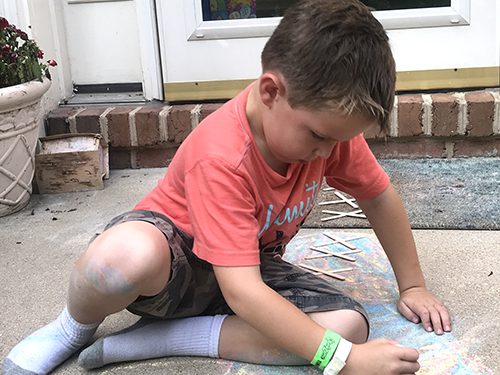 Dear Cathie: I like lots of parts of the Montessori system. But I am confused about why children are supposed to be quiet and calm all the time. When I watch my children at home, they seem to need to scream, run, and jump almost constantly. It seems that the Montessori schools go against what is natural for children. But I wonder… Is it really possible to teach my children to be calmer? — A Confused Mom
A fully functioning Montessori classroom is indeed a quiet and calm place. Parents who observe the classroom for the first time are often amazed and impressed by the serene focus they observe. However, although the classroom is tranquil, it is not silent; nor is this quiet and calm unusual for young children. It is simply the result of children joyously concentrating.
In a Montessori classroom, children have the freedom to choose any activity that calls to them. They learn how to use it, and then they use that material, calling it a “work,” until they have completed it. During this time of interaction there is usually a calm spirit around the child. She removes the work from the shelf, gets it set up, organizes her materials, and begins. As she works, her concentration deepens, and she is often not really aware of anyone else or anything else that is happening around her. She is merely focused on the task at hand. Once the activity is completed, she cleans up, puts everything away, and then replaces the activity on the shelf where she found it.
The teachers in the room support her activity and the development of her concentration by ensuring that no interruptions occur to distract her while she is working. They do not ask for anything from her, speak to her or, allow others to interrupt her if at all possible. They actively protect her concentration and allow it to develop naturally. Over time, the length and depth of a child’s concentration increases, and her satisfaction in task completion increases, as well. Through this, the child develops a strong work ethic, as well as a sense of internal motivation and a joy in learning.
In her book, The Absorbent Mind, Maria Montessori said, “An interesting piece of work, freely chosen, which has the virtue of inducing concentration rather than fatigue, adds to the child’s energies and mental capacities and leads him to self mastery.”
Between activities, children chat with each other, make plans to do a partner activity or have snack with another child, comment on something in the room, or simply socialize. Thus, the class has a calm, happy, natural buzz during most of the work time.
Parents can indeed encourage children to be calm and focused at home. The best way to reinforce this is to be purposeful about your home environment. Create areas where it is OK to jump and run. For most families these activities are done outside. But in some climates, a basement or garage may be an acceptable place as well.
Indoors, create a space where you can provide interesting things on which your child can concentrate. Create activities and display them in a place where they are easily visible and readily available to your child. Low bookshelves work well for this purpose. Place all the parts of each activity together in a box or basket so it is clear that they go together.
The existence of external order creates the internal order in the brain. Encourage your child to choose an activity conscientiously and to interact with it on a deep level. Protect your child from distractions during this time. Encourage your child to complete the entire activity before putting it away. Be certain that you or other adults are not a distraction to your child’s concentration. Once the child is finished with that activity, teach him to replace it before getting another. You may need to help as your child is learning this skill. This consistency between home and school is enormously helpful in helping your child develop concentration as well as organizational and decision making skills. These skills will not develop overnight. Your child will need you to: show him how to choose, complete, and replace an activity before selecting another; how to clean up; and how to organize materials. With time and repetition, this will become habit, and your child will be calmer and happier.
Stay Calm, Cathie
Tomorrow’s Child / Sepembert 2014 / p 24
by Margot Garfield-Anderson | Infant-Toddler (0 to 3), Kindergarten, MFA, Montessori Education, Montessori Parenting, Montessori students, Prepared Environment, Primary (3-6), Sensitive Periods
By now your Montessori child has settled into a routine and joyfully approaches each new day at school. You’ve attended some parent nights and open houses. The Montessori guides are reporting their earliest observations of your child, using terms that are new to your ear. How do they translate into layman’s terms and what place do they have in our adult world?
Built-In Control of Error
The design of most Montessori materials gives children immediate feedback. Called the “control of error,” this feature makes it possible for Montessori students to determine for themselves if they have done each exercise correctly.
Children choose their learning activities within the range of their current abilities. Making mistakes is a vital part of the learning process. Discovery, investigation, and problem solving involve making wrong turns, getting stuck and trying again. An important part of the learning experience is to recognize an error and learn how to make corrections. These experiences are part of the process of becoming self-disciplined.
As many of our readers know, I’m a Montessori grandparent to four adorable granddaughters. While I don’t work in a school, I’ve been able to apply this one to my experiences with the girls. I share my experiences as a grandparent to help parents and other grandparents begin to use the same thought process applied in the classroom. By applying Montessori in the home, we are assured that we are delivering a consistent message and helping to reinforce what’s being learned at school.
Harper, my youngest, is a year old. She has several pieces of equipment that require she place objects into holes that correspond to their shape. We’ve all seen these before, and as adults we understand you cannot put a round peg into a square hole (unless that hole is larger than the peg, right?) Harper will sit there for long periods of time trying to jam, turn, and manipulate the shapes into the holes. When she is successful she applauds herself, when she isn’t she will get frustrated but keep trying until she gets it to fit. And yes, often she becomes frustrated to the point of crawling away; but each time she repeats the process the memory of what feels like the correct way to hold and move those shapes is reinforced. The control of error is that she cannot get the shapes back into the container unless she puts them in correctly.
As an adult, we often forget that we must allow the child to repeat this process over and over and over again before that memory is firmly established. Unless we are trained guides, our tendency is to rush in saying things like, “No, no, no, that’s not it, it’s this way.” Instead, allow the child to keep going through the process. Children need to work through the frustration part. When adults rush in to solve the problem for the child, the skill is not really “owned” by them and they try less with other problems knowing there will always be an adult around to “fix” whatever they cannot. As long as the child is not in any physical danger, I’d encourage you not to rob them of these experiences.
Learning How to Learn
Most of us have gotten very frustrated when we are trying to do something and it’s just not going our way, right? What choices do we have in these situations? We can kick our computers to the curb if they freeze up or we can power them down for a few minutes, allow them to cool down and then reboot. False fatigue works the same way.
In the classroom, a child will begin to work with a new material, when all of a sudden, things begin to go awry. The child may react in many different ways and become frustrated to the point of deeply sighing and walking away or worse.
When the child is allowed (without adult intervention), they will begin to return to the material and try again. Each time they try again they are building upon past experiences of what works and doesn’t work. When they finally complete the task at hand, there is a great sense of accomplishment, and each subsequent time they repeat the process helps them achieve a mastery of that excise.
Inner-Discipline
Should a guide feel it appropriate, she might offer a quiet, small-group, or non-verbal demonstration of the appropriate way to handle the material. The hope is that a child will develop the ability to regulate her own emotions and gain a sense of inner discipline, go back to the exercise, and finish it to completion. This inner-discipline helps us all take stock of a situation and not let it get the best of us.
Inner-discipline allows the student to develop the ability to become the decision maker for assuming responsibility over his or her own actions, deeds, and emotions.
These three skills are some of the most fundamental cornerstones on which a child’s educational experience in Montessori rests. Since many of us were not Montessori raised, we have to learn these new terms, trust in the system, and understand how to apply them in our homes and own lives. n
Tomorrow’s Child / October 2016 / p 30
by Alexa C. Huxel | Montessori Teachers, Prepared Environment, The International Montessori Council
The classroom was out of control. Children ran from one end of the room to the other. Teachers chased students around reminding them of the ground rules, but which always fell on deaf ears. The children responded to each other and their teachers rudely in speech and action (often hitting). Teachers regularly (at least once a day) escorted children (the same 3 children) into the hallway because they were hitting, spitting or unresponsive to redirection to the point of danger for the removed child and the rest of the classroom. The Montessori materials were utilized without regard, often as swords or as a tool to hurt a friend. Administration, throughout the year, observed the classroom and offered guidance and suggestions to the teachers. The teachers realized their classroom was out of control, and each was eager for help but little changed.
This classroom had two certified Montessori teachers (AMS credentialed), an experienced assistant, and twenty-eight students (ages 3-6). The room had a full compliment of the Montessori materials, and each day the teachers, through their observations, prepared the environment. The environment, built on respect for the child, supports a child’s ability to be independent, make free choices, encouraging curiosity, intrinsic motivation and free movement. The room utilized the peace curriculum for conflict resolution. After long discussions and reflection, the Administrative team restructured the team for the following year, leaving one of the teachers but replacing the other co-lead and assistant.
Flash forward to the present… When you walk into the classroom, a serene sense of peace is immediately palpable. The classroom has a beautiful hum as children work alone, cooperatively with a friend or a small group of friends, or with a teacher. Children walk carefully around the environment and use the Montessori works creatively but with purpose and care for the materials. Teachers, either seated on the floor, at a table working with a child or observing from the perimeter, blend into the background of the classroom.
The teachers move slowly and with purpose throughout the room. Children engage respectfully with their peers, and teachers and there is a new openness to redirection and conflict resolution. The three children that spent many moments each day in the hallway, now, as busy peaceful citizens in the classroom, only utilize the hallway for transitions.
A totally different classroom exists. All that is measurably authentic Montessori has remained static. The Classroom still has two certified Montessori teachers, one assistant and twenty-eight students (ages 3-6). It still has a full compliment of the Montessori materials, and each day the teachers, through their observations, prepare the environment. The environment continues to be built on respect for the child, supporting his ability for independence and of making free choices. However, recall that the only change to this classroom was two teachers.
Are we Authentic Montessori because of our materials – our environments – or is it because a certificate states we are? What are the elements that make up Authentic Montessori? Can we even name them? Is Montessori something that can be touched? Is it concrete or is abstract? What is the intangibleness that makes Montessori what it is? Many classrooms today have Montessori materials and have small chairs and tables for the children to work. Are they Montessori? What is the difference then? In my opinion, the difference is the teacher.
When examining the areas that traditionally make defining Authentic Montessori problematic, Montessorians focus on the tangible. Which accreditation authority is more authentic AMI, AMS, IMC or another? AMS and AMI teachers are often conflicted about the use of non-Montessori works verses “classic” materials in the classroom (Lillard, 2011). Statements like, “if the Montessori approach is a curriculum or an ongoing experiment” (Pickering, 2012) keep us questioning whether pullouts and specials are necessary, or do they simply interrupt the three-hour work cycle? What is really at the heart of implementing Authentic Montessori?
According to Tim Seldin (2006), in Finding an Authentic Montessori School, authentic Montessori “refers to the preparation of the teachers, and the specific Montessori designed school program that they implement.” Does preparation of the teacher end after receiving their credential?
An essential element of Authentic Montessori is respect for the child by providing a prepared environment. It allows children to make choices while encouraging and supporting independence, curiosity, intrinsic motivation and movement. It utilizes observation as a tool to uncover the needs of the child and the classroom community. However, I have drawn the conclusion that the pivotal piece of authenticity is the preparedness beyond the credential of the teacher. I believe it reaches farther than “the guide’s ability to observe and respond to each student’s individual needs.” (Abraham 2012) It embraces, and even goes beyond, the guidelines Dr. Nancy McCormick Rambusch (2002) writes about in Finding the Right School. The teacher is authoritative, is an observer, is an educational resource and serves as a role model.
The pivotal piece, in my view, of preparedness is the spiritual and reflective nature of the teacher, which can make or break how the method unfolds itself for the children, making it Authentic Montessori. In The Secret of Childhood, Maria Montessori (1972) writes of The Spiritual Preparation of the Teacher where the teacher must “prepare himself interiorly by systematically studying himself so that he can tear out his most deeply rooted defects, those in fact which impede his relations with children.” The teacher must always introspectively ask, do my actions hinder or help the child or children in the classroom? I will take Maria’s wisdom one-step further and say such a study can also help the teacher prepare to work in a team of teachers. Do my actions help or hinder the team’s ability to serve the children?
The Authentic Montessori elements of multi-aged groupings, the full compliment of the materials, observations utilized to prepare the environment and inform lessons, the emotional environment built on respect for the child, supports a child’s ability to be independent, make free choices, encouraging curiosity, intrinsic motivation and free movement are essential, but the glue, the decisive piece, is the teacher. The teacher’s reflective and spiritual preparedness will help her to address the potential obstacles she brings to the classroom (and the team of teachers). She is that crucial piece providing the foundation for the other essential elements to unfold organically and naturally in an Authentic Montessori environment.
Authentic Montessori teachers view the classroom each day – each year as fluid – as ever changing. Like the children, we are in process – we are never finished – we are constantly in a state of learning. We learn from the children. We learn from our peers. We learn from our mistakes. We observe the child in order to learn how best to serve him. We observe the child to identify works to put on the shelves. We observe the child because we know that if we do not follow the child we have not done our job. We respect the child before us, who is becoming the person she is meant to be – the person we will never know because that person is a long way off. However, we are comforted to know that, on that child’s long journey, we were never an obstacle, but a discreet guide. All the while on this journey we question ourselves. We reflect on our work. Have we done enough? Have we done too much? In my experience, this is what Authentic Montessori means.
Montessori Leadership / 2013/ p 4
by Sonnie McFarland Jim McFarland Ph.D | MFA, Montessori Family Life, Montessori Parenting, Planes of Development, Prepared Environment, Sensitive Periods
Since Dr. Maria Montessori’s discovery of the true nature of childhood over a century ago, children around the globe have benefitted from Montessori education. However, even parents who have children enrolled in Montessori schools could derive further benefits through the implementation of Montessori principles and practices in the home .
Children reap the rewards when, at home, both parents are consistent in their expectations and styles of parenting. Similarly, children thrive when there is consistency between the home and the school. Helping parents create a child-friendly environment in the home is a beginning; however, we can go much deeper. We can bring greater definition to best practices of Montessori parenting, so parents can better understand and appreciate why children blossom in Montessori classrooms and how they can implement Montessori principles and practices in the home.
Recognizing Children’s Authentic Nature
First, we must help parents recognize the authentic nature of each of their children. Without this understanding, it is difficult to put Montessori principles into practice. To know who the child is helps us to know how to be with the child. Montessori saw children as endowed with a spiritual embryo that served as a fulcrum around which each child’s mental and spiritual life is organized.
If the work of man on the earth is related to his spirit, to his creative intelligence, then his spirit and his intelligence must be the fulcrum of his existence and of all the workings of his body. About this fulcrum his behavior is organized and even his physical economy. The whole man develops within a kind of spiritual halo. (Montessori, 1988, p. 56)
This spiritual halo can be seen as the nurturing emotional, social, and spiritual milieu where children are respected because of their inherent worth. Montessori recognized that children are endowed with capacities to fulfill their potentials. When parents and teachers recognize children’s intrinsic goodness, and reflect it back to them, children naturally develop healthy self-images and positive patterns of growth. A self-fulfilling prophecy is created, and children are empowered to follow their natural developmental processes toward self- actualization.
The Map of the Mind and Spirit visually (next page) clarifies the various functions of mind and its relationship to the Spirit or Authentic Self. No one aspect of mind can stand alone, as there is a holistic, dynamic interconnection between them. (McFarland, 2011, pp. 50–51)
Sensory-Motor: The function of this aspect of mind is to bring the external world into awareness through the five senses. These sensorial impressions automatically embed themselves in the subconscious area of the memory bank where engrams and associations are created. The sensory-motor part of the mind coordinates motor activity within the external environment.
Memory Bank: The subconscious mind, or mneme, that houses the engrams and associations, racial memories, and potentials, is located at the base of the memory bank. “Memory” (that which we consciously remember) is located above the subconscious mind on the map.
One of the most startling discoveries that Montessori made was to come to a clearer understanding of how a child learns and matures. She observed that there are dynamic forces determining the development of his personality, intelligence, and talents that are hidden within his memory bank or unconscious mind . . . She came to understand how these inner forces worked together and how each contributed to the growth of the child. (McFarland, 2011, p. 55)
It is not an accumulation of memories that is left in the mneme, but a power to recall experiences to the conscious memory . . . Thus it is not the experiences in themselves, but the traces of them left behind in the mneme, which makes a mind powerful; such traces being known as engrams. (Montessori, 1989, p. 13).
As engrams form, they spontaneously seek to organize by connecting to other engrams to create associations based on such things as commonalities and contrasts.
When a child’s interest is aroused through sensory stimulation and the impressions enter the unconscious mind, the mind spontaneously calls forth all those related memory traces or engrams to form a new or expanded idea. This is how the intellect grows. (McFarland, 2011, p. 57)
One additional function of the subconscious mind is to spontaneously release hidden impressions or mindsets onto the sensory-motor screen. Because the sensory-motor aspect is unable to make decisions as to what to do with this released material, it is up to the ego or inner guide to respond.
Ego: This function of mind is where the sense of separation or “I-ness” is located. It has the power to make decisions from incoming sensorial impressions.
Inner Guide: The inner guide is the power of discrimination that observes and evaluates incoming sensorial and memory impressions, helps balance the ego, and makes decisions as to what action to take. This aspect is directly connected to the Authentic Self/Spirit and the vital life force. It is the source of wisdom and the seat for self-observation. When we say that we trust the child to make decisions as to his work choices, it is because we trust the child’s inner guide.
Montessori recognized the bridge between the conscious and unconscious mind and saw the inner guide as a mysterious power that guides, oversees, and directs the child’s fulfillment. It is through quieting the lower mind that the inner guide is accessed.
Vital Life Force: Montessori recognized the presence of the vital life force and referred to it as “horme.” She observed that children were naturally motivated to learn and develop their individual potentials. “A vital force is active within him, and this guides his efforts towards their goal…” (Montessori, 1988, p. 76). This invisible force of life propels the child toward self-fulfillment.
Authentic Self/Spirit: This aspect is nothing less than humanity’s true nature of divine love and light—the personal expression of Cosmic Consciousness. The Authentic Self is the source of all positive virtues such as joy, faith, courage, honesty, and compassion. It is what brings peace and purpose to life. When we witness these qualities in children, we know they are manifesting their Spirit or Authentic Self.
Cosmic Consciousness: This is the source of all life and love. It is a dynamic energy that touches all that is. All aspects of the mind and spirit are connected to form a dynamic whole that includes the Cosmic Consciousness. It is reassuring to know that the spiritual embryo of the child is connected to Cosmic Consciousness and that we can trust that there is a natural path prepared for children to unveil their Authentic Self and fulfill their cosmic tasks. (McFarland, 2011, p. 64)
When parents see their children as divine beings striving to develop their human potentials, rather than willful children purposely annoying them, they can learn to approach them from an entirely different perspective. Montessori parenting begins with recognition, acceptance, and respect for the child’s Authentic Self.
“When we understand the inner nature of the child, we trust the child and become selflessly centered on the child and less on ourselves…. Our first teacher, therefore, will be the child himself, or rather the vital urge with the cosmic laws that lead him unconsciously.”
(Montessori, 1991, p. 20)
Unveiling the Authentic Child
Children come to earth as pure spiritual beings, endowed with many gifts; however, at birth, an invisible veil is drawn over their awareness of who they really are. Fortunately, each child’s Authentic Self, inner guide, and vital life force retain the knowledge of the child’s true identity and cosmic task. Within the sanctity of Montessori classrooms, children systematically enter into continual cycles of unveiling their Authentic Selves and discovering their interests and capabilities. To bring greater clarity to this process, we have designed a model we call the VEIL Model.
The VEIL Model has four interacting phases that continually repeat themselves as children interact with their environments and master new concepts. The four phases are: Volition, Engagement, Integration, and Love.
Each time children are motivated to engage in an appropriate activity (Volition), receive sensory stimulation (Engagement), and assimilate and master the information (Integration), they catch a glimpse of who they are and what they are capable of understanding (Love). Each time children exercise Volition and choose to engage in a new activity, they enter another learning cycle that takes them through the phases of Engagement and Integration. Each time they master an activity, they enter into the Love phase. In this phase, children experience joy and confidence that propels them to begin a new cycle of learning. “The more this Unveiling Cycle is repeated, the greater is the child’s ability to recognize his authenticity and realize his potentials. He enters into an upward cycling spiral towards self- actualization” (McFarland, 2011, p. 71).
Within each of the four phases of the Unveiling Cycle, we identify four principles or practices that are essential keys to the implementation of Montessori’s work.
The Volition Phase
Volition is the first phase of the VEIL Model and focuses on four qualities that are embedded within children’s spiritual embryo. The qualities that naturally motivate children toward self-actualization and fulfillment are: 1) Need Fulfillment; 2) Quest for Self-Mastery; 3) Sensitive Periods; and 4) Compelling Interests.
Need Fulfillment: The desire to have their basic needs met is one of the most powerful motivating forces embedded within children. When these needs are not met, their behavior is directly affected. Abraham Maslow (1971) identified the basic human needs as: 1) physiological needs; 2) safety needs; 3) love and belonging needs; 4) esteem needs; and 5) self-actualization needs. His research indicates that need fulfillment begins with the most basic physiological needs and moves sequentially up the pyramid as each need is fulfilled, culminating in the fulfillment of the self-actualization needs.
It is important for parents to know that children’s behavior is directly related to these basic needs. When children’s needs are met, they are content; however, when one of the need levels is not met, children demonstrate challenging behavior. Parents benefit from knowing that the needs of children often fluctuate depending on the situation and circumstance. For example, a child may be happily involved in an activity, operating at the esteem-need level, when he is frightened by something and falls back to the safety-need level, where he now requires comfort and reassurance. If he receives it, he can move to the next level of love and belonging. If this need is satisfied, the child can again enjoy being at the esteem level. Encouraging parents to view children’s challenging behavior as a call for a need to be met can help them remember to focus on what need requires attention and what they might do to restore balance to the child.
Quest for Self-Mastery: Children are wired for success. They come equipped with the vital life force that propels them toward self-actualization and an inner guide to wisely direct this energy. When children have the opportunity to engage in environments designed to meet their interests and the adults encourage their independent exploration, children naturally move toward self-mastery. According to Montessori:
We must clearly understand that when we give the child freedom and independence, we are giving freedom to the worker already braced for action, who cannot live without working and being active. This he has in common with all other forms of life, and to curb it makes him degenerate. (1988, p. 83)
When parents do for their children what the children want to do for themselves, children receive the message that they are incapable and weak. As parents understand that children are naturally programmed for self-mastery and benefit from prepared environments, at home and school, it will be easier for them to encourage children’s independence and let go of the need to do too much for their children.
Sensitive Periods: As we know, children pass through specific periods of sensitivity that last for months or years. A few of these periods relate to the acquisition of language, a need for order and precision, mastery of movement, and social relationships. When a child’s physical body and mental capacity are prepared, the vital force and the inner guide motivate sensitive periods. During these periods of sensitivity children’s attention is intently focused on self-mastery, sometimes to the exclusion of other things. Helping parents understand what these sensitive periods are and how they can support the children through them is vital.
Compelling Interests: Children’s interests are internally motivated by a combination of a deep love for life, the vital force, inner potentials, and previous positive experiences registered in the memory bank. These internal factors compel children to spontaneously engage in and learn from their environments. “The environment must be rich in motives that lend interest to activity and invite the child to conduct his own experiences” (Montessori, 1988, p. 84).
The Engagement Phase
Engagement, the second phase of the VEIL Model, is the process that allows children to take in stimuli from their environments. The four qualities that naturally facilitate the Engagement Phase are: 1) Absorbent Mind to Inquiring Mind; 2) Meaningful Work; 3) Movement; and 4) Freedom of Choice
Absorbent Mind to Inquiring Mind: The minds of young children, between birth and age 6, are uniquely designed to absorb the sensorial stimulation around them and automatically embed these impressions into their subconscious mind. These impressions form engrams that join together to create associations that forever become part of the child’s soul.
Around the age of six, the absorbent mind of the child becomes an inquiring mind. Children now have the ability to reason as well as to consciously select and remember what they are learning. This is a time when they want to know the why and how of things and demonstrate the power of their imaginations. It is this inquiring mind, guided by the vital life force and the inner guide that naturally propels children to engage with their environments.
Meaningful Work: One of the secrets of engaging children is to provide them with meaningful work. For work to be “meaningful,” it must capture the child’s attention and engage her
concentration. This level of engagement reflects the real work of self-construction, motivated by the vital life force and the
inner guide.
If the child lacks the external means to adapt, he has no way to utilize the great energy that is his. Moreover, he is impelled instinctively towards activity that utilizes all his energies because, in this way, he can perfect his faculties. Everything depends on this. (Montessori, 1991, p. 47)
Parents will appreciate knowing that when they provide meaningful work opportunities in the home, their children will engage themselves at deeper levels of concentration, which will most likely result in children being calm and happy.
Movement: From the moment of birth, children engage through movement. This movement adds to their developing intelligence by bringing sensorial impressions into the subconscious mind. In addition, children’s movements develop both their muscular as well as their neurological structures.
For children’s optimal intellectual development, it is essential for parents to give their children the freedom to move about and engage themselves in the exploration of their surroundings as much as possible. Movement within the environment increases children’s ability to experience their environments in a multi-sensory manner.
Freedom of Choice: Children are more likely to engage in meaningful work when they have freedom to choose what to do. It is easier to trust that children will make appropriate choices when we remember that their inner guide is there to assist them in their choices. It is important to note that children are most successful in accessing their inner guide when their lower mind is calm. Deep breathing, silence, and working alone enhance children’s ability to listen to their
inner guide.
“The child must learn by his own individual activity, being given a mental freedom to take what he needs, and not be questioned in his choice” (Montessori, 1989, p. 5). When adults make unnecessary choices, children forget how to access their inner knowledge and their ability to relate to their authenticity becomes unstable. Instead of learning self-reliance, children learn to rely on others to make their decisions.
The Integration Phase
Integration, the third phase of the VEIL Model, focuses on how children assimilate and process the information they receive from their environments. The four qualities are: 1) Concentration; 2) Repetition; 3) Emotional Safety; and 4) Meaningful Context.
Concentration: Concentration is the bridge to the inner guide and Authentic Self. To reach this state, children must ignore the distractions of sensorial sensations, memories, fantasies, and general wanderings of the mind. Achieving this state of concentration occurs when children find an activity that captures their deepest attention. Montessori recognized the relationship between integration and concentration:
He is agitated until he seeks something within the depths of his mind that he has not yet found for him- self. It must hold his entire attention; he must concentrate and consecrate his entire being; he must be free from everything that goes on around him. This is what we call the great work. (1991, p. 63)
It is important that parents and teachers are sensitive to this delicate state of concentration and seek to protect it. When children are concentrating, it is best to leave them alone. If it is imperative to disturb a child in deep concentration, do so gently. Another unintentional disturbance of a child’s concentration is to say “good job!” while the child is working. This breaks her flow of concentration.
Repetition: Children’s ability to integrate, assimilate, and remember what they are learning is enhanced by repetition. As children repeat activities, they strengthen the neural pathways of the brain, the power of their memory increases, and constructive habits are formed. When parents understand the importance of repetition, they are more able to be patient when their children repeat the same work over and over again.
Emotional Safety: When children experience negative emotional feelings, ranging from low-level anxiety to extreme fear, their capacity to integrate new concepts and remember what they have learned is deeply affected. According to Daniel Goleman, “When emotions overwhelm concentration, what is being swamped is the mental capacity cognitive scientists call ‘working memory,’ the ability to hold in mind all information relevant to the task at hand” (1995, p. 79). Emotional safety for children is best achieved when parents and caregivers demonstrate respect and offer encouragement to children. When children experience positive regard, they develop self-confidence and the courage to attempt new things.
Meaningful Context: Children integrate and assimilate information more effectively when what they learn is related to concepts previously learned and/or presented in the context of the greater whole. This is possible because of the existing engrams and associations in their subconscious mind. In addition, children’s ability to learn is greater when they view the work as meaningful. Parents who are more aware of what their children have experienced can provide new input that is connected to former concepts.
The Love Phase
Love is the culmination phase of the VEIL Model; it is where children experience the joy of mastering a concept. This spontaneous joy embeds itself in their subconscious memory and becomes the seed of motivation. The successful completion of an Unveiling Cycle motivates children to reach out and learn more. They confidently enter another cycle of learning, creating a spiral effect that continues to unveil their Authentic Self. The four elements of the Love Phase are: 1) Normalization; 2) Authenticity and Self-Actualization; 3) Creativity; and 4) Self-Discipline.
Normalization: When children are encouraged to live and work in harmony with the natural laws of child development, they manifest positive psychological characteristics such as enthusiasm, thoughtfulness, and joy. Montessori saw this state of equilibrium as the normal state of healthy children and called it “normalization.” She also recognized that when children are unable to organize their personality with the natural developmental principles, they often manifested negative behaviors. Montessori described this state of negativity as being a deviation from the norm.
But when the attractions of the new environment exert their spell, offering motives for constructive activity, then all these energies combine and the deviations can be dispersed. A unique type of child appears, a “new child”; but really it is the child’s true “personality” allowed to construct itself normally. (Montessori, 1988, p. 185)
Authenticity and Self-Actualization: As children naturally move through their Unveiling Cycles and connect with their authenticity, they begin to manifest the same qualities that Abraham Maslow (1971, pp. 45-49) identified as the qualities of
Self-Actualization:
- Experiencing fully, vividly, selflessly with full concentration and total absorption
- Making growth choices rather than fear choices Allowing Self to emerge
- Being honest and taking responsibility for one’s own actions
- Listening to one’s own inner voice
- Being surprised by joy—“peak experiences” or transient moments of self-actualization
- Opening up to one’s authentic self and letting go of defenses
Self-actualization is not a permanent state of being but rather a gradual process of becoming more connected to the Authentic Self and acting from authenticity. The more adults model this behavior, the easier it is for children to do the same.
Creativity: Each time children reach the Love Phase of the Unveiling Cycle, they experience self-confidence, enthusiasm, trust, and determination, the qualities at the heart of the creative process. In addition to being ready to master a new concept, children often want to be creative with what they already know. “Whether on the outer or inner plane, there is a tiny light in the unconscious
of mankind, which guides it toward better things” (Montessori, 1988, p. 191).
Self-Discipline: As children engage themselves in the Unveiling Spiral, they develop the power of will, the root of inner discipline. A partnership between the vital life force and the inner guide develops:
The vital force is the energy of impulse and the inner guide is the voice of discrimination or inhibition. Impulse by itself leads to erratic and meaningless activity. Inhibition by itself leads to timidity and dependence on others. . . . As they [children] are allowed to follow their internal laws of development they naturally find the balance between the two and the will is formed. (McFarland, 2011, p. 112)
Montessori witnessed three stages of will:
- Attention and Attraction to the Environment: Children are attracted to specific activities and unconsciously eliminate other activities. This is the beginning of inner discipline.
- Conscious Self-Discipline: During the second stage, children move from unconscious will development to conscious self-discipline. Realizing the inner satisfaction of being involved with constructive work, children continue to make constructive decisions.
- Obedience: At this stage, children, being filled with love for self, others, and the environment, willingly.
This is possible because they are primarily operating from their Authentic Self and their egos are not threatened by others giving directions.
Life’s greatest creation is the inner-directed process that children experience as they unveil their Authentic Self. The more educators and parents work together and honor children’s natural process of development, the more children will be able to manifest their greatest potentials and lead us to a brighter future. Maria Montessori saw this possibility over a century ago.
When prejudice is vanquished by knowledge, then there will appear in the world a “superior child” with his marvelous powers which today remain hidden. Then there will appear the child who is destined to form a humanity capable of understanding and controlling our present civilization. (Montessori, 1991, p. 16)
Sonnie McFarland and Jim McFarland, PhD are co-authors of Montessori Parenting: Unveiling the Authentic Self. Sonnie is the AMS 2011 Living Legacy and is AMS- credentialed (Early Childhood). She is the chair of the AMS Peace Committee. Contact Sonnie at sonnie@shiningmountainspress.com and Jim at jim@shiningmountainspress.com.
References
- Goleman, D. (1995). Emotional intelligence. New York, NY: Bantam Books.
- Maslow. A. (1971). The further reaches of human nature. New York, NY: The Viking Press.
- McFarland, S. and J. (2011). Montessori parenting: Unveiling the authentic self. Buena Vista, CO: The Shining Mountains Press.
- Montessori, M. (1988). The Absorbent Mind. Oxford, England: Clio Press Ltd.
- Montessori, M. (1989). To educate the human potential. Oxford, England: Clio Press Ltd. Montessori, M. (1991). The child in the family.
Madras, India: Kalakshetra Press.
- Montessori, M. (1991). The formation of man.Madras, India: Kalakshetra Press.
Tomorrow’s Child / April 2015 / p 30
by Chelsea Howe, PsyD | Discipline, Emotional Intelligence (EQ), Lower Elementary (6-9), MFA, Mixed Ages, Montessori Education, Montessori Parenting, Montessori Teachers, Parent Education, Prepared Environment, Primary (3-6), Uncategorized, Upper Elementary (9-12)
I am sitting at home right now, drinking my second coffee of the day. My two boys have finally given in and are taking naps (at the same time!), and all is right with the world. It is a snow day, and this morning, when I saw the cancellation notice with the name of my kids’ school go by at the bottom of the TV screen, I silently sighed. I love my children, but the thought of a whole day snowed in … two against one …all that ‘boy energy’ … another sigh.
This is snow day number two. My husband stayed home with them yesterday, and I received several texts from him reassuring me that they were alive (though he was only barely). Then, hours later, I received another text telling me that he was going to get Hudson’s head examined after a mishap with a ‘monorail’ that they had constructed in the house. Sometimes it’s just better not to ask. My husband has a degree in engineering, so a monorail running through the house is entirely possible. Anyway, an hour later, my 15-month old’s forehead was super-glued back together and as good as new. Nothing surprises me with these boys, NOTHING.
I don’t know how their Montessori teachers do it and remain positive and upbeat every day. I drop my children off in the morning, wish them a good day, transition through my own busy work day, and am worn out by the time I return to pick them up. They, on the other hand, are not worn out. I return to school and find my children happy, playing outside, and not ready to go home! In fact, I often get a tantrum about their intense desire to stay at school and play with their friends. And, I get it! I’m not nearly as cool as their peer group.
But, I wonder how these teachers do it. I once asked my older son’s teacher if she is exhausted at the end of the day, and she said, “No, they are great.” Either she is a great liar or that woman drinks more coffee than I do! But, I’ve been given the opportunity to observe her, and she is genuinely loving, caring, kind, compassionate, and warm. She speaks to the kids firmly but as though they are people, not kids. When one of them behaves badly, she explains what was wrong with their behavior and shares that they need to apologize. She has a heart of gold and wears it up and down her sleeves. And, the kids love her.
One day, I came to pick up my kids, and she shared with me that my lovely child hit another child (as if I ever thought he was an angel). I asked her how she handled the situation so that I can model my behavior based on hers. She shared the following: “I sat down, eye-level, and said, ‘That is not nice. These hands are made for hugs and helping other people, not hitting other people. These hands can do amazing things without hurting others.’” She had him sit in a chair until he had calmed down, walked him to the little boy, and the two hugged while my son said he was sorry.
Seriously?!?!?! How does she do it? At home, my older son will hit my younger one (or vice versa), and he laughs and snickers at me when I attempt to discipline him. But, that’s just it! His teacher attends to him and sees it as an act of communication rather than a reprimand. I have come to realize that we are constantly learning from our teachers, even when they are no longer OUR teachers. These teachers are setting the example of how to interact, inter-personally and intra-personally … with the children and with the parents.
The main lesson that I continue to learn about parenthood is that it is not easy. It is particularly not easy if you put on your parent goggles and reject the idea of asking for and receiving help. No matter how much you think you know, there will always be ideas and solutions that are new to you and may just be exactly what you and your family need to make life a little bit less stressful.
I may be exhausted and sleep deprived, but I am still able to appreciate life’s little lessons that creep up on me, daily. My kids are no angels. But, they are kids. And,
I am reminded about the care that their teachers (who actually spend more time with them than we do) give my children when I observe their private moments: laughing, continuously hugging, consoling, and loving them. This is
co-parenting at its best.
Tomorrow’s Child /January 2014 / p 23/
by Michael Dorer, EdD | Montessori Administrators, Montessori Education, Montessori Teachers, Prepared Environment, School Leadership, The International Montessori Council
Please click the button below to download a List of Suggested Montessori Furniture for Montessori Classrooms.
by Michael Dorer, EdD | Lower Elementary (6-9), Montessori Administrators, Montessori Charter Schools, Montessori Curriculum, Montessori Education, Montessori Materials, Montessori Teachers, Prepared Environment, Primary (3-6), School Leadership, School Resources, The International Montessori Council, Upper Elementary (9-12)
Authorized List of Montessori Materials for Montessori Classrooms
Organized and Edited by Michael Dorer
Contributors: Michael Dorer, Syneva Barrett, Lois Bobo, Rose Dorer, Peter Hanson, Shanna Honan, Maria Kaminstein, Angela Lord-Carsrud, Ann Luce, Chris Sacerdote, Larry Shankar, Maria Verhaal
Copyright Michael Dorer Shared with members and students on the Montessori Foundation and International Montessori Council with the author’s permission.
Montessori Materials List for age 3 to 12 from Michael Dorer
by Tim Seldin | Montessori Curriculum, Montessori Materials, Prepared Environment, School Leadership, School Resources, The International Montessori Council, Webcasts / IMC
>
This week we discussed the topic of what belongs in an early childhood Montessori classroom. We share a suggested list of materials and furnishings with you. Our goal was not to cover each material, but to discuss the issue in broader terms and to explore the issue of materials from outside of Montessori.
by Punum Bhatia Ph.D | MFA, Montessori Curriculum, Montessori Family Life, Montessori Parenting, Montessori Teachers, Prepared Environment
Set the child free, let them have fair play, let them run out when it is raining, take off their shoes when they find pools of water, and when the grass of the meadows is damp with dew, let them run about with bare feet and trample on it; let them rest quietly when the tree invites them to sleep in its shade; let them shout and laugh when the sun wakes up in the morning, as it wakes up every other living creature which divides its day between waking and sleeping. (Montessori, 1966, p. 100)
Maria Montessori advocates freedom as an ideal component for the young child; yet, the idea of freedom is a hard concept for most people to understand. Those who have attempted it without firmly grasping all of the concepts inherent within it have promoted a climate of permissiveness. It was never Montessori’s intent to offer children freedom without limits or checks that would provide a balance for that freedom. She believed that all freedoms given must be accompanied by responsibilities. If that requirement is not met, then the freedom will become license, and chaos and confusion will ensue.
“Freedom is understood in a very elementary fashion, as an immediate release from oppressive binds; as a cessation of corrections and of submission of authority. This conception is mainly negative, that is to say, it means only the elimination of coercion.”
(Montessori, 1988, p. 187)
Dr. Montessori, being a scientist and a practitioner, realized that for the two concepts of freedom and responsibility to develop, they must happen together in a controlled environment. Neither of these could be introduced in a vacuum. She wrote, “The liberty of the child ought to have as its limits the collective interest of the community in which he moves; its form is expressed in what we call manners and good behavior. It is our duty, then, to protect the child from doing anything that may offend or hurt others and to check the behavior that is unbecoming or impolite.” (Montessori, 1966, p. 68)
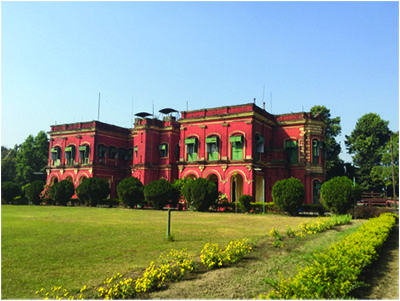
As someone who has been in the Montessori field for the past 30 years or more as a preschool teacher, teacher trainer, examiner, and administrator, I am often asked if I went to a Montessori school as a child. The answer is no, but as I reflect back, I realize that I have had the privilege of a true Montessori upbringing. Growing up in the outskirts of Calcutta (now Kolkata), India, in a compound built by the British for their jute and woolen mills, it was a childhood dream.
On the banks of the River Hooghly, our compound, known as Anglo India Jute Mills, was 500 acres big and at least a mile long. Within the red boundary walls lived 250 families. Our surroundings were beautiful with well-manicured lawns, old sprawling trees, and flowers of every kind, size and color. In fact, the flowers (roses and dahlias) from our compound won awards and trophies at the Botanical Gardens and flower shows every year. We had our own swimming pool; badminton and tennis courts; soccer and cricket fields; indoor games, such as billiards and table tennis; as well as our own playgrounds with swings, slides and everything that delights a child’s heart.
It was a true prepared environment in every sense of the word. Maria Montessori wrote:
In this environment only those things are allowed to be present which will assist development. Out of it must be kept anything that would act as an obstacle, not least a too interfering adult. Even such things as are neutral or irrelevant should be rigorously excluded. The constructive psychic energy granted by nature to the child for building up his personality is limited; therefore, we must do everything we can to see that it is not scattered in activities of the wrong kind.
(Standing, 1957, p. 267)
Meticulously clean and well ordered, it provided us with everything we needed as we were growing up. Within the boundary walls, we were safe and secure and had all the freedom we could have wanted. There was freedom of movement. In the spacious grounds, we could go anywhere and, best of all, we were outdoors most of the time. There was a scramble to return from school and spend the evening playing a sport or two. The standards were high and, like the vertical grouping in Montessori classroom, we learned from those older than us. In turn, they were the best and the most patient of teachers; so indulgent and caring as they rallied on the tennis courts or taught us to slice the ball whilst playing table tennis. There were no rewards or punishments. We never sought any. We never looked for outcomes. We played for fun but gave it everything we had, always pushing to better ourselves.
Montessori speaks powerfully that the roots of tyranny lie in the adults forcing children to obey their commands and recommends, instead, that children have freedom of choice. In a well-prepared Montessori environment, the free will of each child is gradually developed as s/he chooses his work instead of doing what s/he is told to do. E. M. Standing points out the freedom to choose is not the freedom to do anything you want, but to do the right thing. Each choice the child has is appealing, constructive and developmentally appropriate and as a result this follows:
In our specially prepared environments we see them all at once fix themselves upon some task, and then their excited fantasies and their restless movements disappear altogether; a calm, serene child, attached to reality, begins to work out his elevation through work. Normalization has been achieved. (Montessori, 1966, p. 162)
As an adult looking back, I can see all the wise choices that surrounded us and also the very carefully defined limits. We were free to choose and use what was available, but we always had to leave it the way we found it. Respect for the materials was of paramount importance and those expectations were laid down early on. For instance, we could not litter our beautiful gardens or pluck flowers. We left the billiards/snooker room as neat and clean as we found it. We returned library books in as pristine a condition as when we borrowed them. There were definite ground rules for the community, and we were redirected promptly and firmly if we ever crossed the line. The freedom that we were given came with limits and we respected them. As a result, similar to a Montessori classroom, we arrived at self-discipline through a total engagement in activities that interested us.
The spontaneous creation of a community was the most remarkable outcome of our magical upbringing. The community promoted mutual respect, shared responsibility, collaboration, and friendship. Freedom of choice became a habit of mind with us. As we grew older, it gave us freedom of thought and opened us up to pursue as many interests as we wanted. After a gap of thirty years, when we all left our childhood home to pursue further education, careers, and matrimony in the wider world and lost touch with each other, thanks to Facebook, we have recently been joyfully reunited. At one of our physical reunions, as we laughed and shared stories from our childhood and got caught up with more recent happenings in each other’s lives, my grown-up and much travelled daughter remarked:
“I understand you better now after seeing you with all your friends. You share such a spontaneous joy for living and camaraderie. The way you laugh, all your friends do too.”
Despite the different directions in which our lives have taken us and in which we have excelled, we have a common bond—united by the strong ties of a childhood built on freedom given and responsibility expected.
Bibliography
Montessori, M. (1966). The secret of childhood. New York: Ballantine Books.
Montessori, M. (1988). The absorbent mind. Oxford, England: Clio Press.
Standing, E.M. (1957). Maria Montessori: Her life and work. New York: Penguin.
Tomorrow’s Child /January 2017 / p 28
by Michael Dorer, EdD | MFA, Mixed Ages, Montessori Education, Montessori Materials, Montessori Middle School, Montessori Secondary / High School, Prepared Environment, Primary (3-6), Sensitive Periods
When people first come to study the approach that bears Dr. Maria Montessori’s name, they often see it as simplistic—easily grasped and even more easily implemented. It is not uncommon to hear Montessori principles boiled down: it’s “all about choice”; “independence is the centerpiece”; or “it focuses upon the idea of ‘work.’” Montessori is much more than any of these oversimplifications.
Experienced Montessorians know that the approach is exceptionally complex, employing and depending upon many principles, procedures, and concepts of human development that are intertwined so closely that it can be very difficult to separate them into individual discrete strands.
Still, many people do make that attempt, and this represents one such effort. A few weeks ago, Tim Seldin challenged me to identify the ten (only ten!) most significant principles of Montessori theory and approach. While it is evident that ten is just an arbitrary number and that there are many more key elements of Montessori education, I was able to identify ten important principles, and while they may not encompass the whole of Montessori theory, they do represent essential components without which Montessori viewpoints cannot be fully understood.
There was only one problem – how to bring those ten principles into being in a real Montessori setting. That called for a little addition – Ten plus One. Let’s look at the essential ten principles first:
Respect
Respect is a core notion essential to understanding Montessori. A Montessori classroom conveys respect not only for children but for all living things. On a global or cosmic basis, a respectful relationship with the Earth, its resources, its life forms, and, indeed, the entire universe, is central to Montessori philosophy. At the same time, respect in the immediate environment calls for reverence and appreciation for the developing lives of children and requires that they are treated appropriately so that the culture models the essential respect deserved by every human being, both in the school as well as in the entire world.
Creativity
Creativity in Montessori theory refers to two quite different concepts. In volume one and two of Montessori’s Creative Development in the Child, (Montessori, 1998) the term creativity refers to the child’s inner creation of his or her personality or psyche. According to Montessori theory, every person is the creator of the adult, which he or she will become. This act of creation is what Montessori calls a Great Work and is the reason that the activities and play undertaken by children are referred to as ‘work.’ Although on the surface it may look like play, Montessori appropriately identifies the behaviors of childhood as the unconscious work of their own creative development.
The other meaning of creativity is, of course, the more conventional one— inventiveness, resourcefulness, and innovation—it’s conventionality not implying any less importance. In fact, this valid definition of creativity, the engagement of the imaginative mind—is, itself, essential in Montessori education. While creativity in this sense leads to new ideas or new knowledge, it also serves a developmental purpose in expansion and growth of the mind. It is for this reason that creativity is considered the top level of higher-order thinking in the new revised version of Bloom’s taxonomy of educational objectives, a classic study of thinking (D.R. Krathwohl, 2002.)
In the first Children’s House in the Roman suburb of San Lorenzo, Dr. Montessori offered three freedoms to the children, over time: the freedom of movement, the freedom of choice, and the freedom to repeat. Each of these is an essential principle of Montessori theory and philosophy. The stories of the discoveries and implementation of these freedoms are fascinating, but are subjects for a separate article.
Freedom of Movement
Movement is absolutely essential to the authentic Montessori environment. The key to understanding the idea of movement is that it must be purposeful and serve the child’s developmental needs; therefore, the aim is controlled movement over that which is random or disorderly movement.
There are two general sorts of movement in the Montessori classroom: large-motor movement and fine-motor movement. Large-motor movement refers to movements of the large muscles of the body. Montessori schools offer large-muscle movement when children carry materials to and from shelves, walk the line, practice certain verb commands, clean and tidy, and in dance or drama work. Purposeful and serving educational functions, these activities are proper and desirable. Fine-motor movement in the Montessori classroom occurs when children manipulate materials, such as: beads, blocks, or cubes; practice and execute handwriting skills; sew or knit; paint or sculpt. Fine-motor skills are even practiced through appropriate gestures that accompany speech.
Montessori theory postulates that there is a developmental and intellectual connection between the movements of the hands and the growth of mental understandings – a hand /mind connection. As suggested by Dr. Montessori herself, writing, “The hands are the instrument of Man’s intelligence,” (Montessori, The Absorbent Mind, p. 27) fine-motor movements are central to young people’s growing mental abilities.
Freedom of Choice
Children in Montessori programs are faced with many choices every day. This is intentional. With choice, there is occasional failure or misjudgment, and that is also intentional. By making choices and discovering the consequences of each choice, children grow and learn.
Not every choice is possible. Choices are limited by safety, kindness, respect for self and others, proper use of the materials and environment, and, to some extent, by cultural norms. However, within this context children have a wide range of potential choice-making opportunities. Children may usually choose where to work, with whom to work, when to work on a particular task, and even what material or task to engage with. Like movement, choice is essential to a Montessori program but should be purposeful, deliberate, and appropriate. With the possibilities of choice extended to them, young people become better and wiser choosers, readying themselves for the world of choice that exists outside the school walls.
Freedom to Repeat
Very early on, Dr. Montessori observed that, when given an opportunity to do so, children tend to repeat certain tasks many times. Sometimes, this repetition may be tiresome or even annoying to adults: a child may stand at a light switch, repeatedly flipping it on and off, for example. They may also request the same bedtime story repeatedly, to the point that the adult wishes for a change.
Montessori saw this tendency in children’s work with classroom materials, and she saw her earliest teachers stopping such behavior, telling the children that their time was up or that they needed to make work available for other students. Montessori’s great discovery was seeing that these tendencies do not represent selfishness or meanness but a deep-seated need that children have to repeat. This is why in Montessori schools, today, children are allowed and even encouraged to repeat their exercises with materials frequently. Later, they may be asked to recap or restate their learning, another form of repetition.
This concept is sometimes challenging to grasp since it flies in the face of the been-there-done-that notion common in our society. Traditional education and our culture in general tend to view repetition of completed tasks as useless or a waste of time. However, from a developmental perspective, frequent repetition is critical. Far from being selfish or unkind, repetition of work offers children an opportunity to fulfill their essential developmental needs at their own pace and offers them deeper opportunities for true mastery of concepts.
Prepared Environment
Montessori classrooms are not the same as other school rooms. The core difference is that while the conventional school room is a place for instruction, the Montessori environment is designed as a place for human development. Certainly learning and instruction will take place. However, they are part of a larger goal: the unfolding of each child’s potential.
In utero, babies first encounter a prepared environment in the womb itself. There is no instructional function present there, but nature prepares all the appropriate developmental resources for the fetus. This is the model for a Montessori setting. The arrangement of the room – its beauty, its variety of attractive materials, and its general psychological warmth – act as invitations to the children to become part of the welcoming environment.
Indeed, Montessori did not call her environment a classroom, but instead a Casa dei Bambini – Italian for a Children’s House or Home. Her Children’s Houses were meant to manifest the warm welcoming and secure feelings of a home, specifically tailored to the needs of children.
The materials within the environment are not randomly selected toys. Instead, Montessori referred to them as materialized abstractions – abstract ideas rendered in wood and metal. Thus, ideas like color, size, shape, and even advanced notions like the Theorem of Pythagoras or cube root are made into beautiful, attractive materials. The abstract ideas have become material. These scientifically designed objects call to children to engage, and then to repeat. They represent an indispensable part of the Prepared Environment.
Planes of Development
Dr. Montessori was a developmental theorist. She did not see human growth as following an inclined plane model of development. Nor did she see young children as smaller replicas of adults. Instead, Montessori saw that human growth and development occurs in distinc t phases or levels, which she called planes of development. Montessori identified four of these six-year planes; each marked by a physiological event as well as inner psychological change.
The first plane of development occurs from birth to approximately age six. Of course, the physiological marker of the initiation of this plane is birth. Montessori called this the period of the Absorbent Mind – a time when the child’s developmental task is sensorial orientation to her environment. First-plane children are explorers, voyaging from birth into a new world rich in sensations and language, which they soak up.
Between ages five and seven, children’s minds begin to change. They no longer simply absorb impressions but begin to think deeply and intellectually about them. This is the beginning of the Reasoning Mind – the mind and mental capacity that we retain into adulthood. The physiological marker initiating this plane is the shedding of the baby teeth. At this age, the Montessori approach turns from an individual and sensorial orientation to a group- and imagination-based plan. As children progress through this plane to about the age of eleven or twelve, their capacity for thought and reasoning becomes increasingly abstract.
Puberty is the physiological marker of the beginning of the third plane of development, which lasts to around the age of eighteen. This plane, Adolescence, is a social period, marked by what Montessori calls a “Rebirth as a Social Being.”
Although young people at this stage exhibit an interest in social activities such as dances or dating, the social age also refers to the growing interest in social issues like poverty, global warming and climate change, human suffering, politics, or other similar concerns. If young people find meaning and appropriate development during the second plane, then in the third plane they tend to plunge into these issues with enthusiasm. If not, they may seek social meaning in inappropriate social venues and experiences.
Eventually, the wisdom teeth emerge. This is the physiological marker of the beginning of the fourth plane of development, which can last until the mid-to-late twenties. This is a period of intellectual activity and the beginning of Maturity. At this time, young people prepare themselves for their life’s work, what Montessori calls a Cosmic Task, and begin to undertake it. They may focus on discovering themselves and finding what it is that makes them tick. Given a successful third plane experience, this fourth plane should lead to satisfaction with the life path that the young person is following.
After these four planes, the next level is Adulthood. Of course we know that these young adult years are also developmental, although in differing ways. These mature years were not part of Dr. Montessori’s studies, interesting as they may be.
Mixed Ages
Unlike some animals, human beings are not born in litters. Instead, we are born into families, which may contain one or many family members of a variety of ages. This human characteristic is manifested in the mixed-age groupings in Montessori schools. Children are always placed in classes, which contain a developmental range within a given Plane of Development. For the Children’s House through the secondary programs, this is a three- to four-year age range. Infants and toddlers are grouped in somewhat smaller, yet still developmental, age ranges.
Within a three-year age range, children have three distinct experiences. They enter as neophytes, newcomers. Though they may be a bit apprehensive or tentative at first, they engage in learning the mores, rituals, and expectations of their new group.
In the second year, they have grown into a sense of ownership. The environment is theirs; they have brought it into themselves and share that ownership with others – especially the new first year students. They have a pride in their membership in this community.
The third year children are in a position of leadership. They feel that they own the class and are models and exemplars to the younger children. They develop leadership skills and mature in their responsibilities.
During this three-year period, there is one constant adult – the Montessori teacher, or guide. The adult has three years to interact with the children, to know them deeply, to capitalize upon their strengths and address their needs for growth. The relationship that is nurtured between adult and child is rich in understanding, respect, compassion, and love.
Its true mixed-age classroom makes Montessori a uniquely relationship-based approach. The bonds among the community of children and between the adult and each child are rich, enduring, and valuable.
Independence
Independence means different things for different ages. To a young child, it may mean the ability to put on his own jacket or tie her own shoes. To a teenager it might mean having a car or unsupervised free time. Later, it usually implies an economic component, having a sufficient income to provide for one’s lifestyle.
In the Montessori school, independence is usually marked by the absence of an adult’s interference in accomplishing developmentally appropriate tasks. Thus, Montessori adults are cautioned not to hover and to intervene in children’s work as little as possible.
Independence means the opportunity and ability to make one’s own choices – and bear the responsibility for those choices. The child growing in independence may make errors. This is expected and accepted – it is part of the process.
Additionally, adults in a Montessori environment refrain from offering praise and rewards, including traditional grades, in recognition that such external validations are counter-productive to the emergence of true independence. Instead, the Montessori environment offers inner-satisfaction that can only be produced through the awareness of sincere effort and mastery.
From independence grows interdependence. By the elementary years of Montessori education, the period of Cosmic Education is underway. Among other things, Montessori’s Cosmic approach emphasizes the relationships between all things. This helps children to see that all independent life forms live in a web of inter-relationships. They can be independent and interdependent simultaneously.
Holism
Holism is a word that means approaching something from the perspective of the whole system. It is similar to what is called a “systems approach.” In a holistic system of education, the broadest, most inclusive viewpoint is presented first, and then its constituents are examined. Later, they are once again related back to the whole.
This is actually the methodology of human learning. Consider language. In learning a native tongue an infant is not presented with a set of grammatical structures, pattern words, regular verbs, or lessons on syntax. Instead, babies are immersed in the whole of human language: conversation; argument; discussion; musings; and even song and poetry. These aren’t presented in any particular order but are transmitted just as they happen. Only later do students learn grammatical rules, spelling patterns, and reading. This is holism in action. Children are exposed to language holistically.
In the Montessori school, this same sort of approach is employed whenever possible. First children are exposed to the biggest impression that can reasonably be offered. Sometimes it is a real thing, like a plant or a fish. Other times it is a model, like a glacier or a volcano. Only later is there an analysis of all of the details.
In the elementary and secondary classes, this reaches high peaks with the Great Lessons. These are five holistic tales meant to give as big a picture as possible of the development of the universe, life, humanity, and human inventions like language and mathematics. After these are given, the elementary and secondary classes can hunker down with details.
Holism acts as an umbrella, under which all of the subject areas and kinds of knowledge can be classified. It is an essential element of the Montessori approach.
Though Montessori is much more than any list of ten key principles, these are essential. For a program to be authentically “Montessori,” these principles must be honored. It may be that by themselves they are not sufficient to create total authenticity, but under any circumstances they are absolutely necessary.
As I wrote this article, I frequently reflected on how these principles can be realized in a Montessori school. There is no doubt that a genuine Montessori school or classroom does not simply happen. There must be a force to bring it about. This is the adult or guide.
The authentic Montessori program implementing these ten principles can only be fulfilled properly by a qualified, certified, compassionate, kind, and respectful Montessori guide. The guide is the essential spark that brings all of the ten elements together.
The guide is not a Montessori principle, but a catalyst. This adult is so essential to any Montessori program, that I added Plus One to the ten principles. He or she is the implementer that brings these principles to active, vibrant life.
The guide carefully creates the and maintains the environment arranged for a particular plane of development. It is the guide who offers and supports the three essential freedoms. The respectful guide offers a creative, holistic program to a mixed-age class, always with an eye to independence.
In your school, look for these ten principles, plus one. They should be central to every element of each classroom as well as the school as a whole.
Now when people tell you that they can explain Montessori with one word, such as work, choice, order, or hands-on; you are prepared to share the larger view of Montessori Principles.
by Tim Seldin | Family Resources, MFA, Montessori Family Life, Montessori Parenting, Prepared Environment, Primary (3-6), Psychology, Sensitive Periods
Montessori believed in a necessary relationship between children and their environment. Children must find a properly prepared environment if they are to fully develop their unique human potentials.
In addition to determining children’s eventual height, hair color, and other physical characteristics, there is another cognitive plan which determines the unique emotional and intellectual qualities of each child. These qualities develop through what Montessori referred to as “the sensitive periods.”
Each sensitive period is a specific kind of compulsion, motivating young children to seek objects and relationships in their environment with which to fulfill their special and unique inner potentials..
Montessori believed that children will develop to their full human potential when everything in the environment is “just right.” Everything: food; furniture; learning activities; social relations; clothing; routines; and rituals must all be “just right” in order for them to develop their fullest potential as human beings. Young children are neither consciously aware (nor capable) of directly communicating their interests and developmental needs. In Montessori’s Early Childhood programs, teachers are charged with providing learning environments in which everything is “just right.” For more than one hundred years, Montessori educators have observed a set of motivations shared by young children around the world. What Dr. Maria Montessori discovered in the St. Lorenz Quarter in 1907 was that children are self-motivated to learn from their environment.
Borrowing a term from biology, she called these stages the “sensitive periods,” after similar developmental stages in animals. The idea seemed revolutionary at the time, and took many years, following Piaget’s extensions of Montessori’s initial explanation, to become generally accepted in child psychology. Today, whether we use Montessori’s terminology or not, the description of child development she first presented at the turn of the century rings true.
Each sensitive period is:
- A period of special sensibility and psychological attitudes.
- An overpowering force, interest, or impetus directing children to particular qualities and elements in the environment.
- A period of time during which children center their attention on specific aspects of the environment, to the exclusion of all else.
- A passion and a commitment.
- Derived from the unconscious and leads children to conscious and creative activities.
- Intense and prolonged activity which does not lead to fatigue or boredom, but instead leads to persistent energy and interest.
- A transitory state once realized, the sensitive period disappears. Sensitive periods are never regained, once they have passed.
Dr. Montessori identified eleven different sensitive periods occurring from birth through age six. Each refers to a predisposition, compelling children to acquire specific characteristics as described below. When Montessori teachers speak about children being “inner-directed,” they are referring to an inner compulsion or sensitive period. A Montessori teacher would say, for example, “This child is in her sensitive period for order.” These phrases point to each child’s predisposition to follow her own daily classroom routine in which she chooses the same materials and in the same sequence. Ages of the onset and conclusion of each sensitive period are approximate and are indicated after the general description.
- Movement – Random movements become coordinated and controlled: grasping, touching, turning, balancing, crawling, walking. (birth — one)
- Language – Use of words to communicate: a progression from babble to words to phrases to sentences, with a continuously expanding vocabulary and comprehension. (birth — six)
- Small Objects – A fixation on small objects and tiny details. (one — four)
- Order – Characterized by a desire for consistency and repetition and a passionate love for established routines. Children can become deeply disturbed by disorder. The environment must be carefully ordered with a place for everything and with carefully established ground rules. (two — four)
- Music – Spontaneous interest in and the development of pitch, rhythm, and melody. (two — six)
- Grace & Courtesy – Imitation of polite and considerate behavior leading to an internalization of these qualities into the personality. (two — six)
- Refinement of the Senses – Fascination with sensorial experiences (taste, sound, touch, weight, smell) resulting with children learning to observe and with making increasingly refined sensorial discriminations. (two — six)
- Writing – Fascination with the attempt to reproduce letters and numbers with pencil or pen and paper. Montessori discovered that writing precedes reading. (three — four)
- Reading – Spontaneous interest in the symbolic representations of the sounds of each letter and in the formation of words. (three — five)
- Spatial Relationships – Forming cognitive impressions about relationships in space, including the layout of familiar places. Children become more able to find their way around their neighborhoods, and they are increasingly able to work complex puzzles. (four — six)
- Mathematics – Formation of the concepts of quantity and operations from the uses of concrete material aids. (four — six)Note: This list does not include the sensitive periods found in the development of older children and adolescents. However, it does suggest to the early childhood educator some of the things that young children absorb, or will if they are given exposure and opportunity.Keep in mind that the child’s learning during these early stages is not complete, nor has it reached the internalized abstraction stage that will develop as she grows older. It is, however, the foundation upon which much that follows will be built. Wherever this solid foundation is lacking, children will experience difficulty in learning and operating later on.
by Lorna McGrath | Family Resources, Infant, Infant-Toddler (0 to 3), MFA, Montessori Education, Montessori Family Life, Montessori Parenting, Parent Education, Parenting on the Same Page, Prepared Environment, The International Montessori Council, Toddler (18 months-3 years), Video
Lorna will show you how to create an indoor play yard for your baby or your grandbaby. When the little one starts to move around on his own, it’s time to create a space for him that is safe, engaging, and fun!
by Cheryl McCabe-Allen | Brain Development, Child's Work, Emotionally Healthy Children, Empowerment, Lower Elementary (6-9), MFA, Montessori Education, Montessori students, Montessori Teachers, Practical Life, Prepared Environment, School Leadership, The International Montessori Council, Upper Elementary (9-12), Webinars / MFA
Some may say, “What is OCCI?” Some may say, “I thought OCCI was just during the Primary years.” Cheryl says, “Let’s see how we can continue to support the development of order, concentration, coordination, and independence during the elementary years.” Join us for some interesting insights.
by Cathleen Haskin | MFA, Montessori Education, Montessori Family Life, Montessori Parenting, Montessori students, Prepared Environment
What is Montessori education, and how does it differ from traditional methods of learning and theories of child development? Parents of children in Montessori schools are regularly asked questions about Montessori education by family and friends, and it isn’t easy to respond in a manner that captures the essence of Dr. Montessori’s philosophy and Method.
Of course, we know there are many factors that make Montessori Education unique, but understanding how the pieces of the Montessori puzzle fit together isn’t always so clear. This is the third in a series of four articles written to help Montessori parents better understand the Montessori Method, and to improve how we communicate about it with others.
In the first two articles we explored the following questions: (1) What is the primary goal of Montessori education? and (2) What is the process through which this goal is attained?
As her life and work with children evolved, Montessori came to see that the creation of a peace-based society was directly linked to the realization of the child’s potential; therefore, the goals of cultivating the potential of the child and transforming humanity are intimately linked. They are really one goal.
To some, this goal may sound like a lofty ideal couched in dramatic language, but Maria Montessori provided more than ideals and goals, she gave us the tools to understand the practical how-to’s and details. For Montessori, unveiling the potential of the child was as much a practical issue as well as an ideal. There is a clear path to follow, a fundamental process that supports the goal.
That process, proclaimed Montessori, was simply the process of normal human development. Dr. Montessori insisted that, when allowed to develop normally (naturally) without unnecessary adult interference, the child can self-educate, given the learning environment is carefully prepared and the adult understands his role as guide and facilitator, rather than all-knowing dispenser of knowledge.
In this article we will go one step further and explore the workings of a Montessori classroom that supports normal development in order to nourish the child’s potential. We begin by asking: What is the essential principle that allows the process (normal development) to occur? There is one underlying principle that must be adhered to if we are to nourish the child’s potential: liberty. The concept of liberty for the child, probably more than anything else in Montessori Education, has caused a great deal of misinformation.
From the very first time Montessori spoke of freedom (she also used the term liberty) and children in the same sentence, her intentions have been misunderstood and criticized. Some might ask if this talk of freedom is merely a permissive philosophy and method that gives a young child the go-ahead to do whatever she wants to do. It is a widespread and enduring misconception that Montessori advocated for unbridled freedom in childhood. She was forever trying to clarify this idea to her audiences, readers, followers, and critics.
To know a child who has been educated as Montessori advocated, it becomes readily apparent that this is far from the truth. She was not advocating “anything goes,” but rather freedom to develop normally, to become a self-reliant, autonomous human being, who is free to discover her potential and purpose. In order for the child to learn in this way, she must be free, but this is a freedom that is paired with structure.
The structure takes different forms: the prepared environment, ground rules, self-discipline, and, yes, on occasion, teacher intervention. Finding that perfect balance between the two — freedom and structure — is no easy task, for the correct balance is unique to each child and changes as the child grows. In the best-case scenario, the child needs less structure and more freedom as she grows, but if this balance is upended in early years — if the child has more freedom than she is ready for, or if the adult is too controlling and authoritative — the child can become confused, frustrated, and undisciplined.
In The Absorbent Mind (1997), Montessori warns of misinterpreting the concept of freedom in childhood. “If freedom is understood as letting the children do as they like, using (or more likely misusing) the things available, it is clear that only their ‘deviations’ are free to develop; their abnormalities will increase.” In other words, freedom that is not tied to responsibility and self-discipline is a not the freedom that cultivates potential; instead it encourages self-centeredness, arrogance, timidity and weak-mindedness. These traits restrain the natural development of a human being’s potential. To let the child do as she likes when she has not yet developed any powers of self-control is to betray the idea of freedom. Simply put, it is a falsehood that children in Montessori schools “are free to whatever they want.”
When liberty is balanced with structure, however, the child is able to develop normally. Liberty allows the child to engage in the process that is his birth-right: normal human development. This is not an adult-centered process; the process belongs to the child. It is a process of self-creation. It is how the child builds the adult he will become, and he can only engage in the process if he is free. This is the crucial task of childhood, and all of the child’s experiences in play and work are the building blocks of self-creation.
The child must be free to engage in the creative and important work of building the adult he will become. He must be free to engage in spontaneous activity and purposeful work.
Spontaneous activity is the term Montessorians use to describe the young child’s response to the inner instincts and desires, which guide and energize the development of his potential. When the child is free to fulfill the inner desires (or drives), specific traits and skills are developed. This process is as normal as the process of physical growth. If he is not able (or allowed) to eat the foods he needs to grow in good health, the child’s body will suffer. Similarly, if he is not allowed to express and satisfy the needs of his inner self, his mind and spirit will suffer.
The liberty that Dr. Montessori spoke of frees the child to respond to the inner dictates that motivate her to learn new things, try a classroom material that she hasn’t used before, repeat an activity many times, and express herself and what she is learning in creative ways. This is the normal process of human development, but only when a child is free can she respond to her inner directives.
If she is confined to a desk, allowed to speak only when a teacher gives permission, and forced to follow a schedule throughout the school day that is prescribed by an adult, then she is not at liberty to listen or respond to the natural urges that guide her normal development. These natural urges take the form of curiosity, enthusiasm, inspiration, desire, and passions. When she is free to respond to the inner callings that guide her development, she is, in effect, following her inner voice.
When the child is free to follow these urges, there is no need for external motivators such as rewards and punishments, the cornerstone of most traditional methods of education. The motivation to learn is intrinsic; in a classroom that is true to Maria Montessori’s teachings, you will find children who, because they are free to develop normally, exercise extraordinary self-discipline. The child who has been denied this liberty will not thrive; instead, she will be more likely to bend under the weight of adult dominance, be more submissive, and struggle to find herself or to discover her purpose in life.
If the child is free to engage in spontaneous activity, she will be free to do the work that is necessary to nourish her potential. Spontaneous activity is intimately linked to a child’s work, for, as Maria Montessori discovered, the child wants and needs to work. Most adults are baffled by this idea, because our perspectives reflect our own feelings and cultural influences regarding the inherent value of work and, far too often, the lens we use casts a light of drudgery and unpleasantness upon work.
We work or do chores in order to get to the ‘good stuff’ in life. Often, we are unable to see the opportunities that work presents, because work has become a ways to a means: get good grades, make money, earn a title, advance up the so-called ‘ladder of success.’ But authentic work is much more than that. Purposeful work provides opportunities to build character and determination, to demonstrate patience, diligence, and self-reliance, as well as kindness and compassion. Work allows us to express our creativity, develop specific skills, problem-solve, and use our minds, hearts, and hands in service to others. While work may not be who we are, it provides opportunities to develop traits and behaviors that expose our best selves. Work is an avenue to cultivate and reveal our own uniqueness, our innate goodness, and the gifts that allow us to live an intentional and purposeful life.
Montessori herself was shocked by her discovery that the child wants to work! In fact, the child loves his work! This passion for work is obvious when the child is free to choose his work, when it is self-directed and purposeful. It is true that the Elementary student sometimes works from a work plan, but in the best-case scenarios, that plan serves as a guide for several weeks to a month and is steeped in choices (freedoms) that are authentic and meaningful for the students.
During morning work periods, the child should be at liberty to choose what to explore or study, whether to work alone or with others, where in the room he should do his work, and how long to engage in the work. He should have the freedom and opportunities to self-reflect and assess his own work. The young student is motivated even more when he has ample opportunities to choose how to demonstrate what he is learning. Shall he make a booklet, a poster, write a report, create a timeline, or give an oral presentation? These very real choices and freedoms are the foundation of the classroom that allows children to develop their innate love of work.
The freedom that Montessori extolled is the freedom that guides a child in his normal development. Freedom is the key that allows the child to develop normally. When normal development is allowed and supported, human potential is nourished. When the child is free to develop his potential in this way, his very best self will be nurtured and he will develop the following traits which Montessori referred to as the characteristics of normalization: sustained intellectual curiosity, a love of work, self-discipline, self-reliance, the ability to work well with others, and respectfulness. Kindness, compassion, and joy are also apparent in the child who develops free of obstacles and interferences that so often oppress and diminish the traits that nurture peace, human wholeness, and happiness. Dr. Montessori said it best:
“The children in a Montessori classroom are given the freedom that is the liberty of the human being, and this freedom allows the children to grow in social grace, inner discipline, and joy. These are the birthright of the human being who has been allowed to develop essential human qualities.”
Tomorrow’s Child / January 2012 / p. 14