
Finding Our Resilience to Help Our Teachers Find Theirs
Join us for a conversation on the stresses and challenges this school year is bringing and learn from one another as we share ideas for tapping into our resilience and supporting our teachers.


We now live in an ever-changing future, and our Montessori goals are necessary preparations for children who need to learn how to adapt. We’ve been citizens in this kind of future for some time, and I suggest this one is different from other changing futures, such as the agricultural revolution or the industrial revolution. This one is different because its magnitude is all at once. It is continuous, and it is global. We are all affected; the sheer speed of this ever-change can be instantaneous. ‘Viral’ was once a feared proclamation of a deadly outbreak of disease. Today ‘going viral’ is a popularity contest based on a number of ‘thumbs ups’ and ‘likes.’
When I began teaching in the mid-seventies, children lined up waiting for their turn with the Geometric Cabinet. It was so popular that I used to think about getting a second one for my classroom. I never did, because that would have violated the one-material rule: Have one set of the material to cause sharing and respect. There were other very popular materials, too, that children waited for their turn, more or less patiently.
For some time now, I’ve noticed a different interest from children who are growing up as Digital Natives. There are children who are no longer drawn to many of our treasured didactic materials. Very few young children today are drawn to the Touch Tablets and more. This is a serious turn of events. The materials provide a concrete representation of an idea, and the idea is understood through tactile and other sensory exploration. According to Montessori theory, repeated use of the materials leads children to understand the embedded idea and grow cognitively. The use of the materials also leads children to develop concentration, persistence, and self-discipline. And it’s not just the children. We are also seeing a different interest from parents who grew up as Digital Natives. They were born in the digital world, and they know no other. Digital Natives are digital learners. Digital learners come with an expectation for “what is learning” that is different from our own. They use digital technologies incessantly. And this is transforming human relationships in fundamental ways.
Digital learners live much of their lives through their devices and without distinguishing between the online and the offline. Instead of thinking of their digital identity and their real identity as separate, they are just one identity with representations in two, or three, or more different spaces, real and virtual. We used to teach children not to hit anyone. Today a ‘hit’ and a ‘like’ are synonymous. Now it is good to ‘hit.’ Digital Natives learn software and shareware ‘instantly.’ They are endlessly and relentlessly creative. They construct and express themselves in new social environments. They take (online) courses to learn how to better position themselves in the digital marketplace.
Design usurps memorization as the fundamental learning activity. As stated by Google CEO, Eric Schmidt, in The New Digital Age, digital learners “perceive information as malleable; it is something they can control and reshape in new and interesting ways. That might mean editing a profile … or encyclopedia entries on Wikipedia, making a movie or online video, or downloading a hot music track … Whether or not they realize it, they have come to have a degree of control over their cultural environment that is unprecedented.”
There is also growing fear among digital learners. There is incredible access to uncensored information: access to hate information, cyber bullying, addiction to violent games, online predators, and more. Unsupervised and unsafe Internet usage can lead to identity theft and even abduction. We are tasked to educate children in safety. We are tasked to give children the tools and skills to keep themselves out of harm’s way.
I have long been a proponent of including technology in our prepared environments. I admit now that I am very worried—not just for the children—but for the future of our Montessori pedagogy. I used to say our Montessori materials engage a child with all of her senses, and this is optimal for full-brain development and learning. Now, the children and their parents, who come to our schools, bring different expectations, understandings, and aspirations.
Here is what we are seeing from the digital learners at our school:
Until recently, I was comfortable with technology as a supplement to our catalogue of materials; a supplement and not a replacement. But now, in our ever-changing future, certain technological advancements are occurring, and we will soon face a real ‘game changer.’ In the language of technological innovation, I fear that we are about to become disrupted.
Our pedagogy is based on Dr. Maria Montessori’s discoveries of the child, beginning in the late 1890s and continuing through 1952. Montessori discovered that when children are placed in an environment designed for how they naturally learn, children will experience a transformation from impulsive behaviors. They will concentrate. And when children concentrate, they next develop self-reliance and become self-disciplined. For this to occur, the design of the environment, the design of the materials, and our own preparation must enable a child’s choice and spontaneous activity.
The whole of our pedagogy is rooted in touch, in the work of the hands. With the coordination of the hands comes independence and the child’s triumphant cry of, “I can do it!” With the coordination of the hands comes the development of intelligence. In her book, The Montessori Method, Montessori wrote:
I teach the child how to touch, that is, the manner in which he should touch surfaces. For this it is necessary to take the finger of the child and to draw it very, very lightly over the surface… Often, after the introduction of such exercises, it is a common thing to have a child come to you, and, closing his eyes, touch with great delicacy the palm of your hand or the cloth of your dress, especially any silken or velvet trimmings.
To touch is to learn. This occurs throughout the world and throughout time. The Sandpaper Letters, for example, are used by children to develop a cognitive understanding of the phonetic sounds of the alphabet. The child traces the letter and voices its sound. The child develops further literacy by associating objects with each letter and sound. The textures, colors, sizes, and weights of the objects are designed to attract and hold the child’s attention. This is true for all of the materials we place in our prepared environments. The materials call children to explore, investigate, concentrate, and make discoveries. The objects seem to express, “Do you want to know? Come find out.”
During the 20th century, our Montessori heritage stood in marked contrast to what we still call ‘traditional education.’ I can speak only for myself; perhaps you enjoyed your schooling. What I remember most was the agony of boredom, the fear of a teacher’s ridicule, the embarrassment of being wrong when called on, and the shame of being laughed at by others. Traditional education is rooted in a factory model of education. Teachers act like top-down managers and dispense information and assignments to children in predefined units and grades. We were told which book to take out, and for how long, and who would answer the first question, then the second, and then time was up. And, ready or not, interested or not, we moved on at the direction of the teacher/manager.
Throughout the education-as-manufacturing process, a ‘one size fits all’ controls the procedure. Instead of individualized instruction, children are interchangeable products. As children progress from grade to grade, they become more assembled. The teacher/manager measures success and failure in terms of grades and promotions. The teacher/manager is measured in turn by student test scores. A finished product occurs at graduation. The parallels between the school house and the factory are clear: teachers are managers; school assignments prepare children for work place tasks; grades will become salaries.
Memorization is the primary basis for learning. We memorized teacher-dispensed content, facts, dates, and formulas. We memorized the information and gave it back. We were scored for an accuracy of recall, and then we forgot about it. Many of us did fairly well; however, some of us fell within a tolerance of the education/manufacturing process known as one or more ‘standard deviations.’
In a traditional 21st century classroom, students are praised for their ability to find correct answers to predetermined questions. Intellectual risk taking, creative thinking, and asking questions is often discouraged. The ability to get a good score on a test is valued more than the ability to get fully engaged in the learning process and pursue ideas that excite a student. (www.wordpress.bhmschools.org/integration)
We memorized because it was assumed that what we needed to know was all that which our parents and our grandparents needed to know. Our future, when we grew up, would, resemble their own. We were raised in an ever-similar future.
This kind of pedagogy stands in sharp contrast with our Montessori pedagogy. Our legacy is that of the prepared environment and developmentally appropriate, multi-sensory, hands-on learning activities. Montessori teachers are guides, who help children engage in investigation and discovery. Our goals include fully developing each child’s potential and forming habits of lifelong learning. Learning to think is not the same as learning to memorize. Developing habits of persistence, taking on challenges, engaging with problems, and creatively designing solutions are not the same as learning to memorize.
We now live in an ever-changing future, and our Montessori goals are necessary preparations for children who need to learn how to adapt. We’ve been citizens in this kind of future for some time, and I suggest this one is different from other changing futures, such as the agricultural revolution or the industrial revolution. This one is different because its magnitude is all at once. It is continuous, and it is global. We are all affected; the sheer speed of this ever-change can be instantaneous. ‘Viral’ was once a feared proclamation of a deadly outbreak of disease. Today ‘going viral’ is a popularity contest based on the number of ‘thumbs ups’ and ‘likes.’
Most telling, we are also the producers of this global change. Not feudal lords, dukes, and kings. Not mad men. Not industrial giants and manufacturing companies. Our everchanging future is driven by technological innovation and planned economic disruption. It is driven by a global participation in the consumption of digital devices and by the incessant 24/7/365 use of those devices. We each access more digital power than all other generations combined. Our access to knowledge and information multiplies daily. More and more of us text, and instant message, and take pictures, and make videos, and use FaceTime. We like, tweet, post, blog, open source, and do a whole host of verbs that didn’t exist just a few years ago. We’re all participants in producing constant change.
That we do all of this social media may yet prove to democratize our entire planet. And, if we are truly clever, we may yet even save ourselves from, at least, one other ‘everchanging future.’ This one is the ever-massive environmental destabilization, including the destruction of drinkable water. Say what you will about real reality and virtual reality. The ever-changing future is really real.
So, what is Montessori in this ever-changing future? Will children touch tablets? Will parents, who grew up as Digital Natives, identify with and understand our didactic materials? Will they want these for their children?
Certainly we have contended with technology in our prepared environment for some while now. I still recall personal computers in my middle school classrooms in the early 1980s. A ‘new generation’ of software appeared in the 1990s, offering Montessori-like computer based learning. More recently, there are Montessori apps, lots of them. I have felt for many years that our heritage was secure. And parents were in agreement. I would ask, “Do you prefer your child push—with their mouse or finger—an image of a pink cube, or carry real cubes?” I would ask, “Do you prefer less sensory stimulation from computer screens and tablets, compared with all senses engaged?”
These questions are about to become irrelevant because this digital world with these kinds of apps is about to go away. The kinds of digital learning about to become possible will require us to ask, what will Montessori be in an ever-changing future?
Digital learners throughout the world are expressing changed expectations for how, what, where, and when to learn. It is no longer about does the app mimic a Montessori didactic material? In the 21st-century digital classroom, the profile of learning has changed. Digital learners do not memorize. They expect to learn how to think, create, analyze, evaluate, and more. This is not the factory model of schooling, and we are no longer the only non-factory game in town. Digital learners in non-Montessori schools routinely connect and collaborate with one another in real and virtual time and space. They explore, investigate, collaborate, solve problems, and communicate. They expect to become lifelong learners. Digital learners expect teachers to provide differentiated, personalized instruction. They expect hands-on learning experiences. They expect to explore real-world issues using models and simulations.
These words should sound familiar. We’ve used these words and their synonyms to describe and promote our legacy since 1907. Now, throughout the world, educators are determined: The factory model of traditional education will give way to teaching thinking. In digital classrooms, teachers are no longer a main source of information; text books are no longer a main source of information. Learning is no longer at the discretion of the teacher as factory manager. Given the omnipresent Internet, learning is whenever, wherever, and forever. Twenty-first century students collect and create information anywhere and anytime. They Bing, Google, Ask, Yahoo, Amazon, text message, blog, podcast, flip board, YouTube, mp3, mp4, RSA, Wiki, Facebook, FaceTime, crowdsource, and tweet. Twenty-first century students collect and create information when they publish and evaluate work using Ning, OneNote, Wiki, Picasa, Shutterfly, Photoshop. They collaborate with SkyDrive, Dropbox, Facebook, Skype, and Twitter.
The 21st century teacher is an information architect who guides students to validate information, problem solve, and communicate information Twenty-first century goals for students include developing a questioning disposition, embracing change, and thinking like entrepreneurs. Technology is not used to entertain. Using technology, a 21st century teacher can offer flexible learning paths— individualized instruction with open-ended, higher-order questions. Using technology, a 21st century teacher can evaluate authentic applications of learned knowledge and skills. (http://bionicteaching.com) The digital classroom is likely to be flipped—you take your lessons at home, and then work with your teacher/guide at school.
Twenty-first century homework engages students in collaborating, creating, publishing, and more. At any given moment, a learning experience might include:
In an ever-changing future, children use technology to think and to make changes and design their future as engaged participants. They collaborate as authors, originators, inventors, creators. They are learning to plan, design, implement, and communicate. How will our didactic learning materials stand up to technology that enables simulations, modeling, systems thinking, and still more? We are oriented towards children developing coordination which, in turn, will enable them to concentrate, develop self-reliance, and become independent. Can we be so sure that these occur exclusively with only our didactic materials? Will parents, who are also Digital Natives, still choose Montessori? I cannot definitively answer this question. But these data are suggestive:

Sources: Laura Devaney (10/28/13)-eSchool News
A year ago, we decided not to permit Minecraft during our afterschool programs. Several parents protested—not their children!—and they came back loaded with evidence of the educational whole-child benefits of Minecraft. Their sources included faculty at MIT and elsewhere. Minecraft is a thinking tool.
Children can plan entire cities, study environmental issues, and learn a programming language. Research on the benefits of Minecraft documents that children develop spatial reasoning, construction skills, and habits of learning how to learn.
Montessori educators have debated for several decades whether or not digital devices belong in the prepared environment. Some are adamant and proclaim no. Some ask what Dr. Montessori would do. Some are concerned that excessive use of digital devices erodes the child’s brain. And there is still more that is about to occur.
“Five years from now,” states an announcement from IBM, we will be able to understand touch and smell through our digital devices. IBM. (Touch: 5 future technology innovations from IBM) This to me is the real game changer. Touch and smell through our devices. Our brains will not differentiate real from virtual; our brains will not care. Already people wear sensing digital devices to frame a scene with their fingers and then take a picture. Other devices project images we see onto any surface. We continue, in other words, to learn through touch, but digitally. This is not the distant future; we should expect a new generation of digital classroom experiences rather soon.
There is no reason for us to think either/or—either our didactic materials or technological devices. Many of us do, instead, think both/and, both materials and devices. Each is a tool for learning, for communicating, for solving problems, and more. The Pink Cubes are a tool that offers a possibility not presented in other tools. A digital device offers a possibility for thinking not found in other tools.
There is, presumably, more to life than being logged into a digital device. I sincerely believe that in the ever-changing future there will be device-free learning moments. I sincerely believe that these moments are necessary complements and will perhaps even prove to make possible a whole-child education, with or without our Montessori devices. For example, since this past summer, outdoor construction has occupied most of our first through sixth graders during recess time. Their constructions have had various names and purposes. They began as office buildings. Then they became forts, but early in the fall, it was generally agreed that forts were not in keeping with our Montessori peace education purposes. So, their constructions were renamed as houses and shops. Well, renamed sort of. Last fall, a student paper came out from our E2 program with the headline, “Fort Crown: Split Up in the Big Fort.” The article went on to state, “Bill and Tom split up with the hotel. The hotel members are fine, happy, and they rebuilt very well. Bill and Tom also built their pawn shop there.”
These are essential opportunities in which children engage and participate. They collaborate as authors, originators, inventors, creators. They think, plan, design, implement, and communicate. I do agree with Richard Louv’s Last Child in the Woods:
Nature—the sublime, the harsh, and the beautiful—offers something that the street or gated community or computer game cannot. Nature presents the young with something so much greater than they are; it offers an environment where they can easily contemplate infinity and eternity. A child can, on a rare clear night, see the stars and perceive the infinite from a rooftop… Immersion in the natural environment cuts to the chase, exposes the young directly and immediately to the very elements from which humans evolved: earth, water, air, and other living kin, large and small. Without that experience … “we forget our place; we forget that larger fabric on which our lives depend.”
What role will Montessori educators and parents play in an ever-changing future? I propose the establishment of a Montessori task force charged with establishing a 21st Century Montessori Pedagogy. I suggest we begin to:
Not either/or. How will we incorporate our Montessori heritage and legacy with emerging digital-based learning possibilities? How should we prepare environments when the distinction between real and virtual is collapsed? Which historic didactic materials should we maintain when digital devices will enable us to experience a full sensory array? What new materials do we need now? How will we design our Montessori ever-changing future?
TOMORROW’S CHILD © ♦ APRIL 2014 ♦ WWW.MONTESSORI.ORG

Dear Mr. and Mrs. ______,
After careful consideration, the school’s Board of Trustees has asked me to confirm that, while they regret the circumstances that led you to your decision to withdraw ______ from ____ school, in light of the school’s continuing expenses and the fact that enrollment at our school is for the full school year, they cannot grant your request for release from your agreement with the school.
The Board asks me to remind you that a key element of the agreement that you entered into when you registered ____ at our school was that “The ______ School has granted the Student one of a limited number of placement positions at The _______ School and that having accepted one of these limited number of placement positions, there will be no refund, credit, or remission of tuition in the event of absence, withdrawal, or exclusions of the Student from the _________ School and that in any such event this action will in no way change, alter, modify, or revoke the contractual relationship that exists as a result of the execution of the Agreement between the undersigned and The _____ School”.
Our records indicate that there is presently a balance of $______ outstanding on your account.
In light of the fact that this account has remained past due for several months, I must ask you to remit payment for this amount in full without further delay.
Respectfully,
Head of School
CC _____, and ____ – Attorneys at Law

Online marketing specialist, Barry Abraham, shared this with us.

We hope that you’ve been reaching your goals for enrollment. But if not, I would like to recommend an expert consultant in the areas of Internet marketing and lead generation. His name is Barry Abraham.
Barry has been working with the Montessori foundation, its lab school, and several other Montessori schools. He is a certified Google specialist, and the author of “The Internet Marketing Strategy Book,” available on Amazon.com. I can personally attest to the effectiveness of his methods for getting tremendous exposure at a low ad cost.
He is also very affordable, with services starting at only $30 per month.
Barry has been of valuable consultant to us and to many Montessori schools. I suggest that you email him to start a conversation: barryabraham@montessori.org.
Barry made this 3 minute video for IMC members. You will find it useful if you are at all interested in online advertising.
With best wishes.
Tim Seldin
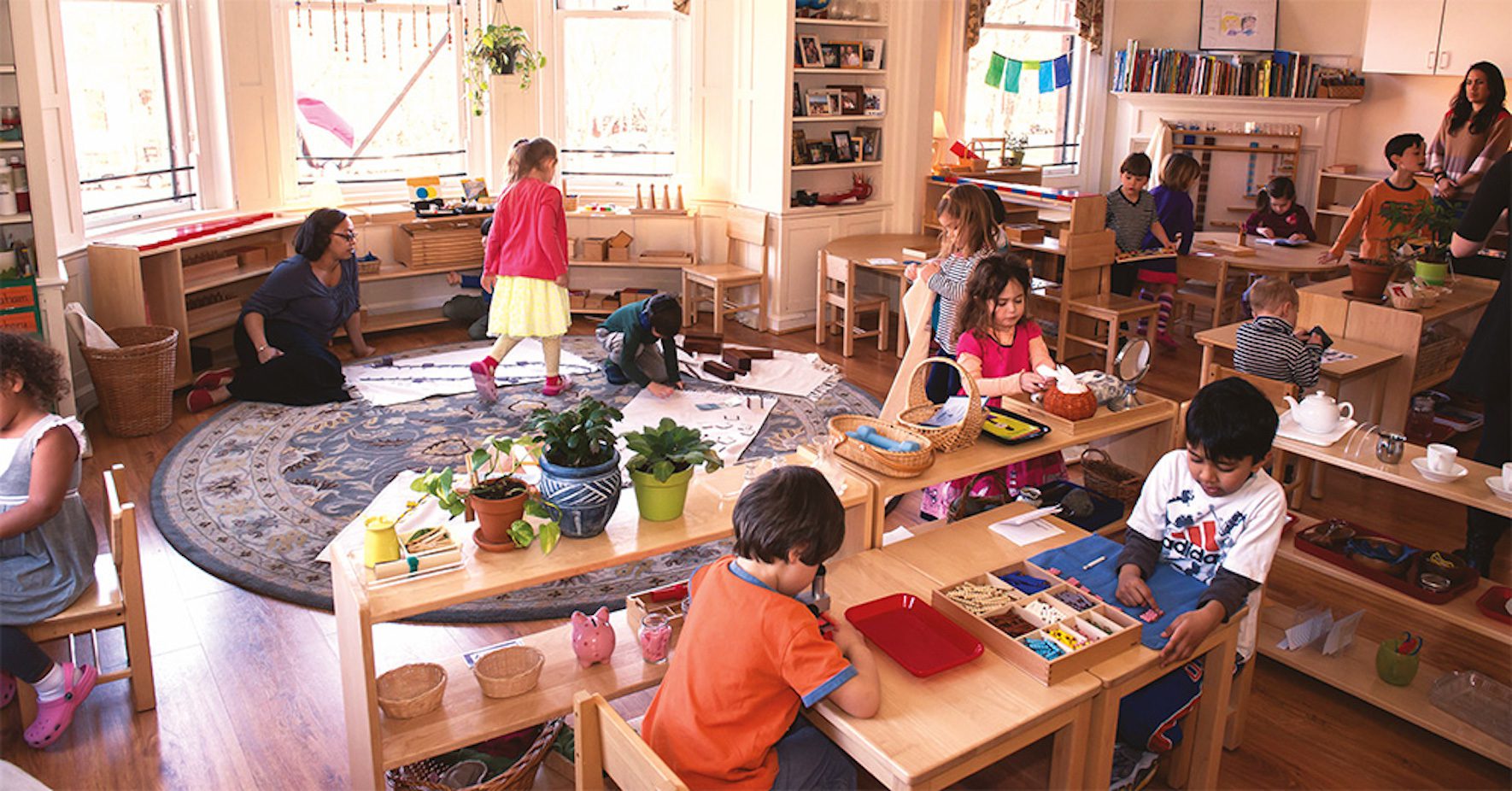
This is an Adobe Acrobat PDF file with a detailed list of the Montessori materials recommended by the Montessori Foundation for an early childhood (ages 2 1/2 to 6) class.
[pdf-embedder url=”https://stage.montessori.org/wp-content/uploads/2021/09/List-of-Recommended-Montessori-Materials-Age-3-to-6-1.pdf” title=”List-of-Recommended-Montessori-Materials-Age-3-to-6″]

A parent wrote, “I am the board president of a Montessori School . Our school is a pre-K through K school. We are considering a move to change the slots we offer. Currently we offer 3 half-day slots and 3 full-day slots as well as 5 half-day and 5 full-day slots. We are the only Montessori school we know of offering 3 day slots. We are considering limiting or cutting the 3 half-day slots (maybe the 3 full-day slots, as well) in part because it is a financial burden on the school but also because the teachers feel it is best for the children for them to be at the school 5 days a week. If you could give us any advice in this area we would really appreciate it. In particular, we are looking for anything in Montessori’s writings that address the issue of the importance of 5-day-a-week attendance. So far we haven’t been able to find anything.”
There is no question that five day programs create the consistency that is so important in developing strong Montessori programs. Three day programs may be attractive to parents seeking Montessori more as a form of play group or child care, goals which are completely reasonable on their part, but run counter to a fine Montessori school’s goal of achieving normalized classes and children who realize the emotional, physical, social, and intellectual gains considered the hallmark of Montessori education.
Adding to that the loss of income that schools experience when they discount tuition for children attending half days or three days out of five, and you have a prescription for financial weakness.
We recommend that Montessori schools who are committed to excellence only offer five-day programs.
We recommend that schools establish one flat fee for any child attending at any age, except perhaps infant/toddler programs, which should be high enough to cover the cost, and regardless of whether the child comes half or full day, or whether he is in primary, elementary, or middle school.
Think of your tuition as a membership fee, like a club or congregation. Members may use some services more or less, but they combine together to support the health of the entire institution. If you cannot bring yourself to literally charge the same for half day as full, consider raising the fee to 85%-90% of full day.
Unless you bring in a separate group of children in the afternoon, which we strongly recommend against, your costs do not go down because a child goes home. By eliminating fees for different lengths of stay or age levels, you eliminate the additional financial and psychological barrier to continued enrollment at key age break points. We strongly recommend that schools organize themselves to provide Montessori all day programs in the same environment (a napping room on the side is a fine idea) with Montessori guides from the time school opens (even if that means 7 am) until it closes.
Further, we recommend that while three year olds may be permitted to attend just half day, that four and five year olds be asked to attend for full day. This has to do with the need for much more than a half day program to achieve the level of concentration and educational gains that we read about in Montessori but so rarely see in practice these days.

Tim Seldin prepared this PowerPoint about Boards in Montessori Schools for the 2013 IMC conference.
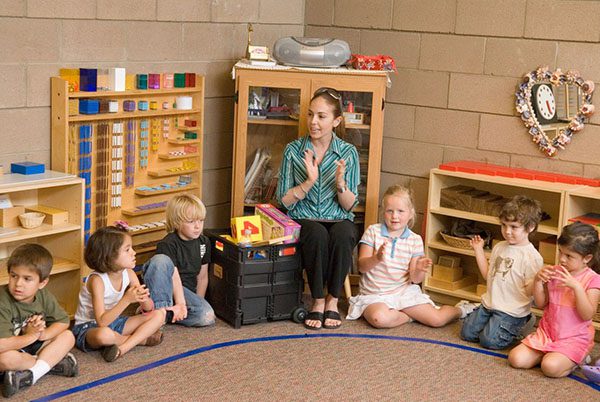
Montessorians are familiar with the daily “Circle” and use this important practice for starting or closing the day, but the Peacemaking Circle or Conferencing approach has become part of restorative practices in schools, workplaces, prisons, and Court systems around the country and throughout the world. Based on ancient practices of aboriginal peoples, this approach creates an intentional space with a particular process designed to:
The more people practice that behavior in circle, the more those habits are strengthened to carry that behavior into other parts of their lives. Create a space and time for participants to voice their thoughts and feelings, to take ownership for their behaviors, connect them to others, and learn from the collective wisdom of the group.
Peacemaking Circles: Creating Peace in Our Schools One Circle at a Time
Presented by Claire J. Salkowski IMC Peace Conference
ADR Specialist and Educational Consultant Nov 4, 2012
Planning the Specifics of the Circle – The Keeper puts together the circle plan answering the following questions:
• Who will be part of the circle?
• What time?
• Where?
• What will be the talking piece?
• If and what will be in the center?
• What opening ceremony will be used?
• What question will be used to generate values for the circle?
• What question will be used for an introduction or check-in round?
• Is there a need for further relationship building before getting into the issues? If so, how will that be done?
• What question(s) will be used to begin the dialog about the key issues?
• What further questions might be useful if the group is not getting deeply enough into the issues?
• What closing ceremony will be used?
Circle Outline
The detail in this outline is provided to offer concrete examples and stimulate creative thinking. It is not intended to be prescriptive. The circle is not a rigid process. It is always important to be responsive in the moment to the needs of the circle participants which may not follow the outline you planned. Nonetheless, it can be useful to have an outline to guide you as a keeper.
Welcome: Welcome everyone to the circle. Thank them for coming. Express appreciation for the willingness to work together in a shared space.
Opening: Openings mark the time and space of the Circle as a space apart from the pace and tone of everyday life. The opening ceremony is designed to help participants center themselves, be reminded of core values, clear negative energies, encourage optimism and honor the presence of everyone there. Lead the group in whatever opening ceremony you have chosen
Explain center: If you have created a centerpiece, identify any items in the center and why they are there.
Explain Talking Piece: Explain that the talking piece is a critical element of creating a space in which all participants can both speak and listen from a deep place of truth. The person holding the talking piece has the opportunity to speak without interruption while everyone else has the opportunity to listen without the need to respond. The talking piece will be passed around the circle from person to person. Only the person holding the talking piece may speak. It is always okay to pass the talking piece without speaking. The keeper may speak without the talking piece if necessary to facilitate the process. If the talking piece has a particular meaning explain that.
Purpose: Remind participants of the purpose of the circle
Introduction/Check-in Round: Tell participants that you are going to pass the talking piece around so that we can all hear how everyone is doing today. Invite participants to introduce themselves if they are not already acquainted. We suggest the keeper share first. People will most likely model their response after the keeper. Be authentic. Pass the talking piece and ask, “How are you feeling today?” “Is there anything you feel is important for us to know about how you are doing?” Sometimes it is useful to pose a question in this round that invites sharing about oneself so the participants get to know one another better.
Values/Guidelines: Before the circle starts place a paper plate or half sheet of paper and a marker at each seat. Ask participants to think of a value they feel would be important in order to feel safe to speak from the heart and listen from the heart. Ask them to write the value on the paper plate or sheet of paper. Pass the talking piece and ask them to share the value they chose, explain why it is important, and place their value in the center of the circle. Keeper models.
After establishing values, develop guidelines for the circle. The guidelines of the Circle are the agreements that participants make with one another about how to behave in the Circle. They establish clear expectations and common ground to provide a space where people feel safe to speak in their authentic voice, connect to others in a good way and ensure a space that is respectful for all. Pass the talking piece and ask participants to name one agreement important to their participation in Circle. (e.g. “Speak only for yourself.” or “Keep body language respectful.”) Write down the suggested guidelines on a sheet of paper or flip chart. When the talking piece has gone all the way around, read the list. Pass the talking piece and ask participants to indicate whether they accept these guidelines. If there are objections explore the objections and the original purpose of the person who proposed that guideline and work to find wording that is acceptable to everyone.
Extensive conversation about the guidelines can be good practice for working through a difference in opinion or perspective in a respectful way. In an on-going circle group the values and guidelines generated at the first circle are brought back to any subsequent circles.
Storytelling round: In some circles it is crucial to take the time for people to share stories from their own lives to increase understanding of one another or to build empathy. Stories often shatter stereotypes or assumptions people have about one another making it possible for them to hear one another more clearly when they discuss sensitive issues later in the circle. The Keeper generally goes first in a storytelling round.
Exploring the topic of the circle: Pass the talking piece, posing a question about the issue or topic that is the purpose of the circle. Alternatively, direct participants in an activity which helps participants connect with their thoughts and feelings on the topic. Follow with multiple rounds reflecting on the experience of the activity or exercise and reflections about the topic. Thank participants for the wisdom shared in the process. Acknowledge the courage that it takes to speak and listen from the heart.
Check-out Round: Pass the talking piece around and ask participants to share their thoughts about the Circle or one word that sums up how they are feeling right now as the Circle comes to a close.
Thanks: Thank everyone for coming and for their efforts to understand themselves and others in a way that allows everyone to be at peace with themselves.
Closing: Lead the circle in a closing ceremony. Closing activities bring closure to the circle, help participants feel centered and mark the ending so that everyone can transition from the reflective circle space back to the outer world. It maybe a poem, quote, song or music or it could be a ritual such as extinguishing a candle flame or ringing a soft bell.
Materials Needed: Determine from the outline all the materials you need to bring to the circle (e.g. paper plates for values, markers, talking piece, center items, readings or other opening materials, the circle outline, etc.)
Circle Prep Sheet for Longer Circles
Preparation
• Co-Keepers:
• Circle Purpose:
• Where and When:
• Talking Piece, center piece and what other things you need to bring:
• Who do you have to talk to and what prep do you do ahead of time:
Circle
• Opening Ceremony/Activity:
• Check-in question:
• Questions for going into guidelines (what you might be able to ask):
• Story telling/Trust Building Question:
• Guiding Questions on the Topic or Issue:
• Guiding question for consensus building, planning or summary round:
• Check-Out round question – what you might be able to ask:
• What “must” be addressed in the circle:
• What is the follow-up:
• Closing Ceremony/Activity:
Circle Prep Sheet for (Shorter) Classroom Circles
Preparation
• Co-Keepers:
• Topic:
• Talking Piece, center piece and what other things you need to bring:
Conducting the Circle
• Opening Ceremony/Activity:
• Quick Check-in round question:
• Guiding Questions on the Topic or Issue:
• Question to elicit Storytelling/Personal experience related to the Topic:
• Questions for Deepening Round(s):
• Question for consensus building/decision making/planning/summary:
• Check-Out round question:
• Closing Ceremony/Activity:
Follow-up
• Decisions/Insights that need to be shared with others:
• Work that needs to be implemented before the next Circle:
Revised and adapted by C.J. Salkowski from Heart of Hope Resource Guide by Kay Pranis and Carolyn Boyes-Watson
CONDUCTING THE CIRCLE
As keepers or facilitators you are responsible for creating and keeping the “form” of the circle. The basic manner of interacting in the circle generally involves use of a talking piece which is passed from member to member during sharing “rounds.” Only the person holding the talking piece may speak and they may do so as long as they have the talking piece. Typically the talking piece is passed around the circle, in order, although the keepers may choose to use a different form of passing the piece. The circle may also use other activities to move the group. These are described more fully below.
Keepers or facilitators act as guides to move the circle through the phases of circle it needs to experience. Note that these phases are flexible depending on the purpose for which a circle has been called. In a school setting, the circle can be used for many purposes. Circles can be used with the children in the classroom, faculties or parent groups. They can be the vehicle for discussions, resolving conflict, celebration, healing or learning about a particular topic.
It is important that all circles include an opening and closing, and that these two elements are always given time and depth.
Four phases of circles – Although the content or topical focus of circles may vary, all circles generally follow four phases. How you facilitate these phases is flexible. For example, a new group may need to spend more time on guidelines and on storytelling rounds. As keeper, trust your instincts on how to structure the circle, and be flexible enough to let the circle move in the way that it needs.
The four phases of circles are:
Phase One – Introductions
Phase Two – Building Trust
Phase Three – Issues
Phase Four – Solutions
Phase One – Introductions
The introductions phase of circle may include the following elements, all of which are designed to create safety and form and to begin to prepare participants for deeper sharing and understanding. This phase generally should include the following:
Welcoming – Make sure everyone is greeted warmly.
Opening ritual – All circles start with an opening ritual that helps us make the transition from the outer world and into the reflective circle space. Openings are designed to help us feel more centered and open to sharing. Openings may involve burning sage or incense which someone either places in the middle of the circle or passes over participants, using a feather to move the smoke around them – allowing people to cleanse themselves of negative energies and to prepare for sharing deeper emotions. They may include a poem, song or meditative music. Consider asking one of the participants (in advance), to offer the opening. With children and adults, I have found that using the Tibetan bells as an initial opening and a final closing, offers a quick way to a begin and end the circle when time is a perplexing concern. If they are used consistently in an on-going group it becomes a valuable ritual in itself. With children they will often ask to ring the bells in order to open or close the circle. We ring the bells three times with a sustained moment to let the sound move out into the group and find its own ending. It creates a reverence for what we are doing and brings us to that place of quiet and peace.
Introductions and check-in – In the first round, the keepers ask participants to introduce themselves by name (perhaps first name only), how they feel, why they are here in circle, and what they hope for.
Seeking consensus around guidelines – If it is a new group, then participants develop guidelines of how they want to be together while in circle (e.g. respect all opinions, confidentiality, etc.) Then, take a complete round of the circle to ensure that each person indicates support of the guidelines. If it is an ongoing circle, then the keeper might review the basic circle guidelines and if invite the group to add any additional guidelines if necessary. Take a full round to be sure everyone has a chance to comment on the guidelines and to demonstrate their support of the final list. Remember that the guidelines are a “living document” and may be revised in circle at any time.
Acknowledgment of those present – Remember to acknowledge those present in circle, especially if the circle is gathered to discuss a difficult topic or resolve a conflict or find healing and resolution for an incident of harm. It takes courage and commitment to participate in circle. Also be sure to acknowledge the volunteers who have helped make the circle happen.
Clarifying the purpose of circle – The keeper summarizes what has been experienced in phase one of the circle, using this summary to further set the tone of the circle and to clarify the purpose of the circle.
Phase Two – Building Trust
Next, the keepers move the circle into deeper sharing as a way of increasing the level of trust among members. This may take a variety of forms. Depending on the nature of the circle, keepers may guide it toward a single or multiple rounds of sharing, and may or may not choose to use other methods of sharing such as ice breakers, art work, individual reflection or small group activities depending on the amount of time available.
Ice breaking – With groups involving young people it might be useful to begin with individual reflection, or sharing in pairs or small groups. Consider using art supplies to having members (individually or as teams), draw representations related to themselves or the purpose of the circle. Or consider using icebreaking activities that are neutral to the purpose of the circle, but which help members to get to know one another as people.
Storytelling round – If the issue or purpose for the circle involves a difficult issue, it may be useful to have a storytelling round. Invite participants to share a personal life experience related to the issue offers (perhaps in a very indirect way.) Storytelling is a powerful way to move beyond masks and appearances and to develop a better understanding of one another. Story telling is a powerful way to share our wisdom with each other and allows us to take in what we might otherwise reject if we were simply “told” in some other form.
Deepening rounds – The circle may move into deepening rounds of sharing. These rounds get to the heart of why the circle was called or if time allows, a topic is explored in depth for further insight and deeper learning. Depending on why it was called, these rounds may include an expression of needs and interests (in the case of a conflict circle), sharing memories and grief (in the case of a healing circle). If small group activities or dyad sharing feels appropriate they may be used here, but always come back to the circle and to sharing in the full circle.
Phase Three – Issues
In this phase, the focus expands from what’s gone wrong or what’s hurting to what can be done to make things right, to promote healing, or to initiate positive change. In many circles, such as those focused on healing, listening may be what’s most needed – giving people a chance to tell their story and to have it received deeply. In other circles, though, exploring options helps break the sense of being stuck in either a painful experience or a self-destructive way of life.
Phase Four – Solutions
Some circles, such as those involved in healing or understanding, do not require decision making. In these circles, the focus of the keeper may be to work toward creating a sense of unity. Other circles do require decision making or resolution of conflict. In these circles the keeper attempts to build consensus by building on each circle participant’s input, until a decision is reached that all members are at least “able to live with.”
Consensus involves an agreement among all participants to “live with the outcome” – to accept a decision or course of action because it promises the best for everyone given the circumstances. Generating consensus involves patience, creativity, candor about interest and concerns, and a willingness to think outside the box. We are challenged to set aside our personal agendas and fixed notions about outcomes, so that something may emerge that is larger than any one person’s preconceived ideas. Consensus is about dialogue, listening and honesty.
To help the group move toward a consensus decision the keep
1. Help participants to identify areas of disagreement,
2. Encourage participants to explore and understand one another’s perspectives, and
3. Work with participants toward final consensus decisions that are as inclusive as possible, and that are respectful of differing viewpoints.
Reaching decisions by consensus often takes more time than other decision making models, such as voting. The strength of the process is that it assures that all participants will “own” and support the decision. In consensus there are no winners and losers, but rather everyone is in agreement and willing to move forward on whatever plan or decision has been devised. When using this process it is important that the group commit to addressing issues or concerns that may be raised on the way to achieving a consensus decision.
Closing
All circles end with a closing ceremony that helps us make the transition from the reflective circle space back to the outer world. Closings are designed to help us feel centered and to bring a sense of closure to the circle. They may include a poem, song or meditative music. Consider asking one of the participants (in advance), to offer the closing.
AFTER THE CIRCLE (FOLLOW UP)
Follow-up is one of the greatest challenges of the successful use of circles. Follow up may include:
• If strong emotions are shared in circle, affected individuals need to be contacted to see how they are doing and ensure that they are getting the support they need.
• Planning one or more follow up circles, if necessary.
• Discussions with people who were not in the circle, but who have relevant information or position to affect issues discussed in circle.
• If agreements are made in the circle, it is important that someone follow up to see if people are accountable to those agreements.
One of the responsibilities of the circle keepers is to attend to follow up. It is not necessary that the keepers handle all follow up activities, only that they ensure that members commit to specific follow up. It is the keepers’ responsibility to follow up with those individuals to ensure that follow up is in fact occurring.
Adapted by C.J. Salkowski From Circle Keepers Manual (draft) by Kay Pranis
For more information or to schedule a circle session or training contact:
Claire J. Salkowski
410-593-9601
410-499-4732

Download PDF of Article: Workbooks – Is there a place for them in Authentic Montessori Education?

It seems to me that independent, scientific proof of the success of the Montessori approach will do a lot of good for Montessori Schools — but it carries inherent dangers as well. When we judge whether something is effective or successful, we need to consider that definition of success in the context of our goals. The goals of Montessori education are substantially different from the goals of mass schooling.
Download PDF of article: How do we judge succces.pdf

Since most of a school’s income comes from tuition, the development of the next year’s budget begins with preparing the best and hopefully most accurate projection of next year’s enrollment at each age level. In this process, you should show enrollment for the year before, the current year, and the year for which you are planning the new budget. Patterns of attrition then can be discussed more objectively. Enrollment takes into consideration feeder schools, increasing interest in the school, future marketing efforts, etc. When preparing a budget, several assumptions are made and should be written on ~ a separate sheet of paper as an explanation of each line item so that the board and administration have a clear rationale for budget changes. Let us look at the budget line by line and list the assumption which would explain the amount on each line.

An income statement otherwise known as a profit and loss statement is a summary of a company’s profit or loss during any one given period of time, such as a month, three months, or one year.
The income statement records all revenues for a business during this given period, as well as the operating expenses for the business. What are income statements used for? You use an income statement to track revenues and expenses so that you can determine the operating performance of your business over a period of time.
Small business owners use these statements to find out what areas of their business are over budget or under budget. Specific items that are causing unexpected expenditures can be pinpointed, such as phone, fax, mail, or supply expenses. Income statements can also track dramatic increases in product returns or cost of goods sold as a percentage of sales.
They also can be used to determine income tax liability. It is very important to format an income statement so that it is appropriate to the business being conducted. Income statements. along with balance sheets, are the most basic elements required by potential lenders, such as banks, investors, and vendors. They will use the financial reporting contained therein to determine credit limits.
Sales: The sales figure represents the amount of revenue generated by the business. The amount recorded here is the total sales, less any product returns or sales discounts.
Cost of goods sold: This number represents the costs directly associated with making or acquiring your products. Costs include materials purchased from outside suppliers used in the manufacture of your product, as well as any internal expenses directly expended in the manufacturing process.
Gross Profit: Gross profit is derived by subtracting the cost of goods sold from net sales. It does not include any operating expenses or income taxes.
Operating Expenses These are the daily expenses incurred in the operation of your school. In this sample, they are divided into two categories: marketing, and general and administrative expenses.
Salaries: These are the salaries plus bonuses and commissions paid to your staff. C
ollateral and promotions: Collateral fees are expenses incurred in the creation or purchase of printed sales materials used by your school in marketing and selling your product.
Advertising: These represent all costs involved in creating and placing print or multi-media advertising.
Other PR & Promotion costs: These include any other costs associated with promoting your school. They may include travel, client meals, professional conferences, equipment rental for presentations, copying, or miscellaneous printing costs.
Rent: These are the fees incurred to rent or lease space.
Utilities: These include costs for heating, air conditioning, electricity, phone equipment rental, and phone usage in connection with your business.
Depreciation: Depreciation is an annual expense that takes into account the loss in value of equipment used in your business. Examples of equipment that may be subject to depreciation includes copiers, computers, printers and fax machines.
Other overhead costs: Expense items that do not fall into other categories cannot be clearly associated with a particular product or function are considered to be other overhead costs. These types of expenses may include insurance, office supplies, or cleaning services.
Other expenses: This is a tabulation of all expenses incurred in running your business, exclusive of taxes or interest expense on interest income, if any. Net income before taxes: This number represents the amount of income earned by a business prior to paying income taxes. This figure is arrived at by subtracting total operating expenses from gross profit.
Taxes: This is the amount of income taxes you owe to the federal government and, if applicable, state and local government taxes.
Net Income This is the amount of money the business has earned after paying income taxes.
Balance Sheets
A balance sheet is a snapshot of a business’ financial condition at a specific moment in time. Usually at the close of an accounting period. A balance sheet compares assets, liabilities, and owners’ or stockholders’ equity.
Assets and liabilities are divided into short- and long-term obligations, including cash accounts such as checking, money market, or government securities.
At any given time, assets must equal liabilities plus owners’ equity. An asset is anything the business owns that has monetary value. Liabilities are the claims of creditors against the assets of the business.
What is a balance sheet used for? A balance sheet helps a small business owner quickly get a handle on the financial strength and capabilities of the business. Is the business in a position to expand? Can the business easily handle the normal financial ebbs and flows of revenues and expenses? Or should the business take immediate steps to bolster cash reserves? Balance sheets can identify and analyze trends, particularly in the area of receivables and payables. Is the receivables cycle lengthening? Can receivables be collected more aggressively? Is some debt uncollectable? Has the business been slowing down payables to forestall an inevitable cash shortage?
Balance sheets, along with income statements, are the most basic elements in providing financial reporting to potential lenders such as banks, investors, and vendors who are considering how much credit to grant the firm.
Assets: Assets are subdivided into current and long-term assets to reflect the ease of liquidating each asset. Cash, for obvious reasons, is considered the most liquid of all assets. Long-term assets, such as real estate or machinery, are less likely to sell overnight or have the capability of being quickly converted into a current asset such as cash.
Current assets: Current assets are any assets that can be easily converted into cash within one calendar year. Examples of current assets would be checking or money market accounts, accounts receivable, and notes receivable that are due within one year’s time. Cash: Money available immediately, such as in checking accounts, is the most liquid of all short-term assets.
Accounts Receivable: This is money owed to the business for purchases made by customers, suppliers, and other vendors. Notes receivables Notes receivables that are due within one year are current assets. Notes that cannot be collected on within one year should be considered long-term assets.
Fixed Assets: Fixed assets include land, buildings. machinery. and vehicles that are used in connection with the business. Land: Land is considered a fixed asset but, unlike other fixed assets, is not depreciated, because land is considered an asset that never wears out. Buildings are categorized as fixed assets and are depreciated over time.
Office Equipment: This includes office equipment such as copiers, fax machines. printers. and computers used in your business.
Machinery: This figure represents machines and equipment used in an industrial plant to produce its product. Examples of machinery might include lathes. conveyor belts, or a printing press.
Vehicles: This would include any vehicles used in your business. Total Fixed Assets: This is the total dollar value all fixed assets in your business, less any accumulated depreciation.
Total Assets is figure represents the total dollar value of both the short-term and long-term assets of your business.
Liabilities and Owners’ Equity This includes all debts and obligations owed by the business to outside creditors, vendors, or banks that are payable within one year, plus the owners’ equity. Often, this side of the balance sheet is simply referred to as “Liabilities.”
Accounts Payable: This is comprised of all short-term obligations owed by your business to creditors, suppliers, and other vendors. Accounts payable can include supplies and materials acquired on credit.
Notes Payable This represents money owed on a short-term collection cycle of one year or less. It may include bank notes, mortgage obligations, or vehicle payments.
Accrued Payroll and Withholding: This includes any earned wages or withholdings that are owed to or for employees but have not yet been paid.
Total Current Liabilities: This is the sum total of all current liabilities owed to creditors that must be paid within a one-year time frame.
Long-term Liabilities These are any debts or obligations owed by the business that are due more than one year out from the current date.
Mortgage Note Payable: This is the balance of a mortgage that extends out beyond the current year. For example. you may have paid off three years of a fifteen-year mortgage note. of which the remaining eleven years, not counting the current year, are considered long-term.
Owners’ equity Sometimes this is referred to as stockholders equity. Owners’ equity is made up of the initial investment in the business as well as any retained earnings that are reinvested in the business. Common stock: This is stock issued as part of the initial or later-stage investment in a business.
Retained earnings: These are earnings reinvested in the business after the deduction of any distributions to shareholders, such as dividend payments.
Total Liabilities and Owners’ Equity: This comprises all debts and monies that are owed to outside creditors, vendors, or banks and the remaining monies that are owed to shareholders, including retained earnings reinvested in the business.
Depreciation
The concept of depreciation is really pretty simple. For example, lets say you purchase a truck for your business. The truck loses value the moment you drive it out of the dealership. The truck is considered an operational asset in running your business. Each year that you own the truck it loses some value, until the truck finally stops running and has no value to the business. Measuring the loss in value of an asset is known as depreciation.
Depreciation is considered an expense and is listed in an income statement under expenses. In addition to vehicles that may be used in your business, you can depreciate office furniture, office equipment, any buildings you own and machinery you use to manufacture products.
Land is not considered an expense, nor can it be depreciated. Land does not wear out like vehicles or equipment. To find the annual depreciation cost for your assets, you need to know the initial cost of the assets. You also need to determine how many years you think the assets will retain some value for your business, In the case of the truck it may only have a useful life of ten years before it wears out and loses all value.
Straight-line Depreciation : Straight-line depreciation is considered to be the most common method of depreciating assets. To compute the amount of annual depreciation expense using the straight-line method requires two numbers: the initial cost of the asset and its estimated useful life. For example, you purchase a truck for $20,000 and expect it to have use in your business for ten years. Using the straight-line method for determining depreciation, you would divide the initial cost of the truck by its useful life.
Formula is initial cost divided by useful life = depreciation per year $20,000 divided by 10 years is $2,000 depreciation a year The $20,000 becomes a depreciation expense that is reported on your income statement under operation expenses at the end of each year. For tax purposes, some accountants prefer to use other methods of accelerating depreciation in order to record larger amounts of depreciation in the early years of the asset to reduce tax bills as soon as possible. You need, additionally, to check the regulations published by the federal Internal Revenue Service and various state revenue authorities for any specific rules regarding depreciation and methods of calculating depreciation for various types of assets.
Book value Depreciation is also reflected on your balance sheet as the difference between the “book” or “carrying” value and the initial price of an asset. You determine this by adding up the accumulated depreciation expense and subtracting it from the initial cost of the equipment. For example, you purchase a truck for $20,000 in 1992. It has an estimated useful life of ten years. The annual depreciation expense is $2,000. It is now December 31, 1994, and you want to show the book value on your balance sheet. Your entry on your balance sheet would have the following line items: Cost of truck acquired on January 1, 1992 = $20,000 Accumulated depreciation expense January 1, 1992 to December 31, 1994 = $2,000 a year for three years = $6,000 Book value = amount of truck cost not allocated to depreciation expense = $14,000 At the end of the tenth year, the book value of the truck will be zero because the truck will have no value
Amortization
In the course of doing business, you will likely acquire what are known as intangible assets. These assets can contribute to the revenue growth of your business and, as such, they can be expensed against these future revenues. An example of an intangible asset is when you buy a patent for an invention. Calculating amortization the formula for calculating the amortization on an intangible asset is similar to the one used for calculating straight-line depreciation. You divide the initial cost of the tangible asset by the estimated useful life of the intangible asset. For example, if it costs $10,000 to acquire a patent and it has an estimated useful life of ten years. the amortized amount per year equals $1 000. The amount of amortization accumulated since the asset was acquired appears on the balance sheet as a deduction under amortized asset.
A. General Objectives
1. To facilitate the conduct of business.
2. To help assure the security of funds.
3. To help maximize the use of funds.
B. Procedural Elements
1. Record keeping and check signing functions should be done by different people to as great an extent as possible.
a. Primary record keeper: School Secretary
b. Check signers preferably limited to the following:
1) Head of School
2) Board President
3) Board Treasurer
Small schools sometimes permit the School Secretary to also sign checks with a second signature.
2. Signature limits for checks.
a. Double signature required for all amounts.
b. Amounts greater than $5OO require an officer’s signature.
3. All disbursements should be by check.
a. No checks should be written for cash.
4. An itemized receipt as voucher required for all disbursements.
5. No banking or courtesy functions should be performed.
6. Two bank accounts should be established.
a. Checking.
b. Savings.
7. All deposits should be made to the savings account
a. Washouts are a possible exception 8. All receipts should be deposited daily.
a. Cash receipts should be discouraged
8. All transactions should be posted daily.
9. A transfer from the savings account eo the checking account should be made at the beginning of the month to cover the coming month’s cash requirements.
10. Savings withdrawals should require the signatures of two officers. ~
11. The record keeper should be bonded, especially if entrusted with check signing responsibility.
12. Bank accounts should be reconciled and compared with records on a monthly basis by a non-employee.
13. An audit committee of board members should review financial results and records at least once a year, and make a report to the full Board and Membership.
14. The above responsibilities should be incorporated into employee job descriptions.
C. THE FOLLOWING CYCLES OF PERIODIC EVENTS ARE RECOMMENDED TO MAINTAIN THE SYSTEM
1. Daily cycle
a. Post all transactions.
b. Deposit all receipts.
c. Balance checkbook.
2. Weekly
a. Review records (interim).
3. Monthly
a. Close records.
b. Post reporting statements.
c. Reconcile bank accounts.
d. Compare statements to records.
e. Compare results to budget.
f. Determine cash needs for coming month.
g. Transfer funds from savings co checking accounts.
h. Report to Board on financial status.
4. Periodic.
a. Spot review records and accounts.
5. Annually.
a. Review and report by audit committee of board members
 Montessori Family Alliance School Group Membership (Print & Digital 2026 1/2 year pricing)
Original price was: $30.00.$15.00Current price is: $15.00.
Montessori Family Alliance School Group Membership (Print & Digital 2026 1/2 year pricing)
Original price was: $30.00.$15.00Current price is: $15.00.
 The Montessori Way, Revised and Expanded: An Education for Life; A Comprehensive Guide for Parents and Teachers
$25.00
The Montessori Way, Revised and Expanded: An Education for Life; A Comprehensive Guide for Parents and Teachers
$25.00
 The Montessori Child: A Parent's Guide to Raising Capable Children with Creative Minds and Compassionate Hearts (The Parents' Guide to Montessori)
$20.00
The Montessori Child: A Parent's Guide to Raising Capable Children with Creative Minds and Compassionate Hearts (The Parents' Guide to Montessori)
$20.00
 The Montessori Toddler: A Parent's Guide to Raising a Curious and Responsible Human Being (The Parents' Guide to Montessori)
$20.00
The Montessori Toddler: A Parent's Guide to Raising a Curious and Responsible Human Being (The Parents' Guide to Montessori)
$20.00
 Montessori in Action: Building Resilient Montessori Schools 1st Edition
$29.95
Montessori in Action: Building Resilient Montessori Schools 1st Edition
$29.95