
Summer Programs for Montessori Schools
This is a PDF of a PowerPoint presentation about organizing summer programs.

This is a PDF of a PowerPoint presentation about organizing summer programs.
The Challenge of Mathematics
We use mathematics in almost every aspect of our everyday lives. As Dr. Montessori would often point out, much of our civilization is based upon mathematics. Science and technology depends upon mathematical calculations. Computers are totally mathematical devices. Businesses, research, and governmental agencies all rely upon the collection and interpretation of data and statistics. Art and music have direct connections to math. Despite its importance and many attempts at educational reform, mathematics continues to be a subject that many students find difficult.
Dr. Montessori observed that reason so many students struggle with math stems from the way it has traditionally been taught.
Numbers are symbols that help us to think about things, just as words do. When taught by workbook, text, and blackboard, math is almost totally abstract. Students who learn math by rote memory often have a fragile understanding and little or no ability to put their skills to use in everyday life. Learning comes much more easily when they work with concrete educational materials that graphically show what is taking place in a given mathematical process.
The study of math can become a fascinating occupation if it is begun at an early age and taught with hands-on experience and concrete materials to make abstract concepts clear.
Montessori’s Concrete Approach to Math
Beginning in the early childhood years, Montessori students use hands-on learning materials that make abstract concepts clear and concrete. Working with these fascinating educational tools, they can literally see and explore what is going on as each math process unfolds before their eyes. This approach to teaching mathematics offers a clear and logical strategy for helping students understand and develop a sound foundation in mathematics and geometry.
At the Children House level, children as young as three and four are form their first concepts of quantity and number symbols, and go on to enthusiastically explore the decimal system and arithmetical operations like addition and subtraction with materials such as the Golden Beads. The goal is to provide a concrete representation of a abstract idea, such as carrying forward when we add numbers greater than nine, which allows children to develop a clear inner image of mathematical concepts, such as how big is a thousand, what is meant by the ‘hundreds’ column, and what is taking place when we divide one number by another. This is consistent with everything that we know from research about the way young children think and learn.
Yes, mastering many math concepts will also require a certain degree of raw practice and, even in Montessori, students eventually have to memorize their math facts, but the process is greatly facilitated by helping them to develop a much more concrete grasp of the process at work. And yes, even in Montessori, some children will find math to be easy, while others may find it to be more challenging. The great strength of the Montessori approach is its ability to individualize to meet children’s different learning styles, pace of development, interests, and basic needs.
“Unified” Math
The Montessori math curriculum is based on the European tradition of “Unified Math,” which has only recently been discovered by leading American educators. Unified Math introduces elementary students to the study of the fundamentals of algebra, geometry, logic, and statistics along with the principles of arithmetic. This study continues over the years, weaving together subjects that traditional schools normally ignore until the secondary grades.
In operations concerned with measurement, geometry shows them how to perform their calculations. In operations concerned with figures, algebra gives a system of still more abstract symbols by means of which more complicated relationships can be comprehended. The calculations of area and volume, of squares and square roots are examples in which algebra, arithmetic, and geometry are all involved. For Montessori students, arithmetic, algebra, and plane and solid geometry have never been arbitrarily separated. Four- and five-year-old Montessori children can name geometric forms that most adults wouldn’t recognize.
Montessori mathematics includes a careful study of the practical application of mathematics in everyday life, such as measurement, handling finances, making economic comparisons, or in gathering data and statistical analyses.
The Elementary Years
Many parents and teachers think that the Montessori math materials are all very well for children under six, but when they go on to the elementary grades students shouldn’t need these artificial ‘toys’ or ‘crutches’. This represents an unfortunate misunderstanding of how children this age think and learn. Until a child can think at a high level of abstraction, which rarely occurs before early adolescence, he depends upon concrete experience and practice over a number of years before mathematical concepts begin to take firm root in his mind.
During the elementary years children almost never possess the capacity to think abstractly. Everything is either based on concrete experience or is “magic and mystery.” Math by its very nature is abstract. Montessori math uses the concrete mathematical material to help the child develop an inner picture of mathematics that will last a lifetime.
Naturally the child can’t depend on the materials forever. Can you see your child at age sixteen walking in to take the SATs carrying the Golden Beads? Dr. Montessori compared them to an airport runway which provides a smooth surface on which the plane can roll faster and faster until its built up enough speed to fly. The entire purpose of the Montessori Math curriculum is to make the abstract concrete, until the child can close her eyes and visualize mathematical processes at work. Step by step, the materials become less concrete and more symbolic. Step by step, the child is challenged to demonstrate her understanding by teaching what she’s learned to younger children, which also tends to reinforce and clarify the tutor’s grasp on the subject as much as teach something to the one being tutored.
Elementary Montessori students continue to gain hands-on experience by applying math in a wide range of projects, activities, and challenges, such as graphing the daily temperature and computing the average for each month, or adjusting the quantities called for in a recipe for a larger number of people. Because children love to work outdoors, teachers try to prepare tasks that use the school grounds whenever possible. For example, using simple geometry, children can determine the height of a tree or measure the dimensions of the buildings. They prepare scale drawings, calculate area and volume, construct three-dimensional geometric models, and build scale models of historical devices and structures.
Summary
It has often been said that either we find mathematics elegant in its logic, or terribly confusing. Our goal is at least to avoid the latter, and attempt to lead as many students as possible to discover that the first is indeed correct.
The Red and Blue Rods are the young child’s first introduction to Mathematics. These rods have the same dimensions as the Red Rods found in the Sensorial area of the Montessori classroom. Here, however, the rods are painted in alternating patterns of red and blue to distinguish their length in segments of one tenth of a meter (a decimeter). The first rod is one decimeter long and is just painted red. The second is two decimeters long, and is divided into two segments, one red and one blue. This continues through all ten rods.
As with the Red Rods, the children arrange the Red and Blue Number Rods into a stair from largest to smallest. Then they count each alternating colored segment. One of the insights that children begin to get from working with the rods is the nature of addition and the concept that two numbers can add to another. For example, when the children place the “one” number rod at the end of the “two” rod, they create a new rod that is the same length as the “three” rod just above. They explore similar relationships with all of the numbers 1 to 10. For example, they discover that the “four” and the “six” together are the same length as the “ten”.
Montessori found that young children find it difficult in the beginning to grasp the concepts of numbers by counting separate objects. While they can learn to “count” by rote, reciting the sequence of numbers from one to ten, most cannot easily grasp the difference between one quantity and another when looking at more than three or four objects. It’s almost as if they are thinking: “One, two, three….Many!” This is easily avoided by allowing children to visualize the concept of numbers and quantity by using this series of segmented rods of increasing length in the beginning, rather than trying to teach them to count sets of separate objects.
The children also use the sandpaper numerals to label each number rod. These tablets are designed and used in the same way as the Sandpaper Letters described in the section on Language Arts above.
The Spindle Boxes provide a nicely structured way for young children to make the next step in coming to understand the concepts of number and quantity. The material is made up of two wooden boxes which are divided into ten compartments, each labeled with the numerals from zero through nine. In a separate box or basket are forty-five wooden spindles used for counting. The exercises calls for the child to count out the correct number of spindles to go in each compartment: one, two, three…all the way to nine. Naturally the compartment labeled “0” is left empty, teaching the child at a very early age the concept of zero as an empty set. If the child has counted correctly there will not be any spindles left over when she fills up the compartment labeled “9”.
The Number Cards and Counters: After considerable experience with the more structured introductions to number and quantity created by the Red and Blue Number Rods and the Spindle Boxes, the child is finally ready to tackle the task of associating cards on which the numerals have been printed and objects to count.
The child begins by arranging the numeral cards in order from 1 to 10 Then she begin to count out the appropriate number of counters, placing them in parallel rows of two after the number one. Obviously, even numbers end with an even number of counters in the bottom row; odd numbers only have one. This begins to focus the child’s attention on the concept of odd and even numbers.
The Golden Beads: An Introduction to the Decimal System: Dr. Montessori developed a wonderful educational material to concretely illustrate the nature of the decimal system and its basic operations called the Golden Beads. The name comes from the beautiful color used for the enamel finish on this set of one centimeter diameter glass beads.
A single bead by itself represents a “unit of one”. Thus the quantity five would be represented by a collection of five unit beads.
Ten unit beads strung together on a length of wire represents a “unit of ten.” Three ten bars collected together actually consists of thirty unit beads, or three “tens”. The children quickly discover that ten unit beads is exactly the same as one ten-bar. They also begin to count not only the individual unit beads, but by units of ten: “ten, twenty, thirty…one hundred.”
Ten ten-bead bars naturally equals the quantity one hundred. Units of one hundred are made-up of ten ten-bead bars laid side by side to form a square, and wired together as a unit.
Ten hundred squares stacked one on top of the other form a square containing a thousand unit beads. They are permanently wired together to form the thousand cube.
Using these concrete materials, even very young children can build and work with great numbers. In a typical early lesson with the Golden Beads, the teacher might challenge the child to “Bring me three thousands, five hundreds, six tens, and one unit.” While they will also work with prepared problem cards, children often enjoy thinking up numbers for themselves..
The Number Cards: This special set of number cards is used to help the children learn to read numbers up to 9,999. Used to label the units, tens, hundreds, and thousands columns in which the Golden Beads are laid out, they help the children to begin to understand the concept of the hierarchy of the decimal quantities and how we borrow and exchange from the next column in mathematics operations. Notice how the size of the cards and the color coding to represent units, tens, hundreds, and thousands, makes it easy for children to understand how large quantities are written out from left to right, and worked with in vertical columns.
The Bank Game: The Bank is a name given to a collection of Golden bead materials, which should include enough units, ten bars, hundred squares, and thousand cubes to allow several children to each create large numbers.
In one of the first exercises, the children explore the equivalencies of the decimal system. They learn that ten units can be exchanged at the bank for a ten bar, and that a ten bar can be exchanged for ten units. They also find that ten tens can be exchanged for a hundred square, ten hundreds for a thousand, and that each can in turn be broken down into its equivalent in the smaller quantity.
Using the Golden Bead material, the children can build two or more large numbers and add them together. By going through the steps of addition in this very concrete manner, the children a clear impression about what addition means. They also come to understand the process of exchanging, as they count the new quantities in each of the columns, and trade in groups of ten units for one ten bar which they place in the tens columns, ten bars for one hundred, and ten hundreds for one thousand.
Once they understand how to add with the Golden Beads, Montessori children begin to use them to multiply, subtract, and divide. For example, to divide the quality 3,333 by three, a child would set out three wooden skittles, and, beginning with the largest quantity, in this case the thousand cubes, he gives one thousand to each skittle. He continues on with the hundreds, tens, and units. If the child were challenged to divide this same quantity by four, he would begin by exchanging the 3 thousands for 30 hundred squares, which he would distribute equally. After placing 6 thousands beneath each of the 3 skittles, he exchanges the remaining 2 hundreds for 20 ten bars. This process of exchanging continues until the final answer is derived.
The Short Bead Stair: Using the Golden Bead material, the child see the numbers one through nine represented as individual units. But, as we mentioned above, although the child can count the beads one at a time, it takes many years before most children can recognize and really understand the idea of numbers greater than three except by one to one correspondence. To help the child truly begin to grasp the idea of quantities from two through nine, Dr. Montessori prepared a set of colored glass beads, one centimeter in diameter, in which each quantity is represented by the appropriate number of individual beads wired together as a bar with a specific, easily recognizable color. In this material, a one is represented by a single red bead, a two by two green beads strung together, the quantity three by three pink beads, and so on, up through the ten golden beads that represent a unit of ten.
The children work with the Short Bead Stair for many years, using them to add and subtract, exchange, borrow, explore multiples, and many other arithmetic processes. For example, to multiply 9 by 8, the children would lay out 8 nine-bars or 9 eight-bars. By counting the result, they can check their work.
The Teens and Tens Boards: This material is made up of two different sets of boards used by the child to explore the nature of quantities and numbers greater than nine. Each set consists of two boards, which are laid in a vertical row. The two boards are divided into nine sections, each of which is fitted with a thin frame into which the children can slide wooden cards on which the numbers 1 through 9 have been printed. Numbers have also been printed on the surface of the board, spaced so that when the cards are slid into the frame they will cover up one of the two digits.
On the Teens Boards, the number 10 is printed in the nine spaces created by the frames. The children arrange the number cards from 1 to 9 in order, and slide them into the frames, creating the numbers 11, 12, 13..and so on through 19. Using the “Ten Bead Bars” and the Short Bead Stair material described above, the children lay out the numbers 11 through 19 concretely. For example, the number eighteen would be formed by placing one ten bar in the tens column and one brown eight bar in the unit column. This gives them a very clear picture of how the teens are formed and written: ten and one is eleven, ten and two is twelve, etc.
On the Tens Boards, the numbers 10, 20, 30, 40 through 90 are printed in the nine spaces created by the frames. They use the individual number cards to form numbers in the tens, such as 53, 24, 79, etc. and use the Golden Bead tens and unit beads to build their concrete representations along side.
The Hundred Board challenges the young child who can count aloud from one to one hundred to lay out the numerals in the same sequence. The Board is a square divided into ten rows with ten small squares along each row. The children work with a set of one hundred wooden tiles that are labeled from 1 through 100. They spread them out on the rug, arrange them in numerical order, and place them, one tile at a time, on the Hundred Board, working from the upper left corner along each row to the right, down to next row, and so on until complete. When they are comfortable with this, they attempt the same exercise by filling in the squares on a blank chart drawn to duplicate the surface of the hundred board.
The Hundred and Thousand Chain: Another way that the children practice their counting and develop an increasingly clear concept of how big is a hundred and a thousand, is the working with the chains. These are long chains created by connecting 10 ten bars together to form a chain 100 beads long, or in the case of the thousand chain, by connection 100 ten bars together to form a chain of 1,000. The children lay the chains out, duplicating them by creating a second line of individual ten bars. At the far end, they place the hundred square or thousand cube, as appropriate. When working with the Thousand Chain, they also set out hundred squares after every 10 ten bars along the chain, representing that the next hundred has been crossed. In another exercise, they work with number cards printed with the numbers 1 to 100 or 1 to 1,000 counting by tens. The children sort them in order and place them along the chain. They tend to be quite impressed when they first see the Thousand Chain laid out across the classroom floor.
The Squaring and Cubing Material: Following the same concept, the Squaring and Cubing Material introduces the child to the concept of skip counting by ones, twos, three, fours, etc., through tens. Each chain is constructed by connecting multiples of the short bead stair, using the same color scheme that the children learned before: red units, green two bead bars, pink three bead bar, etc. The material also introduces the children to the concept of the squares and cubes of the numbers one through ten. There are two chains for each number: one set representing the squares of the numbers one through ten, and the other representing the cubes. Thus, the square of five is shown as a chain of five bead bars (the square of 5=25), and the cube as a chain of twenty-five five bead bars (five cubed=125).
(NOTE; photo close up of squares and cubes 1-10 laid side by side) The material also includes a set of bead bars connected to show the squares and cubes of the numbers as actual squares and cubes. The children use the bead chains to skip count, working with number arrows similar to those used with the Hundreds and Thousand Chains.
The Fraction Material: As the children become more and more comfortable with the Golden Beads, they eventually begin to ask whether there is anything smaller than the unit. The Fraction Skittles, and many experiences in the classroom, gradually introduce them to the concept of a quarter, half, and whole. The Fraction Circles take this concept much further. It is a set of ten metal frames into which are set ten circles, one left intact, one divided into two parts, another into thirds, fourths, fifths through tenths.
The children learn the terminology, how to write fractions out as figures, and begin to explore first the concepts of equivalence (2/4 = 1/2) and basic operations with fractions (1/2 + 2/4=1).
The Stamp Game represents the first step on the Second Plane of Abstraction in the Montessori Math curriculum. Where in the First Plane, the Golden Beads and Colored Bead Bars concretely represented quantities as three dimensional objects, the materials used in the second plane are much more abstract. At this level they are essentially tokens, symbolic counters identical in size and differing only in color and in how they are labeled, but which represent different quantities. The Stamp Game is a box containing little wooden tiles (originally Montessori used paper squares that looked like postage stamps). Some are colored green and labeled “1” to show that they are units. Some are colored blue and labeled “10” to show that each represents a set of ten units. Some are colored red and labeled “100”, and the last set is colored green and labeled “1,000” to show that each represents a unit of 1,000 units.
The children use the Stamps just like they did the Golden Beads, laying out quantities using the symbolic tokens and adding them together, subtracting, multiply, and dividing. By this level, the children are normally writing their work out on paper and using the Stamps to help them visualize the process. For example, to subtract 822 from 1,000, the child would create four rows of stamps, beginning on the left with the thousands, then the hundreds, the tens, and the units. In to the top row she would place a single thousand stamp in the thousand column. Below, she would place nothing in the thousand column, eight hundreds stamps in the hundred column, two ten stamps in the tens column, and two units in the unit column. Beginning with the units, the child seeks to take two stamps away from the quantity above in that column. Since the column is empty, she turns to the row to the left (the tens), which is also empty. Eventually she finds that her only choice is to exchange the one thousand stamp for 10 hundreds, which she places in the tens column. Now she exchange one of the hundreds for 10 tens, which she places in the tens column. Finally, she is ready to borrow from the tens column to solve her problem. She exchanges one ten from the tens column and exchanges it for 10 units and places them in the unit column in the top row. From this ten, she takes away two, leaving 8 units. This process continues, until she finds that her top row contains the correct answer: no thousands, 2 hundreds, 8 tens, and 8 units ( 1,000 – 822 = 288).
The Short Multiplication offers another pathway to abstraction the child lays out individual unit beads on a board organized into nine rows of nine shallow holes. The child lays out the beads in rows, for example 4 * 8 would be four rows of eight beads per row.
The Division Board is similar, except that here each vertical column of shallow holes represents one equal share, where a quantity is divided into two or more groups. The child places one small skittle at the top of each column to mark the number of shares that will be in her divisor; to divide 24 by 6, she begins by placing 6 skittles along the top. Then she counts out the number of beads that she wants to divide and begins to distribute them, placing one bead in each hole from the top left to right and then down a row, until she finally has shared her quantity equally among the vertical columns. Any beads left over are her “remainder.”
The passage to abstraction: By this stage the children are recording their work on paper, although many won’t be able to solve the same problems if asked to work with paper and pencil alone without the visual aid of the Montessori materials..
Montessori uses a wide range of parallel materials and exercises to help the child extend his knowledge and gradually memorize the basic math facts that every one of us is expected to know. As parents, you will eventually begin to hear about materials with odd names like the Snake Game, the Addition and Subtraction Strip Boards, the Negative Snake Game.
Space doesn’t allow us to describe every one of the Montessori Math materials, but your child would probably be delighted to introduce them to you.
Children work on mastering their addition facts with the Addition Strip Board.
There are also an involved series of Memorization Charts and associated exercises that help the children in their final stages of mastering the addition, subtraction, multiplication, and division charts. The young fellow in this picture is working on memorizing his subtraction facts, exploring the combinations when the numbers 1 to 18 are subtracted from one another.
When the children have begun to show that they are ready for still more abstract exercises, they’re introduced to another series of math materials at the next plane of abstraction.
For example, the Bead Frames (or abacus) challenge the child to solve problems in a slightly more abstract process. The Short Bead Frame (shown) allows the child to work with quantities up to 9,999. The Long Bead Frame uses quantities as large as 9,999,999.
The Long Division Material (Racks and Tubes) allows the children to solve complex problems in long division. Its not unusual for elementary students to work through problems using numbers much larger than a trillion.
The Multiplication Checkerboard is still another more advanced material that introduces Long Multiplication.
(Slide: girl with geometry sticks) Geometry continues on from its early introduction in the Sensorial curriculum into the elementary level. This young lady is exploring angle and the construction of different geometric figures.
(Slide child with geometry definition cards) At the elementary level, the children move on beyond learning the names of geometric figures to mastering the definitions as well. they also begin to construct geometric forms with protractor and compass.
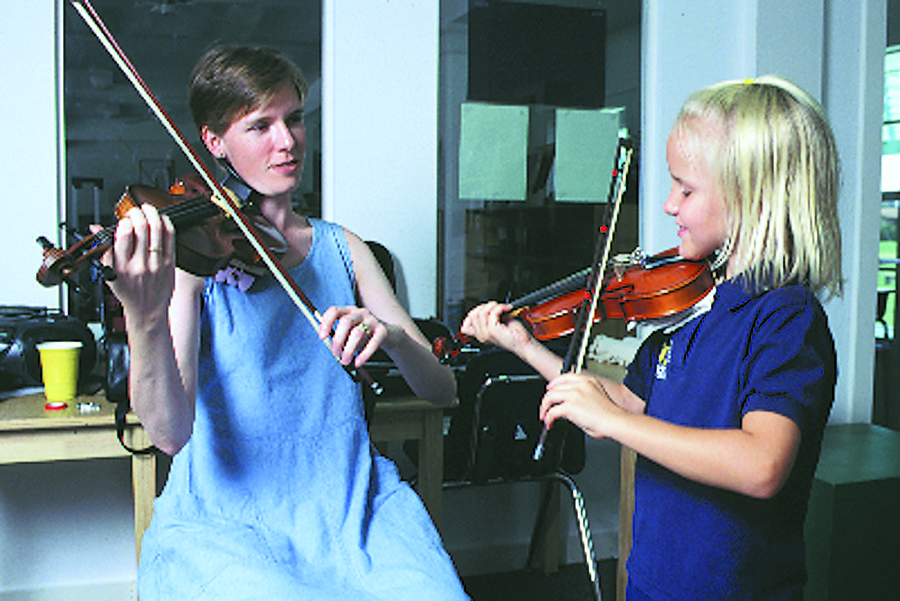

On the other hand, these “specialist” programs often leave Montessori educators concerned and frustrated. Why?
First, salaries for art, music, movement and foreign language teachers are an additional burden on limited school operating budgets.
Secondly, scheduling different specialists among several classrooms often becomes a logistical challenge. Special classes typically end up interrupting the children’s morning work cycle, at the cost of their focus and concentration on extended projects. Due to parental expectations, many schools feel compelled to shuffle the children off to their next specialist, whether or not it would be their individual preference at that time.
Finally, both parents and teachers tend to become frustrated with uneven program quality and at times lack of real skill development over the years. I’ve heard many a Montessori parent express the opinion that their children are doing the same things in foreign language that they I’ve done for several years previously.
The Studio Program model is one approach that may allow you to enhance your school’s co-curricular activities program, while reducing or eliminating interruptions in the children’s prime work cycles by concentrating special classes in the late morning and afternoon. Finally, by moving specialist activities out of the mornings into the afternoons, it is possible to extend them beyond the present school day, thereby making high quality programs available to all students in place of the typically mediocre after-school child care program.
Studio programs are typically offered at different times for the early childhood and elementary levels.
For the preprimary classes, classes may be offered in to blocks: one in the late morning and another just after lunch
For the elementary students, classes will meet either once or twice a week as shown on the tentative schedule that follows.
An optional Studio Session will be held after school, offering additional courses and activities to students who are interested and able to stay. With perhaps a few exceptions involving some extraordinary activity, such as riding lessons, there will not be an additional fee for the after school studio activities.
At the elementary level, classes will be scheduled in four-week blocks. Students and parents will sign up for two-month’s of classes at a time by registering on sheets prepared for each studio. Space in each class will naturally be limited, and while there will hopefully always be several choices available in each period, we will not always be able to guarantee that every student will be able to enroll in his or her first choice.
Some classes will be organized just for students, some will be designed for students and parents together, and some may be scheduled for just adult members of the Countryside community.
Our intention is to offer over the year a wide-range of electives, some four-week classes basically fitting together to create a course that will run for the entire year, but organized into independent month-long units. Classes will be organized in the areas of art, music, dance, drama, foreign languages, computer education, physical education, academic enrichment programs, and clubs. The scouts could, as one example, fit into the studio program.
Classes can be taught by any specialist teachers on your school’s faculty (such as art, music, drama, Spanish, and movement/physical education), by the elementary teachers who can be expected to offer various clubs and programs during at least two or three of the blocks during the afternoon, by guest instructors can either be hired on an hourly basis or enticed into donating their time for a few hours a week over one or two months, and by interested parents.
The Studio Program Coordinating Committee
Interested parents and faculty members can invited to join a standing committee which will assist the administration in planning and operating the studio program. This committee will normally be a working committee (rather than one which recommends policy), reporting directly to the Head of School.
A sample weekly schedule
| Monday | Tuesday | Wednesday | Thursday | Friday | |
| 11:15 | Primary A | Primary A | Primary A | Primary A | Primary A |
| 12:00 | |||||
| 12:00 | Lunch | Lunch | Lunch | Lunch | Lunch |
| 12:30 | |||||
| 12:30 | Primary B | Primary B | Primary B | Primary B | Primary B |
| 1:15 | |||||
| 1:15 | Break | Break | Break | Break | Break |
| 1:45 | |||||
| 1:45 | Elementary | Elementary | Elementary | Elementary | Special |
| 3:00 | A | B | A | B | Events |
| 3:00 | Class meetings/ Dismissal/ Free play ——————–> | ||||
| 3:30 | |||||
| 3:30 | Elementary | Elementary | Elementary | Elementary | Elementary |
| 5:00 | C | D | C | D | E |
A few examples of studio programs
Student Clubs and activities
A student newspaper
Student government (Grades 1-7)
Yearbook
Kids’ Court/Future Lawyers Club and Moot court
Future doctors/holistic healers of America
Career club
Stamp collecting club
Outdoor model railroad club
Future architects club
Cooking club
Chess club
Veterinarian’s clinic
Young peacemakers
Community service club
Academic enrichment
French club
Russian cub
Marine biology
Young naturalists
Gardening
Future farmers club
First aid
Open computer lab
Astronomy club
Math club
History club
Sports and Physical Ed
Track and field
Tennis
Golf
Tee-ball
Soccer
Swimming
Basketball
Horseback riding
Ice skating
Yoga
Tai Chi
Massage
Bicycling club/ bike repair
Skin diving
Volleyball
The Arts
Creative drama
Countryside Players
Chorus
Folk dance
Computer keyboarding class
Computer art
Desktop publishing
Photography
Video production
Needle point
Suzuki violin group lessons
Wood working
Open art studio
Sculpture
Drawing and painting
Pottery
Print making
Folk crafts
Jewelry making

The Barrie School
Curriculum Guide: Age 3 — 12
A Philosophy Of Curriculum
by Tim Seldin, Headmaster, 1971-93
The Barrie School is designed to prepare children both for university and for life.
There are three key ideas that are central to our mission as a school:
Recognizing this, we are engaged in a process of facilitating the development of self-actualized renaissance men and women.
Such people are teacher-proof. They have learned how to learn, and see school as a center of an enjoyable lifelong experience. Children with values such as these will normally go on to college, perhaps after first taking a year off for work or travel, as the natural extension of their previous education.
For some time we have been struggling to resolve the debate over the appropriate balance between our objective of cultivating the child’s spontaneous interest in learning, and the expectations of parents and society.
Normally a school is perceived as the transmitter of culture from one generation to the next through a formal curriculum. This is certainly an important part of our mission. However, as a Montessori school, we are equally committed to the development of responsible members of the human family, and the protection of the child’s fragile spark of curiosity and creativity.
Most children know far more about the world before they start school then the will show a few years later when they have learned to be passive learners who don’t trust their senses, intellect, and imagination. Therefore, our greatest task is to help our students to rediscover their brain’s ability to think, intuit, and discover; to develop a sense of independence, sequence, and order; to learn how to learn.
At the same time, as an independent school, parents come to us and pay a great deal of money in tuition for services available from the government schools for which they have already paid through their taxes.
They come to us seeking quality programs and services!
Their highest priorities are:
1. academic excellence
2. character development
Clearly they expect their children to be well prepared for university, but beyond this, they are looking for a school experience that will offer something special that will make the school experience intellectually exciting and develop a wide-range of talents and interests.
The delivery of these services is difficult to document from our end, and from the parent’s end, even more difficult to evaluate.
Thus, parents expect to be kept abreast of the programs that address these goals, and, their children’s progress in each program.
As a result, we work carefully to maintain this delicate balance.
Our curriculum can be thought of as having two aspects:
1. The school’s basic expectations for what will be first introduced, worked on, or reviewed and targeted for mastery by 85%-90% of all students at each age/grade level.
2. The lessons that arise out of the children’s natural curiosity. While we follow a planned syllabus to give us cohesion and structure, we should never be satisfied with a year spent giving students set lessons from the prescribed syllabus: in order to satisfy, and at the same time, stimulate the children’s interest, we have to farther and faster than that! By providing the children with all sorts of books, pictures, specimens, and artifacts, we can almost guarantee that we will stir up their curiosity and encourage them to expand their scope of learning horizontally. By this, we mean to suggest that, instead of moving on through the set curriculum more quickly, that we allow the children to explore additional related topics that capture their interest.
Our curriculum should be designed to intrigue children and develop in them a lifelong love of learning. No topic is presented just once and forgotten; lessons are introduced quite concretely in the early years and are reintroduced later at increasing degrees of complexity and abstraction. Students at The Barrie School gain experience and develop skills at one level of understanding, which prepares them for more complex lessons at the next level.
The spiral of the Montessori curriculum has no end, and the depth to which any topic can be pursued is limited only by a student’s interests and ability. At the same time, our expectations as a college preparatory school are quite high; challenging each student to his/her fullest individual potential, and establishing a clear standard of achievement and quality of thought and work. We encourage accelerated students to expand their studies horizontally, researching topics at greater depth and a more sophisticated level of thought and analysis.
Our course of study is consciously multi-disciplinary. It is an examination of the natural world and the human experience that interconnects the traditionally separate subject disciplines. Units of study often cut across the curriculum, weaving together, as one example, the land, flora and fauna, folk tales, art, dance, poetry, architecture, history, everyday life, and cooking of a country under study.
Our curriculum has no outer limits except for humanity’s knowledge and imagination. At the same time, our core curriculum has been carefully structured to establish benchmarks for achievement of the normal student by the end of each level within the Academy. While we recognize that some students may not, for one reason or another, keep up with all of the benchmarks for his or her age level, they define a standard of our expectations.
At its finest, Montessori is an incredibly elaborate model of education. We don’t advocate using all these tricks and devices simply to make the school day pass more pleasantly or to better prepare students for their standardized tests at the end of the year. These are only secondary objectives. The real aim of education as we see it at The Barrie School is to prepare children to live lives filled with personal satisfaction, as responsible, concerned citizens of the Earth. An important element in achieving that goal is the development of knowledge and understanding about the world today: civilization. However, along with this must come self knowledge, self-respect, compassion, and a mind and heart open to new ideas and information. Our goal is to help children to learn how to learn.
This is a static image of the Montessori Foundation’s Language Arts curriculum scope and sequence database, available from our publications center.
We have an even more comprehensive version that has been fully aligned to the Common Core State Standards as part of the Montessori Compass student record keeping and parent communication software solution: www.montessoricompass.com
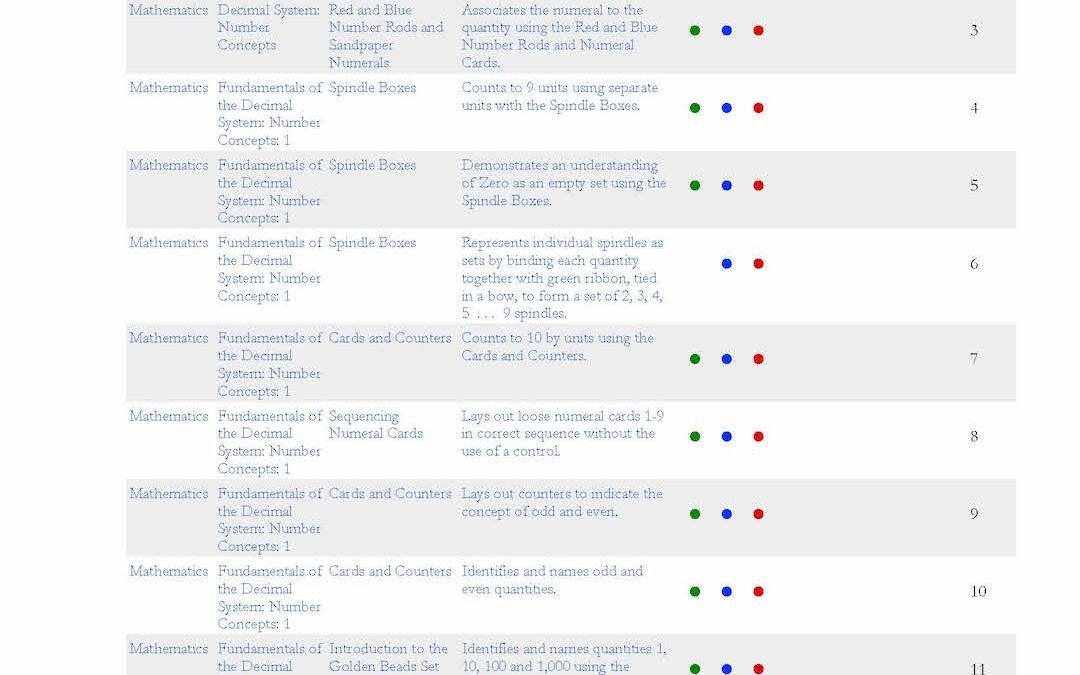
We have an even more comprehensive version that has been fully aligned to the Common Core State Standards as part of the Montessori Compass student record keeping and parent communication software solution: www.montessoricompass.com
This is a static PDF of the Montessori Foundation’s science curriculum scope and sequence database, available from our publications center.
We have an even more comprehensive version that has been fully aligned to the Common Core State Standards as part of the Montessori Compass student record keeping and parent communication software solution: www.montessoricompass.com
This is a static image of the Montessori Foundation’s Practical Life curriculum scope and sequence database, available from our publications center.
We have an even more comprehensive version that has been fully aligned to the Common Core State Standards as part of the Montessori Compass student record keeping and parent communication software solution: www.montessoricompass.com
This is a static image of the Montessori Foundation’s Sensorial curriculum scope and sequence database, available from our publications center.
We have an even more comprehensive version that has been fully aligned to the Common Core State Standards as part of the Montessori Compass student record keeping and parent communication software solution: www.montessoricompass.com
This is a static image of the Montessori Foundation’s Visual Arts curriculum scope and sequence database, available from our publications center.
We have an even more comprehensive version that has been fully aligned to the Common Core State Standards as part of the Montessori Compass student record keeping and parent communication software solution: www.montessoricompass.com
This is a static image of the Montessori Foundation’s History curriculum scope and sequence database, available from our publications center.
We have an even more comprehensive version that has been fully aligned to the Common Core State Standards as part of the Montessori Compass student record keeping and parent communication software solution: www.montessoricompass.com
This is a static image of the Montessori Foundation’s Geography curriculum scope and sequence database, available from our publications center.
We have an even more comprehensive version that has been fully aligned to the Common Core State Standards as part of the Montessori Compass student record keeping and parent communication software solution: www.montessoricompass.com
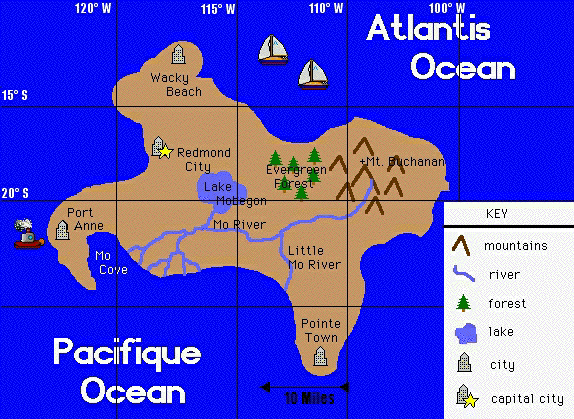
By Tim Seldin
This is an excerpt from the Second Edition of The World In The Palm Of Her Hand.
The Imaginary Island Project was developed by my friend, Harvey Hallenberg, and introduced to the Montessori community in the 1980s through the Institute for Advanced Montessori Studies in Silver Spring, Maryland, which we co-founded.
In the Montessori curriculum, children in the early childhood and elementary classes are of course introduced to an extensive set of land and water forms. They first see them as three-dimensional models and three-part cards, learning the vocabulary and definitions of not only the introductory land and water forms taught in most Montessori classrooms.
In the elementary classes, older children go beyond the basic land and water forms to learn many more land features in Physical geography, such as foothills, summit, river delta, marshlands, tributary, archipelago, lagoon, and many more. Children construct models of these landforms out of clay and in combinations on sand and water tables.
As the extension of all this work, we invite interested children to create an entire island from their imagination.
The Areas of the Curriculum: Physical and Cultural Geography
Materials That You Will Need:
The children will be creating both two-dimensional drawing and three-dimensional dioramas of their imaginary islands and will need a wide range of art supplies: large sheets of paper, drawing pencils or charcoal, pastels or paints to create pictures of their islands, and clay or some other modeling media for constructing their dioramas (which will then be painted). They will also need various materials like sawdust dyed green to simulate grass, lichen, and small twigs to simulate trees and materials from which they can construct small model houses, such as small rectangular blocks of balsa wood.
Our Aims: To help the children to integrate their present level of understanding about physical geography, biomes, how human beings meet their needs in different settings, and cultural geography through the creative development of imaginary islands placed somewhere on the globe.
Preparation: Children can participate in this activity at many different levels of understanding, depending on their interest and grasp of the many concepts involved in physical geography, earth science, biomes, and how human societies may be organized. A good basic level of preparation would include work with the land and water forms, land features, an introduction to biomes, the needs of human beings, and experiences in cultural geography.
Age: This activity has been used with children from as young as age five through early adolescence. In some schools, it will be reintroduced in the upper elementary of junior high school levels. We might recall that books like Frank Herbert’s Dune are based on an entire planet—its climate, ecology, and human civilization—created from the author’s imagination.
Presentation:
The First Activity:
Invite the children to imagine an island somewhere in the oceans of the world, where they can decide everything from its size and shape, rivers and lakes, cities and villages, as well and the plants, animals, and people who live there.
To get the children started, you might want to make a first crude drawing of an island yourself with charcoal. Now invite the children to prepare a drawing of their own imaginary island, coloring it in with paints or pastels, and showing anything on it that they wish. Challenge them to place their lakes, rivers, mountains and cities carefully, because once there, they would be very hard to move, no?
You might want to give the children a paper like this to remind them of points to consider:
The name of my island is _____________
Are there any mountains?
Are there any lakes?
Are there any rivers?
Are there any roads?
What is the name of the capital city?
How many people live in the capital city?
Are there any other cities and villages?
Are there any beaches?
Are there are forests on your island?
Is there an isthmus on your island?
Is there a peninsula on your island?
Is there a cape on your island?
Is there a bay on your island?
Is your island part of an archipelago?
Is your island an atoll?
Are there any valleys on your island?
Does your picture of your imaginary island show them? Have you given them names and labeled them on your picture?
When the children are done, invite them to share with you and their friends anything they wish to tell about their island. Some will say little; others will most likely come up with involved explanations and stories. Ask them if they have thought of a name for their island. Some will have named their island, others may prefer to wait until the right name comes to mind.
The Second Activity:
Ask the children if any would be interested in making a new drawing/painting of their islands. This time invite them to label their drawing with a name for their island and to think about what sort of animals and plants live there. As the children complete their work and share with their friends, continue to ask them new questions, like the ones below, and invite them to either prepare still another drawing of their island showing these things or add them to the drawing that they’ve made.
Are there any people on the island? Show what their houses look like. Do they live alone, in villages, or in cities? Invite the children to begin to name these cities and villages, as well as any major
What is the weather like on the island? What sort of clothes do they wear?
How do they get from place to place? Do they walk everywhere, ride horses, or drive cars?
What food do they eat on the island? Where does it come from? Is it grown there or brought in by ship or airplane? Where do ships dock and where do airplanes land, if they do stop at the island?
How many people are on the island? How did they come to be there?
Are there any children on the island? Where do they go to school? What is their school like? Is it shown on the map yet? What do the children do for fun on the island?
What natural resources are there on the island? How have people used them to make things for their own use or to export to other places?
Continue to gather informally with individual children or small groups who finish, to discuss what they found in their imagination. This process normally goes on over many days or weeks, and sometimes, over many years.
The Third Activity:
Prepare a three-dimensional model showing the island to scale, with land features, cities, roads, etc. depicted as realistically as the child can using art and craft materials.
Hold a geography fair in which all of the children’s imaginary islands are displayed in the school’s halls or All-Purpose room.
An Optional Introductory Activity: The Imaginary Island Puzzle
This material was developed by Judy Martell and is available from Mandala Classroom Resources. As an elementary teacher, Judy found that while many students loved the imaginary island project, others found the project “too huge, too open-ended, too full of possibilities; they needed the door cracked open a little rather than flung wide.” * To meet their needs, Judy designed a new classroom material to bridge this gap.
Judy wanted to create something that could act as a springboard to the Imaginary Island Project without limiting it; a way for students to be invited naturally to use the vocabulary of the land and water forms as they moved toward the Imaginary Island Project, gaining confidence in their own imagination and exploring without inhibition.
The Imaginary Island Puzzle is a set of 84 square cards showing various individual land and land and water features that can be combined in many different ways to depict an imaginary island. Students use them to create an infinite variety of islands, modifying them at will and using the vocabulary words easily in conversation in the process.
Judy found that the puzzle acted as a springboard for the Imaginary Island Project. “Children who had been overwhelmed at first could more easily visualize their personal island after shaping it with the pieces of the Imaginary Island Puzzle. They could then elaborate on their islands and move into greater and greater detail as Harvey Hallenberg’s project invited them to, eventually putting their creations on paper, writing their reports, and presenting them to others.”
* Please Pass the Penisula: A Recipe for a New Montessori Material, Judy Martell, Tomorrow’s Child Magazine, May, 1997/Vol 5/Number 3
Mandala Classroom Resources
1001 Green Bay Rd. #190
Winnetka, IL 60093-1721
Phone: 847-446-2812
Points of Interest: The combination of various land and water features. The creative and intellectual activities blended together to construct the island in one’s imagination.
Points of Consciousness: The idea that an island is a complete and independent system of land, plants, animals, climate, natural resources, and people’s impact on the environment.
Control of Error: There really is none in this activity, except that ideas proposed by the children can be challenged or confirmed by research into various areas of geography, climate, ecology, and cultural patterns found in islands located in that general area of the Earth.
Extensions:
Locate the imaginary islands precisely on the globe in terms of degrees of longitude and latitude.
Determine the distance from given points of the Earth to this location in terms of miles and kilometers.
Determine the course one would have to follow by boat or airplane, in terms of degrees on the compass rose, to travel from given points of the Earth to this location.
Identify the nearest points of land within 500 miles of this location, if applicable. Research one or more of these nearby islands to see what can be learned by comparing the climate, rainfall, biomes, and lifestyle of the people who inhabit those islands.
Study wind patterns and ocean currents to see how they might influence the climate and weather patterns on the imaginary island.
Prepare a more precise scale map of the island, and calculate the distances between given points by both direct point-to-point measurement and by following the routes made practical because of the island’s geography.
Prepare a topographical map of the island.
Prepare an illustrated history of the people who inhabit your imaginary island.

Great Lessons and Key Lessons derive from the psychological characteristics and needs of the child in the second plane of development. (ages 6 to 12). Lessons are not a pivotal aspect of Montessori. The role of the adult is to inspire a sense of wonder, not to teach. Lessons in a conventional sense relate to syllabus and timetable and rote learning. The Great Lessons and Key Lessons of Montessori have a fundamentally different function.
The Great Lessons – these are meta-narratives, stories, rather than lessons, which paint a broad picture or backdrop to inspire the child to investigate the universe.
Key Lessons introduce detail, but again, not as point by point lessons. These are essential presentations which give just as much information as is necessary for a child to proceed alone. Often they are introductions to new concepts, or structural foundations for exploration. Keys are normally concepts that a child cannot arrive at unaided through simple experience.
“Any unnecessary help is a hindrance.” – Maria Montessori
Some Key Themes:
Biology – Needs of living things
Geography – Rotation and Revolution
Geometry – Congruence, Similarity, Equivalence
History – Needs of Humans through time
Language – Word studies
This approach is nested in the concept of Cosmic Education, facilitating and guiding the child’s exploration and orientation in society, appealing to the intellect and imagination.
On Thursday, September 4th, 2014, Tim Seldin was once again joined by colleagues Kathy Leitch and Lorna McGrath to discuss After School Studios that can enhance your Montessori Elementary and Secondary Programs.
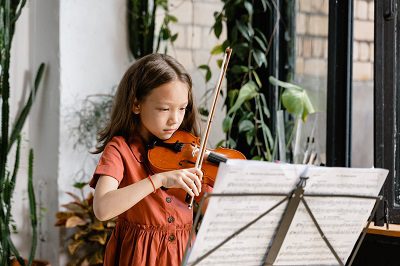
This is a sample of one school’s studio offerings during a 8 week term.
 Montessori Family Alliance School Group Membership (Print & Digital 2026 1/2 year pricing)
Original price was: $30.00.$15.00Current price is: $15.00.
Montessori Family Alliance School Group Membership (Print & Digital 2026 1/2 year pricing)
Original price was: $30.00.$15.00Current price is: $15.00.
 The Montessori Way, Revised and Expanded: An Education for Life; A Comprehensive Guide for Parents and Teachers
$25.00
The Montessori Way, Revised and Expanded: An Education for Life; A Comprehensive Guide for Parents and Teachers
$25.00
 The Montessori Child: A Parent's Guide to Raising Capable Children with Creative Minds and Compassionate Hearts (The Parents' Guide to Montessori)
$20.00
The Montessori Child: A Parent's Guide to Raising Capable Children with Creative Minds and Compassionate Hearts (The Parents' Guide to Montessori)
$20.00
 The Montessori Toddler: A Parent's Guide to Raising a Curious and Responsible Human Being (The Parents' Guide to Montessori)
$20.00
The Montessori Toddler: A Parent's Guide to Raising a Curious and Responsible Human Being (The Parents' Guide to Montessori)
$20.00
 Montessori in Action: Building Resilient Montessori Schools 1st Edition
$29.95
Montessori in Action: Building Resilient Montessori Schools 1st Edition
$29.95