by Robin Howe, EdD | Early Adolescence (12-15), MFA, Parent Education, The International Montessori Council, Upper Elementary (9-12), Webcasts / IMC
Upper Elementary students will be taking that big step into a new plane of development and you can help bridge the gap. Robin will share insights for students, parents, and teachers from his experience as an upper elementary teacher, an adolescent teacher, and as an associate head of school.
by Chelsea Howe, PsyD | Discipline, Emotional Intelligence (EQ), Lower Elementary (6-9), MFA, Mixed Ages, Montessori Education, Montessori Parenting, Montessori Teachers, Parent Education, Prepared Environment, Primary (3-6), Uncategorized, Upper Elementary (9-12)
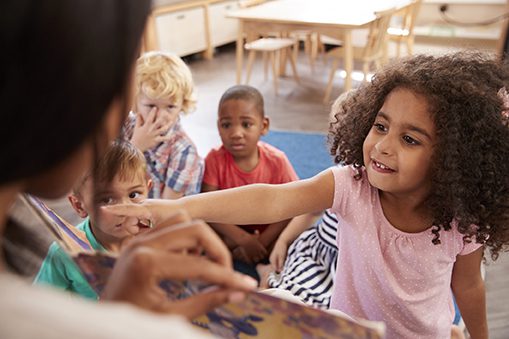 I am sitting at home right now, drinking my second coffee of the day. My two boys have finally given in and are taking naps (at the same time!), and all is right with the world. It is a snow day, and this morning, when I saw the cancellation notice with the name of my kids’ school go by at the bottom of the TV screen, I silently sighed. I love my children, but the thought of a whole day snowed in … two against one …all that ‘boy energy’ … another sigh.
This is snow day number two. My husband stayed home with them yesterday, and I received several texts from him reassuring me that they were alive (though he was only barely). Then, hours later, I received another text telling me that he was going to get Hudson’s head examined after a mishap with a ‘monorail’ that they had constructed in the house. Sometimes it’s just better not to ask. My husband has a degree in engineering, so a monorail running through the house is entirely possible. Anyway, an hour later, my 15-month old’s forehead was super-glued back together and as good as new. Nothing surprises me with these boys, NOTHING.
I don’t know how their Montessori teachers do it and remain positive and upbeat every day. I drop my children off in the morning, wish them a good day, transition through my own busy work day, and am worn out by the time I return to pick them up. They, on the other hand, are not worn out. I return to school and find my children happy, playing outside, and not ready to go home! In fact, I often get a tantrum about their intense desire to stay at school and play with their friends. And, I get it! I’m not nearly as cool as their peer group.
But, I wonder how these teachers do it. I once asked my older son’s teacher if she is exhausted at the end of the day, and she said, “No, they are great.” Either she is a great liar or that woman drinks more coffee than I do! But, I’ve been given the opportunity to observe her, and she is genuinely loving, caring, kind, compassionate, and warm. She speaks to the kids firmly but as though they are people, not kids. When one of them behaves badly, she explains what was wrong with their behavior and shares that they need to apologize. She has a heart of gold and wears it up and down her sleeves. And, the kids love her.
One day, I came to pick up my kids, and she shared with me that my lovely child hit another child (as if I ever thought he was an angel). I asked her how she handled the situation so that I can model my behavior based on hers. She shared the following: “I sat down, eye-level, and said, ‘That is not nice. These hands are made for hugs and helping other people, not hitting other people. These hands can do amazing things without hurting others.’” She had him sit in a chair until he had calmed down, walked him to the little boy, and the two hugged while my son said he was sorry.
Seriously?!?!?! How does she do it? At home, my older son will hit my younger one (or vice versa), and he laughs and snickers at me when I attempt to discipline him. But, that’s just it! His teacher attends to him and sees it as an act of communication rather than a reprimand. I have come to realize that we are constantly learning from our teachers, even when they are no longer OUR teachers. These teachers are setting the example of how to interact, inter-personally and intra-personally … with the children and with the parents.
The main lesson that I continue to learn about parenthood is that it is not easy. It is particularly not easy if you put on your parent goggles and reject the idea of asking for and receiving help. No matter how much you think you know, there will always be ideas and solutions that are new to you and may just be exactly what you and your family need to make life a little bit less stressful.
I may be exhausted and sleep deprived, but I am still able to appreciate life’s little lessons that creep up on me, daily. My kids are no angels. But, they are kids. And,
I am reminded about the care that their teachers (who actually spend more time with them than we do) give my children when I observe their private moments: laughing, continuously hugging, consoling, and loving them. This is
co-parenting at its best.
Tomorrow’s Child /January 2014 / p 23/
by Tim Seldin | Montessori Administrators, Montessori Curriculum, Montessori Education, Montessori Teachers, Parent Education, Research, School Leadership, School Resources, The International Montessori Council, Video, Webcasts / IMC
This week, our guests will be Rob and Anita Amos, co-founders of Montessori Compass. We will have a lively conversation about why it is important for Montessori educators to keep careful records, to plan, and to keep parents informed. Rob and Anita will share reflections on how the software was developed, how it has evolved, and what changes have been made in the latest release.
by Tim Seldin | MFA, Montessori 101, Montessori Education, Montessori Parenting, Parent Education
How Do Families Choose the Right Montessori School for Their Children?
In many areas of the US, today’s families have a choice when it comes to picking a Montessori school for their children: Private/Independent; Public/Charter; Parochial; Preschool; Elementary; Secondary; International Baccalaureate (IB); Accredited/Non-Accredited. What does it all mean?
The first thing to remember is that Montessori was the name of a person — Dr. Maria Montessori, Italy’s first female physician. It is a name given to a community of schools found across the US and Canada and in virtually every country in the world. What it is not is a franchise. Each school has a distinct personality, and although differences may seem significant at first glance, authentic Montessori schools follow the principles of Montessori education and have more commonalities than differences.
What makes a school Montessori is not the name or the word alone (many Montessori schools do not use ‘Montessori’ in the name of their school) but rather three main components:
- Each class is led by a formally trained and certified Montessori educator. This training, typically offered at the college-graduate level, involves more than a year or of specialized teacher education and a supervised student-teacher internship experience.
- Each class has the complete set of Montessori educational materials appropriate for children of the classroom’s age group.
- The class is organized and run according to basic principles that make a program Montessori instead of something else, which includes three-year, multi-age groupings.
Independent vs. Public Schools
Using US terminology, all independent schools are non-public, which means that they are not owned or operated by a state government. All private schools are independent in the sense that they have the freedom to organize their educational programs and build a faculty based on the principles that are the foundation and guidelines of the approach they embrace.
Public schools must follow a state-issued mandate. They are funded through taxation, and parents do not pay to have their children attend. Private schools, on the other hand, have more freedom to develop their own program and select families whose philosophy matches the school’s approach. These programs, whether or not they are for profit or non-profit, rely on the marketplace and the ultimate test is whether or not parents are willing to pay for their children to attend.
Montessori schools can be small or large. Some focus on a limited age range; others run from toddlers thru eighth or twelfth grade. Some schools will be using space leased from a church, synagogue or mosque. Some will have a few acres or some will have vast campuses. The quality of the program, in general, is not connected to how large or fancy the facility is. It can really be found in the nature of relationships among parents, teachers, and children. A great Montessori school is a real community.
Another difference can be its ownership. Some schools are owned by an individual family or the partnership of a couple of people who joined together to organize a new school (small groups for profit). Others will be nonprofit, run by a head of school and governed by a volunteer board of trustees. Some will be public schools run by the school district or charter Montessori schools, which are private schools serving through a charter as public schools.
The Educational Marketplace: Why Choose an Independent School
The most basic premise is that parents and schools choose each other and tend to do so very carefully. Each private school operates in an educational market place and succeeds only by establishing and serving a special niche in its community.
One of the reasons that parents turn to the private sector is that they know that their children will not be only a number among many. In addition, families often feel more comfortable with other school families that will be committed to their children’s education and share many of their same values. The reason why they do this is that they are looking for something that isn’t offered in the local schools, which is why for the last hundred years plus, almost all Montessori schools have been independent. With public funding comes public control. There is obviously a marvelous case for free public Montessori education. What’s not so obvious is the important role that independent schools play in developing innovation, offering families real alternatives and providing their students with an extraordinary level of attention and support.
The term parochial school tends to be limited to schools run by the Catholic church. Jewish, Islamic, and Christian Montessori schools also operate schools of their own with the goal of providing an education grounded in their faith. Independent schools are, by definition, not affiliated with any religious organization.
Finally, Montessori schools, like Waldorf, Regio Amelio, and other innovative schools offer a distinctly different educational program and philosophy. In the private school sector, some are run under the sponsorship of a faith. Most are independent. In the public sector, Montessori schools offer a public school program that meets the requirements and expectations of the state’s department of education in a way that is inspired by Montessori. Each school needs to be looked at individually to determine what is the best match for your family.
If this is your child’s first year in Montessori …
Most children begin their Montessori education in the 3-6 (Primary) classroom. If you are new to Montessori, perhaps the most obvious difference you will notice in a Montessori classroom is the role of the teachers (sometimes referred to as guides). Teachers are not the center of attention in the classroom, which doesn’t mean that they are not teaching. Rarely will teachers gather a group of children together to give them a lesson. In fact, children will tend to work alone or with other children more often than you’ll see them in a large or small group or with an adult. This is perfectly normal and consistent with the way children learn best.
Do not expect to be able to compare your children with their classmates. In this age when everyone is so concerned about grade levels and standards, Montessori has a decidedly different perspective. Our objective tends to be in opposition to the fundamental objectives that created and supported the traditional school systems from which most of us graduated. Our position is that the education with which we are most familiar were designed to assimilate large numbers of children from other countries and rural communities into a government-designed mindset of what was most needed in the 1900s: passive, Americanized, factory works, who knew the right answers and were not encouraged to think independently. Although the times have changed, for most children, the educational approach has not.
At the heart of Montessori education is the fundamental belief that no two children are the same; they learn at different paces and in different ways. When children are truly interested and have a choice, they tend to learn and retain much more. They do not just study for an exam, only to have the information fade away once the exam is passed.
For this reason, Montessori teachers tend to be guides and sources of inspiration. You might even refer to them as mentors and tutors. The whole secret of Montessori is that it tends to inspire in children a sense of their ownership of what they are learning in school. This assumption that children are born bright, curious, and capable tends to focus on what children are good at, while quietly working to strengthen other areas of learning that may not come as easily. Montessori focuses on the positive not the negative.
You will not see Montessori teachers hugging kids, saying “Good job.” There is a genuine sense of ownership among the children that this is their ‘house’ and this is their work. Montessori children do not work in order to achieve attention from adults. We want them to feel as partners, leaders in their classroom.
Another thing you’ll notice is that the children will tend to learn more from each other even more than from adults. This is not unique to Montessori. It is the way children have learned throughout history.
Curriculum
There is an extensive and well-defined Montessori curriculum for children from infancy through age 12. We call this Scope and Sequence, and it is way for teachers and parents to track lessons, the use of materials, and the progress of students. It constitutes about 400 printed pages and many schools are using the interactive digital version to manage classwork and communicate with parents. For schools that are interested in this tool, it is available through The Montessori Foundation (stage.montessori.org). If your school has a copy, you may want to take a look. Be warned, though, it is not an easy read. What you will see is how a lesson is presented, the materials used, the age of the child when it is first presented, and how the lesson expands and transitions over the years from concrete hands-on manipulation of materials to sophisticated levels of abstraction
For those of you who are new to Montessori, your child is most likely in the Primary division. Another big difference you will notice in the 3-6 classroom is the absence of toys. You may have heard that Montessori places very little emphasis on fantasy. This is true; however, it is not that we think that fantasy has no value. We just don’t think children need any help with it. The fantasy life of young children tends to be quite rich without any help from us. Children don’t need to be taught to use their imagination. We believe that children under the age of six, in particular, are in a process of rapid brain development, which will happen naturally if they are exposed to the right stimulation. The Montessori program is designed to provide just that.
The stimulation that young children need is very different from what most people think of as formal education. Instead of listening to teachers talk, working in workbooks, or reading from a text, what they need is direct experience with real things. Very young children develop what you might think of as fundamental skills that will help them learn how to learn: development of an inner sense of order; an acute ability to observe things around them; development of the ability to voluntarily concentrate; development of strong eye-hand and large-muscle coordination and balance; and the development of a strong sense of independence and self-confidence.
To the casual observer, Montessori curriculum for children under the age of five may look like it’s focused on working with simple everyday tasks, such as sweeping, mopping, cleaning windows, etc. or with solving puzzles; however the underlying objections are much more complex and serve as the foundation for:
- the development of vocabulary;
- the development of an ability to problem solve, developing and implementing plans in organized ways, honing their eye-hand coordination and fine-motor skills; and
- the development of observation skills (especially in the area of sensorial activities that involve acute attention to the discrimination of physical characteristics).
Experiences like this tend to lead children to an increased ability to learn new things for the rest of their lives.
As you become more accustomed to the Montessori classroom, you will notice that although the room is organized into different areas of interest, they are all inter-related. Most of what the children do shows how everything is connected to everything else. For example, lessons in geometry are also lessons in logic, artistic design, fine-motor control, vocabulary, mathematics, and so on.
Even though there is probably a classroom schedule posted, parents will find that for the most part, the students set their own schedule, especially during the morning work cycle (lasting from two to three hours).
If you observe a classroom on different days, you will notice that on some days, your children will tend to move from one activity to another, while, on other days, they will remain focused for very long periods of time on a single activity. This is how children develop the ability to voluntarily choose work, follow through, and concentrate.
You might notice that children go through phases, where they are fascinated by certain things. They may not be able to put it into words, but you will probably start hearing about puzzle maps, the Moveable Alphabet, and Metal Insets. This tendency to zero in on something, generated by the child’s own interest, is a very good thing. Parents may be worried that he’s not getting a balanced education; however, he’s learning everything about something that is his voluntary choice.
How will I know if Montessori is working for my child?
First, it’s likely that teachers will send home portfolios of paintings, papers that your child has created during the week. [Editor’s Note: Don’t be surprised if you see many, many variations of geometric drawings. Once children discover the metal insets, they love to practice fine-motor skills in every color! So many colors. I could have wallpapered my kitchen with triangles when my children were young.]
Many schools are now beginning to send out information by email. This may include videos, pictures of work, letters to the whole class, letters to you as a parent. Watch your email.
Don’t ask: What did you do in school today? Be specific. Ask: Did you work with the Pink Tower (learning the names of materials will help). Attend parent education nights and class meetings. Set up a time to observe in the classroom.
We hope that by the time you are reading this article, your children have settled into their Montessori classrooms and look forward to each new school day. If you would like to know more about Montessori, and we certainly encourage you to do so, there are many ways to become more familiar with the Montessori Method.
In addition to reading Tomorrow’s Child, there are a number of books and materials that you might find interesting and helpful. These include:
Montessori 101: A Guided Tour of the Montessori Classroom, The Montessori Foundation
How to Raise an Amazing Child: The Montessori Way, Tim Seldin
The Montessori Way, Tim Seldin and Paul Epstein, Ph.D.
Montessori Madness, Trevor Eissler
Understanding Montessori, Maren Schmidt
Montessori: A Modern Approach, Angelina Stoll-Lillard
All of these, and many more, are available online through the Montessori.org store (stage.montessori.org).
by Tim Seldin | Kindergarten, Montessori Administrators, Montessori Parenting, Montessori Teachers, Parent Education, School Leadership, The International Montessori Council
Many schools face the challenge of convincing more parents of 5 year-olds to stay on for elementary. I wrote the enclosed letters for one school to send out over the Head’s signature.
I thought that you might find them useful in preparing an evening and invitation to attend of your own. Many schools send home a copy of the Montessori Foundation’s kindergarten video (Montessori For The Kindergarten Year: A Time To Blossom) to each parent of a four-year-old and a copy of the elementary video (Joyful Scholars: Montessori Elementary Education) to the parents of his kindergarten students.
The obvious goal is to reduce attrition to an absolute minimum, in part by holding special talks and events for parents, but also by bringing the issue right out into the open. From my experience, attrition can be reduced to less than 5% with the right programs in admissions and community building. I know that this is something that you care about deeply as well, so please feel free to adapt the letters to your use if they seem to be right for your situation. I hope that this year you can hold on to more of your kids at the key transition points than ever before.
PS: Our elementary video, Joyful Scholars: Montessori for the Elementary Years, is the third video in our series of videos designed to help parents get a clear look at the benefits of Montessori at the key transition points: initial application, kindergarten, and elementary.
We offer a special price for IMC members who want to purchase multiple copies to share with parents. If you keep one more child as a result of sending the tapes home, they would have paid for themselves several times over.
Orders can be mixed quantities of all three videos if you prefer. If you decide to place a bulk order, email or call Margot Garfield in our publication center in Sarasota, Florida: email: montessoriimcpubs@comcast.net/ Phone 941-359-6376/800-632-4124.
Here are few suggestions about organizing kindergarten presentations or elementary moving up meetings. A sample letter to send to parents follows:
1. Send out your invitation at least 2 weeks in advance. 4 weeks is better. Follow up your invitation with a personal invitation by phone. Personal contact is what really gets people’s attention. To really ensure success, call a second time a few days before the event to remind them.
2. invite the entire school plus any outsiders who are interested in your program.
3. Tell people what you’re going to do at the meeting
4. Offer free childcare during the meeting. It’s worth it.
5. Don’t ask your teachers to give a formal presentation
- Many are not terribly comfortable at public speaking
- Parents tend not to believe teachers as unbiased experts in these settings. They do want to hear teachers respond to direct questions.
6. Invite a noted Montessori educator from outside your school community to speak about Montessori at the elementary level from both a theoretical and personal perspective. As an outsider normally they will be seen as believable and interesting by many parents. The Administrator and teachers should be ready to answer specific questions.
7. Show them the new elementary video. Some schools may choose to purchase enough copies to lend to their parents whose children will be moving up. The videos can be sent home with the invitation to the meeting or sent home afterward. In either event, showing the video afterward provides repetition and sets the mood. Remember, most people have to hear something several times to “get” the message.
8. Invite 3-5 of your best students and their parents to come and share their perspectives and answer questions.
9. Invite all of your elementary kids to come. Have each select a piece of material or a lesson to teach to visiting parents. Let parents wander from booth to booth
10. Hand out a formal curriculum guide at the meeting or in advance. We have an 8-page document on the website (stage.montessori.org that could be printed up as a booklet.
11. Watch for the article on why kindergarten and elementary Montessori that comes out in the current (Winter) issue of Tomorrow’s Child.
12. Publicly announce your intention to persuade every parent to stay at least through 6th grade. That is the real goal anyway, so be honest.
Here is the letter. Again, feel free to use it as a springboard for your own invitations.
Dear Parents:
By now you should all be aware that, having been founded as an early childhood education center, our school has made the commitment to develop an outstanding and internationally accredited academic program through the middle school level.
One of the next and very important challenges facing our school is its need to build up the school’s elementary enrollment as quickly as possible over the next few years, hopefully by retaining as many present primary students as possible, in preference over elementary students transferring in from other schools.
There are two reasons why this is important to the school community:
The first is that children who grow up in Montessori schools like ours tend to be quite different from the students usually found in other schools. This difference is not simply in what they know and what they can do, it lies in their attitude and approach to learning and to life.
Montessori children are normally enthusiastic learners. They look upon their teachers as mentors, guides and friends. They have held onto the curiosity, creativity, and imagination that most children bring into the world. Unlike so many school children, they don’t see school as boring, nor schoolwork as a burden. They are generally not fearful, nor sarcastic and cynical to their friends on the playground. I like to call them joyful scholars.
Students like them simply can never be replaced. Our school clearly needs them, and hopefully, you as their parents can see what they are becoming and can trace it to a large degree back to their experience thus far in Montessori.
The second reason why it is so important that we continue to retain almost all of our students from year-to-year is that these children have grown up together in an atmosphere of warmth, kindness, and respect. By now, most of your children are probably bonded quite closely to our school, their teachers, and their friends. This is their community.
Most children in American school watch their friends come and go from their lives. One of our goals in schools like ours is to create a community that has substance and depth, to gather together a group of parents, children, and teachers who share common values and form lasting friendships.
I realize as the school begins this process, many of you may have come to Montessori with no goal in mind beyond finding a good preschool. I know that some of you have come to care deeply for the school, and are urging us to expand up through middle school. I also understand that some of you are undecided.
Now that your children are nearing the end of their kindergarten year, each of you must be asking whether or not your children should continue in Montessori for the elementary program.
We are all looking for what will be best for our children, and I imagine that some of you may be concerned whether Montessori will actually prepare your children well for the real world?
A lifetime of experience as a Montessori student (age two through the twelfth grade), as the parent of two Montessori students, I know that the answer is a resounding YES! But I realize that each of us must sort through the pros and cons for ourselves.
Today I am writing to invite you to join us for a very special evening focused on Montessori at the elementary level. This meeting will be held on _______(date) at ____ o’clock at _________(location). It will offer you the solid information and insights that you need to make a thoughtful decision for your child.
To help you organize your thoughts, I have enclosed a copy of a video on Montessori elementary programs produced for parents by the Montessori Foundation. Please feel free to share it with any friends who might be interested as well, and feel free to invite them to the meeting on the _________. When you are finished with it, I would appreciate it if you would return your copy of the video to the office so it may be shared with other families in the future.
Sincerely yours,
by Tim Seldin | Emotional Intelligence (EQ), Free Reads, Kindergarten, Lower Elementary (6-9), MFA, Mixed Ages, Montessori Administrators, Montessori Education, Montessori Parenting, Montessori students, Montessori Teachers, Parent Education, Primary (3-6), School Leadership, School Resources, The International Montessori Council
Having sent a child to Montessori for the first three years, by now you have probably got a young person who is very full of herself, very self-assured, independent, and who absolutely loves to go to school.
As your child approaches the end of her third year in the Children’s House, I know that you are giving careful thought as to whether or not to continue with Montessori. Having had the gift of this sort of education myself through high school, and having seen my five children blossom in Montessori at the elementary level and beyond, I want to encourage you to remember that an investment in a fine education pays the best dividends. In the elementary Montessori program at your school, your children will have the opportunity to learn absolutely amazing things!
One of the things that you will see when you enter their new elementary classroom is joy, excitement, and enthusiasm. These are not children who are given workbooks and simplistic assignments to do over and over again. These will normally become deeply engaged in work that they will find interesting, meaningful, and often intriguing.
You will find that the elementary Montessori curriculum is highly enriched and challenging.
It is organized into three streams:
The first stream is the Mastery of Fundamental Skills and the acquisition of Basic, or Core, Knowledge. During the elementary years, Montessori students study all the basics found in a traditional curriculum, such as the memorization of math facts, spelling lessons, and the study of vocabulary, grammar, sentence analysis, creative and expository writing, and library research skills. But there is so much more to Montessori than the? Basics?
Elementary Montessori students explore the realm of mathematics, science and technology, the world of myth, great literature, history, world geography, civics, economics, anthropology, and the basic organization of human societies.
In this second stream of the Montessori curriculum are found what we call? Great Lessons? These are key areas of interconnected studies that are traditionally presented to all elementary Montessori students. They include the story of how the world came to be, the development of life on the Earth, the story of humankind, the development of our language and writing, and the development of mathematics and technology. They are intended to give children a cosmic perspective of the Earth and humanity’s place within the cosmos.
The third stream of the Montessori curriculum is Individually Chosen Research. As their proficiency in reading and composition grows, elementary Montessori students are encouraged to explore ever topic that captures their imagination.Students rarely use textbooks.They do a great deal of independent reading and library research.They gather information, assemble reports and portfolios and handmade books of their own, and teach what they have learned to their friends.Their oral presentations and written research reports grow in sophistication and complexity over the years.
At the elementary level, learning continues to be a hands-on experience, as students learn by trial, error, and discovery.
The old familiar Montessori materials continue to become more sophisticated. For example, in mathematics, the advanced elementary Montessori materials move on to more complex and abstract concepts in mathematics, such as long multiplication and division, operations with simple and decimal fractions, geometry, and pre-algebra.
The learning materials with which students work in the elementary program are so exciting, starting with the great lessons. For example, the Timeline of Life tells the story of the history of the Earth beginning with the Big Bang and the formation of the stars, leading down the geological eras of Earth’s history and the emergence of life over the millennia. These Great Lessons engage children and then send them off to do all kinds of research, which they are allowed to do on their own rate and their own pace. When students are excited about something and feel connected to it in their environment, that’s where real learning takes place, and that’s where Montessori shines.
Montessori helps children to be flexible, self-disciplined, independent learners and self-actualized adults. We all want our children to be able to master or learn anything they wish. I can figure it out, I can find the information, I can learn it, I can apply it. That is essentially what we strive to nurture in the elementary program.
Think about your Montessori child as she has grown thus far as he or she nears the end of the third year in the Children’s House or Casa as you call it in Canada. Now think ahead. What would you like to see your son or daughter be like at age 18?
If your dreams include a young man or young woman who truly loves school, thinks outside the box, thinks about others, then you’ve certainly done the right thing by giving your child the gift of a Montessori education. You’ve laid the right foundation.
Like me, like my family, and like so many million others like us, you’ve taken the first step. And now the question is what’s next?
I invite you to join us and let your child reap the benefits of continuing her Montessori education. The best is yet to come.
by Tim Seldin | MFA, Mixed Ages, Montessori Education, Montessori Parenting, Montessori Teachers, Parent Education, Primary (3-6), School Leadership, The International Montessori Council
Sometimes parents worry that by having younger children in the same class as older ones, one group or the other will be shortchanged. They fear that the younger children will absorb the teachers’ time and attention, or that the importance of covering the kindergarten curriculum for the five-year-olds will prevent them from giving the three- and four-year-olds the emotional support and stimulation that they need. Both concerns are misguided.
At each level, Montessori programs are designed to address the developmental characteristics normal to children in that stage.
Montessori classes are organized to encompass a two- or three-year age span, which allows younger students the stimulation of older children, who in turn benefit from serving as role models. Each child learns at her own pace and will be ready for any given lesson in her own time, not on the teacher’s schedule of lessons. In a mixed-age class, children can always find peers who are working at their current level.
Children normally stay in the same class for three years. With two-thirds of the class normally returning each year, the classroom culture tends to remain quite stable.
Working in one class for two or three years allows students to develop a strong sense of community with their classmates and teachers. The age range also allows especially gifted children the stimulation of intellectual peers, without requiring that they skip a grade or feel emotionally out of place.
by Tim Seldin | Emotional Intelligence (EQ), Montessori Teachers, Parent Education, Peace Education, The International Montessori Council, Webcasts / IMC
Tim Seldin, Jon Wolff, and Kathy Leitch present Part 1 of Building Healthy and Harmonious Schools
We discuss strategies that we find help Montessori schools to build school communities that are healthy, harmonious and stable. It stems from the idea of clarity about your school’s unique identity and builds on our traditions of peace education. We will explore our traditions, which go back to the 1930s, of programs and practices that bring our dream of the Montessori ideal into reality.
We explore means of giving children a much more meaningful peace education curriculum and a much greater sense of personal power
• encouraging a true sense of community among the adults within our schools
• improving lines of communication
• creating a much more partnership-oriented and harmonious approach to problem-solving and decision-making through the use of the Montessori Way and developing a school culture that encourages deep engagement with the school and celebrates our differences
by Martha Carver | Family Resources, MFA, Montessori Parenting, Parent Education, School Leadership, Video, Webinars / MFA
On May 3rd, 2017, we were joined by Martha Carver of Rock Prairie Montessori in Wisconsin. Our topic was be organizing parent education programs with high parent participation and support.
Download PDF of Slides
by Lorna McGrath | Family Resources, Infant, Infant-Toddler (0 to 3), MFA, Montessori Education, Montessori Family Life, Montessori Parenting, Parent Education, Parenting on the Same Page, Prepared Environment, The International Montessori Council, Toddler (18 months-3 years), Video
Lorna will show you how to create an indoor play yard for your baby or your grandbaby. When the little one starts to move around on his own, it’s time to create a space for him that is safe, engaging, and fun!
by Paula Lillard Preschlack | Lower Elementary (6-9), Montessori Curriculum, Montessori Education, Montessori students, Parent Education, Planes of Development, Primary (3-6), Psychology, Research, Sensitive Periods, Upper Elementary (9-12), Webcasts / IMC
Concentration: What is it?
In a LinkedIn post this past June, “Want Kids to Succeed? Teach them Focus,” Daniel Goleman explains why concentrating is a precursor for both learning something new and developing self-control. We all know that success in school and in life depends on developing this ability, so it’s encouraging to see modern psychologists and educators recognize this is a fundamental skill to address in school. Goleman offers great suggestions.
There are limits, however, to what one can achieve in educational systems that interrupt students mid-thought to move them to a new subject, change teachers, and that breed competition with grades, rewards, and punishments. For these environments, Goleman proposes exercises for teachers to use to help their students slow themselves down, pay attention to their surroundings (themselves and their peers), and focus on what is being taught. Yet, the rest of the school day is so counter to this mindset that even with improved focus, children cannot develop a deep level of concentration and reach the ultimate benefits of doing so. And, alas, you cannot force a child to concentrate. So, what are we to do
In the Montessori educational approach, the development of concentration is already front and center in its every aspect. This may be a little-known fact. Kathleen Loyd, Ph.D, an AMI Montessori-trained teacher and a college professor, writes that, “…Amid all the comments typically heard explaining Montessori education, the value of concentration for optimal human development is rarely mentioned, yet this is the foundation of [her] work.” (NAMTA Journal, Winter 2011).
Maria Montessori recognized, as early as 1906, that to develop one’s ability to concentrate was essential to all else and, therefore, she began her work with this end in mind. In her lecture in Rome on April 3, 1913, she proposed that unless we work with the nature of the young child, we would be trying to attract a fleeting attention with our teaching efforts; instead, her approach was to “awaken” the attention in the child by presenting a material that meets his developmental needs and encourages spontaneous repetition as the child tries to figure it out. About human nature, she observed, “We do not observe all things indifferently, but there are some things that attract our attention and some which do not, so that the mind is built up…on something that is…actively seized.
“This inborn primitive response can be understood as something that persists and begins to characterize the individual psyche. It is linked to some instinctive impulse…[it is a] principle for the construction of the inner-personality, which must, in turn, develop according to its own particular laws.
“When viewed thus, attention is not something abstract, but something to be developed. In the world around us, we do not see everything, hear everything, and feel everything, but…we…notice [and] assimilate…to the degree to which our powers of concentration are capable. We cannot concentrate our attention haphazardly…but according to an inner drive.
“If this is so…we cannot take the child’s attention and carry it where we will, but we should observe where the child’s attention tends to go, for that tendency reveals the path existing within the child or the developmental need that the child possesses by nature. And this fact is repeated, not only in the child, but, I believe, throughout the whole life of the individual.
“…We can only be guided by facts. In the case of the small child, we find that no child can concentrate on one object for a long time, unless the object itself spontaneously attracts the child’s attention.”
Montessori made it her goal, then, to notice what objects attracted the children’s attention so strongly that they became fixed upon them and, thereby, developed their powers of concentration — powers which could then be transferred to other subjects as their interests were piqued, so that they learned many more things. This also enabled them to form much greater self-control than adults thought possible in small children.
As a side note, I can see that some parents may mistake the way a child stares at a screen and becomes fixated on a video game to be ‘concentration,’ when it is, in fact, very different. We now know that the lights on screens, in a sense, ‘hijack’ the mind and take it where it will, giving the child no practice in being in charge of his mind. The passive experience does not contribute to developing powers of controlling one’s thoughts and regulating one’s emotions; thus, the difficultly in getting a child to look away from a screen, to get him to think of things other than his video game, and the temper tantrums or jittery behavior frequently reported in children after they spend time with digital screens.
What Montessori describes above and in many further writings has the superior qualities that Daniel Goleman, Mihaly Csikzentmihalyi, and other scientists, psychologists and educators recognize as a deep, engaged state in which the heart rate slows, the brain becomes active in measurable ways, and it synthesizes information. The personality becomes calm, self-controlled, and powerful. Csikzentmihalyi coined this state as “flow,” and Daniel Goleman calls it “attention,” or “focus.” When people are intensely interested in what they are doing and able to shut out external stimuli, we can say that they are fully concentrating.
Concentration can also take on the quality of being acutely aware of one’s surroundings and sensorial information, while simultaneously giving focused attention to one chosen thing. We call this being “mindful.” In a Montessori classroom, both the intense concentration that shuts out external stimulus and the subtle awareness of all that is around you (mindfulness) are being developed. In a Montessori classroom, a child flows from one state to the other throughout the day, responding to an environment that encourages both these states. The Montessori environment encourages these states with long, uninterrupted work periods of up to three hours; a trained Montessori teacher who ‘connects’ the child to the materials he may work with by watching for his interests; and surrounding him with other concentrating, working children, who respect one another’s space.
Why is Concentration so Important?
Only when paying attention to what they are doing can people learn something new and make new pathways in their brains. Jeffery Schwartz, MD, and Sharon Begley reported on the findings of brain research in 1993: “…Although experience molds the brain, it molds only an attending brain: ‘Passive, unattended, or little-attended exercises are of limited value for driving’ plasticity, Merzenich and Jenkins concluded. ‘Plastic changes in brain representations are generated only when behaviors are specifically attended.’ And therein lies the key. Physical changes in the brain depend for their creation on a mental state in the mind: the state called ‘attention.’ Paying attention matters…for the dynamic structure of the very circuits of the brain and for the brain’s ability to remake itself.” (Schwartz and Begley, 2000). Furthermore, paying attention is an act of the will, so Schwartz and Begley go on to explore the very point that Montessori herself makes in the previous quote: that to help people develop attention, we must follow their interests, so that their will is the driver.
The Organizing Mind Builds through Concentration
With this important goal of developing concentration, Montessori set out to develop materials that would not only attract the child’s attention but help him to build organization in his mind, learn about the real qualities of the world around him, and explore the minute differences in qualities so that he could see further details and categorize them in the wealth of information he discovers. I will give just one example of such materials: the Sensorial Materials for children ages three and four.
The Sensorial Materials help children to further develop their senses, which is how they explore their world: touch, taste, smell, sound, and sight. The materials are objects made of beautiful wood and other natural substances that young children noticeably want to touch, hold, and explore with their senses. Montessori fine tuned these materials in response to how she saw the young children work with them. The ones we use in our classrooms today are the models she designed after years of experimenting with many different children. She found that at certain ages and stages of development, children were more or less attracted to certain materials, so that we have guidelines on when to present a material to a child and what signs of readiness to look for.
These Sensorial Materials, such as the Brown Stair (which isolates the idea of thickness and thinness) the Red Rods (which isolate the concept of length and differences in length), and the Sound Cylinders (which isolate subtle differences in sound — they have sand inside to shake and discern the slight differences in the sound) are materials that show slight differences in temperature, weight, texture, and so on. Young children fix their attention on these materials and choose to repeat activities with them. They want to find minute differences and delight in doing so.
Some young children may take months to become proficient at finding differences in a particular material, and Montessori found that children will choose that material again and again, concentrating with it on their own for long periods of time, sometimes even after they have mastered it, deepening their understanding of what they have learned. Later on, the Montessori teacher gives names for these detailed differences, so that child can name their newfound qualities: light, lighter, lightest, and so on. This spontaneous choosing and repeating, along with the totally effortful focus that results, is remarkable. This discovery is unique among educational approaches and, yet, the outcome is highly sought.
The result is not just the development of a heightened ability to concentrate, which later can be transferred to other areas of life, such as listening to the soccer coach or paying attention during a symphony without wiggling all over are abilities that are noticeable results in many Montessori students as young as four year old. Montessori pointed out that the child’s entire personality is transformed by this growing ability to concentrate, as he becomes more and more in control of his own mind and body. Over time, a calmer, more clear-thinking personality emerges. Indeed, I have heard many parents remark with surprise and wonder that their child seemed to acquire pleasant manners just weeks after starting at our school. This is what Montessori noticed again and again, in all kinds of children: They are more ready to cooperate, more eager to help fellows and interact generously, more at ease, happier and more interested in the world around them. It is as if their minds and spirits have been ‘woken up.’
Montessori also saw that the Sensorial materials and exercises gave children reference points and a structure within which to categorize impressions and organize their thoughts: “They also structure their minds, which [are] developing in an orderly way, a phenomenon which has impressed psychologists who have tried to observe the formation of the mind.
“So, we might say that all the objects which we call objects for sensorial education are the instruments of a mental gymnasium, which not only develop and strengthen the mind, but also order it….[and] hence the child acquires not only an order of mind but also a capacity for consecutive observation.…The emotional impact is the joy our children experience when becoming explorers of their environment. We find that this becomes a great impulse, the impulse of inquiry, so that the child does not tire of observing but presses forward to make observations….The passion for knowledge is aroused in the children much like the passion which develops in scientists who, in their studies, are continually making discoveries.”
It may sound strange to think of the child organizing his mind, but realize that Montessori was never proposing that the adult manipulate or decide what to put into the child’s mind, (the way a screen activity does, by the way). With her approach, the child’s own mind chooses what he is interested in, does the organizing of its own accord, and he is, therefore, teaching himself and building his own unique mind. The materials and the manner in which a trained Montessori teaches presents these materials to the child gives him all the guidance he needs to make use of the information and do the work on his own effectively.
How can we foster concentration at home?
Outside of school, parents can support this amazing development of concentration by being aware of how sensitive young children are to their surroundings: Be as ‘present’ and ‘mindful’ as you can when you pick them up from school; leave the smart phone ringer off and tucked away when you are with your children; give them your attention and take the opportunities to be aware of the smells, sights, sounds of nature around you as you walk slowly to your car; talk with your children in the car, pointing out the changing colors of leaves on the passing trees, the weather of the sky; sit down at your child-sized table to eat together and take your time; steer the conversation to the ‘here and now’ rather than a list of activities that will follow.
During your child’s rest time, give yourself the gift of resting, too. Choose a good book, do yoga, or take a nap rather than getting sucked into your smart phone or the list of to-do’s. In the afternoons, take a walk or prepare the dinner meal with your children, talking about the foods as you do. When you have young children, don’t be ambitious! Now is the time in your life to be slow. This is how you provide a home life that helps your young children develop their natural powers of concentration.
If you have multiple children, try to spend time with one at a time (if possible) by asking a friend, caregiver, relative, or spouse to spend time with the others, even for 15 minutes. When you are with several children at once, assign each child a different task and space to do it in so that they interfere with one another as little as possible. They are used to this habit at school, so you can continue it at home, too. Finally, as best you can, save your smart phone, to-do list, errands, and other more frenetic activities for when your children are not with you. That way, you can slow your pace when you are with your children.
We cannot force concentration, but we can create conditions for it to develop. As a parent, if you feel you cannot create ideal conditions for concentration, then make safeguarding against the obstacles to it your main goal. The most common obstacles to avoid are constant interruptions and televisions/screens/electronic toys.
Finally, be aware that your children are having a beautiful experience of concentration during the day in their Montessori classrooms. Having a little down time after school allows them to assimilate the unconscious impressions of the day in their minds. If you have several children and the afternoon tends to be chaotic by nature, create a routine for everyone to spend a brief quiet time in their rooms or different parts of the house or yard after school, so that they have this much-needed time to let all the learning of the day sink in. There is a noticeable difference in the classrooms the next day for children who have uninterrupted downtime after school, specifically without screens. Your children are more likely to walk into school the next day, picking up where they left off, than children who spend their time outside of school racing from one activity, conversation, or playdate to another and who dive into bed without that precious time to think, read, or calm themselves. Time to play freely outside after school, relax, help with dinner, contribute in the home, and read directly supports their developing concentration and prepares them to get the most out of the next day in their Montessori classrooms.
Conclusion
Montessori — through her scientific observations of children — was able to point out how important concentration is for optimal development and the creation of an educational approach enhances it in every way. She had no brain-imaging machines to prove the psychological phenomena she was seeing, but we certainly do today. And we can see the way our children become their best selves when they are able to concentrate on what they are doing. With concentration, not only are children more successful in their tasks and skill development, they also become more aware of (and empathetic to) those around them. Montessori told us:
“The first essential for the child’s development is concentration. It lays the whole basis for his character and social behavior. He must find out how to concentrate, and for this he needs things to concentrate upon. This shows the importance of his surroundings, for no one acting on the outside can cause him to concentrate. Only he can organize his psychic life. None of us can do it for him. Indeed, it is just here that the importance of our schools really lies. They are places in which the child can find the kind of work that permits him to do this.” (The Absorbent Mind, 1967.)
Bibliography
Goleman, Daniel, “Want Kids to Succeed? Teach Them Focus,” LinkedIn, 2016
Loyd, Kathleen, The Power of Concentration, NAMTA Journal, Winter 2011
Csikzentmihalyi, Mihaly, Flow, 1990
Schwartz, Jeffery and Begley, Sharon, The Mind and the Brain: Neuroplasticity and the Power of Mental Force, 2002
Montessori, Maria, The 1913 Rome Lectures, 2013
Montessori, Maria, The Absorbent Mind, 1967
by IMC | Archived Issues / Montessori Leadership, Montessori Administrators, Montessori Leadership Magazine Online Issue, Montessori Teachers, Parent Education, School Leadership, School Resources, The International Montessori Council
by IMC | Archived Issues / Montessori Leadership, Montessori Administrators, Montessori Education, Montessori Leadership Magazine Online Issue, Montessori Teachers, Parent Education, School Leadership, The International Montessori Council
by IMC | Archived Issues / Montessori Leadership, Montessori Education, Montessori Leadership Magazine Online Issue, Montessori Teachers, Parent Education, School Leadership, The International Montessori Council
by IMC | Archived Issues / Montessori Leadership, Montessori Administrators, Montessori Leadership Magazine Online Issue, Montessori Teachers, Parent Education, School Leadership, The International Montessori Council
by IMC | Archived Issues / Montessori Leadership, Montessori Administrators, Montessori Leadership Magazine Online Issue, Montessori Teachers, Parent Education, School Leadership, School Resources, The International Montessori Council
by IMC | Archived Issues / Montessori Leadership, Montessori Administrators, Montessori Education, Montessori Leadership Magazine Online Issue, Montessori Teachers, Parent Education, School Leadership, School Resources, The International Montessori Council
by IMC | Archived Issues / Montessori Leadership, Montessori Administrators, Montessori Education, Montessori Leadership Magazine Online Issue, Montessori Teachers, Parent Education, School Leadership, School Resources, The International Montessori Council