by Tim Seldin | Kindergarten, Lower Elementary (6-9), Mixed Ages, Montessori Education, Parent Education
The different faces of Montessori’s prepared environment
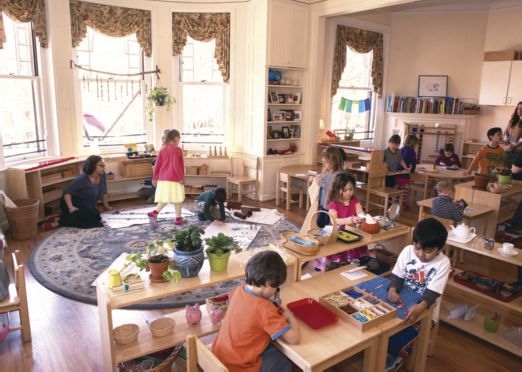
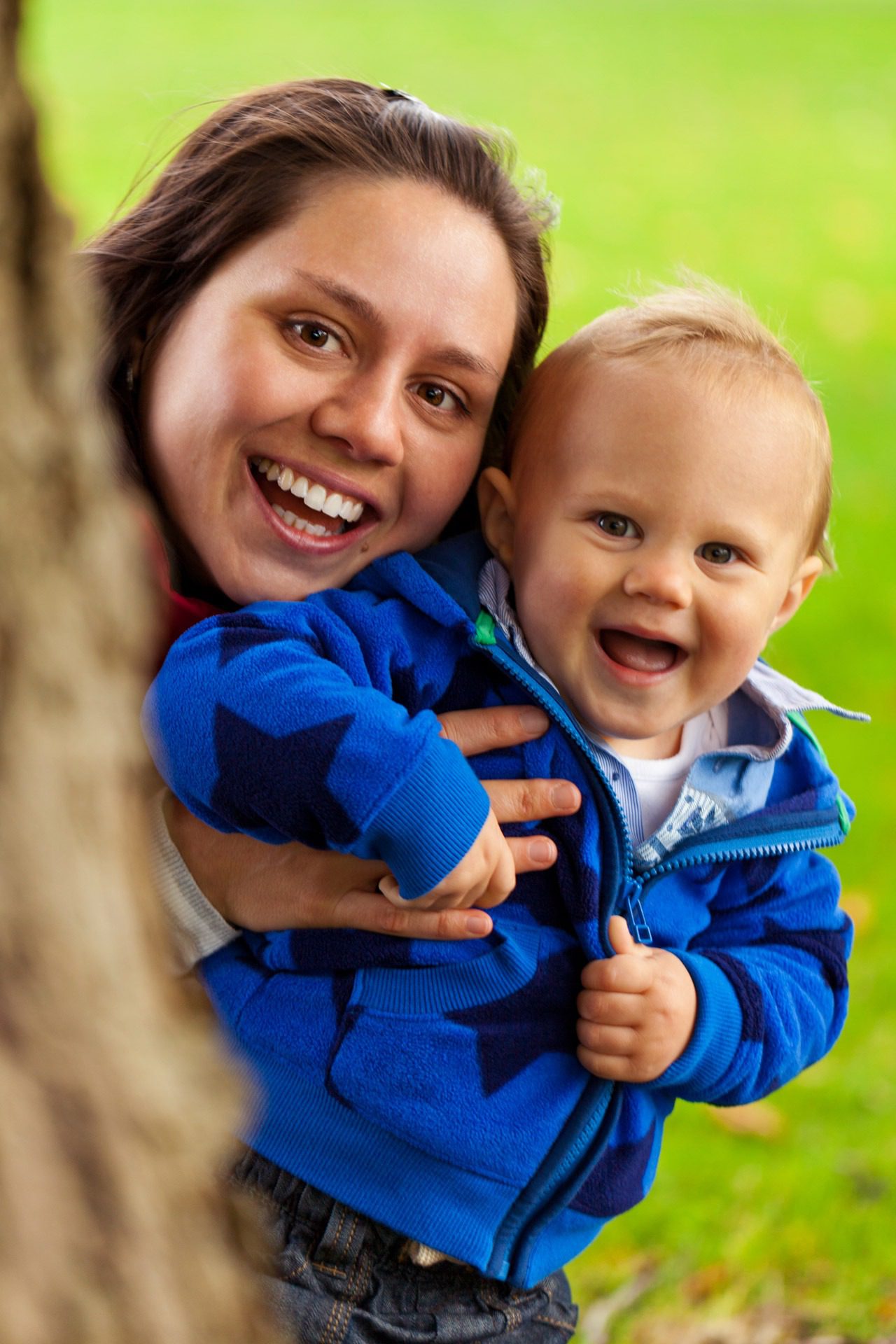
A 3-6 Early Childhood Classroom
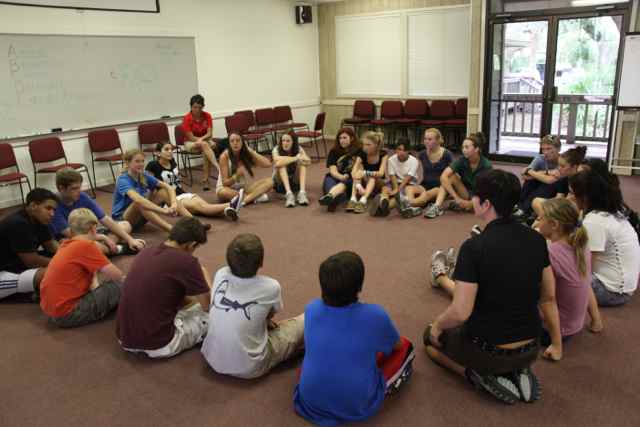
An Elementary Classroom
Before children enter a Montessori classroom on the first day of school each year, Montessori teachers have spent many hours preparing the environment. Materials that were carefully stored in boxes during vacation time are brought out and unwrapped. Wooden shelves that were stacked in the far corner of the room to allow for a thorough cleaning of the carpet are pulled into position.
Plants and classroom pets that spent their vacation at the teacher’s home are brought in from the car.
A similar scene is repeated in Montessori schools around the world. Slowly, the transformation occurs, and when it is complete, each classroom will have its own unique vibration, reflecting the energy and interests of the teachers. There is, however, an underlying secret: All Montessori classrooms are prepared according to a very specific master plan.The placement of materials is not random; the use of light and arrangement of seating areas is deliberate. It is a master plan that is one hundred years old, seen through new eyes at the beginning of each school year.
In Part One of “The Guided Tour,” we will focus primarily on the prepared Practical Life and Sensorial environments of the Early Childhood classroom, because this is where it all begins, and because the materials and activities are so plentiful and exciting to young children … and a source of mystery to most parents.
In Part Two, we will see how Montessori students move from the concrete (the Early Childhood classroom) to the abstract (the Elementary classroom) in the areas of Language, Math, and Science.
by Tim Seldin | Infant-Toddler (0 to 3), Kindergarten, Later Adolescence (15-18), Lower Elementary (6-9), Montessori Administrators, Montessori Middle School, Montessori Parenting, Montessori Secondary / High School, Montessori Teachers, Parent Education, Primary (3-6), School Leadership, The International Montessori Council, Upper Elementary (9-12), Webcasts / IMC
On December 13th, 2017, Tim Seldin led a conversation on the topic of one aspect of creating deeper parent engagement through a Parent Ambassador program.
A Parent Ambassador is any parent who gives his or her time and talent to support the efforts of the school in welcoming new parents, providing a current parent‘s perspective on what it is like to have a child in the school, and to support the classrooms and enhance communication and encourage participation throughout the school year.
Parent Ambassador programs can offer committed parents a number of different levels to be active in ways that seem right for them in any given year:
1. Parent Ambassadors who are willing to accept phone calls, emails, or other communication from potential families. This group of parents provides a parent-to-parent line of introduction to your school community for prospective parents. The goal is not to “sell” anyone on the school, but to help them determine if ours might be the right fit for their family by sharing their own experience as current or past parents.
2. Room Parents who volunteer their time to support a particular classroom through communicating ongoing information, encouragingparent engagement with the school through the class-level or broader project level, to remind parents of upcoming events, and to help coordinate activities that support the class and children working in partnership with the teachers.
3. Parent Ambassadors to New Families who volunteer to help new parents become part of the school community through their first year at the school. This includes the normal roles of serving as one more special point of contact, inviting new parents to contact them if they are not sure about something, reminding them of upcoming events, welcoming them as standing members of the community into the fold, and helping them to see how and why they can and should become involved.
Do you run a Parent Ambassador Program? We have for years at the Montessori Foundation’s La School, but never really fleshed the process out into an easily followed ParentAmbassador handbook. The idea is to prepare a sample written handbook that gives Parent Ambassadors relevant information, answers frequently asked questions, and includes any other resources that may be helpful, such as a sample calendar, lists of suggested things to do, and sample emails or simple scripts for phone calls.
If you have something to share, please send it to
timseldin@montessori.org and we will make it available for the attendees as part of our shared resources.
by Johann Christop Arnold | Brain Development, Communication, Computers in the Classroom, Parent Education, Tomorrow's Child, Uncategorized
Introduction
Another great article—thanks to Community Playthings! Often in Montessori schools, parents ask, “Why don’t you have computers or other technology in the early childhood classrooms?” or “Why isn’t there more technology in the elementary classrooms?”
In this article, the author talks about “white space.” We understand the value of white space. We understand that children must have time to develop human connections with all of their ups and downs, challenges, and opportunities for problem-solving and conflict resolution. Our classrooms are the space within.
Montessori also reveres wonder and solace of the natural world. For us, there is no question that there is a link between children’s time in the natural world and their ability to thrive—gardens, nature walks, quiet outdoor spaces. More white space!
Read this article to learn more about the effects of technology on our children.
—Lorna McGrath,
Program Director of the
Montessori Family Alliance
Children of the twenty-first century can navigate distant worlds from their video-game controllers, but are not equipped with an understanding of the real world outside the window. Fascinating entertainment options have them hooked almost as soon as they can focus their eyes.
As parents and teachers, we know that too much technology is bad for children. And we’ve all heard horror stories about cyber-bullying, easily accessible porn sites, and online sexual predators. Parents can try to put controls on what their children can see and limit their access time. But what if the technology itself turns out to be bad for childhood?
Rhonda Gillespie is an infant and toddler specialist who has worked in early childhood education for decades. When I asked her what she thought about technology and children, she shared her own story:
I have seen a devastating impact on children over the last twenty years. Technology attacks the foundation necessary for healthy development.
When I was a child, our neighborhood was safe and I played outside every day with my friends. We used our creativity and imagination, enhanced our problem-solving skills, and developed healthy bodies. But by the time my son was growing up, I rarely saw neighborhood children playing outside. The trend had shifted, and the outdoors was perceived to be unsafe.
I had to return to work full time, which meant long days and less evening time to play and enjoy the outdoors with my son. The biggest mistake I made was purchasing him his first video game console. It started off with rules and time limits, but as time progressed, so did the hours at the game controller.
At the beginning, it seemed like a win-win: he was interacting with children from all over the world and could casually socialize with his age group. He became good at some games and his confidence rose. I always thought that, at some point, he would find friends to play within the neighborhood. Socialization has always been a challenge for him, and video game companies often bill their products as a bridge to forming connections. Now I feel he was denied the chance to develop healthy interactions.
My son is seventeen years old now. He will text all day long, but when he’s around people, he does not know what to say or how to start a conversation. He says he is comfortable talking to people on the computer because he does not get bullied. But the flip side is that he did not learn to work through those awkward childhood moments that are an opportunity for growth. If he had never had the choice of online “friends,” would he have learned better social skills?
Part of childhood is about problem-solving, working out strategies and solutions to everyday life issues. Life became easier with technology, but it also made children unfamiliar with the process of success: hard work and patience. We have created a generation that expects things immediately without effort. For example, when I was in school I would spend months on a research paper, taking many trips to the library, spending hours studying and collecting verified data. My son can now produce the same report in a few hours, on his computer, without the element of verification or proof.
The accessibility of screen devices has caused a significant decline in children’s resilience, self-determination, desire for hard work, and sense of pride in achievement. And socialization among children is becoming extinct.
Technology affects people of all ages, simply because it transfers our interest and consideration from human beings to machines. It’s especially damaging for young children, who used to rely on the adults close to them for guidance and example. In his book, Simplicity Parenting, educator Kim John Payne touches on this point:
The late MIT professor and pioneer of artificial intelligence Joseph Weizenbaum came to wonder about the appropriateness of computer technology for young children. He questioned whether we want to expose our young children to artificial minds without human values or even common sense. Weizenbaum believed that there are transcendent qualities of human interaction that can never be duplicated by machines; he used as an example “the wordless glance that a father and mother share over the bed of their sleeping child.”
Used too soon, does the two-dimensional screen of a computer actually interfere with a young child’s complex learning systems of relationships and sensory exploration? I don’t believe that computers should be a part of a young child’s daily life. How curious will children be, how mentally agile, creative, and persistent in seeking answers to their questions, if, from a young age, they learn to Google first, and ask questions later (or not at all)?
There is no easy way to relieve the burden that technology places on children. But if we love them, we can’t slip into resignation just because we don’t know where to start. One way to take action is to give children more “white space.” In a book, white space is the room between the lines of type, the margins, the extra space at the beginning of a chapter. It allows the type to “breathe” and gives the eye a place to rest. White space is not something you’re conscious of when you read a book. It is what isn’t there. But if it were gone, you’d notice it right away. It is the key to a well-designed page.
Just as books require white space, so do children. They need room to grow, in a space shielded from the onslaught of the information age. It does not take a brilliant mind to see the effects of a lack of white space. When children are overwhelmed by entertainment, material goods, high-pressure academics, and frequently unstable home life, it’s as if their flashlight batteries are being run down. Their light gets dimmer, and they don’t know what’s wrong. If we deny them the time, space, and flexibility they need to develop at their own pace, they will not be able to recharge their batteries.
The ancient Chinese philosopher Lao-Tzu reminds us that “it is not the clay the potter throws that give the jar its usefulness, but the space within.” If stimulation and guidance are the clay, then time by oneself is the space within. Hours spent alone in daydreams or in quiet, unstructured activities—preferably out in nature—instill a sense of security and independence and provide a necessary lull in the rhythm of the day.
Children thrive on silence. Without external distractions, they will often become so inspired by what they are doing that they will be totally oblivious of everything around them. Unfortunately, silence is such a luxury that they are rarely allowed the opportunity for such undisturbed concentration.
As parents and caregivers, how can we find creative ways to give children more silence and space? We don’t all live as close to forests and streams as we might wish. But creative teachers can do a lot with a little. Dana Wiser, a friend of mine, remembers how his daughter’s teacher found a way to give her students white space during the day:
When my daughter Mary was in first grade, she was lucky to have a teacher wise in the ways of both children and nature. She encouraged every child to adopt one of the trees that were grouped around the children’s playground. Mary’s “pet tree” was a sycamore, strong and tall, and of a girth she could hide behind. Each child studied the adopted tree, tracing its leaves and bark pattern. Quiet time spent with their pet trees was extra special, and when something about the school day upset Mary, all she had to do was visit her Sycamore, drawing solace from its strength and comfort from its shade. She will love all trees, and especially sycamores, all her life; more than that, something of nature’s healing power lives in her heart as a gift from her pet tree.
Montessori Leadership/ Sept 2017/ Pg 14
by Jan Katzen Luchenta | Brain Development, Family Resources, Health / Nutrition, MFA, Parent Education
When I began my career as a Montessori educator decades ago, I had no idea that what a child ate (or didn’t eat) for breakfast could dictate the difference between inattention, chaos, grumpiness, status quo, and excellence in classroom achievement. Nor did I know that my students would inspire me to change careers.
Attention, learning, memory, sense of well-being, calmness, and impulse control are by-products of essential nutrients eaten daily. Essential nutrients must come from diet every day because the body cannot manufacture them from other nutrients. The protein contains 9 essential amino acids that build muscle, body tissue, and chemical messengers in the brain that influence how we focus, feel, and behave. Essential amino and fatty acids from animal, fish, and plant sources are also required in a child’s daily menu. They regulate the brain’s chemical messengers so that there is a good balance between arousal and calm for a balanced child ready to learn and able to face life’s challenges with a bit more emotional equilibrium.
Two important facts about nutritional components for breakfast:
1. Complete proteins, such as beef, eggs, fish, chicken, and cheese contain all of the essential brain-boosting nutrients needed for learning. Peanut butter is low in the much-needed amino acid, tryptophan, which is responsible for building the calming brain chemical, serotonin. Save nut butters for a mid-morning mini-meal on sprouted whole grain bread. (There is no such thing as a snack for a child’s busy brain and body.)
2. Complex carbohydrates, such as whole grains with the bran and germ intact (steel-cut oats, stone-ground corn chips and tortillas, brown rice, quinoa, and beans) provide slow-burning, sustained fuel for the ‘think tank.’ Simple carbohydrates, such as sugary boxed cereal, muffins, pancakes, waffles, and protein bars provide a fast-burning fuel that soon drains the brain and alerts the body’s fight-or-flight system, which is counter-productive to learning.
Breakfast #1
“Brainiest” Omelette
1 or 2 cage-free scrambled eggs with 1 to 2 oz of wild fatty fish (lox, baked salmon, trout, cod), organic spinach leaves, 1 tsp olive oil poured onto eggs right before serving (helps more of the omega 3s from the fish incorporate into brain cells). ½ cup steel-cut oatmeal with ½ cup low-sugar almond milk.
Breakfast #2
Chili
My favorite because it contains brain-boosting nutrients in ½ cup servings. You can prepare this in a crock pot over the weekend and serve it for breakfast, lunch, dinner, or in-between every day of the week!
Chili – Beans, ground meat or mild cod, tomato paste, canned tomatoes, sautéed onions, chili powder to taste, finely chopped baby arugula or spinach, cilantro, a drizzle of olive oil before serving.
Breakfasts #3
Breakfast Burrito
If you’re in a hurry, make these ahead and send half to school for a mid-morning mini-meal.
This recipe involves a soft, stone-ground corn tortilla, scrambled egg and/or 2 oz fresh meat, ¼ cup beans, a sprinkle of mozzarella cheese, chopped baby arugula or spinach leaves, low-sugar ketchup or mango salsa with 1 tsp. olive oil.
Breakfast #4
English Breakfast
Scrambled eggs and low-sugar baked beans; drain out the syrup and replace with olive oil (brain fat), sliced tomatoes, ½ cup pineapple.
Please note: Greens for breakfast contain an abundance of trace minerals and B-vitamins, including folate (Latin: folium-foliage). The need for daily folate continues after it builds the brain (neural tube). Folate lowers the risk of depression and increases memory and mental agility. It also supports vascular health throughout life and reduces the risk of developing cancer.
Tomorrow’s Child / September 2014 / p 29
by Margot Garfield-Anderson | Communication, Family Resources, Montessori Family Life, Montessori Parenting, Parent Education, Parent-Teacher Communication, Tomorrow's Child, Tomorrow's Child Online Issue, Uncategorized
Years ago a dear friend of mine enrolled her child in a local Montessori school. This child was very near and dear to me, so when I asked his parents if I could to go and observe him in class, I was most excited.
The school used an observation sheet that guides visitors in the process (see page 25). It also helps visitors to remember to be mindful of Montessori classroom etiquette. Sheet in hand and excitement high, I went into the classroom and tried to be as unobtrusive as possible.
In this particular Montessori school, I was allowed to sit in the classroom, and I was delighted with what I observed; however, I found out later that my visit had some unexpected results. When I quietly left the classroom, my three-year-old friend did not understand that he was not leaving with me. He was quite upset and, lacking the verbal skills to clearly articulate his confusion, it took his Montessori guides some time to reassure him that his parents would, indeed, pick him up later in the day.
My granddaughter Blakely’s school has a one-way observation mirror. Her parents chose not to tell her that I would be there at her school until it was time to go home for the day. This way she was not thinking about me watching her. But this is just one of many possible ways a school might offer a parent (or grandparent) the opportunity of observing in the classroom. Some schools, as the one I described earlier, allow adults in the room but require very quiet and unobtrusive involvement, so that the normal routines of the class are not altered nor disrupted. With proper understanding, visitors can observe the children’s routines and get a sense of what goes on in the classroom during the day.
Whether you are behind a one-way mirror or seated in a Montessori classroom, now what? Why are children taking things off of shelves and then working alone? Where is the teacher in all of this? How is it that these children are so totally engrossed in what they are doing that they don’t even sense a foreign presence in the room?
Since you will probably visit in the morning, it is important to remember that the morning is the time for what is referred to as the “children’s uninterrupted work cycle” (typically, the first 2.5 -3 hours of the day). This is the time of day when children (who have eaten a good breakfast) are at their best levels of attention and very focused on their ‘work.’ Since not all children move or are motivated to learn at the same pace, this time provides them an opportunity to concentrate on the task or project they have chosen. This learned ability to focus will help them throughout life. This is why Montessori discourages the interruption of a child who is hard at work, unless it is very necessary to do so. Interruptions include questioning a child; so when you are observing, you are not there to engage in conversation.
While you are observing your own student, take time to look at others in the environment to get a sense of what else might take place during this time. Take notes so that you can ask more specific questions of the child later in the day. Instead of asking, “What did you do in school today?” to which the answer is usually, “Nothing,” ask something like, “What was it like working with the Pink Tower or Metal Insets or Brown Stair?” You will probably get a much different answer.
Observing in the classroom is a wonderful way for parents and grandparents to connect deeper, understand greater, and reinforce more of the Montessori way of life. Enjoy each experience with them because before you know it, they grow up!
Tomorrow’s Child/Oct 2016/ pg 24
by Maha Turner | Empowerment, MFA, Montessori students, Montessori Teachers, Parent Education, Peace Education, The International Montessori Council
This is a story of hope emerging from the chaos in Syria. Syria has the worst refugee crisis of our generation.
According to the United Nations’ figures, there are 13.5 million Syrians requiring humanitarian assistance. Within Syria, there are 6 million displaced, and over 4.8 million are refugees outside Syria.
A number of countries welcomed those refugees, such as Turkey, which has 2.7 million, and Jordan, which has 655,404.
I was born in Cairo, Egypt on August 2nd, 1964. I completed my elementary, preparatory, and secondary education at Ramses College for Girls, formally known as American College for Girls. For as long as I can remember, I have always had a great passion for history, so it was no surprise that I ultimately attended Helwan University in Cairo to study Egyptology. After graduation, I became a certified tour guide for English-speaking tourists. I conducted educational tours of historical sites throughout Egypt.
I traveled a lot when I was in my twenties. One of the unusual places that I visited was the island of Bermuda in 1988, where I met the man who would become my husband the following year. We now have two boys and a girl: Omar, 23; Adam, 21; and Hasna, 16 years old.
When I moved to Bermuda, I had the opportunity to change my career. I obtained a number of Montessori Diplomas.
I have been a Montessori teacher for almost 23 years at Somersfield Academy, Bermuda. I have a Master’s Degree in Early Childhood Education/Montessori from Xavier University, Cincinnati, Ohio. I have completed the Trainer of Trainers Course at Montessori Teacher College in Toronto, Canada. It was a privilege joining The Center for Guided Montessori Studies and becoming one of their Instructional Guides. I was pursuing my Ph.D. in Early Childhood Development; however, I decided to put things on hold and dedicate more time to help make a difference. Additionally, I left my position in Bermuda and moved to London to be with my children, who are pursuing their education there, as well as to be closer to my Syrian Cohort in both Jordan
and Turkey.
The inspiration to help Syrian refugees came from my students at Somerfield Academy, who were between the ages of four and six years old. The conflict in Syria has been in the news for more than six years, and many of the older children were aware of it and started to question why it was happening and who was helping the people displaced by the war. I tried to explain things to them in a simple yet clear way and read the book The Journey by Francesca Sanna.
I explained how Syrian people left their country and became refugees. Unfortunately, not all countries were willing to offer them sanctuary. To demonstrate the countries that were assisting, we took out the Montessori puzzle maps and made two piles. In the first pile, we identified all the countries on the different continents that accepted the Syrian refugees, and in the second pile, we identified countries that decided not to accept them. The children immediately observed that not all countries were willing to assist them and made the comment, “Mrs. Turner, why don’t you help them by starting a Montessori classroom and making sure you put a Peace Table in it just like ours?”
I, too, had spent years watching news reports documenting the plight of the Syrian refugees who had fled their country, and this had now compelled me to ask myself what can I do to help and be a real-life example not only to my students, whom I taught to be peacemakers, but to the whole world. Dr. Montessori was a firm believer in Peace Education and the importance of helping and accepting all our fellow humans.
Once I had made my decision, the children were very excited about assisting and trying to raise money to help those less-fortunate children who had lost everything.
To help raise funds, the children set up a shoe-polishing station for 50 cents per pair of shoes. Just this small effort managed to raise almost $200 in a few days, which was phenomenal. The students’ parents made generous donations towards our endeavor of helping the Syrian refugees. I chose to start up a Montessori school within an Arabic-speaking country because I am an Arabic-speaking person. The school I worked for generously donated a lot of the Montessori materials for my future Montessori classroom in Amman, Jordan.
So, I left Bermuda at the beginning of July 2016, heading to Amman. My trip was full of many unusual events, and it felt like I was guided by a divine plan. Fortunately, I was offered free accommodations in Amman, as the owner of a hotel there was the mother of my son’s friend in London. It is amazing how interconnected the world is, but you don’t realize it until you try something new and different.
I arrived in Amman with an immense excitement; however, my initial plan to work with an international aid agency fell through. I was disappointed at first because I found myself in Amman with cash and a suitcase full of Montessori materials but unable to help anyone. I sat in my hotel room wondering what to do next. This uncertain situation lasted for a few days, and then I remembered that I never mentioned to my bank in Bermuda that I would be using my credit card in Amman, so I sent an email to my banker, who happened to be a friend. I shared with him my dilemma, and he suggested to contact his dad who lives in Amman and see if he could help me. I called his dad, who introduced me to the Organization of Islamic Center, and within 24 hours, I met a few Syrian refugee women, some of whom were widows.
They live in a group of apartment buildings on the top of one of the mountains in Amman. In the basement of one of the buildings, there was a traditional nursery school for Syrian children. The nursery was filled with plastic toys that served no educational purpose. The children, all between the ages of three and six, were literally out of control. The teachers were really trying, but they did not have the tools or the knowledge to deal with those children. Some of the little ones had seen horrible things before leaving Syria. Older children can talk about their trauma, but not so much with younger children. However, I knew that the Montessori materials could help transform lives and be used as therapeutic tools for those traumatized children.
Both the teachers and I spent a day transforming the classroom, throwing out things that were not needed. Of course, I found a good spot for our Peace Table. The teachers also introduced me to other women who wanted to be trained as Montessori educators, and finally, things began to fall into place!
I began with lectures about the Montessori philosophy and showed the teachers how to use the Montessori materials and encourage the children to become independent learners. We introduced the children to the basic grace-and-courtesy lessons, and within two or three days, we all witnessed the transformation in the children’s behavior. Suddenly, the screams, the conflicts, the running in class began to moderate, and we observed calm, engaged and content children, who were able to concentrate for a long period of time. We had many funny comments from visitors, who came in and asked, “What did you do to them?” The Montessori philosophy and the materials gave peace and harmony to everyone, especially the younger children, who had been traumatized by the horror of the Syrian war. Within a very short period of time, the transformation to a peaceful, cohesive existence had begun.
I placed beautiful and attractive objects on the Peace Table in their classroom, and I guided them through the process of resolving conflicts using their words. They also learned about talking softly, walking carefully in the classroom, and using a respectful touch with each other. The children took everything they learned in the classroom to their home environment. They were upset when they heard members of their family shouting or having arguments, and they offered to take them to their classroom to sit at the peace table and resolve the issue peacefully.
We got reports that the children were waking up very early in the mornings and begging their parents to take them to school. This was reassuring to all the new teachers, who now realized the power and potential of the Montessori philosophy. In the morning, I worked with the teacher trainees alongside the children, and the afternoons were spent with the trainees on both theory and practice.
After I left Amman, I continued to train those students over the Internet using all the resources of the Center for Guided Montessori Studies. I am especially grateful to the founders of this training centre: Kitty Bavo, Mark and Tim Seldin, and Jonathan Wolff, who provided me access to their online resources in order to help the Syrian students. However, the next challenge to overcome was translating all of the resources from English to Arabic, as all of the teacher trainees are Arabic speaking and cannot read or write English. I began the search for a translator, who would work for a reasonable price, and I eventually located an expert in Germany.
Shortly after returning from Jordan, I received an email from Tim Seldin, the president of the Montessori Foundation, and Kitty Bravo, the director of the Center for Guided Montessori Studies. They informed me that the Ishraqat organization in Turkey was seeking Montessori training for some of the Syrian refugee women there. I jumped at the chance to empower more women to start rebuilding their lives.
I was fully aware that it would not be an easy task but was confident that what I was doing would give those women hope and purpose. Their lives have been devastated by forces outside their control, and I felt the responsibility to give them a reason to keep going and be positive about the future. My students are highly qualified women and once had full lives with jobs and families. The war has taken that from them; they have been forced to flee to other countries, often with just what they could carry. Many of my students are widows, who have lost their husbands in the fighting and their stories are heartbreaking.
In October 2016, I visited my new group in Istanbul and started the Montessori philosophy lectures. I combined my group in Amman with this group and continued with our online chats and lectures.
I took another trip to Istanbul in December 2016 to continue with the lectures, and the search started for a place to be used as a Montessori classroom for the adult students to do their internship. During that trip, I was asked to help more women. This time, those women were living in even more desperate circumstances in a refugee camp called Karkamish in southern Turkey, just across the border from Aleppo in Syria. The total number of my students is 41, between the ages of 24-50 years old. Since I started the training back in August 2016, a few of my adult students were sent with their families to live in other countries around the world, such as the United States, Germany, and other countries in the Middle East. I continue to work with them online and provide them with all the needed support to become successful Montessori teachers.
After many months of searching, the Ishraqat organization (with the help of the Turkish government) found us a space in one of the public schools, so we can start our Montessori classroom for the adult students in Istanbul to do their internship; however, we are awaiting permission to start a school inside Karkimesh camp, which is in southern Turkey on the border of Alleppo, Syria.
My dream is that we can ignite a Montessori movement across refugee communities. I believe the Montessori Method helps both the adults and the children to start the process of coming to terms with their lives as they now are. These women want to support themselves and their families. They want their children to be able to gain the benefits of an elite education. Pre-school is now widely recognized as the foundation of academic success, yet children in this region do not usually start school until age seven.
A group of my parents at Somersfield Academy joined forces with me and are working on establishing a charity that will help raise money towards the costs of travel, Montessori equipment, and the translation of all the resources to Arabic. We named our charity, “Mission Montessori.” We are very blessed with generous gifts from people and organizations that were inspired by my work.
It is very easy to get depressed when we see stories about Syria on the news, including the shocking use of chemical weapons by the Syrian government on its own people. It outrages us that governments sit idly by and do nothing because politicians decide that there is no strategic benefit to getting involved. At the end of the day, governments don’t always do what is right, but it is the people who can determine an outcome to a situation. I simply want to share my story so that people can know that, even in the most desperate circumstances, the human spirit will prevail. Even for Syrians there is hope.
My dream is to start a Montessori Education Center so that the teachers I am training now, will go on to start their own schools and train more women to become Montessori teachers who, in turn, will help more young refugee children to flourish within the Montessori program. Mission Montessori, our charity, will ask that these start up schools take 30 percent of their student children from refugee families that are unable to pay. In this way, we will create the Montessori movement in the most needed areas in the world and give graduates the chance to pass on the gift of learning that was given to them. There are many parts of the planet that need Peace Education taught at the most critical age of human development, and at this time in human history, this part of the world is in desperate need for peace and stability through education.
Want to help? Contact Maha Turner at: mahat1964@gmail.com
Tomorrow’s Child / September 2017/ p 23
by Kelly Johnson | Kindergarten, Lower Elementary (6-9), MFA, Montessori Family Life, Montessori Parenting, Outdoor Education / Resources, Parent Education, Primary (3-6), Webinars / MFA
Kelly Johnson is an expert on connecting families and nature. From her experience as a Montessori teacher she has developed activities for families to create nature journals to carry with them and record their observations, explorations, and drawings.
by Kimberly Kopko Ph.D | MFA, Montessori Parenting, Parent Education, The International Montessori Council
Editorial Comment: Although this article is aimed at parents, we asked for permission to reprint in Montessori Leadership because of the important research it contains. Montessori classes are generally far quieter than regular classes, and now we have the research that explains how beneficial that simple aspect really is.
Cornell University environmental and developmental psychologist Gary Evans has conducted numerous research studies examining the effects of the physical environment on children’s well-being. Evans’ large and diverse body of research reveals that the effects of the physical environment—noise level, overcrowding, and housing and neighborhood quality—are as significant for children’s development as psychosocial characteristics, such as relationships with parents and peers. Indeed, the physical environment profoundly influences developmental outcomes, including academic achievement, cognitive, social and emotional development, as well as parenting behavior.
Noise
Children’s reading abilities, cognitive development, physiological indicators, and motivational tasks are affected by exposure to noise. The most common noises that children are exposed to are transportation (e.g. cars, airplanes), music, and other people. Evans’ research reveals significant reading delays for children who live near airports and are exposed to airport noise. He and his colleagues found these delays in reading to occur at noise levels far below those required to produce hearing damage or loss.
Chronic and acute noise exposure also affects cognitive development, particularly long-term memory, especially if the task is complex. Short-term memory appears to be less affected, but this is dependent upon volume of noise. One way that children adapt to chronic noise is by disregarding or ignoring auditory input. A consequence of this coping strategy is that children also tune out speech, which is a basic and required component of reading. As a result, not only are children’s reading abilities affected but also their abilities at tasks that require speech perception.
Noise levels also indirectly influence children’s cognitive development via their effect on the adults and teachers who interact with them. Teachers in noisy schools are more fatigued, annoyed, and less patient than teachers in quieter schools. Teachers in noisy schools also lose instruction time due to noise distractions and have a compromised teaching style.
Children exposed to chronic loud noise also experience a rise in blood pressure and stress hormones. And children as young as four are less motivated to perform on challenging language and pre-reading tasks under conditions of exposure to chronic noise.
Technical Note: Data from studies on aircraft noise and reading include a cross- sectional study with statistical controls for socioeconomic status (income) and a prospective, longitudinal study with the same children before and after the opening of a new airport. “Controlling for income” is a statistical procedure that allows a researcher to eliminate the effect of income on the results. Thus, we can conclude that it is the level of noise, not that low-income families may live closer to airports, which accounts for the findings. In other words, significant reading delays are found for children living near airports, regardless of income.
Crowding
Research demonstrates that crowding has an effect on interpersonal behaviors, mental health, motivation, cognitive development, and biological measures. Family size has not been found to be a critical factor in crowding. Rather, Evans identifies density, or number of people per room, as the crucial variable for measuring effects of crowding on children’s development.
Regarding child development, Evans has found that 10-12-year-old children are more likely to withdraw in overcrowded situations. Children may engage in withdrawal behavior as a means of coping with an overstimulating environment. Evans’ research also reveals that a highly concentrated number of children in an activity area results in more distractions and less constructive play among preschool-aged children.
Overcrowding also influences parenting behaviors. Parents in crowded homes are less responsive to young children. Evidence of parental unresponsiveness begins early (before a child is one year old) and occurs at all income levels. Overcrowding also strains parent-child relationships. Parents in overcrowded homes are more likely to engage in punitive parenting, which in turn, affects the level of children’s distress. Evans’ research shows that strained parent-child relationships negatively influence social, emotional, and biological measures (e.g., elevated blood pressure) in 10- to 12-year-old children.
Children’s mental health status may be affected by overcrowding. Elementary school-aged children who live in more crowded homes display higher levels of psychological distress, and they also have higher levels of behavior difficulties in school. Evans has found that overcrowding produces psychological distress among third- and fouth-grade students, as reported by both the children and their teachers. These effects are intensified if children reside in large, multi-family structures. Effects were also intensified among a group of 8-to10-year-olds if the family home was chaotic.
Chronic overcrowding influences children’s motivation to perform tasks. Independent of household income, children aged 6-12 show declines in motivational behavior and also demonstrate a level of learned helplessness—a belief that they have no control over their situation and, therefore, do not attempt to change it—although they have the power to do so. But there are gender differences: Evans found the link between overcrowding and learned helplessness among 10-to-12-year-olds to exist for girls but not for boys.
Evans’ studies find several effects of overcrowding on both objective and subjective measures of children’s cognitive development. Elementary school children living in more crowded homes score lower on standardized reading tests, and they see themselves as less scholastically competent than their classmates.
Parenting behaviors directly related to children’s cognitive and language development are also affected by density level. Evans found that parents in crowded homes speak less to their infants and use fewer complicated words during the period from infancy up to age two and a half. Research demonstrates that the quality and sophistication of speech, as well as the quantity of words spoken by parents to their children, are significant factors in the amount and types of words children produce.
Biological measures implicate the effects of overcrowding on children’s physiology. In one study, Evans found gender differences in measures of blood pressure among 10- to 12-year-old children, with males in higher residential crowding situations demonstrating elevations in blood pressure but not females. However, higher overnight levels of the stress hormones (epinephrine and norepinephrine) were found in both 8- to 10-year-old male and female children living in high-density apartments. This finding was especially relevant when chaos and disorder were present in the family.
Housing and Quality of Neighborhood
Housing quality and the neighborhoods in which houses are situated have also been investigated in relation to children’s socio-emotional development. For example, families living in high-rise housing, as opposed to single-family residences, have fewer relationships with neighbors, resulting in less social support. Studies on housing and quality of neighborhood have also examined the role of chaos in children’s environments, finding an association between chaotic home environments and levels of psychological distress among middle school children.
Research has identified the physical characteristics of neighborhoods that significantly influence children’s development. These characteristics include: residential instability, housing quality, noise, crowding, toxic exposure, quality of municipal services, retail services, recreational opportunities, including natural settings, street traffic, accessibility of transportation, and the physical quality of both educational and health facilities. Perhaps, not surprisingly, Evans’ research findings support the therapeutic effects of children’s exposure to natural settings. Natural settings are preferred by children and allow them to exercise gross-motor abilities as well as engage in social interactions. In addition, these settings also alleviate the adverse effects of children’s exposure to chronic stress.
The research outlined above demonstrates both the direct and indirect effects of the physical environment on children’s development. Direct effects include cognitive, social, emotional, and biological outcomes. Indirect effects include interactions with parents and teachers, which in turn, influence developmental outcomes, such as learning and language development. Although, in several studies, Evans demonstrates these effects for children at all income levels, low-income children experience excessive exposure to noise, overcrowding, and unfavorable housing and neighborhood conditions. Exposure to these poor-quality physical conditions is linked to other psychological and social aspects of the environment, especially poverty. Using a building-block analogy, low-income children have more blocks stacked one on top of the other than children of other income levels. Thus, children living in poverty experience multiple exposures, rather than a single exposure to risk.
References
Evans, G.W. (2006). “Child Development and the Physical Environment.” Annual Review of Psychology, 57, 423-451.
Evans, G.W., & Hygge, S. (2007). “Noise And Performance in Children and Adults.” In L. Luxon & D. Prasher (Eds.), Noise and Its Effects (pp. 549-566). London: Wiley.
Evans, G.W., & Lepore, S.J. (1993). Non-auditory Effects Of Noise On Children: A Critical Review. Children’s Environments, 10(1), 31-51.
For more information, visit the Human Development Outreach & Extension website where additional copies of this article and many other resources are available: http://www.human.cornell.edu/hd/Outreach_extension/index.cfm
Permission to reprint this article from the Cornell website was granted by the author, Kimberly Kopko, Ph.D., Senior Extension Associate, Parenting In Context Project, Department of Policy Analysis and Management Affiliate, Bronfenbrenner Center for Translational Research, Cornell University.
Montessori Leadership / 2013 / p 27
by Tim Seldin | Adolescence, Brain Development, Early Adolescence (12-15), Emotional Intelligence (EQ), Later Adolescence (15-18), Lower Elementary (6-9), MFA, Montessori Education, Montessori Family Life, Montessori Middle School, Montessori Secondary / High School, Montessori students, Parent Education, Planes of Development, Primary (3-6), Psychology, Research, Sensitive Periods, The International Montessori Council, Upper Elementary (9-12), Webcasts / IMC
On September 25th, 2014, neurologist and Montessori researcher Steve Hughes and Montessori Foundation President, Tim Seldin, sat down to discuss his work and how modern brain science supports Montessori education worldwide. As Steve puts it, Montessori builds better brains.
v
by Steve Hughes, MD | Adolescence, Brain Development, Early Adolescence (12-15), Emotional Intelligence (EQ), Later Adolescence (15-18), Lower Elementary (6-9), Maria Montessori, MFA, Montessori Education, Montessori Middle School, Montessori Secondary / High School, Montessori students, Parent Education, Planes of Development, Primary (3-6), Psychology, Research, Sensitive Periods, The International Montessori Council, Video
Dr. Steve Hughes, Neuro-psychologist and Brain Scientist, examines the basic assumptions of education today, and shows how an entirely different framework, first articulated by Dr. Maria Montessori over 100 years ago, conforms to what we now know about optimizing social, emotional, cognitive, and academic development.
by Michael Dorer, EdD | Emotional Intelligence (EQ), Imagination, Lower Elementary (6-9), Montessori Curriculum, Montessori Education, Montessori Middle School, Montessori students, Parent Education, Primary (3-6), Science, The International Montessori Council, Upper Elementary (9-12), Webcasts / IMC, Writing
Download PDF of slides
Is Montessori education purely a reality-based program or is it a means of stimulating and developing the imagination? Are these two goals incompatible or complimentary? Michael and Tim discuss the meaning of imagination, kinds of imagination, its role in Montessori schools, and to compare it in Montessori to conventional schools. We compare and contrast imagination in both the Children’s House and the Elementary levels.
by Tim Seldin | Emotional Intelligence (EQ), Kindergarten, Parent Education, Primary (3-6), School Leadership, The International Montessori Council
Download PDF of slides
This is a big issue and one that is crucial to building and maintaining full-implemented Montessori programs.
This is not only a challenge at the Children’s House level to keep the “Kindergartners.
It applies to the third year in Elementary I and also to the third year in Elementary II. It ties into building a strong Middle and even a high school as well.
Montessori Foundation President Tim Seldin has spent a lifetime focusing on issues of recruitment, retention, and building strong engaged Montessori school communities.
Join Tim, Michael Dorer, Kathy Leitch and your colleagues for a lively discussion about best practices in recruitment, engagement, and making the case for staying the course with Montessori.
by Tim Seldin | Discipline, Emotional Intelligence (EQ), MFA, Montessori Family Life, Montessori Parenting, Parent Education
The following tips are from Parents Magazine Online www.parents.com (not based on Montessori, but a great, free, online resource on parenting in general. Check it out!)
Keep Your Cool
Yes, it can get frustrating when your child debates nearly everything you do or say. However, getting angry, raising your voice, or being defensive won’t ease the conflict and may lead to a power struggle, says Annie Fox, author of Teaching Kids to Be Good People: Progressive Parenting for the 21st Century. Or worse, your child may shut down and feel he should never disagree with you or express his feelings. If you notice your emotions starting to rise, give yourself a few minutes to calm down, take a deep breath, and collect your thoughts. Then construct a level-headed way to address the situation at hand.
Make “Yes” Easy
Instead of asking open-ended questions, such as, “What do you want for a snack?” or “When do you want to take your bath?” offer two specific options like, “You can choose either yogurt or fruit” or “You can take your bath now or in 30 minutes. Which would you prefer?” Using this approach will make your child feel as if she has a choice in the matter — plus, she’ll go along with a Mom-approved pick with little or no fuss.
Be Firm
It’s important to be firm and consistent when letting your child know that certain things, such as wearing a seat belt, brushing his teeth, and taking prescribed medication, are non-negotiable. If your child tries to argue about something that you have already explained is a firm rule, Fox suggests that you simply repeat the original instructions and not get into a debate about it. When an issue isn’t as serious but you still don’t want the back-and-forth bickering, Dr. Paone recommends using the ACT limit-setting technique: Acknowledge the feeling (“I know you want to go to the park”), Communicate the limit (“but it’s too cold to play outside today”), and Target the alternatives (“so you can read a book or we can play a board game together instead”).
Encourage Compromise
Although you may feel your child gets enough practice trying to get you to do things her way, helping her practice negotiation skills at home can increase the chance that she will use them with peers, teachers, and other adults in her life, explains Erik A. Fisher, Ph.D., a psychologist and the author of The Art of Empowered Parenting: The Manual You Wish Your Kids Came With. For instance, if she wants to take her favorite toy along on vacation but you’re afraid she’ll lose or break it, ask her to state her case before you’ll agree. Gently guide her by asking her to explain why she wants to take the toy, how she’ll keep it safe, and what other solution she can think of to satisfy both of you. As she gets more experience, she’ll be able to work through the negotiation process without your lead.
Originally published in the September 2013 issue of Parents magazine.
by Robin Howe, EdD | Lower Elementary (6-9), MFA, Montessori Charter Schools, Montessori Education, Montessori Parenting, Montessori students, Montessori Teachers, Parent Education, Upper Elementary (9-12), Webinars / MFA
In this session Robin Howe, PhD introduces viewers to the role of the Great Lessons in the Elementary curriculum, how their design engages the imagination of the elementary child, and develops an appreciation of the history and evolution of planet in order for humans to be where they are today – technology, transportation, health sciences, etc.
by Kathy Stenger Marcus Brutlag Larry Cecio | MFA, Montessori Administrators, Montessori Education, Montessori Family Life, Montessori Middle School, Montessori Parenting, Montessori Teachers, Parent Education, The International Montessori Council
For many families facing the transition from elementary to middle school, a common belief persists that it is time for the fish to enter a bigger pond. This has indeed become the norm in the path for most American adolescents, continuing their social development by navigating the open waters of traditional middle school. Although largely accepted as the natural step for adolescents, as they begin to yearn for more freedom and responsibility, mounting research and experience continue to question the social environment of traditional middle school and the timing of this transition.
As educators and parents who have directly witnessed both paths, we wholeheartedly support taking a deeper look at the social factors when deciding between traditional and Montessori middle school. Greater concentration on how we swim and the water we swim in is proving more influential than the size of the pond and a highly beneficial developmental step before venturing into larger and uncharted bodies of water.
There is no questioning the inherent urge for increased independence and emergence into a larger social setting among early adolescents. This desire serves as necessary motivation for the acceptance of responsibility and greater maturity. It is important, however, to differentiate this desire from actual readiness for this transition. The perception and self-awareness of an adolescent is, by definition, still in development.
This is a time when a child’s brain is going through the most changes since infancy. For the most part, traditional middle school gives little attention to these still developing social abilities and assumes preparedness for a large relinquishing of guidance; however, a Montessori environment is not only socially in-line with adolescent concerns and interests, but also actively addresses and embeds social awareness into the programming and curriculum. With smaller, more communal Montessori middle schools, what is often perceived as a social ‘sacrifice’ is, in actuality, a more fitting and potentially enriching social experience.
We are a collective of teachers, fascinated with educational research and encouraged by the findings on the outcomes of a Montessori adolescent education. We have consequently created an environment that fosters the ability to live in relationship with others and work through human problems, to experience what it means to make a contribution, and to recognize human interdependence and the need to cooperate. We aim for graduates to go to the next level equipped with a social consciousness, understanding the benefits of an active role in society, balancing individual needs with communal ones, and appreciating the value of rules and their importance for harmonious living. Even before espousing the research on the effectiveness of these pursuits, we have already seen, first hand, the development of these skills within our own program.
The beauty of jumping into the role as creators of Village Gate Middle School is that it has given us the opportunity not just to read about, but to experience, what it means to guide adolescents in the way Maria Montessori envisioned. What we have witnessed has, quite gratifyingly, corresponded brilliantly with the empirical data found through our research. One of numerous anecdotes of our students’ successful social dynamics has come in the form of play. For a while, a couple of boys wanted to play wildly crazy imaginative games; a few others wanted to play structured group games; and the girls would rather just wander the playground and observe for the most part. Now, through guidance, patience, and trial and error, the group consistently plays, most often in some sort of combination of the above. They love basketball, and recently kickball, and they give the games their own rules to add the necessary silly quotient. They also break out to sit and watch when they feel like it. All of this happens fluidly with disputes handled quickly and respectfully, with encouragement given whenever necessary.
Montessori’s focus for secondary education as a “school of experience in the elements of social life” (Kahn) is echoed in David Hutchinson’s principle of developing a “spirit of place” for adolescents. This spirit of place is “rooted in community relationships” and defines place as “a community to which the adolescent feels he or she both belongs and contributes” (Kahn).
We have seen that our students have learned to be in relationship with each other. Each does his or her part to work through disagreements and hurt feelings, building on peace table skills carried with them from elementary but now taking on conflict resolution with a more sophisticated and nuanced dialogue.
They feel their interdependence deeply, aware that without every member’s cooperation, no compromise can be reached. As a result of our close classroom community dynamic, they have become autonomous in reaching agreement. It is now far more effective to leave the room and permit the kids to figure out a new classroom arrangement or daily schedule than to stay and try to lead them. Through early guidance and encouragement to stay committed to the community, the fruits of responsibility and accountability are nourished within this interdependent social landscape, where each is finding a healthy place and role.
The benefits of developing a personal sense of place and importance at this critical age cannot be touted enough. Self-esteem is based upon how children view themselves within an environment, so to be placed into an uncontrolled arena without the tools or guidance to navigate their way seems counter intuitive to nurturing this valuable element of development. Susan Harter presents this conflict in her article “Self and Identity Development,” a contribution to the Harvard University Press publication, At the Threshold: The Developing Adolescent.
Findings suggest that self-esteem begins to decline at age 11 and reaches its low point between the ages 12 and 13. As our prototypical adolescent recounts, she changed (“I felt terrible”) when she went to junior high school. The extent of change depends, in large part, on shifts in the school environment, as well as on pubertal change. Children making the shift to junior high school in the seventh grade show greater losses of self-esteem than those who make the school transition later, after eighth grade. Moreover, students making the earlier change, particularly girls, do not recover these losses in self-esteem during the high school years. A development-readiness hypothesis has been proposed to explain this pattern, suggesting that children can be thrust into an environment before they are psychologically equipped to deal with the social and academic demands of the new school structure (Harter).
Middle school is simultaneously a time of self-discovery and expression and a time of increased pressure to conform. The result is that adolescents feel intense discomfort and ambivalence about revealing their burgeoning personalities. The goal, therefore, should be to create a place where students feel at ease exploring who they are, able to take risks and try new experiences,
all the while being seen and accepted by a supportive community.
Researcher and writer Kevin Rathunde also supports the Montessori environment as conducive to not only adolescent academic development but social as well. Rathunde, in association with The NAMTA Journal (North American Montessori Teacher’s Association), has conducted extensive research on Montessori middle school. He explores the social context in a 2003 study, while looking at the roots of reports of negative experiences and lack of motivation from traditional middle school students.
The study points to three social findings:
- a growing distance in teacher-student relations at a time in early adolescence when adult support is crucial; fewer opportunities for meaningful peer interaction at a time when peers are becoming more highly valued; and
- fewer opportunities for meaningful peer interaction at a time when peers are becoming more highly valued; and a growing emphasis placed on one-directional communication (e.g., lectures, seat work, and viewing media) just as young adolescents are becoming more capable of more complex thought and communication (Rathunde 32).
- a growing emphasis placed on one-directional communication (e.g., lectures, seat work, and viewing media) just as young adolescents are becoming more capable of more complex thought and communication (Rathunde 32).
Montessori students expressed greater connections and support from their teachers, reporting that they felt that their teachers were fair and interested in them. This is most likely a result of the structure of the Montessori middle school program. The time the Montessori teacher has to observe and work with a given student is intentionally designed to provide this sense of security. Perhaps equally important is the drastically different social context Montessori and traditional students perceived with respect to their peers. While traditional students predominantly saw their peers as classmates, “Montessori students more often perceived their peers as friends-and-classmates” (Kahn 37).
Montessori groups are often structured by shared interests rather than students’ ability levels, and a significantly less amount of class time is spent in one-directional lectures. These are both elements that aid in forming closer relationships among students while engaged in work time. The Montessori work environment provides continual opportunities to participate socially and create community instead of delineating factions between class and social time. Group and class discussion and exploration are integral components of the Montessori classroom and serve as safe experiences for students to express their questions, concerns, and opinions amongst both trusted instructors and peers.
Our final piece of evidentiary support comes from a more general look at wisdom and how it is attained in a recent New York Times article, “The Science of Older and Wiser.” The ultimate aim of any educational journey is arguably to achieve wisdom, as wisdom is not only the possession of knowledge but the practice of applying knowledge as well as “maintaining positive well-being and kindness in the face of challenges” (Korkki).
In developing a socially equipped and happy student, we look to a few of the major tenets of wisdom offered by Professor Ursula M. Staudinger, including: “self-insight; the ability to demonstrate personal growth; self-awareness; and an understanding that priorities and values, including your own, are not absolute” (Korkki). Laying the groundwork for this type of wisdom is a foremost objective of our program and of a Montessori adolescent education because these are the skills necessary to live happily and contribute positively to a greater community. The social factor is at the root of our program, guiding the academic development since we see the two as absolutely inseparable.
The students within the Village Gate Middle School program take part in a heroic journey of self-reflection and discovery based upon Joseph Campbell’s universal archetypes. The journey requires students to recognize their personal challenges and to see how they not only influence their own lives but how these challenges affect the community as well.
The heroic journey recognizes the natural desire for each student to venture away from the comforts of home and into a larger setting, this being the call; however, this developmental construct also acknowledges that a right of passage must be undertaken to first ready oneself for this transition. Although the adolescent impatiently desires to enter the new setting upon receiving the call, it is the role of the “threshold guardian” to create an environment where the developing youth can test him or herself safely and to know when each trial has been met before incrementally opening each gate upon the way.
We must not forget our roles as the threshold guardians for our children. It is the role of the threshold guardian to help them recognize not only themselves but also the water that they swim within. Equipped with an understanding of the water and how they swim will enable them to find success and happiness no matter how big or small a pond they find themselves. This is the pursuit of the Montessori adolescent education: to provide an opportunity for our children to not only recognize their place within the greater community but to trust themselves to confidently forge their own path within it.
Montessori Leadership / June 2015 / p 14
by Maren Stark Schmidt | Montessori Administrators, Montessori Parenting, Montessori Teachers, Parent Education, The International Montessori Council
Young mom with her daugher at psychologist consultation
What I found over the years is that most people will tell you what you want to hear. To find those families that were the best fit for my school, I took a tip from Elvis Presley. Elvis’ business manager, Colonel Tom Parker, required every venue that asked Elvis to perform to deliver a matchbook from their business to him at an appointed day and time. If the matchbook was delivered correctly, the Colonel booked Elvis with them. If not, well… Elvis never played there. What the Colonel knew is that talk is cheap. Being able to follow through is what you want from someone you are doing business with.
Here is my version of having the matchbook delivered:
Before an enrollment application would be considered, both parents (even if they were divorced) had to come and visit the school and do a tour. Usually, in February/March, we had a Saturday or Sunday open house where we could accommodate many families at once. These open houses would be adults only. I’d give a 30-minute talk about our school and Montessori and then answer questions from the parents. There was also time for them to explore the classroom, and I had a few activities set out for them to do with instruction cards, such as a Binomial Cube; the Moveable Alphabet; the Sandpaper Letters; the South America Puzzle Map; and the Multiplication Board. I’d also do the same in the elementary classroom.
During this talk, I stressed that ours was a nine-year program for three to twelve-year-olds.
After that meeting, their enrollment application would be reviewed. They would be invited to an interview (with the parents and the child). Again, both parents were required to attend. We usually did this on a Saturday and allocated 30 minutes for each family. The classroom teacher took the child into the classroom and did a preliminary evaluation of how the child reacted to the environment. I visited with the parents in the observation room while we watched. This all took about 15 to 20 minutes. We normally could do eight interviews on a Saturday morning.
After their application was accepted, there was another meeting before school started. Again, both parents were
required to attend.
Families entering in the fall were invited (grandparents and siblings, too) to our school picnic in May. After school started, there was a 90-day probationary period with another parent meeting required. During that period, the school could ask the family to leave if the fit wasn’t good, and the family could leave if the school was not the right place for them. After 90 days, the contract was fully enforced. With this process, we usually had families that were a very good fit for our school.
Montessori Leadership / 2014 / p 13
by Sharon Caldwell | Montessori Parenting, Montessori Teachers, Parent Education, The International Montessori Council
At the Montessori Foundation we regularly receive queries regarding policies for relationships between staff and parents. Many school heads express concerns over issues ranging from staff being ‘friends’ with parents on Facebook to babysitting for school families, to (in some cases)
actual romantic involvements.
The issues span those which are merely internal or personal preferences to matters that are dictated by legislation and regulations. What is unethical and what is simply bad form?
As a starting point, we would say that every school should have a set of clearly worded policies, which spell out the ‘non-negotiables.’ These are shared with any prospective teacher before hiring, and any person not prepared to comply would probably not be a good match for your school.
In many businesses, there are clear understandings about what types of interactions employees can have with clients. While it may not be relevant if the burger flipper in a fast-food restaurant dates a regular customer, a Montessori school teacher would be regarded as being somewhat unethical if she dated the father of a child in her class. On the other hand, no business can really dictate what a staff member does in their free time. Or can they? While businesses cannot restrict who staff members interact with, they most certainly can set boundaries on what types of services can be rendered, or what can be discussed over coffee.
An accountant working for an accounting firm cannot agree to, in his spare time, do the books of a subsidiary of a major client. He cannot discuss the financial statements of one client with a life-long friend who just happens to work for another accounting firm. That would be considered unethical and may even be considered grounds for termination of services.
While it is understandable that parents would approach a teacher they know and trust to babysit for them, and while in many instances there may be no problem, there are many pitfalls to this type of arrangement. When the child is at school, it is very clear what each role is. The parent is the customer, the teacher the employee, employed by the head of school. The school is the provider of the service. The teacher is answerable to the head of school, and is, therefore, bound by the school’s code of conduct and by legislation. The child knows and understands the relationship too, and the rules of the classroom are clear to all concerned. When the teacher babysits, she is answerable to the parent.
“House rules” apply and not school rules. In respect to confidentiality, it takes a very firm will, along with a clear vision of boundaries, for a parent not to be tempted to ‘talk shop,’ asking about how the child behaves at school, how the child is progressing, and so on. Similarly, it is difficult for a teacher, especially younger, inexperienced teachers, not to be drawn into comparisons and inappropriate discussions with the parent about the school.
Generally, people who run Montessori schools are kind and caring people, who tend to avoid very business-like arrangements. This can lead to trouble when either staff or parents overstep the invisible line and one party or the other feels betrayed or used. This can lead to a rapid degeneration of the relationship between the school and the family, with the teacher in the middle (and the child as the victim in most cases).
One way to avoid potential problems is to have clear policies in place. These policies are communicated clearly to parents and staff and are printed in the staff and parent handbooks. Instead of blanket embargoes on babysitting, for example, it may be realistic to have a requirement that such arrangements are disclosed. Furthermore, very specific guidelines are given to parents and staff regarding issues of confidentiality. While parents may be keen to find out just a little more about what is going on at school, they may not be comfortable about personal family details being discussed in the staff room. Hence, staff members must understand that they will need to compartmentalize the two separate roles and treat information gained in each venue as discreet and separate.
They will then undertake not to discuss the child’s home life in staff meetings, any more than they would discuss confidential school issues with the parent. All well and good. But what if the home situation is impacting the child’s life at school? If the teacher knows something that is relevant, is she not required (possibly even by law) to disclose that where relevant? Because laws vary from state to state and country to country, schools should take the time to get appropriate legal advice on these issues.
Another problem that arises is that teachers may form a closer, or at least different, relationship with the children they interact with outside school. Other children in the class will sense this difference no matter how hard the teacher may work at avoiding favoritism.
There may also be financial and legal implications for the teacher and the school. If, for example, a teacher agrees to give a child a ride home, the school may be liable should there be an accident, as the teacher is an employee of the school. What happens if there is a disagreement or falling out between the teacher and the family, but then the teacher still needs to have this child in her class at school? There are many more implications to this type of relationship than might be obvious upfront.
We don’t recommend regulating staff connections to parents. Rather, we suggest you focus on hiring the right teachers, helping your staff to keep talking about what appropriate ethical behavior means for your school, and putting in writing which lines simply cannot be crossed. Exactly what those lines are will differ from one school to another, but it is important to clearly define where they are for your school.
Ensure that the lines are not crossed, and if they are, deal with the issues promptly and fairly. Where harsher measures are called for, take whatever action is necessary and mandated by law. Inappropriate, unprofessional parent-staff relationships can be devastating to a school.
Montessori Leadership / August 2014 / p.5
by Tim Seldin | Montessori Administrators, Parent Education, School Leadership, The International Montessori Council
This is a series of 5 ads made for the Jefferson Montessori School in Idaho Falls, Idaho in the USA and shared with us at the Montessori Foundation several years ago as examples for other Montessori schools. They are very well done in our opinion.
Many thanks to Jefferson Montessori School for sharing these ads.

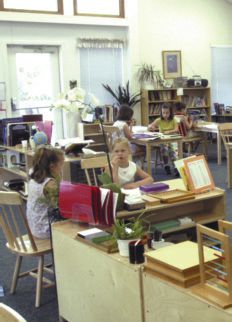
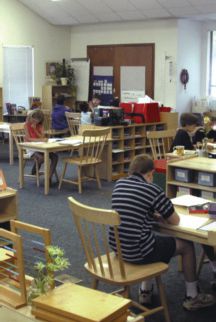 In Part Two, we will see how Montessori students move from the concrete (the Early Childhood classroom) to the abstract (the Elementary classroom) in the areas of Language, Math, and Science.