by Cassi Mackey | Communication, Emotionally Healthy Children, Family Resources, Montessori Parenting, Parenting on the Same Page, Video, Webinars / MFA
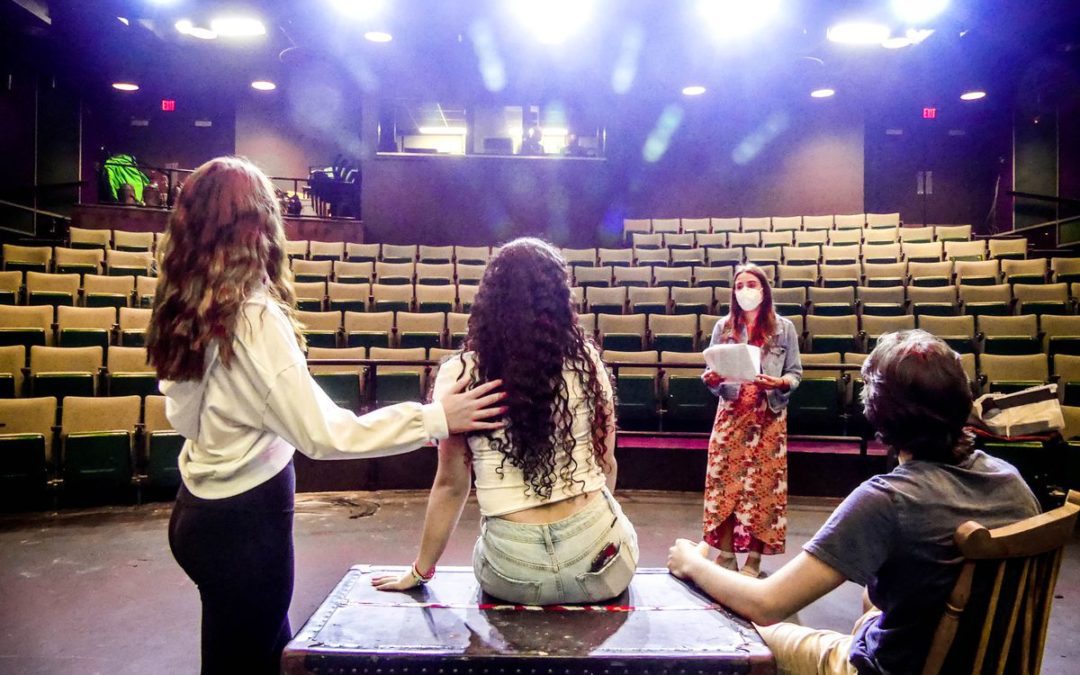
Join us for Part III of “My Child’s Learning Experience in the Community” as we focus on all the many opportunities in your local communities and beyond for your child to learn and grow. What is your role as a parent in supporting your child in their choices and becoming involved in the community?
by Andrew Kutt | Emotional Intelligence (EQ), Emotionally Healthy Children, MFA, Montessori Education, Peace Education, Webinars / MFA
On June 17th, Andrew Kutt, peace educator, Montessori Consultant, and Head of The Oneness Family School in Chevy Chase, Maryland, joined Tim Seldin for the Montessori Foundation’s weekly webinar. The topic was Building a School Culture of Peace and Transformation.
by Robin Howe, EdD | Adolescence, Early Adolescence (12-15), Emotionally Healthy Children, Later Adolescence (15-18), MFA, Montessori students, Parent Education, Practical Life, TC September 2021

from Tomorrow’s Child – The Montessori Family Magazine – September/October 2021
By Robin Howe, Ed.D.
“Each preceding phase prepares the one that follows, forms its base, nurtures the energies that urge toward the succeeding period of life”
Maria Montessori. (From Childhood to Adolescence, 134)
In early childhood (3 years to 6 years), there is a component of the Practical Life curriculum that is called “Grace and Courtesy.” It is a proper noun in that it has its own place in the early childhood curriculum. Some might say that it is the foundational piece, setting the expectations for behavior and interaction that lay the groundwork for successful work in the classroom; it is essential for the normalization of the class and the students in the class. As students progress through the early childhood and then elementary classrooms, Grace and Courtesy is acknowledged as an essential piece of Montessori, a continuum through which Montessori can effectively be implemented. As students get older, however, there seems to be a greater emphasis and division between a student’s behaviors (ability to demonstrate grace and courtesy) and their academic abilities. This does not mean that these two skills are mutually exclusive, but the importance or emphasis may change from the teachers’ perspective. In working with adolescents and adults, I consider myself lucky to have maintained contact with many past students, whom I have known through their childhood and into their adult lives. This has given me the opportunity to get to know these students as adults. Sometimes I wonder, though, if we have adequately prepared children for adulthood, and whether we allowed Grace and Courtesy to dissolve into memory from our early childhood years when children were learning how to walk carefully through a classroom while balancing a tray or how they politely interact-ed with others. Some questions I have been considering more and more are: • Does a four-year-old child having a tantrum in the middle of a grocery store have more leniency than a 17-year-old or a 25-year-old having the same level of a tantrum in the same grocery store? • Does a flippant remark from a six-year-old affect people differently than that of a 16-year-old?
Of course, the answer is yes! Even the most balanced four-year-old may have a moment when they lose control and it doesn’t matter why. Parents may be judged by bystanders on how they handle the situation but, ultimately, when the child is back in the car and eventually falls asleep to the motion of the vehicle, supporting a notion that the cause of this uncharacteristic outbreak was exhaustion, the situation is over. A young adult may not have this luxury. The threshold of understanding is much less for adults than it is for children and that is perfectly appropriate, based on our assumption that with age comes a level of self-control and maturity that would prohibit them from behaving in this way. So, my questions as a Montessori adolescent teacher are: • Are we adequately preparing our young adults for the succeeding period of life? • Are we preparing them for the expectations of existing in an adult world, even as they just enter adulthood?
I feel that Montessori does this better than other educational pedagogies in many ways. A few of them are outlined below. Internships and Work Experiences We encourage our students to explore careers and be amongst professionals, who may not have the patience of educators. The assumption is that if students behave outside of a span of “acceptable” behavior, they will be asked not to come back. Entrepreneurship Whether the students are participants in an Erdkinder program or other entrepreneurial experiences, they are learning about financial independence and being valued as part of the Montessori idea of “valorization.” A goal of any adolescent entrepreneurship experience is the appropriate appreciation for money, their own role in earning it, and an understanding of how their participation is something of value. Field Experiences Many Montessori secondary programs have opportunities for students to work both in their communities and the greater world beyond. The importance of a student experiencing other cultures and realizing that drinking water and plumbing are not guaranteed rights are incredibly important lessons. Leadership A tenant of any Montessori experience is the opportunity to be a leader. Whether the 6-year-old in the early childhood class or the 12th grader in a high school, this experience is incredibly powerful for both the student in a leadership role as well as the younger students who are observing. Each of these examples warrants entire courses and discussion, but is that enough?
On a recent trip with adolescent students, I passively listened to the conversations and observed behaviors, trying to demonstrate my own Montessori ability to know when and how to interact, while also trying not to be the misunderstanding adult, who (just a few years ago) might have been more understanding. While none of the behavior was egregious, in this heightened world of accountability, I found myself torn. Jokes that might have been accepted or even funny five years ago, may now be means for expulsion or even legal action. Flippant and loose language can be captured and reposted on a phone and can lead to the loss of scholarships and enrollment. Teachers do a lot, and some of these questions are the responsibility of the parent! Agreed! But, if we accept Montessori’s belief that “each preceding phase prepares for the one that follows,” are we doing enough? Should Montes-sori’s Grace and Courtesy curriculum more specifically prepare our young men and women for today’s world? Thinking back to that four-year-old who had the tantrum in the supermarket, do we have the expectation that young adults will have a much higher degree of control? But what if they don’t? How can we as Montessori parents, teachers, schools, and systems, support the changing expectations of young adults and prepare them for the post-secondary world where the expectations are higher than those of the four-year-old in the supermarket? The world we (the adults in the room) grew up in is not the same as that of our current students. Physiologically, science suggests that we are not different; however, earlier civilizations did not have cell phones and Instagram™. If our goal is ultimately to prepare students for the next stage of their life, whether it be university, a trade, etc. they have expectations as adults (even if they are not) that they need to be prepared for and the learning curve is not as long as it once was. In closing, while we consider Grace and Courtesy as a fundamental component of the Early Childhood curriculum, is it time to re-examine the importance for students in the third plane (12- to 18-year-olds)? As we prepare them for the succeeding experience, should this emphasis carry a capital G and C for our older students?
by Christine Chapman | Adolescence, Early Adolescence (12-15), Emotionally Healthy Children, Entrepreneurship, MFA, Montessori Education, Montessori Family Life, Montessori Parenting, Parent Education, TC September 2021
from Tomorrow’s Child – The Montessori Family Magazine – September/October 2021
by Christine Chapman
As I lay in savasana at yoga this morning, my teacher shared a quote that landed and resonated deeply for me as I reflected on parenting and guiding a high schooler to think about life after high school:
Awakening and enlightenment are accidents; but practice makes one accident-prone. Author unknown
As a parent, I’ve spent countless hours literally awakening (and, hopefully, enlightening) my children. In fact, I think that’s especially true now, as my first-born, Celia, progresses into her second year of high school, begins to grow independent, and starts to consider her future. Juggling my own work as an educational consultant and entrepreneur, along with managing all that comes with raising two kids in a COVID landscape, I often close my eyes, cross my fingers and hope that I am helping them attain their highest potential with what I am able to provide.
I first witnessed the aha moments I associate with awakenings and enlightenment when Celia was a student at a Montessori School on Cape Cod. She began at the Sandwich Montessori School at two years and nine months. She had always been that kid who insisted she could “do it myself!” and understanding that she had that spirit of exploration and that yearning to discover sensorily, I read everything I could about Montessori.
In Montessori, I believe Celia developed a solid foundation in math, language, and problem-solving, both academically and socially. But there was something more practical that drew me to the Montessori educational model; it was the life skills and sensory aspect to the program that I loved. Upon reflection, I believe these skills set Celia up for the awakenings and enlightenments she experienced in her early childhood. She practiced the work—whether it was learning to zip a garment, unbuckle a belt, sweep and mop, or pour and scrub. Through these Practical Life exercises, Celia learned to strengthen motor skills, navigate practical tasks in the world, and care for herself. She also learned about Grace and Courtesy in her interactions with her peers and adult guides. As a mom, I remember feeling a wave of emotion overcome me as I saw her developing in confidence and growing into independence, even as a three-year-old.
Flash forward a decade…
Celia was thirteen and in eighth grade when she approached me about educational alternatives for high school. I remember the morning well when she dropped ‘the bomb’ on me (her college counselor mom). She had decided she wasn’t really interested in attending our very highly ranked local public high school, and she was seriously considering our local vocational tech school to possibly major in cosmetology… unless I had other ideas or options I thought she should consider.
The vocational tech world was completely foreign to me, and the ignorant, college counselor snob in me just wasn’t ready to accept that pathway as a possibility for my very bright, capable, and talented first-born child. I threw myself into researching other options; digging into the different vo-tech programs and doing my due diligence by talking to parents, students, and alums. Celia ultimately applied to two vo-techs, understanding that our very strong public high school would serve as her backup option. We were thrilled and relieved when she received admissions to her first choice school: The Norfolk County Agricultural High School, with the intent to study animal science.
My daughter challenged my very traditional educational consultant viewpoint and approach, and she became my greatest educational experimental case. So far, the experience has exceeded my expectations in so many ways: Celia is life-ready, equipped with so many of the kinds of life skills that I marveled about when she was barely three and in Montessori. As a student in an agricultural vo-tech school, she’s learning about animals and plants, stewardship of the environment, woodworking, welding, and is even getting a little primer to mechanical engineering. I’m beyond proud; she’s acquired skills that I may never possess and, as her mom, I’m super grateful. Most importantly, she’s confident, happy, and not afraid of hard work.
The vocational route has opened my eyes and challenged my own preconceived notions of what a post-secondary path should look like. It’s also spurred many discussions about my daughter and her future plans. If my own experience as a mom and as an educational consultant/college coach can help inform some of your discussions with your children, as you embark on their post-high school plans, I’ll be pleased. But in order to write this piece, I’ve also had conversations with numerous parents who’ve been my predecessors on the journey to raising successful, introspective, and, ‘awakened’ adults.
“Remain open-minded. Don’t allow for any of your preconceived notions of what a postsecondary path should look like…”
So how do we, as parents, committed to the highest good of our children, engage our children in the practice of impactful communication about our futures? Talk to your kids. Remain open-minded. Remember, it’s theirs to own. Honor your child’s unique identity, experiences, and characteristics as you help them plan and navigate their own pathways.
Here are some additional tidbits of wisdom I’ve compiled that might help inform your practice of communication with your teen:
• Be transparent about issues around money and funding post-secondary education.
• Ask your children what brings them happiness and joy.
• Be open-minded and aware that our children (unlike our generation and previous generations) will have opportunities to pursue multiple career paths in their lifetime as working humans.
• Don’t be afraid of asking the big, seemingly daunting question: What do you want to do with your life? Don’t be alarmed when you face the big question mark in your child’s eyes. Instead, engage them in digging into the question by asking them what they imagine doing to make a living, what their goals are, and what their ideal work environment might look like. Do they imagine sitting at a desk? Working with their hands? With people? Behind the scenes?
• Ask them if they feel ready for college? If they’re not sure, give them the permission and guidance to look at other opportunities and jump in together. It might be a magical family experiment.
• Listen to them, poke and prod a bit at their responses to your questions, encourage them to both daydream and to be practical.
• Remind them that it takes time, inquiry, and a whole lot of practice to come to the awakenings/enlightenments and epiphanies that bring them the clarity they seek; and that they’re not alone.
Life’s road is not always a direct pathway to success. And taking the road less traveled may be exactly what your child needs permission to do. Remember that it’s often messy, muddy, and requires patience, space, and introspection.
As we started to come out of savasana this morning, my teacher shared a last tidbit that resonated with me on so many different levels. After class, I asked him for the full quote from the Tao Te Ching, or “The Way” by Lao Tzu:
Do you have the patience to wait until the mud settles and the water is clear?
For me, as a parent, the answer is a resounding yes. But the part of the extended quote that I didn’t hear in yoga class, but found even more relevant and resonated deeply with me as a parent, who is constantly trying to influence my children’s decisions and solve their problems for them was this line:
“Can you remain unmoving until the right action arises by itself?”
As a fellow parent, I challenge us to honor these deep pieces of wisdom and hope that we can help cultivate the practice of helping our kids become more “accident-prone” towards awakenings and enlightenment. As parents, all we can hope for, after all, is to guide our children towards becoming awakened towards their true paths and to honor their journeys as we walk alongside them: supporting, advising, challenging, and loving them along the way.
Christine Chapman is an educational consultant, and co-founder of Personalized Educational Solutions, Inc (www.pesglobal.org) and Education Station (www. educationstationhopkinton.com) She is grateful to do meaningful work that supports and empowers students from all over the world in finding their best educational matches in private schools and universities. She is a team builder, community contributor, and educational entrepreneur with almost 30 years of experience as a business owner involved in helping students develop and implement successful educational plans. She is a serial volunteer, lover of the arts, and committed to social and emotional wellness and youth empowerment. Christine is a musician, an aspiring yogi, lover of animals, and committed single mother of two amazing children.
As a committed, passionate college coach, Christine just started a new nonprofit called The College Axis Project (www. thecollegeaxisproject.org). She is grateful to be pursuing her vision and passion to make educational enrichment and college counseling available to everyone, regardless of race, socio-economic status, or gender/sexuality.
by Cheryl McCabe-Allen | Emotionally Healthy Children, MFA, Montessori Family Life, Montessori Parenting, Parent Education, Parent-Teacher Communication, TC September 2021, The International Montessori Council
from Tomorrow’s Child – The Montessori Family Magazine – September/October 2021
And Five Things Your Montessori Teacher Might Hesitate to Tell You (in descending order)
Make sure your child can dress themselves in the clothes worn to school. High-top sneakers look so cute, but if your child can’t put them on and tie them, they need to be only for out-of-school days and times.
Let your child walk to the classroom. Carrying your child tells your child they can’t do it on their own, and we want to encourage independence.
Make sure your child can manage their lunch items. Practice at home can help make lunch smoother for your child. If your older child will be cooking something in the microwave, let them try it at home first.
Limit the electronic babysitter, especially around school time. Screens certainly have their place, but try to use the time before and after school for music, audiobooks, conversation, or reading. This helps your child transition to and from school more easily.
Focus on specifics rather than giving a consistent “good job.” Share what you noticed (“I saw you running around the whole field.”)
Come to school on time. Make getting out the door on time a team effort by having your child complete some morning jobs. Getting to class on time allows your child more comfort when beginning their school day.
Communicate with your child’s guide, but consider the time. Let your child’s guide know if there is something that may affect the day, but try not to have a longer conversation just as class starts.
Help your child to “do it themselves.” Take the time to teach and then give the extra time it will take to allow your child to do whatever they can, from putting on shoes to preparing their lunch.
Ask “tell me more” before complaining about any information you hear from your child. Often, clarification makes a concern a funny story. For example, a child told her teacher that another child, “Said the f-word.” When the child was asked to whisper what was said, he leaned into me and said, “He said fat.” Crisis averted.
Always know that we are all on the same team: Team Your Child. Even when any of us have concerns, our goal is always to support your child to succeed.
And now…
Five Things Your Montessori Teacher Might Hesitate to Tell You:
Watching TV shows on the way to school does affect the way your child settles into class. Frankly, we do not move as fast and engage the brain the same way electronic screens do, so making that change can be difficult for many children.
Asking your child, “Why did you do that?” is not helpful and will probably not get a real answer. Try asking them to tell you the story of what happened, and ask how they were feeling before the incident; rarely do people know why they did something.
Have times when you are off your phone while you are with your child. Multitasking is sometimes necessary and so seductive, but some time without your child needing to compete with your phone is beneficial for both of you. Drop off and pick up from school are great times to be off your phone.
Be careful about what you say about the school, your child’s teacher, or your child’s classmate. Your child is probably listening. Vent to family or a friend at an appropriate time and place, or consider if it needs to be said at all.
When you talk about your child, as if they are not there, when they actually are there, they will hear you. Consider how children will take the information if it is new to them, and how they will feel about you sharing the information if it is not new. And, by the way, nobody appreciates being labeled
by Cassi Mackey | Emotional Intelligence (EQ), Emotionally Healthy Children, Empowerment, MFA, Montessori Family Life, Montessori Parenting, Parent Education, TC September 2021
from Tomorrow’s Child – The Montessori Family Magazine – September/October 2021
We want to raise our children to be great human beings, but how do we develop strength of character in our children? According to Dr. Montessori, “Character formation cannot be taught. It comes from experience and not from explanation.”
Centering strong character traits in your family through modeling, experiences, and conversations is the foundation of developing strength of character. Practicing character is a daily decision that needs to be made, time and time again. Practice brings permanence if it is purposeful and deliberate.
What follows are seven practices in helping children start to develop strong character.
Practicing Integrity
• Model integrity. Live your values. Do your actions and words reflect your family values?
• Articulate your family values so they become a natural way of thinking and behaving.
• Develop a moral vocabulary. Children need to understand words, such as honesty, trust, fairness, integrity, etc. Teach children behaviors that embody these words.
• Acknowledge children when they are demonstrating integrity, not rewarding them but acknowledging them by telling them how much you value their behavior.
• Discuss and give examples of the effects your child’s actions have on themselves and on others.
• Respond to children’s behavior with calmness and consistency. Be open to listening to your child’s reasoning for an action before instinctually admonishing and correcting, then remind them of the expectations and decide on a natural consequence that is consistent and clearly understood.
Practicing Kindness
• Model kindness. Children learn how to relate with others by observing the adults around them and how they treat other people. Show them what it means to be kind and name the action as kindness.
Try to always speak kindly to your children, especially when you are tired, frustrated, or angry.
• Share stories of kindness, whether personal stories, stories in books, stories on the news, etc. Stories are a wonderful way of building an understanding of kindness.
• Assess the teasing in your household. Is it demeaning, provoking, or humiliating?
Remember, children learn how to play and interact with peers by their own experiences at home.
• Discuss how their behavior affects those around them, whether it is positive or negative.
• Give your children opportunities to serve others. Show them that holding a door open for someone, smiling and saying hello, and thanking the cashier, are all demonstrations of kindness.
• Expect kindness when your child speaks to you. When your child speaks to you rudely, simply state how you would like to be talked to. Do not get into an exchange with them, just simply state your preferred specifics of communication. Be consistent.
Do not let poor tone or attitude slide.
Practicing Positivity
• Model being positive. Take the time to monitor how you present your life experience to your children. Do they hear you regularly speaking positively or negatively?
Try to point out the good side of events and experiences.
• Address failure as an opportunity for growth. Help your children self-evaluate situations. Ask the questions: What went well and what would you change if you could? Encourage your child to develop a plan of action to effect change the next time around.
• Challenge your children when they are personalizing (“It was all my fault”) globalizing (“I always make mistakes”), or catastrophizing (“I will never do anything right”). You do not have to contradict your children’s explanation, but encourage them to come up with positive outcomes to the situation.
• Encourage children to set their own goals and think through how they plan on achieving them. This process gives them agency and a sense of competence that often leads to success. Encourage them to focus on the best possible outcomes and, as such, they will align their thoughts in that way and work toward achieving the outcome they want.
Practicing Gratitude
• Model gratitude. Make it a habit to notice and verbalize the things for which you are grateful.
• Ask your children questions to help them start to notice things that deserve gratitude: What have you noticed today that you were given that you are grateful for? and, Are there things in your life that you are grateful for that aren’t gifts or material things?
• Create space for conversations regarding how they feel when they receive something (including non-material things).
Help them associate positive feelings with someone else’s actions. As often as possible, highlight the idea that people and events can give us good feelings.
• Teach gratitude through action. Ask your children if there is a way that they would like to show how they feel about a gift, an event, or a person. Children can use their special talent or interest, for example, and make up a song and/or paint a picture to express their gratitude.
Practicing Flexibility
• Model flexibility. Tell children when and how you are being flexible as things come up throughout the day, whether as part of a minor or major event. Explain how you are being flexible and, when appropriate, involve children in the new plan. the routine at home every once in a while, helping them become accustomed to managing change.
• Change the rules to board games; start out with small changes, so they can see how they can adjust. Then, make more changes.
• Give positive reinforcement when your children demonstrate flexibility and change their course of action.
• Teach your child strategies to take when a change occurs. Teach them to stop and breathe, state the problem, consider at least three possible solutions, then select one to try.
Practicing Effort
• Model effort. Show your willingness to take risks and try new things, even when they are hard.
• Acknowledge effort, bravery, risk-taking, open-mindedness, and keeping a positive outlook.
• Teach children to monitor their effort.
Help them reflect on whether they gave their best in an activity.
• Help children recognize and celebrate their effort by asking them, What was something you did today where you felt proud of how hard you tried?
• Make it easy to work hard by preparing the environment with the tools they need to succeed with a task.
• Help your children work through challenges by modeling self-talk. Children can learn how to persist if they talk out the problem, coupled with positive self-talk.
• Show your children the progress they have made. Remind them of where they started and how far they have come.
Practicing Accountability
• Model personal accountability. Demonstrate accountability by apologizing and making amends when necessary. You will show your children you are responsible for the consequences of your actions.
• It is important that your children know exactly what is expected of them and the consequences of not meeting expectations.
They also need to know what is non-negotiable and what is open for discussion and mutual agreement.
• Allow your children to be responsible for their actions. Even a three-year-old can clean up a spill; spilling is normal, but cleaning up the spill is also normal.
• Parents should not point fingers or make children feel defensive about behavior.
They should acknowledge when a child owns up to a mistake, and help them come up with a solution on how to make amends; and do something differently next time.
• Give children age-appropriate choices and chores.
• Encourage children to participate in decision-making to develop accountability.
The road to strong character is paved with practice. It is a journey, and it is going to have ups and downs. The term practicing is not inadvertent. Have patience and remember what your ultimate goal is for your child.
Cassi Mackey, M.Ed. is passionate about helping families create sacred spaces where love, joy, and honest connections are nurtured. Cassi has witnessed the transformational power when families engage in Montessori philosophy as an imputable practice. It is a promise of more meaningful relationships, greater depth of experience, and a broader, more compassionate view of oneself and the world. Cassi has lived, learned, and taught the Montessori pedagogy for the last 30 years as a Montessori 9-12 teacher, a school principal, and a consultant. She consults with (and provides advice to) Montessori communities and families that are intent on providing safe harbors for children. Contact Cassi via email at: cassimackey11@gmail.com.
by Nathan Dungan | Emotionally Healthy Children, Empowerment, Entrepreneurship, Family Resources, MFA, Montessori Family Life, Montessori Parenting, Parent-Teacher Communication, TC September 2021
from Tomorrow’s Child – The Montessori Family Magazine – September/October 2021
by Nathan Dungan, Share, Save, Spend
Raising a child to be financially independent is a significant accomplishment.
Parents can begin early to help their children build important financial capabilities and in turn, set them on a path to financial independence. Equipping them to make thoughtful financial decisions over time, and coaching them with those decisions (what went well and what could have been better) will prepare them for their financial future and help them:
• Develop healthy money habits. Cultivate a work ethic. Set age-appropriate money goals. Gain resilience to endure financial hardships;
• Gain confidence that comes from making financial decisions;
• Enhance their wellbeing, which may include lower stress and the improved health that follows; and
• Financial independence means learning to make financial decisions on your own.
Here are three important skills to help young people launch successfully into life on their own.
Ages 12–13
Children should gain experience using cash. Show your child how to periodically track all their income and expenses over a timeframe of a few weeks or months. Watch how they manage their money, and start conversations around their choices in sharing, saving, and spending.
64%of Americans aged 18 to 36 DO NOT own a credit card.
Ages 14–16
Younger teens should master a debit card. Help your son or daughter build on skills they demonstrated with cash by transferring funds to a debit card. Give them increased financial responsibility, including helping them map out a budget of needs and wants.
Ages 17–22
Older teens and young adults should learn to use a credit card. If your son or daughter has earned this right through the lessons of earlier stages, layer in learning about how to use a credit card and how to monitor their credit score. Communicate the additional responsibility that goes with this new privilege.
Let your child make mistakes, and talk openly about your own money mishaps (avoid freaking out your child in the process). Your son or daughter will learn the pain of unwise spending, running out of money, or not paying off a credit card bill on time. As you shift more and more responsibility to them, remember that now is the time for them to gain firsthand experience, while the stakes are still low.
MONEY TALKS: What steps will you take in the next 30 days to help your child(ren) become more financially independent?
Nathan Dungan is the founder and president of Share Save Spend®. He speaks and consults with organizations and families on the topic of financial wellbeing. Nathan uses a Wellbeing Framework to help individuals and families build capabilities that are most relevant for them and the goals of their family.
He is the author of three books and numerous resources for organizations and families. Nathan’s newest resource, Money Sanity U®, is a subscription-based virtual learning library for organizations that addresses a variety of money topics in a simple and interactive format—all designed to help improve financial wellbeing. You can learn more at sharesavespend.com.
by Amanda Riccetti | Emotionally Healthy Children, Family Resources, Language, Language & Reading, Lower Elementary (6-9), MFA, Montessori Education, Montessori Family Life, Montessori Parenting, Primary (3-6), Reading, TC September 2021
from Tomorrow’s Child – The Montessori Family Magazine – September/October 2021
by Amanda Riccetti
The many different philosophies of childhood education foster children’s learning in their own unique ways. The Montessori philosophy nurtures independence, confidence, self-regulation, and learning in children from doing and experiencing, offering and actively involving them in direct learning experiences. In a Montessori environment, students are encouraged to follow their curiosity and learn at their own pace. They are exposed to lessons, activities, and materials that build upon their skill set and help them develop as an individual.
The teacher in a Montessori classroom does not give class lectures but instead spends time with individual students guiding their learning experiences. This allows the children to take the time they need to fully understand a concept and meet individualized learning goals. Although this concept makes for a stimulating learning environment for most children, some may struggle, especially when faced with learning differences and other similar challenges. The Montessori reading curriculum has three essential components: a strong foundation in phonics; comprehension based on visualization; and a whole-language approach of learning to read for meaning using context clues. Montessori reading is based on the first of these components, a strong foundation in phonics so that children can sound out or “decode” words. This approach is unique in that children first learn how words are constructed through phonemes, or letter sounds. Once they are aware that words can be broken down into smaller units of sound, children can then independently learn to decode new words. They can read what they see and enjoy what they read. Why, then, might a child struggle with learning to read in a Montessori classroom?
When I was three years old, my mother enrolled me in a Montessori school. In the 1960s, neither my Montessori teachers nor my parents were aware that I had a learning difference. I was a well-behaved little girl who kept very busy learning from the environment.
My school was very relaxed, with inviting small tables, rows of shelves filled with activities, and warm lunches of soup and crackers. I remember exploring and discovering things entirely on my own. One of the things I loved most were the Metal Insets—flat metal squares with different shapes inside. I enjoyed tracing and coloring the shapes inside with colored pencils. By the time I was ready to move on to the next level, I had full confidence in myself.
When I entered the first grade (lower elementary), I understood a great deal, but when the reading lessons started, I felt confused and alone. I am sure others felt this way, but all I could see were my classmates who understood the lessons and could read out loud with no effort.
During the summer between first and second grade, my mother enrolled in a Montessori teacher education program. The Montessori teacher training center was in Palo Alto, and since we were living in San Francisco, I had to change schools.
My second-grade experience was a more positive one, as I had a lovely teacher who had wonderful and creative ways to teach and never asked any student to read out loud. Instead, we were put in smaller groups of children who were learning at the same level. Observing my reading challenges, she asked my mom to have me tested. After a series of tests at UCSF, it was finally discovered that I had a high IQ as well as dyslexia, a common learning difference. I couldn’t understand sound components the way it was traditionally taught; visually, I wasn’t able to memorize which letters produced which sounds. My mother and I realized that we would have to do extra work outside of school to help me learn how to read.
After sharing what she learned about me with her Montessori trainer, she simply suggested that Mom should teach me in the same way she taught her students in her class. Each night, my mother would give me a reading lesson from materials she brought home from her Montessori classroom. At first it was slow, but we pushed on day by day, lesson by lesson. At the end of second grade, I could read at a first-grade level. Although I still struggled in school, I could at least keep up. When my mom used the Montessori reading curriculum to tutor me, she spent the time to break down the components of language into smaller parts, eventually, I learned how to decode words. This experience not only helped me learn to read, but it also showed me how to teach others. Comprehension can still be difficult for me at times and I tire easily, especially if the topic is not terribly interesting to me.
In a traditional Montessori class, most children simply absorb reading skills as easily as they learn to walk. However, children and adults who have dyslexia struggle with visual memory tasks such as learning letter sounds. Often teachers overlook these children in early childhood programs (3-6 years old). This can happen even in a Montessori classroom because not all Montessori teachers have the experience or knowledge to recognize a child who may later be diagnosed with a learning difference.
These children require a great deal of repetition and time to get a breakthrough just to recall a few letter sounds, but they want to learn, can learn, and need to learn during those early years during the sensitive period for language development, when their minds are most open to learn reading skills. These children cannot afford to wait and see, an approach that often leaves them struggling with learning to read later in their elementary years. My first-hand experience led me down the path to becoming a Montessori teacher, reading tutor, and later creating the Reading with Miss Amanda Book Series.
After 35 plus years of coaching and lending materials to the parents at my school, I began to search for another solution. That is when I set a goal to create my own solution to this problem. Along the way, I recruited some wonderful and talented people who supported my vision. They are Steven Gomez, my illustrator; Kimberly Lopez, an alumnus from my school, who became my proofreader and editor; and two parents from my school, Jessica Lam and Maya Bourdeau, who gave me their professional support and parent perspectives. After five years of hard work, the Reading with Miss Amanda Book Series was completed.
The series adapts the Montessori reading curriculum into a simple-to-use book format that provides children with the ability to practice sounds and make words. Then they will begin to decode words and gain the confidence to read at their own pace. This approach makes it a fun and accessible tool for parents and teachers to use when working with young children on their reading skills. Children receive intuitive step-by-step lessons simply by following the dialogue of the teacher in the books. Each of the five levels in this color-coded series offers books for all levels of readers, including pre-readers (3 years and up); beginning readers (4 years and up); and advanced readers (5 years and up). Each level offers a set of lessons that shows young children the skills required to reach the next level.
These books teach reading phonetically over the course of 32 books, each of which is about 75 pages. The curriculum mirrors the lessons a Montessori teacher would present to a student in their class. The classroom materials have been masterfully adapted into engaging and intuitive lessons with simple dialogue for the adult to follow as they assist their child. Through the child’s imagination, they are transported into a Montessori classroom with their very own Montessori teacher to guide them. The books also offer tips for the adults and are designed to be read over and over until the child masters the lesson. When the child successfully completes a book, they will encounter a page that offers its congratulations and shows children their progress
Level one focuses on using basic letter sounds through the use of Sandpaper Letters. The lessons in this level are broken down into three parts in order to teach children the phonetic sound associated with each printed letter. Each book within this level focuses on three letters, two consonants and one vowel. Over the course of the five books in the ‘Yellow Level,’ a total of fifteen letter sounds are taught and learned.
Level two moves on from practicing single-letter sounds to bridging the sounds together to form three-letter words using the Moveable Alphabet. Each of the five books in this level isolates the task of understanding the sound of one vowel in a word, in the order of a, e, i, o, u.
Level three focuses on sounding out three-letter words and reading them individually as well as other words. Each book offers lessons in the following sequence: matching words to pictures; flashcards; three-letter word lists; short sentences; and a short story.
Level four focuses on four- and five-letter short-vowel words as well as simple sight words and blends. This level offers the same curriculum as the previous level in order to adapt children to reading and identifying larger words.
Level five is the longest of the series, with twelve books instead of five books in each of the previous levels. This level focuses on phonograms, long-vowel words, silent vowels, and more. The children are introduced to a more advanced vocabulary, additional English language rules, and the knowledge of how to decipher words. Each of the twelve books offers flashcards, a list of words, short sentences and a short story.
Early intervention is the key during the sensitive period of learning to read. Children are traditionally taught to read between first and third grade, but with the use of this series, children form a solid foundation for reading at an early age. Children may not show immediate progress, but that is completely normal. They often forget how to do something new, and it may take a child anywhere from one week to as long as a month to master a new book. Follow the child, and if you feel that your child is not engaging with the book, stop for a little while and reintroduce it at another time. Remember, children who are not learning with ease will require a great deal of support and patience. These children want to learn to read but may tire more easily and need baby steps. Once these children feel safe and start to feel success, they will pick up the lessons more rapidly. Keep it fun, always encouraging your child’s effort and progress. The lessons are designed to offer information, so always give your child the answer when they can’t retrieve it themselves.
Be patient and remember: “practice makes permanent.” Children love repetition, and it drives learning the more the child practices. For example, the popular book Goodnight Moon by Margaret Wise Brown might seem so repetitious to an adult, but children love the repetition of phrases. So, if you use these books and think, “that’s repetitive,” remember—it has been designed that way. Only move to the next book when your child can recall the information easily.
Amanda Riccetti is the Director and Owner of Big City Montessori School in San Francisco. She has been a teacher, reading tutor, and mentor for over 40 years. Founded by her mother, the school gave Amanda the opportunity to observe from an early age the benefits of a strong and connected educational journey. As a child, she struggled with the traditional learning process and later discovered it was because she had a learning difference, dyslexia. Amanda learned to identify a pattern among children who struggled to visually recognize lower case letters and who did not understand the relationship between the letter and the sound that the letter made. This led her to develop the Montessori-based reading series described in this article. Contact Amanda at: amanda.riccetti@gmail.com Visit Amanda’s website to learn more. www.readingwithmissamanda.com
by Amanda Riccetti
The many different philosophies of childhood education foster children’s learning in their own unique ways. The Montessori philosophy nurtures independence, confidence, selfregulation, and learning in children from doing and experiencing, offering and actively involving them in direct learning experiences. In a Montessori environment, students are encouraged to follow their curiosity and learn at their own pace. They are exposed to lessons, activities, and materials that build upon their skill set and help them develop as an individual.
The teacher in a Montessori classroom does not give class lectures but instead spends time with individual students guiding their learning experiences. This allows the children to take the time they need to fully understand a concept and meet individualized learning goals. Although this concept makes for a stimulating learning environment for most children, some may struggle, especially when faced with learning differences and other similar challenges. The Montessori reading curriculum has three essential components: a strong foundation in phonics; comprehension based on visualization; and a whole-language approach of learning to read for meaning using context clues. Montessori reading is based on the first of these components, a strong foundation in phonics so that children can sound out or “decode” words. This approach is unique in that children first learn how words are constructed through phonemes, or letter sounds. Once they are aware that words can be broken down into smaller units of sound, children can then independently learn to decode new words. They can read what they see and enjoy what they read. Why, then, might a child struggle with learning to read in a Montessori classroom?
When I was three years old, my mother enrolled me in a Montessori school. In the 1960s, neither my Montessori teachers nor my parents were aware that I had a learning difference. I was a well-behaved little girl who kept very busy learning from the environment.
My school was very relaxed, with inviting small tables, rows of shelves filled with activities, and warm lunches of soup and crackers. I remember exploring and discovering things entirely on my own. One of the things I loved most were the Metal Insets—flat metal squares with different shapes inside. I enjoyed tracing and coloring the shapes inside with colored pencils. By the time I was ready to move on to the next level, I had full confidence in myself.
When I entered the first grade (lower elementary), I understood a great deal, but when the reading lessons started, I felt confused and alone. I am sure others felt this way, but all I could see were my classmates who understood the lessons and could read out loud with no effort.
During the summer between first and second grade, my mother enrolled in a Montessori teacher education program. The Montessori teacher training center was in Palo Alto, and since we were living in San Francisco, I had to change schools.
My second-grade experience was a more positive one, as I had a lovely teacher who had wonderful and creative ways to teach and never asked any student to read out loud. Instead, we were put in smaller groups of children who were learning at the same level. Observing my reading challenges, she asked my mom to have me tested. After a series of tests at UCSF, it was finally discovered that I had a high IQ as well as dyslexia, a common learning difference. I couldn’t understand sound components the way it was traditionally taught; visually, I wasn’t able to memorize which letters produced which sounds. My mother and I realized that we would have to do extra work outside of school to help me learn how to read.
After sharing what she learned about me with her Montessori trainer, she simply suggested that Mom should teach me in the same way she taught her students in her class. Each night, my mother would give me a reading lesson from materials she brought home from her Montessori classroom. At first it was slow, but we pushed on day by day, lesson by lesson. At the end of second grade, I could read at a first-grade level. Although I still struggled in school, I could at least keep up. When my mom used the Montessori reading curriculum to tutor me, she spent the time to break down the components of language into smaller parts, eventually I learned how to decode words. This experience not only helped me learn to read, but it also showed me how to teach others. Comprehension can still be difficult for me at times and I tire easily, especially if the topic is not terribly interesting to me.
In a traditional Montessori class, most children simply absorb reading skills as easily as they learn to walk. However, children and adults who have dyslexia struggle with visual memory tasks such as learning letter sounds. Often teachers overlook these children in early childhood programs (3-6 years old). This can happen even in a Montessori classroom because not all Montessori teachers have the experience or knowledge to recognize a child who may later be diagnosed with a learning difference.
These children require a great deal of repetition and time to get a breakthrough just to recall a few letter sounds, but they want to learn, can learn, and need to learn during those early years during the sensitive period for language development, when their minds are most open to learn reading skills. These children cannot afford to wait and see, an approach that often leaves them struggling with learning to read later in their elementary years. My first-hand experience led me down the path to becoming a Montessori teacher, reading tutor, and later creating the Reading with Miss Amanda Book Series.
After 35 plus years of coaching and lending materials to the parents at my school, I began to search for another solution. That is when I set a goal to create my own solution to this problem. Along the way, I recruited some wonderful and talented people who supported my vision. They are Steven Gomez, my illustrator; Kimberly Lopez, an alumnus from my school, who became my proofreader and editor; and two parents from my school, Jessica Lam and Maya Bourdeau, who gave me their professional support and parent perspectives. After five years of hard work, the Reading with Miss Amanda Book Series was completed.
The series adapts the Montessori reading curriculum into a simpleto-use book format that provides children with the ability to practice sounds and make words. Then they will begin to decode words and gain the confidence to read at their own pace. This approach makes it a fun and accessible tool for parents and teachers to use when working with young children on their reading skills. Children receive intuitive step-by-step lessons simply by following the dialogue of the teacher in the books. Each of the five levels in this color-coded series offers books for all levels of readers, including: pre-readers (3 years and up); beginning readers (4 years and up); and advanced readers (5 years and up). Each level offers a set of lessons that shows young children the skills required to reach the next level.
These books teach reading phonetically over the course of 32 books, each of which is about 75 pages. The curriculum mirrors the lessons a Montessori teacher would present to a student in their class. The classroom materials have been masterfully adapted into engaging and intuitive lessons with simple dialogue for the adult to follow as they assist their child. Through the child’s imagination, they are transported into a Montessori classroom with their very own Montessori teacher to guide them. The books also offer tips for the adults and are designed to be read over and over until the child masters the lesson. When the child successfully completes a book, they will encounter a page that offers its congratulations and shows children their progress
Level one focuses on using basic letter sounds through the use of Sandpaper Letters. The lessons in this level are broken down into three parts in order to teach children the phonetic sound associated with each printed letter. Each book within this level focuses on three letters, two consonants and one vowel. Over the course of the five books in the ‘Yellow Level,’ a total of fifteen letter sounds are taught and learned.
Level two moves on from practicing singleletter sounds to bridging the sounds together to form three-letter words using the Moveable Alphabet. Each of the five books in this level isolates the task of understanding the sound of one vowel in a word, in the order of a, e, i, o, u.
Level three focuses on sounding out three-letter words and reading them individually as well as other words. Each book offers lessons in the following sequence: matching words to pictures; flashcards; three-letter word lists; short sentences; and a short story.
Level four focuses on four- and five-letter short-vowel words as well as simple sight words and blends. This level offers the same curriculum as the previous level in order to adapt children to reading and identifying larger words.
Level five is the longest of the series, with twelve books instead of five books in each of the previous levels. This level focuses on phonograms, long-vowel words, silent vowels, and more. The children are introduced to a more advanced vocabulary, additional English language rules, and the knowledge of how to decipher words. Each of the twelve books offers flashcards, a list of words, short sentences and a short story.
Early intervention is the key during the sensitive period of learning to read. Children are traditionally taught to read between first and third grade, but with the use of this series, children form a solid foundation for reading at an early age. Children may not show immediate progress, but that is completely normal. They often forget how to do something new, and it may take a child anywhere from one week to as long as a month to master a new book. Follow the child, and if you feel that your child is not engaging with the book, stop for a little while and reintroduce it at another time. Remember, children who are not learning with ease will require a great deal of support and patience. These children want to learn to read but may tire more easily and need baby steps. Once these children feel safe and start to feel success, they will pick up the lessons more rapidly. Keep it fun, always encouraging your child’s effort and progress. The lessons are designed to offer information, so always give your child the answer when they can’t retrieve it themselves.
Be patient and remember: “practice makes permanent.” Children love repetition, and it drives learning the more the child practices. For example, the popular book Goodnight Moon by Margaret Wise Brown might seem so repetitious to an adult, but children love the repetition of phrases. So, if you use these books and think, “that’s repetitive,” remember—it has been designed that way. Only move to the next book when your child can recall the information easily.
Amanda Riccetti is the Director and Owner of Big City Montessori School in San Francisco. She has been a teacher, reading tutor, and mentor for over 40 years. Founded by her mother, the school gave Amanda the opportunity to observe from an early age the benefi ts of a strong and connected educational journey. As a child, she struggled with the traditional learning process, and later discovered it was because she had a learning diff erence, dyslexia. Amanda learned to identify a pattern among children who struggled to visually recognize lower case letters and who did not understand the relationship between the letter and the sound that the letter made. This led her to develop the Montessori-based reading series described in this article. Contact Amanda at: amanda.riccetti@gmail.com Visit Amanda’s website to learn more. www.readingwithmissamanda.com
by Terri Sherrill | Brain Development, Emotionally Healthy Children, Infant, Infant-Toddler (0 to 3), Montessori Teachers, The International Montessori Council, Toddler (18 months-3 years)
This is a PDF of a Power Point used by Terri Sherill at the 2013 IMC conference.
Download File
by Claire Salkowski | Challenging Behaviors, Discipline, Early Adolescence (12-15), Educational Program Coordination, Emotional Intelligence (EQ), Emotionally Healthy Children, Empowerment, Faculty, Grace and Courtesy, Kindergarten, Lower Elementary (6-9), Mindfulness, Montessori Education, Montessori Secondary / High School, Montessori Teachers, Peace Education, Primary (3-6), School Leadership, The International Montessori Council, Uncategorized, Upper Elementary (9-12)
Montessorians are familiar with the daily “Circle” and use this important practice for starting or closing the day, but the Peacemaking Circle or Conferencing approach has become part of restorative practices in schools, workplaces, prisons, and Court systems around the country and throughout the world. Based on ancient practices of aboriginal peoples, this approach creates an intentional space with a particular process designed to:
- support participants in bringing forward their ‘core self”
- to help them conduct themselves based on the values that represent who they are when they are at their best
- make visible our interconnectedness even in the face of very serious differences
- recognize and access the gifts of every participant
- elicit individual and collective wisdom
- engage participants in all aspects of the human experience – mental, physical, emotional and spiritual or meaning-making
- practice ‘core self,’ value-based behavior when it might feel risky to do so.
The more people practice that behavior in circle, the more those habits are strengthened to carry that behavior into other parts of their lives. Create a space and time for participants to voice their thoughts and feelings, to take ownership for their behaviors, connect them to others, and learn from the collective wisdom of the group.
Peacemaking Circles: Creating Peace in Our Schools One Circle at a Time
Presented by Claire J. Salkowski IMC Peace Conference
ADR Specialist and Educational Consultant Nov 4, 2012
Planning the Specifics of the Circle – The Keeper puts together the circle plan answering the following questions:
• Who will be part of the circle?
• What time?
• Where?
• What will be the talking piece?
• If and what will be in the center?
• What opening ceremony will be used?
• What question will be used to generate values for the circle?
• What question will be used for an introduction or check-in round?
• Is there a need for further relationship building before getting into the issues? If so, how will that be done?
• What question(s) will be used to begin the dialog about the key issues?
• What further questions might be useful if the group is not getting deeply enough into the issues?
• What closing ceremony will be used?
Circle Outline
The detail in this outline is provided to offer concrete examples and stimulate creative thinking. It is not intended to be prescriptive. The circle is not a rigid process. It is always important to be responsive in the moment to the needs of the circle participants which may not follow the outline you planned. Nonetheless, it can be useful to have an outline to guide you as a keeper.
Welcome: Welcome everyone to the circle. Thank them for coming. Express appreciation for the willingness to work together in a shared space.
Opening: Openings mark the time and space of the Circle as a space apart from the pace and tone of everyday life. The opening ceremony is designed to help participants center themselves, be reminded of core values, clear negative energies, encourage optimism and honor the presence of everyone there. Lead the group in whatever opening ceremony you have chosen
Explain center: If you have created a centerpiece, identify any items in the center and why they are there.
Explain Talking Piece: Explain that the talking piece is a critical element of creating a space in which all participants can both speak and listen from a deep place of truth. The person holding the talking piece has the opportunity to speak without interruption while everyone else has the opportunity to listen without the need to respond. The talking piece will be passed around the circle from person to person. Only the person holding the talking piece may speak. It is always okay to pass the talking piece without speaking. The keeper may speak without the talking piece if necessary to facilitate the process. If the talking piece has a particular meaning explain that.
Purpose: Remind participants of the purpose of the circle
Introduction/Check-in Round: Tell participants that you are going to pass the talking piece around so that we can all hear how everyone is doing today. Invite participants to introduce themselves if they are not already acquainted. We suggest the keeper share first. People will most likely model their response after the keeper. Be authentic. Pass the talking piece and ask, “How are you feeling today?” “Is there anything you feel is important for us to know about how you are doing?” Sometimes it is useful to pose a question in this round that invites sharing about oneself so the participants get to know one another better.
Values/Guidelines: Before the circle starts place a paper plate or half sheet of paper and a marker at each seat. Ask participants to think of a value they feel would be important in order to feel safe to speak from the heart and listen from the heart. Ask them to write the value on the paper plate or sheet of paper. Pass the talking piece and ask them to share the value they chose, explain why it is important, and place their value in the center of the circle. Keeper models.
After establishing values, develop guidelines for the circle. The guidelines of the Circle are the agreements that participants make with one another about how to behave in the Circle. They establish clear expectations and common ground to provide a space where people feel safe to speak in their authentic voice, connect to others in a good way and ensure a space that is respectful for all. Pass the talking piece and ask participants to name one agreement important to their participation in Circle. (e.g. “Speak only for yourself.” or “Keep body language respectful.”) Write down the suggested guidelines on a sheet of paper or flip chart. When the talking piece has gone all the way around, read the list. Pass the talking piece and ask participants to indicate whether they accept these guidelines. If there are objections explore the objections and the original purpose of the person who proposed that guideline and work to find wording that is acceptable to everyone.
Extensive conversation about the guidelines can be good practice for working through a difference in opinion or perspective in a respectful way. In an on-going circle group the values and guidelines generated at the first circle are brought back to any subsequent circles.
Storytelling round: In some circles it is crucial to take the time for people to share stories from their own lives to increase understanding of one another or to build empathy. Stories often shatter stereotypes or assumptions people have about one another making it possible for them to hear one another more clearly when they discuss sensitive issues later in the circle. The Keeper generally goes first in a storytelling round.
Exploring the topic of the circle: Pass the talking piece, posing a question about the issue or topic that is the purpose of the circle. Alternatively, direct participants in an activity which helps participants connect with their thoughts and feelings on the topic. Follow with multiple rounds reflecting on the experience of the activity or exercise and reflections about the topic. Thank participants for the wisdom shared in the process. Acknowledge the courage that it takes to speak and listen from the heart.
Check-out Round: Pass the talking piece around and ask participants to share their thoughts about the Circle or one word that sums up how they are feeling right now as the Circle comes to a close.
Thanks: Thank everyone for coming and for their efforts to understand themselves and others in a way that allows everyone to be at peace with themselves.
Closing: Lead the circle in a closing ceremony. Closing activities bring closure to the circle, help participants feel centered and mark the ending so that everyone can transition from the reflective circle space back to the outer world. It maybe a poem, quote, song or music or it could be a ritual such as extinguishing a candle flame or ringing a soft bell.
Materials Needed: Determine from the outline all the materials you need to bring to the circle (e.g. paper plates for values, markers, talking piece, center items, readings or other opening materials, the circle outline, etc.)
Circle Prep Sheet for Longer Circles
Preparation
• Co-Keepers:
• Circle Purpose:
• Where and When:
• Talking Piece, center piece and what other things you need to bring:
• Who do you have to talk to and what prep do you do ahead of time:
Circle
• Opening Ceremony/Activity:
• Check-in question:
• Questions for going into guidelines (what you might be able to ask):
• Story telling/Trust Building Question:
• Guiding Questions on the Topic or Issue:
• Guiding question for consensus building, planning or summary round:
• Check-Out round question – what you might be able to ask:
• What “must” be addressed in the circle:
• What is the follow-up:
• Closing Ceremony/Activity:
Circle Prep Sheet for (Shorter) Classroom Circles
Preparation
• Co-Keepers:
• Topic:
• Talking Piece, center piece and what other things you need to bring:
Conducting the Circle
• Opening Ceremony/Activity:
• Quick Check-in round question:
• Guiding Questions on the Topic or Issue:
• Question to elicit Storytelling/Personal experience related to the Topic:
• Questions for Deepening Round(s):
• Question for consensus building/decision making/planning/summary:
• Check-Out round question:
• Closing Ceremony/Activity:
Follow-up
• Decisions/Insights that need to be shared with others:
• Work that needs to be implemented before the next Circle:
Revised and adapted by C.J. Salkowski from Heart of Hope Resource Guide by Kay Pranis and Carolyn Boyes-Watson
CONDUCTING THE CIRCLE
As keepers or facilitators you are responsible for creating and keeping the “form” of the circle. The basic manner of interacting in the circle generally involves use of a talking piece which is passed from member to member during sharing “rounds.” Only the person holding the talking piece may speak and they may do so as long as they have the talking piece. Typically the talking piece is passed around the circle, in order, although the keepers may choose to use a different form of passing the piece. The circle may also use other activities to move the group. These are described more fully below.
Keepers or facilitators act as guides to move the circle through the phases of circle it needs to experience. Note that these phases are flexible depending on the purpose for which a circle has been called. In a school setting, the circle can be used for many purposes. Circles can be used with the children in the classroom, faculties or parent groups. They can be the vehicle for discussions, resolving conflict, celebration, healing or learning about a particular topic.
It is important that all circles include an opening and closing, and that these two elements are always given time and depth.
Four phases of circles – Although the content or topical focus of circles may vary, all circles generally follow four phases. How you facilitate these phases is flexible. For example, a new group may need to spend more time on guidelines and on storytelling rounds. As keeper, trust your instincts on how to structure the circle, and be flexible enough to let the circle move in the way that it needs.
The four phases of circles are:
Phase One – Introductions
Phase Two – Building Trust
Phase Three – Issues
Phase Four – Solutions
Phase One – Introductions
The introductions phase of circle may include the following elements, all of which are designed to create safety and form and to begin to prepare participants for deeper sharing and understanding. This phase generally should include the following:
Welcoming – Make sure everyone is greeted warmly.
Opening ritual – All circles start with an opening ritual that helps us make the transition from the outer world and into the reflective circle space. Openings are designed to help us feel more centered and open to sharing. Openings may involve burning sage or incense which someone either places in the middle of the circle or passes over participants, using a feather to move the smoke around them – allowing people to cleanse themselves of negative energies and to prepare for sharing deeper emotions. They may include a poem, song or meditative music. Consider asking one of the participants (in advance), to offer the opening. With children and adults, I have found that using the Tibetan bells as an initial opening and a final closing, offers a quick way to a begin and end the circle when time is a perplexing concern. If they are used consistently in an on-going group it becomes a valuable ritual in itself. With children they will often ask to ring the bells in order to open or close the circle. We ring the bells three times with a sustained moment to let the sound move out into the group and find its own ending. It creates a reverence for what we are doing and brings us to that place of quiet and peace.
Introductions and check-in – In the first round, the keepers ask participants to introduce themselves by name (perhaps first name only), how they feel, why they are here in circle, and what they hope for.
Seeking consensus around guidelines – If it is a new group, then participants develop guidelines of how they want to be together while in circle (e.g. respect all opinions, confidentiality, etc.) Then, take a complete round of the circle to ensure that each person indicates support of the guidelines. If it is an ongoing circle, then the keeper might review the basic circle guidelines and if invite the group to add any additional guidelines if necessary. Take a full round to be sure everyone has a chance to comment on the guidelines and to demonstrate their support of the final list. Remember that the guidelines are a “living document” and may be revised in circle at any time.
Acknowledgment of those present – Remember to acknowledge those present in circle, especially if the circle is gathered to discuss a difficult topic or resolve a conflict or find healing and resolution for an incident of harm. It takes courage and commitment to participate in circle. Also be sure to acknowledge the volunteers who have helped make the circle happen.
Clarifying the purpose of circle – The keeper summarizes what has been experienced in phase one of the circle, using this summary to further set the tone of the circle and to clarify the purpose of the circle.
Phase Two – Building Trust
Next, the keepers move the circle into deeper sharing as a way of increasing the level of trust among members. This may take a variety of forms. Depending on the nature of the circle, keepers may guide it toward a single or multiple rounds of sharing, and may or may not choose to use other methods of sharing such as ice breakers, art work, individual reflection or small group activities depending on the amount of time available.
Ice breaking – With groups involving young people it might be useful to begin with individual reflection, or sharing in pairs or small groups. Consider using art supplies to having members (individually or as teams), draw representations related to themselves or the purpose of the circle. Or consider using icebreaking activities that are neutral to the purpose of the circle, but which help members to get to know one another as people.
Storytelling round – If the issue or purpose for the circle involves a difficult issue, it may be useful to have a storytelling round. Invite participants to share a personal life experience related to the issue offers (perhaps in a very indirect way.) Storytelling is a powerful way to move beyond masks and appearances and to develop a better understanding of one another. Story telling is a powerful way to share our wisdom with each other and allows us to take in what we might otherwise reject if we were simply “told” in some other form.
Deepening rounds – The circle may move into deepening rounds of sharing. These rounds get to the heart of why the circle was called or if time allows, a topic is explored in depth for further insight and deeper learning. Depending on why it was called, these rounds may include an expression of needs and interests (in the case of a conflict circle), sharing memories and grief (in the case of a healing circle). If small group activities or dyad sharing feels appropriate they may be used here, but always come back to the circle and to sharing in the full circle.
Phase Three – Issues
In this phase, the focus expands from what’s gone wrong or what’s hurting to what can be done to make things right, to promote healing, or to initiate positive change. In many circles, such as those focused on healing, listening may be what’s most needed – giving people a chance to tell their story and to have it received deeply. In other circles, though, exploring options helps break the sense of being stuck in either a painful experience or a self-destructive way of life.
Phase Four – Solutions
Some circles, such as those involved in healing or understanding, do not require decision making. In these circles, the focus of the keeper may be to work toward creating a sense of unity. Other circles do require decision making or resolution of conflict. In these circles the keeper attempts to build consensus by building on each circle participant’s input, until a decision is reached that all members are at least “able to live with.”
Consensus involves an agreement among all participants to “live with the outcome” – to accept a decision or course of action because it promises the best for everyone given the circumstances. Generating consensus involves patience, creativity, candor about interest and concerns, and a willingness to think outside the box. We are challenged to set aside our personal agendas and fixed notions about outcomes, so that something may emerge that is larger than any one person’s preconceived ideas. Consensus is about dialogue, listening and honesty.
To help the group move toward a consensus decision the keep
1. Help participants to identify areas of disagreement,
2. Encourage participants to explore and understand one another’s perspectives, and
3. Work with participants toward final consensus decisions that are as inclusive as possible, and that are respectful of differing viewpoints.
Reaching decisions by consensus often takes more time than other decision making models, such as voting. The strength of the process is that it assures that all participants will “own” and support the decision. In consensus there are no winners and losers, but rather everyone is in agreement and willing to move forward on whatever plan or decision has been devised. When using this process it is important that the group commit to addressing issues or concerns that may be raised on the way to achieving a consensus decision.
Closing
All circles end with a closing ceremony that helps us make the transition from the reflective circle space back to the outer world. Closings are designed to help us feel centered and to bring a sense of closure to the circle. They may include a poem, song or meditative music. Consider asking one of the participants (in advance), to offer the closing.
AFTER THE CIRCLE (FOLLOW UP)
Follow-up is one of the greatest challenges of the successful use of circles. Follow up may include:
• If strong emotions are shared in circle, affected individuals need to be contacted to see how they are doing and ensure that they are getting the support they need.
• Planning one or more follow up circles, if necessary.
• Discussions with people who were not in the circle, but who have relevant information or position to affect issues discussed in circle.
• If agreements are made in the circle, it is important that someone follow up to see if people are accountable to those agreements.
One of the responsibilities of the circle keepers is to attend to follow up. It is not necessary that the keepers handle all follow up activities, only that they ensure that members commit to specific follow up. It is the keepers’ responsibility to follow up with those individuals to ensure that follow up is in fact occurring.
Adapted by C.J. Salkowski From Circle Keepers Manual (draft) by Kay Pranis
For more information or to schedule a circle session or training contact:
Claire J. Salkowski
CJConsulting@comcast.net
410-593-9601
410-499-4732
by Lorna McGrath | Communication, Emotionally Healthy Children, Family Resources, Montessori Parenting, Parenting on the Same Page, Video, Webinars / MFA
In this broadcast our Montessori experts will share ways that parents can be both involved and supportive in their child’s learning experience not only during school hours, but also after school and on weekends. Join us for part II of this series.
by Paul Epstein, PhD | Brain Development, Emotional Intelligence (EQ), Emotionally Healthy Children, Family Resources, MFA, Montessori Education, Montessori Family Life, Montessori Leadership Magazine Online Issue, Montessori Parenting, Montessori Teachers, The International Montessori Council
This article appeared in Montessori Leadership in 2010
Test taking and test scores have become the singularity of education. Teacher performance and, in turn, school house performance, is validated primarily through children’s test scores. The rationale is that teachers are teaching, performing if, and only if children
achieve high test scores. The justification is, finally, if children achieve high test scores, Americans will retain our position as the economic superpower.
Perhaps prayer does help. Nevertheless, I propose to test this logic? To test the test.
Download File
by The Montessori Foundation Staff | Emotional Intelligence (EQ), Emotionally Healthy Children, Empowerment, MFA, Montessori Teachers
Introduction:
Throughout the Montessori world schools are struggling with the issue of balancing the wish to incorporate extra activities and programs into the school day while preserving the uninterrupted three-hour work. Teachers often feel as if they don’t have enough uninterrupted time to allow students to immerse themselves in work of choice, and specialist teachers (music, art, physical education) often feel unappreciated, un-connected, and stressed out by a never-ending stream of children through their classes.
We urge people to be mindful and follow the legacy of more than a hundred years of Montessori practice. In rethinking our classroom practice, we should always begin by asking, “What did Maria Montessori say, write, and do?” For various reasons, we may choose to follow a different path, but even when we disagree, we should at least do so knowing what it is that Dr. Montessori recommended.
What makes Montessori unique? Its insistence on freedom within a prepared environment. We don’t “mandate”, we “invite”, and we “entice”. To do this we must have a 3-hour uninterrupted morning work cycle. This is one of the basics-Maria would have said that any school without this was not doing the work of a Montessori school.
In effective Montessori programs, the School day is structured to provide learners with at least one daily-uninterrupted work period appropriate to the age level of the children in each class. At the early childhood level and elementary level, this has traditionally been understood as a two-and-a-half or three-hour uninterrupted work cycle in the morning. At the secondary level, this objective may be met in a somewhat different form, but the objective is the same.
The purpose of long, uninterrupted blocks of work time is to allow students to select work freely, eventually becoming absorbed in work that has a particular fascination for them at this point in their development. Interruptions, no matter how valuable the alternative activity might seem to be, disturbs the fragile development of the Childs’s focus, concentration, and intellectual exploration on his or her own.
Ideally lessons in areas such as art, music, dance, physical education, and foreign language should be taught by the classroom teacher and integrated completely into the Montessori curriculum. Lessons should be taught when children are ready and interested, not when the clock says it is time to go. If it is not possible to have the classroom teachers present all areas of the curriculum, Montessori schools should avoid scheduling children to leave the class for additional instruction in the morning.
The Canadian Council of Montessori Administrators addressed this issue in their recommendations for best practices.
THE ROLE OF SPECIALISTS IN A MONTESSORI CLASSROOM
The ideal Montessori classroom staff should be able to integrate all subjects effectively and with high quality into the classroom. It is also assumed that specialists are certainly not necessary in programs for three to six year olds.
Whenever it is possible, specialist teachers should have Montessori training. If specialists are not Montessori trained, it is recommended that the school provide a program of professional development a) within the school, where specialists would be encouraged to visit and observe in the classroom during core curriculum time, b) by visiting other schools, c) through CAMT and other workshops, e.g. Audrey Sillick or Grace Kidney, “Cycle of Seasons”,”Musik Garten” and d) in liaison with training colleges, to ensure that specialist teachers understand the philosophy of Montessori education and can complement the general program with their expertise in specific areas.
Specialist teachers should be timetabled, as far as possible, to take children at the beginning or end of an extended work period. Over the course of a week, all children will have the opportunity to experience some unbroken morning and afternoon work-times.
Specialist teachers, in addition to any timetabled class work they have with the children, might also work with small groups within the main class framework. This would promote integration of the specialist subject with the core curriculum.
Timetabled communication between specialists and core teachers would help to integrate the specialists and enrich the core curriculum. The emphasis would be on having teachers support the classroom teacher in her curriculum goals for a term e.g. specific project work would be supported by art and music from the specialist classes. The French class would address the same subject matter in French and give vocabulary and conversation to support the topic. All teachers should work as a team, with the Montessori teacher identifying the project and the specialists tailoring their work to match. Where teamwork is promoted and expected, each member of the teaching team, specialist and generalist, would input and the result would be a cohesive, enriched curriculum for the students.
Montessori teachers, as far as possible, would be encouraged to continue the work of the specialist in the regular timetable. To this end it is recommended that some materials, which are used by the specialist, would remain in the regular classroom e.g. every classroom should have an equipped art area with supplies, which the class teacher will encourage the children to use outside a timetabled art period. The Montessori tone bars and notation material should be used by the specialist and by the classroom teacher. Projects such as researching the lives of artists or musicians, identifying and classifying specific art work and music compositions, creating models, musical instruments, etc. should all be initiated in specialist classes and continued in regular class time.
In essence, the Montessori teacher is the central figure in the child’s learning environment. Specialist input should be a support for the Montessori curriculum and not a fragmentation of the school day into isolated periods of learning. Montessori teachers should be encouraged to integrate specialist programs and to enjoy and explore their own expertise in these areas.
In today’s world, the generalist can feel overwhelmed by the amount and quality of work which students are expected to accomplish. The Montessori elementary curriculum is a phenomenally rich one and makes serious demands on a teacher. It is reasonable, therefore, to contract specialist teachers who have specific areas of expertise. These teachers should enhance the curriculum goals of the Montessori teacher, challenge the children to their fullest potential and reassure parents that a Montessori elementary program meets all their child’s needs. It is important to recognize that specialists are not replacements for classroom teachers. They are complementary to the classroom teacher. A successful school should have specialists who are well informed of the Montessori philosophy and approach to education, and faculty who are committed to offering an integrated curriculum.
_____________________________
So how can we do this? Consider making the day longer.
Invite children who normally leave at 11:30 or noon to stay in class through the end of lunch (normally about 1.00). Arrange for them to have their build in “studio time” in the afternoon from, say, 2:00 PM until 5:00 PM. Teach as much of the interdisciplinary resource topics as possible the way an Art Center does – by having a space available where children can go to do art (music, sports, games, PE, dance, drama, etc.), supplemented by a series of 9-week sign-up classes in a two week period for example) in hour-long bands of time (2:00 – 3:00, 3:30 – 4:30, 4:30 – 5:30 for example).
Classrooms and specialized areas become studios. Do poetry, media art, sports, drama, guitar, etc. These classes can be taught by parents, teachers, administration, after school supervision staff, outside specialists such as a Karate teacher, and the specialists that many schools have on staff now during the main school day (music, art, physical education, etc). These studios are an opportunity to “expand on everything”. Of course the Studio Program will require coordination.
One result is that both parents and children would feel as though they had a year that was richer in neat accomplishments (“bragging rights”)
Further Discussion:
Tim also suggested we develop a “Best Practice” Handbook – hammer out how we do things – one page per topic – and put all of it in a binder. These are things that everyone does, such as “How we break bread with children at lunch.” Or “How we supervise the playground.”
The IMC web site allows us to post our own and view lots of other schools’ Best Practices.
Tim also suggested that whenever we have a question to resolve, we start by stating the issue as a question; research what Maria wrote, said, or did; research what Montessori mentors believe; research what credible non-Montessori authorities say; and after presenting these findings, solicit views of current staff and identify solutions and determine our course of action. How do you make sure that children get their necessary exposure to PE, Art, Music, etc. as dictated by state and national standards and as we know is good for children?
Directresses have a role in monitoring children’s choices and inviting children to attend. You can require children take a mix of “classes” in various areas during the studio time from 2:00 – 3:00.
“Montessori” education is a little like the story of the five blind men and the elephant. We walk a razor’s edge between Maria’s vision of a children’s house and the pressures of parents and administration to do more and more. But we must come to grips with the fact that interrupting the morning work cycle with scheduled interdisciplinary resource times violates basic tenets of the Montessori Primary. It’s easy to see how this happened, and such a trend is widespread in American Montessori schools in this century. Recall the experience of Maria Montessori, where children attained reading and writing proficiency by age 5 in almost every case where her methods were faithfully replicated. Yet the reality of American children today seems to pose a huge challenge. We struggle as well with the expectations of our Elementary colleagues seemingly versus the views of respected writers such as Elkind (The Hurried Child).
I urge everyone to focus on the original Montessori vision. Have some faith! We can have it all!
Intelligence in children is not rare. Children are capable of doing great work in a carefully prepared environment if we create the correct setting and play the role that Dr. Montessori asked us to play.
Remember that “casa dei bamini” means “children’s home” or “children’s community”, not “children’s house”. There is a distinct difference. This is not our classroom as teachers, but a living, vibrant community of children in which they should feel ownership and pride.
The Primary environment is a “home” where children are the “masters of the house.”
It is their community, more than that of the adults. The children must have the right to say “no thank you” when we invite them to a lesson. If not, then we are unwittingly trying to break their independence and autonomy, and bend them to our will, all in the name of Recall that Montessori envisioned her education as a movement to end war and violence by empowering children to create themselves and become “joyful scholars.”
In order to recreate the conditions in which children blossom:
Look at the interruptions to your mornings
Treat each child as an “adult in training,” in other words, with the greatest respect. Do not touch or grab children, put your arm around them, enter their personal space, rearrange their work, etc. without invitation, unless their safety or that of others is threatened.
Give yourself permission to be angry and be direct – that, too, shows respect. Be there in the moment – take them seriously. Listen and talk with them.
Here are a few other ideas to consider:
- Invite your oldest children in to help you set up your environments in August
- With meticulous care, teach children how to run the room. Actually running and maintaining the environment is real “practical life.” Teach them to do these things for themselves. Idea: put a photograph of each shelf correctly ordered on each shelf.
- Do everything you can to safeguard the three hour morning work cycle. Bring resource teachers into the room to invite children to do something (as long as it isn’t distracting to the others who wish to remain working).
- Re-think when the 3 and 4 year olds go home. Maria said the day should be 6 hours. At the very least have all children eat lunch together – breaking bread together is such a powerful community experience. Use real cloth napkins, baskets. Thereby build a community, a home. Make the day longer to do this.
- Create ceremony and celebration.
- The idea of a “materials hospital” where (usually older children) carefully repair classroom materials to exacting standards.
- By having a longer day, we give the younger 3 and 4 year olds more opportunity to be exposed to and learn from the older children.
- The Montessori legacy is a program rich with music, dance, drama, Spanish, PE, games, movement, etc. These are wonderful and we should have time to do them all. Kids need even more. But we need to make them a part of the daily fabric of the classroom by offering a rich menu of enticing choices.
- Make more use of the outside environment. Maria said “Take a child to the garden.”
Questions and Reflections:
Q. Is it OK for resource specialists to come into the classrooms to do songs (group activities) as some currently do?
A. Yes, this is what Maria had done – bring people with talents in. As long as children have permission to continue their other work instead of participating.
Q. How will returning to this kind of a use of interdisciplinary resource specialists play with Parents?
A. If we can articulate why this approach is appropriate and best practice, parents will support it. Above all do the right thing by the children. Montessori works!
Some schools, in addition to being very clear about their educational practices in the admissions process, also require parent participation in regular parent information sessions.
Q. Does every child need to do, say, music every week?
A. No, children can be respectfully guided and engaged to participate.
Q. Will all children be ready to move to Elementary after three years of Children’s House?
A. No. I urge us to allow such children to have “the gift of a 4th year” in the Children’s House.
by David Loye | Administrative Team, Discipline, Educational Program Coordination, Emotional Intelligence (EQ), Emotionally Healthy Children, Empowerment, Executive Functioning, Family Resources, MFA, Montessori Curriculum, Montessori Education, Montessori Family Life, Montessori Grandparenting, Montessori Middle School, Montessori Parenting, Montessori Secondary / High School, Montessori Teachers, Parent Education, Peace Education, Psychology, School Leadership, The International Montessori Council, Upper Elementary (9-12)
by David Loye
In the beginning there was the Domination System and the Organism. Then the Love System entered life and meaningful Evolution began…
This is the disarming and I hope engaging way my telling of the new story of the new story of evolution begins.
Behind it lies a long unknown connection between the theories of Charles Darwin and Maria Montessori that a startling new reconstruction of Darwin’s theory reveals.
As has long been evident to anyone familiar with standard Darwinism and Montessori their theories as taught throughout the 20th century have been poles apart. Surely nothing could be farther from Montessori’s approach in her original rescuing of Italian slum children than the stereotypical keystone ideas for standard Darwinism of “survival of the fittest” and the supremacy of selfishness, or the idea of “selfish genes” popularized by ostensibly Darwinian sociobiologist Richard Dawkins.
Yet what happens if, at last, we are confronted with the startling but incontestable fact that in The Descent of Man Darwin actually wrote only twice of “survival of the fittest” – once to apologize for actually ever using the term. So what does he write of? 95 times of love! 92 times of moral sensitivity! And 200 times of brain and mind!
Morever, in designating what in contrast to the origin of species advances human evolution, he specifically says natural selection (i.e., survival of the fittest) drops off in importance at our level of emergence and “other agencies” become more important.
And what are these other agencies? Above all, Darwin wrote in hundreds of editions of his book in a majority of the languages of this earth for scientists, educators, and all the rest of us to read – but ignore – for over a century, are “the moral qualities.”
These, Darwin said, are “advanced, either directly or indirectly, much more through the effects of habit, by our reasoning powers, by instruction, by religion, etc., than through natural selection.”
As an educator via classroom but much more so by the books I have written over many years, I personally find this Darwin to be clearly in the tradition articulated by Montessori as well as by Pestalozzi earlier, and by Dewey, Piaget, on up to morally oriented, progressive and holistic educators such as Nel Noddings and Ron Miller in our time.
But while this discovery of the “new” Darwin is startling and encouraging, what we now do with it is a far more important matter. Indeed, it is, I am convinced, a matter bearing on whether our species is to live up to and fulfill its incredible potential, or —as thousands of species have before us and currently — eventually fall by the wayside in evolution.
A vital scientific challenge is to wed the two halves of Darwin’s theory. For that is what now confronts us. On one hand is the vital first half described in Origin of Species for laying a good part of the foundation for evolution. But on the other is the completing half for his theory, this thrilling superstructure in tune with progressive spirituality, progressive philosophy, progressive science, and progressive education over by now thousands of years.
As I develop at length elsewhere, underlying both Darwin and the work and theories of a long stream of great thinkers including cultural evolution theorist Riane Eisler in our time there lies, in basic systems terms, the maturational sequence and interaction of a Domination System and a Love System.
And what is the challenge for education? Most of us have been forced to teach only the destructive Darwinian first half for over a century. But having been unwitting collaborators, what can we do now to make up for this now?
One way is to get behind the effort of the newly formed Darwin Project. With a Council of over 50 American, European, and Asian scientists and educators, our goal is to shift teaching at all levels of education, as well as globally throughout the power of the media, from a disastrous focus solely on Darwin’s first half to the prohuman, prosocial, and clearly progressive emphasis for Darwin’s completion of theory.
Here one of the most effective things the Montessori movement, with its international scope, can help pioneer is the telling of the new story of evolution which weds both halves.
The Great Adventure
The new website for The Darwin Project (www.thedarwinproject.com) outlines the challenge and, in many ways, the prospects for pioneering educators. Specific to the opportunity for the Montessori movement is the “Great Adventure” segment of the website and component “Telling the New Story.”
Going by how Darwin’s perception of the Love System was suppressed for a century, we can begin to see how long it takes to change anything in science if it bumps up against an established paradigm. It is evident then that normally wedding the two halves could take science another century. Going then by how long it takes for what is written in scientific language about anything really new to be translated into and widely published in the everyday language we all use, we may add another fifty years or so. Then of course beyond all that are the schools. Once such a project got this far one must add another forty years or so of committees and school boards to decide whether this odd and controversial new hybrid thing of a theory of human evolution involving so subversive a matter as love, as well as the more serviceable matter of domination, is suitable for the instruction of the young. Then one must add another thirty years for consultants to assess and parcel it out by grade levels for the curricula.
As it is evident we no longer have a century to waste in this way— indeed quite possibly less than a decade—I have gone ahead and wedded the two halves into what, out of now many years involvement in evolution theory and education, into what I believe is as close as presently possible to the full and true story of human evolution.
The aim is to provide teachers with a story line that can be adapted for use anywhere along the line for K-12 into college and graduate studies. The idea is not to set this forth as some inviolable and forever enduring integration of theory and story, but just to get the full story down in one place and for a teacher to read, and think about, and then rework to present at one’s particular grade level.
One would start with the easiest part for the earliest level, then work up by stages, so that by the time students reach college they would possess the whole story and theory from which to launch out on their own.
What follows here is a sampler for the opening of what in its entirety will be available for free downloading from the Darwin Project website by the time this article is published. As you read, please keep in mind this is not the actual telling of the story, which is up to you, but merely the meta-story, or story line for individual shaping.
Telling the New Story
In the beginning there was the Domination System and the Organism. Then the Love System entered life and meaningful Evolution began…
A good place to start is to think of what was mostly taught and thought for a whole century to be the whole picture for the Darwinian theory and story of evolution, then ask ourselves what is the story that now emerges from a melding of the old with the new.
If we look at both Origin and Descent carefully in relation to one another, and also at precisely when they emerged within the pattern of Darwin’s creative life, it is evident we are looking at a perspective on human evolution based on his perception of three primary entities, forces, or—in the most useful term we use in science today— systems at work in the lives of our species over thousands of years.
Out of the creativity of the middle years of his great fame and immense impact on the lives of all of us, there is the Domination System he wrote of in The Origin of Species.
Out of the creativity of his early and final years— as will be detailed in Darwin’s Unfolding Revolution, the key book for this website section also to be available for download— there is the Love System he writes of in The Descent of Man.
And then there is the third, most vital part of all, the major player in this drama on which he actually focused from beginning to end, but which again was very close to also being ignored: the Organism.
There is this life form for every living thing, plant or animal, from the earliest point in the emergence of life on this earth, to all creatures living today from the smallest to the largest.
There is this life form that includes ourselves, as the species with the most advanced brains and greatest capacity to change things around on this earth— therefore the species not only with a clear evolutionary responsibility for the well being of all other life forms as well as for the earth itself, but also the only species capable of recognizing and acting on this responsibility.
This puts the weight on us to approach the question of how we are to tell the new story as more than a matter of entertainment, or of only trying to get the science right. It says squarely—to repeat what certainly bears repeating, as it is all too easy to flinch and turn away—that it is up to us to get clear on this story as a bedrock matter of species survival. And then as parents, teachers, writers, activists, as well as scientists and other scholars concerned about gaining the better life for us all, to as widely and as quickly as possible start telling this story to try to save us from ourselves by speeding up the process of our evolution.
Here we see a basic sketch for the three primary systems I touched on in the two stage-setting lines which head and open our story, to which I will refer to as we move along.
IMAGE 1
Here is the fiercely self-protective “closed mind” of the Domination System in contrast with the still formative and venturing “open mind” of the Love System—and the wiggly lines of their differing impact on us, as well as the wiggly lines of our impact (or lack of impact) back on them.
I have purposely left this and all successor sketches in their squiggly homespun “natural state,” just as I drew them, in order to give the flavor of something drawn quickly on a blackboard.
My goal is to encourage the teller of the new story to, as much as possible, use the quick, hand drawn pictures many of us naturally resort to.
There is something about how the fact of a hand moving in tandem with a mind can engage others better than the best of professional drawings or slides, which risk the sterile “uptown” polish that signals to some readers “this is dead, finished and 7 intimidating, so skip on.”
The Domination System, the Love System, and the Organism
But one must be careful here. The true story of human evolution—that is, of the evolution of all species up to, reflected within, and including ourselves—does not begin with abstractions such as these or any others at this level of thinking.
Nor does it begin, as in the old theory and the old story, with the grim, foreboding weight of Natural Selection as this large mysterious force external to ourselves.
Why was this the ominous emphasis for the old story? Within this new approach to telling the new story an important reason could be what comes to mind if we look at ourselves in relation to all other life on this planet, over the 100,000 years of our rise as the species homo sapiens sapiens. It would seem that because of our situation on this earth as the chief thinking representative for all other organisms, in the way the mind works, inevitably we were driven to seek large, mysterious ideas to account for the haunting mystery of where we came from, who we really are, and where we may be going.
This certainly seems to be why for centuries before Darwin this space in mind was filled with either the fearful or the comforting idea of God. But with the success of Darwin’s Origin of Species— as scores of ministers discerned and decried at the time—the idea of Natural Selection began to shove God out of that place for the Big Answer.
In further looking at our situation over the past century from the perspective of systems psychology, I am convinced that within the unconscious of the Western educated man and woman the hole in mind this displacement left behind came to be filled with two kinds of patterns for thought that have worked against us.
One is what I identify in the article “Montessori, Darwin, and Human Evolution” in Montessori Leadership as the “bog holes” of PseudoDarwinian Mind—i.e., the powerfully compelling but distorted partial reading of reality rising from Origin of Species or “first-half” Darwinism, such as the governing idea that as all life involves “the war of all against all” or “survival of the fittest.”
This is a complicated matter that many teachers will not want to fool with, nor will most students short of college and graduate school be equipped to deal with it. So I leave it to others to figure out where and how to best fit in this vital aspect of underlying systems dynamics and what can become the stranglehold of paradigm on our minds. This leaves us with the question of what to do with first half Darwinian science’s nightmare creation of Natural Selection as the main or even sole over-riding explanation for evolution.
The history of many centuries and the psychology of the last few has repeatedly shown us that whatever we may find or teach is in the end a small chink of knowledge tossed into the vast boiling pot of much else working within and shaping the minds of our time. So it was I believe that during the 20 th century within the unconscious of the nonscientist as first child, then adult, there also came to exist within the hole for the Big Answer an unsettling picture linked to the powerfully enduring image of Mary Shelley’s Frankenstein’s monster from earlier.
IMAGE 2
Here we see Natural Selection as this giant invisible force that strides among us, occasionally reaching down to pick and choose and gobble us up as though we are no more than the food that it may arbitrarily eat now, or let us go for later, as though saving us for desert.
This, I suggest, is a sketch for the psychic bugaboo of Natural Selection in pursuit of Variation that operates today in unconscious mind of millions of us.
It is obviously the connection with no place in the education of the child, which for many vital reasons must be sheltered and protected as long as possible. But by the time the late teen-ager is beginning to contemplate the responsibilities of adulthood, it can become meaningful to that cohort of the particularly bright, caring and courageous upon whom the better future for our species depends.
For then it can become crucial they understand how this gift of misguided modern science came to reinforce the dark earlier gift of regressive religion in the abysmal figure of a vicious deity who must be placated with blood sacrifice—which drives the terrorists and more generally still exists in the unconscious of other millions of us on this planet.
Important this fledgling leadership cohort understand, yes. But most important they are encouraged by the great teacher to go on beyond understand to decide what they personally are going to do about it. . .
L’Envoi
And so the new story goes on our website: on and on through first half and second half with my sketches and guesses as to what parts could be best to bring in early in a child’s education, and where it’s best to wait until later, on into graduate school.
As one can see from this sample, this is an idea in much need of thinking through for presentation from the Montessori perspective.
I hope this is enough to encourage creative Montessorians to pursue this new telling of the story of human evolution by going to our Darwin Project website (www.thedarwinproject.com) and downloading the rest of the story, or rather, the story line, and going to work on it.
I hope, too, I have begun to convey how extremely important this pioneering contribution by Montessorians could be to the advance toward the better world that the first woman in Italy to gain her medical degree set in motion, really not so long ago as evolution goes.
by Terri Sherrill | Communication, Discipline, Early Adolescence (12-15), Emotionally Healthy Children, Grace and Courtesy, Later Adolescence (15-18), Lower Elementary (6-9), MFA, Mixed Ages, Montessori Education, Montessori Teachers, Primary (3-6), Upper Elementary (9-12)
Here is a brief refresher on classroom management.
1. Remember to use Humor and Drama.
2. No “sh”ushing the children!!! Sing a quiet song, ring the bell to “practice” quiet, hold ten fingers up, and ask for silence until each finger is down- so you can “remember” what quiet sounds like. Have a child walk around with a sign that says “silence”, ask a child to be the “listener”, etc., but please do not shush them.
3. Asking chair – Create a procedure for the children to follow when they want to talk with the teacher, (rather than making yourself constantly and readily available). This will help the children to develop independence and problem-solving skills and stop precocious children from dominating all of your time. (This is harder for the adult to remember to follow than the child, but is SO worth the effort for everyone involved.)
4. SLOW DOWN. (Very important.)
5. Logical order – It is the teacher’s job to arrange the classroom and manage transitions to avoid chaos and provide order. Think about your procedures. Remove obstacles. Minimize disruptions.
6. Grace and Courtesy Lessons
- Teach the children to LOOK AT YOU “in a snap ” when you whisper or call their name. I ask if they will show me how fast they can look when they hear their name, then I say, “Man, that’s good looking.’”
- In a circle, I talk to a child’s toes, “Davis, what did you have for dinner last night?” (giggles). I repeat, talking to the child’s knees, then elbows. I ask the children, “Do we hear with our feet? elbows? back?” Encourage the children to go “TO their friends, WAIT ‘til their eyes look at you, THEN talk to them softly in their little ear” so others won’t be disturbed or interrupted.
- Show children to put things down “without making a sound” – Challenge children to be aware of their movements.
- Show a lesson in walking slowly. Stop and look, stop and look—“to make sure you do not bump into anyone or step on anyone’s work.”
- Placement of rugs – Make sure that rugs do not block access to the shelves. Make sure that there are “roads” around the rugs (teachers may move rugs even with work in progress – to make space for other children to walk safely), and ask children to work on the same side of the rug (rather than across from each other).
- Manners- “May I pass please?”, asking for a turn, passing an item, observing, sharing (and “okay, maybe next time”), carrying materials properly, etc.…
- Peace table or procedure for conflict resolution.
7. Philosophy
- The TEST of a true Montessori classroom is its ability to function without a teacher present. This is the goal we must always be working toward.
- Three Stages of Discipline
1. Entertain and entice the children – The Teacher has permission to do whatever is necessary to make the children feel loved and happy while teaching the ground rules. Foster a sense of belonging. Be patient with the child’s lack of abilities.
2. The class is well-behaved, but the children are “good” because they want to please the teacher (an outside influence). Children also still imitate and can be easily influenced by others. Discipline is fragile.
3. Children have internalized the habits of goodness and work from the heart.
- Do not allow the children to MUCK around (talking, playing while halfheartedly doing lessons). If the child is only working out of an obligation to follow the rules, then NOTHING is
being accomplished. Children must be absorbed and interested in a task freely chosen. Help the child to develop the habit of finding their “true” work.
- Power of example- Follow your own rules. Walk slowly. Talk softly.
- INTERRUPTING – This is the fine art of Montessori education. Learn it well because it makes all the difference. Never interrupt a child that is absorbed.
8. What to do when a child misbehaves
- INTERRUPT THEM EVERY TIME!!! (The teacher or assistant must consistently do one of the following each and every time a child misbehaves: go to the child, whisper their name from across the room, use a hand signal to correct behavior or motion for them to come to you.)
- If possible, give the child a chance to do things correctly.
- Refer to the lesson – not the child. (Can you remember the lesson of walking slowly? Can you show me? Very nice. What happens to others when we walk fast and forget to watch where we are going in our classroom? [Someone can get hurt or something can get broken.] I know that you have so much goodness in your heart that you do not want to hurt anyone or break anything. Can you please show me walking in our classroom? What happens if you forget again? Yes, I will remind you again.)
- What you can say in a sentence, say in a word (or a hand signal).
- Spend time with the child who is having difficulties, observing other children and expressing glee in their abilities. Help the child to understand EXACTLY what behaviors you expect and share your confidence that they will be able to master these skills also. Hug the child. Rejoice with them in the possibilities.
- Ask a child to stay with you or join your lesson. If a child is disrupting the class, but you are giving a lesson, motion to the child to come and watch your lesson. Do not scold or say anything. If necessary, say, “If you need a teacher to remind you when I am giving a lesson, then you will need to come and stay close to me.” If they protest, say to the child who is receiving the lesson, “I am sorry that your lesson is being interrupted. Have you been waiting for this lesson? Would you like to ask ______ to please stop interrupting your lesson? Continue with the lesson. The precise movements of the lessons will calm them. When the lesson is over, ask the child if they still need to be near you, or if they are ready to remind themselves. (I often have 2-4 children who are “watchers” at a lesson.) Or, you may determine that the child needs to stay with you for a while longer to attend more lessons, help you with a task, or just get the idea that freedom is worth the responsibility.
- If children are having trouble working together without disturbing others, they can be asked to separate for a while. Many children will make a concerted effort to control their behavior in order to continue making their own choices.
- Extreme cases and can be taken outside or to a different classroom. Sometimes, just a change of scenery can be a great help in a power struggle. If ALL other guidelines have truly been followed, these cases will be rare.
by Renee DuChainey Farkes | Communication, Emotionally Healthy Children, Family Resources, Montessori Parenting, Parenting on the Same Page, School Resources, The International Montessori Council, Video, Webcasts / IMC
We know that students learn best when Parents learn with them. Let’s ready ourselves for Parents to be our Partners as they too prepare to “come back to school.” Building Partnerships with Parents is our key to a success. Join us to review the value of Parents in Partnership, how to engage our parents as we prepare our school communities for success so we may lead during these continued unprecedented times.
by Scott Osborne | Adolescence, Early Adolescence (12-15), Emotionally Healthy Children, Gender, Psychology, Video, Webcasts / IMC
The relationship of the head of school with the board of trustees is a bit schizophrenic! On the one hand, the head of school is the sole employee of the board. They are hired, evaluated, and sometimes terminated by the trustees. On the other hand, as the head of school knows more about their organization’s needs than anyone else, the most effective heads learn how to guide their board’s focus and energies at every turn. In this webinar, Kathy Leitch, Tim Seldin, and Jonathan Wolff will guide a discussion on how to best create a solid senior leadership team with your board.
by Kath Kvols | Communication, Discipline, Emotionally Healthy Children, Family Resources, Montessori Parenting, Parenting on the Same Page, Toddler (18 months-3 years), Video, Webinars / MFA
There are few words more irksome than hearing your child say “no.” Rest assured, it is typical for your young child to try on their newfound independence and to assert themselves with a “no.” You can pat yourself on the back. You have not raised a submissive child! Kathryn Kvols, author of “Redirecting Children’s Behavior,” will share some great ideas for ways to avoid power struggles while still allowing your child to remain confident and respectful when expressing their ideas and feelings.