by Lorna McGrath | Book Reviews, Family Resources, MFA, Montessori Family Life
 Spirit Games
by Barbara Sher
Publisher: John Wiley & Sons, Inc.
Parents and teachers will find this book a helpful resource.The author, a mother with a broad background in child development, works as an occupational therapist. The book presents creative games and activities to lighten the mood or spirit of a person or group. The games are coded for age groups. For Young Ones in the More Joy, Please! section, it is suggested that the young child enjoys a place of refuge under a table or in an empty appliance box, where special things can be kept, such as a pillow, blanket, or paper and markers. For Middle Ones in the Making Magic section, directions are given for asking leading questions to help the child see her dream of life more clearly. For Older Teens in the When I’m Angry section, a set of cards with sentences, which could change his mood may be drawn out of a box. Some sentences can be helpful, such as I was doing my best, Bad times don’t last forever, or I can love myself, even if I am not perfect.
Reviewed by:
Lorna McGrath
Director of the Family Education Center
The Montessori Foundation
by Lorna McGrath | Book Reviews, Family Resources, MFA, Montessori Family Life
Lifetimes
by Bryan Mellonie & Robert Ingpen
Publisher: Bantam Books
As a Montessori school administrator, over the years I have often been asked by parents when a family member or other loved one has died,
What shall I tell my child about death?
Lifetimes is a beautifully illustrated and sensitively written, non-sectarian book on the subject of life and death. The illustrations are of realistic looking plants and animals. The text is written in clear, understandable language and it repeats it’s main points almost rhythmically.
Children three through seven years old will love and appreciate the beautiful message that this book offers. It puts the subject of death into its place in the life cycle of all living things. It helps children understand that death is a natural part of every life cycle. I highly recommend it for parents and teachers who are talking to children about death.
Reviewed by:
Lorna McGrath
Director of the Family Education Center
The Montessori Foundation
by Tim Seldin | Family Resources, Infant-Toddler (0 to 3), MFA, Montessori Education, Montessori Family Life, Montessori Parenting
Note: This article is an excerpt from The Montessori Way by Tim Seldin and Paul Epstein, PhD. This book is available through our store.
The Best Beginning There is an ironic prejudice about education found in almost every country: the older the students are that one teaches, the higher the pay and respect the teacher receives. We take it for granted that a professor in a graduate school is a more prestigious position than that of a high school teacher, which is, in turn, considered a more sophisticated position than teaching elementary and, of course, both are far more respectable than that of a nursery-school teacher. And no one in his or her right mind would want to teach infants and toddlers, right? Yet research clearly shows that the most important period in a human being’s educational and emotional development are not the years of high school and college but rather the first six years of life.
Human beings are a magical combination of at least three factors: our genetic inheritance, our biological development, and our experiences.
Genetics play an enormous role. In addition to the more obvious issues such as our sex, eventual height, and the color of our eyes, genetics determine our special gifts and handicaps, predispositions, and many aspects of our interests, talents, and personalities that scientists are only now beginning to understand. However, whatever potential or predispositions we inherit from our parents, they will only be developed if our bodies are allowed to develop normally.
A child who is malnourished in the critical first six years of life, or who suffers a devastating disease or physical injury, will normally develop much less of his or her potential as a human being than one who enjoys good health. Equally important, and most relevant to this book, is the question of the child’s early education.
Of course, the brain is not a muscle, but like a muscle, the brain only develops through active use.This is especially true in the years of infancy and early childhood.
In the past, many people pictured a child’s mind as a blank slate on which adults, through instruction, could “write down ”the content of a good education. Likewise, another common metaphor was that of an empty bowl, waiting to be filled with the contents of the school’s curricula. Montessori demonstrated that both concepts are inaccurate.
The young child’s mind is more like that of an acute observer or scientist, eager to learn, explore, try new things, and master new skills. But most importantly, she recognized that with stimulation, the child’s ability to concentrate, absorb, and master new ideas and skills increase, and that the earlier we begin a program of intellectual, physical, sensory, and artistic education, the more dramatic the result.
This is a time of great sensitivity to language, spatial relationships, music, art, social graces, and so much more. If, during this period, the mind is stimulated by the child’s exposure to a rich environment, the brain will literally develop a much stronger and lasting ability to learn and accomplish. In short, while our culture may believe that preschool teachers are the least significant educators our children will encounter, in reality the contribution that they offer is of incredible importance in a child’s education.
This is especially true of those who teach infants and toddlers. So please forgive us when we cannot hide our frustration when parents say things like,“ Oh, for goodness sake, my child is just in preschool! Education during these years is not all that important! All she needs are teachers who are warm and kind.”
The concept of a specific program for these very young children was developed by Adele Costa Gnocchi and Dr. Silvana Quattrocchi Montanaro at the Centro Educazione Montessori in Rome.
This world-famous teacher education program awards the Association Montessori Internationale’s Assistants to Infancy Certification, preparing Montessori educators to work with children from birth through age three. Over the last twenty years, other Montessori programs have developed infant-toddler teacher education programs of their own.
Infant-toddler Montessori educators are passionate about their work. Inspiring teacher educators Celma and Desmond Perry, Virginia Varga, and Carole Korngold have tirelessly advocated the importance of these programs and are slowly beginning to convince Montessori schools around the world to develop them.
Why don’t more schools offer infant-toddler programs? Montessori programs for children under age three are not quite as rare as hen’s teeth; however, maybe they are anything but common. Toddler classes are still fairly few and far between, and infant programs are still so uncommon that parents would be fortunate to find one in their community.Where infant and toddler programs do exist, they tend to be extraordinarily popular, and it may be quite difficult to find an opening unless parents begin their search a year or more in advance.Why don’t more schools offer infant-toddler programs?
Why don’t more schools offer infant-toddler programs? Basically, there are three major reasons.
- The first is that there are very few certified Infant-Toddler Montessori teachers.
- Secondly, because only a handful of children are supporting the trained teaching staff and classroom, these programs are more expensive to run than the classes for three to six- year-olds, and few schools feel that they can ask parents to pay the true cost of operation. As a result, many schools lose money on this type of program. The compensation is that the children who come through these programs will be among their very best students in the years to come because of their early start. In some cases, state regulations may prohibit schools from accepting children under age three. Similarly, in some states, operating a program at this age level may cause the school to be classified as a child-care center, rather than as an educational institution.
- And finally, many Montessori administrators wrestle with the concern that if they accept children under age three, prospective parents will view the school as a day-care center, rather than as a school, which some administrators fear might cause their entire program to lose credibility.
Parent-Infant Programs: These are primarily programs designed to educate the parent of very young children in child development and the Montessori strategies for helping parents to respond to the needs they observe in their infants. These programs give parents an opportunity to observe their children and, through discussion, learn how they can best respond to their babies’needs. Normally,parent-infant programs will accept children under eighteen months of age. Parents come with their children to a short class, normally lasting about ninety minutes, held once a week. Often, there will be a parent-teacher discussion held at another time during the week. Topics always include parent questions and concerns and a weekly topic, such as sleep, nutrition, home environment, and infant and toddler development.
Here are some suggestions for incorporating Montessori into your life with your baby.
- Get yourself and your materials ready before interacting with your infant. So, for feeding, have the food prepared and in the serving bowl, for diapering have the diapers, cream, wipes, etc. right at hand in the changing area, for bathing have the soap, washcloth, towel, bath water, and clothing in the area where you will bathe your infant. This allows you to give your full attention to the infant without stopping to look for what you need while the baby waits.
- Look at what your baby is doing. Just because you are ready to change the diaper, it does not necessarily mean that your baby is. If your baby is engaged in play, do not interrupt.
- Tell your infant what you are about to do. Just say, “It’s time to change your diaper, but I see that you’re not ready yet.” Then wait a couple of minutes. Go back and say, “Now you look ready.” At first, your infant will not understand your words but as you continue to use this process your infant will begin to recognize your tone of voice and body language.
- Talk with your infant about everything that you are doing. As you begin to prepare your infant for the diapering activity, gently take away objects or toys and tell your infant what you are doing. Then say, “I am going to pick you up so that we can change your diaper.” After you say that – PAUSE. The pause gives your infant time to take in what you’ve said and then to cooperate with your efforts. This will begin to develop two-way communications and eventually conversations.
- Explain everything you are doing and show your infant the steps involved. While you are diapering, let your infant watch and listen so that your infant can be- come a part of the activity. Given the opportunity, your infant will make eye contact, study your face, vocalize, initiate play and follow your actions. This will make for a delightful experience for both your infant and you.
by Joyce St. Giermaine | Birthdays, MFA, Montessori Family Life
Montessori educators consistently remind us that the 3-6 year-old child thrives on routine and order. They interact well with one or two children at a time but can become overwhelmed by large groups and unfamiliar settings. I would like to apply this wisdom to how parents plan children’s birthday parties.
Many of us in this generation of parents have lost sight of what a birthday party is all about. A party with balloons, cake, ice cream and presents is just about all the excitement a young child needs. Add a few friends, and you’ve created their ultimate experience. I think some of us have fooled ourselves into thinking that children need a large-scale event for a birthday party to be a success. We also get caught up in the social politics: If little Janey is inviting the entire class to her birthday party, we must do the same.
By moving to the large-scale, theme-location birthday party, our society has turned an intimate celebration into an event. When 18-20 children attend a birthday party, the preschool-aged child may not even have a relationship with some of the guests, much less the opportunity to interact with them at the party. As a result, children become the passive audience at a performance called a birthday party, rather than participants in an event that is truly their own. It’s as if we have bought into the myth that our children need a constant outside source of entertainment, because just being together isn’t good enough anymore.
The majority of today’s large birthday parties are similar in structure. The child’s entire preschool/playgroup/kindergarten class is invited. It is held in a public location: museum, bowling, alley, zoo, swimming pool, playscape, etc. Most parents drop their children off and leave. Party hosts spend between $15 and $20 dollars per child. Likewise, guests spend a similar amount on a gift. The total dollars spent on a party with 20 guests can run as high as $600 – $800. It becomes a very large production for a very small child.
These types of parties work for today’s parents because they are easy – certainly, you pay a price, but you write one check and you get the whole package. You don’t have to clean your house, provide entertainment, or deal with the mess left behind. And then there’s the idea that if we provide a compelling activity for the birthday guests, we will not have to come up with something on our own. But I think we’re missing out when we commercialize a party. We have put our child into a cookie-cutter mold, rather than designing an experience that creates a family tradition and reflects the child’s unique personality.
There is something so memorable about a party you have held at home. It is intimate, personal, and reflects the personality of the birthday child. It’s a chance to involve your child in the actual planning of the party, and together, to create an experience that leaves you feeling warm inside. I know it’s a hassle, but I would argue it’s an investment worth making. And if you really don’t want to have it at home, take four or five children to the museum, the zoo, the park. But keep it small and simple; give the children time to play and interact in an unstructured setting. My advice:
- Try having a birthday party in your home.
- Don’t feel like you need to invite the entire class.
- Try the “child’s-age-plus-one” guideline suggested by many parenting books. You’ll find that children invite their close friends. If you wouldn’t invite someone to a play date with your child, don’t invite them to a birthday party.
- For children under six, set the party time for two or two-and-a-half hours, as you would a play date.
- A small group of children will be happy doing a few special activities along with simply enjoying the home’s regular indoor and outdoor toys.
- Try creating a “prepared environment” in your home – two or three simple activities that guests can choose to do in small numbers, with little or no guidance from adults.
- If you do have a party in a larger venue:
- Invite at least three parents to stay at the party and offer assistance with logistics. Taking 18 children through a zoo or museum requires at least four adults, plus one to do clean-up or emergency bathroom duty. Likewise, sporting events, such as bowling and swimming, require supervision, if not actual assistance.
- Do not open gifts at the party. This activity, while exciting for the birthday child, soon becomes overwhelming. At a party with a large number of preschool guests, it can easily turn into 30 minutes of chaos, during which the more rambunctious children are running around at loose ends. (If you have a small party, opening gifts is much more “do-able,” and it allows the giver a chance to see their gift appreciated.)
- Challenge yourself to toss “classroom politics” out the window and limit the guest list to ten children or fewer.
A birthday party is one of the touchstones of childhood. It is a family holiday, shared with friends. The birthday gift we all want to give our children is the memory of being surrounded by people who love them — with a little cake and ice cream on the side.
by Tim Seldin | Discipline, Early Adolescence (12-15), Emotional Intelligence (EQ), Family Resources, Infant-Toddler (0 to 3), Later Adolescence (15-18), Lower Elementary (6-9), MFA, Montessori Education, Montessori Family Life, Montessori Parenting, Tomorrow's Child
- Read about Montessori education and philosophy and how it applies to your child. As a start, read Tomorrow’s Child. We also recommend our books The Montessori Way and How To Raise An Amazing Child.
- Purchase a copy of The Michael Olaf Catalog(s). These wonderful publications are a clear introduction to Montessori for parents as well as a source book of ideal toys, materials, books, etc. for the home.
(www.michaelolaf.com)
- Take the time to stand back and observe your child carefully, and note the characteristics he/she is displaying.
- Analyze your child’s wardrobe, and build a wardrobe aimed at freedom of movement, independence, and freedom from distraction.
- Make sure your child gets sufficient sleep.
- Make both going to bed and getting up a calm and pleasant ritual.
- Teach grace and courtesy in the home. Model it. Use courtesy with your child and help your child to demonstrate it.
- Refrain from physical punishment, and learn ways of positive discipline.
- Have a special shelf where your child’s books are kept and replaced after careful use.
- Make regular trips to the public library, become familiar with the librarians and how the library works, and enjoy books together. Borrow books and help your child learn the responsibility of caring for them and returning them when they are due.
- Read together daily. With younger children, stick to books with realistic themes.
- See that your child gets to school on time.
- Allow sufficient time for your child to dress himself/herself.
- Allow your child to collaborate with food preparation and encourage your extended-day child to take at least some responsibility for preparing his or her own lunch.
- If possible, allow your child a plot of land (or at least a flower pot) in which to experience growing things.
- Take walks together at the child’s pace, pausing to notice things and talk about them.
- Help your child be in a calm and prepared mood to begin school rather than over-stimulated and carrying toys or food.
- Eliminate or strictly limit TV watching and replace with activity-oriented things which involve the child rather than his/her being a passive observer. When the child does watch TV, watch it with him/her and discuss what is being seen.
- From the earliest age, give your child the responsibility to pick up after himself/herself (e.g., return toys to place, put dirty clothes in laundry basket, clear dishes to the appropriate place, clean off sink after use, etc.). This necessitates preparing the environment so that children know where things go.
- Hug regularly, but don’t impose affection. Recognize the difference.
- Assign regular, age-appropriate household tasks that need to be done to maintain the household (perhaps setting silverware and napkins on the table, sorting, recycling, dusting, watering plants, etc.).
- Attend school parent-education functions.
- Arrange the time for both parents to attend parent-teacher conferences. Speak together in preparation for the conference, and write down questions to ask.
- Talk to your child clearly without talking down.Communicate with respect, and give the child the gift of language, new words, and expressions.
- When talking to your child, physically get on his/her level, be still, and make eye contact.
- Sing! Voice quality does not matter. Sing together regularly. Build a repertoire of family favorites.
- Refrain from over-structuring your child’s time with formal classes and activities. Leave time to ‘just be,’ to play, explore, and create.
- Teach your child safety precautions. (Deal with matches, plugs, chemicals, stairs, the street, how to dial 911, etc.)
- Teach your child his/her address, phone number, and parents’ names.
- Count! Utilize natural opportunities that arise.
- Tell and re-tell family-based stories. For example, “On the day you were born…”
- Look at family pictures together. Help your child be aware of his/her extended family, names, and relationships.
- Construct your child’s biography, the story of his/her life. A notebook is ideal so that it can be added to each year. Sharing one’s story can become a much-loved ritual. It can be shared with the child’s class at birthday time.
- Assist your child to be aware of his/her feelings, to have a vocabulary for emotions, and be able to express them.
- Play games together. Through much repetition, children learn to take turns, to win and lose.
- Together, do things to help others (e.g., take food to an invalid neighbor, contribute blankets to a homeless shelter, give toys to those who have none, etc.).
- Speak the language of virtues. Talk about patience, cooperativeness, courage, ingenuity, cheerfulness, helpfulness, kindness, etc. and point out those virtues when you see them demonstrated.(Visit Virtues Project at www.virtuesproject.com.)
- Refrain from giving your child too much ‘stuff.’ If there is already too much, give some away or store and rotate.
- Memorize poetry and teach it to your child and recite it together.
- Put up a bird feeder. Let your child have responsibility for filling it. Together, learn to be good watchers and learn about the birds you see.
- Whenever you go somewhere with your child, prepare him/her for what is going to happen and what will be expected of him/her at the store, restaurant, doctor’s office, etc.
- Express appreciation to your child and others and help your child to do the same. Send thank-you notes for gifts. Young children can dictate or send a picture. Older children can write their own. What is key is learning the importance of expressing appreciation.
- Help your child learn to like healthful foods. Never force a child to eat something he/she does not like, but also don’t offer unlimited alternatives! Make trying new things fun. Talk about foods and how they look or describe the taste. Introduce the word savor, and teach how to do it. Engage children in food preparation.
- When food shopping, talk to your child about what you see – from kumquats to lobsters. Talk about where food items come from. Talk about the people who help us by growing, picking, transporting, and displaying food.
- Provide your child with appropriate-sized furniture: his/her own table and chair for working; perhaps a rocker in the living room to be with you; a bed that can easily be made by a child; a stool for climbing up to sink or counter.
- While driving, point things out and discuss: construction work, interesting buildings, vehicles, bridges, animals.
- Teach the language of courtesy. Don’t let your child interrupt. Teach how to wait after saying, “Excuse me, please.”
- Analyze any annoying behavior of your child and teach from the positive. A few examples include door slamming (teach how to close a door); running in the house (teach how to walk); runny nose (teach how to use a tissue).
- Spend quality time with people of different ages.
- Teach your child about your family’s religious beliefs or spiritual practices and allow them to feel a part of it.
- Help your child to have positive connections with people of diverse ethnicities, language, and beliefs.
- Laugh a lot. Play with words. Tell jokes. Help your child to develop a sense of humor.
- Share your profession or occupation with your child. Have him/her visit at work and have some appreciation of work done in the world.
- See that your child learns to swim (the younger the better).
- Have a globe or atlas in the house, and whenever names of places come up, locate them with the child.
- Make sure your child has the tools he/she needs: child-sized broom, mop, dust pan, whisk broom, duster, etc., to help maintain the cleanliness of the household.
- Learn to say no without anger and with firmness and conviction. Not everything children want is appropriate.
- Arrange environments and options so that you end up saying yes more than no.
- Refrain from laughing at your child.
- Alert children to upcoming events so they can mentally prepare, e.g., “In ten minutes, it will be time for bed.”
- Help children to maintain a calendar, becoming familiar with days and months, or counting down to special events. Talk about it regularly.
- Get a pet and guide your child to take responsibility for its care.
- Refrain from replacing everything that gets broken. Help children learn the value of money and the consequences of actions.
- Take a nighttime walk; listen to sounds; observe the moon; smell the air.
- Take a rain walk. Wear coats and boots to be protected, but then fully enjoy the rain.
- Allow your primary-aged child to use his/her whole body and mind for active doing. Save computers for the elementary years and later when they become a useful tool of the conscious mind.
- If you must travel without your child, leave notes behind for him/her to open each day you are gone.
- Expose your child to all sorts of music.
- Talk about art, visit statue gardens, and make short visits to museums and look at a couple of paintings. Make it meaningful and enjoyable. Don’t overdo.
- Help them learn to sort: the laundry, silverware, etc.
- Help them become aware of sounds in words. Play games: What starts with mmmm? What ends with t?
- Organize the child’s things in appropriate containers and on low shelves.
- Help your child to absorb a sense of beauty: expose him/her to flowers, woods, and natural materials; avoid plastic.
- Help your child start a collection of something interesting.
- Talk about the colors (don’t forget shades), textures, and shapes you see around you.
- Provide art materials, paper, appropriate aprons, and mats to define the work space. Provide tools for cleaning up.
- Evaluate each of your child’s toys. Does it help him/her learn something? Does the child use it? Does it ‘work,’ and are all pieces present? Is it safe?
- Refrain from doing for a child what he/she can do for himself/herself.
- Provide opportunities for physical activity – running, hopping, skipping, climbing. Teach them how. Go to a playground if necessary.
- Teach children how to be still and make ‘silence.’ Do it together. Children love to be in a meditative space if given the opportunity.
- Teach your child his/her birthday.
- Read the notes that are sent home from school.
- Alert the teacher to anything that may be affecting your child—lack of sleep, exposure to a fight, moving, relative visiting in home, parent out of town, etc.
- Provide a place to just dig. Allow your child to get totally dirty sometimes, without inhibitions.
- Refrain from offering material rewards or even excessive praise. Let the experience of accomplishment be its own reward.
- Don’t speak for your child to others. Give space for the child to speak for himself/herself, and if he/she doesn’t it’s okay.
- Apologize to your child when you’ve made a mistake.
- Understand what Montessori meant by “sensitive periods.” Know when your child is in one and utilize it.
- Learn to wait. Some things people want to give their children or do with them are more appropriate at a later age. Be patient; the optimal time will come. Stay focused on where they are right now.
- Play ball together: moms and dads, boys and girls.
- Tell them what you value in them. Let them hear you express what you value in others.
- Always tell the truth.
- Go to the beach and play in the sand.
- Ride the bus; take a train — at least once.
- Watch a sunrise. Watch a sunset.
- Share appropriate ‘news’ from the newspaper: new dinosaur was discovered; a baby elephant born at the zoo; a child hon-ored for bravery; the weather forecast.
- Evaluate your child’s hairstyle. Is it neat and not a distraction or is it always in the child’s eyes, falling out of headbands, etc?
- Let your child help you wash the car and learn the vocabulary of the parts of the car.
- Talk about right, left, straight, turn, north, south, east, west, in a natural way so your child develops a sense of direction.
- Place a small pitcher of water or juice on a low refrigerator shelf and a glass in a low place so your child can be independent in getting a drink.
- If your child is attached to things like pacifiers, start a weaning process.
- Enjoy life together!
Tomorrow’s Child/Sept 2012/p28
by Maren Stark Schmidt | Early Adolescence (12-15), Infant-Toddler (0 to 3), Later Adolescence (15-18), Lower Elementary (6-9), MFA, Montessori Education, Montessori Family Life, Uncategorized
What should we teach our children? Research shows that 80 percent of the facts we learn for tests are forgotten in a month. We remember best that information with which we have an emotional connection. It’s a lot easier to remember your birthday than the year of the Battle of Hastings (1066, in case you’re wondering).
If we don’t emphasize memorizing facts in our teaching, what should we teach?
First, let me say that facts are important. Having a base of knowledge gives us some tools with which to think and do things. Actually, I’ve told students, we don’t have to learn our math facts. We could carry around a chart with the facts or carry a calculator. But if we don’t have our chart or calculator with us at a critical time, what do we do? If not knowing is painful, and knowing helps us, we discover that memorizing key bits of information makes us more efficient in our thinking and doing. Having certain information and skills at our fingertips makes doing more fun.
Teaching and learning are two entirely different activities. Remember, we are rearing adults, not children. Traditionally, what we teach in most schools too often depends on what we want our students to know, instead of what they need to know. That raises the big question: what do our children need to learn to become fully functioning adults? Helping our children possess certain qualities might serve our job best, certain qualities, such as having the ability to make good decisions; loving to learn; dealing with change; questioning; making choices; learning to be good at doing things, and much more. With these qualities, learning becomes like breathing – something we don’t even have to think about.
In this article I’ll address some of these qualities our children should learn and how we might teach them. We’ll start with learning to make good decisions.
Learning to Make Good Decisions
Learning to make good decisions is acquired by making poor decisions and figuring out, on our own, how to turn it around. We learn far more from our mistakes than we do from our successes. When confronted with a problem that we have to figure out over the course of a few minutes, a few hours, a few days, or a few months, we gain not only knowledge but wisdom.
By allowing our children to get clear and accurate information—which may be learning the hard way that the stove is hot—about their interactions with their environment of people, tools, nature, and ideas, we start them on the path of learning to decide independently how they will act.
By allowing our children to get clear and accurate information—which may be learning the hard way that the stove is hot—about their interactions with their environment of people, tools, nature, and ideas, we start them on the path of learning to decide independently how they will act.
With our young children we’ve removed many feedback loops for learning and, thus, to making decisions, good or bad. Preschool administrators comment on the growing number of three-year-olds who aren’t toilet trained. Comfortable diapers remove feedback to the child about their actions or lack of action. Plastic tip-proof covered cups prevent spills along with preventing feedback on the fine-motor control necessary to drink from a glass. A diet of finger foods prevents learning how to use a fork, knife, and spoon – perhaps for a lifetime.
Within the limits of safety, learning to make good choices begins with clear and accurate information about personal interactions within one’s environment.
Learning to make good decisions is based on having good information. Our Montessori classrooms are designed to give children clear, accurate and timely information. Wise decision making is at risk without this important information, as well as confidence to explore new activities.
Learning to Love to Learn
Trying to keep our children frustration-free by controlling the consequences of movement prevents our children from getting necessary and accurate feedback for optimal learning. When we can prepare a child’s indoor and outdoor spaces with a variety of activities that match skill and will, we also create a place where a child is eager to try new pursuits, as well as repeat familiar activities in order to absorb the skill.
For example, we don’t hand a three-year-old a copy of Tom Sawyer and expect him to read it. Yes, we want the child at some point, perhaps by age ten, to have the skills to read at that level. Spoken language is a key to being a successful reader. We keep language in the air by reading aloud everyday. We involve our children in conversation, as well as limit or eliminate television and video game time.
With the goal of literacy, we teach our three-year-old the sounds of the alphabet and later introduce the shapes of the letters with their corresponding sounds, one by one. Next, we show how to spell a word by sounding it out and writing the word with loose letters organized in a box. In isolation from a book, we introduce short words on cards, such as cat. Next we introduce cards with two words at time, big cat, followed over the course of weeks by three-word exercises, such, as big yellow cat, then on to sentences: The big yellow cat ran. These exercises are placed in baskets and left on a shelf in order that the child can choose to repeat when he so desires.
Slowly, the eye and the mind are trained to start at the left-hand side and move to the right in order to decode the symbols. Instead of asking the child to read out loud, we ask him to act out a collection of sentences written on paper strips and placed in a basket, an activity he can do anytime, independently, without adult interaction. When we see that he is acting out the sentences accurately, the child is introduced to longer sentences or two sentences on a page: The big yellow cat ran after the brown-spotted dog.
As the child becomes more familiar with the words, he begins to memorize that certain combinations make certain words and doesn’t need to decode each sound for each word. Reading becomes faster and more fluid.
As each stage of learning to read is met with a favorable outcome, the child experiences a success cycle, where learning creates a desire for more learning.
All these steps describe an indirect preparation for learning to read a book like Tom Sawyer. If we want to help a child love to learn, we prepare him indirectly for the next step of accomplishment in such a way as to assure success. We then allow the child to take the step independently.
By creating a place where a child can choose activities that create the next step in a continuum of learning through indirect preparation, we help a child love to learn. By making the tasks neither too easy nor too hard – by creating a Goldilocks’ spot of “just the right” task – we provide the nourishment for a lifetime of loving to learn.
Begin with the end in mind. Start giving lessons where the child is at the edge of his skill level by giving an adequate challenge, and prepare for the next step as the young child repeats various activities to gain competency. Using indirect preparation is a key teaching skill to help children love to learn. It makes learning, as Goldilocks would say, “Just right!”
As our children love the challenge of new learning, we will also be indirectly preparing them to learn to deal with change.
Learning to Deal with Change
Learning to deal with change has become one of the critical life skills of our times. The amount of new information that we can access through the Internet grows in such a geometrical progression that it staggers the mind. In 2010, Eric Schmidt (no relation), then CEO of Google™, commented that every two days we create as much information as we did from the dawn of civilization up until 2003. “I spend most of my time assuming the world is not ready for the technology revolution that will be happening to them soon,” Schmidt said.
We are awash in a world full of user- generated instant messages, tweets, pictures, videos, and more. Our interactions with our environment, that consists of people, objects, nature, and ideas, seem to be dominated by electronic objects and the ideas that flow through them. People and nature appear to take a back seat to oh-so-many electronic interactions.
We deal best with change when we feel safe and know that we possess a skill set that will help us navigate uncharted waters. Interestingly, the skills that might serve us best in dealing with change are best learned from people and nature: Being aware of change. Facing feelings. Knowing when to accept or reject change. Having an attitude of anticipation. Knowing that you can choose to act, not react. Learning to relax. Setting smart goals. Having a support system.
Without learning how to deal with change and making conscious choices of how to act, feelings of helplessness, as well as feeling trapped and victimized, occur in times of uncontrollable change.
Nature helps us show our children the nature of change. Day and night. The phases of the moon. Weather. Seasons. Seeds. Growing. Dying. Wind. Weather. Caterpillars. Tadpoles. Being aware of the changes that are occurring all around us everyday and seeing the patterns of change helps us learn to put our lives in perspective. A rock filled with stromatolites sits on our bookcase, a reminder to put everything in perspective. Geologists believe the stromatolites to be the oldest living thing captured in the fossil record, living 3.5 billion to 1 billion years ago. Change happens, and this too shall pass.
Learning to be aware of our feelings and having a vocabulary to name those feelings is important with dealing with change. Feelings are our natural signs that our needs are, or are not, being met. Being in touch with our physical, emotional reactions helps us meet our needs and deal with change.
Learning to be aware of our feelings and having a vocabulary to name those feelings is important with dealing with change. Feelings are our natural signs that our needs are, or are not, being met. Being in touch with our physical, emotional reactions helps us meet our needs and deal with change.
Some change is good. Some is bad. Change for change’s sake is not always what we should accept. Knowing the nature and patterns of change, along with our underlying emotions and needs, helps us discern if we should welcome the change or choose something else.
Learning to relax will help us avoid fighting change when perhaps struggling with change is not the wisest option. Being in nature, exercising, and learning to breathe, again, are all things we learn from other people.
Anticipating change can be fun. It can feel like Christmas. A birthday party. A vacation. Our attitude makes a difference. We always have a choice of how we will act or not act in the face of change. Attitude and choice are abilities we learn from the people around us.
Young children, as all of us did, need knowledgeable adults to guide them to learn the essential skills to deal with a lifetime of change and growth. We need to provide our children a safe place to experiment and make mistakes in order to learn to make good decisions. Our children need adult guidance to point out interpersonal skills of communication and intrapersonal skills of how to read emotions and how to make informed choices.
Learning to deal with change is about learning to see the world change around you and having skills that will allow you to go boldly where no one has gone before. That’s life. We should be helping our children prepare for it.
Learning to Question
Information is an avalanche, if every two days we now create as much information as we did from the dawn of civilization up until 2003. To be able to dig ourselves out of this morass of words and images, in order to find our way and to live our lives, learning to ask questions becomes an essential skill.
First we have to ask big questions such as, “What is truly important to know?” These answers will be as varied as there are people on this planet. All of the answers will be right for each and every person asking the questions and hunting for the answers. Maybe not the right answer for me. Maybe not for you. What is vital is asking the questions. And continuing to question. It is possible to build a life based on erroneous information, so we need to keep on questioning.
Daniel Pink in his book, DRiVE: The Surprising Truth about What Motivates Us, suggests that to help us find our purpose in life, we need to ask a big question: What’s my sentence?
Pink makes the point that our lives can be summed up in a sentence: He was a wonderful father who gave his children wings; She helped people regain their health; He helped everyone he met see his or her potential.
Once we know our sentence—for our life at this very moment—then we know what is important to know. Our questions become a search for vital and true information upon which we will build our lives.
Pink explains three qualities that are necessary for us to tap into our potential as individuals. We need to have autonomy. We need to have a sense of purpose. We need to have a level of mastery of essential skills related to our purpose.
Autonomy means we have a choice of the activity in which we engage. The choice is based on internal motivation and not extrinsic rewards or punishments. When we can be curious and self-directed in the way we use our time, we create more powerful results than those obtained through stick-and-carrot methods. In short, autonomy means we have the freedom to question, to find those answers in our own way and in our own time.
The by-product of asking the big questions and knowing our sentence is that we have a sense of purpose that guides our actions and provides a backdrop where we can consider plans and decisions. Understanding our purpose creates a personal value system. As we make our independent choices for activities central to our purpose, we start on a lifetime path of mastery.
To keep us on-track, Pink offers a little question: Was I better today than yesterday?
Learning to question begins with asking the big questions to understand our purpose in life, to understand our sentence. For once we understand our purpose, we focus on developing essential skills and core knowledge that relates to our big questions. Asking everyday if we have improved acts as a directional trim tab for reaching our objectives. Asking helps us maintain altitude and attitude.
To help children learn to question, we have to allow them the freedom and time to ask and answer the big questions in their unique way. We have to allow children to have important choices in their learning and living activities. We have to give them the gift of deep time – time with people, time with tools, time with nature, time with ideas – to explore, make connections and develop mastery of essential skills and knowledge.
Most importantly, and the most difficult – we have to give ourselves as adult models of fearless questioning.
Learning to Make Choices
Our children’s world is changing at a pace that is difficult to comprehend. The jobs that are here today probably won’t exist in ten, much less twenty, years. We need to teach and help our children learn a skill set that will enable them to navigate the fast-moving changes they will inevitably encounter during their lives.
A situation we are seeing with twenty-somethings has been named “a failure to launch.” The shift in our economy’s infrastructure has limited the number of job opportunities for those entering or trying to re-enter the work force. For many, it feels safer to play video games in their parents’ basements than to make a conscious effort to create a different opportunity for their futures.
In my observations, people who have had the opportunity since early childhood to make important choices in their daily routines seem to have the resourcefulness to choose to do something different. Yes, the world is not what they were told it would be, but the young adults who are comfortable with making choices have the ability to respond to new circumstances. Their years of practice with making choices is a habit. Learning to make choices and living with the consequences of those choices also creates a sense of commitment within an individual. Those young adults without years of practice lack the creativity to see things differently and are paralyzed by their inability to see or make a choice to step out of the expected.
How do we help our children to learn to make choices? We can start with the one-year-old by laying out two sets of clothes and asking, “Which outfit would you like to wear now?” For our two- or three-year-old, who has dressed himself with a plaid shirt, striped pants, argyle socks, and a polka-dotted stocking cap, we acknowledge and appreciate his efforts by saying, “I see you got dressed all by yourself.” On shopping trips we can ask, “Which would you prefer this week for dinner: broccoli or green beans?” At bedtime, perhaps we offer simple choices such as, “Would you like to brush your teeth before or after your bath?”
Whenever we can let our children make a choice, we do. We need to bring a deep respect for the child’s work in learning how to learn to live, day-by-day, choice-by-choice. With years of experience, our thirteen-year-old will choose the right friends; our seventeen-year-old will confidently choose a college; our college-graduate will build a career.
We also need to understand that sometimes, for the novice, choice is about satisfying curiosity. We can’t truly choose what we don’t know. How can we choose between cherry or coconut pie unless we know how each one tastes?
To help our children know, we need to offer our children bits of knowledge and experience in order for them to make choices they can live with. Using the correct name for objects is one help. It’s not a thinga-ma-jiggy. It’s a phillips head screwdriver. We offer tastes and smells of new foods. This is a bell pepper. This is a carrot. This is cinnamon. This is ginger. The names and the experience with items that have sensorial qualities of texture, sound, movement, shape, and much more can be introduced to our children three or four items at a time. We can give short demonstrations on how to do tasks, such as how to turn a page, to carry a breakable item, or to wash a glass.
Being able to choose confidently requires that we have the experience and knowledge to not only know how to choose, but to know what we are choosing. We help children learn to make choices by respecting their need to learn to make choices and live with those choices. Being confident in their ability to choose well allows our children to live their lives creatively, to develop self-discipline, and to work cooperatively with others, because they respect others’ right to choose.
Remember, the child is always asking us to “help me help myself.” if we will only stop to listen. Allowing choice is a good place to begin our help.
Learning to Be Good At Doing Things
Recently I read an article by a father of a three-year-old boy discussing his son’s prowess in the kitchen, and what a surprising amount of tasks his son could accomplish: washing vegetables, stemming mushrooms, cracking eggs, and kneading dough. The dad observed, “I’m not pushing him. He’s pushing himself.”
Our “under-seven’s” are in a developmental stage where they are absorbing information and skills from the people, objects, ideas, and tools in their environments. Now that we know about mirror-neurons, it’s perhaps easier to understand that children learn by watching people perform tasks. If we give our children the tools and time to duplicate that task, they learn to do it quite well. A child with an interesting job to do will do it again, and again, and again. Repeti-tion is a learning characteristic of this age child.
Our “over-seven’s” get bored at doing the same task over and over, day after day, but not the younger child. They love the familiarity of family and are learning foundational skills for later learning. The young child’s inner- teacher directs the child to copy tasks he sees others in his environment doing. The will to do is very strong, and the will develops the skill. The will needs to be nourished by giving the child appropriate tools, time, and a safe place in which to repeat and repeat an activity. That’s one way a child learns to be good at doing things.
Another way is by being presented incremental challenges that enlarge a child’s scope of activity. Once a child can crack an egg successfully, perhaps the new step would be to introduce a hand whisk or fork and show how to stir the eggs for scrambled eggs. Or perhaps show the child how to peel a boiled egg and slice it. The key is the adult watching to know when the next challenge needs to be introduced, making sure the challenge is not too hard or not too easy.
In the case of the egg, we can add more tasks until the child can cook scrambled eggs independently, put them on a plate with sliced fruit and a piece of toast. I’ve known many five- and six-year-olds that could prepare this type of simple meal for their entire family. And clean up afterwards! It all began with their interest in kitchen activities at age two or three.
The way we help our children learn to be good at doing things is by showing them and allowing them to do many activities, adding challenges along the way. It may seem simplistic, but our children learn by watching and then doing. Too many children, rich or poor, live their lives in homes and schools that offer little in the way of rich, interesting, and life-affirming activities with the time and tools necessary to perfect a skill.
In our Montessori schools and homes, we offer our young children opportunities to develop practical living skills from learning how to care for themselves, others, the indoors, and outdoors, as well as learning how to interact with others. From washing hands to washing windows, our young children want to learn how to do things well. As the dad said, “I’m not pushing him. He’s pushing himself.” Let’s make sure our children have a place to push themselves.
The Big Question Remains
As adults helping children learn to help themselves, the big question remains: what do our children need to learn to become fully functioning adults? Our focus needs to be on helping our children possess certain qualities such as having the ability to make good decisions; loving to learn; dealing with change; questioning; making choices; learning to be good at doing things; and much more.
Our Montessori communities provide a place where we can continue to ask this question and find the optimum ways to help our children help themselves—for all their lives.
Tomorrow’s Child/sept 2012/p11
by Cathie Perolman | MFA, Montessori Family Life, Montessori Parenting
Dear Cathie,
In our school the children bring lunches from home and there are no facilities to warm up the food. I find my choices of menus very limited and boring. Sometimes my son doesn’t even eat it, and most of it comes home, or he tells me he threw it away. Can you offer any advice to make lunch more interesting? Oh, by the way, we are a ‘nut-free’ school and the children can’t have peanut butter, my child’s favorite. — Mom
This is a common question and a common concern. Many parents want their child’s teachers to ensure that their child eats his lunch. It is often the first thing that parents discuss with their children at pick up time: “Did you eat all your lunch?”
First of all, children need far smaller portions of food than many parents think. A whole sandwich and an entire piece of fruit for a three-year-old may be simply too much quantity. Much of the pre-packaged food available for children’s lunches is simply a poor quantity for children this age. Many of our children eat only half of a container of yogurt or fruit cocktail. We end up throwing the rest away.
Please do not be upset when the food you send with your child is not finished. Use that food as a snack on the way home or before dinner. Pediatricians assure us that children will eat when they are hungry and drink when they are thirsty. Asking them to do otherwise is encouraging overeating and teaching unhealthy eating habits that can lead to health problems down the road. With obesity at an epidemic level in the United States and many other places in the world, we need to be certain that we are sending positive food messages to our children.
In the Montessori environment we ask children to listen to their bodies, their minds, and their hearts. They choose work that will enrich them intellectually, friends that will help them to grow, and food that will nourish their bodies. We have to believe that given a variety of healthy foods, each child will learn to eat a balanced diet. It is our job to provide the choice of food that will help them grow. It is the child’s job to choose from within them.
In the Montessori environment we ask children to listen to their bodies, their minds, and their hearts. They choose work that will enrich them intellectually, friends that will help them to grow, and food that will nourish their bodies. We have to believe that given a variety of healthy foods, each child will learn to eat a balanced diet. It is our job to provide the choice of food that will help them grow. It is the child’s job to choose from within them.
In packing a lunch consider options, portion and learning opportunities. A healthy lunch should include food from each food group, protein, grain, fruit and vegetable and dairy. Teachers use this as a time to discuss the food groups. “Sam, what did you bring today from the grain group?” In my classroom, we ask children to eat their protein first as a way of ensuring that they are not filling up on empty calories. This teaches children to identify the source of protein and recognize its importance. Avoid processed food like hot dogs and some lunch meat, as they often contain a lot of fat, salt, and nitrates. Prepackaged lunches available through the grocery store are well liked by children, but a poor choice nutritionally. Make these a rare treat — if offering them at all. We do not want children to come to crave a diet of unhealthy high fat, high salt food.
Protein can come in the form of cubed meat and/or cheese, yogurt, beans, hummus, etc. Even though peanut better is not permitted in your school, sunflower seed butter is delicious and a good substitute for many children. Include a small amount of fruit in a container with a re-closable lid. The small size works perfectly for this age group. That way leftover food can be taken home and consumed later. We find that fruit and vegetables cut into bite sized pieces are often better received than a whole apple or pear. Our children often enjoy the leftovers from last night’s family dinner. Broccoli, peas, and carrots are favorites in my class. Children enjoy them just as well cold.
We have a ‘no-candy’ policy and send the candy home if it comes in accidentally. We ask that junk food be a small part of the child’s diet, but parents do send, cookies, marshmallows, fruit roll ups and other empty-calorie foods. Children are reminded to eat these last.
Involve your child in planning, shopping for and packing the food for his lunch. Refer to the food by groups. “What fruit would you like this week? Oh look, grapes are on sale at our grocery store.” Looking at choices on the grid may help you think of foods that you may not have considered. Vary the foods you offer and perhaps even create a special family tradition by providing a special ‘try-something-new lunch’ one day of the week. Don’t be afraid to ask other parents what works for them. It is fun to discuss how some of these foods come from different places in the world. Children are fascinated with the study of the continents and they enjoy sampling different foods. Ask what they have seen others eat that they might like to try. Vary cold lunches and hot lunches. A wide mouth thermos is great for sending soup or leftovers.
Some parents also provide occasional, or even daily ,notes in their child’s lunch. This is a nice way to encourage learning to read as well as reminding the child that you are thinking of her during the day.
Best of luck in your quest for the perfect school lunch! Let us know what works for you!
Tomorrow’s Child/ EOS 2008/p22
by Cathie Perolman | Free Reads, MFA, Montessori Education, Montessori Family Life
Dear Cathie
I am so pleased to hear that your child is flourishing in her Montessori classroom. And it is wonderful to hear about h
erpeaceful persona.
Growing peaceful children is an important topic in the Montessori classroom and one crucial to the success of our classrooms. I agree that some children are calmer and more peaceful than others by their very nature. Some move with a greater care, make slower and more deliberate choices, and may even choose their words more carefully before they speak. Others tend to be more physically and mentally active. They run whenever there is an opportunity and love to physically interact with others. Some tend to speak without a filter and may choose words or behaviors that appear unkind to others. Others make impulsive choices. Many children are in the middle in some or all of these areas. These temperaments are often evident soon after a child is born.
In the Montessori classroom, we make every effort to help each child reach his maximum potential. We encourage children to make the most of their time and experiences in the classroom. We show them how to move and work mindfully; being aware of the space and needs of others. In our classrooms, many activities are happening simultaneously. Children need to be able to work near others without disturbing them in order for our method to be successful. Thus, this awareness of others is critical in our Montessori classrooms as each classroom works to become a community. As in all communities, the members work to help and support each other.
While this becomes natural in an adult community, young children do not come to the classroom with the skills to be supportive to others; therefore, they are modeled and taught by the older children in the community and by the adults that guide the child. The culture of a Montessori classroom is a place where people treat each other with respect, kindness, care, compassion, and let others do their work without bothering them.
So how, exactly, do guides in Montessori classrooms accomplish that goal?
It begins with the environment itself.A Montessori classroom is set up to resemble a children’s house or home. The objects in it are beautiful and carefully chosen. The design of the room allows for the children to move around freely, but the space is designed so that they need to move carefully to negotiate their way around the furniture. This discourages quick, uncultivated movement and encourages children to move with care and grace.
Children (and adults) tend to become like those that they are around. Children learn their behavior patterns from their parents, caregivers, and teachers. Adults who work in Montessori schools are conscious of their choice of words, speed of movement, and interactions with others. They tend to model the kind of behavior that they want the children to emulate. They make a point to create a culture of mindfulness, where the adult has a single task on which she is focused and completing.
There is also a culture of gratitude and appreciation of others. “Thank you, Miles, for showing Maria where we keep the cotton balls.” This not only lets Miles feel proud of his contribution to the classroom community, but it lets all the other children who heard that comment know that we value the help of others and that it is appropriate to say the words “thank-you” to express that gratitude.
Soon those expressions of gratitude are heard from children as well. Kind words are modeled throughout the classroom and the school. In a Montessori classroom, a child has ample time to do what he needs to do. He is seldom hurried and never rushed. So, his school climate is a calm place, where he is free to do the things he needs and chooses to do at a speed that is reasonable for him. Being honest, there are many days or parts of days that are not totally peaceful in any classroom. In this instance, the guide works to help the children find the solutions to their challenges, fix their problems, and restore the peaceful nature of the classroom. This peaceful nature becomes the norm rather than the exception.
We do try to help children understand the concept of peace even at a very early age. We read books about peace and peaceful situations. We sing songs about peace, and we create experiences during which a child feels peace. This might be sitting silently looking into the flame of a candle or watching the glitter slowly settle to the bottom of a wand. We show children how to practice making themselves totally still and silent in an effort to quiet the wiggles of our body and the chatter in our minds. This is the basis of meditation in some faith communities. We encourage children to use those techniques to restore themselves to a calm state when they are feeling upset. Most classrooms have a Peace Corner, where this work is done.
As in so many other areas, the 3-6 Montessori classroom plants a seed for the things that will come after the children leave this level. It is our belief that children, who have begun to value peacefulness, can calm their own bodies and minds, and are valued and contributing members of their classroom communities are ready to take on even bigger challenges when they leave our classrooms at age six.
Have a wonderful start to the school year! — Cathie
Tomorrow’s Child/Sept 2012/p28
by RB Fast | Family Resources, MFA, Montessori Family Life
The more options there are, the easier it is to regret anything at all … about the option that you chose.”
—Barry Schwartz
Choice. It is a central tenant of the Montessori philosophy, both at home and at school. We feverishly emphasize the importance of adults offering children choices and allowing them to become confident decision makers. As a parent, I pride myself on finding every opportunity that I can to give my daughter the opportunity to choose for herself. In a Montessori world, choice matters. Now is the time to clarify what we mean by “choice.” When we discuss choices in a Montessori environment, we are talking about adults empowering children to become independent thinkers and doers. Offering choices ties directly into the Montessori theories regarding freedom and limits. Namely, we must offer the children freedom, and we must simultaneously establish parameters around those freedoms that limit the potential outcomes.
Offering choices to a child is a good thing. Allowing a child to do whatever he so pleases, or allowing a child to have everything she wants, are not the type of choices we are talking about in a Montessori approach. In fact, I argue that children will be markedly less happy people if they have the freedom to do what they want and own every object they desire. In 2004, a psychologist by the name of Barry Schwartz published a book called The Paradox of Choice that illuminates and clarifies this idea that too much choice is a bad thing. He starts off by laying out what he calls the “official dogma” regarding choice. This dogma is as follows: The job of society is to maximize the welfare of the people. Welfare is maximized when freedom is maximized. Freedom is maximized when a number of choices available are increased. On the surface, this makes a ton of sense. Of course we should have freedom, and of
On the surface, this makes a ton of sense. Of course we should have freedom, and of course ,we should be able to make choices for ourselves. The rub comes when we begin to believe that we are most free when we have a lot of choices available to us. The truth is, while we may have freedom because we have choices, we will also be less happy with whatever it is that we choose. Why is this? According to Mr. Schwartz, there are two measurable side effects of this smorgasbord of choice: one – it produces paralysis due to fear that we might make the wrong choice; and, two – it produces less satisfaction with the choice that is made, because we wonder if the option with the other features would have been better.
So what does this mean for you and your children? While being encouraged to empower your child with choices, you are being told that choice can be a detriment to happiness. Where does one draw the line with all of this? Well, for starters, you don’t need to buy a lot of stuff and, when you do buy stuff, you can rotate out items that are no longer used or needed. Your child doesn’t need everything all the time. None of us do. One of the reasons why the Montessori classroom isn’t packed with stuff is because we see the value in limiting the choices that we offer. When a material is being ignored or misused, we rotate it out of the room and put something different in its place. When this new material comes in, the children are enthusiastic about using it. They experience surprise and gratitude at having something familiar yet new in their space. You can do the same thing at home. You don’t have to have everything that your child owns out and available all of the time. It will likely feel more special to see something that hasn’t been around for a while re-appear in their room.
The next question is: How do we balance offering choices with limiting choices? A perfect real-world example of this is getting ready in the morning. Parents of young children can pretty much unanimously agree that getting a child ready and out the door in the morning can be an exhausting challenge. Some of these challenges may be because of the child becoming overwhelmed by the abundance of choices available to her at that time. By offering limited choices, we allow the child be the decision maker while creating limits that keep her safe and prevent her from becoming overwhelmed. However, it is also critical to point out that you must be firm in requiring your child to live with the choice he has made. When you offer your child a choice between red and blue, and he chooses blue, immediately put the red shirt away. If he says he changed his mind, let him know that the shirt is safe in the dresser and will be available to choose for tomorrow. He will be very angry at you, it will get ugly, and you will question yourself. Stick to requiring the choice be made and followed through with. Your child will test you on this because he will want to know if he can really trust you to provide secure limits. This is
When you offer your child a choice between red and blue, and he chooses blue, immediately put the red shirt away. If he says he changed his mind, let him know that the shirt is safe in the dresser and will be available to choose for tomorrow. He will be very angry at you, it will get ugly, and you will question yourself. Stick to requiring the choice be made and followed through with. Your child will test you on this because he will want to know if he can really trust you to provide secure limits. This is like a trick question. Your child will resist having to live with the choices he has made because he wants you to stand up to him and be firm. If you allow him to change his mind, you indicate that he really has the freedom to choose anything he wants in the closet, and you are back at square one: with a child who is overwhelmed, paralyzed, and dissatisfied by the plethora of choice in his life. If you stick to your guns he will learn two things: (1) you are a person that he can trust to say what you mean and give safe limits; and (2) we all have to live with the choices that we make, regardless of how much we regret them.
Where does one draw the line with all of this? Well, for starters, you don’t need to buy a lot of stuff and, when you do buy stuff, you can rotate out items that are no longer used or needed. Your child doesn’t need everything all the time. None of us do. One of the reasons why the Montessori classroom isn’t packed with stuff is because we see the value in limiting the choices that we offer. When a material is being ignored or misused, we rotate it out of the room and put something different in its place. When this new material comes in, the children are enthusiastic about using it. They experience surprise and gratitude at having something familiar yet new in their space. You can do the same thing at home. You don’t have to have everything that your child owns out and available all of the time. It will likely feel more special to see something that hasn’t been around for a while re-appear in their room. The next question is: How do we balance offering choices with limiting choices? A perfect real-world example of this is getting ready in the morning. Parents of young children can pretty much unanimously agree that getting a child ready and out the door in the morning can be an exhausting challenge. Some of these challenges may be because of the child becoming overwhelmed by the abundance of choices available to her at that time.
By offering limited choices, we allow the child be the decision maker while creating limits that keep her safe and prevent her from becoming overwhelmed. However, it is also critical to point out that you must be firm in requiring your child to live with the choice he has made. When you offer your child a choice between red and blue, and he chooses blue, immediately put the red shirt away. If he says he changed his mind, let him know that the shirt is safe in the dresser and will be available to choose for tomorrow. He will be very angry at you, it will get ugly, and you will question yourself. Stick to requiring the choice be made and followed through with. Your child will test you on this because he will want to know if he can really trust you to provide secure limits. This is like a trick question. Your child will resist having to live with the choices he has made because he wants you to stand up to him and be firm. If you allow him to change his mind, you indicate that he really has the freedom to choose anything he wants in the closet, and you are back at square one: with a child who is overwhelmed, paralyzed, and dissatisfied by the plethora of choice in his life. If you stick to your guns he will learn two things: (1) you are a person that he can trust to say what you mean and give safe limits; and (2) we all have to live with the choices that we make, regardless of how much we regret them.
The next question is: How do we balance offering choices with limiting choices? A perfect real-world example of this is getting ready in the morning. Parents of young children can pretty much unanimously agree that getting a child ready and out the door in the morning can be an exhausting challenge. Some of these challenges may be because of the child becoming overwhelmed by the abundance of choices available to her at that time. By offering limited choices, we allow the child be the decision maker while creating limits that keep her safe and prevent her from becoming overwhelmed. However, it is also critical to point out that you must be firm in requiring your child to live with the choice he has made. When you offer your child a choice between red and blue, and he chooses blue, immediately put the red shirt away. If he says he changed his mind, let him know that the shirt is safe in the dresser and will be available to choose for tomorrow. He will be very angry at you, it will get ugly, and you will question yourself. Stick to requiring the choice be made and followed through with. Your child will test you on this because he will want to know if he can really trust you to provide secure limits. This is like a trick question. Your child will resist having to live with the choices he has made because he wants you to stand up to him and be firm. If you allow him to change his mind, you indicate that he really has the freedom to choose anything he wants in the closet, and you are back at square one: with a child who is overwhelmed, paralyzed, and dissatisfied by the plethora of choice in his life. If you stick to your guns he will learn two things: (1) you are a person that he can trust to say what you mean and give safe limits; and (2) we all have to live with the choices that we make, regardless of how much we regret them. Tomorrow’s Child / April 2013 / p. 16
by Tim Seldin | MFA, Montessori Family Life, Start of School Year
Shared with us By Chip DeLorenzo, M.Ed.
Contributing Editor with the Montessori Family Alliance
Dear Mom or Dad,
As you know I’ll be starting school again real soon, and I can’t wait. I overheard you the other day saying to your friend that you can’t wait for school to start too. I’m glad you’re as excited as I am! It’s going to be a great school year, I can just tell.
Before we start school, I had a few requests that I wanted to make, so we can have a smooth start to the year. I’m getting older now, and I really need you help with a few things to make sure that I am becoming the person that I am capable of being. I know this is a really mature line of thinking, but I am really becoming more and more capable every day, and I really want to do my best.
Here are my requests:
Take Care of Yourself this Year
Mom, I really want to ask if you’ll take good care of yourself this year. I love you, and I need you to help me navigate a lot of new situations. I can do a lot, but I still need your help. Please make sure you get to bed on time this year! Remember last year when you kept getting up at the same time as me because you stayed up late watching Orange is the New Black? Sometimes you lost your patience with me because we were running late. When you get up before me you’re in such a better mood. When you’re not tired, you’re really patient and show me how to do things. You’re a really good teacher, and I think we can accomplish a lot together.
Take Time to Teach Me How
Mom, our teacher said that one of Maria Montessori’s most famous quotes is, “Help me do it alone!” She was pretending to be a child when she said that. I think she pretty much summed it all up with that one. I know it might look like I want you to do everything for me, but I really don’t. There are some things that I just don’t know how to do. When you show me how to do stuff, I feel like you really care, because it must take a lot of patience and focus to teach me how to do stuff when you have so much to do to keep me alive and well fed. It also helps me feel good about me, because I know you think I can do it, or you wouldn’t be showing me how. If you’re not sure what things I can be taught to do for myself, just ask my teacher, she knows. I do lots of stuff at school that you don’t know that I can do. The teachers teach us how to clean up our own lunch, sweep, mop, vacuum, do laundry, and cook. When I do these things myself I feel so proud of myself. If you can show me how to do some things for myself and our family, I can feel that way at home too. I really want to help, it helps me to feel like I’m important and can make a difference in our family.
Let Me Make Mistakes
I’m going to make a lot of mistakes this year. It’s OK, though, because at school they teach us that making mistakes is just an opportunity to learn. Sometimes kids at school get mad at each other, and they even say some mean things. I said a couple of mean things last year, too. But, our teacher helped us work things out, and I got to learn how to be a better friend. This is the way I learn.
You might want to plan in an extra 10 minutes into our morning routine, because some of the things you taught me before I might have forgotten about. Remember when you showed me how to put my lunch by the door so I wouldn’t forget it, then I forgot to put it by the door, and left it at home. I do that a lot when I’m learning. It’s OK, though, you can trust me. I’m just as concerned about these things as you are, if you let me be. You can let me experience what happens when I make mistakes. Our teachers call this natural consequences. It means that the adult just lets us have our own experiences, like letting us get chilly when we forget to put on our coat. When you let me make mistakes and don’t rescue me, I get to make the lesson my own lesson, and I learn it for me. Remember, that’s why you sent me to a Montessori school!
If you want to do what we do in school, when we make mistakes we can talk about them and make a plan for next time. My teacher makes mistakes sometimes and she always talks about them. It makes me feel better because I know I don’t have to be perfect. You can try it too. Remember when you got mad at that man when you were driving the other day, and said some bathroom words. If you do that again, you can just tell me that you made a mistake, and then we can figure out what to do next time.
Make Routines and Decisions with Me (Not for Me)
Maybe we can create our routine chart together this year? I’m starting to get a little older now, and I’ve got some pretty good ideas. Our teacher always lets us help make the rules and routines in the classroom. It really works. We have some very good ideas, and I like to do things more when I helped make the plan. Sometimes my ideas won’t work out, but that’s not really a problem, because we can always go back and see what went wrong and how to fix it. Last year at school, we kept tripping over each other when we were trying to get outside for recess. The teacher asked us what we thought was causing the problem, and we realized that there were just too many people trying to get outside at the same time. So, we figured out that if we came to circle first, and then went out one at a time, no one would get tripped over. We can do the same thing at home. Remember last year when we kept getting to school late because it took so long to decide what to have for lunch? I wonder if it would work better this year if we made our lunches the night before. I bet we can figure it out.
I can’t wait for school to start. Maybe we can go out together to do some school shopping? We could make a list of what we need and then go on a mission! I feel really important when we do things together, even if they’re chores.
Well, I’ve got to go back outside and enjoy the rest of my vacation. I’m so glad we can’t wait ’til school starts!
Developing Capable Children, Chip DeLorenzo, M.Ed.
44 Deer Meadow Lane,
Jefferson, ME 04348
207-380-3465
chipdelorenzo@gmail.com
by Chelsea Howe, PsyD | MFA, Montessori Education, Montessori Family Life, Psychology, Start of School Year
Summer!
Parents appreciate the more relaxed perspective that the summer offers (summer nights, vacations, lax bedtime routines, etc.), and children love the idea of summer camps, swimming, vacations, and less structure in their lives. Going back to school can be a difficult time for children – albeit a time of relief for many parents. Going back to school affects parents and their children. Parents are often overjoyed at the idea that children will be back in a structured environment with a consistent schedule and look forward to a return to ‘normalcy.’ Children (and parents) can’t help but have some nervous butterflies about the new school year. In fact, parents and children often go through a ‘mourning process’ at the same time. So, how are we to cope?
As parents, it’s important that we validate our children’s feelings. Let them express how they feel about going back to school. For most children, it’s a ‘mixed bag.’ They may appreciate playing with friends, seeing their teachers, and recess. But, they may be less excited about doing homework, getting up early, and being prepared and engaged with lesson plans. It’s important that parents validate that these feelings are normal; however, with time, it will become easier.
For parents, this, too, can be a ‘mixed bag.’ After getting home from a long day at work, parents are often starting their ‘second shift,’ of hustling to make dinner, helping their children with homework, preparing themselves for their next work day, getting their children ready for the next school day, and putting them to bed. It’s easy to become overwhelmed by the process. Validate your own feelings – that this is a difficult time and transition is challenging for everyone. The same advice applies to you – this can, and will, get easier. It’s an adjustment period.
Structure can be a good thing (even when it sometimes seems like a scary word). Begin stricter bed time routines earlier on in the summer to help children become accustomed to going back to school. Allow them the freedom to choose a book to read from every night. Perhaps, ask parents of children in the classes to join them for a ‘book club’ so they can read together and discuss books. Ask children to re-enact scenes from the book or create a diorama from the book. Use a fun alarm clock to help children become more oriented to waking up on time and getting up to start the day. Depending on the child’s age, ask them to help with breakfast routines or gathering their belongings.
For parents, this, too, is a time to re-connect with that lovely word, “structure.” Try to create meals for the week ahead of time so that you are not rushed when you get home. Get a white board and designate certain ‘chores’ for each member of the household (making sure that the chore is appropriate for the age and ability of the child) – note that the board includes items that you do (e.g., taking out the trash, recycling, laundry, etc.), so that they know that you are also responsible for duties. (Children are often concrete and do not recognize the many things we do, but visibly showing them that you, too, are responsible for household chores makes them feel that you are involved in the same process).
Write a list of meals for each night, so that you are more likely to stick to it. Perhaps, take turns cooking with your partner, so that you can indulge in self-care, whether going to the gym, going on a walk, taking some time to yourself, and so on. Once children go to bed, find some time to re-unite with yourself and your significant other, if he or she is present in your life. Discuss subjects other than the children, such as happenings in the day, friendships, etc. And, create date nights as frequently as possible to revitalize that relationship.
If expenses are difficult, offer to take turns with another couple with children once every other week to exchange services. It’s amazing how making yourself and your relationships a priority can create positive changes in your life.
Most importantly, be willing to say “no” to things. School becomes less “crunch time,” when children and parents become more focused throughout the year. Children often do not know their limits and need to model their behavior after their parents. As parents (we are human!), we often agree to do things that later on, we regret. Be willing and able to say “no” if it’s something that does not directly involve or benefit your family or if it causes too much strain on yourself and others. You will be happier in the long run if you learn to use this word, proudly and firmly.
Children, too, will learn to set their priorities and will help to decrease their anxiety of taking on too much. Sometimes, we see what is best for others but have difficulty applying it to ourselves. So, ask yourself why you are agreeing or disagreeing to do something. If you have good reason, commit, do it, and have no regrets. This is a learning process. But, apply it to your children, too. They do not need to be involved in every single sport or activity. Ask them to choose one, commit to it, and let it be.
We all have this lovely dance we do; it’s called life. But, it’s one moment at a time. And, stressors will come and go, without our even doing anything to “cause” them.
Stay present, stay focused, and stand still. The stressors will pass and you will learn how you coped with it. Choose to grow and validate the fact that you are a work in progress. There will always be times that we are overwhelmed; however, it is how we choose to deal with it (and model it to our children) that can truly teach us how to grow.
Tomorrow’s Child /Sept 2012Pg18
by Chelsea Howe, PsyD | Health / Nutrition, MFA, Montessori Education, Montessori Family Life, Tomorrow's Child
With so much controversy surrounding the safety of childhood inoculations, it is difficult for parents to come up with a sound decision as to what is best for their child. While we have long believed that vaccinations are not only suggested, but are often required,depending on state regulations, new data questions the effects that such vaccinations may have on our children, Sure, they are supposed to ‘protect’ our children but can they also cause harm?
May researchers contend that there may be a link between childhood vaccinations and the development of Autism and Asperger Syndrome
(and other Autism spectrum disorders). The media, too, has covered the issue extensively, giving parents the necessary information but often creating more questions than providing answers. While there is no conclusive evidence that states the direct causation effect of vaccinations on autism spectrum disorders, it has certainly provoked a sense of fear and skepticism when parents make choices about children’s health.
Where are parents to turn? What information can they trust? How do parents get the power back into their own hands when making such crucial decisions about the health of their children?
Dr. Bob Sears, pediatrician and author of
The Vaccine Book : Making the Right Decision for your Child, offers an alternative approach when making the decision to vaccinate your child. He argues that, given the inconclusive data surrounding the topic, it may be more beneficial for the child’s vaccinations to be spread out over a period of time, rather than the typical cocktail of inoculations given at one time. While he does believe that most children
(again, most) are able to tolerate the vaccines all at once, it may be more cautious to give smaller doses over and interval of periods as not to overload the child’s immune system with the inoculations, many which do contain chemicals.
This contends, decreases the risk of the verse side effects and may help parents to feel more secure that their children are better equipped to with stand the effects and prevent the potential harms that may contribute to the negative arguments surrounding vaccinations. Most children are given as many as six shots in one sitting, though Dr. Bob states that there is no specific reason why all six are necessary at one time.
Many doctor’s, however, are opposed to having children’s shots split up, mostly because of the time considerations of both the parents and the doctors, but also because of the potential risk of children’s immune systems being more susceptible to disease and illness, should the shots not be administered ‘on time’ In fact, Dr. Bob suggests that many doctors will actually refuse to see patients who choose not to vaccinate or prefer to have their shots spread out. Dr.Bob has begun a ‘movement’ to try to address such practices, in the hope to further satisfy parents, by giving them more options and more power, while also protecting our children in the process. For those who wish to explore the option of separating the vaccinations over a period of time, there is information provided on Dr. Bob’s website, as well as a database of doctors who are participating in the movement.
But, that still does not answer the question, and there is no simple answer. However, what seems more essential is that parents are provided with useful information, while also being given the power to make informed decisions to make the right choices for their children. Dr. Bob a father himself, states that it is important that children get the proper vaccinations throughout their childhood. The rate of disease has gone down significantly over the years, due to such vaccinations; although, some may argue that the ‘prevalence’ of some disorders has increased
(which, arguable could be due to increased reporting, a decrease in stigmatization, improved media coverage, and education). But, these diseases, including measles, mumps, rubella, chickenpox, and whooping cough could increase at alarming rates should people decide to vaccinate their children at all. Again, he states that, particularly if the shots are give in intervals, babies ‘immune systems can handle the ‘germs’ in the inoculations.
It may be most important, however to consider the environments to which the child is exposed. Is the child going to be raised in his/her home, devoid of external exposure to disease and illness? Is the child breast feeding and eating a healthy diet with minimal risk o exposure to other children? Most likely, the answer is no. But, Dr. Bob suggest that parents and doctors, together should address the needs and desires of the child
(and parents). Dr. Bob does not believe that there is a ‘right’ or ‘wrong’ side of decision, as long as parents are making informed and educated decisions.
He feels that, unfortunately, there are many misconceptions that are addressed, particularly in the media, which feed this frenzy of fear. In fact when discussing “green vaccinations” those which contain fewer chemicals and toxins, he seems to agree and support such changes by the manufacturers. But, this could be some 15-20 years away, after adequate testing by the government. In the meantime, if people choose not to vaccinate their children the chances of disease and illness increases dramatically, and there will be more cause for concern to present the spread of such illnesses and to treat such debilitating, even life-threatening diseases. Thus, his argument still exist that he respects the rights of the parents to make informed decisions, but to also look at alternative methods with doctors who may be open to interval vaccinations, potentially decreasing the risk of adverse reactions.
Dr. Bob also stresses the importance of nutrition
(nutritional immunization).as it also plays a significant roles in children developing a healthy and strong immune system. Additionally, he notes that, “through good nutrition may bot be enough protection to making vaccines unnecessary,” it does help to prevent diseases by providing protective minerals and nutrients. He explains to parents
(and children) the concept of foods as consisting of “green light, yellow light, and red light” foods
(communicating effectively with such titles). The ‘green light,’ understandably represents those foods that kids can freely enjoy regularly , as they include fruits and vegetables .”Yellow light” food are those that should be enjoyed in moderations, and include chocolate and homemade desserts, but only as an occasional treat. And, “red light” foods should be avoided as they are considered “junk food,” which ae deficient in nutrition and often include artificial ingredients. Again, while nutrition does not substitute for vaccination, it often plays a vital role in the development of healthy bodies as well as creating healthy lifestyles.
When asked about how parents can feel empowered in the decision to vaccinate or not to vaccinate, Dr. Bob offered a few suggestions. First it is helpful for parents to educate themselves, as doctors are equipped with a plethora of information, but cannot possibly share all the findings with parents
(particularly since there is such conflicting information). They may offer their own perspective or offer current research findings, but it is empowering for parents to feel that they are taking an active role in their child’s health and well-being.
Second, regardless of the actual decision, Dr. Bob suggests that parents should come up with a conclusion with informed reasoning. Third he notes that it would be most beneficial for parents to schedule and appointment before the first set of vaccinations to explore their view, ask any questions, and discuss the benefit/risk analysis of the vaccinations. Many doctors are so busy that they cannot allocate more time for ‘discussion’ outside of what is normative for routine visits. It is, therefore, essential for parents and doctors to work as a team to plan for the treatment of the child, there scheduling appropriate time for an open dialogue on this topic.
Again, our children’s future rest in the hands of those trusting adults that make such important and vital decisions. While Dr.Bob believes that vaccinations are essential, we understand that there are many other beliefs about the benefits and risks of vaccinations and do not support solely one argument. As someone that works in the field of psychology, it is fully understandable that people have fears of children developing such disorders that are commonly ’associated’ with the vaccinations. However, it is also important to continue, with caution, protection our children in whatever ways we feel comfortable and possibly can.
We write this article, not to encourage parents to vaccinate their children, or to dispel any misconceptions that are out there, but to offer an alternate approach to vaccinating children in, potentially, a safer and less threatening manner. Dr. Bob, shares a philosophy, herein he believes in the protection and health of the child foremost, but also fully supports and respect the decisions of parents. In conclusion, though, it is important, in following with Montessori’s beliefs to remain educated about our decisions, be respectful in the process, and continue exploring our world and what it offers.
Tomorrow’s Child/ BTS 2008/ p23
by Cynthia Burns | MFA, Montessori Education, Montessori Family Life, Montessori Parenting, Montessori students, School Resources
Maria Montessori was “green,” far before the term was ever coined. Not only did she believe in the concept of environmentalism, but she taught children to respect the environment, learn from the environment, and, truly, to be one with the environment.
Only recently, however, has this term of “going green,” caught on not only as a catch phrase, but a necessity, given what we now know is happening to our planet.
Cynthia Burns, of the Montessori School of Maui, too, was a woman who had a belief, far before it became politically correct, that there was a need to follow Montessori’s directives and create a “green school.” What was once thought to be only a dream became a reality and a life mission that she continues throughout her teachings at the school today.
Cynthia received her Master’s degree in Integrative Education and decided to use her thesis as an opportunity to create a “living environment,” whereby she studied how using leaderships roles (as adults) might help create better learning environments for children. However, this only took her so far. In much the same manner, we sometimes plant seeds of knowledge that may not yet be ready to grow; however, given the right opportunities and the perfect nurturing, these seeds often go on to flourish at the right time – but only when they’re ready.
When Cynthia became Head of School at the Montessori School of Maui (MOMI), she worked with the community to create a “Model School Garden” that allowed students to learn about the water transfer system that ran down the side of a mountain covered in hibiscus. The children were very excited about the opportunity not only to be one with nature, but because they were learning in the process about the ways in which our planet generates vital elements. The teachers, however, sensed a much bigger meaning: they followed the children and discovered what it was that captured their attention. They found, too, that the children who had been so directly engaged in this experience with nature, would return to their classroom with a significantly higher sense of calmness than when they left.
This is the caption for the image
The seed planted in Cynthia’s head began to flourish. Perhaps the children’s response had been the sustenance to allow Cynthia the ability to know that her belief, her dream, could indeed grow. She approached the Board of Directors at the school and requested that they start to implement more “green living.” She asked, for example, to create an environmental policy, whereby there would be no chemical fertilizers, toxins, styrofoam, or chemical cleaners used on the school property. Agreed. But, there was more. Cynthia’s ambition, like Maria Montessori’s, went much further. She contracted a professor at the Hawaii School of Architecture, who also happened to have a Montessori child, as well, who decided to help her organize this new project. Soon enough, she was given a small grant by an organization called Rebuild Hawaii that would encourage them to build green.
Many meetings followed. Eventually, there was a team of 35 people who decided to publish the “Guidelines of Sustainability,” to help schools build and operate in an environmentally sustainable fashion. And, it all started falling into place…
Cynthia has chosen to make this project not solely about the school, but to broaden it to the community, at large. For example, she and her staff have created “green awareness” guidelines for children and their families. There are representatives from each classroom to help create committees and organizations. Her students participated in an Earth Education Community and won a competition in Maui for recycling such items as phonebooks, cans, plastics, and glass. There is also a “Young Philanthropist” committee that sponsors two fundraisers a year to support non-profits that are in the larger community. The concept is that children help to give back and contribute to those that may be in need.
Currently, the school has a water catcher system that consists of 55- gallon drums, which helps provide a watering system for each classroom. New projects are added each year. They have a compost system that provides a place for fertilizer to be made and recycling resources all over their campus. The campus is also involved in helping reforest and replant the island of Kahoolawe, which was bombed by the government years ago. This particular project offers children perspective on, not only the history, but also the damage that we, as humans, are capable of inflicting on our environment. But, more importantly, it also provides a message of hope that we, in unison, can be responsible for the repair and nurturance of our planet.
The seed planted in Cynthia’s head began to flourish. Perhaps the children’s response had been the sustenance to allow Cynthia the ability to know that her belief, her dream, could indeed grow.
There are, however challenges. As Cynthia describes, one of the hardest lessons for her to learn was that “not everything takes off.” She goes on to say that, “ Individual schools are like a living, breathing system,” meaning that some projects take off faster than others, and some people are more excited than others. She notes that she addresses such issues by having all-staff management meetings to discuss the goals for the classrooms every year, always with the children’s best interest in mind. She also feels that it is necessary to acknowledge each teacher’s “readiness” to join in the process, noting that this is a crucial element in maintaining a respectful, courteous, and peaceful community.
Cynthia recalls that, when she first had this idea of going green, people responded to her as if she was nuts! People were very nervous about financing this project, no matter how worthy it might seem. Many jumped on board, but there were still some reservations. She notes that, after addressing the Board, and being committed and passionate about her vision, she was able to convince others that, despite the hard work, and with faith, they could create something truly remarkable. Since the transformations at the school, she has found that the school’s families are very excited about what is going on in their children’s classrooms and are more sensitive to their own responsibilities for the environment. In addition, she finds that people fall more and more in love with their campus every day. People look forward to coming to their school and work, because it offers so much beauty, not only physically, but philosophically, in what it stands for.
Recently, a child was playing outside at their school and Cynthia was visiting their classroom garden. The child looked at her and whispered, “Be careful, chrysallis is growing,” speaking of the Monarch Butterflies. Cynthia described that moment as being so beautiful because she was able to observe a child, right in front of her eyes, respecting and sharing in the beauty of nature.
While Cynthia notes that they are not yet completely green, they are definitely on the path. In the process, she has created a sustainability guide to help other schools follow in her vision. She states, “We may not be the best at any one thing, but we have a holistic vision of everything.” Clearly, she also has an optimistic and ambitious mind that helps take her there.
Maria Montessori shared a message that all of our great lessons plant seeds in a child. They not only create seeds for academic growth but provide us with lessons that help us become better and more respectful consumers of our natural resources. I would argue that there was a seed planted in Cynthia’s head about what she hoped for the community and how she might be able to change the world, one child at a time. Only, that child was also the same child that allowed her seed to flourish and grow.
by Paul Epstein, PhD | MFA, Montessori Education, Montessori Family Life, Montessori Parenting, Montessori Teachers, Psychology
Small changes in what we say to our children can make a big difference in the way they develop their independence, self-reliance, and creativity.
It’s a typical school morning, and already I’ve lost count of the number of times I hear parents tell their children, “Good job.” I’m standing in the school’s morning drop-off area. Your car pulls up, I open the door, and I happily offer a “Good morning.” Meanwhile, your child is working to unbuckle her seat belt, collect her lunch bag, and step out of the car. While she manages all of this, you say, “Good job! I love you!” Well, after all, who doesn’t feel enormous pride and love for their child? And when your child is successful, what’s wrong with praising?
Despite our common-sense beliefs, praised children (and adults) do less well than their intrinsically motivated peers (Kohn 2001; Kohn 2005). In fact, a diet of external motivation results with the opposite of what we intended. Instead of sustained academic achievement, praised children produce lower test results; instead of compliance, praised children may act out with resentment and exhibit behavioral issues. And it’s no different for us adults. Daniel Pink (2009) summarizes the situation like this:
“Too many organizations — not just companies, but governments and nonprofits as well — still operate from assumptions about human potential and individual performance that are outdated, unexamined, and rooted more in folklore than in science. They continue to pursue practices such as short-term incentive plans and pay-for-performance schemes in the face of mounting evidence that such measures usually don’t work and often do harm. Worse, these practices have infiltrated our schools, where we ply our future workforce with iPods, cash, and pizza coupons to ‘incentivize’ them to learn. Something has gone wrong.” (p. 15)
For several reasons, this is proving really, really hard to do. First, external praise and reward is imbedded into our cultural being. Praising children begins at a surprisingly early age, and its generic form is Good job! when very young children are praised for smiling, holding a spoon, using the spoon, holding a cup, and drinking from the cup.
Second, from continually hearing praise, we just know praise works just as we know its opposite, punishment and taking punitive action, works too. After all, we were raised with praise and with punishment, and it’s very likely that we will actively seek it or compensate for it when praise is withheld. And so, third, we are addicted. We are praise junkies. Praise surrounds us, and its forms permeate our lives both tangibly and imaginably. Who doesn’t smile, relax, and feel really good when told, Good job! Who doesn’t welcome a pay raise, and who doesn’t work harder to avoid being fired? In behavioral terms, this is known as operant conditioning.
We receive a stimulus, and then we respond. When we are reinforced for that response, we are likely to respond in the same way when we again receive the stimulus. For example, you tell your child it is bath time (a stimulus). She responds with a big smile and heads to the bathroom. Your pleased Good job should reinforce her cooperative response. The next evening, you again tell your daughter that it is bath time (a stimulus). She again smiles cheerfully and heads for the bath with your accompanying Good job! On the third evening, your daughter responds by screaming, No! Instead of praising her with Good job, you threaten to punish: “If you don’t come to the bath right now, I will not read you a story.”
Operant conditioning seems straightforward, but it is not. If she stops playing after your threat, what behavioral response did you just reinforce? If she continues to scream, and you offer another threat, what response did you just reinforce now? Kohn (2001) warns:
“Indeed, an impressive body of scientific research has shown that the more we reward people for doing something, the more they tend to lose interest in whatever they had to do to get the reward. Now the point isn’t to draw, to read, to think, to create—the point is to get the goody, whether it’s an ice cream, a sticker, or a ‘Good job!’”
The American Heritage Dictionary defines operant conditioning as: A process of behavior modification in which the likelihood of a specific behavior is increased or decreased through positive or negative reinforcement each time the behavior is exhibited, so that the subject comes to associate the pleasure or displeasure of the reinforcement with the behavior.
And conditioning is defined as a learning process in which an organism’s behavior becomes dependent on the occurrence of a stimulus in its environment.
In principle, conditioning is based on the idea that how we act is who we are. External rewards and punishments teach us how to act; the rewards and punishments reinforce or extinguish behavior. So, we should reward (praise) children for acting how we want. When they don’t act in ways we want, we should withhold the things they like. This is known as conditional love (Kohn, 2005).
We love children for what they do or don’t do and not who they are. Our children earn praise and rewards (love) according to external standards. And, we should never reward unacceptable behaviors with pleasant consequences. According to this system of beliefs, we should never do the following: Your child screams and throws her toys instead of taking her bath. When she calms down, you read her favorite story. Reading her favorite story would reinforce her screaming and throwing. Reading her favorite story is “giving in,” and your young daughter is now in control; she has conditioned you!
A powerful reinforcement or punishment is our use of love. If you do things I don’t like, I will withdraw my love and ignore you, put you in timeout, express my disapproval, or remove myself. Because children want our approval, these are forms of control and manipulation. When we withhold our love and approval, younger children experience anxiety. Older children may experience depression. Teenagers may lose touch with their real selves and pretend to be a person whom their parents would love. In sum, the more we offer children conditional love, the lower their self-perception of self-worth and self-esteem (Kohn, 2005).
A key word in the definition of conditioning is dependent.
Children become dependent on external motivation instead of satisfaction from the task or learning itself. Instead of reading for the enjoyment and sake of reading, children read for a sticker. They become dependent on someone else to know how they are doing. And if the sticker is withheld, why read? If someone else receives a sticker, why read? And if everyone receives a sticker, certificate, medal, or trophy, why bother?
Praising and rewarding children should work, but it does not. When the stimulus children have been conditioned to respond to is absent, children may be at a loss for what to do.
Learning from conditioning is very different than learning from creativity.
Becoming obedient from praise or punishment may also be temporary. Children stop doing tasks when there is no longer a reward or when the reward is of equal or lesser value. Children (and adults, too) can lose interest and then become less successful at tasks, even when rewarded for doing them. Other research suggests that when children are rewarded for doing something nice, they do not think of themselves as nice, and they are less likely to be helpful when they are not given rewards.
Children hear, “I love you, but ….” So, while a child may initially feel good from hearing your praise, they also become suspicious, uncertain, guilty, and dependent. They have learned to listen for the “but.” This is conditional love instead of unconditional love.
There is a world of difference between the bumper sticker that reads, “I am proud of my child who was student of the month,” and, “I am proud of my child” (Kohn, 2005).
We say Good job! so readily. Perhaps we’ve been conditioned to say “Good job.” How would you break this habit? What would you do if you stopped saying Good job? What would you say the next time your child shows you his picture? How would you express your delight and love? Kohn (2005) suggests:
“It’s harder to make sure children feel loved unconditionally than it is just to love them. It’s harder to respond to them in all their complexity than it is to focus just on their
behaviors. It’s harder to try to solve problems with them, to give them reasons for doing the right thing (let alone to help them formulate their own reasons), than it is to control them with carrots and sticks. ‘Working with’ asks more of us than does ‘doing to.’” (p. 118)
When we connect with children with unconditional love, we can respond with encouragement and gratitude. It’s bath time, and your child screams and throws her toys instead of taking her bath. You respond with empathy and connect with her feelings and needs. When she calms down, you read her favorite story. Instead of believing you are rewarding her tantrum behaviors, you attend to your child with understanding; her behaviors are expressions of unmet needs, intentions, feelings, and thoughts. After the story, you and your child can talk together about different ways to meet her needs and yours.
In keeping with unconditional love, encouragement and gratitude are two strong alternatives to praise and punishment. Montessori (1949/1994) endorses encouragement but with a word of caution.
“It makes us think of the first tottering steps of the baby, when he still needs to see an adult’s outstretched arms waiting to catch him, although he may already have within him the power to begin walking and of learning to do it perfectly. The teacher must then respond with a word of approval, encouraging him with a smile, like that of a mother to her baby …. Perfection and confidence must develop in the child from inner sources with which the teacher has nothing to do.” (pp. 250-251)
Once a child engages in an activity, Montessori (1949/1994) explicitly requires teachers (and parents too) to refrain from praise.
“The teacher, now, must be most careful. Not to interfere means not to interfere in any way. This is the moment at which the teacher most often goes wrong …. If, as she passes, the teacher merely says, “Good,” it is enough to make the trouble break out all over again. Quite likely, it will be another two weeks before the child takes an interest in anything else …. Praise, help, or even a look, may be enough to interrupt him, or destroy the activity.” (p. 255)
Gratitude is an essential alternative to praise, and as Mogel (2001) declares, it must be taught.
“In order to effectively teach children gratitude, we parents must start with ourselves. If you lift your mood by a trip to the mall or try to maintain your status by keeping up with the Ornsteins, your children will pick up the not-very-hidden message that acquiring things is a way to reward yourself, feel important, or cheer yourself up. Even if we manage to get our children to stop asking for so many things, they still won’t learn how to be grateful unless they see us practicing gratitude. No one is born feeling grateful; it’s an acquired skill.” (pp. 125-126)
Gratitude is expressed as a celebration of life. Gratitude is neither reward nor praise, and gratitude is not a judgment. Gratitude is a system of feelings that tell us we have met our need to enrich and serve life (Rosenberg, 2003).
When your child shows you her picture, you can express an observation, your feelings, and your met needs: “When I look at your picture, I feel so happy, because I enjoy creativity.”
Expressing unconditional love, encouragement, and gratitude eliminates the detrimental effects of praise (and punishment). Children become independent and more able to develop their unique capabilities. Montessori (1949/1994) defines the role of the adult in guiding children to become independent in this way:
“[In the] relationship between teacher and child, the teacher’s part [is] to serve, and to serve well: to serve the spirit….The child has to acquire physical independence by being self-sufficient; he must become of independent will by using in freedom his own power of choice; he must become capable of independent thought by working alone without interruption….We have to help the child to act, will, and think for himself. This is the art of serving the spirit, an art which can be practiced to perfection only when working among children.” (pp. 256-257)
References
Kohn, A. (2001). “Five reasons to stop saying ‘good job!’ Young Children. Retrieved June 3, 2012, from http://www.alfiekohn.org/parenting/gj.htm
Kohn, A. (2005). Unconditional Parenting. Moving from Rewards and Punishments to Love and Reason. New York: Atria Books.
Mogel, W. (2001). The Blessing of a Skinned Knee. New York: Penguin Group.
Montessori, M. (1949/1994). The Absorbent Mind. Oxford, England: Clio Press.
Pink, D. (2009). Drive. The Surprising Truth about What Motivates Us. New York: Riverhead Books.
Rosenberg, M. B. (2003) Nonviolent Communication. A Language of Life (2nd ed.). Encinitas, CA: PuddleDancer Press. n
Tomorrow’s Child/ Nov 2012/05
by Maren Stark Schmidt | Discipline, Family Resources, MFA, Montessori Education, Montessori Family Life, Montessori Parenting, Montessori students, Primary (3-6)
Do you dream of having a child who is self-composed, articulate and respectful of others, young or old? In our children’s pre-verbal days, it seems like those attributes may be impossible, but there are some teaching tools you can use to help your child have the self-discipline to live a peaceful life as a toddler and beyond. Respect.
If we expect to get our children’s respect, we must first give it and then expect respect in return. Respect has a boomerang effect; once we give it, respect returns to us. When we understand and respect the immense effort the young child expends to learn and perform daily living skills, perhaps we can be more patient with our child’s frustrations. We need to set clear and realistic expectations for behavior, remembering to remind our children of those behaviors.
When we sit down for dinner, we don’t get up. We put our napkins on our laps.We need to catch our children doing something right and thank them for their efforts.I see you put your napkin on your lap. Thank you.Problem-solving skills. We need to help our children learn to solve the frustrations that pop up in life. We begin by allowing our children simple choices.Do you want to wear your blue shirt or the green one? When a problem does occur, we can step through a thinking process: Stop. I think we have a problem. I think the problem is….
Do you want to work on the problem?
What can we do to fix the problem?
What choice is the best way? Later, we need to check back and ask if the choice is working. If not, go back to square one for problem solving. Sort of like Chutes and Ladders™ Patience. Self-discipline requires patience and learning to wait. Instant gratification is 180 degrees from self-discipline on the behavior scale. The old adage of learning to count to ten works here. Learning to refocus on something else while you wait is a big help. Using the problem-solving technique from above we might say: We have to wait for ten minutes. What should we do? Count to 300? Read? Sing a song? Walk around the block? What do you think is best? Is this helping you wait?
Acknowledge feelings. We can help our children put words to their emotions. Having to wait in line for the promised ice cream cone? A friend took your toy? Your sister ate your cookie? Help your child put words to the emotions of impatience, anger,frustration, and more. Assist your child in understanding that everyone has feelings and that we can learn to recognize those feelings and put a name to those feelings.
“True” Learning to interpret non-verbal cues will also help our children in their quest for self-discipline.Did you see what her face looked like when you gave her your present? She was happy.Or perhaps,Did you see his face when you took his ball? He was upset Giving our children respect along with helping them learn to problem solve, be patient and acknowledge feelings aids our children on their path toward internal discipline.
Tomorrow’s Child/ Nov 2012/p14
by Wendy Elwell | MFA, Montessori Education, Montessori Family Life, Montessori Parenting, Montessori Teachers, Tomorrow's Child
With love for Leanne McSmythe (Montessori Guide at Island Village Montessori School, Venice, Florida) and her family…Leanne lost her battle with cancer but will always be remembered.
She’s so beautiful
He said to me
On that sunny Sunday afternoon We first met
His very first Montessori teacher
And so a magical journey was just
beginning….
She instilled, inspired initiated in him
A deep lasting love of learning
I can still hear her lovely voice
Painted with a South African accent
“He’s cut from Montessori cloth”
Her way of saying he’s meant to be here
Her spirit of inclusion ever present
Her innate knowing of how each cloth
Fits together to make the fabric of a classroom
Gently stretching it to make it reach a little further
Knowing it could expand to reach the potential she always saw
Folding it back into shape when it was nurturing that was called for
Firmly and confidently changing its direction
As only a woman who has mastered unconditional love can
Always valuing the characteristics that made each and every cloth—
each piece of the whole unique Search not for her lessons in traditional texts
For you will find them instead Within her heart
Her smile Her soul
Her actions reiterating “do as I do”
Her life a powerful example
Of her truth—open, diverse, giving and loving
Drawn to surround herself with the same joy, purity and innocence
That she radiated out
She was most at home with children
And they with her
Because they could feel her authenticity
Although she was like a mother to so many
It was her own journey of motherhood
Of which she was most proud
The miracle of Kyle and Mische
Remembered and lived and
Celebrated on life’s everyday occasions
In every moment
For everything she did, everything she was
Was for them
And Is for them
The rhythm of her life continues
Through their kindness, compassion and humanity
Of all the lessons she lived throughout her life
Perhaps the most meaningful was what she showed us all in transcending it
Forgiving and healing
The foundation of a family reunited
The ability and awareness to peacefully
approach and accept the journey back to source
Focused still on the wellbeing of others above her own—
Strong, brave and courageous even through great pain, without anger, without complaint with only love…
It is that love that has touched the lives of so many children
And branched out to hundreds of families…
And will continue to do so as those
children’s children travel through
generations of time
The nature of nurturing timeless
As the ocean knows the wave
Leanne, the universal teacher, knew the soul of each student
Just as you will know she is present right there beside you
When you see a child’s smile, or the pink of a flamingo
Or hear a child’s laughter or the sound of the surf
And so not a Thanksgiving shall come or go
Without reflection of Leanne
And the blessings she shared so naturally
The wisdom of the children resounds
For it was he who said it best at our very first encounter…
The depths of which we all had the
honor to witness…
She is so beautiful And that
beauty will remain in our lives forever.
Editor’s Note: The beautiful teacher pictured above is not Leanne, because we do not have a picture. We imagine the picture we chose represents the beauty and the spirit of Leanne and all Montessori teachers.
Tomorrow’s child / May 2009 / p22
by Kris Exline | Health / Nutrition, MFA, Montessori Education, Montessori Family Life, Montessori Materials, Montessori Parenting
In November of 1974, young father and husband Herk Exline was just launching into a career in the family printing business, and the dreams of a parent of a blossoming ten-month-old daughter who was the “apple of his eye.” His wife, Kris, had just learned that they would be having a second child in June. Returning from a hunting trip at his family’s cottage in Canada with his best friend, their car was hit head on.
In an instant so many lives were changed forever. Herk’s friend was killed instantly, and Herk was in critical condition with a traumatic brain injury. He remained in a coma for months, finally returning to a hospital closer to home where daily visits became ‘normal’ life for Mom and baby. When Herk was able to go home, Kris was determined to find activities that would stimulate his memories, his speech, his ability to walk, and to sharpen his awareness of his surroundings.
When Cathy turned three and Paul eighteen months, Kris enrolled them at Solon Montessori School (Cleveland, OH), run by Mildred Gunewardena and her daughter Nelun Rajapakse. “Mrs.G” received her Montessori training directly from Maria Montessori, and Nelun with Mario Montessori. What angels these two women were for the young family! With their gentle demeanor and total respect for the child’s opinions, Mrs. G and Nelun encouraged a different approach to the traditional American parent/child relationship. Parents were encouraged to lead by example, not by authority. In turn, the children would have the freedom to discover for themselves the adults they would become.
One day Mrs. G met Herk and suggested that he meet with her after school. She believed that Montessori methods and materials could awaken his senses as they did with the young child. Days turned into weeks, and Herk was using sandpaper letters, sound cylinders, listening to poetry, beating rhythms with his hands, and so much more, stimulating not only his intellect but his physical deficits. Herk was learning to speak more clearly, repeating sounds, and matching pictures to appropriate words. He stretched out his arms holding onto longer and longer lengths of red rods. He worked with stacking the pink tower, learning sequencing.
Eventually Herk’s family grew to four children, and a commitment to the “Montessori Way” became the family’s way of life. Each child continued their Montessori schooling through eighth grade at Ruffing Montessori School. Herk was able to remain at home and to be a part of their daily activities. He and Kris credit the time spent as an adult in the Montessori classroom with adding to his return to daily living with senses and awareness more attuned to his surroundings.
by Lorna McGrath | MFA, Montessori Education, Montessori Family Life, Montessori Parenting, Tomorrow's Child
Those of us in the Northern Hemisphere are getting ready for summer, so outdoor play environments and gardens are foremost in our minds. The most comprehensive book about outdoor environments for children is Last Child in the Woods by Richard Louv. I suggest this book not only for the good ideas for ways to create the space but also for the passion with which the author explains the absolute necessity of children being in nature. If you haven’t read this book yet, it is a ‘must read’ for parents, teachers, administrators, and board members.
Meanwhile, here is a really simple idea from a great book called Earth Ways by Carol Petrash. She says that “many of the materials that can transform the outdoor area are free for the asking and will work just as well in an asphalt school yard and in your back yard as they will in an open field.”
Stumps and logs can make great obstacle courses where children’s imaginations can go wild – from imagining an adventure through the swamps to riding a dragon’s tail into the sunset! Children can climb or walk along and step up and over them. What a great way for children to hone their gross-motor movements while using their imagination and enjoying the out-of-doors!
Another idea for stumps and logs is to use 2- to 3-foot logs and some stumps to create a large sand area. You can make the area into a circle or rectangle or really any shape that you like. Place stumps along the way to use as tables or ovens. Children love to sit on the logs and stumps or use the perimeter as a balance beam.
Let’s look at one more important addition to any schoolyard or home environment – a garden. You will find great ideas in The Edible Schoolyard by Alice Waters (www.edibleschoolyard.org). She has great ideas for middle school students that could be adapted for home gardens and I believe could be used with elementary-age children as well. I have modified the following from what was posted on the website. There are more wonderful resources on her website!
If you are in the Southern Hemisphere, indoor activities may be more what you’re looking for. Have you ever considered Candle Dipping, adapted from Earth Ways by Carol Petrash? The candles are really fascinating to watch as they get thicker and thicker and make great gifts.
You will need:
- Candle wicking – available at craft and hobby stores – don’t use string – it won’t burn well – get wicking for 1” diameter candles.
- Scissors
- Masking tape and pen
- Several pounds of pure beeswax – pure beeswax makes the most beautiful candles – you can mix it with less expensive paraffin – available at some craft stores or online.
- Towel, hammer, screwdriver
- 2 tall juice cans, cleaned and no tops
- A large pot – big enough to hold 2 juice cans and water bath
- Hot plate or stove
- Newspaper
- Potholders
- Wax paper
Here’s what you do:
- Cut the wicking pieces about 10-12” long.
- Using a tab of masking tape, mark each wick with the child’s name.
- Beeswax usually comes in large chunks. You will need to break it into smaller pieces to fit into the juice cans. Spread a towel on the floor and use the hammer and screwdriver to break it. Children love to help with the hammering. Set this up as a project on the day before dipping. Carol says to tell the children that the fragrant wax is a gift from nature, and I agree!
- About an hour before you want to make candles, begin to melt the wax. Fill the juice cans 1/2 to 3/4 with the chips and pieces of beeswax and put them into the pot almost filled with water. A small, deep pot works best.
*Please be extremely careful with this part of the process so that the children are safe. An adult should be present at all times.
- Keep adding chunks of wax until the liquid wax fills the can up to but no more than 3/4 full.
- While the wax is melting, set up the dipping area. Use a table that is the child’s height. Cover one end of the table and the floor beneath it with newspaper.
- When the wax in one can is melted, carry it (with potholders) carefully to the table. Place it near the end of the table. Sit by the can and give each child his/her wick. Have the child or children form a line, holding the wicks. One child at a time can dip. You may want to demonstrate with a wick of your own first. Don’t leave the wick in too long or the wax melts instead of building up. Help the children straighten the wick by pulling gently on the bottom. As the candles become thicker, the child can tap the candle on a piece of wax paper to flatten the bottom. Then the child can take a predetermined walk around the house or the room to allow time for the wax to harden before dipping again.
8.As the wax is used up, exchange cans with the fresh batch of melted wax in the water bath. Just add more chips to the old and return it to the water bath to melt.The melted wax should be deep enough that the candles can be 4-6” tall.
- Keep dipping until the children get tired of it or the candles are about 1 inch in diameter.
- The finished candles should be about 4-6” tall and 1/2 to 1” in diameter. Trim the wicks, wrap them in tissue paper and tie them with a bow and you have a wonderful gift. It’s really not as complicated as it may seem at first. Once you’ve tried it, you’ll see and the children will love it.
*Save the leftover wax and cans for the next time you do this project.
If you don’t feel that you’re quite ready for that project, you can start with this one – Rolling Candle (same great book!) The project is not quite as magical but the candles work. This is especially good for younger children.
You will need:
- Wax sheets – available in craft and art supply stores. They look like a waffle or honeycomb and are especially made for rolling candles.
- Scissors
- Wicking – available at craft and hobby stores
Here’s what you do:
- Cut the wax sheets into 8” squares and then into two triangles. Lay the wax triangle on the table with the base edge toward you.
- Place the wicking along the straight edge. Trim wicking so that it extends 1” beyond the wax.
- Begin tightly rolling the wax over the wicking, rolling toward the point of the triangle. Again you may want to demonstrate first.
- Continue to roll until the entire sheet is rolled. Generally, the mire snugly you roll, the better the candle will burn.
Have fun with your family or in your classrooms with these projects!
Tomorrow’s Child /May2009 / p17


 Spirit Games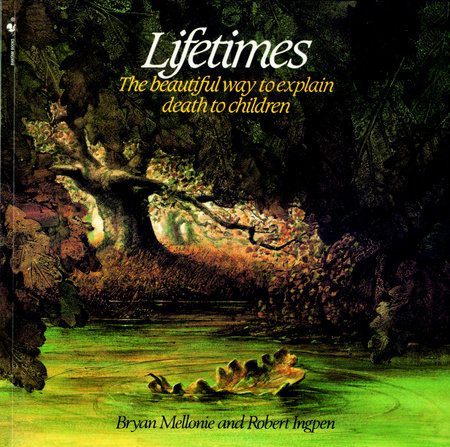


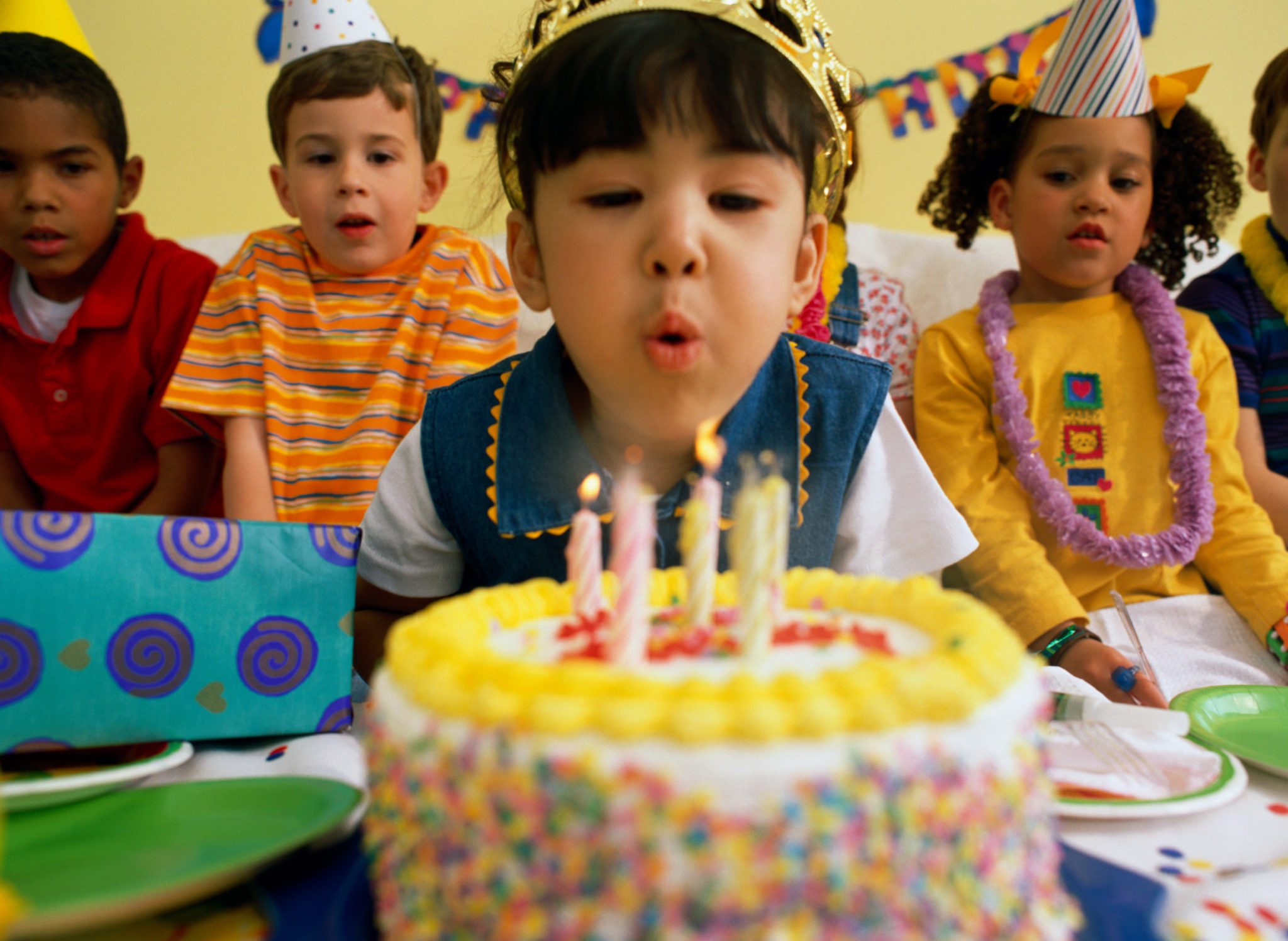
 With the goal of literacy, we teach our three-year-old the sounds of the alphabet and later introduce the shapes of the letters with their corresponding sounds, one by one. Next, we show how to spell a word by sounding it out and writing the word with loose letters organized in a box. In isolation from a book, we introduce short words on cards, such as cat. Next we introduce cards with two words at time, big cat, followed over the course of weeks by three-word exercises, such, as big yellow cat, then on to sentences: The big yellow cat ran. These exercises are placed in baskets and left on a shelf in order that the child can choose to repeat when he so desires.
 Dear Cathie,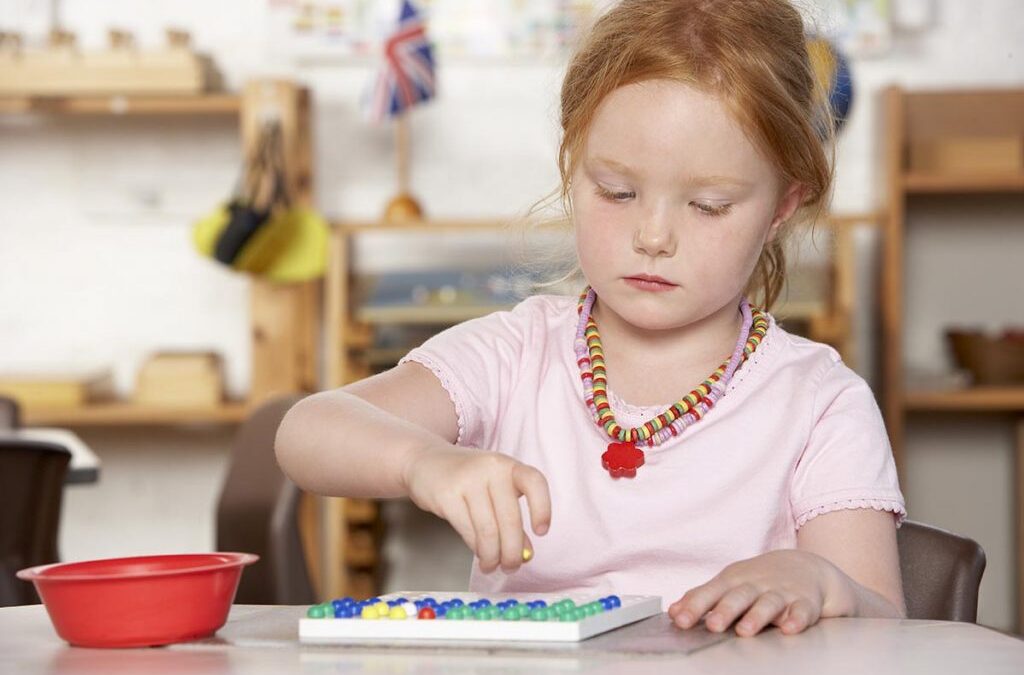

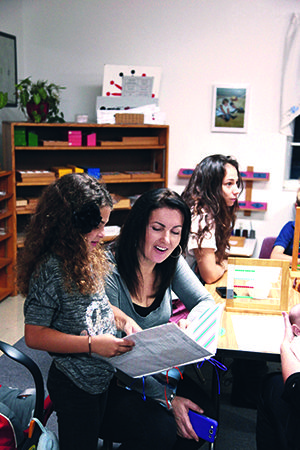
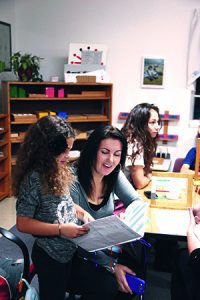 ologist by the name of Barry Schwartz published a book called The Paradox of Choice that illuminates and clarifies this idea that too much choice is a bad thing. He starts off by laying out what he calls the “official dogma” regarding choice. This dogma is as follows: The job of society is to maximize the welfare of the people. Welfare is maximized when freedom is maximized. Freedom is maximized when a number of choices available are increased. On the surface, this makes a ton of sense. Of course we should have freedom, and of