by NewGate Secondary Students | Book Reviews, Early Adolescence (12-15), Empowerment, MFA, Reading, Tomorrow's Child, Upper Elementary (9-12), Young Adults
 The Sweetness at the Bottom of the Pie
by Alan Brady
It wasn’t a normal morning on the Buckshaw estate. There was the usual orange and pink glow on the house, but there was something in the garden that wasn’t supposed to be there. It was a man lying face down in the cucumbers, dead. The Sweetness at the Bottom of the Pie, by Alan Bradley, is a murder mystery, where the main character Flavia, an eleven-year-old chemistry genius, finds a dead man in the garden and wants to know more. Detectives are on the case, but with her small size and innocence, she works to find out who committed the crime. Along the way, she hurdles obstacles, finds out stories of the past and unknown secrets that, when paired with her wit, allow her to put all the puzzle pieces together.
The story is set in a small English town called Bishop’s Lacey in 1950. It is here where Flavia lives with her father, Colonel de Luce, her two older sisters, Ophelia and Daphne, their maid Mrs.Mullet, and their gardener, Dogger. During the story, Flavia visits a neighboring town called Hinley and an all-boys boarding school named Greyminster. In all three places, she meets people like Mrs. Mountjoy, the librarian, Detective Hewitt, and an author named Mr. Pemberton. Flavia makes relationships with all those people, whether good or bad; she learns to manipulate them to get what she wants or gets manipulated herself.
Some big ideas in the story are about relationships, trust, and exploration. Although relationship and trust are different, they affect each other immensely. Flavia’s relationships are always changing, and with that, so does her trust level. Exploration also seems to be a big idea. Whether she’s hiding in the back of a truck full of warm smelly cheese, climbing up an old splintery ladder, or in her lab examining the effects of carbon tetrachloride on pig brains, Flavia always has a purpose for where she is and what she is doing.
I really enjoyed reading this book. I was always wondering where she would go next, who she would meet, and what she would find out. The book gives just enough explanation before getting into the nitty-gritty stuff, and the book never seems dull or boring, because the story is told through the mind of an imaginative eleven-year-old. The book feels authentic. When you meet a new character, they are relatable, and it is easy to picture each location in your head as they are described. I would say that the age group for the book is middle school and above. Sometimes the story can get a bit confusing, and that could make it hard for elementary readers. I would definitely recommend this book to anyone and would even read it again.
Reviewed by Colin Michaels, 10th grade,
NewGate School, Sarasota, FL
Tomorrow’s Child / Jan 2019 / Pg 30
by NewGate Secondary Students | Book Reviews, Early Adolescence (12-15), Language, Reading, Tomorrow's Child, Tomorrow's Child Online Issue, Young Adults
The Kite Runner
by Khaled Hosseini
The Kite Runner is a historical fiction novel that provides a remarkable perspective on the struggles of Afghanistan that have been neglected for too long. It is written by Khaled Hosseini and takes place in Afghanistan, spanning the period from before the 1979 Soviet invasion to the fall of the Taliban. The Kite Runner portrays Afghans as proud, free people, who have protected their country against attackers for decades.
Amir, the main character, is a sensitive, smart, entitled son of a well-known businessman named Baba. Amir and Baba live in a comfy home with their two servants, Hassan and his father, Ali. Ali and Hassan are Hazaras, an ethnic minority at the time. When the king of Afghanistan is overthrown, things begin to change in the country.
One day, when Hassan and Amir were walking down the street, they ran into Assef, the neighborhood bully, who threatened to beat them up because of Hassan’s ethnicity. Hassan used his slingshot to stop Assef from hurting them. The book then skips to winter, when it is time for the local kite-flying contest. When Amir wins the contest, Hassan runs after the kite to retrieve it. An incident takes place again with Assef, which is later to have great importance on the lives of everyone.
After this event, Amir and Hassan drift apart and fall out of contact. Amir and his father move to America to start a new life because of the Soviet invasion. Years later, Amir, who is now an accomplished writer, finds himself traveling back to Afghanistan, now ruled by the extremist Taliban, to make up for his past mistakes. He ends up finding his father’s friend, who reveals a secret to him and is caught having to make a decision that could affect him forever. He longs for his old life when Hassan and he were still friends, the very life Amir may be responsible for ruining.
In The Kite Runner, the author Khaled Hosseini seems to focus on the big ideas of betrayal, guilt, and redemption. He treats these big ideas with power and sensitivity, which makes the reader feel the depths of Amir’s weakness and the horror of his acts. Baba tells Amir, “There is only one sin and that is theft… when you tell a lie, you steal someone’s right to the truth.” In the story, the author does a wonderful job of portraying Amir as ashamed of what he has done to Hassan and the lie he told. Even though Amir ultimately betrays Hassan, the deep affection that Hassan feels for Amir is palpable and makes the book even more extraordinary.
The story is filled with suspense, terror, and deep sadness. The tale is brilliantly told and very believable. The reader is given detailed, vivid descriptions so that one can easily imagine the story as it unfolds. It aptly describes Afghan life and offers a captivating perspective on the struggles in that country. This is a book I would highly recommend to ages 14 and up.
Reviewed by Chloe Hazel, 9th grade,
NewGate School, Sarasota, FL
Tomorrow’s Child / Jan 2019 / Pg 30
by Michael Dorer, EdD | Brain Development, Communication, Early Adolescence (12-15), Empowerment, Infant-Toddler (0 to 3), Kindergarten, Language, Language & Reading, Later Adolescence (15-18), Lower Elementary (6-9), Mindfulness, Mixed Ages, Montessori Education, Montessori Family Life, Planes of Development, Primary (3-6), Psychology, Reading, Science, Sensorial, The International Montessori Council, Upper Elementary (9-12), Webcasts / IMC, Young Adolescent, Young Adults
Webcast: Building Brains With Kathy Leitch and Michael Dorer
by NewGate Secondary Students | Book Reviews, Tomorrow's Child, Tomorrow's Child Online Issue, Young Adults
A Tale for the Time Being- by Ruth Ozeki
A Tale for the Time Being plays with the idea of past and present. The characters in this book, Ruth and Nao, meet in an unlikely way; Ruth finds Nao’s diary, protected by plastic bags and a lunch box, washed up on the shore near her house. The book switches back and forth between Ruth’s life, written in the third person, and Nao’s, written in first, as Ruth reads through the 16-year-old’s diary one page a day. Both the outside and inside of the book draw readers in. Vibrant pictures of the diary, a jet in the sky, Nao, and the island where Ruth lives fill the cover. As soon as you begin A Tale for the Time Being, you won’t be able to put this amazing story down.
The way Ruth Ozeki, the author of this book, writes captivates anyone who lays eyes on her words. She captures the thoughts of a Japanese teenager when she writes Nao’s first-person diary. As you read A Tale for the Time Being, you will become enthralled and very attached to the characters as they go on their own unique journeys, only connected by a chance discovery. This book teaches you that no matter how far apart or how much time is between when books were written, they can connect two people in very meaningful ways. I would not recommend A Tale for the Time Being for young-adult readers because this story does contain some language and topics not appropriate for kids. Mature high schoolers, as well as adults, would thoroughly enjoy this book because the characters are very relatable and realistic to both groups.
Overall, I really enjoyed reading A Tale for the Time Being and would definitely recommend the book to anyone who likes realistic fiction with an interesting twist.
Reviewed by Hadley DiFiore, 10th grade, NewGate School, FL
Tomorrow’s Child / Nov 2018 / Pg 30
by NewGate Secondary Students | Book Reviews, Mixed Ages, Reading, Tomorrow's Child, Tomorrow's Child Online Issue, Young Adults
Sky in the Deep- By Adrienne Young
Seventeen-year-old Eelyn, part of the Viking Aska clan, has just two priorities in life: kill the enemy, Riki clan, alongside her best friend and father, and survive. The first day of the fighting season, Eelyn’s world stops when she sees her dead brother on the battlefield. (The one she thought died five years ago fighting the Riki, now fighting as a Riki.) The next time on the battlefield, she goes looking for her brother and gets captured by the Riki. She gets taken into a completely unknown culture with her estranged brother, trapped by the mountains of snow and an entire group of people who would very much love to kill her. Eelyn has to take a leap of faith, trusting another clan and endangering her own. Can Eelyn convince the clans to put centuries of blood feud behind them, or will they both cease to exist?
I liked this book so much because I instantly felt entangled into the fictitious world Adrienne Young created. I have never read a book this intoxicatingly unique. Whenever I was not reading it, questions would pull at the back of my mind, begging me to pick up the book. I needed to know what would happen and found myself thinking of the story constantly. The writing style of Adrienne is simple to understand, yet with profound meaning. Adrienne Young created a perfect balance of details and events. The metaphors weaved into this book intertwine with nature, bringing a certain ambiance that felt authentic to the story and setting.
The characters are so multidimensional, not just the main characters, but all of them. I could see each character’s perspective and felt like I journeyed with each of the characters, learning and growing with them. Adrienne Young wrote the first-person perspective of Eelyn very realistically. With many other young-adult books that I have read, I constantly face the problem of feeling like the characters do not seem anywhere near their age, or human at all. With Sky in the Deep, the character actions and dialogue seemed very realistic and appropriate.
Made out to be a fearless character, Eelyn has gotten some backlash about her bravery. It isn’t the fact that Eelyn swings an axe or wields a sword, but the fact that she has to confront some personal demons and try to figure out her own identity in an extremely difficult time. She has weaknesses and fears but faces them. This is what makes her courageous, not the fact that she doesn’t have any fears, but the fact that she overcomes them.
Young weaved the topic of love so subtly into Sky in the Deep that it does not become the main storyline but adds to it. It foreshadows the events and characters until the end when it bursts out, bringing the plot to a satisfying finish. The topic of love did not pertain to romantic love but what it really means to love someone. Adrienne Young shows the true meaning of love, even when you are unaware of it and how it ascends from your subconscious.
With topics of survival, betrayal, and trust, Sky in the Deep may be set many years ago but has themes and lessons that relate to modern-day society and our everyday lives. For someone who seeks a book beyond the conventional everyday young-adult fiction, Sky in the Deep is a great choice. With a courageous and daring female protagonist, whose world gets turned inside out, you will become engrossed until the very end. You do not have to be a history buff or Viking fan just an avid reader who is hungry for a non-typical young-adult historical fiction. I thoroughly enjoyed this book and the unique perspective I gained from reading it. It kept me at the edge of my seat the entire time. I would highly recommend it for ages 14 and older because of violence and other mature themes.
Reviewed by Brianna Baldinger, 10th grade, NewGate School, Sarasota, FL.
Tomorrow’s Child / Nov 2018 / Pg 30
by Kath Kvols | Communication, Early Adolescence (12-15), Empowerment, Later Adolescence (15-18), Mixed Ages, Montessori Parenting, Tomorrow's Child, Tomorrow's Child Online Issue, Young Adults
Dad with his 10 years old kid girl cooking in the kitchen, casual lifestyle photo series. Child making breakfast with parent together. Cozy homely scene.
Our daughter, Brianna, was laying on the couch with her earbuds on doing the typical teenage ‘thing.’ Brian, my husband, started pestering her about something she hadn’t done. Brianna rolled her eyes and continued to listen to her music. Brian’s tone of voice escalated, and I knew this was not going anywhere good. So, I pulled my hubby aside and asked him what he needed. He thought for a moment and said, “I guess what I really need is to connect with our daughter. I miss her.” (ahh…so tender) I gently asked, “Is what you are doing working?” He sheepishly shook his head “no.” I asked, “What else could you do?” Then the next thing I saw brought tears to my eyes. He sat at the end of the couch and proceeded to rub her feet (one of her favorites). Brianna slowly took out her earbuds and they began to connect in a fun conversation.
Sometimes, dads feel like a “duck out of water” when it comes to relating to their tween/teen daughter. The little girl’s body that used to rough and tumble now has begun to develop, making roughing and tumbling awkward. Also, this stage in a girl’s life is fraught with emotional upheavals, which often makes dads shy away. This is often the stage where dads take a back seat. It’s imperative that, no matter what, dads avoid the temptation to pull away or withdraw during this challenging stage of growing up. A father’s influence in his daughter’s life shapes her self-esteem, self-image, confidence, and opinions of men. The type of men that women date are directly related to the kind of relationship a girl has with her father. Dad may need to find new ways to connect.
16 Ways Dads Can Connect with Their Tween/Teen Daughters
1: Ask her what she wants to learn or do.
2: If she is indecisive, give her three options to choose from.
3: Take her fishing or something nostalgic that brings up good past memories.
4: Take apart an engine together.
5: Build something together for decorating her room, like pallet wood (it’s the cool thing now).
6: Ask her advice about something, i.e. the way you dress, a problem colleague at work or friend.
7: Take up a sport together. Learn a new language with her.
8: Share your stories of growing up.
9: Grill dinner together.
10: Take her with you to work.
11: Bring lunch to her at school, and find a quiet place to have a picnic.
12: Take her go carting … a great safe place to prepare her to learn how to drive.
13: Take her on an adventure and have her help plan it.
14: Talk to her about why boys think and act the way they do.
15: Learn to discern when she needs you to just listen and when she needs your advice.
16: Take her out to dinner, and treat her as a gentleman would (opening doors, sliding in her chair and ordering for her).
Take Time to Connect
You may be thinking you don’t have time. I was coaching a single dad of five girls all under the age of 14. I shared with him how important it was to have one-on-one time with each girl. He snickered and said, “That could get expensive taking 5 girls to dinner one time a week.” As we explored options, he came up with this idea. Every night, Dad walked their dog for twenty minutes. So, he decided to have the girls take turns walking the dog with him. Brilliant!
Even though she makes many attempts to push you away with prickly conversations, dagger-like glances, and tones of disgust, she needs you now more than ever.
Learning to navigate these turbulent waters gracefully will build her character and yours. When you get on the other side in a few short years, you will be well rewarded.ν
Kathryn Kvols is the author of the popular Redirecting Children’s Behavior parenting course and book. You can subscribe to her free “Parenting Practices” at
www.incaf.com.
Tomorrow’s Child / Nov 2018 / Pg 28
by Danielle Herzog | Communication, Discipline, Infant-Toddler (0 to 3), Kindergarten, Later Adolescence (15-18), Lower Elementary (6-9), Mindfulness, Mixed Ages, Montessori Family Life, Montessori Parenting, Practical Life, Primary (3-6), Research, Tomorrow's Child, Tomorrow's Child Online Issue, Upper Elementary (9-12), Young Adolescent, Young Adults
We ask about pets, allergies, and car seats, but would we hesitate to ask the parents of our child’s playdate if there are guns in their home?
When my daughter was 3, she saw her first toy gun on a playdate. It was neon green and shot balls instead of bullets, but it was the first time she had ever seen or heard anything that contained the word “gun” in its description.
“What does a real gun look like?” she asked when she returned from the playdate.
I realized then that it was time to educate her, as well as myself.
I went online and showed her pictures of all different types of guns. But I didn’t stop there. I talked to her about what to do if she went to a house with a real gun—to stop, immediately leave the room, and find a grown-up. I used a stern voice, told her of the terrible things that could happen, and I did my best to answer all her questions openly and honestly.
But then she said something that I wasn’t prepared to hear: “I don’t want to play at a house that has guns.” And the truth was, neither did I.
We are not gun owners. We are a family who understands the need for guns for hunting and armed forces, but we are not people who believe they should be kept in the home for recreation or protection. I have never understood how guns could even be used for protection if they’re supposed to be kept locked up with the bullets in a separate location. If an intruder entered your home, how would you have time to unlock, assemble, load, etc.?
But a bigger question I wondered was why I had never asked a playdate’s parent if they owned guns. Yes, I knew the people she was playing with; they were friends. But the truth was, I had no idea if they owned a gun. It’s not a topic that had ever come up.
So the next time she went on a playdate, I asked the question that felt so uncomfortable coming out of my mouth, and I was surprised by their reaction. They smiled, said “ no,” and added, “That’s a good question to ask. I never thought to ask someone that.”
And that parent and I aren’t the only ones who hadn’t thought to ask before. I posted the question on Facebook and was surprised by how many mothers answered that they wished they asked if there was a gun but never did. Many were afraid of offending the other parent, or others didn’t think of asking until after the fact. However, a few said they had asked and the reactions were mixed.
A mother of two from New Jersey said that she worked up the courage to ask when her son started attending a new school. “I didn’t know the parents, and although they seemed nice enough, I felt strange about dropping my kid off at someone’s house without knowing them. I asked if they had a gun in their house, and the father answered ‘no.’ It then led to a great conversation about how sad it was that we needed to ask.”
But another mother of three from Wisconsin has often experienced a different reaction. “Almost always, parents get offended when I ask. I live in a state with many hunters. But, I put my child’s safety before a fear of how people think of me. If they don’t lock their guns, my son doesn’t go.”
Some parents are even going as far as not partaking in at-home playdates. A mother of three from New York City, slowly started eliminating playdates that take place in someone’s house. “There are too many wild cards: guns, not knowing whether other adults are in the home, and the like. I don’t consider myself a paranoid parent, but I’d rather eliminate any controllable dangers by being present and engaged and available for my child while she has a playdate. Instead, we invite our daughter’s friends (and parents, if they so choose) to join us at museums, kids’ centers, or similar spots to play.”
After recent youth shootings, access to weapons in homes is a growing concern. According to the Brady Campaign to Prevent Gun Violence, more than 40 percent of households with guns and children store their weapons unlocked.
With that information in mind, how can I truly believe someone if they tell me they properly store their guns? Not only am I a skeptic and cynical human being, but I’m also a mother who is terrified of a gun going off and injuring, or worse, killing an innocent child, especially mine.
After I showed my daughter the pictures of real guns, she asked, “How will I know what is a play gun and what is a real gun?” I wondered the same. Toys today look so real. How would she tell the difference?
In that same Brady report, parents who said that their kids had never handled their guns at home were given quite a surprise when they found out 22 percent of their children, who were questioned separately from their parents, said that they had handled their parents’ guns without their knowledge.
Who’s to say that one of those children in that 22 percent isn’t my child’s new playdate?
Retrieved from:
https://www.parenting.com/child/safety/would-you-ask-parents-if-they-own-guns-okaying-playdate
Tomorrow’s Child / Nov 2018 / Pg 24
by Maly Pena | Empowerment, Mindfulness, Mixed Ages, Montessori Charter Schools, Montessori Education, Practical Life, Sensorial, Tomorrow's Child, Tomorrow's Child Online Issue, Young Adolescent, Young Adults
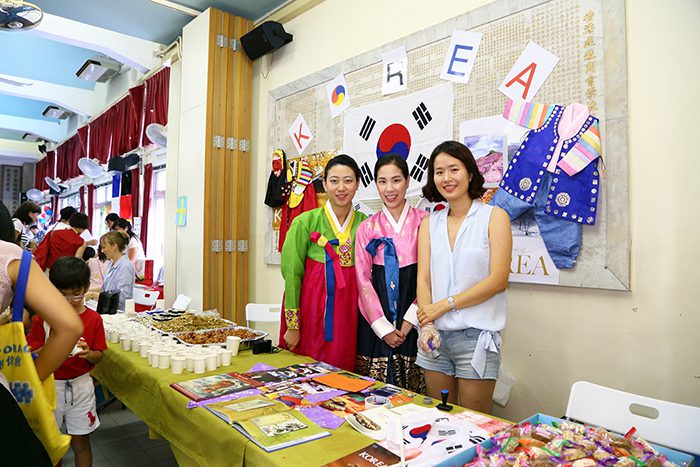
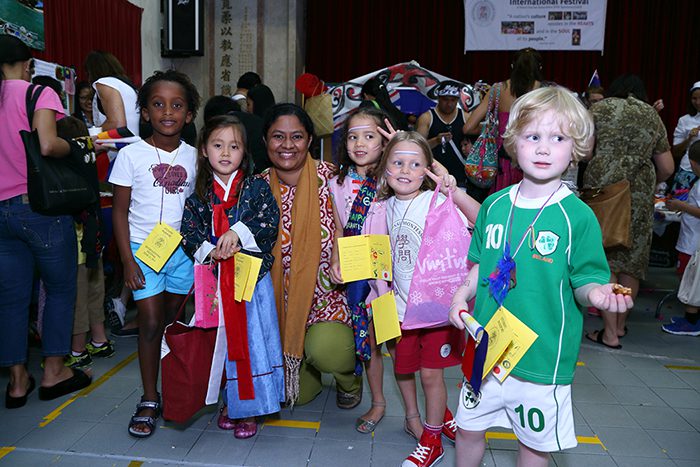
Each June, the IMS Community, supported by our Parent Teacher Association, hosts a joyous cultural gathering of our diverse community: the beloved International Festival. This chance to take a mini tour of the world in the school hall is always embraced by our children and parents alike.
Dressed in their own traditional attire, they get to experience some of the traditions that shape people’s lives both near and far. Our generous band of parent volunteers does a fabulous job to keep the cultural experience sensorially stimulating for our young tourists with an array of delicious cuisine samplings, treasured objects, hands-on crafts, colorful flags, and costumes, and even live performances! We are incredibly proud to be able to share some of the customs ascribed to 25 nations represented at this year’s event; from Peruvian music to Swiss raclette, Japanese fans, Dutch tulips, Maori kapa haka, Korean hanboks, and Indian dancing in silk saris!
To date, IMS’ multicultural community now stems from 46 countries. Our deepest appreciation goes out to our show-stopping volunteers from around the world! In addition, throughout the year, many of our Casa parents also present different holiday traditions that their family celebrates and share their experiences with the children; these cultural presentations help open up the 3-6 child’s awareness that even if we do not share a particular heritage, we often notice that, “We do that in our family too!” Time and again, what we find and aspire to pass on to our students, is that we are all alike. We all need and deserve a warm home. We all eat, sharing stories and laughs over food. We all love our children, hoping and dreaming for them, creating a wonderful world where they can grow into their best selves. We are special individuals; our culture and history can be shared, cherished, and celebrated. We are all humans who deserve respect, kindness, and love. About the International Montessori School (IMS)
Since 2002, IMS has pioneered Montessori Mandarin Chinese – English Dual-Language education in Asia and is now one of the largest Montessori programmes of its kind in the world. At IMS, we recognize and respect the individuality of every child, and aim to nurture their innate curiosity, compassion, and thirst for learning. Providing an environment that celebrates the child’s independence and fosters the motivation to become a lifelong learner who is flexible, responsible, self-regulating, reflective, and persevering is our goal. By equipping them with a solid academic foundation and a strong moral compass, we guide our students to become caring and contributing global citizens of the 21st century.
IMS opened its doors in 2002 with 68 students. With the growing appreciation of the benefits of this unique way of learning, today our Montessori community has grown to almost 900 students from over 40 different countries served in four campuses on Hong Kong Island.
Tomorrow’s Child / Nov 2018 / Pg 23
by Punum Bhatia Ph.D | Early Adolescence (12-15), Later Adolescence (15-18), Lower Elementary (6-9), Mixed Ages, Primary (3-6), Sensorial, Tomorrow's Child, Tomorrow's Child Online Issue, Upper Elementary (9-12), Young Adolescent, Young Adults
Chinese lanterns isolate on white.
Chinese New Year must be around the corner, for our school is decked in red and gold. Chinese New Year is celebrated according to the Lunar Calendar, sometime in January or February each year. It marks the coming of spring and new beginnings and is usually a two-week celebration. As in other cultures, there are many preparations leading up to the event. The week before the holiday, families clean their homes to sweep away all traces of misfortune. Shops and homes are decorated with lanterns, flowers, and bright banners. The color red and fireworks are used to frighten away monsters and evil spirits and to gain the attention of the Gods. On the night before the New Year, families celebrate with a family dinner, board games and midnight fireworks. On New Year’s Day, children are given presents of money in red envelopes and often visit neighbors and friends, with gifts of food and wishes of good fortune.
On the 15th and last day of the New Year celebration, the Chinese people celebrate what is called the Lantern Festival. Everyone goes out at night with colorful lit lanterns. Often children march in a lantern parade. The lanterns are left lit all night to thank the Gods for returning the daylight to them at this time of year. It is a time to celebrate nature, family, and friends and a time to pray for good fortune in the coming year. The day is filled with eating rice balls, family reunions, and solving puzzles often found on the outside of many of the lanterns.
Preparation in our classroom centers around a beautifully adorned display table with red and gold New Year banners, pictures of Chinese people celebrating all over the world, artifacts including the Great Wall, lanterns, dragons, and Chinese dolls. There are New Year signs on our windows and doors that welcome the children and get them excited and
curious at the same time.
In the Practical Life area, there are brightly colored Chinese bowls and spoons for transferring activities, and a variety of new ingredients for pouring including lotus nuts, rice and melon seeds. Chopsticks and a variety of culinary delights, such as star anise and peanuts, replace tongs and beads and erasers. In the flower-arranging area, fresh spring flowers are brought in and arranged for good luck with red adornments. Children learn to make a pot of tea and share it with their friends in a little ritualistic tea ceremony.
In Sensorial, the fabric box has the most gorgeous silks and other fabrics from China for the children to match. In our smelling bottles, we put a variety of spices including star anise, mixed spices, and jasmine tea. The stereognostic bags have Chinese coins, small pandas, moneybags, and little Chinese hats! Among the cultural ideas on our shelves are pairing cards of beautiful silk, weaving, and a box of objects from China, which the children can explore in conjunction with the puzzle map and flag.
The art area is a riot of activities, from appreciating Chinese artists to calligraphy and cutouts of the good-luck sign. There are fans for the children to fold and make and lanterns for them to cut, as well as firecrackers to roll and hang around the classroom.
Our talks during the week about the Chinese New Year describe the rituals performed by the Chinese people at this time of the year. We talk about the significance of the colors red and yellow, which are worn to bring good luck. We read Chinese poems and stories every day. One told about a New Year’s reunion; another of the dancing dragon; but the favorite is An Invitation to the Great Race. This tells the story of how the Chinese solar-lunar calendar came into being. We talk about the animals of the years in which they were born, and they learn more about this in literacy and have an opportunity to color and display the order of the animals in the race.
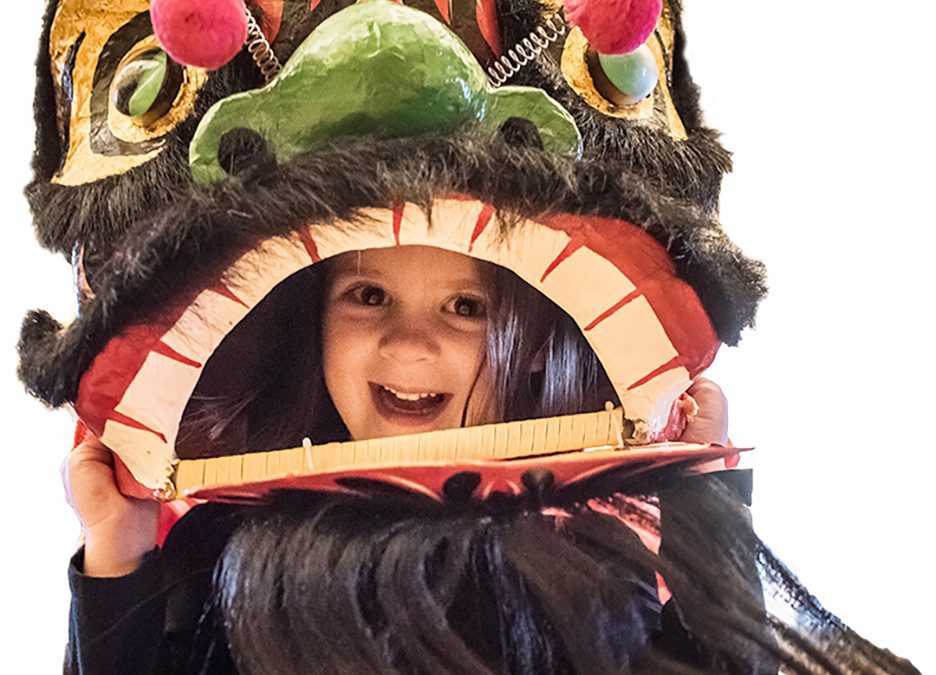
All of this leads to the very exciting event: the celebration of the festival itself. Family and friends are invited and encouraged to wear red and gold. The children carefully sweep and clean their classroom in true Chinese tradition. The performance starts with the Kindergartners introducing the audience to China and speaking not only of Chinese New Year but also of the Great Wall; the importance of the lion statues; the clothes and the money. It goes without saying that this is all done in Chinese! Chinese New Year songs follow and then, of course, the Lion Dance. It is all energy, color, and life—an experience enjoyed thoroughly by the lion dancers, themselves, and all the audience. Maria Montessori once said that, when bringing in other cultures all items, “would be received with enthusiasm,” and that “a child’s mind can acquire culture at an earlier age when involved with the movement,” as the lion dance shows.
The celebrations continue with The Great Race. The children enact the race called by the Jade Emperor with the animals gathering on the shore and crossing the river. The years of the Chinese calendar follow the order in which the animals arrived on the other side of the river. Their costumes are simple with black leotards and masks and tails. We keep their lines to one or two so they can easily memorize them and recite without stage fright! They do such a good job and hopefully, when they look back at their first acting stints, it will be a pleasant memory.
The Chinese teachers present the children with the lucky red envelope, which have some chocolate coins in them, as is the tradition in China. This is followed with a feast of all things the Chinese people consider auspicious to eat for Chinese New Year. There are dumplings, sticky Chinese New Year cake, watermelon seeds, New Year lucky candy, cookies, oranges, and jasmine tea. I overhear a parent telling a child, who insist the mother try some of the dumplings, “You are so lucky to have these opportunities I never had.”
It is true, the world is a really small place and festivals are a superb way of introducing children to different cultures and providing them with an enriching experience.
“All mankind shares a common history, a common world of cultures, and struggles toward a common future. The child should be given a sense of our heritage, our culture and our potential destiny from the earliest moments of sensitivity.
The needs of mankind are universal. Our means of meeting them create the richness and diversity of the planet. The child should come to relish the texture of that diversity.”
—Maria Montessori
Punum Bhatia, PhD has dedicated her life to Montessori education as a parent, teacher, and teacher educator for nearly thirty years. She completed her Bachelor’s degree in English Literature; earned Masters’ degrees in English Literature and Education from the University of Calcutta; and completed a certificate diploma in Montessori Pedagogy. She earned her Doctor of Philosophy from the University of Colorado Denver in 2012 for her work on the Self-Efficacy of Montessori teachers. In her efforts to understand children and the environments necessary for them to grow and flourish, Punum focuses on Maria Montessori’s original philosophy and techniques. After teaching the Montessori method to cohorts all around the world, she is now the proud owner of her very own bilingual preschool. (www.mcidenver.edu/ www.punumbhatia.com).
Tomorrow’s Child / Nov 2018 / Pg 21
by Edward Fidellow | Adolescence, Communication, Early Adolescence (12-15), Empowerment, Infant-Toddler (0 to 3), Later Adolescence (15-18), Lower Elementary (6-9), Mindfulness, Mixed Ages, Montessori Education, Montessori Family Life, Montessori Parenting, Parent Education, Psychology, Tomorrow's Child, Tomorrow's Child Online Issue, Upper Elementary (9-12), Young Adolescent, Young Adults
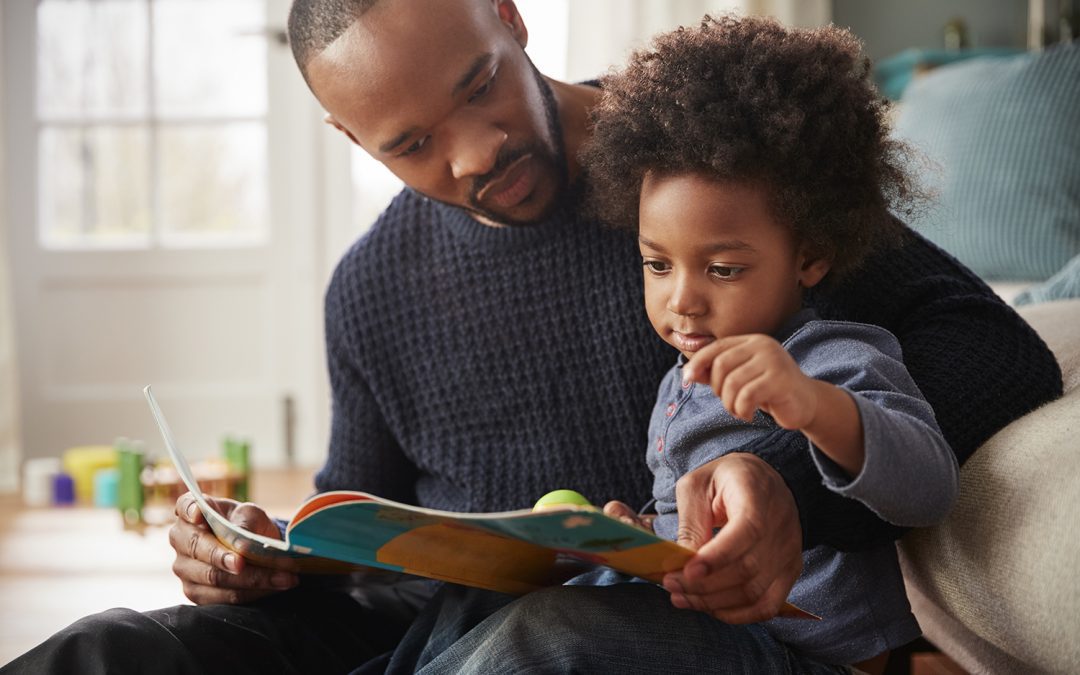
Father And Young Son Reading Book Together At Home
There are seven simple steps to becoming a Montessori parent. When we say ‘simple,’ we don’t mean that they are not challenging. It is a lot like the definition of bull riding. “The object is to keep the bull between you and the ground.” Simple—but challenging.
The first step to becoming a Montessori parent took place when you enrolled your child in a Montessori program.
That in itself is a challenge. Most of us weren’t raised in a Montessori school. The whole concept is foreign and takes a bit of courage to step out of the norm and our comfort zones. We may have chosen the program because it wasn’t like our school experience (which is why we chose it). Or we chose it because we saw something unique in a Montessori child that we knew. Or we were just plain lucky, stumbled into a Montessori school, and were fascinated by what we saw. Even then, we had to deal with the question, “If this is so great, how come the whole world isn’t lined up outside the door to enroll?” (That is the same question Montessorians wonder about, too!) But you made a complex and challenging decision to become a Montessori parent, and here you are. So how do you get the best out of your decision? You go to step two.
You begin to understand the core philosophy of Montessori. Fortunately, you don’t have to become a Montessori teacher to be a good Montessori parent. (You don’t have to know how to manipulate all of those materials, and you don’t have to keep fifteen children from climbing the walls.) The most significant Montessori concept is to respect the child. I can almost hear the wheels turning: “Of course I respect my children; I love them very much; that’s why I have them in Montessori; I want the best for them.” Of course, you love them, but respect is different.
Respecting the child is, first, to respect the nature of children. Children are not mini adults waiting to be molded. They are like tadpoles and caterpillars that have their own form and function of life, waiting to become what they are intended to be. We are often impatient for them to ‘become,’ because we don’t realize that childhood (with its curiosity, playfulness, messiness, and all) is part of the process of them transforming themselves into the adults they will become. We have to respect that process, which doesn’t mean they always get to do what they want.
One of the operative words in Dr. Montessori’s writing is the word ‘train.’ We do need to train our children, but we need to train ourselves not to destroy that which is good in the nature of our children. The second part of respect is to respect the personality of your child. Your child is not a blank slate. They are already imbued with the unique characteristics of who they are. The artistic bent is already there. The math bent is already formed. The leader, the follower, the giver, the taker, the extrovert, the introvert are already present in your children’s DNA. Right or left-handed; right or left brained are already formed.
So how do you cooperate with nature? You become an observer. That is the next step in becoming a Montessori parent; you train yourself to observe. To what interest does your child gravitate? What gives them great joy? What occupies them endlessly? These are all clues to who your child is becoming. You are fortunate that you have a trained helper in your child’s Montessori teacher. At your next parent conference, you should ask more than “what has she done?” but who do you see her becoming. It is hard to cooperate with nature if you are not aware of the nature of your child.
Our third step is to become their champion. I know. I hear you say, “Of course, I’m their champion. I love them.” And you do. But are their goals your goals? Translation: Do you have goals for them that do not take into account who they are? (There are many ‘jock’ fathers who do not have ‘jock’ sons.) Yes, you have many wonderful goals for them to be caring and loving, honest and faithful, upright, truthful, etc. These are worthy, significant, and meaningful goals; however, the expression of their lives (career, vocation, work) is best met and fulfilled according to their gifts.
When your five-year-old says, “I want to be a fireman.” He may be reflecting the latest book or television program he’s seen. However, if you continue to ask the why questions: “Why do you think that would be a good job? Why do you think that you would enjoy that?” you may discover that your child is not drawn just to the excitement but to the fact of wanting to help people or, perhaps, he likes the aspect of being part of a team. All are important clues to his personality. Your child needs you to champion and encourage his personality (especially, if it is different than yours.)
The fourth step is to practice what they learn at school: grace and courtesy. Please and thank you, May I, Excuse me, Please forgive me, and a host of other considerations practiced (and modeled) at home will go a long way to giving your child every advantage in life. People respond favorably to a child with great manners.
Fifth, practice independence. Independence is the ability to be self-governing, and that comes from making choices, living with the consequences, and having responsibilities. As often as possible, give your children choices. “What do you want for breakfast, cereal or eggs?” (Don’t offer choices where there are no choices. “Do you want carrots? They say no and you serve them anyway.) Give your children chores they can accomplish: making their beds, putting dirty clothes in the laundry, dishes in the dishwasher, etc. Chores build responsibility; responsibility builds independence; independence builds confidence.
Sixth, give them the gift of time. Give them time to accomplish their chores. Give them time to be children. Give them time to breathe. Give them your time.
Seventh, practice humility. They have a lot to learn from you. What is easy for you as an adult is mystifying and beyond challenging for them. Let your words be seasoned with grace. Look for the good in what they do. Their motives are often pure; their actions imperfect. Yet, we have a lot to learn from them. And when you are wrong (when not if) practice the humility of saying, “Please forgive me.” It will not destroy your authority or their respect for you. It will teach them one of the great lessons of life: when you fail, whether it’s in a relationship, school, career, or life, own the failure and start over again to succeed another day.
Becoming a Montessori parent is to become the best parent you can be.
Reprinted with permission by the author.
Tomorrow’s Child / Nov 2018 / Pg 13
by Pete Moorhouse | Empowerment, Imagination, MFA, Mixed Ages, Tomorrow's Child, Young Adults
Little girl making video or photo with mobile phone.
A Note To Readers:
The following article by Pete Moorhouse is loaded with insights and ideas about young children and photography as a wonderful medium for expression, creativity, and learning. Although the article is geared for the classroom teacher, parents can also incorporate many of his suggestions on how to implement photography into their family’s lives and activities. Whether you are a teacher or a parent, this article is one that you will want to read.
Lorna McGrath,
The Montessori Family Alliance PS: To maintain the integrity of the author’s writing, some words reflect UK spelling.
Children’s unique view of their world
“Our first language is visual—the child’s first view of the world is in images—seeing comes before words, a child looks and recognizes before she can speak.” —John Berger (Ways of Seeing)
Photography knows no boundaries, and age is certainly no exception. Young children are very competent, visual thinkers and very much enjoy taking photographic images. Franz Kafka once wrote: “Anyone who keeps the ability to see beauty never grows old.” This implies that children notice beauty. Several years back, I did a project whereby I invited children to photograph things that they felt were beautiful in the nursery. The resulting images were extraordinary, illustrated beautifully by three-year-old Mira, taking an image of an overflowing drainpipe, capturing the falling water in the sunlight. It emphasized to me the complexity and visual awareness of young children.
Given its vast potential, photography is a vastly underused children’s resource in early years. Teachers regularly use cameras and tablets to document, but this is rarely extended to children. While teachers may be concerned about the potential damage to a camera, they may be also unaware of the many possibilities. Photography is a powerful medium for developing children’s understanding of themselves and the world around them, putting children at the centre of their own learning. It captures children’s curiosity and provides a starting point for inquiries. Photography is a language all of its own and is accessible to all children, irrespective of gender, culture, and background; it can be an engaging medium for children with a wide range of special educational needs and disabilities.
Photography provides a different way for children to express themselves and make their ideas visible. For some children, photography may be a key that unlocks their learning and becomes a strong language of expression. Children use their imagination, naturally seeking out unusual perspectives and are not confined by conventional ideas of what makes a ‘good’ photograph. Photography builds on children’s intrinsic motivation and exploratory drive. By following their curiosity and taking their own pictures, they are deciding what is important and constructing their own meaning of their experiences. The resulting images are often unexpected and striking. Children view the world in unique ways and the camera allows them to capture these perspectives.
Children’s Voice: A picture and a thousand words…
Initially, I imagined that photography would provide children with another visual art form with which to work, but after introducing digital cameras to children several years ago, it quickly became apparent just how much more potential there is to photography, especially for opening up conservations.
Photography provides an exceptional tool for encouraging children’s voices. Children feel a sense of ownership over their images and readily communicate the ideas behind them. They are empowered because they know the information and the thinking behind the images that we don’t. Children like having their images as the focal point, and these become the starting point for conversation, as images are reviewed together. They make meaningful reflections about their images, and these often become a way of starting new dialogues and new inquiries.
Unique Insight
For practitioners, photography provides us with a unique insight into the way a child sees the world around them, making their interests visible, and this can open up the door for following and developing their lines of inquiry. For this to be effective, we have to ensure that we make time and space to listen carefully, as the images are reviewed together.
Versatility
Photography is extremely versatile; it can be an interest in itself or used to support other enquiries, recording outings, and so on. The images can be re-viewed instantly on the camera, downloaded and viewed on a computer, viewed on a TV or whiteboard, projected on a wall or printed. Images that are printed can then be used in many ways: for drawing, creating a collage, making a storybook, and so on. Images can also be reworked digitally with a variety of apps. The possibilities are endless.
Documentation
Photography is a powerful tool for children to become documenters of their own work —documenting both the process and product. Photographs taken by themselves have a deeper significance, making it easier for children to re-connect with the experience. This can contribute to children reflecting and evaluating their learning, developing their metacognitive understanding, and thinking about next steps. The documented images provide a memory link to previous experience, and these are even more relevant and memorable by being taken by the children themselves. This can be particularly useful when documenting work that happens over a longer time frame, such as exploring seed growth; seasons; or the weather. It can also be a useful tool for children to record a temporary construction project that has to be dismantled, often making them feel happier about having to clear it away.
Consultation
A photograph can provide an interesting way of consulting with children, gathering their ideas and having them feed ideas into an evaluation. This could be consulting with children about what changes they would like to see in their environment, such as in the playground. If we ask direct questions, the conversation may be stifled, but by suggesting that children take images of things they like and don’t like and then reviewing the images together, it can really stimulate a dialogue and exchange of ideas. Similarly, we have children use photographs to evaluate their time at school at the end of the year; they can take pictures of learning that had been significant, what they liked to play with, and so on. This can provide extraordinary and sometimes unexpected insights. The Mosaic approach highlights the value of using photography as a medium for consultation.
Cross-curricular activities
Photography is a truly cross-curricular activity that embraces many areas of curriculum and learning and development:
♣ Children feel valued and empowered by being given the responsibility and being trusted to use real photographic equipment, boosting self-esteem and confidence;
♣ Children quickly acquire the skills necessary to take images building their confidence and sense of that ‘can-do’ spirit;
♣ Taking images of the setting, children, and teachers can provide a way to help them settle in a new environment—building on a developing a sense of self and sense of belonging;
♣ Young children are developing new ideas and feelings about emotions. Photographs can help children express their views and how they feel; and
♣ Children take great pride in their resulting images.
Physical Development:
♣ Photography helps develop fine-motor skills and dexterity;
♣ It also helps develop hand-eye coordination;
♣ Using a camera increases control of poise and posture, keeping still as they take the images; and
♣ Children learn to use tools with increasing control (taking care of
the camera).
Communication and Language:
♣ Photography allows opportunities
for encouraging communication
and language;
♣ Photography supports language for children that are reticent about using language or have language delays;
♣ Photography helps develop vocabulary, as children describe their images and the ideas behind them; and
♣ Photography stimulates conversation
as children share their images with
each other.
Literacy:
♣ Literacy is improved when books about photography are combined with a project or factual books about cameras;
♣ Children can also use their photographs to support their emerging literacy skills, taking images of letters and words; and
♣ Printed images can be used for making picture stories, photographing drama, and adding text.
Mathematical Thinking:
♣ Mathematical themes often emerge from children’s images; such as taking images of numerals or mathematical shapes
and patterns;
♣ Photography can be used to support mathematical thinking by capturing images of mathematical explorations; and
♣ Cameras can be used to record mathematical graphic making.
Understanding the World:
♣ Photography offers insight into IT (information technology) equipment, developing an understanding of cameras, computer equipment, and printers;
♣ Photography can be used to support any line of inquiry, such as gardening;
♣ Photography can help children find and identify uses of everyday technology;
♣ Using a camera helps young children learn how to operate simple equipment; and
♣ Through the use of photography, children develop an awareness of geographical location, position,
and perspective.
Art and Design:
♣ Photography provides children with another medium with which they
can express their imagination; and
♣ It offers opportunities to rework
images, such as print-outs or
software manipulation.
Characteristics of Effective Learning Playing and Exploring
Children’s curiosity is the starting point to their photographic explorations and investigations.
Active Learning:
Curiosity motivates children’s engagement and encourages concentration as they pursue their interests.
Creative and Critical Thinking:
♣ Children problem solve as they work out how to capture the image they want;
♣ Children express opinions through images, making decisions on what to photograph, what to think about, and how to document their work;
♣ Children develop their own ideas and choose ways to do things;
♣ Children learn about cause and effect, e.g., what happens if the camera is angled or tilted sideways, what is the impact of where the photographer stands?; and
♣ Children reflect on their work, analysis, planning, using critical-thinking skills.
Equipment
Over the years, we have experimented with a variety of different cameras, tablets, and other devices. The types of camera that we have had the most success with are small, high-quality digital cameras. There are several advantages to these. First, they take high-quality images, having good processors and fast response time. I particularly like the cameras in the Canon PowerShot™ range; it is robustly made and produces high-quality images. They are easy to grip, have a relatively large screen on the back for reviewing images, and take AA batteries.
Other goods, more robust options (designed to be water-resistant and able to withstand knocks) include the Fuji FinePix XP120™ and the Nikon Cool Pix W100™.
With digital cameras, it is important that children wear a neck strap to prevent the cameras being dropped. I would suggest using a relatively wide band of fabric so it is soft. I would also strongly advise purchasing second-hand equipment, especially as there are so many cheaply available these days due to our constant desire to replace old equipment to keep up to date. Cameras will eventually break in the hands of young children. Using cheaper, second-hand equipment can allow us to feel less apprehensive about damage, allowing the children more freedom with the camera without us nervously hovering over them. We need to be comfortable with children handling cameras for it to be successful.
I am far from impressed with the selection of cameras made specifically for children. They are well protected with rubber mouldings but tend to be cheaply made with poor quality processors and produce poor quality images. They also tend to include distracting additional effects and games, which become an unnecessary distraction.
Many children are only too familiar with iPads and mobile phones. Large iPads are quite bulky for very young children to hold comfortably, and they tend to create a wall between themselves and their subject. There are protective mouldings available that incorporate handles which make them easier for young hands. Mini iPad and mobile phones (SIM cards removed) can work, but often children get lost navigating the menu by accidentally touching an incorrect command. On balance, I recommend using digital cameras.
Have the camera available as a resource that the children can access at any time. We do this by having a designated children’s camera solely for their use. We have this clearly visible, hung on the wall, but elevated so they need to ask to get it down. This emphasizes the need to take care of this special equipment and for us to know who is using it and track images.
Getting Started
Initially, you could have a discussion as a group around images and photography. Having children share what they already know is a good starting point for these discussions. This could include looking at and discussing some magazines and photographs or by visiting a photographic exhibition. We often explore other lens-based media to further develop their understanding and encourage observation. This could include investigating lenses, magnifying glasses, a USB digital microscope, or projecting images captured with a web camera.
Providing Guidance:
We need to give children instructions on how to use the camera so they can get the best of the experience. This is best done on a one-to-one basis:
♣ Explain the need to handle the camera with care to protect it from damage.
♣ Explain that the neck strap must always be worn and suggest no running with the camera.
♣ Show children how to switch the camera on and off.
♣ Make sure children know which button takes the image.
♣ Teach children how to focus (camera – half press/ tablet – until circle or square disappears).
♣ Discuss the importance of holding the equipment still and keeping the lens clear (keeping figures from obscuring the lens).
♣ Show children how to zoom in and out.
♣ Teach children how to switch between review mode and shooting mode.
♣ Show children how to delete unwanted images.
♣ Have a discussion about etiquette, including respecting people who do not want their picture taken.
After the initial instruction has the children take practice shots to gain confidence in the operation and framing of the picture. Then they are ready to go. It’s a good idea to take a portrait of them first to help identify whose images are on the memory card.
Exploration:
Most children will naturally follow their curiosity and experiment, developing their technique and skill through trial and error. If not, encourage experimentation by suggesting taking shots from different perspectives, above/below, unusual angles, taking close-ups, shoot a subject from different sides, stepping back to get a wider angle, trying different subjects: portraits; objects; landscapes; details; buildings and so on. But importantly give children the time to experiment and find their voice. We can encourage thoughtful picture taking by encouraging children to take images that are important to them and also by showing genuine interest in their resulting images.
Extended Projects:
When reviewing images, themes often begin to emerge and these can then be developed and extended. We can also introduce ‘invitations’ to use photography to explore a specific area.
There are so many possibilities. It could involve the children taking the camera home over the weekend. Children enjoy sharing their images back in school, talking about the scenes as the images show people and things unfamiliar to staff but that are important to children. Children explain and describe what was going on and why they took the images. Their perception also fascinates parents. This project encourages a link between home and the school setting. Recording festivals and cultural events can help children feel proud of their own culture. Another project could involve making maps using photographs. This could, perhaps, involve taking some images around the child’s current setting and then arranging them to make a plan or take photographs from the surrounding neighborhood to create a map.
Examples of projects:
θ My journey to school
θ Where I live
θ My home
θ What is beautiful
θ Exploring color, texture, and patterns
θ Exploring reflections/shadows
θ Expressing likes/dislikes
θ Taking portraits
θ Festivals and cultural events
θ What makes me happy
θ Making maps (arranging images spatially)
θ Making a picture storybook (series of images creating a narrative)
θ Photographing the weather
θ Looking for shapes in clouds
θ Growth (living things)
θ Seasons
θ Evaluation
θ Consultation (arrangement of room/ outdoor environment)
θ Light painting (photographing light in a dark room on slow exposure)
θ All about me (photo album)
Other lines of inquiry may also emerge from children’s interest in photography: they may decide to make cameras from junk modeling supplies; they may use their skills with tools to disassemble a (broken!) camera, discovering the many parts inside; they may go on to create drawings/painting inspired by their images or draw directly on print-outs of their images…
Reviewing images and reworking images
Again, photography is versatile in the many ways in which images can be reviewed. We often see a huddle of children gathered around a camera looking at the images that have just been taken. They can be viewed on a larger scale on a laptop/PC/whiteboard. Images can be reworked digitally or printed. Printed images can be made into collages, drawn on, cut, and so on.
Images can be shared with parents through wall documentation, learning diaries, and slideshows. I particularly like adding their images to PowerPoint™ and adding some of their dialogue to the slides. Selected slides containing children’s commentary can then be printed and added to learning diaries.
Video:
All the devices will also capture video. While children do enjoy shooting video, our experience has been that it is harder to work with. It necessitates longer periods of time to review work and is harder to reflect on due to the quantity of changing information. It also ends up using significant amounts of storage. I would suggest being led by the children—if they are showing interest and are engaged, it makes sense to explore video.
Downloading and storage
It is good practice to get into the habit of downloading the images from the camera after each session; otherwise, there can be quickly become an overwhelming number of images on the camera, which can be difficult to organize, especially if several different adults oversee the camera. They are best downloaded after each session into a separate folder of each child’s work.
Exhibition:
Children take pride in their images and also in presenting them. This could be on a monitor or a wall display or it could be taken one step further with the children exhibiting their favorite works in a public space such as a café, library, or health centre. This type of event is very popular with children and their families. Some images could be framed or printed on large canvasses. Children could choose the image they would like to display, along with their thoughts as to why they selected this image. People are often taken aback by just how interesting their images are.
Note: Please remember that young children (birth to age six) are much more interested in the process than the product. Some children may not be interested in exhibiting their work.
Safeguarding children
and permissions
It is important to review the children’s images on the camera before downloading them to a computer. When using the camera, the children are independent and we do not necessarily know what they are taking images of. On rare occasions, children may take images of themselves or others. It is essential to review the images immediately and delete any compromising images before they are uploaded to a computer (once uploaded they are often automatically backed up to another server and it becomes harder to completely erase data).
In terms of permissions for the use of children’s images, the same criteria as teachers’ photographs applies, requiring parental permission before they are used in different contexts, such as on the school website or in publications. The proposed use of images should be fully explained and written permissions obtained.
Equipment
There are so many options available and there are pros and cons to all. I would advise prioritising something that takes good quality images, and is easy to navigate and hold. As advised earlier, definitely consider buying second-hand equipment, which is often available at a fraction of the price.
Here Are Some Options:
Canon PowerShot™ range SX 110 to 170/ good quality cameras. AA batteries. Large LCD screen. Good grip.
Nikon Cool pix W100. Shock proof/ waterproof. Available in bright colors. Fuji FinePix XP120. Shock proof/waterproof/fixed lens, bright colors.
Tablets/Mini-tablets/Old mobile phones (without SIM)—selection of rubber protection cases are available. I recommend the ones for tablets with hand grips, allowing pictures to be taken easily with thumb. It can be useful to remove apps from home screen to avoid accidental navigation.
Cameras Actually Designed Specifically For Young Children:
VTech Kidizoom Duo™:
Tough rubberized build, easy to hold. Low-image quality, small low res LCD, distracting menu of effect/games.
Useful apps for Android or iOS: First camera for kids—very simple to operate.
PicCollage™: collate images into a collage. 360 Panoramas™:-Wonderful 360-degree images.
Lapse™ it and Hyperlapse™: For long exposure capture.
More Detailed Information On Photographic Resources:
tinyurl.com/kid-photog
Case study: Alfi
At St Werburgh’s Nursery School in Bristol (UK), we have embraced photography as a resource to support children’s learning. Each of our nursery rooms has a children’s camera. Images are reviewed with children on a laptop and shared with parents through a monitor in the foyer.
Alfi had noticed other children using the camera and showed interest in using the camera himself. I explained how to take care of the camera and demonstrated the basic functions. Alfi then took a few practice shots to the get the hang of it, and within a few minutes, he was outside exploring the playground. Alfi carefully observed various aspects and situations in this environment and captured many images, reviewing each image on the camera before moving on to his next image. Mostly he worked independently, away from the gaze of an adult. He remained deeply engaged in his picture-taking for well over an hour. He explored many themes in this time, starting with himself and then moving on to the plants and trees, followed by sky and plane trails, and then reflections in puddles and windows, each time taking a series of images within each theme.
On one occasion, Alfi wanted to photograph an Arctic scene (lumps of ice and polar bears that were set up on a tray table). Alfi was experimental in his approach, first zooming in on the detail of the ‘icebergs,’ capturing dramatic angles of the ice. “I’m going to take everything now,” he exclaimed. Alfi tried to frame his picture so he could capture the entire scene, but it would not fit. He took some images but was not satisfied with them. “I need to get more in,” he stated. Alfi then dragged a nearby bench over, climbed up, and took an aerial shot to capture the entire scene. On another occasion, Alfi photographed two chalked circles on the playground tarmac: “Here are two eye’s.” He suddenly noticed that the shadow of his two legs was also in the image. “Look! Two eyes and two legs! That’s funny!” Alfi then became interested in pairs and went off looking for other situations with pairs of objects, such as two scooter wheels.
Reviewing the images Alfi was clearly delighted with his images, talking profusely about each one (more conversation than we had heard before). He talked about what he might like to explore next, and he was keen to zoom in on small things, as one of his images had been a dewdrop and this seemed to trigger additional questions about the potential of the camera—making small things big and observing the detail.
Alfi had not been engaged with various activities for some time. Nothing had come close to engaging Alfi and focusing his attention in the way photography had. It emphasizes the importance of providing a wide range of media for children to explore; in this case, photography really provided the key that unlocked Alfi’s learning. The camera allowed Alfi to ask questions and find his own answers, all through the medium of photography. ν
Books:
Picture This: Photography Activities for Early Childhood Learning by Susan G. Entz
National Geographic Kids Guide to Photography by Nancy Honovich
Slow Looking: The Art and Practice of Learning through Observation by Shari Tishman Routledge
CPD Training:
CPD: The language and dialogue of children’s photography
CPD Training
Tomorrow’s Child / Nov 2018 / Pg 7
by Christine Lowry | Children with Exceptionalities, Communication, Empowerment, Infant-Toddler (0 to 3), Kindergarten, Later Adolescence (15-18), Lower Elementary (6-9), Mixed Ages, Montessori Administrators, Montessori Education, Montessori Middle School, Montessori Secondary / High School, Montessori Teachers, Planes of Development, Primary (3-6), Sensorial, The International Montessori Council, Upper Elementary (9-12), Young Adolescent, Young Adults
The numbers of students with a variety of behavior and learning challenges are on the rise. In both Montessori and traditional schools and classrooms, school leaders and classroom educators are asking for the knowledge, understanding, and skills they need to support these students.
The current trend in special education is serving children in inclusive classrooms; data indicates that approximately 65 percent of students diagnosed with a special need are being served 85 percent of the time in the regular classroom. Research shows that an inclusive classroom that guides each student on a path of meaningful learning and social-emotional growth benefits all students.
How do we as Montessori educators create a school-wide, inclusive community and still provide a high- fidelity Montessori education to all students? A Montessori-Based Multi-Tiered System of Support (MTSS) is one framework that might be an answer.
As the body of research on child development and learning increases, the field of special education continues to evolve in ways to support students with challenges in behavior and learning in
inclusive classrooms.
A brief history over the past twenty years traces this evolution:
1997 Reauthorization of the Individuals with Disabilities Education Act (IDEA) includes Positive Behavior Interventions and Supports (PBIS).
2001 Pyramid Model: A model to promote positive emotional and social growth and specific interventions for challenging behaviors.
2004 Response to Intervention (RtI) as an alternative model for identifying students with specific learning disabilities. The framework was expanded to include all students.
2010 Prevent-Teach-Reinforce Model for a standardization of the PBIS model.
With the reauthorization of the Elementary and Secondary Education Act, renamed Every Student Succeeds Act (ESSA), PBIS and RtI were dropped and replaced with the Multi-Tiered System of Support framework. ESSA allocates Title I, II, and IV funds to implement this framework at the state, district, and school level.
A most recent analysis of MTSS suggests the importance of linking behavior and learning; the interdependence of classroom management and instruction; a “prevention vs. response” framework focusing on success strategies to minimize challenges; individualized supports based on formative assessment, and monitoring progress to adjust and “fade-out” specific intervention.
A MTSS framework starts with the best universal practices, an intentional teaching of social skills, and specific Individualized Behavior Support plans. MTSS is “label” independent, research-based, and is a prevention vs. response model.
In a Montessori-Based Multi-Tiered System of Support, we can think of these
tiers as:
♣ Tier One Prepare
♣ Tier Two Manage
♣ Tier Three Guide
A Montessori-Based MTSS framework stays true to our best practices based on Montessori philosophy and pedagogy. It is school specific for large, small, public, charter, and independent schools with an implemented framework that is doable, manageable, and beneficial at all levels. It focuses on the whole child.
As Montessori educators, we begin our tasks with reflection. To successfully support all students, we look at our beliefs and assumptions. Some of the assumptions we make in special education are:
♣ All children are unique individuals with strengths and challenges.
♣ All children want to be respected, accepted, and to belong.
♣ Behavior is communication of a need.
♣ Behavior and learning cannot be separated.
♣ There is no single ‘cure’ or model for categories of special needs.
♣ A child is not a label and is not disabled, or disordered.
♣ Behavior can change.
♣ Best practices benefit all children.
♣ Inclusion classrooms benefit all children.
A Montessori-Based-Multi-Tiered System of Support
Tier One: Prepare
As Montessori educators, we know how to prepare an environment for the Plane of Development of the level we teach. We attend to the physical, emotional, social, and learning environment in our classrooms. When we prepare an Inclusive Prepared Environment, we must attend to all those “best-practice” details that maximize success for all students:
♣ A physical environment that is aesthetically pleasing.
♣ An environment with minimal visual/auditory clutter.
♣ A supportive room arrangement with organized, sequenced materials and shelves, and all details needed for independence.
♣ A classroom climate that is positive, responsive, attentive, and has nurturing relationships, which includes an attitude of respect and acceptance, predictable schedules, routines, and structured transitions, and clear, consistent expectations with DAP language and a socially cohesive classroom community.
♣ A learning environment that is engaging for every student, using effective scaffolded instruction, providing opportunities for repetition, self-paced learning, and work, along with freedom of choice.
♣ Teachers use ongoing observation to Inform and Impact lesson planning and individualized instruction.
Tier Two: Manage
We need to attend to a proactive, social-emotional learning environment in our classrooms. We begin by creating a classroom climate that feels safe, secure, and predictable in schedule and routine; we provide clear expectations for behavior and learning, using consistent, developmentally appropriate language to communicate these expectations to our students.
We teach emotional “literacy” and practice for competency so that our students learn to label their feelings, learn to “read” feelings, and learn and use positive ways to handle feelings.
We include Grace and Courtesy lessons for each level (yes, even elementary and secondary), but we go beyond those basics we learned in training to include activities that support our specific group of children in any given year.
In the Montessori classroom, we have many “built-ins” for developing self-regulation, but we can add a quiet space for the child who needs a private place to sit; we can teach our students deep breathing techniques; we can teach any number of self-calming tools; and we can have a positive attitude toward mistakes and encourage program solving.
We can use the foundation of the Peace Curriculum in a responsive and intentional way to teach our students how to talk about conflicts with a peer and, together, come to a resolution. We engage with our students in guided conflict resolution and social problem-solving.
We embed this instruction throughout the day in a very “real-time,” way but we can also include role playing, discussing specifics at a class meeting, and working together to share and solve problems in a supportive and respectful way.
In a Proactive Learning Environment, we are attentive to how we present lessons, use materials and provide engaging activities to differentiate instruction. We can provide learning supports for attention, sensory needs, self-regulation, and learning. We use accommodations and curricular modifications when needed, and we always use positive classroom management systems based on respect, understanding, and acceptance of each student.
Tier Three: Guide
We know we’ll have students who need more support than Tier One and Tier Two provide alone. Students whose challenges are seriously impacting their social development and learning will need Positive Behavior Supports plans (individualized interventions that will teach them positive behaviors to replace their challenging behaviors).
Here we must begin with a Functional Behavior Assessment to discover as much as we can about a student’s struggles. We use Inquiry Observation to gather as much “data” as we can to understand the function of the behavior and what might be the underlying causes that we can address.
We are going to do this with a Collaborative Team that includes the classroom teachers, someone in a leadership role (be it school director, or level director), the family, and other professionals as needed.
As a group, we are going to design the Positive Support Plan that will encourage the replacement behavior and minimize the challenging behavior. The person responsible for each piece of the plan will be identified.
When the plan is implemented in the classroom, Progress Monitoring must begin. Using a variety of methods to observe the progress being made gives us the information to tweak the plan and know when to begin a “fade-out” process as the replacement behavior becomes generalized for the student.
This is only a high-level Overview of a Montessori-Based Multi-Tiered System of Support with the goal of giving you a general idea of how MTSS works and supports a Montessori environment. A crucial partner in the success of the MTSS framework at your school and in your classroom is a consultant familiar with MTSS, special education, and (ideally) Montessori education, who can provide professional development to the staff as it develops a school-wide framework. The consultant must provide embedded positive coaching, mentoring, and support to the faculty with Tier One and Tier Two implementation. The coach will assist the team’s development of individualized positive behavior support plans and the necessary progress monitoring that will result in success for the student, the classroom community, and the teachers.
The ultimate goals of consultation should be much like those we have for our Montessori students: to develop the knowledge, the skills, the confidence, and the competence to independently support an inclusive classroom for all students.
ML / September 2018 / Pg 22
by Margot Garfield-Anderson | Discipline, Early Adolescence (12-15), Empowerment, Kindergarten, Later Adolescence (15-18), Mindfulness, Mixed Ages, Montessori Education, Montessori Parenting, Practical Life, Prepared Environment, Primary (3-6), Tomorrow's Child, Tomorrow's Child Online Issue, Young Adolescent, Young Adults
Your child’s Montessori guide spends a tremendous amount of time planning and organizing the classroom. Modifications and adjustments are sometimes done daily, depending upon the need. When you step into a Montessori classroom you might be awestruck by the highly organized, simple beauty of the room.
Here children are given some of their first lessons on care for their environment. They are taught, along with grace and courtesy, to replace any of the materials they can freely explore on the shelves, in the same order in which they found them. They learn to put their uneaten food in the trash and their dishes in the sink or the wash bin. When they spill a liquid, they rush to get the proper materials to clean up after themselves. They learn how to sweep and table wash. Why can we not expect the same behavior at home?
Ask yourselves, why did I choose Montessori for my child(ren)? Montessori is much more than a method of learning. It prepares children to be active, responsible participants with academic and everyday living skills. Being organized is a great way to support Montessori in the home.
Stop for a second and look around you, right now, no matter where you are reading this article. What do you see? Are you in the kitchen with dishes and food on every surface? What about your bedroom? Is last week’s unfolded laundry still sitting on a chair? What about the lawn? Are bags of discarded yard waste still sitting there all wet and soggy after last night’s rain?
We live BUSY lives. We rush from one activity to the next. Weekends are just as crazy with errands and other activities. Who has the time to organize? Here’s the thing; you are the most influential role model your child(ren) have. You need to set the bar by being the living example to them and not the taskmaster! That simply doesn’t work.
I once read a book from a Montessori guide who became a family counselor. He said the first exercise he put families in stressful times through was putting everything from the playroom into a pile in the middle of the room. When they were done, they realized that the children still only used the things they had on the outside of the mountain. Everything else could be donated or thrown away. That one thing can be the very catalyst to start the process with your family. It’s important that the children realize why you are doing it and the whole family will be invested in the process.
Next, Montessori children understand responsibility. They can certainly set the table for dinner, clear their own plates and bring them to the sink, sweep up the crumbs on the table or floor, and other simple tasks. Matching socks is a great skill to teach your little ones; they can make a game out of it.
Do you have a child who fights you on what they are wearing to school in the morning? Try starting the process while they are getting ready for bed the night before. Let them choose between two outfits and then do not waffle in the morning if they aren’t willing to wear one or the other. Remind them, this was their choice and they still have two choices. Then have them put the one they didn’t choose back into the drawer.
Spend a few minutes after dinner asking your child to show you any paperwork that might have come home in their folders or backpacks. Mornings are stressful enough without having to discover it was your morning to provide a snack for the entire class or money is needed for a class trip and you don’t have cash in your wallet. Work together with them.
Taking simple first steps to get organized at home might take some initial time and, perhaps, a long time to become a habit, but in the long run, it will reduce stress and you will find yourself with more time at the end of the day and an organized home. You’ll also be less stressed when you look around to see the order in your lovely prepared environment.
Tomorrow’s Child/ September 2018/ pg 20
by Tim Seldin | Communication, Early Adolescence (12-15), Free Reads, Infant-Toddler (0 to 3), Kindergarten, Later Adolescence (15-18), Lower Elementary (6-9), Maria Montessori, Mixed Ages, Montessori Charter Schools, Montessori Education, Montessori Family Life, Montessori Middle School, Montessori Parenting, Montessori Secondary / High School, Montessori students, Montessori Teachers, Primary (3-6), Tomorrow's Child, Tomorrow's Child Online Issue, Upper Elementary (9-12), Young Adolescent, Young Adults
Children in kindergarten playing and exploring the concept of balance using weights
When we try to define what our children really “get” from Montessori, we need to expand our vision to include more than just the basics. Of course they learn to read, do four-digit mathematics, recognize geometric shapes, and identify the parts of a plant and a mollusk. They also learn how to be a contributing member of a community.
A Montessori school is more than a classroom. It is a society in a microcosm, and the skills and lessons they learn in this environment extend well beyond the traditional definition of academic success. They are life lessons that were very much needed at the time when Dr. Montessori developed her teaching methodology, and they are life lessons that remain relevant to our children today.
“The basic nature of our society and the family itself have changed radically, and only an equally radical change in education will suffice.”—John Dewey, School, and Society, 1899
In her book, The Schoolhome: Rethinking Schools for Changing Families (Harvard University Press, 1992, revised 2009), Dr. Judith Rowland Martin writes that she was not very impressed when she first encountered Montessori education. She understood that Montessori schools placed children in multi-age classrooms and used manipulative learning materials, which may have been very unusual during Montessori’s lifetime, but have since been incorporated into most early childhood and many elementary classrooms, thanks to the Open Classroom movement of the 1960s. However, Dr. Martin’s understanding of the value of the Montessori approach became dearer when she came across a statement in Dorothy Canfield Fisher’s book, A Montessori Mother (first published in 1912), in which Fisher disagrees with the universal interpretation given to Montessori’s “Casa dei Bambini” or “Children’s House.”
In A Montessori Mother, Fisher wrote, The phrase, ‘Casa dei Bambini,’ is being translated everywhere nowadays by English-speaking people as “The Children’s House,” whereas its real meaning, both linguistic and spiritual, is “The Children’s Home (or Children’s Community, ed.).” Fisher insisted upon this rendering, which she felt offered a much more accurate and complete insight into the character of the Montessori classroom.
Dr. Martin recognized that “This misreading of the Italian word ‘Casa’ as ‘house’ has effectively cut off two generations of American educators from a new and intriguing vision of what school can and should be. Read ‘casa’ as ‘house’ and your attention is drawn to the child-sized furniture, the Montessori materials, the exercises in practical life, the principle of self-education. But if you read ‘casa’ as ‘home,’ you begin to perceive a moral and social dimension that transforms your understanding of Montessori’s idea of a school.
Once I realized that she thought of school on the model of a home, the elements of her system took on a different configuration. Where before I had seen small children manipulating concrete learning materials, I now recognized a domestic scene with its own special form of social life and education.”
Martin realized that what Montessori had established was not simply a more attractive classroom in which children would be taught to read and write. The Casa dei Bambini represented a social and emotional environment where children would be respected and empowered as individual human beings.
It was an extended family, a community in which children truly belonged and really took care of one another. Montessori described this process of emotional growth as “valorization of the personality,” a strong sense of self-respect and personal identity. Within this safe and empowering community, the young child learned, at the deepest possible level, to believe in herself. In an atmosphere of independence within the community and personal empowerment, she never lost her sense of curiosity and innate ability to learn and discover. Confident in herself, she opened up to the world around her and found that mistakes were not something to be feared, but rather an endless opportunity to learn from experience.
This special relationship that is so common among Montessori children and their teachers and schools is very different from, and much more dramatic than, the experience most children have in school.
Frances Merenda, a 1990 graduate of The Barrie School in Silver Spring, Maryland put it this way:
“I started in Montessori at age two. I’m a product of the entire system. I did well, but still many people wondered if I had been prepared for college and whether I could ‘make it’ in a ‘real’ school? The skepticism was so disconcerting that I never bothered to step back and see what 15 years of trust, respect, teaching, and learning had done for me. When I went off to Northwestern University, I left my support system and community behind and entered a world that was much colder and uncaring.
At first, I deeply missed that sense of belonging. I didn’t realize that Barrie had not only given me a second family, but had also taught me how to build new friendships, support systems, and community wherever I go. I now use my years of experience in community building to cultivate secure relationships with people I have come to know. Barrie did more for me than just prepare me academically for college. It prepared me for anything to which I chose to apply myself.”
To understand how this evolved, it’s helpful to understand the world in which Montessori lived at the time she developed her educational approach.
Montessori was a professor of medicine, specializing in psychiatry. At that time, there was no such thing as Freud’s “talking cure.”
There were basically two approaches to the treatment of disturbed individuals.
The most common and familiar treatment was to confine people who acted strangely to insane asylums.
The second, and almost forgotten, approach was the “Moral Education” movement that spread across Europe and North America during the 1700 and 1800s.
These therapeutic communities were villages set off in the country where chronically despondent or nonviolently dysfunctional individuals lived in group settings with caring individuals.
The fundamental principle of the Moral Education movement was respect and kindness. Instead of treating their patients as prisoners, the staff acted on the belief that within each human being there is a core of goodness and a “sound mind.” The community lived and worked together as an extended family and developed a sense of belonging that is dearly reminiscent of what we see in our children’s classrooms today.
These communities were much like an Israeli Kibbutz, self-sufficient farming communities in which each individual was encouraged to become more independent while contributing to the overall operation of the village. Patients lived in small homes with a couple who served as their mentors. Surviving reports suggest that a great bond developed among those who lived and worked together. The movement recorded success rates that were far more effective than traditional approaches; returning their clients to their home communities as productive, happy citizens after an average stay of eleven months. A sense of close personal community and positive human relationships was proven successful as a means to help bring these disturbed people back to reality.
Montessori was well aware of this movement through her medical research into innovative strategies for treating the intellectually disabled. She used this same model with tremendous success in her own work with mentally disabled and autistic children in Rome and later hypothesized that even more dramatic results might be achieved with “normal” children. Her first “Children’s Community” was made up of 60 inner-city children from dysfunctional families.
In her book, The Montessori Method, Montessori describes the transformation that took place during the first few months of operation, as the children evolved into a “family.” The children had a sense of becoming the owners of their school. They were encouraged to rearrange the furniture, prepare and serve the daily meals, wash the pots and dishes, help the younger children bathe and change their clothes, sweep, clean, and work in the class garden. Through their day-to-day involvement in their classroom community, Montessori saw these children develop a sense of maturity and connectedness that helped them realize a much higher level of their potential as human beings.
While times have changed, the need to feel connected is still as strong as ever. In fact, for today’s children, it is probably even more critical.
Whether it’s an inner-city child or a child from an affluent suburb, the sense of community has all but disappeared from our children’s lives. Families regularly move from house to house, and from town to town. Grandparents usually live in other cities or other states. Both parents work out of necessity, and when they are at home, they are very, very busy. The over-programmed, hurried child has become the norm for this generation.
Many children have the sense that they do not belong to anything or anybody, which is why peer friendships, which give a sense
of belonging, are especially important to children today.
Along with whatever else Montessori gives our children, it definitely gives them the message that they belong-—that their school is like a second family.
Children will normally grow up to be productive, happy and confident individuals if given the right emotional environment. It seems clear that our attitudes about people, the ability to overcome our egocentric tendencies, our willingness to share, to compromise, to resolve conflicts non-violently, and our ability to discover an underlying sense of self-worth are not qualities that human beings develop spontaneously, but rather through years of experience with caring people who convince us that we belong and give us the opportunity to practice and master these skills of everyday living. As in all things, we learn by doing.
One of the greatest strengths in the approach that Montessori developed is the three-year age grouping that you will find in every Montessori school.
By consciously bringing children together in a group that is large enough to allow for two-thirds of the children to return every year, the school environment promotes continuity and the development of a very different level of relationship between children and their peers, as well as children and their teachers. For teachers, this relationship presents itself as a commitment that they make to stay with the children in their class for a prolonged period, rather than jumping from job to job or from classroom to administration. Montessori teachers do more than present curriculum. The secret of any great teacher is helping students open their minds and hearts so they are ready to learn; where motivation is not focused solely on good grades, but a fundamental love of learning.
As parents know their own children’s learning styles and temperaments, teachers, too, develop this sense of each child’s uniqueness by establishing a relationship over a period of years with the child and her parents. Montessori schools give our children not only the sense of belonging to a family but also of how to live with other human beings. By creating a bond of parents, teachers, and children, Montessori sought to build a community where individuals could learn to be empowered, where children could learn to be a part of families, where they could learn to care for younger children, learn from older people, trust one another, and find ways to be appropriately assertive rather than aggressive. To reduce these principles to the most simplistic form, Montessori proposed that we could foster peace by healing the wounds of the human heart and producing a child that is more secure. She envisioned her movement as potentially leading to a reconstruction of society.
Montessori schools are different, but it isn’t just because of the materials that are used in the classrooms. Look beyond the pink towers and golden beads, and you’ll discover that a classroom is a place where children really want to be—because it feels a lot like home.
Tomorrow’s Child/ September 2018/ pg 23
by Lydia Dumais MS | Early Adolescence (12-15), Later Adolescence (15-18), Mindfulness, Mixed Ages, Montessori Middle School, Montessori Parenting, Montessori Secondary / High School, Montessori students, Montessori Teachers, Tomorrow's Child, Tomorrow's Child Online Issue, Upper Elementary (9-12), Young Adolescent, Young Adults
Reduce, reuse, recycle is a common theme in a Montessori classroom. We teach the different categories of recyclable materials and have students sort paper, plastic, and metal. We use real cutlery and plates over plastic and paper products. We encourage students to bring reusable water bottles and discuss with them the environmental impact of plastic water bottles. We talk about care for the environment and take walks to pick up trash around our campus. We have our students recycle cardboard and plastic at school, and we encourage parents to recycle at home with their children.
Something that is not often discussed is how we should be dealing with a new, and growing, type of waste: electronics. As guides, many of us are grappling with the increasing presence of technology in our classrooms. Elementary students now come to school with cell phones. Young adolescents are learning how to navigate their digital lives. Something that is often overlooked is how we can engage our students in a meaningful discussion of how those electronic devices are produced, their impact on the environment, and what happens to those devices when they are no longer being used.
It is not easy to apply “Reduce, Reuse, Recycle” to our technological lives. If your household is like mine, there is likely a plethora of unused cell phones or maybe a laptop or tablet collecting dust in a closet. The average American replaces their cell phone approximately once every two years and replaces their laptop approximately every three and a half years. That is about 125 million new cell phones and 90 million new laptops being purchased each year.
What happens to these devices we are replacing? We all know we can’t throw those items into a landfill, so we end up holding onto them. Although there are recycling bins for paper products and plastics in both schools and at home, there is not yet a convenient way to recycle the growing amount of electronic items we are all accumulating. As our students are growing up in an increasingly technological world, we should be beginning a conversation with them about the kind of impact those items have on the planet, the same way we talk with them about how to manage paper and plastics.
One way to begin this conversation is to start an electronics recycling program at school. Today it can be surprisingly easy. One option is to start a program through MyWay2Give. There is no cost to participate, and they accept a multitude of electronic items that will be refurbished, reused, or responsibly recycled. Common items like smartphones, laptops, and tablets can all be recycled, as well as game consoles, controllers, video game disks, and peripheral items such as keyboards. The program also acts as a fundraiser, because any electronics that are able to be successfully refurbished or sold for parts earns money for the school. This is a program that can serve several purposes.
Students can easily manage the program, as all that needs to be done is to pack up a box (or boxes) of the electronics collected, print out and tape on a shipping label. The packaging material does not have to be anything special. Reuse any old box and reuse packaging material or recycled paper. Students can wrap up their electronics in the recycled paper, gently pack the box so the items don’t slide around in transit, and then ship the box on its way. This could become a care-of-environment task for your students, the way students may sort other recycling bins at school. Signing up to start your own electronics recycling program is as simple as visiting www.MyWay2Give.com.
As students, parents, and guides continue to learn how to navigate this new technological frontier, it is important for us to also acknowledge its impact on the environment. Starting an electronics recycling program can help students add a new facet to their relationship with those devices by understanding what went into their production and our responsibility to the environment to do something sustainable with them. It is also a service we can provide our families, friends, and neighbors by giving the community a simple, convenient way to recycle their electronics, benefiting both the environment and their school. ν
Lydia Dumais, M.S. teaches middle and high school science. She is also an International Baccalaureate Diploma Program Instructor. This is Lydia’s 5th year at NewGate. She graduated from New College of Florida, with a double major in Biology and History and an M.S. in Biology from Clemson University. She presented academic papers at the Florida Historians Conference and New Scholars. Part of her undergraduate research included working with wild sea turtles in Costa Rica as part of international conservation efforts. As a life-long learner and having earned the IB Diploma in high school, she brings enthusiasm, hands-on learning, and a spirit of keen intellectual inquiry to the secondary program. In her spare time, she works on conservation projects, including working with leatherback sea turtles, gopher tortoises, and wetlands water quality monitoring.
Tomorrow’s Child/ September 2018/pg 16
by Cindy Acker | Mindfulness, Mixed Ages, Montessori Family Life, Montessori students, Peace Education, The International Montessori Council, Young Adolescent, Young Adults
I wanted you to know that our students sent this email to Montessori elementary schools across the nation on the day that students nationwide did a ‘walk out.’ I asked them to think of something else that they could do rather than a walkout, and this is what they shared.
Dear Montessori Students,
“I will write peace on your wings and you will fly all over the world.” —Sadako Sasaki
We write to you hoping we can all come together and call out for peace. The students at the Child Unique Montessori Elementary School of Alameda have been impacted emotionally and spiritually with the violence happening all around us. In the spirit of Dr. Maria Montessori, who believed in peace, we call for a change.
One ancient Japanese legend states that if one folded one thousand cranes, a wish would come true. The crane is also a symbol of hope and healing.
We plan to fold over one thousand cranes as a symbol of peace. Our wish is for world peace.
We invite you to join in on our mission to create one thousand cranes to help make the world a better place. The cranes will be sent to Major Stoneman Douglas High School in Florida and to Washington DC as a way to stand in solidarity.
“We realize the importance of our voices only when we are silenced.” —Malala Yousafzai
Sincerely, MESA students
Montessori Leadership/ May 2018/ Pg15
by Chelsea Howe, PsyD | Communication, Psychology, Sensorial, Tomorrow's Child, Tomorrow's Child Online Issue, Young Adolescent, Young Adults
With a fast-paced society that often turns to medication for ‘quick fixes,’ we often perpetuate stigmas and neglect to consider all information prior to making diagnoses. As a psychologist and a mother, I know all too well how difficult it is to watch children struggle to find their way in classrooms that work to produce (and support) other “neurotypical” children.
But, what if our children are “neurotypical” but deviate only slightly (perhaps a half standard deviation) from the normal bell-curve? Do we provide supportive assistance to them to help maintain their self-esteem and guide them on their way? Or, are we too quick to judge that Johnny, at age four, “fits the criteria” for Attention Deficit Hyperactivity Disorder (ADHD)?
When I first started graduate school, over ten years ago, mind you, the ‘hot topic’ was ADHD. Everyone and their siblings were being diagnosed with ADHD, and why not? Wouldn’t we love all of our children to fit the “seen-but-not-heard” perfect-child stereotype and slap some medications into those neurotransmitters to help them “focus.” But, in my years of practicing, other trends are now popping up: Autism Spectrum Disorders; Bipolar Disorders; Sensory-Processing Disorders; and so on. But, these disorders have always existed, or have we just not paid attention? Or, were these kids just labeled weird, quirky, or angry?
Far too often, in my opinion, children get diagnoses that, truly, they do not deserve. That’s not to say that all are misdiagnosed, as many should and will benefit from pharmaceutical treatment. However, let’s remember that children at age four will be active (and quite active, at that). First and foremost, energy is a given at age four. Not being able to sit in a seat and focus for long intervals is also normal and typical; we call this “driven by a motor” or “restlessness” in the Diagnostic and Statistical Manual-Fifth Edition. The reality, however, is that developmentally, per age, we are asking kids to fit a norm that is counter-intuitive to what is biologically warranted. Children are being diagnosed (more than ever) with Bipolar Disorder or Disruptive Mood Dysregulation Disorder (both of which are real disorders), but we are not inclined to consider environmental and attachment patterns that mimic both disorders, in which case, drugs would not be the treatment of choice).
But, all of this takes time. It takes hours and hours of evaluation to determine what is really going on with each child. Thankfully, many schools are beginning to require psychologists to use testing to confirm a diagnosis rather than solely accepting diagnoses from pediatricians, who (respectfully) are not as well trained in the nuances of diagnosis. Further, we need to begin considering other factors.
How many hours is a child sitting in front of a television per day? While there is some research to suggest that television (particularly specific shows, such as Sesame Street) can help in acquiring language and beginning to learn (not develop) empathy, most are not beneficial. We know that television can be a ‘black hole’ for our minds (and particularly our children’s minds). Imagine if little Johnny is watching television all day long, while the parent or caregiver is trying to get laundry done, dinner made, and activities scheduled? And, Johnny doesn’t care! You know why? Because he’s happy! So, when he is at school, we are asking him to focus on something less stimulating when his ‘baseline’ is that of over-stimulation by watching television.
What about Johnny’s sleep and appetite? Is he getting adequate sleep per night? Is he attending to night-time rituals to help him both fall asleep and stay asleep? If not, perhaps that should be considered? And food? Does your child (like mine) exist on chicken nuggets, pizza, cheese, and yogurt? While there are worse foods that could be eaten, these are not nutrient-dense foods. So, we have a thriving child with less than “thriving” food upon which his brain is attempting to rely on fuel. At the very least, a good multivitamin and Omega-3 fatty acid supplement should be given. But, teaching kids at a young age about eating nutritious foods is important! Even attempting to “sneak in” nutritious foods is also important.
Teachers are also doing a great job of ‘thinking outside of the box.’ Kids are intrinsically active, more so the lower the age. My child, for example, fidgets non-stop. He plays with his tie, he eats his tie, he put his tie up his nose. Not the most hygienic of examples. There are options out there! If the teacher is willing to work with your child, all the better! There are sensory tools that exist for this reason—and they are not the classic fidget-spinners. There are necklaces, rubber rulers, mesh pockets, and so much more. They are tiny and unassuming, and children simply touch them while completing their work as a way to ‘stay busy.’ When used properly, they are discreet and can be quite helpful in helping children to be busy but focused.
Some teachers will also have children stand up to learn, as they know that sitting for long periods of time can be particularly difficult. Again, when done discreetly, this can be quite helpful. The key is to ‘normalize’ this rather than calling attention to it. I’ve seen teachers (with psychologist’s support) even use bouncy balls for kids to sit on while completing projects in class. Kids may also benefit from seat-bands, which help kids fidget with their feet to self-stimulate while working.
Again, the key to all of these techniques is to support the child, not stigmatize the child. We all have our habits when we get nervous or over-stimulated. We may chew on our nails, play with our hair, tap our pen, or bounce our legs. By providing kids with these outlets, we are treating their need for stimulation rather than diagnosing them with ADHD. If the behavior persists and/or worsens, there are certainly further accommodations and treatments that are available. But, in the interim, perhaps we should support our children and their development and try to find ways to hone in on their excitability rather than begin with diagnoses.
As a side note, my child is one of these children. He is a brilliant little boy with ‘magic hands’ that are incessantly busy. He has peeled just about every sticker and taped item from his workspace and his folders. A quick necklace fidget has fixed the busy hands, and he has frequent ‘breaks’ to go to the water fountain for a ‘change of scenery.’ And, our teacher has worked closely with us to help support him to be the best learner possible!
It’s worth a try rather than a pill.
Tomorrow’s Child/ April 2018/ pg 22
by Johann Christop Arnold | Kindergarten, Later Adolescence (15-18), Lower Elementary (6-9), Mixed Ages, Tomorrow's Child, Tomorrow's Child Online Issue, Young Adolescent, Young Adults
blonde three years old baby shirt and shorts, sitting comfortably in sofa inside the home at night reading and watching digital tablet, face illuminated by the light of the screen
Children of the twenty-first century can navigate distant worlds from their video game controllers but are not equipped with an understanding of the real world outside the window. Fascinating entertainment options have them hooked almost as soon as they can focus their eyes.
As parents and teachers, we know that too much technology is bad for children. And we’ve all heard horror stories about cyber-bullying, easily accessible porn sites, and online sexual predators. Parents can try to put controls on what their children can see and limit their access time. But what if the technology itself turns out to be bad for childhood?
Rhonda Gillespie is an infant and toddler specialist who has worked in early childhood education for decades. When I asked her what she thought about technology and children, she shared her own story:
I have seen a devastating impact on children over the last twenty years. Technology attacks the foundation necessary for healthy development.
When I was a child, our neighborhood was safe and I played outside every day with my friends. We used our creativity and imagination, enhanced our problem-solving skills and develop healthy bodies. But by the time my son was growing up, I rarely saw neighborhood children playing outside. The trend had shifted, and the outdoors was perceived to be unsafe.
I had to return to work full time, which meant long days and less evening time to play and enjoy the outdoors with my son. The biggest mistake I made was purchasing him his first video game console. It started off with rules and time limits, but as time progressed, so did the hours at the game controller.
In the beginning, it seemed like a win-win: he was interacting with children from all over the world and could casually socialize with his age group. He became good at some games and his confidence rose. I always thought that at some point he would find friends to play in the neighborhood. Socialization has always been a challenge for him, and video game companies often bill their products as a bridge to forming connections. Now I feel he was
denied the chance to develop healthy interactions.
My son is seventeen years old now. He will text all day long, but when he’s around people, he does not know what to say or how to start a conversation. He says he is comfortable talking to people on the computer because he does not get bullied. But the flip side is that he did not learn to work through those awkward childhood moments that are an opportunity for growth. If he had never had the choice of online “friends,” would he have learned better social skills?
Part of childhood is about problem-solving, working out strategies and solutions to everyday life issues. Life became easier with technology, but it also made children unfamiliar with the process of success: hard work and patience. We have created a generation that expects things immediately without effort. For example, when I was in school I would spend months on a research paper, taking many trips to the library, spending hours studying and collecting verified data. My son can now produce the same report in a few hours, on his computer, without the element of verification or proof.
The accessibility of screen devices has caused a significant decline in children’s resilience, self-determination, desire for hard work, and sense of pride in achievement. And socialization among children is becoming extinct.
Technology affects people of all ages, simply because it transfers our interest and consideration from human beings to machines. It’s especially damaging for young children, who used to rely on the adults close to them for guidance and example. In his book, Simplicity Parenting, educator Kim John Payne touches on this point:
The late MIT professor and pioneer of artificial intelligence Joseph Weizenbaum came to wonder about the appropriateness of computer technology for young children. He questioned whether we want to expose our young children to artificial minds without human values or even common sense. Weizenbaum believed that there are transcendent qualities of human interaction that can never be duplicated by machines; he used as an example “the wordless glance that a father and mother share over the bed of their sleeping child.”
Used too soon, does the two-dimensional screen of a computer actually interfere with a young child’s complex learning systems of relationships and sensory exploration? I don’t believe that computers should be a part of a young child’s daily life. How curious will children be, how mentally agile, creative, and persistent in seeking answers to their questions if, from a young age, they learn to Google first, and ask questions later (or not at all)?
There is no easy way to relieve the burden that technology places on children. But if we love them, we can’t slip into resignation just because we don’t know where to start. One way to take action is to give children more “white space.” In a book, white space is the room between the lines of type, the margins, the extra space at the beginning of a chapter. It allows the type to “breathe” and gives the eye a place to rest. White space is not something you’re conscious of when you read a book. It is what isn’t there. But if it were gone, you’d notice it right away. It is the key to a well-designed page.
Just as books require white space, so do children. They need room to grow, in a space shielded from the onslaught of the information age. It does not take a brilliant mind to see the effects of a lack of white space. When children are overwhelmed by entertainment, material goods, high-pressure academics, and frequently unstable home life, it’s as if their flashlight batteries are being run down. Their light gets dimmer, and they don’t know what’s wrong. If we deny them the time, space, and flexibility they need to develop at their own pace, they will not be able to recharge their batteries.
The ancient Chinese philosopher Lao-Tzu reminds us that “it is not the clay the potter throws that give the jar its usefulness, but space within.” If stimulation and guidance are the clay, then time by oneself is the space within. Hours spent alone in daydreams or in quiet, unstructured activities—preferably out in nature—instill a sense of security and independence and provide a necessary lull in the rhythm of the day. Children thrive on silence. Without external distractions, they will often become so inspired by what they are doing that they will be totally oblivious to everything around them. Unfortunately, silence is such a luxury that they are rarely allowed the opportunity for such undisturbed concentration.
As parents and caregivers, how can we find creative ways to give children more silence and space?
We don’t all live as close to forests and streams as we might wish. But creative teachers can do a lot with a little. Dana Wiser, a friend of mine, remembers how his daughter’s teacher found a way to give her students white space during the day:
When my daughter Mary was in first grade, she was lucky to have a teacher wise in the ways of both children and nature. She encouraged every child to adopt one of the trees that were grouped around the children’s playground. Mary’s “pet tree” was a sycamore, strong and tall, and of a girth, she could hide behind. Each child studied the adopted tree, tracing its leaves and bark pattern. Quiet time spent with their pet trees was extra special, and when something about the school day upset Mary, all she had to do was visit her Sycamore, drawing solace from its strength and comfort from its shade. She will love all trees, and especially sycamores, all her life; more than that, something of nature’s healing power lives in her heart as a gift from her pet tree. ′
Looking for more stories of creative ways to give children time and space in a media-saturated society? Request a free copy of Their Name Is Today.
Tomorrow’s Child/ April 2018/ pg 12


 The Sweetness at the Bottom of the Pie